10 Bedroom Ideas With No Headboard That Still Look Finished
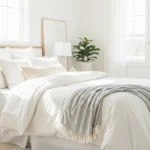
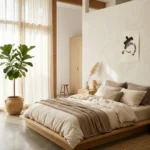
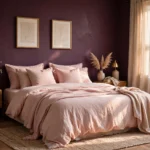
A bed without a headboard can look unfinished, but only if the wall behind it is left bare. The wall is doing the headboard’s job in these rooms, whether through paint, art, shelves, or fabric. A finished look comes from giving the eye something to land on above the pillows, and every idea below does that without buying a headboard at all.
The rule is simple: whatever you put on the wall should be about as wide as the bed, and centered on it. Too narrow and it looks lost, too wide and it crowds the nightstands. Keep that in mind and any of these ideas will look deliberate.
One more thing to check before you start: the space between the bed and the nightstands. Most of these ideas sit above the pillows, not behind them, so they should not fight with lamps or chargers. If your nightstands are tall, pick an idea that lives higher on the wall, like art or a shelf, rather than one that spreads wide, like a gallery grid. And measure the pillow height first. Thick, stacked pillows eat up more wall than flat ones, so an idea that looks great in a photo with slim pillows may sit too low once your real pillows are in place.
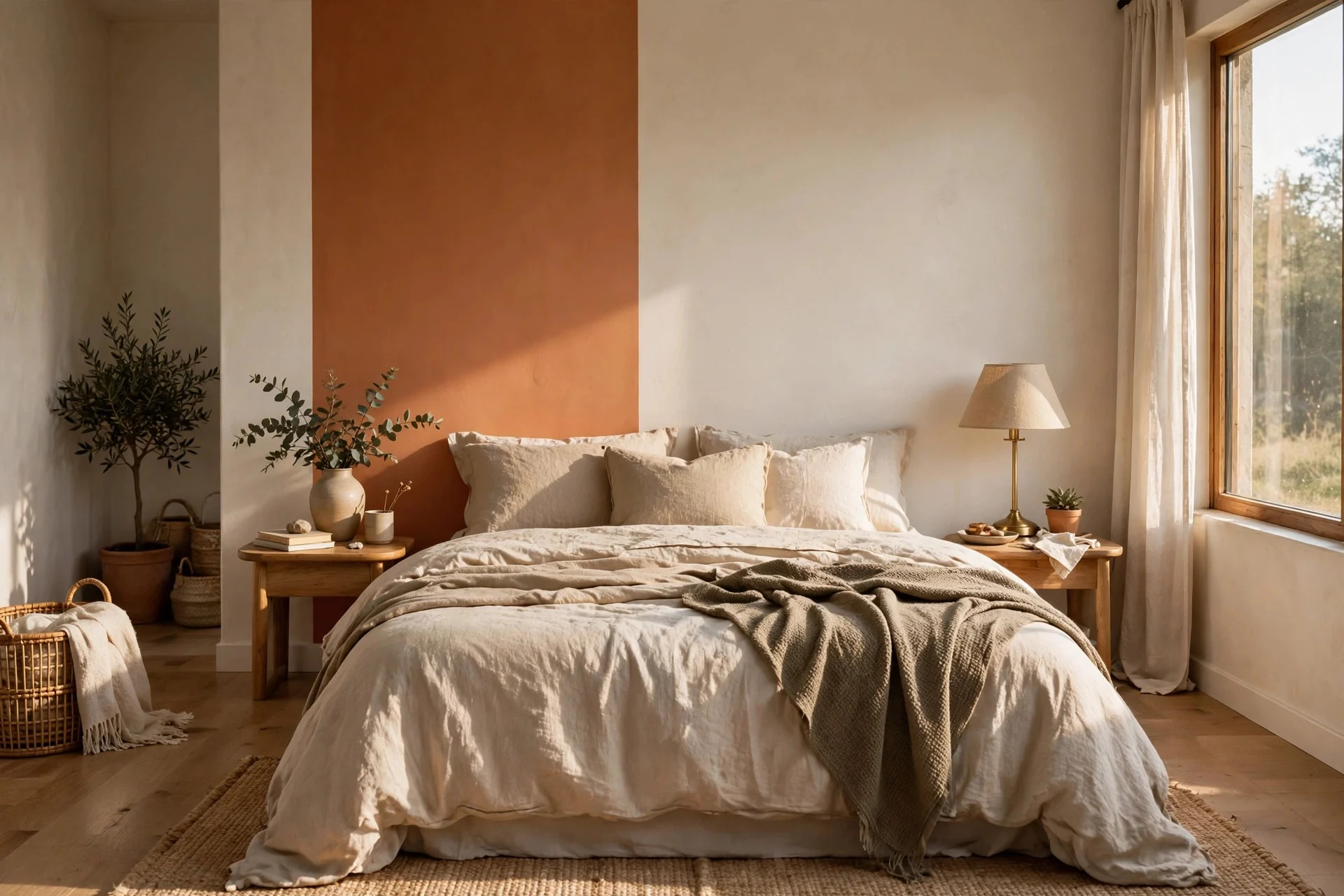
1. A Painted Arch Behind the Bed
Paint a large arch on the wall behind the bed, in a color that contrasts gently with the rest of the wall. The arch frames the pillows the way a headboard would, and it costs almost nothing beyond a can of paint. Mark the arch with a pencil and a piece of string tied to a nail, then fill it in with a small roller. The shape works in any style, from a tall rounded arch in a soft sage to a sharp modern arch in terracotta. It also hides scuffs behind the bed, which is a bonus in a busy household. Keep the arch about 6 inches wider than the bed on each side, so the pillows sit inside it rather than overlapping the painted edge, which would break the frame effect.
Cost: $20–$50. Difficulty: Easy. Tip: paint two thin coats rather than one thick one, so the edge stays crisp.
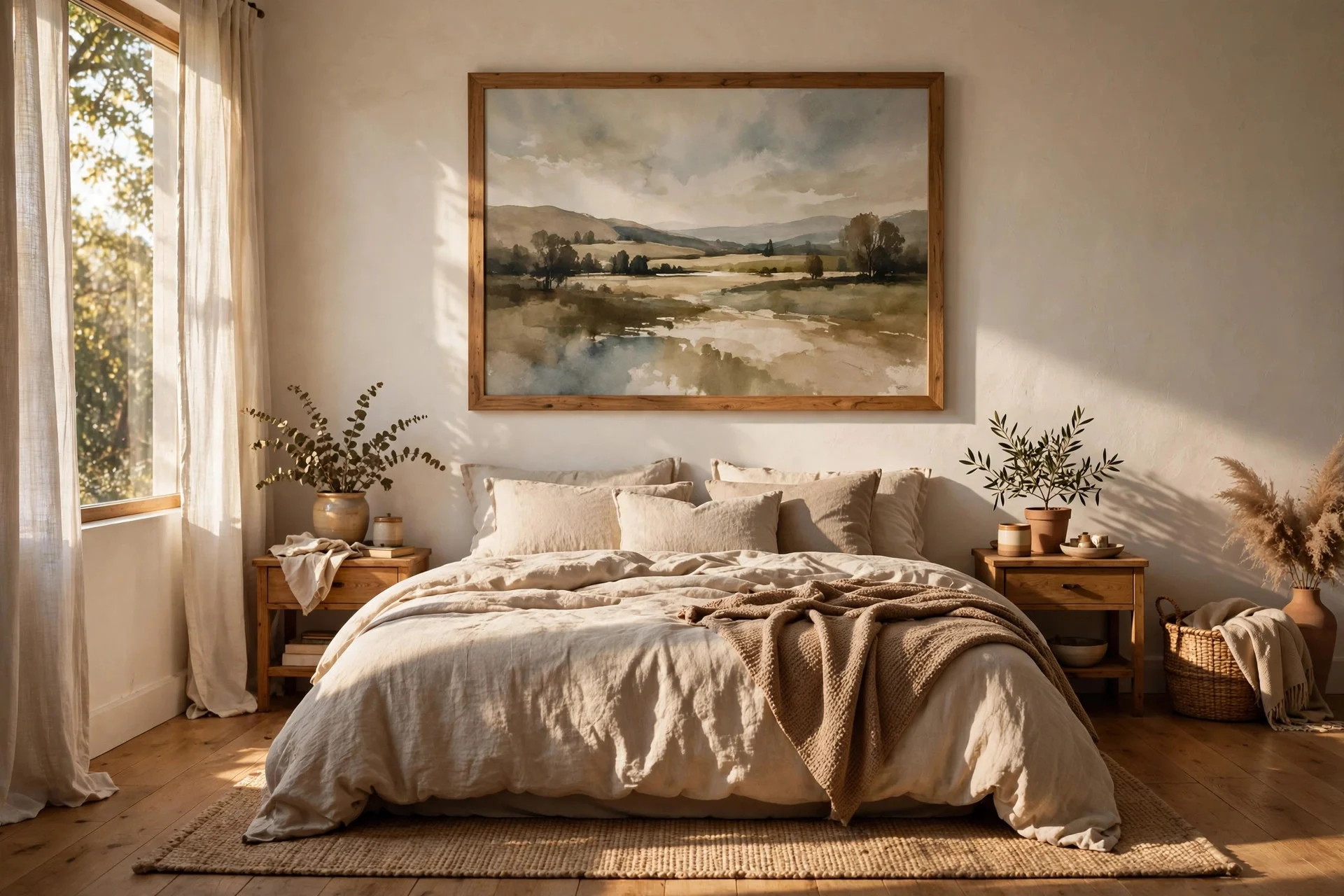
2. One Oversized Piece of Art
A single large print or canvas above the bed does the work of a headboard and adds personality at the same time. The key is size: the art should span about two-thirds of the bed’s width, or it will look like an afterthought. Abstract prints work well because they don’t compete with patterned bedding, but a landscape or a favorite photo works just as well. Hang it so the bottom edge sits about 6 inches above the pillows, which keeps it in the headboard zone rather than floating near the ceiling. If the bedding is patterned, pick art with one color pulled from it, so the wall and the bed feel connected.
Cost: $40–$150. Difficulty: Easy. Tip: use two hooks instead of one, so the art stays level over time.
3. A Floating Shelf With Decor
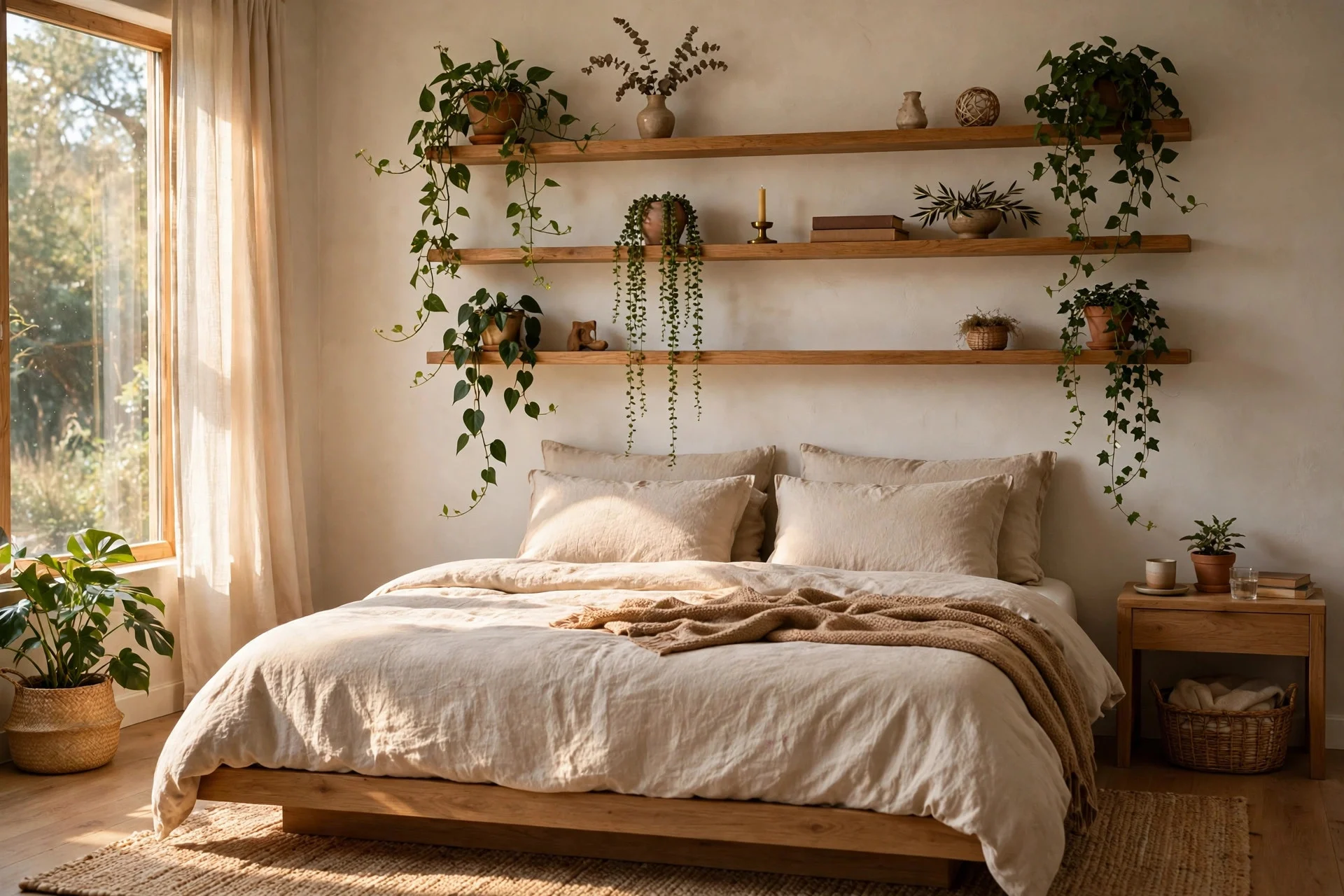
A floating shelf above the bed gives you a headboard line plus a display spot for small art, plants, and books. Fix it at pillow height, about 55 inches from the floor, and keep the items on it low so nothing falls onto the pillows. A single long shelf looks cleaner than several short ones, and it draws a horizontal line across the wall that reads as a headboard. If you like the idea of a shelf that also holds reading material, these living room reading corner ideas show how to style a shelf so it gets used rather than just looked at.
Cost: $30–$80. Difficulty: Easy to moderate. Tip: fix the shelf into studs, since books and plants get heavy fast.
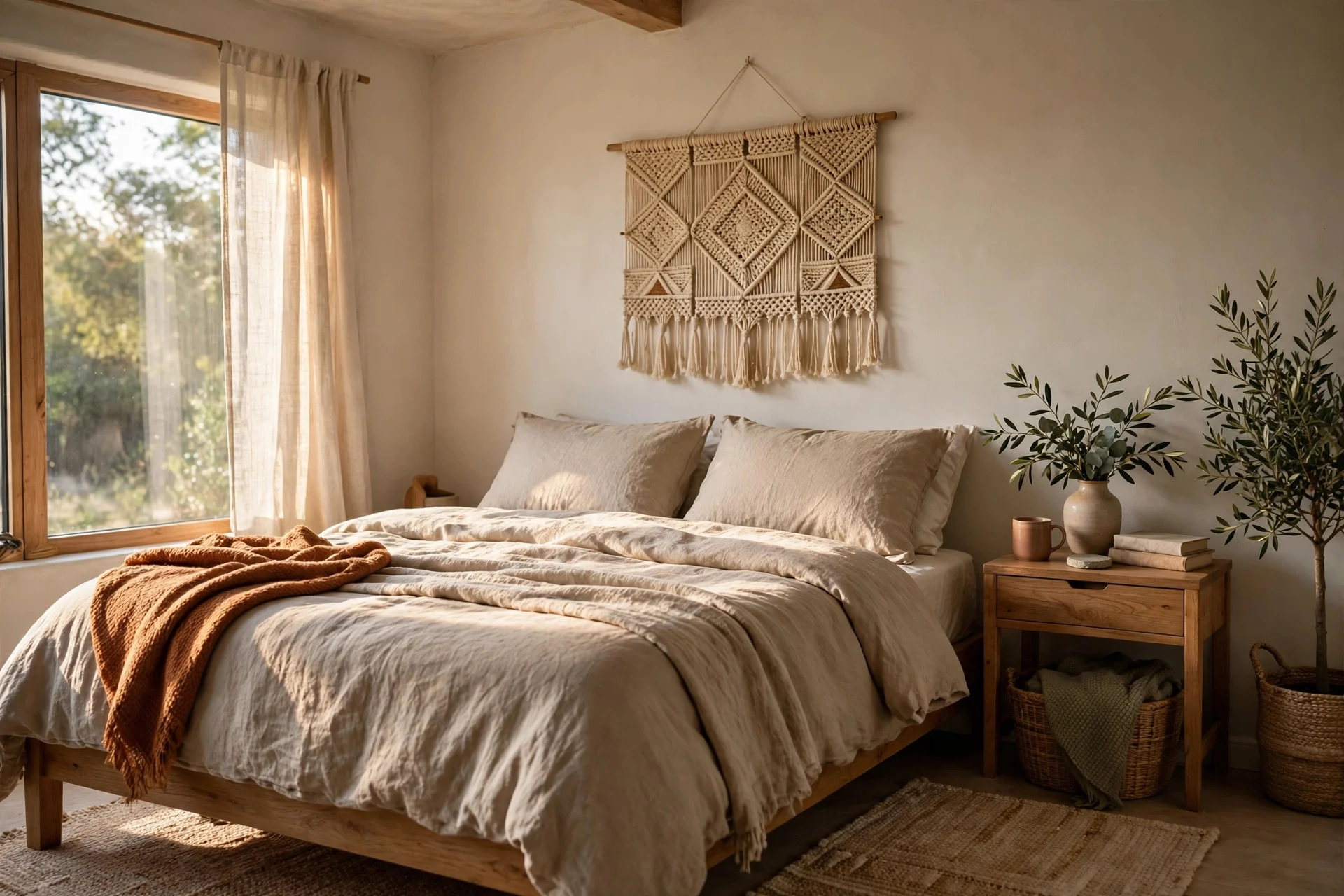
4. A Woven Wall Hanging or Tapestry
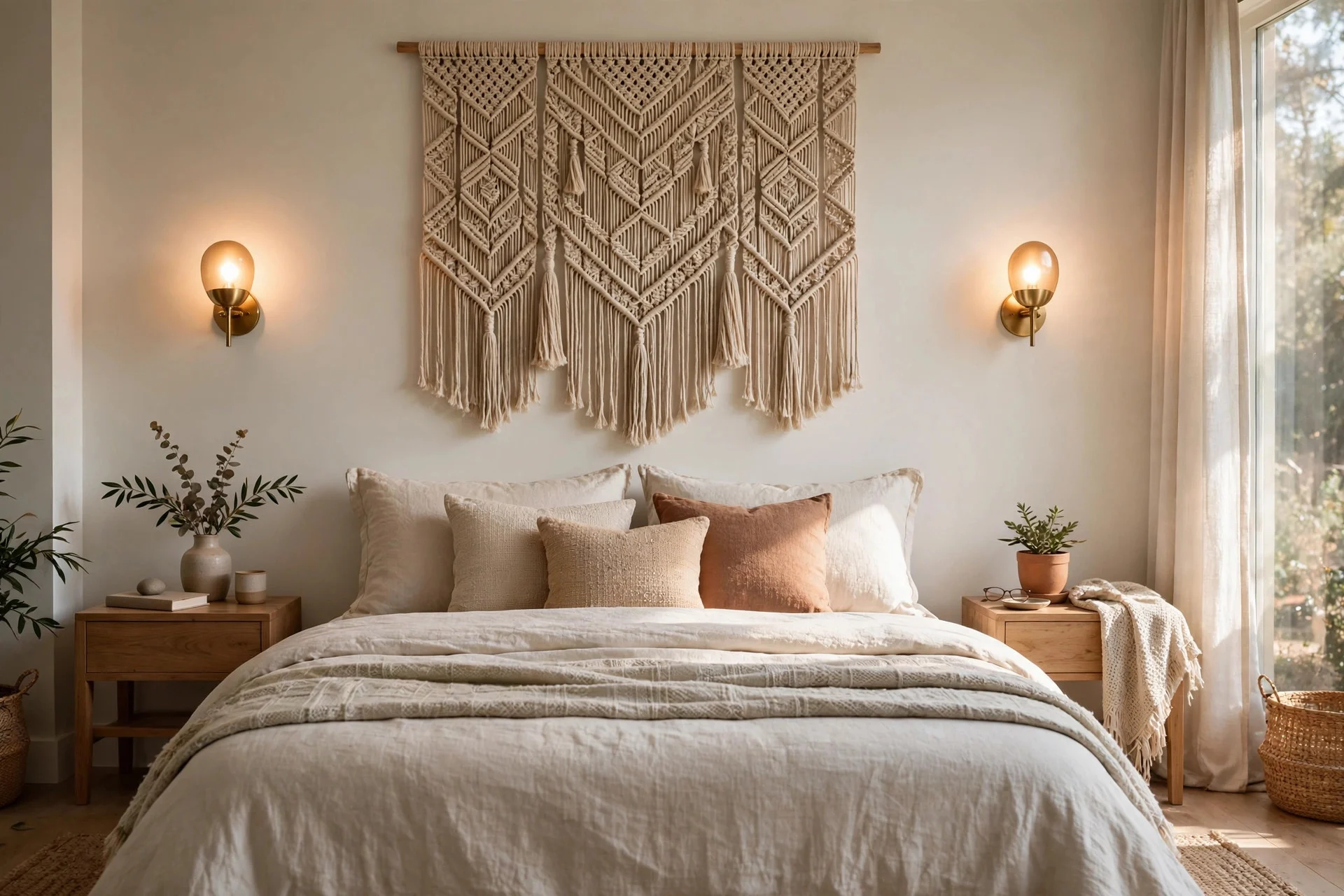
A large woven hanging or tapestry brings texture to the wall, which is exactly what a bare wall behind a bed lacks. Macramé, woven cotton, or a simple fabric tapestry all work, and they are light enough to hang with a single nail or a removable hook. The texture softens the room in a way flat art doesn’t, and it suits bedrooms that lean relaxed or boho. Pick a piece at least as wide as half the bed, or it will look small against the pillows.
Cost: $25–$100. Difficulty: Easy. Tip: steam or iron a fabric tapestry before hanging, since fold creases show badly on a wall.
5. A Pair of Wall Sconces Plus a Small Print
Two sconces, one on each side of the bed, plus a small print in the middle, create a balanced arrangement that reads as a finished headboard wall. The sconces give you reading light and free up the nightstands, while the print fills the gap between them. Battery sconces work fine if you don’t want wiring, and they have improved a lot in brightness. Keep the sconces at the same height, about 55 inches from the floor, or the symmetry falls apart.
Cost: $40–$120. Difficulty: Easy. Tip: use warm bulbs in both sconces, since mismatched color temperatures are easy to spot.
6. A Gallery Wall Grid
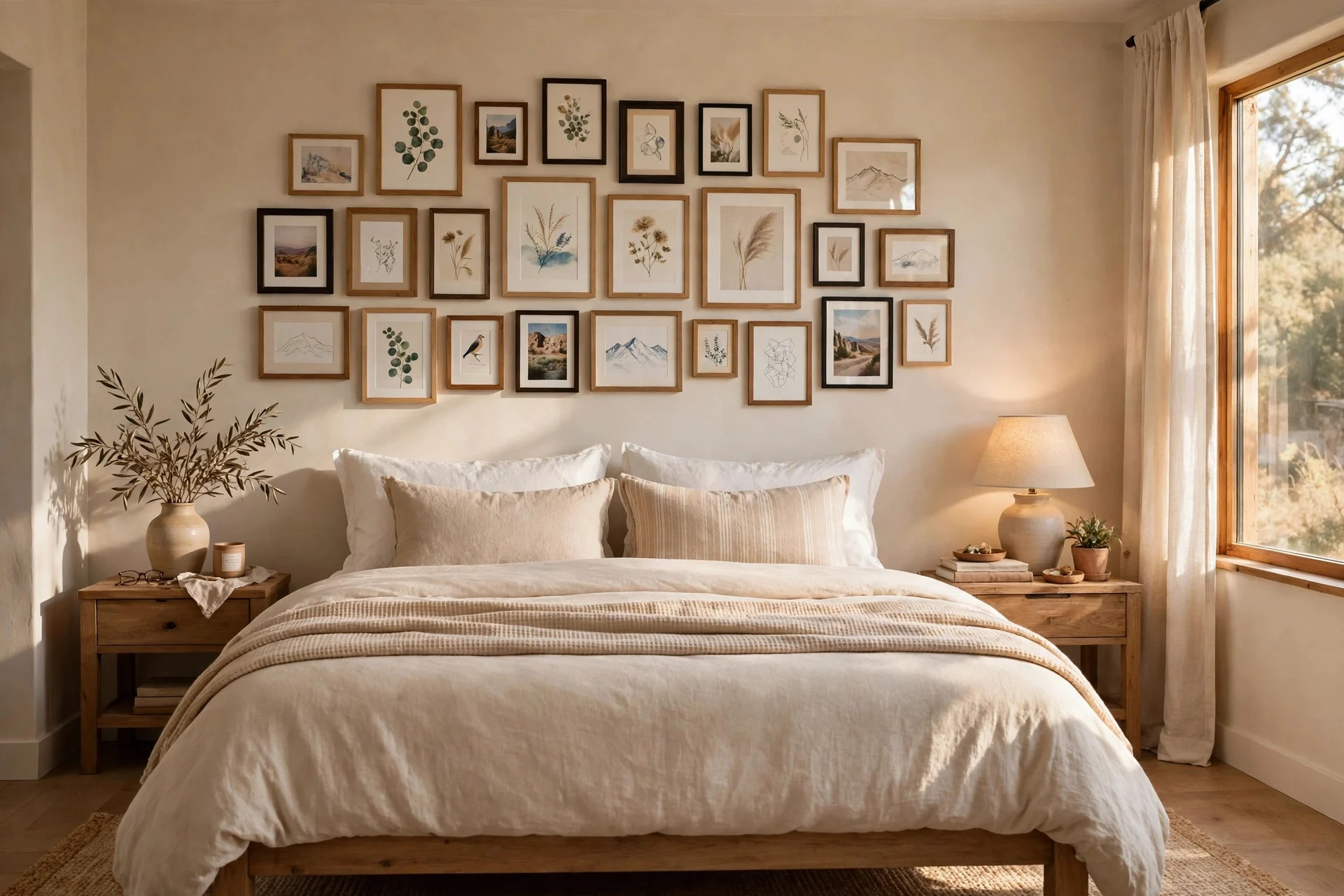
A grid of framed prints above the bed, three across and two down, for example, turns the wall into a feature. The grid works because the frames are uniform, even if the images inside differ. Use matching frames and a consistent mat color, and the whole arrangement will read as one piece. Leave about 2 inches between frames, so the grid reads as one unit rather than scattered pictures. This idea suits people who already have prints and photos they like, since it costs little beyond frames. Lay the grid on the floor first to get the spacing even.
Cost: $50–$150. Difficulty: Easy to moderate. Tip: use a paper template for each frame position, so you only drill once per frame.
7. Peel-and-Stick Upholstered Panels
Peel-and-stick fabric panels, fixed to the wall in a row behind the bed, give you the look of an upholstered headboard without the frame. The panels come in velvet, linen, and faux leather, and they stick to smooth walls and peel off cleanly, which suits renters. Arrange them in a straight row for a modern look, or stack two rows for a taller panel wall. The padding also stops the wall feeling cold behind the pillows, which is a small comfort win. For more renter-friendly bedroom tricks, these bedroom like a hotel on a budget ideas cover the same polished result without permanent changes.
Cost: $60–$150. Difficulty: Easy. Tip: wipe the wall clean first, since dust is the main reason these panels peel off early.
8. Tall Plants Flanking the Bed
Two tall plants, one on each side of the bed, frame the sleeping area the way bedposts would. A fiddle-leaf fig, an olive tree, or a tall snake plant all work, and the greenery softens the room instantly. This idea needs floor space on both sides, so it suits larger rooms, and it needs enough light for the plants to survive. If real plants are too much upkeep, good faux ones do the same visual job, though they lack the air-cleaning benefit. Keep the pots matching, or the symmetry that makes this work will fall apart. Raise the pots on stands if the plants are short, since the foliage should start above pillow height to frame the bed properly.
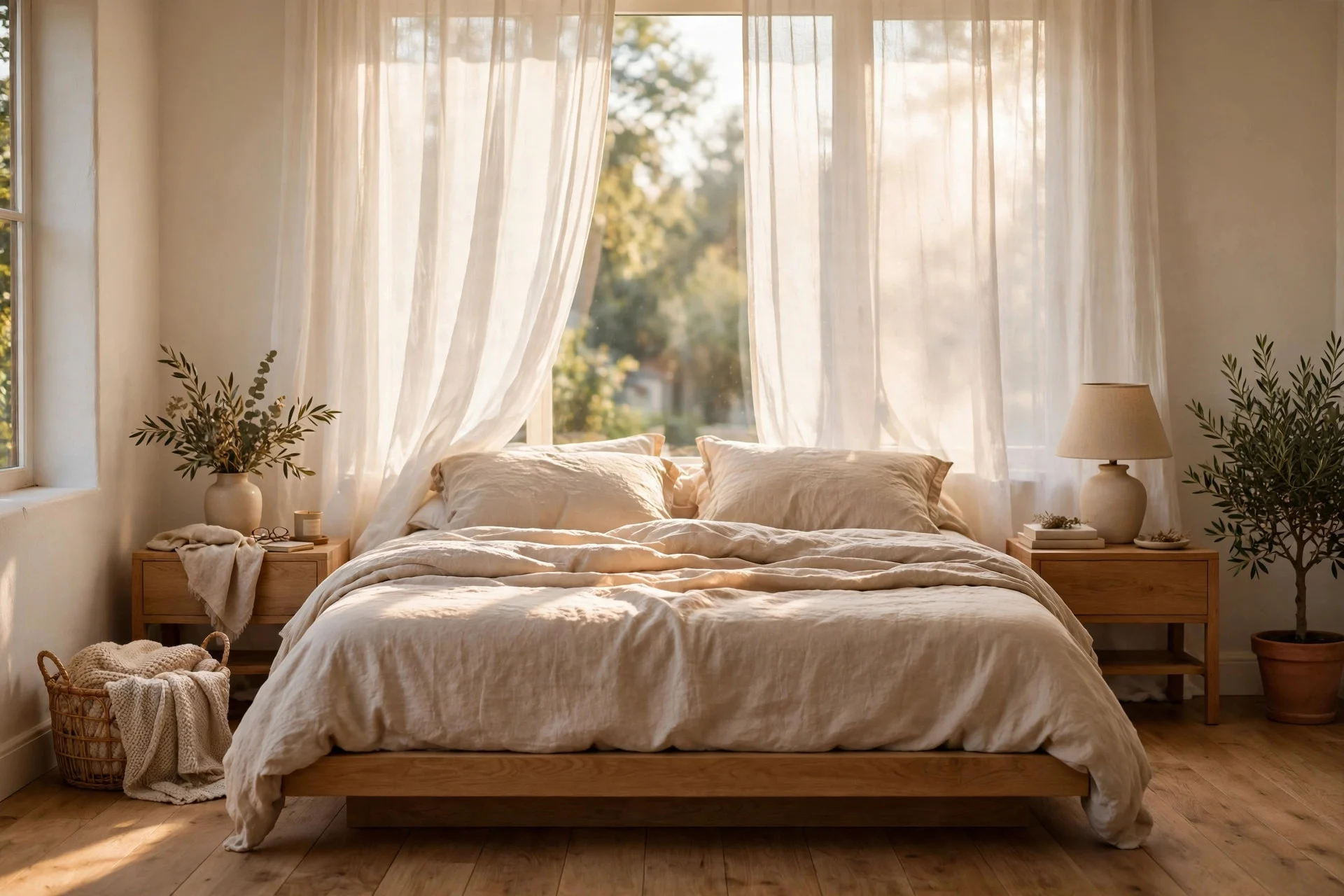
Cost: $50–$200. Difficulty: Easy. Tip: pick plants that like the room’s light level, since a dying plant ruins the effect fast.
9. A Peg Rail With Hats and Bags
A wooden peg rail above the bed, hung with hats, a tote, and a woven bag, turns storage into decoration. The rail draws a horizontal line across the wall, and the hanging items add color and texture. It suits casual bedrooms and small rooms where storage is tight, since the rail holds things that would otherwise sit on a chair. Keep the rail at least a foot above the pillows, so nothing swings onto the bed. If you like furniture that earns its place, these bench at the foot of the bed ideas show another piece that stores and decorates at once.
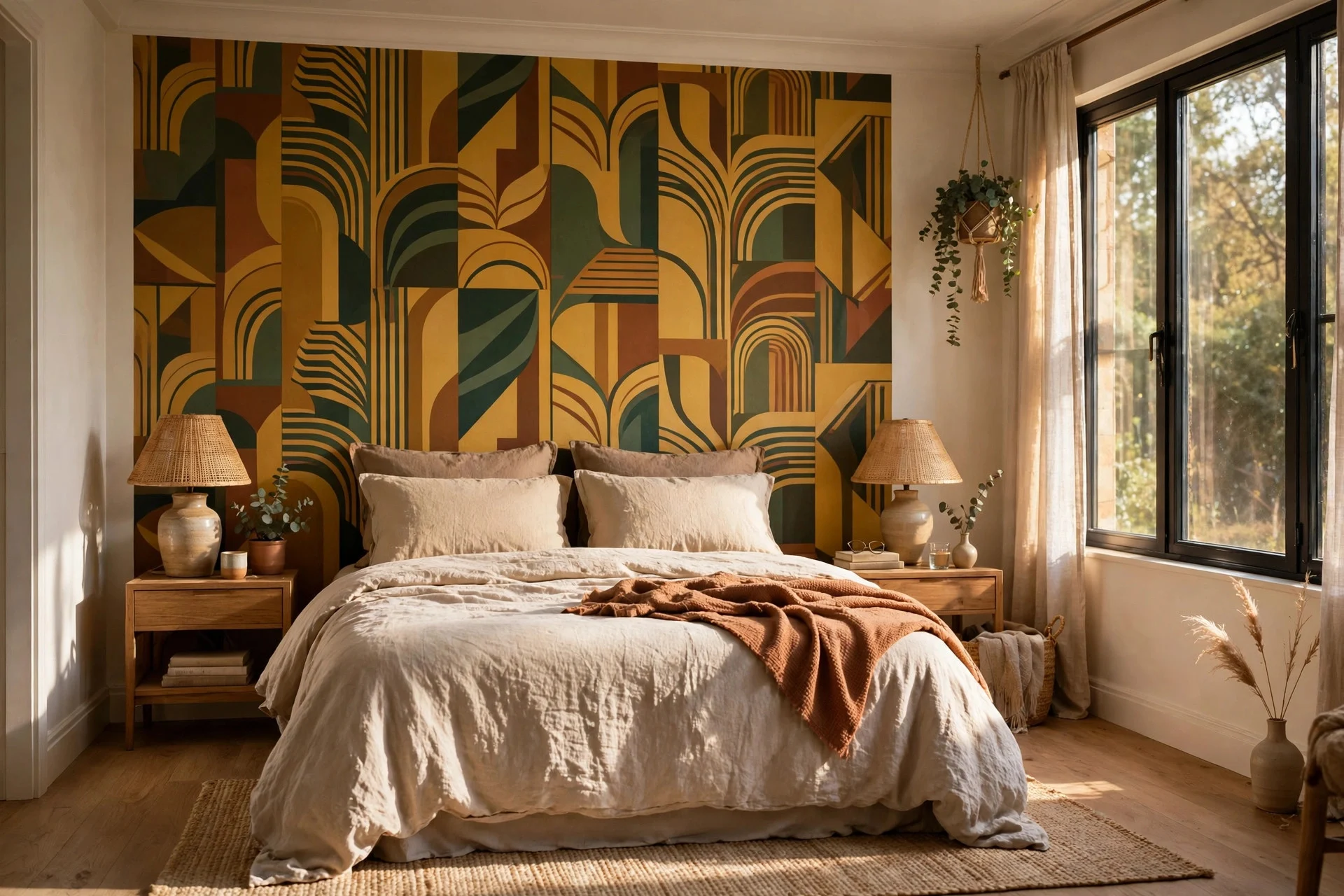
Cost: $25–$70. Difficulty: Easy. Tip: fix the rail into studs, since bags get heavier than they look.
10. A Bold Wallpaper Panel
A single panel of bold wallpaper, framed by thin molding or just cut to the width of the bed, gives the wall a headboard-shaped feature. The wallpaper can be as loud as you like, since it covers a small area, and peel-and-stick wallpaper makes it renter-friendly. Frame the panel with painted molding strips for a finished edge, or leave the cut edge clean if the pattern is strong enough to hold it. This idea works best when the rest of the room stays calm, so the panel gets all the attention.
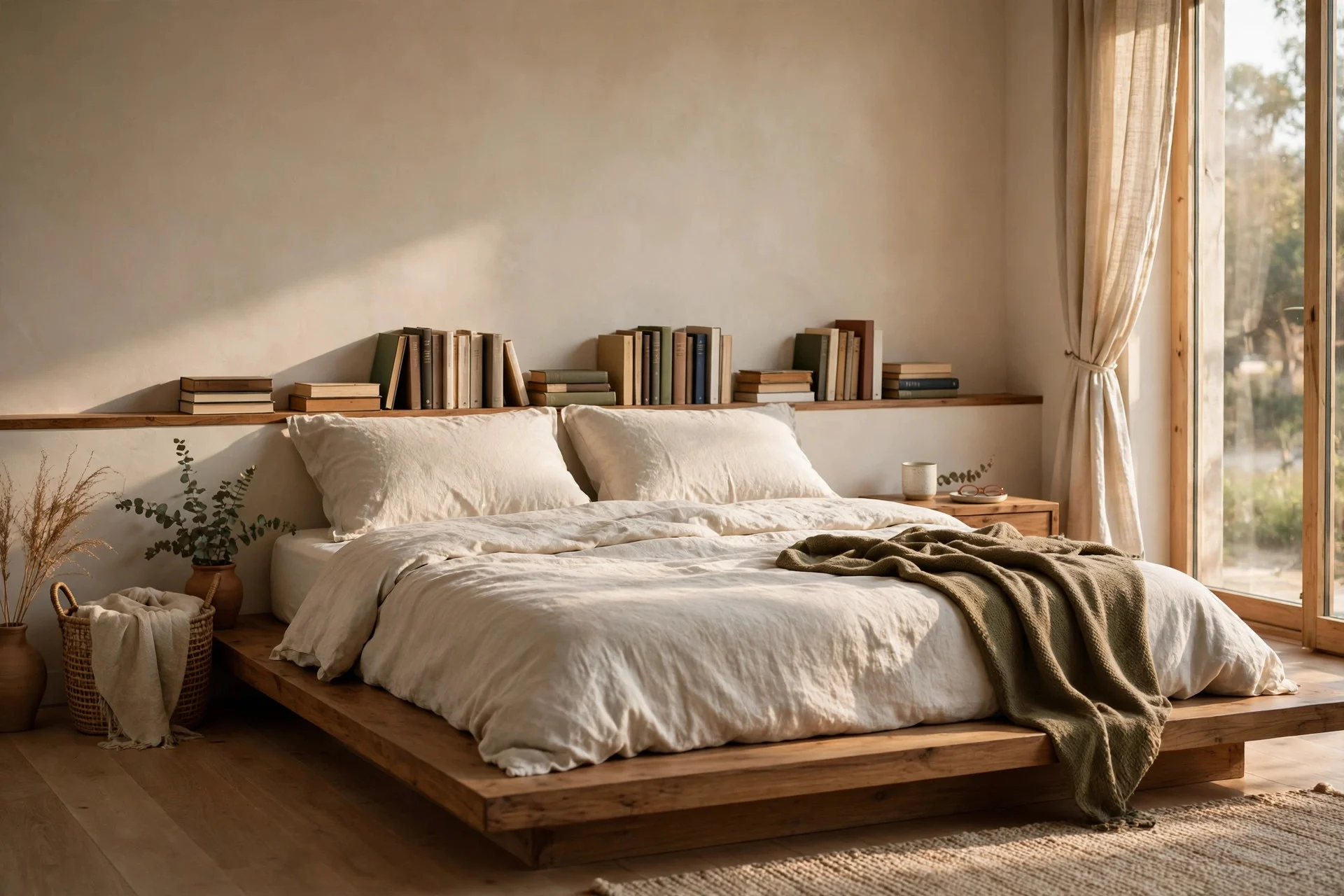
Cost: $40–$120. Difficulty: Easy to moderate. Tip: order one extra roll, since pattern matching on a panel wastes more paper than you expect.
Frequently Asked Questions
Does a bed look unfinished without a headboard?
Only if the wall behind it is bare. Once the wall carries art, paint, shelves, or fabric, the bed looks intentional. The headboard is just one way to finish that wall, not the only way.
What should I hang above a bed without a headboard?
Anything about two-thirds as wide as the bed and centered on it: one large print, a shelf, a tapestry, or a grid of frames. The size and centering matter more than the item itself. When in doubt, go bigger rather than smaller, since small art above a wide bed is the most common mistake.
Can I use peel-and-stick panels in a rental?
Yes, if the wall paint is in good condition. Peel-and-stick panels come off cleanly from smooth, well-bonded paint, though they can lift weak or flaking paint. Test one panel in a hidden spot first.
How high should art hang above a bed?
About 6 inches above the pillows, or roughly 55 to 60 inches from the floor to the center of the piece. Higher than that and the art floats away from the bed, breaking the connection.
Can I combine two of these ideas?
Yes, as long as they share the same wall zone. A painted arch with a small print inside it works well, and sconces pair nicely with a shelf. What doesn’t work is stacking two large ideas, like a gallery wall plus a tapestry, since they compete for the same space and the wall ends up looking crowded.
Pick the idea that fits your wall, your budget, and your patience for DIY, then center it on the bed and step back. A finished bedroom is rarely about one big purchase. It is about the wall behind the bed looking like someone meant it to look that way. And if you change your mind later, paint, peel-and-stick panels, and a shelf all come off far easier than a headboard goes up.