16 Scandinavian Bedroom Ideas in Light Wood and Wool
Yes, light wood and wool can carry a whole Scandinavian bedroom on their own. Pale oak or birch keeps the room bright, while wool adds the warmth that stops it from feeling cold or bare. Walk through the ideas below in room order — door, bed wall, windows, reading corner, storage wall — and pick the ones that fit your room and budget.
Start with what you own: one light wood piece or wool blanket can anchor the rest.
A Slim Light Wood Bench Just Inside the Door
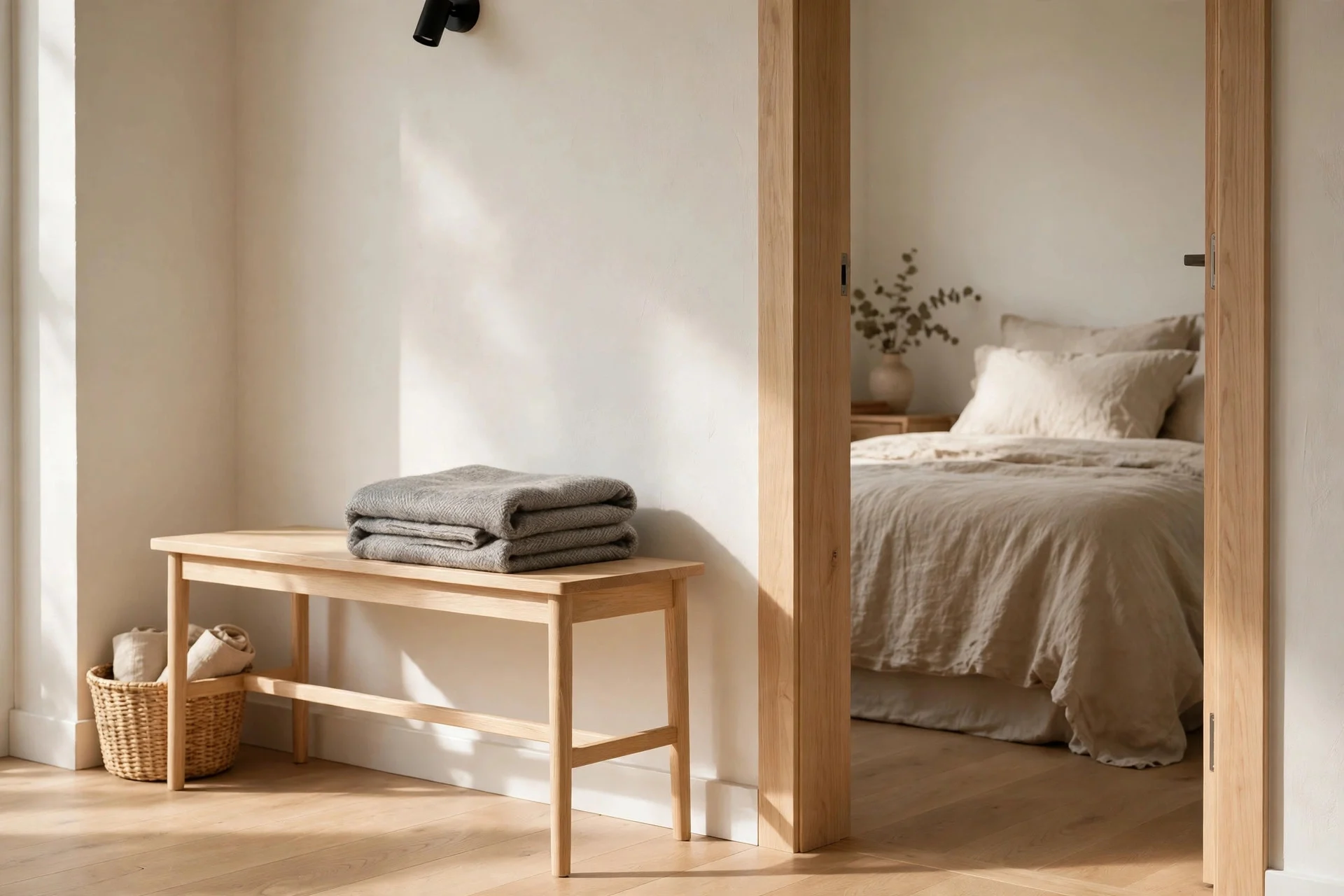
A slim bench in pale oak or ash, just inside the door, gives you a place to sit while you put shoes on and a spot to set a bag down. Keep it narrow, about 35 to 45 cm deep, so it never blocks the walkway.
The first thing you see sets the tone, and light wood reads open and airy. Expect $60 to $250, and under an hour to position it and check it sits level. Tip: leave the space beneath open, or slide one low basket under it for slippers. Watch out for chunky legs or dark stain, which fight the light, airy look.
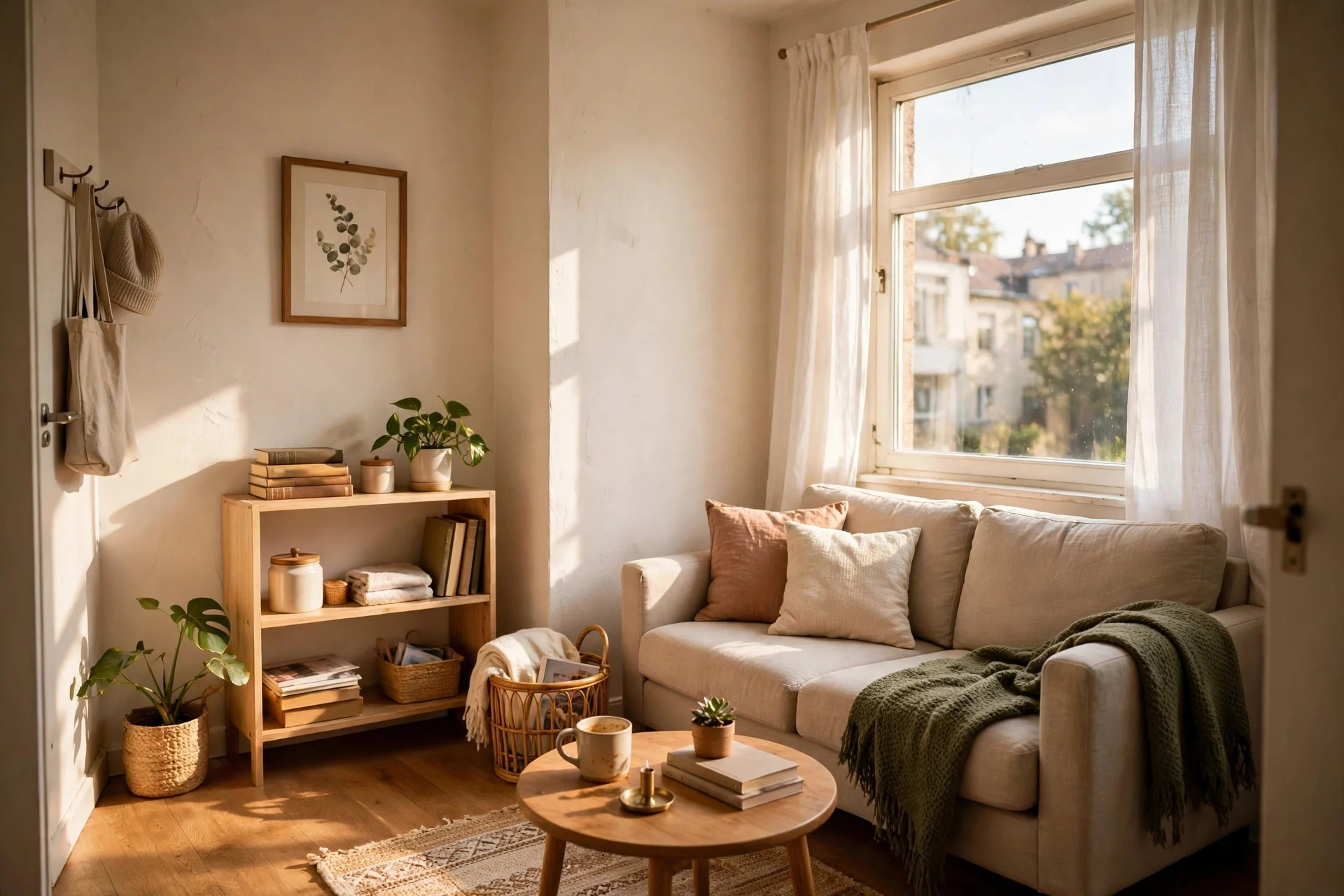
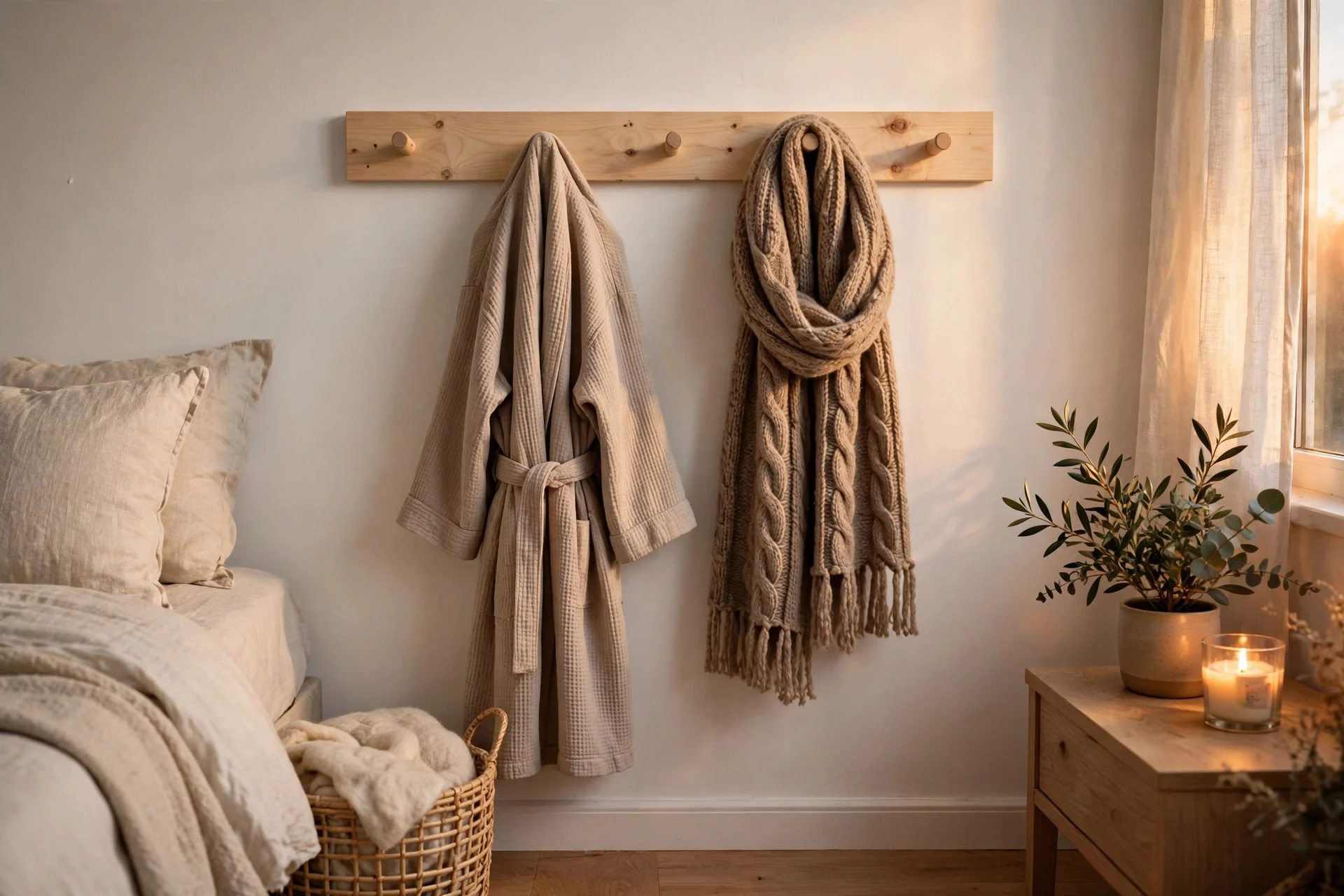
A Birch Peg Rail for the Entry Wall
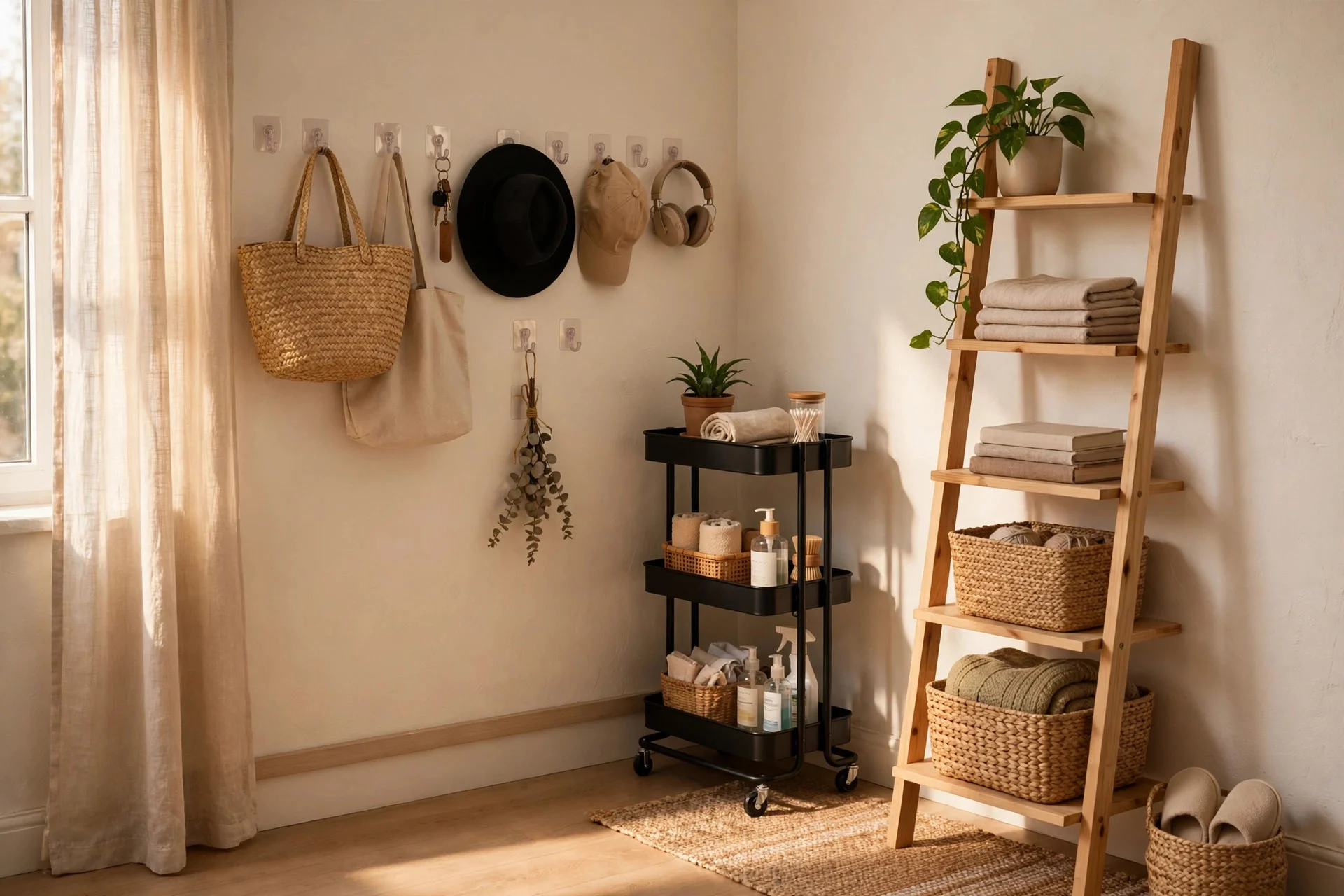
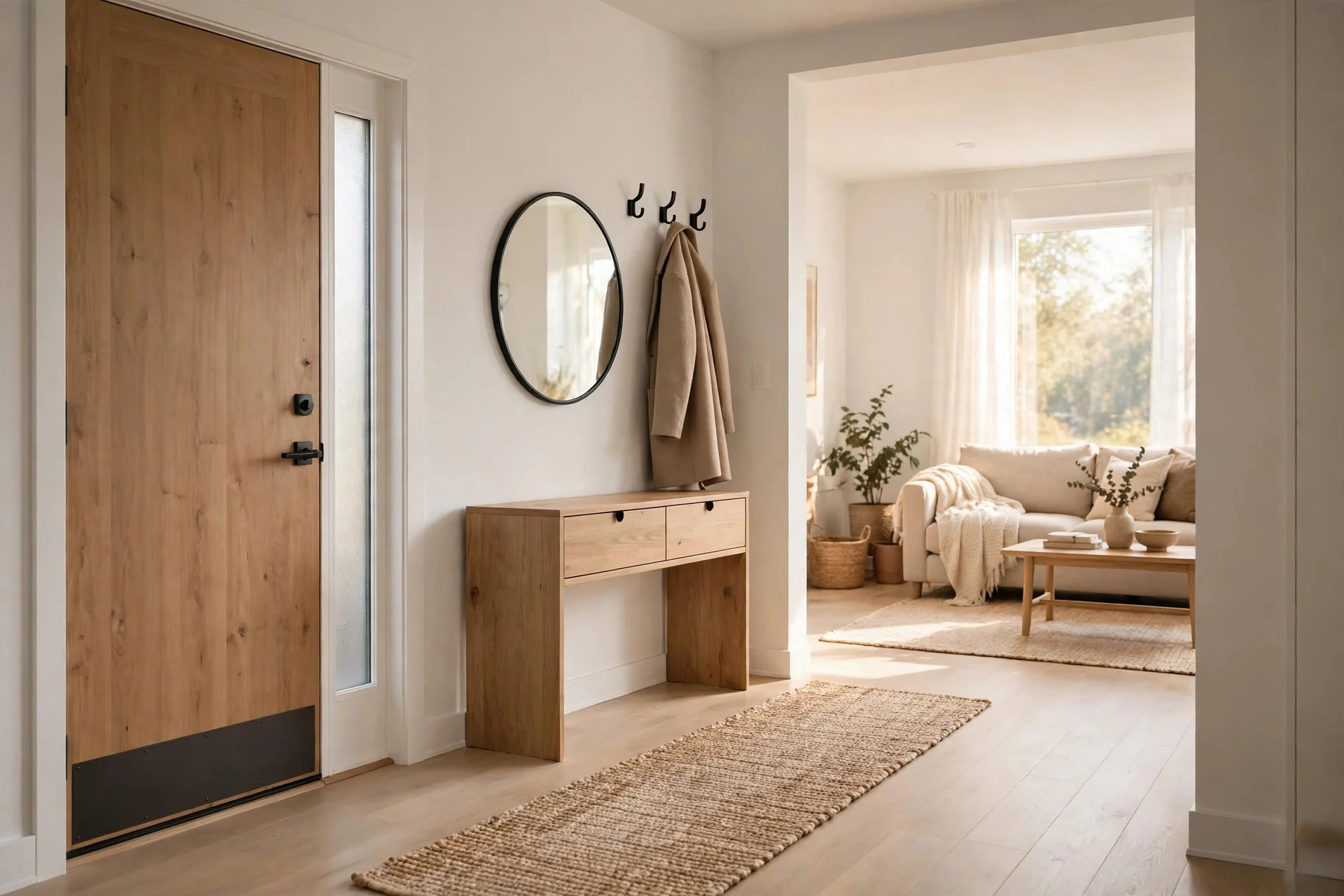
Beside the door, a birch peg rail turns a blank wall into useful storage. Hang tomorrow’s outfit, a robe, or a light jacket on it, and keep it to four or five pegs so the wall never looks crowded. Mount it at shoulder height.
It keeps daily items visible but tidy. A good rail costs $25 to $90, and fitting takes 30 to 60 minutes. Tip: leave one peg empty on purpose; a rail with breathing room always looks calmer. Watch out for adhesive hooks on painted walls, which can peel paint when removed.
A Slatted Light Wood Headboard
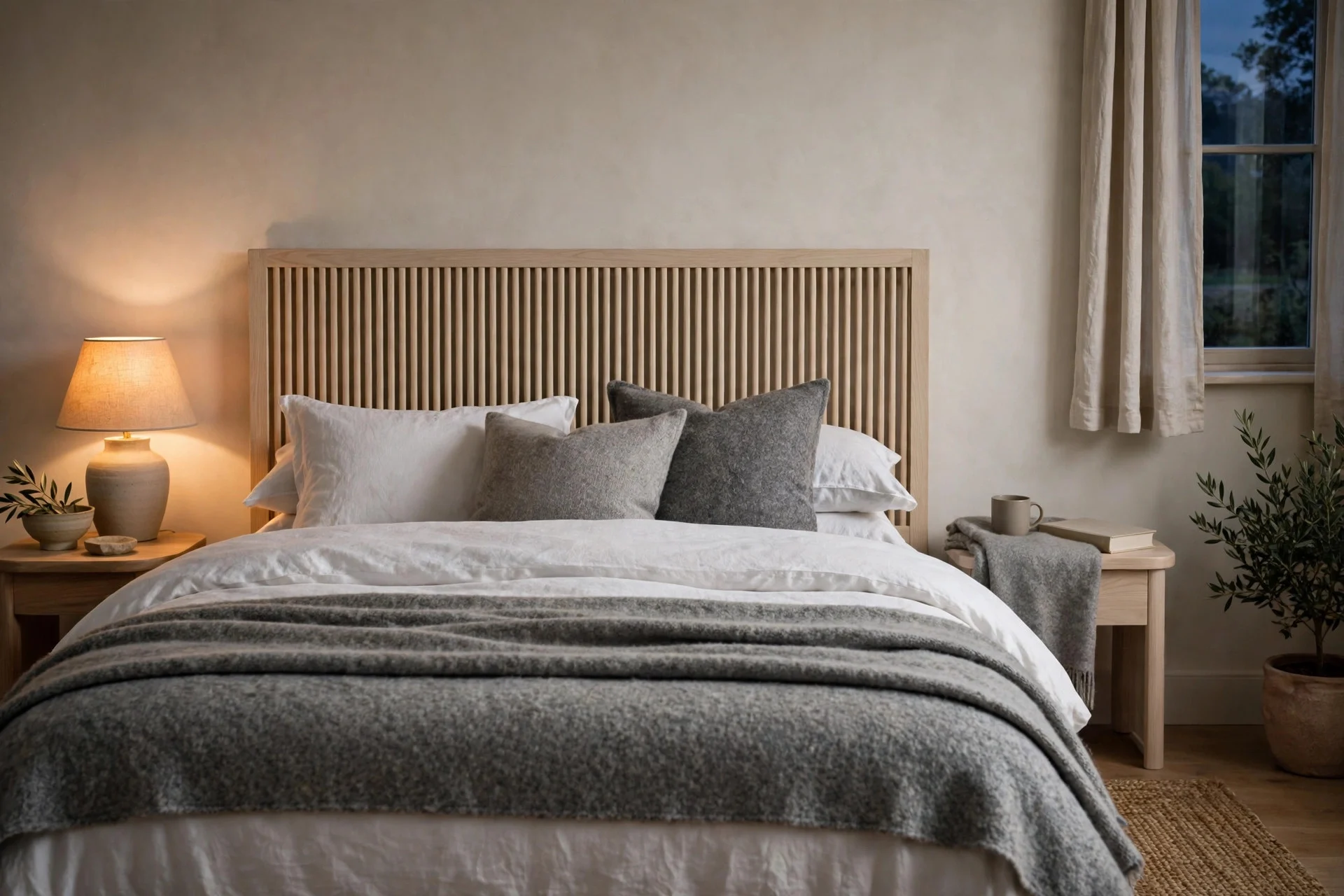
On the bed wall, a slatted headboard in pale oak adds rhythm without pattern, and the gaps between slats keep a large headboard from feeling like a solid block. Pick a height just above your pillows, so it works as a backrest.
It anchors the bed and warms a white wall. Expect $120 to $450 ready-made, or $80 to $200 in timber if you build a simple one. A ready-made headboard takes 30 to 90 minutes to fit. Tip: hold a sample against your wall in daylight first, since pale oak can read pink or yellow under warm bulbs. Watch out for very wide slat gaps, which catch pillow corners.
Wool Bedding Layered in Two Weights
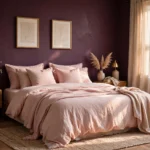
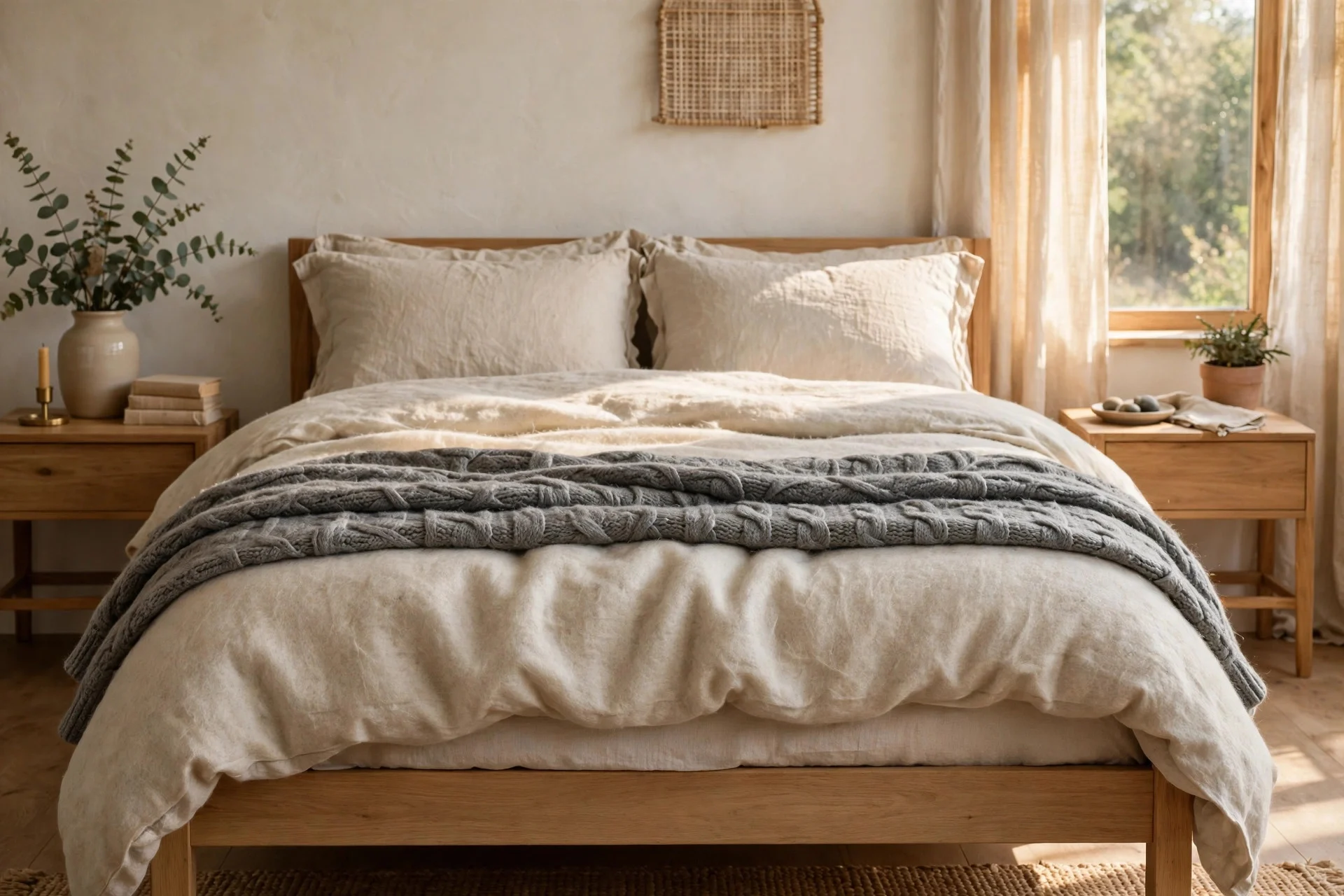
Dress the bed with a light wool duvet or coverlet as the base, then a heavier wool throw folded across the lower third. Pick undyed, oatmeal, soft grey, or muted sage tones, and let texture carry the interest instead of a bold print.
Wool breathes, so it suits warm nights and cold ones, and layered bedding looks inviting without extra pillows. A wool duvet or coverlet runs $90 to $300, and a good throw adds $50 to $150. Making the bed this way takes five minutes. Tip: fold the throw back at night rather than removing it, so the bed still looks dressed in the morning. Watch out for throws that shed on dark sheets; shake them outside first.
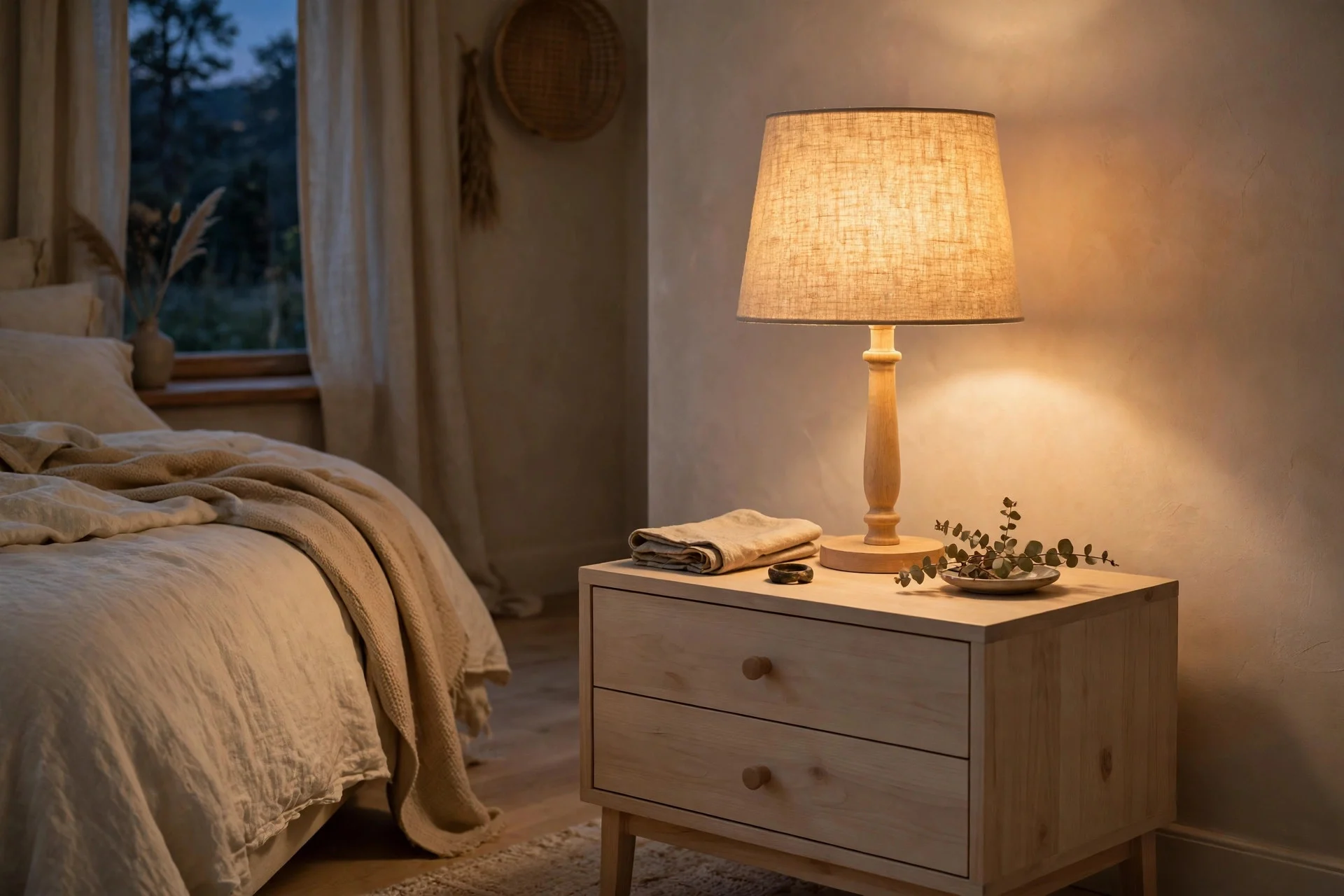
Matching Light Wood Nightstands with One Drawer Each
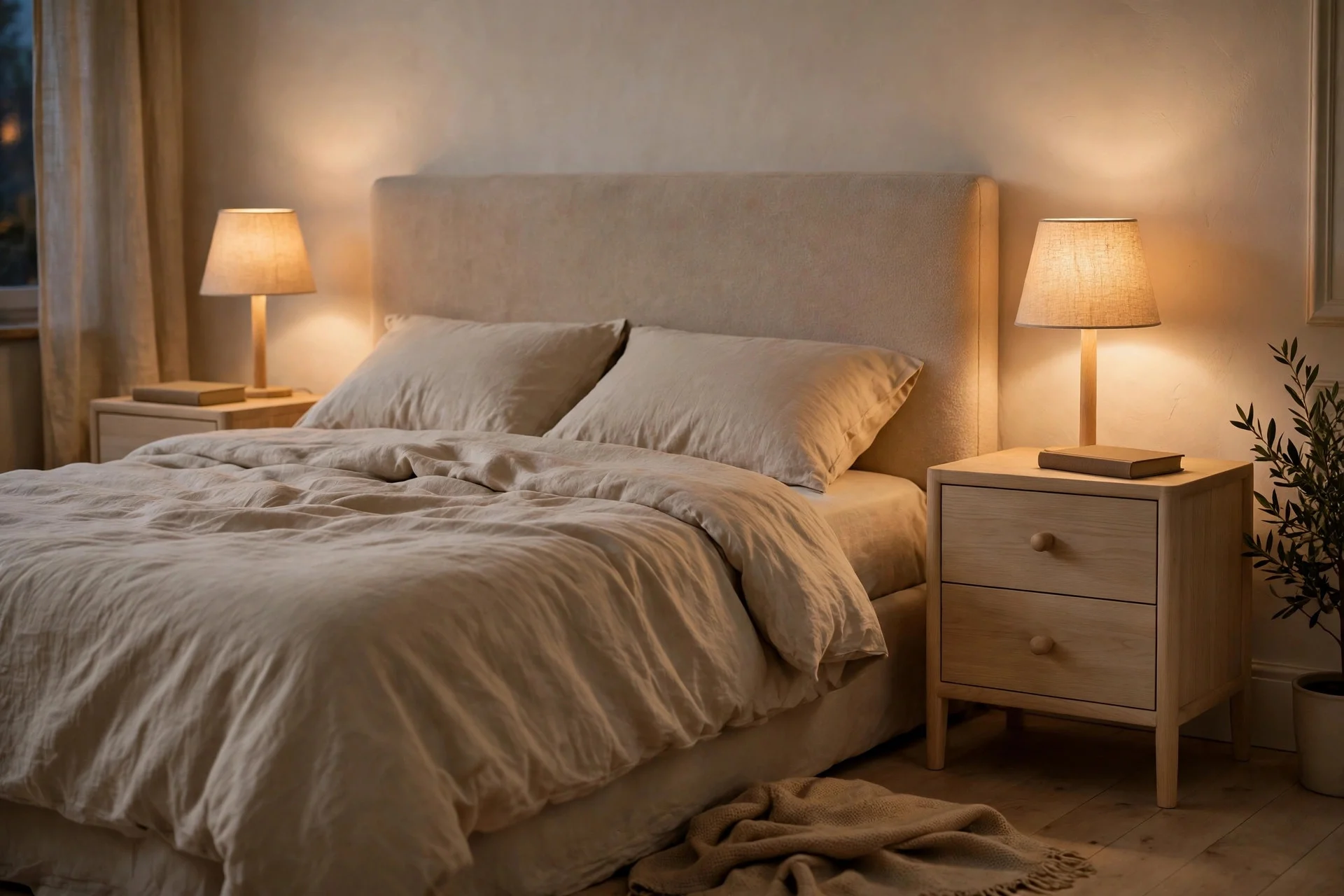
Flank the bed with two light wood nightstands, each with a single drawer and a clean top. One drawer hides chargers and reading glasses; the top holds only a lamp, a glass of water, and one book.
Matching nightstands frame the bed. A pair costs $120 to $400, and assembly takes 30 to 60 minutes each. Tip: measure your mattress height first and aim for a nightstand top level with the top of the mattress, so reaching for a lamp feels natural. Watch out for nightstands deeper than 45 cm in a tight room — they eat into the walkway fast.
Warm Bedside Lamps with Paper or Wood Shades
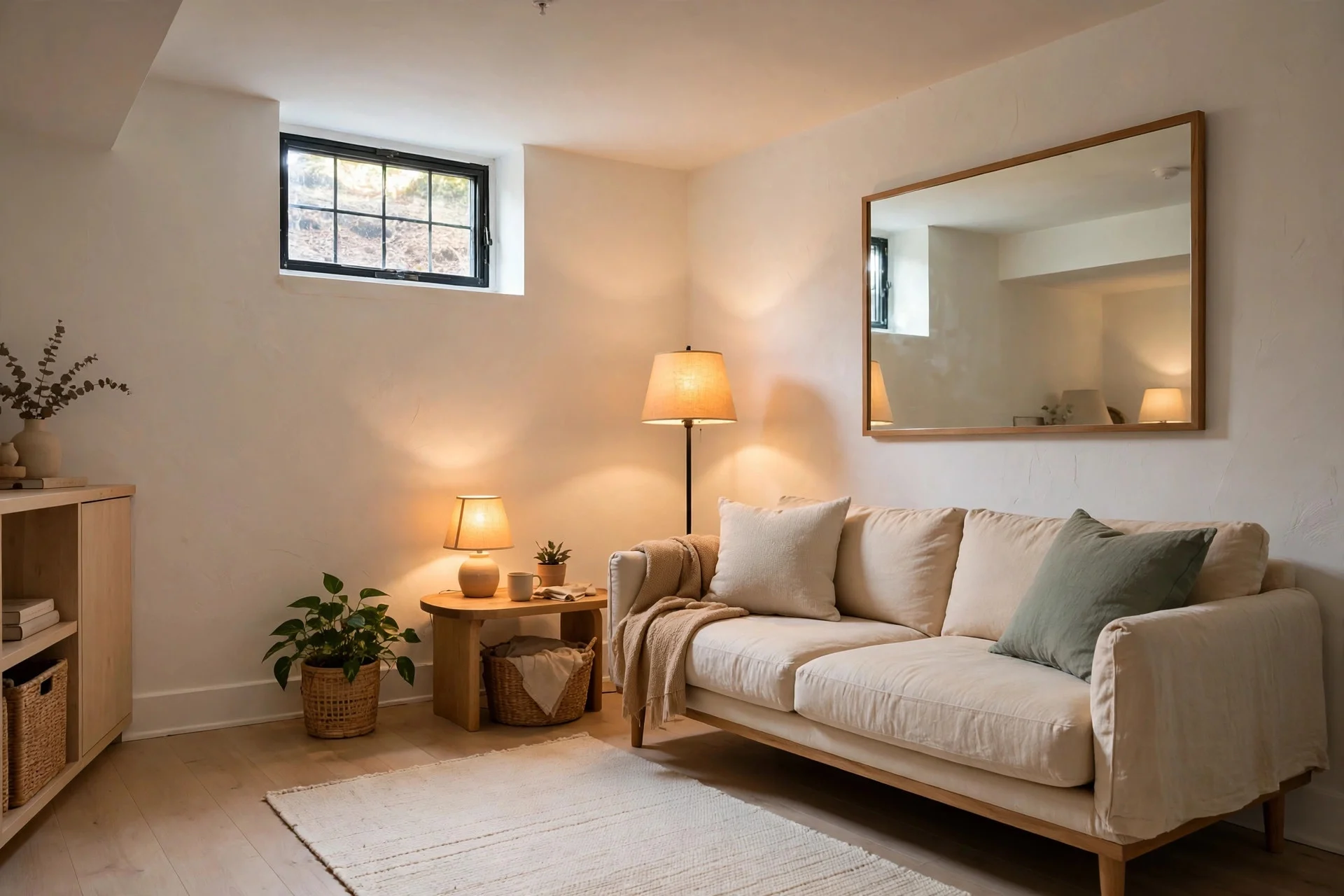
On those nightstands, add lamps with paper, linen, or pale wood shades and warm-white bulbs around 2700K. The shade should soften the light, so the bed wall glows in the evening.
Warm, low light makes pale wood and wool look their best in the evening. A pair of lamps costs $50 to $180, plus bulbs if they are not included, and setup takes ten minutes. Tip: put both lamps on one small switch or a pair of smart plugs, so one tap sets the evening mood. Watch out for cool daylight bulbs here — they can make light wood look washed out.
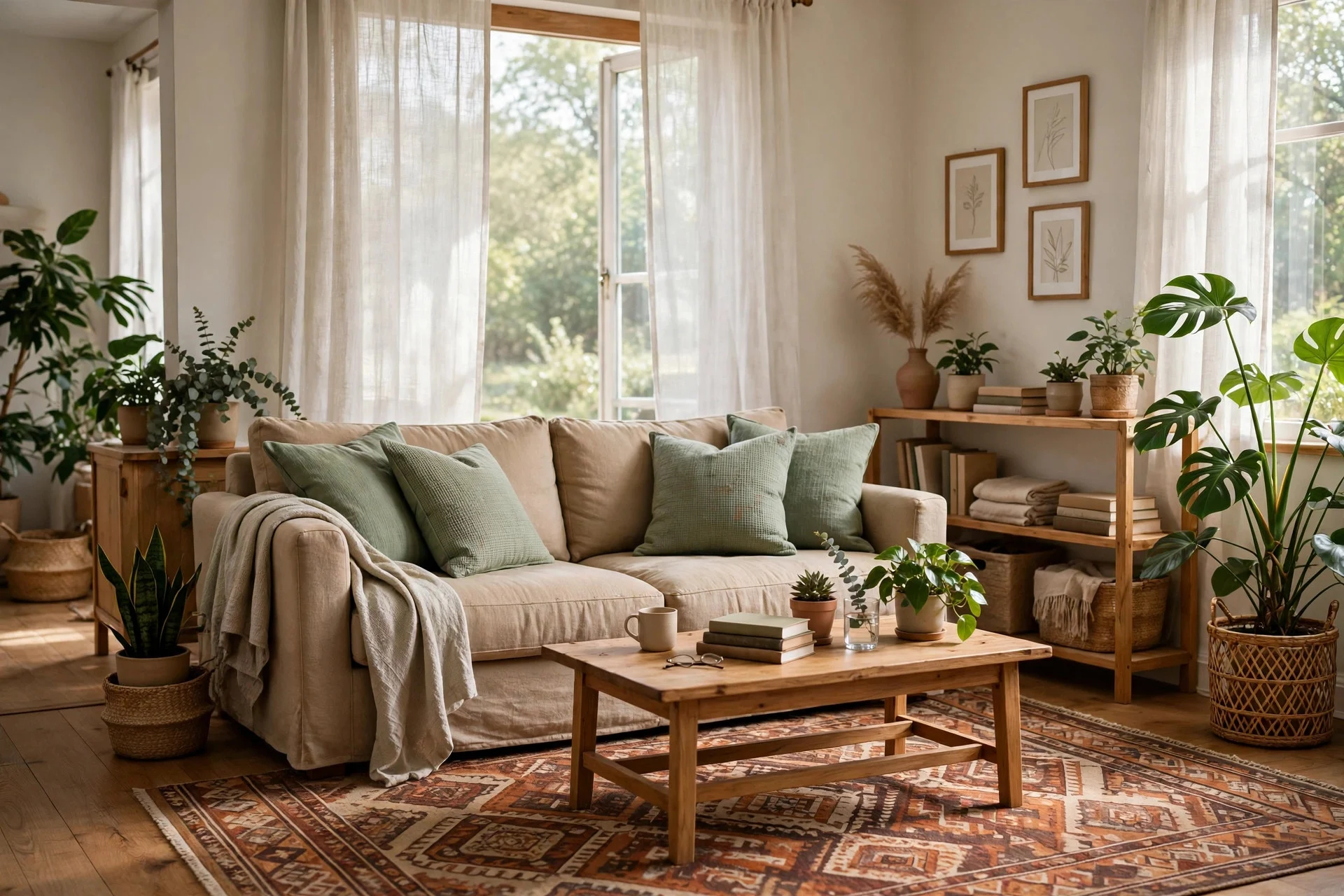
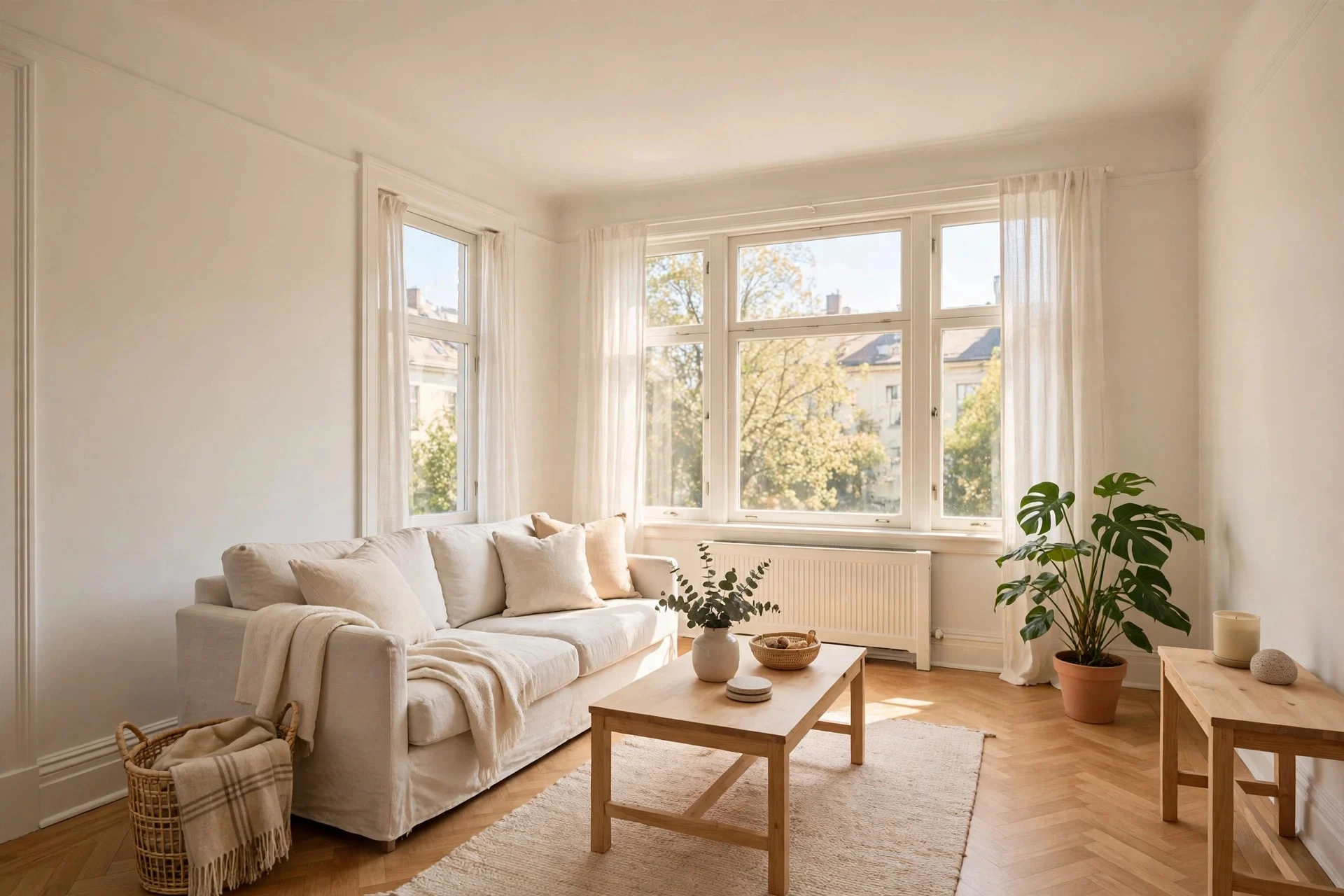
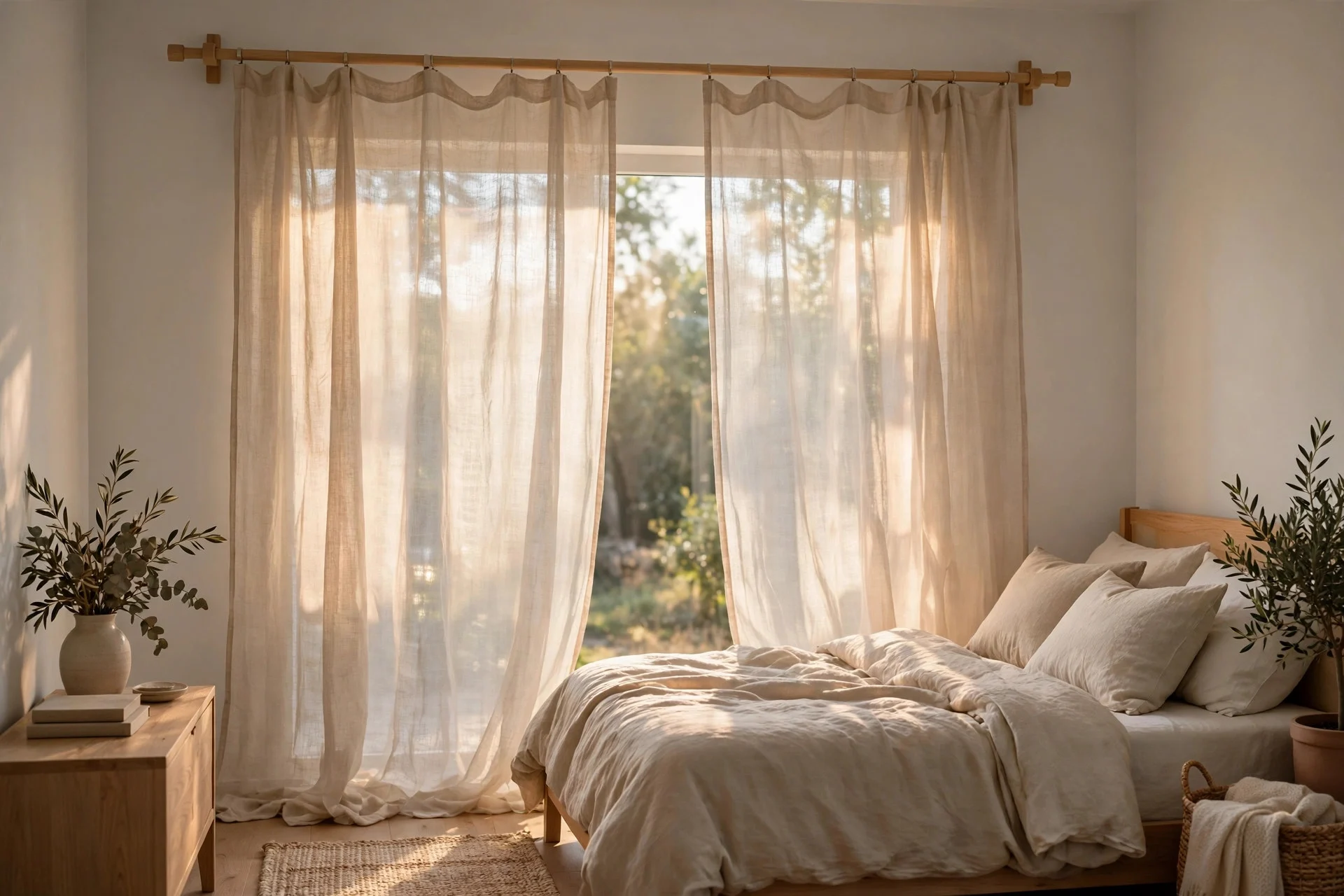
Sheer Linen Panels at the Windows
At the windows, hang sheer linen panels from a light wood or slim metal rod mounted close to the ceiling. Let them fall to the sill or the floor, unlined, so daylight filters through. Add a roller blind behind them for night privacy.
Sheers soften hard daylight, give privacy without shutting the room down, and make the window feel taller. Panels cost $30 to $120 per window, plus $15 to $50 for a rod, and hanging takes 45 to 90 minutes per window. Tip: mount the rod 10 to 15 cm above the frame and wider than it, so panels stack on the wall and the glass stays clear. Watch out for heavy lined curtains here — they can darken a north-facing room more than you expect.
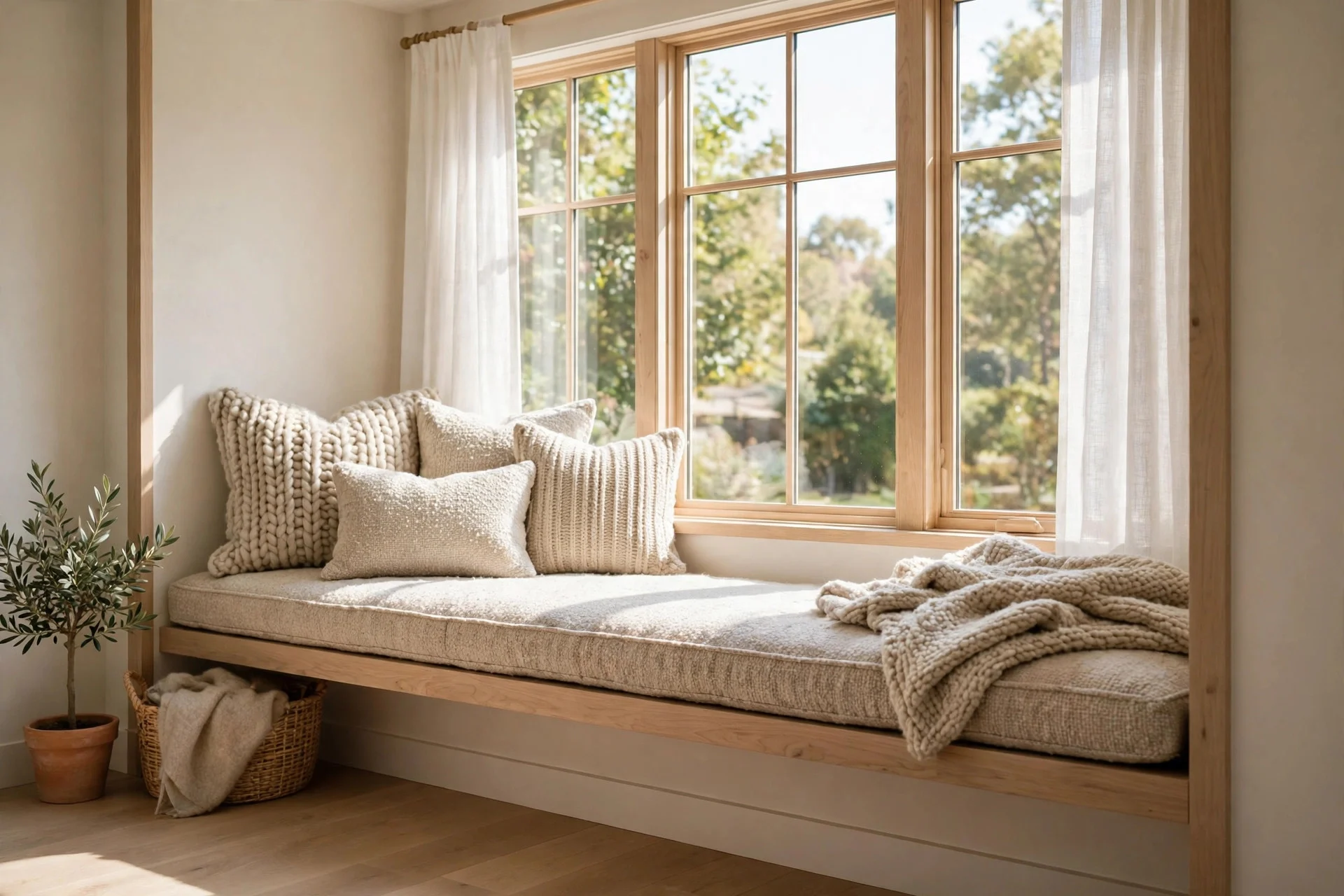
A Window Seat in Light Wood with Wool Cushions
If your window has even a shallow recess, add a low light wood window seat topped with wool seat cushions in a soft neutral, plus one or two back cushions in a different wool texture. You get a morning spot in the best light in the room.
It turns dead space under a window into the most-used seat in the room. A ready-made bench costs $150 to $500, while a simple built-in box seat runs $200 to $600 in materials. Plan an afternoon for a freestanding bench, or a weekend for a built-in. Tip: make cushion covers removable and washable, since window seats catch sun, dust, and the odd coffee splash. Watch out for seats deeper than 50 cm without back support — they look inviting but get uncomfortable fast.
A Light Wood Reading Chair with a Slim Frame
In the reading corner, choose a light wood armchair with a slim frame and a simple wool-upholstered seat. Look for exposed wood arms, a seat height that lets your feet rest flat, and a supportive back.
Visible light wood ties the corner to the bed and window seat, while wool keeps it warm in winter. Expect $250 to $800 well-made, less if you re-cover a second-hand frame in wool fabric. Tip: sit in the chair before you buy it, with the book or tablet you actually read, and check your elbows clear the arms. Watch out for deep, low lounge chairs that look restful in photos but make standing up a struggle.
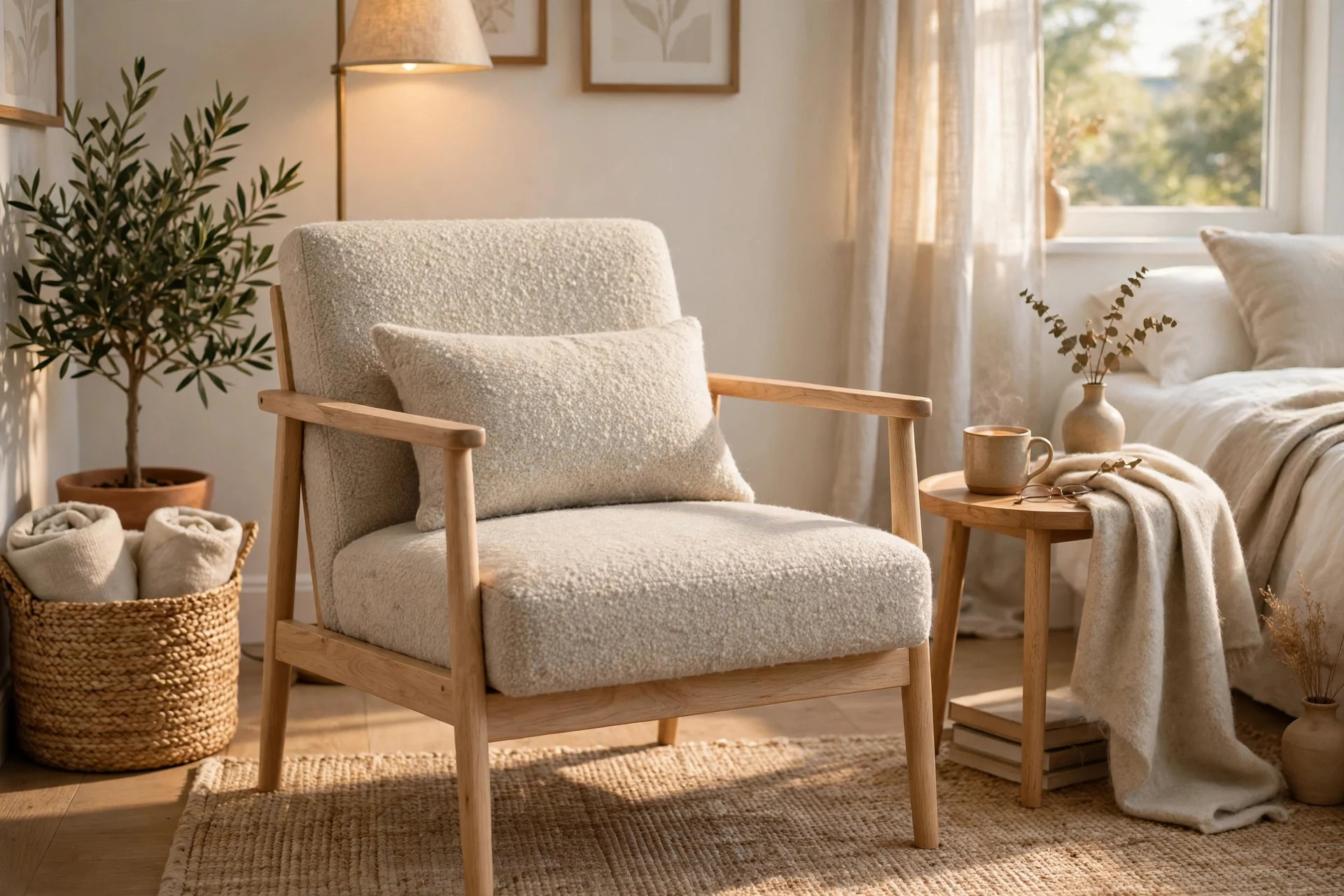
A Wool Throw and Cushion Pair for the Reading Chair
Drape a wool throw over one arm of that chair and add a single cushion in a contrasting wool texture — a smooth weave against a chunky knit, for example. Keep it to one throw and one cushion.
The throw invites you to sit down, and the texture change gives the corner depth. A throw costs $40 to $130 and a wool cushion cover $20 to $60, and arranging them takes two minutes. Tip: choose a throw around 130 by 180 cm, long enough to cover your legs, rather than a small decorative one. Watch out for loose knits near chair arms with rough wood edges, which can snag.
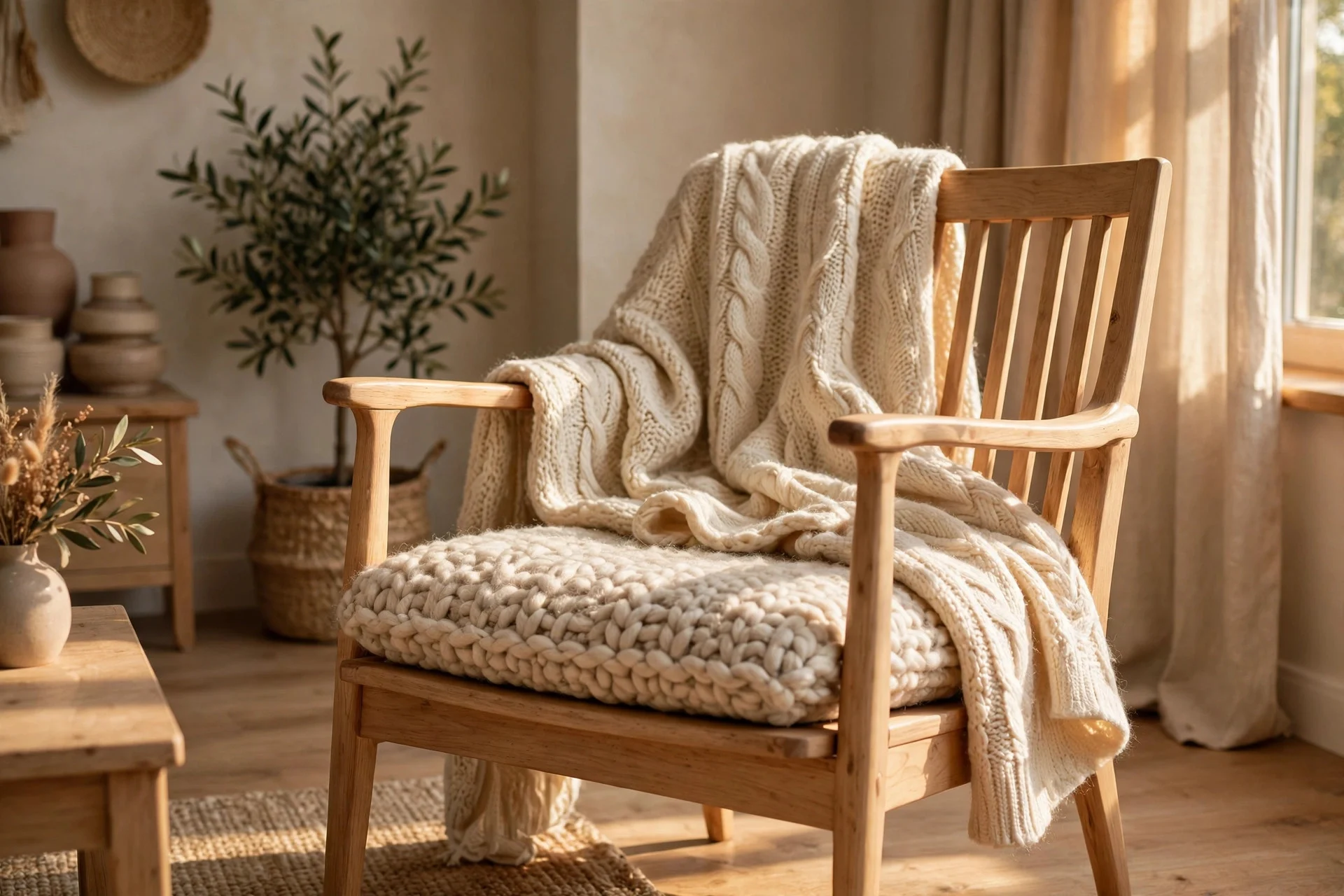
A Low Light Wood Dresser Along the Storage Wall
On the storage wall, place a low, wide dresser in light wood. Three or four deep drawers hold folded clothes well, and the top gives you a calm surface for a lamp or a tray.
A low dresser keeps the wall from feeling top-heavy, and its line echoes the bed. A solid light wood dresser costs $300 to $900, while a veneer version runs $150 to $450, and assembly takes one to two hours. Tip: anchor it to the wall if you have small children, and leave 5 cm clear on each side for drawer handles. Before you buy, bedroom storage ideas can help you plan what actually needs to live in each drawer. Watch out for dressers with dark-stained tops on pale bodies — the mix can look like two pieces stuck together.
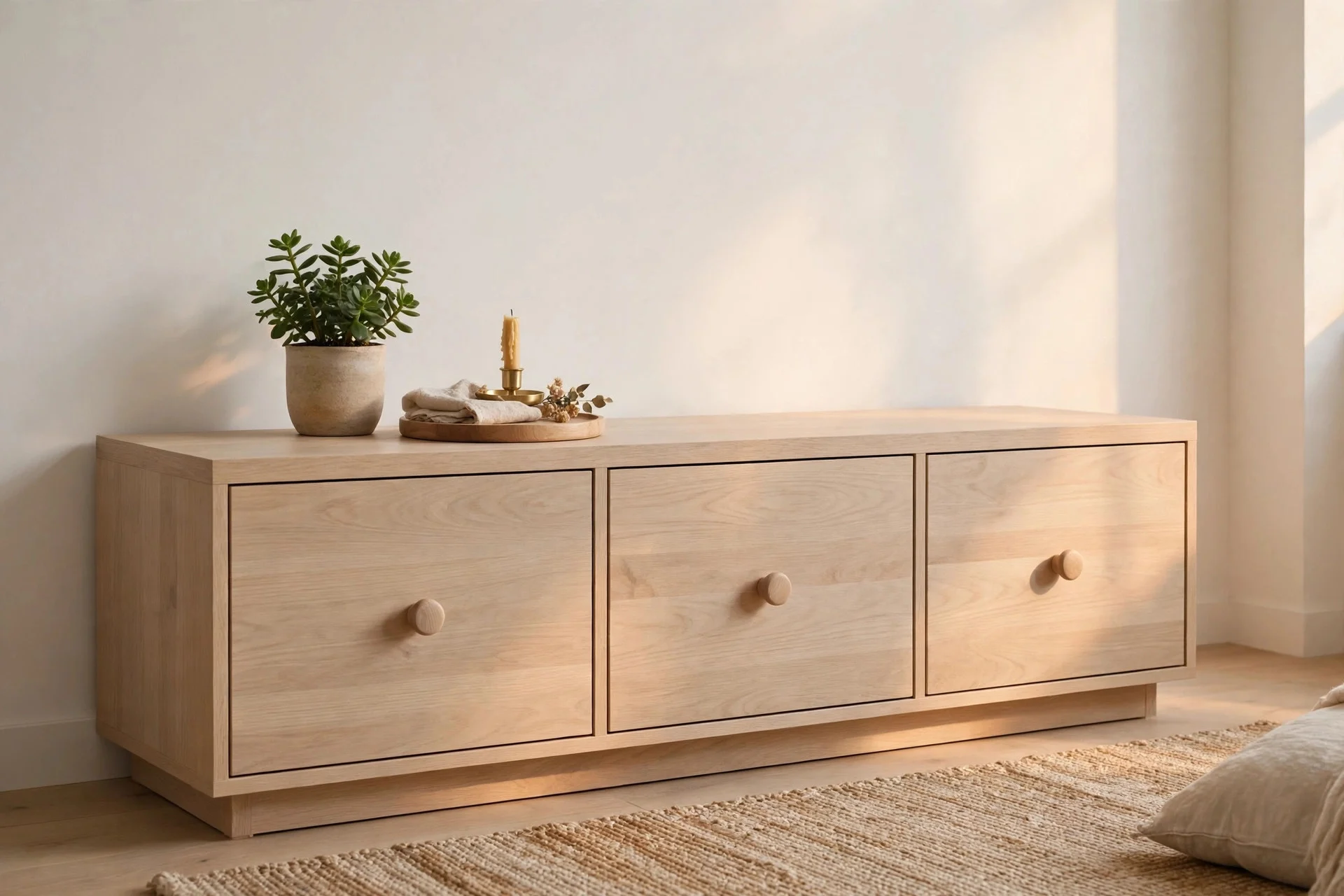
Open Light Wood Shelving with Wool Baskets
Above or beside the dresser, fit one or two open shelves in light wood and store the overflow in wool or wool-blend baskets — scarves, spare throws, or off-season bedding. Leave some shelf space empty.
Open shelving keeps everyday items within reach, and soft baskets stop the shelves looking like a display case. Shelves cost $40 to $150 for a pair, baskets $20 to $60 each, and fitting takes one to two hours. Tip: sort by use instead of labelling — one basket for sleep, one for out-the-door items — so you find things without thinking. Watch out for shelves loaded right up to the ceiling in a small room; two shelves at eye level usually serve you better.
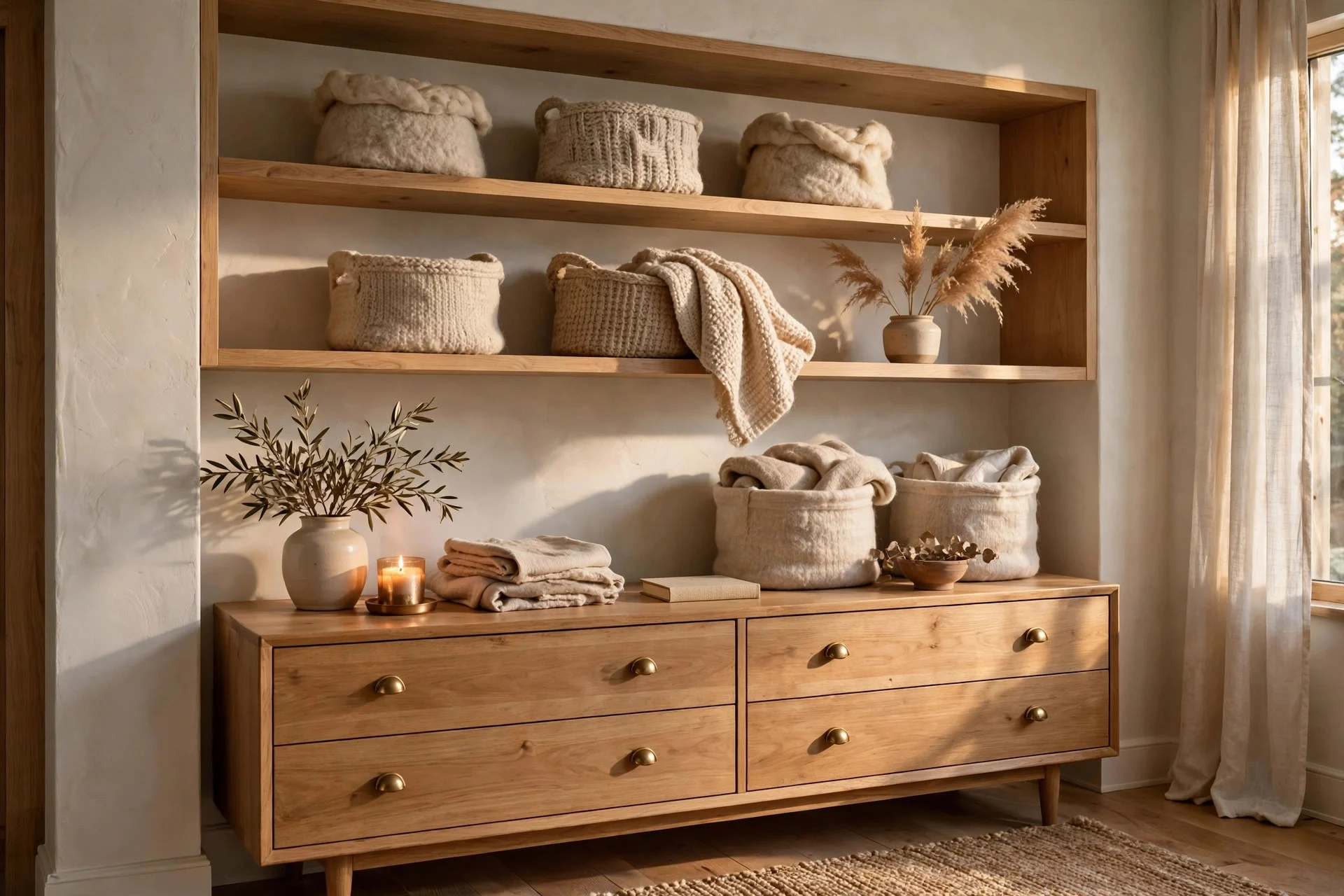
A Large Wool Rug Over the Light Wood Floor
Look at the floor: if you have light wood flooring, lay a large wool rug so it extends at least 45 cm beyond each side of the bed, or runs from under the bed out into the main walkway. A flat weave suits high-traffic spots; a low pile feels softer under bare feet.
The rug softens footsteps, warms the floor, and pulls the bed and reading corner into one zone. A wool rug in bedroom sizes costs $150 to $700, and laying it takes 20 minutes with a second pair of hands. Tip: add a thin rug pad underneath to stop slipping and protect the wood floor. If you are still deciding on size, rug size guide is worth checking before you order, since a rug that is too small can make even a calm room feel off-balance. Watch out for thick, high-pile rugs under doors — check door clearance first.
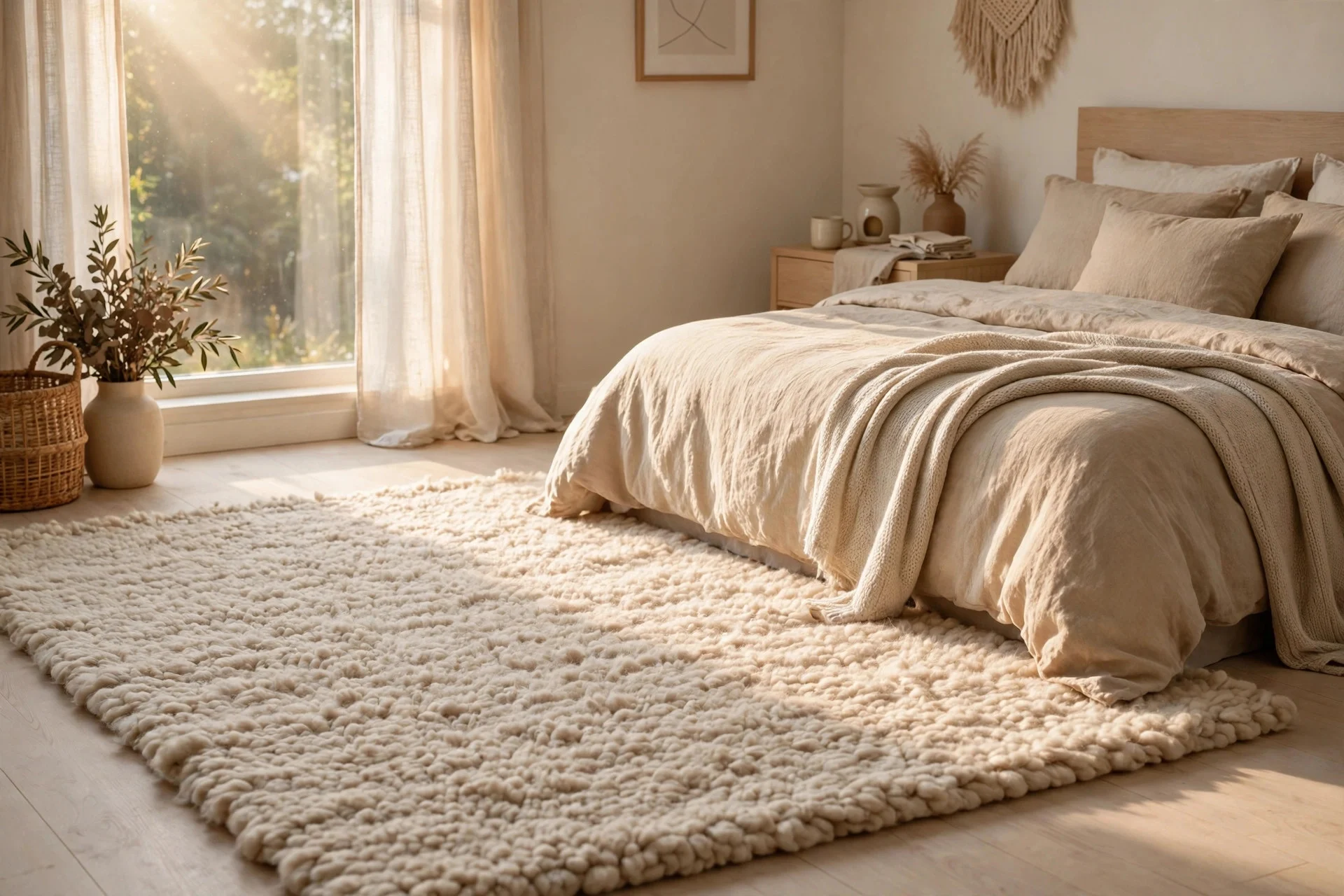
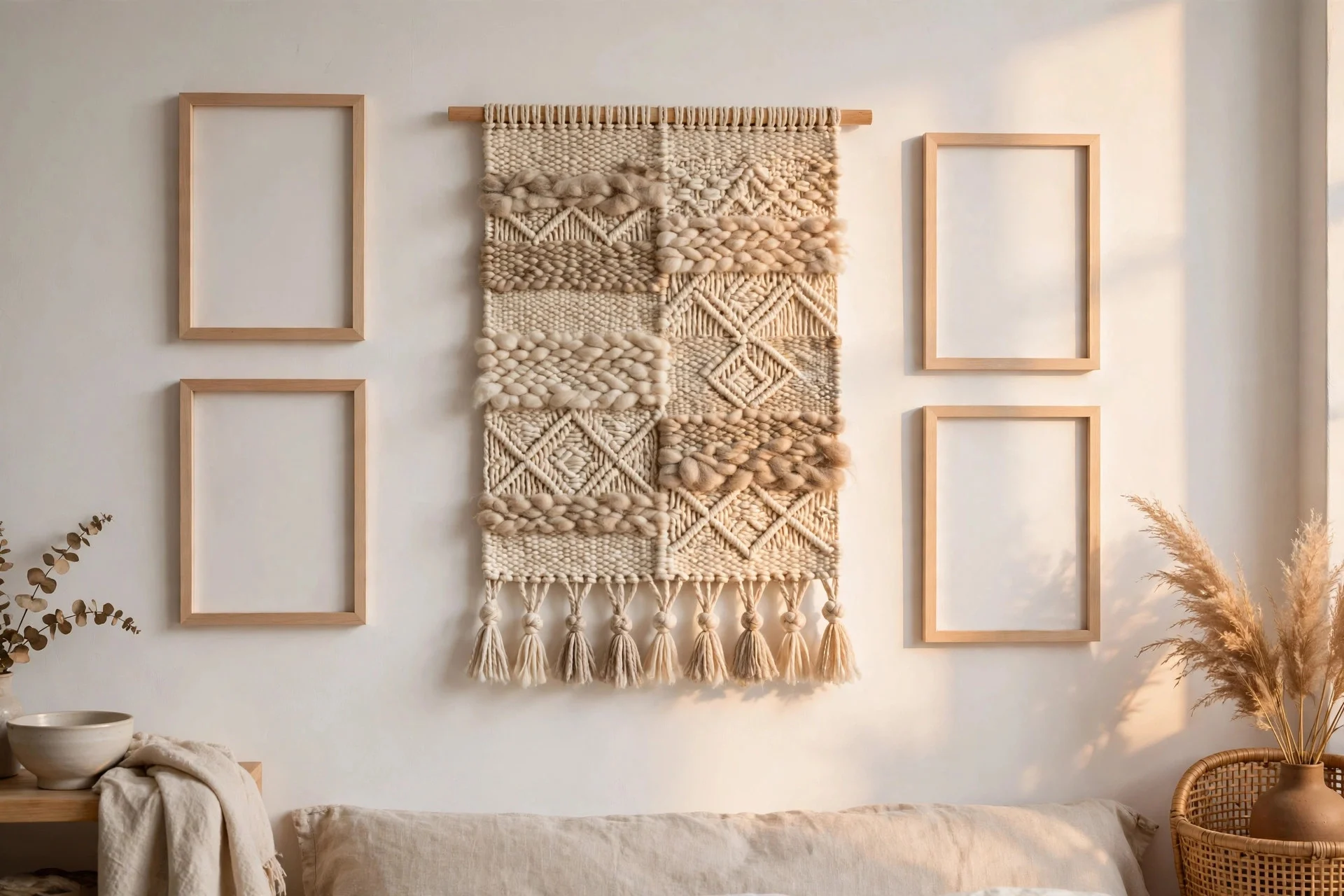
Light Wood Frames and a Wool Wall Hanging
For the walls, keep art simple: two or three prints in slim light wood frames at eye level, plus one wool wall hanging or woven piece for texture. Choose quiet subjects and give each piece space.
Light wood frames repeat the room’s main material, and wool on the wall brings a softness glass and paper cannot. Frames cost $15 to $50 each, and a woven wool hanging runs $40 to $180. Hanging takes under an hour. Tip: lay the arrangement on the floor first and photograph it, so you can check spacing before putting holes in the wall. Watch out for wool pieces in direct sun or above a radiator, since heat and strong light fade and dry the fibres.
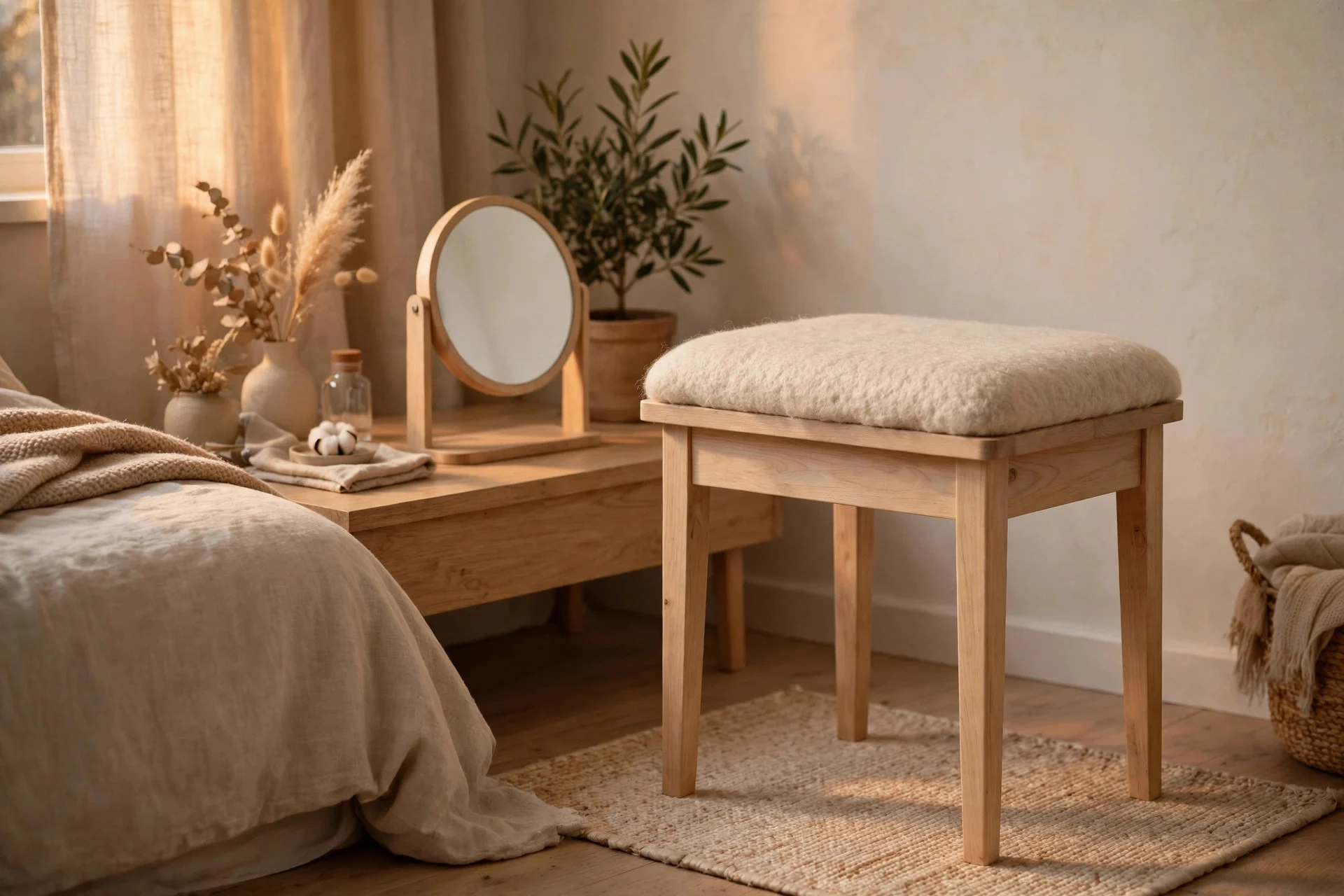
A Dressing Corner with a Light Wood Stool and Wool Seat Pad
Near the storage wall or a mirror, set up a small dressing corner: a light wood stool or slim vanity table, a round mirror, and a wool seat pad on the stool. It gives you a proper place to get ready.
A dedicated corner makes mornings smoother, and the wool pad keeps a hard stool comfortable. A stool costs $50 to $180, a simple vanity table $120 to $350, and a wool seat pad $25 to $60. Setup takes under an hour. Tip: place a small tray on the table for the few items you reach for daily, and keep the rest in the dresser drawers. Watch out for glossy white vanity tops next to pale wood — the shine can clash with the matte, natural finish of the room.
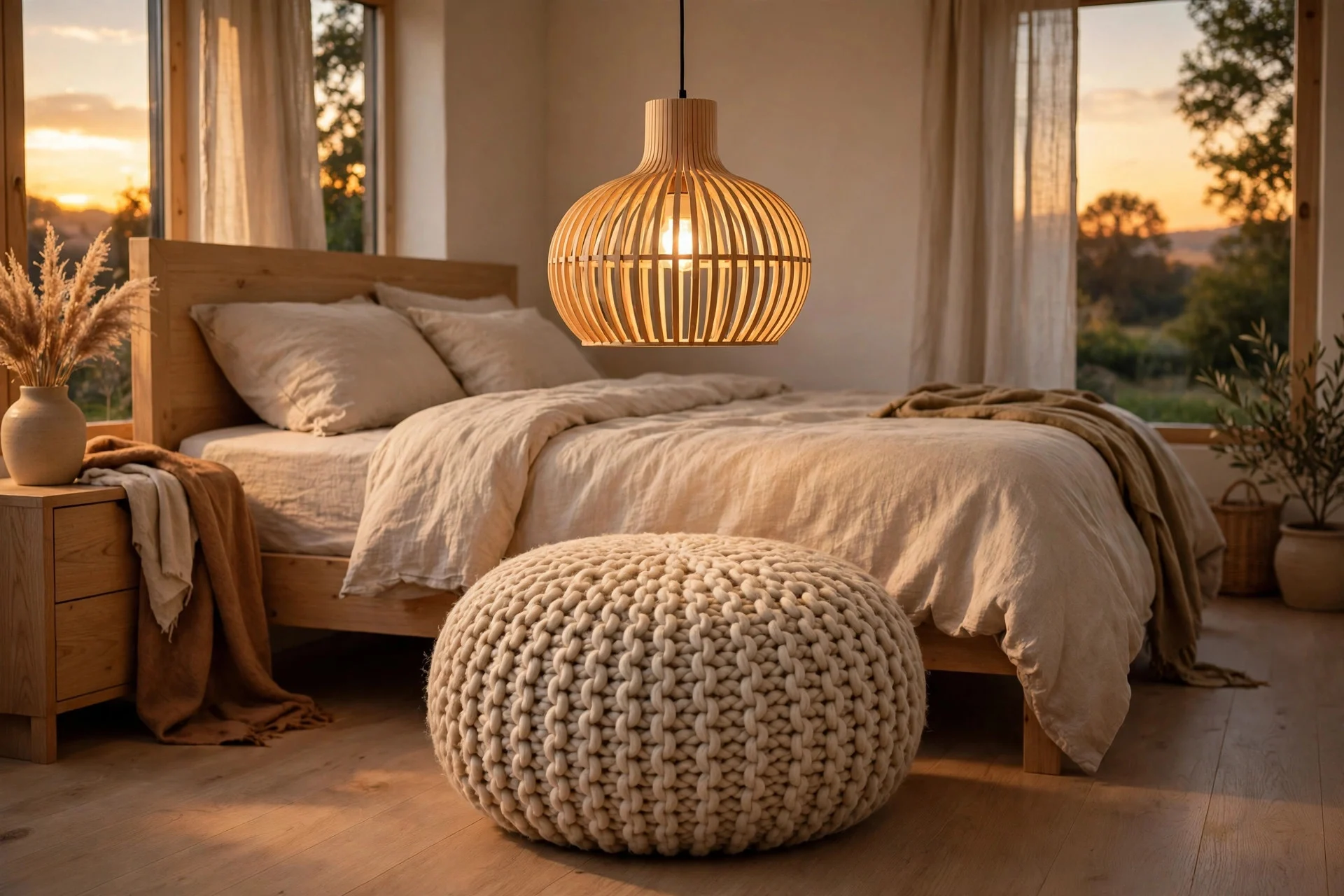
A Wool Pouf and a Light Wood Pendant at the Foot of the Bed
Finish at the foot of the bed: a wool pouf to sit on or rest your feet on, and a light wood or rattan pendant on a dimmer, hanging low nearby.
The pouf closes the room’s loop, while the pendant draws the eye up. A wool pouf costs $60 to $180, and a pendant runs $50 to $200, plus fitting if you need an electrician. Tip: pick a pouf with a removable, washable cover, since foot-of-bed pieces take more wear than they look like they will. For pendant height and warmth to match your bedside lamps, bedroom lighting ideas is a useful check. Watch out for pendants hung too low over a walkway — keep at least 210 cm of clearance beneath one.
Frequently Asked Questions
Does light wood work in a small Scandinavian bedroom?
Yes, and it often works better there than darker wood, because pale oak, birch, and ash reflect light. Keep pieces slim, repeat one wood tone, and let wool add warmth.
Is wool bedding too warm for summer?
Not usually, since wool breathes and moves moisture away from the body, which helps it feel comfortable across seasons. In summer, use a light wool coverlet alone, then bring the heavier throw back when nights turn cool.
How do I keep pale wood from looking yellow over time?
Choose a matte, clear finish rather than a warm oil if yellowing worries you, and keep pieces out of strong direct sun where you can. Dust with a dry cloth, wipe spills at once, and test any polish on a hidden spot first.
Can I mix light wood tones, or should they all match?
You can mix them, but keep the range tight — pale oak with birch reads as a family, while pale oak next to honey pine can look mismatched. If two tones clash, pull them together with wool in one shared neutral, like oatmeal or soft grey.
What is the easiest first step if my budget is tight?
Start with wool bedding and a large wool throw, since they change how the bed feels and looks for under $200 in many cases. Add a light wood bench or peg rail next, then save bigger pieces, like a headboard or dresser, for when you find one you truly like.
A Short Checklist Before You Start
Walk your room once with this list in hand. Note the light through the day, measure the bed, window, and storage walls, and list pieces you already own in light wood or wool. Then pick three ideas to start with — one for the bed, one for the floor or windows, and one for storage — and live with those for a week before buying more.