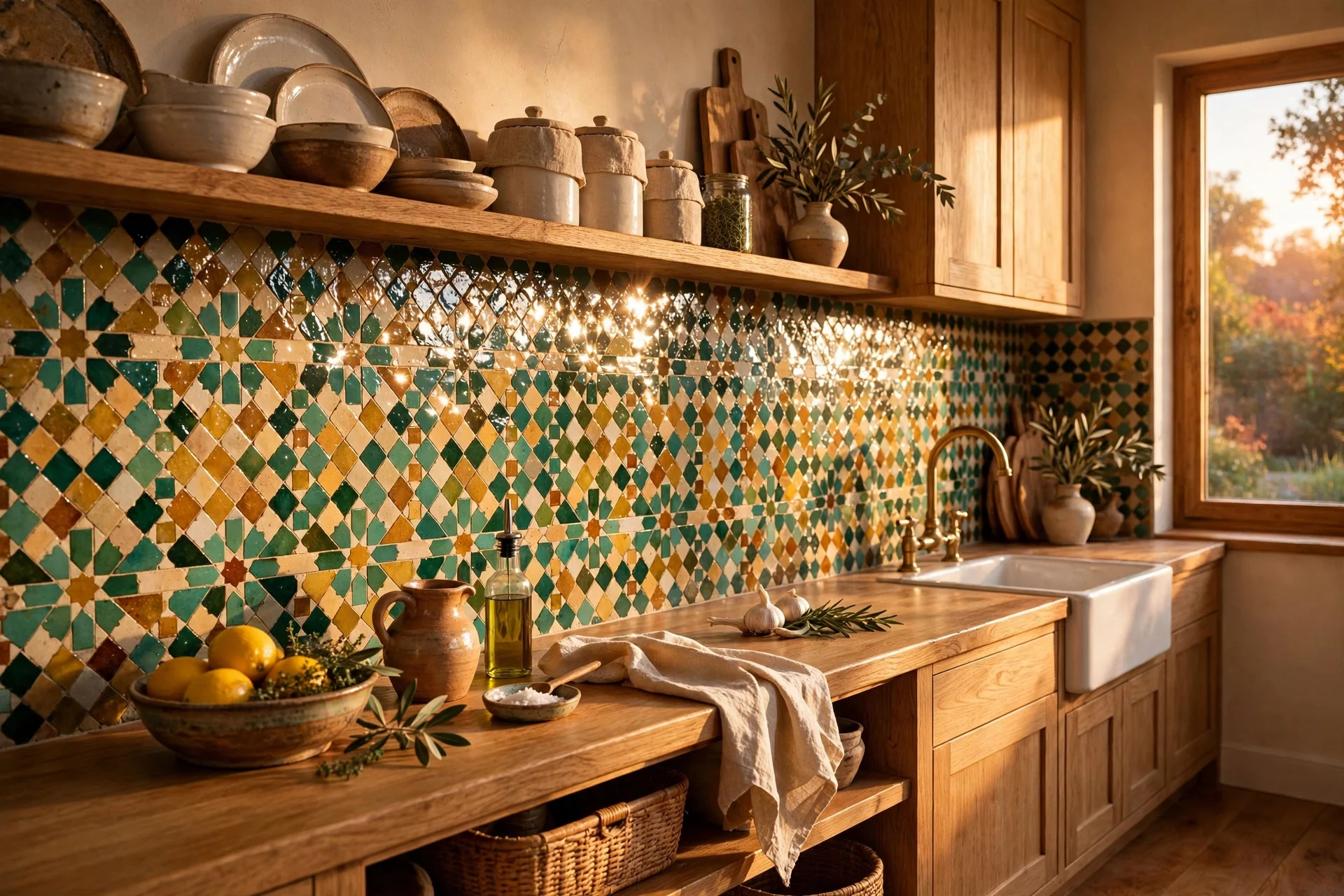
Zellige tiles are handmade Moroccan tiles with a slightly uneven glaze, soft edges and small colour shifts from tile to tile. That imperfection is the whole point: instead of a flat, factory-perfect wall, you get a surface that catches light differently at every angle and looks like it was made by hand — because it was. Here are twelve ways to use that look behind your cooker and sink, from the safest white to the boldest colour.
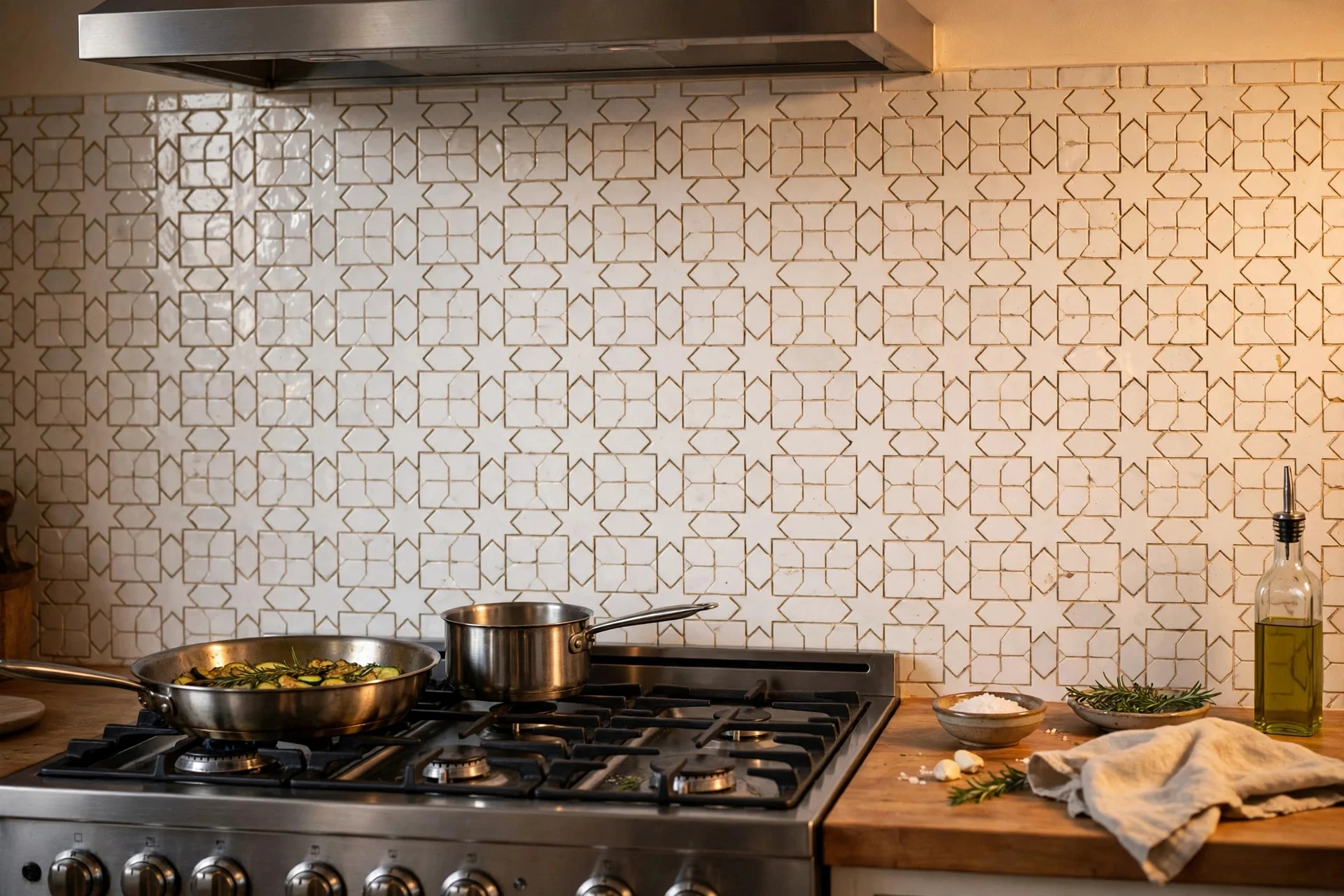
1. White Glazed Zellige
White is the easiest entry point. The glaze pools and varies just enough that a white wall never looks flat, and it bounces light around a small kitchen the way plain white subway tile cannot. It works with any cabinet colour and never dates.
Cost: $12–$25 per square foot for tile, plus fitting. Difficulty: moderate — the uneven edges need a careful tiler. Tip: use a grout colour close to the tile, not bright white, so the variation in the glaze stays the star. Watch out: cheap machine-made copies of zellige look flat up close, so check a sample in your own light before ordering.
2. Sage Green Zellige
Sage sits between grey and green, so it calms a kitchen without turning it into a colour statement. It pairs naturally with oak, cream cabinets and brass taps, and it hides water marks around the sink better than white does.
Cost: $14–$28 per square foot. Difficulty: moderate. Tip: order 10–15% extra tile — handmade batches vary, and you want spares from the same batch for future repairs. Watch out: sage can read grey in north-facing light, so check your sample on a dull day as well as a sunny one.
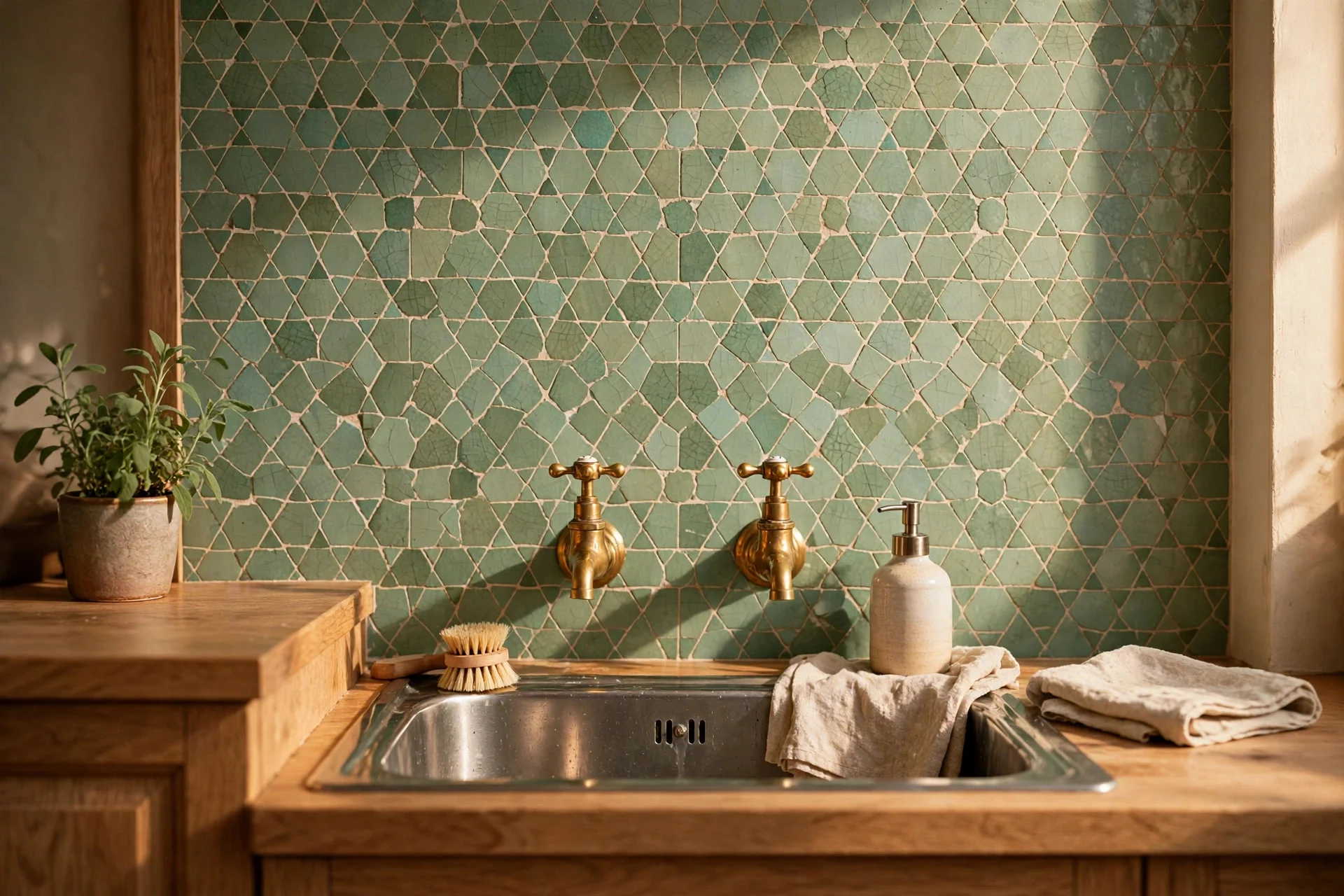
3. Terracotta Clay Tones
Terracotta zellige brings warmth that suits wood cabinets, cream walls and Mediterranean-style kitchens. The clay tones vary from soft peach to deep rust within one batch, which gives the wall a sun-baked, handmade feel no printed tile can copy.
Cost: $14–$30 per square foot. Difficulty: moderate. Tip: seal terracotta-toned tiles before grouting, since the glaze can be slightly more porous than white. Watch out: strong terracotta dominates a small kitchen fast — balance it with pale worktops and open shelving. For how terracotta works elsewhere in the home, these terracotta bedroom accents show the same warm-tone balancing act.
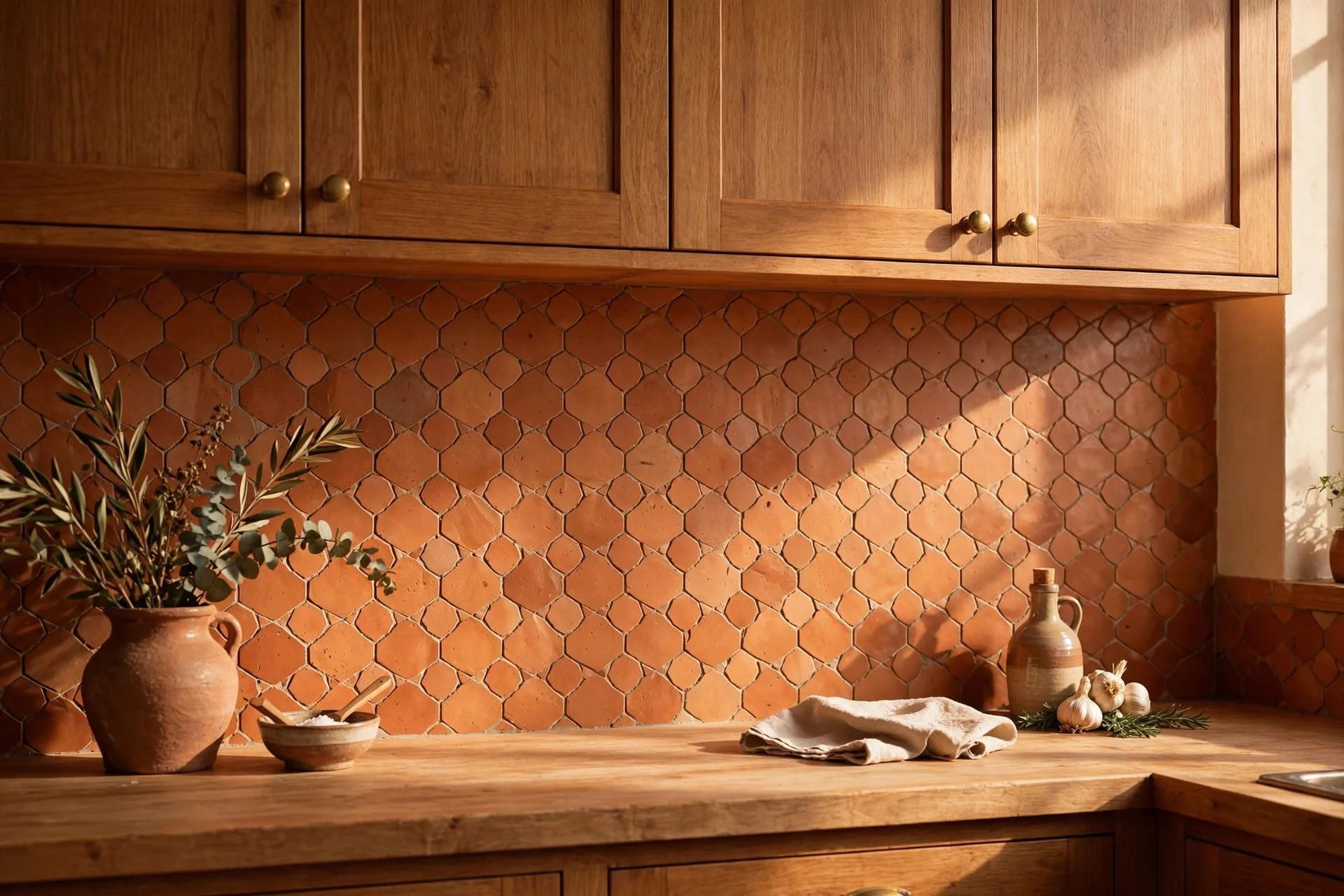
4. Deep Blue and Teal Zellige
Deep blue or teal zellige turns the backsplash into the room’s centrepiece. The glaze depth makes the colour shift as you move past it, from navy in shadow to bright teal in sunlight. It looks best against white or pale wood cabinets, where the colour has room to breathe.
Cost: $15–$30 per square foot. Difficulty: moderate. Tip: keep everything else quiet — plain worktops, simple handles — and let the tile do the talking. Watch out: dark glaze shows limescale around the tap faster than pale tile, so wipe the sink splash zone dry if you have hard water.
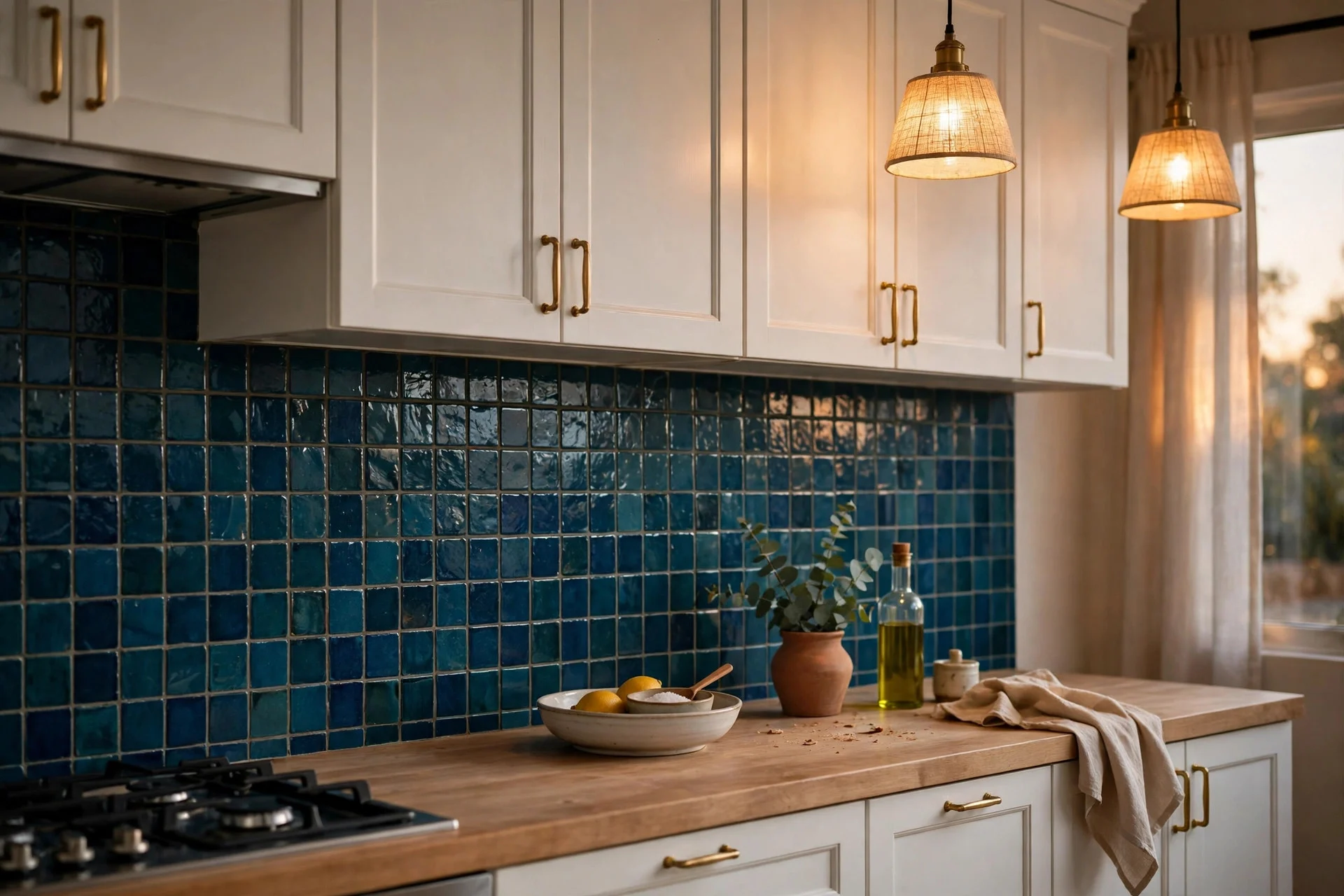
5. Soft Blush Zellige
Blush is the quiet surprise of the zellige range. It reads as warm neutral from across the room and only shows its pink tint up close, which makes it a good choice if you want warmth without committing to an obvious colour. It suits cream, oak and pale grey kitchens.
Cost: $14–$28 per square foot. Difficulty: moderate. Tip: pair blush tile with brass or brushed gold taps — the warm metals pull the pink out gently instead of clashing with it. Watch out: blush next to a strong red or orange accessory turns pink fast, so keep nearby colours calm.
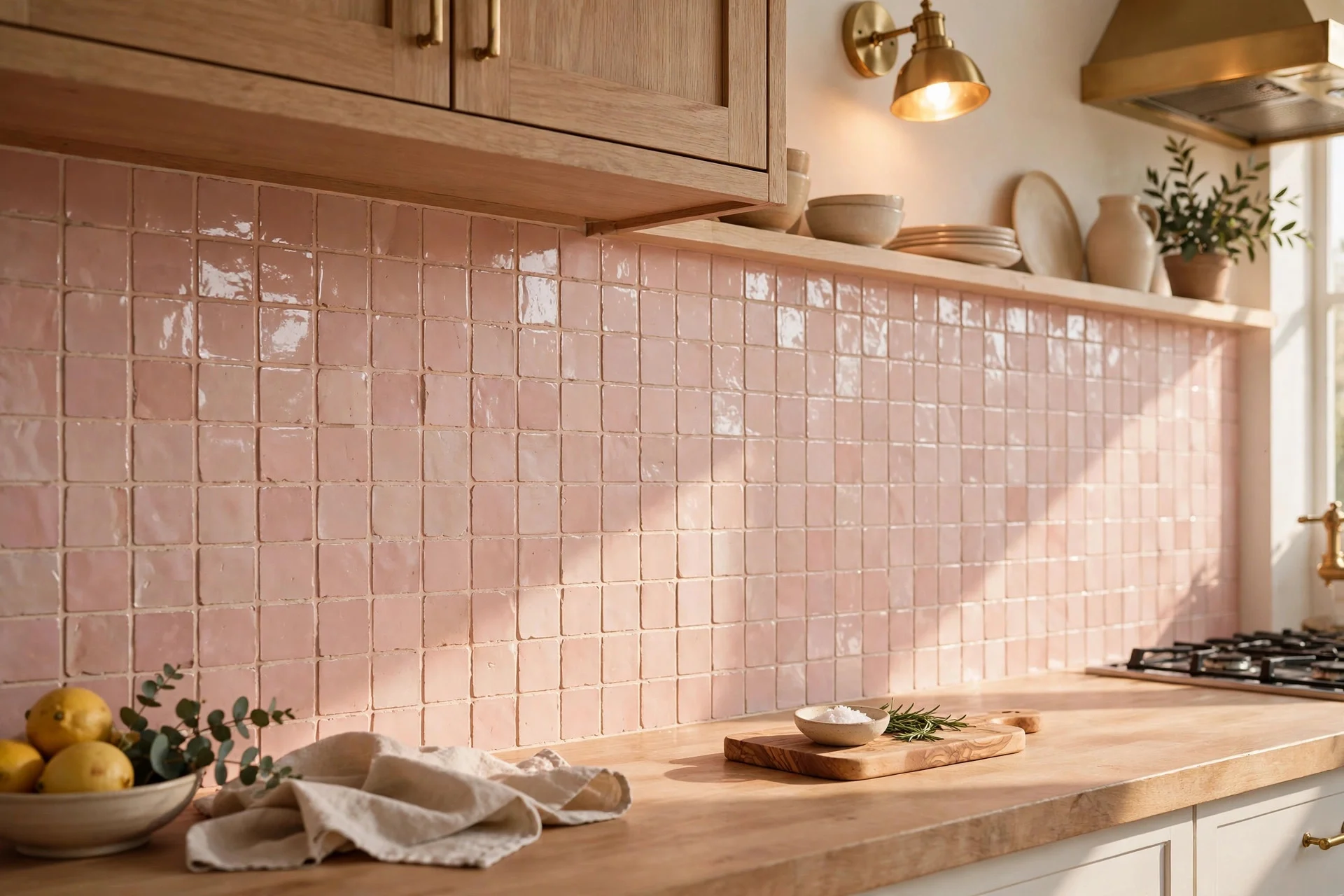
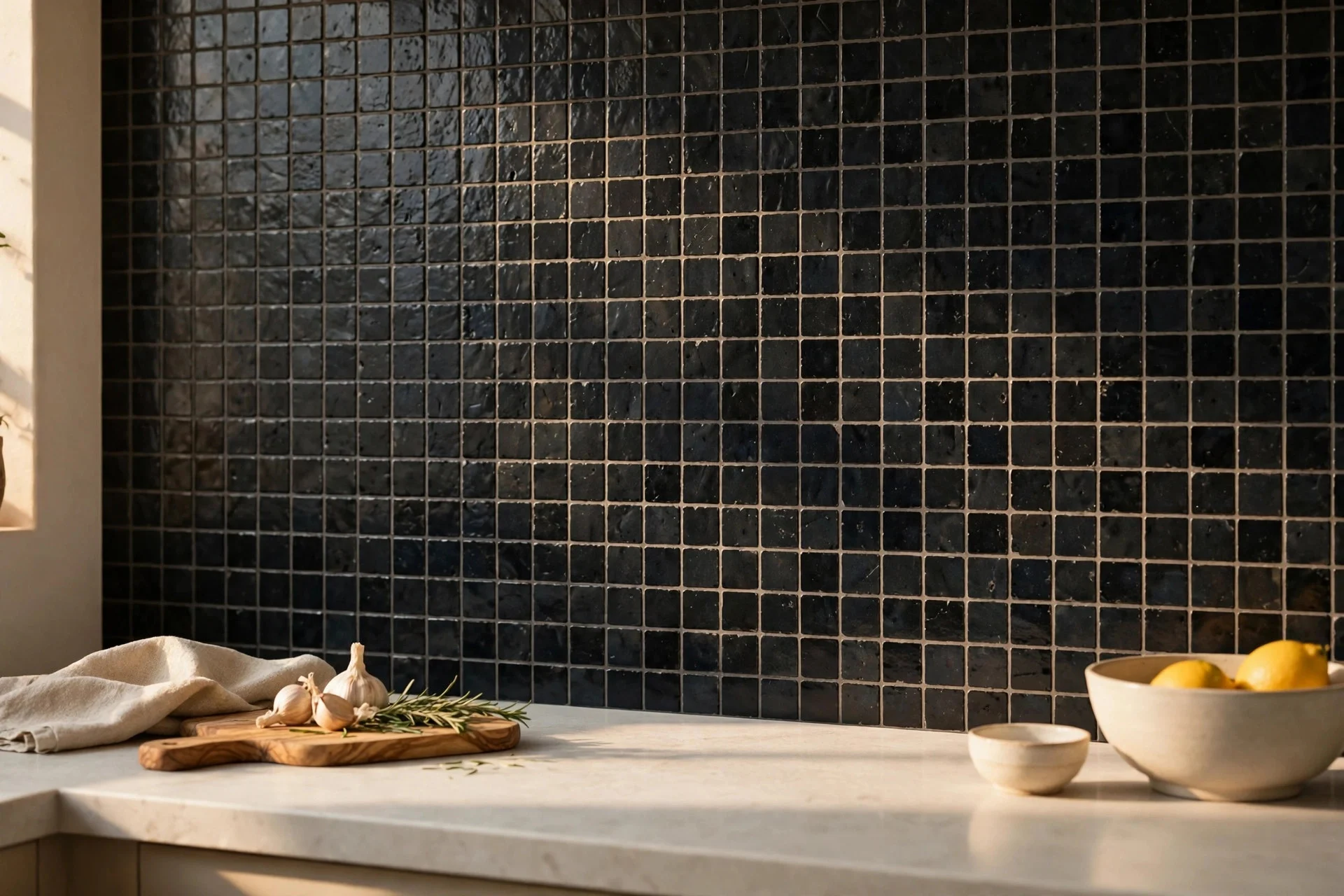
6. Charcoal Zellige
Charcoal zellige gives you drama without pattern. The dark glaze still has the handmade variation, so the wall looks deep and textured rather than flat black. It suits kitchens with light worktops and open shelving, where the contrast does the work.
Cost: $14–$28 per square foot. Difficulty: moderate. Tip: add under-cabinet lighting — dark tile needs light to show its glaze variation, or it just reads as black. Watch out: charcoal shows dust and water spots, so plan a quick wipe into your cooking routine. If you like dark green and brass pairings, dark green and brass shows how dark tones and warm metals work together.
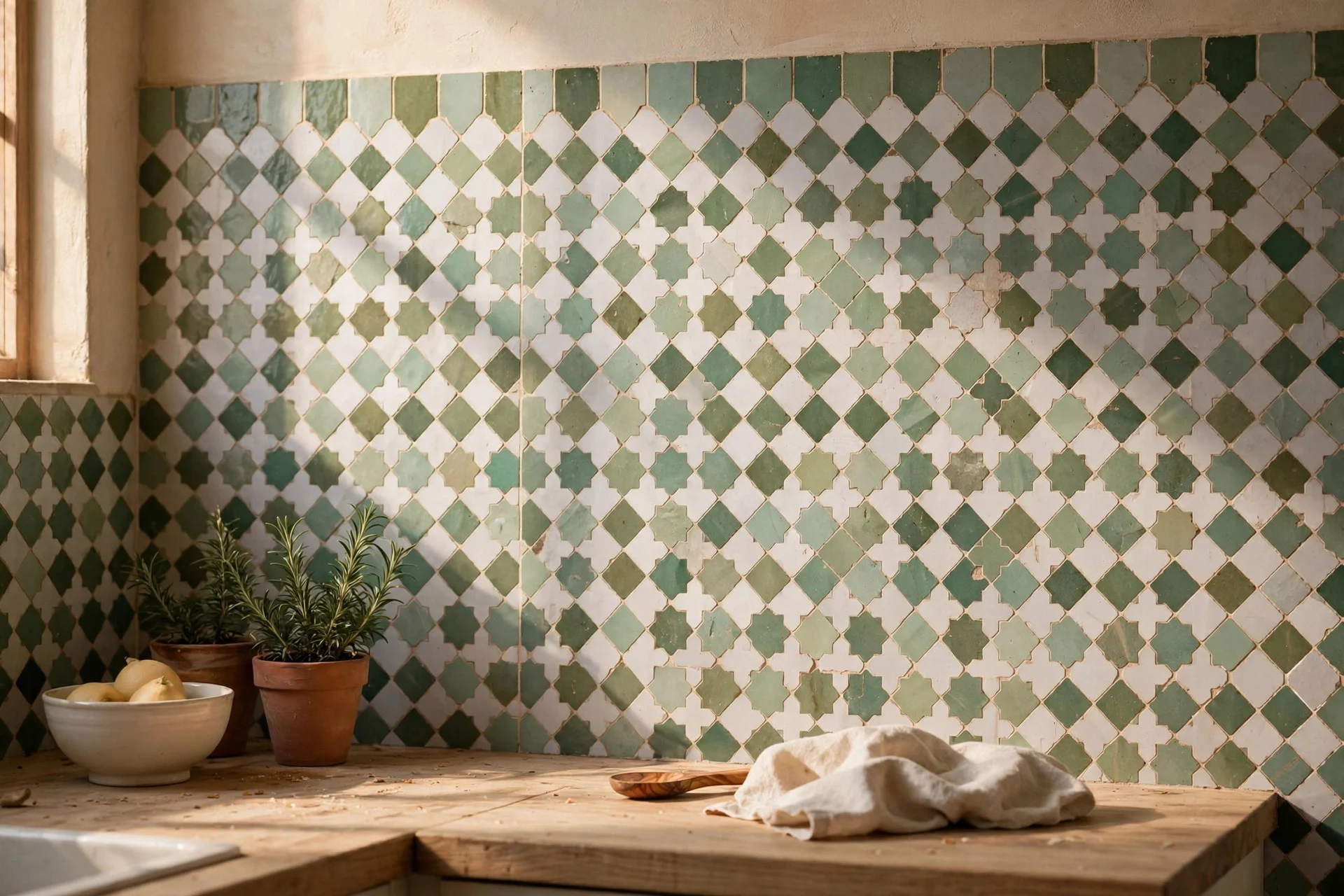
7. Mixed-Tone Field
Instead of one colour, mix two or three tones from the same family — whites with pale greys, or sage with a few deeper greens scattered through. The result looks like a natural handmade batch rather than a deliberate pattern, and it hides the odd replacement tile completely.
Cost: $14–$30 per square foot. Difficulty: moderate to high, because the tiler needs to blend tones by eye. Tip: mix the tiles from all your boxes before laying starts, so one shade does not cluster in a corner. Watch out: agree the mix ratio with your tiler first — “roughly equal” and “mostly pale with a few dark” are very different walls.
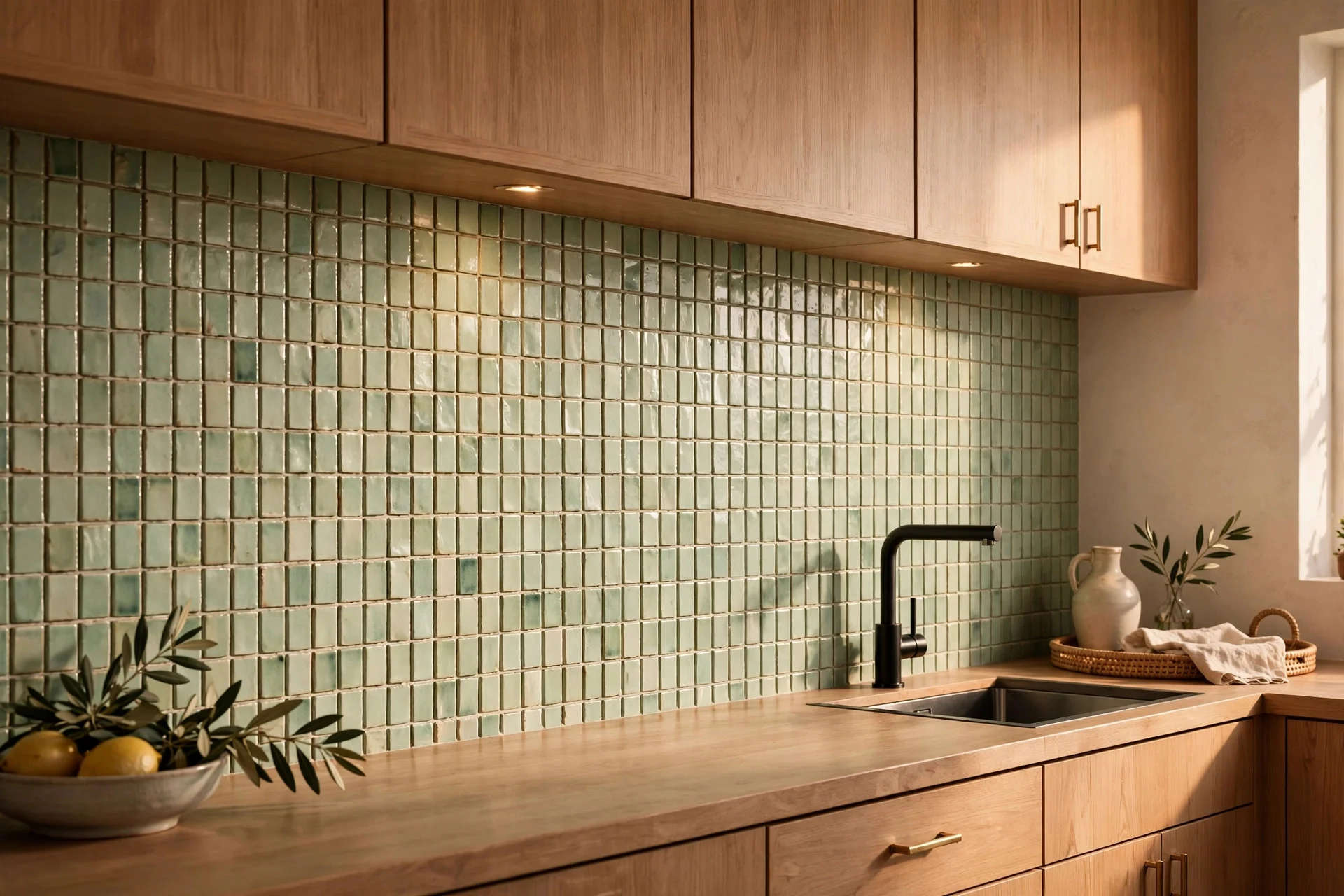
8. Vertical Stack Bond
Laying zellige in a straight vertical stack, instead of the usual brick offset, gives a calm, modern feel that suits handleless kitchens. The vertical lines draw the eye up and make a low ceiling feel taller, while the handmade glaze keeps it from looking cold.
Cost: $12–$28 per square foot, plus fitting. Difficulty: moderate; straight lines show every wobble, so the wall must be flat. Tip: use tile spacers even though zellige edges are uneven — they keep the vertical lines honest. Watch out: on a wall that is not perfectly flat, a stack pattern highlights the bumps more than a brick pattern would.
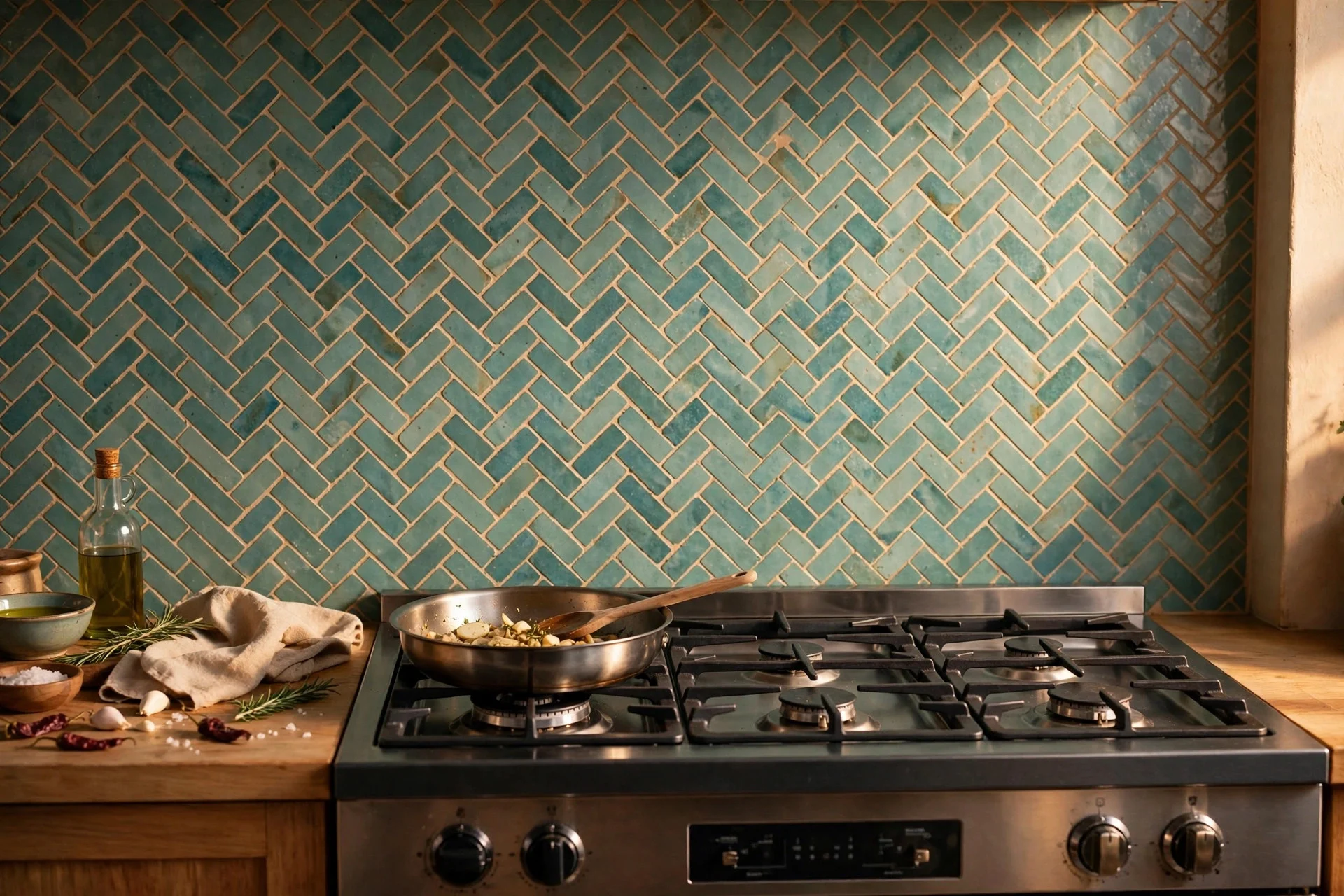
9. Herringbone Zellige
Herringbone turns the backsplash into a pattern in its own right. The zigzag catches light in two directions, so the wall shifts as you walk past. It works best in one colour, where the pattern — not a colour change — creates the interest.
Cost: $15–$32 per square foot, plus higher fitting cost for the cuts. Difficulty: high — herringbone needs an experienced tiler and more cuts. Tip: buy 15–20% extra for cuts and mistakes; herringbone wastes more tile than straight layouts. Watch out: in a very small kitchen, herringbone can feel busy, so keep it to the cooker wall only and use plain tile elsewhere.
10. Full-Height to the Ceiling
Running zellige from worktop to ceiling, instead of stopping at the wall units, makes the tile a feature wall rather than a splash guard. It suits kitchens with open shelving or no wall units on that stretch, where the full height is visible.
Cost: $400–$1,200 for one wall, depending on size. Difficulty: moderate to high. Tip: take the tile right into the ceiling line with no painted gap — a strip of paint at the top looks unfinished. Watch out: full-height tile is a commitment, so live with a sample board on the wall for a week before ordering the full quantity. If you are working out quantities, the tile calculator helps you estimate tiles and wastage for the wall.
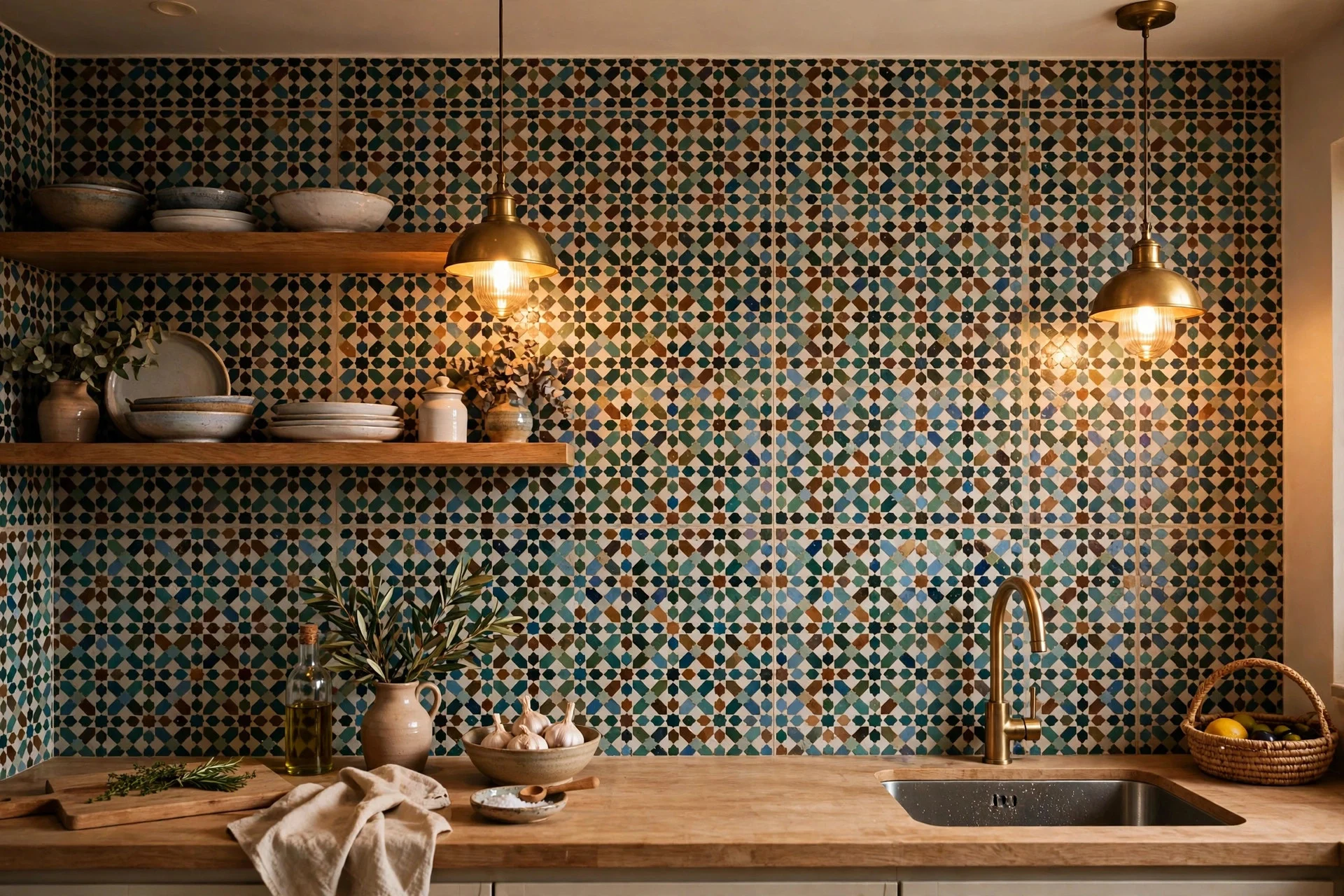
11. Shelf Ledge or Niche in the Tile
A slim shelf ledge built into the tiled wall — or a shallow niche lined with zellige — gives you a spot for oils, spices or a small plant right where you cook. The tile continues around the ledge, so it looks built-in rather than added on.
Cost: $150–$400 extra on top of the tiling. Difficulty: high; the ledge needs waterproofing and a slight slope so water runs off. Tip: keep the ledge narrow, about 10 cm, so it holds jars without inviting clutter. Watch out: a flat ledge beside the sink collects standing water — ask your tiler to slope it slightly toward the room.
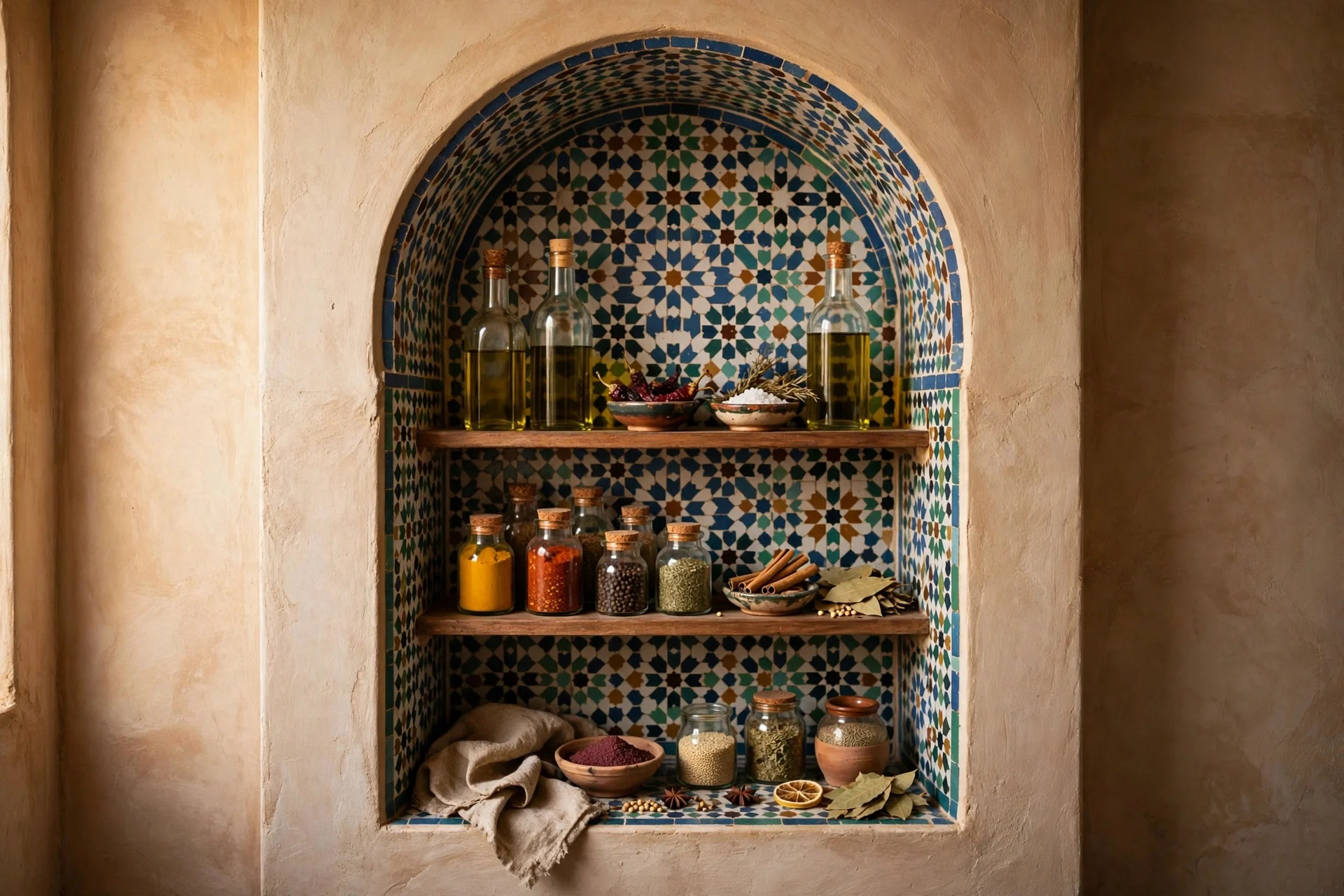
12. Zellige With Wood and Open Shelving
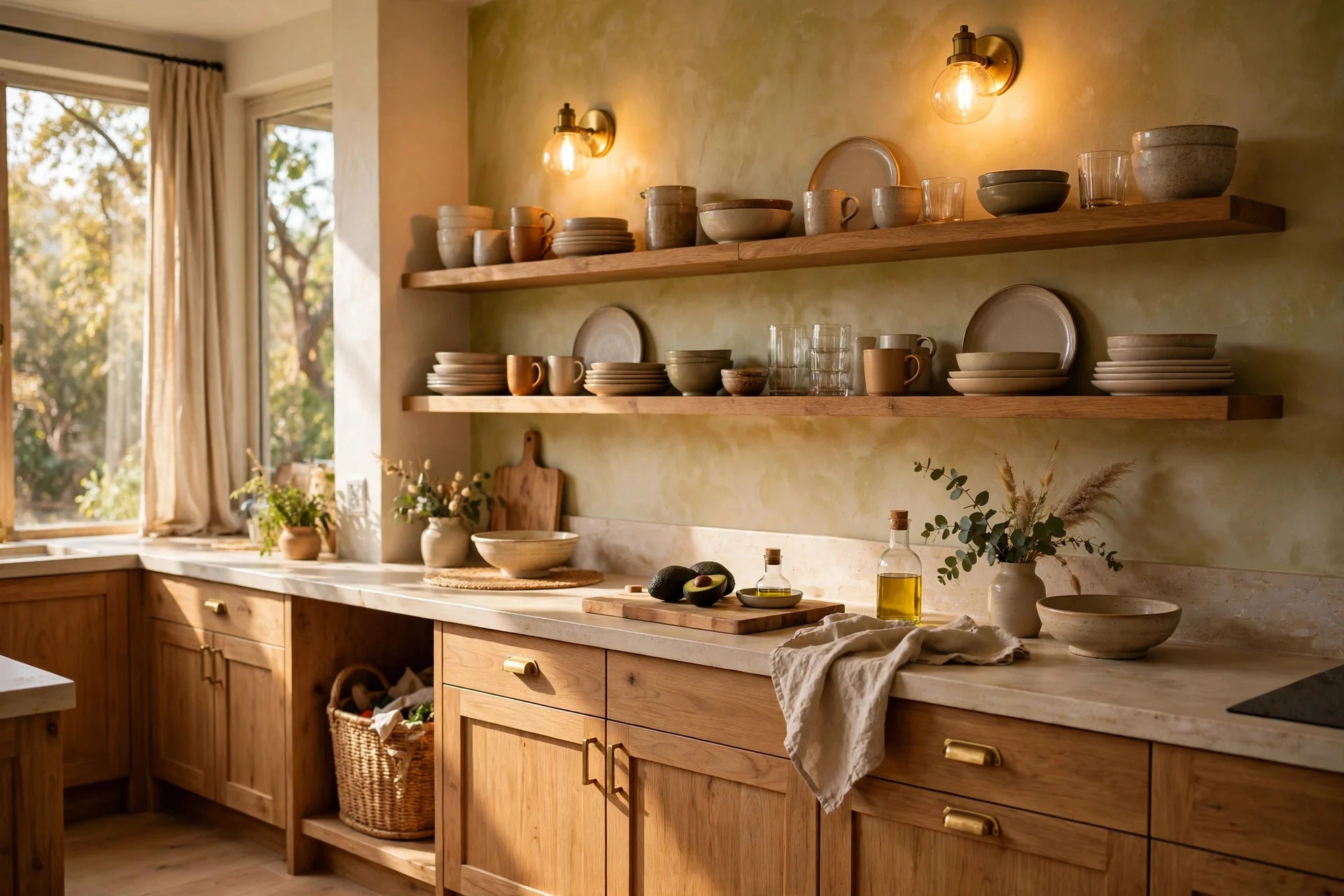
The most forgiving way to use zellige is alongside warm wood and open shelves. The wood softens the tile, the shelves break up the wall, and the handmade glaze ties the two together. Pale zellige with oak shelves is the safest version; deep green with walnut is the boldest.
Cost: $14–$30 per square foot for tile, plus $40–$150 for shelf boards. Difficulty: moderate. Tip: fit the shelves after tiling, not before, so the tile runs cleanly behind them. Watch out: wood shelves above a hob need a heat gap — keep at least 60 cm between the hob and the lowest shelf, or the wood dries and warps.
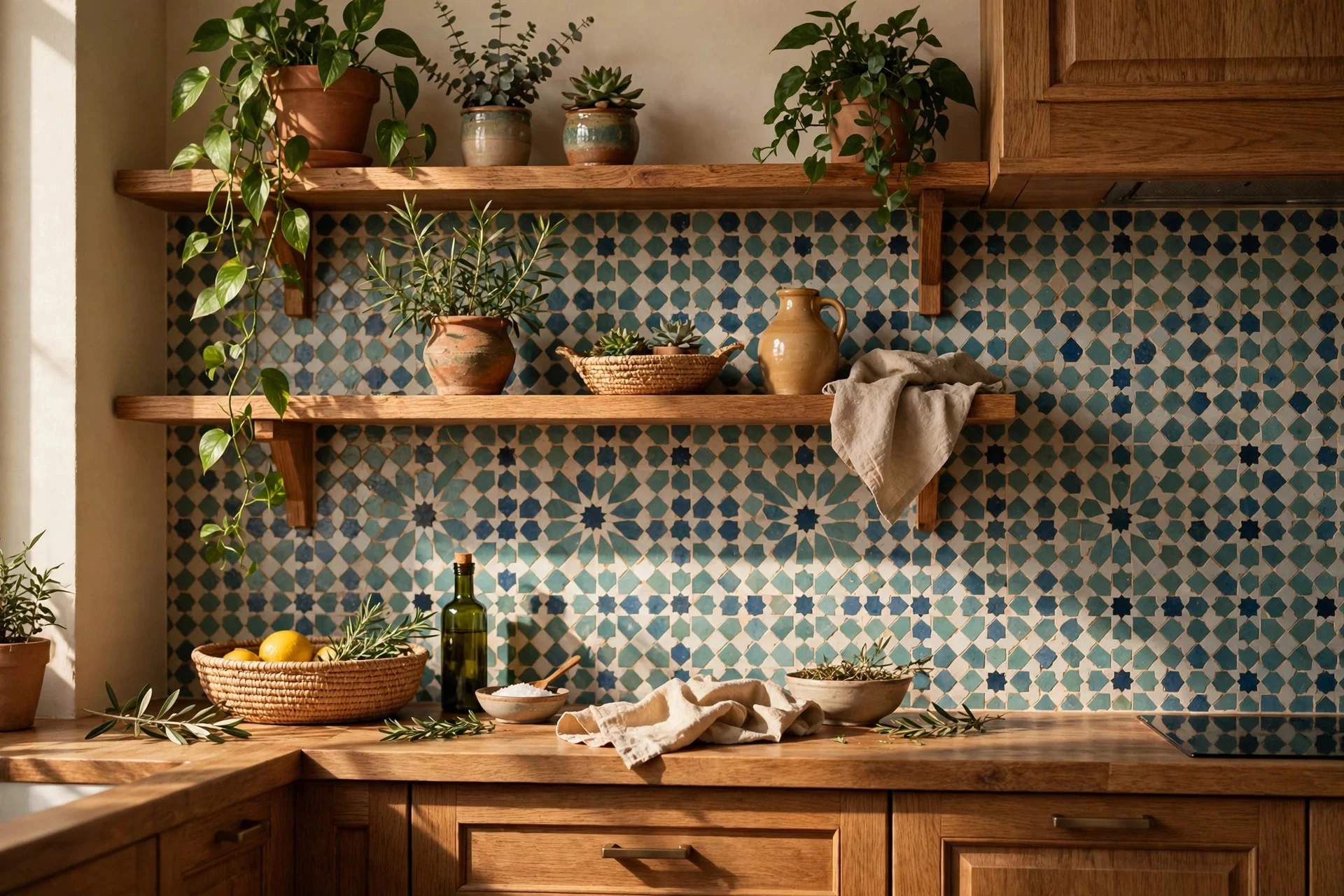
Before You Order: Samples, Batches and Sealers
Three practical points save most zellige buyers a headache. First, always order samples and look at them in your kitchen, not in the shop — the glaze shifts a lot between showroom spotlights and ordinary daylight, and a colour you love under bright lights can look muddy at home. Second, buy all your tile in one order from one batch, plus 10–15% extra. Handmade batches vary, and a second order months later will not match the first, which matters if a tile cracks and needs replacing. Third, seal before grouting. A penetrating sealer keeps grout pigment out of the glaze’s tiny dips and makes the wall far easier to clean for years afterward. Your tiler should know this, but ask anyway — it is a five-minute question that prevents a permanent stain problem.
Frequently Asked Questions
Is real zellige hard to clean?
No harder than any glazed tile, as long as it is sealed properly. The uneven surface holds a little more grime in its dips, so a quick wipe with warm soapy water after cooking keeps it fresh. Avoid abrasive pads, which dull the glaze over time.
Can you use zellige in a rental?
Full tiling is rarely rental-friendly, but peel-and-stick zellige-look panels give you a similar handmade feel without damaging the wall. They will not fool anyone up close, but from a normal standing distance they read convincingly — and they come off cleanly.
Why does zellige cost more than subway tile?
Each tile is shaped, glazed and fired by hand in small batches, so production is slower and wastage is higher. You are paying for the variation itself. Machine-made lookalikes cost less, but they repeat the same few “variations” and the repetition shows on a large wall.
Does zellige suit a modern kitchen?
Yes, if you pick the right layout. A vertical stack or a plain white field in a handleless kitchen looks thoroughly modern — the handmade texture stops the room feeling sterile. It is the pattern and colour that set the style, not the tile itself.
Practical Wrap-Up
Pick your colour in your own light, order from one batch with spares, and choose the layout that suits your wall — stack for modern, herringbone for pattern, full-height for drama. Seal before grouting, grout close to the tile colour, and give the wall a week of living with a sample before you commit. Done that way, a zellige backsplash is the rare kitchen choice that looks better the longer you live with it.