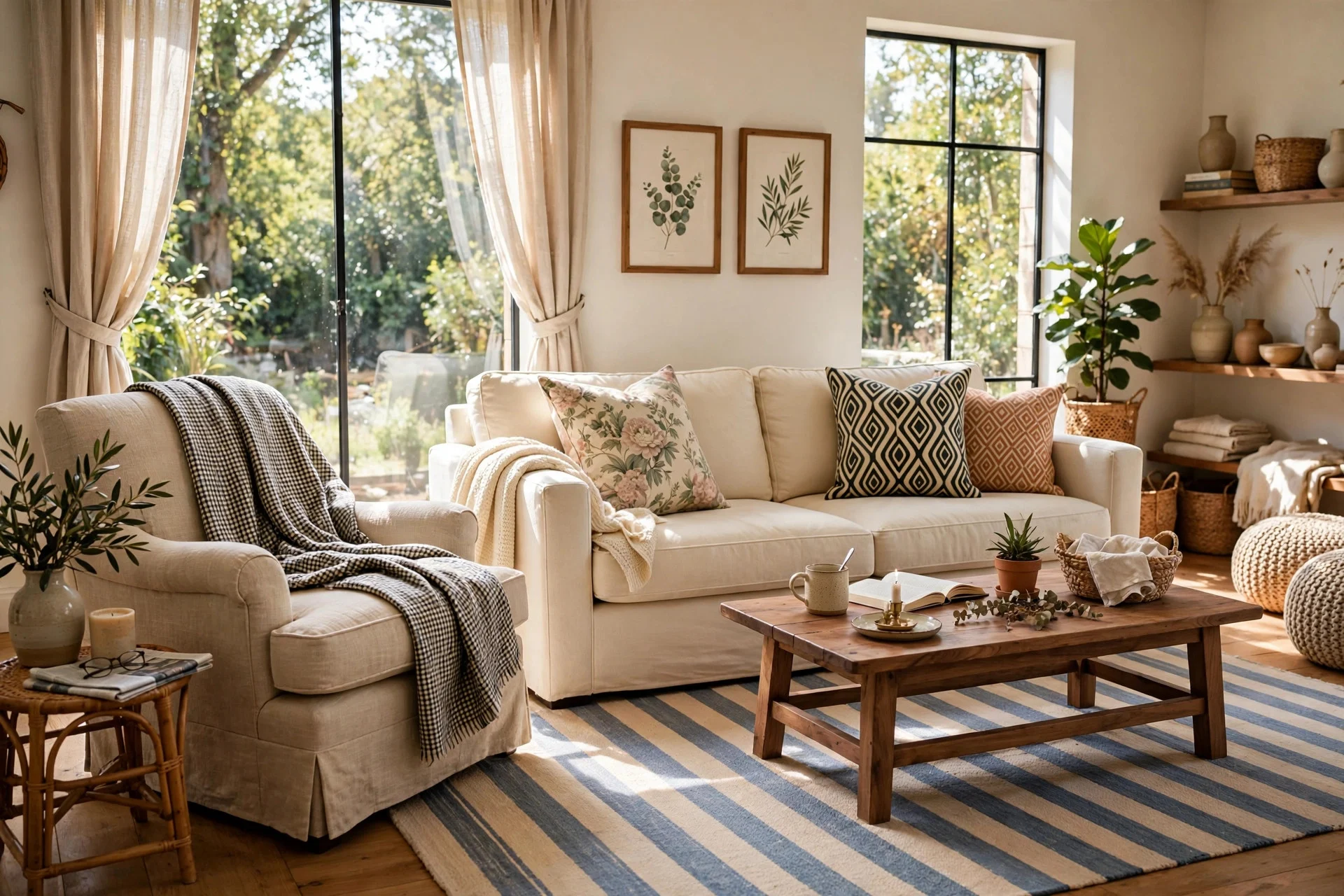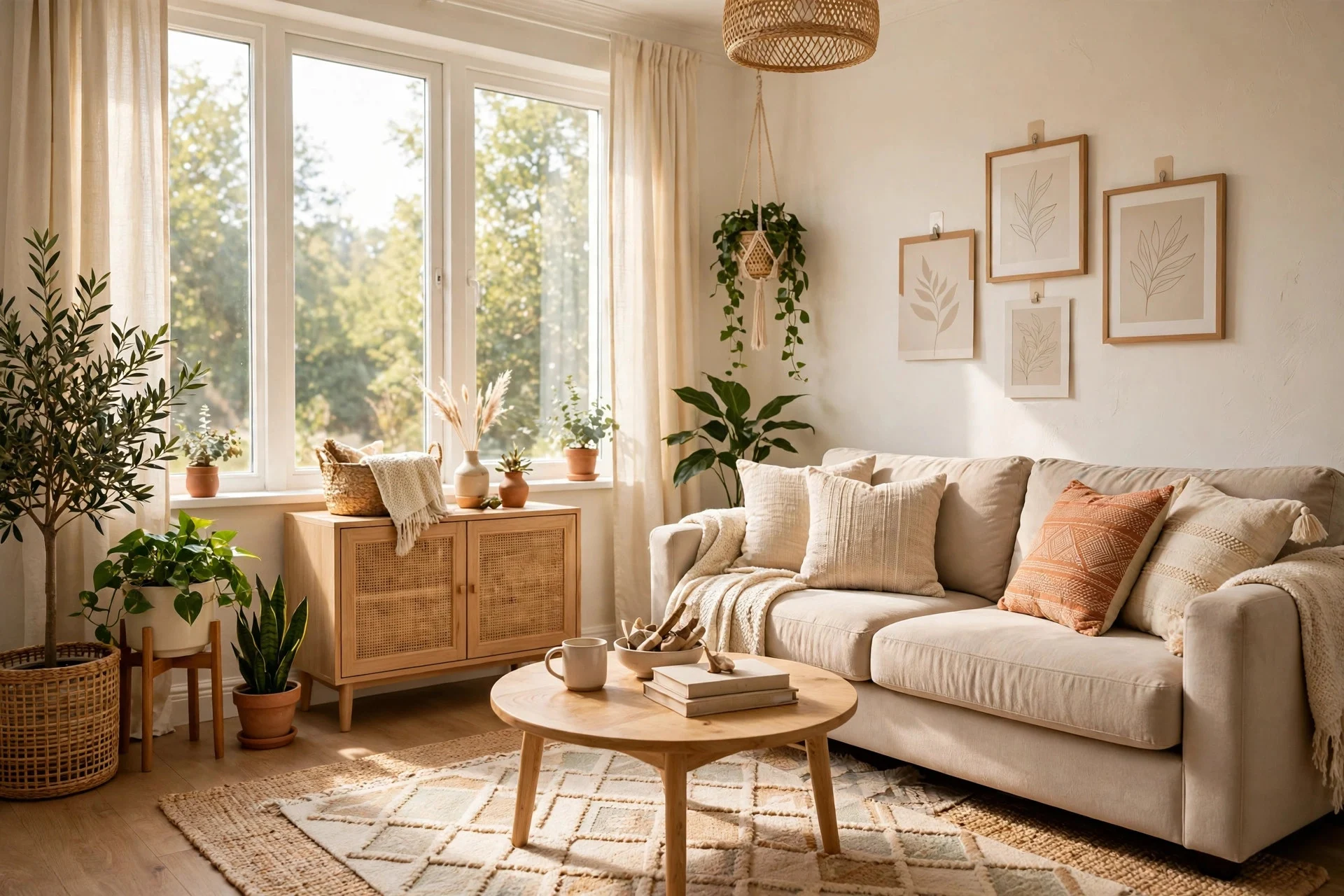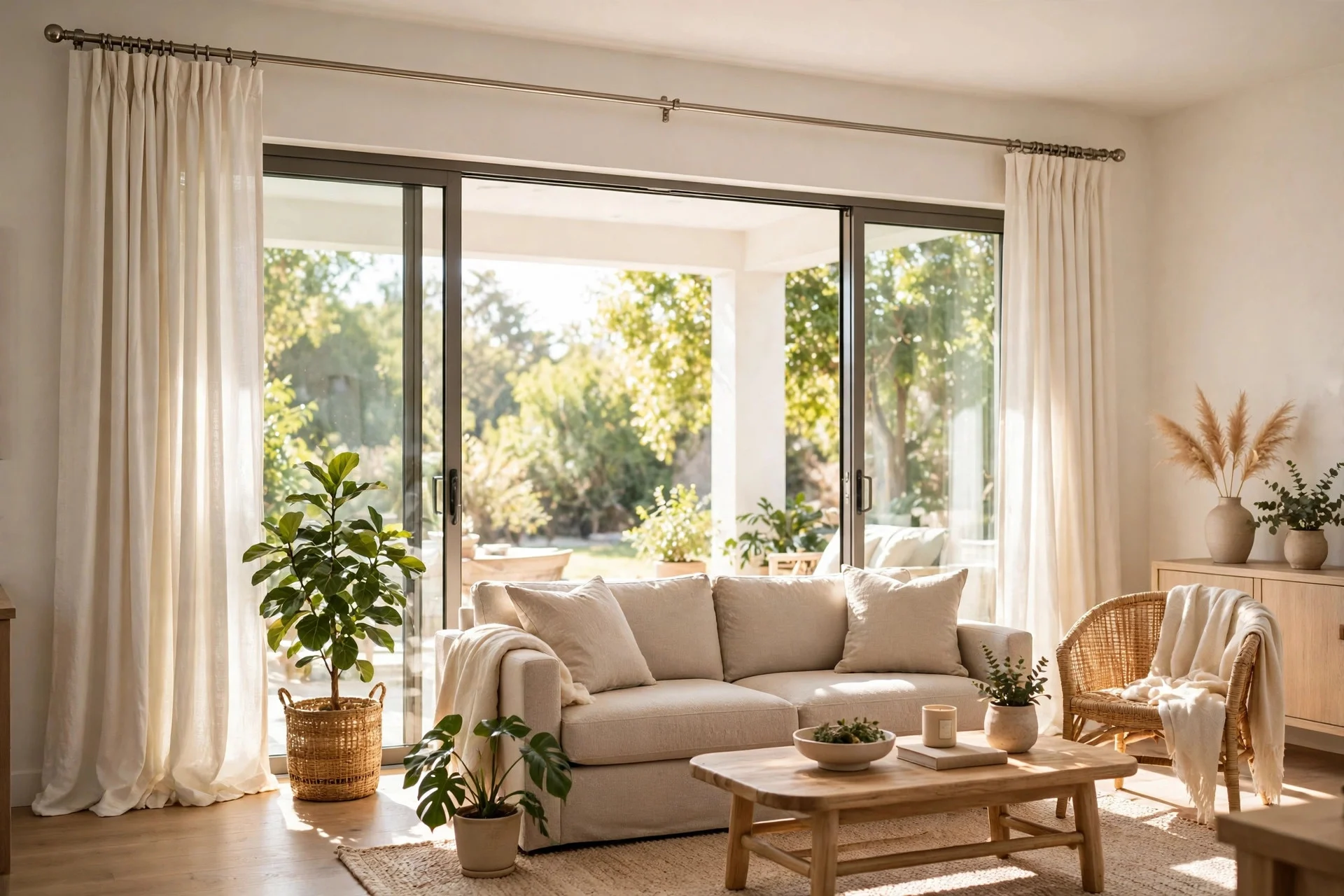
13 Living Rooms With a Reading Corner by the Window
A living room reading corner by the window sounds dreamy until you hit the practical questions: where does the chair go, how do you kill the glare, what happens after dark? The fix is to build the corner in the order the light arrives — start at the window, then the seat, then everything within arm’s reach. Here are 13 moves in exactly that order, so you can set the corner up step by step in a single weekend.
Most cost an afternoon and a shop trip, nothing more. The whole corner can happen for under $100 secondhand, or into the low thousands if every piece is new.
1. Choose the Window for Its Light, Not Its Size
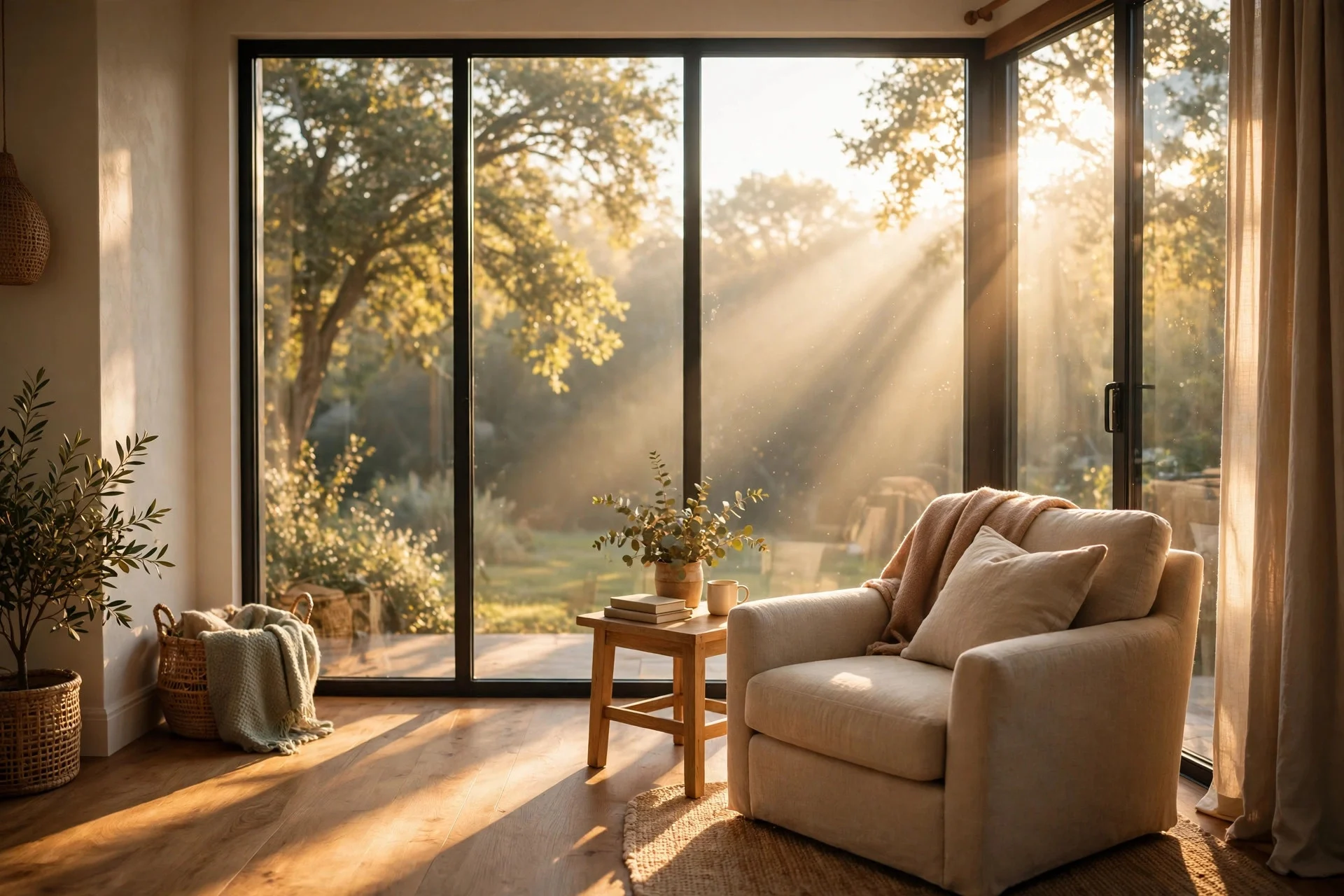
Before moving a chair, watch how light moves through the room for a day or two. East-facing glass gives bright, forgiving mornings and calms down by afternoon. North-facing windows are the reader’s favourite — steady, glare-free light all day. South and west windows throw hard glare across the page from late morning onward, especially in summer.
Glare is the number-one reason window reading corners fail. If your only spare window faces west, that’s fine — you’ll just plan for sheers (next) and an angle that keeps the sun beside your shoulder, never straight in your eyes.
Cost: Free — photograph the window at 9 a.m., noon, and 4 p.m. to compare.
Difficulty: None; this is observation, not labour.
Tip: Sit at the window and read two pages. If your eyes tire in under five minutes, the corner needs a filter layer before anything else.
Watch out: Don’t pick the window by the view alone. The prettiest view often comes with the harshest midday sun. Comfort beats the postcard.
2. Hang Sheer Linen to Tame the Glare
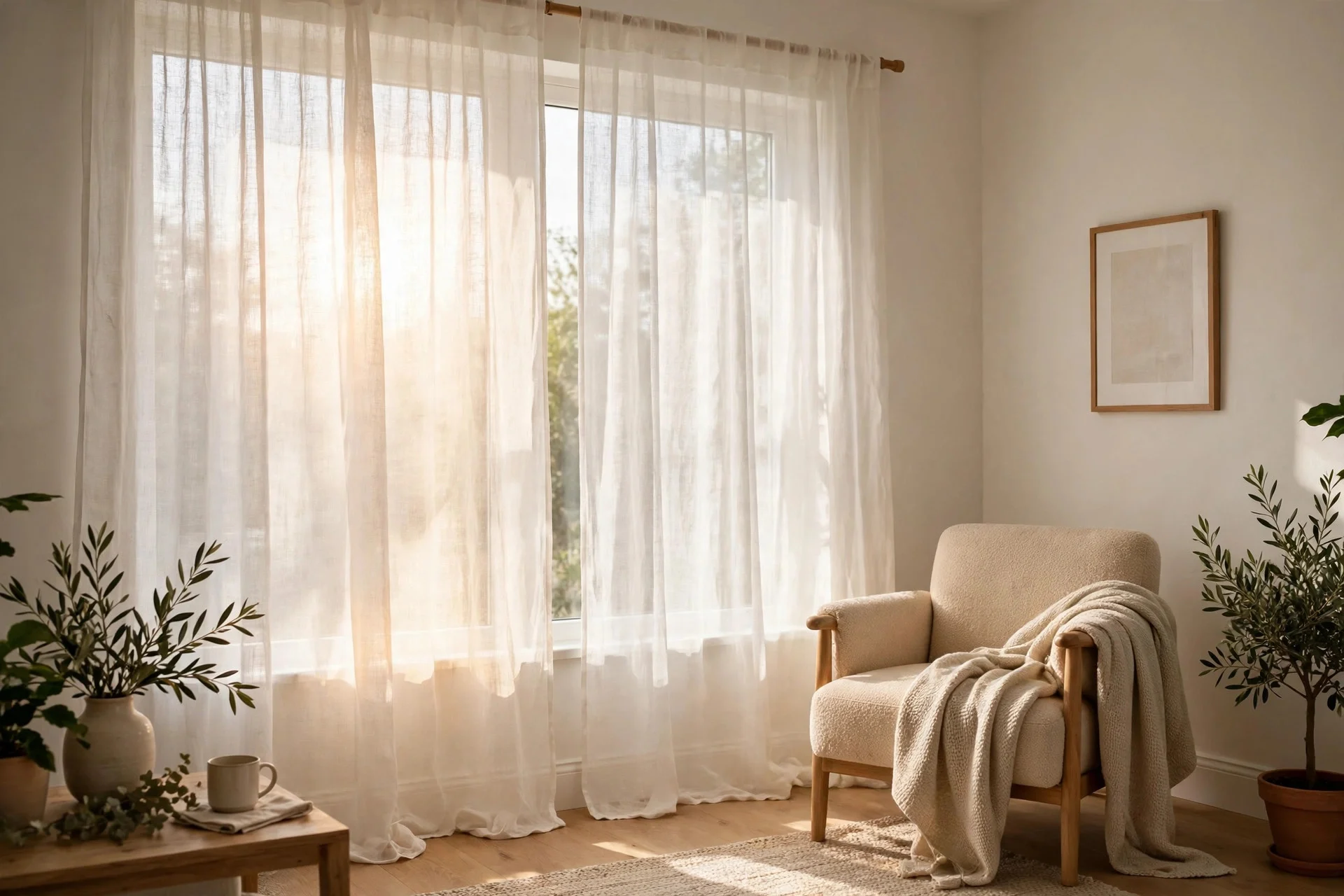
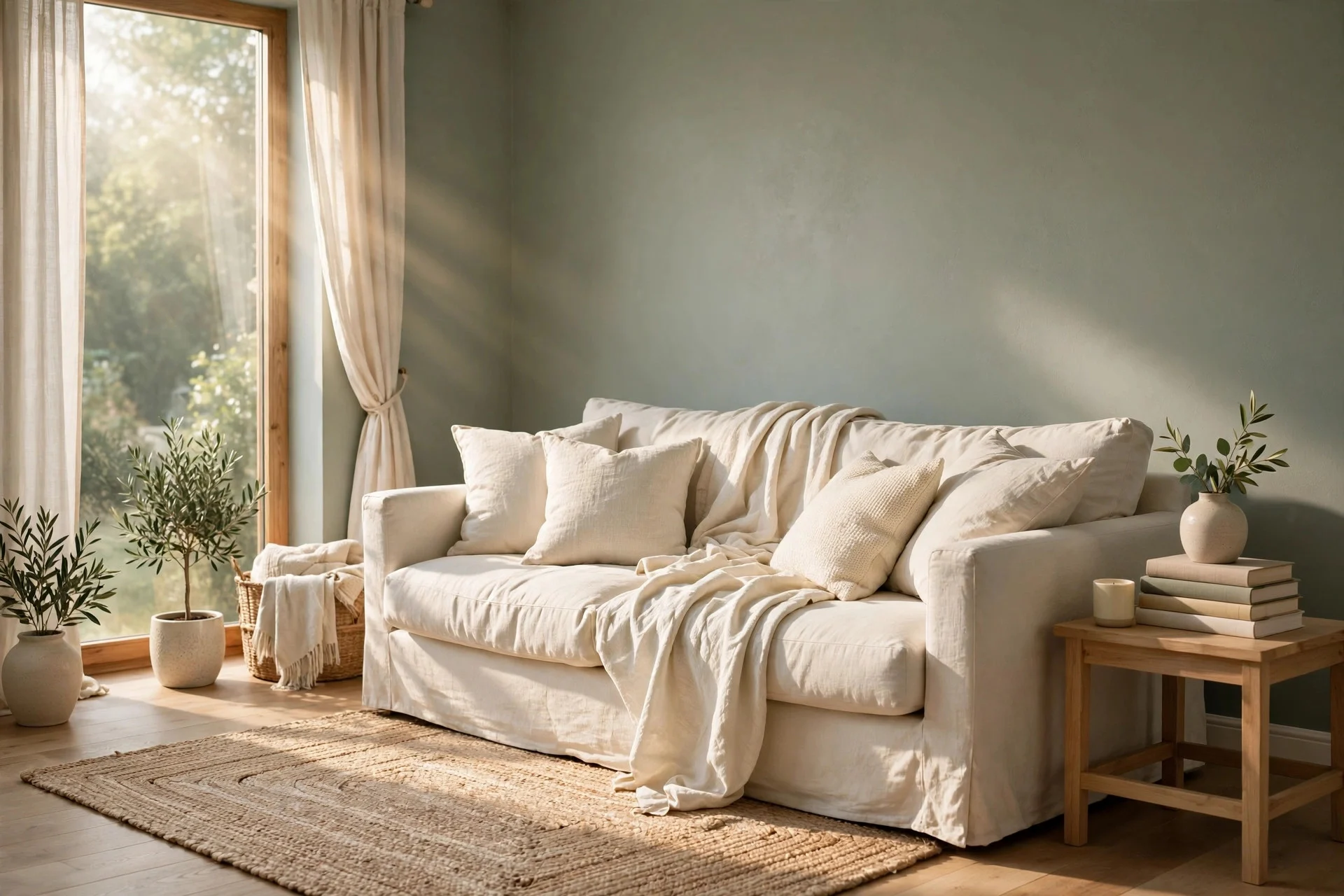
Sheer linen or cotton voile does the one job a reading corner’s window treatment needs: soften direct sun, keep the view, and leave the room bright. Hang the rod 6 to 10 inches above the frame and 8 to 12 inches wider each side, so the panels draw fully clear of the glass.
Blinds cut light in hard stripes; sheers turn the whole pane into a glowing diffuser, so reading feels like a cloudy morning — bright, never harsh. Draw them back once the sun moves off the glass.
Cost: $25–$80 per window for ready-made sheers; $60–$150 with a rod and rings.
Difficulty: Easy — one rod, a drill or tension rod, an hour at most.
Tip: Two narrow panels look better and draw smoother than one wide one. Let them just kiss the floor.
Watch out: Renting? Use tension rods inside the frame or peel-off brackets — no holes needed. For angled bays, these bay window living room ideas cover rod options that handle the corners.
3. Add a Cushion If There’s a Ledge
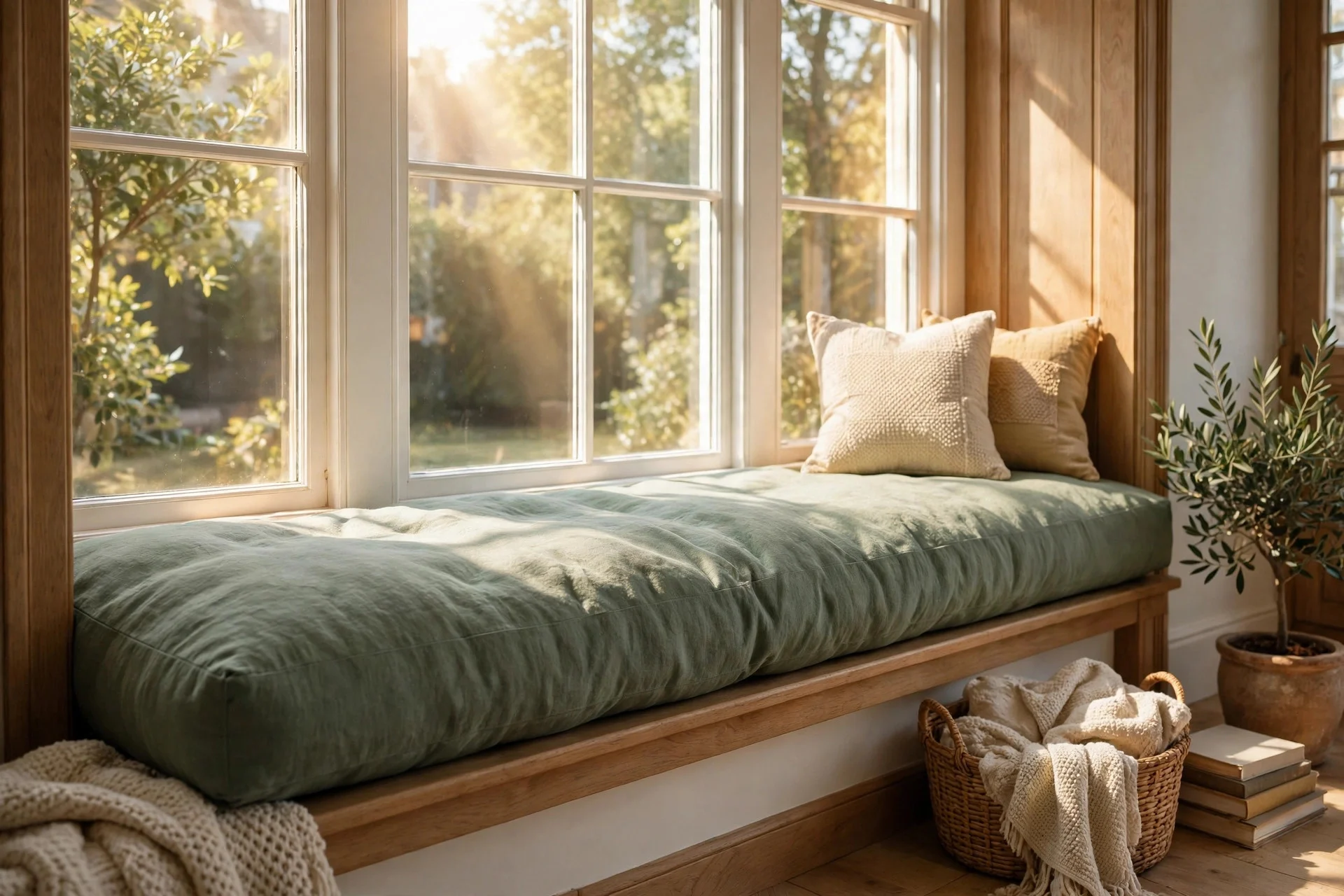
A wide sill or a low radiator cover is an invitation. A custom bench cushion — 3 to 4 inches of dense foam wrapped in washable linen — turns that ledge into a seat. You need at least 18 inches of depth to sit comfortably, so measure before ordering.
Ask for 2.8 lb density foam so you don’t bottom out after twenty minutes, and a hidden zipper so the cover can be washed.
Cost: $120–$350 custom; $60–$150 for a ready-made bench pad if the width fits.
Difficulty: Medium only for the measuring; placing it is the easy part.
Tip: Ask for a “Dacron-wrapped, zippered box cushion” — those words get you a cushion that holds its shape.
Watch out: Hours of direct sun will fade the cushion’s sunward half within a year. Pick a fade-resistant outdoor-rated fabric if the sill bakes.
4. Angle a Deep Armchair Into the Glass
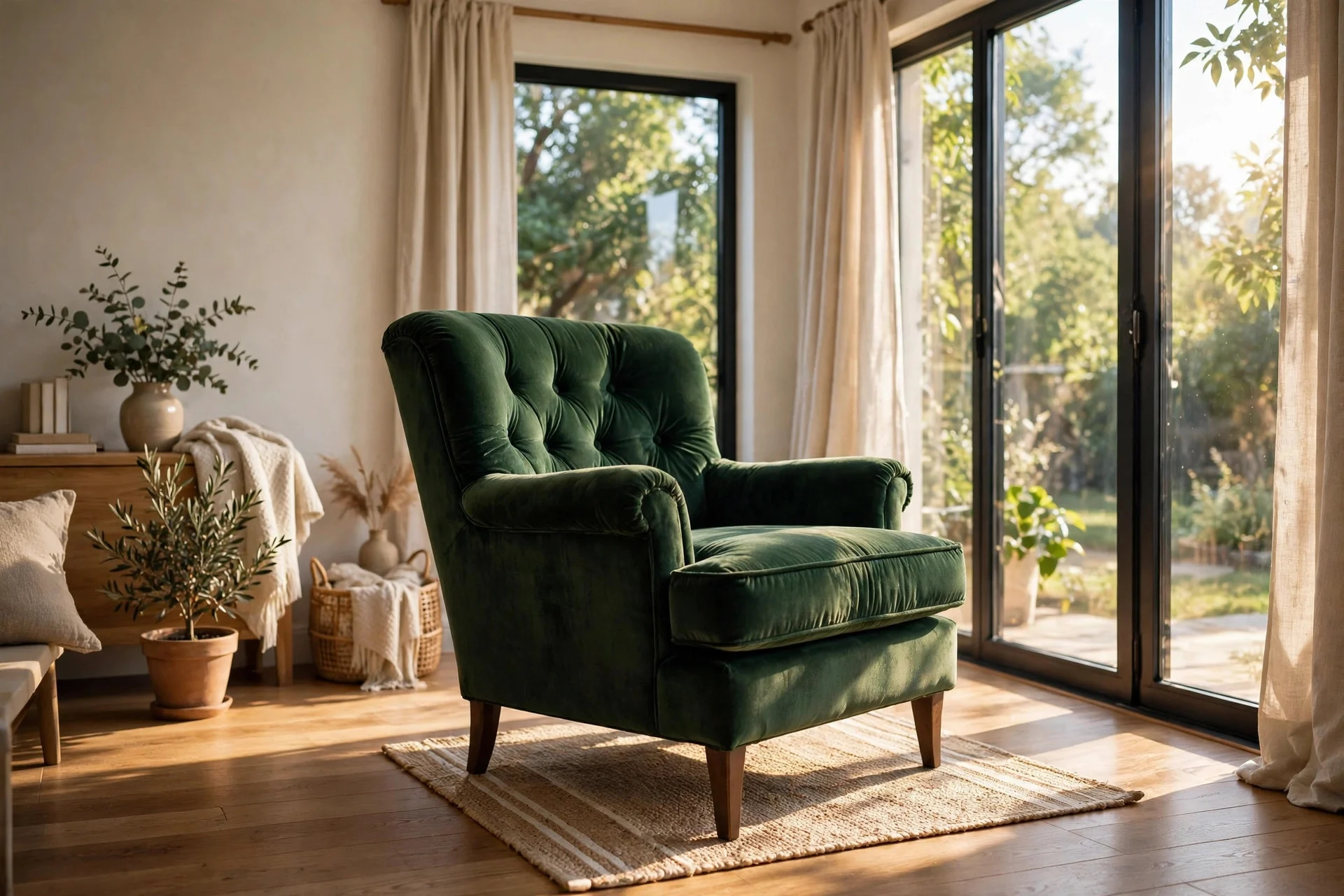
The chair is the real reading throne in most living rooms. Pick something deep — a seat depth of 22 inches or more — with a back high enough to lean your head against and arms at elbow height. Then angle it 30 to 45 degrees off the glass, not square to the window and not square to the room.
That angle keeps the chair in conversation distance with the rest of the room and lets daylight fall over your shoulder from the side, exactly how you want it for reading.
Cost: $150–$600 secondhand or mid-range; $800–$2,000 new.
Difficulty: A delivery-day job. Size the chair to the corner, not the whole room.
Tip: Sit in any chair for ten full minutes before buying. Arms that felt fine at minute two dig in by minute eight.
Watch out: A swivel base drifts on smooth floors. If you go swivel, lay the rug (idea 7) first so it can’t slowly rotate you away from the light.
5. Size a Side Table to Arm’s Reach
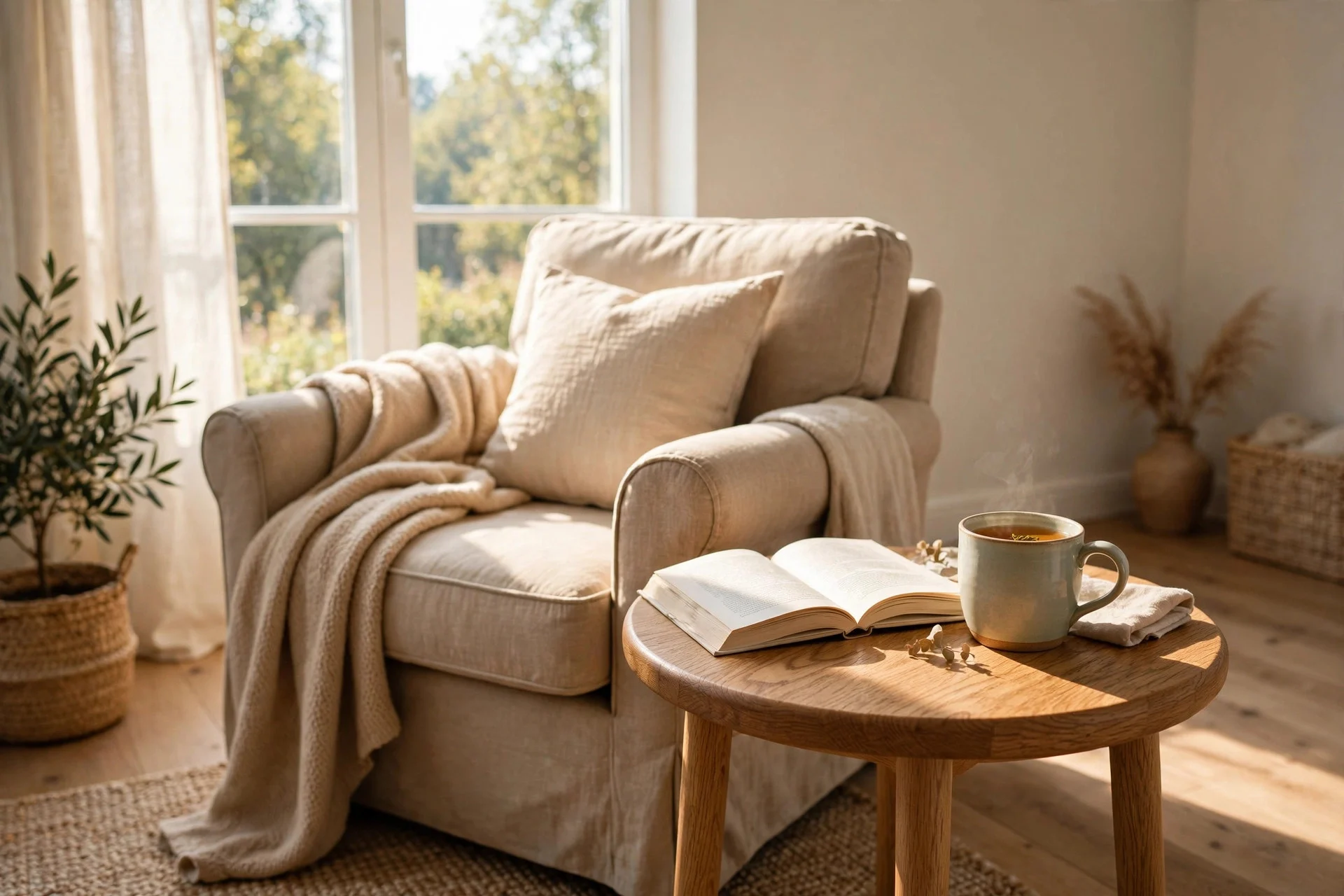
Every reading corner dies without a landing spot for the mug. Keep the tabletop within two or three inches of the arm height, and the table 12 to 18 inches from the arm — close enough to set a cup down without leaning.
A small round table beats a square one here: no corners to catch your knee when you swing your feet up, and it looks right from every angle in an open living room.
Cost: $40–$180.
Difficulty: None — buy, place, done.
Tip: Put the table on the side away from the window if you can. That keeps your mug out of the sunbeam that would otherwise heat the tea and bleach the book spine.
Watch out: Cane and glass tops show every ring. Buy a stack of cork coasters at the same time and scatter them like you mean it.
6. Light the Page With an Adjustable Floor Lamp
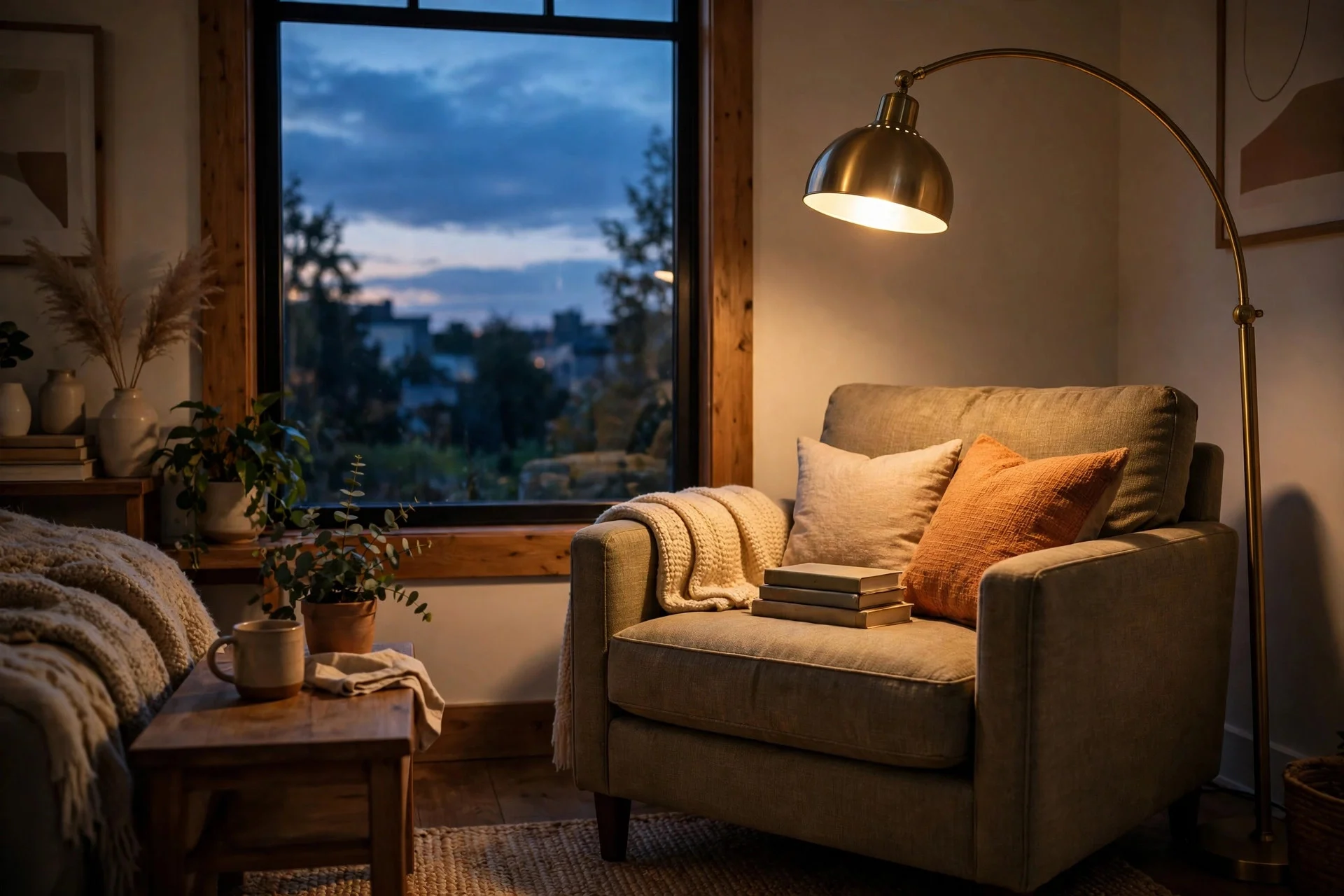
Daylight quits around dinner, and a corner that only works in the sun is half finished. Use a floor lamp with an adjustable head or swing arm, set so light falls over your shoulder onto the page — from behind and slightly to the side.
Stick with warm 2,700K bulbs; 5,000K daylight bulbs feel office-y in a living room. A dimmable warm LED is the best of both — full brightness for small print, low glow when you’re drifting.
Cost: $60–$250 for the lamp; $10–$20 for a dimmable warm LED bulb.
Difficulty: Easy — assemble, plug in, aim the head at your reading shoulder.
Tip: No nearby outlet? A paintable cord cover along the baseboard turns an ugly extension cord into a detail that disappears.
Watch out: Shade style matters. An opaque drum shade blocks the light you need; a metal or open swing-arm head aims it exactly at the page.
7. Ground the Corner With a Low-Pile Rug
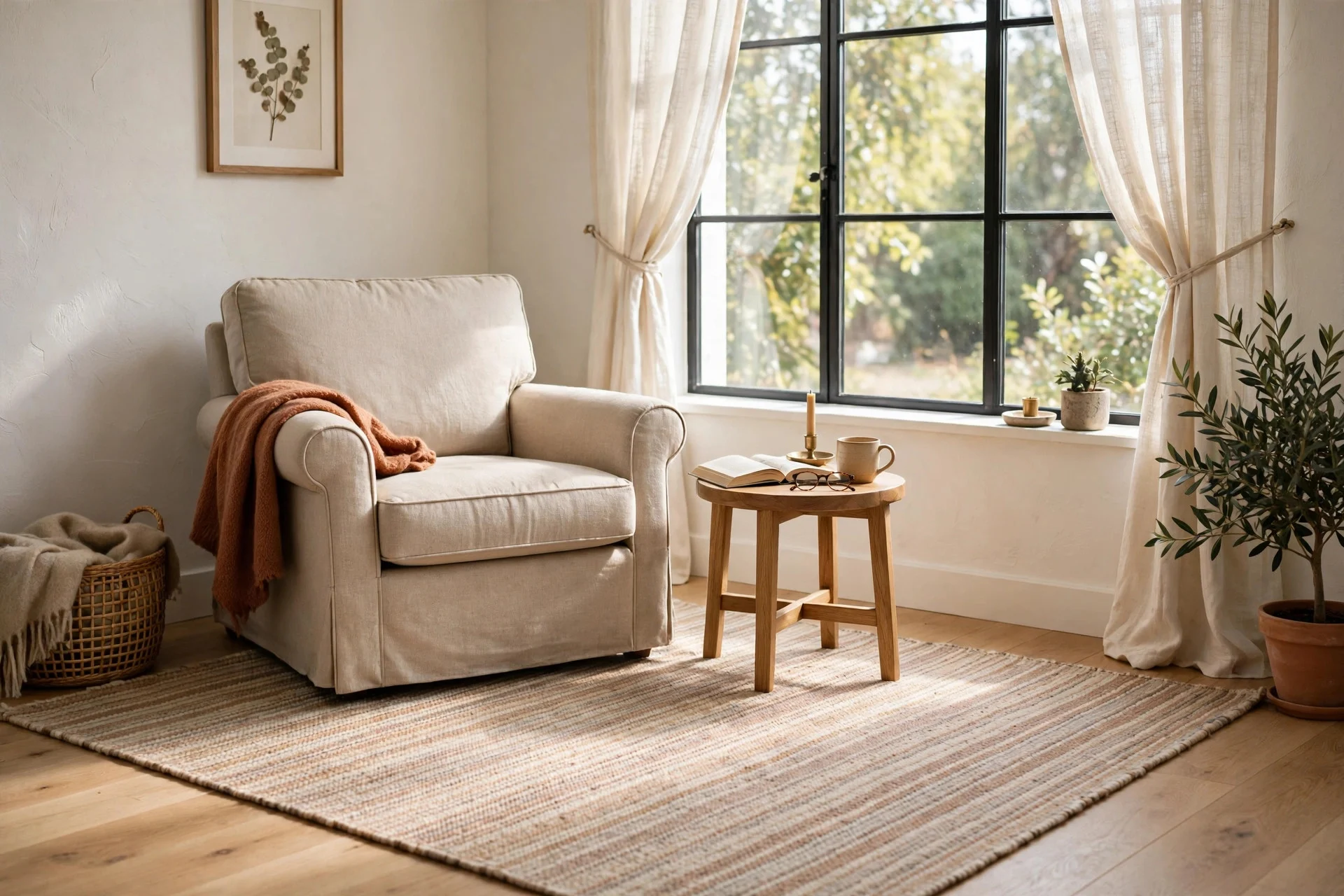
A rug walls the nook off visually from the rest of the living room and keeps your feet warm between chapters. Go low-pile: thick shag traps crumbs and makes chair legs wobble, while a flat-weave or low-loop rug sits still and vacuums clean.
Size it so the chair’s front legs and the side table all sit on it, with at least 6 inches of border showing around it.
Cost: $80–$400 for wool or good synthetic in a 5×7.
Difficulty: Easy, plus a $15–$30 non-slip pad so it doesn’t skate on hard floors.
Tip: Pattern hides everything — crumbs, the faded patch where your feet always land. A simple stripe or small all-over motif wears best.
Watch out: A rug with only the front legs on it rocks when you shift your weight. Make sure both front legs are firmly on, or go big enough for all four.
8. Layer a Throw and Cushion That Live on the Chair
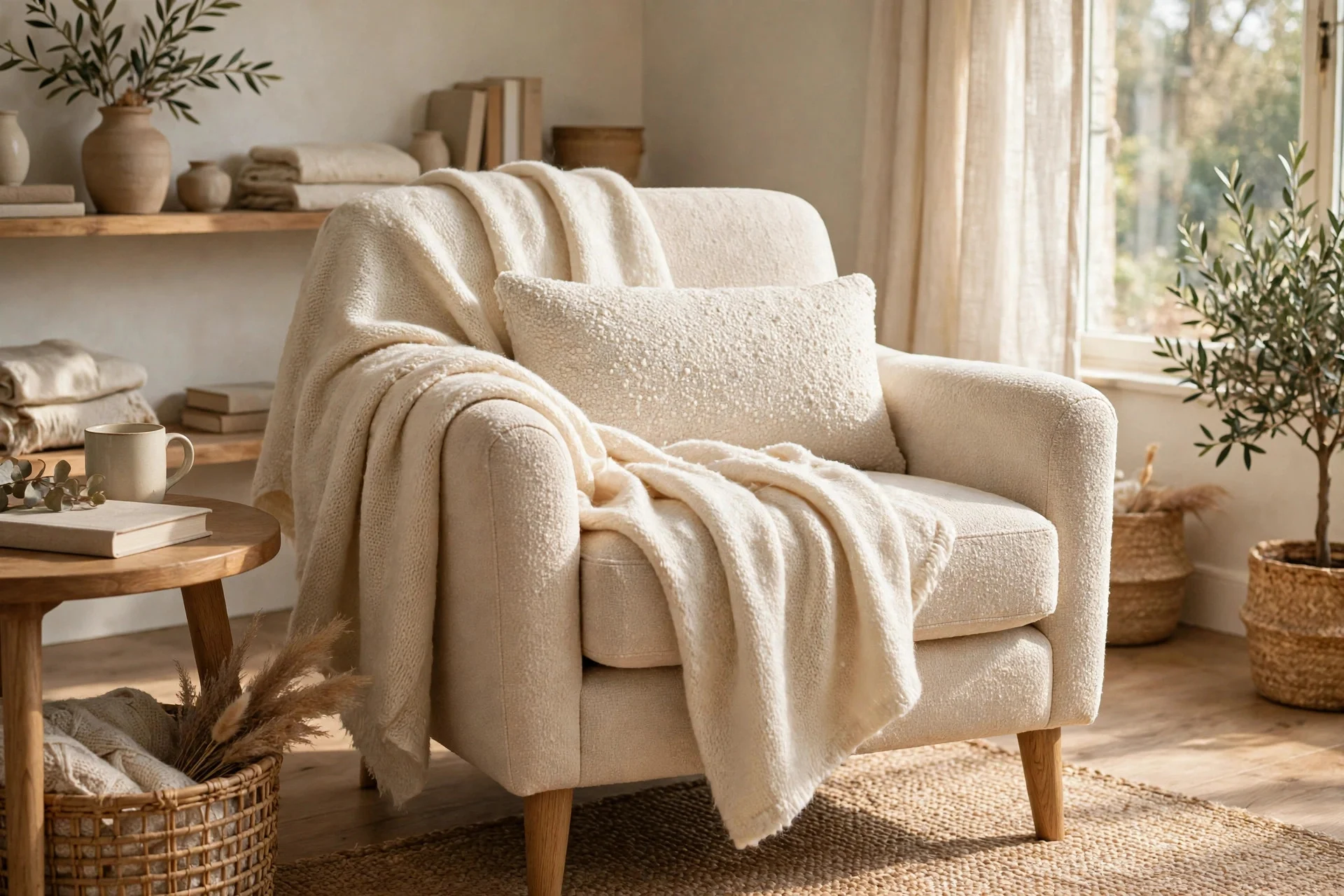
The chair needs its own textiles: a throw over the arm or seat back, and one cushion for the small of your back. A wool or wool-blend throw is worth it — it breathes when you’re warm, insulates when you’re not, and won’t slide off smooth upholstery like polyester fleece does.
Pick the cushion for your body, not the colour scheme. A lumbar pillow (about 12×20 inches) supports the lower back far better than a square decorative one.
Cost: $40–$120 for a wool throw; $20–$60 for a lumbar cushion.
Difficulty: None — drape, fluff, done.
Tip: Wash the throw once before it moves in. Most throws get softer and drape better after the first wash.
Watch out: Dark throws can transfer dye onto light chairs in the first weeks. Wash dark textiles separately the first time.
9. Dress the Sill With a Trailing Plant
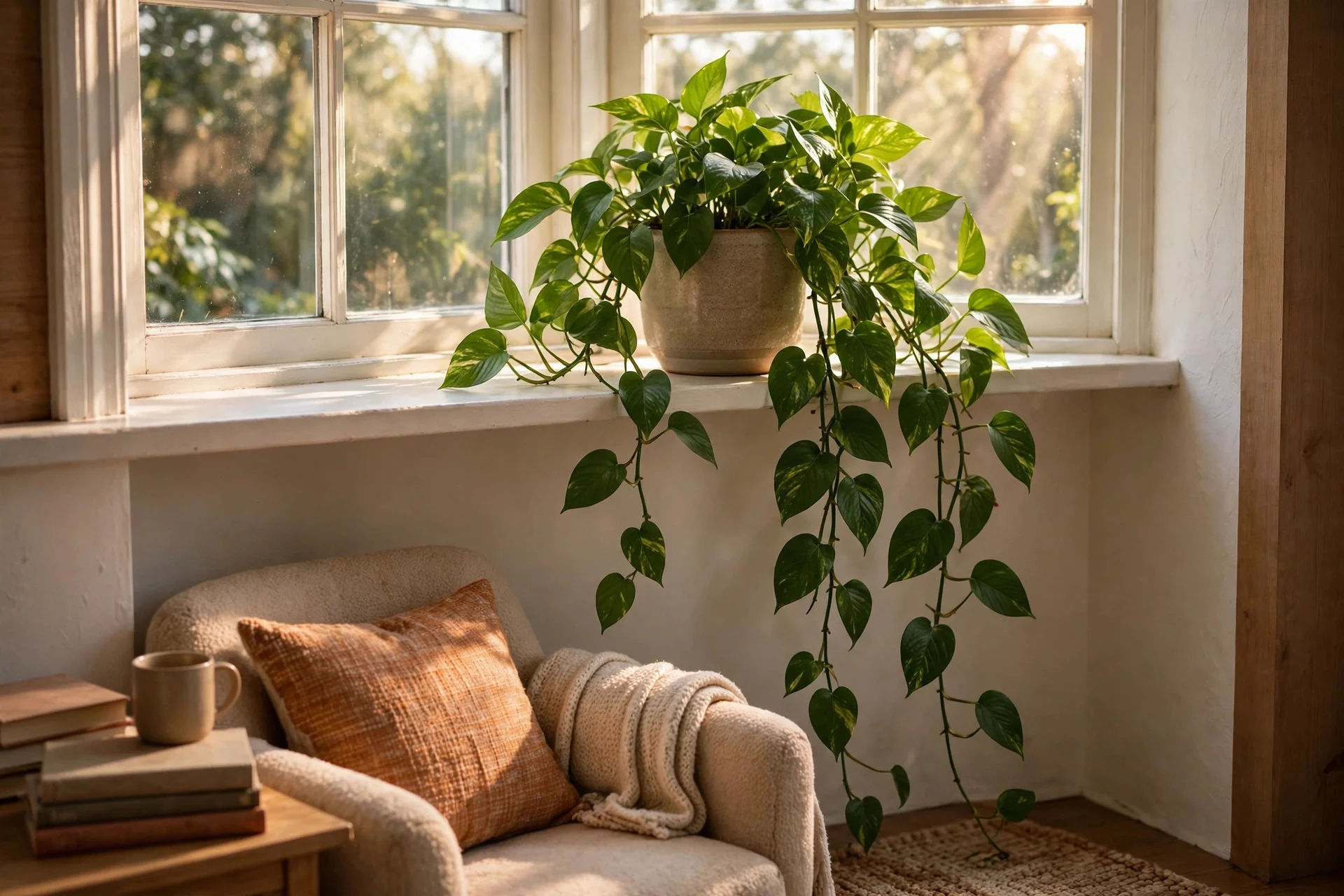
Don’t skip the sill itself. A pothos, philodendron, or spider plant turns the window from a light source into a green frame, and trailing leaves soften the hard angle where glass meets wall. Reading with leaves moving at the edge of your vision is quietly lovely.
Match the plant to the corner’s actual light: sunny south windows suit snake plants or succulents; north-facing ones want pothos or a ZZ. One statement plant in a good pot beats five fussy ones.
Cost: $15–$60 for plant and pot.
Difficulty: Easy — and if your plant record is rough, a ZZ survives almost anything.
Tip: Rotate the pot a quarter-turn every two weeks so it grows evenly instead of leaning permanently toward the light.
Watch out: Water on a wood sill stains. Use a pot with a drainage hole plus a saucer, and a cork mat under it on painted wood.
10. Mount a Floating Picture Ledge for Current Reads
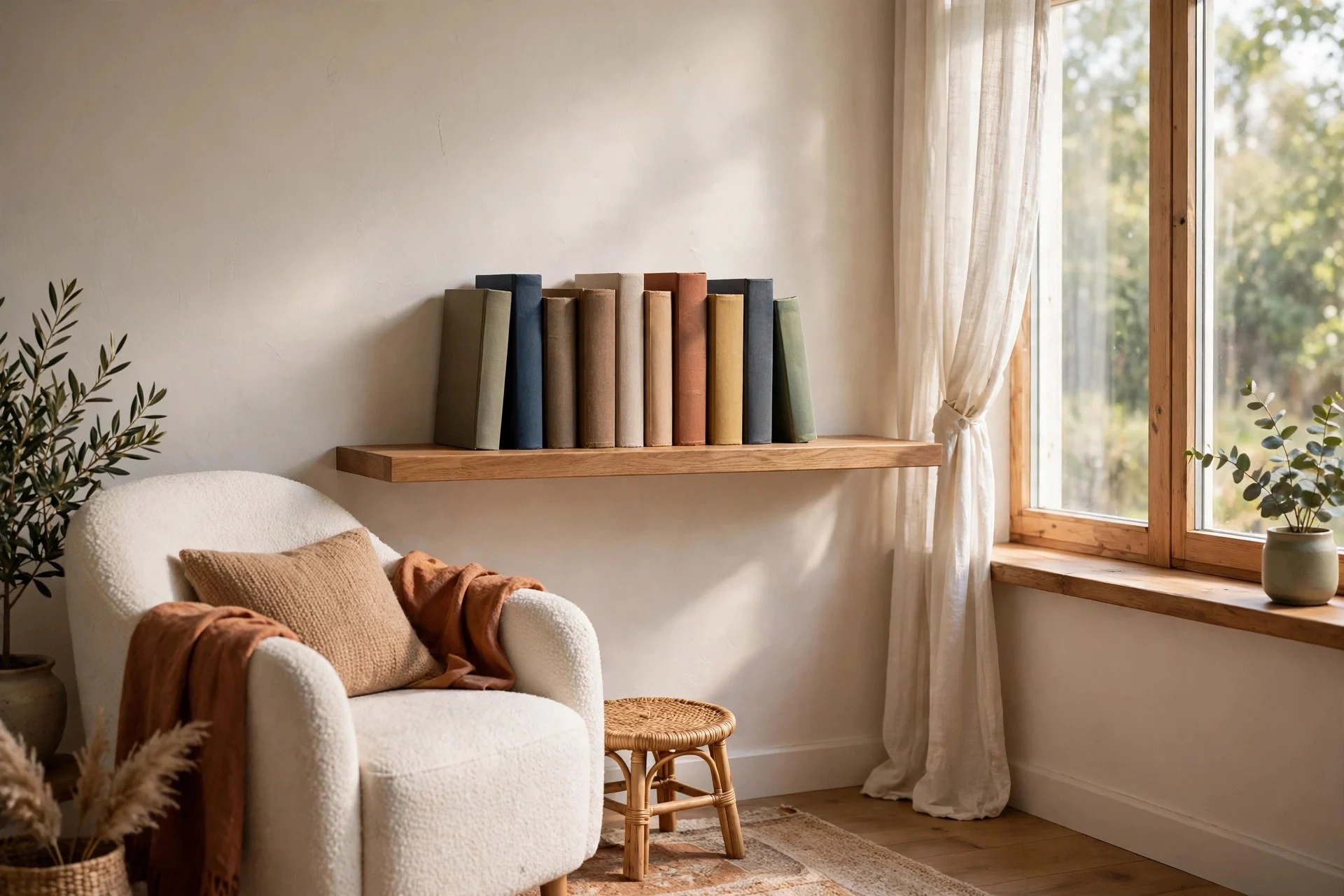
On the wall nearest the chair — not behind it, where you’d have to twist — mount a shallow picture ledge. This is where the books you’re actually reading live, spines out, within reach but off the table. It turns “currently reading” into a display instead of a pile.
A 24-inch ledge holds about six paperbacks; two ledges stacked 14 to 18 inches apart hold a dozen. Mount them so the top shelf is a comfortable reach from the seated position . Measure the height from your own seated position, not from a formula.
Cost: $15–$45 per ledge; two plus screws come in under $100.
Difficulty: Easy-medium — drilling two anchors straight and level, about 30 minutes each.
Tip: Renters can get the same look with adhesive ledges or heavy-duty picture strips rated for books — a paperback weighs about 12 ounces, so keep the load honest. This renter-friendly living room guide has the full drill-free playbook.
Watch out: A ledge above head height looks decorative but becomes unreachable. Mount for your seated reach, not for the wall composition.
11. Hang One Calm Piece of Art Beside the Window

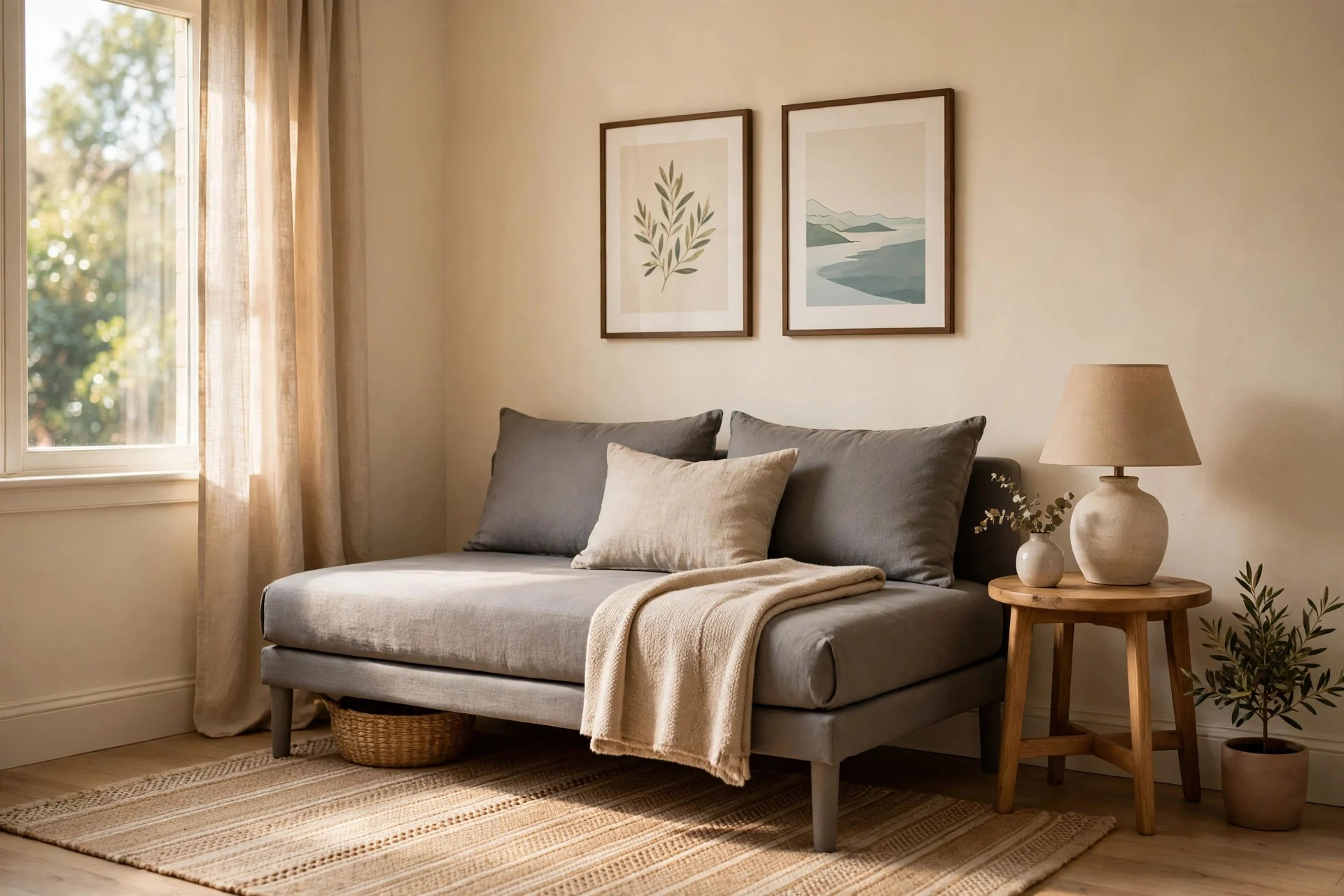
The wall around a reading corner shouldn’t compete with the window. One piece — hung on the side wall where your eye lands when you look up from the page — gives the corner a finished feeling that no amount of small decor can. Landscapes, botanical prints, and soft abstracts work; busy collages fight the resting eye.
Scale is the common mistake. One piece roughly two-thirds the width of the chair reads as deliberate, and it should hang at seated eye level — centre it 48 to 52 inches off the floor. This limewash walls living room guide is worth a look if you want the plastered, earthy wall look behind it.
Cost: $20–$150 for a print plus frame; $100–$400 for original art at a local market.
Difficulty: One nail or hook, ten minutes. Framing is the slow part, not the hanging.
Tip: A wide mat and a thin frame make even a cheap print look gallery-grade. Budget more for the framing than the print.
Watch out: Glass frames opposite a window turn into mirrors by afternoon. Use non-glare acrylic or hang the piece where it never faces the glass directly.
12. Stash Books and the Spare Throw in a Woven Basket
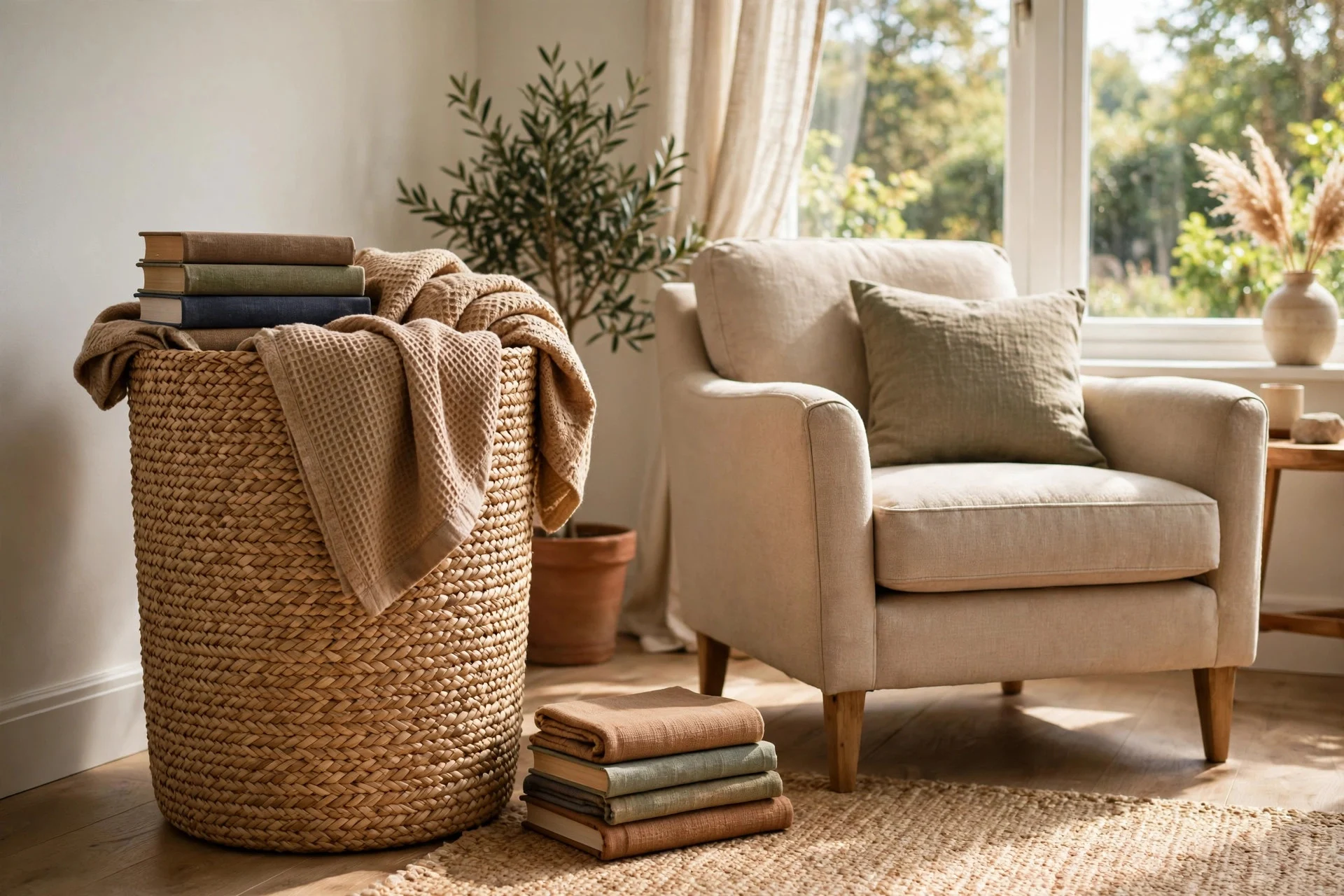
Every reading corner generates clutter — finished books, abandoned books, the throw you kicked off. A woven basket beside the chair absorbs all of it. It’s storage that reads as decor, which is exactly what an open living room needs.
The basket needs to swallow a couple of folded throws plus a short stack of books — roughly 16 to 20 inches tall. Seagrass and water hyacinth are sturdier than they look. Put it on the opposite side from the side table so the chair stays balanced.
Cost: $25–$80.
Difficulty: None.
Tip: Keep one “return” spot in the basket for the book you’re reading now. It ends the daily hunt for where you left it.
Watch out: A basket with no structure collapses when empty and looks sad. Buy one with a wire or wood frame if you want it to hold its shape year-round.
13. Finish With a Pouf, a Candle, and a Hidden Charger
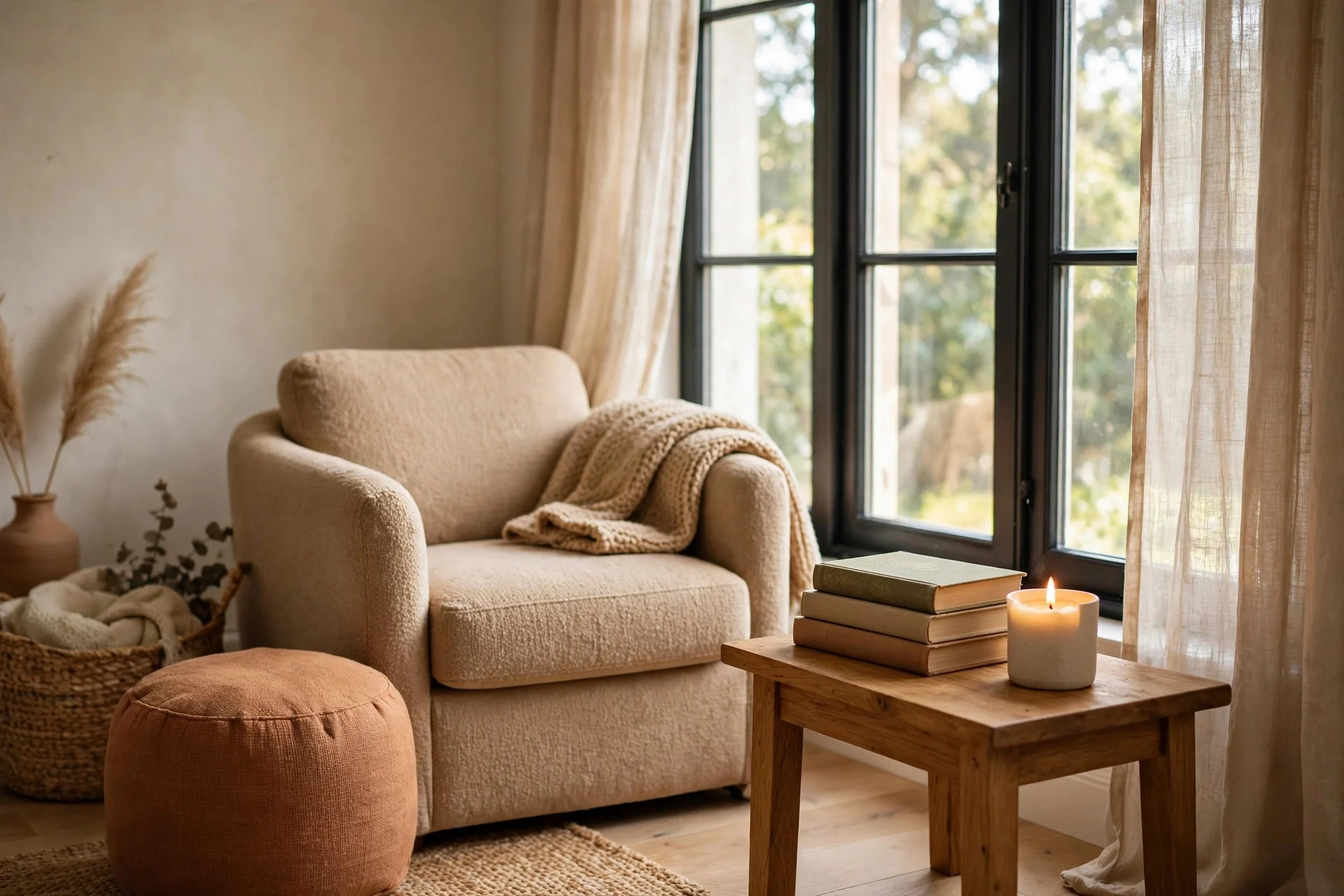
The last layer is small, but it decides whether the corner feels finished or abandoned mid-project. A pouf for your feet — reading with feet up is half the point. A candle or small reed diffuser on the side table, something low-key like cedar or linen, so the corner has a scent. And a charging cable for the e-reader.
Run the charger tidily: clip the cable along the back of the side table so the tech stays invisible.
Cost: $30–$100 for a pouf; $15 for a cable and clip set.
Difficulty: Trivial — but it’s the step people skip, and the one that makes guests say “oh, this is nice.”
Tip: Pick a pouf with a washable or wipeable cover. It’s a footrest; it will collect dust and the occasional coffee drip.
Watch out: Never leave a lit candle near curtains, throws, or a basket of paper. A battery flameless candle in a nice holder gives the glow without the risk.
Frequently Asked Questions
Where should a living room reading corner go?
By the brightest comfortable window you can spare — east or north-facing is ideal, with bright light and little midday glare. Angle the chair 30 to 45 degrees off the glass so daylight falls over your shoulder.
How do you read by a window without glare on the page?
Sheer curtains are the best fix: they diffuse direct sun while keeping the view. Sit so light comes from the side or behind your shoulder, and add an adjustable warm floor lamp for evenings.
Can you make a reading corner in a small living room?
Yes — a 4×4-foot patch is enough. Use a compact slipper chair, a wall-mounted shelf instead of a side table, and a pouf as the footrest. Size the rug to the corner alone.
What’s the best chair for a reading corner?
One you can sit in for an hour without fidgeting: deep seat (22+ inches), a high back, arms at elbow height, and a lumbar cushion. Sit-test for ten minutes — comfort at minute two won’t predict minute forty.
How much does a window reading corner cost to set up?
A comfortable corner runs $250 to $800 mixing new and secondhand pieces. All-new with a custom window seat cushion lands closer to $1,500 to $2,500. Start with the chair and the light; add the rest over time.
Your Living Room Reading Corner Checklist
You don’t need all thirteen ideas at once. To have the corner this weekend, do five things in order: observe the light, hang the sheers, place and angle the chair, add the side table and lamp, throw down the rug. The plant, the ledge, the basket, and the art can follow later.
The real test is simple: if you find yourself drifting to that chair with a book in hand, the corner worked. Happy reading.