What actually goes at the foot of the bed in a bedroom that looks finished? Nine times out of ten, the answer is a bench. It fills that awkward stretch of empty floor, gives you somewhere to sit while you put on shoes, and holds the throw blanket that otherwise ends up in a heap on the mattress. But not every bench works in every room, and the wrong one — too long, too tall, too fussy — makes the whole bedroom feel crowded.
That is why this guide works a little differently. Each of the 13 bench at foot of bed ideas below starts with a scene, then breaks down the three or four elements that make it work, and finishes with a realistic way to copy it without spending a fortune. Pick the one that matches your room size, your storage needs, and how you actually live in the space.
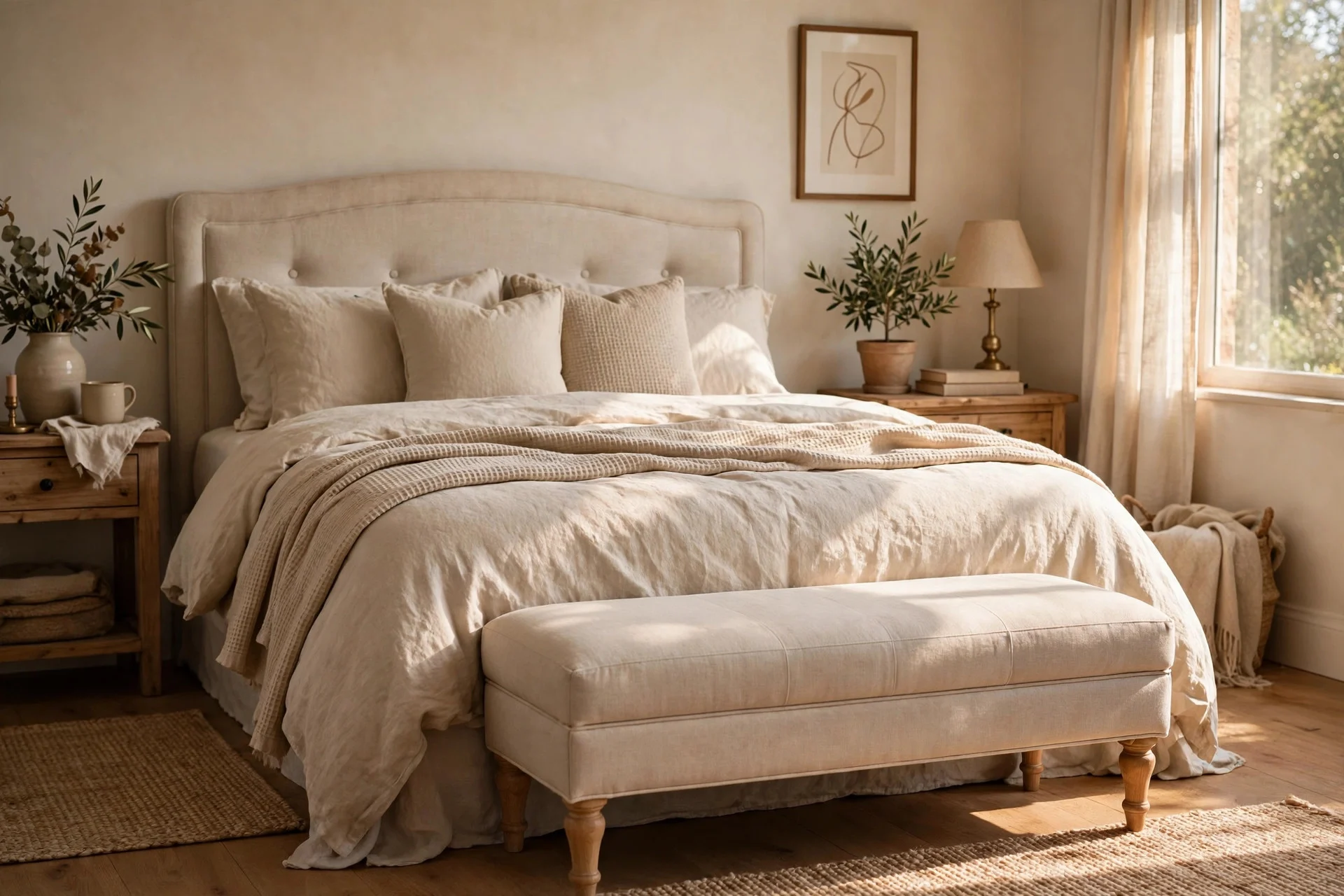
1. Upholstered Linen Bench in Soft Beige
Picture a low, clean-lined bench in washed beige linen sitting at the end of a bed dressed in white and oat bedding. Nothing about it shouts for attention, and that is exactly the point — it calms the whole room down.
What makes it work: the soft upholstery (no hard edges to bump into at night), a seat height just below the mattress top, and a neutral fabric that picks up the bedding tones rather than competing with them. To copy it cheaply, look for a slipcovered or removable-cover bench in a polyester-linen blend; it reads almost the same as real linen and survives far more washing.
Cost: $90–$260. Difficulty: easy, about 20 minutes to assemble. Tip: measure first — the bench should be at least 6 inches shorter than the width of your bed so it does not stick out on either side.
2. Wooden Slatted Bench, Rustic Warmth
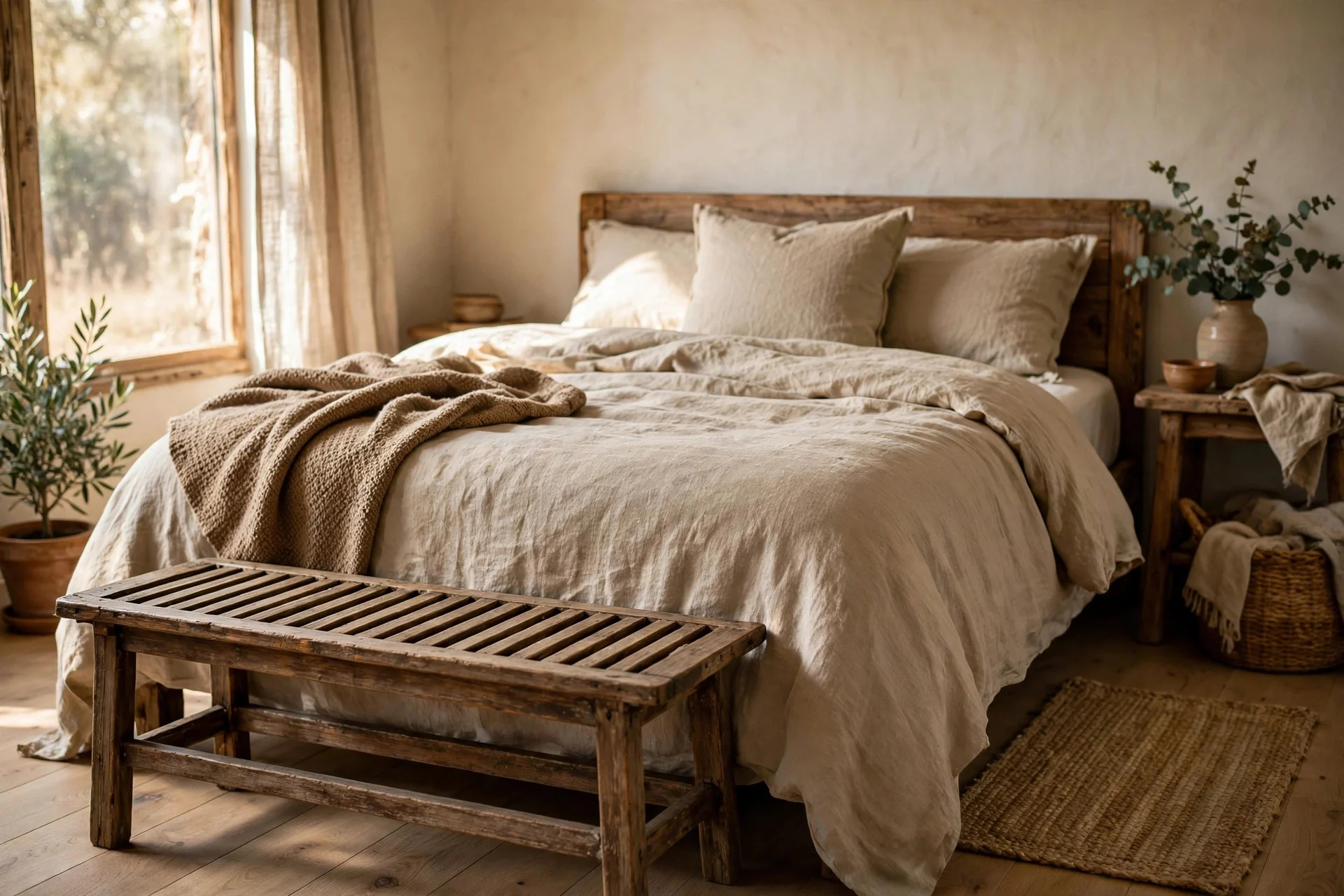
Think of a chunky slatted bench in warm oak or reclaimed pine, the kind of piece that looks like it has been in the family for years. Paired with a simple cotton duvet and a woven throw, it gives a plain bedroom instant warmth.
What makes it work: the open slats keep the piece feeling light even though the wood is solid, the natural grain adds texture a fabric bench cannot, and the warm tone stops a white-walled room from feeling cold. To copy it cheaply, check secondhand shops for a solid wood bench and sand it back yourself — a tin of furniture oil costs under $20 and does most of the work.
Cost: $70–$220. Difficulty: easy; a refinish takes an afternoon. Tip: put felt pads under the legs if you have hard floors, or every step toward the bed will announce itself.
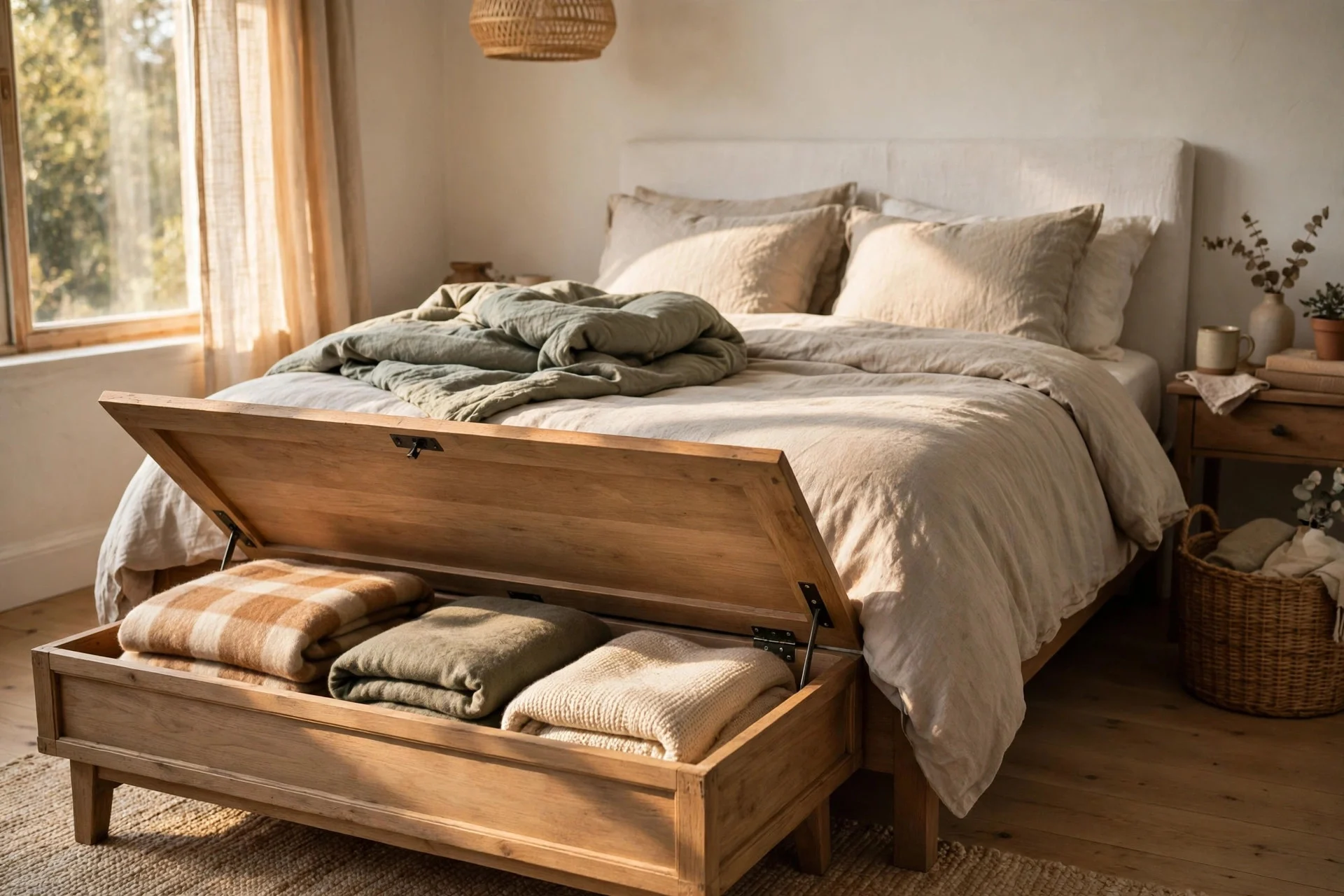
3. Storage Bench With a Lift-Up Seat
Here is the bench for anyone short on closet space: from the outside it looks like an ordinary upholstered bench, but lift the seat and there is room for spare blankets, off-season bedding, or the throw collection that keeps growing.
What makes it work: hidden storage that does not look like storage, a seat deep enough to hold folded quilts, and hinges that stay open on their own so you are not fighting the lid with one hand. To copy it cheaply, buy a basic storage ottoman bench rather than a designer version — the mechanism is the same, and a folded throw on top hides a plain fabric.
Cost: $110–$300. Difficulty: easy assembly, about 30 minutes. Tip: store only light things inside. Heavy blankets make the lid hard to lift and wear the hinges out fast.
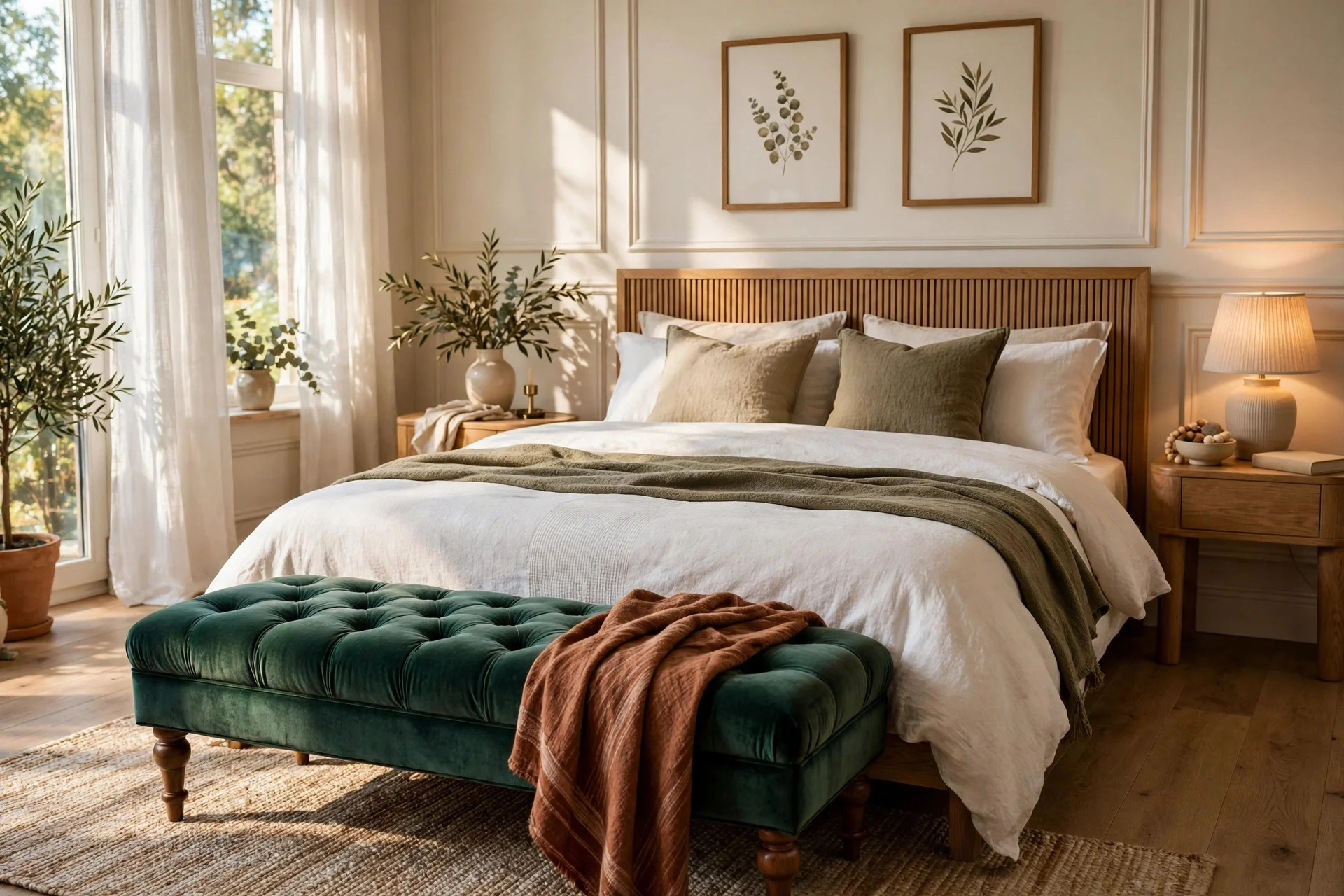
4. Velvet Tufted Bench in a Jewel Tone
Now the mood changes. A deep emerald or navy velvet bench, button-tufted, at the foot of a bed in crisp white bedding — the room suddenly feels like a boutique suite, and the bench is doing most of that work.
What makes it work: the jewel tone acts as the room’s single bold accent, the tufting adds a tailored, expensive feel, and velvet catches light in a way flat fabric does not. To copy it cheaply, pick one strong color and keep everything else quiet — a velvet bench only looks pricey when it is not fighting three other bold colors.
Cost: $130–$320. Difficulty: easy. Tip: brush velvet with a dry clothes brush once a week; it keeps the pile even and stops it from looking flat and tired.
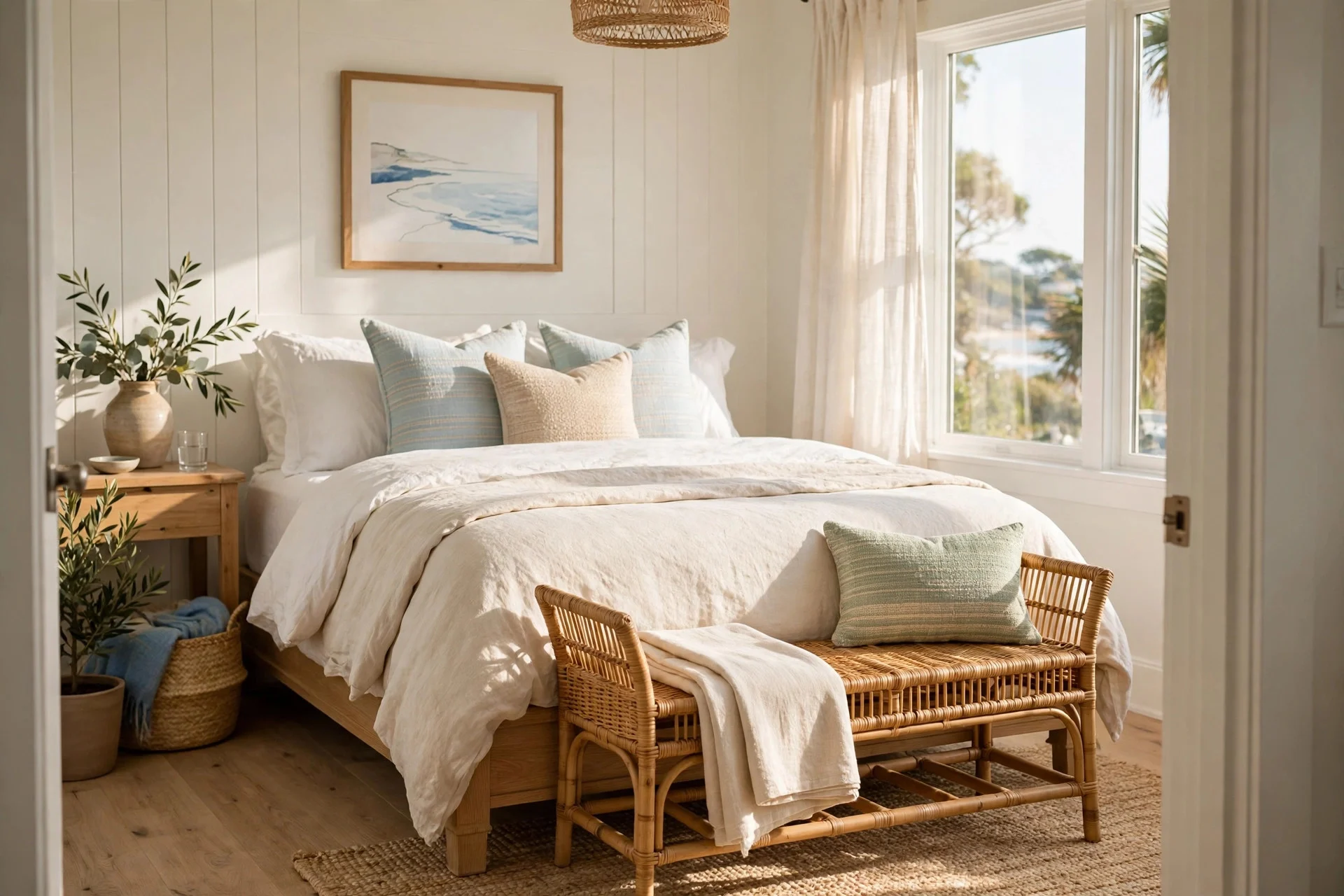
5. Rattan/Wicker Bench, Coastal Feel
Imagine a light rattan bench with a thin cushion, white bedding, and morning light coming through sheer curtains. The whole scene feels breezy, even if the nearest beach is hours away.
What makes it work: the open weave lets light through so the piece never looks heavy, the natural tone warms up pale walls, and a simple cushion keeps it comfortable without hiding the texture. To copy it cheaply, skip the big furniture brands — rattan-style benches in resin or bent cane show up at home-goods outlets for a fraction of the price and hold up just as well indoors.
Cost: $80–$240. Difficulty: easy, usually no tools needed. Tip: keep it out of direct sun for long stretches; rattan dries out and turns brittle over time.
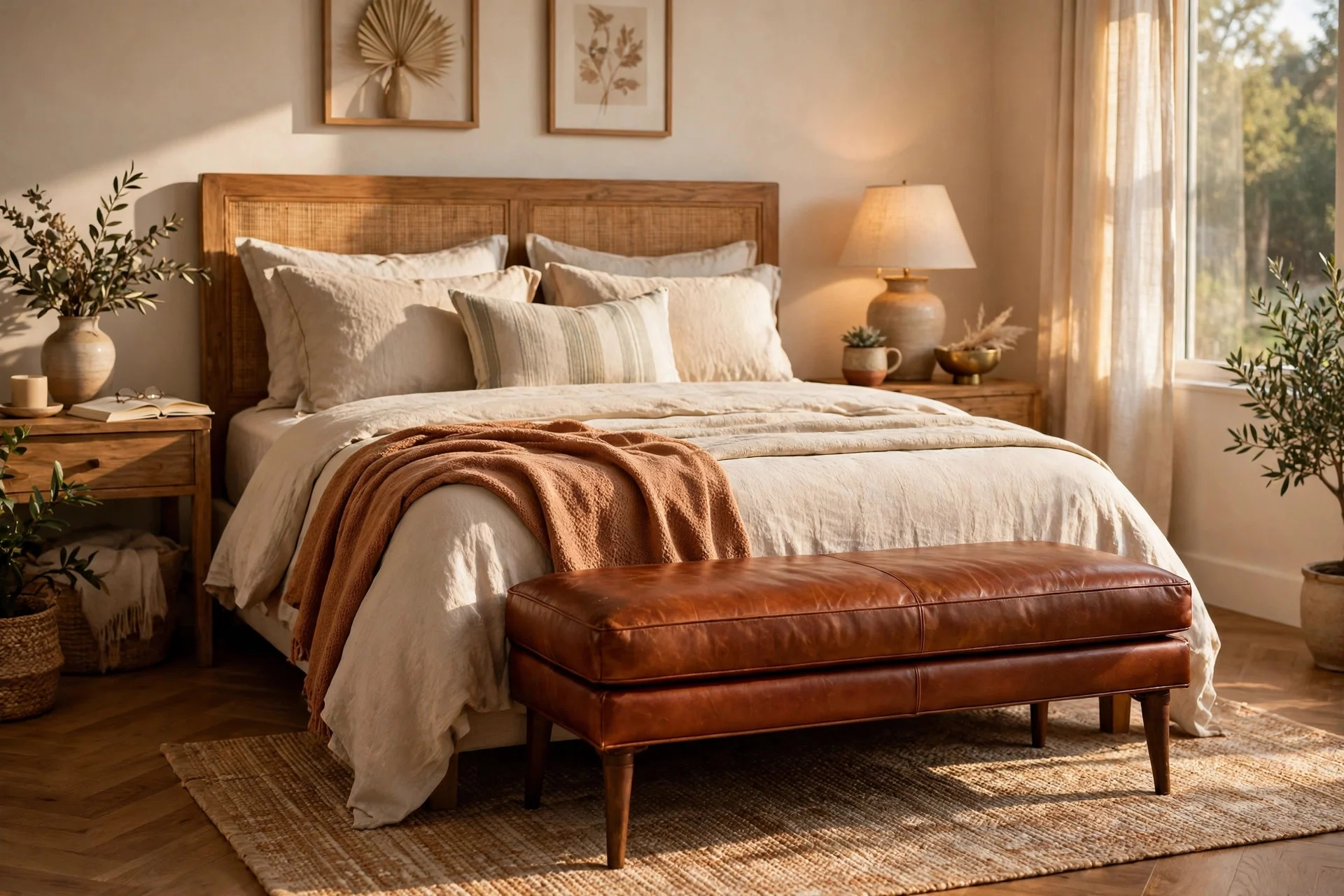
6. Cognac Leather Bench
A cognac leather bench brings a grounded, grown-up feel to a bedroom — especially one with dark wood floors or warm wooden furniture. It looks better slightly worn, which is rare for bedroom furniture.
What makes it work: the rich tan tone anchors pale bedding, the smooth leather surface contrasts nicely with soft fabrics, and the patina it develops over time only improves it. To copy it cheaply, look for bonded leather or a good faux leather in a warm tan; from across the room, the difference is hard to spot, and you save hundreds.
Cost: $150–$450 for real leather, $90–$200 for faux. Difficulty: easy. Tip: wipe it down monthly with a damp cloth and condition it twice a year so it does not crack.
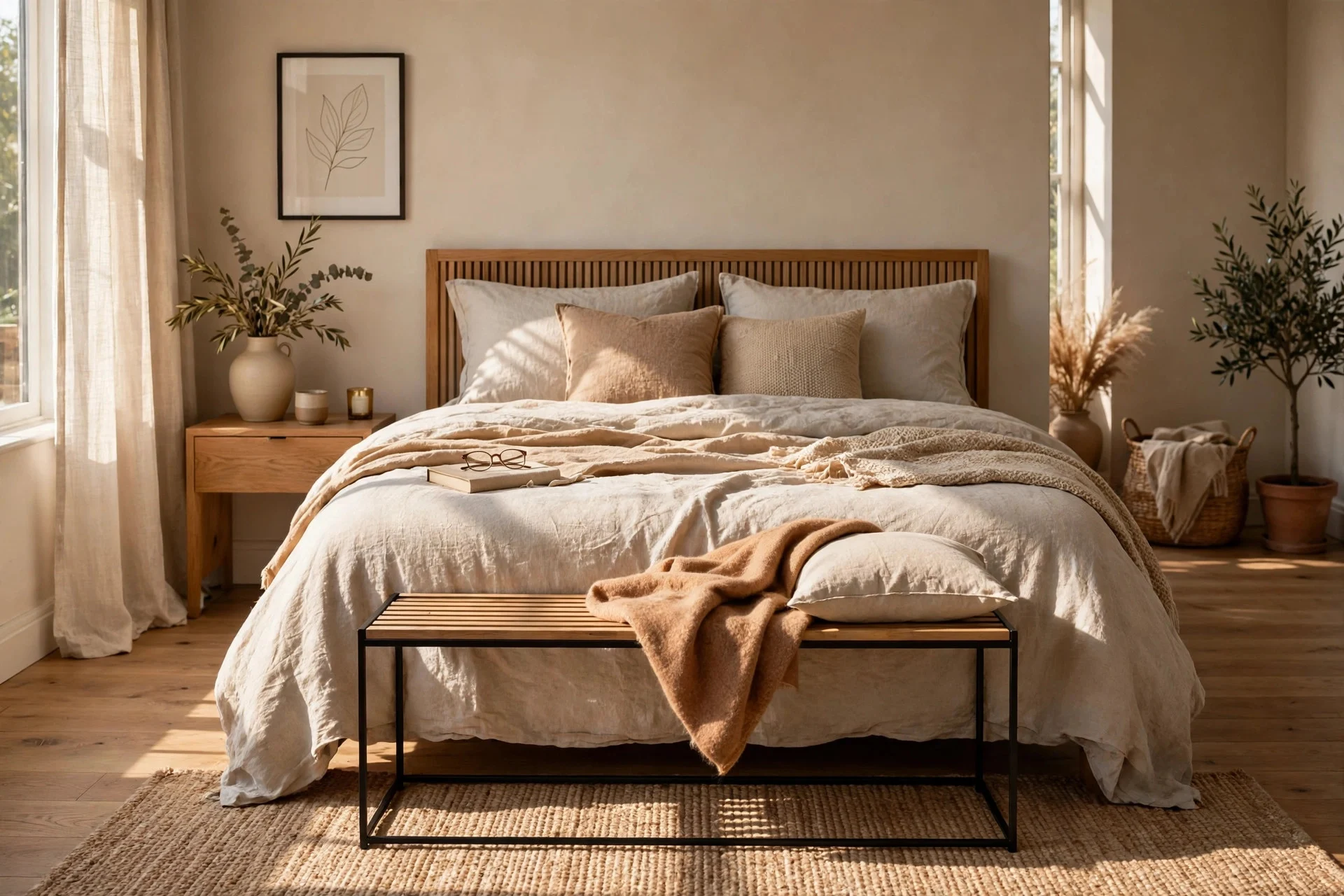
7. Slim Metal-Frame Bench, Minimal
Some bedrooms do not need more visual weight — they need less. A slim black metal frame with a thin cushion or a leather sling seat disappears into the room while still giving you a place to sit.
What makes it work: the thin profile (often under 16 inches deep), the open frame that shows floor beneath it, and a single quiet color. The same restraint you see in a warm minimalist living room applies here: one clean piece, nothing extra. To copy it cheaply, search for a metal entryway bench — they are the same shape, often cheaper, and just need a folded blanket to look bedroom-ready.
Cost: $60–$180. Difficulty: easy, 15 minutes to assemble. Tip: if your floors are uneven, a slim frame wobbles more than a chunky one — check the feet and add adjustable glides.
8. Bench With Baskets Stored Underneath
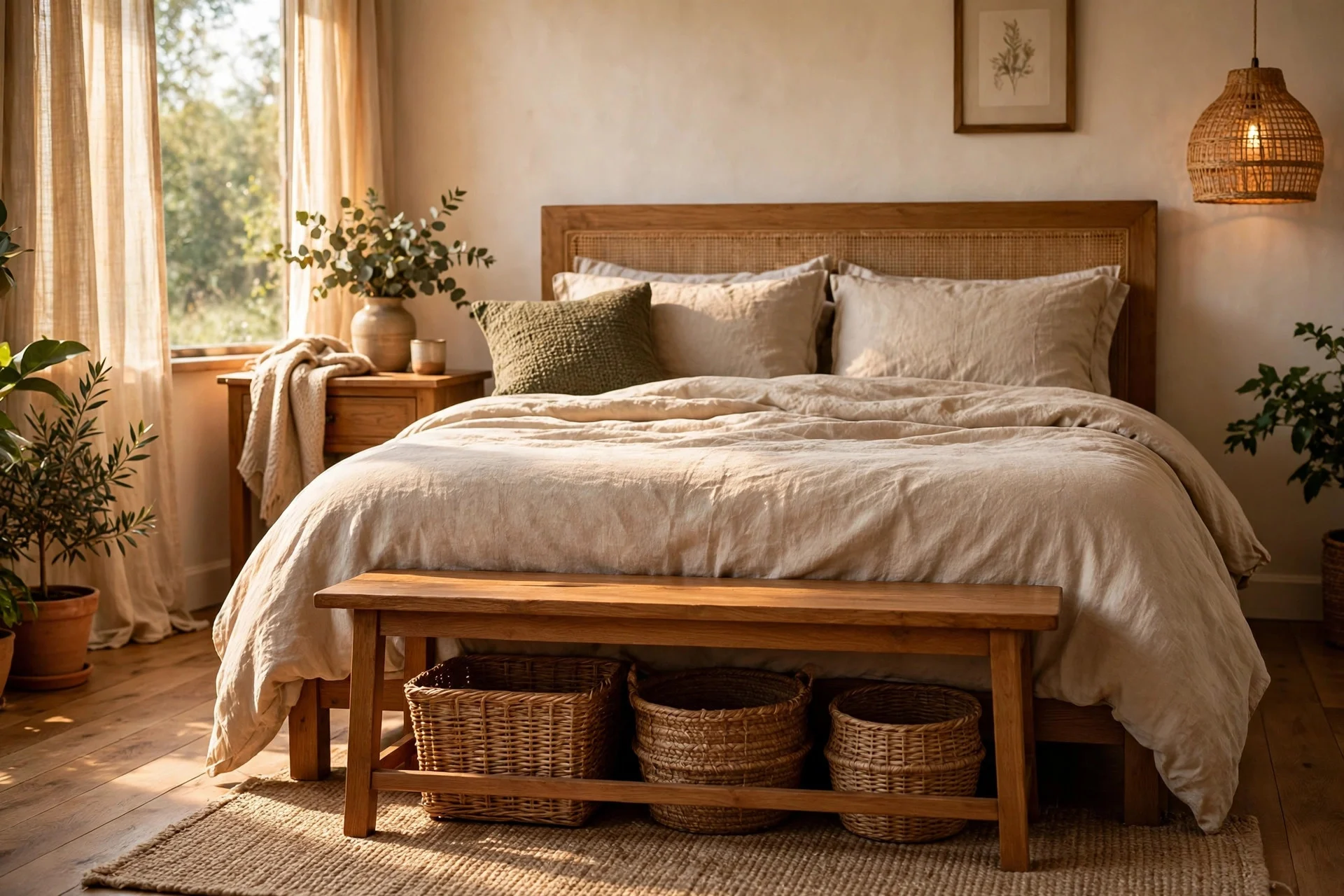
This one solves two problems at once. A simple open-frame bench with two or three baskets tucked under it gives you a seat and a home for the things that usually end up on the floor — extra pillows, charging cables, the book you are halfway through.
What makes it work: the baskets hide clutter without a single drawer, the open frame keeps the arrangement airy, and matching baskets make it look planned rather than improvised. To copy it cheaply, buy the bench and baskets separately; a plain pine bench plus three seagrass baskets usually costs less than a matching set.
Cost: $70–$200 total. Difficulty: easy. Tip: label nothing — instead, give each basket one job (pillows, throws, odds and ends) and the system keeps itself tidy.
9. Long Bench Doubling as Extra Seating
In a larger primary bedroom, a long bench — nearly the full width of a king bed — works like a small sofa. It is where someone sits to read while the other gets ready, or where overnight guests perch with morning coffee.
What makes it work: the length (at least 60 inches for a king), a firm cushion that supports sitting for more than a minute, and a position that leaves a clear walking path around it. To copy it cheaply, a dining bench with a thick cushion does the same job as a bedroom-specific bench and often costs less.
Cost: $120–$350. Difficulty: easy. Tip: leave at least 24 inches between the bench and the nearest wall or dresser, or the extra seating becomes an obstacle course.
10. Two Small Stools Instead of One Bench
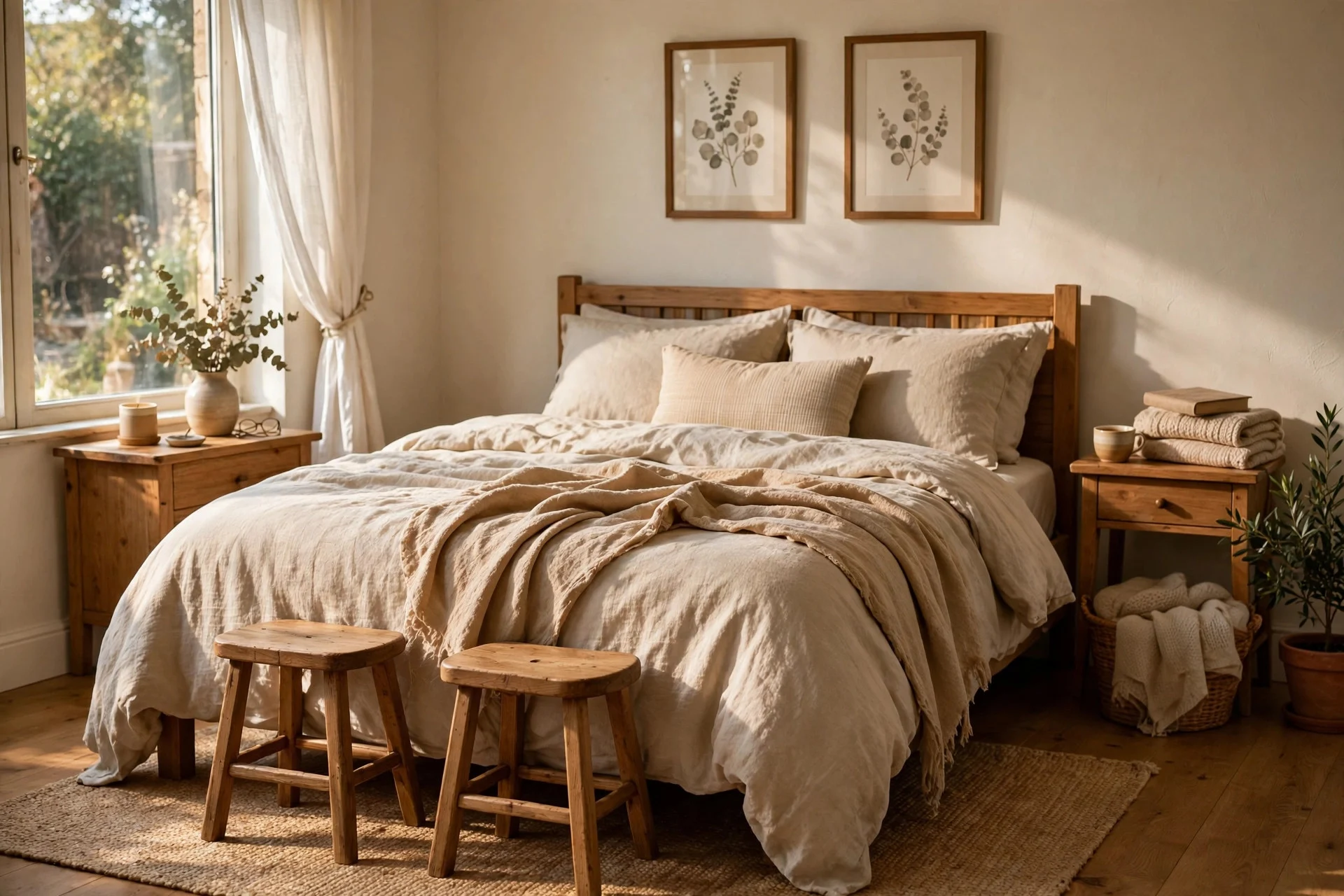
Who says it has to be one piece? Two small upholstered stools or poufs at the foot of the bed give you the same finished look with far more flexibility — pull one over to the dressing table, or move both aside when you need floor space.
What makes it work: matching stools that read as a pair, a combined width close to the bed’s width, and a height that matches the mattress. To copy it cheaply, buy two identical cube ottomans; they are widely available, easy to move, and often under $40 each.
Cost: $60–$180 for the pair. Difficulty: none — unbox and place. Tip: pick stools with a flat top, not a rounded one, or nothing will stay put on them.
11. Bench Styled With a Throw and Cushions
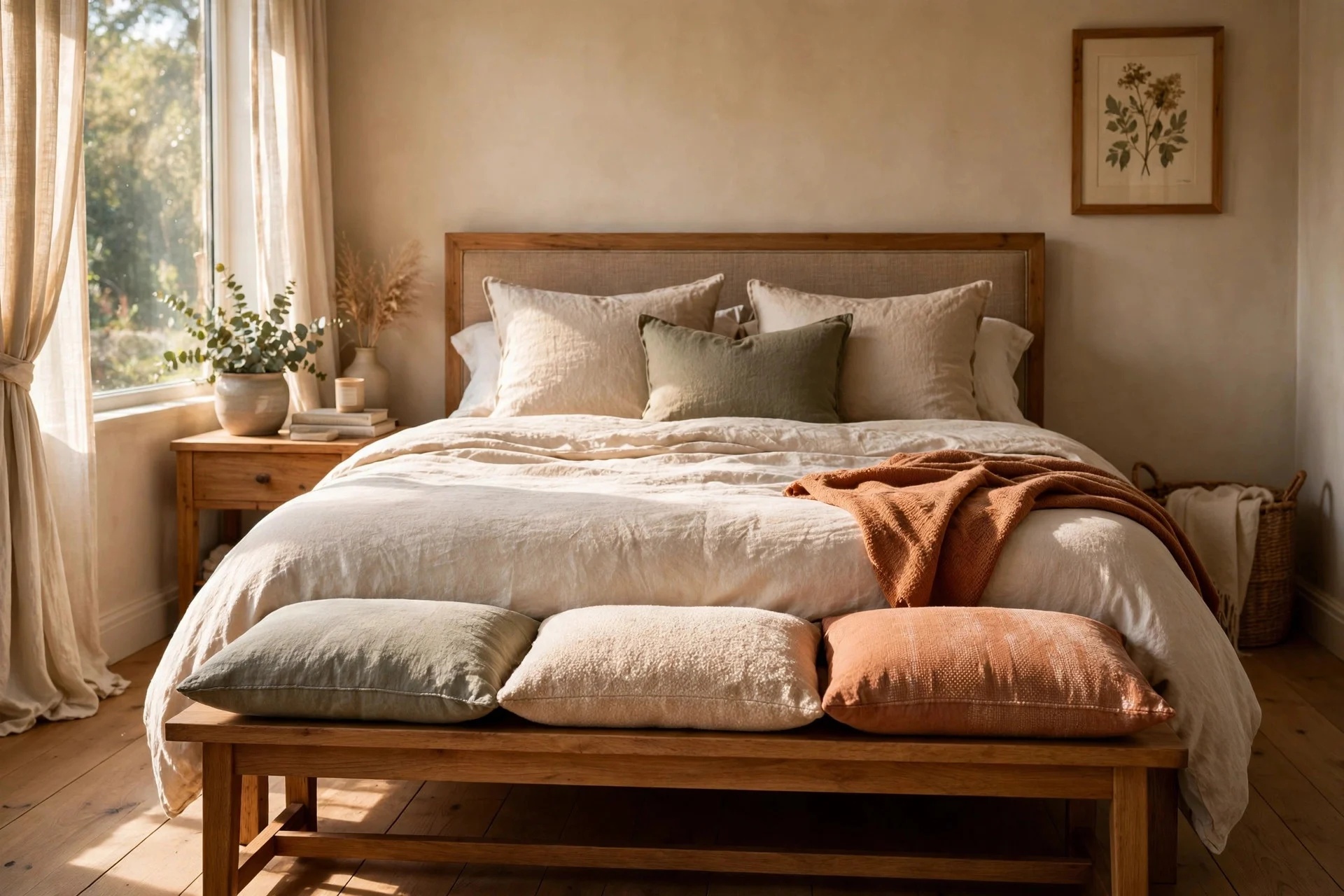
Sometimes the bench itself is plain — and that is fine, because the styling does the talking. A folded chunky throw draped over one end and two cushions in a contrasting texture turn a basic bench into the prettiest spot in the room.
What makes it work: layers in different textures (knit, linen, velvet), a color pulled from the bedding or art, and an arrangement that looks casually tossed rather than stiffly placed. A weekend living room refresh uses the same trick: new textiles, same furniture, whole new feel. To copy it cheaply, shop your own home first — a throw from the sofa and a spare cushion often do the job for free.
Cost: $0–$120 for styling pieces. Difficulty: easy, five minutes. Tip: fold the throw in thirds lengthwise before draping it; it looks neat without looking staged.
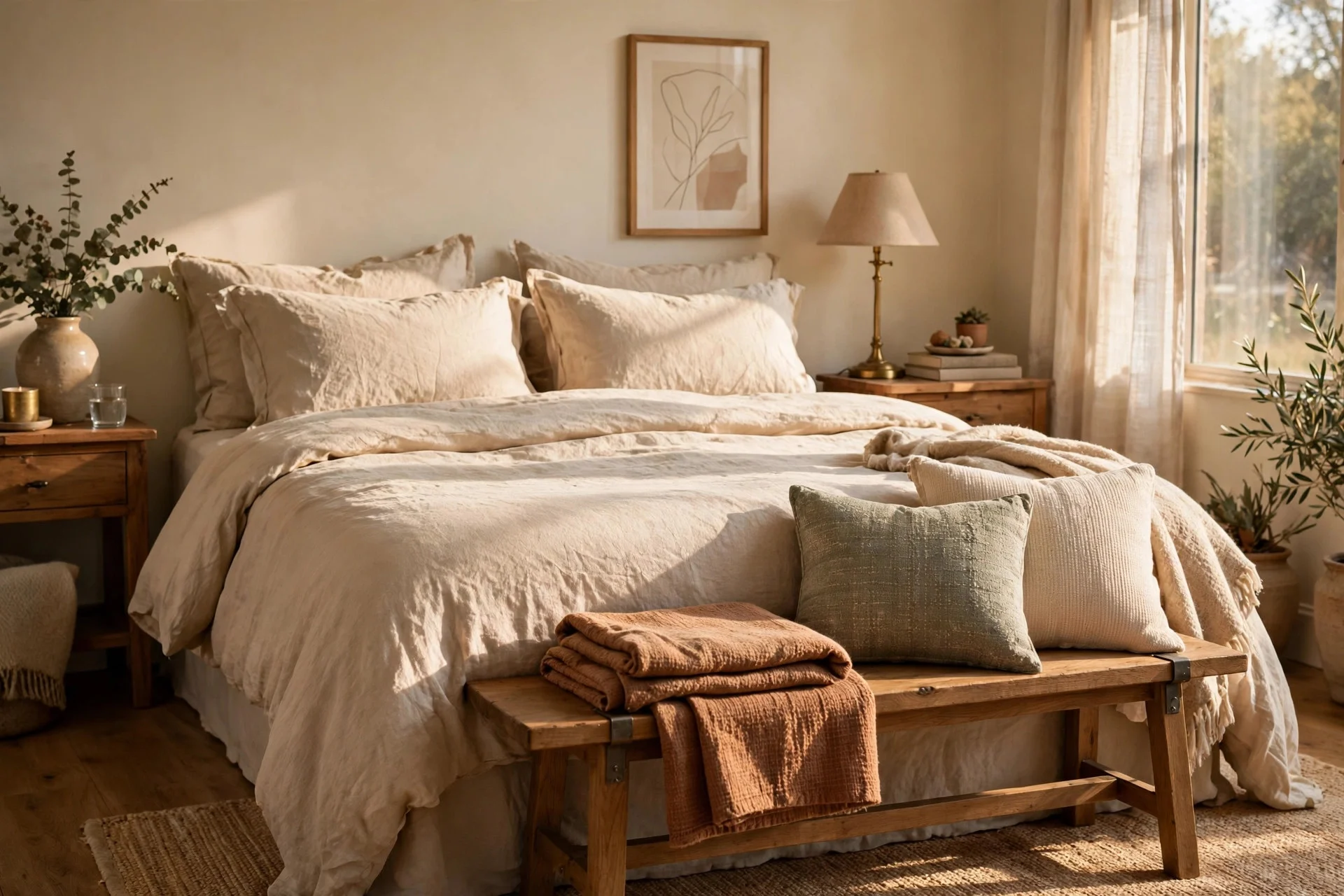
12. Narrow Bench for a Small Primary Bedroom
Small bedrooms still deserve a bench — they just need a narrow one. A bench 12 to 14 inches deep gives you a perch and a landing spot for tomorrow’s clothes without eating the walkway.
What makes it work: the slim depth, legs that show floor underneath, and a light color or open frame that does not visually block the room. To copy it cheaply, a hallway console bench or even a sturdy piano bench can fit the bill, and both are easy to find secondhand.
Cost: $50–$160. Difficulty: easy. Tip: in a tight room, skip the cushion and use a folded blanket instead — it adds softness without adding bulk.
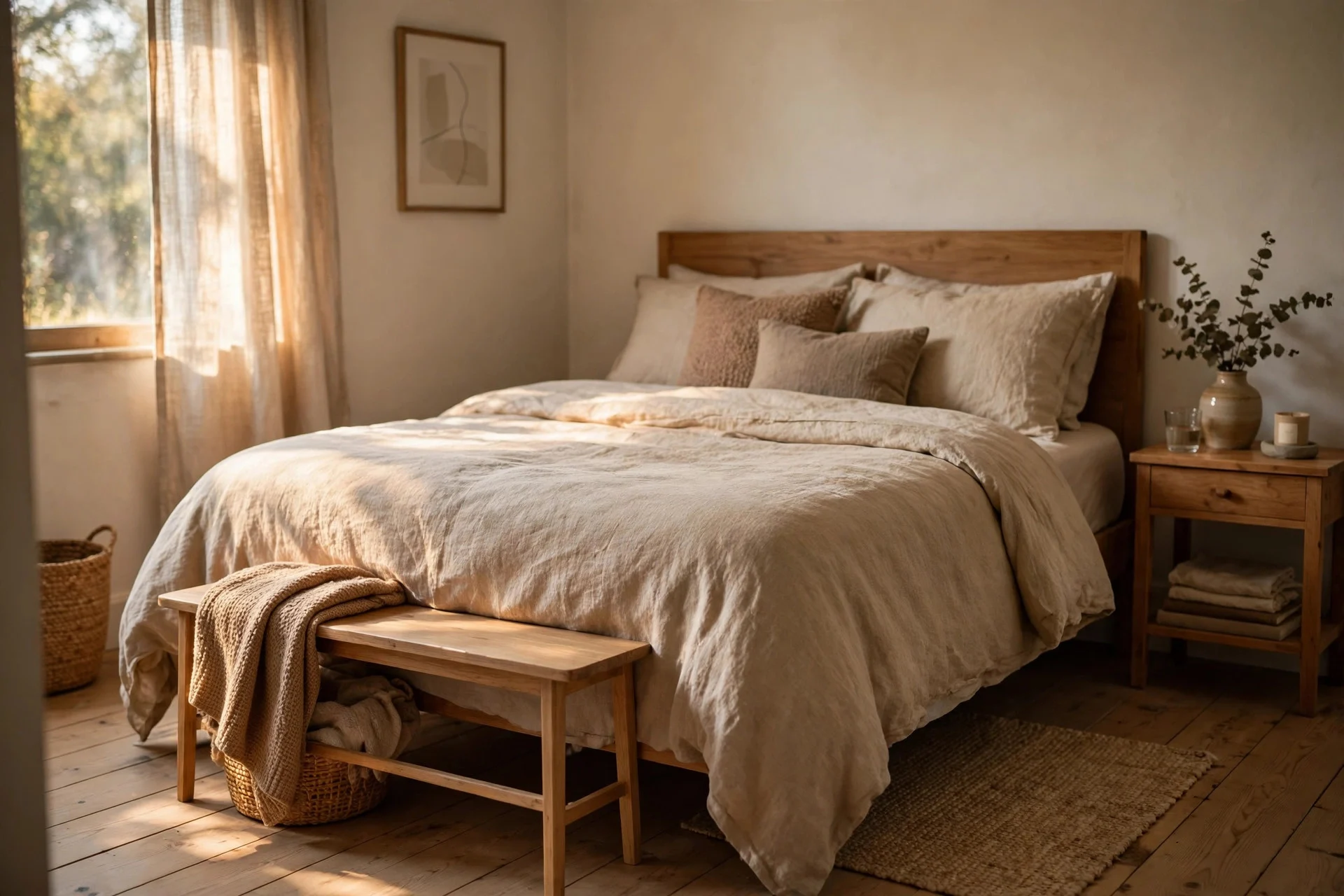
13. Antique/Vintage Bench as the Statement Piece
Last, the bench that is not really about sitting at all. A carved antique bench, a painted vintage find, or a church pew cut down to size becomes the room’s talking point — the one piece guests ask about.
What makes it work: genuine age and detail (carving, worn paint, old hardware) that new furniture cannot fake, a simple room around it so it stands out, and a seat height close enough to the bed that it still functions. To copy it cheaply, hunt flea markets and estate sales with your bed’s measurements in your phone — the best finds are the ones priced as old furniture, not as decor.
Cost: $80–$400 secondhand. Difficulty: moderate if it needs repair; otherwise just placement. Tip: sit on it before you buy. A beautiful bench with a wobbly leg or a cracked rail is a project, not a bargain.
Frequently Asked Questions
How long should a bench at the foot of the bed be?
A good rule is 6 to 12 inches shorter than the width of your bed. For a queen bed (60 inches wide), look for a bench around 48 to 54 inches. A bench longer than the bed looks oversized and catches hips and shins in the dark.
How much space do you need between the bed and the bench?
Leave the bench close to the bed — a gap of 2 to 4 inches is normal, and many people push it right up against the footboard. What matters more is the walkway beyond the bench: aim for at least 24 inches so you can pass comfortably.
Can a bench at the foot of the bed work in a small bedroom?
Yes, if you pick a narrow or open-frame design (see idea 12). A bench 12 to 14 inches deep adds function without stealing floor space, and an open frame keeps the room feeling open. Skip heavy, fully upholstered storage benches in tight rooms.
What height should a bedroom bench be?
Most bedroom benches sit 17 to 19 inches high, roughly matching a standard mattress top. If your bed is high — a thick mattress on a tall frame — a bench up to 20 inches works better, since a big height gap looks off and feels awkward to sit on.
Is a storage bench worth it?
If your closet is tight, yes. A lift-up storage bench holds a surprising amount — two spare quilts and a set of sheets is typical — and it replaces a piece of furniture you would buy anyway. If you already have plenty of storage, a simpler bench looks cleaner and costs less.
Quick Wrap-Up
Start with your room, not the bench. Measure the bed width and the walkway, decide whether you need storage, then pick from the 13 ideas above. A bench should make mornings easier and the room look finished — if it blocks a drawer, crowds the door, or never gets used, it is the wrong bench, whatever it looks like in a photo.