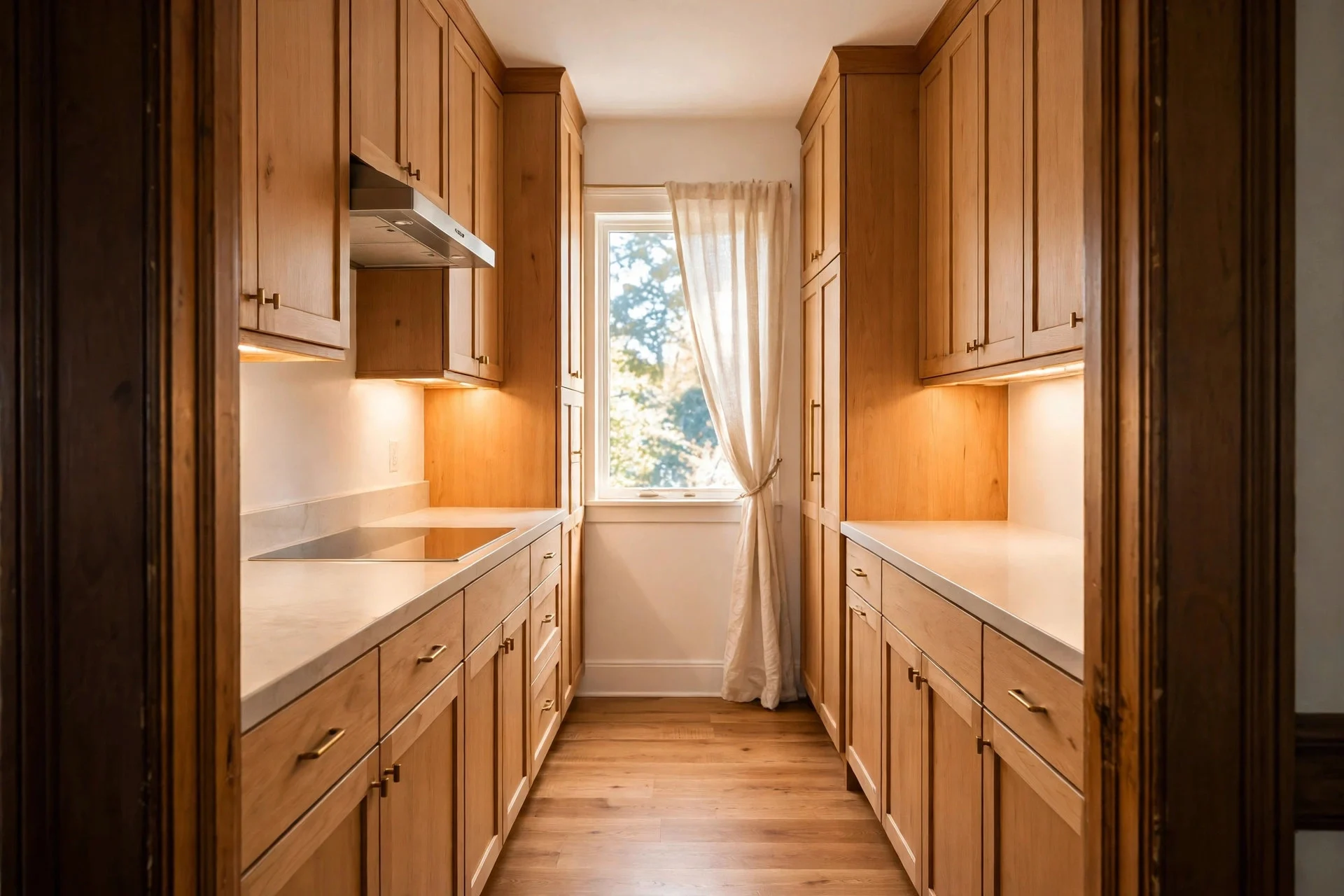
Yes, you can give your living room a real refresh in a single weekend. You do not need a renovation, a big budget, or a crew of tradespeople. You need a clear plan, a free Saturday and Sunday, and a short list of changes that actually show.
This guide gives you ten of those changes, grouped by budget. Start with the under-$50 group if money is tight, pick one or two from the middle group for a bigger shift, or go for one $200-plus piece if you want a clear focal point. Each idea below lists a realistic cost range, how hard it is, and how long it takes, so you can pick a weekend plan that fits your room, your wallet, and your energy.
Before you buy anything, take a quick photo of your room in daylight and clear one surface. That small step helps you see what is working, what is cluttering the space, and where a new item will actually land. Then work through the ideas in order, or jump straight to the ones that fix your biggest annoyance first.
Under $50: Small Changes, Visible Difference
1. Swap in New Throw Pillows and a Soft Throw
New pillows are the fastest way to change how a sofa looks. Pick two or three pillow covers in colours that already appear in your room — a warm terracotta, a soft sage, or a deep mustard all work well against a neutral sofa — and add one textured throw in a plain colour. The mix of pattern and plain stops the sofa from looking busy, and the throw adds warmth on cooler evenings.
Cost: $25–$50 for two or three covers and a throw, less if you reuse pillow inserts you already own. Difficulty: easy. Time: 30–45 minutes, including a quick shop or online order pickup. Tip: buy covers with hidden zips so you can wash them easily, and fluff the inserts by hand before you put the covers on so the pillows sit full, not flat. Watch out: avoid buying every pillow in the same print. One pattern, one solid, and one texture gives a pulled-together look without looking like a set from a catalogue.

2. Rearrange the Furniture for a Better Layout
Moving furniture costs nothing, yet it often changes a room more than a new purchase. Pull the sofa a few inches off the wall if space allows, angle one chair toward the sofa to create a conversation spot, and leave a clear path from the door to the seating area. A room that is easy to walk through and sit in feels larger, even when nothing in it is new.
Cost: $0–$20 for felt pads under heavy legs so you can slide pieces without scratching the floor. Difficulty: easy to moderate, depending on how heavy your sofa is. Time: 1–2 hours. Tip: measure the main walkway before you settle on a layout — about 30 inches gives enough room to pass comfortably. Watch out: do not push every piece against the walls in a large room. Floating the sofa even slightly can make the seating area feel more intentional. If you rent, this is one of the easiest no-damage changes you can make, and you can find more no-permission ideas in these renter-friendly living room ideas.

3. Bring in Greenery With a Few Potted Plants
Plants add colour, softness, and life to a room that feels flat. Start with three plants in different sizes: one tall floor plant near a window, one medium plant on a side table or plant stand, and one small trailing plant on a shelf. The mix of heights keeps the eye moving around the room instead of landing on one lonely pot in a corner.
Cost: $20–$50 for three plants and simple pots. Difficulty: easy. Time: 1 hour, including potting. Tip: check the light in each spot before you buy. Snake plants and pothos handle lower light well, while most flowering plants need a bright window. Watch out: overwatering kills more houseplants than neglect does. Let the top inch of soil dry out before you water again, and make sure every pot has a drainage hole or a liner so roots do not sit in water.

$50–$200: Changes You Notice From the Doorway
4. Hang New Curtains That Reach the Floor
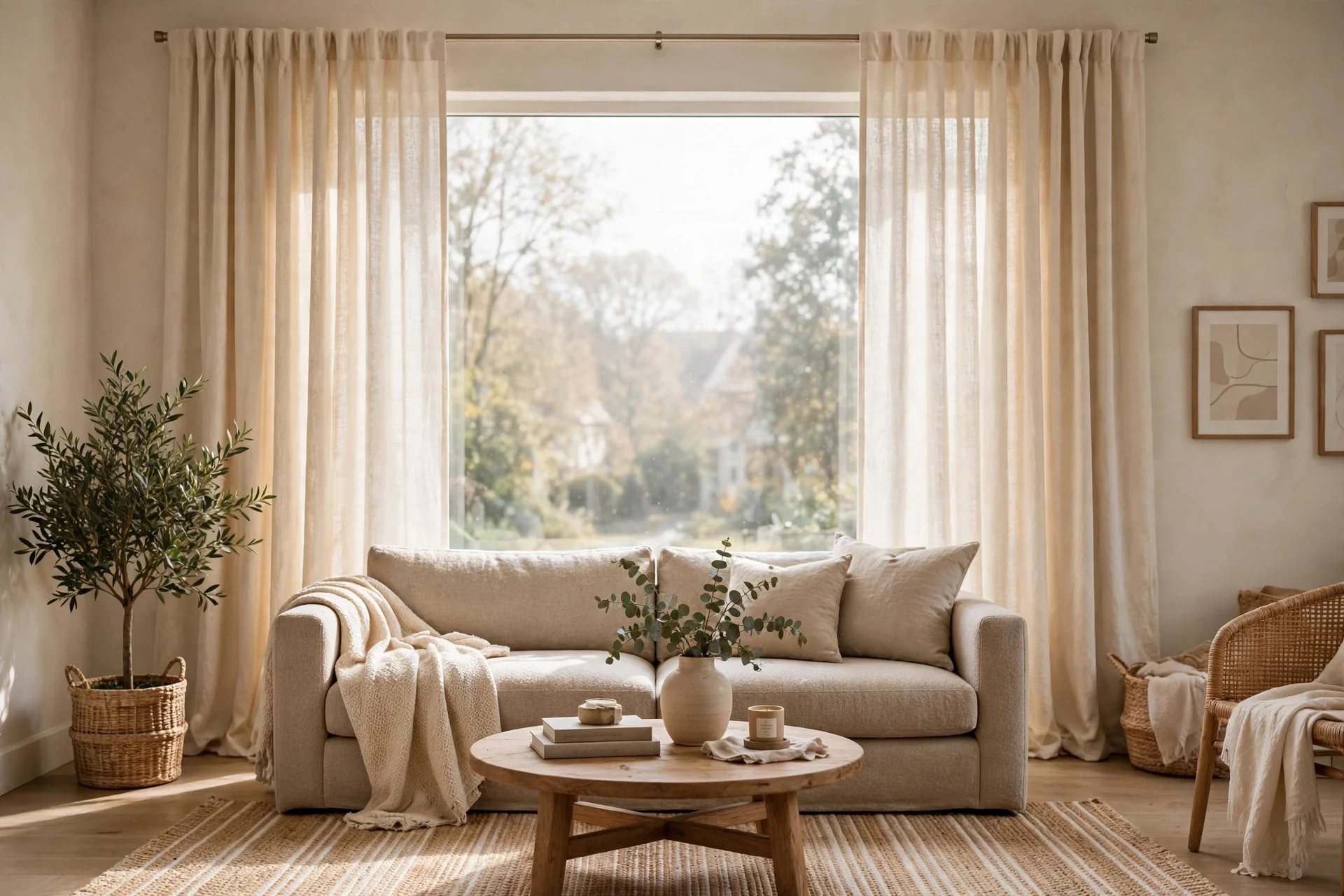
Curtains frame the window and set the height of the room. Hang the rod a few inches above the window frame and wide enough that the panels clear the glass when open — this makes the window look bigger and lets in more light. Floor-length panels in linen or a linen-look fabric give a soft, finished feel that short, stiff curtains rarely manage.
Cost: $60–$180 for a rod and two panels, depending on fabric and window size. Difficulty: easy to moderate; you will need a drill and a level. Time: 1–2 hours per window. Tip: hold the panel up before you drill and check the length. Panels that just brush the floor look tidy, while panels that puddle need regular straightening. Watch out: measure the width twice. A rod that is too short makes curtains bunch over the glass and blocks light, which defeats the purpose of the change.
5. Anchor the Seating Area With a Large Rug
A rug pulls separate pieces of furniture into one seating area. As a rule, the front legs of the sofa and chairs should sit on the rug, not beside it. That one detail makes the room look planned rather than patched together, and it adds warmth underfoot in colder months.
Cost: $80–$200 for a good-sized flatweave or low-pile rug. Difficulty: easy. Time: 30–60 minutes, including moving furniture and vacuuming underneath. Tip: use a thin rug pad underneath. It stops the rug from sliding, adds a little cushioning, and protects the floor. Watch out: a rug that is too small is a common mistake. If you are unsure between two sizes, go with the larger one — a small rug floating in the middle of the floor makes the seating area look disconnected. A rug also works beautifully over hard floors, as you can see in rooms with living room dark wood floors.

6. Build a Gallery Wall Above the Sofa
A gallery wall turns a blank wall into the room’s talking point. Gather five to seven frames in a mix of sizes, lay them out on the floor first, and keep the spacing between frames even — about two to three inches works well. Mix art prints, photos, and one piece with texture, like a small woven hanging, so the wall does not look like a row of identical posters.
Cost: $70–$200 for frames, prints, and hanging hardware. Difficulty: moderate; hanging straight takes patience. Time: 2–3 hours. Tip: trace each frame onto paper, tape the paper shapes to the wall, and adjust the layout before you put a single nail in. It saves patching holes later. Watch out: hang the centre of the arrangement at eye level, roughly 57–60 inches from the floor, not high near the ceiling. For layout ideas, these tips for a gallery wall above the sofa show how spacing and frame mix change the result.

7. Paint One Accent Wall
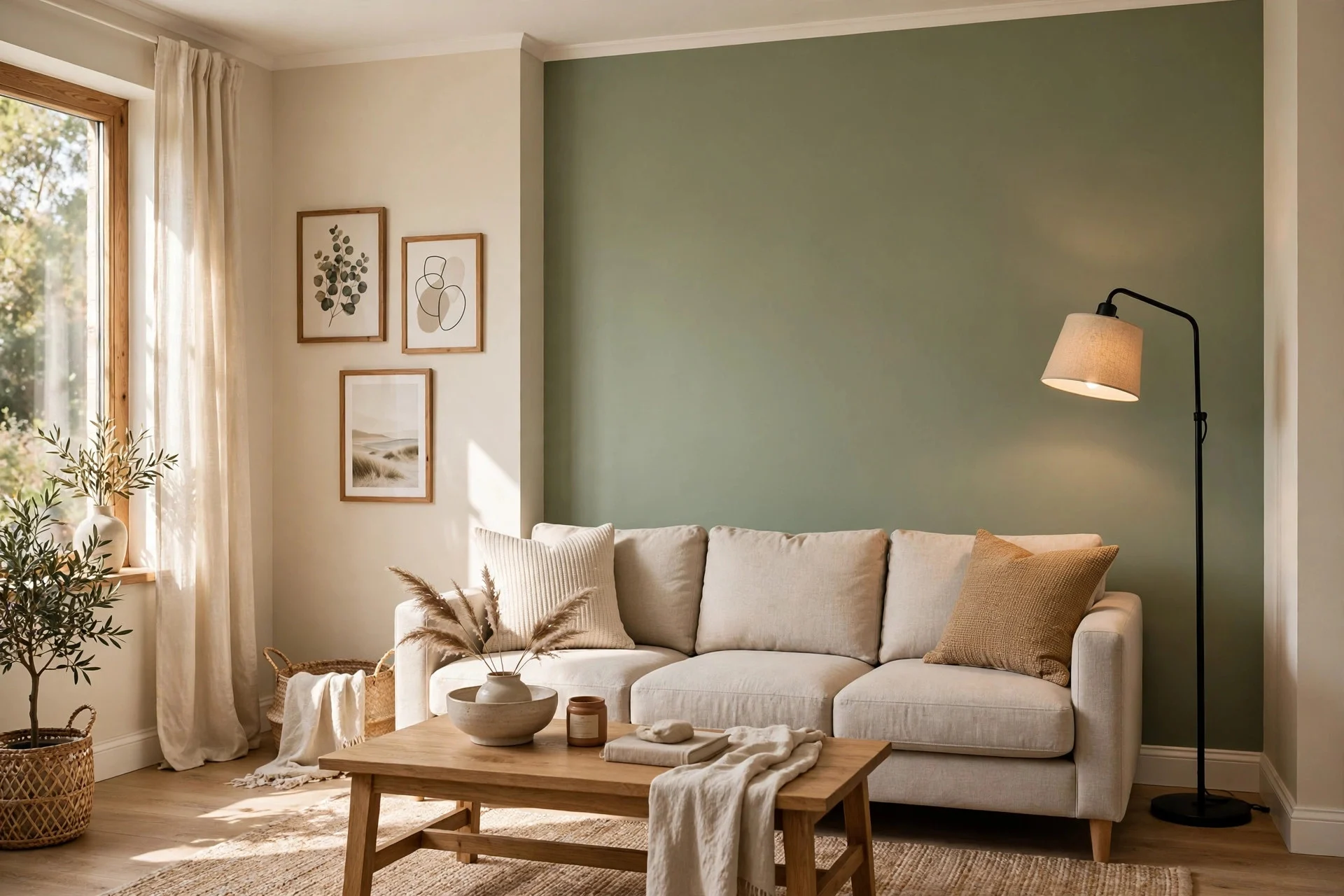
One painted wall adds depth without the cost and time of painting a whole room. Pick the wall behind the sofa or the fireplace, since that is where the eye lands first. Warm sage green, soft clay, or a muted navy all add character while still working with neutral furniture and existing art.
Cost: $60–$150 for paint, primer if needed, rollers, tape, and drop cloths. Difficulty: moderate. Time: 4–6 hours across the weekend, including drying time between coats. Tip: buy a small sample pot first and paint a large test patch. Colours look different in your room’s light than they do on a paint chart, and a test patch can save a full repaint. Watch out: do not skip the painter’s tape on edges and trim, and remove the tape while the second coat is still slightly tacky for a clean line.
$200 and Up: One Piece That Anchors the Room
8. Install a Statement Pendant or Ceiling Light
Lighting changes how a room feels after dark, and a single statement fitting can carry the whole space. A brass or rattan pendant over the coffee table, or a clean-lined ceiling light with a dimmer, gives the room a focal point and lets you control the mood in the evening. Warm bulbs, around 2700K, keep the light soft rather than harsh.
Cost: $200–$400 for the fitting, bulbs, and a dimmer switch if you add one. Difficulty: moderate; if you are not confident with wiring, hire an electrician for the fitting itself and keep the rest of the weekend for styling. Time: 2–3 hours with a professional, or a full afternoon if you do it yourself and know the basics. Tip: check the drop height before you buy. A pendant that hangs too low over a coffee table blocks sightlines across the room. Watch out: turn off the power at the breaker, not just the wall switch, before any wiring work.

9. Add a Comfortable Accent Armchair
An accent chair gives the room a second place to sit and a chance to add colour or texture. A rust velvet chair, a bouclé chair in cream, or a leather-look chair in tan can all work, as long as the chair’s seat height is close to your sofa’s so guests do not feel perched too high or sunk too low. Place it at an angle to the sofa with a small side table beside it, and it becomes a natural reading spot.
Cost: $220–$450, depending on fabric and build. Difficulty: easy; most chairs arrive with simple assembly. Time: 1–2 hours, including assembly and placement. Tip: sit in the chair before you commit if you can, or check the return policy carefully when buying online. A chair that looks good but feels stiff will not get used. Watch out: measure your doorways and the space beside the sofa first. A chair that cannot fit through the front door is a weekend problem nobody needs.

10. Replace the Coffee Table With a Piece That Fits the Room
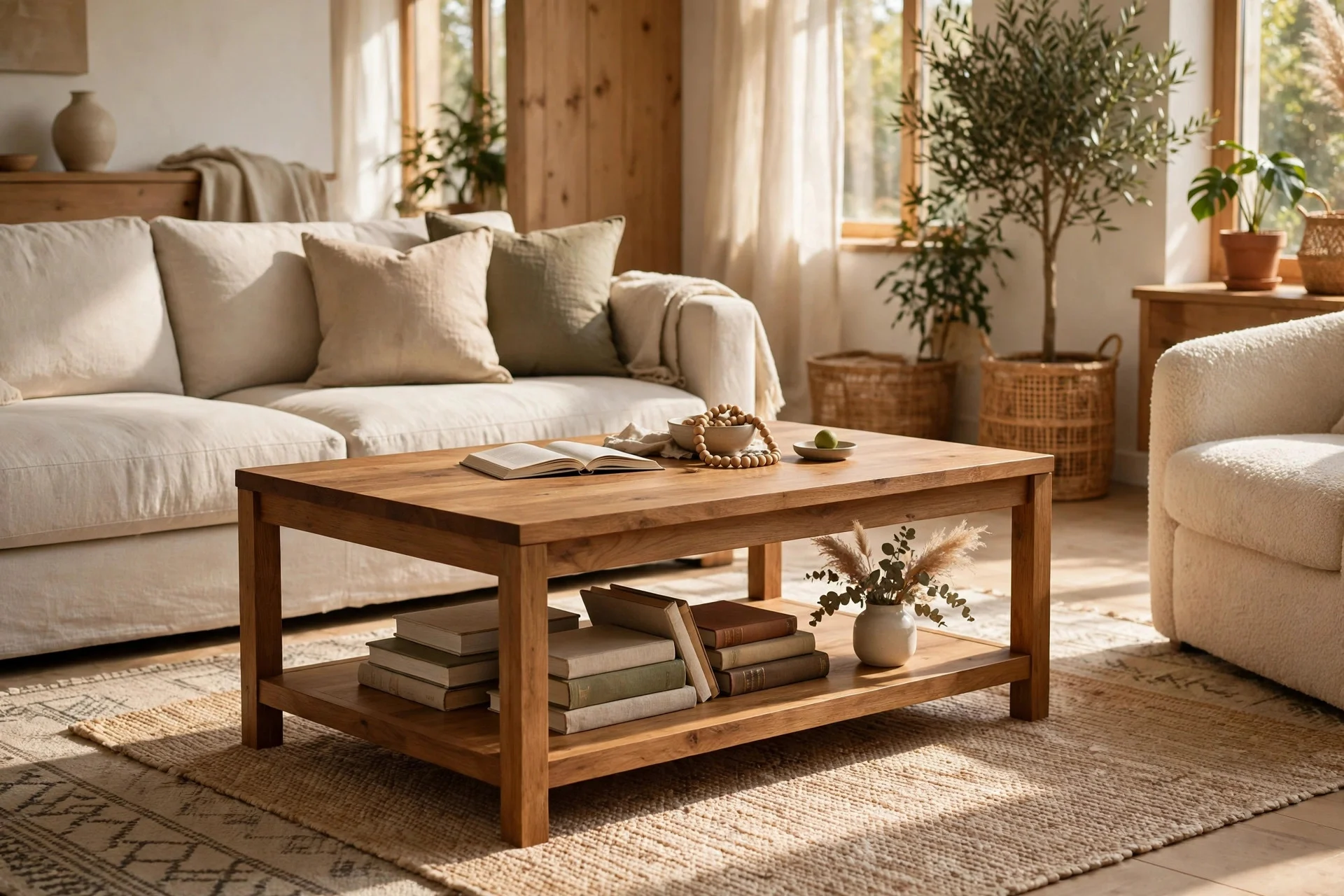
The coffee table sits in the middle of everything, so getting its size and shape right matters. A rectangular table works well with a standard sofa, while a round table suits a smaller room or a sectional because it softens the corners and is easier to walk around. Solid wood adds warmth, and a lower shelf gives you a place for books and a basket without cluttering the top.
Cost: $200–$450 for a solid wood or well-made veneer table. Difficulty: easy to moderate, depending on assembly. Time: 1–2 hours. Tip: leave about 16–18 inches between the sofa and the table so you can reach a drink comfortably and still walk past. Watch out: check the table height against your sofa seat. A table that is much higher or lower than the seat feels awkward to use, no matter how good it looks in photos.
Your Weekend Plan: Putting It Together
If you have one weekend and a tight budget, start with ideas 1, 2, and 3 on Saturday morning. They cost little, need no special tools, and by Saturday evening the room will already feel different. Use Sunday for one middle-tier change, like curtains or a rug, if you have the budget for it.
If you have a bit more to spend, pair one $50–$200 idea with one $200-plus idea and skip the rest for now. One strong change beats five rushed ones, and you can add the smaller ideas over the following weekends without redoing any work. Keep your receipts and any spare paint or hardware in one bag, so touch-ups later take minutes, not a fresh shopping trip.
- Saturday morning: declutter, rearrange, and place plants
- Saturday afternoon: pillows, throw, and any small styling
- Sunday morning: the bigger job — curtains, rug, gallery wall, or paint
- Sunday afternoon: the anchor piece, final styling, and a daylight photo
Frequently Asked Questions
Can I really refresh a living room in one weekend?
Yes, if you pick changes that do not need drying time beyond paint or a tradesperson’s schedule. Pillows, plants, rugs, curtains, and a new chair can all be done in a day. Paint and a gallery wall take longer, so plan those as your single big job for the weekend rather than stacking them together.
How much should I budget for a weekend living room refresh?
A noticeable refresh can cost under $50 if you focus on rearranging, pillows, and plants. A mid-range weekend, with curtains or a rug added, usually runs $150–$350 in total. Adding one anchor piece like a chair or coffee table brings the total to $400–$700, which is still far below a full renovation.
Which refresh gives the biggest change for the money?
For most rooms, a large rug or an accent wall gives the biggest visual change, because both cover a large area. If your room already has a rug and painted walls you like, new curtains or a gallery wall usually comes next, since both draw the eye as soon as you walk in.
Do I need any special tools for these ideas?
Most ideas need only basic tools: a drill, a level, a tape measure, and a screwdriver for curtains and gallery walls. Painting needs rollers, tape, and drop cloths. If a job needs electrical work, like a new ceiling light, hiring an electrician is the safer choice and keeps the weekend on track.
What should I do first if my living room feels cluttered?
Start by removing, not adding. Take everything off the coffee table and shelves, keep only the pieces you actually like, and find a home for the rest before you buy anything new. A clear surface makes every later change — pillows, plants, or art — show up better, and it stops a refresh from turning into more clutter.
Final Checklist Before You Call It Done
Walk into the room as if you were a guest seeing it for the first time. Check that walkways are clear, the seating area feels balanced, and at least one change is visible from the doorway. Fluff the pillows, straighten the rug, water the plants, and take a daylight photo to compare with your before shot. That photo is the simplest proof that a weekend of small, well-chosen changes was worth it — and it gives you a clear starting point for the next refresh.