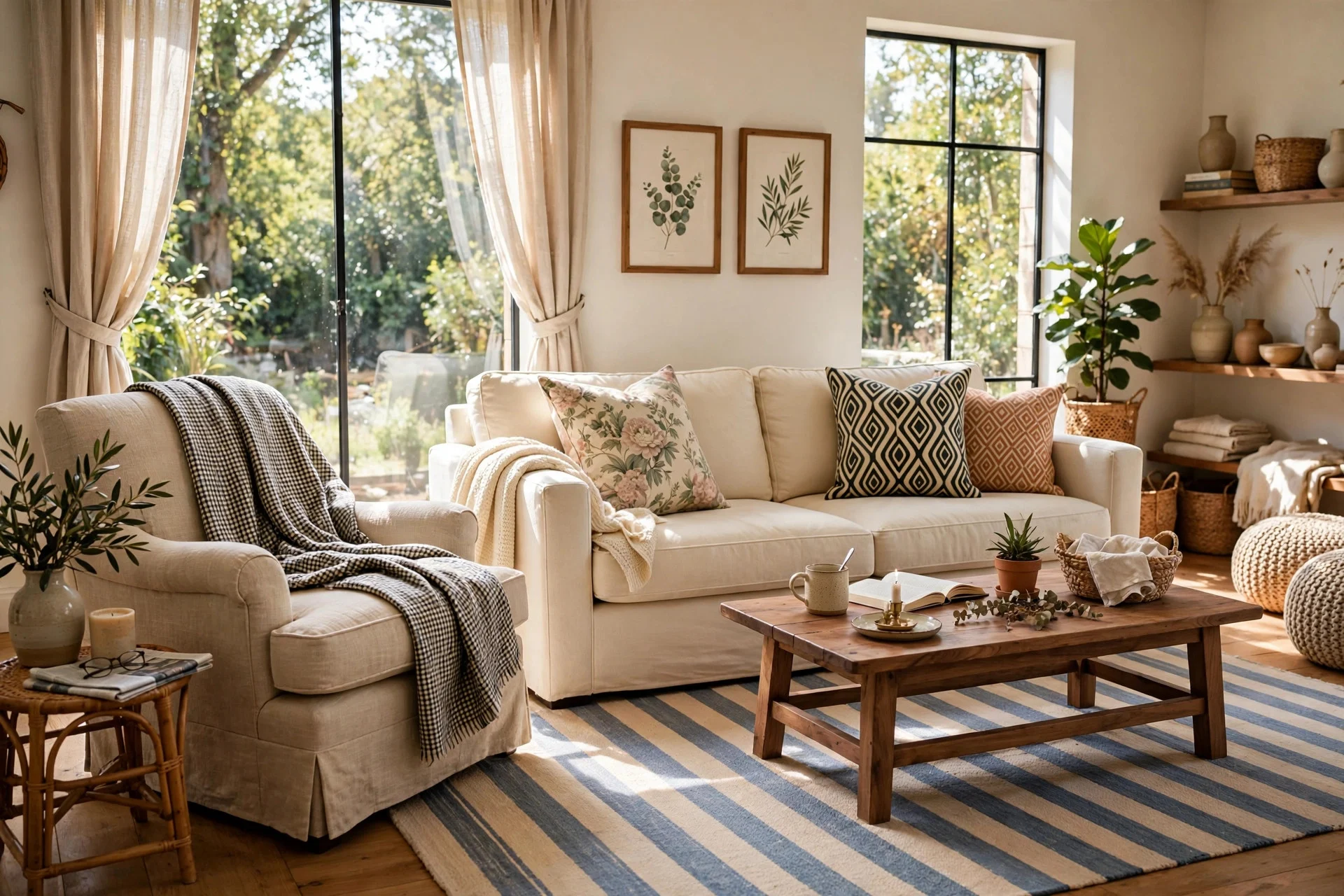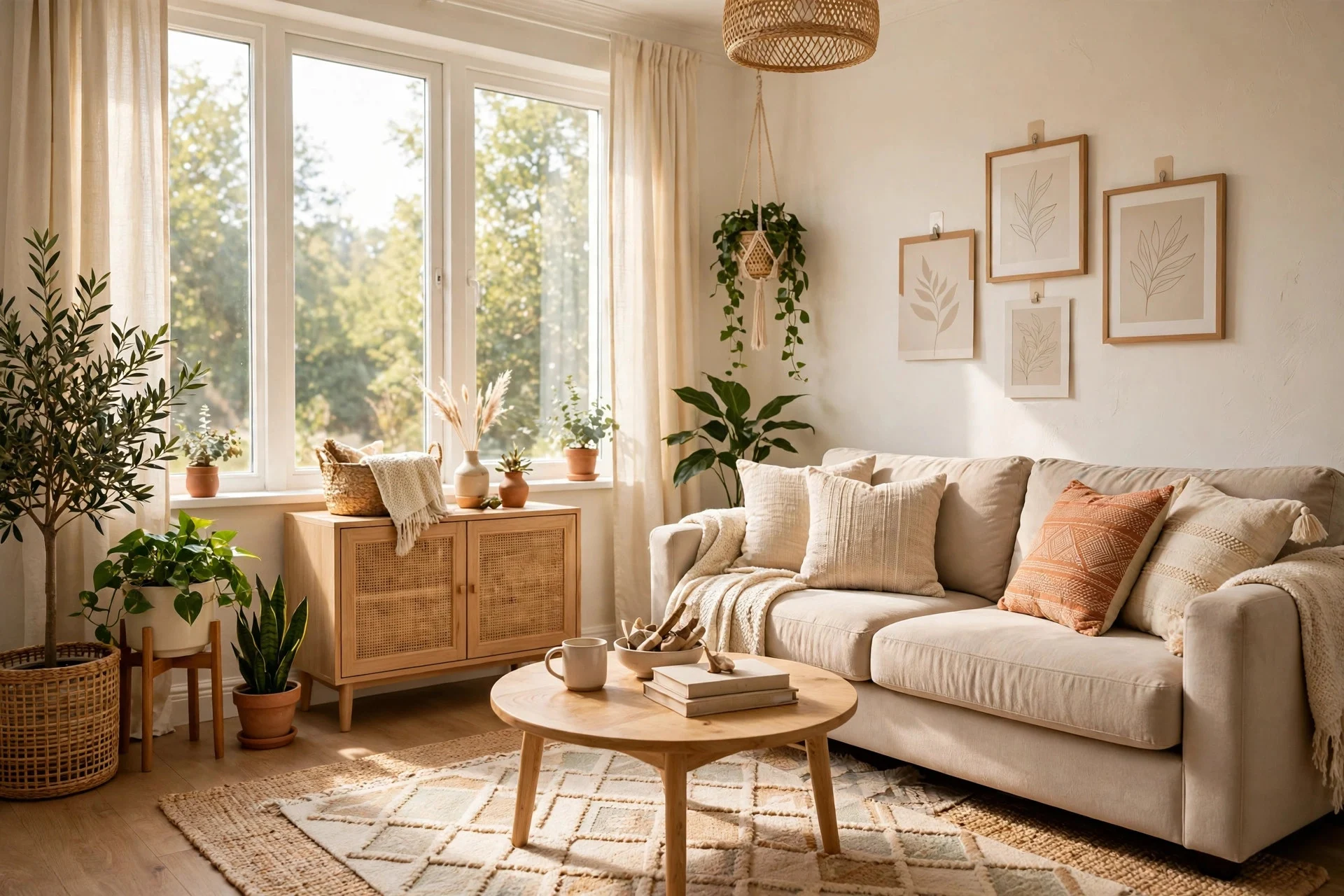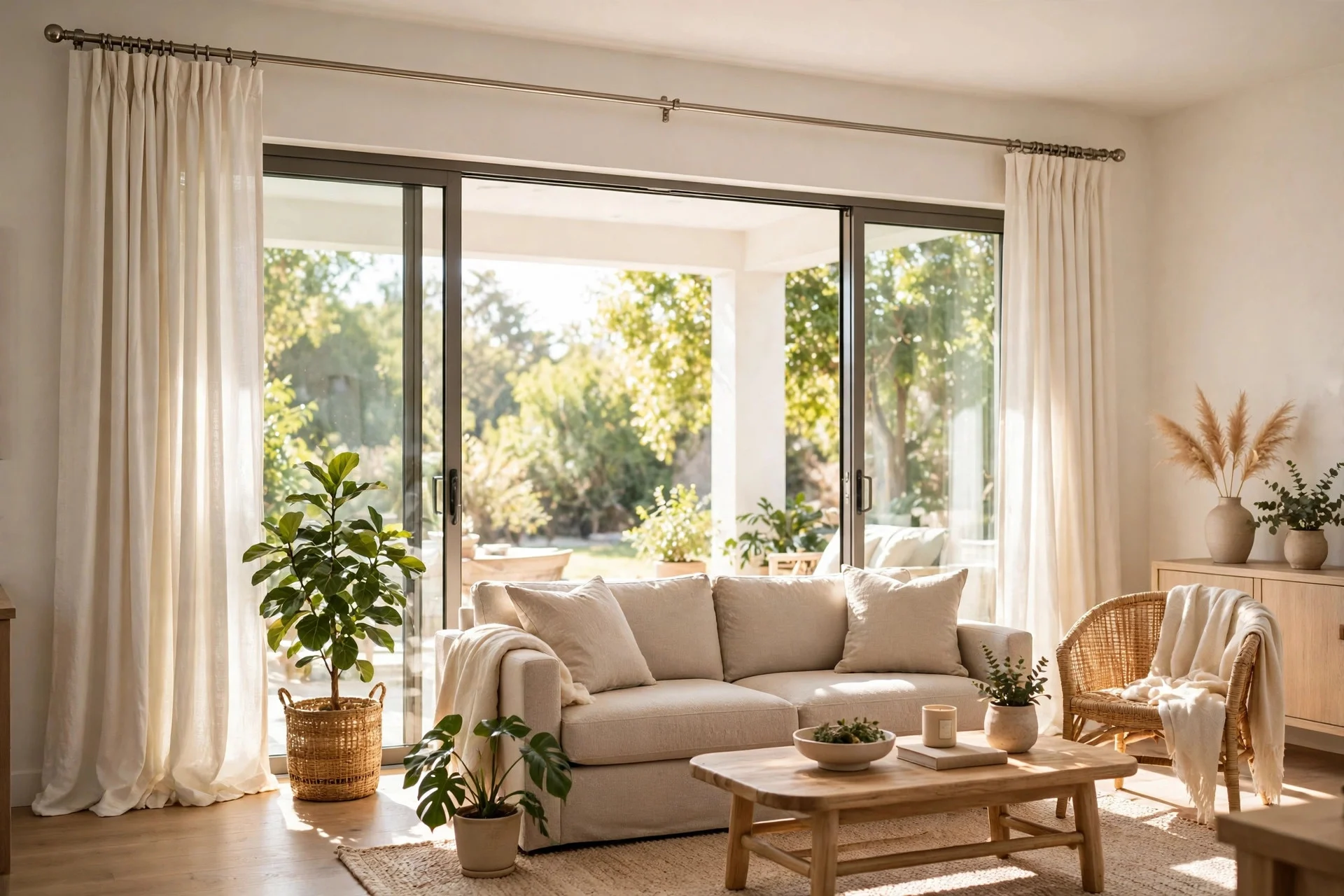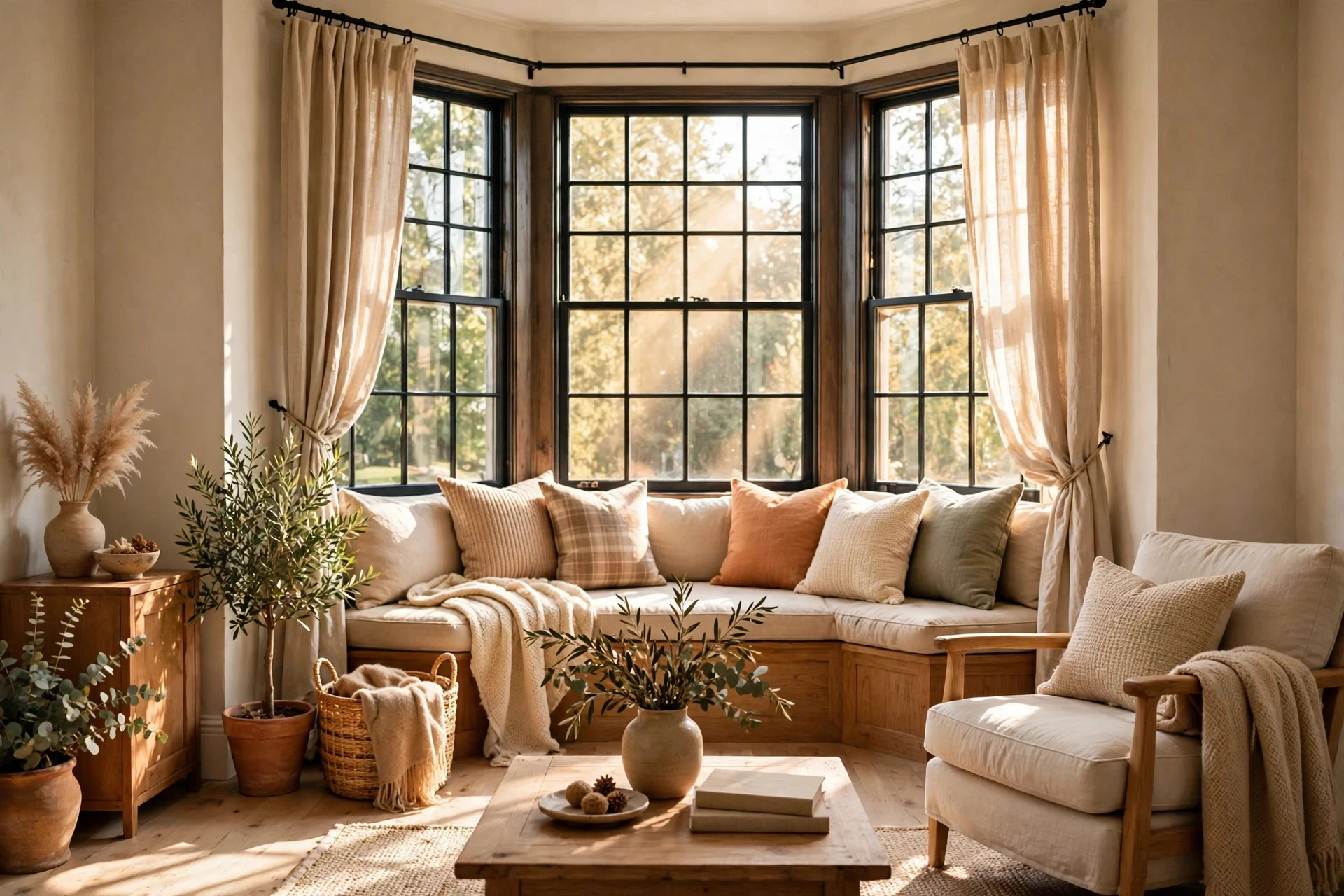
Living Room Ideas for Renters: 15 Changes Your Landlord Won’t Mind
The keys are finally in your hand. You push open the door, step into your new living room, and take it all in: beige walls, beige carpet, one overhead light that hums faintly, and a lease that says no painting, no nails, no permanent changes.
If you’re hunting for renter friendly living room ideas that won’t cost you your security deposit, you’re in the right place. Every one of the 15 fixes below is removable, drill-free, and reversible — most take an afternoon or less, and all of them leave the room looking more like yours the day you move out than the day you moved in.
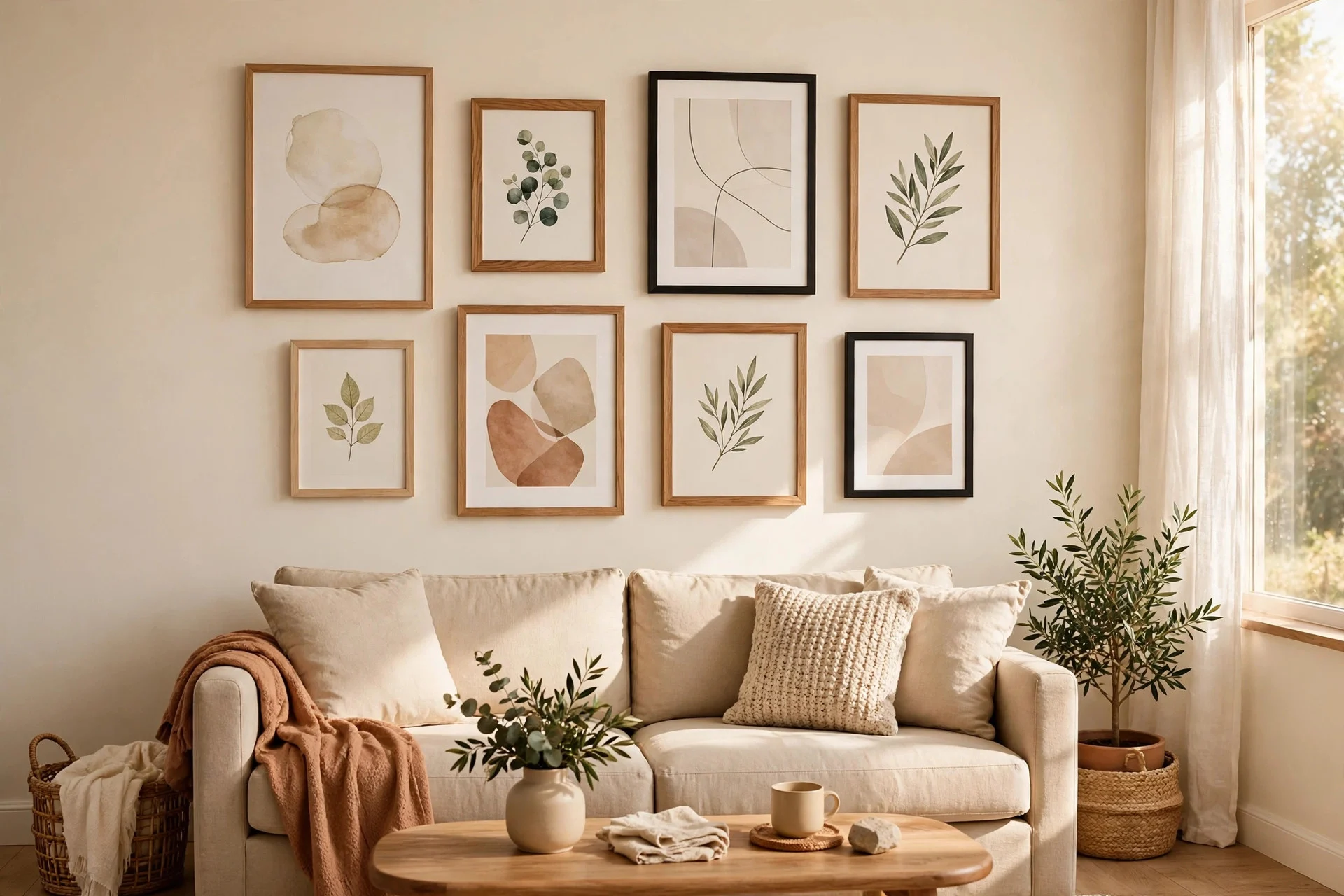
1. The blank-wall problem: build a gallery wall without a single nail
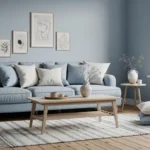
Bare walls are the loudest signal of a temporary home, and most leases ban nails. The fix is a wall of lightweight frames hung with heavy-duty removable adhesive strips rated for the frame’s weight — a pack of large strips (around $10–$14) holds most frames up to 7 kg per set of four.
It works because a clustered arrangement reads as one deliberate feature instead of scattered small frames, which tricks the eye into seeing an “intentional” room. Cost: $25–$60 for frames and strips. Difficulty: easy — about 30 minutes including layout.
Tip: lay the whole arrangement on the floor first and photograph it, then hang from the center outward. Watch-out: on fresh or matte-finish rental paint, pull strips off slowly at move-out (stretch straight down, never yank sideways) so you don’t lift paint.
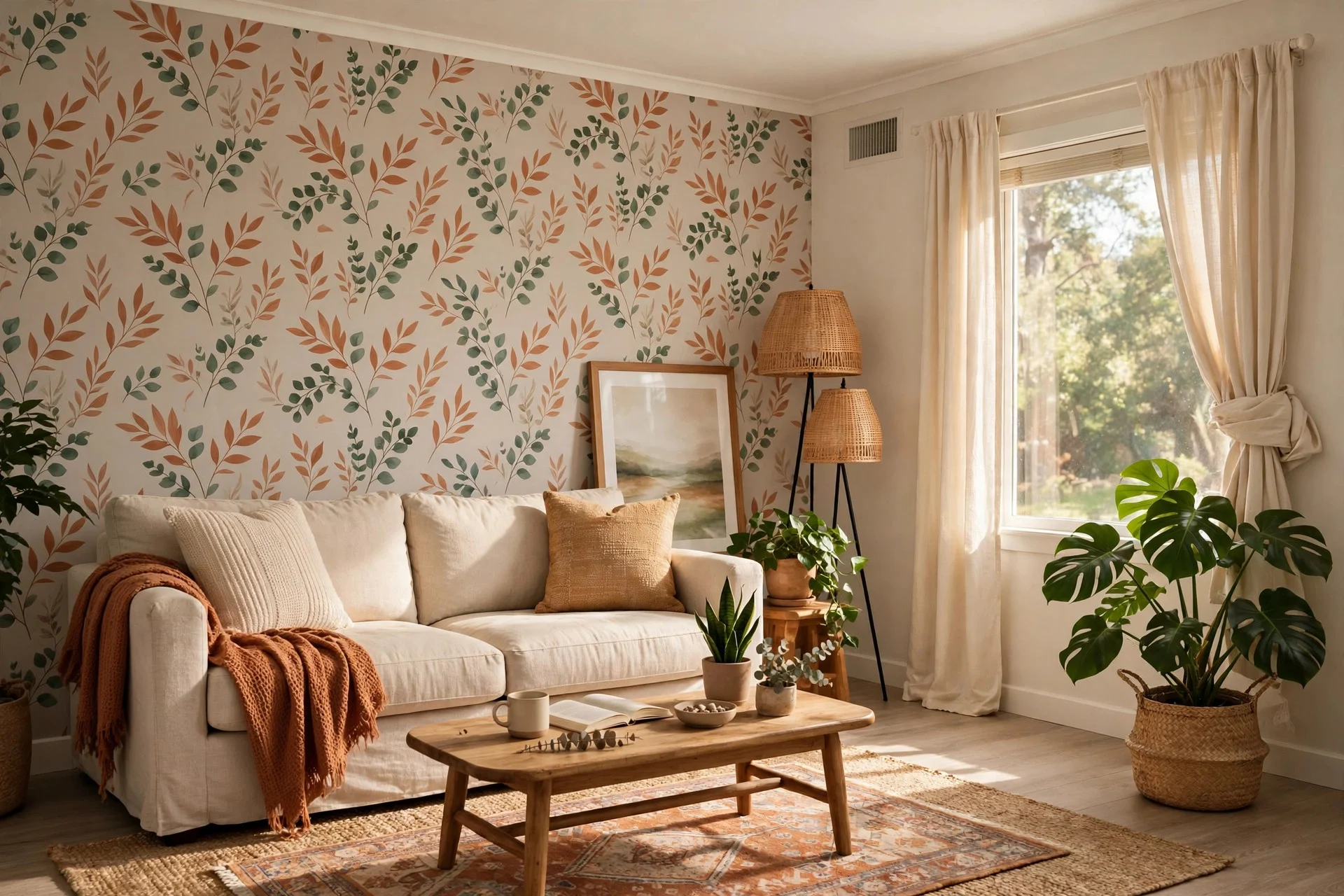
2. The builder-beige problem: one wall of peel-and-stick wallpaper
Nothing flattens a rental faster than four identical walls of landlord paint. Peel-and-stick wallpaper gives you the accent wall paint can’t — bold pattern, texture, depth — and it pulls off cleanly when it’s time to leave.
Measure the wall, order about 10% extra, and start at the least visible corner so your first (least perfect) panel hides behind the sofa. Cost: $40–$120 per wall depending on brand. Difficulty: medium — roughly 2 hours with a helper.
Tip: run a hairdryer over stubborn corners during installation; a little heat makes the vinyl conform. Watch-out: skip textured or freshly painted walls (under 30 days), where adhesion fails and removal can peel paint — test a hidden square first.
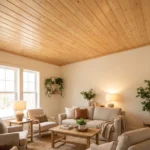
3. The interrogation-room problem: kill the overhead light with lamps
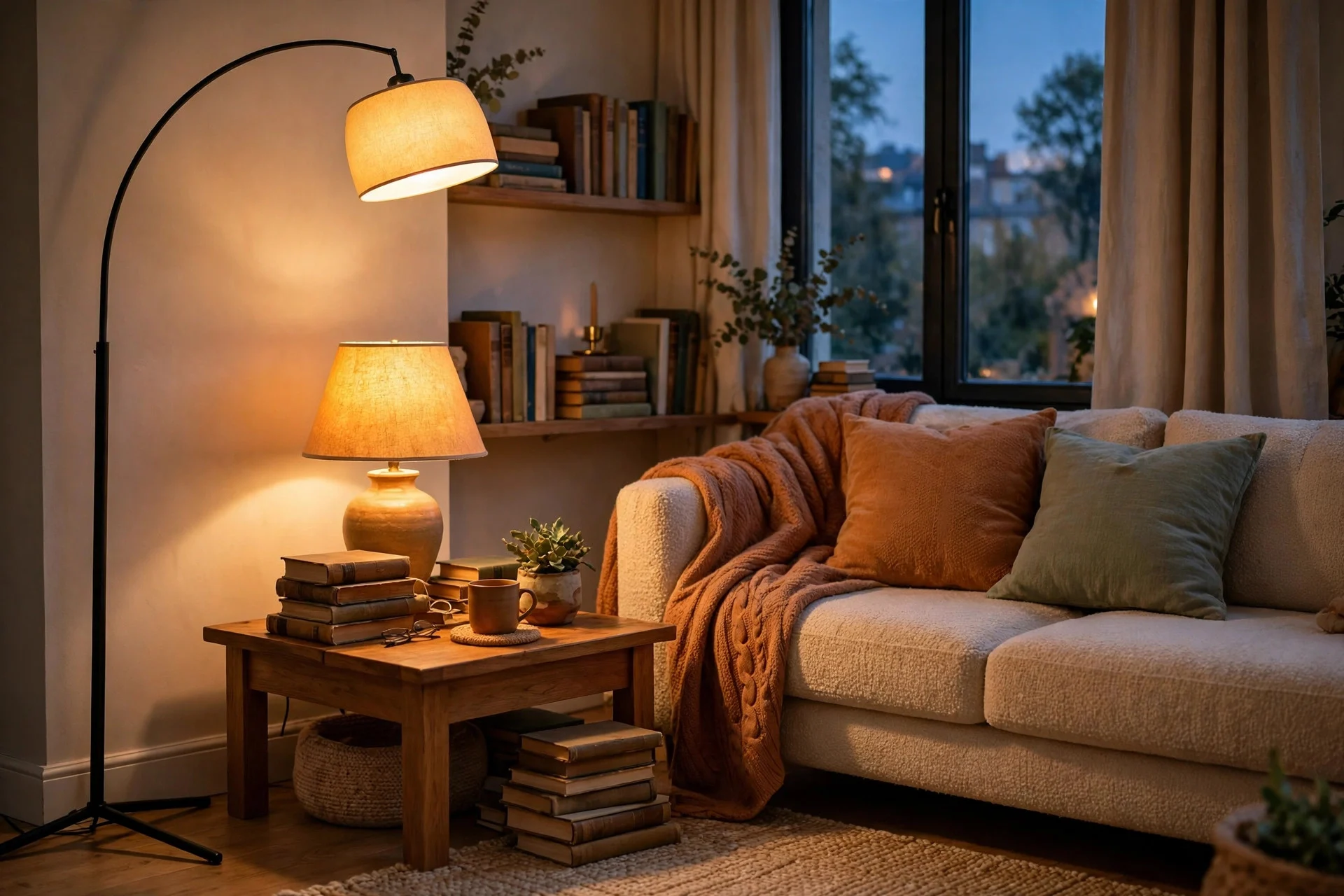
Rental living rooms are often lit by a single ceiling fixture that makes everything feel flat and harsh. The fix costs nothing structural: leave the overhead off and build three points of warm light instead — a floor lamp in the corner, a table lamp on a side table, and one small accent like a candle-style LED on a shelf.
Layered warm light (2700K bulbs) instantly makes a room feel finished and cozy; it’s the single highest-impact change per dollar in this list. Cost: $40–$150 for one floor lamp and one table lamp with warm bulbs. Difficulty: easy — plug in and arrange.
Tip: aim lamp shades so light bounces off walls or the ceiling, not straight into eyes. Keep the original fixture and any bulbs you replace so you can put them back at move-out.
4. The sad-floor problem: hide it under a big layered rug
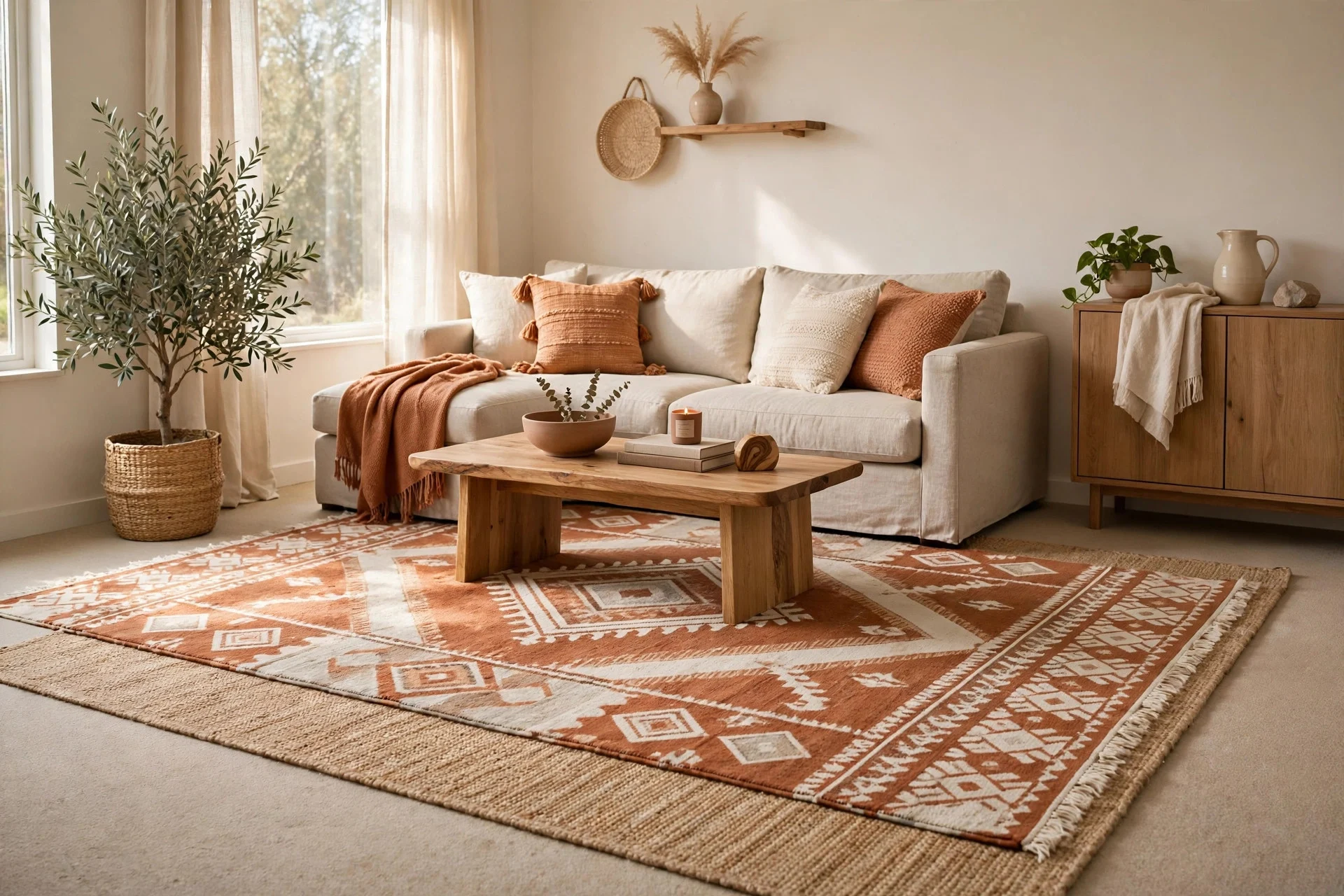
Stained carpet, scratched laminate, dated tile — you can’t change rental flooring, but you can cover the worst of it. One large rug (8×10 for a standard seating area, front legs of the sofa on it) reframes the whole room and quiets echo.
Layering a smaller patterned rug over a big neutral jute one looks designer-level and costs less than one “statement” rug. Cost: $80–$250 total. Difficulty: easy — 20 minutes to unroll and position.
Tip: put a rug pad under each layer; it stops slipping and protects the flooring underneath, which your deposit will thank you for. Washable rugs are worth the premium if you have pets.
5. The bare-window problem: curtains on a tension rod
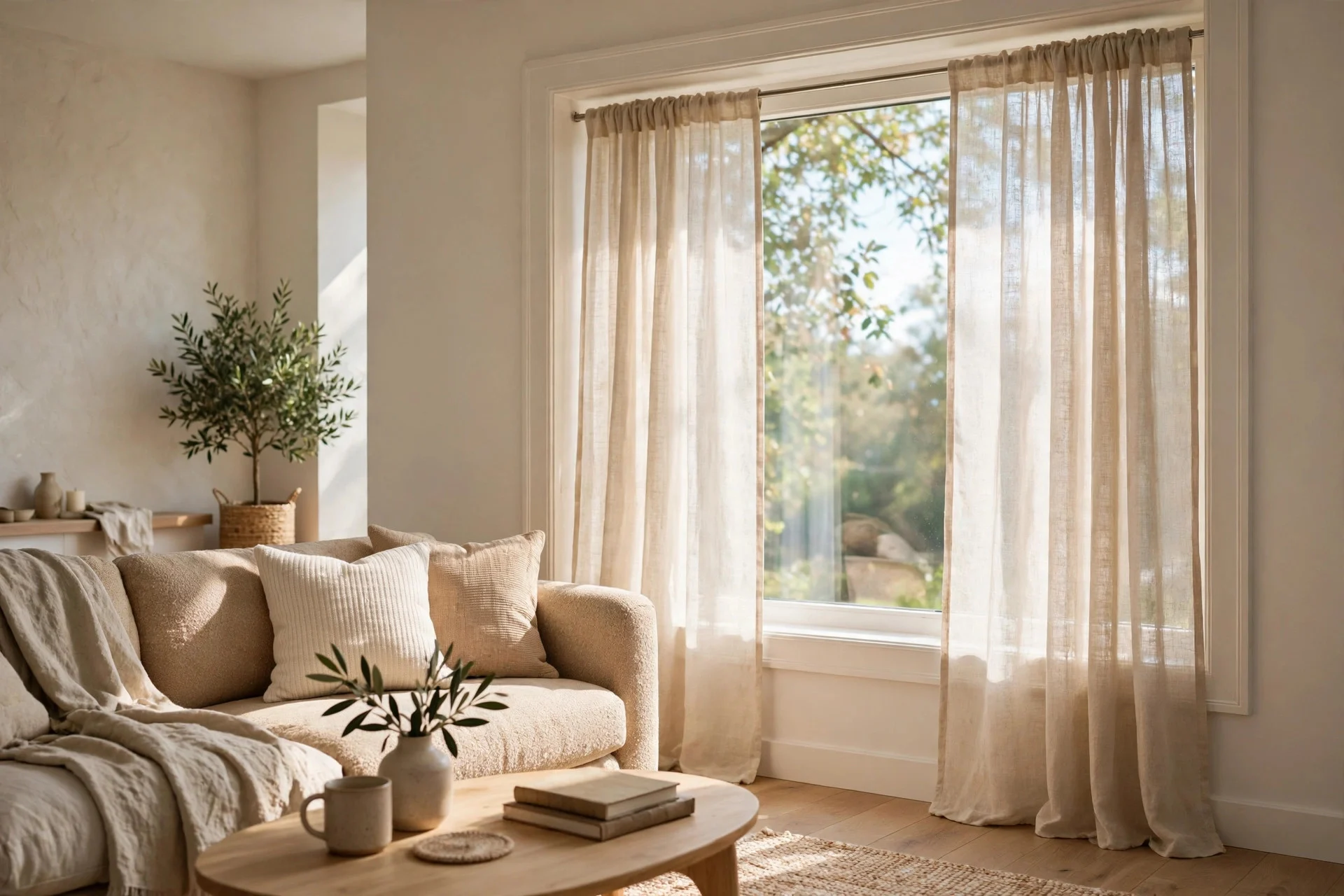
Most rentals come with blinds you can’t remove and windows you can’t touch — and bare windows make a room feel unfinished and echoey. A spring tension rod inside the window frame plus linen curtains needs zero screws and zero permission.
Curtains soften daylight, cut glare, and add the vertical softness bare rental walls are missing. Cost: $30–$80 for the rod and two panels. Difficulty: easy — 15 minutes.
Tip: hang the rod as close to the ceiling of the recess as possible and extend panels 10–15 cm past each side of the frame so the window looks bigger. Watch-out: tension rods can’t carry heavy blackout drapes; use medium-weight linen or cotton.
6. The dark-box problem: lean a big mirror to steal more light
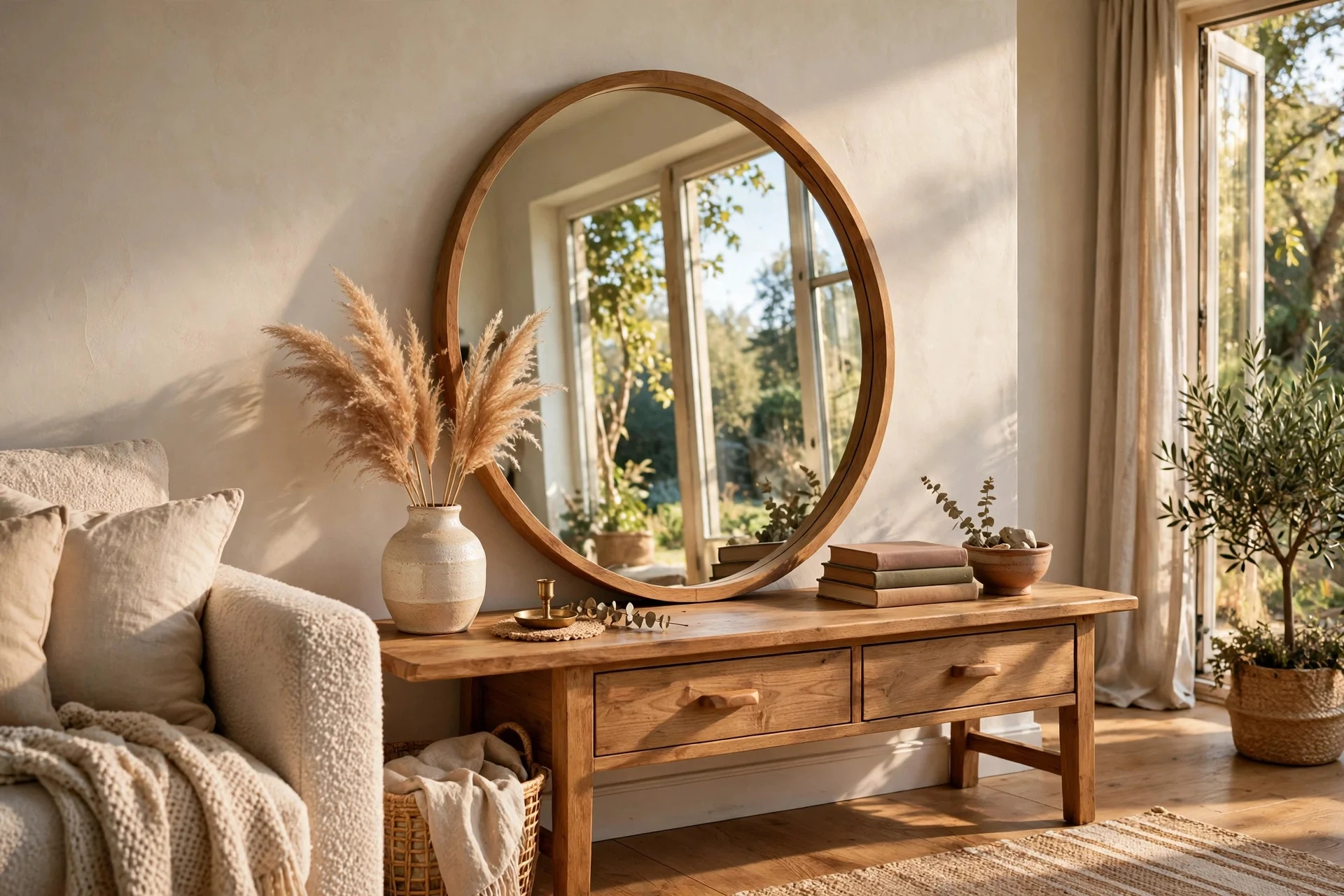
North-facing rental? A large mirror leaning against the wall opposite or beside a window bounces daylight deep into the room — it genuinely reads like a second window from across the room.
Leaning (not hanging) is the whole point: a 70×100 cm mirror in a light wood frame propped on a console or the floor needs no fixings at all. Cost: $60–$150. Difficulty: easy — just place it and angle it.
Tip: angle the top slightly back and make sure the base sits against the skirting board so it can’t slide. Watch-out: heavy mirrors should go behind furniture rather than freestanding in a hallway path if you have kids or large dogs.
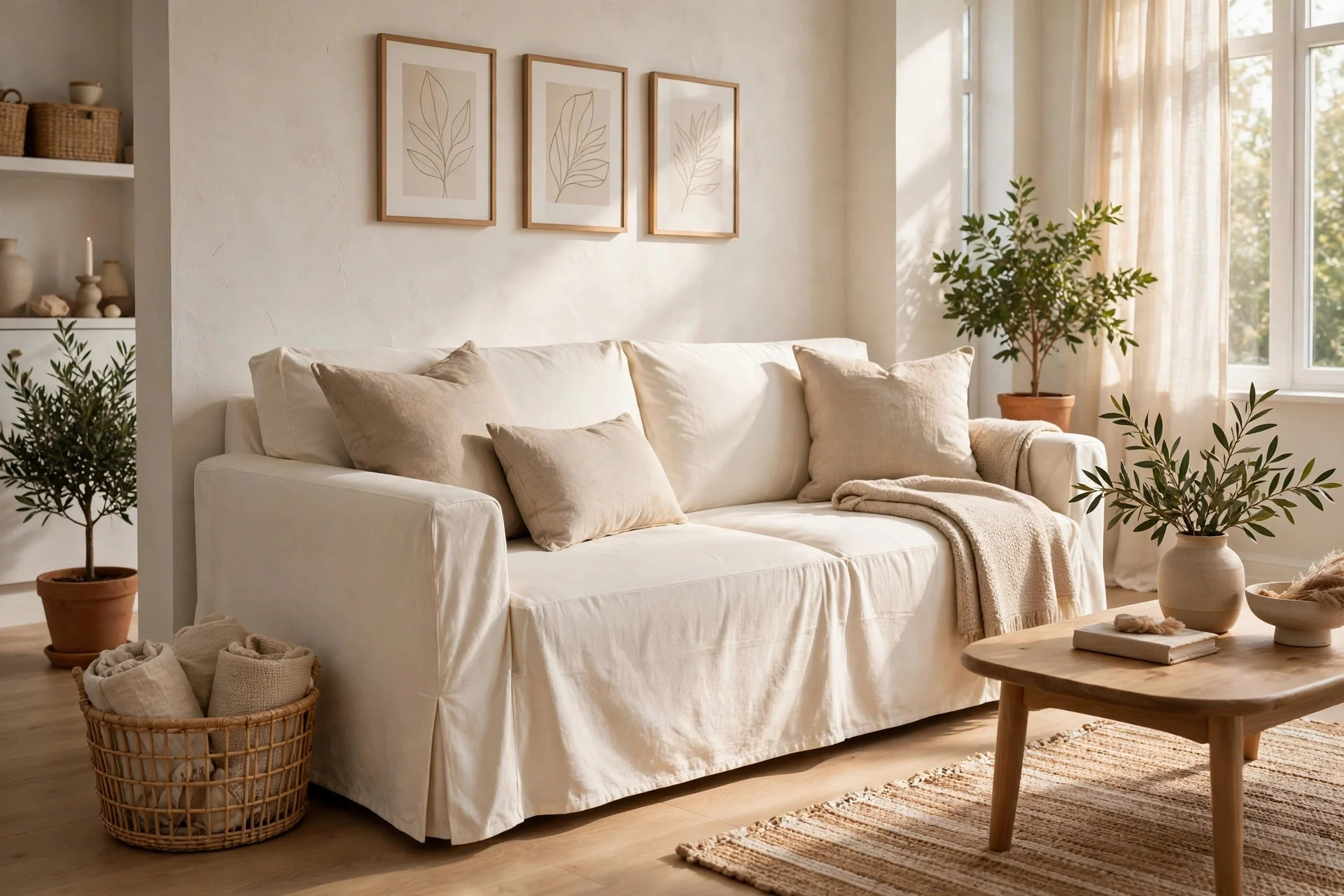
7. The ugly-couch problem: washable slipcover, new sofa
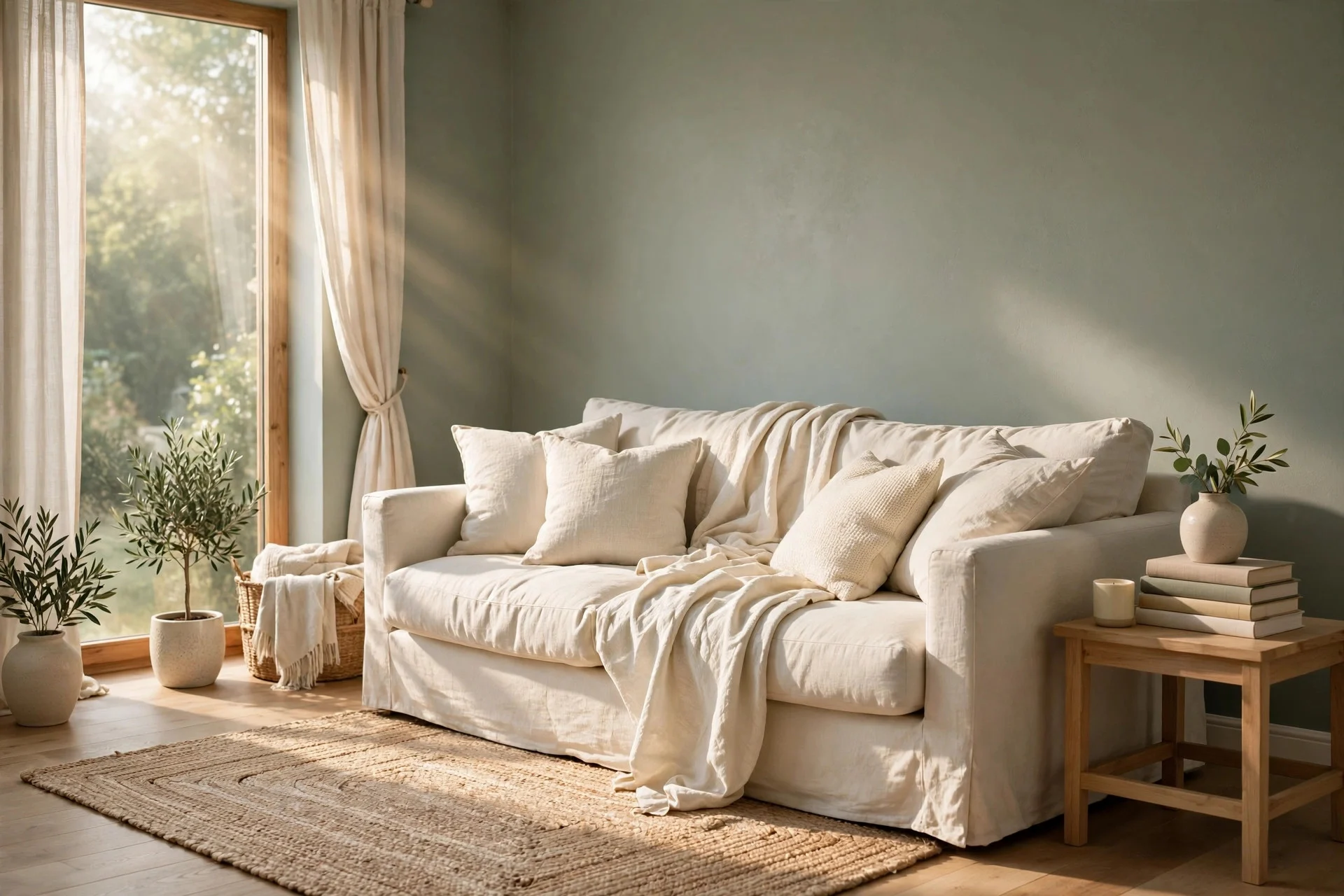
If the couch came with the place — or yours is past its best — a slipcover is the renter’s reupholstery. A well-fitted stretch slipcover in ivory or oatmeal turns a tired sofa into a neutral base you can style around.
Washable covers are the practical win here: red wine, pet hair, and rental life in general are survivable. Cost: $35–$90 for a quality three-seater cover. Difficulty: easy — 20 minutes of tucking.
Tip: buy based on your sofa’s exact measurements (arm height and seat depth matter more than length) and wash the cover first so it fits after its initial shrink. If you’re decorating a rental on a tight budget, this trick pairs well with decorating a living room on a $500 budget — most of these fixes cost under fifty dollars.
8. The no-storage problem: a storage ottoman as the coffee table
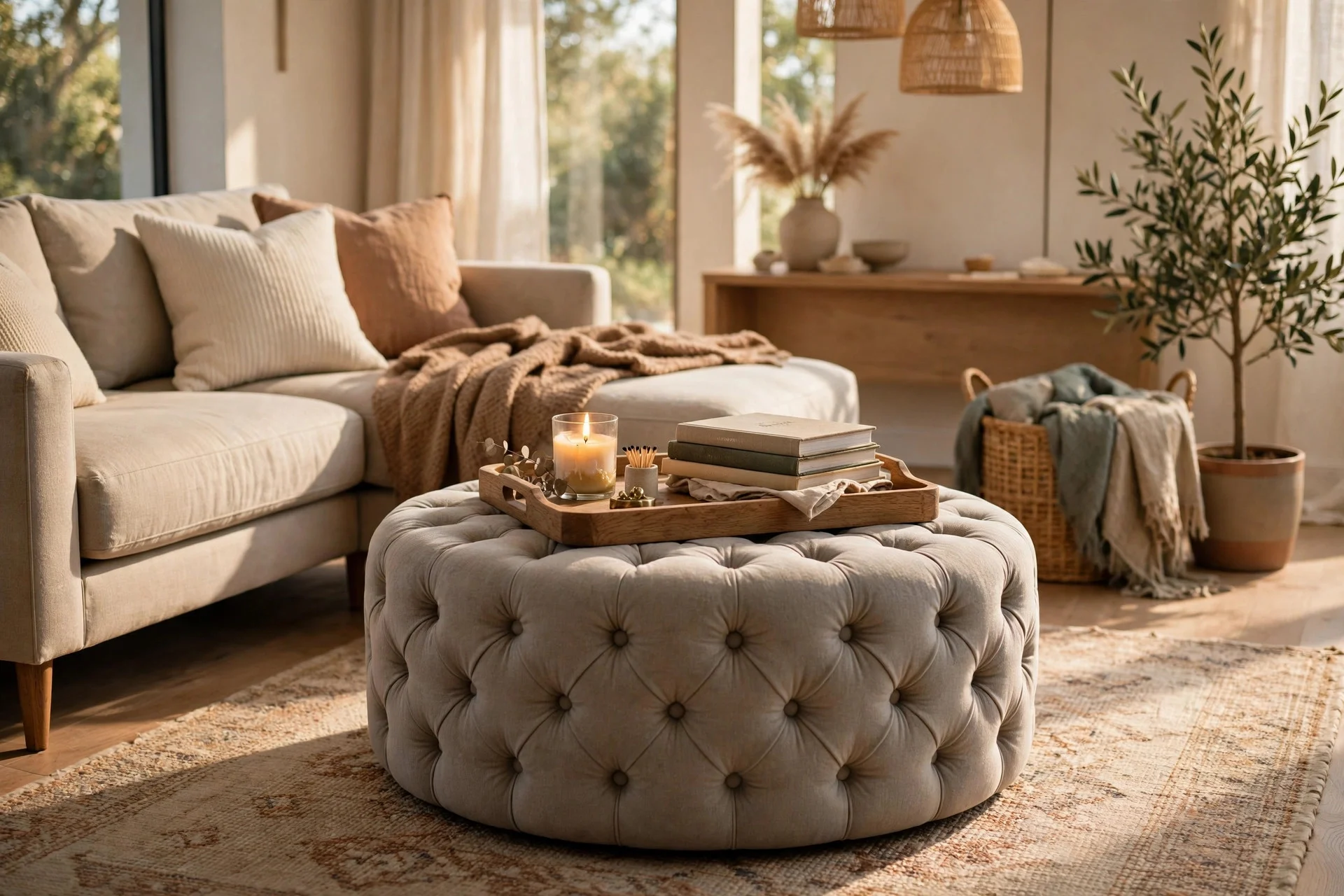
Rentals rarely come with enough storage, and a traditional coffee table just eats floor space. A large storage ottoman does both jobs: footrest, coffee table (with a tray on top), and a cavern for throws, remotes, and board games.
It keeps clutter out of sight, which matters more in a small rental than any single decorative object. Cost: $70–$160. Difficulty: none — it arrives ready.
Tip: choose one with a firm, flat top so the tray sits steady, and keep the tray arrangement simple — a candle, a small stack of books. For more surface-styling ideas, this beginner’s coffee table styling guide walks through the same tray-and-books formula step by step.
Renter mistakes that cost people their deposit
- Assuming “small holes are fine.” They aren’t in most leases — patching and repainting come out of your deposit if the color doesn’t match. Adhesive strips and leaning decor beat spackle every time.
- Peeling wallpaper on day one of the lease. Always test a hidden square for 48 hours first; on cheap flat paint it can pull the finish off.
- Throwing away the original light fixtures or blinds. Bag, label, and store every original you swap out — replacing them at move-out costs far more than the box they came in.
- Ignoring the lease’s pet/plant clause for floors. Big plants and pets on carpet need waterproof mats underneath, or you’ll pay for the stain.
- Drilling “just one hole” for the TV. Wall-mounting is the classic deposit-killer. Use a console stand (idea 14) instead.
9. The “no shelves allowed” problem: a freestanding bookcase as a divider
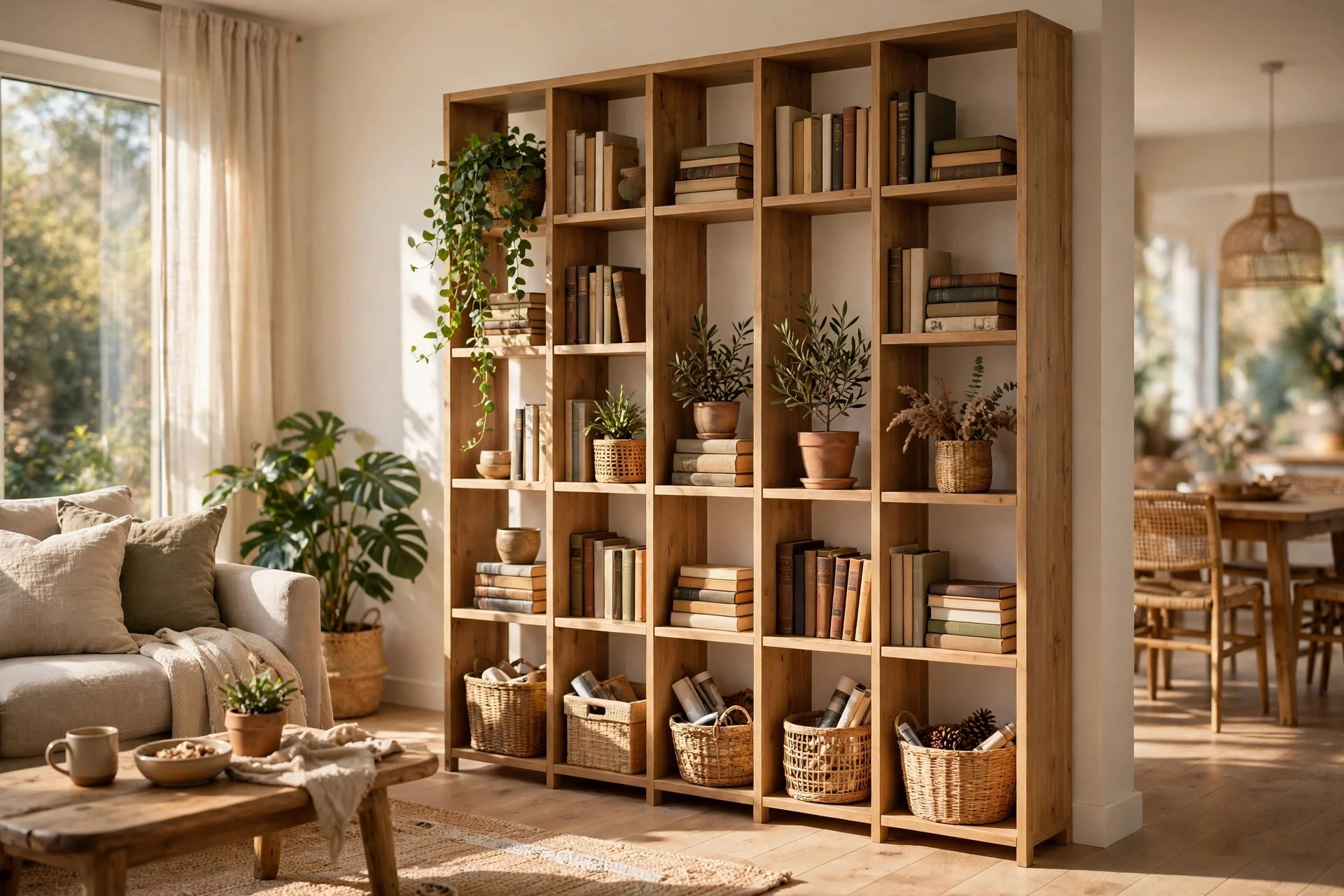
When the lease says no wall-mounted shelving, a tall open bookcase gives you display space, storage, and — placed perpendicular to a wall — a room divider that zones an open-plan rental into living and dining areas.
Open shelving styled with books, baskets, and plants adds the personality that blank rental walls withhold. Cost: $90–$220 for a solid 5-tier unit. Difficulty: easy — about an hour to assemble.
Tip: anchor tall units to the wall with furniture straps if you have kids — most straps use a single small screw into a stud, which is the one exception worth making, and it’s hidden behind the unit. Style shelves with two-thirds books and objects, one-third empty space.
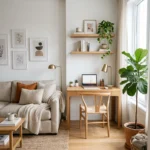
10. The sterile problem: a plant corner that feels alive
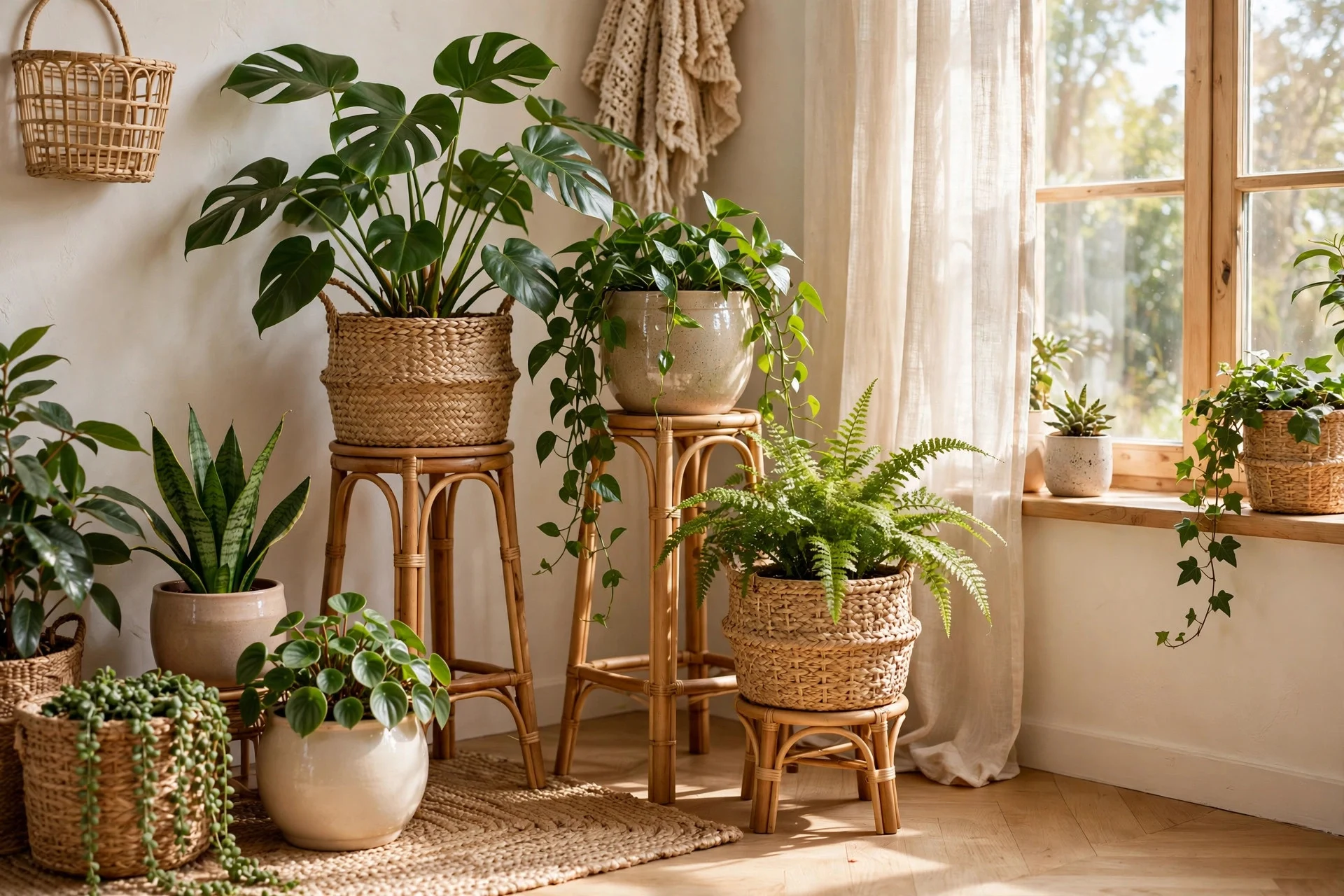
Rentals can feel oddly lifeless — no garden, no character, just rooms. A cluster of houseplants in one corner fixes that faster than any object: greenery adds color, texture, and movement that no decor can fake.
Start with three plants at different heights (a tall floor plant, a medium one on a stand, a trailing one on a stool) in matching pots so the cluster reads as one arrangement. Cost: $40–$100 for plants and pots. Difficulty: easy — plus five minutes of watering a week.
Tip: pick forgiving varieties — pothos, snake plant, and ZZ plant survive low light and forgetful watering. Put saucers or waterproof mats under every pot to protect rental floors.
11. The ugly-radiator problem: cover it, then style it
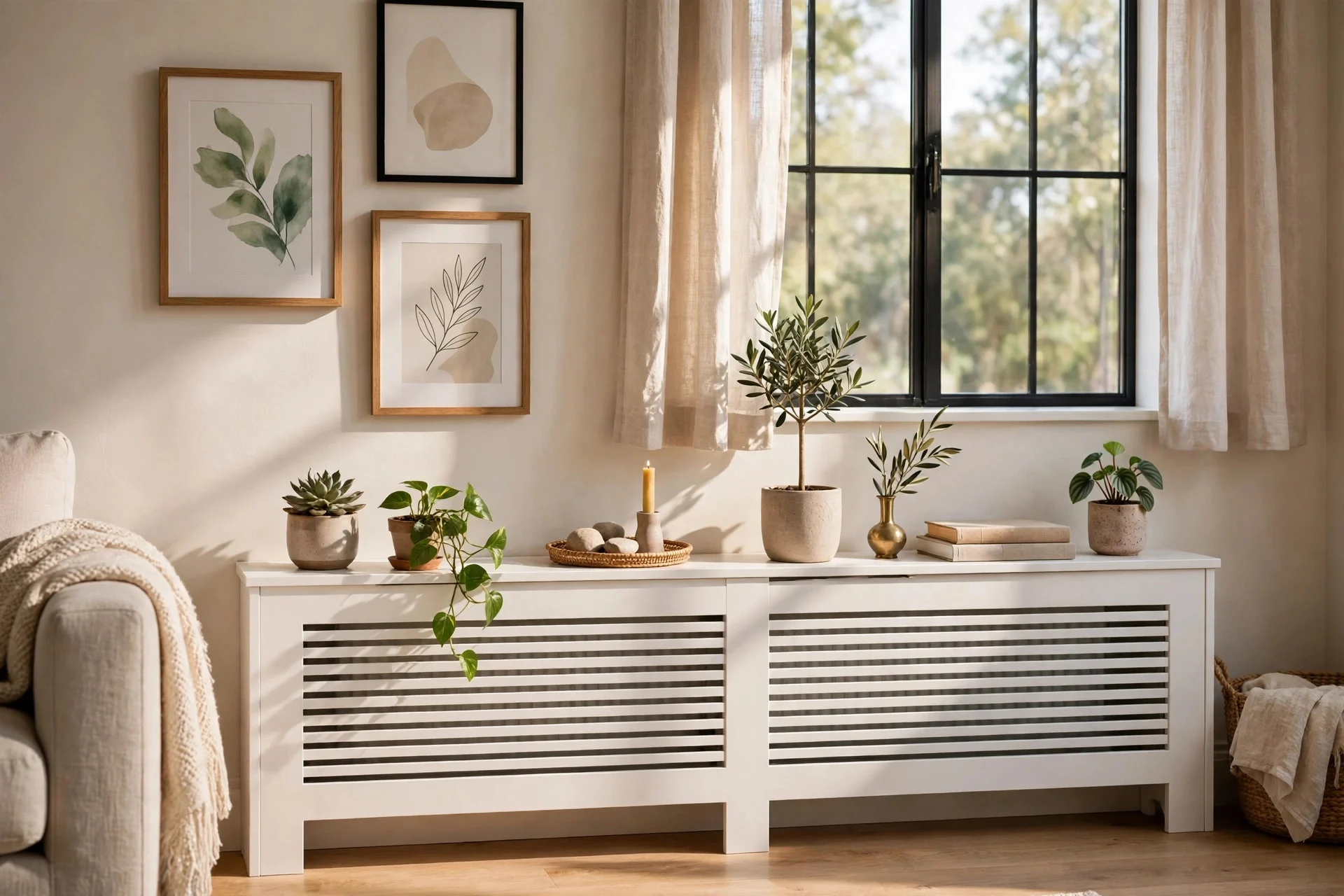
An old radiator or exposed pipe run can dominate a rental living room, and you’re not allowed to move or replace it. A slatted radiator cover turns the eyesore into a slim console shelf — and the top becomes display space for plants, candles, and small art.
Bonus: the flat top gives you the “mantel” your rental doesn’t have. Cost: $50–$130 for a ready-made cover. Difficulty: easy — most slot together without tools.
Tip: leave the recommended airflow gap the manufacturer specifies (usually a few centimeters) so the room still heats properly, and never put anything flammable on top during heating season.
12. The empty-above-the-sofa problem: lean oversized art
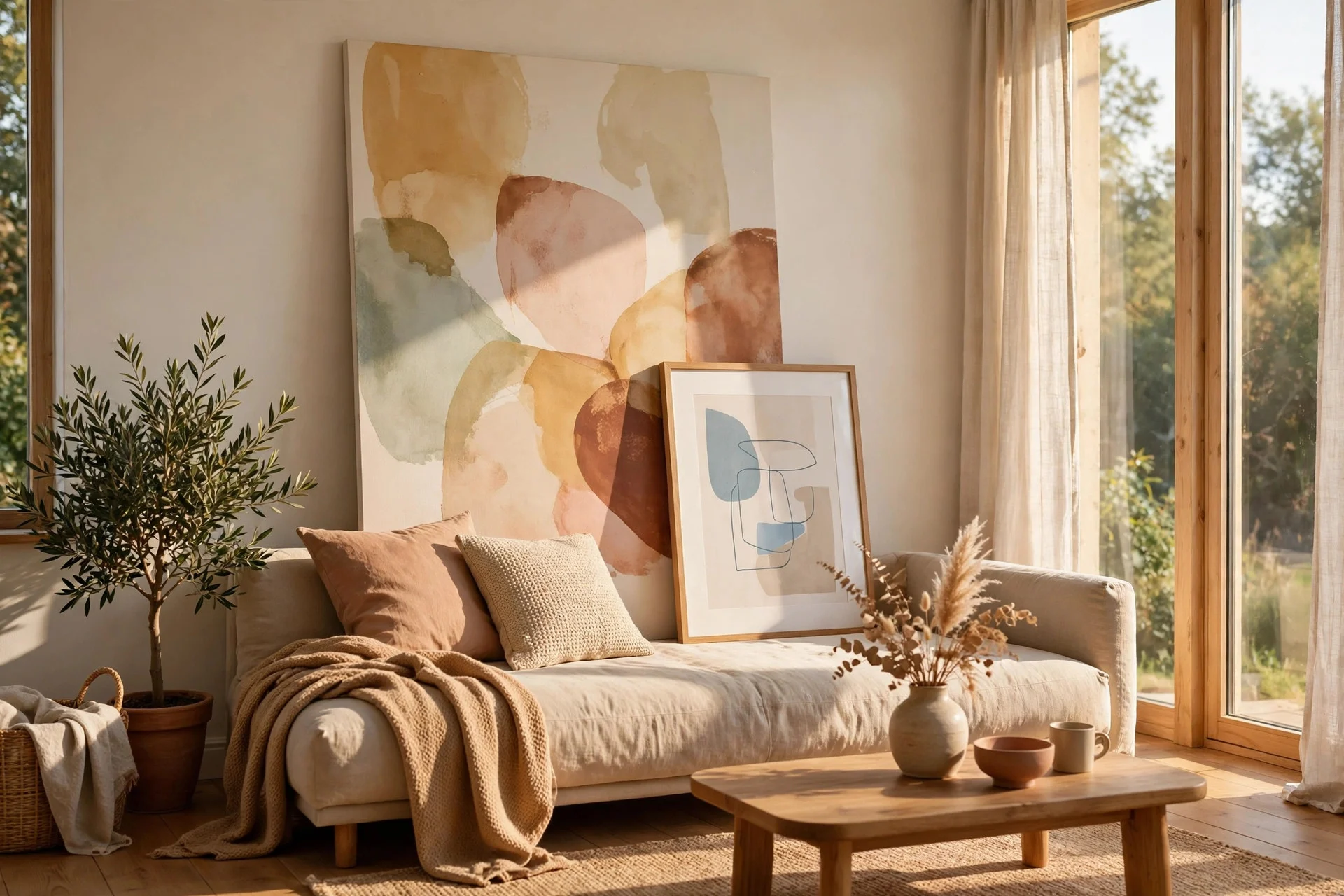
The wall above the sofa begs for something big, but a large frame means serious anchors — exactly what leases forbid. The fix: buy the oversized piece and lean it. A 90×120 cm canvas propped on the sofa’s back or a console looks deliberate and gallery-like.
Leaning art at a slight angle catches light beautifully and costs a fraction of a framed-and-hung equivalent. Cost: $40–$120 for a large canvas print. Difficulty: none.
Tip: layer a smaller framed print in front for depth, and secure the base with small adhesive bumpers so it can’t slide forward on slick floors.
13. The flat-and-cold problem: layer pillows and throws like you mean it
Rental rooms skew hard and echoey — bare floors, bare walls, flat light. Textiles are the fastest softness: five to seven pillows in mixed textures (linen, knit, one pattern) plus a chunky throw draped over one arm.
Odd numbers and mixed sizes look collected rather than staged. Cost: $40–$100 for pillow covers and a throw. Difficulty: easy — ten minutes.
Tip: buy inserts one size larger than the covers (a 50 cm insert in a 45 cm cover) for that full, plump look. Covers alone let you change the whole palette next season for under $30.

14. The TV-hole problem: put it on a console, skip the mount
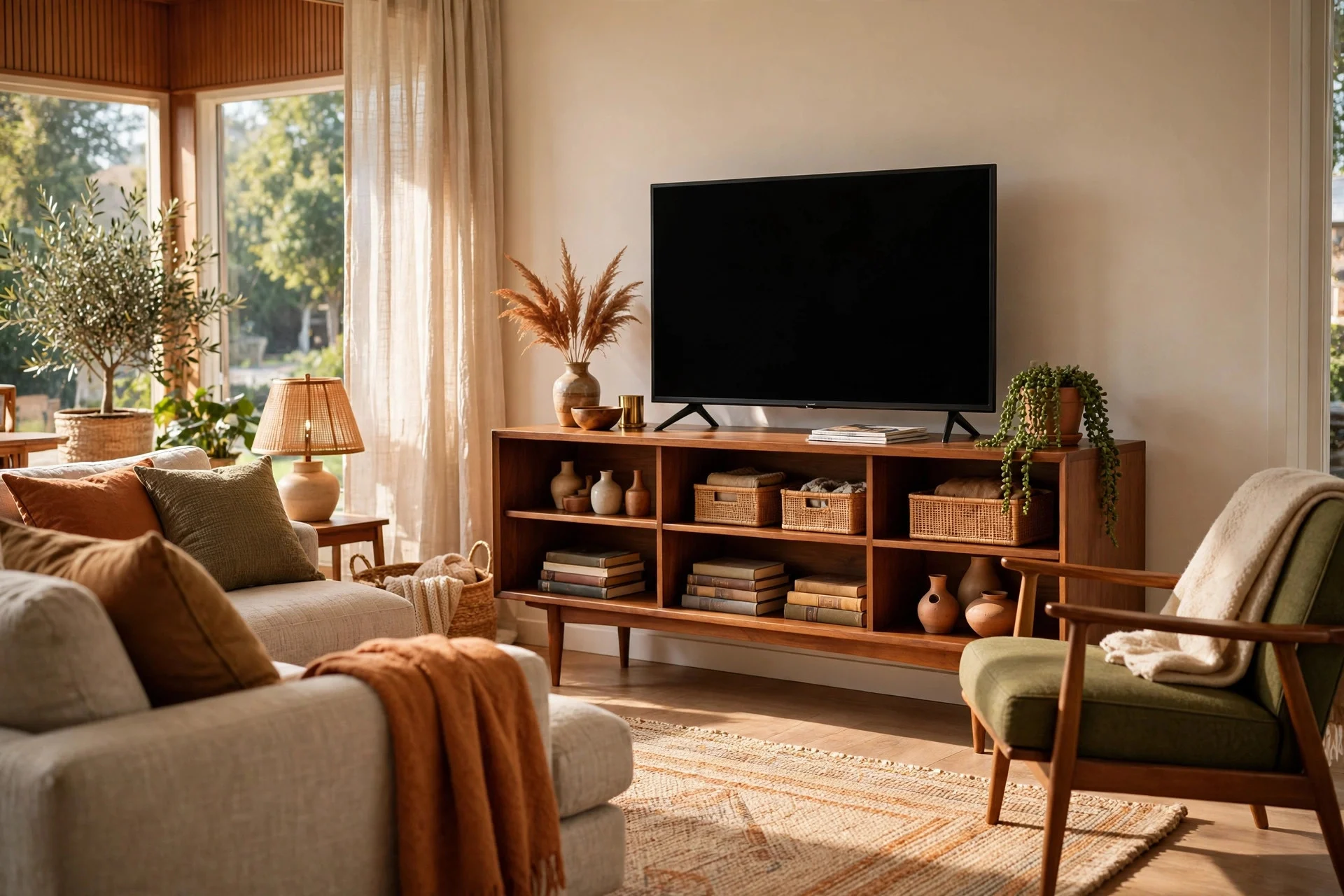
Wall-mounting a TV means drilling into studs — the single most common deposit deduction in rentals. A low, wide console stand holds the TV at the right height, hides the cables, and gives you closed storage for everything the mount would have left exposed.
Styled right — books, baskets, and a plant on the shelves — the console becomes a feature wall of its own. Cost: $80–$200. Difficulty: easy — an hour of flat-pack assembly.
Tip: choose a console slightly wider than the TV and run cables through adhesive cable channels down the back so the whole setup looks built-in without a single screw.
15. The sad-ceiling problem: swap the pendant, keep the original
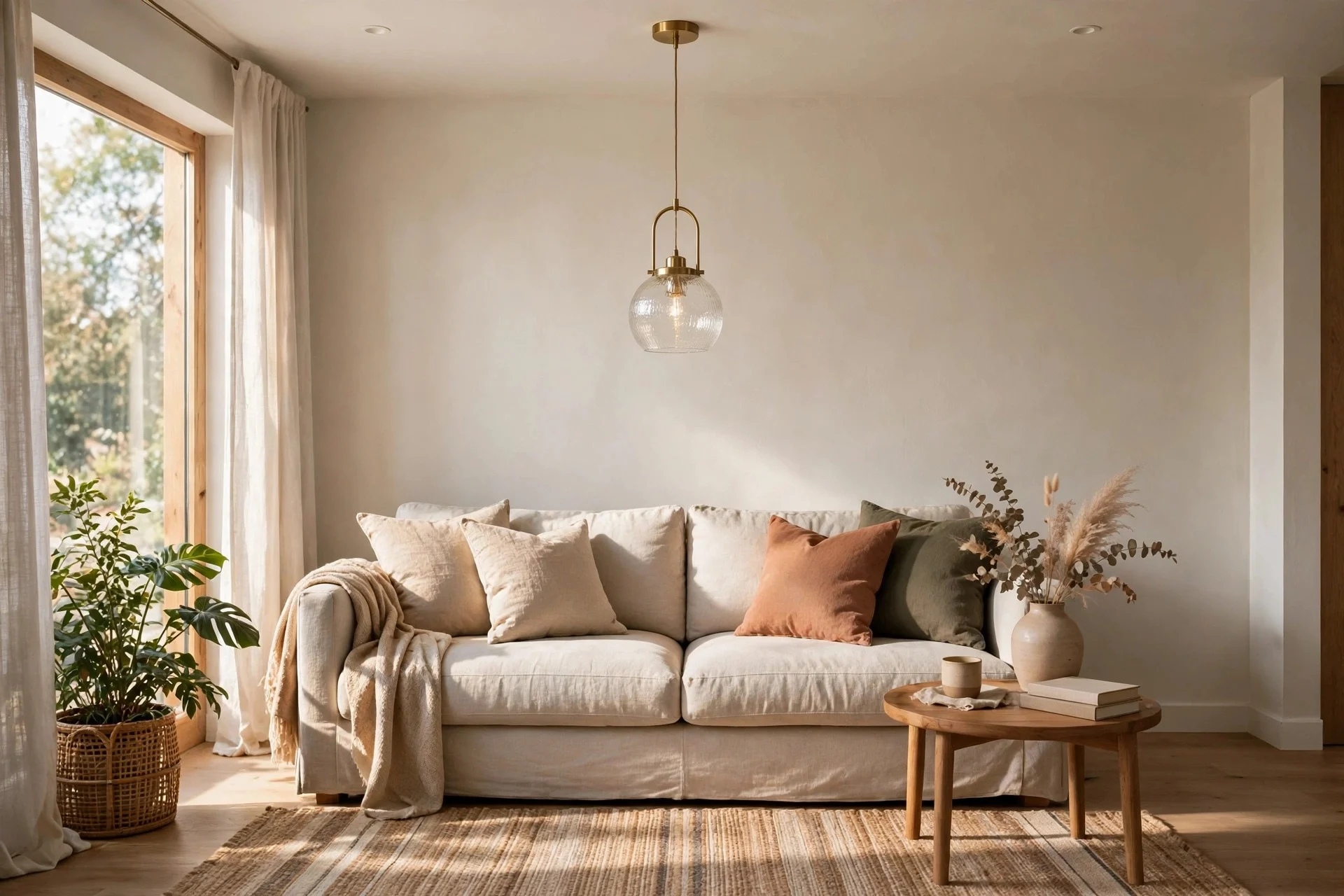
That builder-grade flush-mount light is doing nothing for anyone. Most leases allow you to swap a light fixture as long as you restore the original at move-out — it’s one of the highest-impact changes you can make.
Turn off the breaker, photograph the existing wiring, disconnect three wires, and hang a simple pendant or paper lantern instead. Reverse the process when you leave. Cost: $30–$90 for the pendant; many landlords are fine with it if you ask first. Difficulty: medium — 30–45 minutes if you’re comfortable with basic wiring.
Tip: store the original fixture in its box with the screws taped inside, and label it. Watch-out: if your lease explicitly forbids electrical changes, or the wiring looks old or aluminum, skip this one — it’s not worth the risk.
Frequently asked questions
Can I decorate my rental living room without losing my deposit?
Yes — stick to removable and reversible changes: adhesive strips instead of nails, tension rods instead of drilled curtain brackets, peel-and-stick wallpaper, leaning art, and furniture that doesn’t need wall mounting. Photograph every wall and fixture on move-in day so you have proof of the original condition.
Will peel-and-stick wallpaper damage rental walls?
On properly primed, painted walls older than 30 days, quality removable wallpaper comes off cleanly with slow, steady peeling. It can damage fresh paint, flat-finish cheap paint, or textured walls — always test a hidden patch for 48 hours before committing to a whole wall.
How can I hang curtains in a rental without drilling?
Use a spring tension rod fitted inside the window frame, or adhesive curtain-rod brackets rated for the weight of your panels. Both come off without a trace. Keep panels medium-weight; tension rods won’t hold heavy blackout drapes.
What’s the cheapest way to make a rental living room look better?
Warm lighting is the best value: two lamps with 2700K bulbs and a set of pillow covers can change a room’s feel for under $75. After that, a large rug and curtains give the biggest visual return per dollar.
Should I ask my landlord before making changes?
For anything involving wiring, plumbing, or removing fixtures, yes — a quick written message protects you. For purely decorative, removable changes like rugs, lamps, and freestanding furniture, most leases don’t require permission, but reading your lease’s alteration clause first takes five minutes and prevents surprises.
Your move-in weekend checklist
Start with the wins that need no tools: lamps with warm bulbs, the big rug with a pad, curtains on a tension rod, and the plant corner. Next, tackle the walls — adhesive-strip gallery or leaning art, plus peel-and-stick wallpaper if your paint passes the 48-hour test. Finish with the furniture swaps: slipcover, storage ottoman, console for the TV, and the pendant if your lease allows it.
Keep a small “move-out box” as you go: original light fixtures, blinds hardware, adhesive strip tabs, and photos of every wall on day one. When the lease ends, everything reverses in a weekend — and the deposit comes back. And if these renter-friendly wins got you thinking about the rest of the place, these ideas for making a rental kitchen look more expensive use the same no-damage playbook.