11 Small Bedrooms With a Murphy Bed That Looks Built In
A standard double bed eats up about 30 square feet of floor, and in a 10-by-12-foot room that is close to a quarter of the whole space. A Murphy bed fixes that math: it folds up into a cabinet when you don’t need it, so the same room can work as an office, a workout spot, or just a room you can walk across without turning sideways. The catch is that most Murphy beds look like a big box bolted to the wall. The rooms below don’t. Each one uses cabinetry, trim, and matching paint to make the bed read as part of the room, not an add-on.
The problem is rarely the folding mechanism. It is the gap between the cabinet and the rest of the room: bare side walls, a different paint color, and a hard rectangular outline that draws the eye. The fix is to treat the cabinet as furniture you would plan for any bedroom. Build storage around it, run trim where the cabinet meets the ceiling and floor, and paint it the same color as the walls. Do those three things and guests will ask where you sleep, because the bed will not announce itself.
1. A Full-Wall Wardrobe Surround
Here the bed folds down from the center of a floor-to-ceiling wardrobe wall. Hanging space and drawers sit on both sides, so the cabinet never reads as a lone box. The whole wall gets one paint color and one style of door, which is what sells the fitted look. When the bed is up, the room looks like a dressing room. When it is down, the wardrobe doors still work, so you are not locked out of your clothes at night.
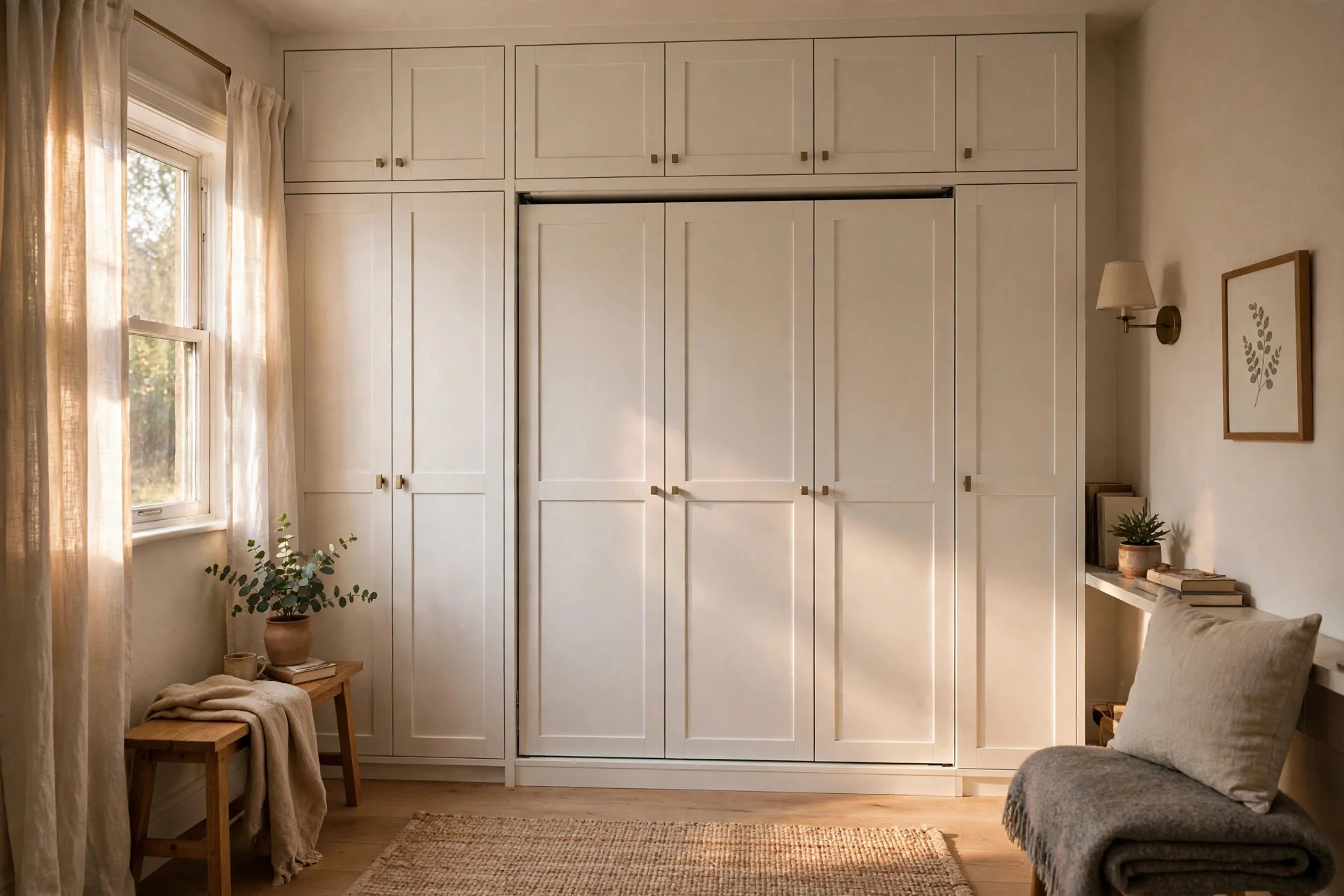
Cost: $1,500–$3,500 for a cabinet kit plus fitting. Tip: order doors without finger pulls and use push latches instead, so the front stays flat and quiet.
2. Bookshelves on Both Sides
Open shelves on either side of the cabinet soften the rectangle fast. Books, plants, and a few framed prints break up the flat front, and the shelves give you a place for the things a small room usually has nowhere to put. Keep the shelves the same depth as the cabinet so the front line stays even. If the room doubles as a guest room, this setup also reads as a library wall, which feels far more welcoming than a blank cabinet. For more guest-room thinking, these twin beds guest room ideas show how to make a shared room feel planned rather than improvised.
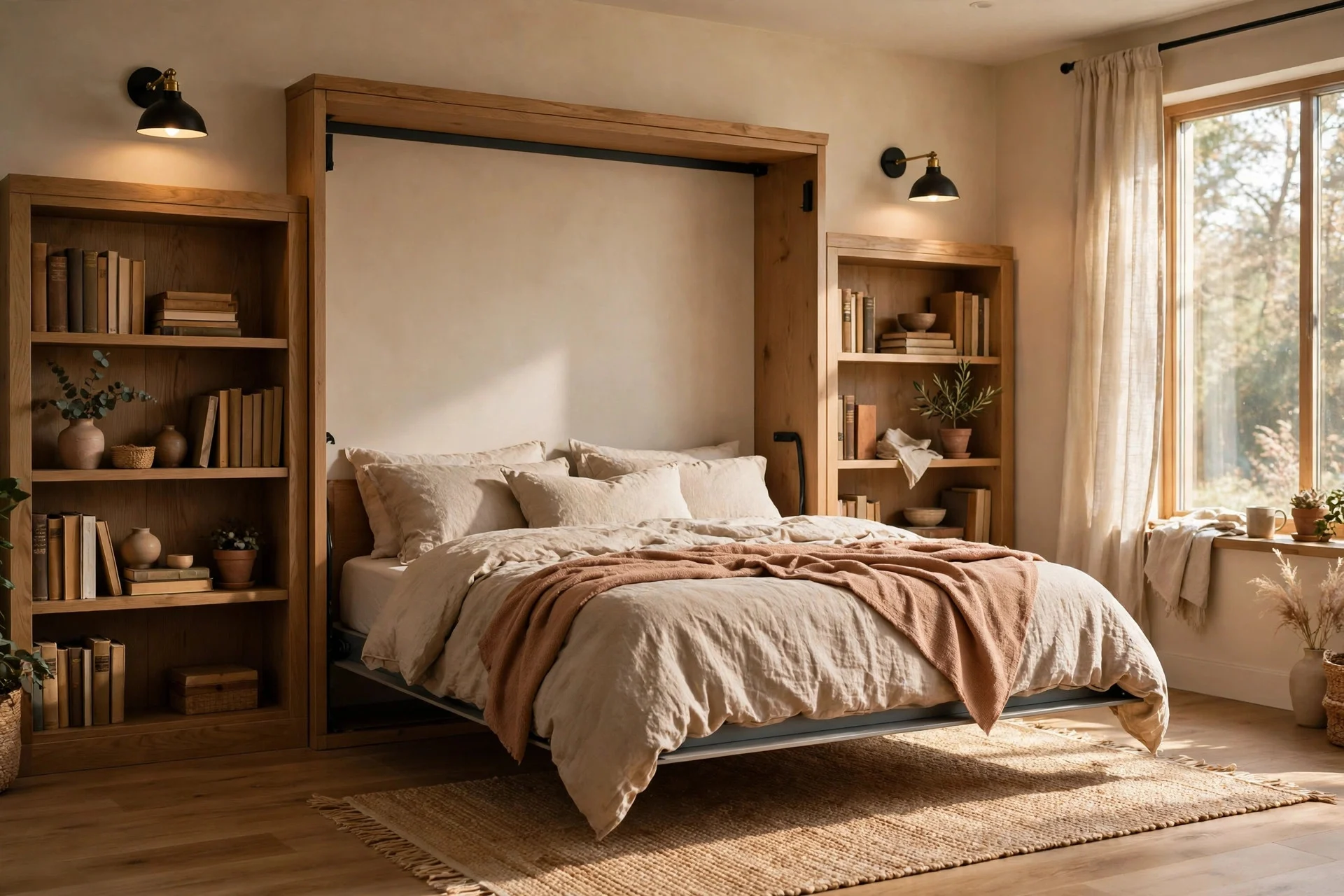
Cost: $800–$2,000. Tip: keep shelf depth at 12 inches or less so books don’t stick out past the cabinet front.
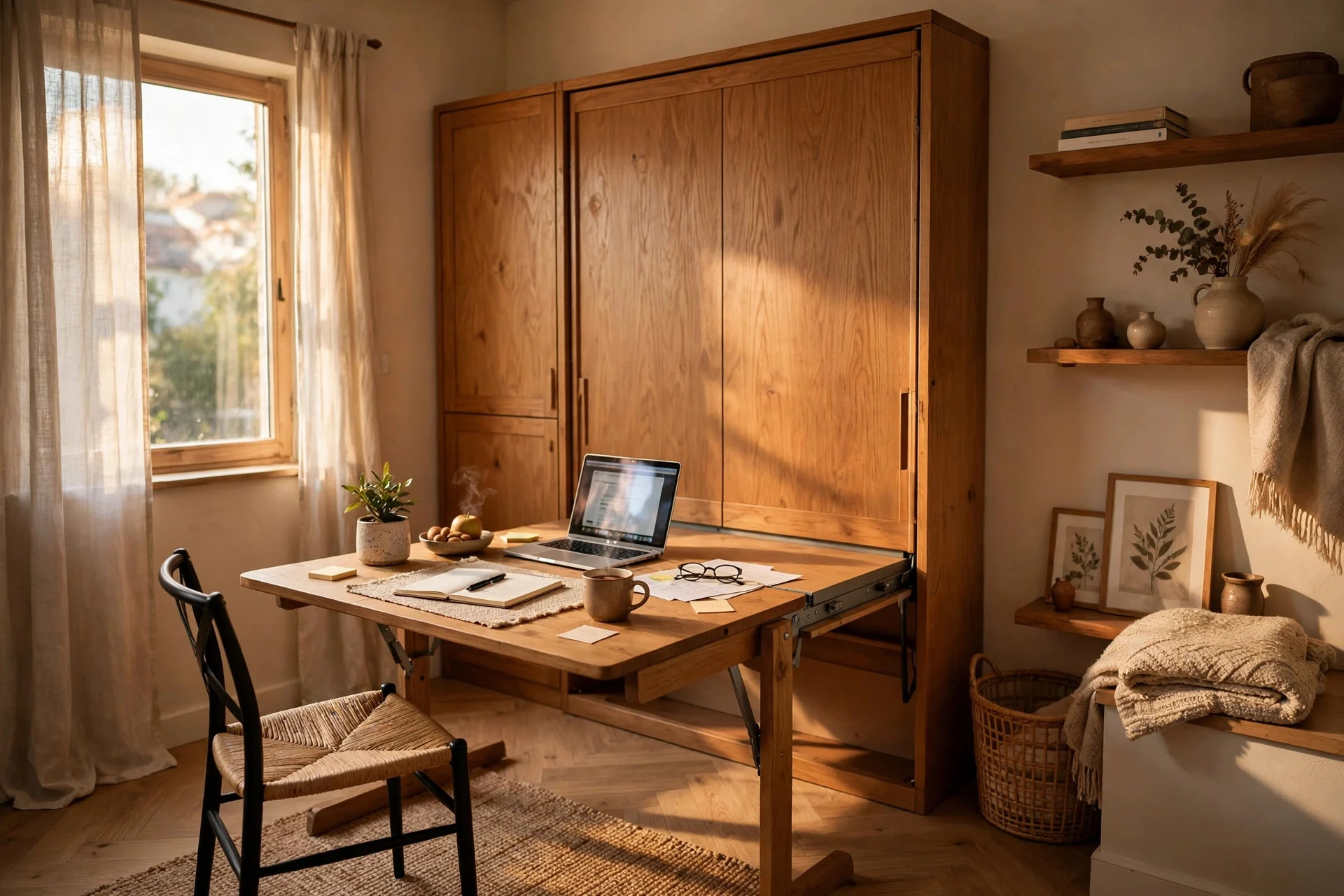
3. A Fold-Down Desk Combo
This is the classic work-from-home answer. The cabinet front carries a desk surface that stays level while the bed folds down beneath it, or the desk folds away and the bed takes its place, depending on the kit. Either way, one wall does two jobs and the room never has to choose between a bed and a desk. It works best in rooms where the bed gets used every night but the desk gets used every day, because the swap takes under a minute once you get used to it.
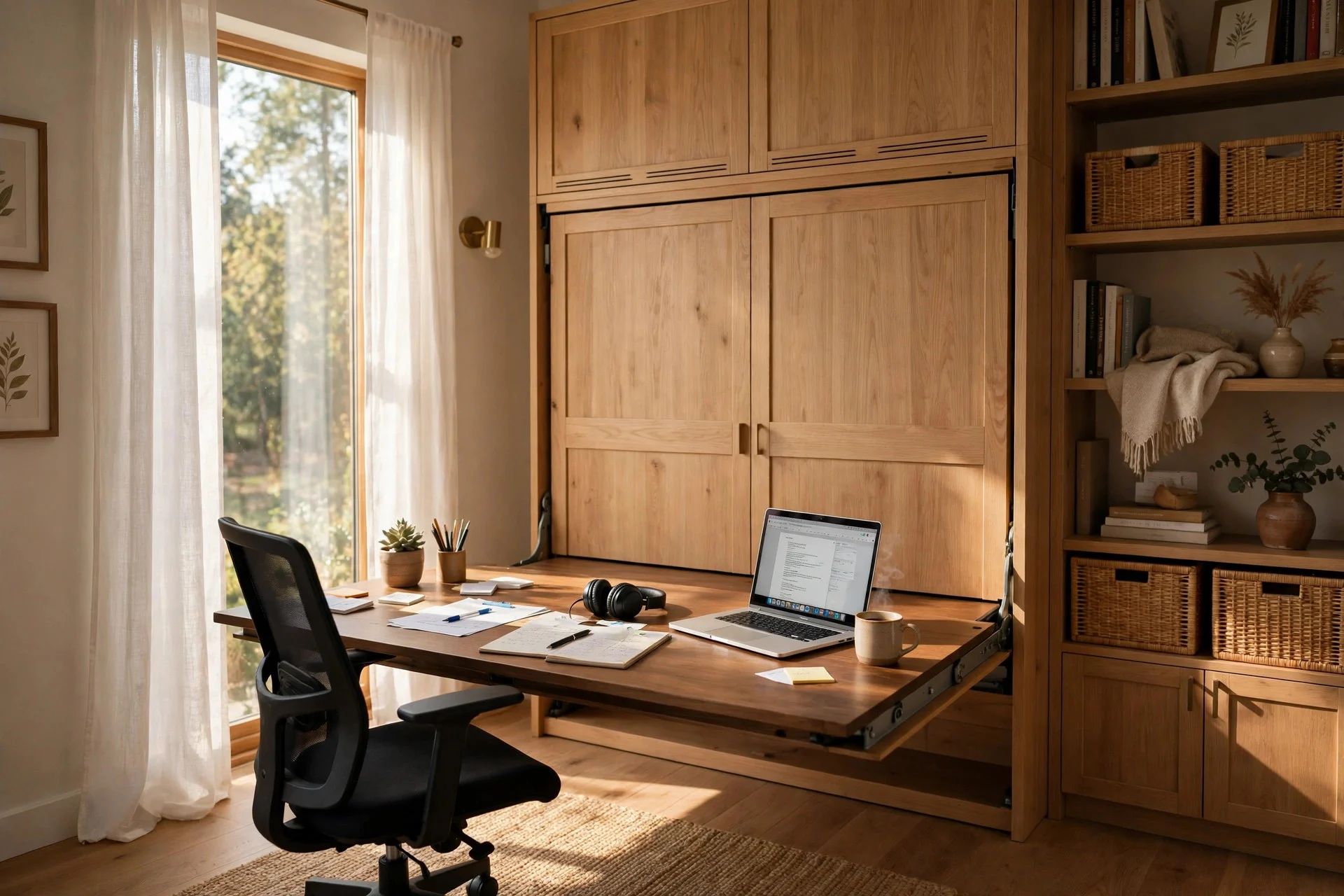
Cost: $1,200–$2,500. Tip: clear the desk down to a laptop and one notebook, or the daily fold-down gets annoying fast.
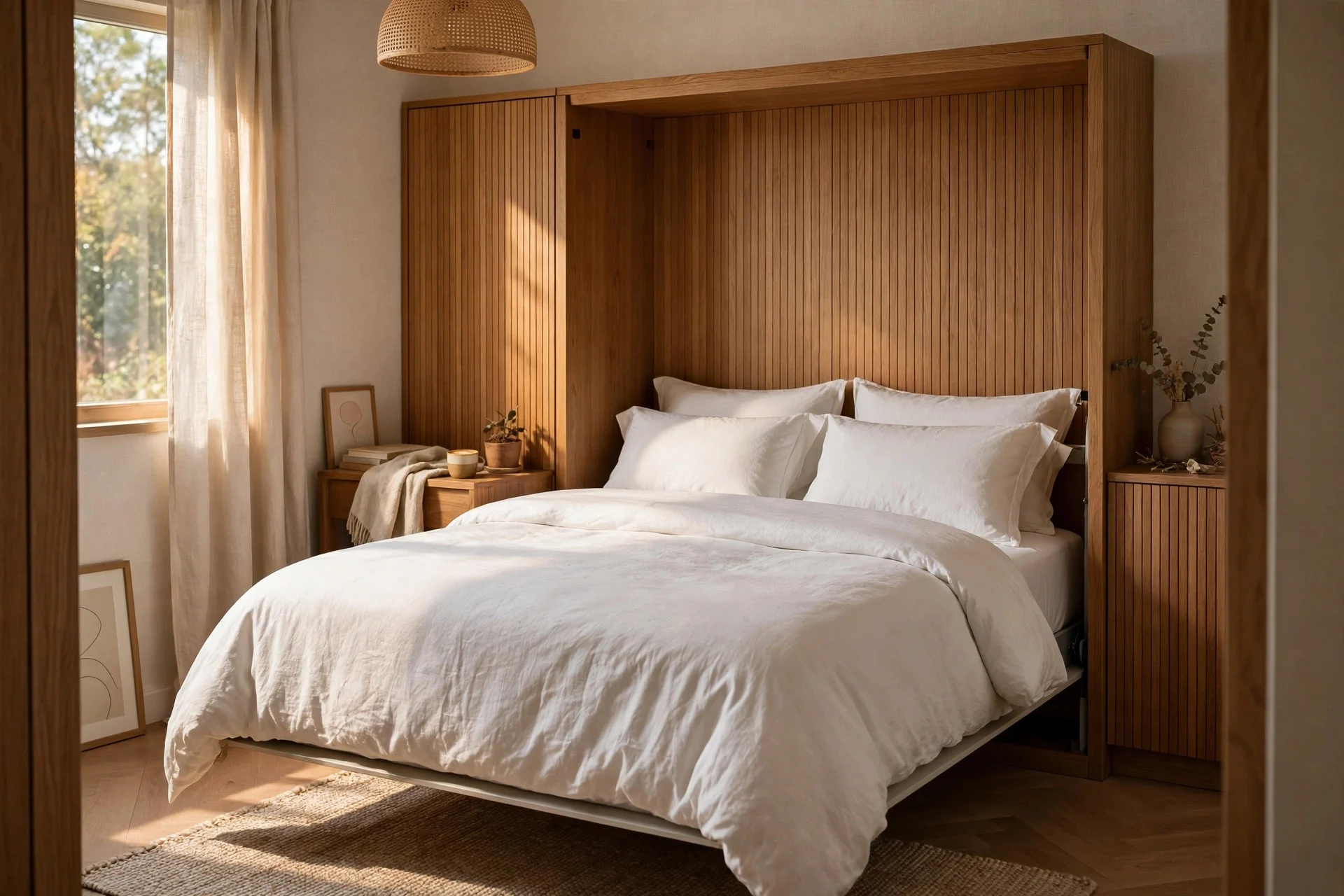
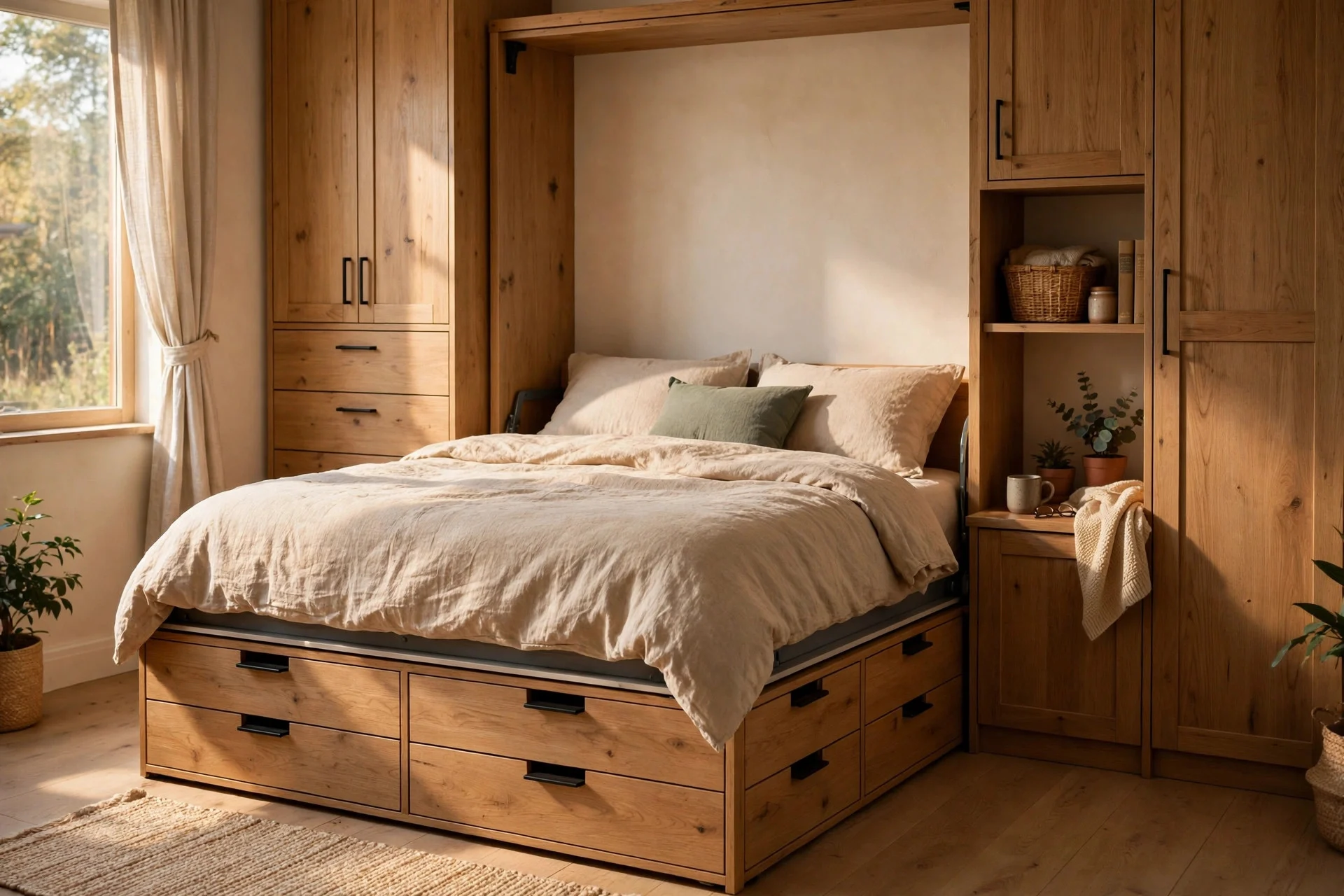
4. Nightstand Drawers Built Into the Base
Small rooms lose their nightstands first, and then phones, chargers, and water glasses end up on the floor. This setup builds two shallow drawers into the base of the cabinet, one on each side of the bed, so they stay put when the bed folds up. You get a real landing spot for a phone and a book without giving up any floor space. Add a small power strip inside the top drawer and the charging cables disappear too.
Cost: $1,000–$2,200. Tip: keep drawer fronts flush and handle-free so they blend into the cabinet face.
5. A Panelled Cabinet Painted the Wall Color
Sometimes the simplest trick works best. Shaker-style panels go on the cabinet front, and the whole thing gets painted the exact color of the walls. The eye reads one continuous surface instead of a box, and the bed all but vanishes. This is the cheapest route to a fitted look, and it works in rentals too if you use a freestanding cabinet and paint it to match. Pick a satin finish rather than gloss so seams and panel edges don’t catch the light.
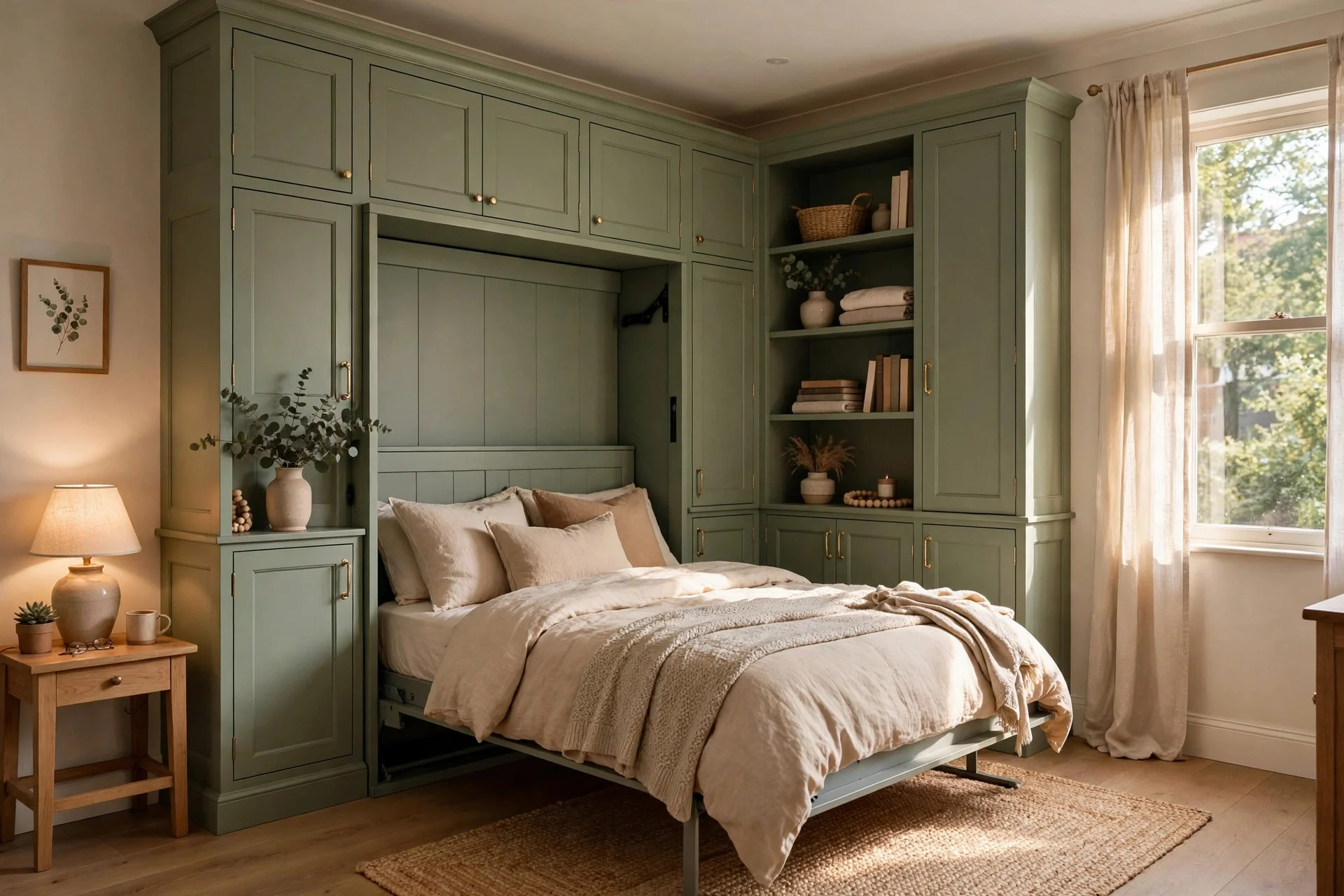
Cost: $900–$2,000. Tip: take a paint chip from the wall to the store rather than guessing from memory.
6. A Sofa Base for Daytime Sitting
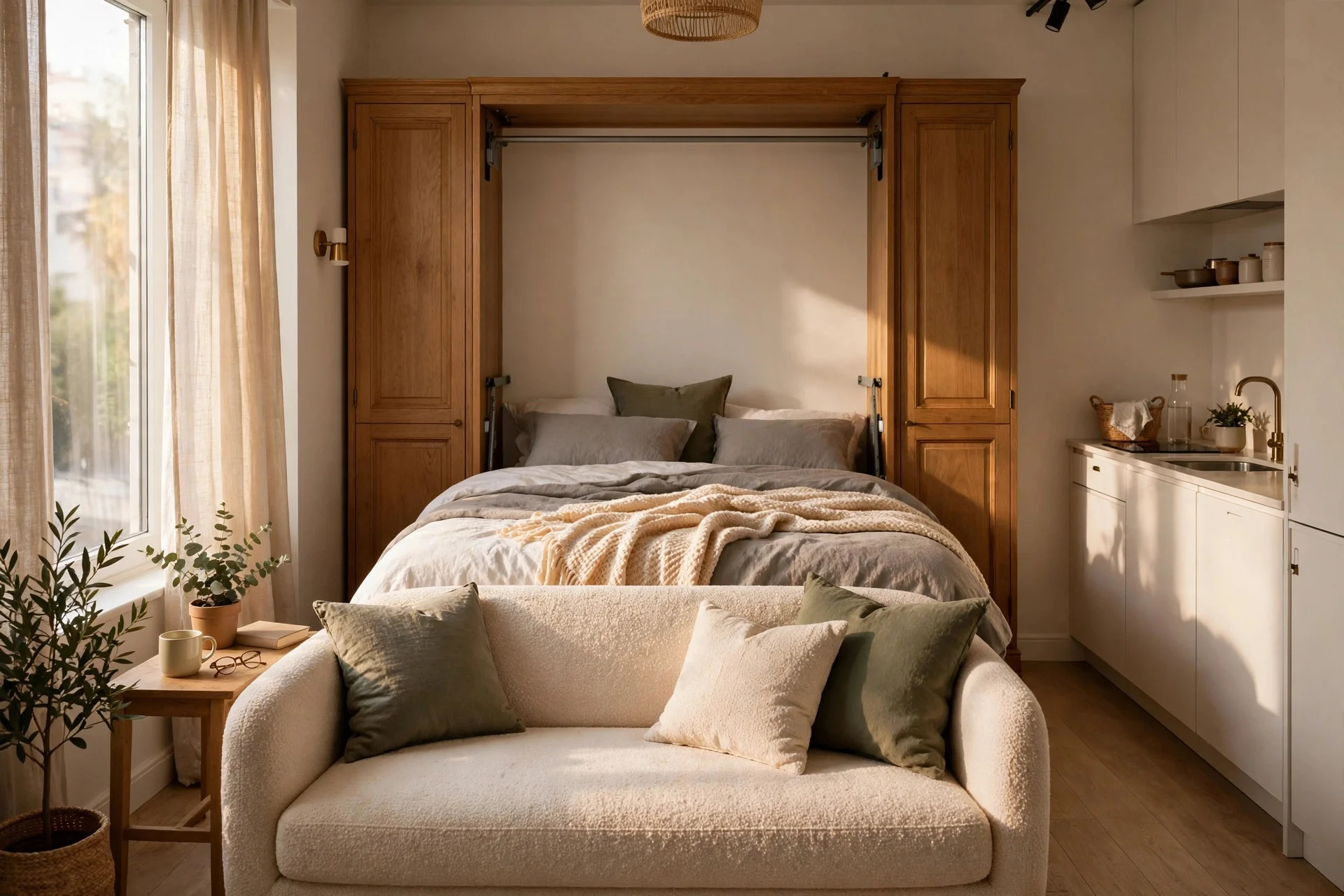
Here the cabinet sits above a low sofa base, so the room has proper seating during the day and a bed at night. The bed folds down over the sofa, which sounds odd until you see it: the sofa cushions stay in place and the mattress lands just above them. It suits studio flats and one-room setups where the bedroom is also the living room. Pick a sofa base in a washable fabric, since it will get daily use.
Cost: $1,800–$3,500. Tip: measure the sofa depth first, because the bed needs clear space to fold down over it.
Mistakes to Avoid
A Murphy bed is only as good as its fitting, and a few common errors ruin the built-in look or make daily use a chore. First, skipping the wall anchors: the cabinet must bolt into wall studs, not just drywall, or it will pull away over time. Second, buying a cabinet too shallow for your mattress plus bedding, which means you have to strip the bed every single night. Third, painting the cabinet in gloss, which highlights every seam and panel edge under room light. Fourth, blocking a vent or an outlet with the cabinet, which is easy to miss until the room feels stuffy. And fifth, leaving no side clearance, so you can’t tuck in sheets without climbing onto the mattress. Check all five before you order.
7. An Overhead Storage Bridge
A bridge of cabinets runs across the top of the bed wall, joining the two side cabinets into one unit. It gives you deep storage for suitcases, spare bedding, and out-of-season clothes, and it makes the whole wall read as one piece of furniture. The bridge also frames the bed nicely when it is down, almost like a headboard wall. Keep the bridge depth at 16 inches or less so it doesn’t loom over the bed, and put the things you rarely need up there.
Cost: $1,500–$3,000. Tip: label the bridge boxes, or you will forget what you stored up there.
8. Reading Lights and Open Cubbies
Two small sconces mounted on the cabinet face, plus a couple of open cubbies for books and glasses, turn the cabinet into a headboard wall. The lights stay fixed to the cabinet, so they are always in the right place when the bed comes down, and the cubbies replace a nightstand. This is one of the easiest upgrades to add to an existing cabinet, since battery sconces need no wiring. Pick warm light, around 2700K, so the bed corner feels like a bedroom and not a hallway.
Cost: $1,100–$2,400. Tip: mount sconces at pillow height, about 55 inches from the floor.
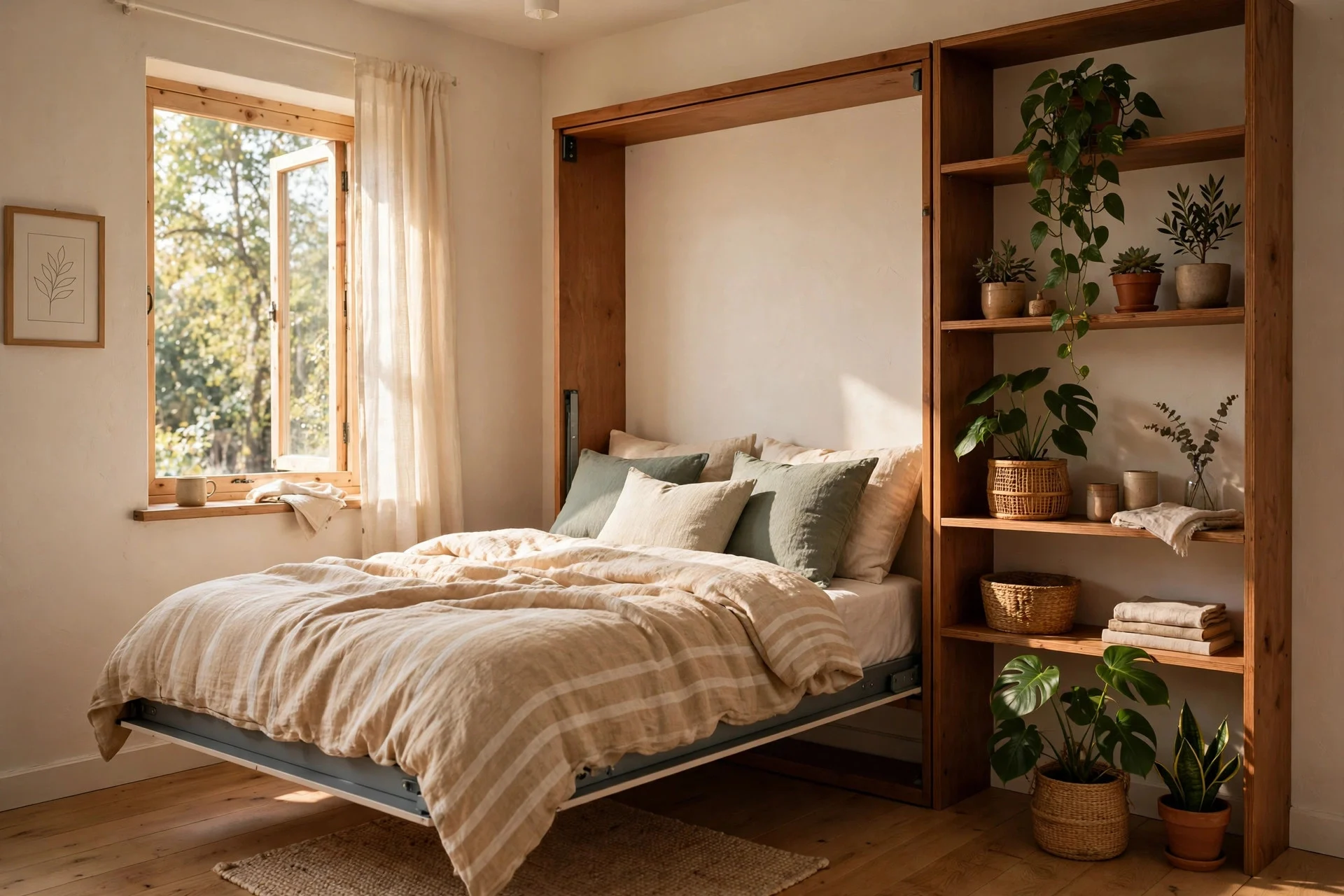
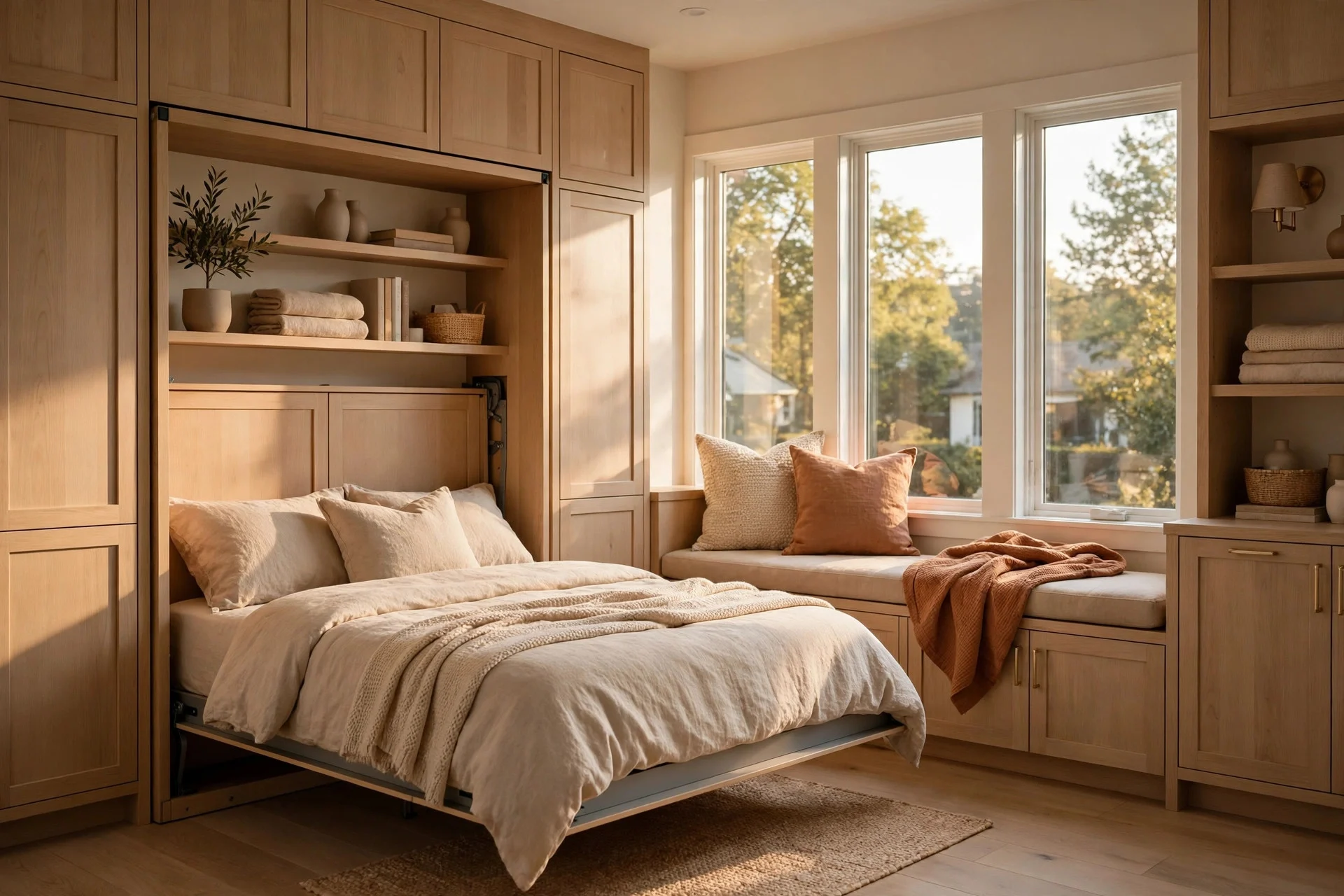
9. A Horizontal Bed Under the Window
Most Murphy beds fold down lengthwise, but a horizontal model folds down sideways, which suits wide, short walls and rooms with a low window. The cabinet sits under the window like a long bench, and the bed pulls down across the wall. By day the top works as a window seat, especially with a cushion and a couple of pillows. This setup suits rooms where the only free wall has a window in it, and it keeps the bed out of the walkway. A low bench-style base also pairs well with these bench at the foot of the bed ideas if you want the seating to look deliberate.
Cost: $1,000–$2,000. Tip: check the window sill height first, since the cabinet must clear it.
10. An Armoire Disguise With Crown Molding
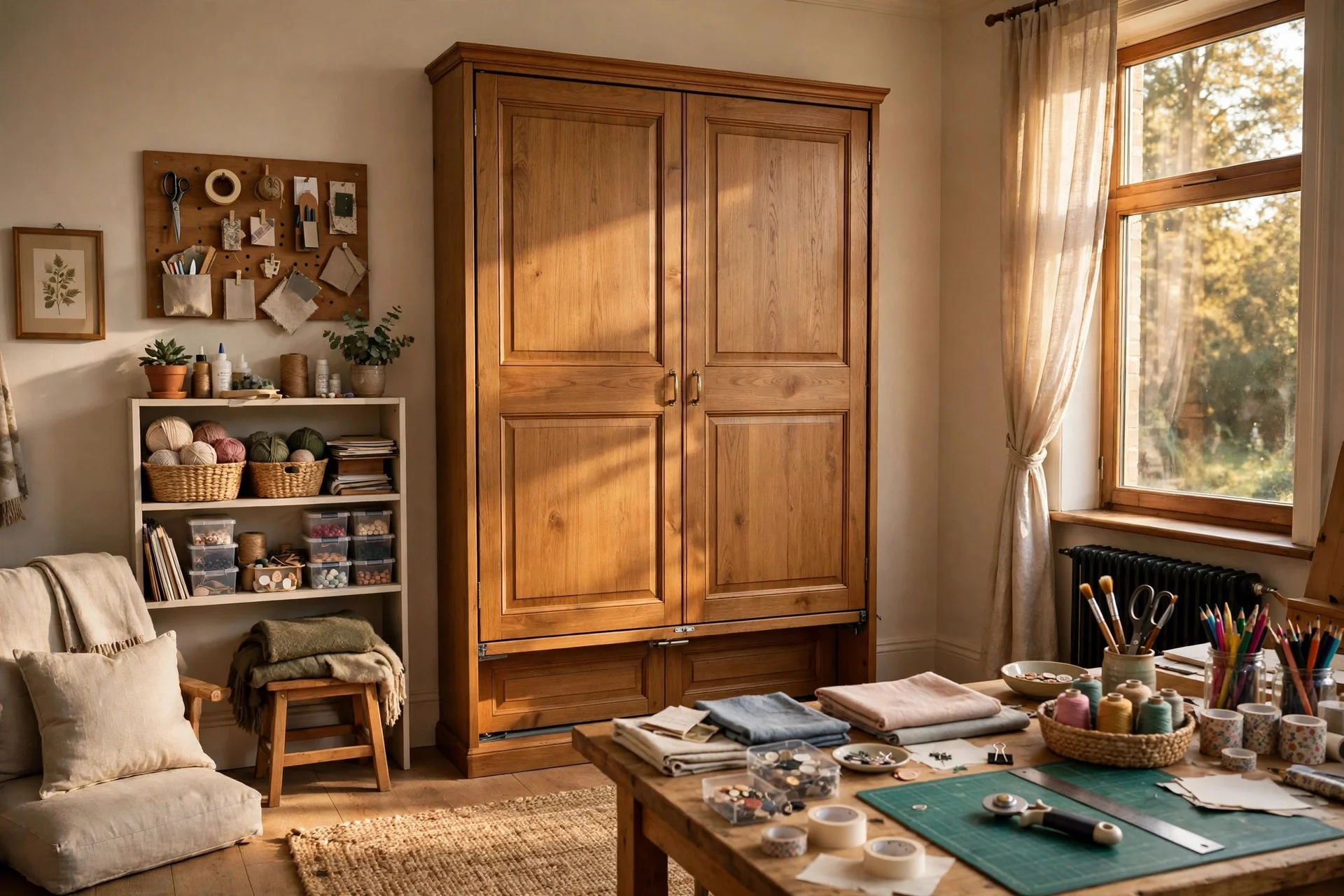
If building into the wall feels like too much, dress the cabinet up as an armoire instead. Crown molding on top, baseboard trim at the bottom, and panelled doors make a freestanding cabinet look like a piece of furniture that has always been there. The trick is matching the trim style to the room: if your room has chunky baseboards, use chunky baseboards on the cabinet too. A mismatch in trim is what gives the disguise away.
Cost: $1,200–$2,800. Tip: carry the room’s baseboard profile onto the cabinet base for a seamless join.
11. A Closet Wall Combo
The full-commitment version: hanging space on both sides of the bed, drawers below, and the bed in the center, all behind matching doors. When the bed is up, the room has a proper closet wall. When it is down, the side closets still open, so getting dressed doesn’t mean folding the bed away first. This is the priciest setup here, but it also replaces the most furniture, so a small room may end up with nothing else in it except the bed wall and a chair. If you want the finished room to feel as polished as a hotel stay, these bedroom like a hotel on a budget ideas cover the styling layer: crisp bedding, matching lamps, and one calm color.
Cost: $2,000–$4,500. Tip: plan hanging space for your longest coat before you fix the side cabinet widths.
Frequently Asked Questions
Do Murphy beds damage walls?
Not when they are fitted right. The cabinet bolts into wall studs, and the load spreads across several fixing points. The wall may need small touch-ups if you ever remove the cabinet, but a proper install leaves no structural damage.
Can you leave bedding on a Murphy bed when you fold it up?
Most cabinets allow a fitted sheet, a light duvet, and one flat pillow, held in place with straps. Thick toppers and stacks of decorative pillows usually have to come off, so keep the nightly bedding simple.
How much floor space does a Murphy bed free up?
A double bed frees roughly 30 square feet, and a queen frees about 35. In a small room that is often the difference between having a desk or not, so measure what you gain before you buy.
Is a Murphy bed comfortable for nightly sleep?
Yes, if you use a real mattress of 10 to 12 inches rather than a thin foam pad. The frame supports it the same way a standard bed frame does, so comfort comes down to the mattress you pick.
Start with the wall you have, not the cabinet you want. Measure the wall, check the studs, and pick the setup that solves your actual problem, whether that is storage, a desk, or just floor space. A Murphy bed that looks built in is rarely the fanciest one. It is the one that matches the room around it.