18 Bedrooms With Board and Batten Walls
Board and batten is one of the cheapest ways to make a plain bedroom wall look finished. Thin vertical boards, spaced evenly over a flat wall, turn a blank surface into a paneled one, and the whole job is mostly measuring, cutting, and painting. The cost depends on how much wall you cover and what material you use, which is why the ideas below are grouped into three budgets. Pick your tier, then pick the look inside it.
Under $50 — six ways to get the look for less than a dinner out, using paint, tape, and a single sheet of material.
1. A Painted Grid That Fakes the Look
No boards at all. Mark a grid on the wall with painter’s tape, paint the whole wall one color, peel the tape, and the lines left behind read as panels from across the room. It works best in soft colors where the contrast is gentle, and it costs almost nothing beyond paint you may already own. The effect fades up close, so keep this one for walls you see from the bed, not walls you stand next to.
Cost: $15–$40. Tip: use a level for every tape line, because one crooked line gives the trick away.
2. One Sheet of MDF Cut Into Slim Battens
A single sheet of thin MDF, cut into 3-inch strips at the hardware store, covers a surprising amount of wall. Glue and pin the strips to the wall in even spacing, caulk the edges, and paint everything one color. The battens sit almost flat, which suits small rooms where chunky trim would crowd the space. Ask the store to do the long cuts for you if you don’t own a saw.
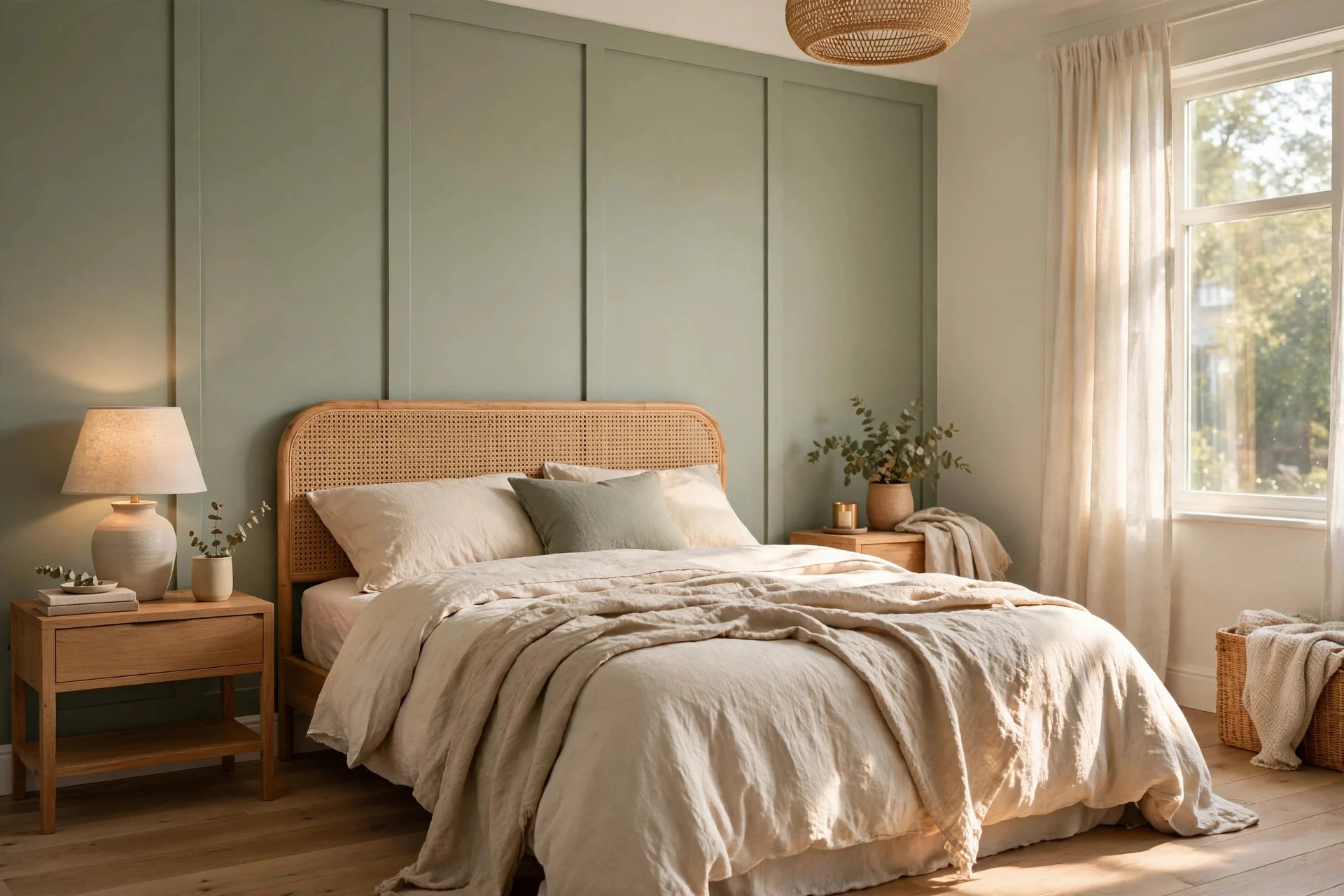
Cost: $30–$50. Tip: prime the cut edges twice, since raw MDF drinks paint and shows rough edges.
3. Peel-and-Stick Foam Trim
Foam molding strips with adhesive backing go up in an afternoon with no nails and no mess, which makes them a solid pick for renters. The strips are light, so they stick well to smooth painted walls, and they paint over cleanly. They won’t fool anyone up close, but from the doorway they give the wall a paneled rhythm that plain paint can’t. Peel one corner first to test the adhesive on your wall paint.
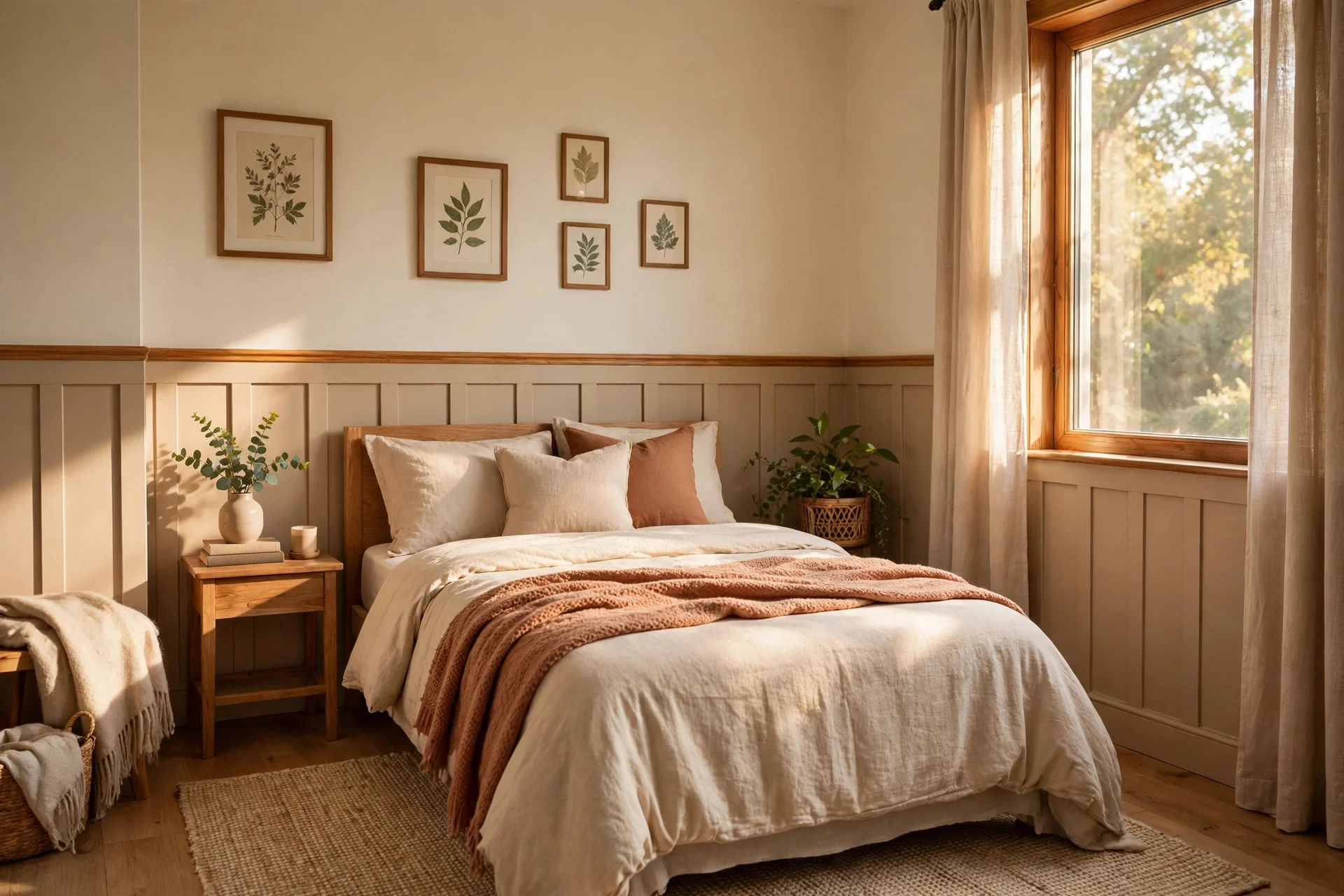
Cost: $25–$45. Tip: wipe the wall with a damp cloth first, or dust will weaken the bond.
4. Battens Only Behind the Bed
You don’t have to panel a whole wall. A section just wider than the bed, from floor to pillow height, gives you the headboard effect for a fraction of the cost. Three or four vertical battens plus a top rail is often enough, and the bed hides the bottom ends. This is the cheapest real-wood option here, and it leaves the rest of the room untouched.
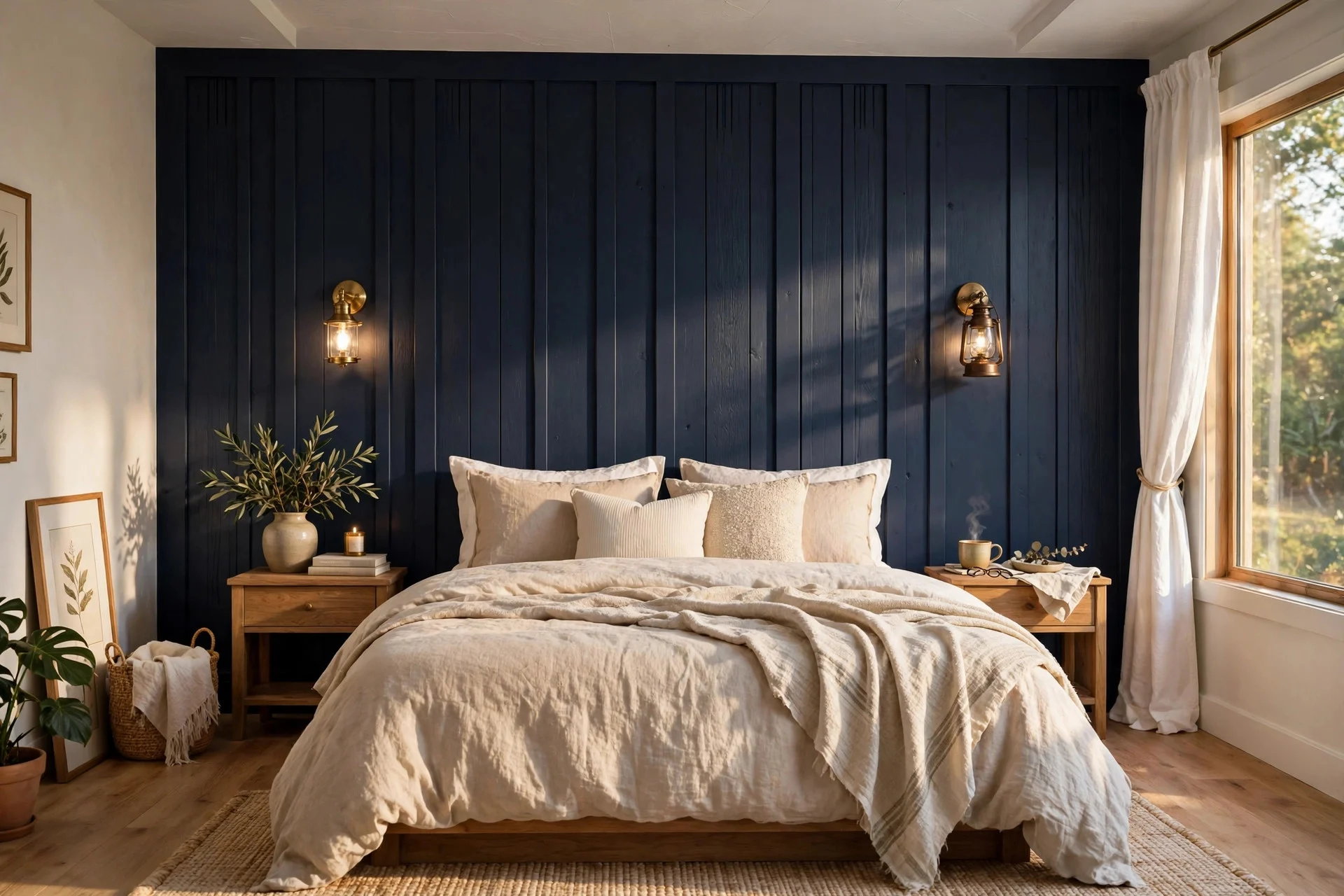
Cost: $20–$45. Tip: center the panel on the bed, not the wall, or it will look off-center once the bed is in place.
5. A Tape Grid Plus Bold Paint
Like the painted grid above, but with a bold color inside the panels and crisp white lines between them. The contrast does the heavy lifting, so the wall reads as paneled even in photos. It suits renters too, since it is only paint. Two coats of the bold color inside the tape lines, then a steady hand on the edges, is all it takes.
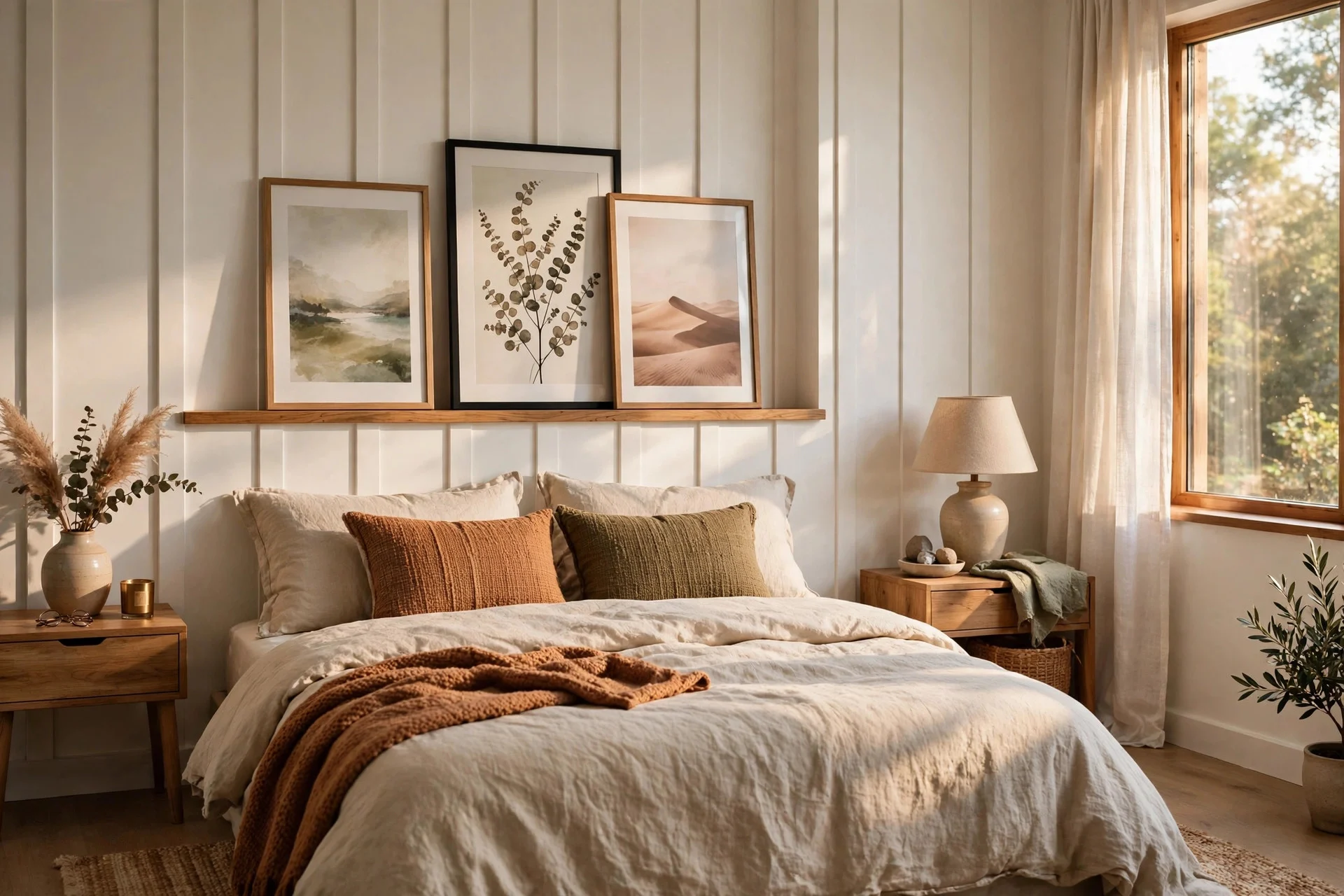
Cost: $20–$40. Tip: pull the tape off while the second coat is still slightly tacky for the cleanest lines.
6. A Half-Wall Using Pre-Primed Trim Boards
Pre-primed trim boards cost a little more per piece but save you a full priming step, and a half-wall needs only a handful of them. Run a chair rail at waist height, add verticals down to the baseboard, and paint the whole section one color. The half-wall suits rooms with low ceilings, since it doesn’t chop the wall into tall sections. It also gives you a natural line for hanging art above.
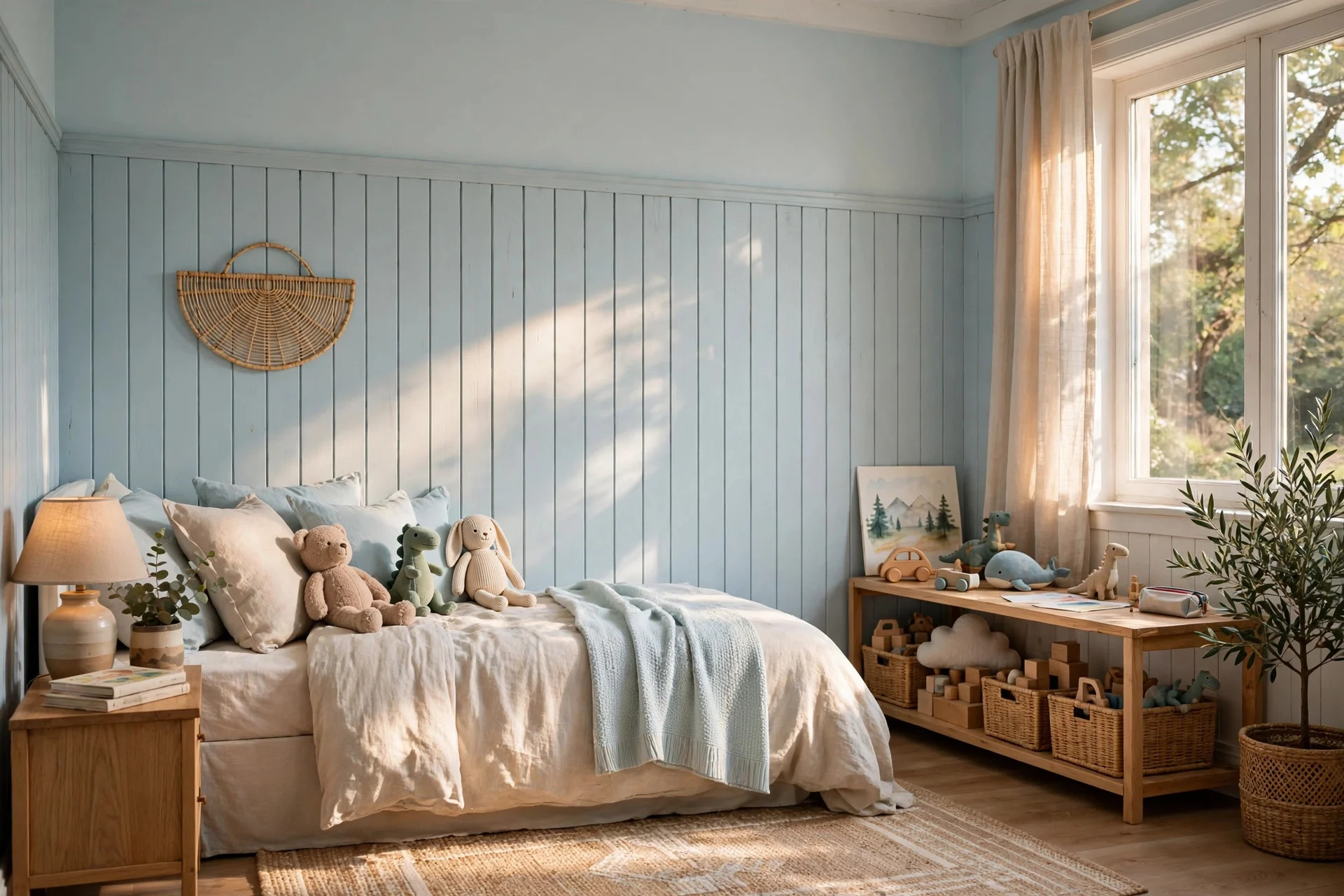
Cost: $35–$50. Tip: keep vertical spacing even by cutting one spacer block and reusing it for every gap.
$50–$200 — a full accent wall in real material, with room for paint, caulk, and a few upgrades.
7. A Full Accent Wall in MDF Battens
This is the standard board and batten job: vertical battens floor to ceiling across one wall, painted the same color as the wall for a tone-on-tone look. The spacing sets the mood, with narrow gaps feeling modern and wide gaps feeling farmhouse. Budget for caulk and filler, because the gaps at the wall and the nail holes are what make it look built in rather than stuck on. Sand the filler smooth before painting.
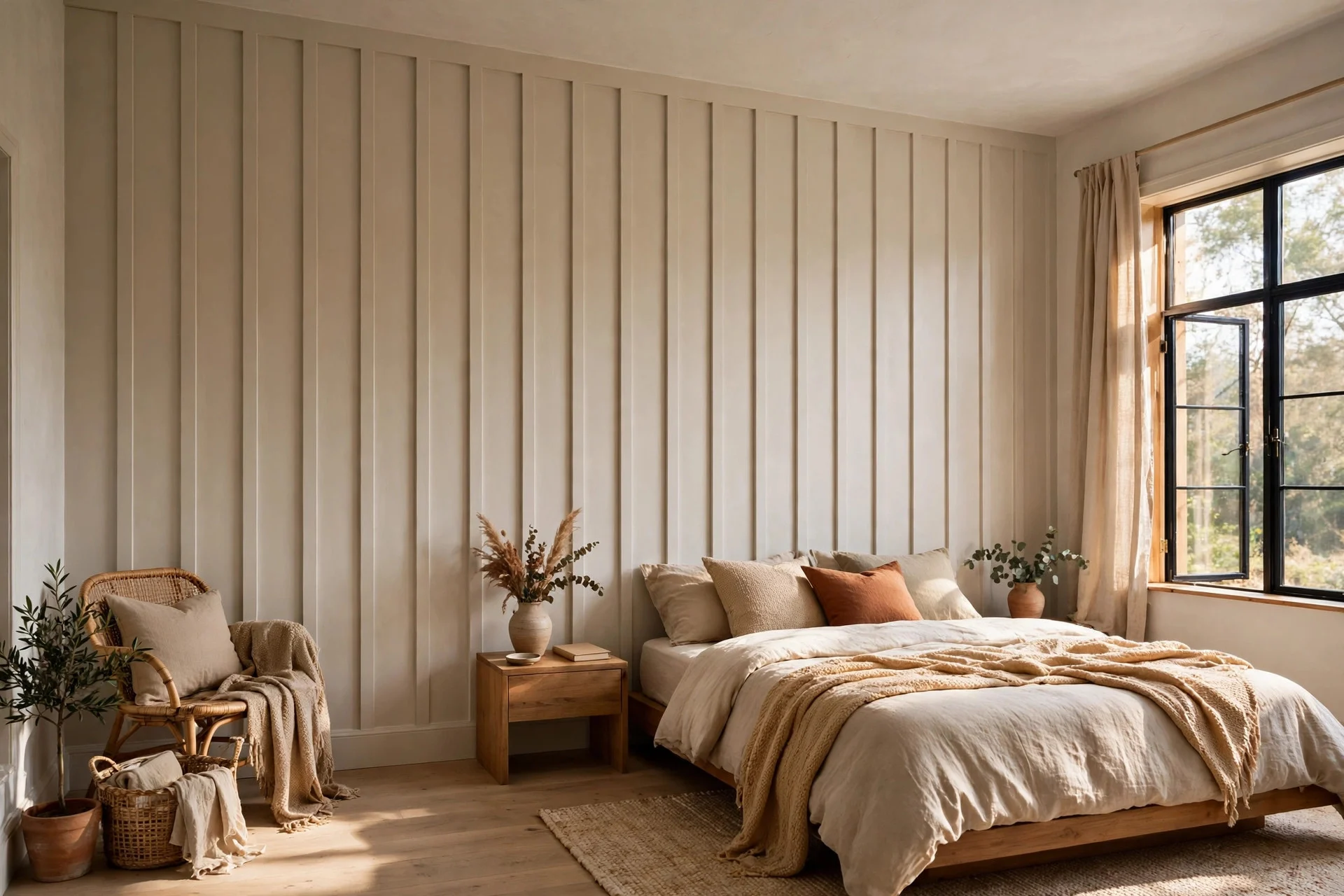
Cost: $80–$150. Tip: paint the wall first, then the battens, so you don’t chase missed spots between boards.
8. A Full-Height Wall With Wide Spacing
Wide spacing, around 16 to 20 inches between battens, makes a tall wall feel calmer and less busy. It suits bedrooms with high ceilings, where tight spacing would look fussy. The fewer boards also keep the cost down, even on a big wall. Pair it with a simple bed frame and plain bedding so the wall stays the star.
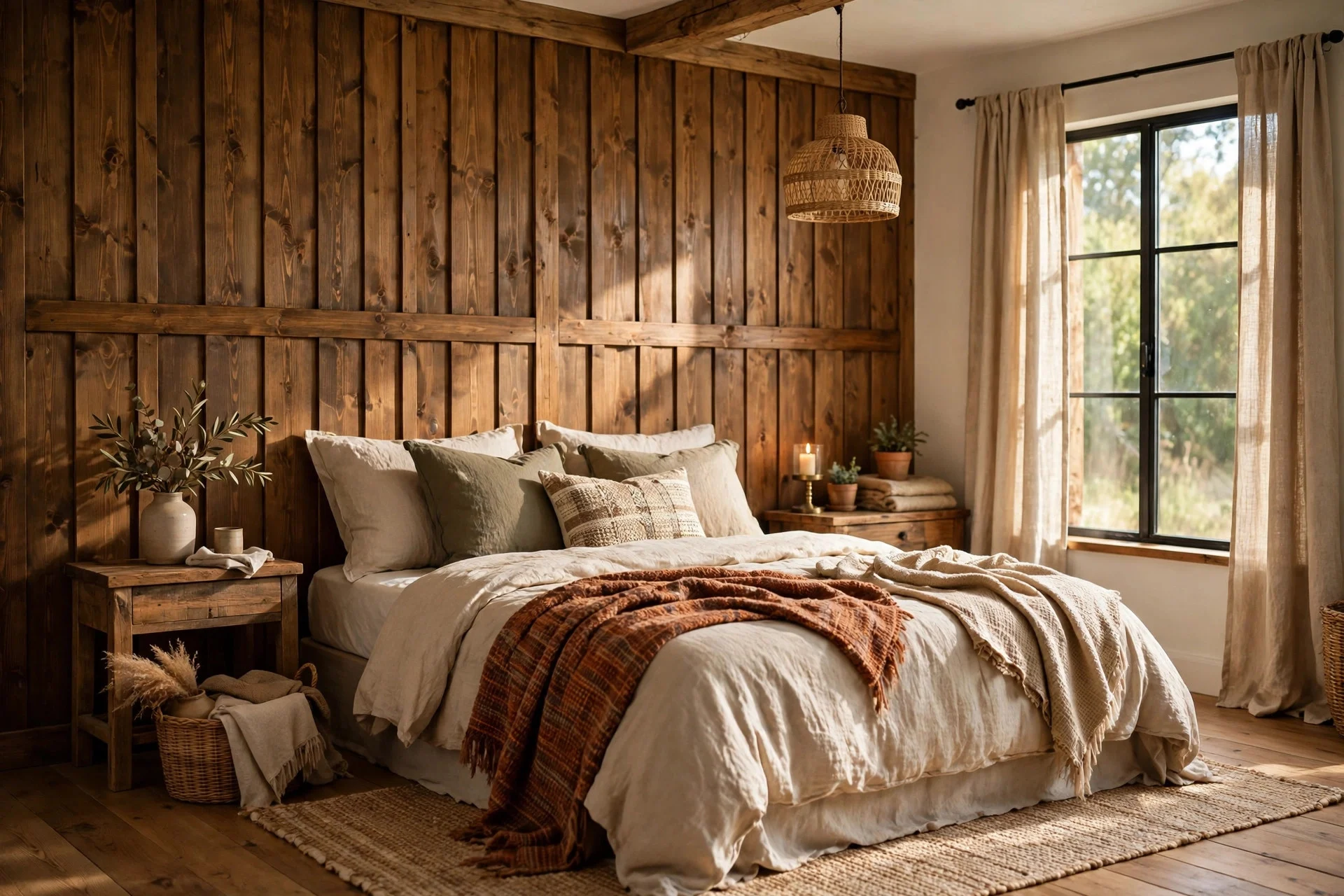
Cost: $90–$160. Tip: measure the wall and divide it into equal sections first, rather than spacing from one corner.
9. White Battens on a Colored Wall
Paint the wall a color, sage, dusty blue, or warm grey, and keep the battens bright white. The contrast makes the panel pattern pop, and the room gains a color story without any art. This is one of the most photographed versions of the look, and it works because the two tones are doing all the work. If you like this palette, these sage green and cream living room ideas show how the same tones play out across a whole room.
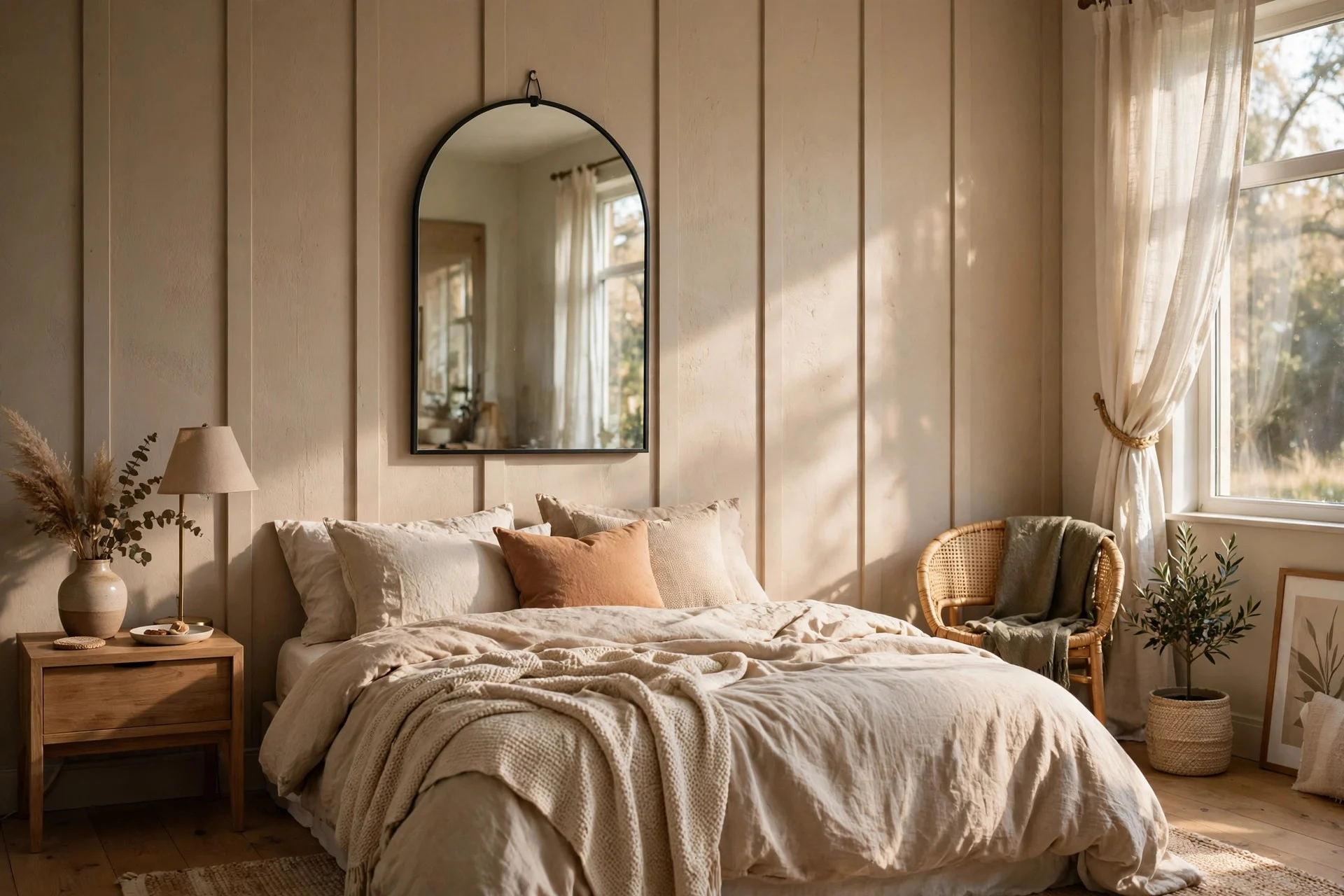
Cost: $100–$180. Tip: use the same white on the trim and doors so the room ties together.
10. Board and Batten Plus a Picture Ledge
Add a narrow ledge along the top rail of the paneling and you gain a shelf for framed prints, small plants, and books. The ledge also gives the paneling a finished top edge, which matters on walls where the battens would otherwise end in mid-air. Keep the ledge shallow, about 3 inches, so nothing heavy ends up on it. Swap the prints seasonally and the wall never feels stale.
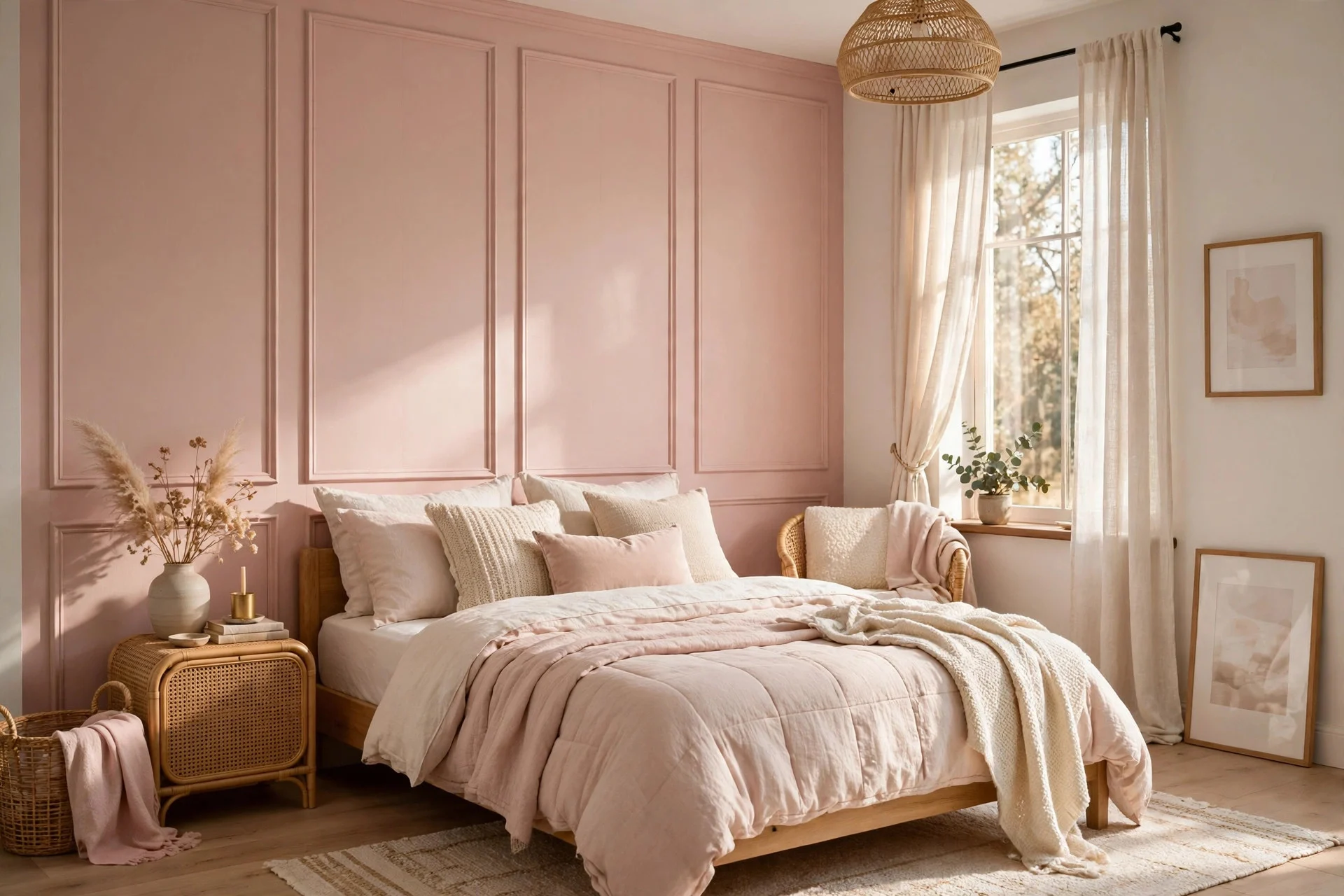
Cost: $110–$190. Tip: fix the ledge into studs, not just drywall, since books get heavy fast.
11. A Grid of Square Boxes
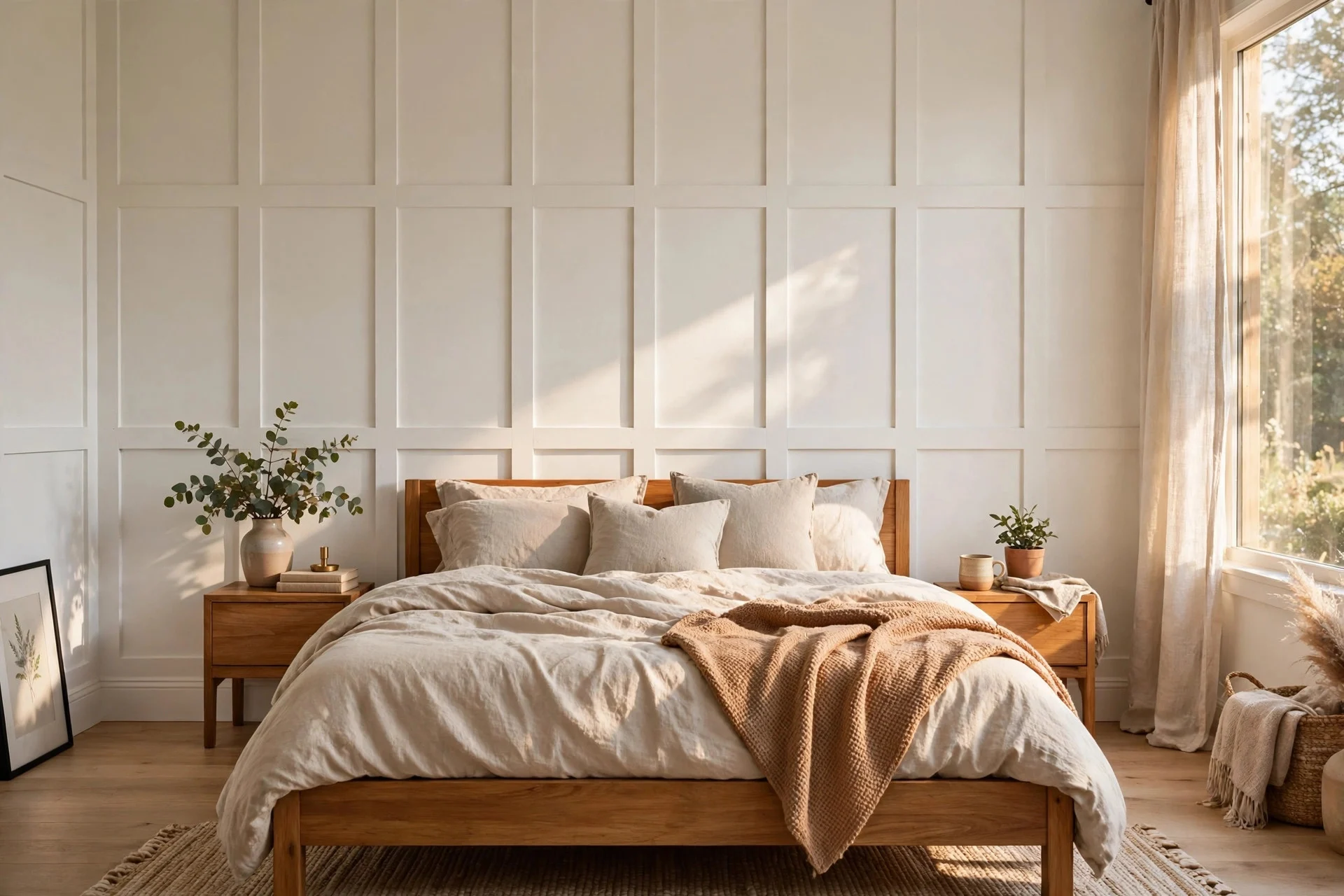
Instead of vertical lines only, add horizontal rails to form squares or rectangles across the wall. The grid feels more tailored, almost like panel molding, and it suits rooms with a slightly dressier style. The extra rails add cost and measuring time, so plan the grid on paper first and keep the boxes the same size. Uneven boxes are the first thing the eye catches.
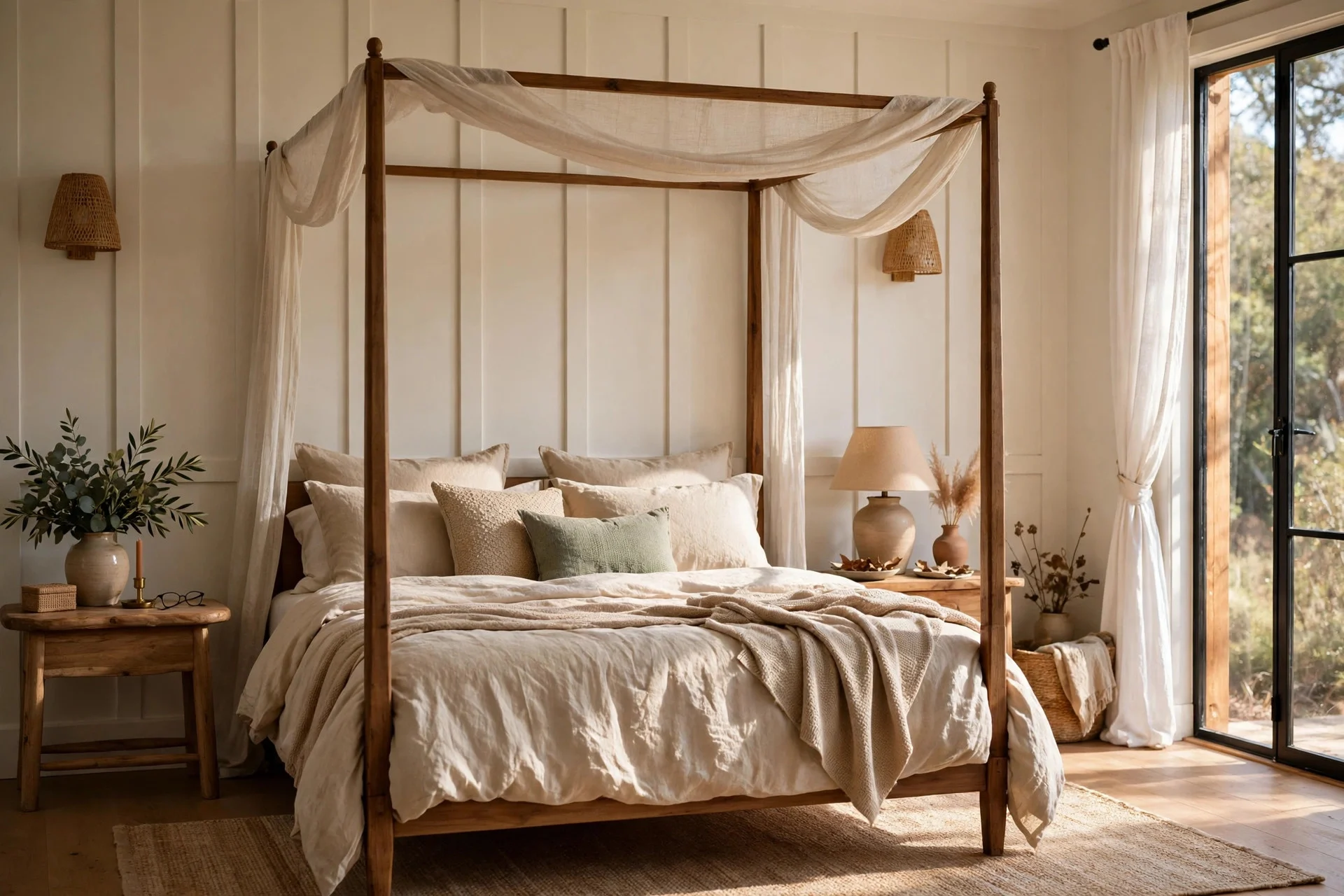
Cost: $120–$200. Tip: draw the full grid on the wall in pencil before you cut a single board.
12. Vertical Battens Floor to Ceiling Behind the Bed
Run the battens the full height of the wall but only across the width of the bed, so the paneling acts as a headboard. The vertical lines draw the eye up, which makes a low ceiling feel taller. This is a good middle ground when a full accent wall feels like too much but a half-wall feels too little. End the battens at the ceiling with a small cap rail for a clean finish.
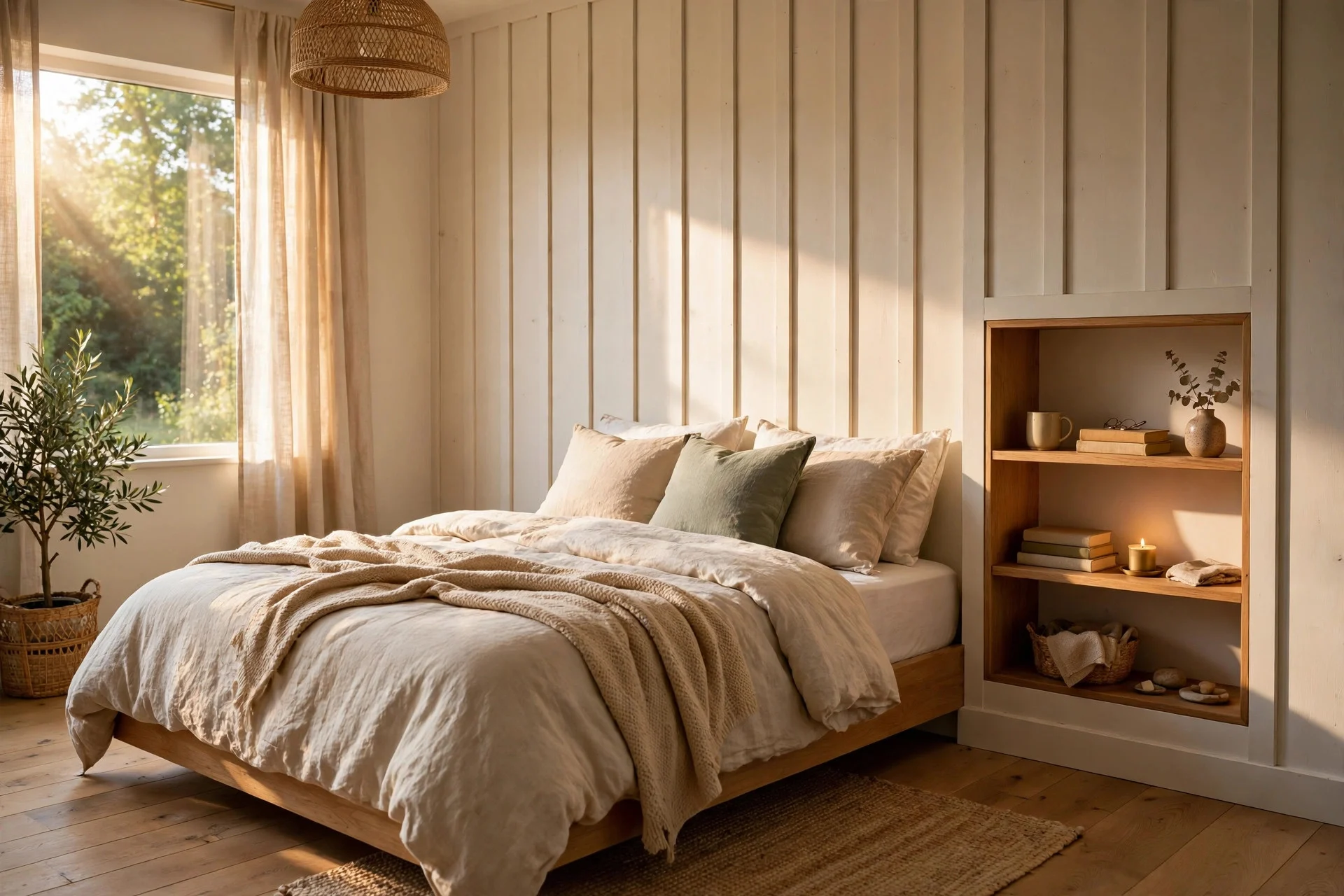
Cost: $90–$170. Tip: scribe the top rail to the ceiling if the ceiling isn’t perfectly level.
$200 and up — whole-room coverage, better materials, and details like lighting and wallpaper that lift the whole job.
13. A Full Room Wrap on All Four Walls
Paneling every wall, not just the accent wall, turns the bedroom into a paneled room. The cost jumps because of the sheer amount of material, but the result feels like a proper fitted interior rather than a feature wall. Keep the color light if the room is small, since dark paneling on four walls can close the space in. Corners need care: miter or butt the battens neatly so the wrap looks continuous.
Cost: $300–$600. Tip: do one wall at a time and live with it for a day before committing to all four.
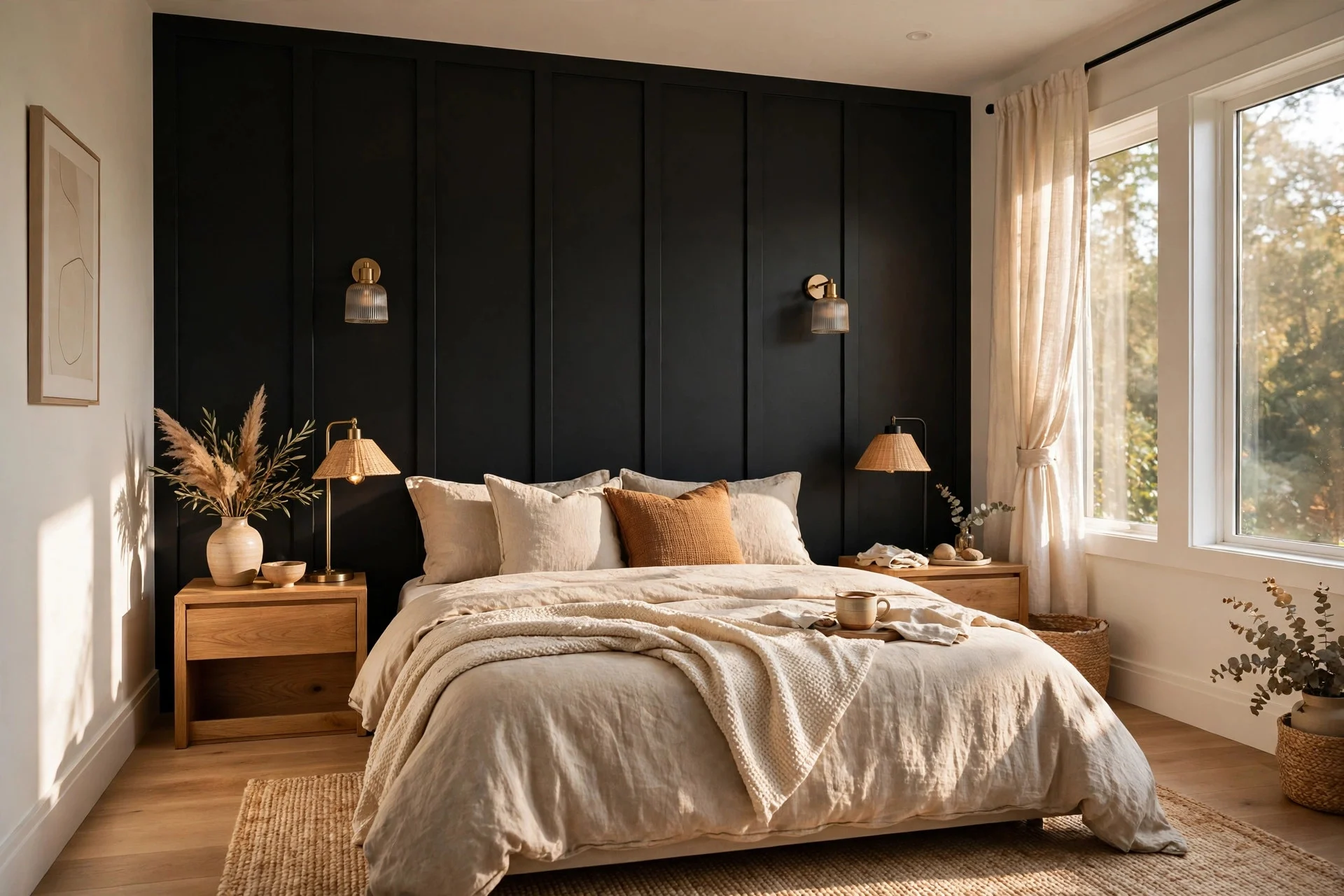
14. Board and Batten With Built-In Sconces
Mount two sconces on the paneled wall, wired through the battens, and the paneling becomes a lighting feature as well. The wires hide behind the boards, so the install looks clean, though it needs an electrician if you don’t have an outlet nearby. The sconces also free up nightstand space, which matters in small rooms. Choose shades that match the wall color so the lights blend in by day.
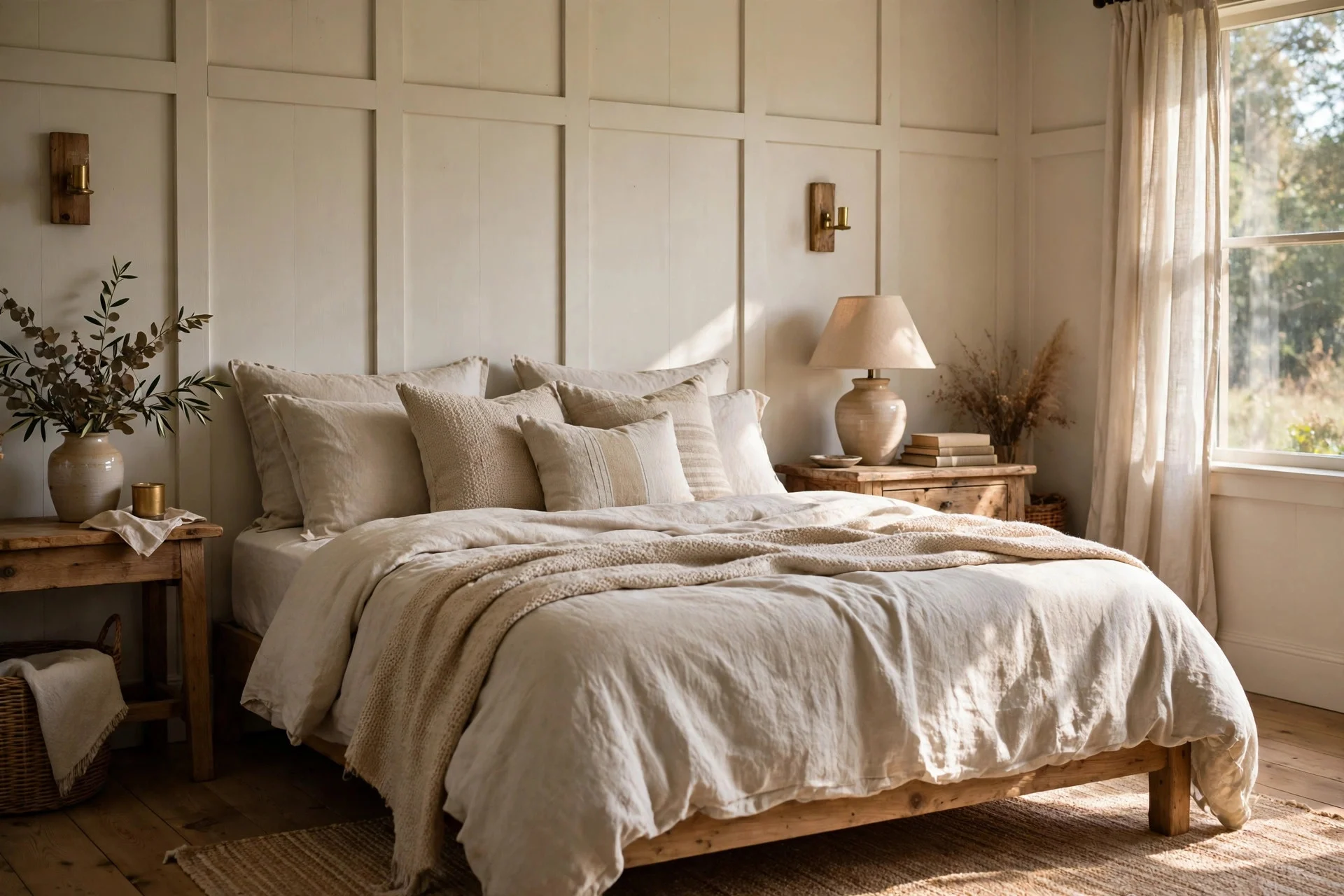
Cost: $250–$450. Tip: plan the sconce height before the battens go up, since moving them later means patching.
15. Hardwood Battens With a Stained Finish
Swap MDF for oak or poplar battens and stain them instead of painting, and the wall gains a warm, crafted feel. The wood grain shows through, so the room feels richer without any extra decoration. Hardwood costs more and needs careful sanding, but it also ages better than painted MDF. Seal the stain well, since bedroom walls take knocks from bags and chairs.
Cost: $280–$500. Tip: test the stain on an offcut first, because it dries darker than it looks wet.
16. Paneling Plus a Window Seat Nook
Panel the wall around a window seat and the nook becomes part of the room’s architecture. The battens frame the seat, the seat gives you storage below, and the whole corner reads as built in. This is a bigger job, since the seat needs framing, but it solves storage and seating in one move. If you like the idea of a quiet corner for reading, these living room reading corner ideas show how to dress a nook so it actually gets used.
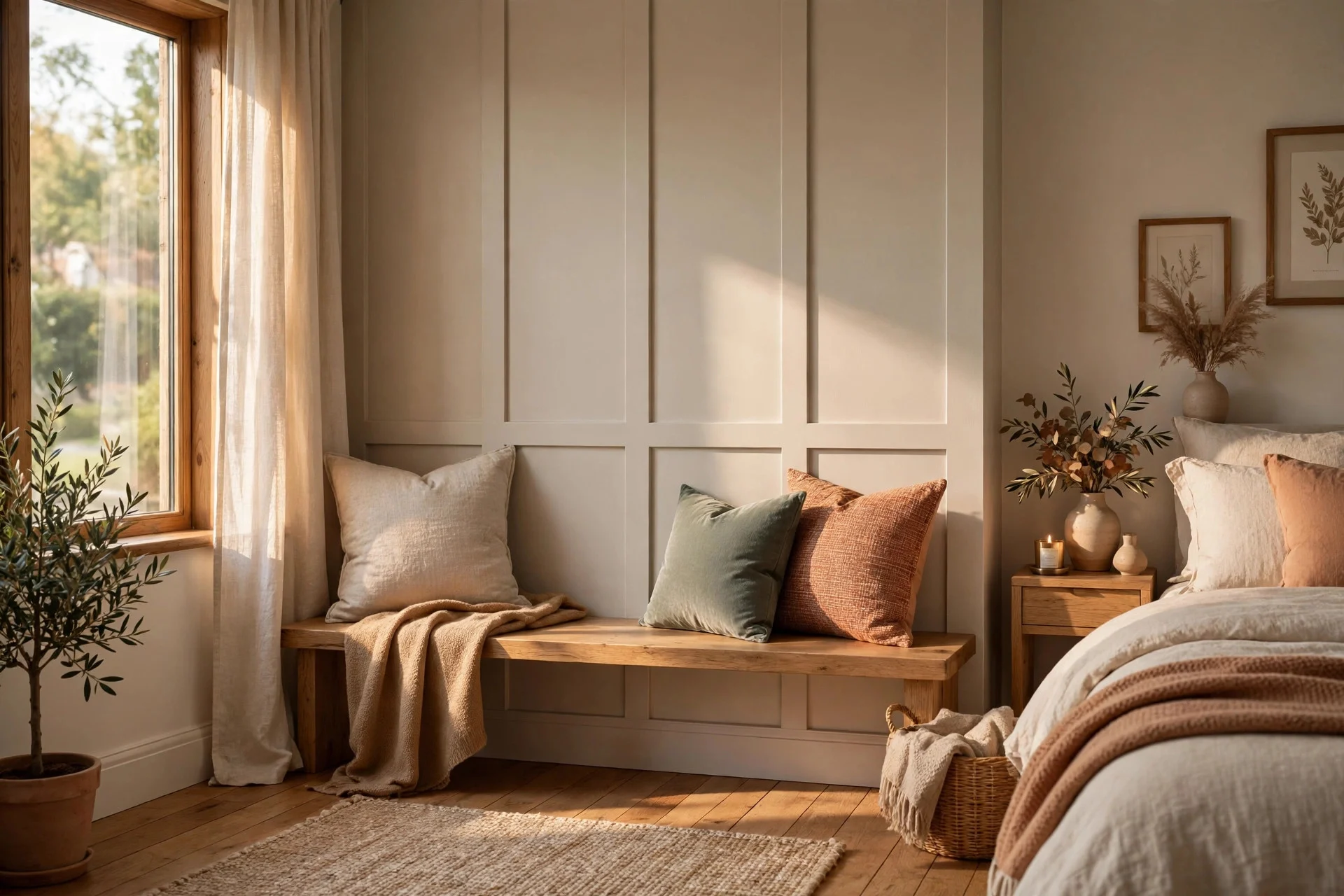
Cost: $350–$700. Tip: build the seat first, then run the battens around it, so the measurements stay honest.
17. Tall Panels With Crown and Baseboard Integration
Here the battens run between a proper crown molding at the ceiling and a tall baseboard at the floor, so the paneling looks like it was part of the house from the start. The moldings are what sell it: they tie the panels into the room’s existing trim instead of leaving raw ends. This suits older homes with generous trim, where a plain batten wall would look thin. Match the crown profile to the room’s existing molding.
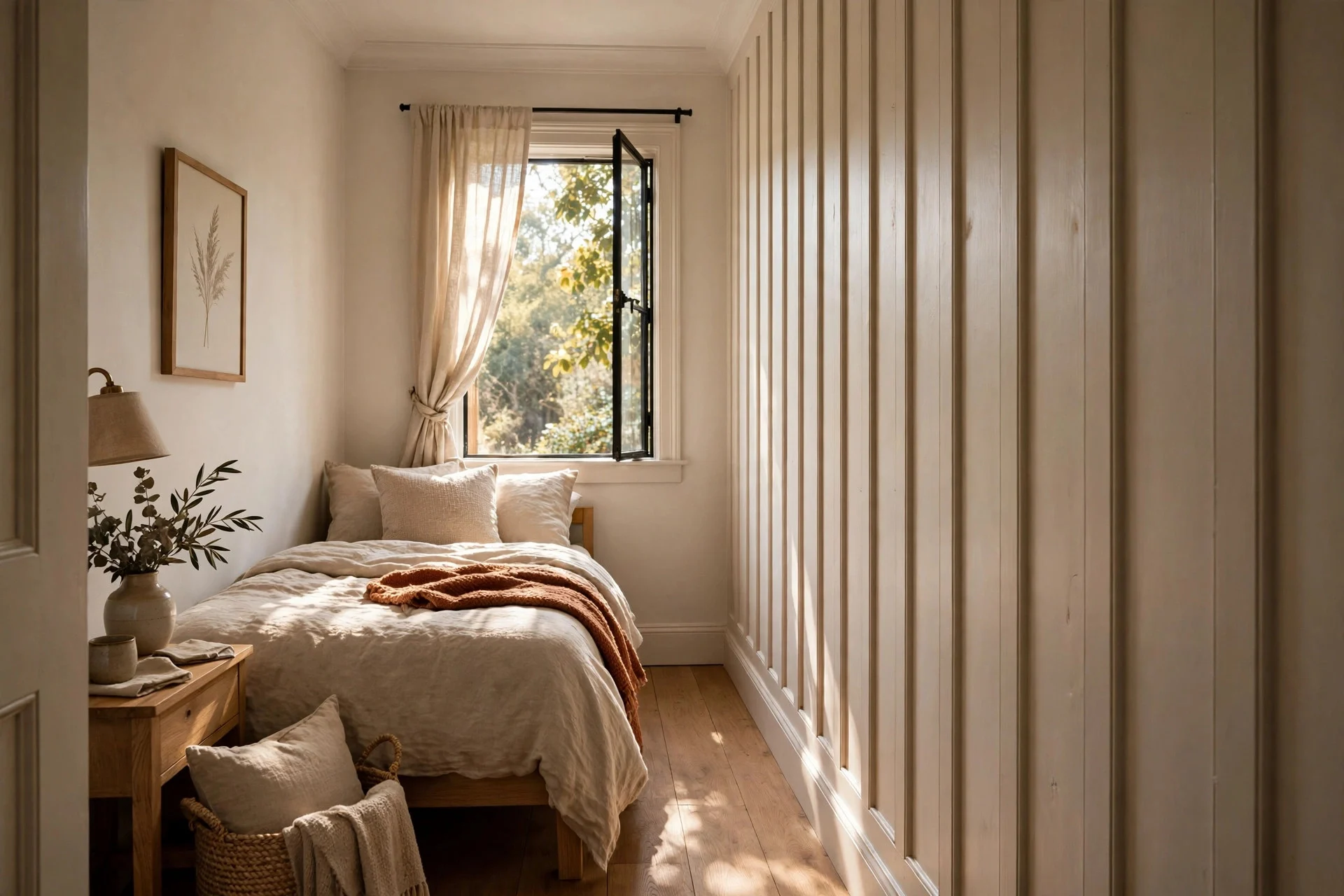
Cost: $300–$550. Tip: paint the crown, battens, and baseboard in one session for an even finish.
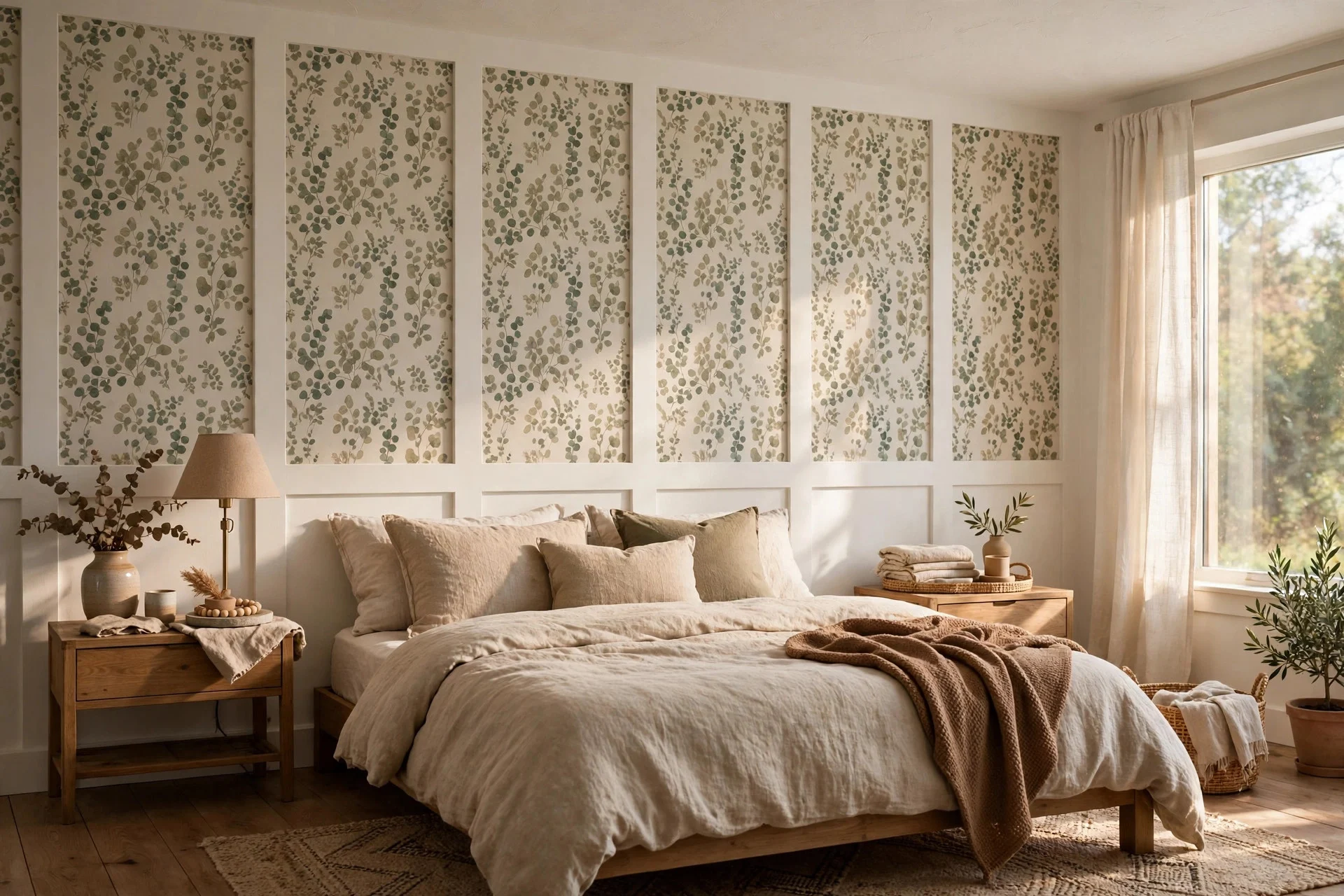
18. Inset Panels With Wallpaper Inside the Boxes
The dressiest version: battens form rectangles on the wall, and a subtle wallpaper fills each rectangle. The wallpaper adds pattern without covering the whole wall, and the battens frame it like art. Pick a small-scale print so the pattern doesn’t fight the grid, and keep the wall color calm. The cost comes from the wallpaper and the extra cutting, but the result looks like custom millwork. For a calm backdrop to this kind of detail, a warm minimalist living room palette shows how restraint keeps a patterned wall from feeling busy.
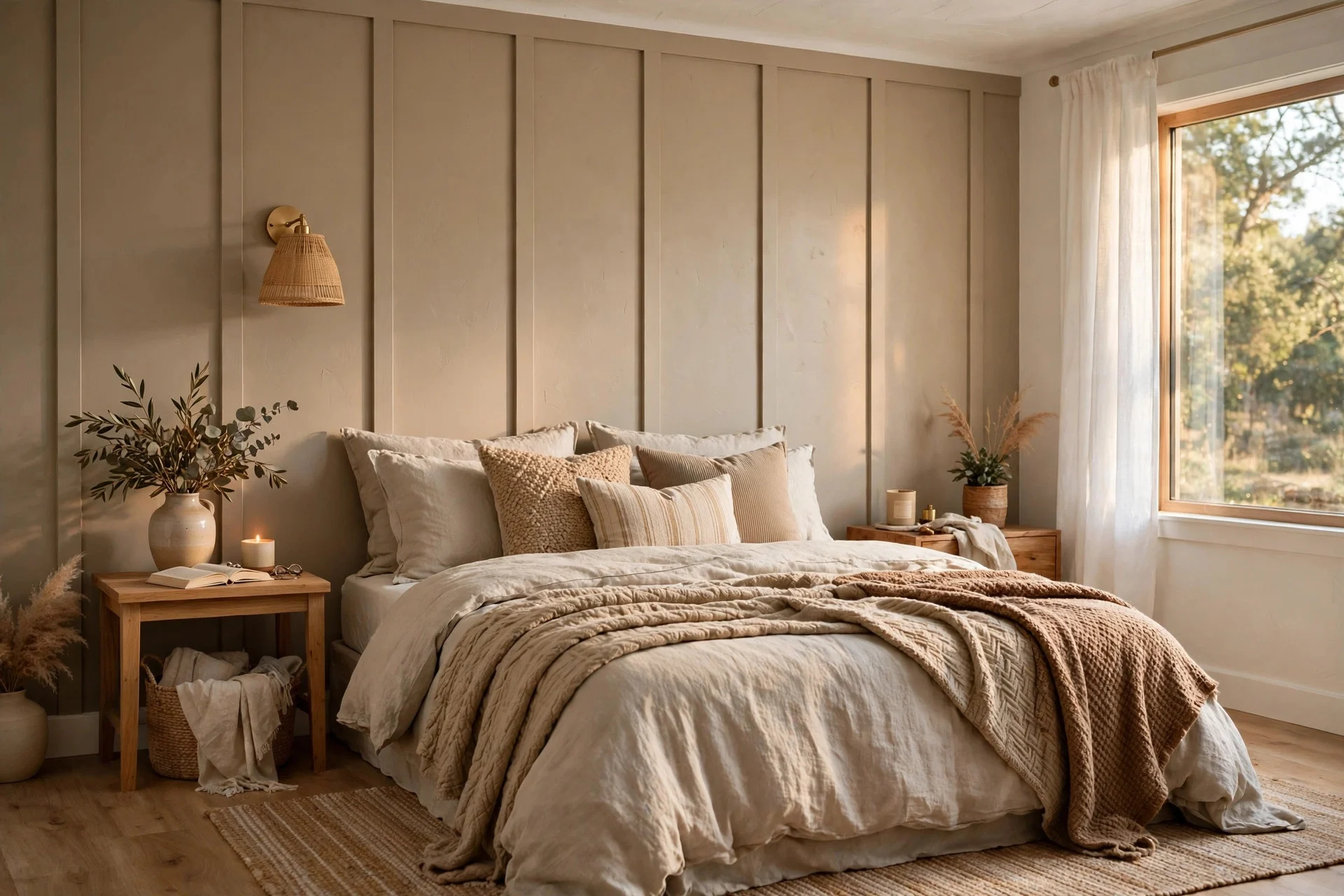
Cost: $350–$650. Tip: paste the wallpaper panels first, then fix the battens over the edges to hide the cuts.
Frequently Asked Questions
Does board and batten work in a small bedroom?
Yes, and it often helps. Vertical lines draw the eye upward, and a tone-on-tone paint job adds texture without shrinking the room. Keep the battens slim and the color light if the room is tight.
Can a beginner install board and batten?
Yes. The job is measuring, cutting straight lines, gluing and pinning boards, then caulking and painting. A miter saw helps, but many stores will cut the boards to length for you.
Does board and batten damage walls if you remove it?
Removing glued and nailed battens leaves nail holes and some paint damage, which a skim of filler and a fresh coat of paint usually fixes. Peel-and-stick versions come off cleaner but can still lift weak paint.
Should the battens match the wall color?
Matching colors give a quiet, textured look, while white battens on a colored wall give a bolder, more graphic result. Both work. Pick based on how much attention you want the wall to get.
Start with the tier that fits your budget and the wall you actually look at most, which is usually the one behind the bed. A careful $50 job beats a rushed $500 one every time, because board and batten is all about straight lines and clean paint. Measure twice, paint once, and let the wall do the talking.