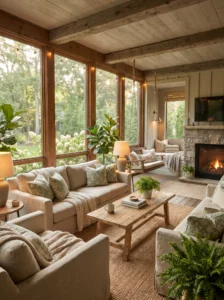
Most porches get used for about three months a year. In spring the pollen coats everything, in July the mosquitoes arrive, and by October the wind has knocked a few cushions into the flowerbed. The furniture then spends winter under a tarp, and the space that looked so good in the listing photos becomes a place to store the recycling.
Closing in a porch is the usual answer, but “closed-in” covers a lot of ground. It can mean light screens that keep bugs out, glass panels that hold in warmth, or a full conversion that behaves like another room of the house. Each choice changes what the space can do, how much it costs, and how often you’ll want to sit there in January.
What matters most is deciding how you want to live in the space before you pick a single material. A reading nook, a dining area, a place for the kids to play on rainy days, and a spot for morning coffee all call for different decisions about heat, light, and flooring.
Below are 14 ideas to help you shape a porch you’ll use in every season, with notes on sizing, materials, and the mistakes people tend to find out about too late. After the ideas you’ll find a comparison table, a buying guide, and answers to common questions. One caution first: enclosing a porch can trigger permit, structural, and building-code rules, which vary by area, so check locally before you start.
1. Full-Height Screens for the Bug-Free Version
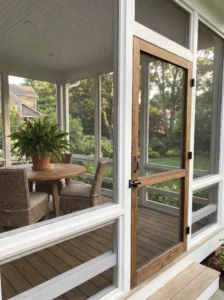
If your main complaint is insects, screens solve the problem at the lowest price. A screened porch lets air move through, keeps out mosquitoes and wasps, and still feels like being outside. It works best in mild climates or for homeowners who mostly want the three warm seasons.
Choose a fine-mesh screen, since standard mesh lets through the smallest biters, and consider a charcoal color, which tends to be easier on the eyes and gives a clearer view of the yard than silver. Frame it in aluminum or painted wood, and keep the bottom rail low enough that you don’t feel boxed in while seated.
The classic mistake is neglecting the door. A door that doesn’t close on its own means someone will leave it ajar and let the whole colony in. Fit a spring closer and a tight sweep at the bottom.
Pets quickly show you which areas need reinforcing, and heavy-duty pet screen on the lower panels survives claws far better than ordinary mesh. A screened porch tends to become the default dinner spot from May to September.
2. Swap Screens for Glass Panels or Windows
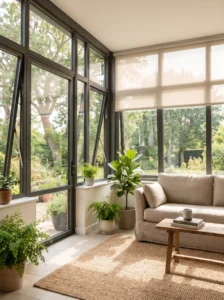
Glass turns a seasonal space into one you can use through cold weather. Sliding or tilt-in windows let you open the porch on warm days and seal it in November, and the view stays open all year.
Single-pane glass is the cheaper route, though double-pane holds heat noticeably better. If winter matters to you, spend the extra. Look for low-E glass, which reduces glare and helps temperature, and choose frames in vinyl or aluminum with thermal breaks, which stand up to weather better than raw wood.
Think about sun exposure before you commit. A south-facing porch with full glass can overheat in summer, so plan for shading, whether that’s an awning, window film, or interior shades.
Keep a few windows operable. A sealed glass box gets stuffy as the weather warms, and cross-breezes make the space a pleasure instead of a greenhouse. After a winter of using it, many homeowners say the glazing is the part they’d pick first, because sitting in sunshine with snow outside is hard to beat.
3. Add a Fireplace Corner for Cold Months
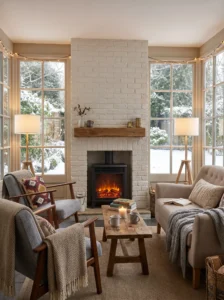
A fireplace is the visual anchor that makes a porch feel like a room rather than an add-on. For most enclosed porches, an electric or gas insert is the practical choice, since it needs less venting and less structural work than a wood-burning unit.
Place it against the wall that backs onto the house, which is usually the best insulated, and center it so seating can arrange around it. A mantel in stone, painted brick, or wood in a tone that matches the porch ceiling grounds it. A surround in tile or stone gives it permanence.
Leave proper clearance around the unit and follow the manufacturer’s installation rules closely. Gas units and anything with a flue should be handled by a licensed professional, and local codes often require inspection.
A common mistake is making the fireplace the only heat source. It warms the nearby seats while the far corners stay chilly. Pair it with a small background heater if the room is large.
On a frosty evening, even a modest flame changes how long people linger. It turns a quick coffee into a long, quiet hour.
4. Hang a Porch Swing or Daybed
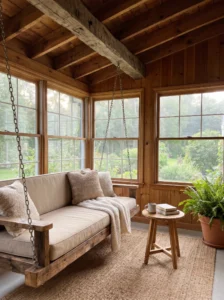
A swing or daybed gives the porch a purpose beyond holding chairs. It encourages lying back and staying, which is exactly what a good enclosed porch should do.
Swings need a solid structure above. Hang them from a beam or a reinforced ceiling joist, not from decorative trim, and use hardware rated for far more than you expect to load. Leave at least a couple of feet of clearance in front and behind for the arc. A daybed with a solid frame suits porches where the ceiling can’t take the weight, and it doubles as a guest sleeping spot.
Choose a deep cushion in outdoor-rated fabric, since even an enclosed porch sees humidity, spills, and sunlight. Neutral stripes or solid colors let you change the look with pillows.
The usual error is hanging a swing too close to a wall or door, which leads to bumped knees and scuffed paint. Measure the swing’s full travel before you drill.
What you notice afterward is how often it gets used. Reading, napping, and phone calls all migrate to the swing, and children discover it immediately.
5. Build a Dining Nook for Meals Outside the Kitchen
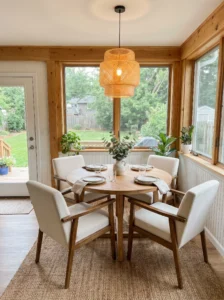
A porch dining area gives you a place to eat that feels different from the dining room and works well for large gatherings. A round or oval table suits compact spaces, while a long narrow one fits a rectangular porch.
Allow about 36 inches behind each chair so people can move around. Pick a table in teak, powder-coated aluminum, or sealed hardwood, which can handle temperature swings better than typical indoor furniture. Benches along one side tuck in neatly and seat more people than individual chairs.
Lighting matters here. A pendant or chandelier above the table creates a focal point, and warm bulbs make food look appealing. Use a dimmer if you can.
Mistakes include choosing a table that’s too big, which blocks the doorway, and ignoring the wind. Even in an enclosed space, a draft can blow napkins away, so keep a few weighted holders handy.
Eating there on a rainy evening, with the sound of water outside and a warm room inside, ranks among the nicest things a porch can do. It brings the family together in a way the kitchen counter rarely manages.
6. Choose Flooring That Handles Moisture
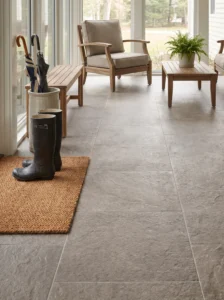
Floors on an enclosed porch take more punishment than most people anticipate, from wet boots to dripping umbrellas to the odd leaking planter. The material you select affects both comfort and upkeep.
Porcelain or ceramic tile is hard to beat for durability and easy cleaning, and textured finishes add traction when wet. Sealed concrete, stained or polished, suits modern spaces. Luxury vinyl plank offers a warmer feel underfoot and handles moisture well, provided it’s rated for the temperature swings. Wood works if it’s properly sealed, though it needs more attention.
The surface beneath matters as much as the covering. Porch slabs often slope slightly for drainage, so a contractor may need to level it before laying tile or planks. Skipping that step leads to cracked grout or uneven rows.
Pick colors that hide dirt. Mid-tone grays and warm browns forgive muddy paw prints far better than white.
If winters are cold, consider radiant heat under tile. It costs more up front, but stepping onto a warm floor on a frosty morning is a luxury that people rarely regret.
7. Layer the Lighting for Evening Use
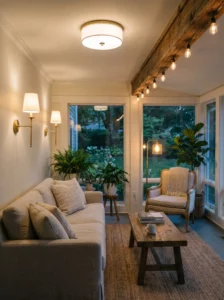
An enclosed porch can be bright by day and gloomy at night if the lighting is an afterthought. Using several sources at different heights makes the space comfortable after dark.
Start with the ceiling: a flush-mount or a pair of pendants for general light. Then add sconces on the walls for soft, indirect light. A floor lamp beside the seating gives you reading light, and string lights along a beam add atmosphere. Warm white bulbs, around 2700K, are cozier than cool ones.
Use fixtures rated for damp locations if the porch isn’t fully sealed. Check ratings carefully, because a standard indoor fixture can corrode or fail in a humid space.
Put everything on dimmers. The same room that needs bright light for wrapping presents needs low light for a quiet evening.
A common mistake is relying on a single overhead fixture, which flattens the room and casts harsh shadows. Layers fix that. With the right mix, people start staying outside long after the sun goes down, and the porch begins to look like a favorite room from the street.
8. Fit Roll-Down Shades or Clear Vinyl Panels
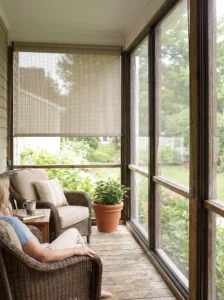
Seasonal protection gives a porch flexibility without a full conversion. Roll-down shades block sun, glare, and prying eyes, while clear vinyl panels hold back wind and rain in colder months.
Solar shades in a mid-density weave cut glare while keeping the view. Blackout or heavier fabrics provide privacy for evening use. Clear vinyl panels attach with snaps or tracks and roll up when not needed. Choose marine-grade vinyl, which resists yellowing and cracking far better than cheap sheeting.
Measure each opening carefully, because panels that don’t fit leave gaps that defeat the purpose. Order a little extra material for a proper overlap at the edges.
These panels aren’t a substitute for real insulation. They take the edge off the wind and add a few degrees, but they won’t turn the porch into a heated room. Combine them with a small heater for the best effect.
For homeowners on a budget, this is a practical way to stretch the season by weeks on each end. Folded up in summer and rolled down in autumn, it’s a modest change that makes a noticeable difference.
9. Add a Ceiling Fan for Summer Comfort
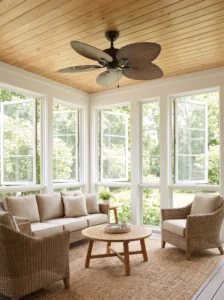
A porch that traps heat in July defeats its own purpose, and a ceiling fan is the simplest remedy. Moving air makes a room feel several degrees cooler and helps keep insects away.
Pick a fan rated for damp or wet locations, which has sealed motors and moisture-resistant blades. For a typical porch, a 44- to 52-inch fan works well, and larger spaces may need 60 inches or two units. Make sure the ceiling has solid framing to hold it, and mount it at least 7 feet above the floor.
Blade finish matters. Wood-look and painted blades tend to hold up better than plain MDF, which can warp. Many models include reversible motors, so you can push warm air down in winter.
A frequent error is choosing a fan that’s too big for the ceiling height, which makes the room feel cramped. Measure carefully and test the clearance.
In midsummer, an enclosed porch with a fan can be more pleasant than the living room, with the breeze through open windows and the sound of the yard. It tends to change when people use the space, shifting it from evenings only to most of the day.
10. Bring In Plants That Handle Seasonal Swings
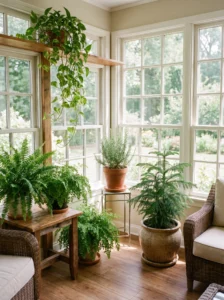
Greenery is what makes a closed-in porch feel alive. Plants soften hard surfaces, add color, and reinforce the connection to the garden. The trick is picking species that can handle the temperature range of your porch.
For shade and moderate temperatures, ferns, pothos, and peace lilies do well. For sunny, warm spaces, succulents, geraniums, and herbs like rosemary thrive. Cold-sensitive tropicals can live outside in warm months and move indoors when nights chill.
Use pots with drainage and saucers beneath, since a leaking planter can stain flooring. Place tall plants in corners, medium ones on tables, and trailing varieties on shelves or hanging planters.
Group plants with similar needs so watering is easy. Mixing a thirsty fern with a drought-tolerant succulent invites trouble.
Plan for winter. If the porch dips below freezing, tender plants need to come inside or be protected. Hardy evergreens in pots, like boxwood or dwarf conifers, keep the space green when everything else is bare.
Looking at living plants through the glass on a gray day lifts the mood more than most decorations.
11. Layer Cozy Textiles and Swap Them With the Seasons
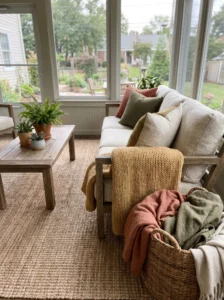
A few well-chosen textiles are the quickest way to make a porch comfortable in any month. Rugs, throws, and cushions soften the space and let you change its character without buying new furniture.
Start with an outdoor-rated rug in polypropylene or a similar weather-resistant fiber. It resists mildew, dries quickly, and cleans easily. Choose a size that anchors the seating group, with at least the front legs of the furniture on it. Layer lighter cotton throws in summer and wool or faux-fur ones in winter.
Stick to performance fabrics for cushions. Many brands sell solution-dyed acrylic, which resists fading and stays comfortable in damp conditions. Keep a storage bench or basket nearby for blankets so they’re within reach.
Rotate colors with the seasons. Fresh greens and whites for spring, warm terracotta and mustard for autumn, deep reds and plaids for winter. Pillow covers are cheap and easy to swap.
Avoid heavy, absorbent fabrics that can mildew in humid weather. The reward is a porch that feels welcoming each time you open the door, regardless of the date.
12. Create a Reading Nook or Home Office
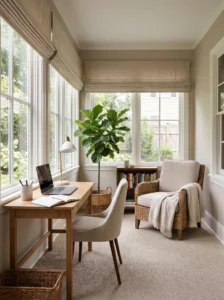
An enclosed porch makes an unusually pleasant place to work or read, thanks to daylight and the feeling of being slightly apart from the rest of the house. A small desk, a comfortable chair, and good lighting are enough.
Place the desk facing the view or perpendicular to the windows, to avoid glare on the screen. A narrow console or a wall-mounted fold-down desk suits tight spaces. Choose a chair with proper back support, since a patio chair gets uncomfortable after an hour.
Power and connectivity matter. Install enough outlets and check Wi-Fi reach, because signals can weaken at the edge of the house. A small mesh extender solves the problem.
Control the temperature. A porch that bakes in summer or chills in winter makes work miserable, so plan for shading and a dependable heater.
Keep the surroundings calm. A bookshelf, a lamp, and a plant create a focused atmosphere, while piles of clutter undermine it. People who work in a porch office often say the daylight alone improves their mood and concentration, and the short commute to the next room doesn’t hurt either.
13. Choose a Reliable Heat Source
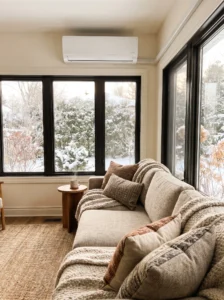
Heating is what separates a three-season room from a four-season one. The right option depends on the porch’s size, insulation, and how often you plan to use it in winter.
Electric baseboard or wall-mounted heaters are simple to install and good for occasional use. A ductless mini-split provides both heating and cooling and is efficient, though it requires a professional installer and a larger investment. Radiant floor heating is comfortable and quiet, best when you’re already laying new flooring. Portable oil-filled heaters work as a stopgap, and they should always be used on a stable surface and kept away from fabrics.
Insulation matters as much as the heater. Seal gaps around windows and doors, add weatherstripping, and consider insulating the ceiling and walls. Without it, you’re heating the outdoors.
Check electrical capacity before you buy. Running several heaters on one circuit is a common cause of tripped breakers, and a licensed electrician can tell you what your panel can handle.
A properly heated porch changes how you feel about winter. Mornings with a cup of coffee and a view of frost on the lawn become something to look forward to, not avoid.
14. Build In Storage and a Drop Zone
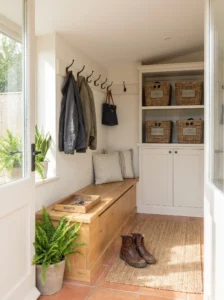
Because the porch often sits beside a main entry, it ends up collecting shoes, coats, and garden tools. Built-in storage keeps the space looking intentional while handling the daily mess.
A bench with lift-up seating holds blankets and cushions, and a row of hooks takes coats and bags. A shallow cabinet along one wall stores games, candles, and watering cans. Choose weather-resistant materials such as painted wood, sealed plywood, or powder-coated metal, which resist humidity better than plain particleboard.
Keep the dimensions practical. A bench about 18 inches high and 16 to 20 inches deep is comfortable for sitting and large enough for useful storage. Leave room in front for doors to swing open.
Think about ventilation. Damp coats and boots in an airtight box invite mildew, so use slatted or breathable storage for anything wet.
Label baskets, or at least assign them. A porch with clear places for everything stays tidy longer. After a few weeks, you’ll notice the clutter that used to gather inside the front door has quietly moved to a space designed for it, and the house feels calmer for it.
Quick Comparison: Which Closed-In Porch Style Fits You?
| Type | Best Use | Material | Style/Vibe | Difficulty Level |
|---|---|---|---|---|
| Screened porch | Warm-weather dining, bug-free lounging | Aluminum or wood frame, fine mesh | Breezy, casual | Easy |
| Glass-enclosed porch | Year-round sitting room | Double-pane glass, vinyl or aluminum frames | Bright, modern | Advanced |
| Clear vinyl panel porch | Extending the season on a budget | Marine-grade vinyl, track system | Practical, flexible | Easy |
| Fireplace porch | Cold-weather gatherings | Electric or gas insert with stone or tile surround | Cozy, traditional | Advanced |
| Porch office or nook | Remote work, reading, hobbies | Wood desk, performance fabrics | Calm, focused | Moderate |
| Heated four-season porch | Daily use all year | Insulated walls, tile or vinyl flooring, mini-split | Refined, room-like | Advanced |
How to Choose the Right Setup for Your Porch
Start with how you’ll use it. A porch meant for summer dinners needs very different features from one that will serve as a winter office. Write down the three things you most want to do there, and make decisions with those in mind.
Measure everything. Record the floor area, ceiling height, door swing, and window sizes, then sketch a rough layout. Leave about 30 to 36 inches for walkways, and avoid overfilling the space with furniture. A smaller number of well-chosen pieces feels more comfortable than a crowd of mismatched ones.
Materials need to match your climate. In humid or rainy areas, aluminum, vinyl, and sealed hardwood hold up better than untreated wood. In cold places, insulated windows and thermal-break frames are worth the extra cost. Choose furniture and fabrics labeled for outdoor use, even if the porch is enclosed, since sun and moisture still find their way in.
Maintenance deserves honest thought. Glass needs regular cleaning, screens can tear, and wood requires periodic sealing. Choose finishes you’re willing to look after.
Budget in layers. Spend most on the structure: windows, insulation, flooring, and heat, because these are the hardest to change later. Furniture, rugs, lamps, and plants can be upgraded gradually. A mid-range window that’s installed well beats a premium window that’s poorly fitted.
Common regrets include skipping insulation, ignoring ventilation, buying indoor furniture that fades, and not checking permits. Get at least three quotes for structural work, ask what’s covered by warranties, and check with your local building office before you start.
Making the Most of the Space
A closed-in porch earns its keep when it matches how you live. Screens bring a bug-free summer. Glass and a decent heater extend the season through winter. A fireplace, a swing, a reading nook, or a dining table gives people a reason to stay, and good lighting and textiles keep it comfortable after dark.
If your budget is modest, start small: a fan, an outdoor rug, a few plants, and roll-down shades or vinyl panels can stretch the season. If you’re ready for more, upgrading to glass, insulation, and real heat turns the porch into a room you’ll use nearly every day.
Before committing, spend a few evenings sitting there in different weather, noting where it’s too hot, too cold, too dark, or too drafty. Those observations are more useful than any catalog. Check local rules, collect quotes, and plan the structural work before the decor.
Tackle the project in stages. Fix the envelope first, then the heating and lighting, then the furniture. By the time you add the final cushion, the space should feel finished rather than assembled. A porch that works in every season tends to become the room people head for first, which is a good sign you’ve got the design right.
FAQs
How much does it cost to enclose a porch?
Costs vary widely depending on materials, size, and labor. Screens are the least expensive option, while glass enclosures and fully insulated conversions cost considerably more. Get several local quotes with the same scope so you can compare them fairly.
Do I need a permit to enclose my porch?
Often, yes. Enclosing a porch can change how your home is classified and may involve structural, electrical, or energy code requirements. Contact your local building department before starting.
Can I use a closed-in porch in winter?
Yes, with the right setup. Insulated windows, sealed gaps, and a dependable heat source make a big difference. Without them, a porch may only be comfortable on mild days.
What is the best flooring for an enclosed porch?
Porcelain tile, sealed concrete, and moisture-rated vinyl plank are the most durable. Pick a textured surface for traction, and make sure the slab is level and sound before laying anything.
How do I keep an enclosed porch cool in summer?
Use a ceiling fan, operable windows for cross-ventilation, and shades or window film to block direct sun. Light-colored furniture and fabrics also help.
Is an enclosed porch the same as a sunroom?
Not quite. A sunroom is usually built for year-round use with insulated walls and lots of glass, while an enclosed porch may be anything from screens to a fully glazed space. The level of insulation and heating makes the difference.
What furniture works best in a closed-in porch?
Choose pieces rated for outdoor use, such as aluminum, teak, or wicker made from synthetic fibers, with cushions in performance fabric. Even a sealed porch sees humidity and sunlight, so indoor-only furniture may fade or warp.
How can I add heat without a major renovation?
A plug-in electric heater, a wall-mounted unit, or an electric fireplace insert are simple choices. Seal drafts and add weatherstripping first, since a small heater in a leaky space struggles to keep up.