One of you wants colour on every wall. The other wants white, white, and more white. One of you sleeps with the window open in January; the other owns three weighted blankets. If decorating your bedroom together feels like a negotiation that never ends, you’re not unusual — most couples disagree about at least one thing in the bedroom, and plenty disagree about five. The good news is that almost every style clash has a compromise that doesn’t leave one person quietly resenting the room. These bedroom ideas for couples are built around fixes, not winners: twelve common disagreements, and a workable middle ground for each.
The ground rule for all of them is simple. Neither person gets everything, and neither person gets nothing. A bedroom both people like 80% beats a bedroom one person loves and the other tolerates — because the tolerating person stops spending time in it, and then the room fails at its one job.
Fix 1: One Loves Colour, One Loves Neutrals — the 70/30 Compromise
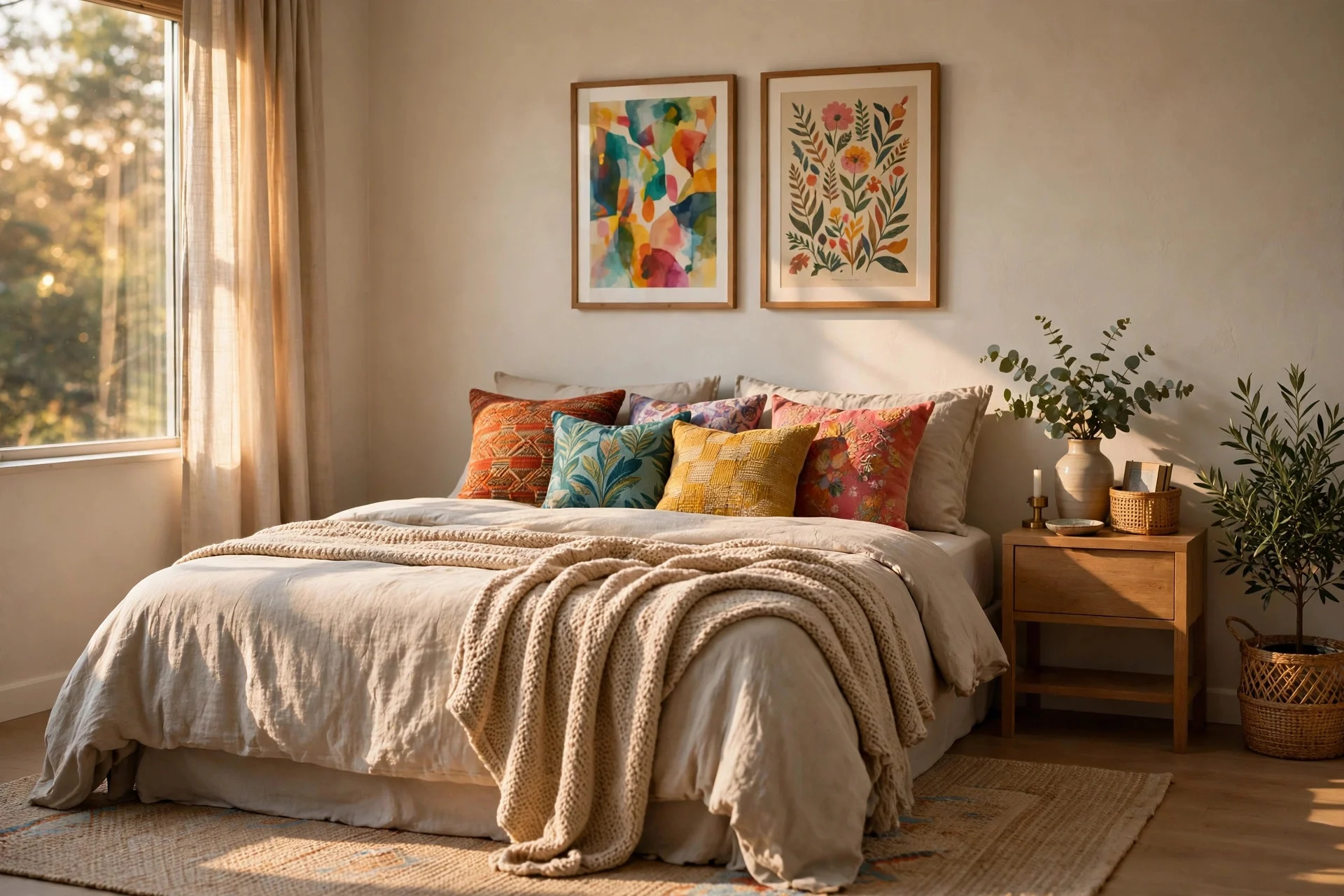
This is the most common bedroom disagreement, and the fix is a ratio, not a colour. Make roughly 70% of the room neutral — walls, bedding, big furniture — and give the remaining 30% to colour: accent pillows, a throw, art, a painted nightstand, or one feature wall. The neutral lover gets a calm room; the colour lover gets a room that actually has colour in it, not just permission to want it.
The ratio works because it respects what each person actually cares about. The neutral lover usually cares about the overall feeling of the room — calm, uncluttered, easy to wake up in. The colour lover usually cares about specific moments of colour, not about painting every wall red. Give both what they want and the argument dissolves.
Fix 2: Minimalist vs Maximalist — Edited Maximalism
One person wants surfaces clear; the other wants collections, plants, and layers. The middle ground is edited maximalism: keep the maximalist’s favourite things, but give each one space. That means one display shelf instead of every surface covered, a curated group of plants instead of a jungle, and bedding with texture rather than five competing patterns.
Agree on a number together — say, three decorative objects per surface — and let the maximalist choose which three. Choice is the point. A maximalist who picked their own three objects feels heard; a maximalist told to remove everything feels erased. The minimalist still gets clear surfaces, just with a defined allowance.
Fix 3: Different Bedtime Routines — Split Lighting
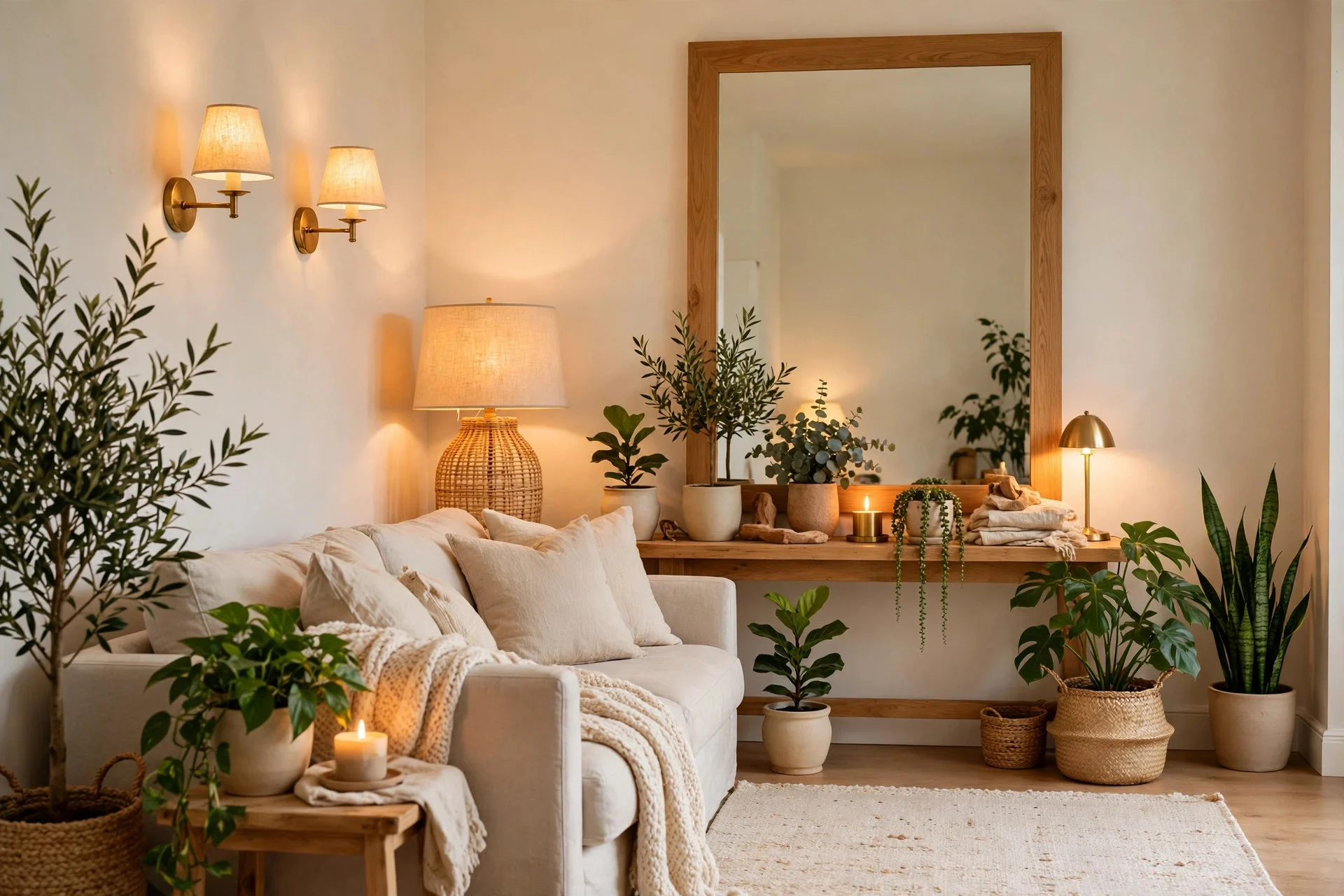
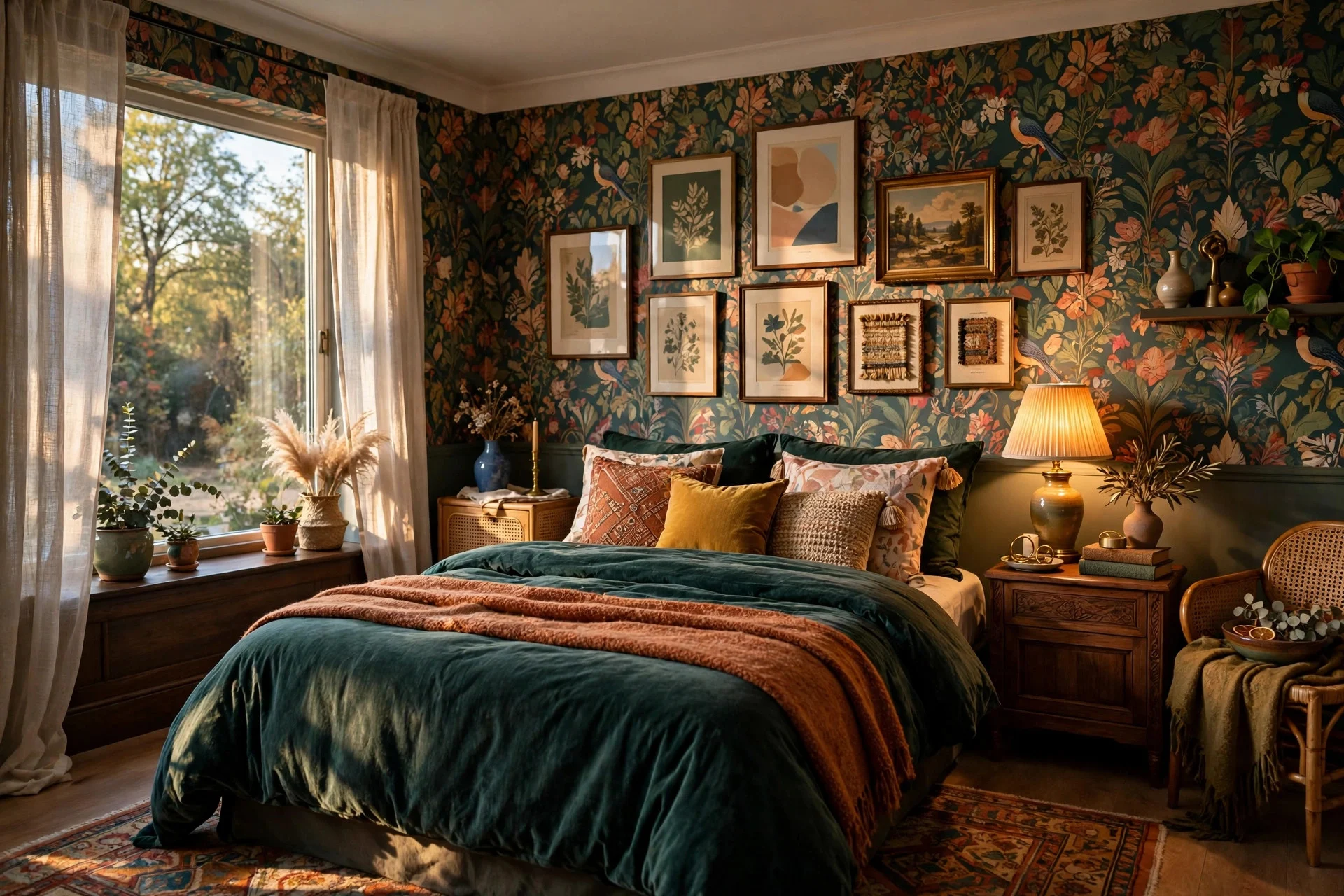
One of you reads until midnight, the other falls asleep at ten. One shared overhead light makes this a nightly argument, but split lighting ends it. Give each side of the bed its own light — a wall lamp, a clip-on reading light, or a small bedside lamp — with its own switch. The reader gets light aimed at their book; the sleeper gets darkness on their side.
Warm bulbs matter more than brightness here. A warm 2700K light on one side bothers a sleeper far less than a cool white one, and a light aimed downward keeps the glow out of the other person’s eyes. If you want the full rundown on getting bedroom light right, a guide to living room lighting without a ceiling light covers the same layered-lamp principles that fix this problem.
Fix 4: One Hot Sleeper, One Cold — Dual Bedding
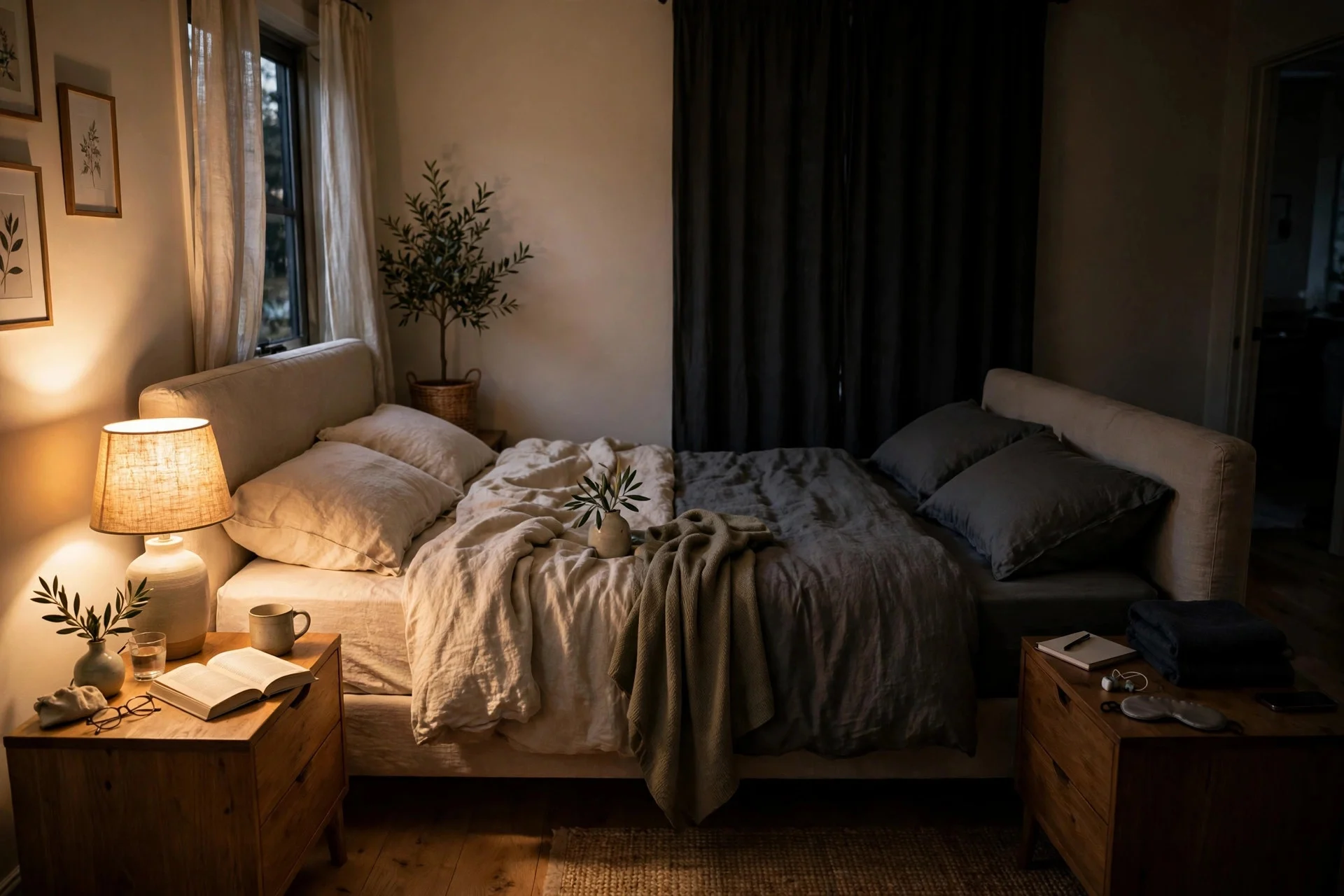
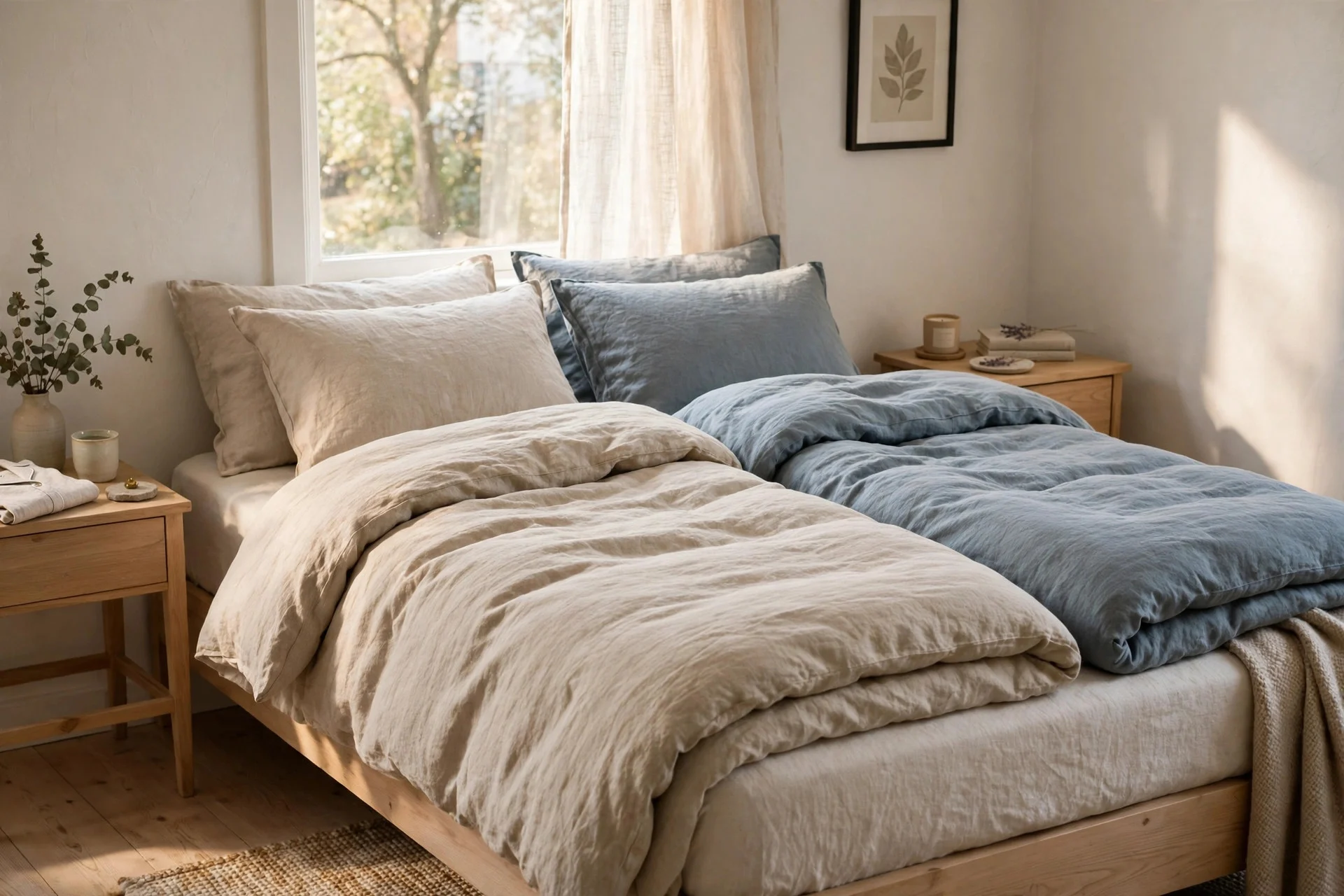
The Scandinavian sleep method sounds like a trend, but it’s really just common sense: two separate duvets on one shared bed, each person choosing their own weight. The hot sleeper takes a light duvet or even just a flat sheet; the cold sleeper takes a heavier one, maybe with an extra throw. Nobody wakes up sweating because their partner stole the covers, and nobody wakes up cold because the covers went the other way.
Use the same duvet cover colour on both so the bed still looks like one bed, not two singles pushed together. A shared throw across the foot of the bed ties the look together and gives the cold sleeper one more layer to grab in the night.
Fix 5: Modern vs Traditional Taste — the Transitional Blend
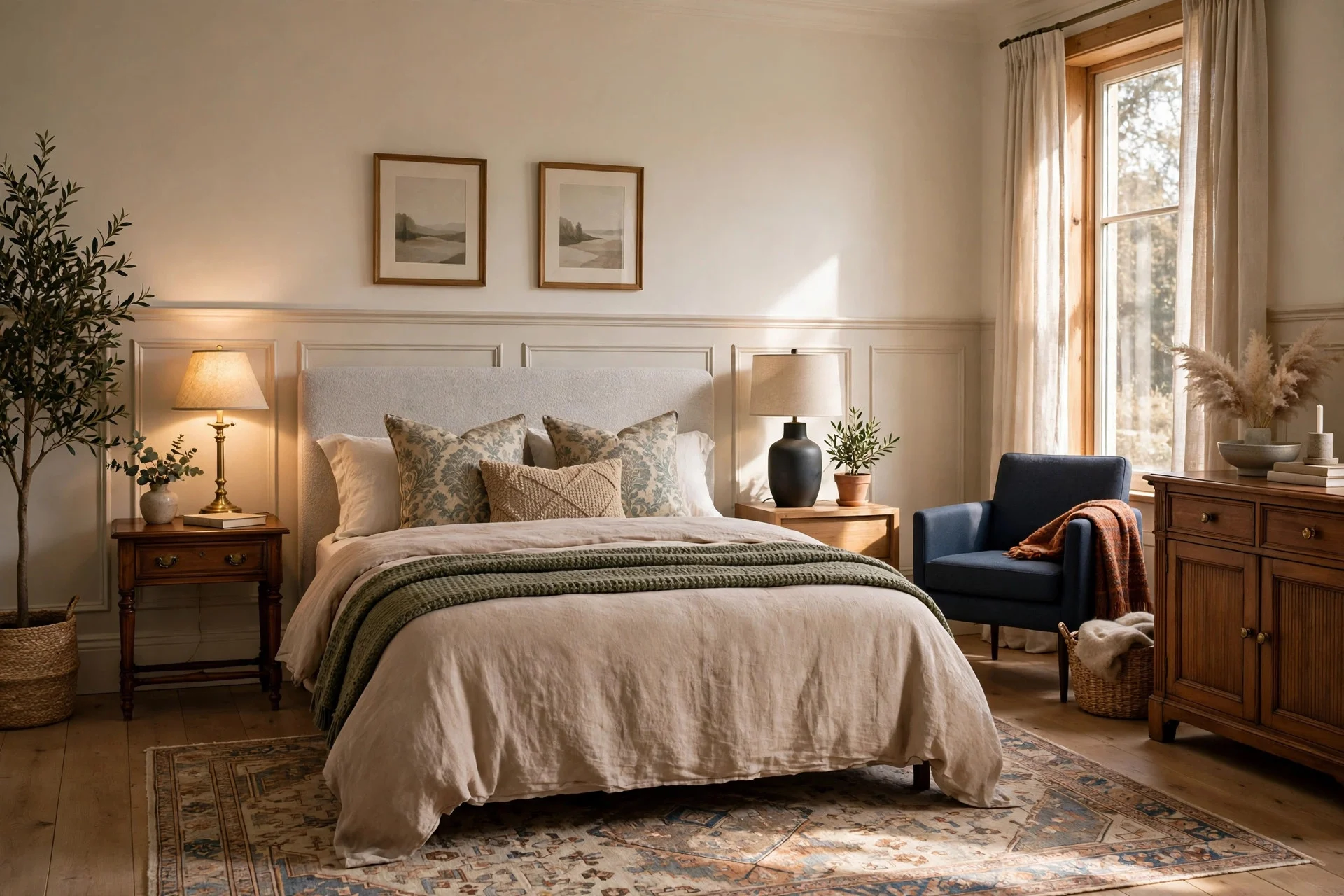
Modern and traditional look like opposites, but they share more than people think: both value good proportions, solid furniture, and a restrained palette. Transitional style lives in that overlap. Take traditional shapes — a panelled headboard, a wooden dresser — in modern finishes, or modern shapes in warm, traditional materials like wood and linen.
The practical version: let each person pick one anchor piece. The traditional lover picks the bed frame or dresser; the modern lover picks the nightstands or lighting. Anchor pieces set the tone, and when both people chose one, the room genuinely belongs to both of them. Fill the rest with plain, quiet pieces that don’t pick a side.
Fix 6: Different Clutter Tolerance — Closed Storage Plus One Display Shelf Each
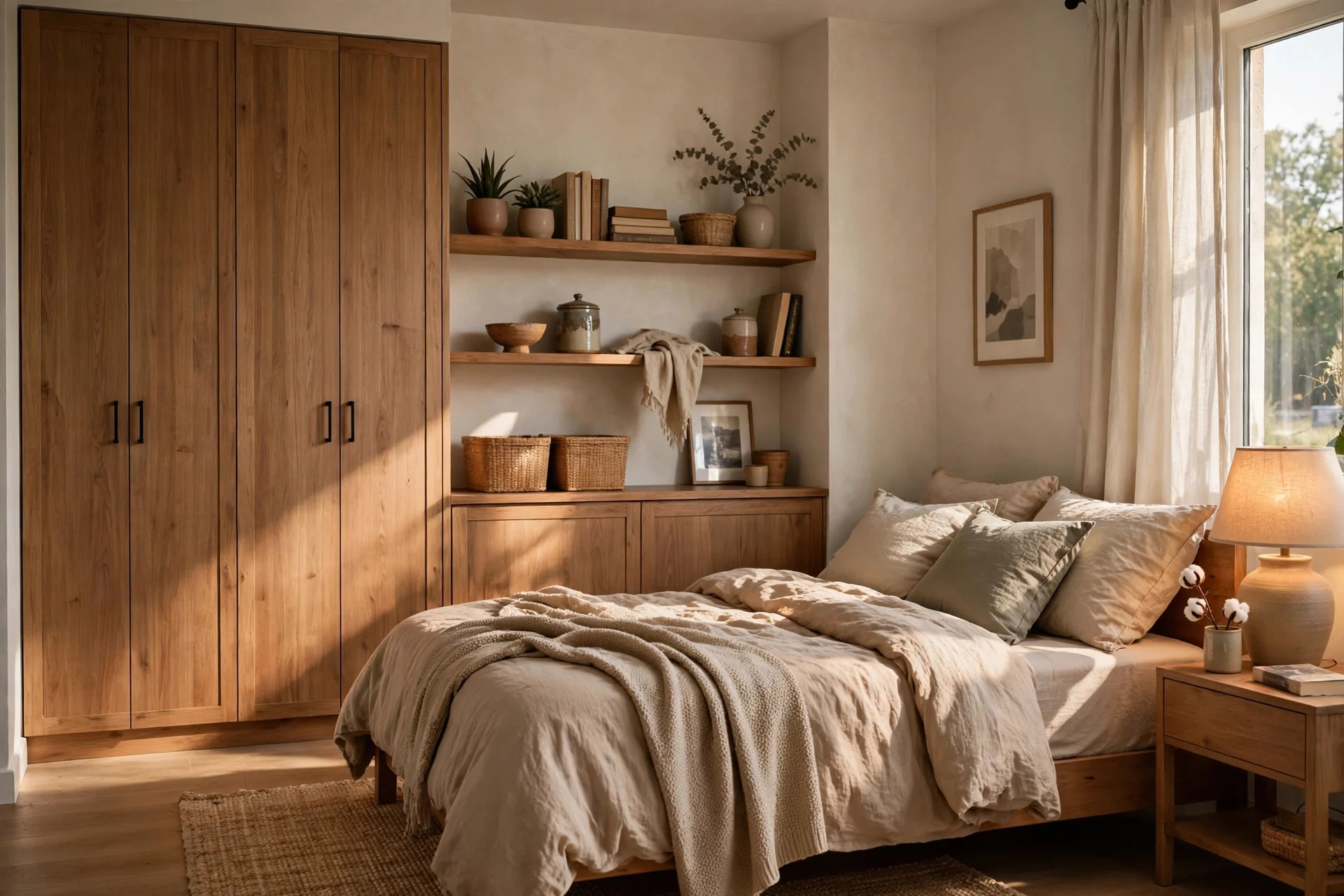
One person’s “lived-in” is another person’s “mess.” The fix isn’t tidiness — it’s containment. Give the room generous closed storage: drawers, wardrobes with doors, baskets with lids. Everything that bothers the tidy person goes behind a door. Then give each person one open display shelf for the things they actually want to see — books, photos, a collection, whatever matters to them.
This works because it separates the argument from the objects. The tidy person isn’t asking their partner to own less; they’re asking for the stuff to live behind doors. The less-tidy person isn’t being told their things are ugly; they’re getting a shelf where their things are displayed on purpose. A renter-friendly living room ideas guide has good notes on freestanding storage that works in bedrooms too, since most of it needs no drilling.
Mistakes to Avoid
Letting one person decorate alone. It feels efficient, but the other person ends up living in someone else’s room — and quietly disliking it for years.
Buying everything in one weekend. Big decisions made fast, under pressure, are the ones couples regret. Buy the bed and bedding first, live with them for a month, then decide on art, colour, and extras.
Keeping score. “I let you have the blue wall, so I get the rug” turns a bedroom into a ledger. Aim for rooms where both people like most things, not rooms where each person won half the arguments.
Copying a showroom exactly. A room designed for nobody in particular pleases nobody in particular. Use inspiration as a starting point, then change at least one thing for each of you.
Fix 7: The TV-in-Bedroom Debate — Hidden TV or Projector Compromise
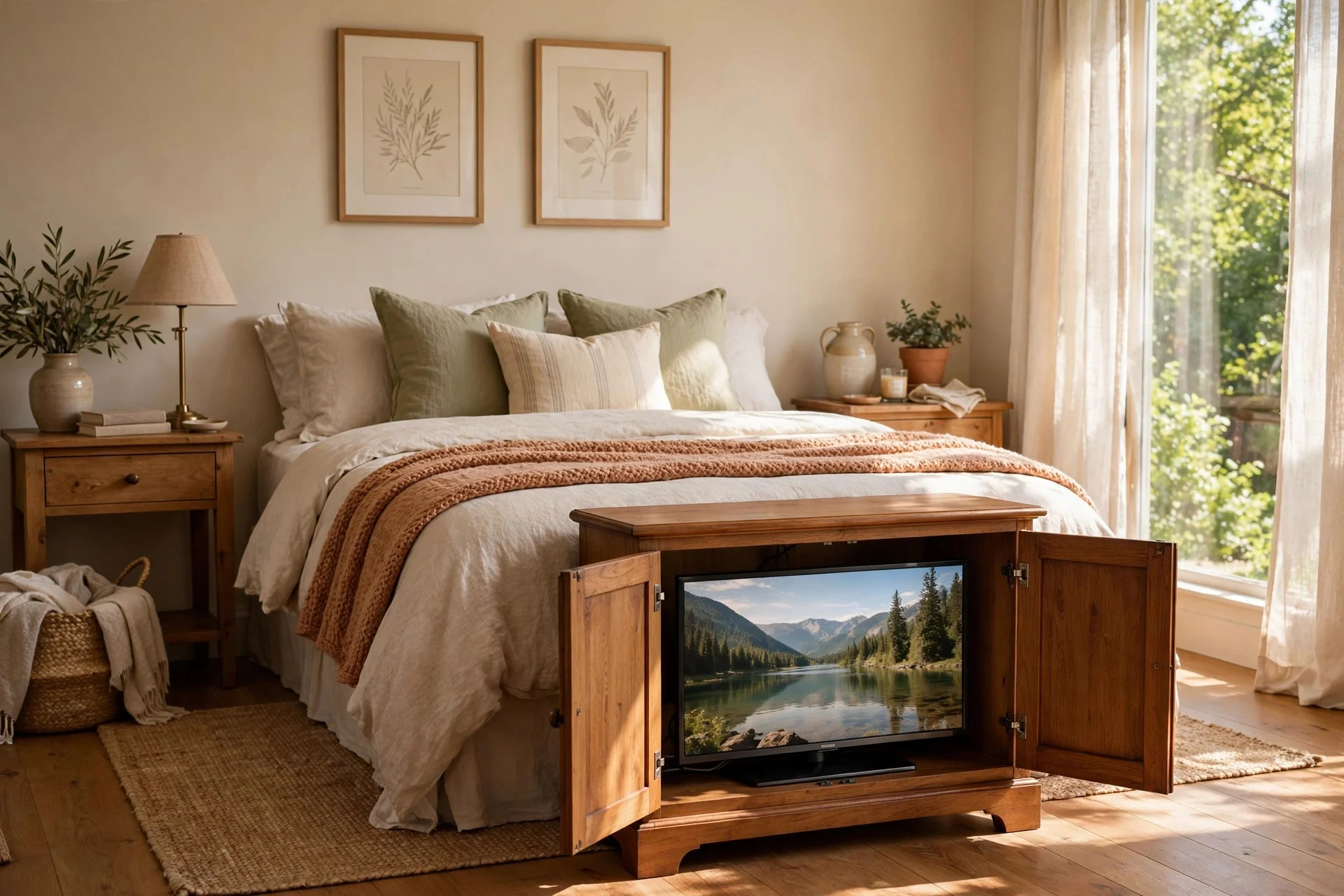
One person wants a TV in the bedroom; the other says the bedroom is for sleeping. The compromise is a TV that disappears. A TV mounted inside a wardrobe, behind sliding art panels, or on a lift that rises from a cabinet gives the TV lover their evening shows and the TV hater a room that looks like a bedroom the rest of the time.
A small projector is the cheaper version of the same idea: a blank wall or a pull-down screen, used only when wanted, invisible the rest of the day. Either way, agree on a cut-off time for watching — the hardware compromise works better when there’s a time compromise alongside it.
Fix 8: Work Desk in the Bedroom — a Zoned Corner
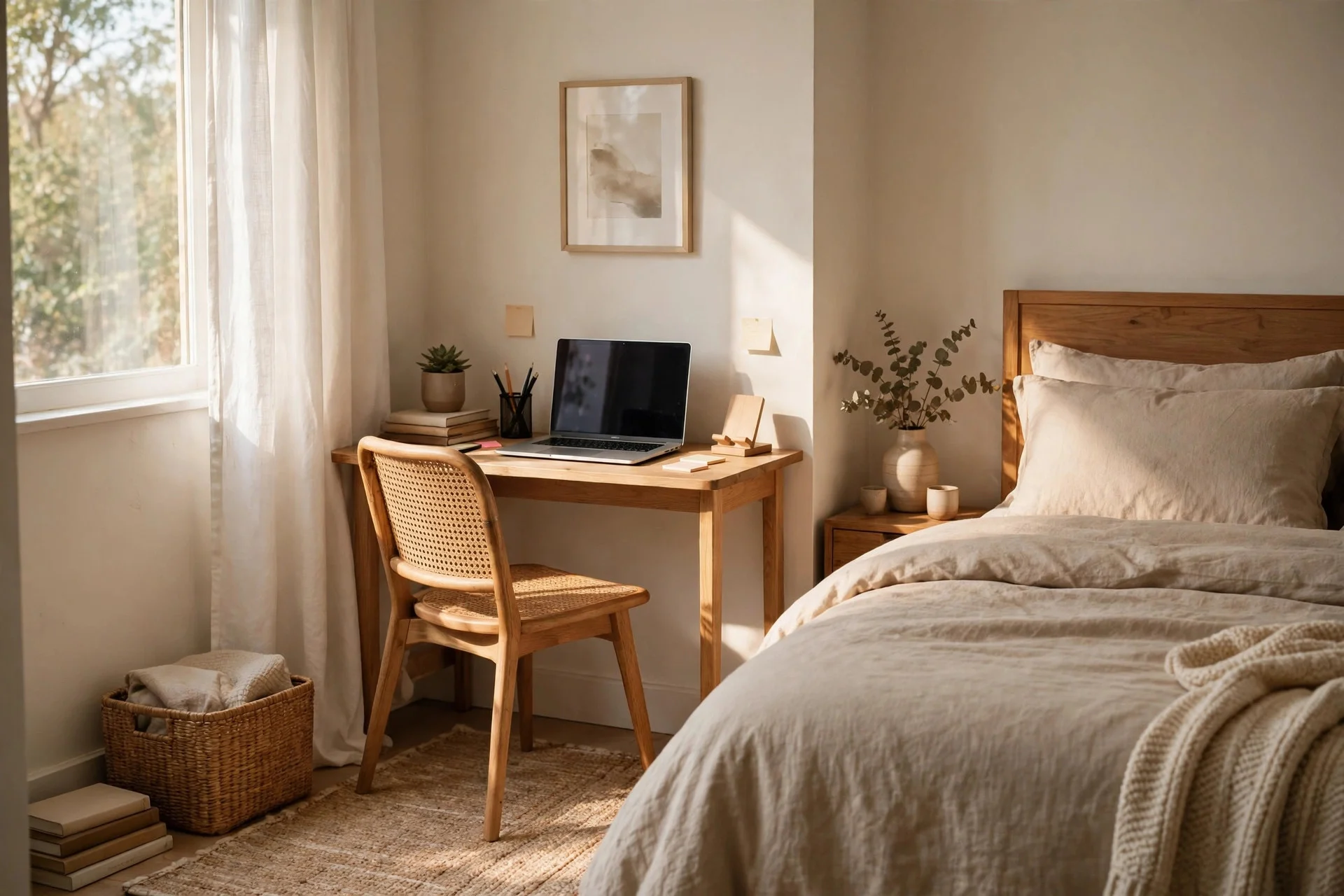
When one person works from home and the bedroom is the only spare space, the desk becomes a source of friction — especially if the other person sees the bedroom as a place to switch off. The fix is zoning: put the desk in one defined corner, facing a wall or window, with its own lamp and a rug or room divider marking the boundary. When work ends, the laptop closes and the chair tucks in, and the zone stops looking like an office.
Keep work stuff inside the zone. A desk that spreads — papers on the bed, chargers across the nightstand — breaks the deal. A small set of drawers or a filing box inside the zone holds everything, so the rest of the room stays a bedroom.
Fix 9: Clashing Art Taste — a Gallery Wall With Each Person’s Picks
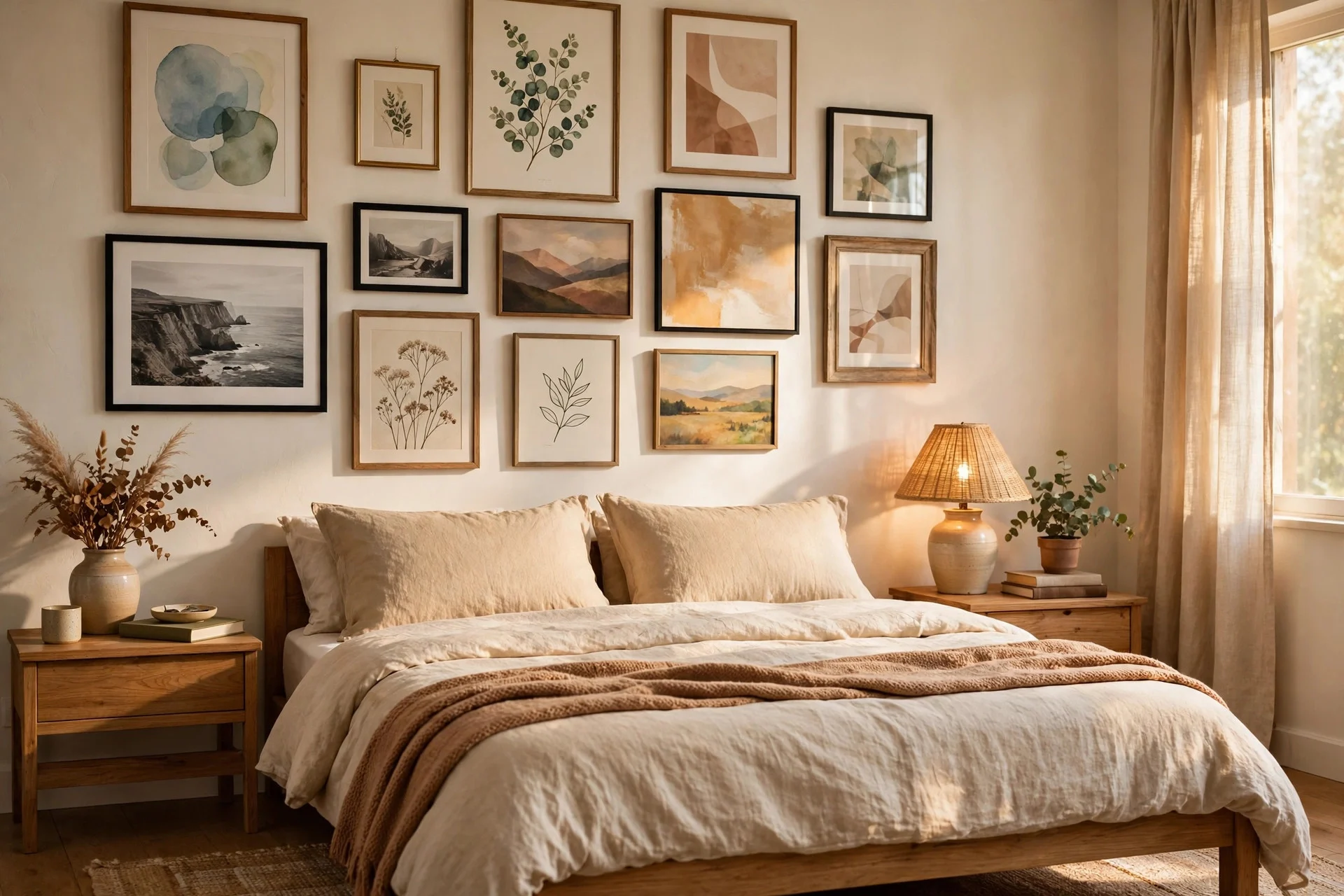
Art is personal, and telling someone their taste is wrong ends conversations fast. A gallery wall solves it structurally: a shared wall where each person hangs their own picks, in matching frames. The matching frames are the trick — they make wildly different prints look like one collection, so the wall reads as curated rather than chaotic.
Agree on the frame style and the wall together, then each person chooses their own pieces within it. Two or three pieces each is plenty. If one person’s art is much larger, give it the centre spot and build around it — size differences look deliberate when they’re symmetrical, and accidental when they’re not. A guide to a gallery wall above a sofa shows the same spacing and frame-matching rules, and they transfer directly to bedroom walls.
Fix 10: Wall Colour Standoff — a Test-Swatch Process to Agree
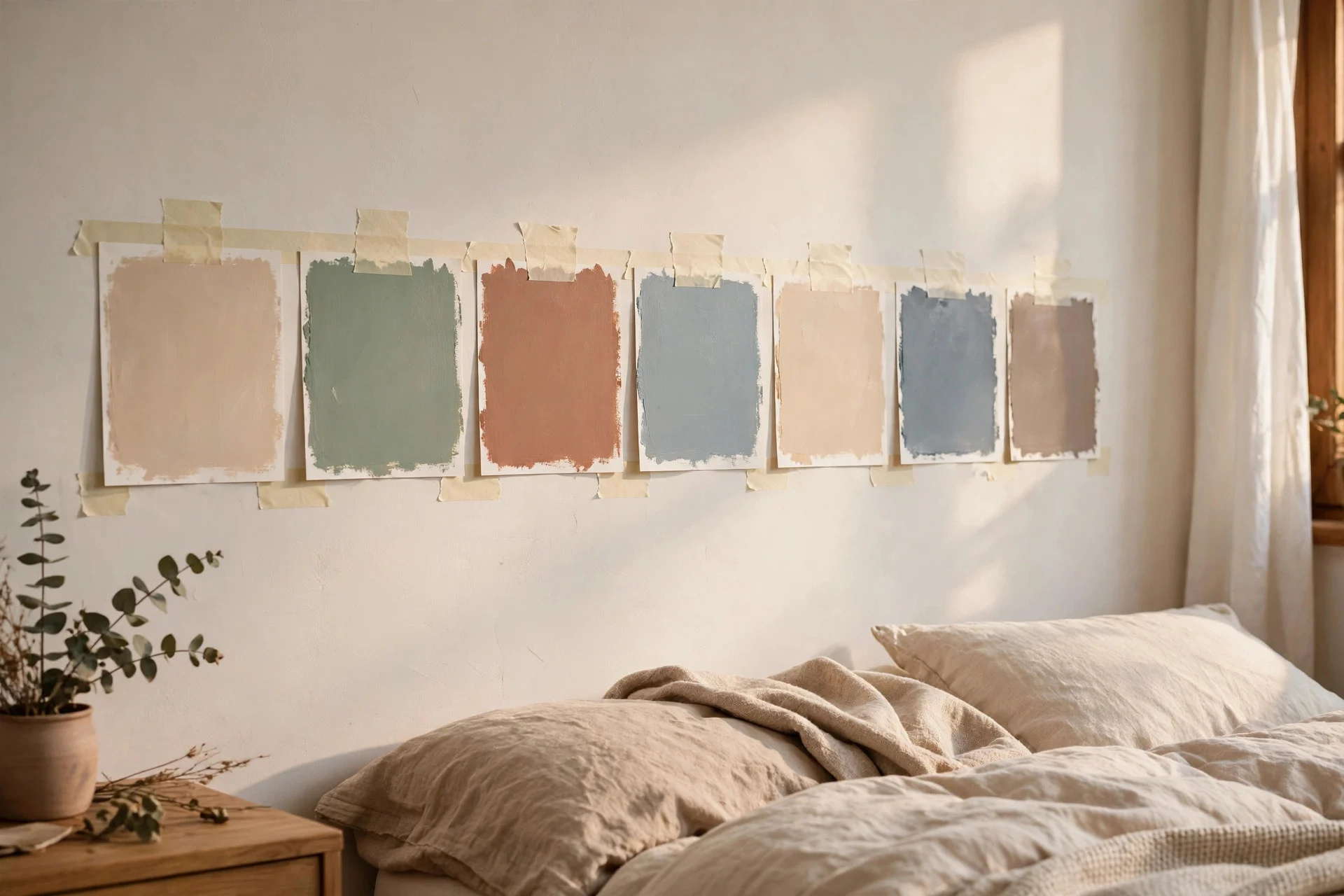
Colour arguments usually happen in the abstract — one person imagines a colour, the other imagines a different one, and both argue about imaginary walls. Swatches end that. Buy sample pots of each person’s top two colours, paint large swatches (at least two feet square) on the actual bedroom wall, and live with them for a week. Once you have picked a colour, the paint calculator estimates how much paint the room needs. Colours change dramatically with bedroom light, and a colour both people hated in the shop often wins once it’s on the wall.
If you’re still split after a week, the middle ground is usually a lighter version of the bolder colour, or the bold colour on one wall with neutrals elsewhere. The process matters as much as the result: both people watched the colours change over a week, so the final choice feels shared, not imposed.
Fix 11: Furniture Budget Split — Invest-vs-Save List
Money arguments about furniture usually aren’t about the total — they’re about which pieces deserve the money. Sit down and sort the shopping list into two columns: invest (the bed, the mattress, anything used daily) and save (nightstands, lamps, decor). Both people agree the invest column gets real money; both agree the save column gets the cheapest decent option.
This works because it respects both instincts. The person who wants quality gets it where it matters most — the bed you sleep in every night. The person who watches the budget gets it where it matters least — a lamp nobody touches. Write the list down together before shopping, or the columns will be renegotiated in every shop.
Fix 12: His-and-Hers Nightstands and Personal Zones
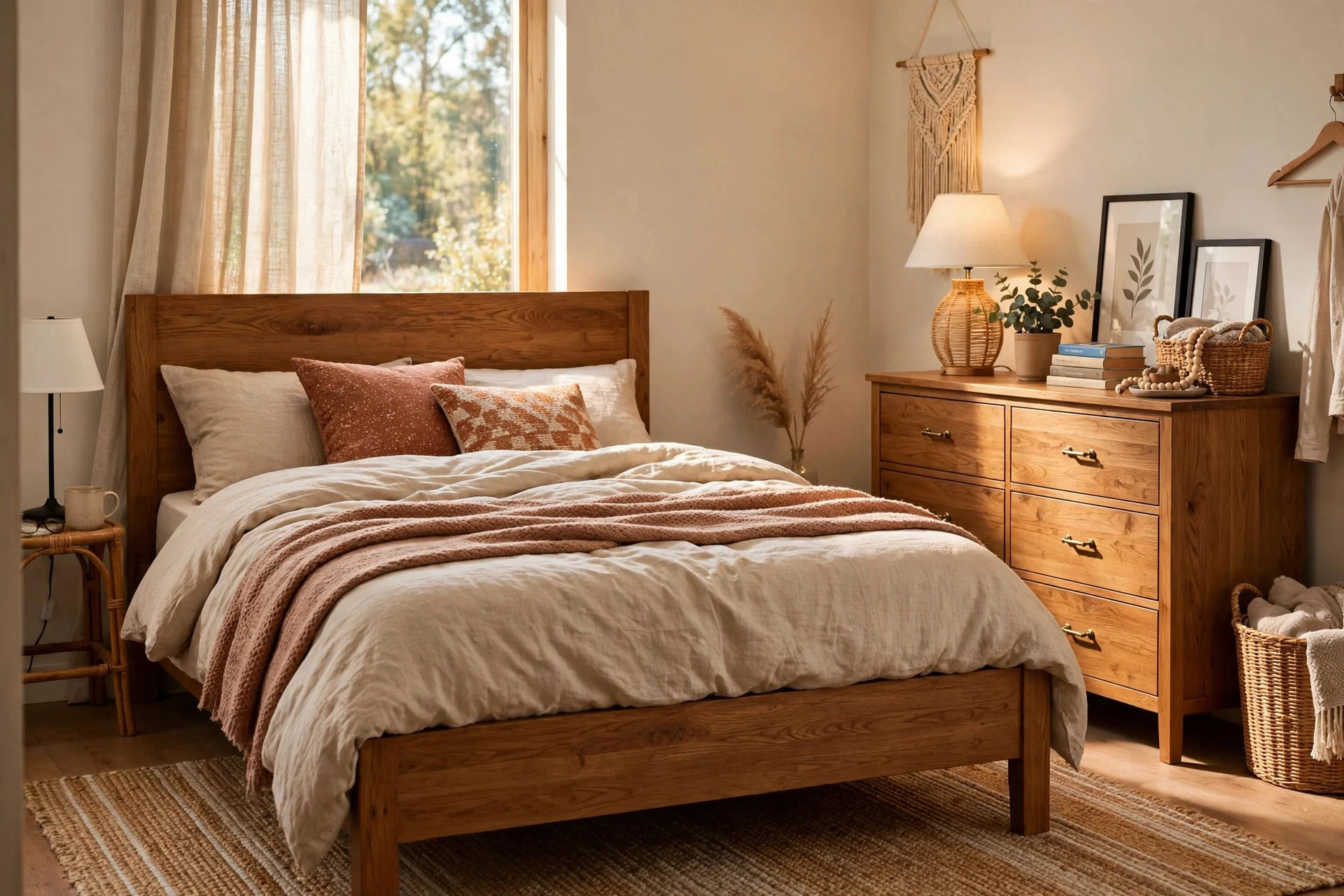
The simplest fix of all, and the one couples skip most often: stop forcing symmetry. Matching nightstands look tidy, but if one of you needs a drawer and a lamp and the other needs a shelf and a charging station, matching furniture serves neither of you. Different nightstands — same height, different storage — give each person a setup that actually fits their habits.
Extend the idea to the whole side of the bed. Each person’s side is their zone: their lamp, their books, their water glass, their charger. The shared parts of the room — the bed, the rug, the walls — stay shared and agreed together. The personal zones are where individual taste gets full freedom, no negotiation needed.
The One Conversation Worth Having First
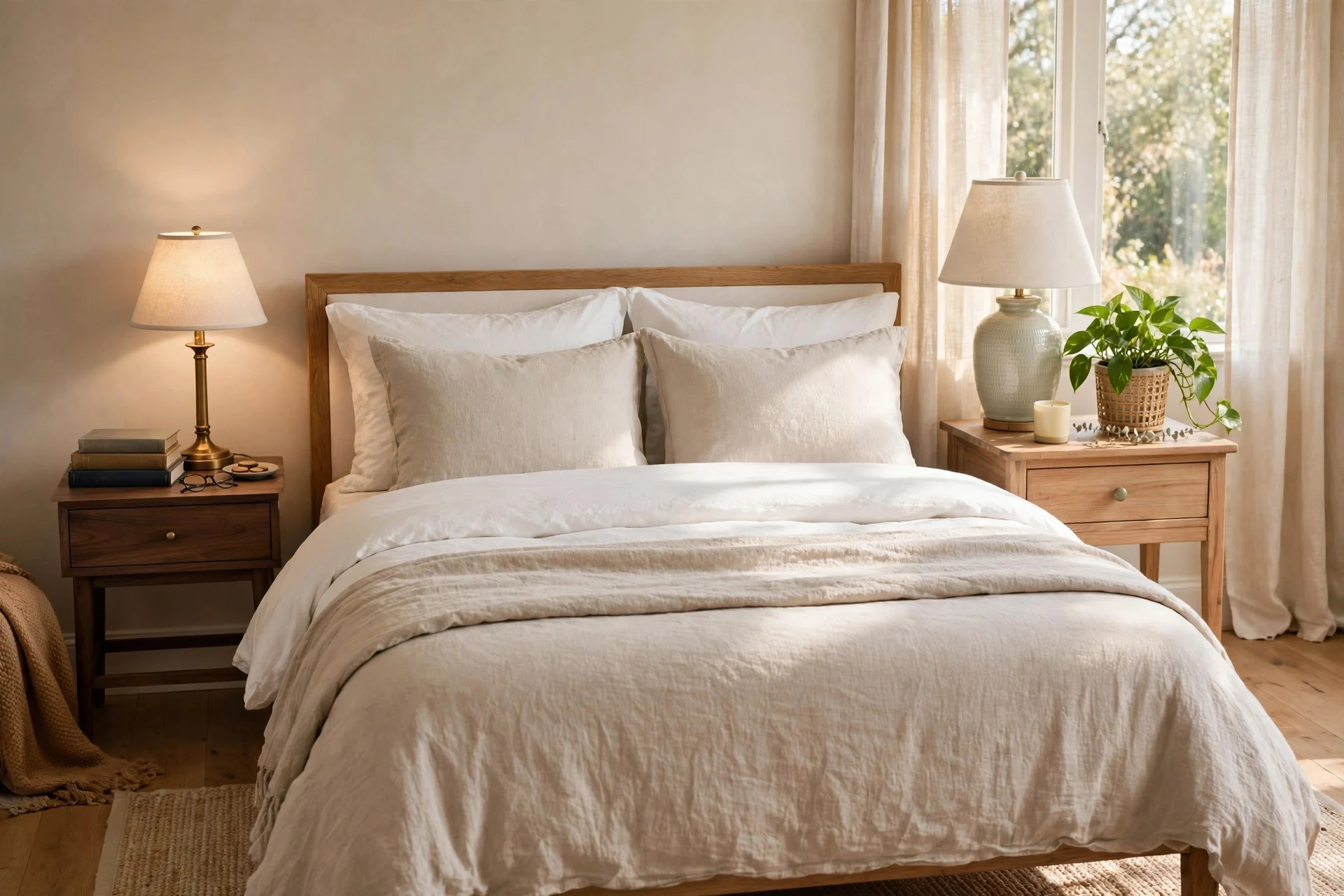
Before you buy anything, spend twenty minutes answering one question each: what does this room need to feel like at 10pm? Not what it should look like — what it should feel like. Calm, cosy, clean, warm, dark, quiet. Most couples find their answers overlap far more than their Pinterest boards do, and that overlap is the real brief for the room. Everything else — the colours, the furniture, the art — is just detail in service of that feeling.
Frequently Asked Questions
How do couples compromise on bedroom style without arguing?
Start with what each person wants the room to feel like, not what it should look like. Agree on the feeling first, then use ratios like 70/30 for colour and shared decisions for big pieces. Small, reversible choices — pillows, throws, art — are good places to let each person have their way without a debate.
Should a couple’s bedroom have matching nightstands?
Not necessarily. Matching nightstands look neat, but different nightstands at the same height often serve two people better, since most couples have different bedtime habits. Keep the height and general style in the same family so the bed still looks balanced.
What is the Scandinavian sleep method?
It’s two separate duvets on one shared bed, each person picking their own weight and warmth. It solves the hot-sleeper versus cold-sleeper problem without separate beds, and it ends the nightly cover-stealing war. Use matching duvet covers so the bed still looks like one bed.
How do you decorate a bedroom when one person likes colour and the other doesn’t?
Use the 70/30 rule: about 70% neutral for walls, bedding, and large furniture, and 30% colour in accents like pillows, throws, and art. The neutral lover gets a calm room and the colour lover gets real colour in it, not just a promise of it later.
Is a TV in the bedroom bad for sleep?
Watching TV right before sleep can delay sleep for many people, mainly because of light and stimulation rather than the TV itself. If one partner wants a TV, a hidden or projector setup plus an agreed cut-off time — usually 30 to 60 minutes before sleep — is the compromise most couples find workable.
Quick Checklist for Couples
Agree on the 10pm feeling first. Use 70/30 for colour and closed storage for clutter. Give each side of the bed its own light and its own nightstand setup. Test paint swatches on the real wall for a week before committing. Split the budget into invest and save columns before shopping. And when you disagree, ask whether the choice is reversible — if it is, let one person try it for a month. Most bedroom arguments are about pillows, not foundations, and a month of living with a choice settles them faster than a week of debating it.