First Small Apartment? What to Buy First, Room by Room
Moving into your first small apartment brings one big question: what do you actually need on day one, and what can wait? You do not need a full house worth of stuff. You need a bed you can sleep in, a way to cook a simple meal, a place to sit, and a bathroom that works. This room-by-room checklist sorts that out for you, with realistic prices, honest time estimates, and the small mistakes that cost first-time renters money. Work through it in order, buy the basics first, and let the rest follow once you know how you really live in the space.
If you are still deciding how much to personalise a rental, these rental apartment decorating ideas can help you plan deposit-safe changes. For now, focus on function — pretty is much easier to add once the basics are covered.
1. Living Room Seating: A Sofa You Can Actually Live On
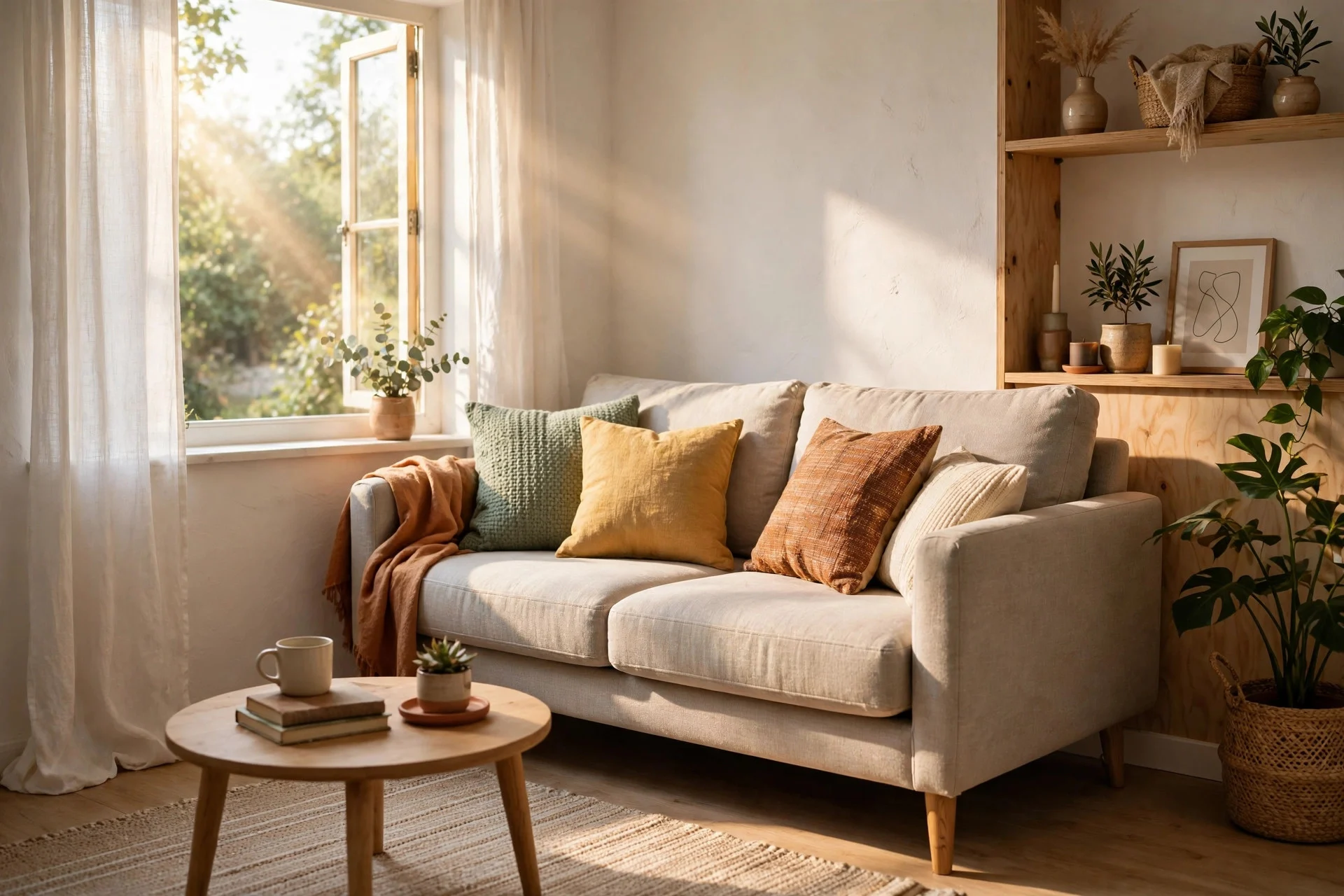
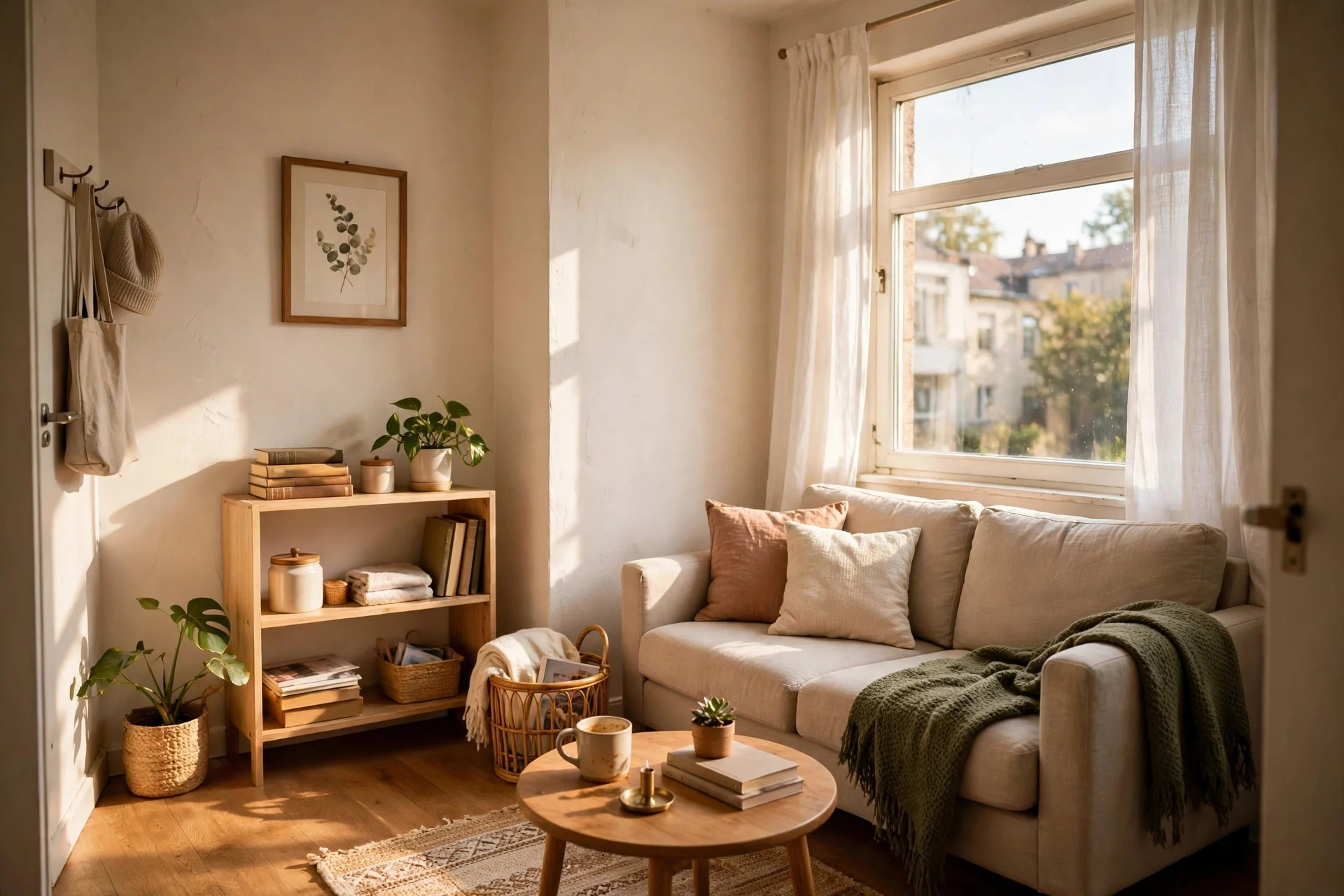
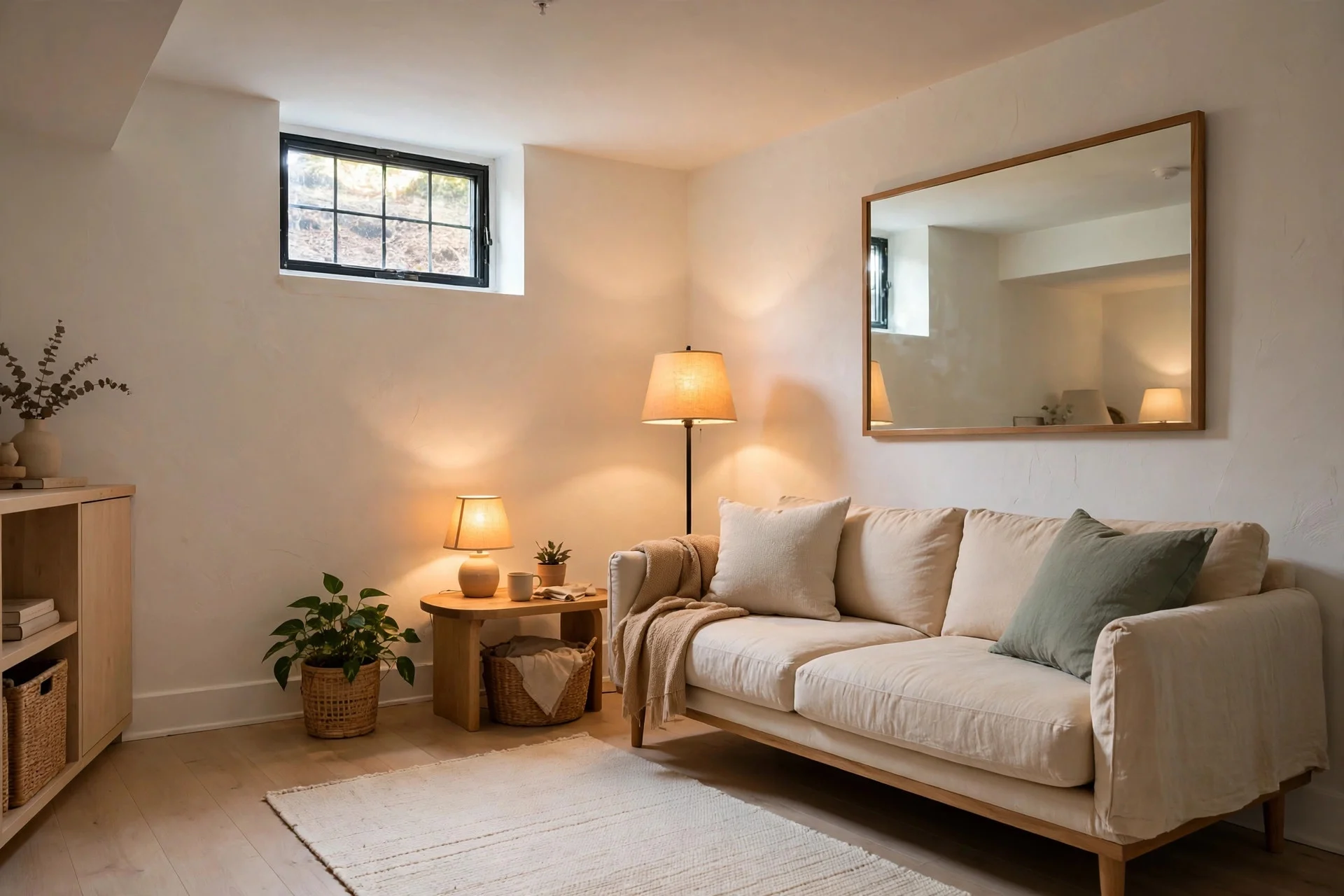
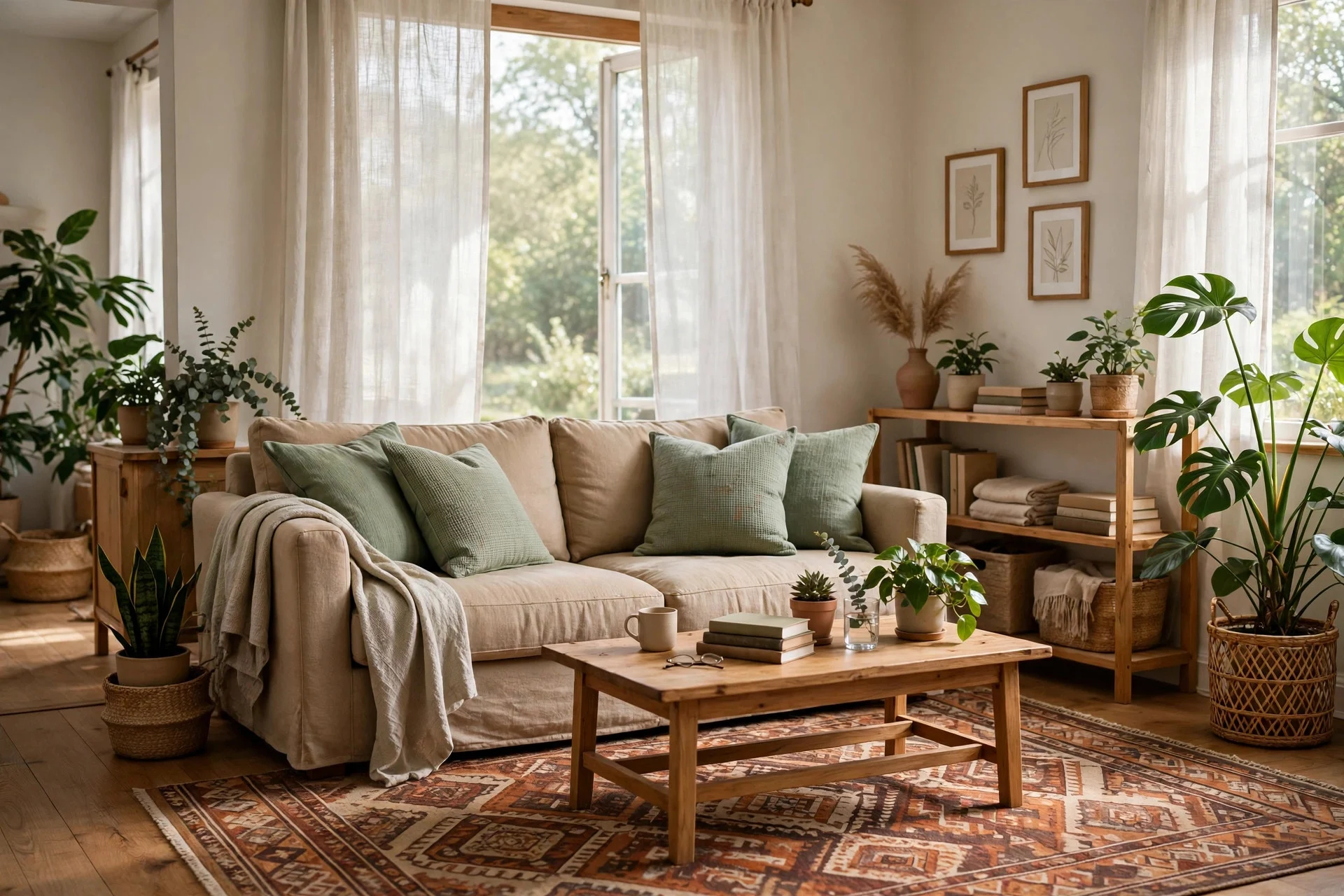
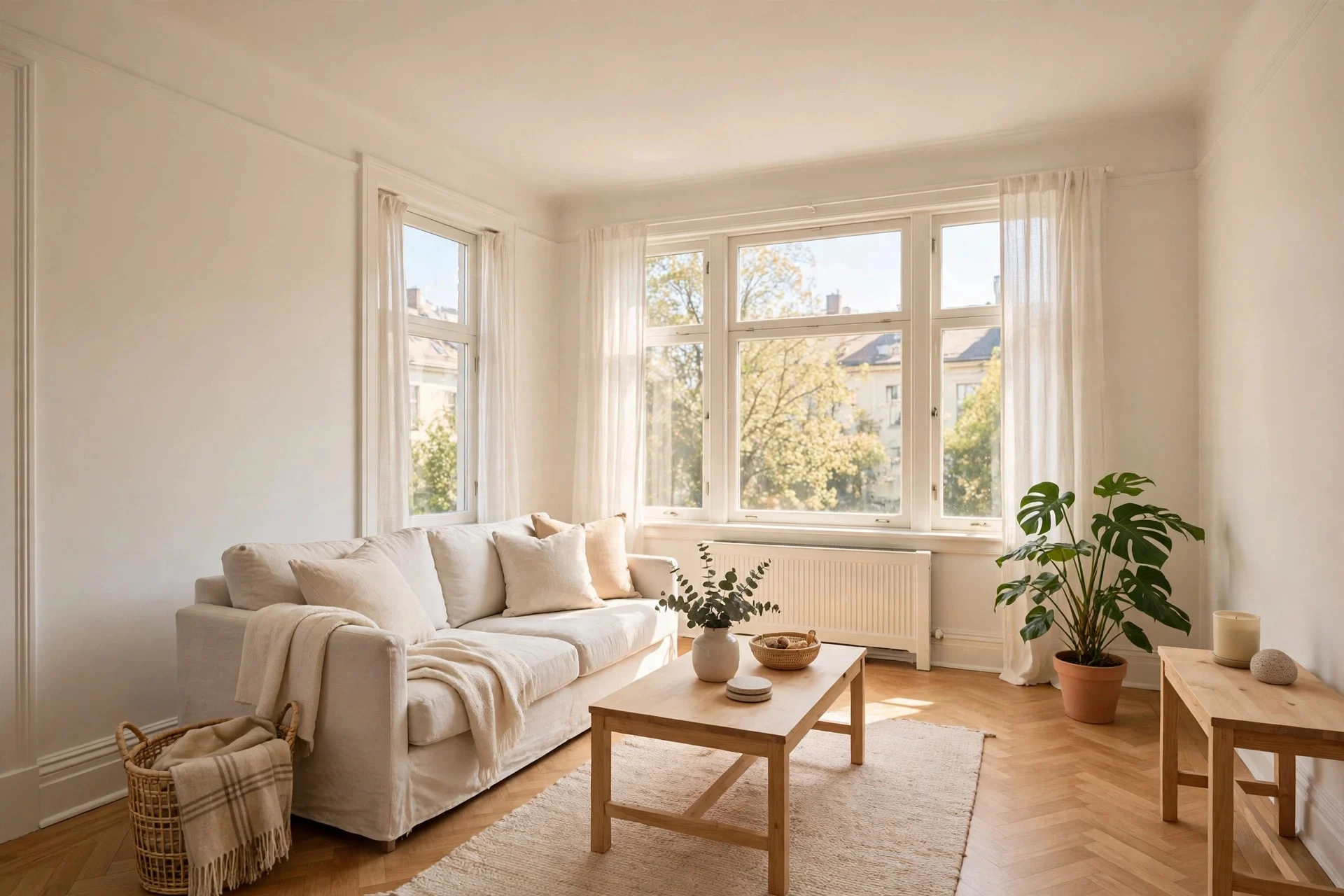
A sofa is the first living room buy, and it sets the tone for the whole room. In a small apartment, a compact two-seater or a small sofa with a chaise usually fits better than a big three-seater that blocks walkways. Look for a frame that feels solid when you sit down hard, removable covers if you can get them, and a seat depth that lets your feet rest flat on the floor.
Why it works: you will sit here every evening, and a good sofa earns its floor space daily, while a cheap one that sags in six months costs you twice. Expect $300 to $900 new, or $100 to $300 secondhand in good shape. Delivery takes a day or two, plus an hour to assemble if flat-packed.
Hands-on tip: measure your door, lift, and hallway before you order, not just the wall the sofa will sit against. Watch out for sofas that look small in a showroom and huge at home — tape the footprint on your floor with painter’s tape first.
2. Living Room Storage and TV Setup
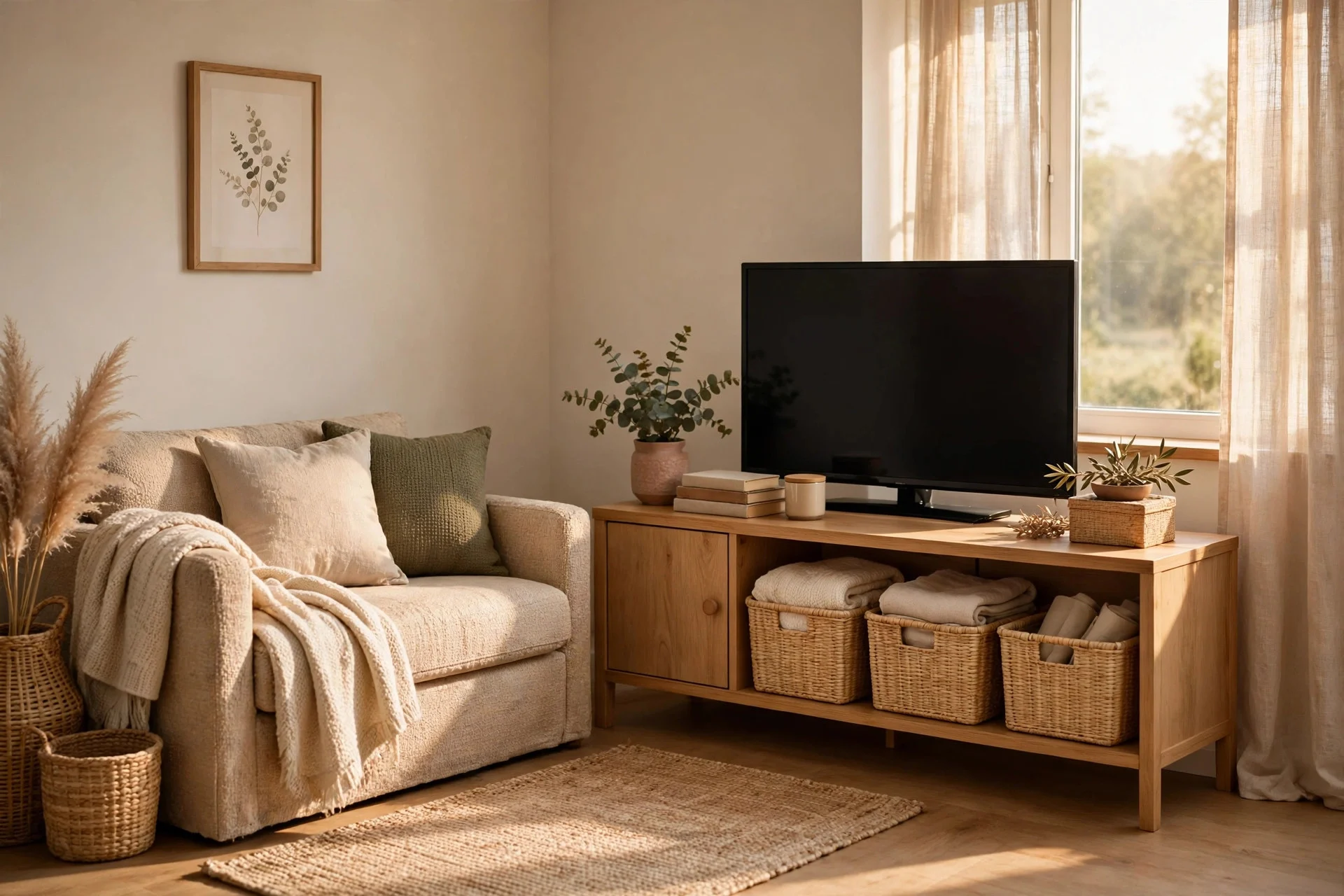
Once you have seating, you need somewhere for the TV, the remotes, the chargers, and the clutter that piles up fast in a small room. A low media unit with closed doors beats open shelves here, because it hides cables and odd bits without a daily tidy-up. Add one basket for throws and one for chargers and controllers, and the room stays calm.
Why it works: small rooms look messy quickly, and closed storage is the simplest fix. A basic media unit costs $80 to $250, and a wall mount runs $20 to $50 if your lease allows it. Set aside two to three hours for assembly and cable sorting.
Hands-on tip: plug everything into one power strip with a switch, so one click turns the whole setup off at night. Watch out for drilling rules in your lease — some landlords allow small wall mounts, others do not, so check before you drill.
3. Kitchen Basics: Plates, Glasses, and Everyday Tools
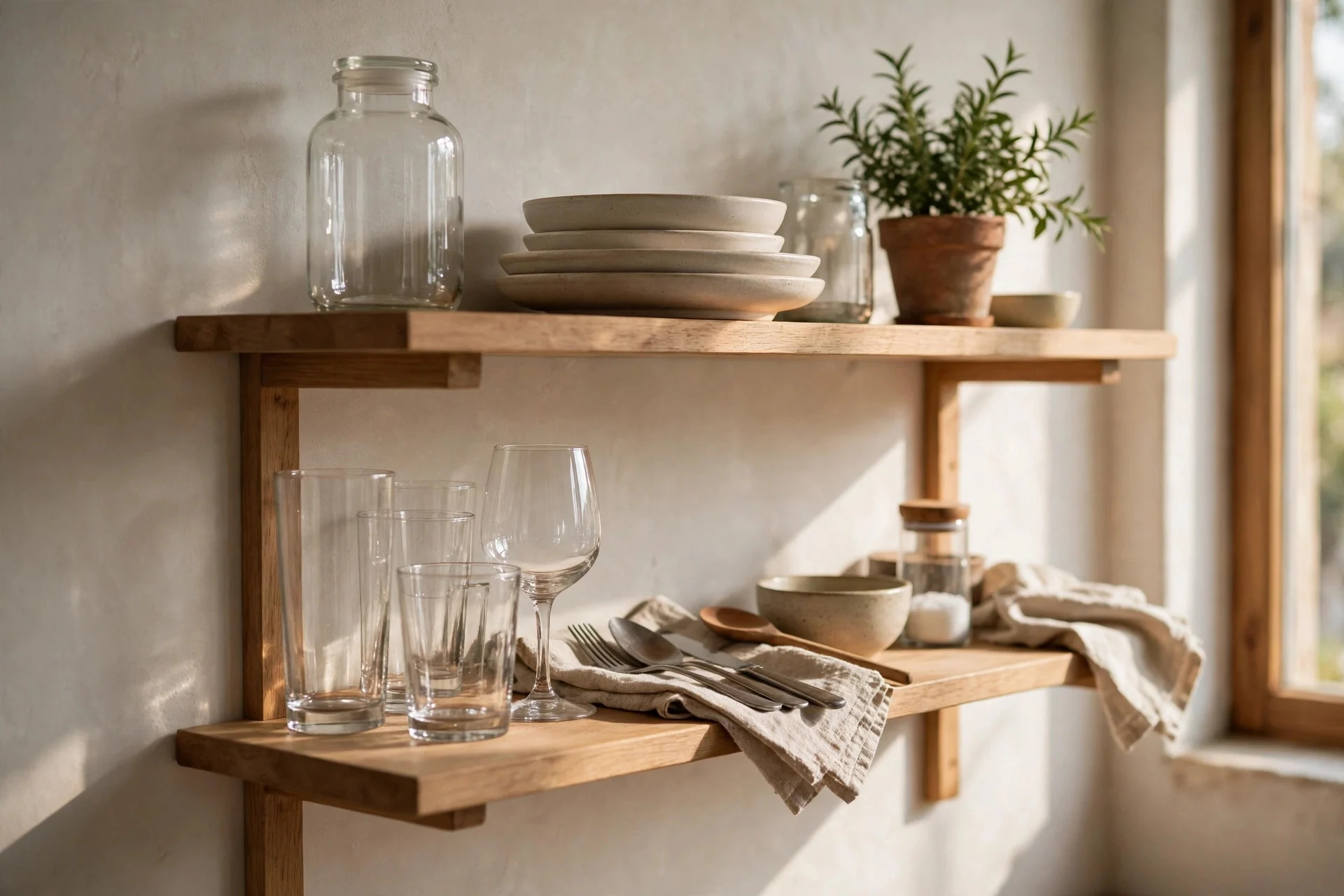
Your first kitchen box should hold four of everything you use daily: plates, bowls, glasses, mugs, forks, knives, and spoons. Add a cutting board, a sharp kitchen knife, a wooden spoon, a spatula, a can opener, and a colander, and you can cook most weeknight meals. You do not need a 40-piece set on day one.
Why it works: four place settings cover you plus a guest, without filling every cupboard. A solid starter set costs $60 to $150, and you can add pieces as you learn what you actually reach for. Unpacking and washing takes about an hour. Difficulty is easy — this is mostly a shopping trip, not a project.
Hands-on tip: buy plain white plates and bowls. They match anything you add later and make food look good without trying. Watch out for pretty sets with odd sizes that stack badly and chip fast.
4. Kitchen Cookware: The Pots and Pans That Earn Their Shelf
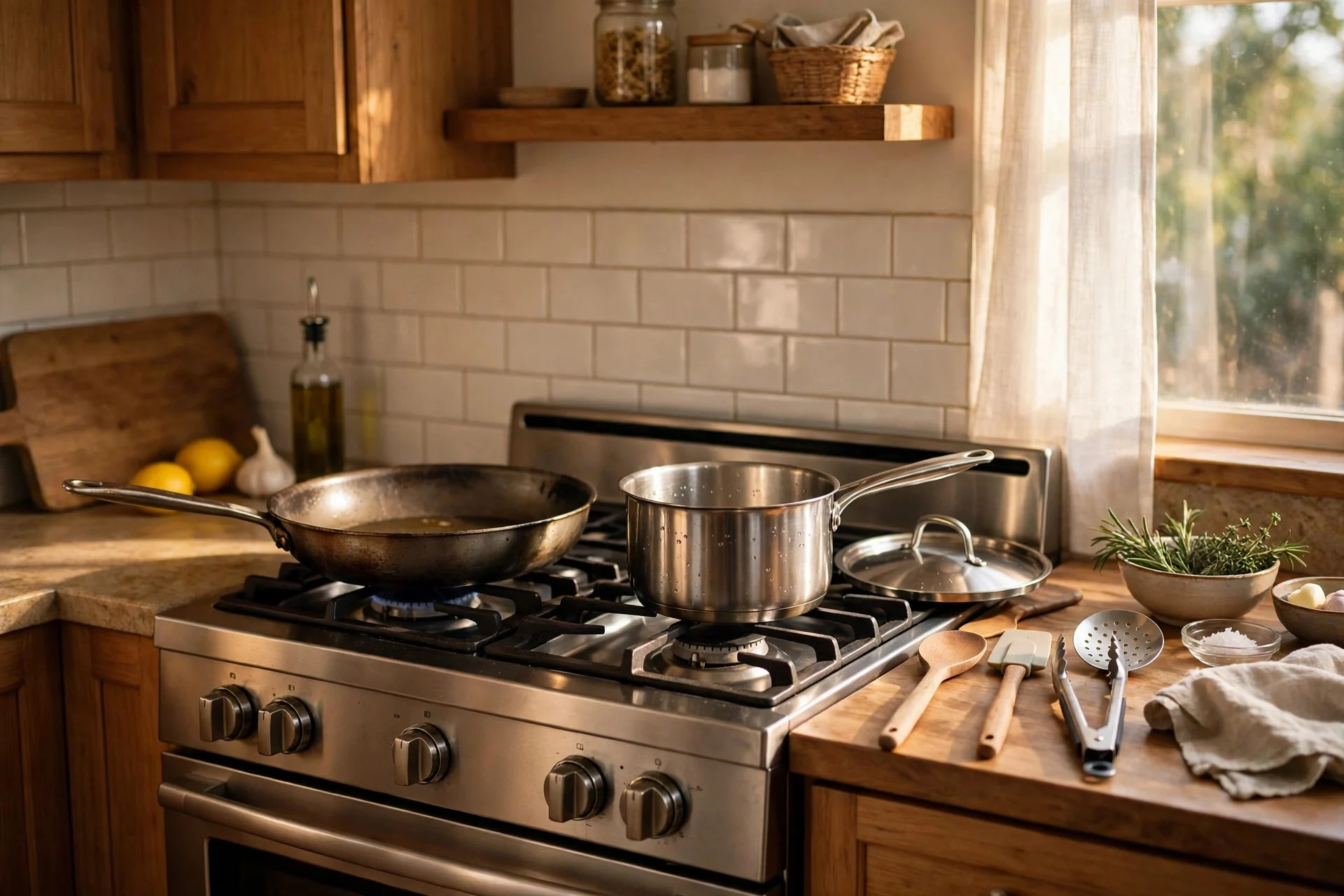
Three pans cover nearly all home cooking: a large frying pan, a medium saucepan, and a pot big enough for pasta or soup. Add a baking tray and one oven-safe dish, and your kitchen is ready. Quality matters more than quantity here, because thin pans warp, stick, and make cooking feel like a chore.
Why it works: you will use these three pans several times a week, so cost per use drops fast. A decent trio costs $80 to $200, with a baking tray adding $15 to $30. Buying takes an afternoon, and seasoning or first washing takes under an hour. Difficulty is low.
Hands-on tip: pick up each pan in the shop. It should feel balanced, with a handle that stays cool enough to hold. Watch out for non-stick pans used on very high heat — they wear out fast, so keep one stainless pan for searing.
5. Bedroom: A Good Bed Before Anything Decorative
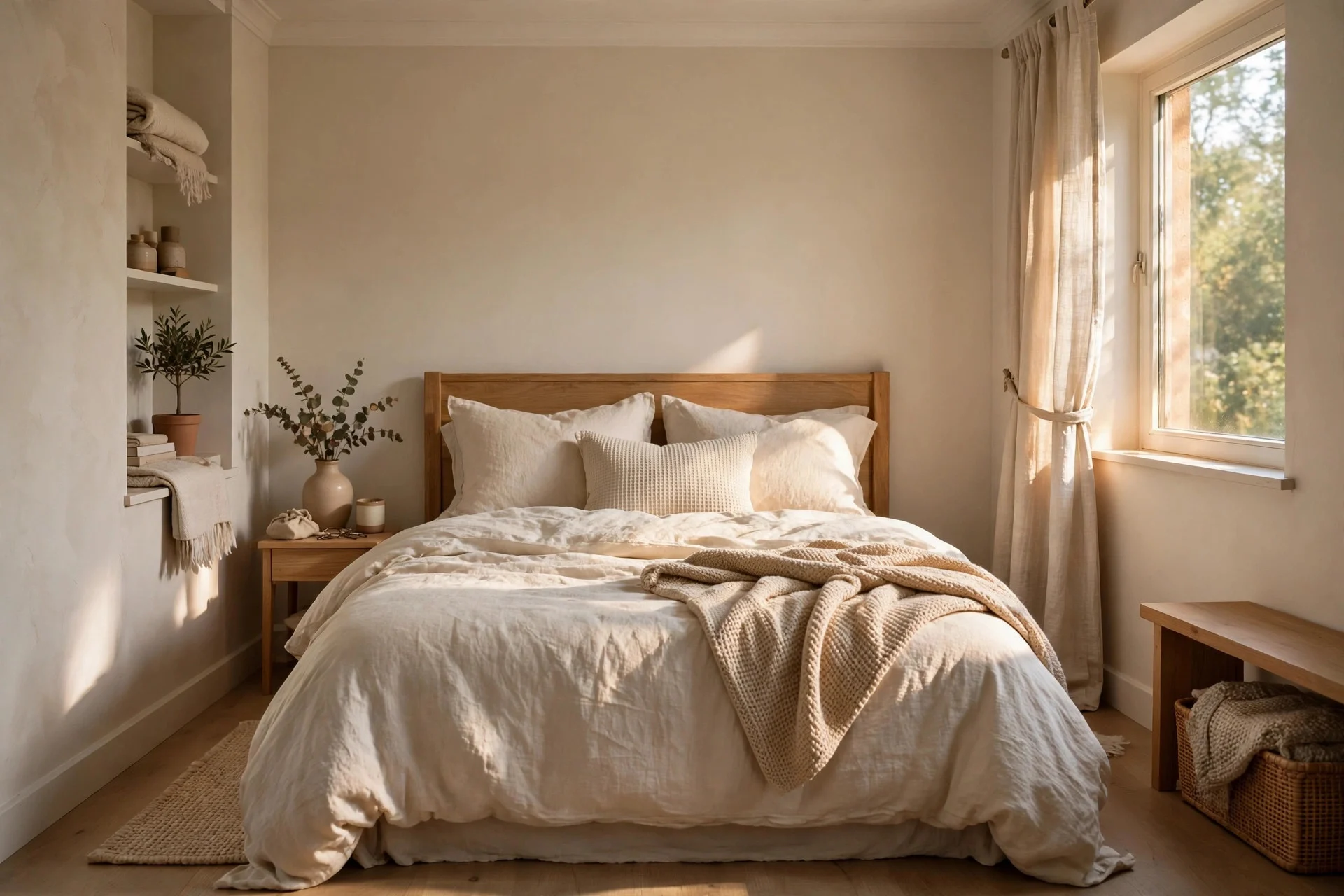
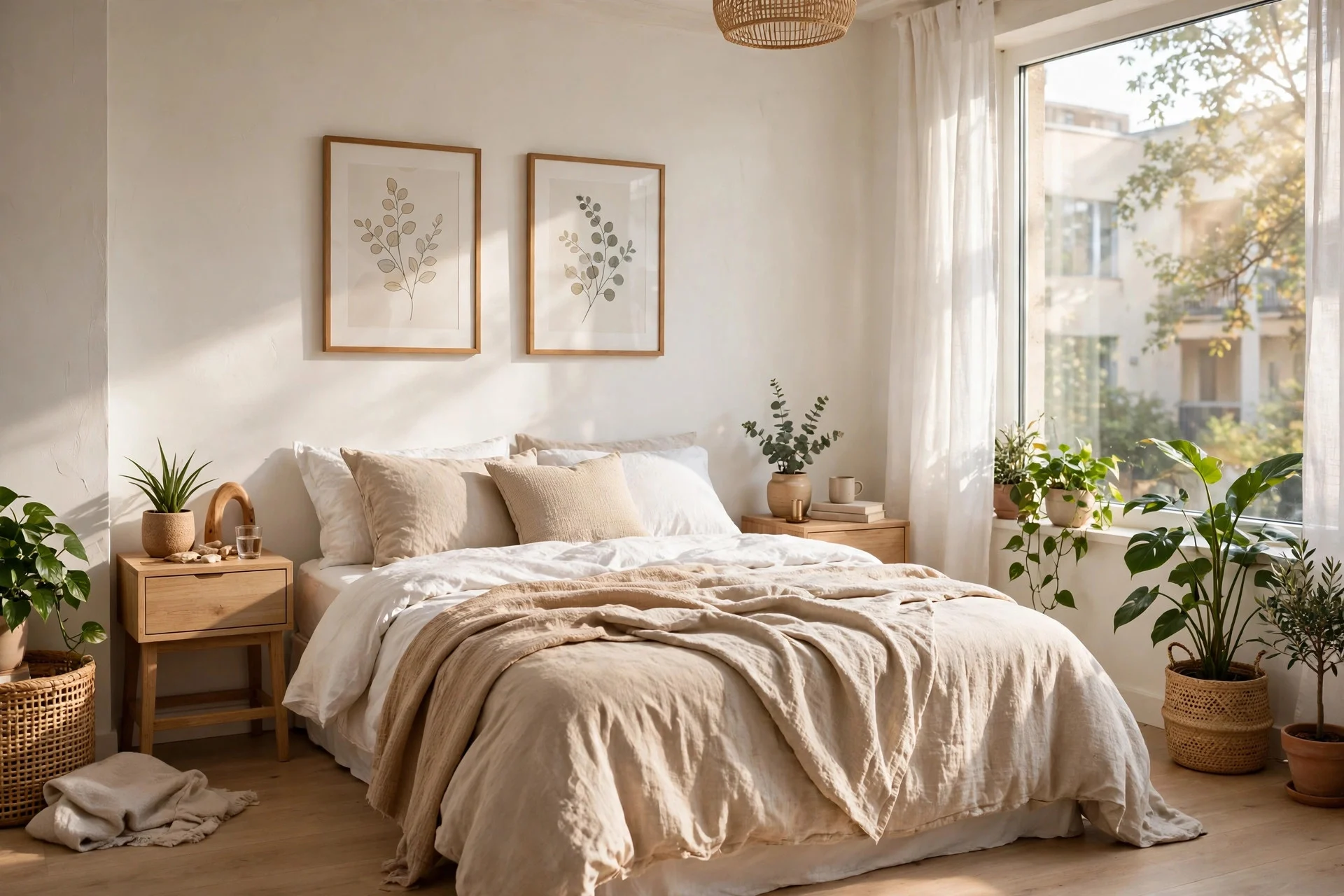
The bed comes before bedside tables, art, and rugs. Sleep affects everything else, and a bad mattress makes a new apartment feel miserable within a week. If your budget is tight, spend on the mattress and keep the frame simple — a basic metal or wooden frame does the job fine. Two pillows, a fitted sheet, a duvet, and a spare sheet set complete the setup.
Why it works: you spend a third of your life in bed, so this is the one place where cutting corners hurts daily. A good mattress in a box costs $250 to $700, a simple frame $80 to $250, and bedding $60 to $150. Delivery and setup take two to four hours, including unboxing and airing the mattress. If your room is tight, read up on a small apartment bedroom layout with a queen bed before you pick a size.
Hands-on tip: sleep on the mattress for at least two weeks before judging it — new foam softens a little at first. Watch out for bed frames that squeak; tighten every bolt after the first week, because new frames settle.
6. Bedroom Storage: Closet, Drawers, and Under-Bed Space
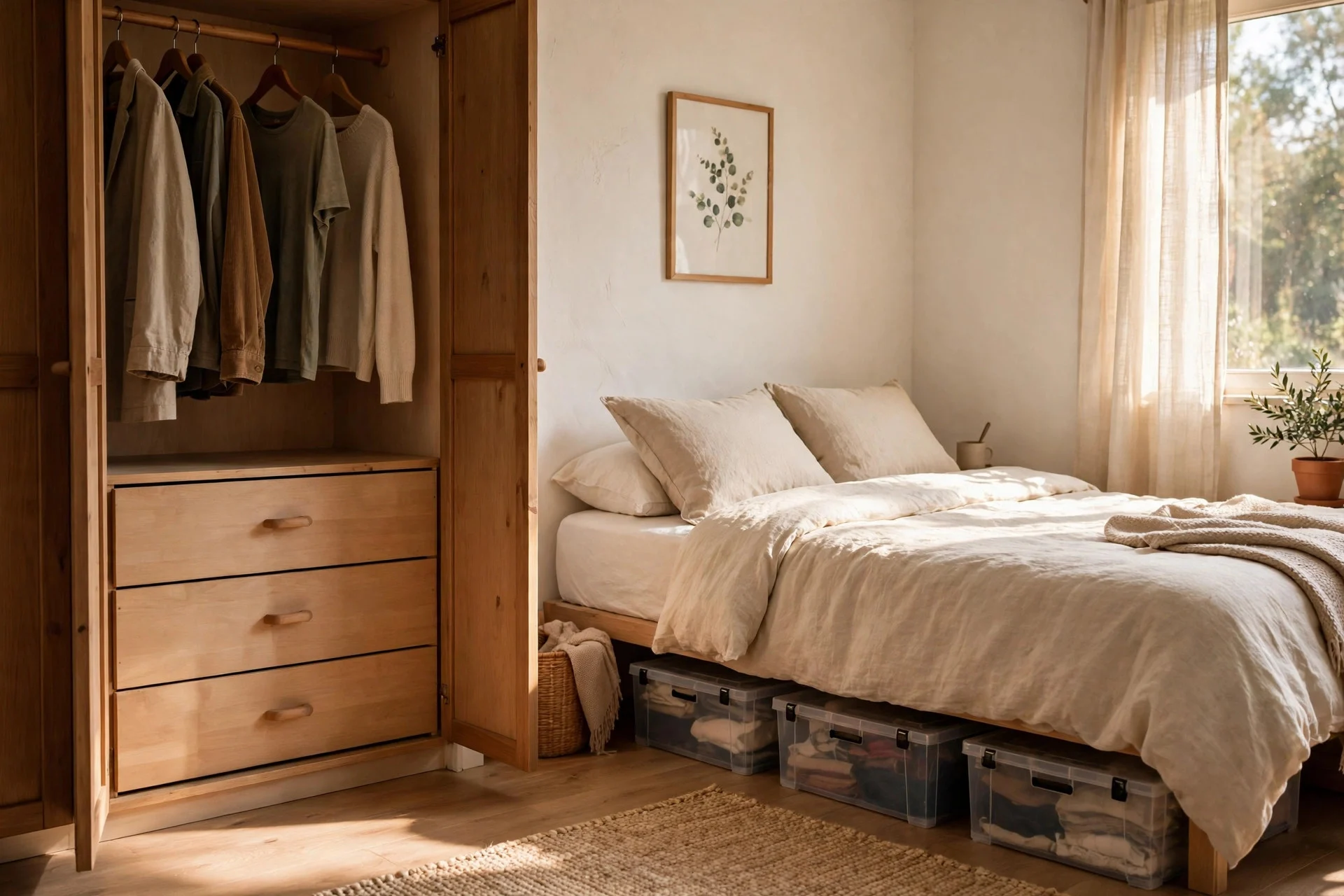
Small bedrooms rarely have enough built-in storage, so plan three zones: hanging space, drawers, and under-bed boxes. A small chest of drawers handles folded clothes, slim hangers free up closet rail space, and flat boxes under the bed hold out-of-season clothes and spare bedding. Keep daily clothes easy to reach and the rest tucked away.
Why it works: when every item has a spot, mornings get faster and the room feels bigger. A chest of drawers costs $100 to $300, hangers $10 to $20, and under-bed boxes $20 to $50. Assembly takes two to three hours in total.
Hands-on tip: measure the gap under your bed before buying boxes — a box that is one inch too tall is useless. Watch out for overfilling the closet on day one; leave one empty shelf for things you buy in the first month.
7. Bathroom: Towels, Shower Gear, and Small Storage
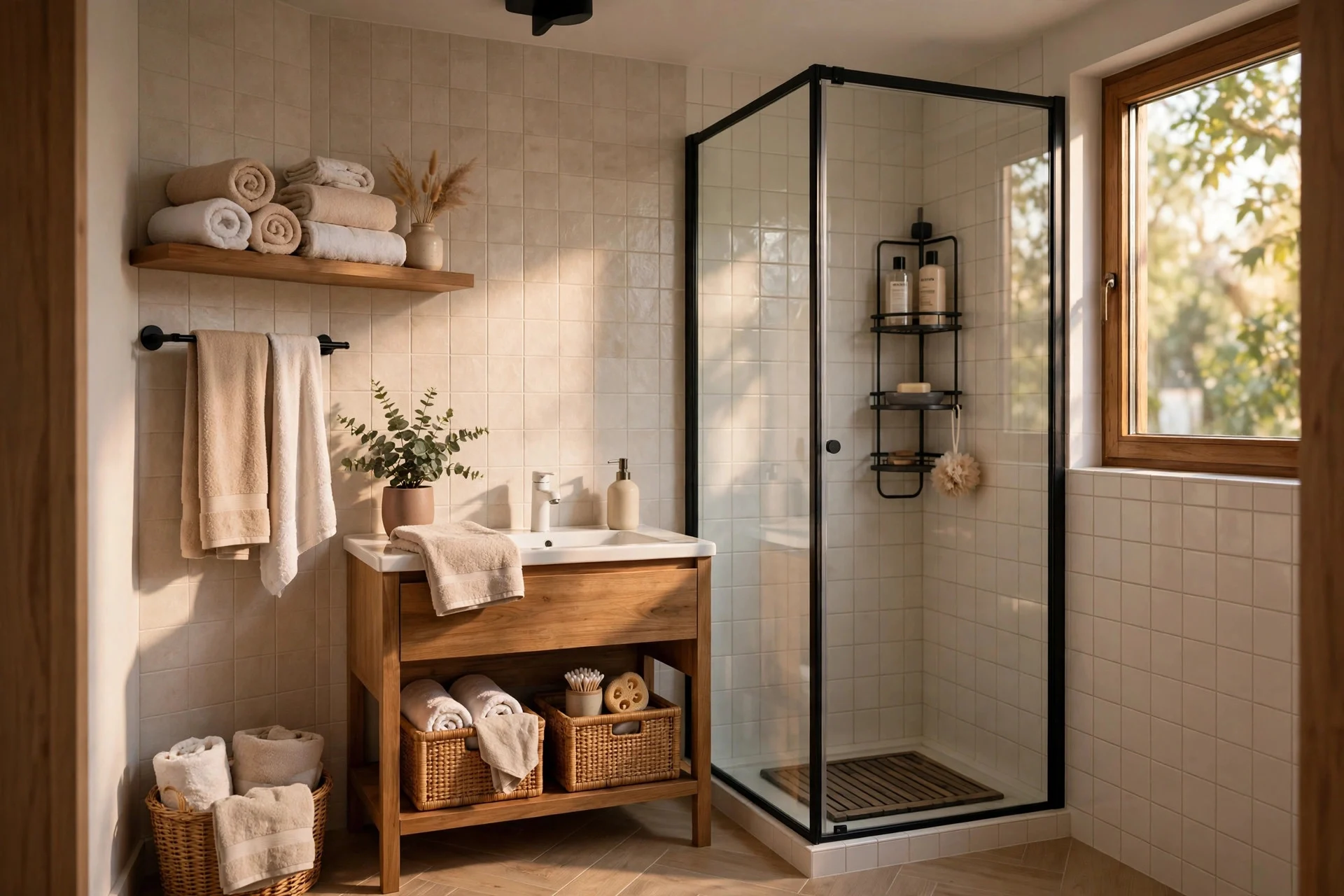
Bathrooms need less than people think, but the right few items matter. Get four bath towels, two hand towels, a shower curtain and liner if the flat does not supply them, a bath mat, and a shower caddy or small shelf for shampoo and soap. Add a small bin and a hook or two on the back of the door, and the room is done.
Why it works: fresh towels and a dry floor change how a bathroom feels. The full set costs $60 to $140, and setup takes about an hour. Difficulty is easy.
Hands-on tip: wash new towels before first use — they absorb far better after one wash. Watch out for suction shelves on textured tiles; they fall off, so use a tension pole caddy or an over-door hook instead.
8. Entryway: Hooks, a Shoe Spot, and Keys
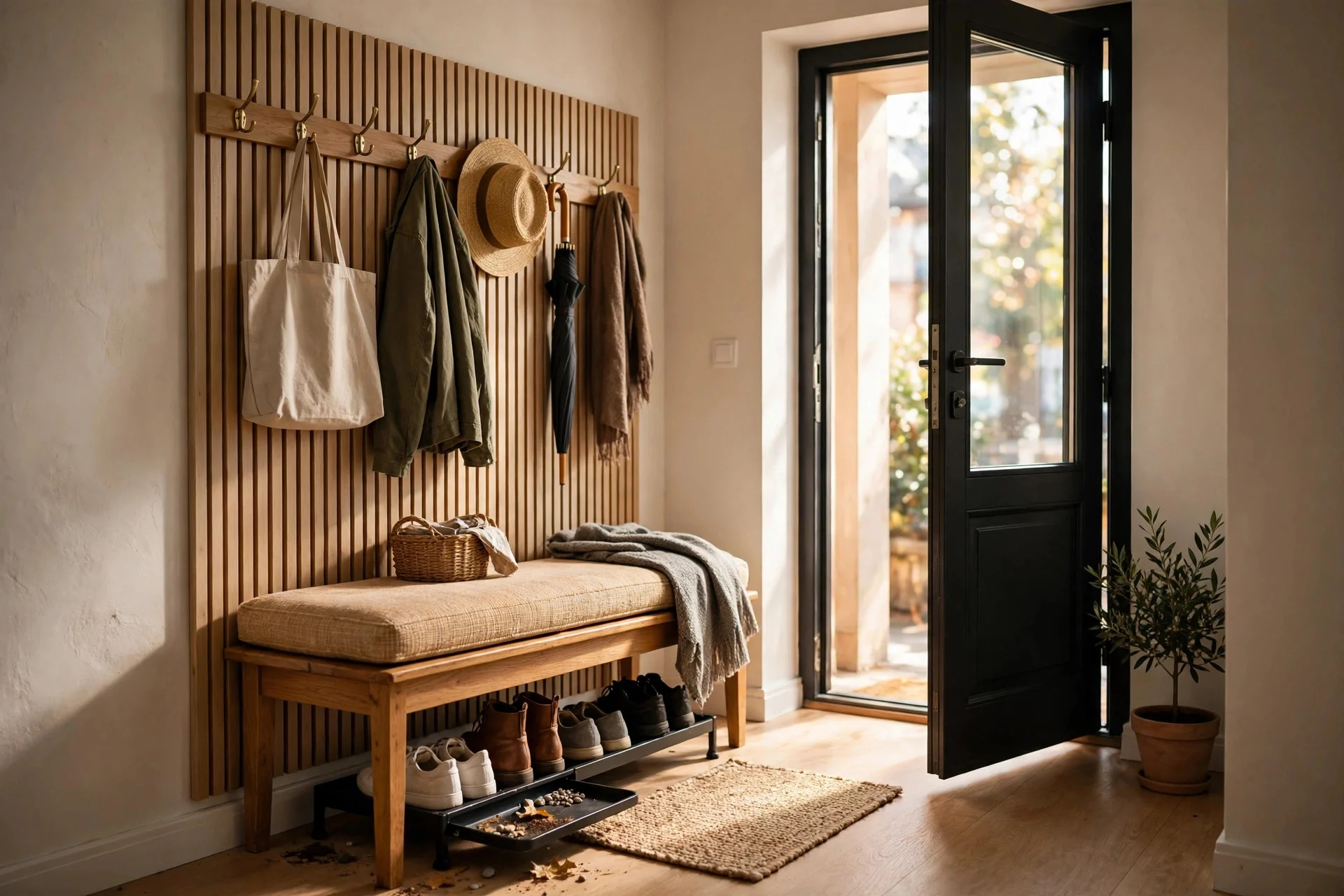
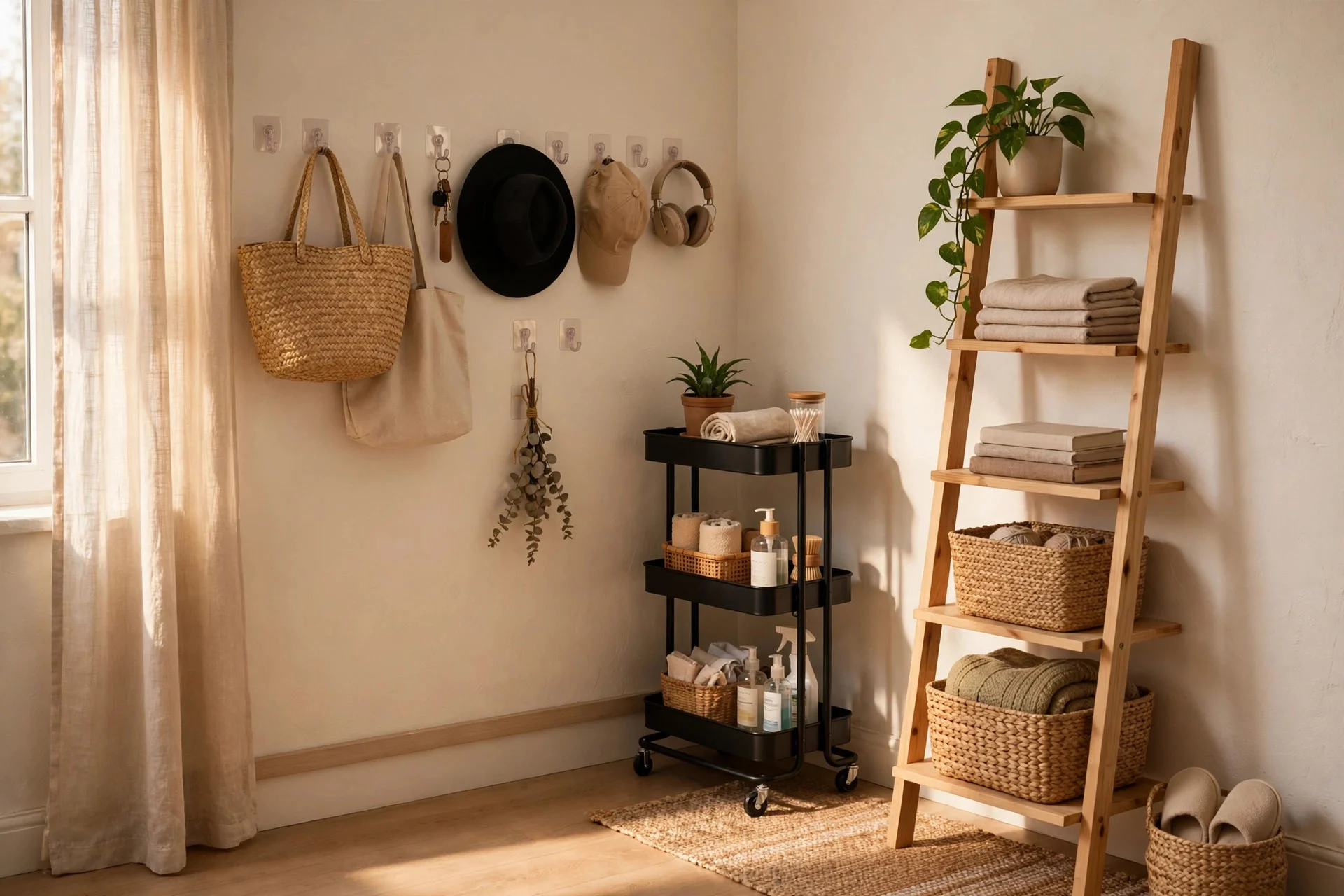
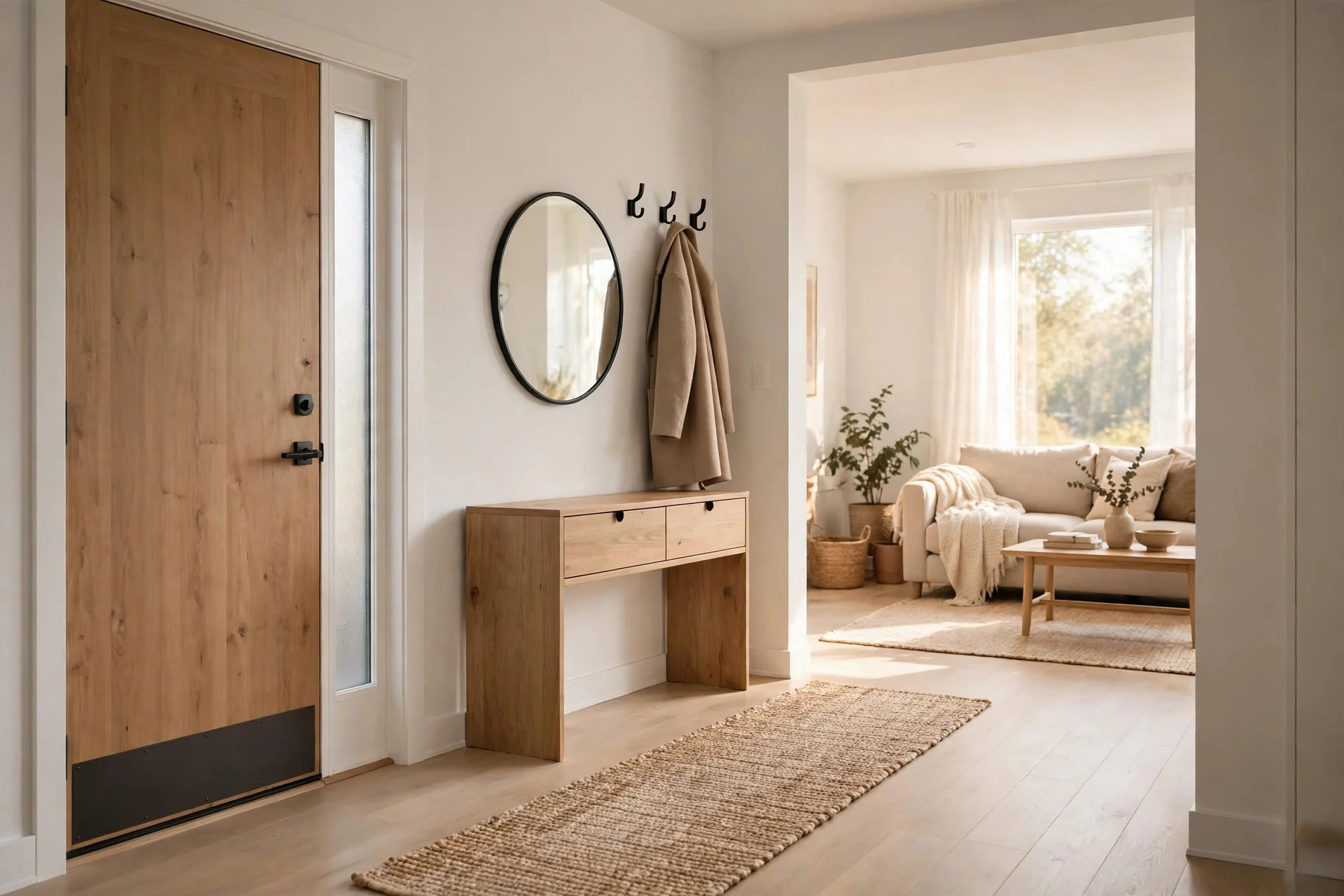
The entryway is tiny in most first apartments, but it does heavy work. A row of wall hooks, a small tray or rack for shoes, and one bowl or hook for keys stops clutter from spreading into the living room. If you have room, a narrow bench gives you a place to sit while putting shoes on and a spot to drop bags.
Why it works: the first thing you see when you walk in sets the mood for the whole flat, and a clear entry makes cleaning faster. Hooks cost $15 to $40, a shoe tray $15 to $30, and a small bench $60 to $150. Fitting takes under an hour, or two if you mount a rail. Difficulty is easy.
Hands-on tip: put the key hook at eye level right by the door, so grabbing keys becomes automatic. Watch out for shoe racks that are deeper than your hallway allows — measure the walkway and keep at least enough room to pass with a bag.
9. Work Corner: A Desk Setup That Fits a Small Room
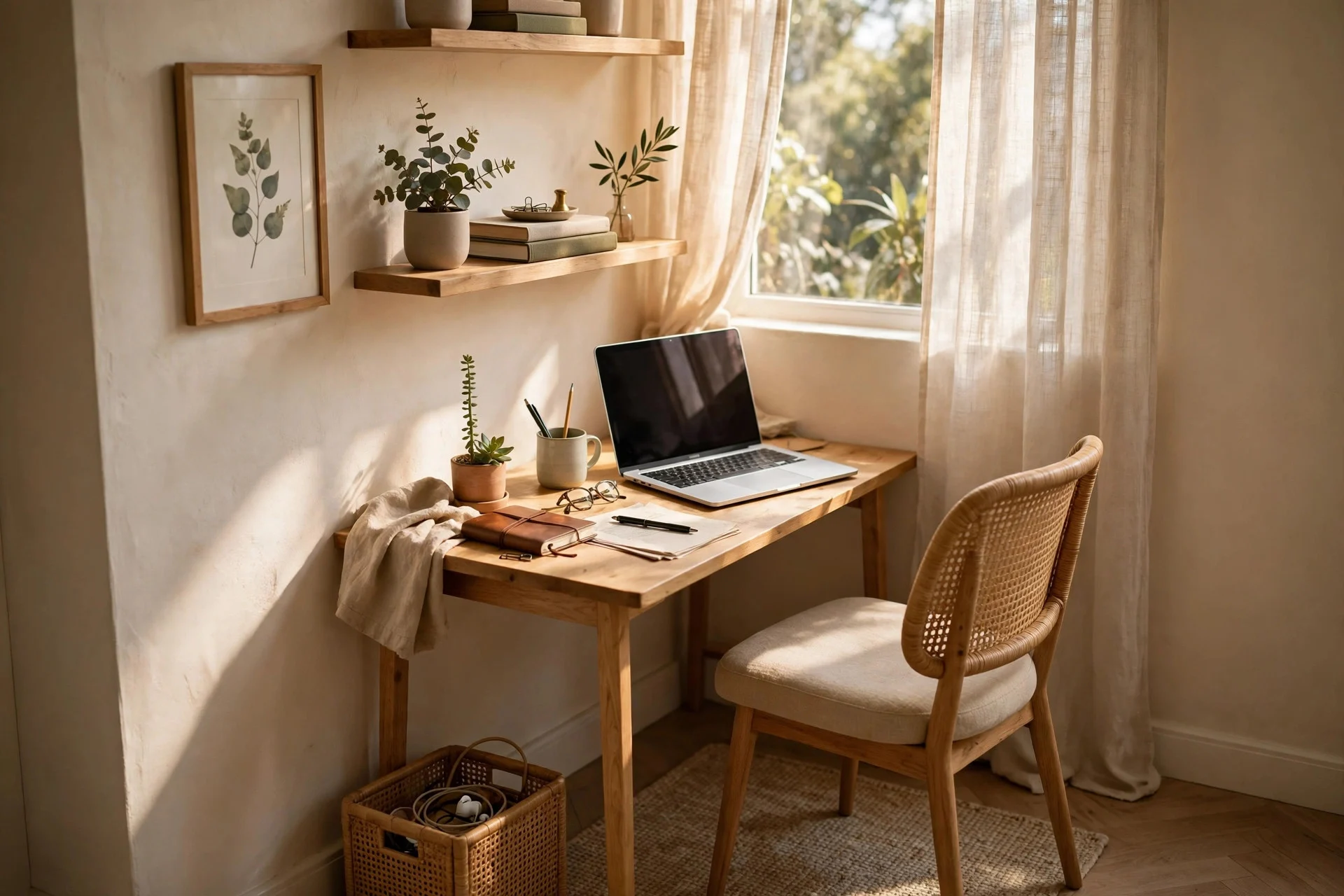
Even if you do not work from home full time, you need a spot for a laptop, bills, and paperwork. A desk about 100 to 120 cm wide fits most corners, paired with a chair that supports your back for more than an hour. Add a small lamp, a power strip, and one drawer or box for cables and papers, and you have a work corner that does not take over the room.
Why it works: working from the sofa or bed feels fine for a day and rough on your back after a month. A desk costs $80 to $250, a decent chair $100 to $300, and a lamp $25 to $60. Setup takes one to two hours. Difficulty is low.
Hands-on tip: place the desk near a window or facing into the room, not with your back to the door, if you have the choice. Watch out for chairs that look good and offer no lumbar support — sit in one for ten minutes before you buy.
10. Dining: A Table That Works for Meals and More
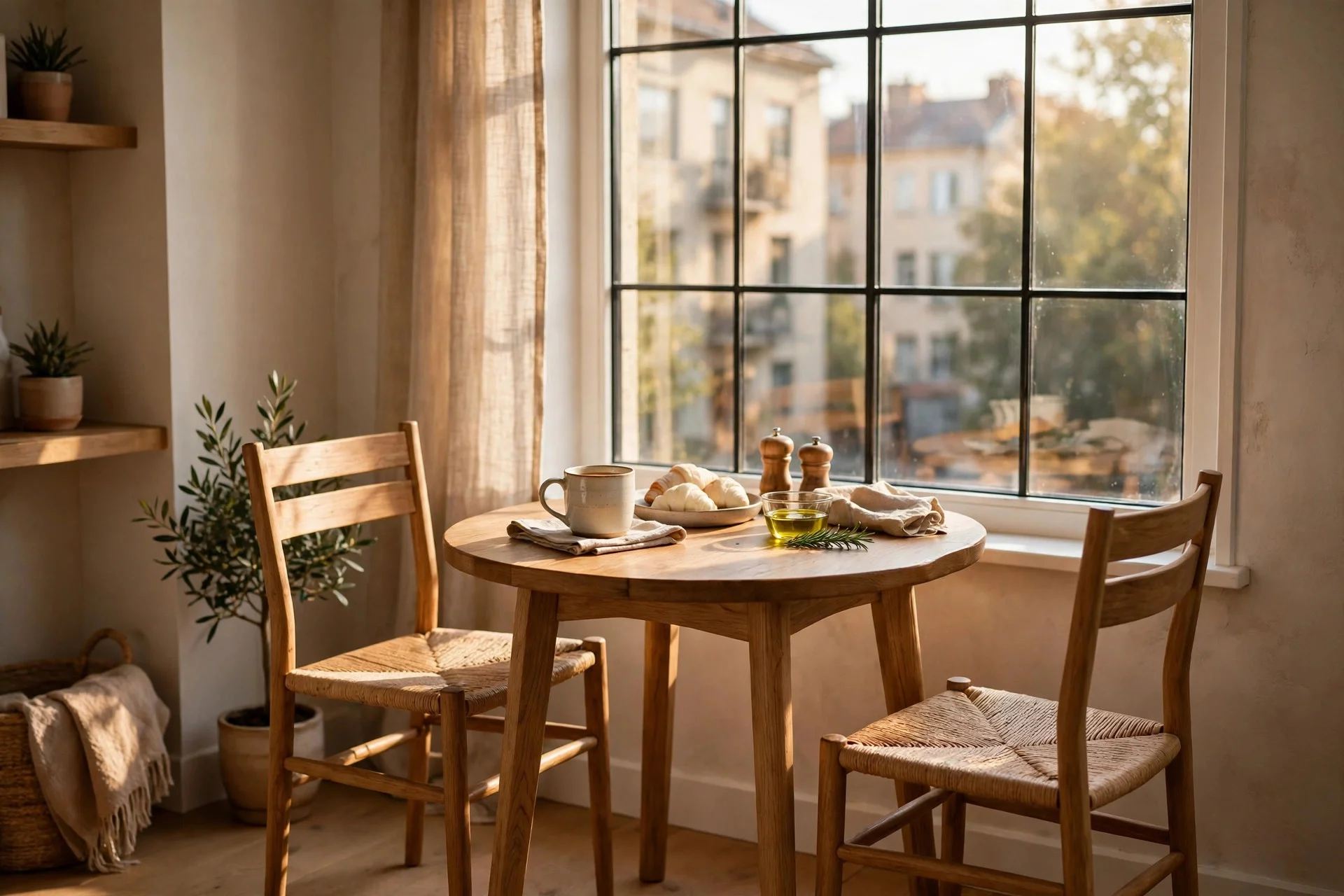
A small dining table does more than hold meals. It becomes a second work spot, a place for friends to gather, and a surface for projects. A round table or a rectangular table for two to four people fits most small apartments, and a drop-leaf or foldable design helps when guests come over. Two good chairs beat four wobbly ones.
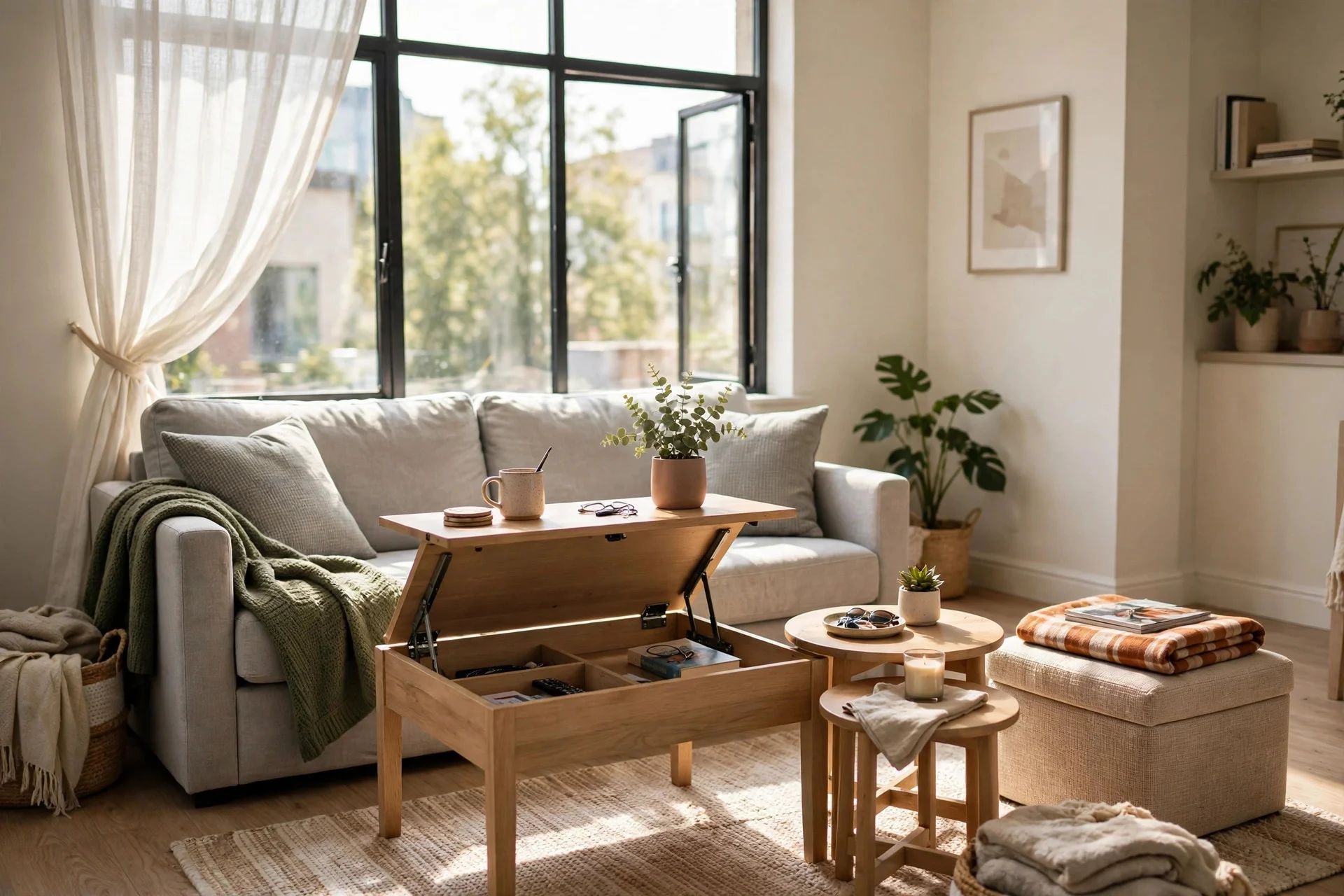
Why it works: eating at a real table slows meals down in a good way, and guests feel welcome instead of perched on a sofa with a plate. A table costs $120 to $350, and two chairs $80 to $200. Assembly takes one to two hours. Difficulty is low. For pieces that do double duty, look at multi-purpose furniture for apartments for ideas that save floor space.
Hands-on tip: sit at the table in the shop, or check its height against your chairs — a table that is too high makes every meal uncomfortable. Watch out for glass tops in tiny rooms; they show every fingerprint and need constant wiping.
11. Laundry and Cleaning Kit
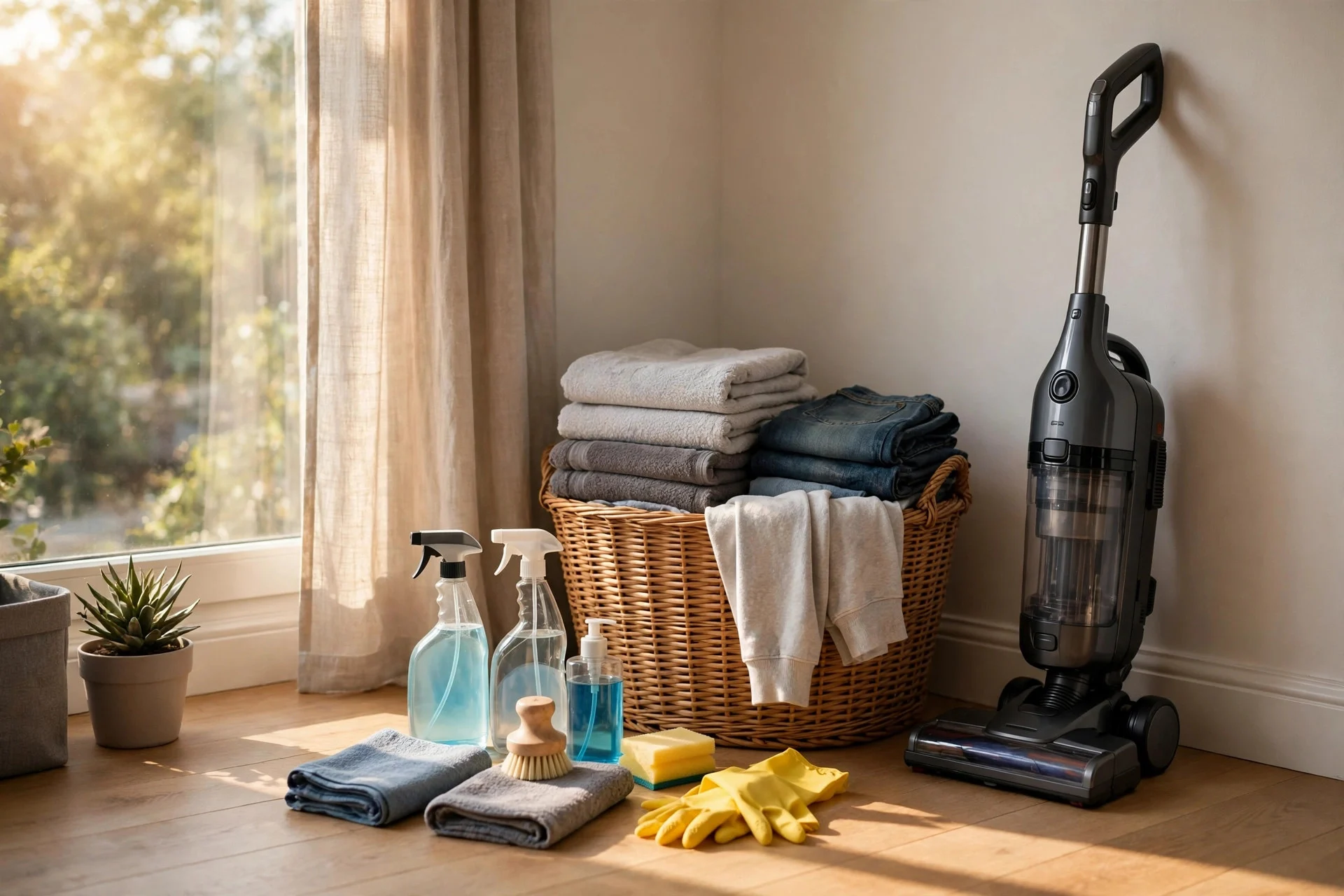
Laundry and cleaning gear is easy to forget until the first pile appears. Start with a laundry basket or hamper, detergent, a drying rack if you have no dryer, and a basic cleaning kit: an all-purpose spray, a bathroom cleaner, cloths, a broom and dustpan, and a mop or vacuum. A small vacuum that stores in a closet beats a big one you dread dragging out.
Why it works: a home stays pleasant when cleaning takes twenty minutes, not a full afternoon of hunting for supplies. The kit costs $80 to $200 in total, with a vacuum adding $80 to $200 if you buy one. A first full clean takes about two hours. Difficulty is easy.
Hands-on tip: keep all cleaning supplies in one caddy under the sink, so you can grab and go. Watch out for buying every special cleaner on the shelf — two or three good products cover most jobs.
12. First-Week Extras: The Small Things You Forget Until You Need Them
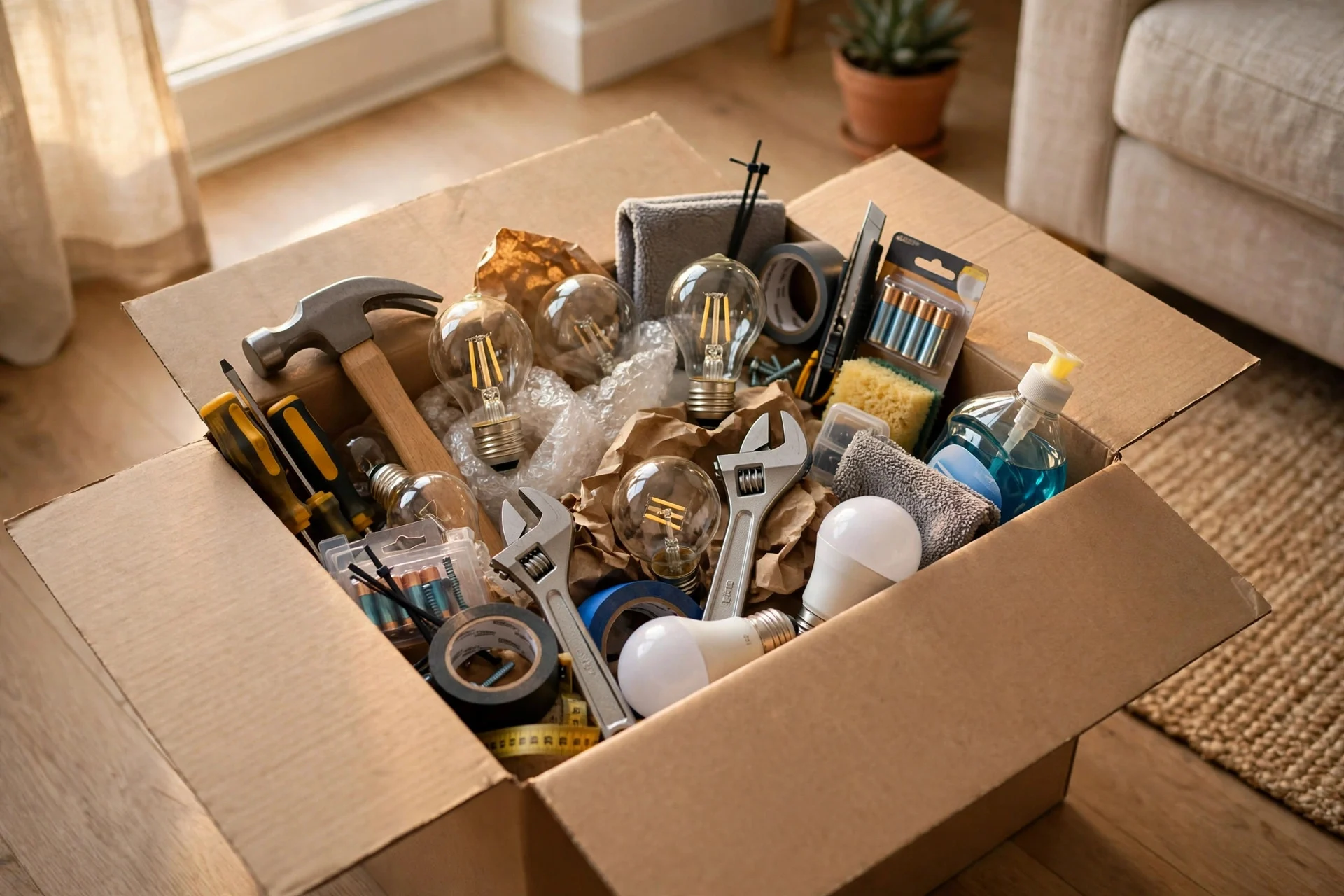
After the big items, a box of small extras saves repeated trips to the shop. Pack light bulbs, a basic tool kit with a hammer, screwdriver, and picture hooks, batteries, a first-aid kit, a torch, extension cords, and a few command hooks. Add a door mat, a kettle or coffee maker if you use one daily, and a spare set of keys cut early.
Why it works: these items cost little one by one, but missing them at 9 pm is annoying. The whole box costs $60 to $150, gathered in one shopping trip.
Hands-on tip: label this box clearly and open it first, before the decorative boxes. Watch out for buying duplicates — check what the previous tenant or your moving boxes already hold before you shop.
Frequently Asked Questions
What should I buy first for a small apartment?
Buy in this order: bed and bedding, kitchen basics and cookware, seating, and bathroom towels and gear. Those four groups let you sleep, eat, sit, and wash from night one. Storage, a desk, and a dining table can follow in the first two weeks once you see how the rooms work.
How much does furnishing a first apartment cost?
A practical starter setup costs roughly $1,500 to $4,000 new, depending on your city and how much you buy secondhand. Buying the bed and sofa new and the rest secondhand is a smart middle path. Spread the cost over two months if needed — a half-furnished flat you can live in beats a debt-funded perfect one.
What can I skip until later?
Skip decorative art, extra seating, specialty kitchen gadgets, and a full dining set at first. You can also skip a coffee table, a TV stand upgrade, and matching sets of anything. Live in the flat for a month, note what you miss, and then buy with a clear reason.
Should I buy new or secondhand?
Buy mattresses and upholstered items new when you can, for hygiene and lifespan. Tables, chairs, shelves, and kitchen tools are great secondhand buys if they are solid and clean. Check secondhand sofas carefully for smell, stains, and frame damage before you pay.
How do I avoid buying the wrong size?
Measure every room, doorway, and lift before you shop, and tape furniture footprints on the floor. Keep a note on your phone with room sizes and door widths. This five-minute habit prevents the most common first-apartment mistake: furniture that fits the wall but blocks the door.
A Simple Way to Wrap Up
Start with sleep, food, sitting, and washing, then add storage, work, and dining space. Buy slowly after that, one piece at a time, and let the flat teach you what it needs. Your first apartment does not need to look finished in week one. It needs to work for your real life, and the rest will follow, piece by piece.
Quick checklist: bed and bedding, sofa, kitchen basics, cookware, towels, entry hooks, desk and chair, dining table, laundry and cleaning kit, first-week extras box. Tick them off in order.