12 Small Foyer Ideas in Open-Plan Apartments
Yes, you can have a proper foyer in an open-plan apartment — even without a single wall to work with. A foyer is not a room. It is a landing zone: a spot by the door where shoes come off, keys land in the same place every time, and guests get a clear signal that they have arrived. You build that zone with furniture, a rug, and light, not with construction. The 12 ideas below walk you from your front door inward, in the order you would actually use them, so you can pick the ones that fit your layout and skip the rest.
Before you buy anything, stand in your doorway and look at what happens today. Where do shoes pile up? Where do keys end up? That messy spot is your real foyer, and it tells you exactly which idea to start with.
1. A Slim Console Table on the Door Wall
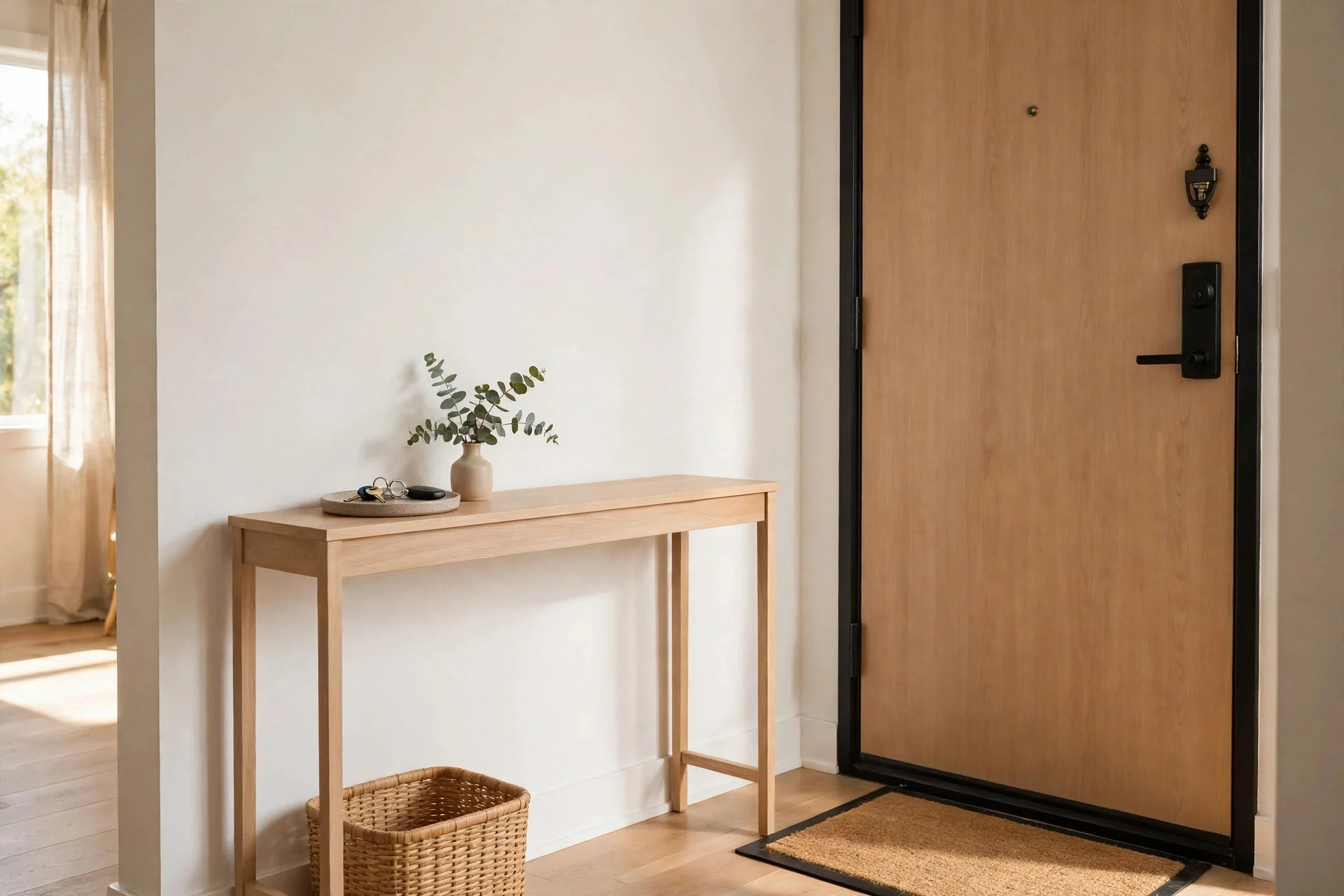
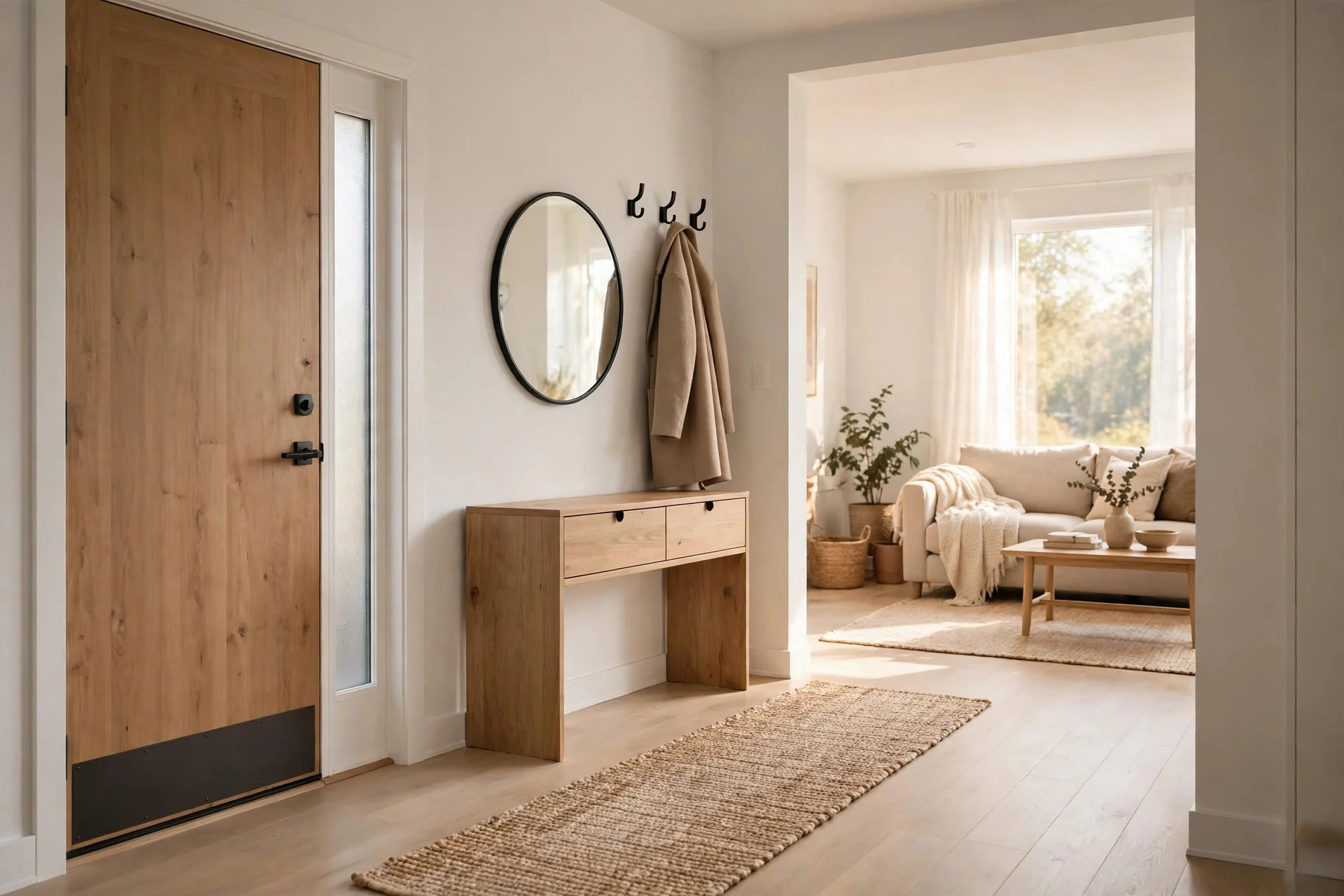
A console table gives your entry a job. It holds your keys, your sunglasses, and the mail you still need to deal with, and it does it on a footprint barely deeper than a paperback row. Look for one 25 to 30 centimetres deep so it hugs the wall and never eats into your walking path. A lower shelf or drawer adds a home for dog leads, spare batteries, or the torch you always hunt for.
Cost: $60–$250. Difficulty: easy — most flat-pack consoles take about 30 minutes to assemble. Tip: tape the table’s outline on the floor with painter’s tape before you order, then walk past it for a day. If you keep clipping the tape, go narrower. Watch out: check your door swing first. A console on the hinge side of the door can block it from opening fully.
2. A Row of Hooks Right Beside the Door
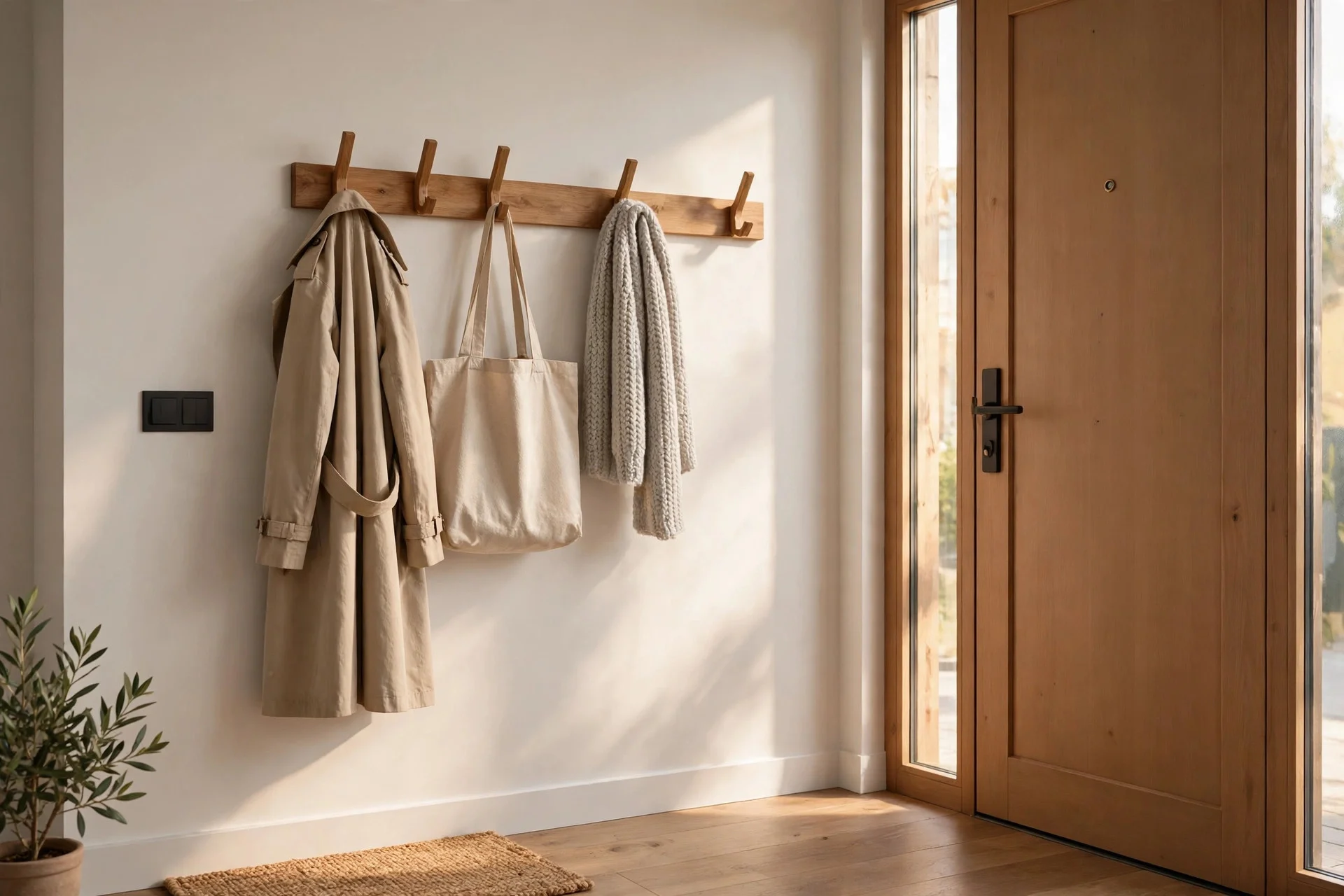
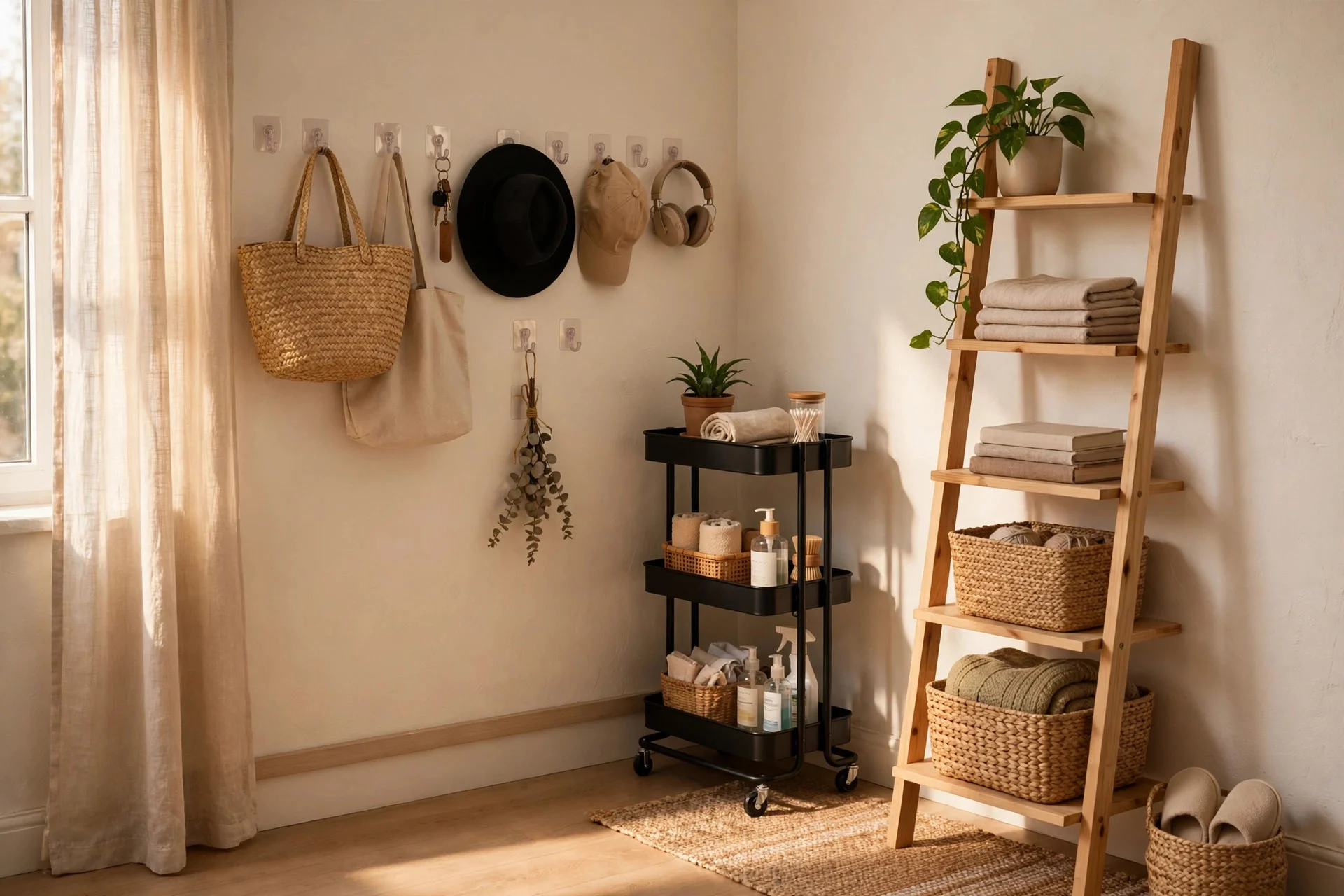
Coats draped over chairs are the fastest way for a small apartment to look chaotic. A row of three to five sturdy hooks, fixed at about 165 to 175 centimetres high, solves it in one afternoon. Hang them on the wall you face as you walk in, or on the short return wall beside the door frame, so grabbing a coat is one motion on your way out.
Cost: $15–$60 for a rail or individual hooks. Difficulty: easy — about 20 minutes with a drill and a spirit level. Tip: give every person in the home one hook, then add one spare for guests. A rail that is exactly full looks tidy; a rail with coats doubled up does not. Watch out: check the weight rating. A winter coat plus a heavy bag can pull a weak adhesive hook straight off plaster. If you rent and cannot drill, look for high-quality removable hooks rated for at least 3 kilograms each — and if you want more renter-friendly tricks, these rental apartment decorating ideas cover damage-free options in detail.
3. A Shoe Cabinet That Works as a Landing Surface
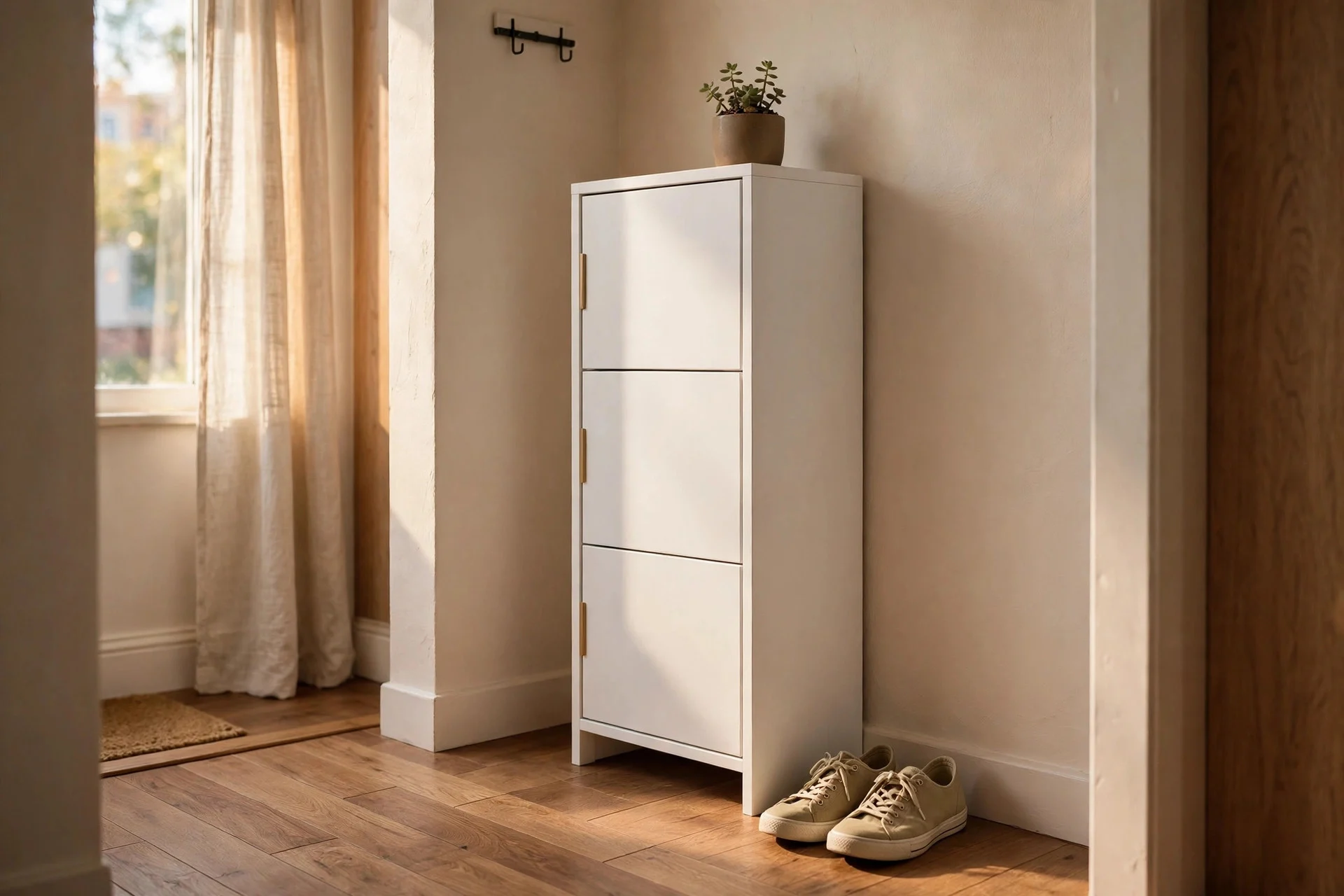
Shoes are the number-one source of entryway mess, and a slim shoe cabinet hides them while giving you a surface on top. Tilting-drawer cabinets are the best fit here: they are only about 17 centimetres deep when closed, yet each drawer holds two to three pairs. The top becomes a second landing spot for post, a small plant, or the tray from idea 4.
Cost: $80–$250. Difficulty: easy to moderate — allow an hour for assembly. Tip: keep one drawer, or one section, empty for guests. The moment visitors have nowhere to put their shoes, shoes end up by the door anyway. Watch out: measure your tallest boots before you buy. Standard drawers swallow trainers and flats, but tall boots usually need a separate spot.
4. A Tray for Keys, Wallet, and Sunglasses
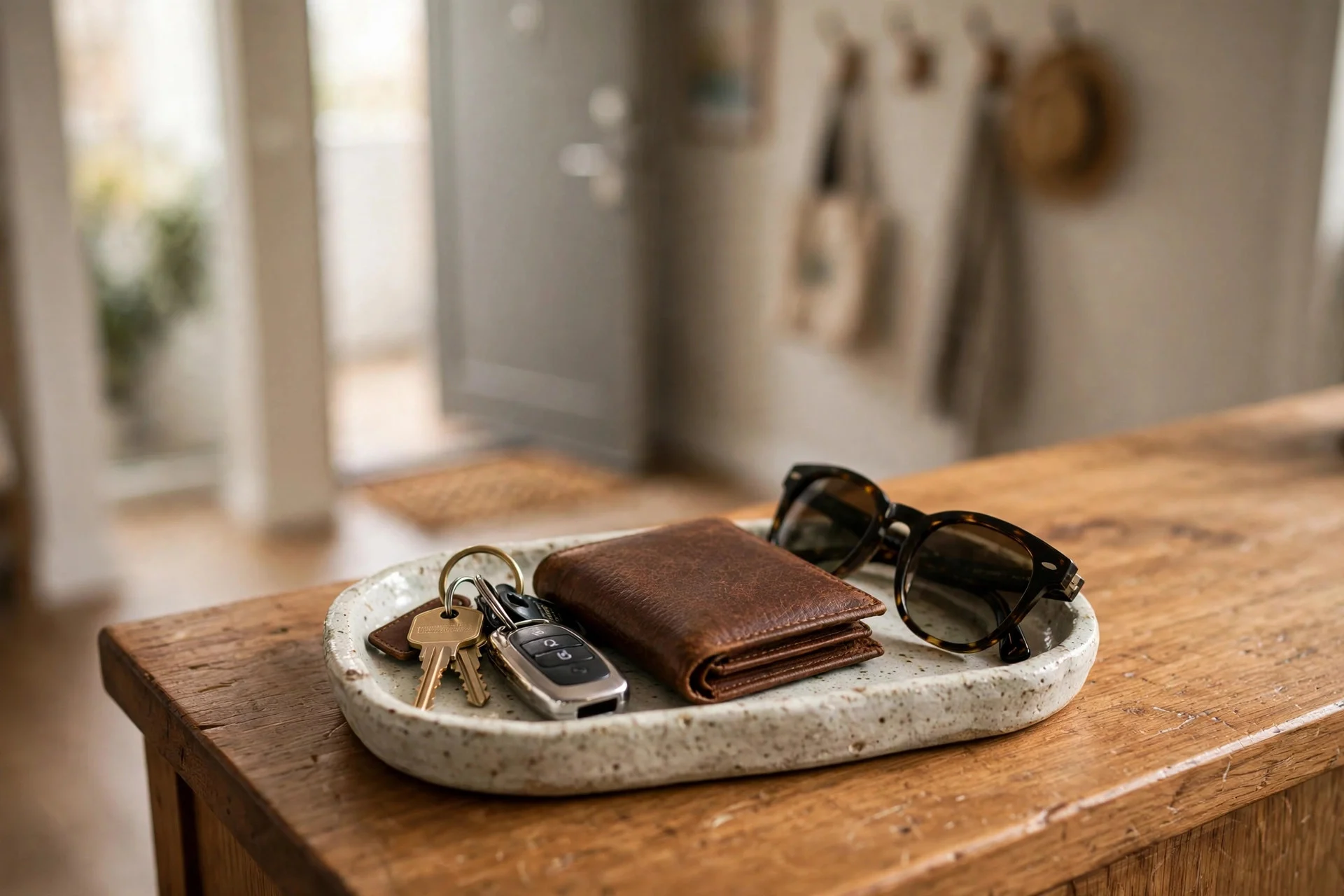
This is the smallest idea on the list and the one that saves the most daily frustration. A tray — ceramic, leather, or wood, roughly the size of a paperback — sits on your console or shoe cabinet and holds the pocket items you reach for every time you leave. The rule is simple: if it lives in your pockets, it lives in the tray.
Cost: $10–$40. Difficulty: none — you just place it. Tip: put the tray exactly where your hand lands when you walk in, not on the far end of the console. Convenience decides whether you actually use it. Watch out: keep the tray small on purpose. A big tray slowly turns into a junk bowl for receipts, coins, and random screws.
That covers the door wall itself. Now comes the strip of floor between the door and the rest of your home — the part that takes the most wear and does the most visual work.
5. A Runner Rug That Draws the Boundary
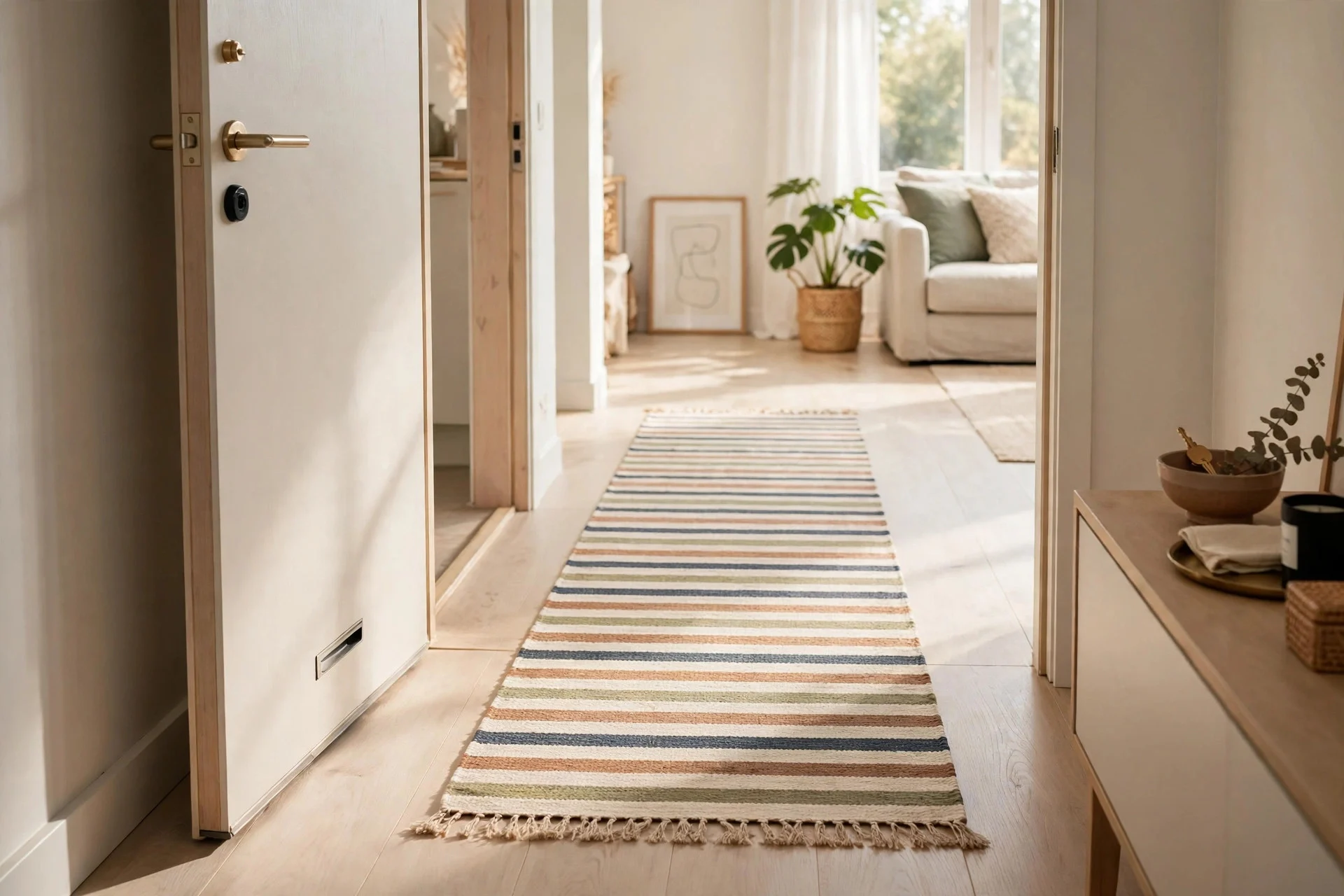
In an open-plan layout, a runner rug is the closest thing to drawing a wall. It marks where the foyer ends and the living space begins, catches grit from shoes, and adds warmth underfoot the moment you step inside. Pick a flat-weave or low-pile rug about 60 to 80 centimetres wide, long enough to cover the landing zone — usually 120 to 180 centimetres in a small apartment.
Cost: $30–$150, plus $10–$20 for a non-slip rug pad. Difficulty: easy — unroll, position, done. Tip: choose a washable rug if you can. Entry rugs take mud, rain, and pet paws, and a machine-washable one stays fresh years longer. Watch out: check the door clearance. A thick rug plus a pad can jam a door that swings inward over it. If you are unsure about sizing, the Rug Size Finder works out the right dimensions from your room measurements.
6. A Tall Mirror at the Turn Into the Living Room

Place a tall mirror where your entry turns into the living area, and two things happen at once: you get a last look before leaving, and the room gains reflected light and a sense of depth. A leaning arched mirror, about 150 to 170 centimetres tall, works well because it needs no drilling and its shape softens all the straight lines of a small hallway.
Cost: $70–$250. Difficulty: easy — lean it, level it, done. Tip: angle the mirror slightly toward your nearest window so it bounces daylight back into the entry instead of reflecting a blank wall. Watch out: if you have small children or large pets, fix the top to the wall with a discreet strap or bracket. A leaning mirror is heavy, and a bump can topple it.
7. A Floating Shelf That Marks the Transition

Where the entry meets the living room, a single floating shelf acts like a punctuation mark. It says: foyer ends here, living space starts here. Style it lightly — two or three framed prints, one small trailing plant, and nothing else. Hung at eye level, around 150 to 160 centimetres from the floor, it draws the eye up and makes a low-ceilinged entry feel taller.
Cost: $25–$90 including brackets and frames. Difficulty: easy — about 30 minutes with a drill. Tip: leave breathing room between objects. Three items with gaps between them look intentional; five items crammed together look like storage. Watch out: respect the weight limit of your fixings, especially on plasterboard. Heavy frames need proper wall plugs, not just screws.
With the transition marked, the next problem is storage. Small apartments rarely have a coat closet, so the ideas that follow push storage upward and into corners that would otherwise sit empty.
8. A Tall, Narrow Tower for the Dead Corner
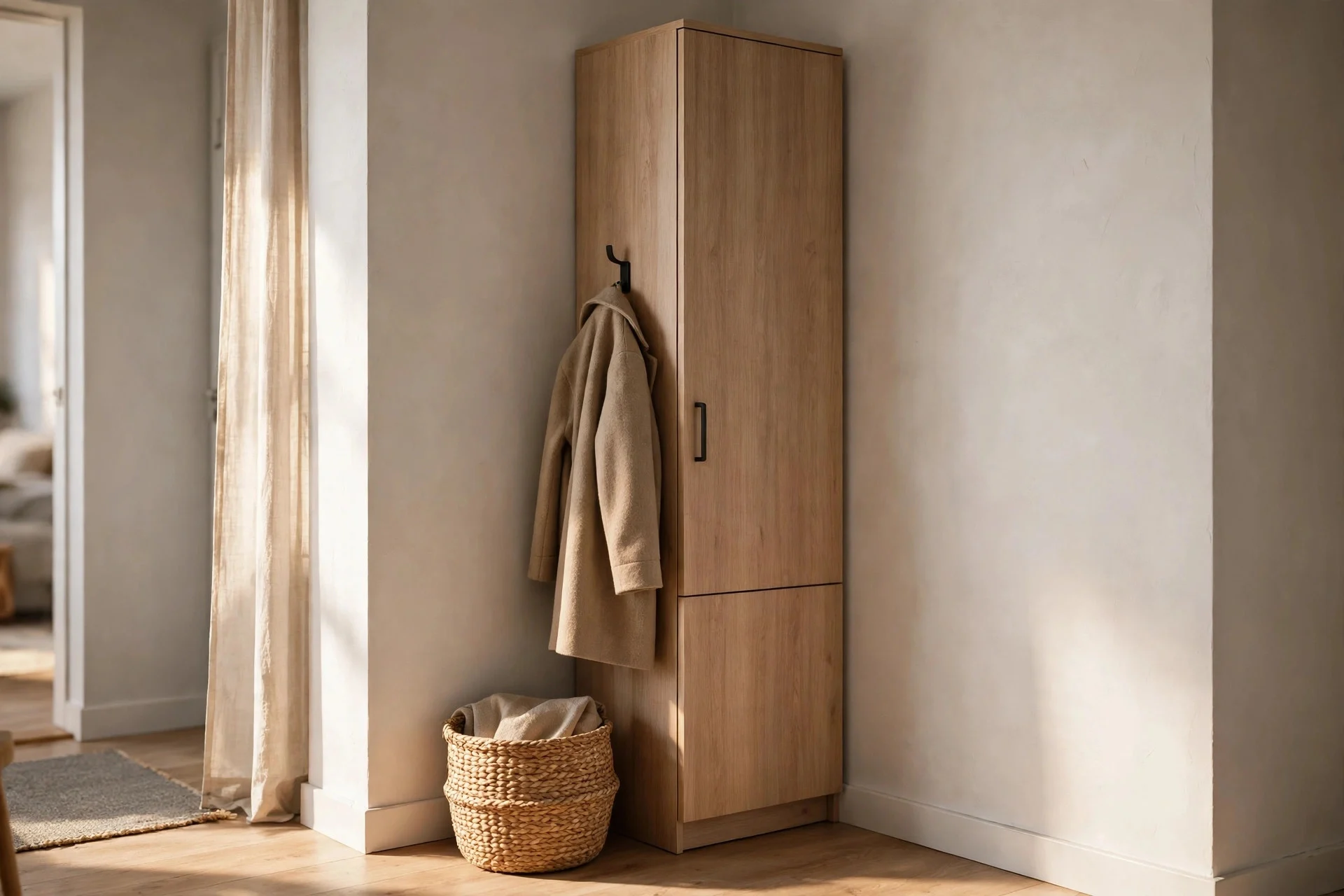
Most entries have one awkward corner — too narrow for a wardrobe, too visible to ignore. A tall, narrow tower cabinet, about 30 to 40 centimetres wide and 180 centimetres high, turns that corner into real storage. Use the top shelves for seasonal items you rarely grab, the middle for bags and scarves, and the bottom for shoes or cleaning supplies.
Cost: $120–$350. Difficulty: moderate — allow one to two hours for assembly. Tip: put a small basket on the top shelf for gloves, hats, and umbrellas folded flat. Loose small items are what make tall storage look messy. Watch out: anchor the unit to the wall. Tall, narrow furniture tips more easily than it looks, and an entry unit gets bumped daily.
9. A Slim Bench for Sitting Down to Change Shoes
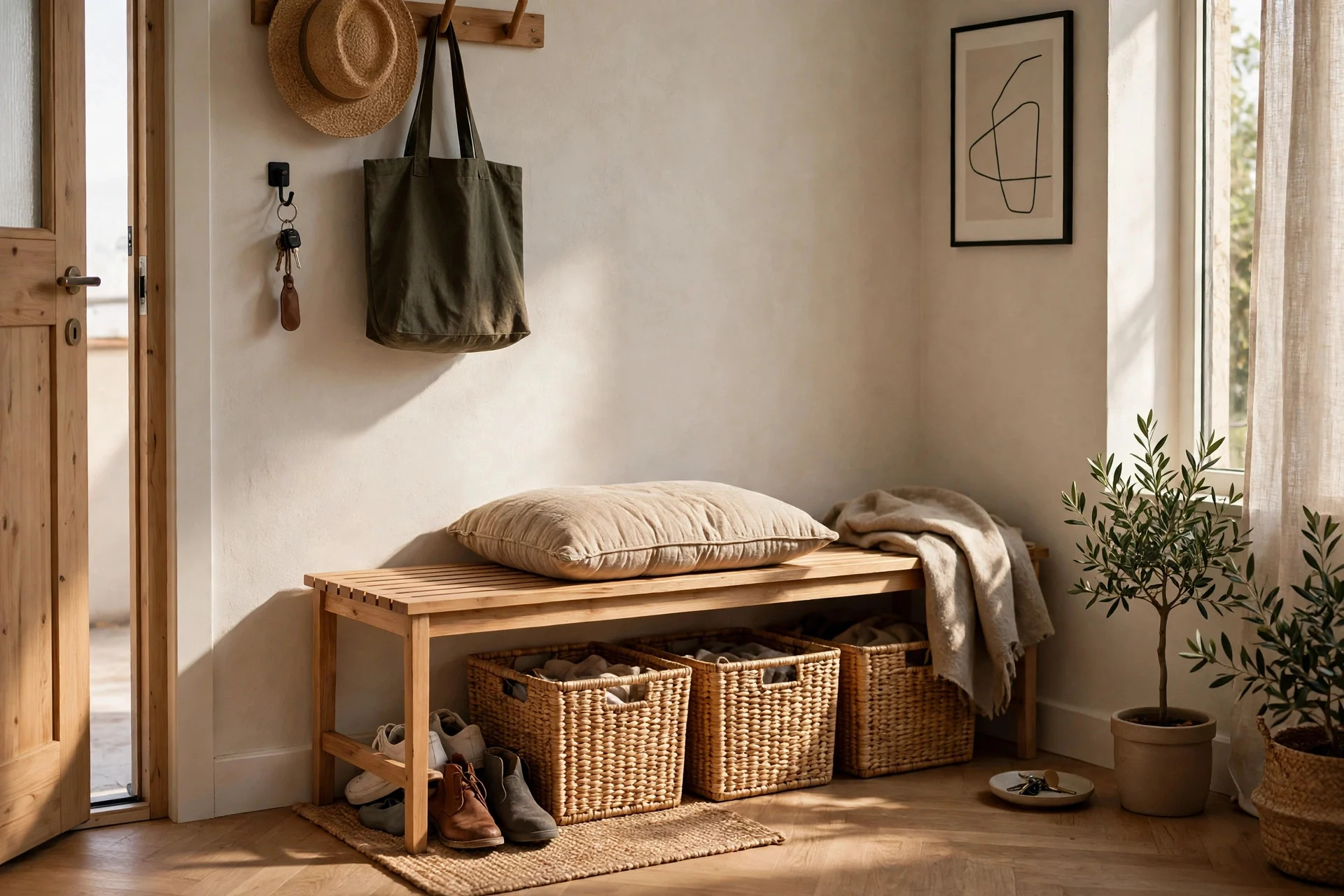
If you ever balance on one foot to pull on boots, you need a bench. A slim bench, about 30 centimetres deep and 80 to 100 centimetres long, fits against the wall opposite your console or under your hooks. Baskets underneath hold shoes, and a thin cushion on top makes it comfortable enough that people actually sit instead of hopping.
Cost: $70–$220. Difficulty: easy — most arrive nearly assembled. Tip: label baskets by person or by shoe type (everyday, boots, sports) so the bench stays sorted without anyone thinking about it. Watch out: a thick cushion eats legroom and makes the bench feel bulky. Keep the cushion under 8 centimetres thick. If floor space is really tight, folding furniture for small apartments includes fold-down seats that disappear against the wall when you are not using them.
10. A Wet-Weather Corner With an Umbrella Stand
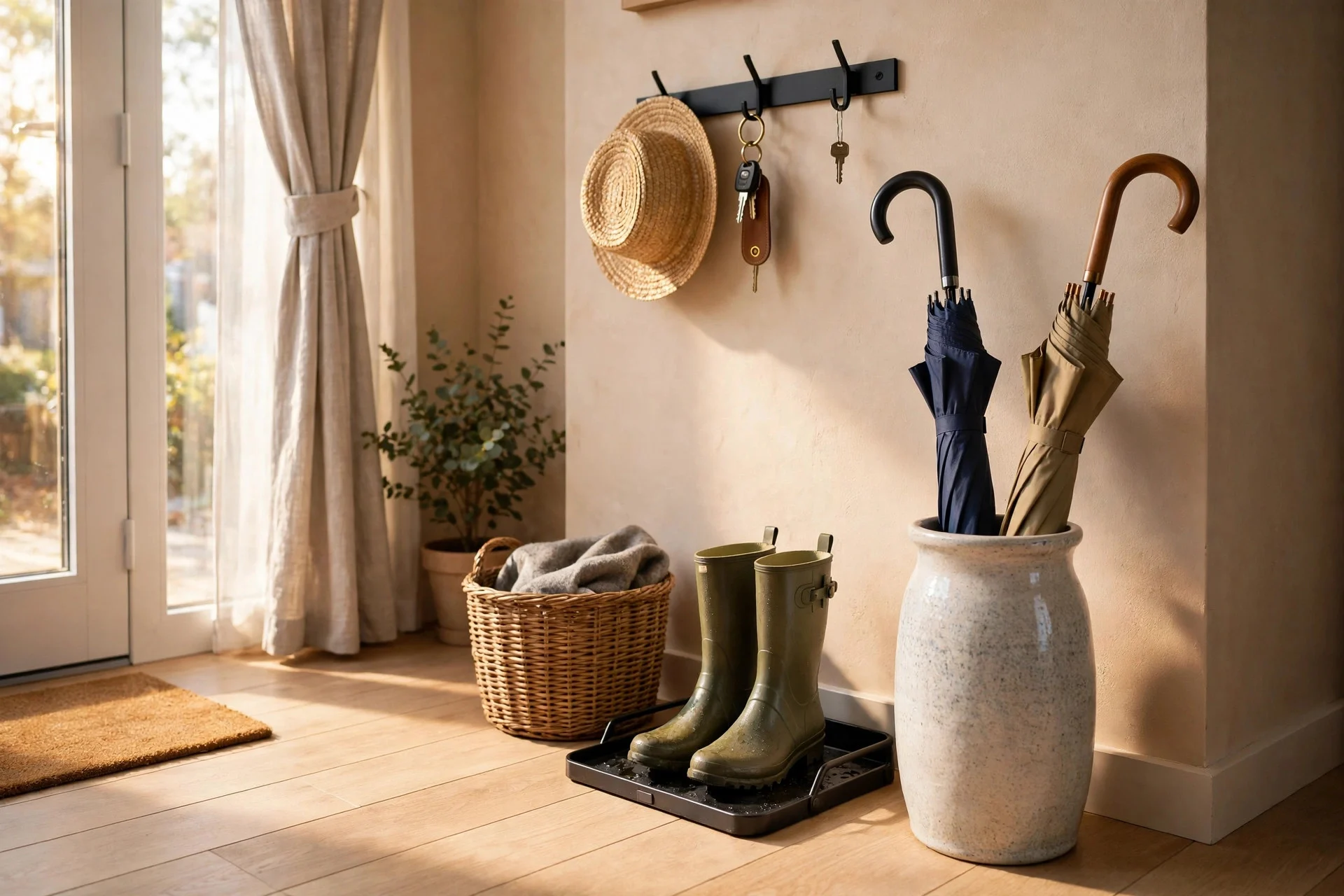
Rain is where tidy entries fall apart. Wet umbrellas drip across the floor, muddy boots stain the rug, and suddenly the whole zone feels grimy. Claim one small corner for wet weather: a ceramic or metal umbrella stand, a boot tray with a raised lip, and a basket for wet scarves or reusable shopping bags.
Cost: $25–$80 for the full set. Difficulty: none. Tip: keep the boot tray by the door, not across the room. If the tray is even two steps away, wet boots stop reaching it. Watch out: empty the tray and wipe the stand once a week in rainy season. Standing water stains floors and starts to smell faster than most people expect.
Storage sorted, one thing remains: light. Most apartment entries borrow light from other rooms, and the right lighting is what makes the zone feel like a place rather than a passage.
11. Layered Light: A Sconce Plus a Small Lamp
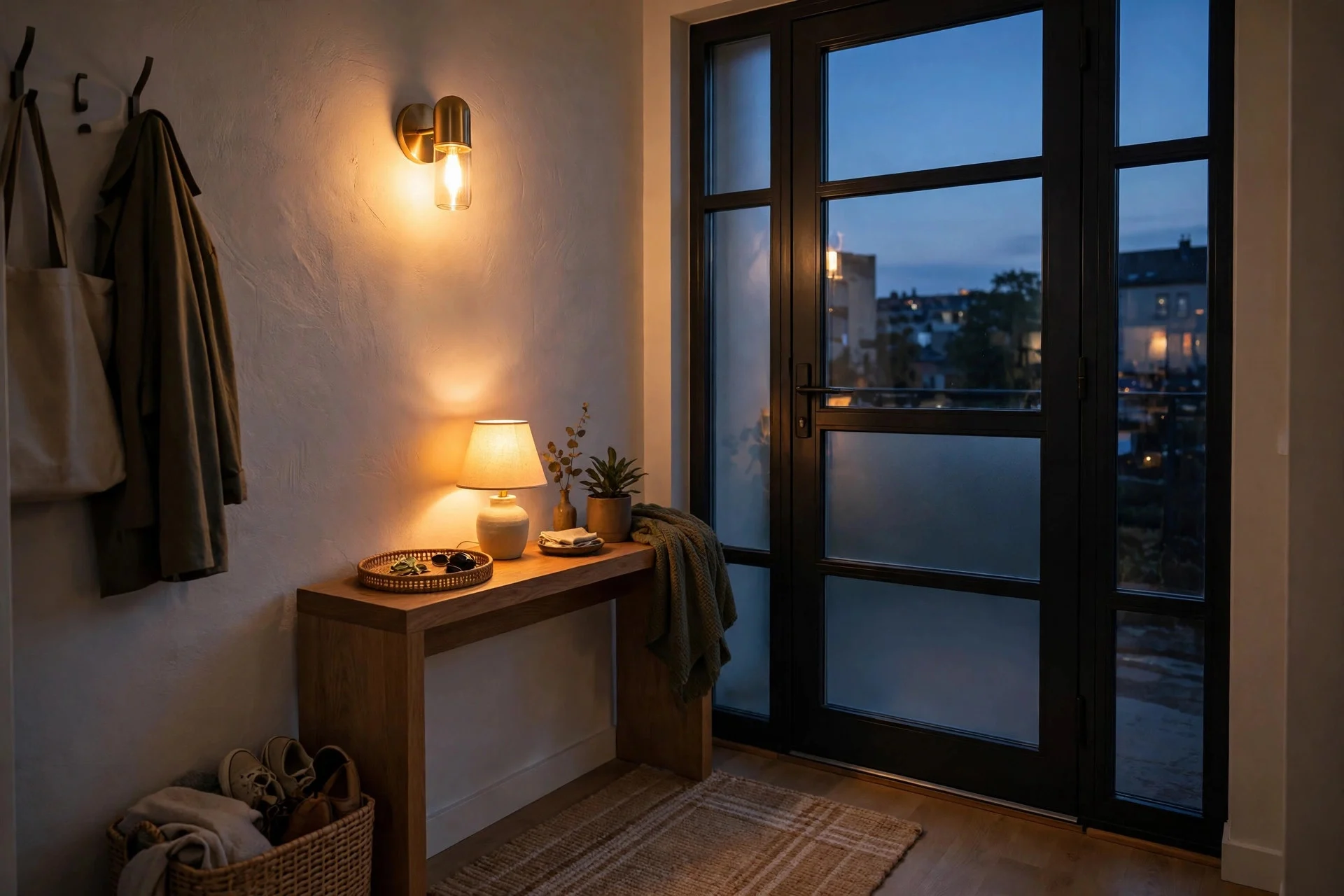
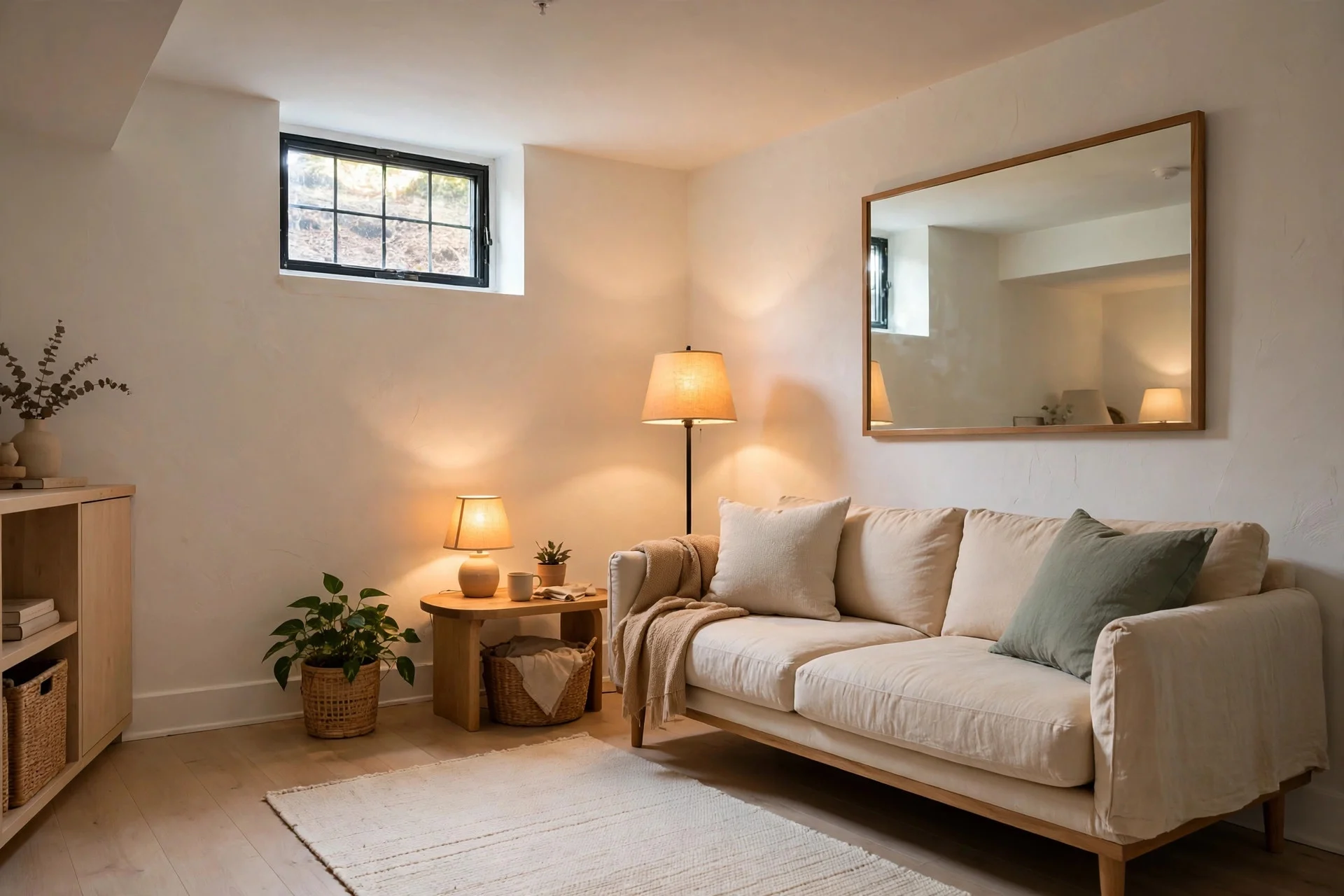
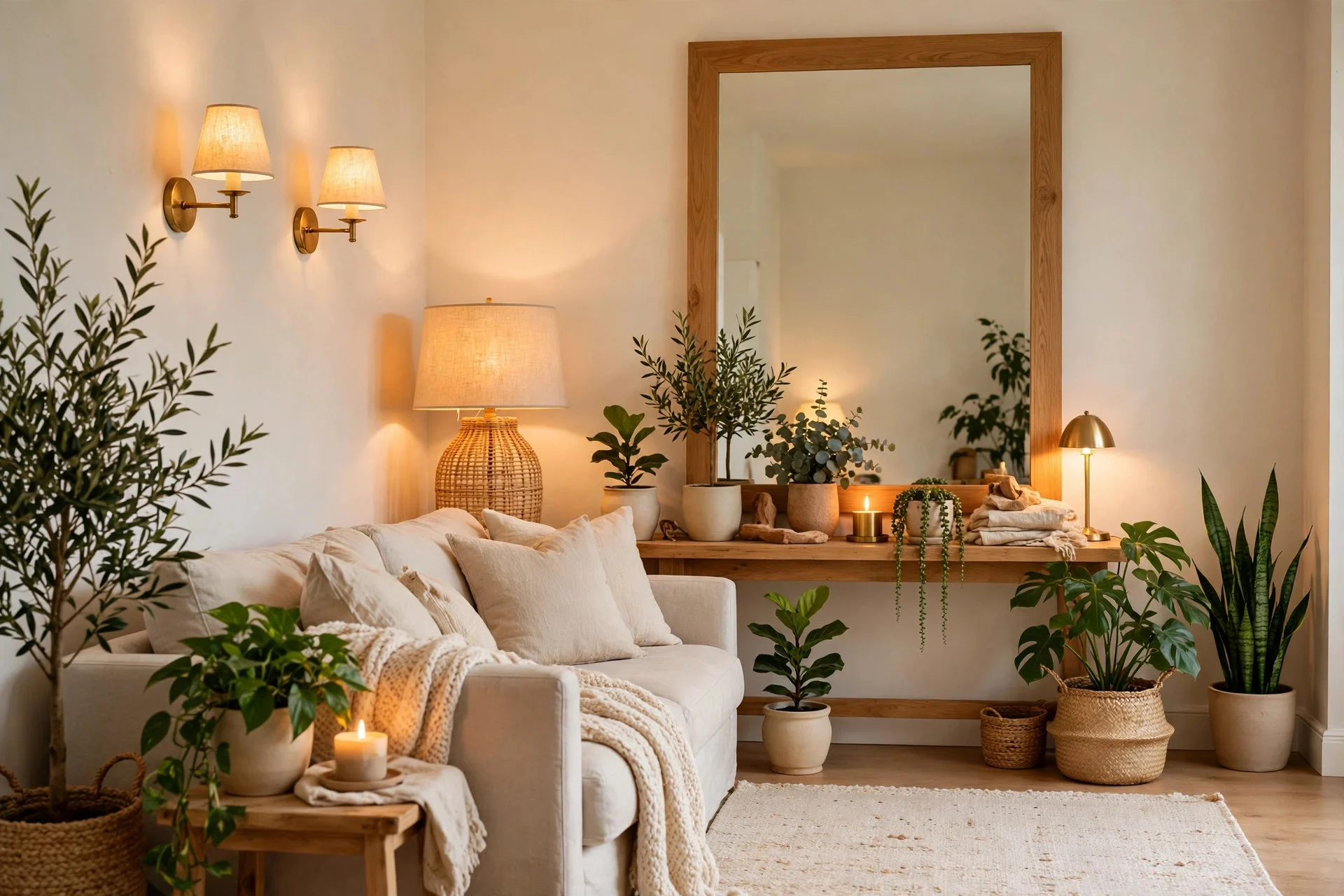
One ceiling light in an entry usually means harsh light from above and shadows everywhere else. Layer two warm sources instead: a wall sconce at about 170 centimetres high for general glow, and a small lamp on the console for a pool of light at hand height. Warm bulbs around 2700K make the space feel welcoming at night and flatter the mirror from idea 6.
Cost: $40–$150 for both. Difficulty: easy if you use plug-in sconces and a table lamp — no electrician needed. Tip: put the lamp on a timer or a smart plug so the entry is lit when you come home in the dark. Walking into a lit entry changes how the whole apartment feels. Watch out: do not aim a sconce straight at the mirror. It creates glare right where you want a clear reflection.
12. An Open Bookcase as a Soft Divider
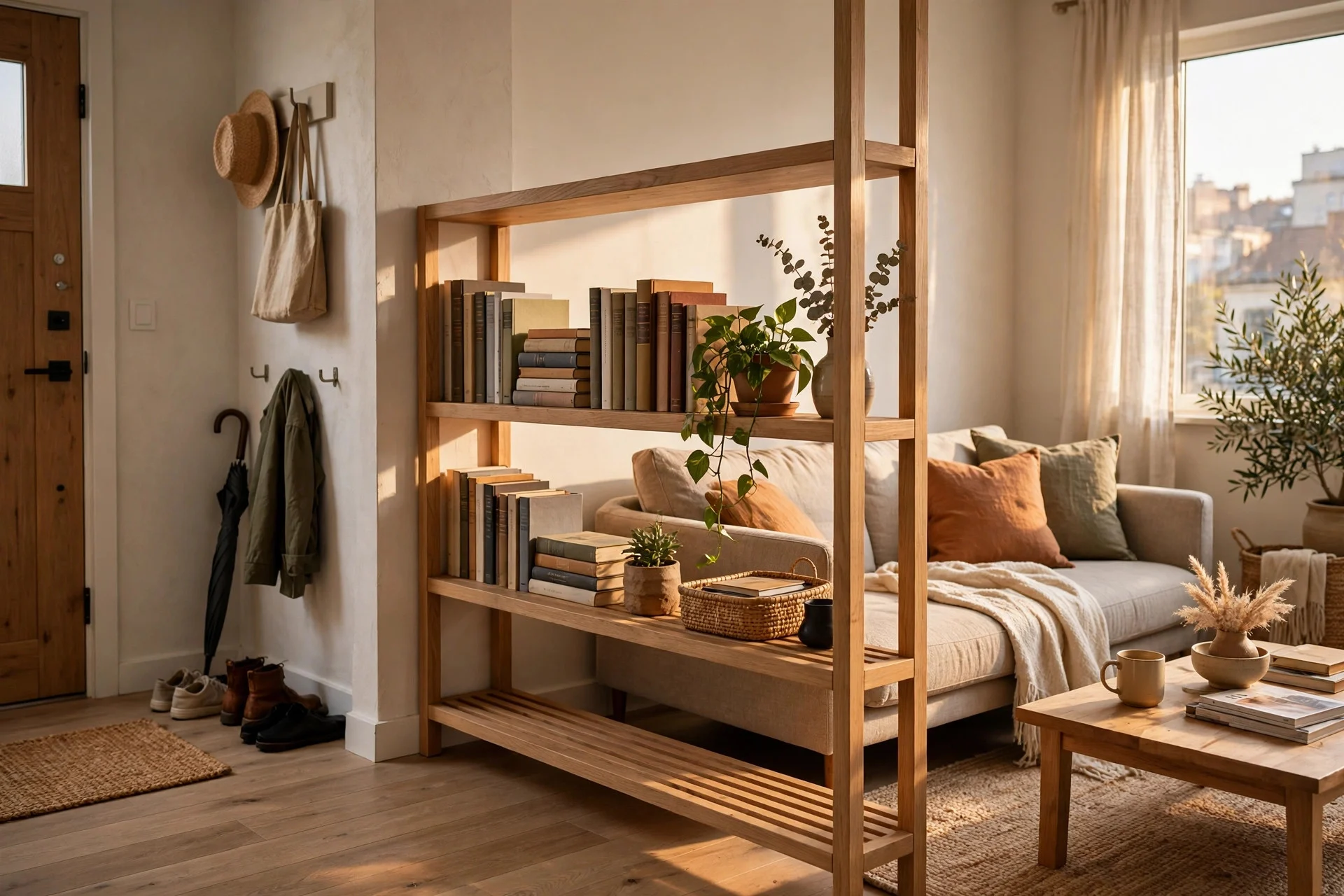
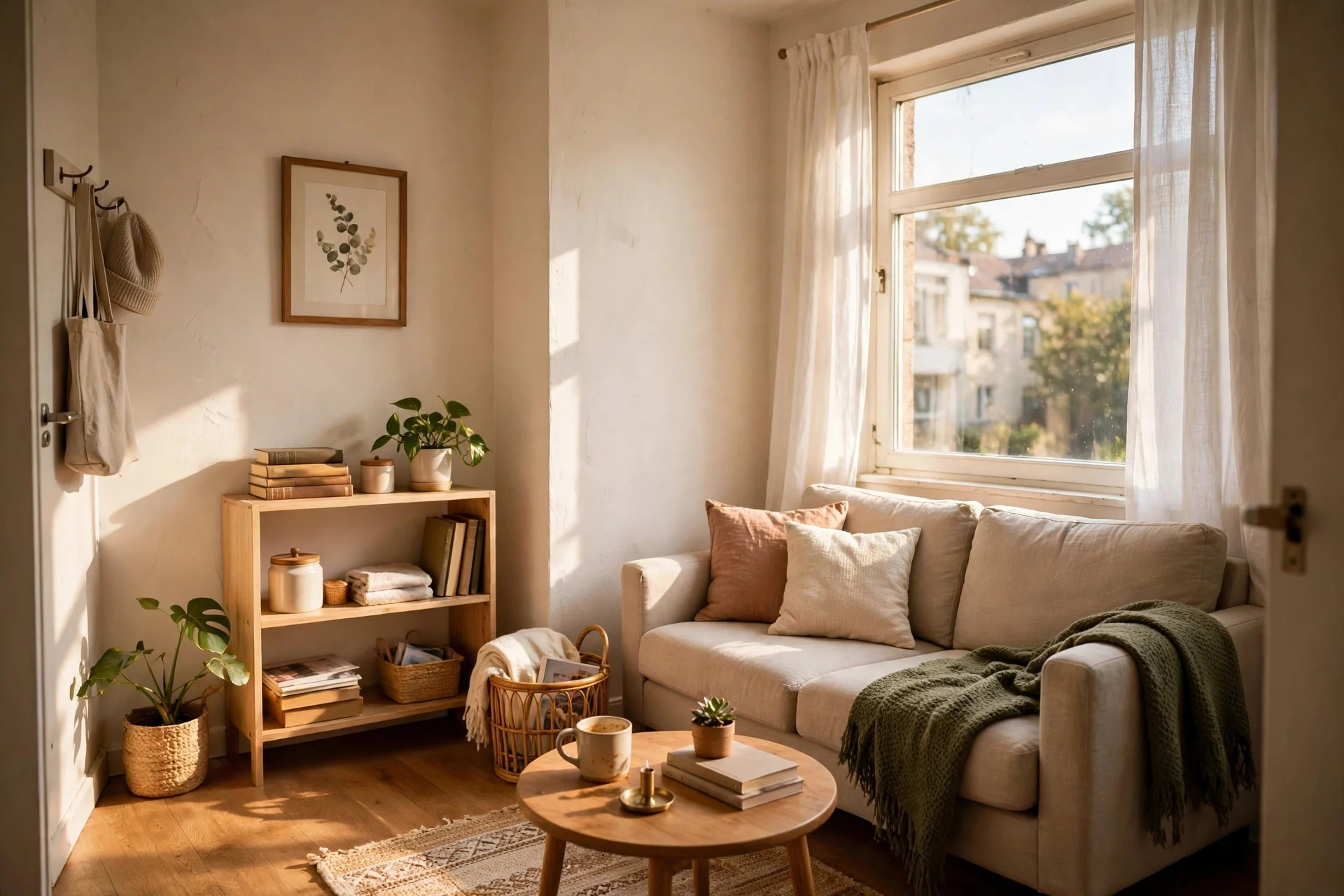
When nothing separates your door from your sofa, a low open bookcase does the job without closing the space in. Place it at right angles to the wall, so one end meets the wall and the unit runs into the room like a short peninsula. At 90 to 120 centimetres high, it screens the entry from the living area while letting light and conversation flow over the top. Fill it with books, a plant, and a basket or two — and leave a few shelves half-empty so it reads as furniture, not a wall of stuff.
Cost: $100–$300. Difficulty: easy to moderate — allow about an hour to assemble. Tip: style the entry-facing side first, since that is the side guests see. Put your nicest books and one plant there, and keep everyday clutter on the living-room side. Watch out: keep the unit low. A bookcase taller than about 120 centimetres starts blocking light and makes an open-plan apartment feel divided in the wrong way. If a solid divider feels too heavy for your layout, a fabric option works too — these studio apartment curtain divider ideas show how a curtain can mark the same boundary for much less money.
Frequently Asked Questions
How much space do you need for a foyer in an apartment?
About 90 by 90 centimetres of clear floor is enough for a functional landing zone: room to step in, turn, and take off shoes. If you have less than that, skip the bench and the bookcase and focus on wall-based ideas — hooks, a mirror, and a slim console — which need almost no floor space at all.
How do you make a foyer in an open-plan apartment without walls?
Use the tools in this guide: a runner rug to mark the floor, a console or bookcase to mark the edge, and lighting to mark the mood. Together they create a zone your eye reads as a foyer even though no wall exists. Start with the rug and one piece of furniture, then add layers only if the space still feels undefined.
What should you avoid putting in a small foyer?
Skip bulky coat stands, oversized shoe racks, and anything you only use once a month. Every item in a small entry should earn its place by being used weekly or by solving a daily problem. Seasonal gear, sports equipment, and spare household supplies belong in a closet or storage box elsewhere.
Can renters create a foyer without drilling?
Yes. Leaning mirrors, freestanding shoe cabinets, benches, rugs, and plug-in sconces all need zero holes. For hooks and shelves, high-quality removable strips work for light items, and tension-mounted or freestanding units cover the rest. Check your lease first if you plan to drill anything, and keep the original fixings if you do.
What size rug works best for a small entryway?
A runner 60 to 80 centimetres wide and 120 to 180 centimetres long suits most apartment entries. It should sit fully inside the landing zone without sliding under the door swing or bunching against furniture. Measure your space and run the numbers through a rug-size calculator before ordering, since returning a rug is a hassle most people would rather skip.
Your Small Foyer Checklist
Start at the door and work inward. Pick a slim console or shoe cabinet for the door wall, add hooks for coats, and give keys a tray. Lay a runner to mark the zone, hang a mirror where the entry turns into the living room, and push storage up into a tall tower or down into bench baskets. Finish with warm layered light and, if your layout needs it, a low open bookcase as a soft divider. You do not need all 12 ideas — five or six, chosen for your actual layout, will give you a foyer that works every single day.