10 Basement Apartment Ideas That Fix the Low Light
Basement apartments have a lot going for them: lower rent, cooler rooms in summer, and a quiet that upstairs units rarely offer. The trade-off is light. Small windows, window wells, and a ceiling that sits partly below ground level can leave rooms feeling dim even at midday. The good news is that you don’t need a renovation to fix it. With the right mix of lighting, colour, and reflective surfaces, a basement apartment can feel bright and comfortable. Here are ten fixes that work, roughly in the order most people tackle them.
1. Build a Layered Lighting Plan
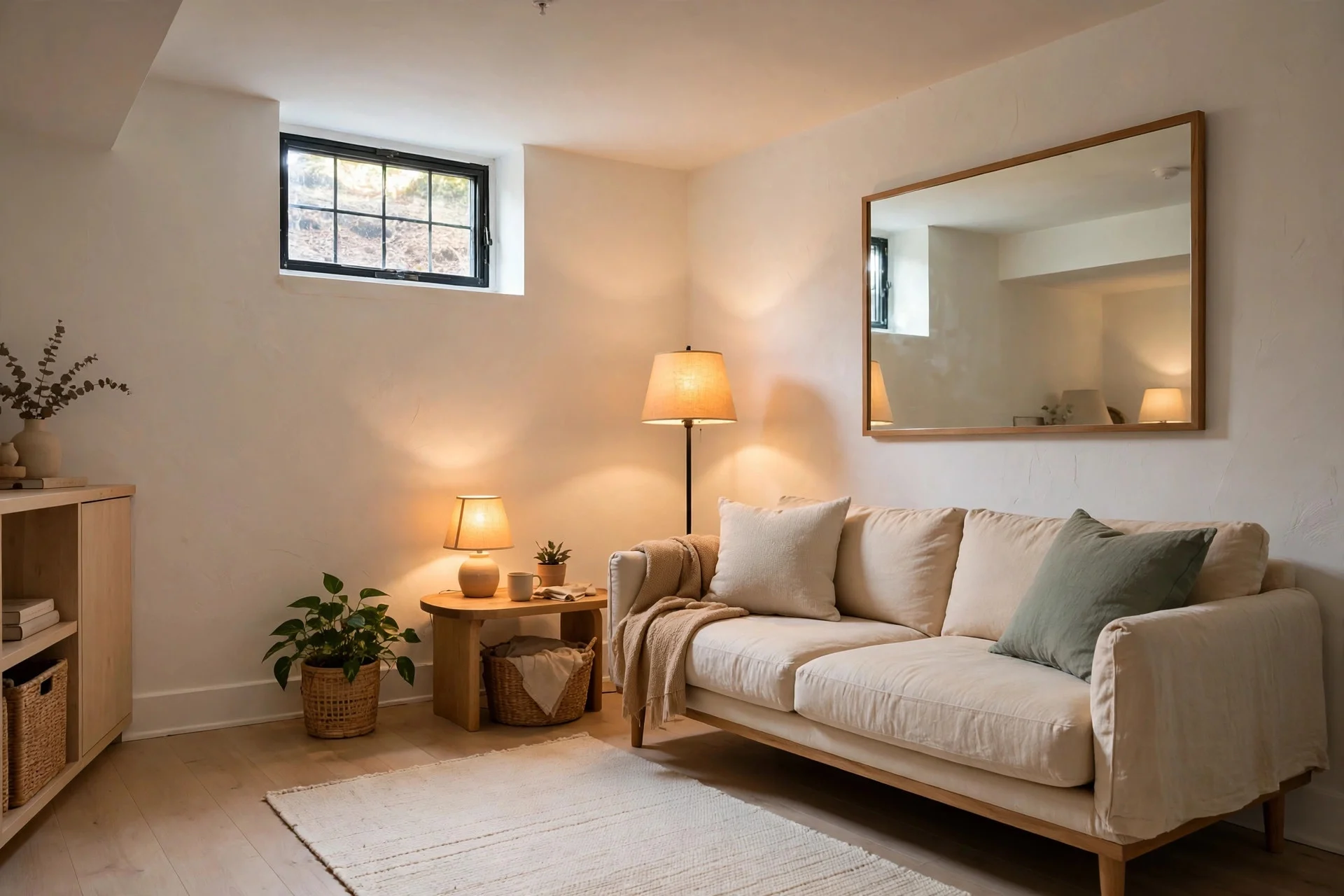
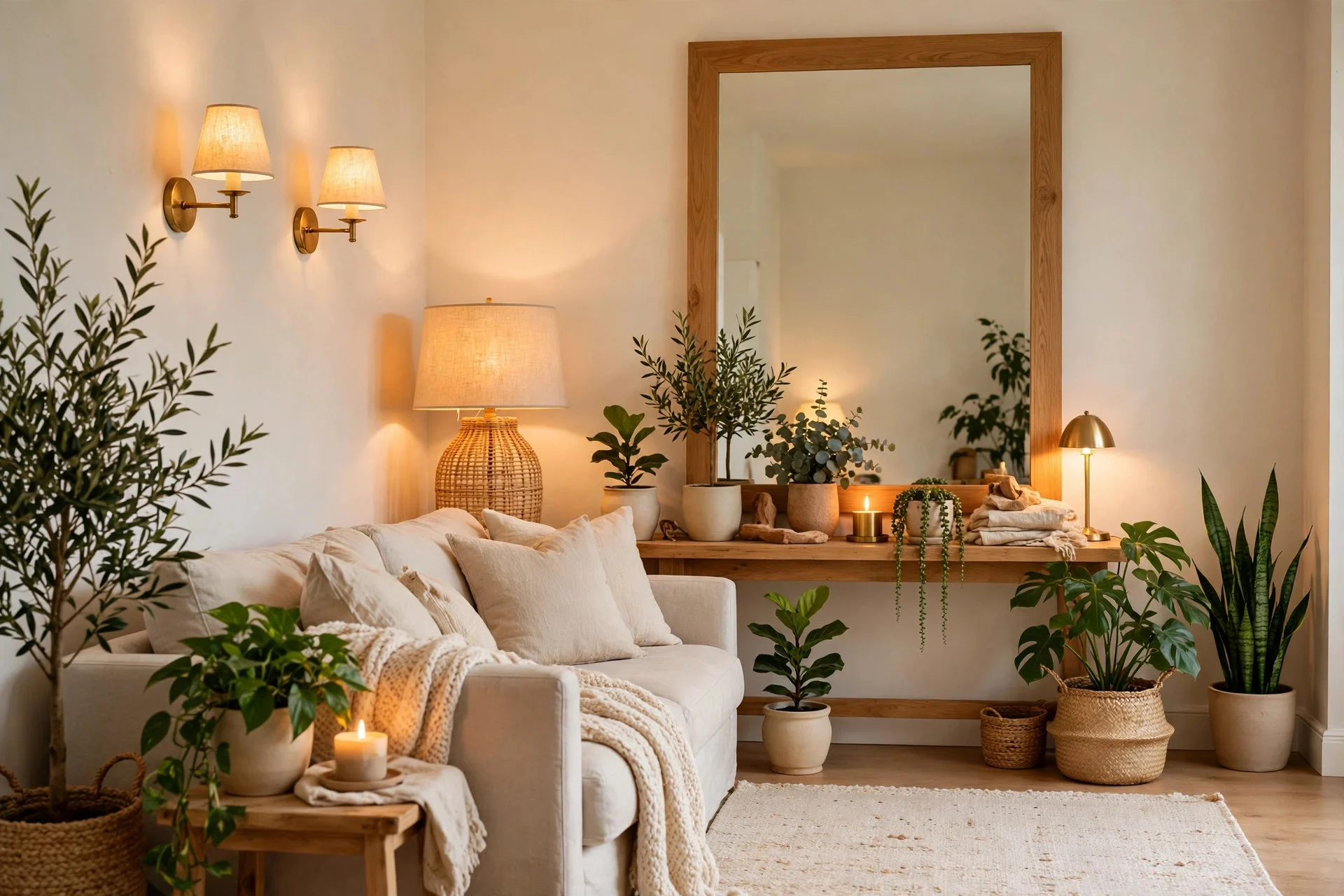
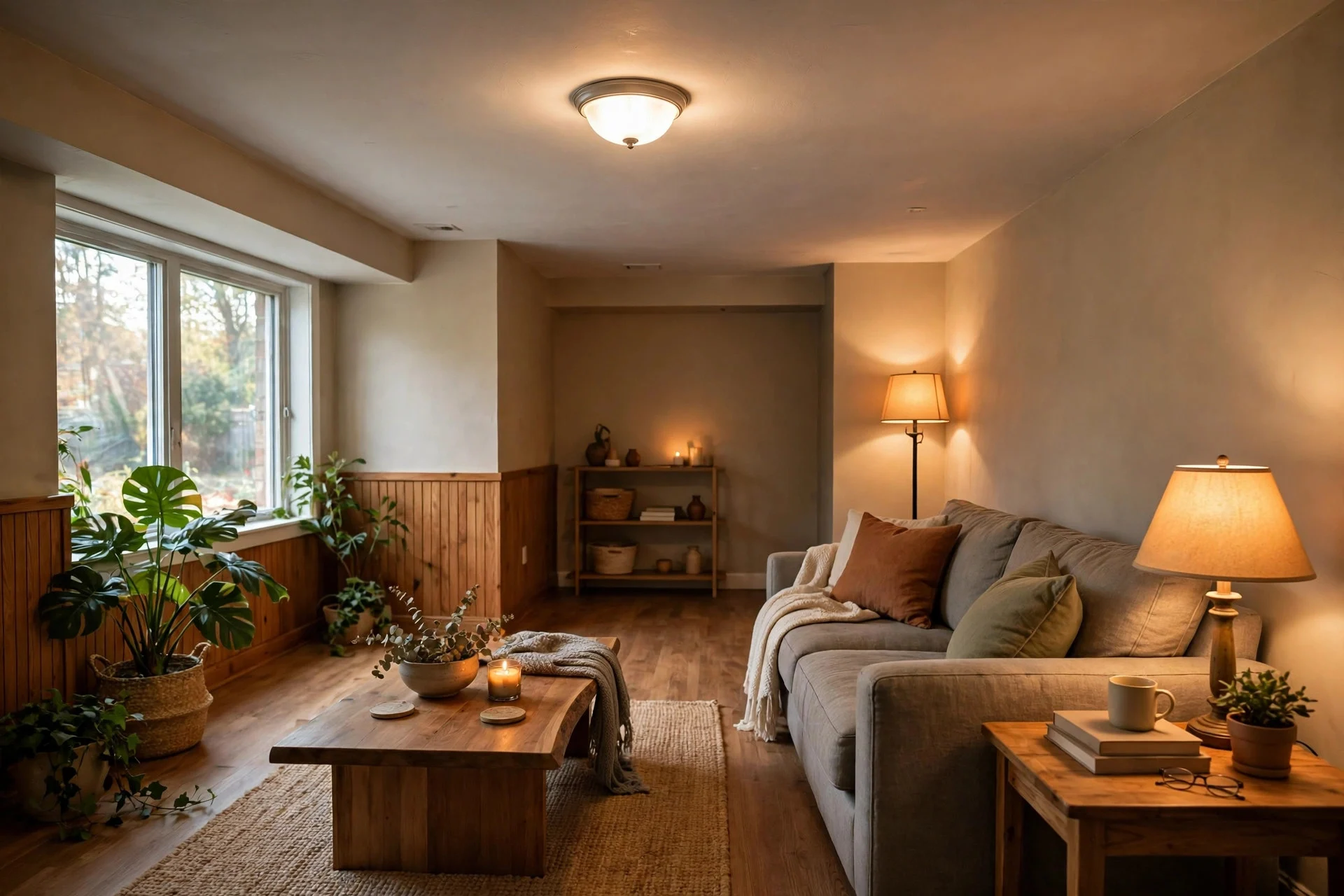
One ceiling light in the middle of a room is the main reason basement apartments feel gloomy. A single bulb throws harsh shadows and leaves the corners dark. Layered lighting fixes that by spreading light sources around the room at different heights: an overhead light for general brightness, floor and table lamps for warmth, and small task lights where you read, cook, or work.
Why it works: your eyes read a room as bright when light comes from several directions, not one. Three modest lamps beat one strong bulb because they erase the dark pockets that make a space feel cave-like.
Cost: $60–$250 for a basic setup of two lamps and a few bulbs. Difficulty: easy — an afternoon of shopping and plugging in. Hands-on tip: put your brightest lamp near the darkest corner, not next to the window, so light reaches where it’s needed most. Watch out: matching every lamp’s bulb colour matters. Mixing warm and cool bulbs in one room looks off, so pick one temperature (2700K–3000K for living areas) and stick to it.
2. Paint the Walls a Pale, Warm White
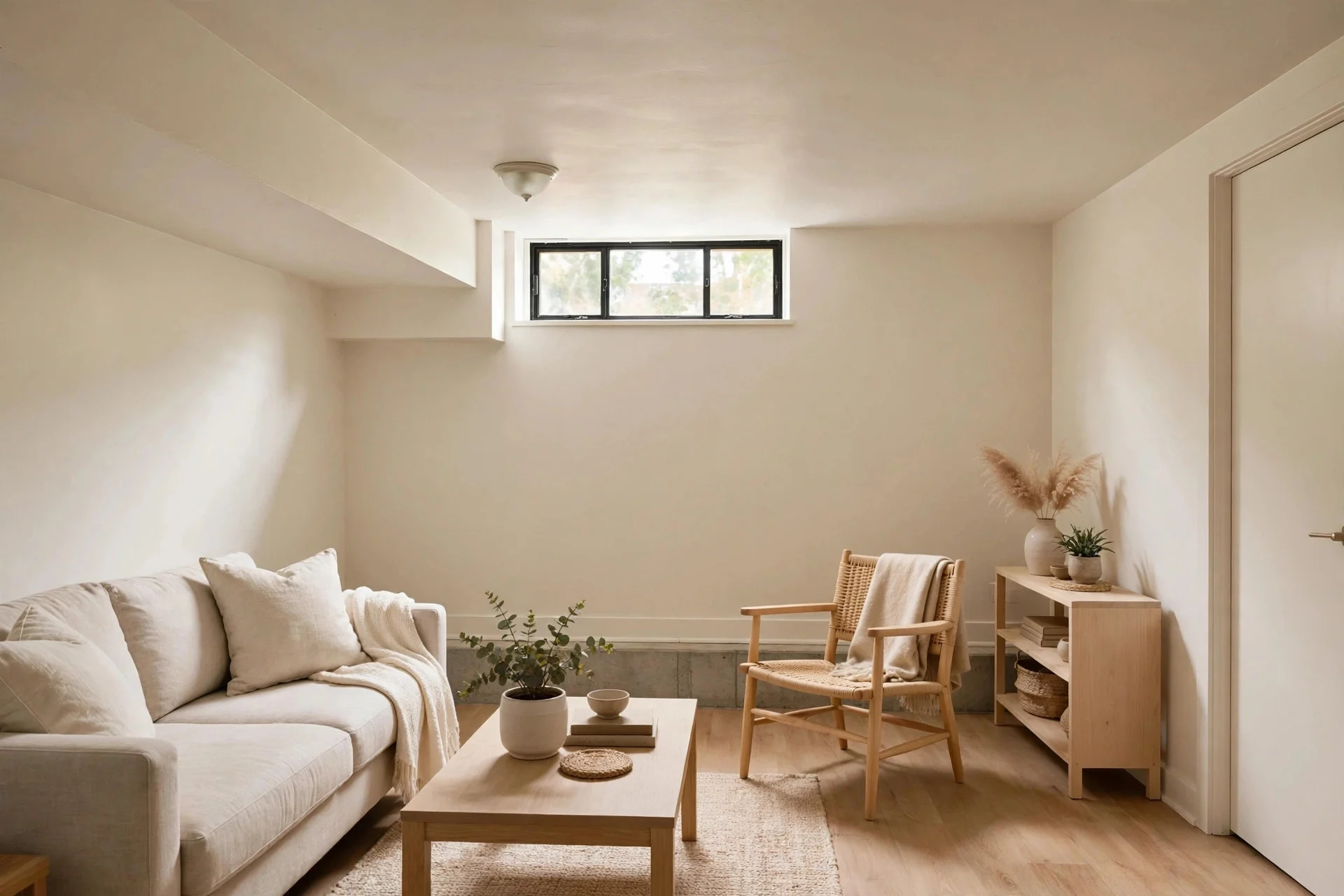
Dark or saturated wall colours absorb light, which is the last thing a basement needs. A pale warm white — think soft ivory, warm white, or the lightest greige — bounces what little daylight you get back into the room instead of swallowing it. If plain white feels too stark, a very light warm grey does the same job.
Why it works: light-coloured walls reflect up to 80% of the light that hits them, while dark colours reflect very little. In a room with one small window, that difference is visible the moment the paint dries.
Cost: $30–$60 per gallon plus rollers and tape; a single room usually takes two gallons. Difficulty: moderate — a weekend job for one room. Hands-on tip: paint the ceiling the same colour, or one shade lighter, so the ceiling doesn’t read as a dark lid. Watch out: cool whites can look grey and cold in low light, so test a swatch on the wall and check it at night under your lamps before committing. For more colour guidance, see these paint colours that make a small apartment look bigger.
3. Hang a Large Mirror Opposite the Window
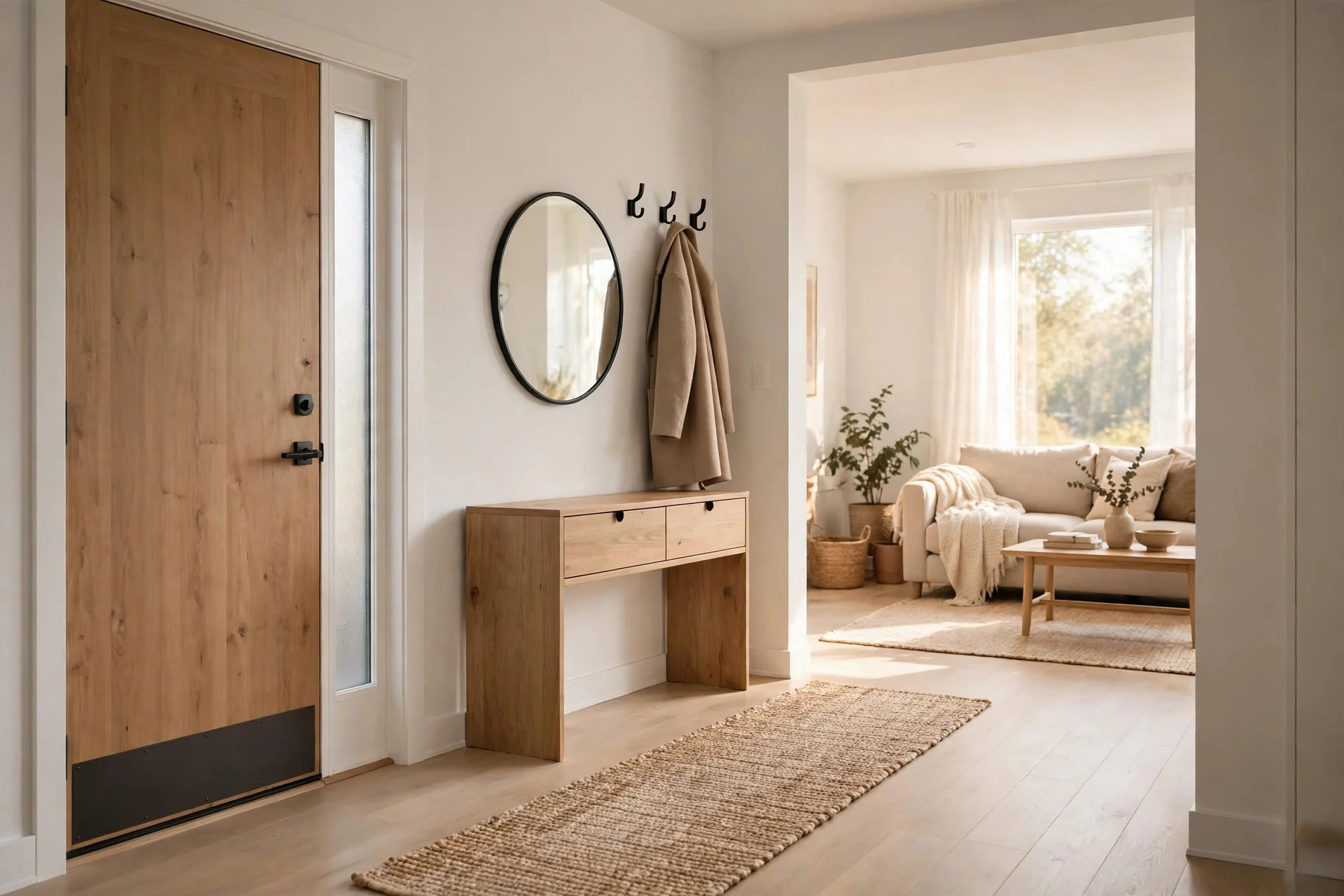
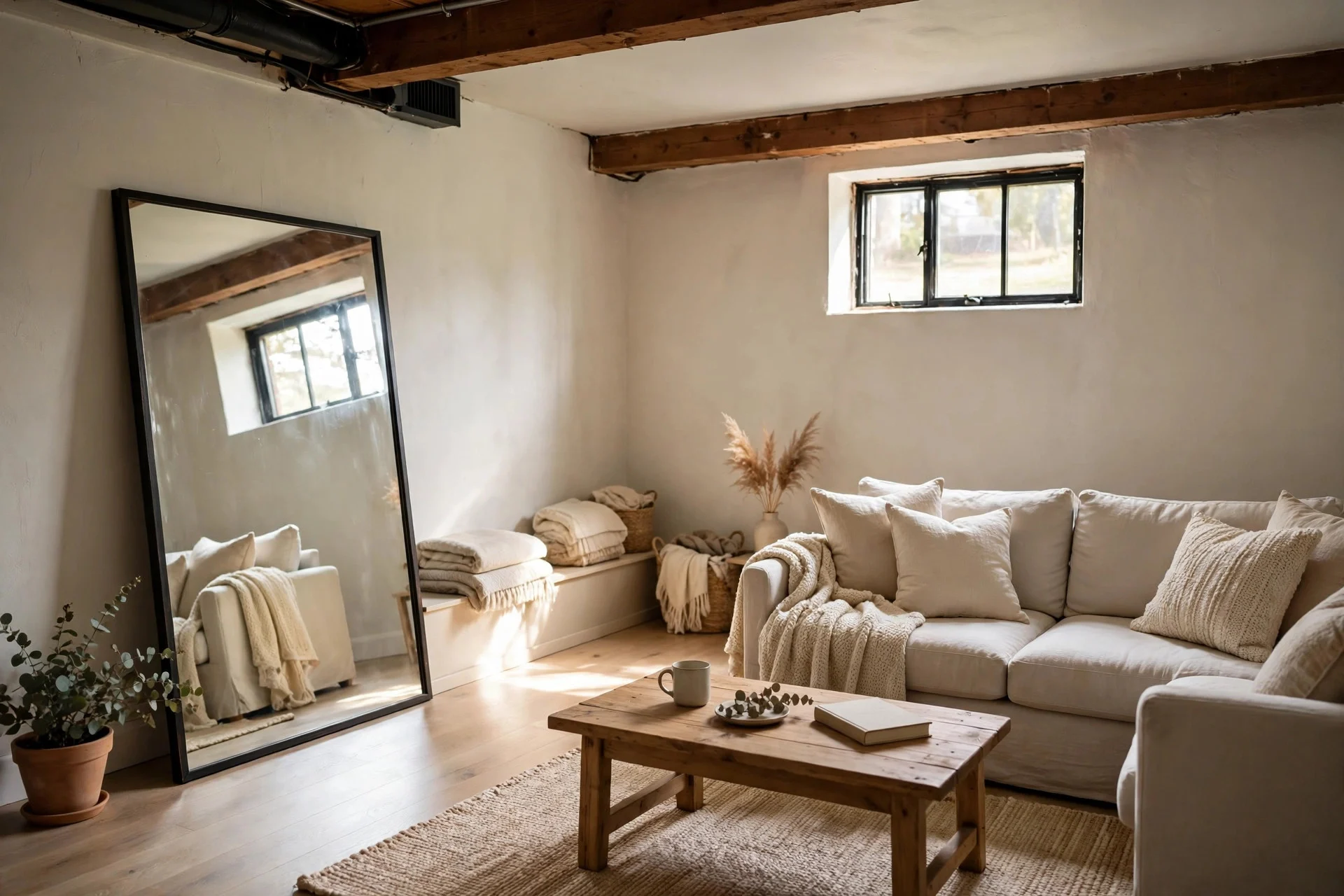
A mirror is the cheapest way to double your daylight. Hung on the wall facing a window, a large mirror catches the incoming light and throws it deeper into the room, so the far side of the space brightens too. A leaning full-length mirror works just as well if you can’t hang anything.
Why it works: mirrors don’t create light, but they redirect it. In a basement, where windows are small and high, that redirection is worth more than another lamp.
Cost: $40–$150 for a large leaning or wall mirror; thrift stores often have them for less. Difficulty: easy — hang or lean it in under an hour. Hands-on tip: angle the mirror slightly so it reflects the window itself, not the ceiling, and you’ll see the daylight effect immediately. Watch out: a mirror facing a cluttered corner doubles the clutter, so aim it at the window or at a tidy part of the room.
4. Free Up the Windows You Do Have
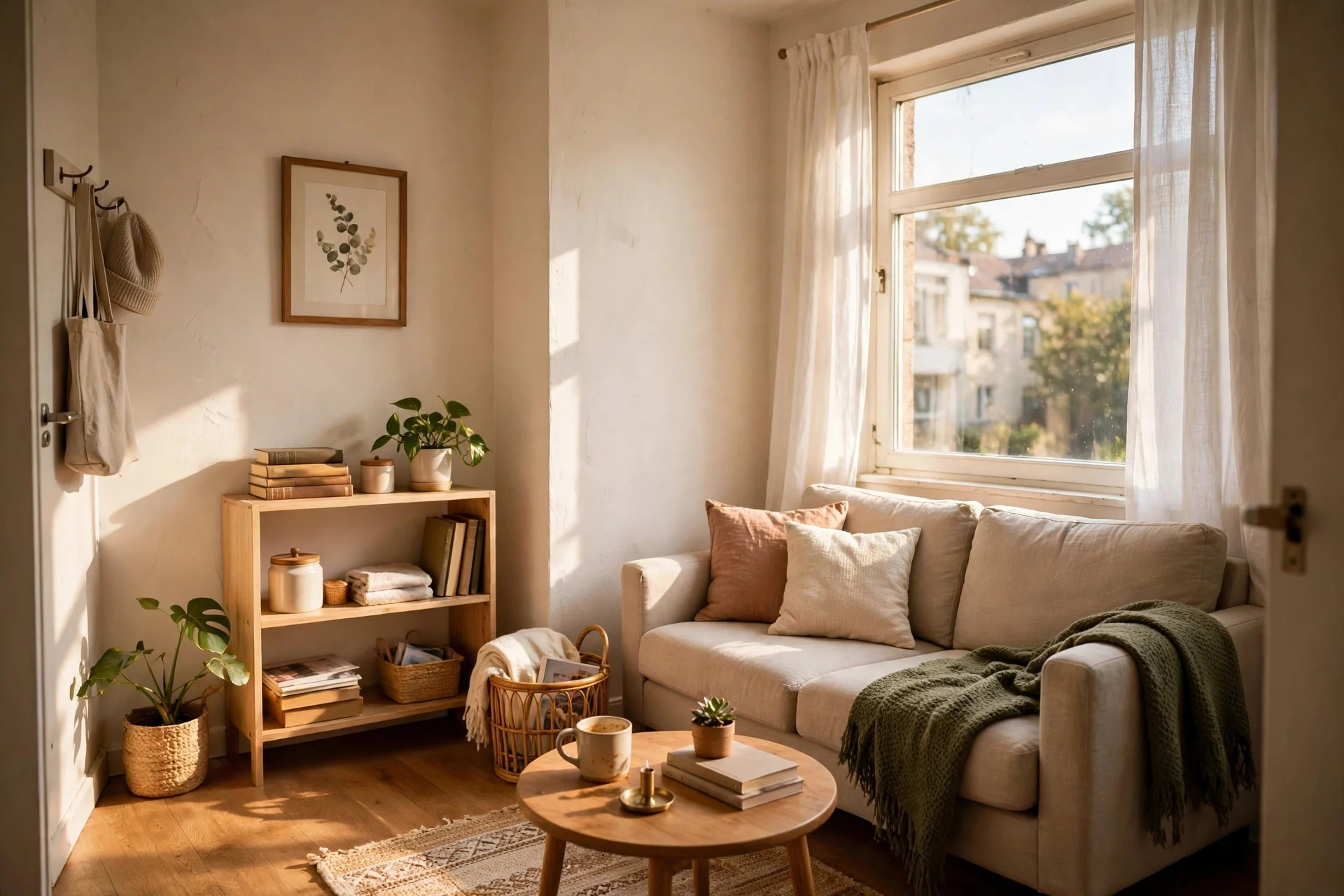
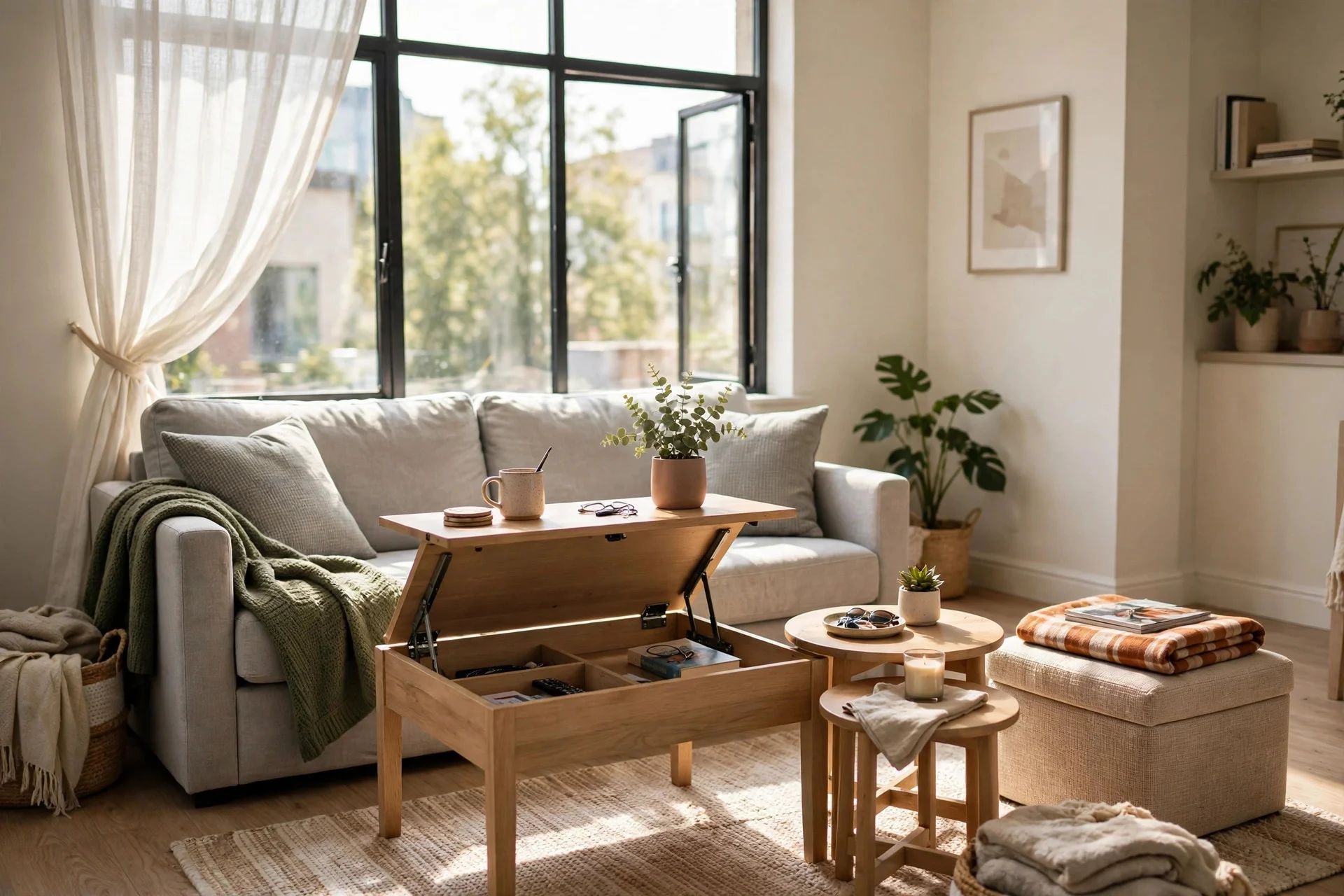
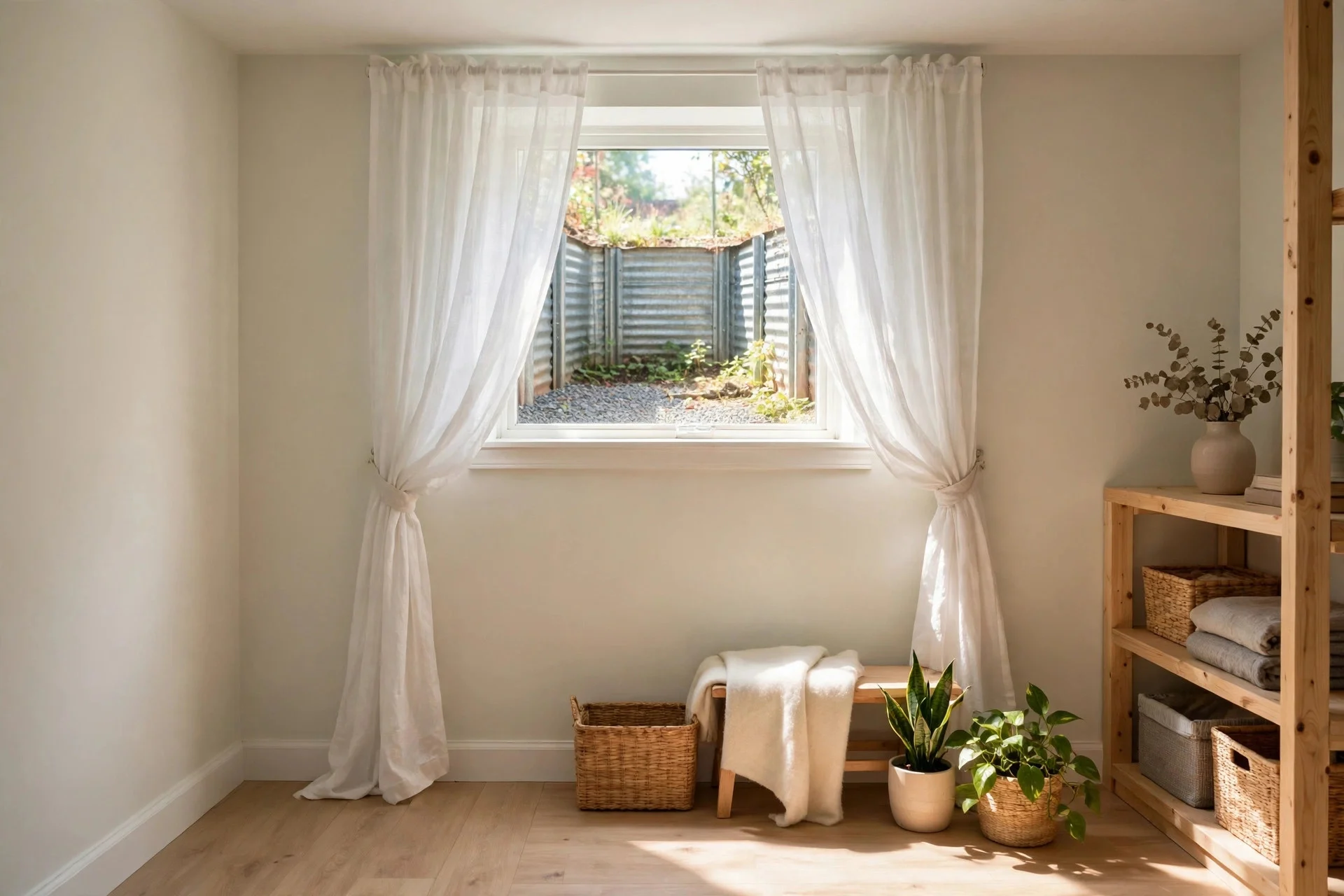
Basement windows are often half-blocked by heavy curtains, furniture, or grime on the outside of the glass. Clearing them is free and can make a surprising difference. Take down heavy drapes, switch to sheer curtains or a simple roller blind, clean both sides of the glass, and keep the window well outside clear of leaves and debris.
Why it works: a basement window may only be a few feet wide, but it’s your only natural light source. Anything blocking it costs you daylight you can’t afford to lose.
Cost: $0–$40 for sheers or a roller blind. Difficulty: easy — an hour or two at most. Hands-on tip: mount the curtain rod a few inches wider than the window frame so the open curtains sit on the wall, not over the glass. Watch out: if your window well collects water or dirt, clear it regularly — a blocked well can cut your daylight in half. If your space has no usable window at all, these windowless room decorating ideas cover the same problem from a different angle.
5. Add LED Strips Under Cabinets and Shelves
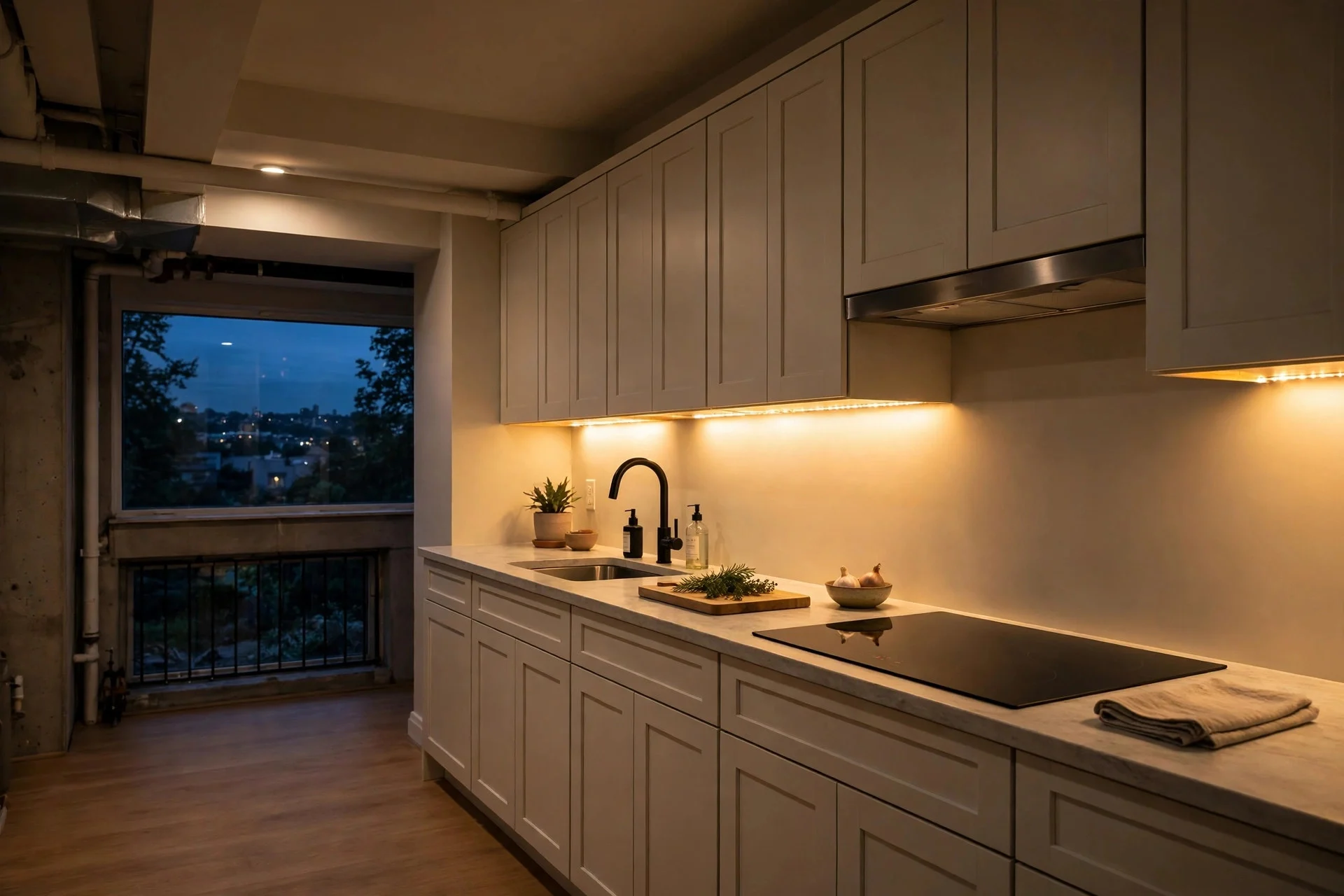
LED strip lights are thin, adhesive-backed ribbons of light you stick under kitchen cabinets, along bookshelves, or behind a headboard. They cost little, use almost no electricity, and wash a soft glow across surfaces that overhead lights never reach. In a basement kitchen, under-cabinet strips turn a dark countertop into a usable workspace.
Why it works: light aimed at a surface (a counter, a shelf, a wall) reads as brightness without glare. It also fills the shadowy band between your overhead light and your work surface.
Cost: $15–$40 per strip kit, often with a remote and dimmer included. Difficulty: easy — peel, stick, plug in, done in 30 minutes. Hands-on tip: choose warm white (2700K–3000K) for living areas and a brighter neutral white (4000K) for kitchen counters where you chop and cook. Watch out: cheap strips sometimes show individual dots of light; a simple aluminium channel with a diffuser cover smooths them into one even line.
Mistakes to Avoid in a Basement Apartment
Before you buy anything else, watch out for these common missteps. First, don’t rely on a single overhead light — it’s the fastest way to make a room feel like a cellar. Second, don’t paint an accent wall dark “for contrast” unless the room already gets strong light; in a basement it usually just eats the light you’ve worked to gain. Third, avoid bulky, dark furniture that blocks windows and swallows floor space; low-profile pieces in lighter finishes keep sightlines open. Fourth, don’t hang curtains that cover part of the window when open — that’s daylight you’re paying for and not using. And finally, don’t mix bulb colours across a room; mismatched warm and cool light looks messy and makes the space feel less put-together than it is.
6. Choose Light Floors and Pale Rugs
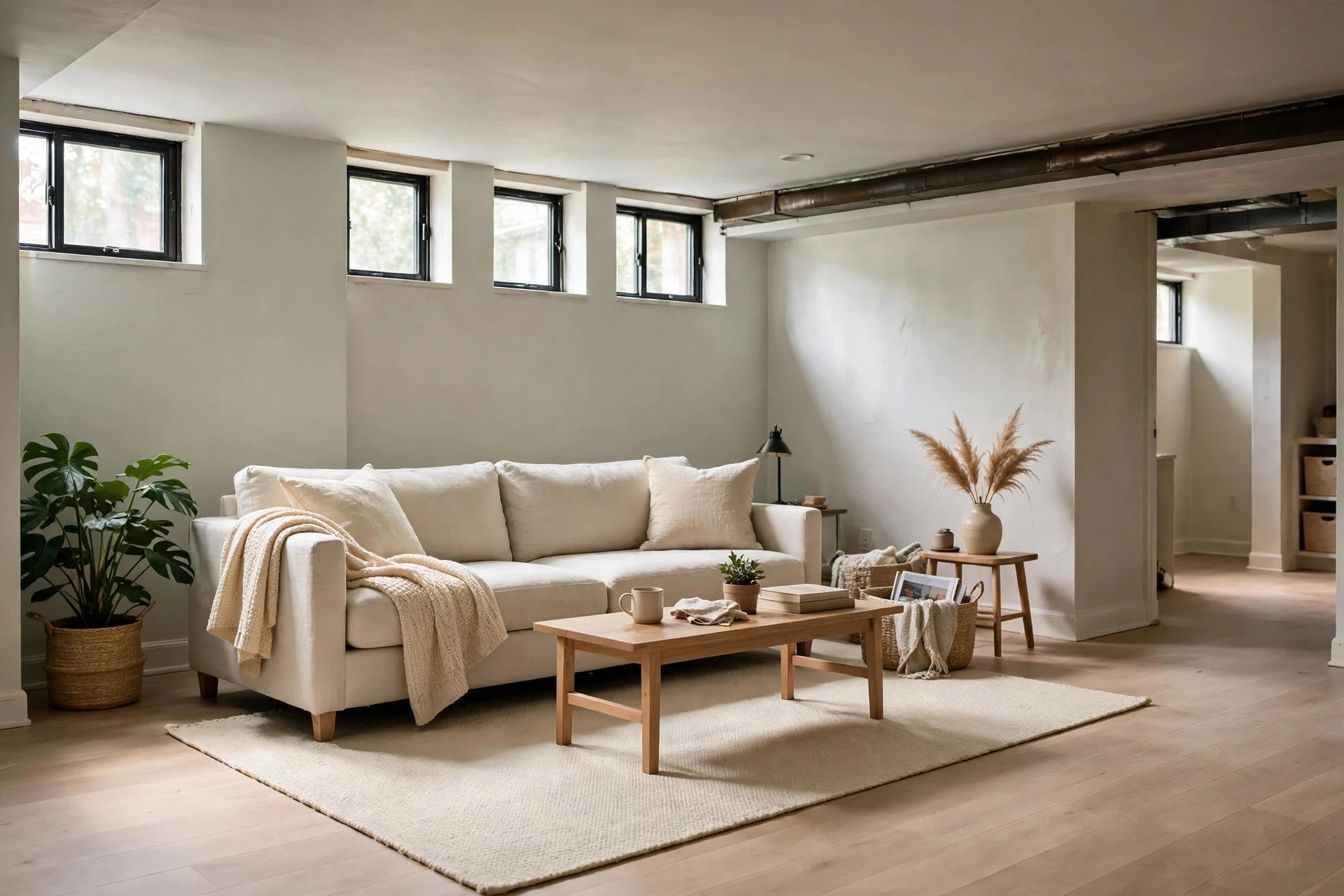
Dark floors and heavy rugs drag a basement room down visually. If you can’t change the flooring, a large pale rug does most of the same work. Light wood tones, pale jute, or a cream flat-weave rug reflect light upward and make the floor read as part of the bright scheme instead of a dark hole.
Why it works: the floor is the largest surface in the room. When it’s dark, it absorbs light from every lamp in the space. Lightening it raises the whole room’s brightness.
Cost: $60–$200 for a large rug; peel-and-stick light wood planks run $1–$3 per square foot if your lease allows them. Difficulty: easy for a rug, moderate for peel-and-stick planks. Hands-on tip: size the rug so the front legs of your sofa and chairs sit on it — a too-small rug floating in the middle of the floor chops the room up. Watch out: very pale rugs show dirt fast in a basement entry, so keep a washable option or a darker mat right at the door.
7. Pick Low, Leggy Furniture in Light Finishes
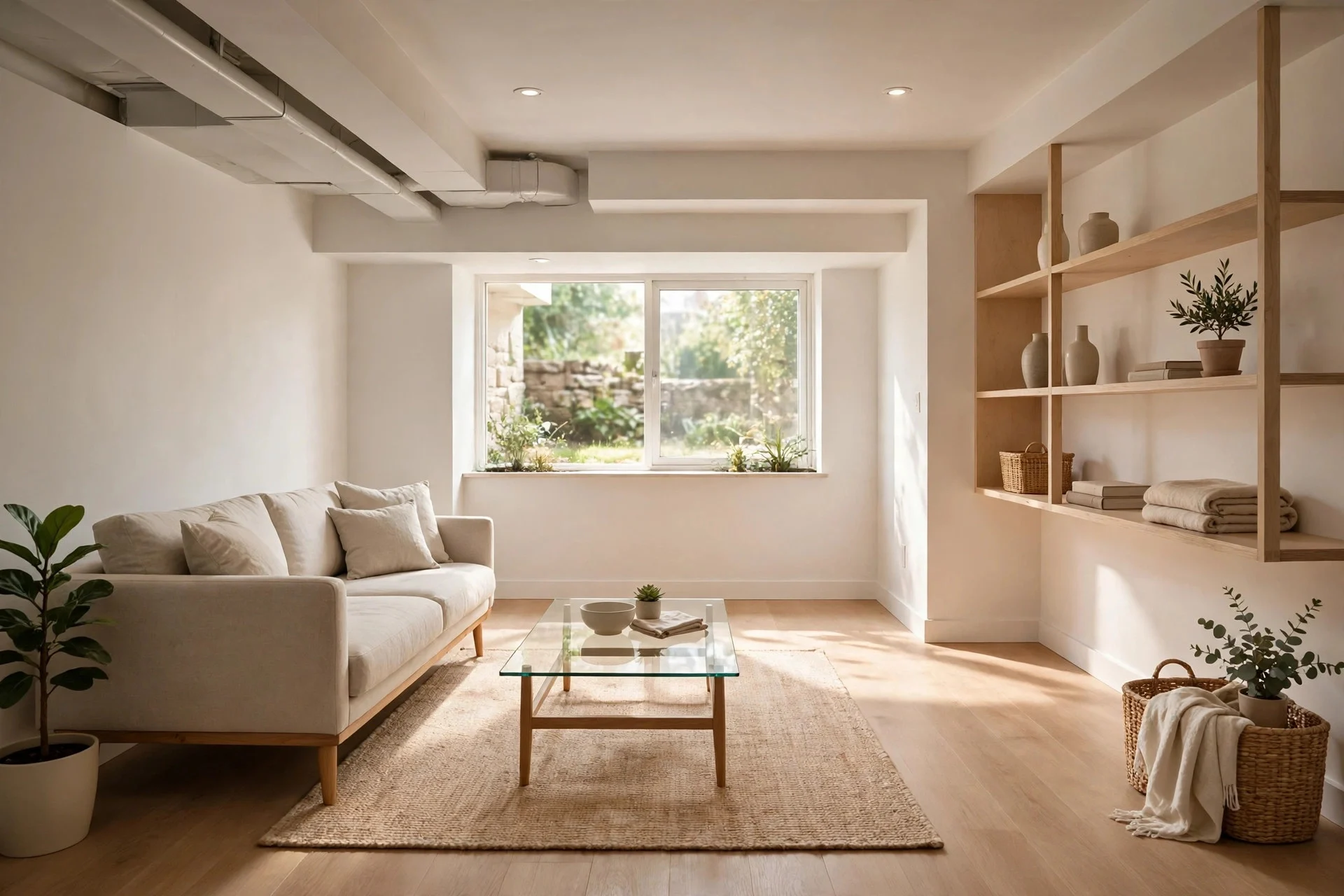
Heavy, dark, floor-hugging furniture makes a low-ceilinged basement feel cramped and shadowy. Swap the visual weight: sofas and chairs on visible legs, open shelving instead of solid bookcases, and coffee tables in glass or pale wood. You see more floor and wall around each piece, and light passes through instead of stopping at a solid block.
Why it works: furniture you can see under and around feels lighter, and light finishes reflect the lamps and daylight you’ve added rather than absorbing them.
Cost: varies — a glass-top coffee table runs $80–$200; swapping a bookcase for open shelves costs $40–$120. Difficulty: easy to moderate. Hands-on tip: if replacing furniture isn’t in the budget, slipcovers in a pale linen-look fabric can lighten a dark sofa for $50–$100. Watch out: glass tables show dust and fingerprints, so keep a cloth handy if that bothers you. For more space-saving furniture thinking, see these multi-purpose furniture ideas for apartments.
8. Switch to Daylight-Mimicking Bulbs Where It Counts
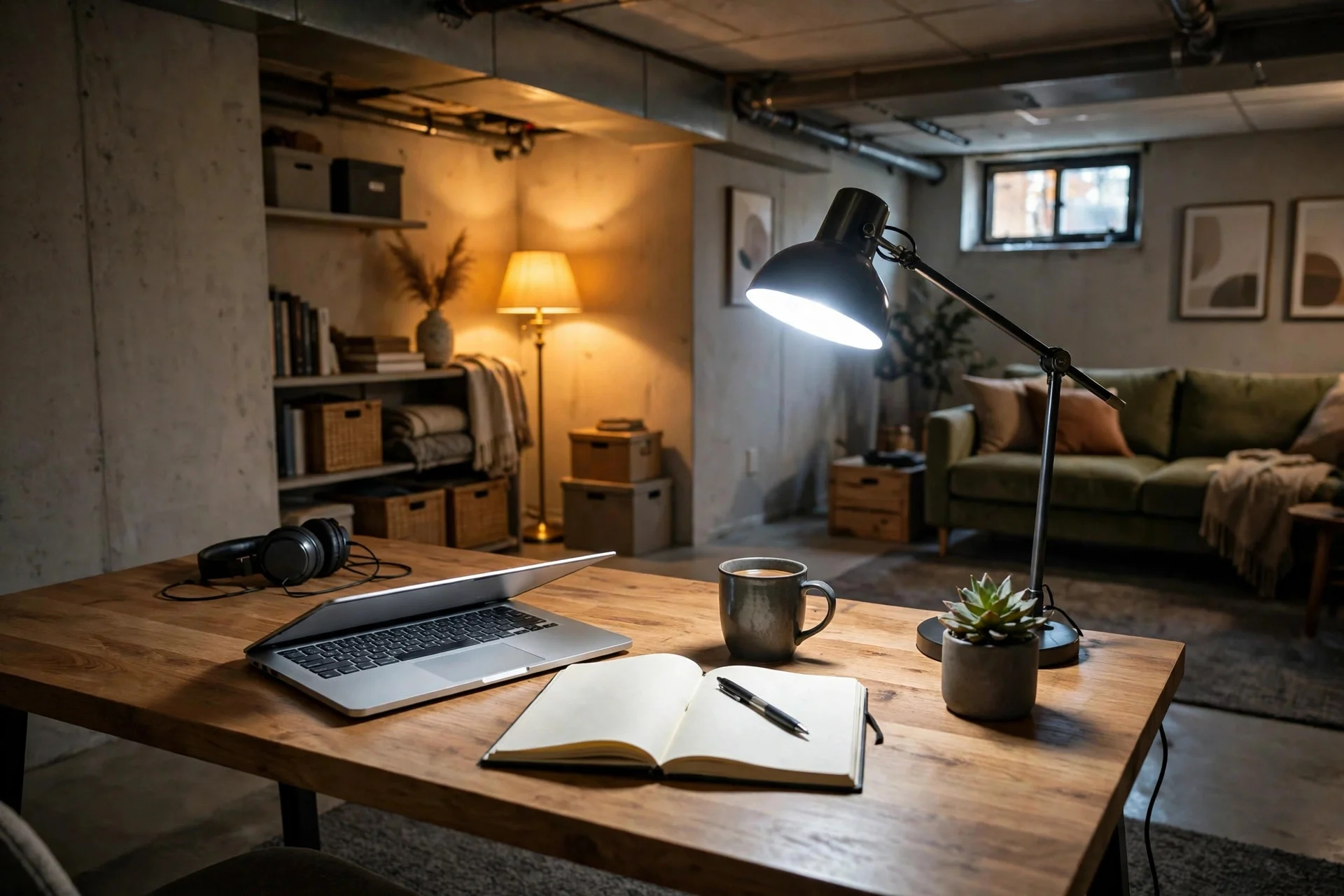
Standard warm bulbs are cosy at night, but during the day they can make a basement feel yellow and dim. In rooms where you work, cook, or get ready in the morning, try daylight bulbs (around 5000K) or smart bulbs you can shift from daylight in the morning to warm in the evening. The brighter, whiter light reads as daylight to your brain and makes the room feel more awake.
Why it works: your eyes judge brightness partly by colour temperature. A 5000K bulb at the same wattage looks noticeably brighter and crisper than a 2700K bulb.
Cost: $10–$30 for a pack of daylight LED bulbs; smart bulbs run $10–$25 each. Difficulty: easy — screw them in. Hands-on tip: keep daylight bulbs in task zones (desk, kitchen, bathroom mirror) and warm bulbs in relaxing zones (bedside, sofa lamps) so the apartment doesn’t feel like an office at night. Watch out: daylight bulbs in every socket can feel harsh after dark, so don’t go all-in — mix by zone.
9. Add Reflective and Glass Accents
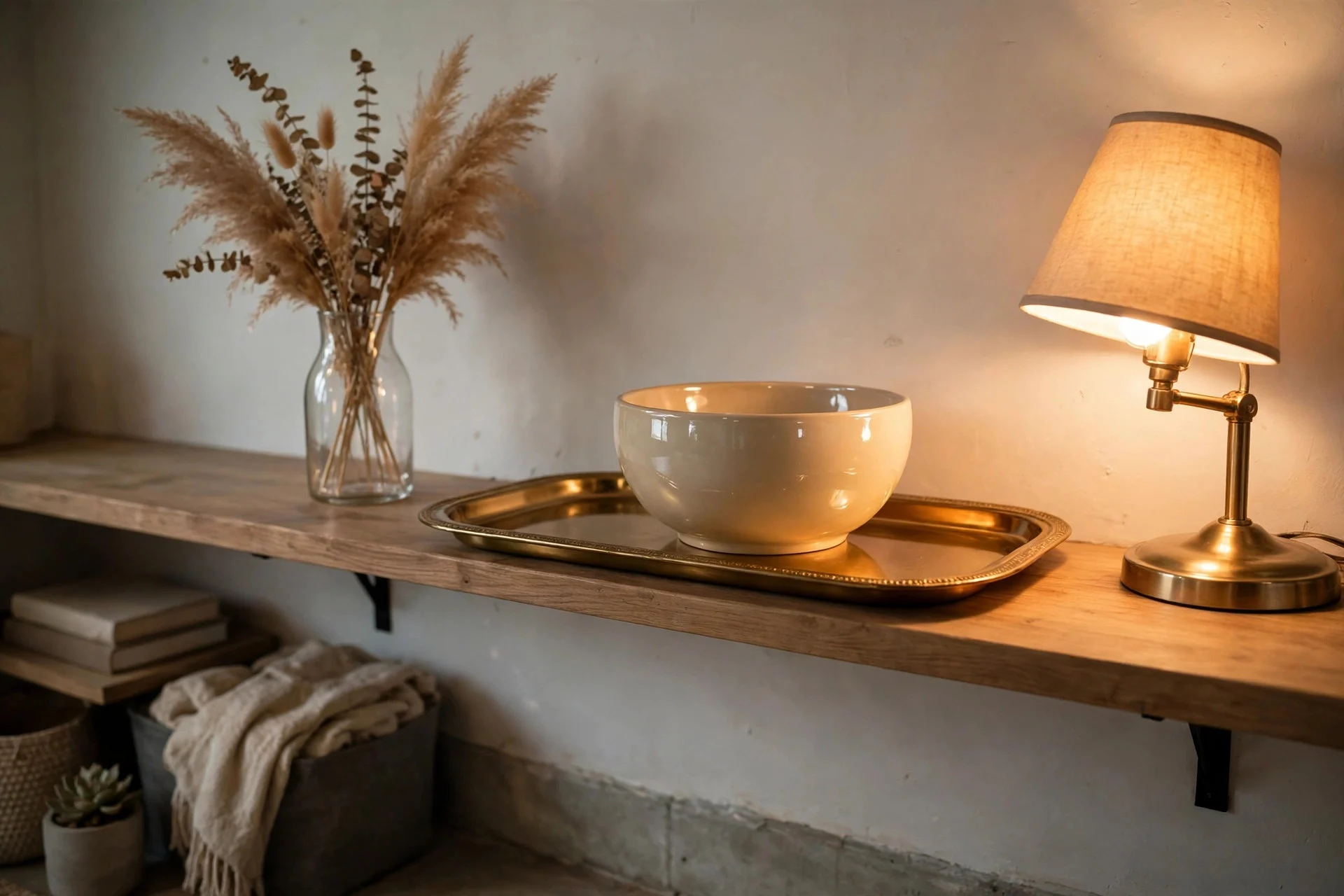
Once the big moves are done, small reflective surfaces keep the brightness going. A glass vase, a metallic tray, a chrome lamp base, or a glossy ceramic bowl all catch light and scatter it. Grouped on a coffee table or shelf, they act like tiny mirrors scattered through the room.
Why it works: each reflective object bounces a little light in a new direction, which softens shadows and adds sparkle that flat, matte surfaces don’t give.
Cost: $20–$80 total for a few thrifted or budget pieces. Difficulty: easy — style a shelf in an afternoon. Hands-on tip: place one reflective piece near each lamp so it catches that lamp’s glow. Watch out: too much chrome and glass can feel cold, so balance it with warm textures like a knit throw or a wooden tray.
10. Open Up the Layout and Cut the Clutter
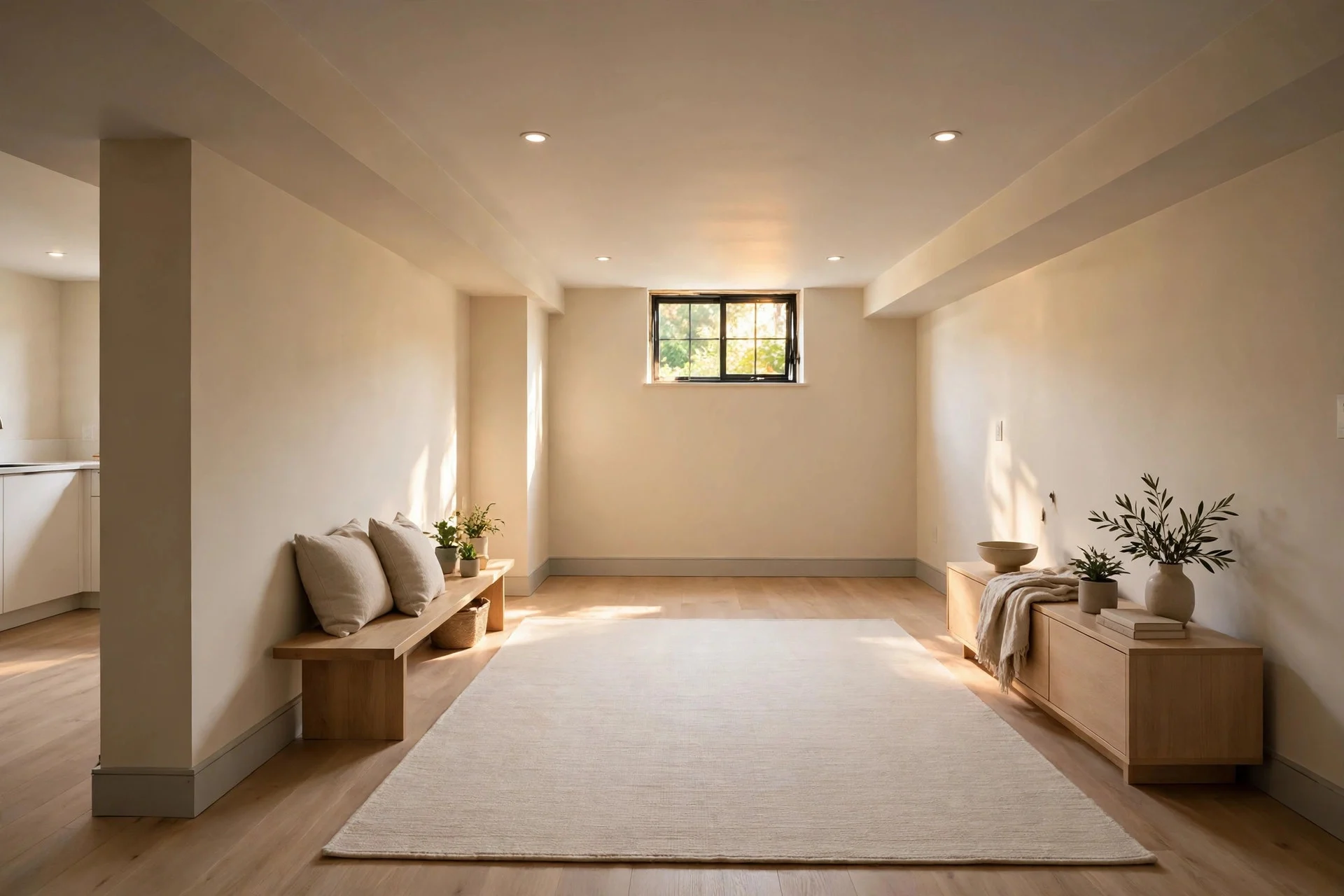
The final fix costs nothing: rearrange so nothing tall stands between your windows and the rest of the room, and clear the surfaces that collect stuff. A tall bookcase beside the window throws a shadow across half the room. Moving it to a side wall, and keeping counters and tables mostly clear, lets the light you’ve added travel further.
Why it works: light can’t do its job if furniture blocks its path. An open layout also helps your eye travel across the room, which makes the space feel larger and brighter than the same square footage packed full.
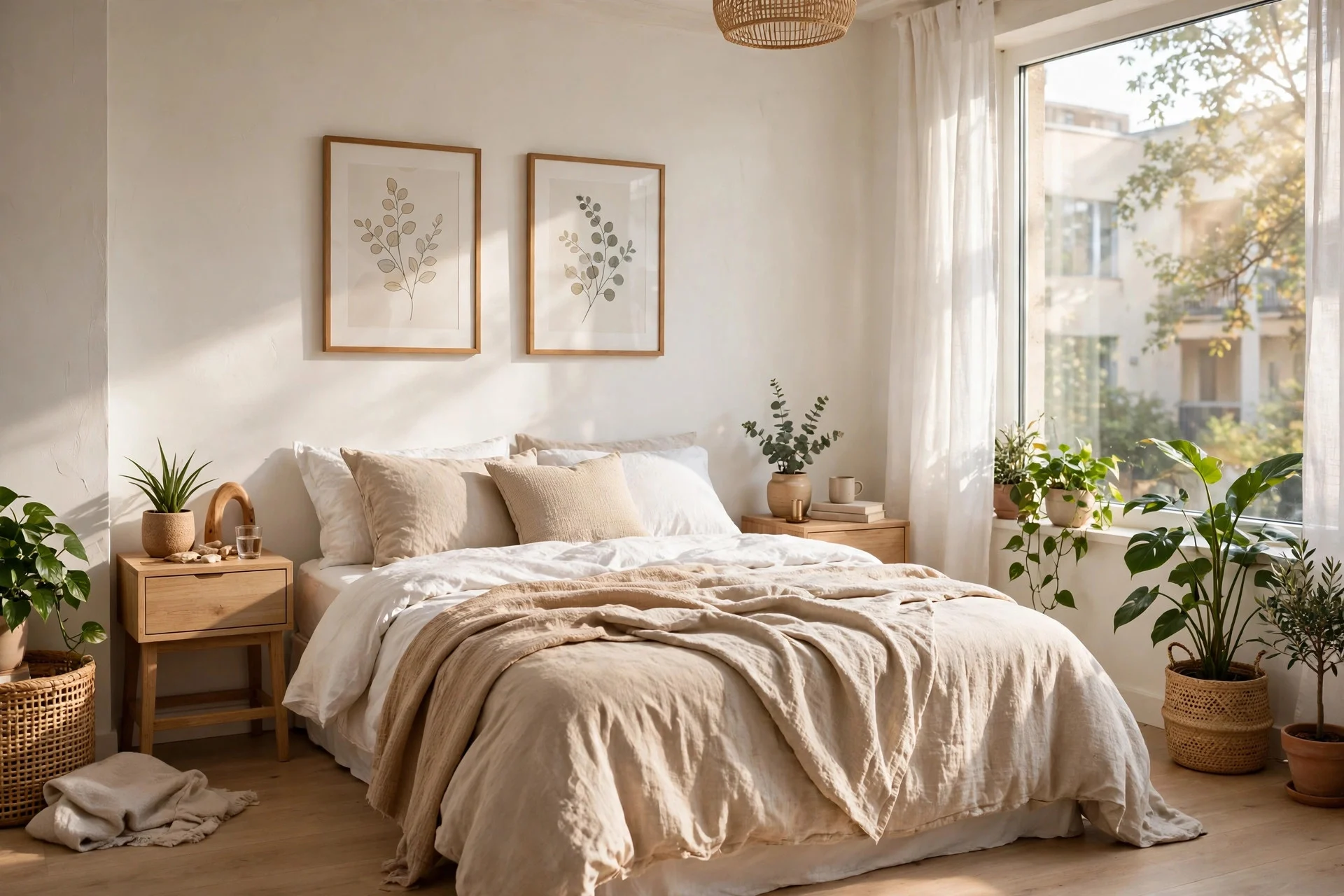
Cost: $0. Difficulty: easy — a couple of hours of moving and sorting. Hands-on tip: stand at the window and look across the room; anything taller than your waist sitting between you and the far wall is a candidate to move. Watch out: don’t strip the room bare — a few plants, books, and textiles keep it feeling like home, not a showroom. If your sleeping area needs the same treatment, these small apartment bedroom layouts for a queen bed show how to keep a compact room open.
Frequently Asked Questions
Can a basement apartment ever feel truly bright?
Yes, in most cases. You won’t match a top-floor unit’s daylight, but layered lighting, pale walls, mirrors, and cleared windows together can make a basement feel bright and comfortable day and night. The trick is combining several small fixes rather than hoping one lamp will do it.
What’s the cheapest fix for a dark basement apartment?
Clearing and cleaning your windows costs nothing and often helps the most. After that, a daylight bulb swap ($10–$30) and a large mirror ($40–$150) give the biggest brightness gain per dollar, especially if you’re renting and can’t paint.
Should I use warm or daylight bulbs in a basement?
Use both, in different zones. Daylight bulbs (around 5000K) suit kitchens, desks, and bathrooms where you need to see clearly. Warm bulbs (2700K–3000K) suit living and sleeping areas where you relax. Keeping one temperature per zone avoids the mismatched look.
Can I brighten a basement apartment without painting?
Absolutely. Renters often can’t paint, and mirrors, lamps, LED strips, pale rugs, light slipcovers, and sheer curtains can still change the feel of a room dramatically. If painting is off the table, lean hardest on lighting and mirrors.
Do plants help a dark basement feel brighter?
Indirectly, yes. Low-light plants like pothos, snake plants, and ZZ plants add life and a natural feel, which makes a room feel less like a basement. Just don’t crowd them onto the windowsill, where they block the daylight you’re trying to keep.
Quick Wrap-Up Checklist
Start with the free wins: clean and clear your windows, move tall furniture away from them, and declutter. Then add light where it matters — a layered lamp setup, LED strips under cabinets, and daylight bulbs in task zones. Next, bounce that light around with pale paint (if your lease allows), a big mirror, light rugs, and leggy, light-finished furniture. Finish with small reflective accents and a consistent bulb temperature per zone. Work through this list one fix at a time, and your basement apartment will stop feeling like a basement — and start feeling like home.