16 Studio Apartment Ideas With a Curtain as the Divider
A studio apartment curtain divider is one of the simplest ways to get privacy in a home that has no walls to give you any. You sleep, work, eat, and relax in one room, and guests see all of it the moment they walk in. A well-hung curtain fixes that without a renovation, a landlord argument, or a big bill. It hides the bed when friends visit and makes one room feel like it has rooms instead of corners.
The trick is picking the right curtain for the job. Sheer softens a space but hides almost nothing; heavy blackout gives real privacy but can darken a studio. The 16 ideas below cover both ends, each with a cost range, a time estimate, and the detail that makes it look finished.
1. A Ceiling Track Across the Sleeping Zone
A ceiling-mounted curtain track is the closest thing to a real wall you can get without building one. The track screws into the ceiling in a straight line, usually from one wall to the nearest wall or beam, and the curtain hangs from floor to ceiling.
Why it works: it divides the room cleanly, and the curtain slides out of the way during the day. Expect to spend $40–$120 for the track, hooks, and a pair of panels. Fitting takes about 1–2 hours with a drill and a level. Tip: measure the ceiling in two spots — older ceilings are rarely level. Watch out: if your lease bans ceiling holes, see idea 3 first.
2. A Tension Rod in a Doorway or Alcove
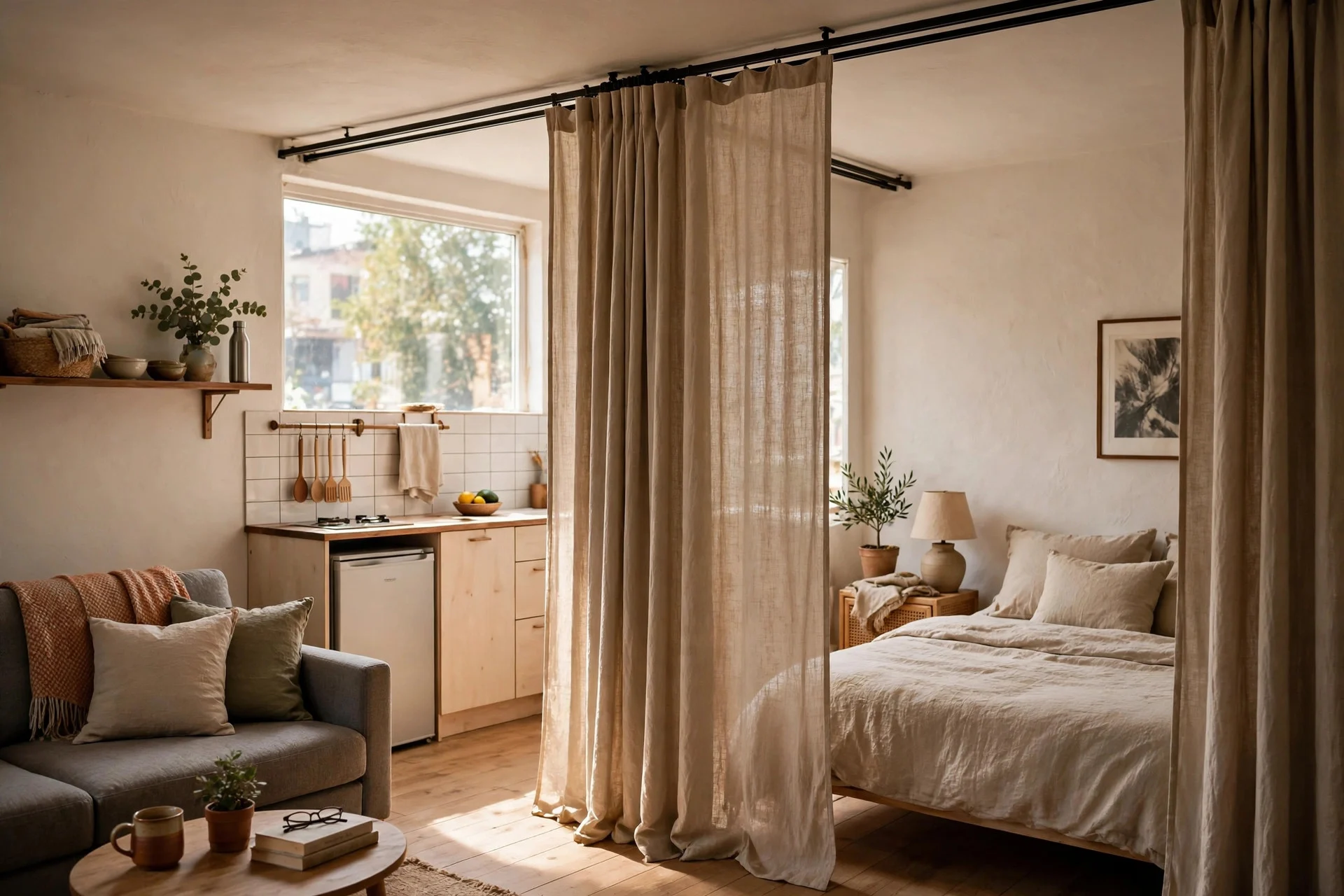
If your studio has an alcove, a recessed sleeping nook, or even a wide doorway frame, a tension rod is the fastest fix of all. No drilling, no tools, no move-out damage. Twist the rod until it grips both sides, hang the curtain, done.
Why it works: it is cheap, removable, and perfect for renters. A sturdy rod plus a curtain panel runs $15–$40, and the whole job takes under 15 minutes. Tip: buy a rod rated for your width — a bowing rod drops the curtain at the worst moment. Watch out: tension rods fail on crumbling plaster, so test the grip first.
3. A Freestanding Curtain Rod Stand
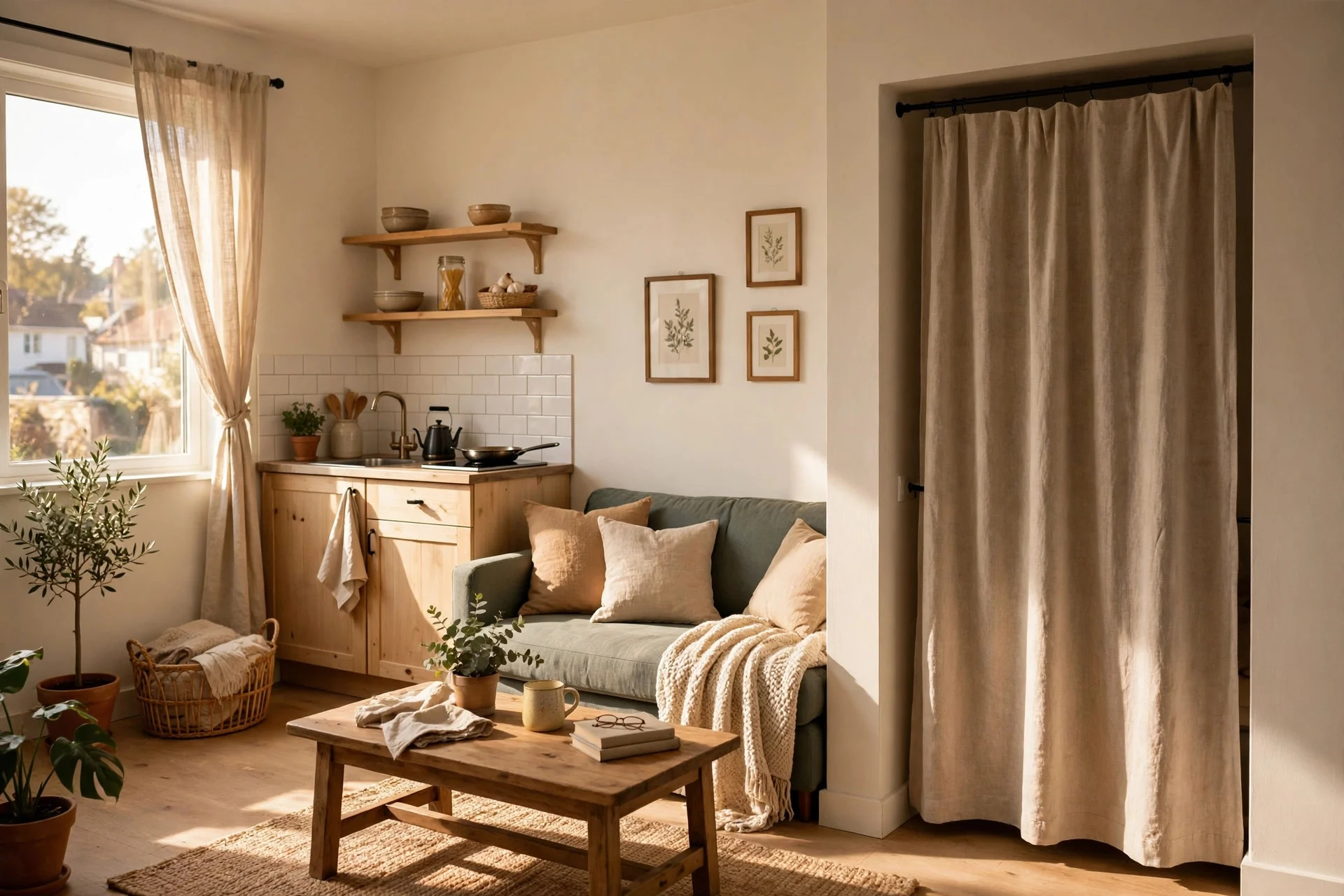
When you cannot drill into the ceiling or the walls, a freestanding rod stand does the same job while standing on the floor. Two weighted bases hold a horizontal rod, and the curtain hangs like a portable wall. Move it when you rearrange, take it when you move out.
Why it works: it needs zero permission from a landlord and zero holes. A decent stand costs $60–$150 depending on width and weight. Assembly takes 20–30 minutes. Tip: pick wide, heavy bases if pets or kids run through the room — narrow bases tip. Watch out: leave clearance to walk around the bases without tripping in the dark.
4. Blackout Curtains for a Real Bedroom Feel
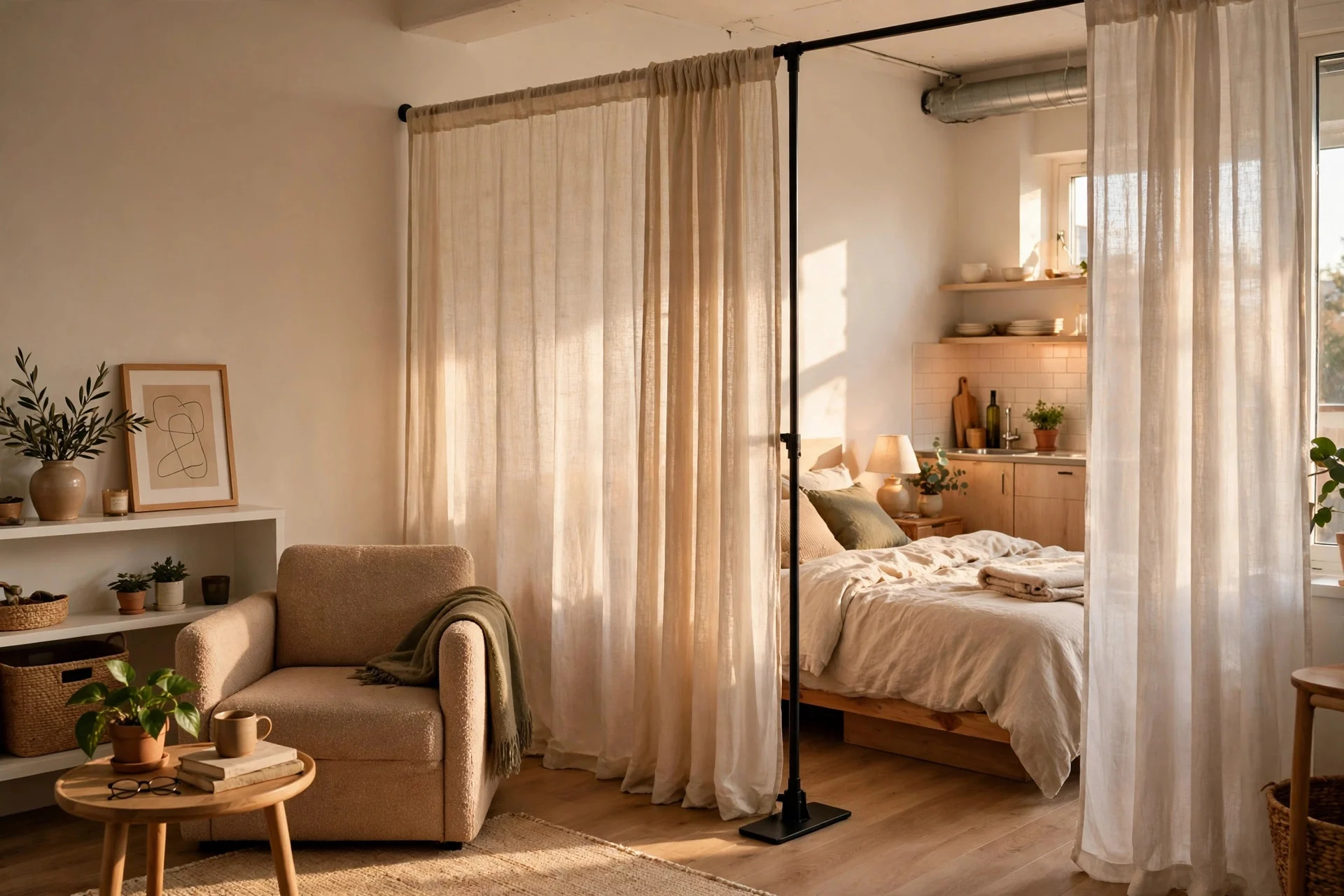
Blackout curtains are the answer when your problem is not just privacy but sleep. TV light, a partner reading late, or streetlights all land on your bed in a studio. A thick blackout panel blocks light from both sides and muffles sound a little too.
Why it works: it turns a corner of a room into a space that feels like a bedroom at night. A pair of blackout panels costs $30–$90. Hanging them takes under an hour on an existing rod or track. Tip: choose fabric at least 1.5 times the opening width so folds stay full when closed. Watch out: blackout fabric is heavy, so use a mounted rod or track, not a weak tension rod.
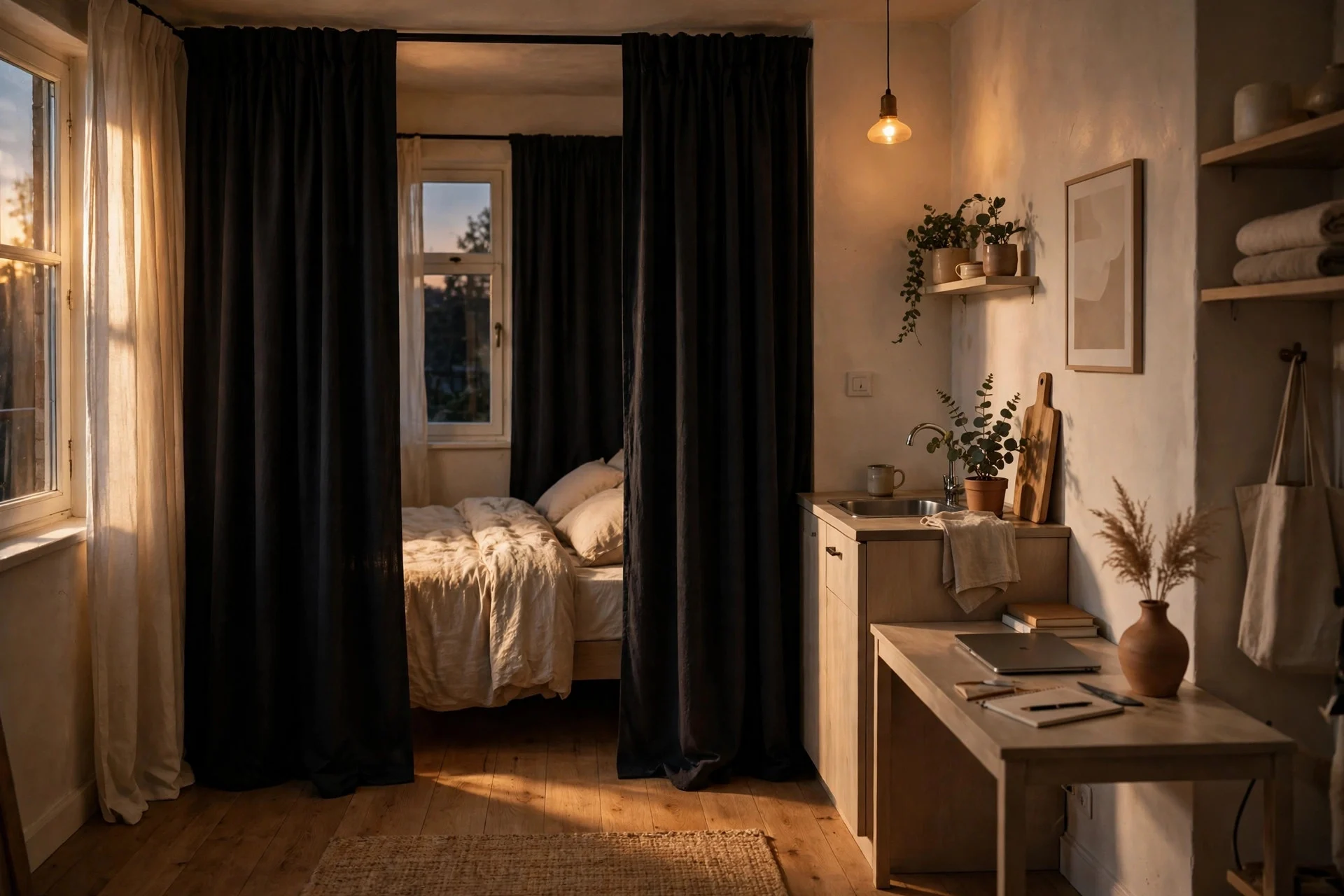
5. Sheer Curtains for Light and Soft Separation
Not every studio needs a hard wall. Sometimes you just want the bed to feel separate while daylight keeps flowing. Sheers blur the view and soften the room without killing the airy feeling.
Why it works: it divides without darkening, which matters in a small space with one window. Sheer panels cost $15–$50 a pair, and hanging is a 20-minute job. Tip: layer two sheer panels on one rod for fullness that still lets light through. Watch out: sheers hide almost nothing at night with lights on, so add a second layer if nighttime privacy matters.
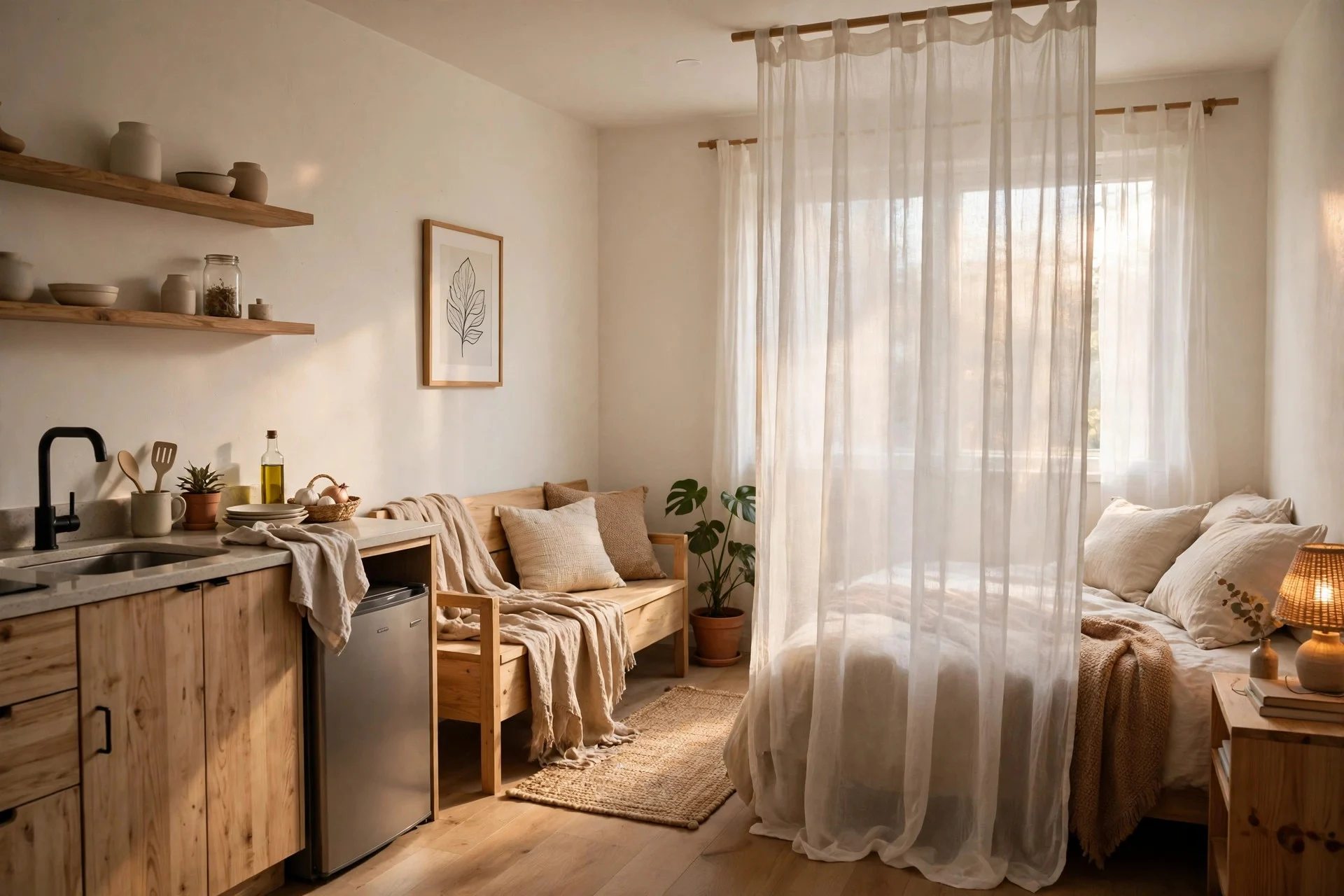
6. A Double Layer: Sheer by Day, Blackout by Night
A double rod lets you hang a sheer and a blackout panel on the same opening and switch between them. Sheers stay closed by day for soft light; blackouts close at night for sleep and privacy. It is the most flexible setup here.
Why it works: you get two rooms in one — a bright living space by day and a closed bedroom by night. A double rod set plus both curtain pairs runs $50–$140, and fitting takes about an hour. Tip: hang the sheer closest to the bed and the blackout outside, so you grab the heavy curtain first at night. Watch out: four panels need more stack space when open, so allow extra rod length.
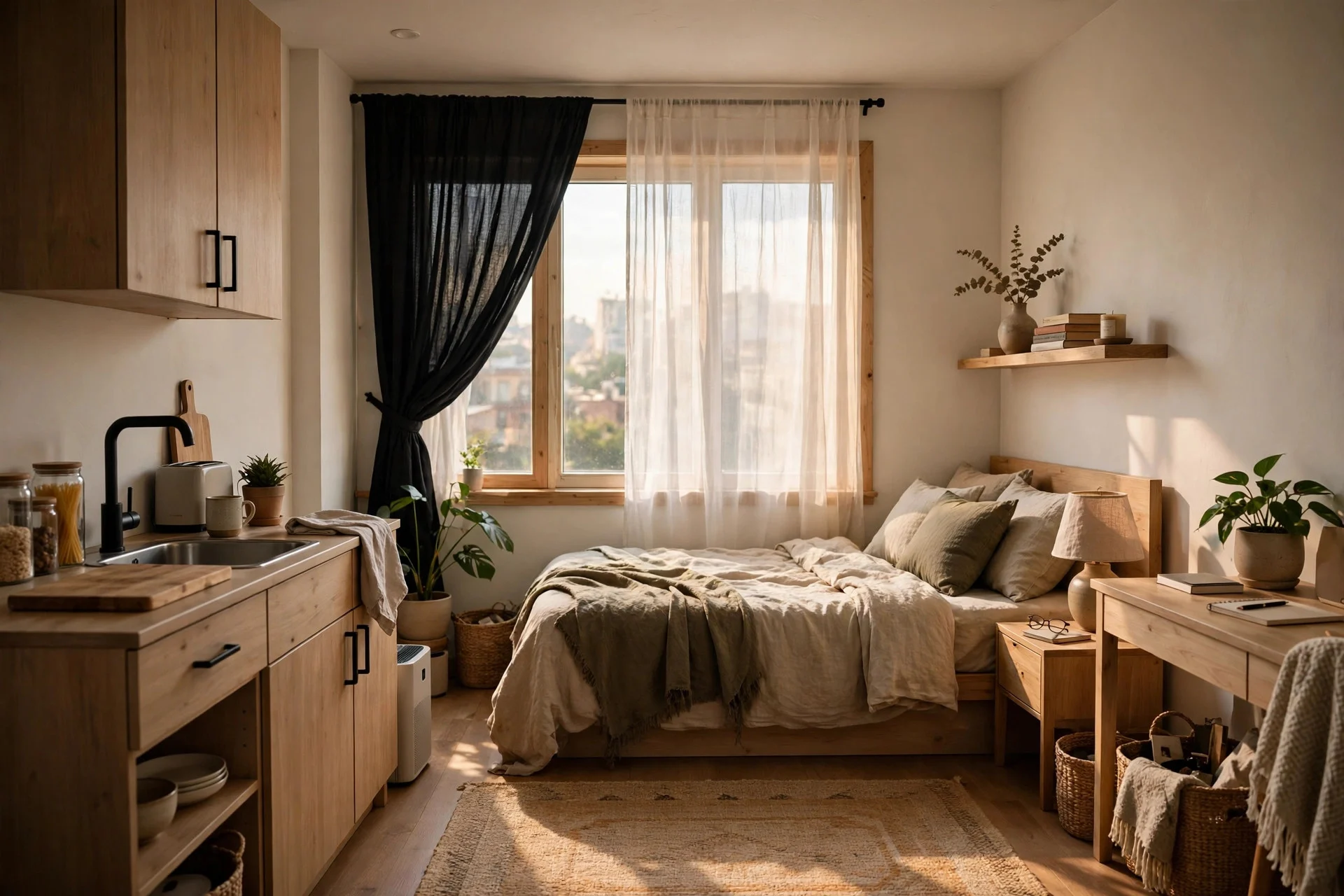
7. A Curved Track Around a Corner Bed
Many studios tuck the bed into a corner, leaving two open sides. A curved ceiling track bends around that corner and closes both with one curtain — it follows your room instead of forcing a straight line.
Why it works: it wraps the bed properly, so you are not left with one exposed side. A flexible curved track kit costs $50–$130, and fitting takes 1–2 hours. Tip: mark the curve with painter’s tape and check it from across the room before drilling. Watch out: buy a wider panel than you think — the curtain needs length to travel the bend without bunching.
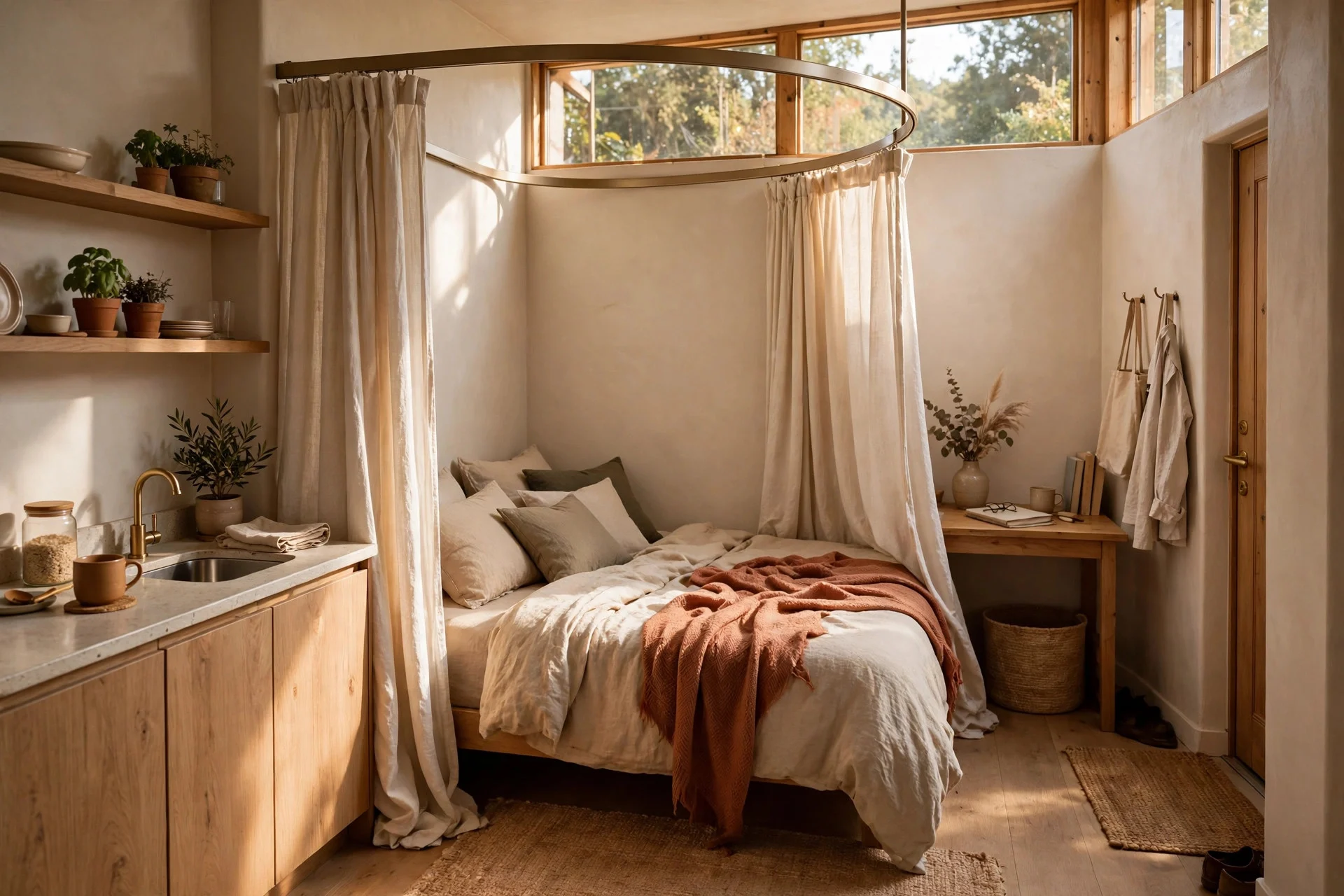
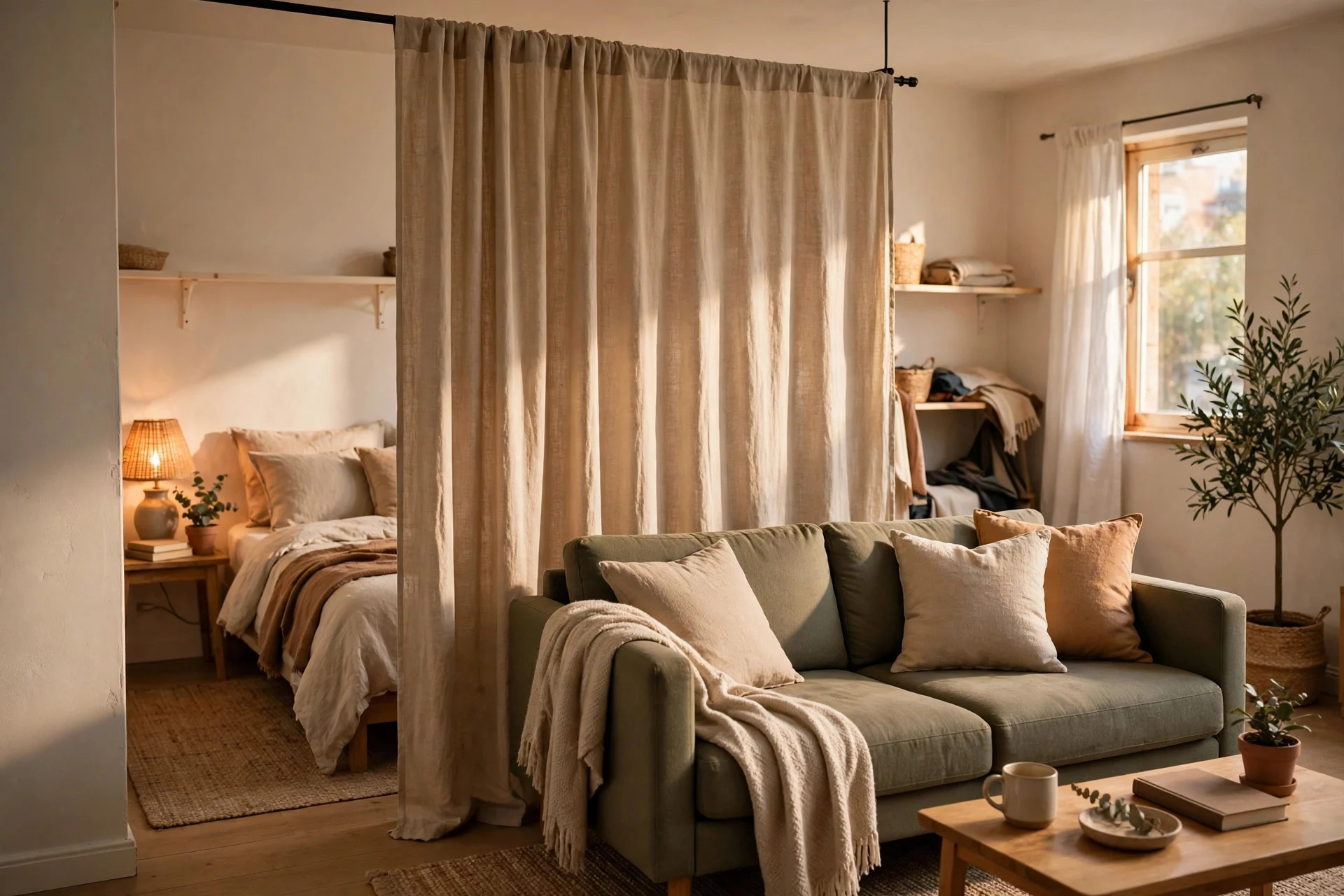
8. A Curtain Wall Behind the Sofa
Hang the curtain directly behind your sofa and the sofa itself marks the boundary: living room one side, bedroom the other, guests facing away from the bed. It suits long, narrow studios best.
Why it works: it uses furniture you already own as part of the divide, so the room reads as two spaces. Cost is $40–$110 for a track or rod and panels, and setup takes about an hour. Tip: pick a colour close to your sofa or walls so the divide blends in. Watch out: leave at least 30 cm between sofa back and curtain so the fabric is not crushed when someone sits down.
Mistakes to Avoid
- Buying the curtain before measuring: a panel that stops 15 cm short of the floor looks unfinished and lets light and sightlines leak underneath.
- Using one narrow panel for a wide opening: the curtain pulls flat when closed and never looks full. Allow at least 1.5 times the opening width in fabric.
- Skipping the ceiling check: drilling into a concrete ceiling with the wrong bit, or into a spot with hidden wiring, turns a one-hour job into a repair bill.
- Picking a heavy fabric for a weak rod: blackout and velvet curtains need a mounted rod or track, not a budget tension rod.
- Forgetting the stack space: when the curtain is open, the bunched fabric needs room on one or both sides, or it will block a walkway or a window.
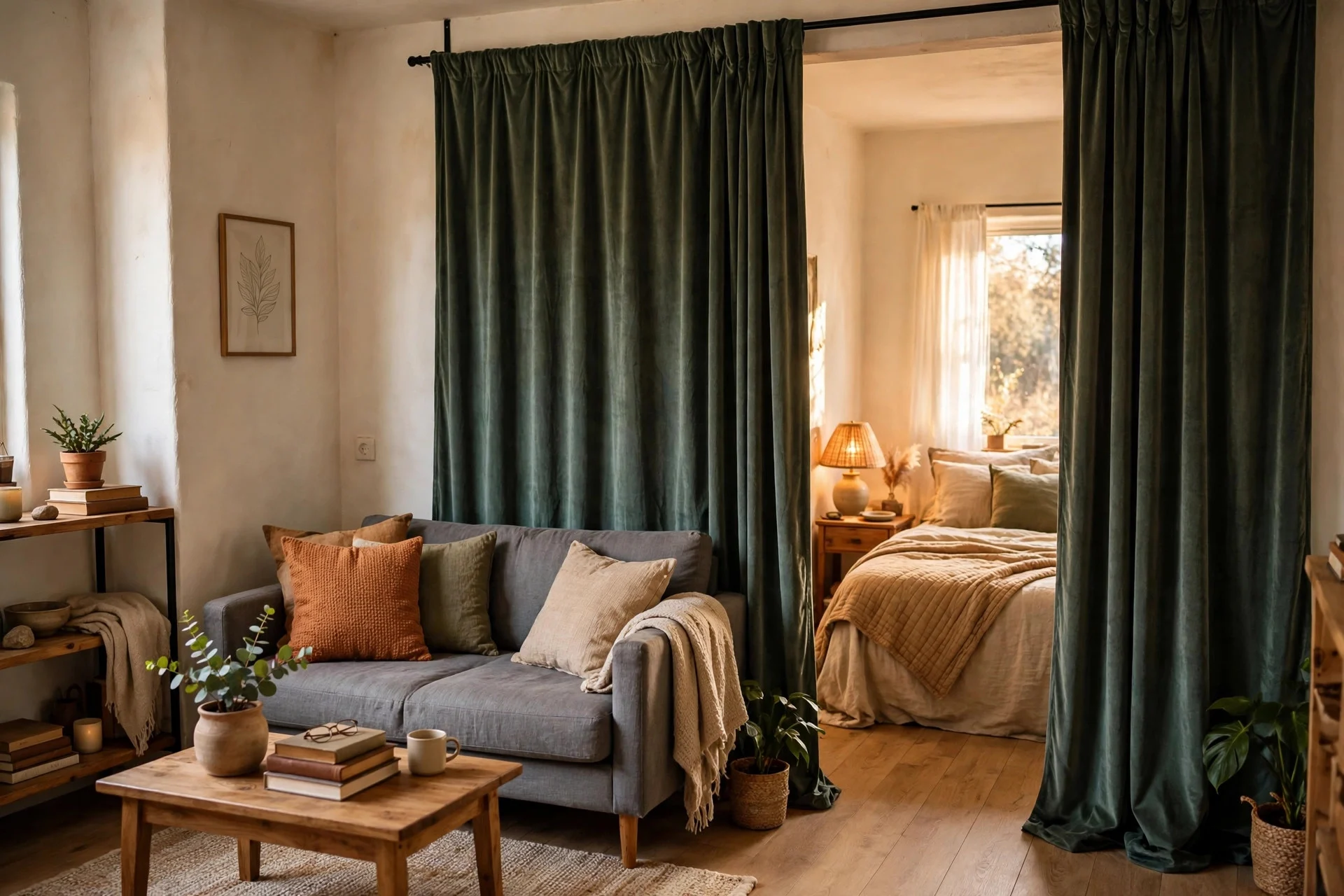
9. Velvet Curtains for Sound and Warmth
Velvet earns its place for two reasons: it blocks more sound than thin fabric and adds warmth in winter. If your studio echoes or your bed sits near a noisy street wall, a velvet divider pulls double duty.
Why it works: thick fabric absorbs sound and drafts, and the look is warm and finished. Velvet panels cost $60–$160 a pair, and hanging takes under an hour on a strong rod or track. Tip: choose a mid-tone like deep green, rust, or charcoal — very dark velvet swallows light in a small room. Watch out: velvet collects dust and pet hair, so keep a lint roller handy.
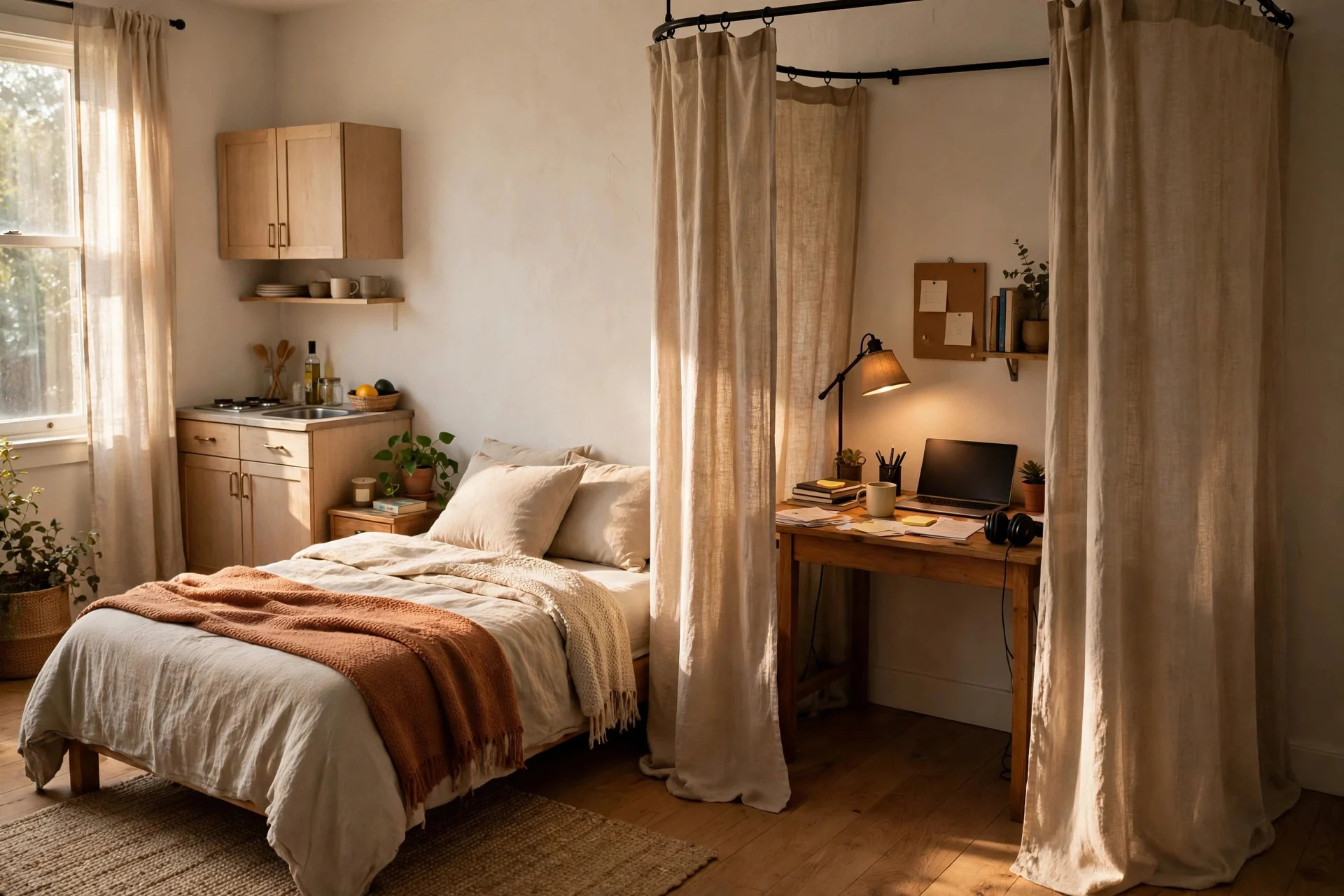
10. A Curtain Divider for a Work-From-Home Corner
Working from a studio means video calls show your bed to colleagues. A curtain around a desk nook fixes that: closed during work hours, open when you log off.
Why it works: it gives you a clean video-call background and a mental line between work and rest. A rod or track plus one panel costs $30–$90, and setup takes under an hour. Tip: make sure it closes fully behind you on calls — half-closed looks worse on camera than none. Watch out: keep lamp and monitor cables clear so they do not snag the fabric.
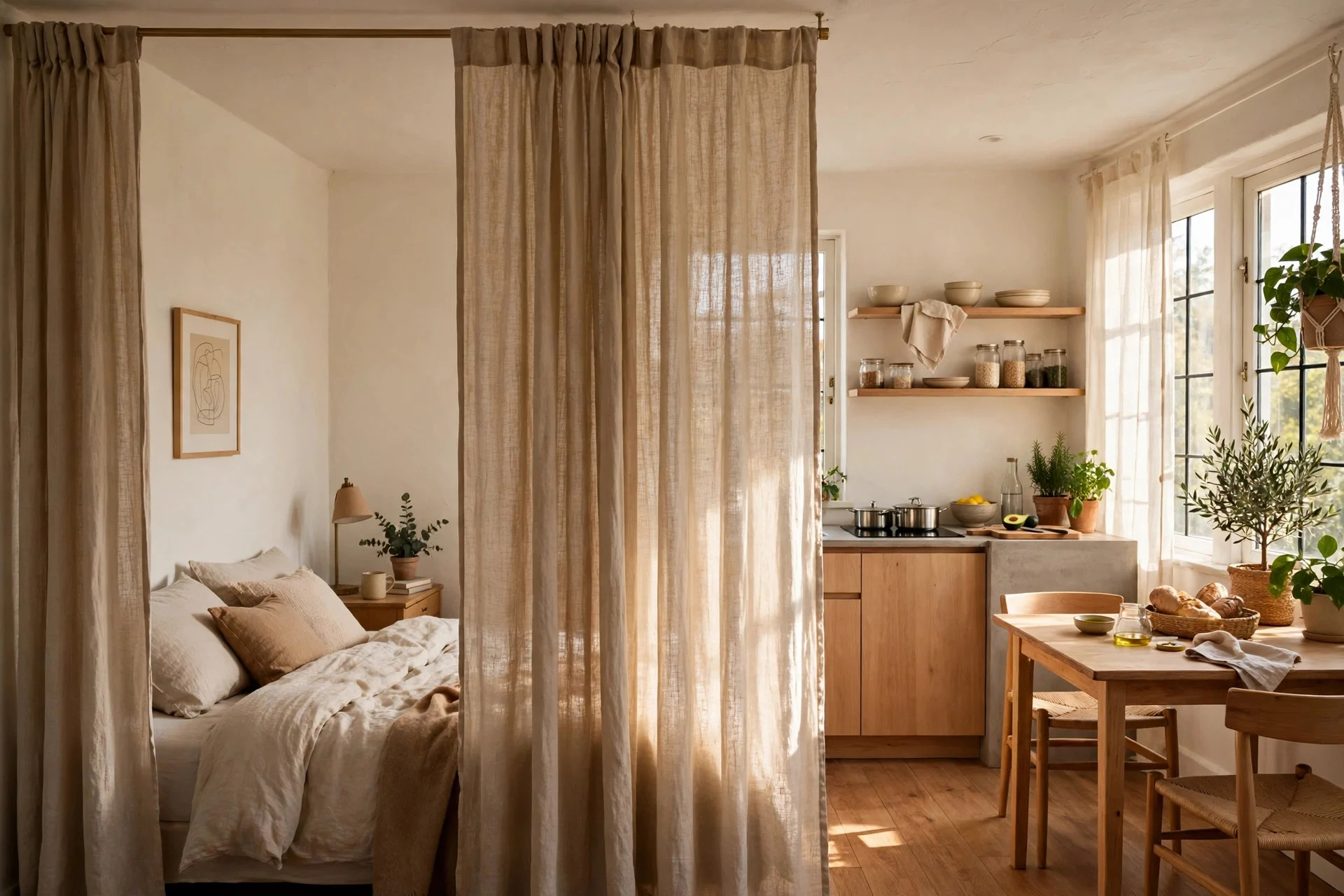
11. Linen Curtains for a Relaxed, Airy Divide
Linen has a soft, textured drape that suits a calm, natural style. It filters light gently and moves nicely in a breeze. If blackout feels too heavy and sheer too thin, linen sits in the middle.
Why it works: it divides the room while keeping the light and the relaxed mood. Linen or linen-look panels cost $40–$110 a pair, and hanging is a quick job. Tip: hang panels a day before judging the look — most creases drop out. Watch out: real linen shrinks in a hot wash, so wash cool or buy pre-washed.
12. A Printed or Patterned Curtain as a Feature
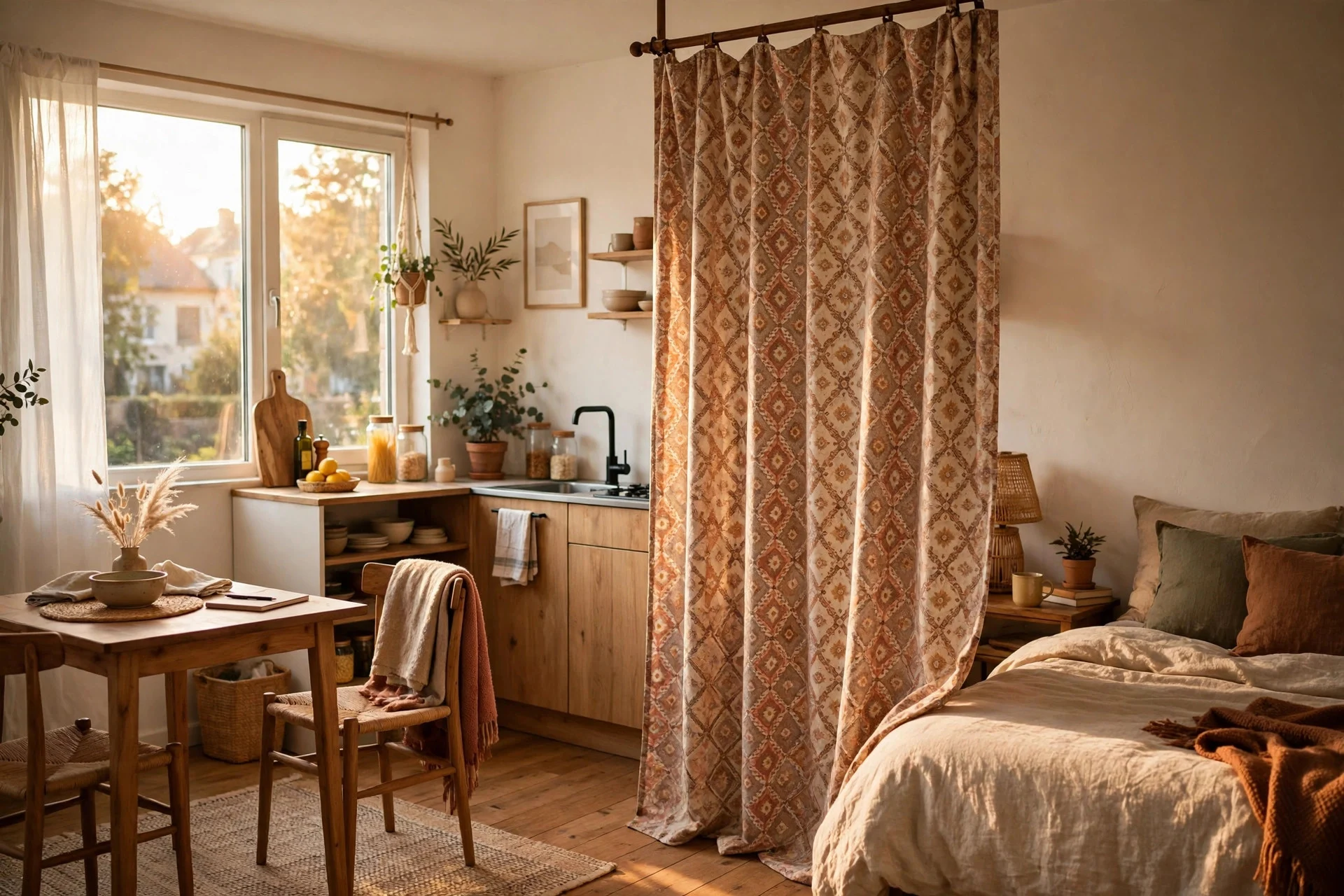
A plain curtain disappears; a patterned one becomes part of the room. A bold stripe or botanical print turns the divider into a feature you can swap whenever you tire of it — far cheaper than repainting.
Why it works: it adds colour and personality to a room that can otherwise feel plain, and swapping it is a 10-minute refresh. Patterned panels cost $25–$90 a pair. Tip: if the room is neutral, let the curtain carry the pattern; if you already have a patterned rug or sofa, pick one solid colour from it. Watch out: large, high-contrast patterns can make a small room feel busy.
13. A Curtain and Shelf Combo for Storage and Privacy
Pair a curtain with an open shelf unit and you get privacy plus storage in the same footprint. The shelf holds books, plants, and baskets while the curtain covers the rest of the opening.
Why it works: one divider does two jobs, and the shelf gives the curtain a solid anchor point so the divide looks built-in. A shelf unit plus curtain and rod runs $80–$200, and setup takes 1–2 hours. Tip: keep the guest-facing side tidy and messy storage in closed baskets; see these storage bed ideas for more tight-room storage. Watch out: anchor the shelf to the wall — a freestanding shelf beside a curtain gets bumped a lot.

14. A Short Cafe-Style Curtain for a Kitchen Pass-Through
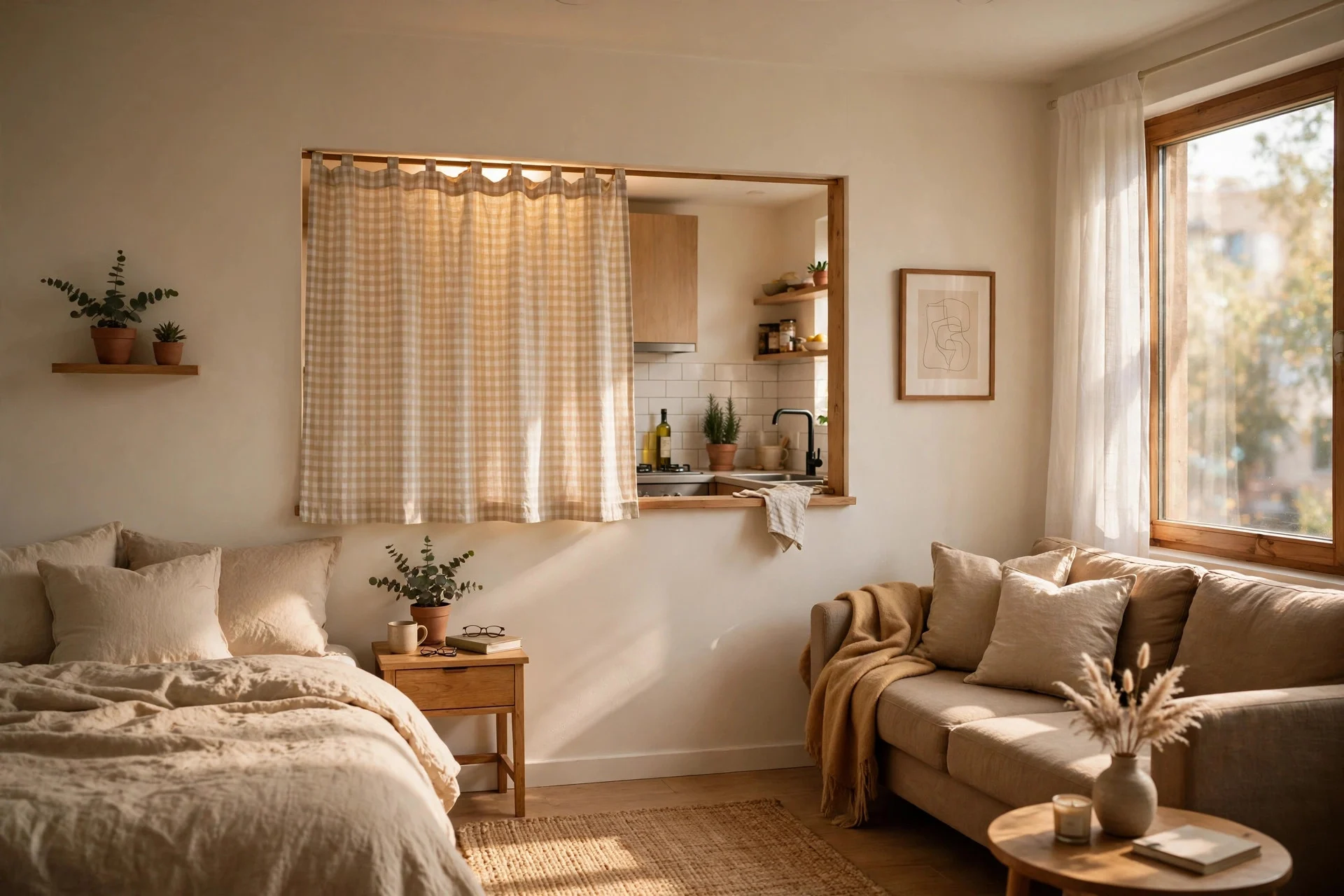
Some studios have a kitchen strip or pass-through you want partly screened, not walled off. A short cafe curtain on the lower half hides the drying rack and bins while the top stays open for light and conversation.
Why it works: it screens the mess without closing the room off, which keeps a small kitchen feeling connected to the living space. A cafe rod and short panel cost $15–$40, and fitting takes 20 minutes. Tip: hang the rod at counter height so it covers exactly what you want hidden. Watch out: keep fabric clear of the stove — this suits a pass-through, never a cooking zone.
15. A Curtain Divider That Doubles as a Projector Screen
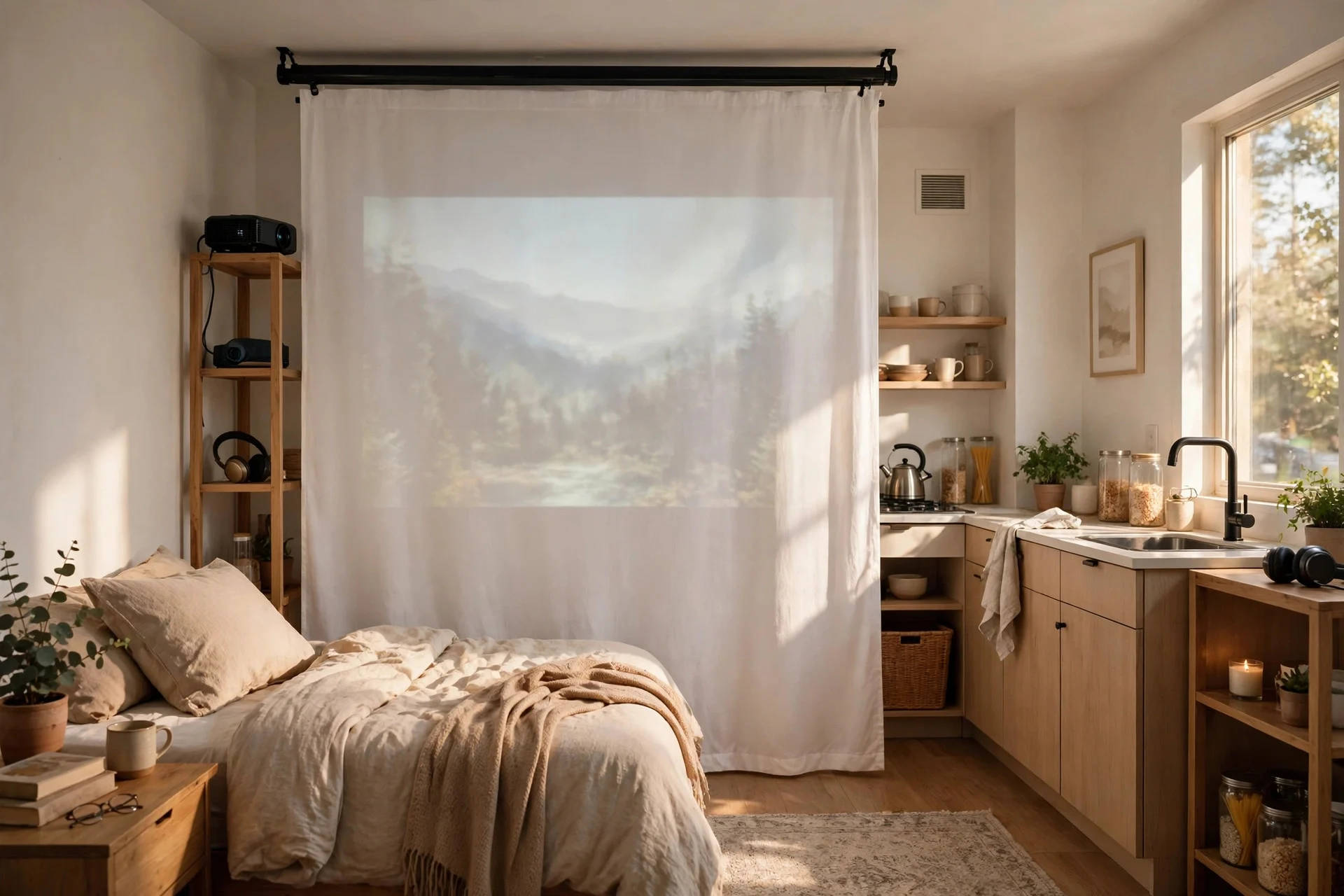
Hang a plain white blackout curtain as your divider and use its flat side as a projector screen. Close it, point a small projector at it, and you have a cinema; open it next morning and it is a divider again.
Why it works: it saves you buying a separate screen and gives a small studio a movie setup with no extra gear on the wall. A white blackout panel plus rod or track costs $40–$100, and setup takes about an hour. Tip: pull it taut when projecting — wrinkles show as shadows. A small hem weight or a clip at each bottom corner keeps it flat. Watch out: the image needs a dark room, so this pairs with blackout, not sheer.
16. Floor-to-Ceiling Panels in a Matching Colour Palette
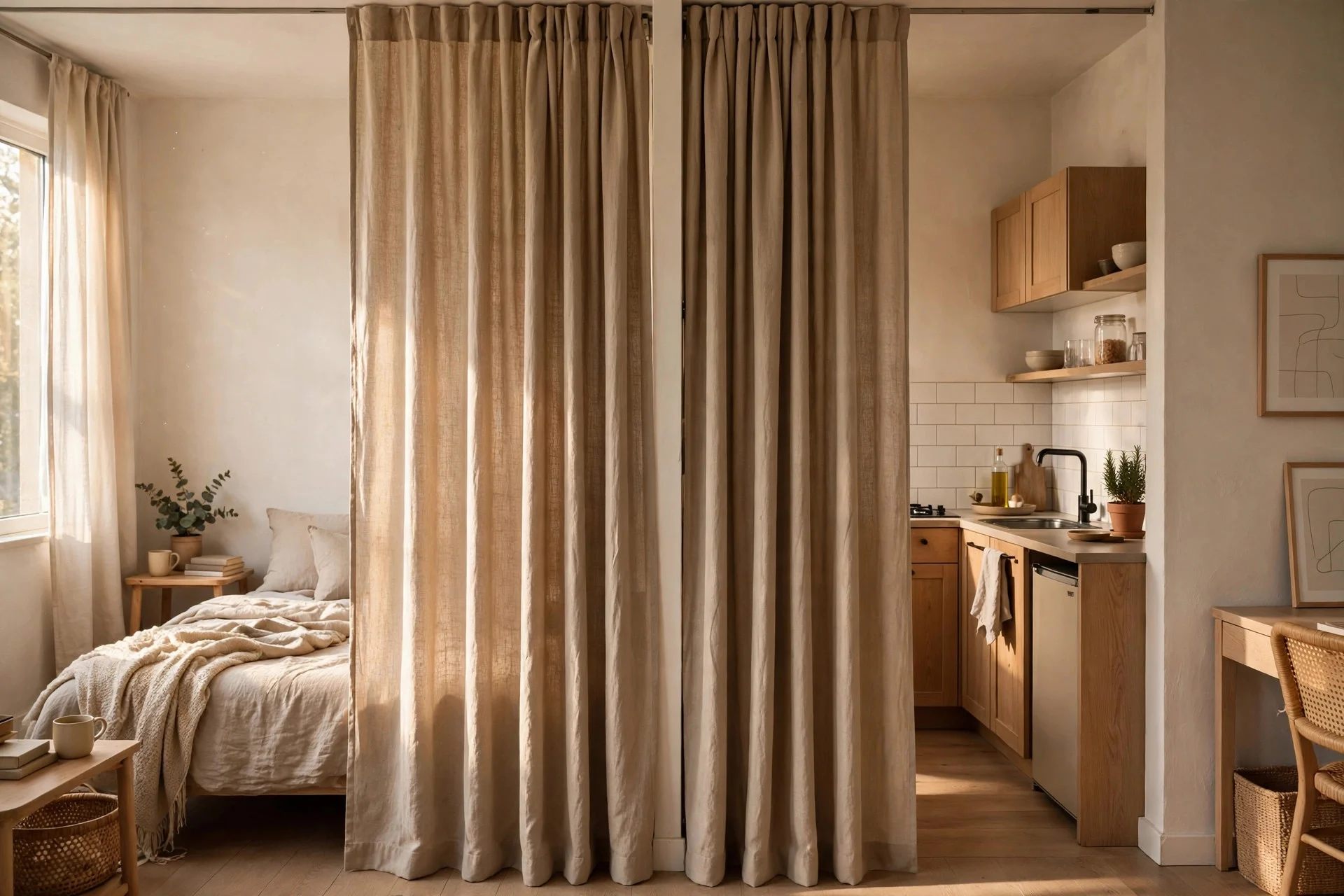
The most polished version of this idea is also the simplest: floor-to-ceiling panels matching your bedding or walls on a straight track. When the curtain matches the room, the divide looks like part of the design, not a workaround.
Why it works: matching colour makes the curtain read as architecture, not an afterthought, and full height makes the ceiling feel taller. A track plus two or three matching panels costs $60–$150, and fitting takes 1–2 hours. Tip: take a cushion cover or paint swatch shopping so you match the colour in real light. See this bedroom reset routine for keeping the sleeping zone tidy, and murphy bed ideas for small bedrooms if floor space is the real squeeze. Watch out: order a swatch first when the exact shade matters.
Frequently Asked Questions
Will a curtain divider really give me privacy in a studio?
Yes, for sightlines and a sense of a separate room, if you pick the right fabric. Blackout or velvet hung floor to ceiling blocks the view completely; sheer only softens it, so match fabric to the privacy you need at night with lights on.
How do I hang a curtain divider without drilling?
Use a tension rod in an alcove or doorway, or a freestanding rod stand anywhere else. Both need no holes or landlord permission. Adhesive ceiling hooks suit only very light curtains — test one with the full curtain weight before committing.
What size curtain do I need for a room divider?
Measure width and floor-to-ceiling height, then buy fabric at least 1.5 times the opening width so folds look full when closed. Aim for the curtain to just brush the floor — one that pools collects dust and trips people.
Can a curtain divider block sound?
Partly. Thick fabrics like velvet or layered blackout soften voices and dull echo in a hard-floored studio, but they will not block a loud TV the way a wall does — treat sound softening as a bonus.
Your Quick Curtain Divider Checklist
Start by naming the job: privacy, sleep, a work background, or a tidier-looking room. Measure twice, check your lease, and pick fabric to match — blackout or velvet for real privacy, sheer or linen for light. Allow 1.5 times the opening width, leave stack room when open, and hang floor to ceiling. Get those right and one curtain gives your studio something it never had: rooms.