11 Folding Furniture Ideas for Small Apartments
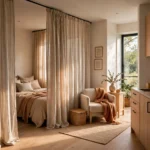
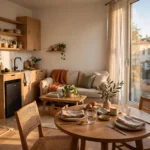
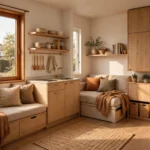
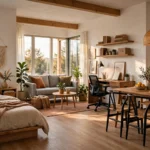
Folding furniture for small apartments works best when you buy for the life you actually live, not the extra room you wish you had. A table that folds flat against the wall, a bed that disappears by morning, or a chair you can hang on a hook can free up the same floor space again and again, every single day. You do not need a bigger flat. You need pieces that change shape with your day.
The ideas below are grouped by budget, starting with the cheapest fixes and moving up to the bigger investments. Start at the top if you are renting or furnishing on a tight budget. Every idea includes a realistic cost range, how hard it is to live with, and one tip that makes it work better in a small home.
Under $50: Small Fixes That Free Up Space Fast
1. A Set of Folding Tray Tables for Eating, Working, and Guests
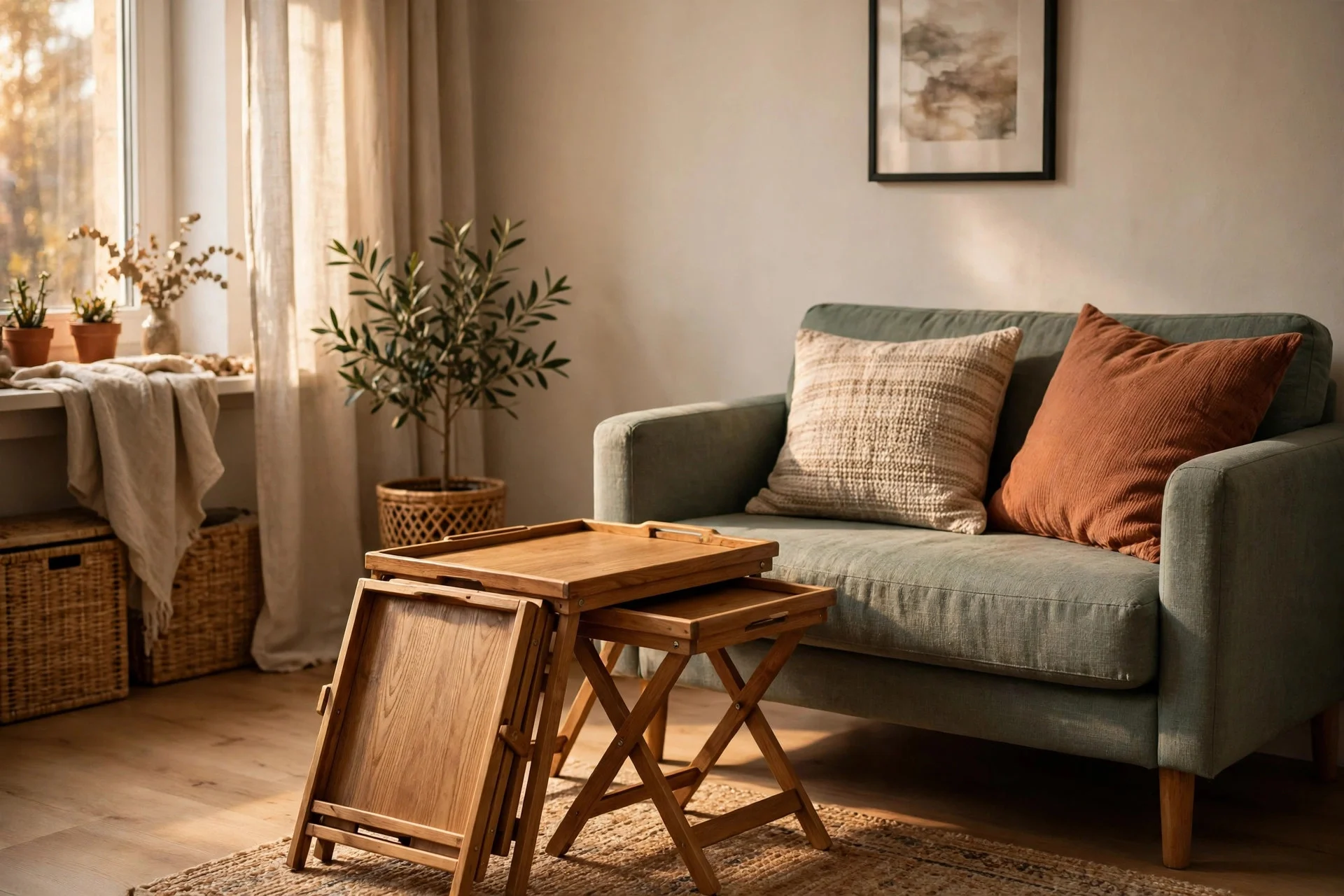
Folding tray tables are the easiest place to start, because they solve three problems at once. Use one as a dinner table in front of the sofa, one as a laptop stand, and pull out extra ones when friends drop by. When the evening is over, they fold flat and slide behind a door, under a bed, or into the gap beside a wardrobe.
Expect to pay $25 to $50 for a set of two to four basic tables, or $15 to $30 for a single sturdier one. There is nothing to install. Look for a lip around the edge so plates and cups do not slide off, and legs that lock open with a firm click. Tip: keep a hook near their storage spot so the tables always go back to the same place. Watch out for very light plastic versions, which can tip if a child or pet leans on them.
2. A Fold-Flat Step Stool That Doubles as a Side Table
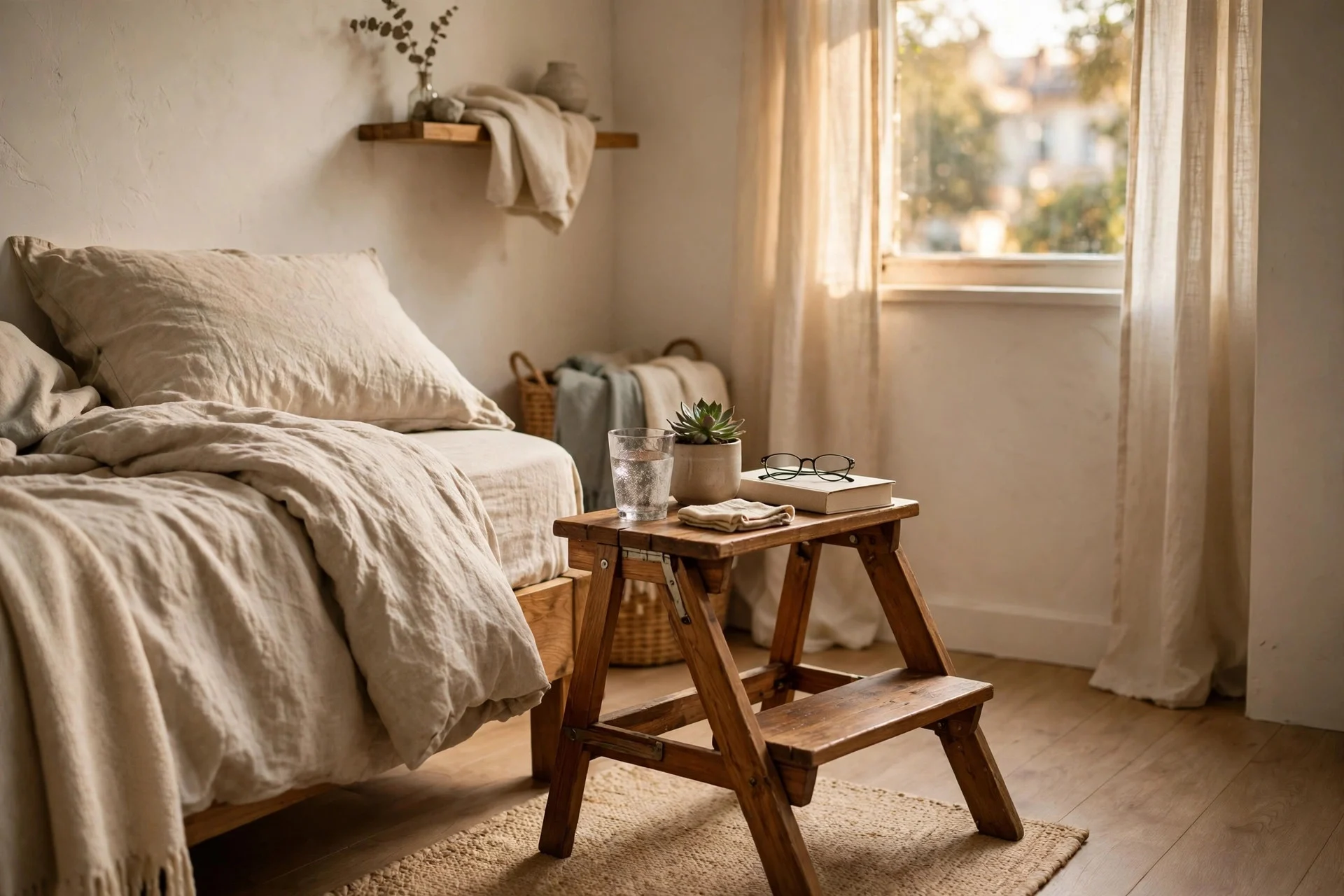
A folding step stool earns its keep twice. Open, it helps you reach the top shelf of a kitchen cupboard or change a light bulb. Folded, it works as a small side table next to a bed or chair, holding a book, a phone, and a glass of water.
Good wooden or bamboo versions cost $20 to $45, while sturdy plastic ones run $15 to $30. No tools are needed, and setup takes seconds. Pick one rated for your weight with a wide, non-slip top step. A useful tip: paint or stain a plain wooden stool to match your furniture, and it stops looking like a tool and starts looking like a proper side table. Watch out for stools with narrow feet on smooth floors, since they can slide. A few stick-on felt pads under the feet fix that in a minute.
3. A Wall-Mounted Drop-Leaf Shelf for a Mini Desk or Breakfast Bar
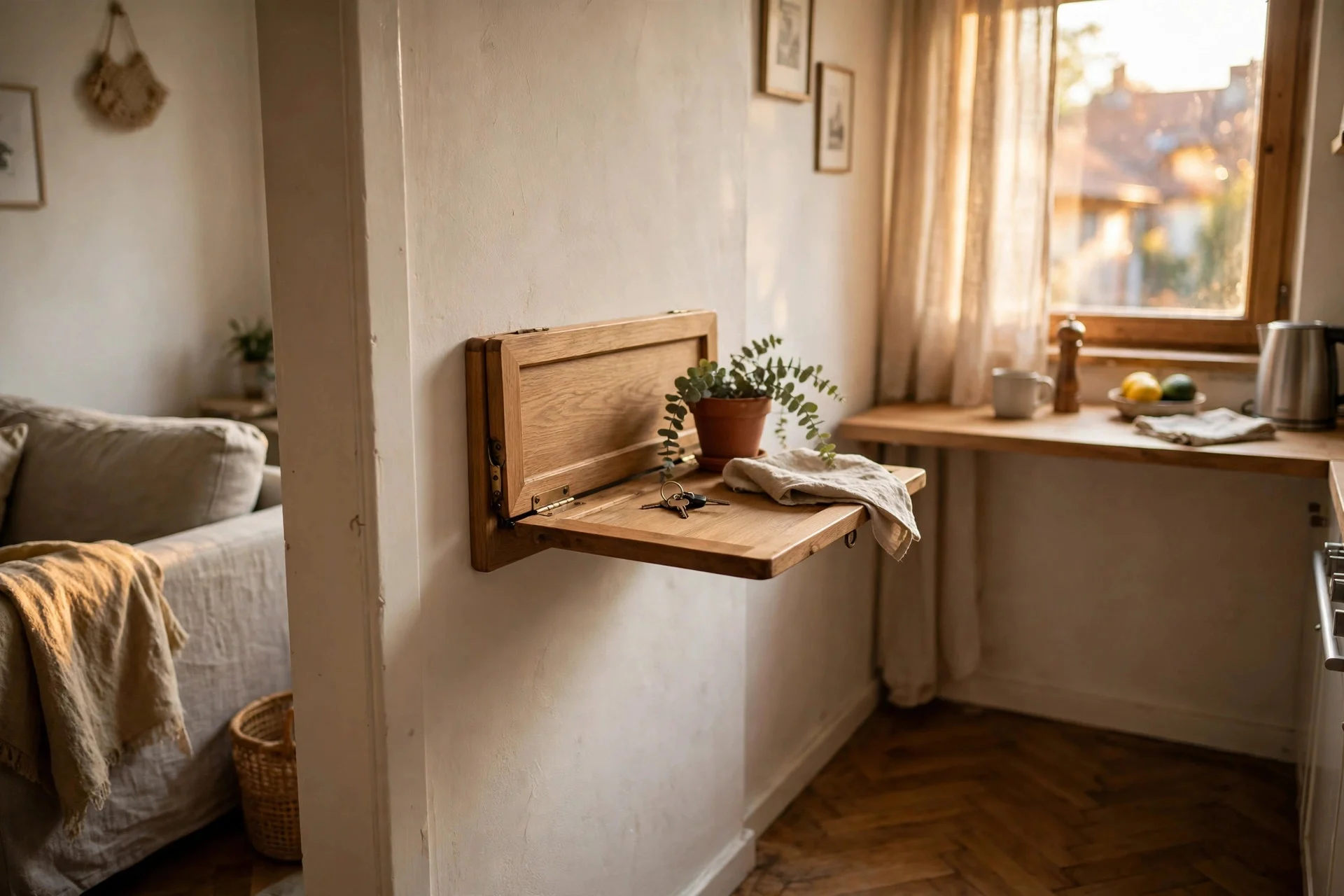
A drop-leaf shelf screws to the wall and folds down when you need a surface, then folds back up flat when you do not. It can be a breakfast spot for one, a laptop desk, a coffee station, or a place to fold laundry. Because it uses wall space instead of floor space, it suits narrow kitchens, hallways, and the dead wall beside a door.
Basic shelves cost $25 to $50, and you will need a drill, a spirit level, and wall fixings suited to your wall type. Allow about an hour for fitting, including measuring twice. The tip that matters most is height: set the shelf at normal table height, around 74 centimetres, so your chair and posture feel right. Watch out for plasterboard walls, where ordinary screws will pull out under weight. Use proper wall anchors, and keep heavy items off the shelf unless the fixing is rated for the load.
4. Folding Dining Chairs You Can Hang on the Wall
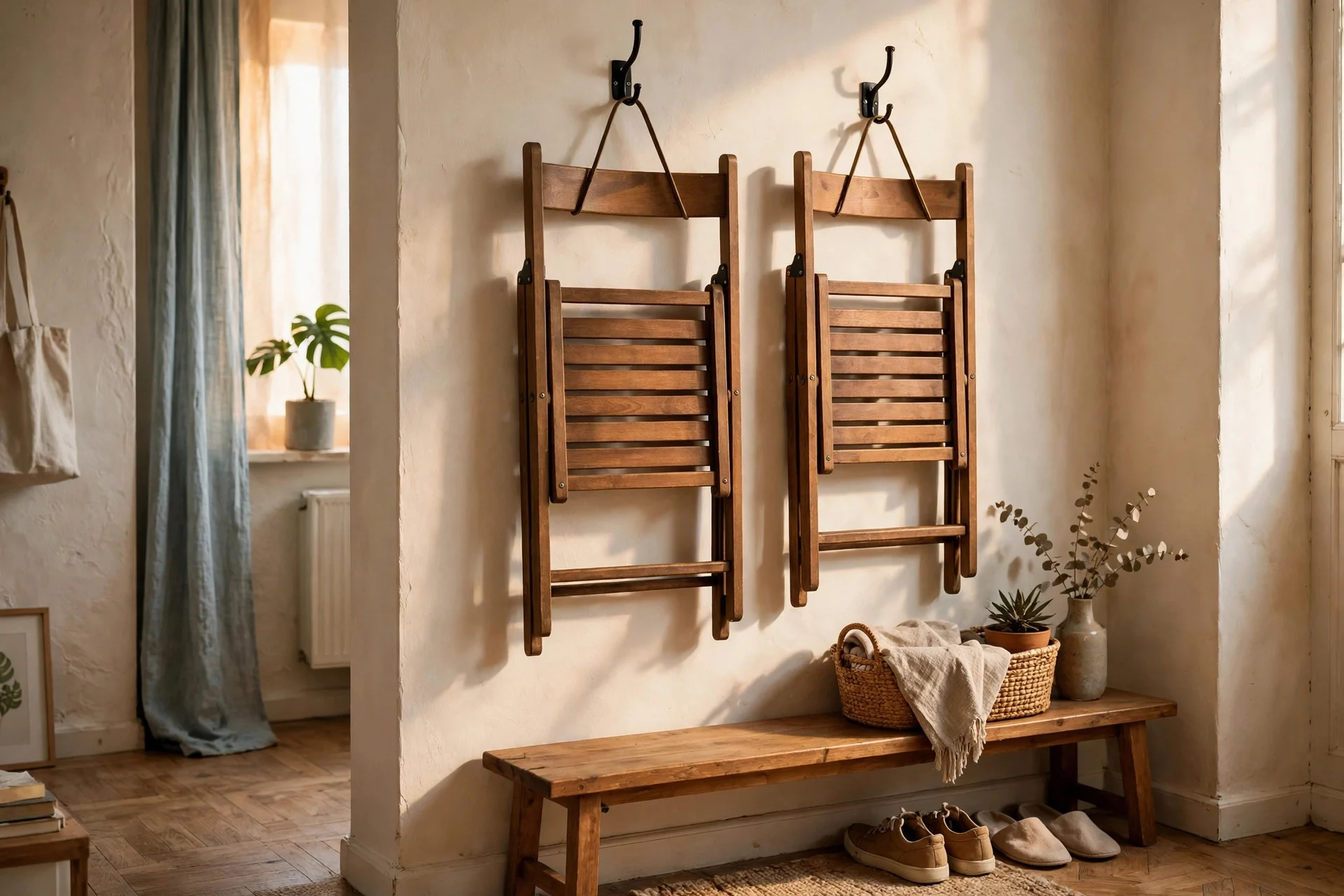
Most small flats have enough chairs for everyday life but not enough for a dinner with friends. Folding dining chairs close that gap. Keep two folded behind a door or hung on wall hooks, and bring them out only when the table is full. Wooden folding chairs look far better than the metal event chairs many people picture, and padded versions are comfortable enough for a long meal.
Expect $20 to $45 per chair for a decent wooden or padded folding chair. There is no assembly beyond unfolding, and storage takes a couple of wall hooks costing a few dollars. A practical tip: buy chairs in the same wood tone as your table, even if the styles differ slightly, and the mix looks planned rather than random. Watch out for chairs with thin seats and no support bar, which feel wobbly after a few months. Sit on one before you buy a set, and check that the hinge locks firmly when the chair is open.
$50–$200: Pieces That Change How a Room Works
5. A Drop-Leaf Dining Table That Grows for Guests
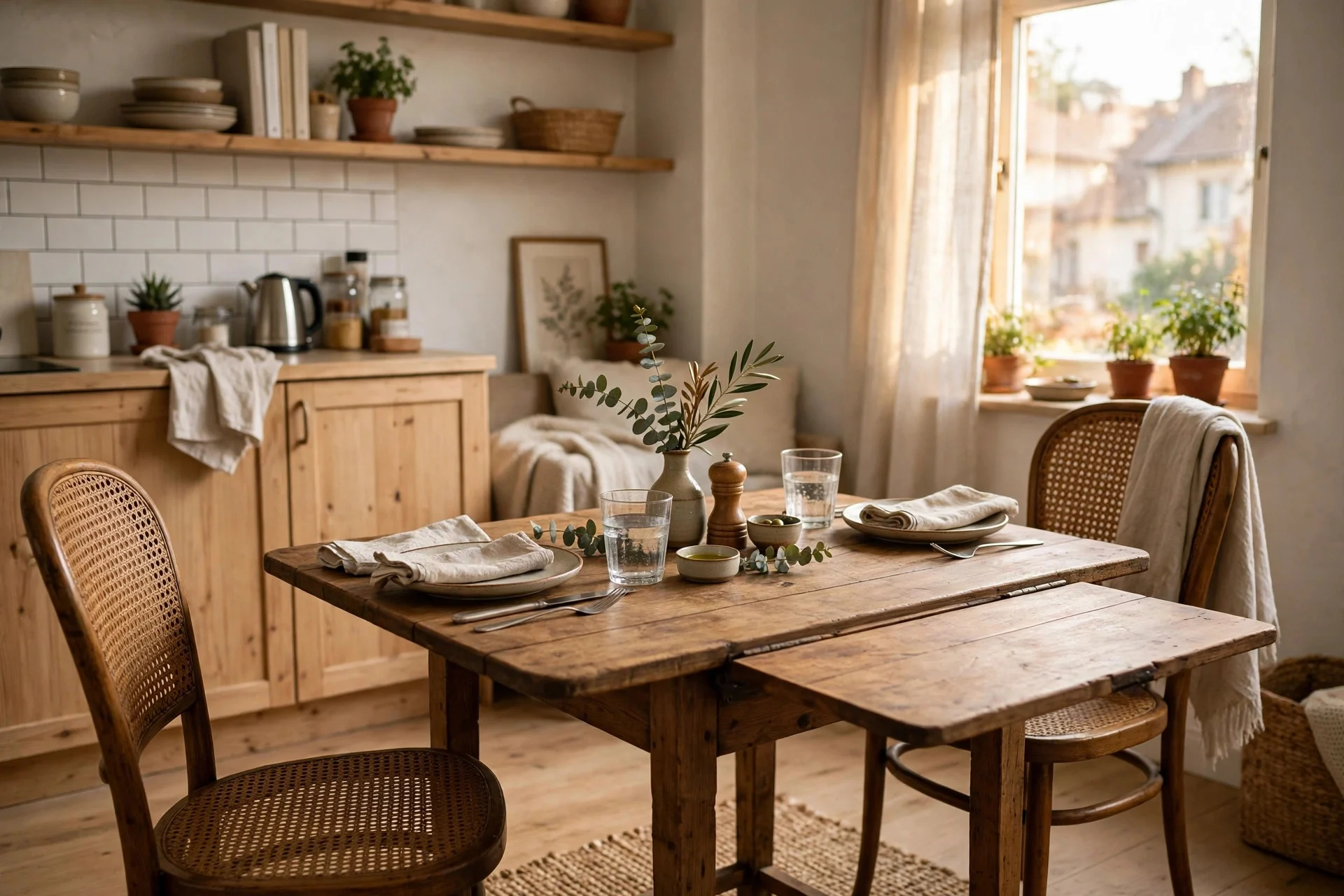
A drop-leaf dining table is the classic small-flat solution for a reason. With one or both leaves down, it sits against a wall as a console or a desk. With the leaves up, it seats four, and sometimes six.
Solid wood or good-quality veneer versions cost $90 to $200, with smaller gateleg styles at the lower end. Delivery and assembly take an hour or two, and most need a screwdriver and a second pair of hands. Choose a table with a support leg or gateleg that swings out easily, since flimsy flap supports sag over time. One tip that saves daily annoyance: keep the table half-open for everyday use, with one leaf up, so you always have a usable surface without unfolding the whole thing. Watch out for very narrow tables, which look neat folded but leave no elbow room when fully open. Measure your chairs, then check the open width before ordering.
6. A Wall-Mounted Fold-Down Desk for Working From Home
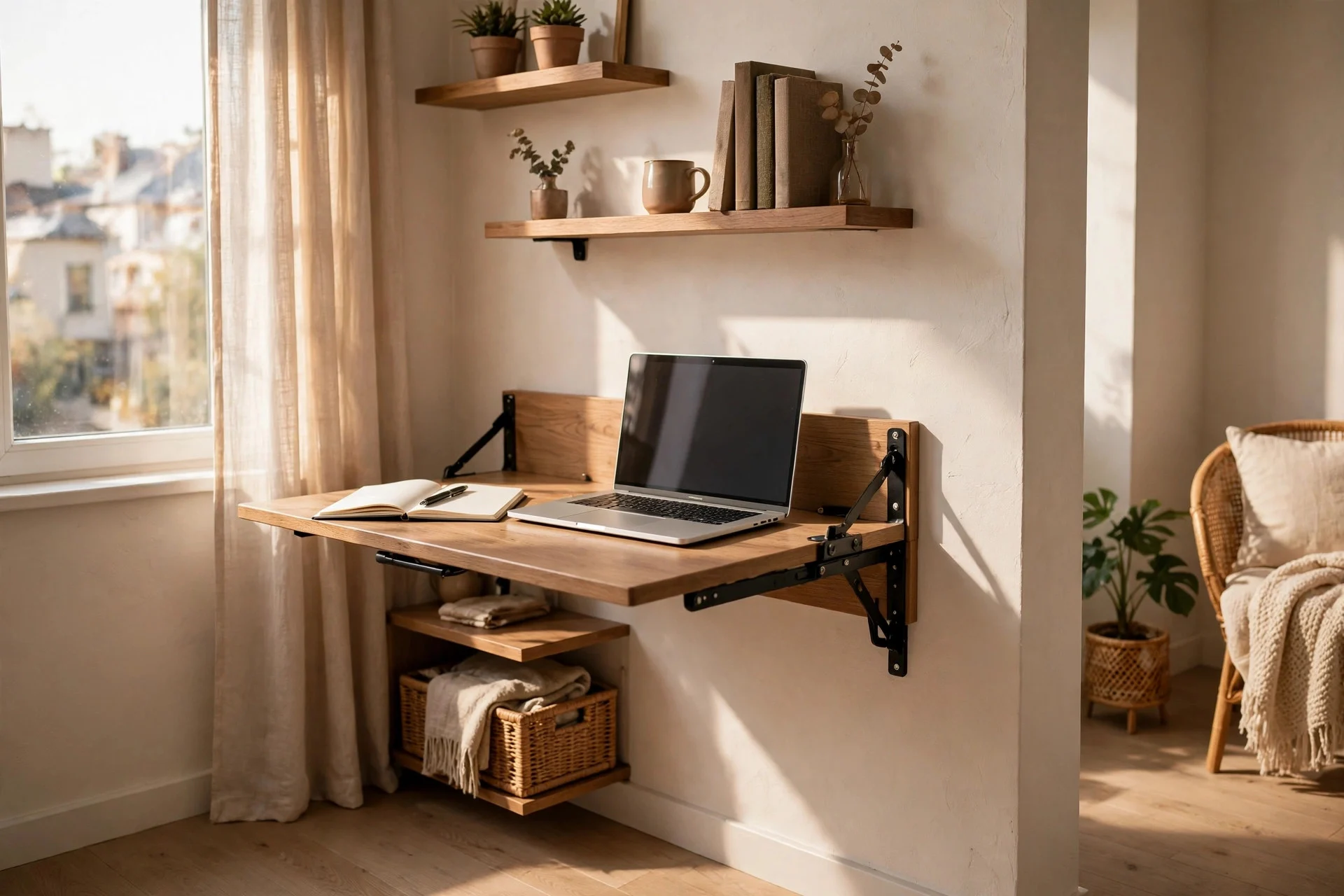
A fold-down wall desk gives you a real workspace that vanishes at the end of the working day. Fold it down in the morning for a laptop, notebook, and coffee. Fold it up at night, and the room goes back to being a living room or bedroom. Some versions include small shelves or pockets inside for chargers and stationery, so you are not hunting for supplies each morning.
Ready-made fold-down desks cost $70 to $200, depending on size and finish. Fitting takes one to two hours, and like the drop-leaf shelf, it needs wall fixings matched to your wall. Pick a desk depth of at least 45 centimetres so a laptop and your forearms fit comfortably, and check the weight rating if you use heavy books. A tip worth following: mount a small power strip or cable clip right beside the desk so charging cables are waiting when you open it. Watch out for desks with no lip or raised edge, since pens and phones slide off when the desk is folded up. A tiny rail or a pencil tray inside solves it.
7. A Folding Kitchen Cart for Extra Counter Space
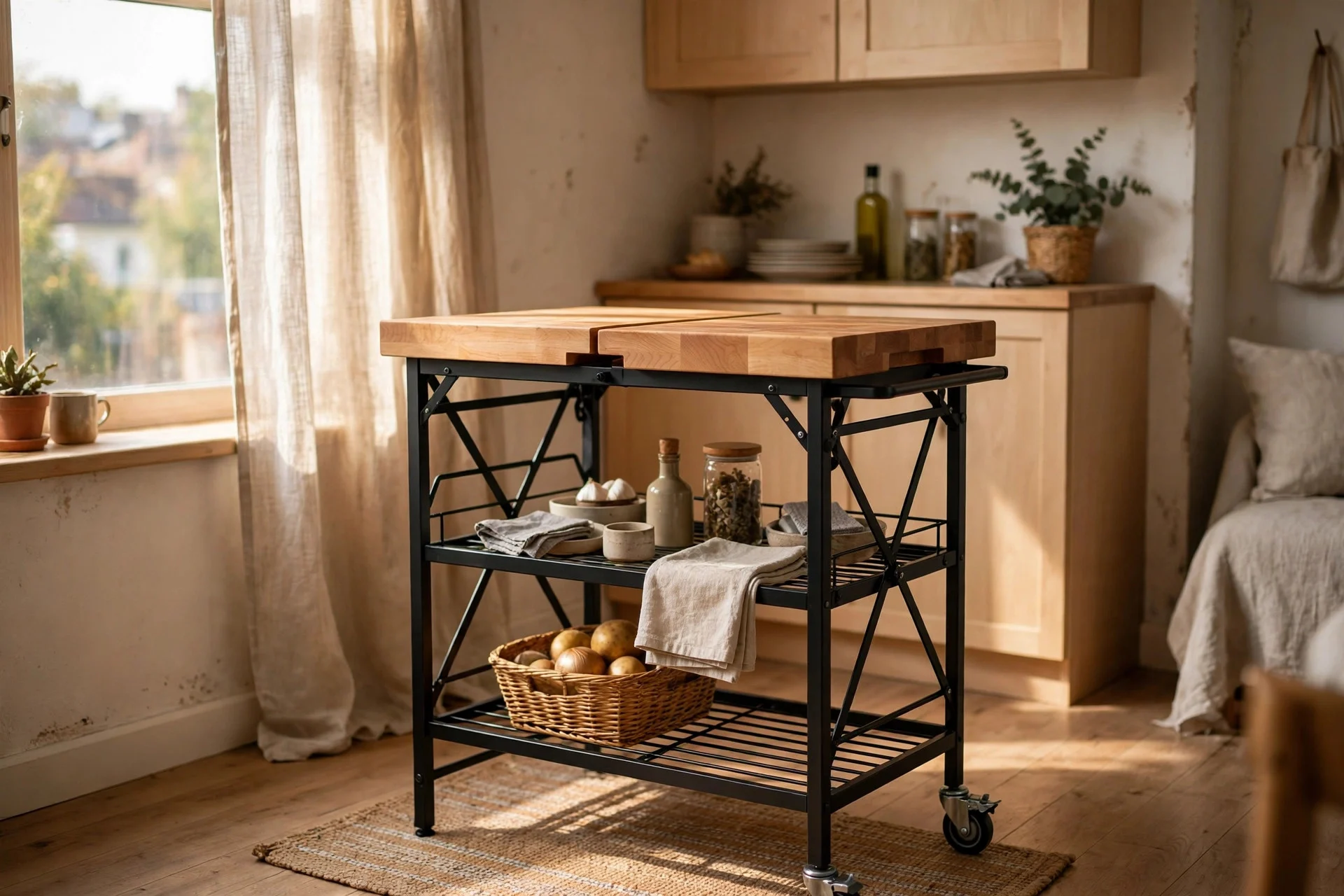
A folding kitchen cart adds counter space exactly where a small kitchen lacks it, then folds away when you need the floor back. Use the top for chopping or a coffee machine, the shelf below for pots, and the hooks on the side for towels or utensils.
Good folding carts cost $60 to $180, with butcher-block tops at the higher end. Assembly usually takes 30 to 60 minutes. Look for locking castors, a top that can handle heat and knife marks, and a frame that folds without removing the shelves. The tip that makes this piece work daily is to give it a parking spot, such as the end of a counter or a gap beside the fridge, so it never ends up blocking a walkway. Watch out for carts that are too wide for your kitchen doorways if you plan to move them between rooms. Measure the narrowest doorway first, not just the kitchen.
8. A Tri-Fold Mattress for Guests Without a Spare Room
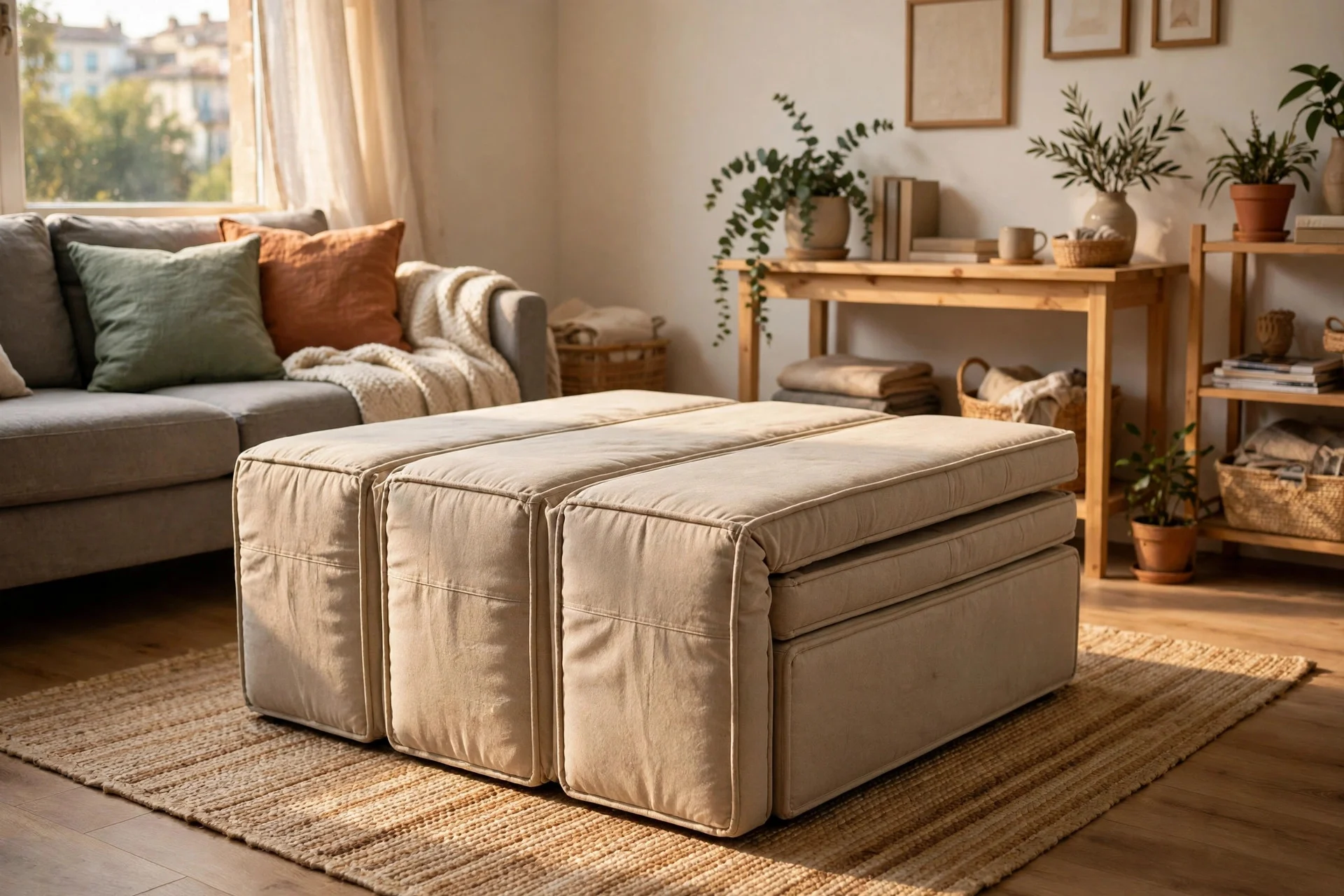
A tri-fold mattress folds into three sections, so it can be a guest bed at night, an ottoman or daybed by day, and a flat stack in a cupboard when no one is staying over. It is far more comfortable than an air mattress, it never needs inflating, and it suits flats where a sofa bed would eat up too much space or money. Pair it with a washable cover and it doubles as extra lounge seating for film nights.
Tri-fold mattresses cost $80 to $200 depending on thickness and foam quality, with 10 to 15 centimetre versions offering the best balance of comfort and storage. There is no assembly, just unfolding. Choose a mattress with a removable, washable cover and high-density foam rather than the cheapest soft foam, which flattens quickly. A useful tip: store it upright in a wardrobe with a spare sheet set on top, so making the guest bed takes two minutes. Watch out for very thin models under 8 centimetres, which feel fine for one night but leave guests aching after two. If you host often, the thicker option is worth the extra cost, and you can compare it with other small-room sleep solutions such as storage beds that hide bedding in the base.
$200 and Up: Bigger Pieces Worth Saving For
9. A Murphy Bed Cabinet That Frees a Whole Room
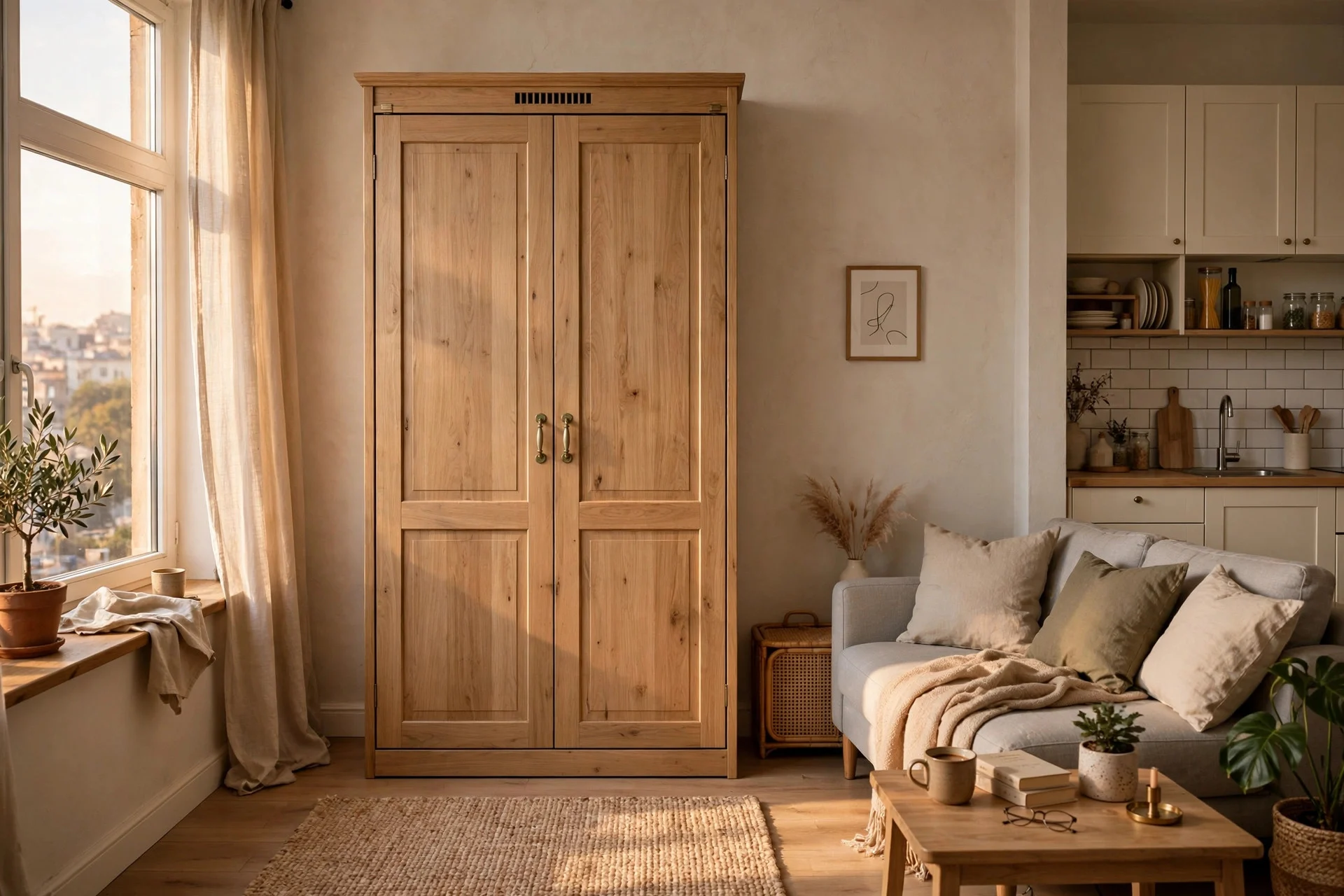
A Murphy bed cabinet is the biggest single space win on this list. By day it looks like a wardrobe or a set of cupboard doors. By night it folds down into a full double bed, complete with a proper mattress. In a studio flat, that one change can turn a bedroom into a living room every morning
Cabinet wall beds cost $400 to $1,500 or more, depending on size, mechanism, and whether shelving or a sofa is built in. This is not a casual flat-pack job. Most people need a full day for assembly, two adults for lifting, and solid wall fixings, and many buyers hire a handyperson for the wall mounting. Before buying, measure your ceiling height, the open bed length, and the walking space left around it. A tip that prevents regret: try the mechanism in a showroom or watch a full setup video first, since a stiff or heavy mechanism will put you off using it daily. Watch out for cheap mechanisms with no locking system, which can drift or feel unsafe. A good gas-strut or spring system should open and close with one smooth motion. For styling ideas once the bed is closed, see these small bedrooms with a Murphy bed that looks built in.
10. A Console Table That Extends Into a Full Dining Table
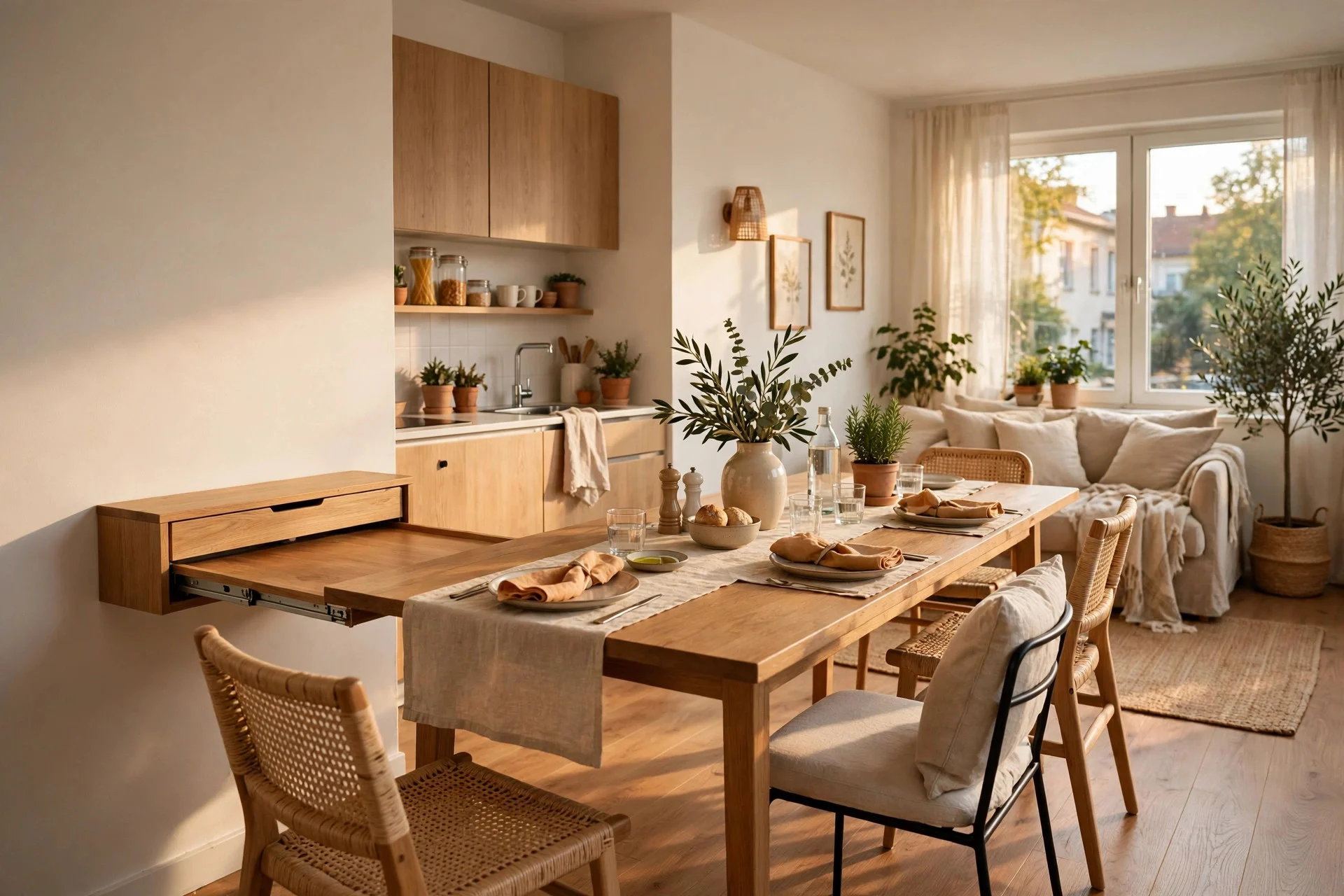
An extending console table looks like a narrow hallway table most of the week, then pulls open and extends, sometimes to double or triple its length, to seat eight or ten people. It is the best answer for someone who hosts big family dinners but lives alone or as a couple the rest of the time.
Quality extending consoles cost $250 to $900, with solid wood and smooth extension mechanisms at the higher end. Assembly takes one to two hours, and you will want help moving it into place. Check the extended length against your room, not just the closed size, and count how many chairs you actually own before choosing a model that seats ten. A practical tip: practise opening and closing it once when it arrives, and keep the mechanism clean and lightly oiled, so it still glides easily a year later. Watch out for models where the leaves do not sit level with the main top. Even a small lip makes plates wobble, so test the join in person or read detailed reviews about the mechanism before ordering.
11. A Fold-Away Office Cabinet That Closes Work Out of Sight
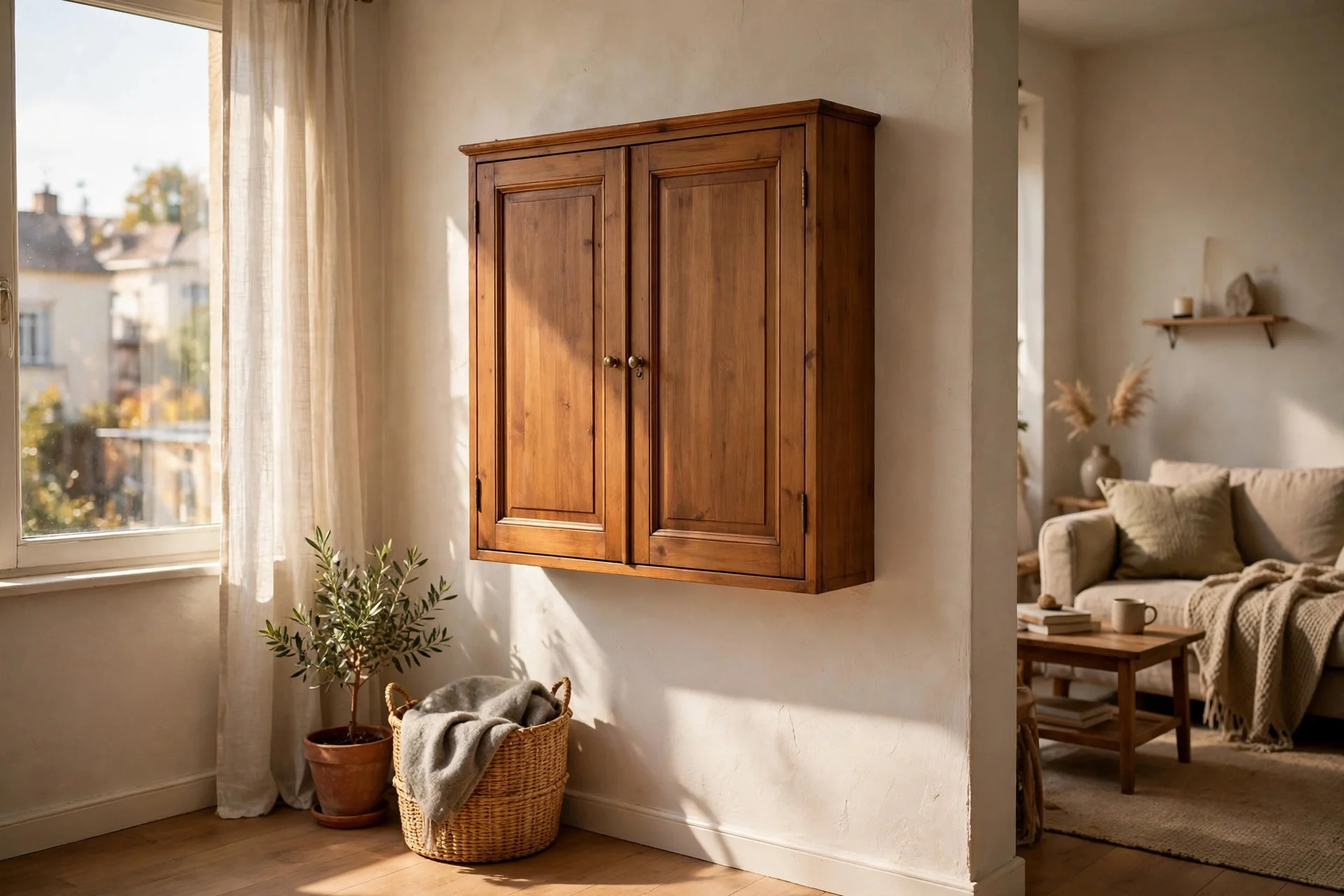
A fold-away office cabinet hides an entire workspace behind closed doors. Open the doors and a desk folds down, with shelves, a pinboard, and space for a laptop or monitor. Close it, and the room looks like a normal living room again, with no cables, papers, or work reminders on show.
Office cabinets cost $250 to $800 for ready-made versions, and more for solid wood or custom sizes. Fitting is similar to a tall wardrobe: allow half a day, get help with lifting, and fix tall units to the wall so they cannot tip. Inside, look for a desk surface at proper sitting height, cable holes, and enough depth for your laptop plus a notebook. A tip that keeps it tidy: give every item inside the cabinet a fixed spot, and clear the desk surface before folding it away each evening. If papers pile up, the doors will not close, and the whole point is lost. Watch out for shallow cabinets that only fit a laptop and nothing else. Measure your monitor, keyboard, and charger setup before buying, not after. If you are furnishing a first flat around pieces like this, these first apartment bedroom ideas on a tight budget can help you plan the rest of the room around it.
Frequently Asked Questions
Is folding furniture sturdy enough for everyday use?
Yes, if you buy by mechanism and weight rating rather than looks alone. Pieces with locking hinges, gas struts, or gateleg supports are built for daily folding, while the cheapest versions are made for occasional use.
What folding furniture works best in a rented apartment?
Freestanding pieces are the safest bet for renters, since they need no drilling. Folding tables, chairs, carts, and tri-fold mattresses all work without touching the walls. If you do want a wall-mounted desk or shelf, use the fixings your landlord allows, keep the original fittings, and fill small holes before moving out.
How do I stop folding furniture from looking cheap?
Match materials to the rest of your room, and avoid mixing too many finishes. Wood tones that sit close together, simple fabric covers, and one consistent metal finish make folding pieces blend in. Keep them folded away when not in use, since a folding chair left open in a corner always looks more temporary than one stored neatly.
Should I buy one expensive folding piece or several cheap ones?
Start cheap on the pieces you are unsure about, such as tray tables or a folding cart, and spend more on the one piece you will use every day. A Murphy bed or a fold-down desk used daily deserves a better mechanism and a higher budget, while a spare chair used twice a year does not. Buy in that order, and your money goes where daily life benefits most.
Quick Checklist Before You Buy
Measure the folded size, the open size, and the space you need to walk around it. Test the folding mechanism, confirm the weight rating, and match the wall fixings to your wall type for anything mounted. Finally, give every folding piece a storage spot it can return to in seconds. That last habit is what turns folding furniture from a clever idea into floor space you actually get back, day after day.