12 Small Kitchen Ideas With a Rolling Cart Instead of an Island
A rolling kitchen cart instead of an island gives you the three things most small kitchens are missing: extra counter space, a bit more storage, and somewhere to set things down while you cook. It costs a fraction of a built-in island, it rolls out of the way when you need floor space, and you can take it with you if you move. The trick is picking the right cart for the job you actually need it to do, and that’s what this list is for. Below you’ll find 12 ideas sorted by budget, from under $50 up to $200 and beyond, so you can start small or go straight for the cart that does it all.
Before you buy anything, grab a tape measure. Leave at least 36 inches of clear walkway around the cart so two people can pass, and check that it won’t block the fridge or oven door.
Under $50: Small Carts That Solve One Problem Well
These four carts are cheap, light, and easy to move. Each one fixes a single everyday annoyance, and that’s exactly why they work in a tight kitchen.
This post contains affiliate links. As an Amazon Associate I earn from qualifying purchases — at no extra cost to you.
Shop this idea
YITAHOME 37″ Rolling Kitchen Island Cart with Storage, Butcher Block Island on Wheels, Mobile Kitchen Storage Carts with Shelves & Spice Rack, White
A rolling butcher-block island cart with shelves and a spice rack — the extra prep counter this first idea describes.
As an Amazon Associate I earn from qualifying purchases. (paid link)
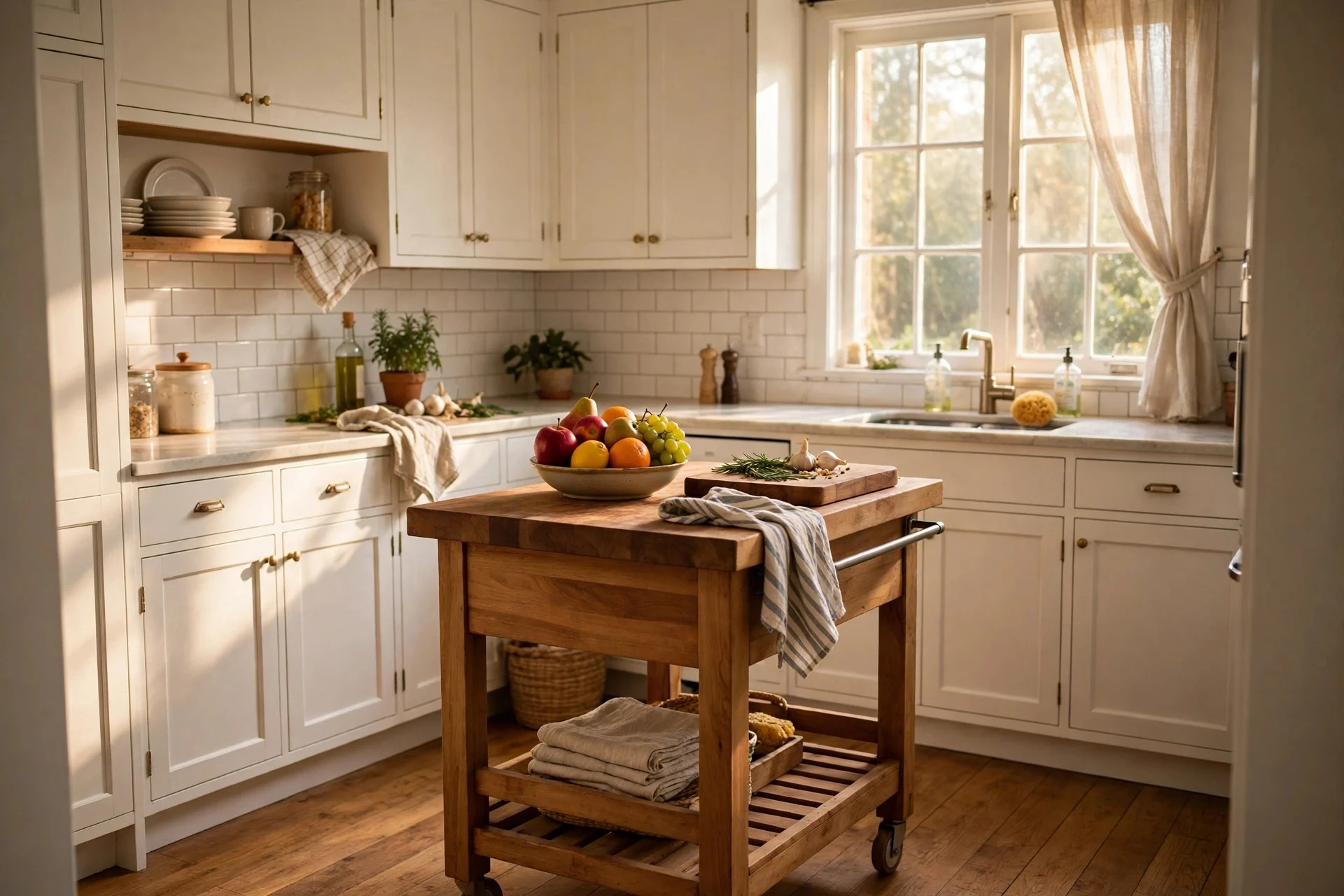
1. A Basic Butcher-Block Cart as Your Extra Prep Counter
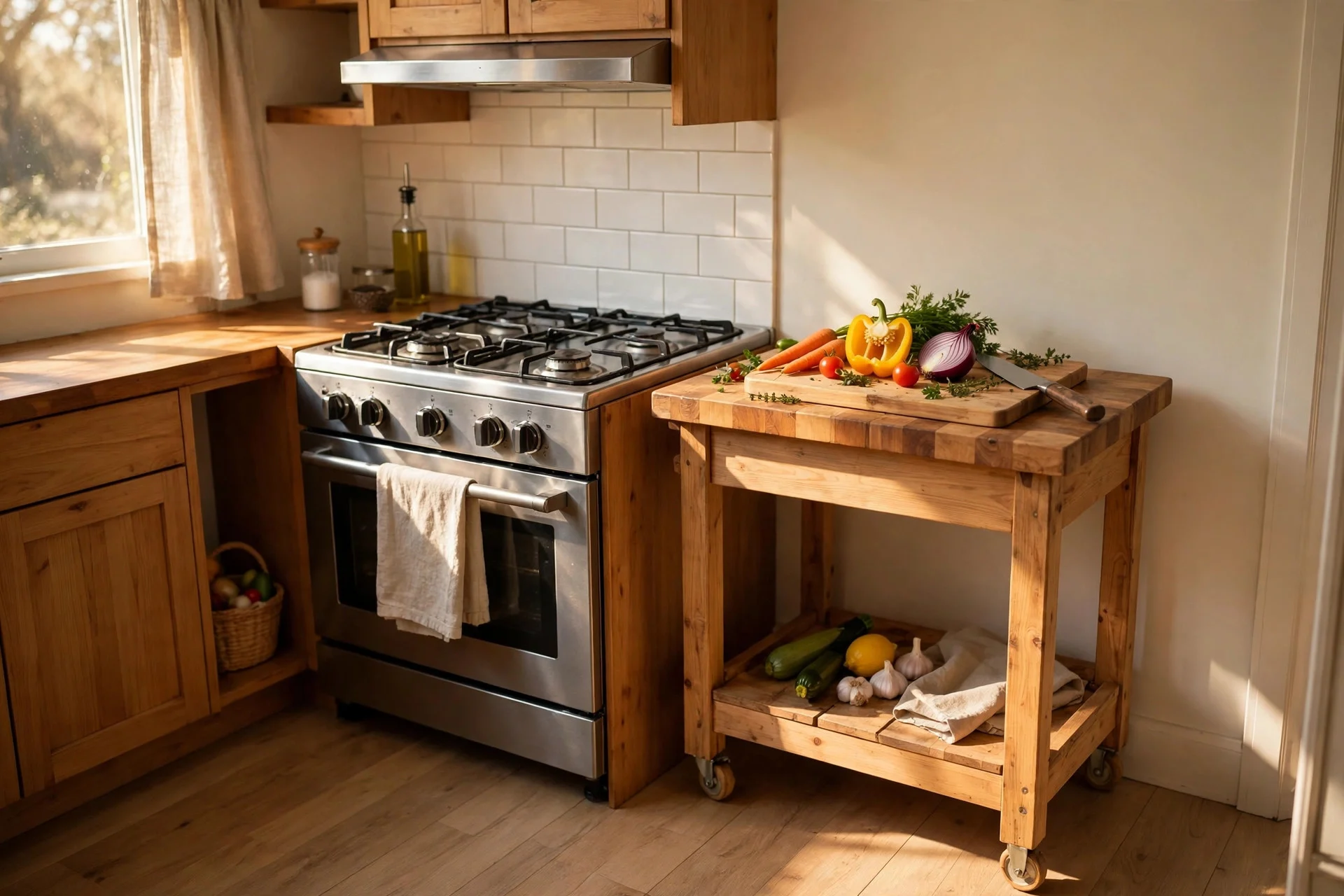
The simplest move of all: a plain wooden cart with a butcher-block top becomes the extra counter your kitchen never had. Park it beside the stove and suddenly chopping vegetables or rolling out dough has a home, while the lower shelf holds the bowls and boards you’d otherwise stack on the counter.
Cost: $30–$50 for a basic two-shelf model. Difficulty: easy; most ship flat and take 20–30 minutes to put together with the wrench in the box. Time: an afternoon at most, including assembly.
Tip: rub the top with food-safe mineral oil once a month so it stays smooth and resists stains from tomatoes and beets.
Watch out: thin tops can bow under a heavy stand mixer, so keep the mixer on the real counter.
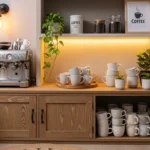
2. A Thrifted Bar Cart Turned Into a Coffee Station
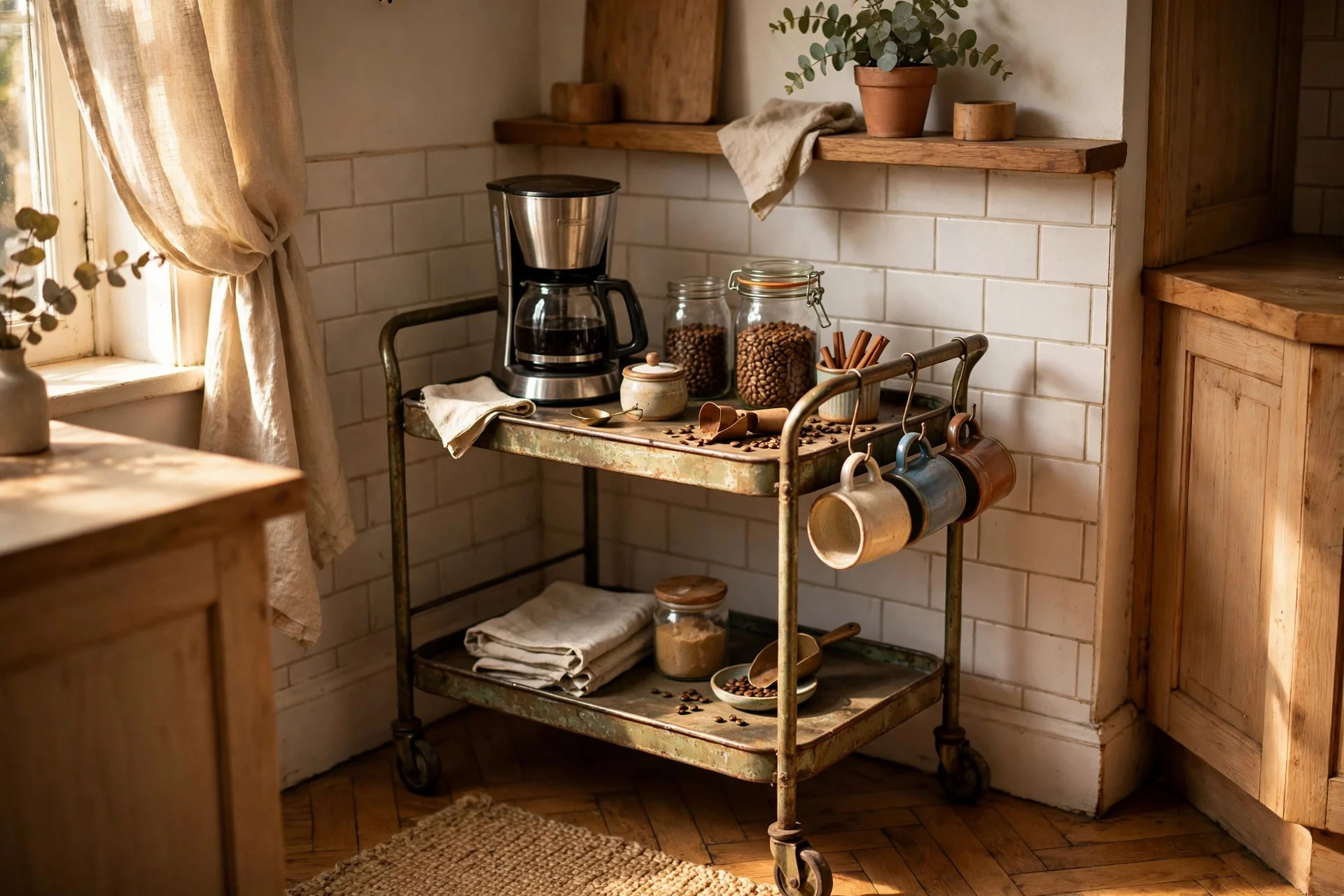
A secondhand bar cart is one of the cheapest ways to get a coffee station. The top holds the coffee maker, the middle shelf holds mugs and jars of beans, and the whole thing rolls to wherever you want your morning coffee, freeing up the counter space your coffee maker used to eat.
Cost: $15–$45 at thrift stores, yard sales, or online marketplaces, plus a few dollars for hooks. Difficulty: easy; a wipe-down and maybe a coat of spray paint is usually all it needs. Time: 1–2 hours including a quick clean-up.
Tip: stick small adhesive hooks under the top shelf to hang mugs by their handles.
Watch out: check the wheels before you buy and test the roll on the shop floor.
Shop this idea
Amazon Basics 3-Tier Metal Rolling Utility Cart, Storage Organizer, Multifunctional Storage, Mobile Shelving, Black
A slim three-tier rolling cart that parks pantry overflow beside the counter and wheels away when not needed.
As an Amazon Associate I earn from qualifying purchases. (paid link)
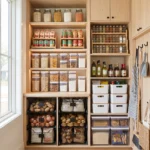
3. A Slim Two-Tier Cart for Pantry Overflow
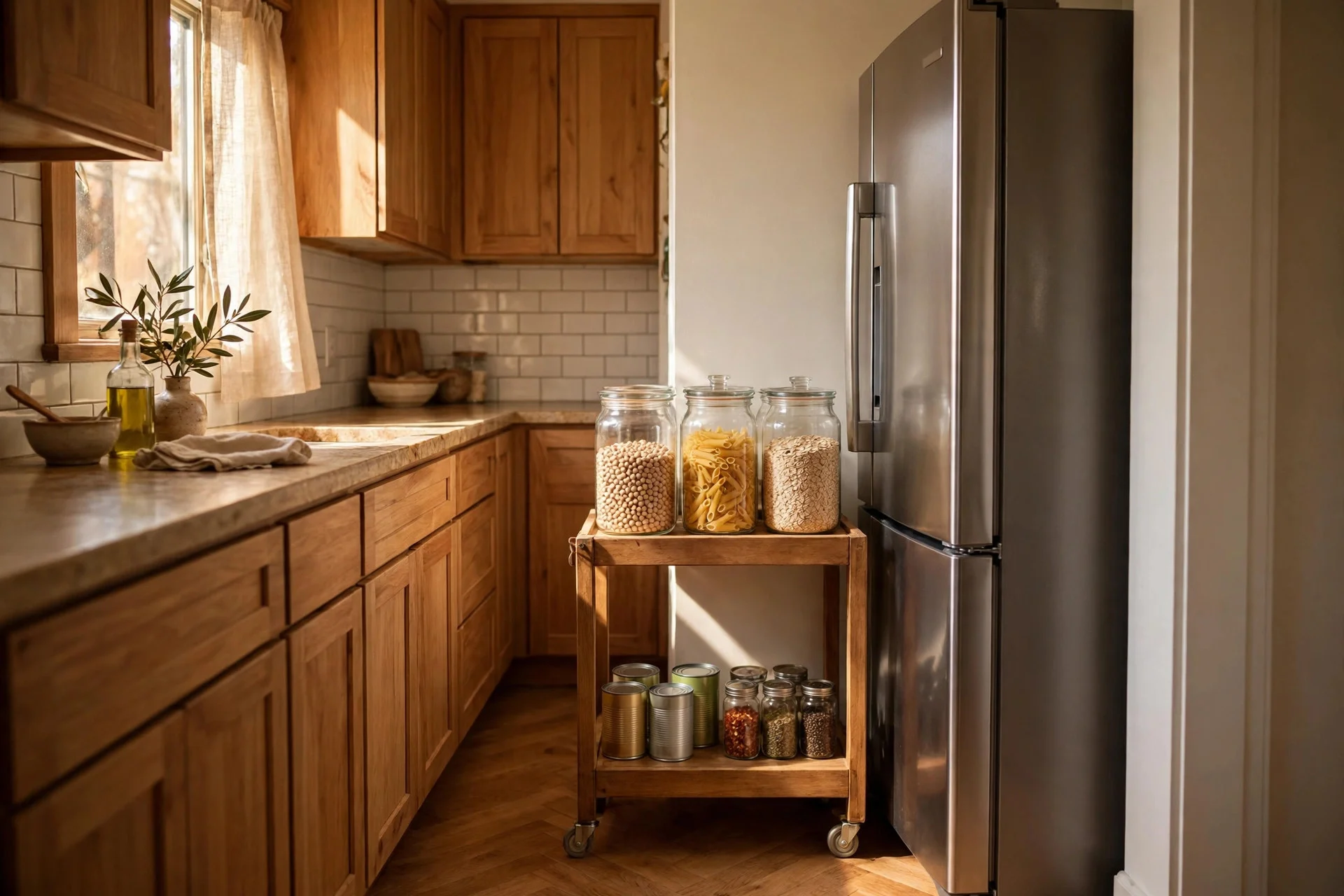
When the pantry is full and the counter is crowded, a slim two-tier cart tucked into the gap beside the fridge takes the overflow. Cans, spice jars, and dry goods live on the cart, and you pull it out like a drawer when you need something.
Cost: $25–$50 for a narrow metal or wood model. Difficulty: easy; assembly is usually four posts and two shelves. Time: about 30 minutes.
Tip: put the things you grab daily on the top tier and the backstock on the bottom, so the cart earns its keep every single morning.
Watch out: measure the gap twice — half an inch too wide and it won’t slide in at all.
4. A Drop-Leaf Cart as a Breakfast Table for One
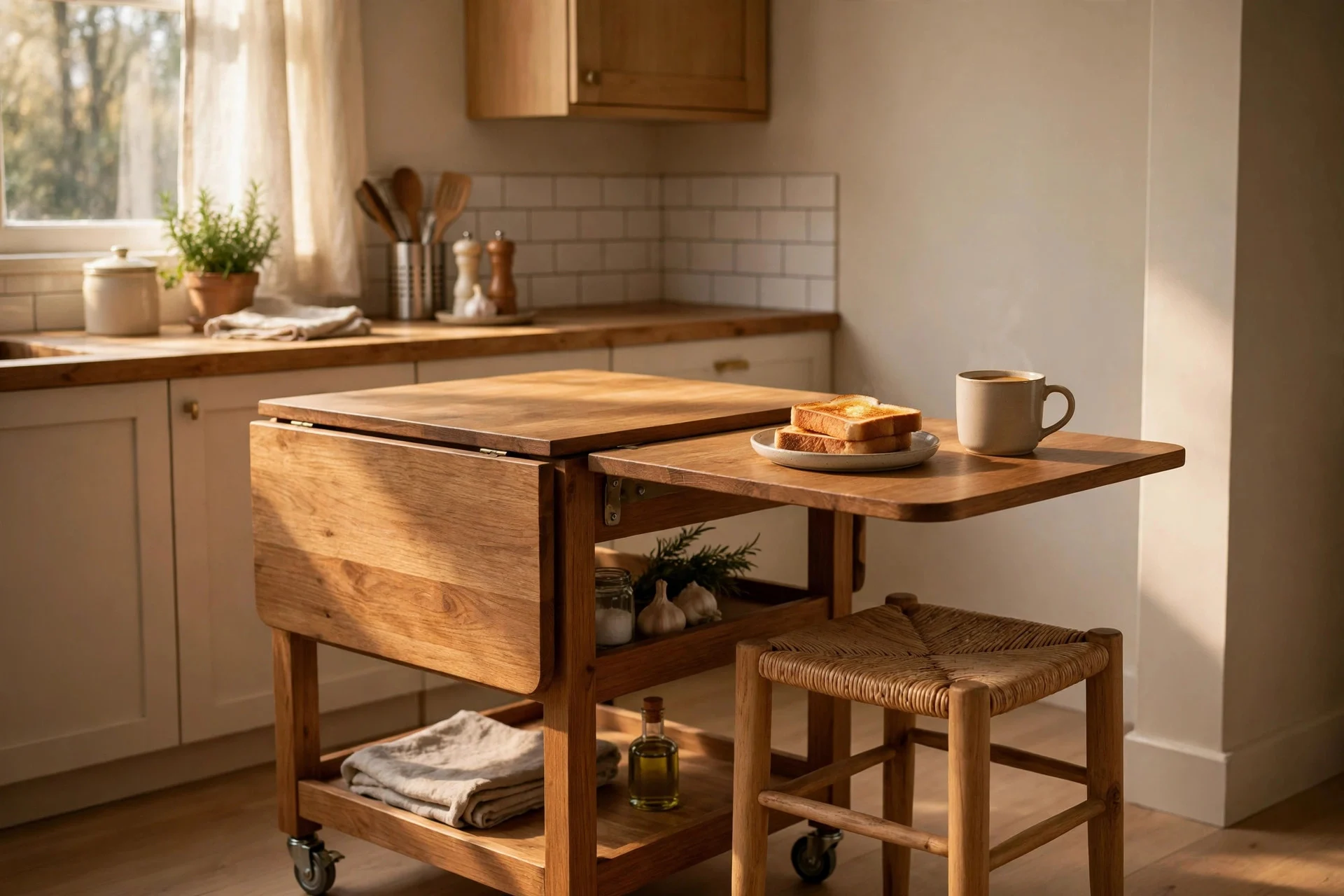
A cart with a drop-leaf side flips up into a tiny table for one and folds flat again when you’re done. You get a real spot for coffee and toast without giving up a permanent chunk of floor, and the cart underneath keeps working as storage the rest of the day.
Cost: $40–$50 for a basic folding model. Difficulty: easy; most arrive nearly assembled. Time: under an hour from box to breakfast.
Tip: keep one stool tucked under the cart so the whole setup is ready in seconds, and fold the leaf down right after eating so the habit sticks.
Watch out: a raised leaf with no support sags under a heavy plate, so pick a model with a folding bracket under the leaf.
$50–$200: Carts That Work Harder Every Day
This middle group is where a rolling cart starts to feel like real kitchen furniture. The tops get thicker, the storage gets smarter, and the carts can handle daily jobs like baking and produce storage.
5. A Butcher-Block Cart With a Towel Bar and S-Hooks
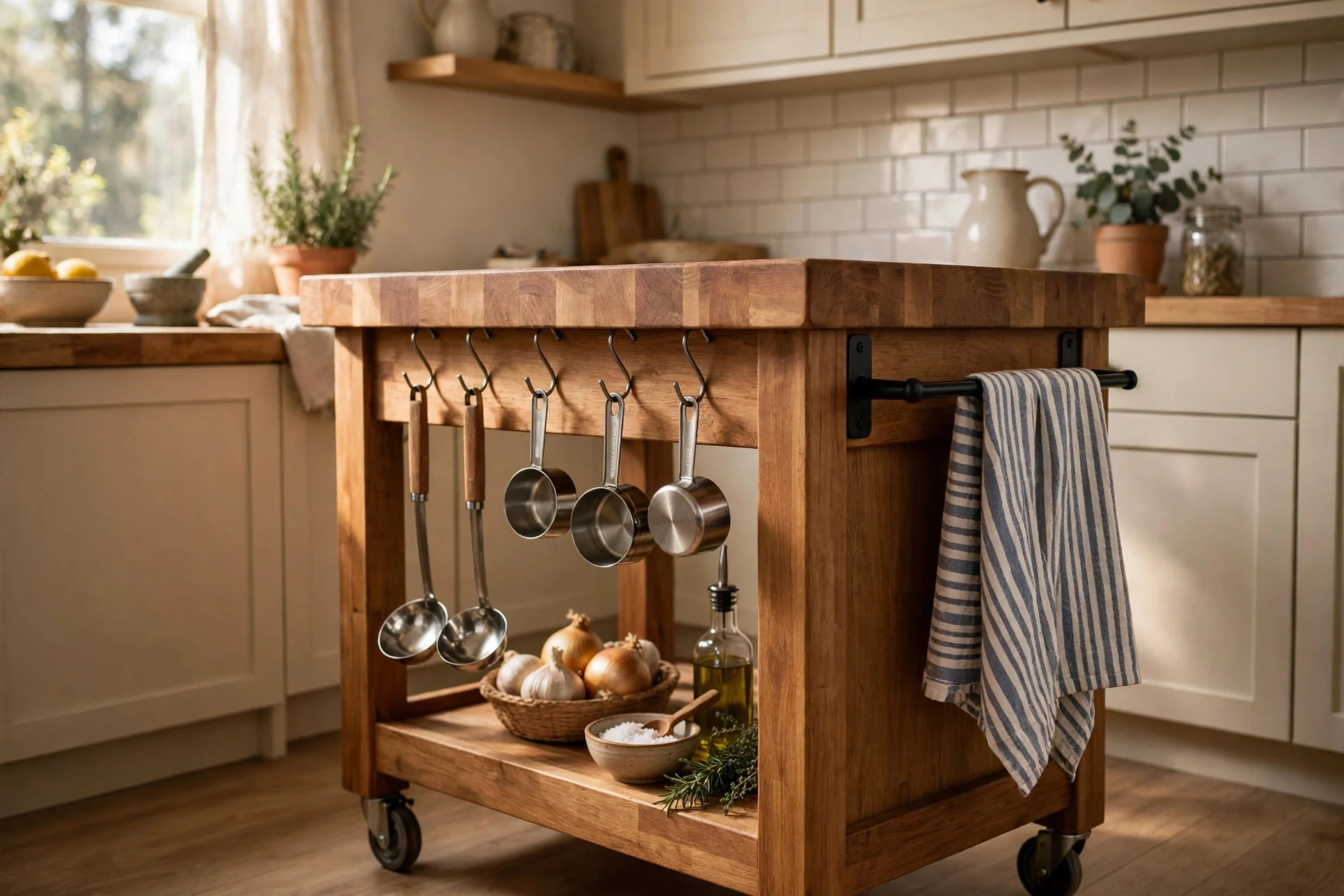
Once a cart has a towel bar on the side and S-hooks under the top, it starts acting like part of the kitchen. The towel hangs where you reach for it, the ladles and measuring cups hang within arm’s reach, and the top stays clear for cooking.
Cost: $60–$150 depending on wood quality and size. Difficulty: easy; assembly takes 30–45 minutes. Time: an afternoon.
Tip: hang only the five tools you reach for every day and leave the rest in a drawer, or the hooks turn into clutter fast.
Watch out: hooks near the stove can catch on sleeves, so park the cart a step away from open heat.
6. A Drawer Cart Set Up as a Baking Station
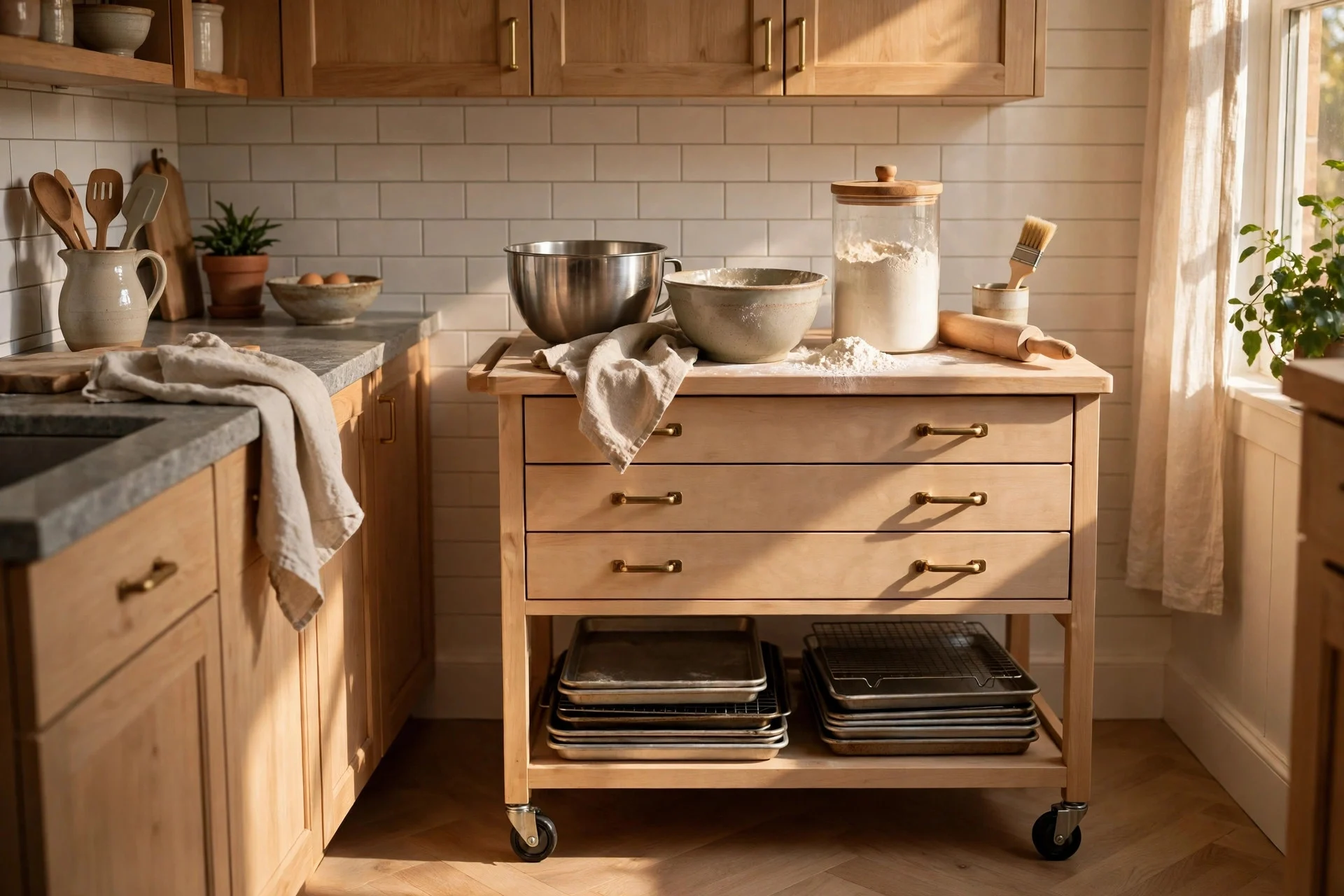
A cart with drawers is a natural baking station. Flour, sugar, and baking powder go in the top drawer, measuring cups and cookie cutters in the next, and the top holds the mixing bowl and rolling pin while you work. When the baking is done, the whole station rolls back against the wall.
Cost: $80–$180 for a solid drawer cart. Difficulty: easy to moderate; drawer slides take a bit of patience during assembly. Time: 1–2 hours.
Tip: line the drawers with non-slip shelf liner so jars don’t slide around when you roll the cart.
Watch out: flour dust gets into drawer slides over time, so wipe the runners clean every few weeks or the drawers will start to stick. If your kitchen layout is tight, check how a galley kitchen layout handles a rolling station first.
Shop this idea
VonHaus Seagrass Storage Basket Set
Woven seagrass baskets that hold produce and cookbooks on an open-shelf cart.
As an Amazon Associate I earn from qualifying purchases. (paid link)
7. An Open-Shelf Cart for Produce and Cookbooks
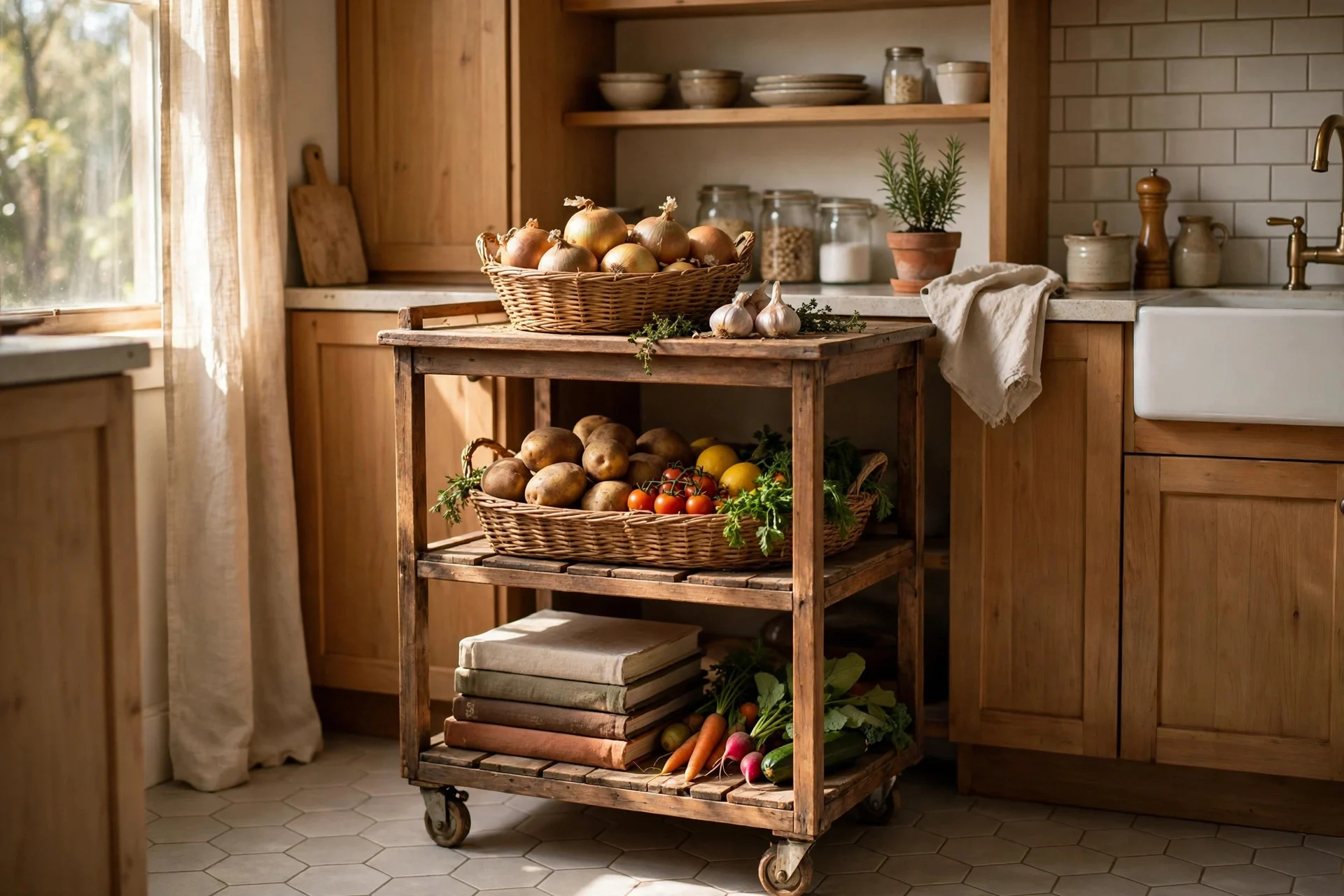
Open shelves are perfect for the things you want to see: onions and potatoes in baskets, a stack of cookbooks, the fruit bowl. A cart with two or three open shelves keeps produce ventilated and cookbooks at hand while dinner is on the stove.
Cost: $70–$170. Difficulty: easy. Time: about an hour including assembly and styling.
Tip: use one basket per item instead of piling everything together, so one soft onion can’t spoil the batch.
Watch out: direct sun on the cart ripens fruit fast and fades cookbook spines, so keep it on the shaded side of the kitchen.
8. A Rolling Cart as a Microwave and Toaster Station
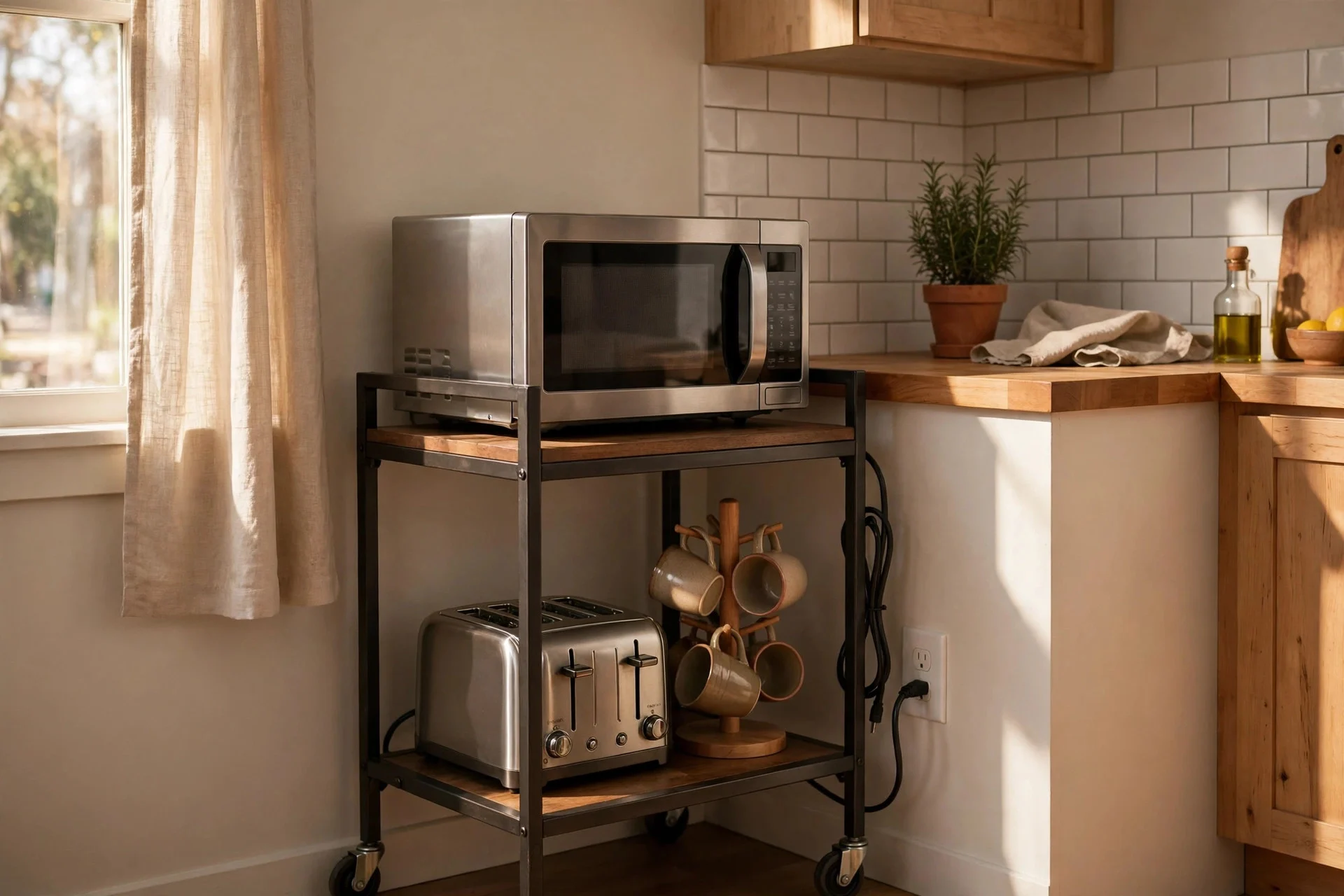
A microwave and a toaster together eat a shocking amount of counter, and a rolling cart gives them their own home. The microwave sits on top at a comfortable height, the toaster lives below, and moving them off the counter hands you back the room you need for chopping and plating.
Cost: $90–$200 for a cart sturdy enough to hold a microwave safely. Difficulty: easy; the main job is picking a cart rated for the weight. Time: under an hour.
Tip: add a small power strip to the cart’s lower shelf so you only plug in once.
Watch out: check the cart’s weight rating against your microwave before you buy, and never stretch a cord across a walkway.
$200 and Up: Carts That Replace the Island for Good
At this level you’re buying a cart that can stand in for an island every single day. The materials get serious, the tops get thicker, and some of these carts add seating too.
9. A Heavy-Duty Stainless Steel Worktable Cart
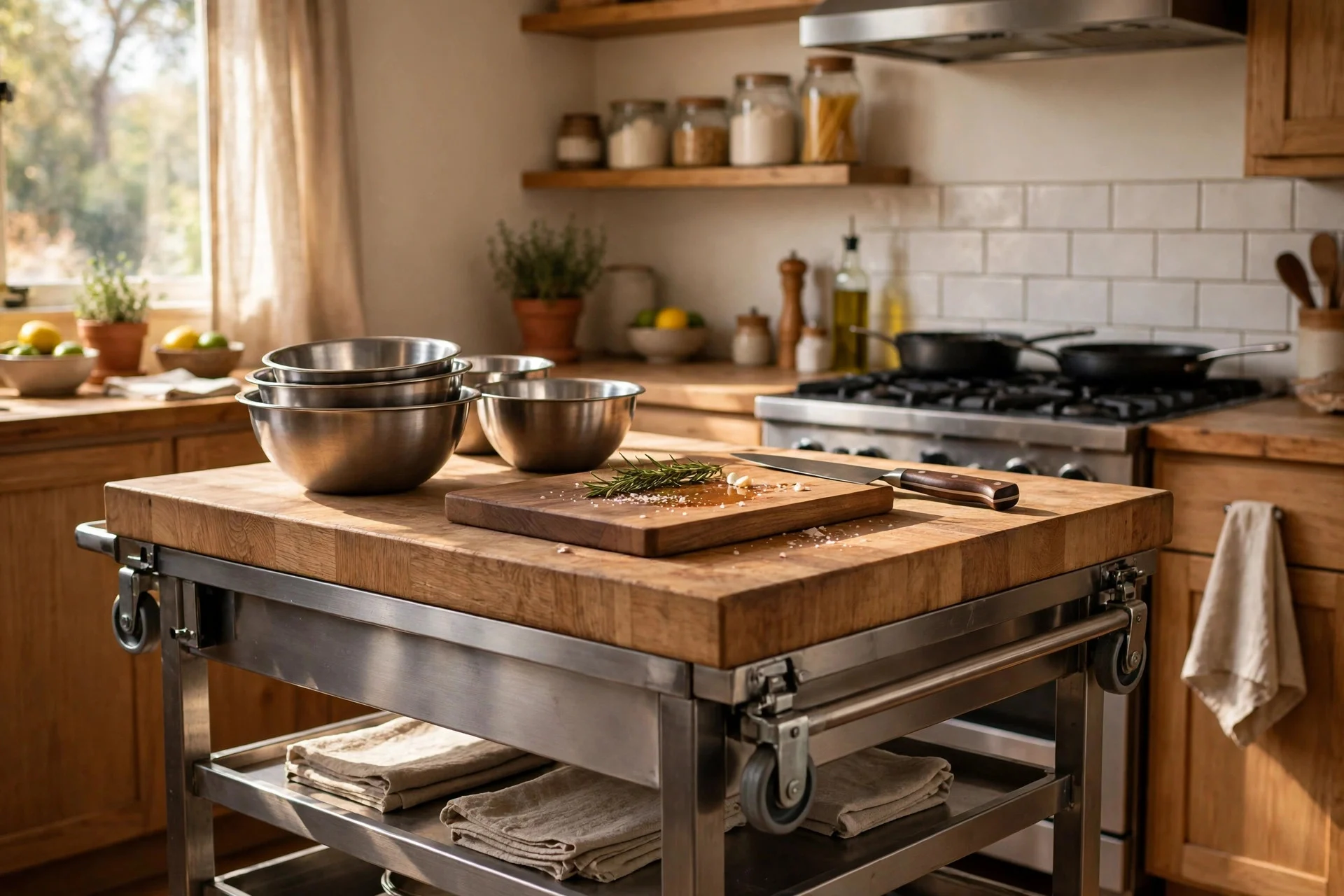
A stainless steel worktable on locking casters is the closest thing to a professional prep station you can roll into a home kitchen. The steel top wipes clean in seconds, it shrugs off hot pans and knife marks, and the open lower shelf holds sheet pans and mixing bowls.
Cost: $200–$350. Difficulty: easy; most models need only the casters and the lower shelf attached. Time: 30–45 minutes.
Tip: put a wooden cutting board on top for knife work and keep the steel clear for dough and hot trays, so you get the best of both surfaces.
Watch out: steel shows every fingerprint, so keep a microfiber cloth nearby, and always lock the casters before leaning into a heavy chop.
10. A Solid-Wood Cart With a Seating Overhang
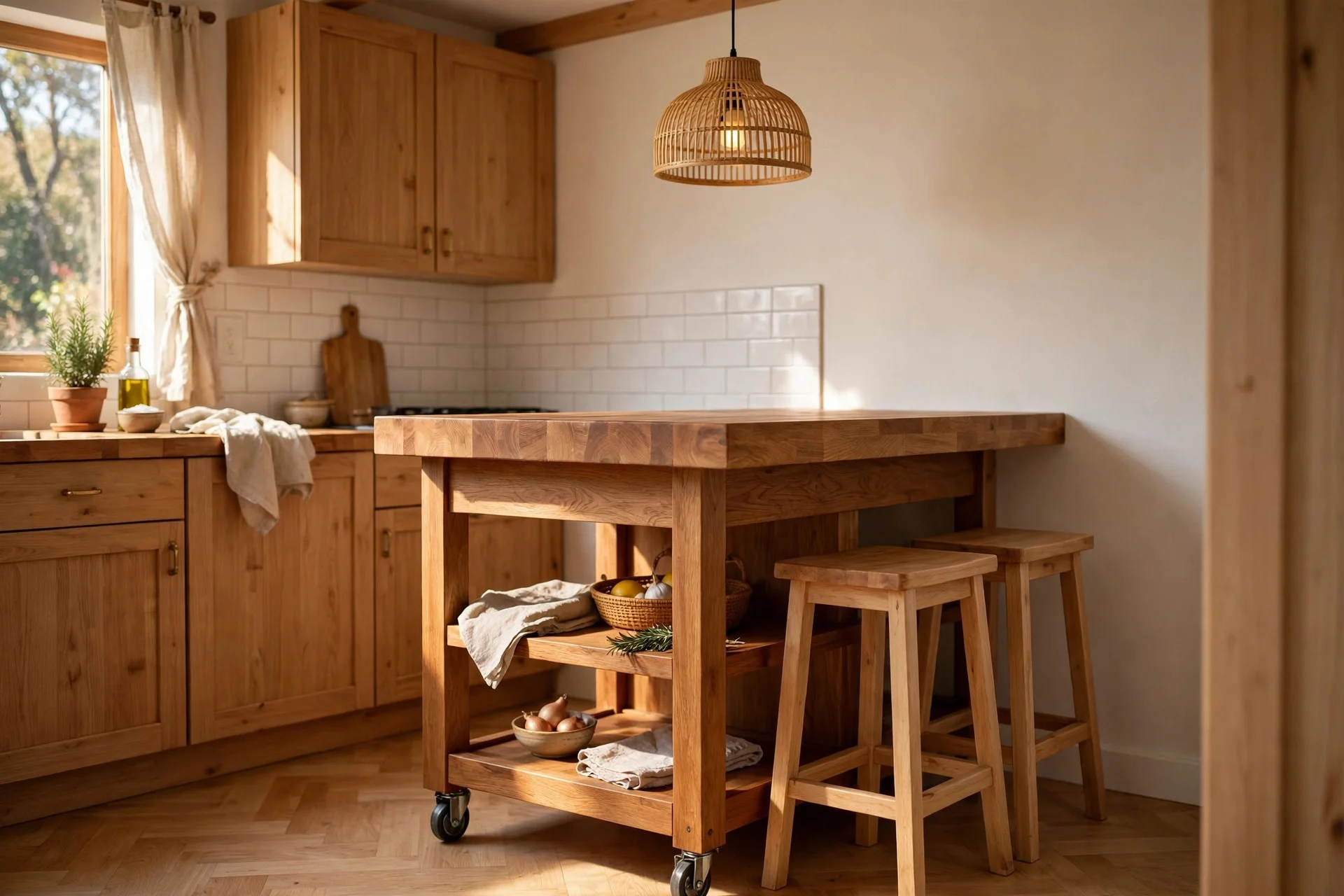
A solid-wood cart with a top that overhangs by 10 to 12 inches on one side gives you the thing most carts can’t: somewhere to sit. Two stools slide under the overhang, and the cart becomes the spot where kids do homework while you cook. The overhang puts knees under the top, and solid wood is heavy enough that the cart stays steady when someone leans on it.
Cost: $220–$400. Difficulty: moderate; the heavier top needs two people to lift onto the base. Time: 1–2 hours with a helper.
Tip: pick stools that tuck fully under the overhang so the walkway stays clear when nobody is sitting there.
Watch out: an overhang with no support bracket can crack at the joint, so keep it to 10 inches or less.
11. A Drop-Leaf Cart With Two Stools as a Mini Island
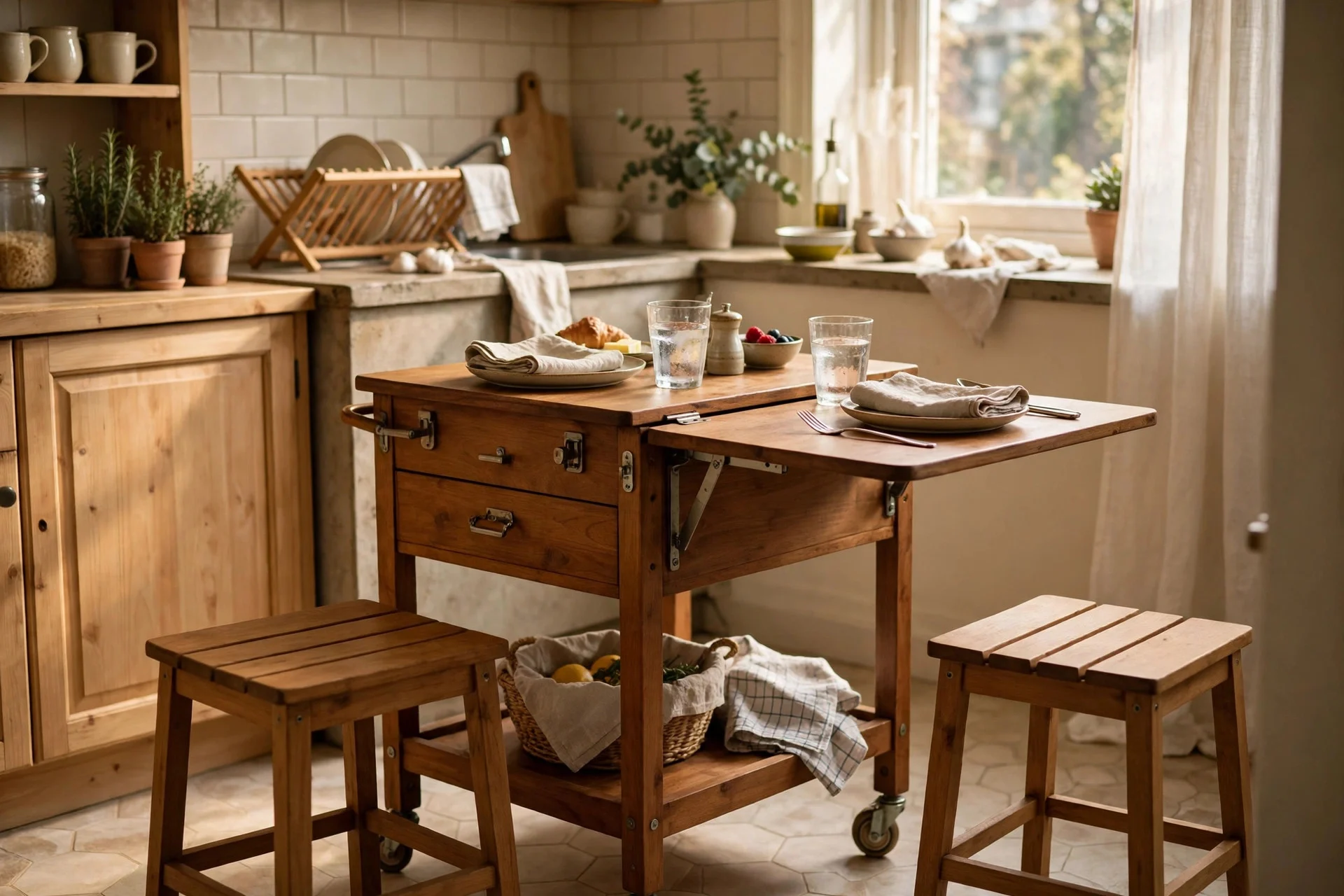
This is the closest a rolling cart gets to a real island. A sturdy cart with a drop-leaf on one side opens into a table for two, and the stools pull up for dinner, then fold away when the leaf drops. You get prep space, storage, and a dining spot in one footprint.
Cost: $250–$450. Difficulty: moderate; the leaf mechanism and heavier frame take more assembly time. Time: 2–3 hours.
Tip: store the placemats and napkins in the cart’s drawer so setting the leaf for dinner takes less than a minute.
Watch out: folding stools stored on the cart can rattle when you roll, so store them separately. For styling, borrow a few tricks from breakfast nook ideas like a small pendant light and a washable cushion on each stool.
12. A Marble-Top Cart as a Statement Serving Island
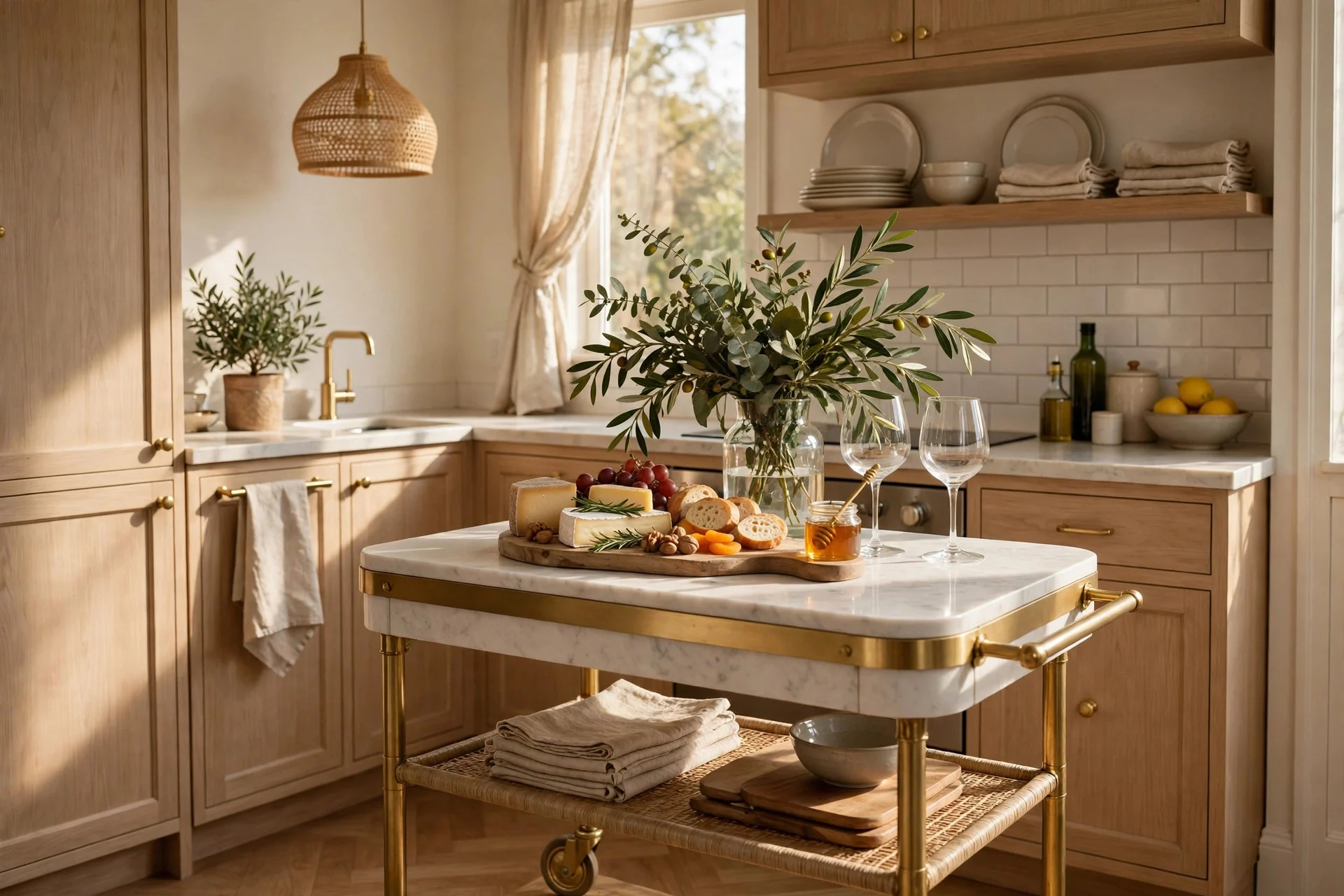
A cart with a marble top and brass details is the showpiece of the bunch. It rolls out for parties loaded with a cheese board and wine glasses, then parks against the wall as a serving station. The cool marble surface is also genuinely useful for pastry and chocolate work.
Cost: $300–$600, more for real stone over a lookalike top. Difficulty: easy to buy, moderate to live with; marble needs sealing. Time: an hour to assemble, plus 30 minutes to seal the top.
Tip: seal the marble before the first use and again every six months, and wipe up wine and lemon juice right away so they don’t leave marks.
Watch out: marble is heavy and it stains, so this is a poor pick for a kitchen that sees a lot of red sauce and rough daily use. If your drawers are overflowing from all the serving pieces, these kitchen drawer organization ideas will help you make room.
Frequently Asked Questions
Can a rolling kitchen cart really replace a kitchen island?
For most small kitchens, yes. A cart gives you the extra counter space and storage an island offers, and it rolls out of the way when you need floor space. What it can’t do is hold a sink or a cooktop, or seat four people.
How big should a rolling cart be for a small kitchen?
Aim for 24 to 36 inches wide and 18 to 24 inches deep, with a top at standard counter height of about 36 inches. That size fits most kitchens without blocking walkways, and it’s big enough to hold a cutting board, a bowl, and a few tools at once. Always leave 36 inches of clear space around it for comfortable movement.
What is the best material for a rolling kitchen cart top?
Butcher block is the best all-rounder because it’s warm, easy to repair with sanding and oil, and kind to knives. Stainless steel is the easiest to clean and the toughest against heat, while marble stays cool for pastry but needs regular sealing.
Will a rolling cart damage my kitchen floor?
It can if the casters are hard plastic rolling over wood or vinyl every day. Look for carts with rubber or soft-tread wheels, and lock the casters when the cart is parked so it doesn’t drift and scuff the floor. A small rug or mat under the cart’s usual spot adds extra protection.
How much should I spend on a rolling kitchen cart?
Start with what the cart needs to do. Under $50 covers a simple prep cart or coffee station, $50–$200 buys a sturdier cart with drawers or shelves for daily use, and $200 or more gets solid wood, steel, or stone tops with seating.
Pick the Cart That Fits Your Kitchen, Not Someone Else’s
The best rolling kitchen cart isn’t the most expensive one or the prettiest one in the store. It’s the one that fixes the problem you bump into every day, whether that’s a missing prep surface or nowhere to sit with a cup of tea. Measure your space, pick a budget tier, and start with the idea that matches your biggest daily annoyance.