Canopy beds get a bad rap, and honestly, some of it is earned. The heavy draped four-posters of the 90s — all swags, tassels, and dust-collecting valances — made the whole style feel like a period drama set. But a canopy bed doesn’t have to look like that. Stripped back to a clean frame, it adds height and structure to a bedroom in a way no other piece of furniture can. These canopy bed bedroom ideas prove the point: twelve rooms, twelve different frames, none of them stuck in the past.
The trick is proportion. A canopy frame draws the eye upward, so it works best when the rest of the room stays calm. Keep bedding simple, leave the walls fairly quiet, and let the frame do the talking. If your ceiling is under eight feet, go slimmer and lower — a canopy that crowds the ceiling will shrink the room instead of opening it up.
1. Slim Black Metal Four-Poster With No Curtains
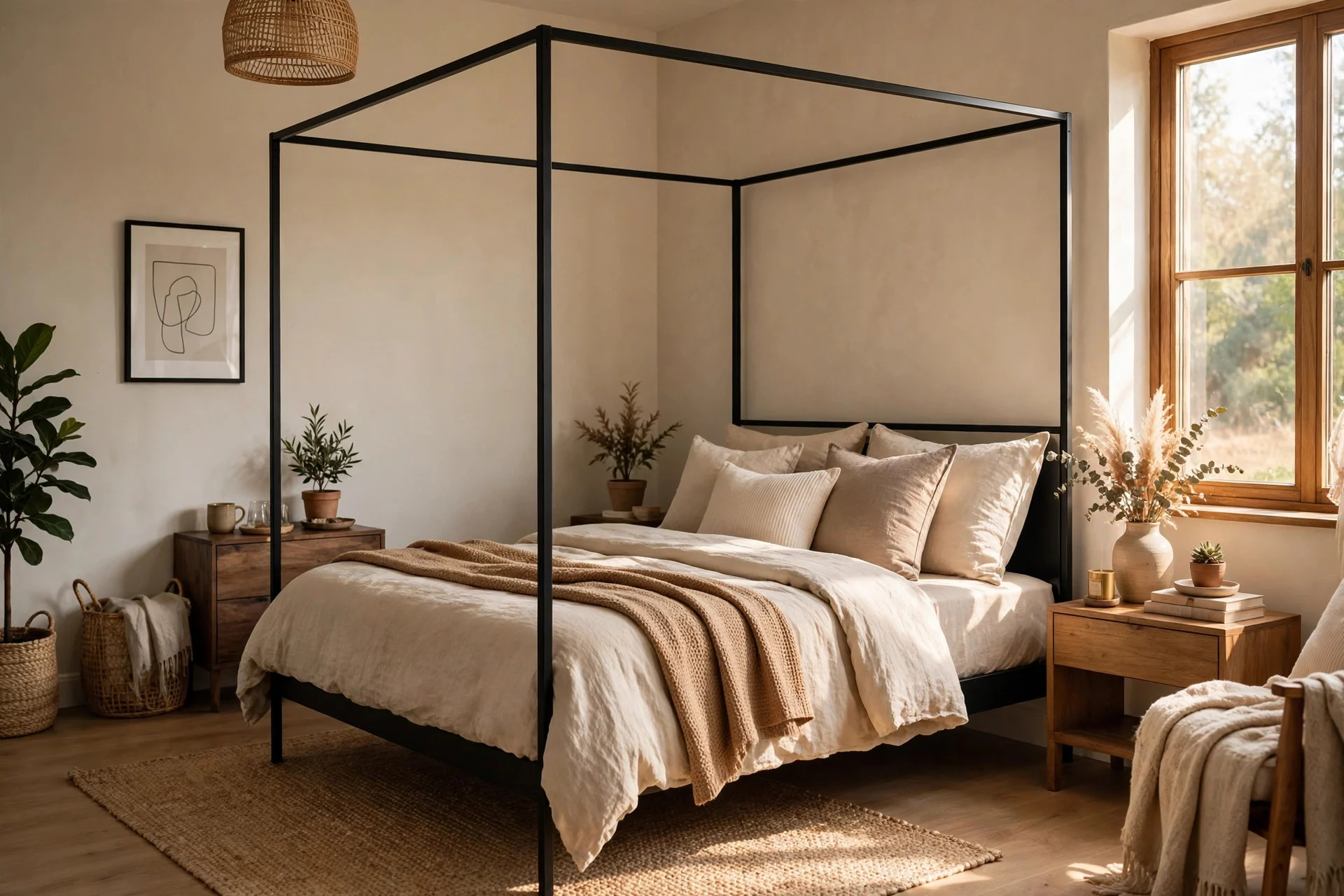
Start with the simplest version of all: four thin black metal posts, a rectangular top frame, and nothing hanging from it. No curtains, no drapes, no fabric at all. The frame reads like a line drawing of a bed, and that’s exactly why it works in a modern room. It gives the bed presence without weight, and it suits rooms where you already have strong art or patterned bedding competing for attention.
Painted black metal also hides dust and scuffs better than pale wood, which matters when the frame sits at eye level every morning. Pair it with white or cream bedding and one darker throw so the frame doesn’t float against a pale wall.
Cost: $300–$900 for the frame. Difficulty: Easy — most flat-pack in an afternoon. Tip: Check the top rails are level before tightening everything; a slightly crooked frame is obvious once bedding goes on.
2. Sheer Linen Drapes, Airy and Light
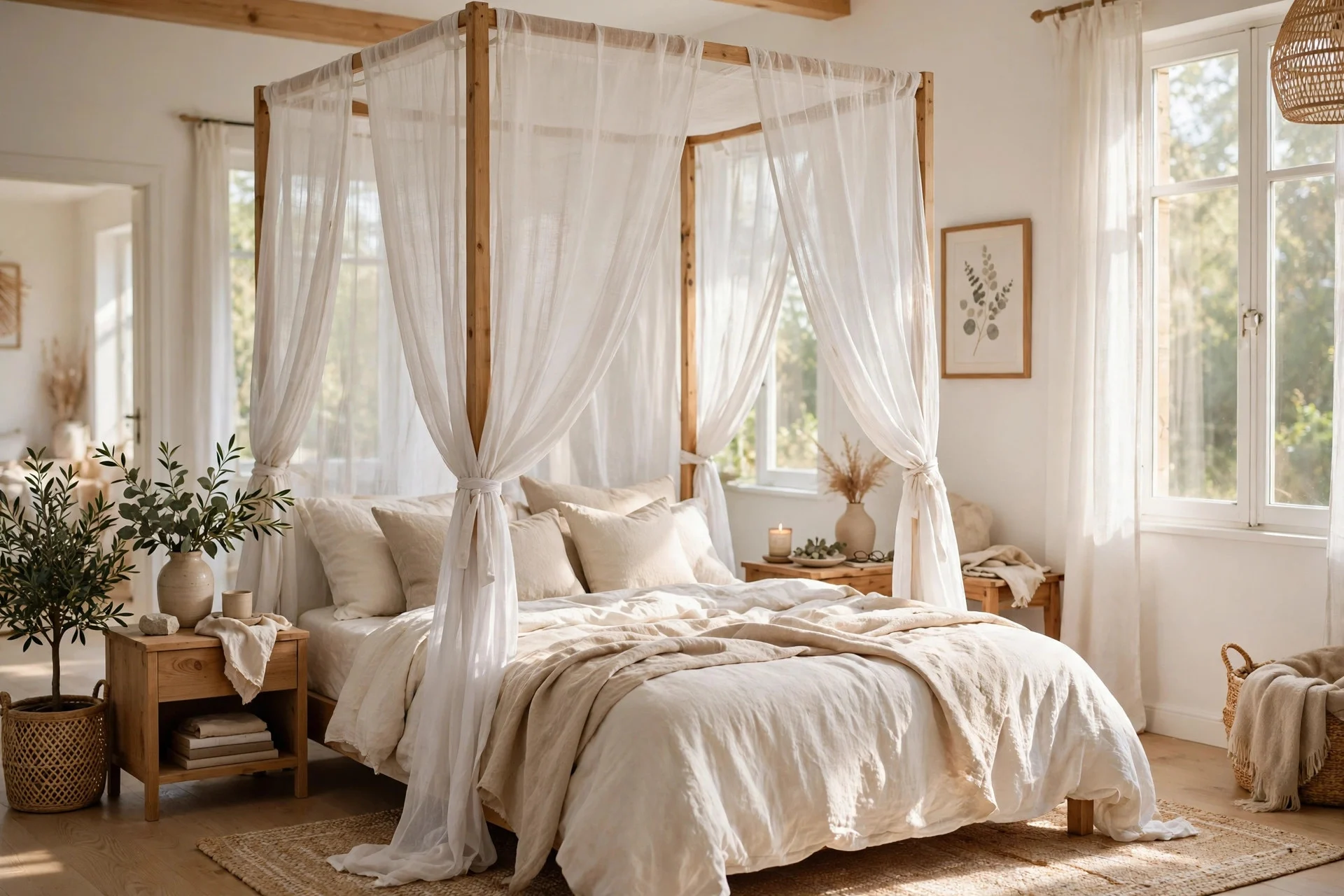
If you like the idea of curtains but not the heaviness, sheer linen is the answer. White or natural linen panels soften the frame and filter morning light without blocking it, so the bed feels like a sheltered nook rather than a closed box. This is the version to pick if you love the romance of a canopy but your room is small or north-facing.
Buy panels slightly longer than the posts so they pool just a touch at the floor, and wash them before hanging — linen relaxes and drops a little after its first wash. Tie-backs at the foot posts let you open the canopy up during the day and close it at night.
Cost: $150–$400 for four linen panels. Difficulty: Easy. Tip: Skip lined curtains here; the whole point is light passing through.
3. Natural Wood Canopy Frame
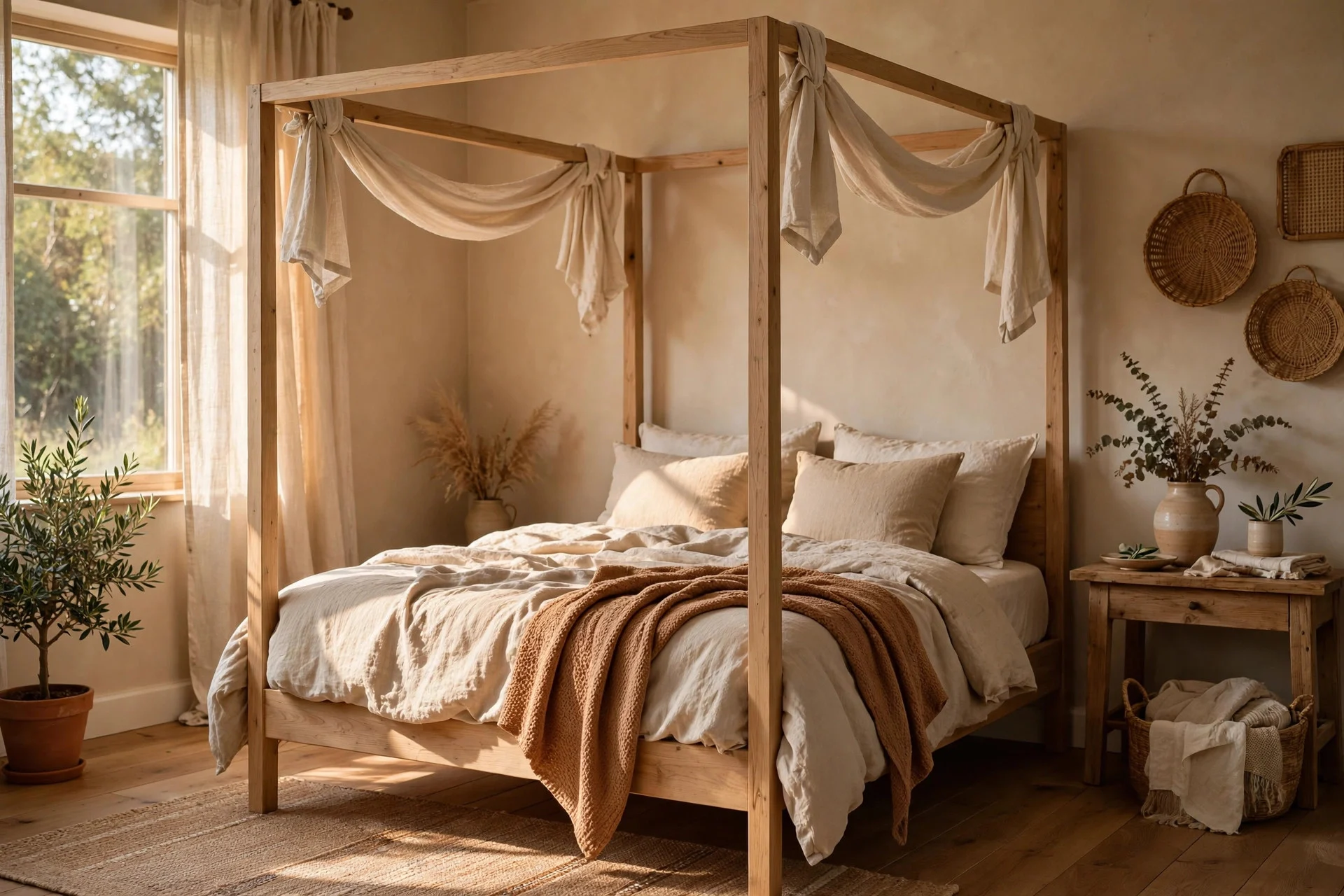
Oak, ash, or walnut frames bring warmth that metal can’t. A natural wood canopy suits rooms with wooden floors, woven baskets, and linen bedding — the whole room starts to feel grounded and calm. Keep the finish matte rather than glossy; a high shine pushes wood frames back toward formal, traditional territory.
Wood frames are heavier than metal, so check your floor can take the weight and that the joints are solid, not just bolted through thin side rails. A well-made wood canopy is a buy-it-once piece, and it ages well as the wood deepens in colour.
Cost: $800–$2,500. Difficulty: Moderate — assembly takes two people. Tip: Match the wood tone to something else in the room, like nightstands, so the bed doesn’t look stranded.
4. Minimal Canopy With Just the Top Frame
Some of the best-looking canopy beds barely look like canopy beds at all. This version keeps only the top rectangular frame — no tall posts at the foot, or posts so slim they nearly disappear. The overhead frame still gives the bed its sense of enclosure, but the room stays open and the sightlines stay clear.
This works well in rooms with low ceilings or a big window behind the bed, where full posts would block light or crowd the wall. It also suits renters, since several versions mount to the wall or ceiling rather than standing on the floor.
Cost: $200–$700. Difficulty: Easy to moderate. Tip: If wall-mounting, find the studs first — a frame that sags on one side ruins the clean look.
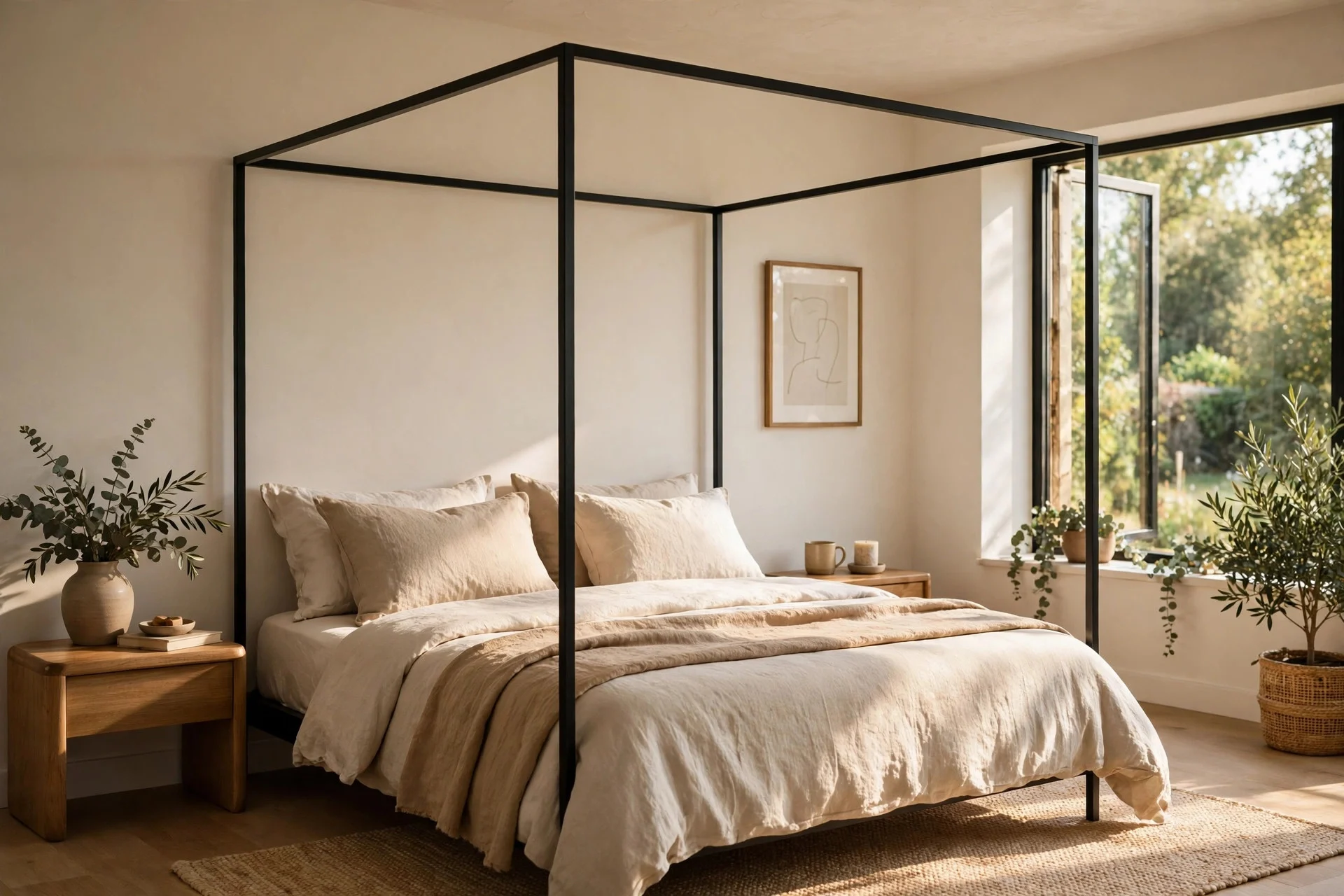
5. White Canopy in a Coastal Room
A white-painted canopy frame in a room with pale walls, blue accents, and natural textures reads fresh rather than frilly. The trick is keeping everything else simple: plain white bedding, one blue or sea-green throw, and no more than one patterned pillow. The white frame blends into pale walls, so the bed feels airy instead of dominating the room.
White paint shows marks, so keep a small tin of touch-up paint on hand, especially if you have kids or pets. Satin finish wipes clean more easily than matte.
Cost: $400–$1,200. Difficulty: Easy. Tip: Pair with a woven rug and wooden nightstands to keep the coastal feel from turning clinical.
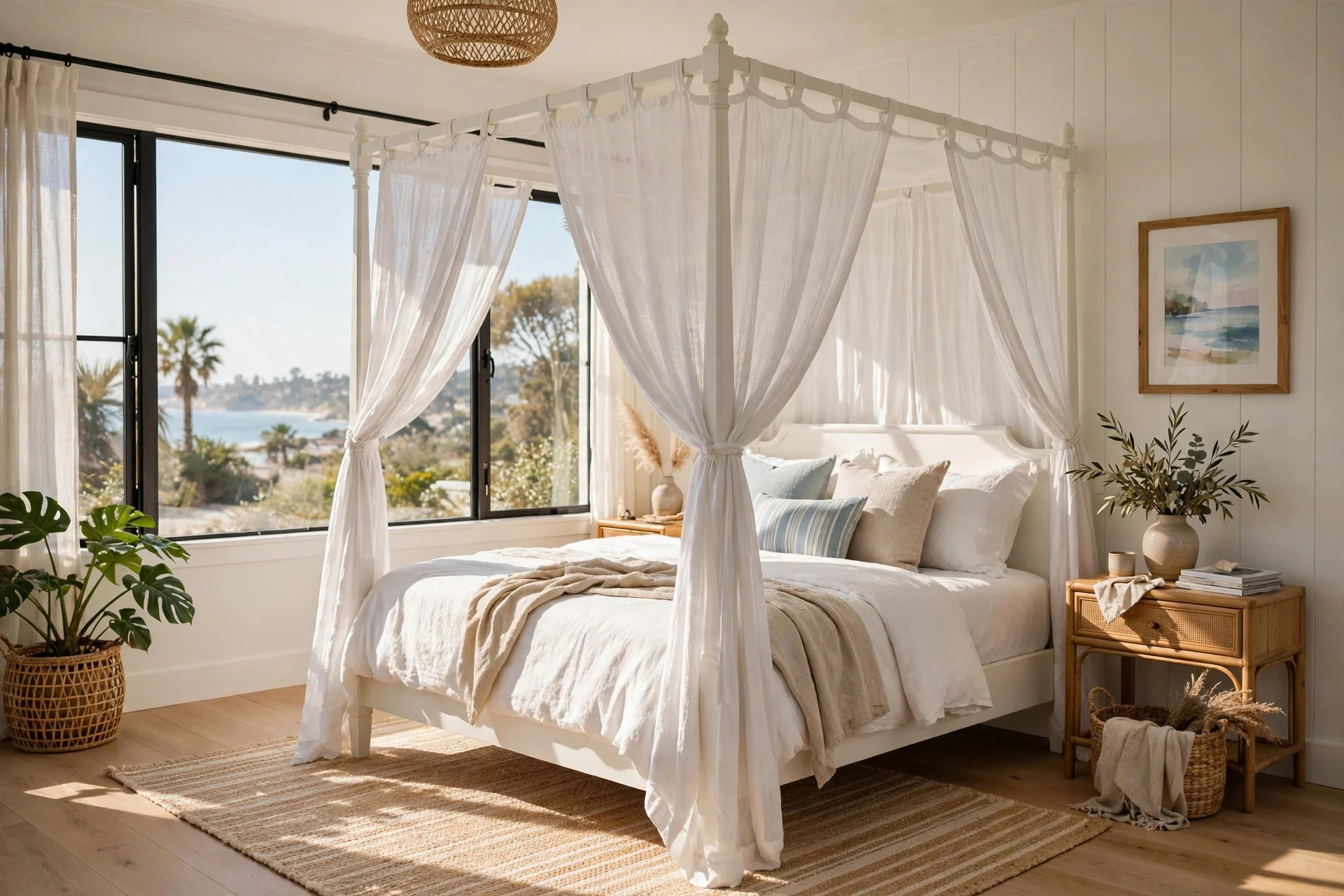
6. Canopy Paired With an Upholstered Headboard
A canopy frame plus a padded headboard sounds like a lot, but the combination works because the two pieces do different jobs. The frame adds height and structure; the headboard adds softness where you actually lean back to read. Pick a headboard in a plain fabric — linen, bouclé, or cotton velvet — so it doesn’t fight with the frame.
This pairing suits people who read in bed every night. A hard wooden or metal headboard gets uncomfortable fast, and a padded one fixes that without giving up the canopy look.
Cost: $500–$1,800 for frame plus headboard. Difficulty: Moderate. Tip: Keep the headboard height below the top frame, or the proportions start to look top-heavy.
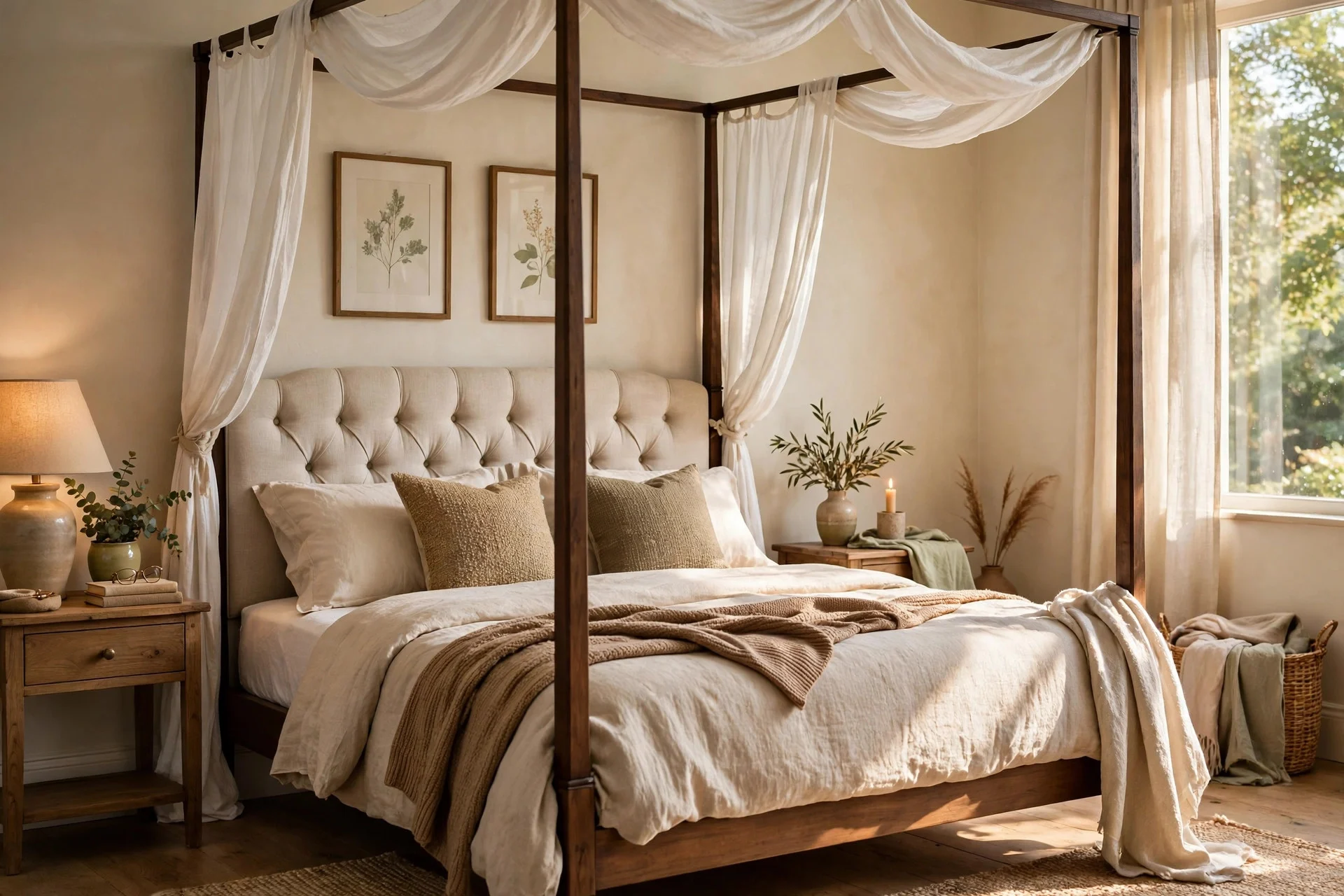
7. Dark Wood Canopy in a Moody Room
Dark walnut or espresso-stained frames look best in rooms that commit to the mood: deep green, charcoal, or navy walls, warm lamps instead of overhead lighting, and bedding in cream or rust to keep the bed visible against the dark frame. If you are repainting to get the look, the paint calculator estimates how much paint the room needs. Done right, this is the most grown-up version of a canopy bed — more boutique hotel than childhood bedroom.
Lighting matters more here than in any other version. Without warm light, a dark frame against dark walls disappears, and the room just looks dim. Two bedside lamps with warm bulbs solve it.
Cost: $900–$2,800. Difficulty: Moderate. Tip: A lighter rug under the bed stops the dark frame and dark floor from merging into one mass.
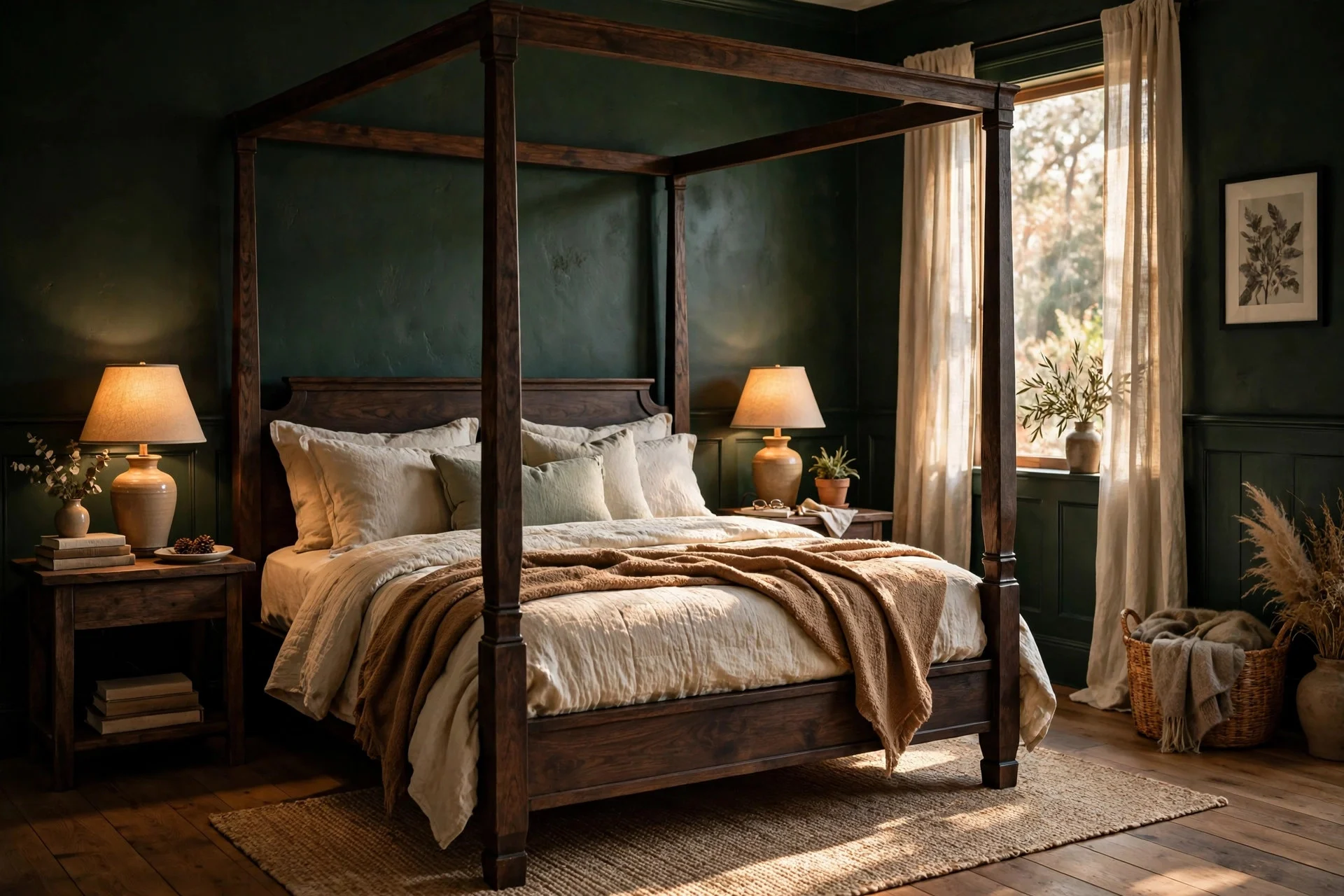
8. Scaled-Down Canopy for a Small Bedroom
Small rooms can handle a canopy bed — they just need a smaller one. Look for frames with slimmer posts, a lower overall height, and no footboard bulk. A queen frame in a room that could only just fit a king is the right trade: the canopy gives the room its feature, and the extra floor space keeps it usable.
Keep the bedding light and skip the curtains entirely in a small room. Curtains on a canopy in a tight space eat visual room fast. A single throw across the foot of the bed is enough decoration.
Cost: $300–$1,000. Difficulty: Easy. Tip: Measure the diagonal of your doorways before ordering — canopy frames come in long boxes that don’t bend around tight corners.
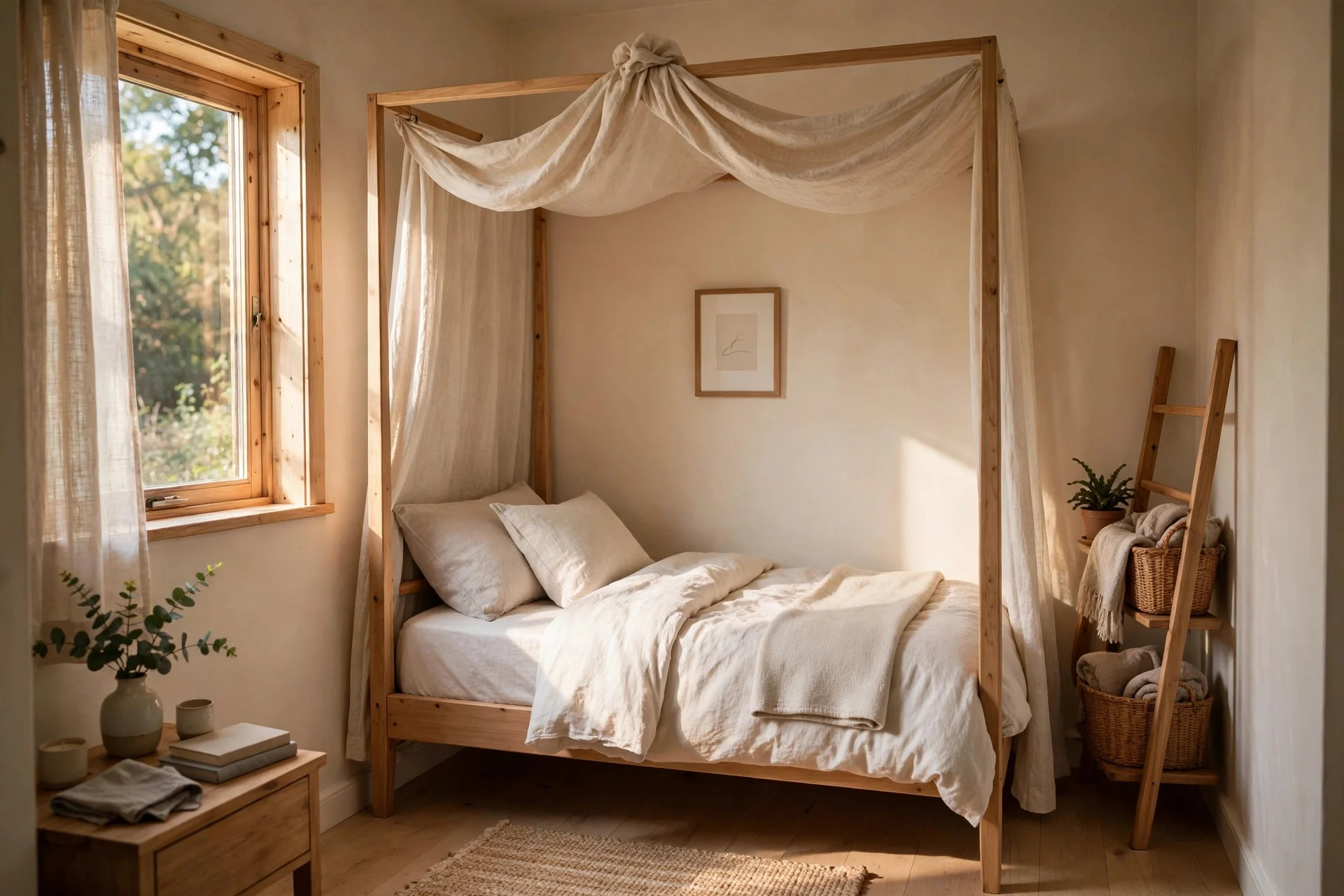
9. Modern Canopy With Clean Straight Lines
This is the canopy for people who like modern furniture and worry a canopy will look old-fashioned. Square posts, no curves, no finials, no ornament of any kind — just straight lines and right angles. In brushed nickel or matte black, it reads as architecture rather than decoration, and it pairs naturally with platform-style nightstands and plain bedding.
The discipline here is restraint. One strong element is enough; if you add patterned curtains, carved nightstands, and a busy rug, the modern look falls apart. Let the frame be the one bold shape in the room.
Cost: $600–$2,000. Difficulty: Easy to moderate. Tip: Square posts show fingerprints on metal finishes, so wipe them down when you change the sheets.
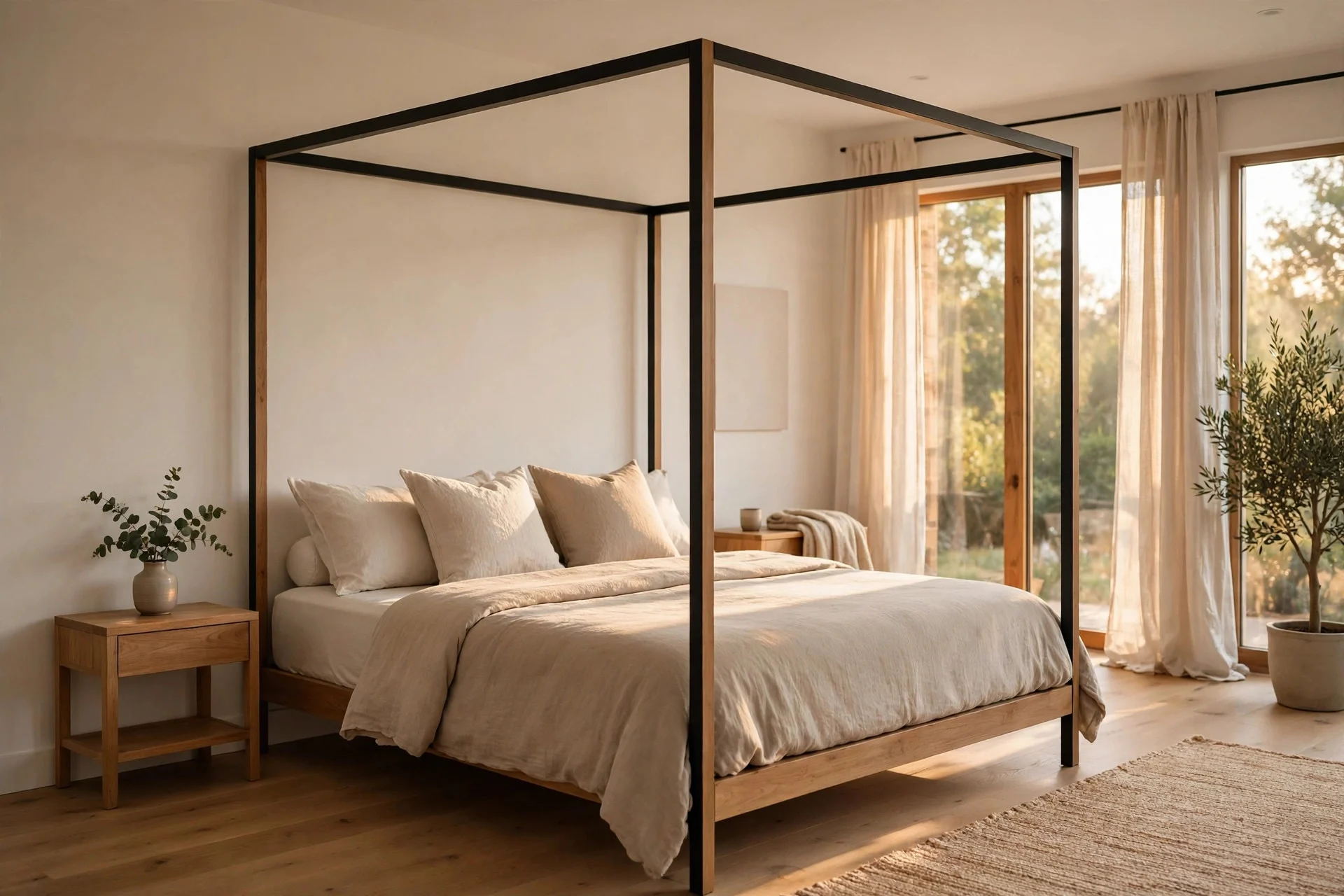
10. Canopy With Warm Reading Lights Mounted on the Frame
Mounting small warm lights on the canopy frame is one of those ideas that sounds like a gimmick until you try it. Clip-on or magnetic reading lights on the top rails give each sleeper their own pool of light, aimed at the book and not at the other person’s face. It also makes the canopy feel intentional at night, like a little room within the room.
Go for warm white (2700K) and dimmable if you can. Cool white light inside a canopy feels like an office, and bright light bouncing off bedding will keep a partner awake. Battery-powered versions avoid trailing cables entirely.
Cost: $30–$120 for two lights. Difficulty: Easy. Tip: Test the light position before fixing anything permanently — glare on a partner’s pillow is the fastest way to regret this idea.
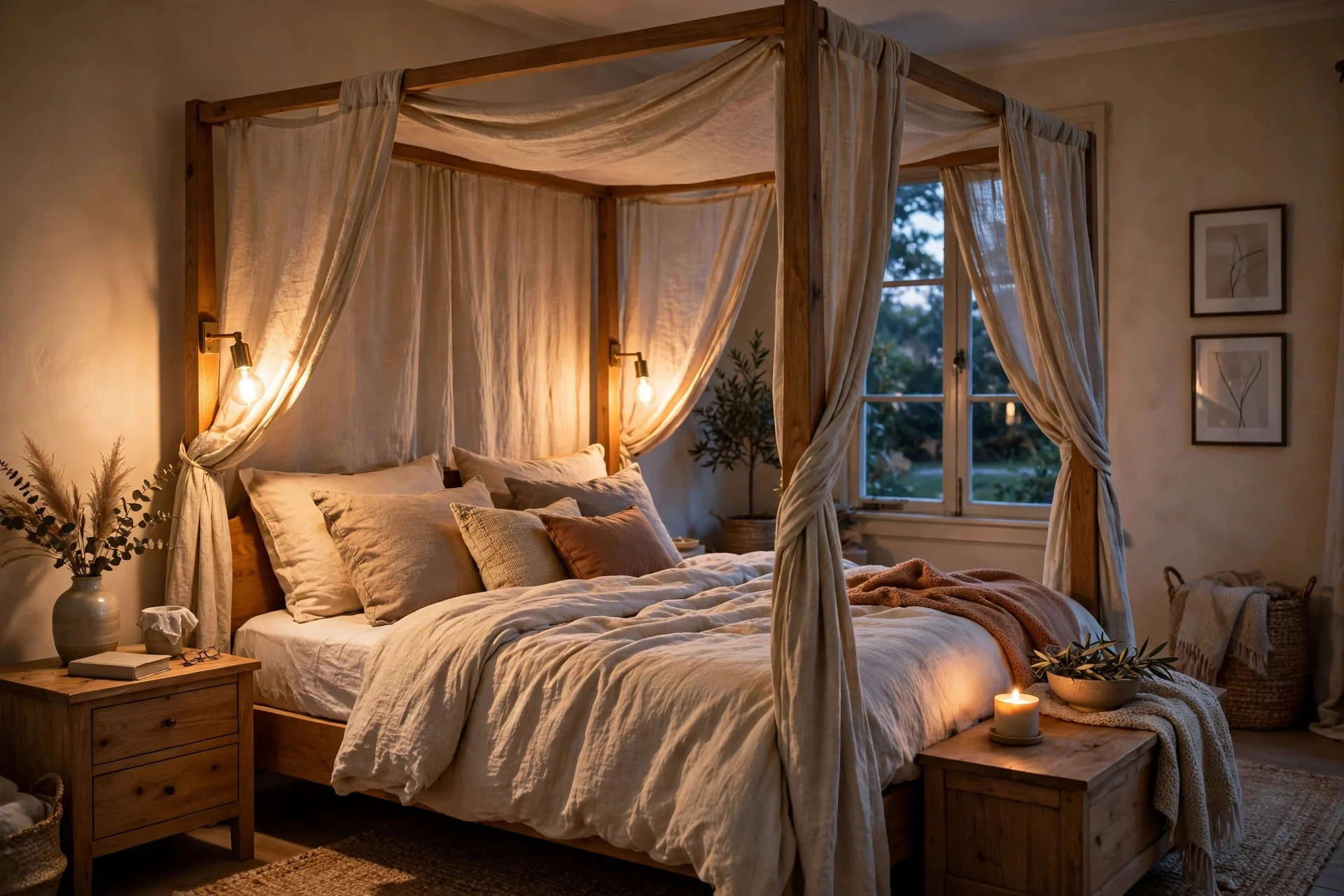
11. Rattan Canopy, Relaxed Boho Feel
Rattan and cane canopy frames bring a relaxed, holiday-house feel that suits bedrooms with plants, woven baskets, and natural-fibre rugs. The open weave keeps the frame light visually, even in a warm wood tone, so it works in rooms where a solid wood canopy would feel too heavy.
Rattan needs a little care: keep it out of direct damp, dust the weave with a soft brush, and avoid hanging heavy things from the top rails. Most rattan frames are lighter than wood, which makes moving them easier but means you should check the joints are well made before buying.
Cost: $500–$1,500. Difficulty: Easy. Tip: One rattan piece per room is usually enough — a rattan bed plus rattan nightstands plus a rattan chair tips into theme-park territory.
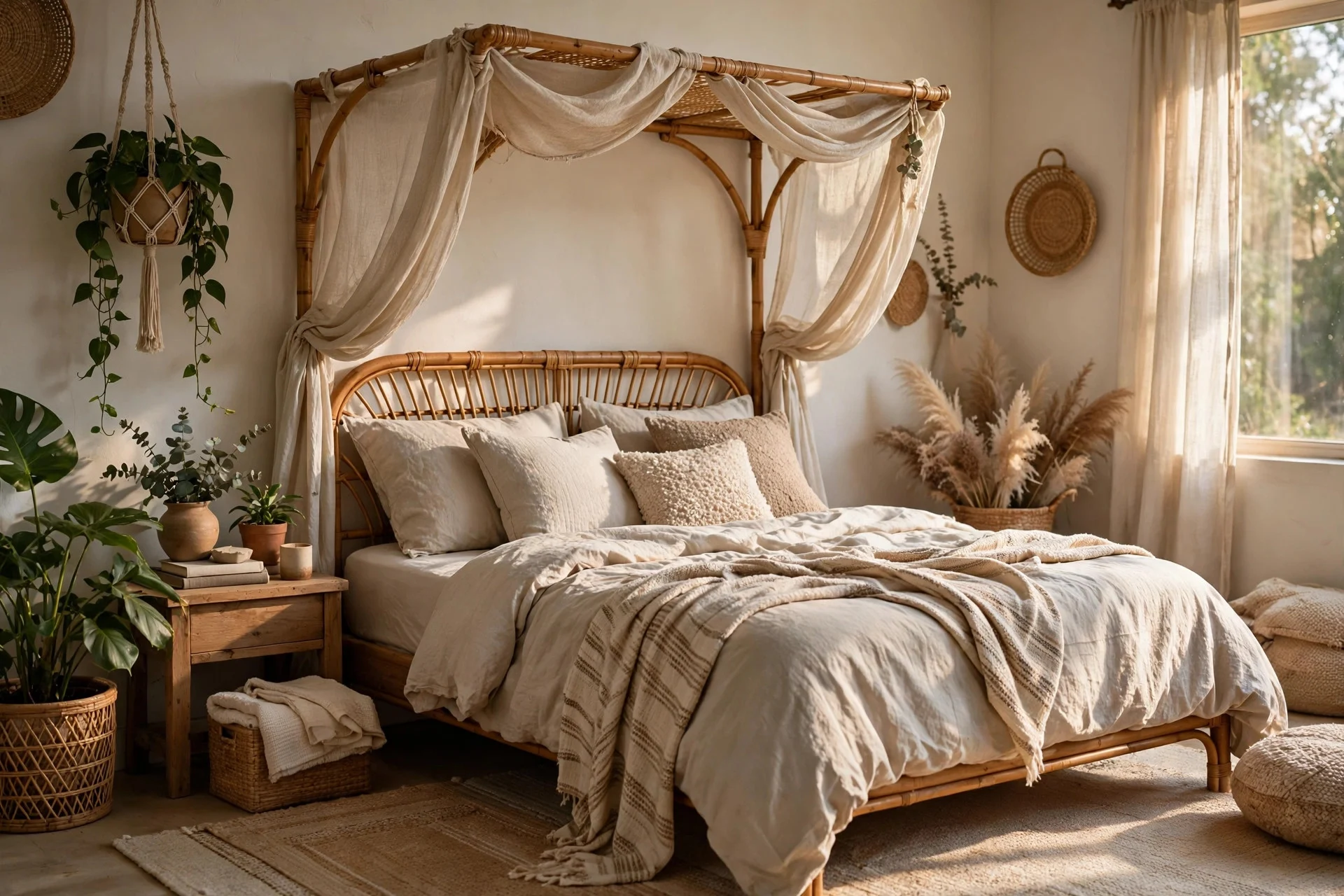
12. Canopy Bed Styled With Bold Patterned Bedding
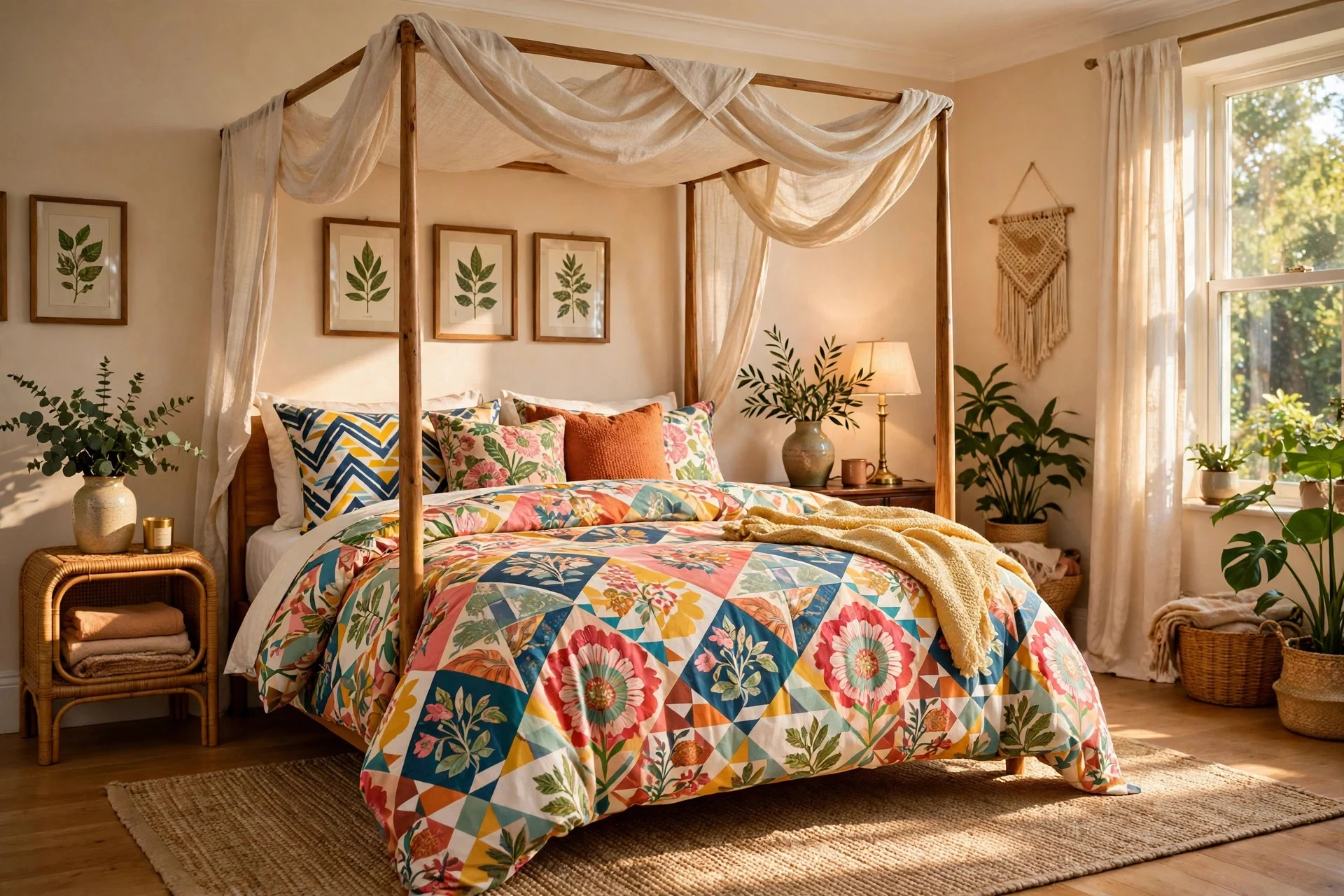
Here’s the counterintuitive one: a plain canopy frame is the perfect partner for loud bedding. Stripes, big florals, or a bold geometric print get a frame to contain them, so the pattern feels deliberate instead of chaotic. The frame acts like a picture frame for the bed — everything inside it reads as one composed unit.
Keep the rest of the room quiet when the bedding is loud. Plain walls, one solid-colour throw folded at the foot, and nightstands with nothing more than a lamp each. The bedding is the star; everything else is the supporting cast.
Cost: $100–$300 for a good patterned duvet set. Difficulty: Easy. Tip: Buy the duvet set before the frame if the pattern is the priority — it’s easier to match a frame to bedding than the other way round.
Picking the Right Canopy for Your Room
Before you order anything, measure three things: ceiling height, the footprint of the bed plus walking space on both sides, and the doorway diagonal for delivery. A canopy frame needs roughly 30 inches of clear space on each side to feel comfortable, and at least a foot between the top of the frame and the ceiling. If you’re short on either, go back to idea 4 or idea 8 — the slimmed-down versions exist precisely for those rooms.
For more on getting the light right around a big bed frame, a guide to living room lighting without a ceiling light covers the same warm-lamp principles, and they transfer directly to bedrooms. If you’re dressing the windows in the same room, curtains for sliding glass doors has useful notes on sheer fabrics that match the linen-drape idea above.
Frequently Asked Questions
Do canopy beds make a room look smaller?
They can, but only when the frame is too big for the room or dressed in heavy curtains. A slim, open frame in a room with enough ceiling height usually makes the space feel taller, because the eye travels up the posts. In small rooms, skip curtains and pick the slimmest frame you can find.
What ceiling height do you need for a canopy bed?
Most canopy frames stand 72 to 84 inches tall, so an 8-foot ceiling works fine with room to spare. With a 7-foot ceiling, look for low-profile frames under 70 inches and skip any top decoration. Always leave at least a few inches between the frame and the ceiling for airflow and cleaning.
Are canopy beds hard to make each morning?
Not really, though curtains add a step. An open frame makes up exactly like a normal bed. If you have drapes, you’ll spend an extra minute straightening them — tie-backs at the foot posts keep them out of the way and make the job faster.
Can you put a canopy bed in a rented home?
Yes, as long as the frame is freestanding. Most metal and wood canopy frames assemble without touching the walls or ceiling, so they’re fully removable. Avoid wall-mounted or ceiling-mounted versions unless your landlord has agreed to them in writing.
Do canopy beds collect a lot of dust?
The frame itself collects about as much dust as any headboard — a weekly wipe handles it. Curtains are the dust magnets, so if dust bothers you, choose an open frame or washable linen panels and wash them monthly.
Quick Checklist Before You Buy
Measure ceiling height, floor space, and doorways. Decide open frame versus curtains before you shop, not after. Match the frame material to something already in the room. Budget for bedding separately — a plain frame plus great bedding beats an expensive frame with tired sheets. And if you’re still unsure, start with the simplest black metal frame: it’s the cheapest way to find out whether you actually like sleeping inside a canopy before committing to a bigger piece.