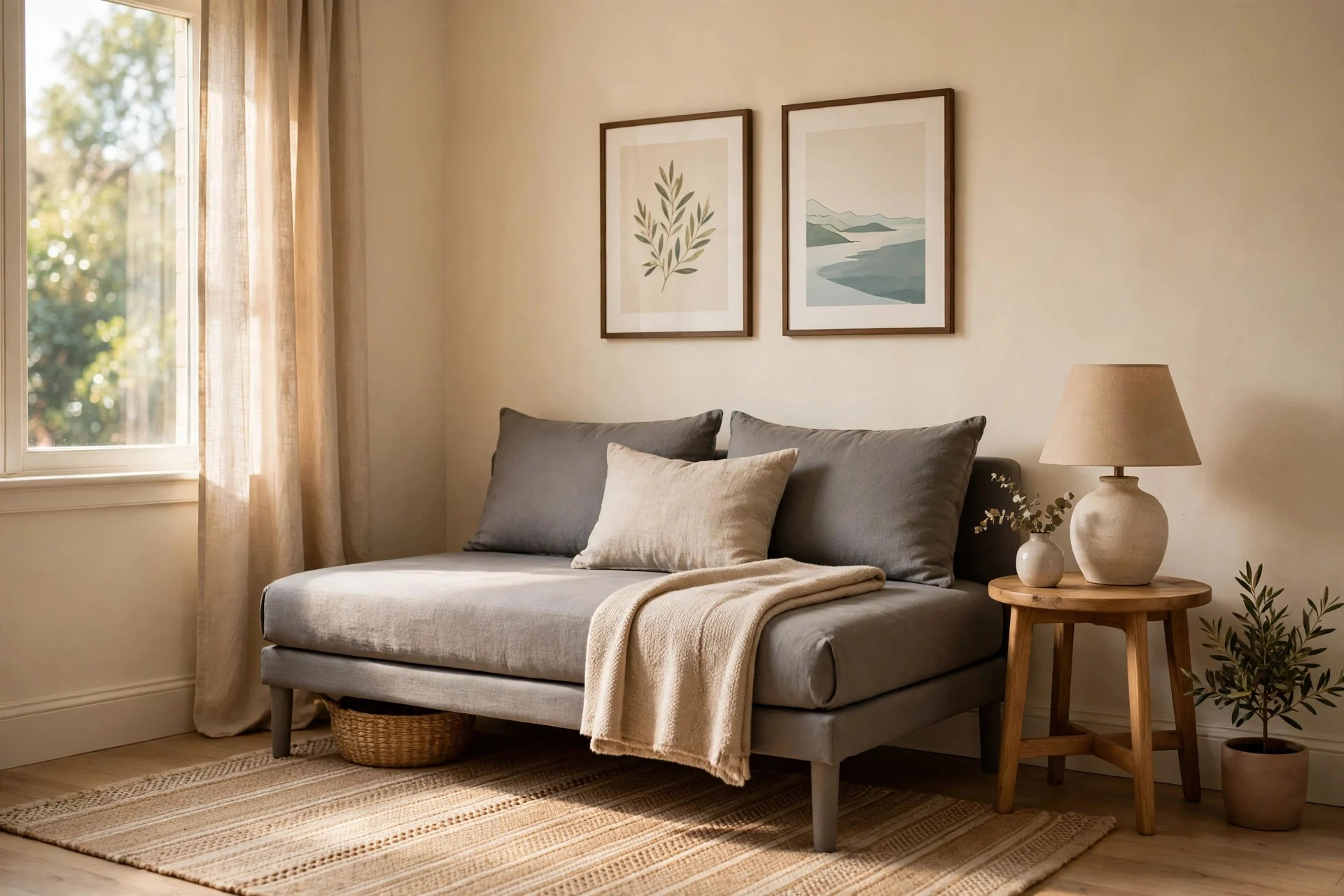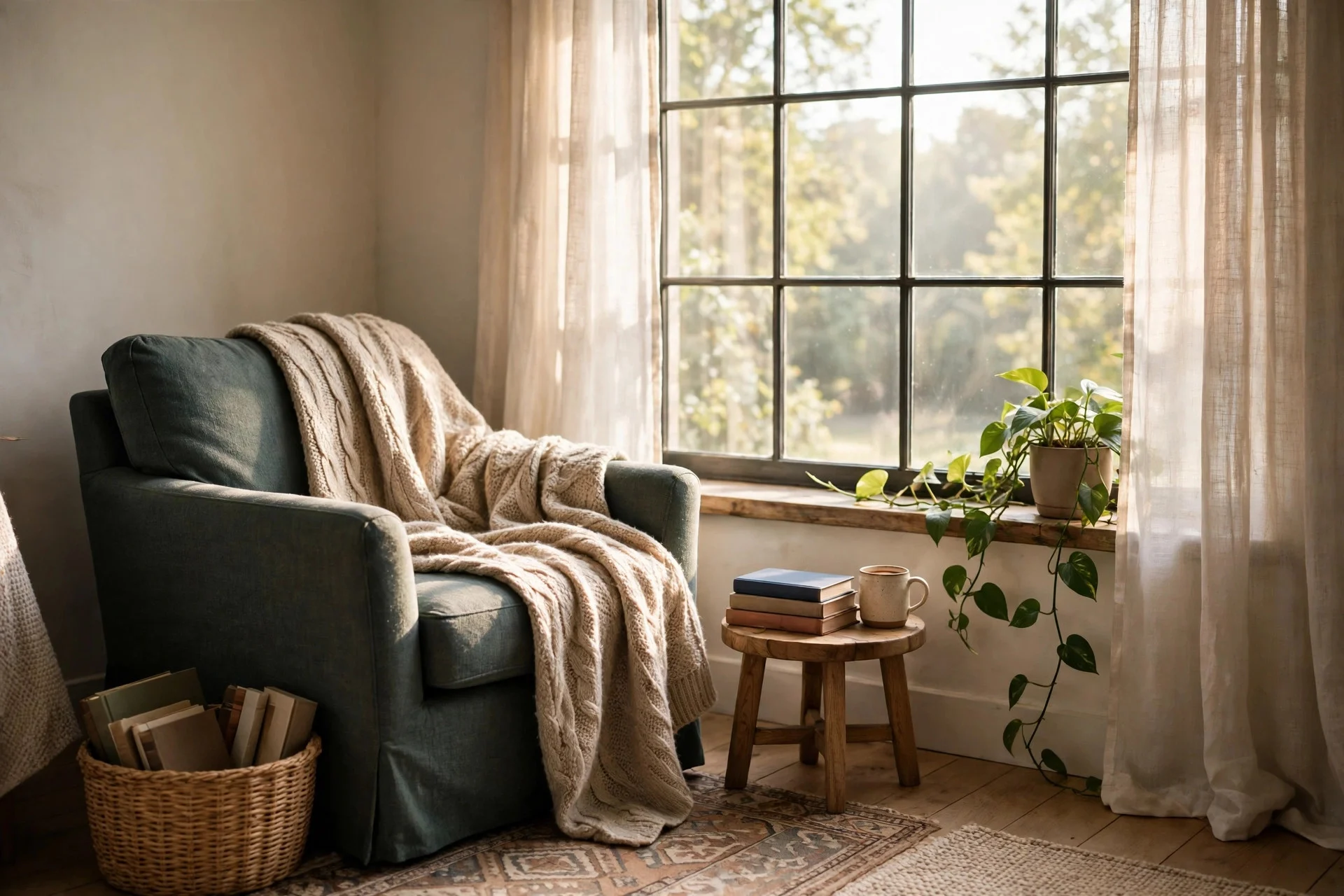
13 Warm Minimalist Living Rooms in Oak and Linen
What makes a minimalist room feel like a hug instead of a waiting room? If you’ve ever stood in a perfectly tidy space and felt a chill instead of calm, you already know the answer matters. Warm minimalism fixes that cold, showroom feeling by pairing clean lines with materials that have actual texture — pale oak wood and soft linen, creams and beiges that hold the light instead of bouncing it back.
This walk-through takes you corner by corner through a warm minimalist living room, with 13 ideas grouped by zone so you can see exactly where each piece belongs. No big renovation required. Most of these ideas cost between $40 and $300 and take an afternoon or a weekend. Grab whichever zone your room needs most and start there.
The Entry Corner
The first few steps into your living room set the tone for everything after. Keep this corner simple — two pieces, max — and let the materials do the talking.
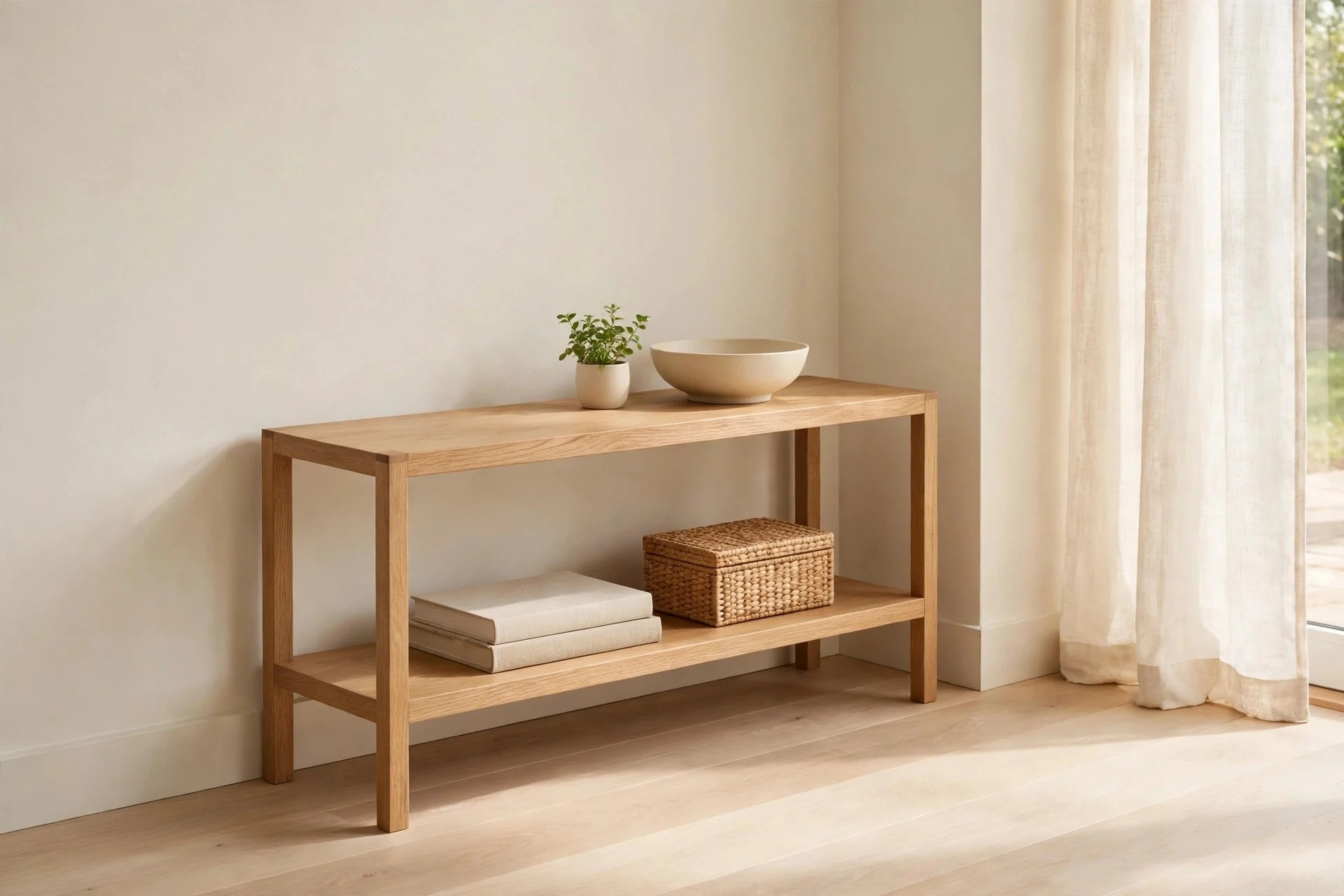
1. An Oak-Framed Console Table
A slim console table in natural oak gives the entry corner a job without filling it up. Look for one around 12 inches deep with an open lower shelf — it holds a stack of books or a pair of woven boxes and still leaves the floor line visible, which keeps the room feeling open.
Why it works: the pale wood grain adds warmth at eye level the moment you walk in, and the narrow footprint means even a tight corner can hold one. Expect to spend $90–$220 for a solid or oak-veneer piece; flat-pack versions from smaller furniture brands land at the low end.
Tip: leave the top almost bare — a low ceramic bowl and one small plant is plenty. Watch out: dark espresso stains fight the whole warm-minimalist palette, so check the finish is a honey or natural tone, not walnut.
2. A Linen Upholstered Bench
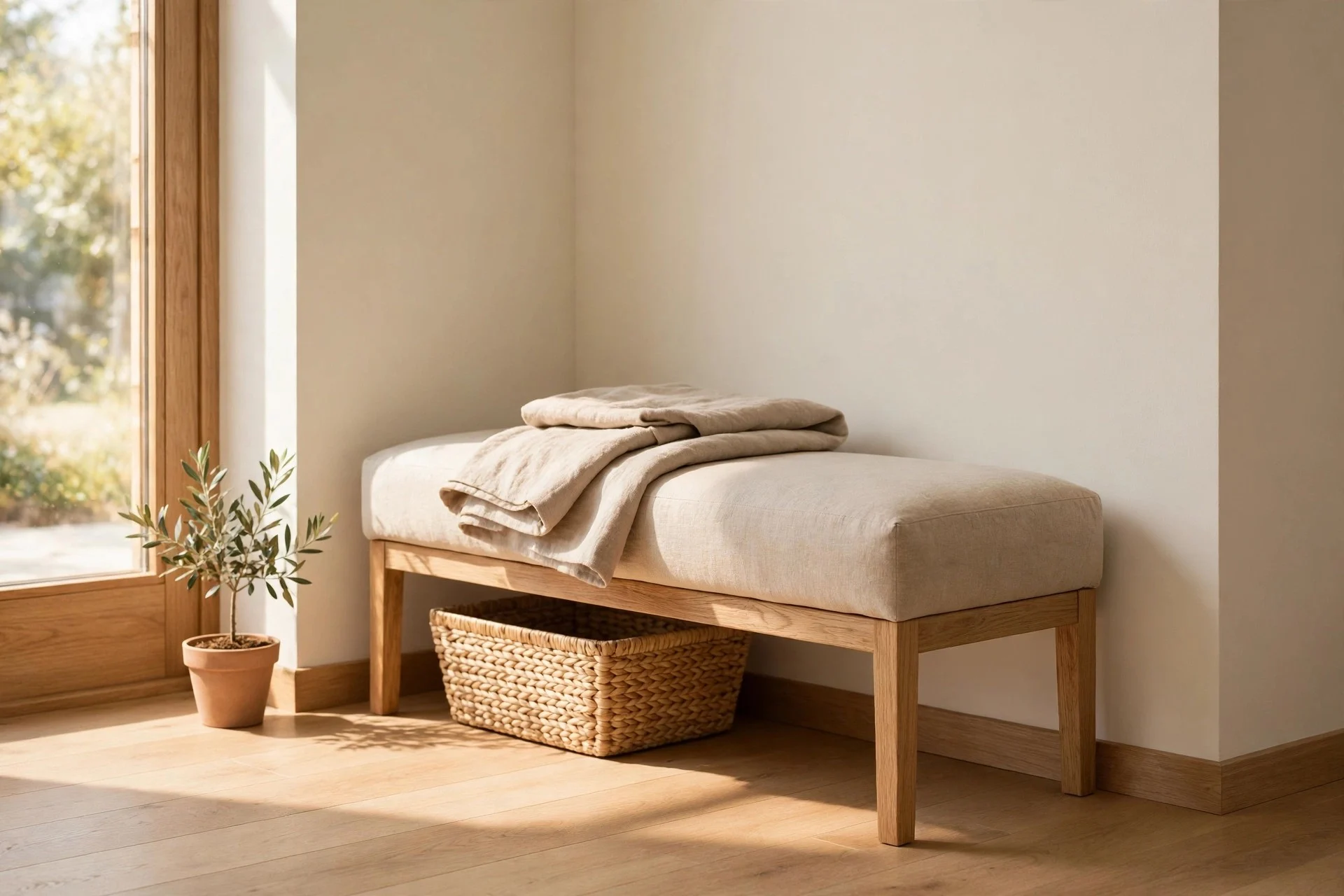
A low bench in natural linen sits under or beside the console and gives the corner a soft landing spot for a bag, a folded throw, or actual sitting. Choose one with a simple oak or wood base so the two pieces talk to each other.
Why it works: it repeats the linen texture you’ll use deeper in the room, which makes the whole space feel planned. Linen upholstered benches run $70–$180; a cushion on a plain oak bench works too if you want to save.
Tip: tuck a flat woven basket under it for shoes or mail and the corner stays tidy on its own. Watch out: light linen shows marks, so pick a removable, washable cover if the bench sits near the front door.
The Seating Zone
This is the heart of the room — where the biggest surfaces and the most texture live. Oak and linen carry the weight here so everything else can stay quiet.
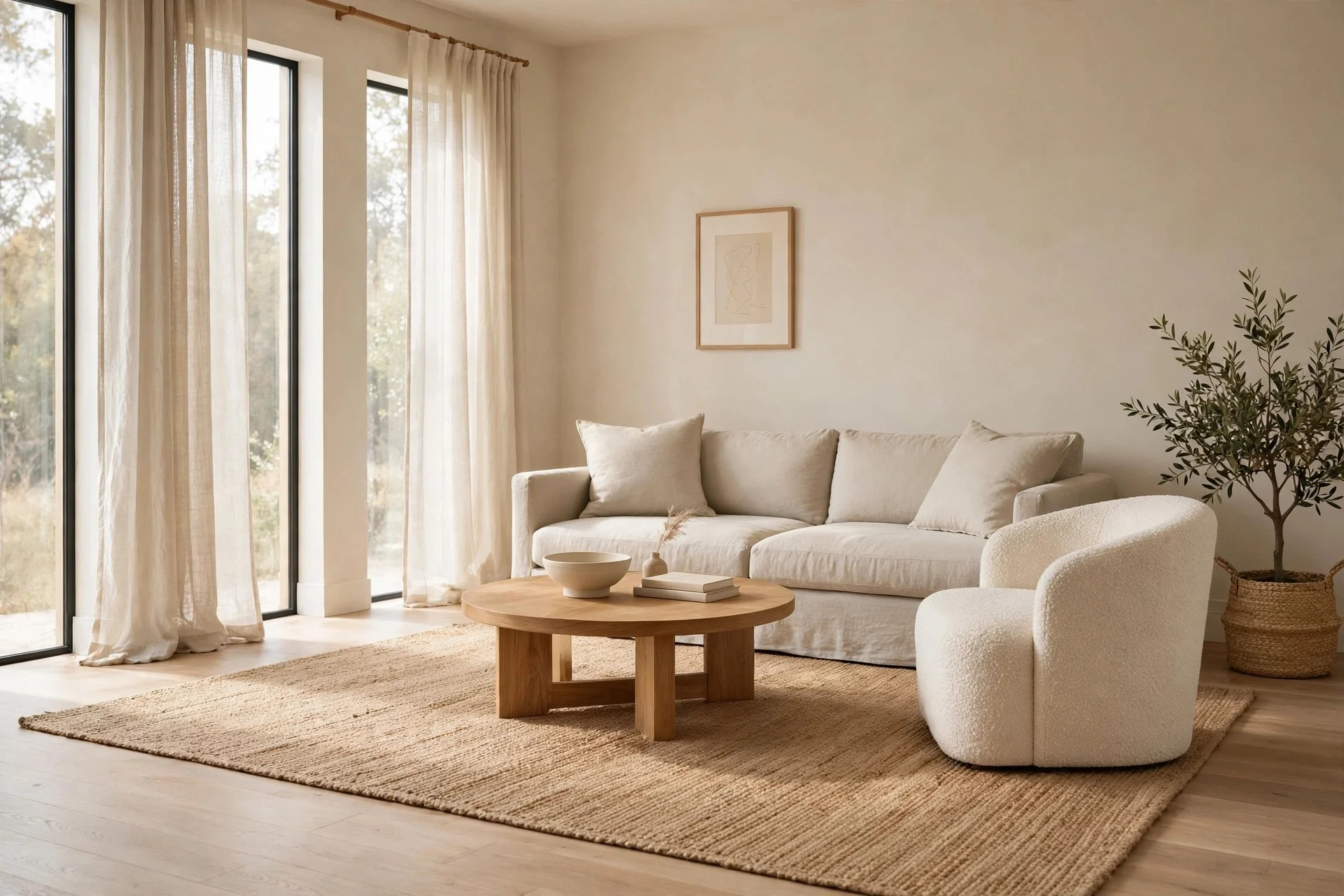
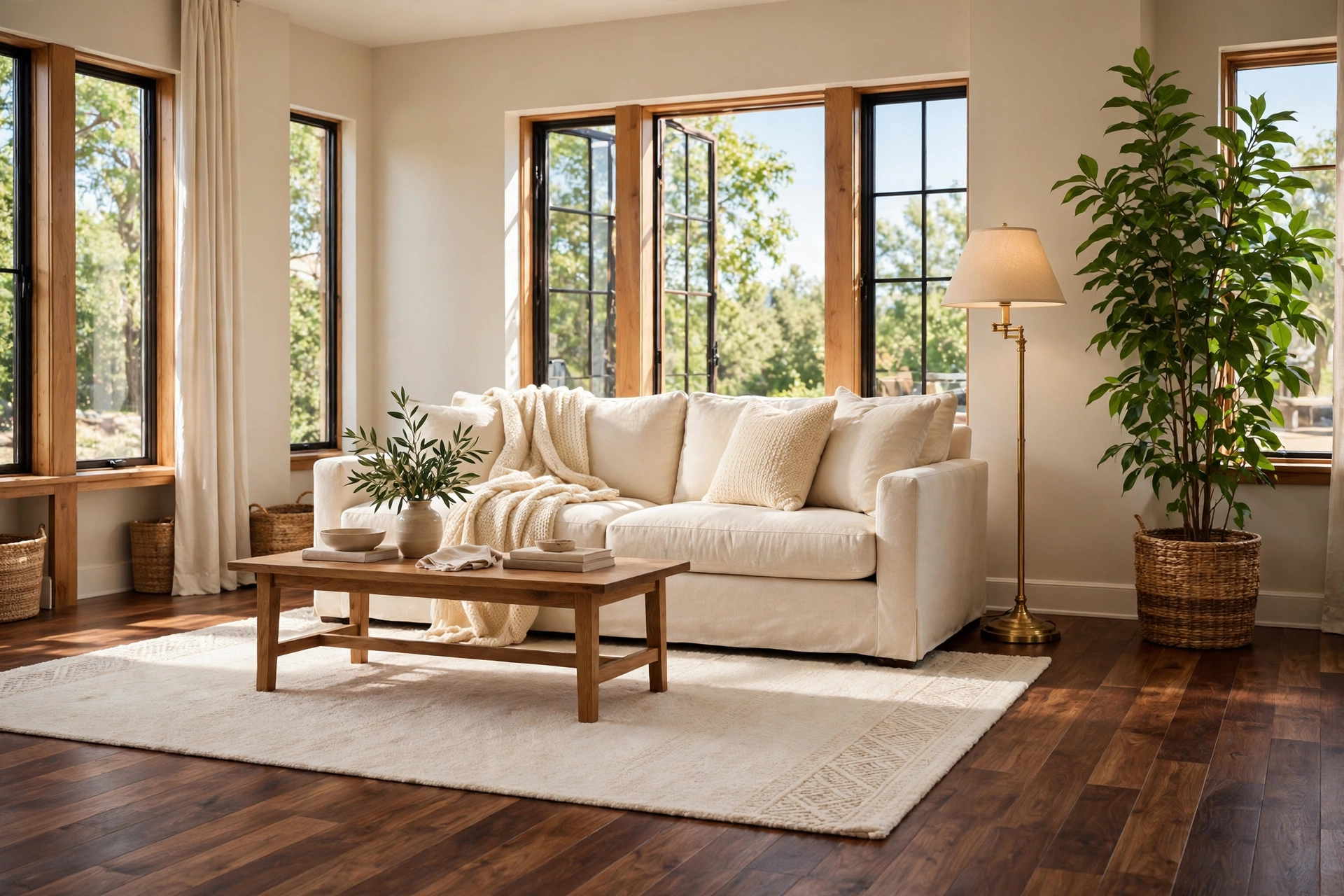
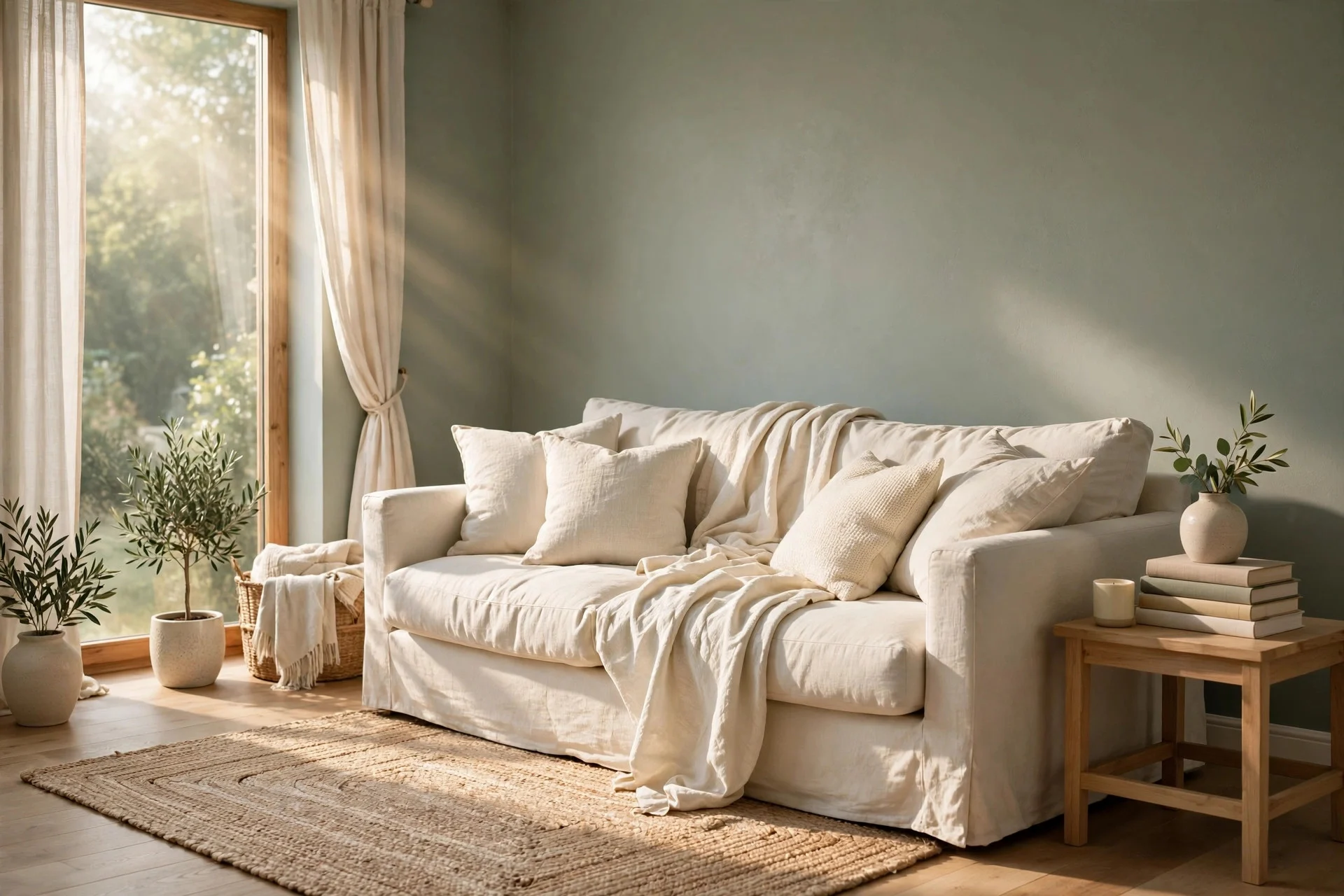
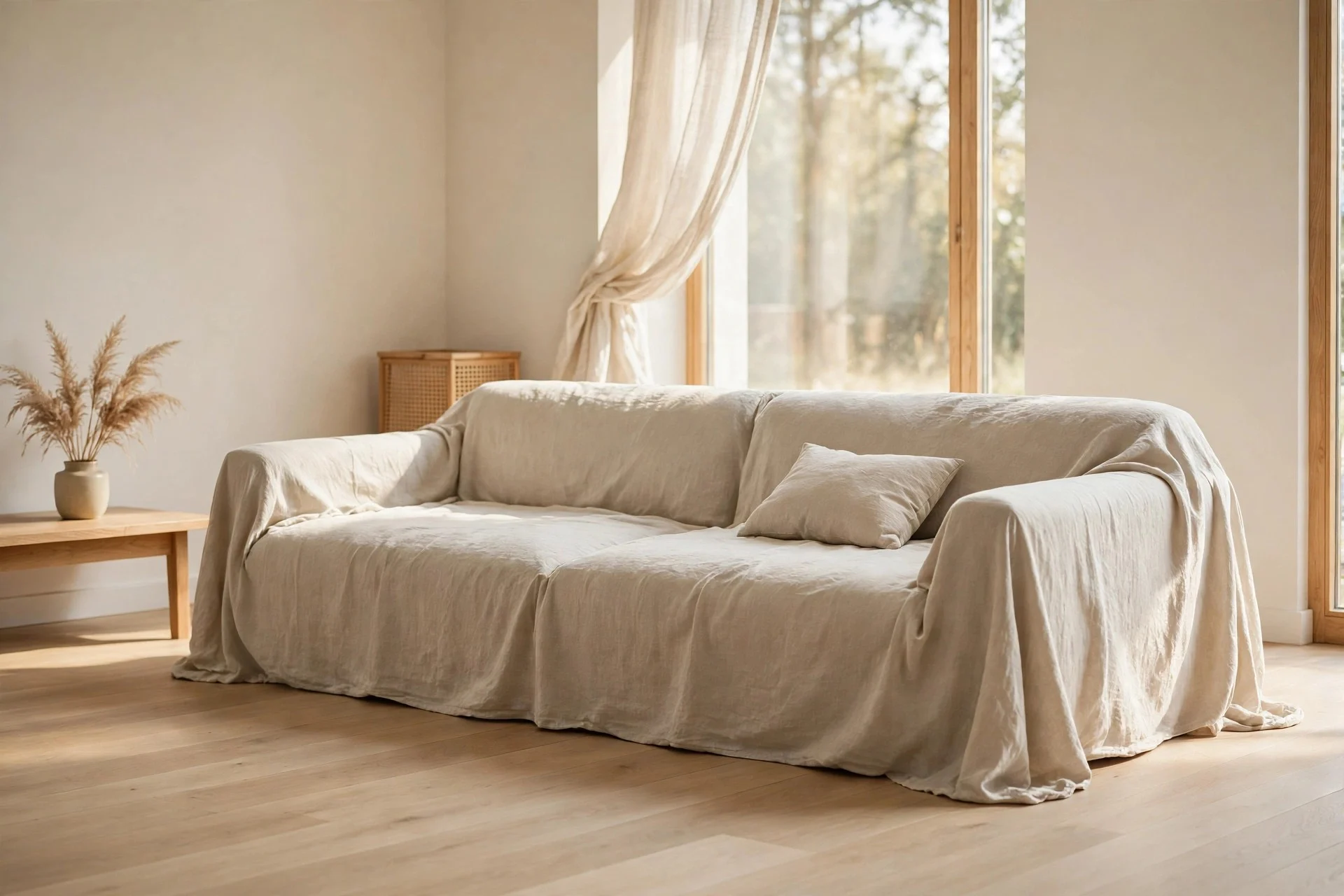
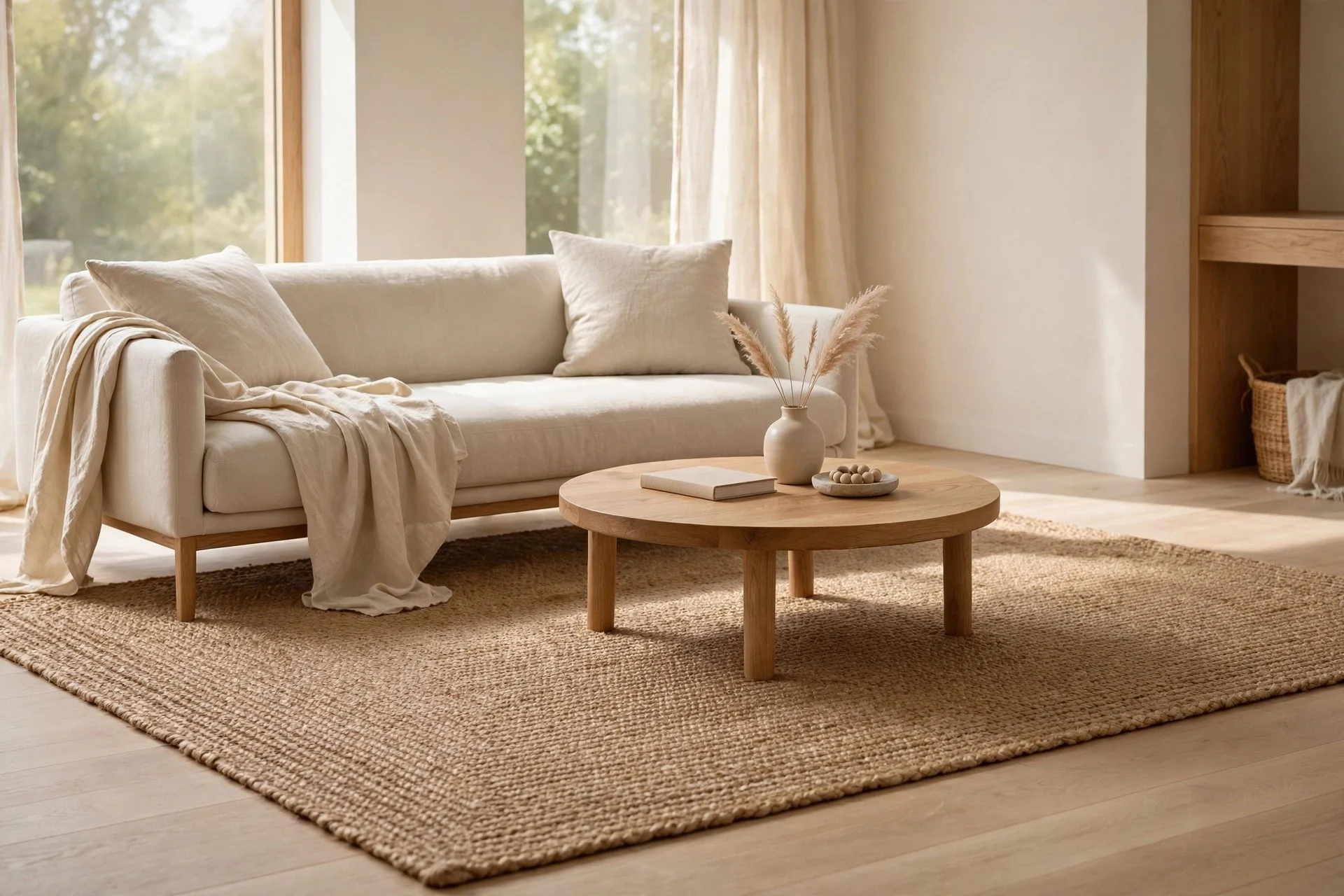
3. A Low-Profile Linen Slipcovered Sofa
The anchor piece: a low, deep sofa in washed linen with a slipcover you can remove. Slipcovered matters more than brand — a sofa that can be washed or re-covered in five years will outlast any trendy shape.
Why it works: the relaxed linen drape is the visual opposite of stiff, formal upholstery, and the low back keeps sightlines open across the room. Budget $600–$1,500 for a decent slipcovered two- or three-seater; washable covers alone run $80–$200 if you already own a plain sofa.
Tip: go for oatmeal, flax, or ivory rather than bright white — warm off-whites hide daily life better. Watch out: cheap linen blends wrinkle into shapelessness; look for a heavier weave (around 8–10 oz) that holds its drape.
4. A Rounded-Edge Oak Coffee Table
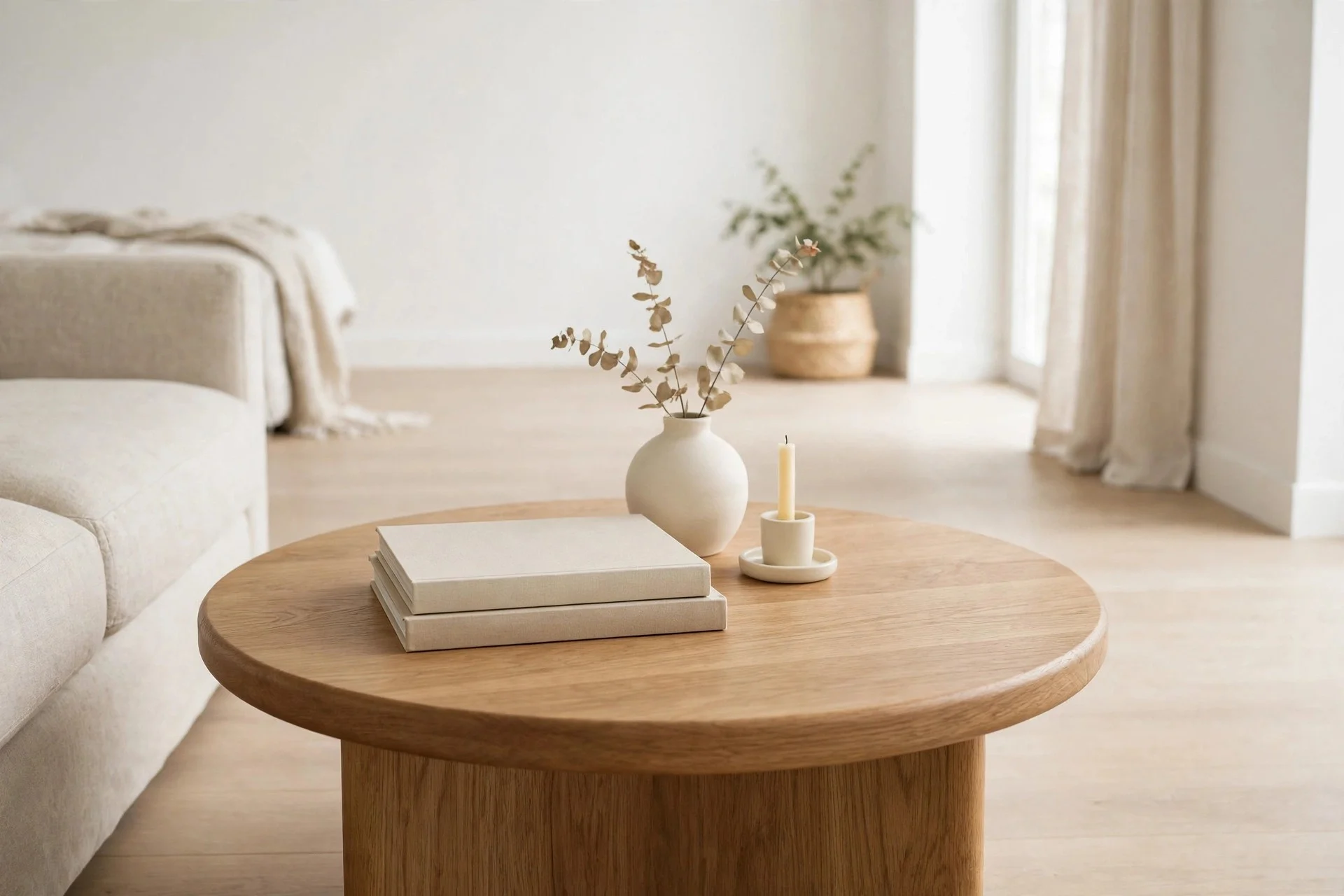
Swap sharp corners for a coffee table with rounded or bullnose edges in solid oak. The soft edges echo the relaxed linen around them and make the room safer for shins, toddlers, and bare feet alike.
Why it works: round shapes read as warm and approachable, balancing all the straight lines of sofas and walls. Solid oak coffee tables cost $120–$350 depending on size; round tops are often cheaper than rectangular ones in the same wood.
Tip: keep styling to three items — a stack of two books, a small vase, one candle. Watch out: water rings show fast on oiled oak, so use coasters or pick a matte lacquer finish.
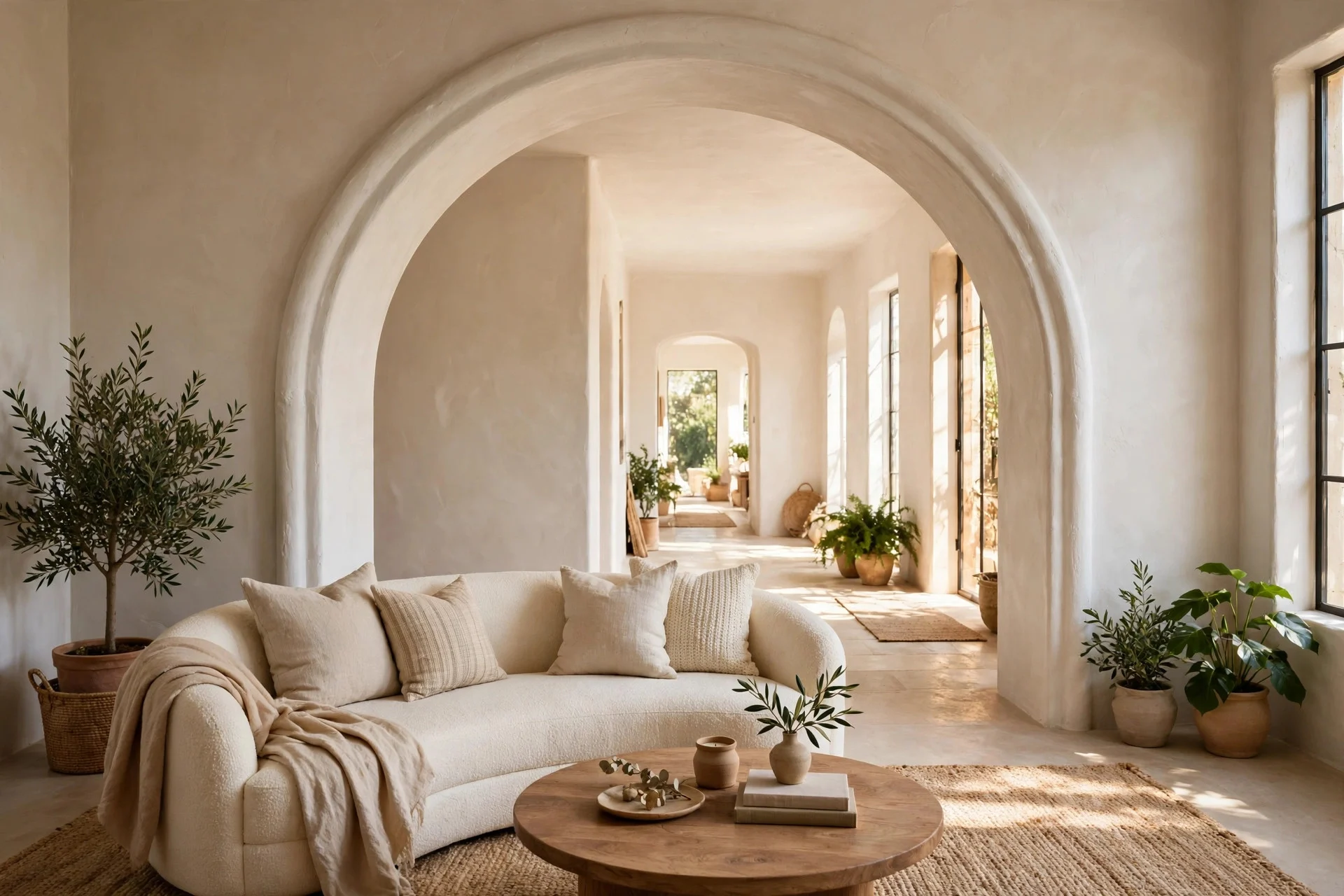
5. One Cream Bouclé Accent Chair
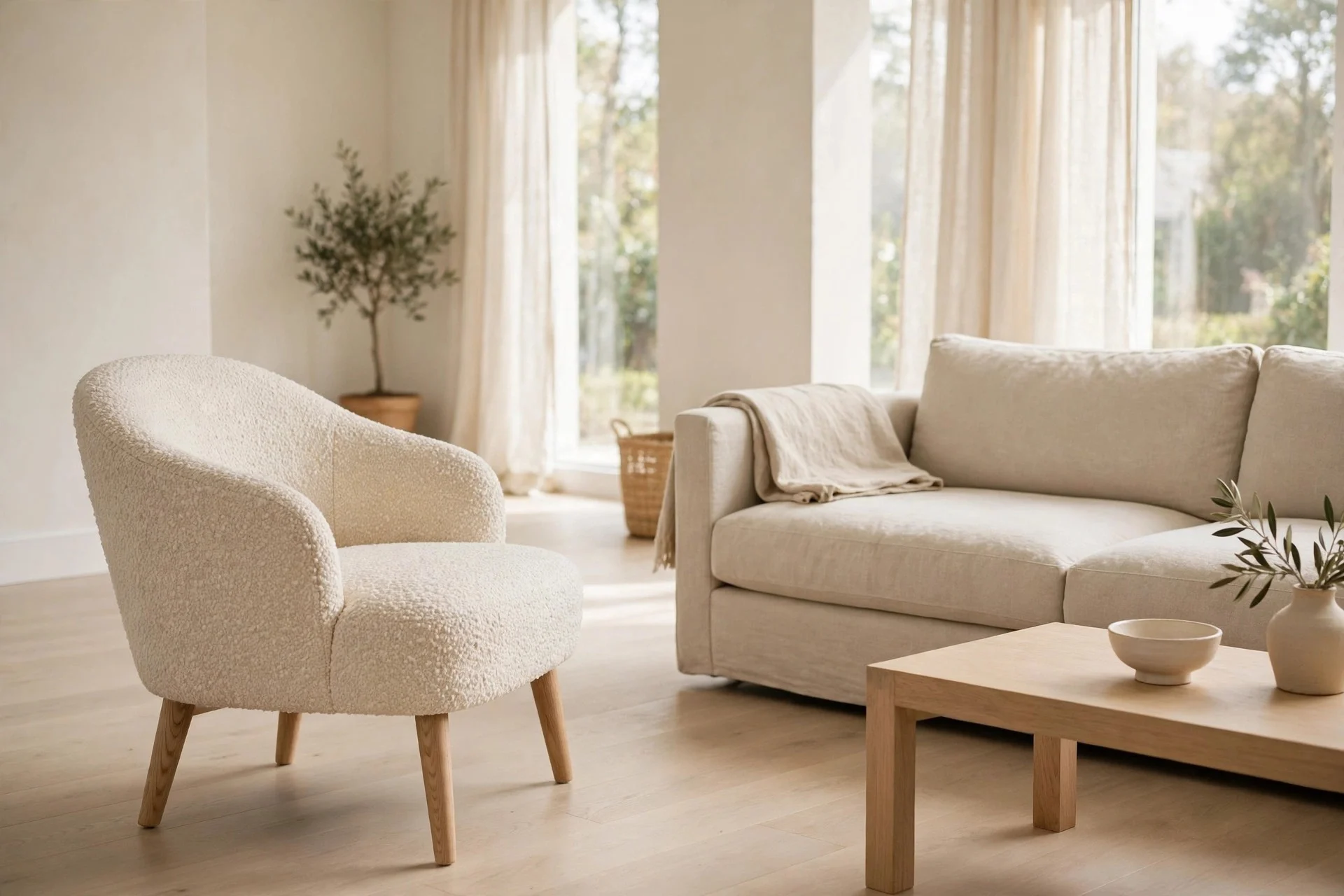
A single accent chair in cream bouclé (or a chunky linen weave if bouclé feels too trendy) breaks up the sofa’s straight lines and gives the seating zone a second texture. Angle it slightly toward the sofa rather than lining everything up in rows.
Why it works: the nubby texture catches light differently from flat linen, so the room feels layered without adding color. Prices run $150–$450; check secondhand marketplaces first — bouclé chairs show up regularly at half price.
Tip: if you’re renting or testing the look, a washable bouclé-look cover over an existing chair gets you 80% of the effect. Renters can find more low-commitment swaps in these renter-friendly living room ideas.
The Window Side
Natural light is warm minimalism’s best free material. This zone is about managing that light so it glows instead of glares.
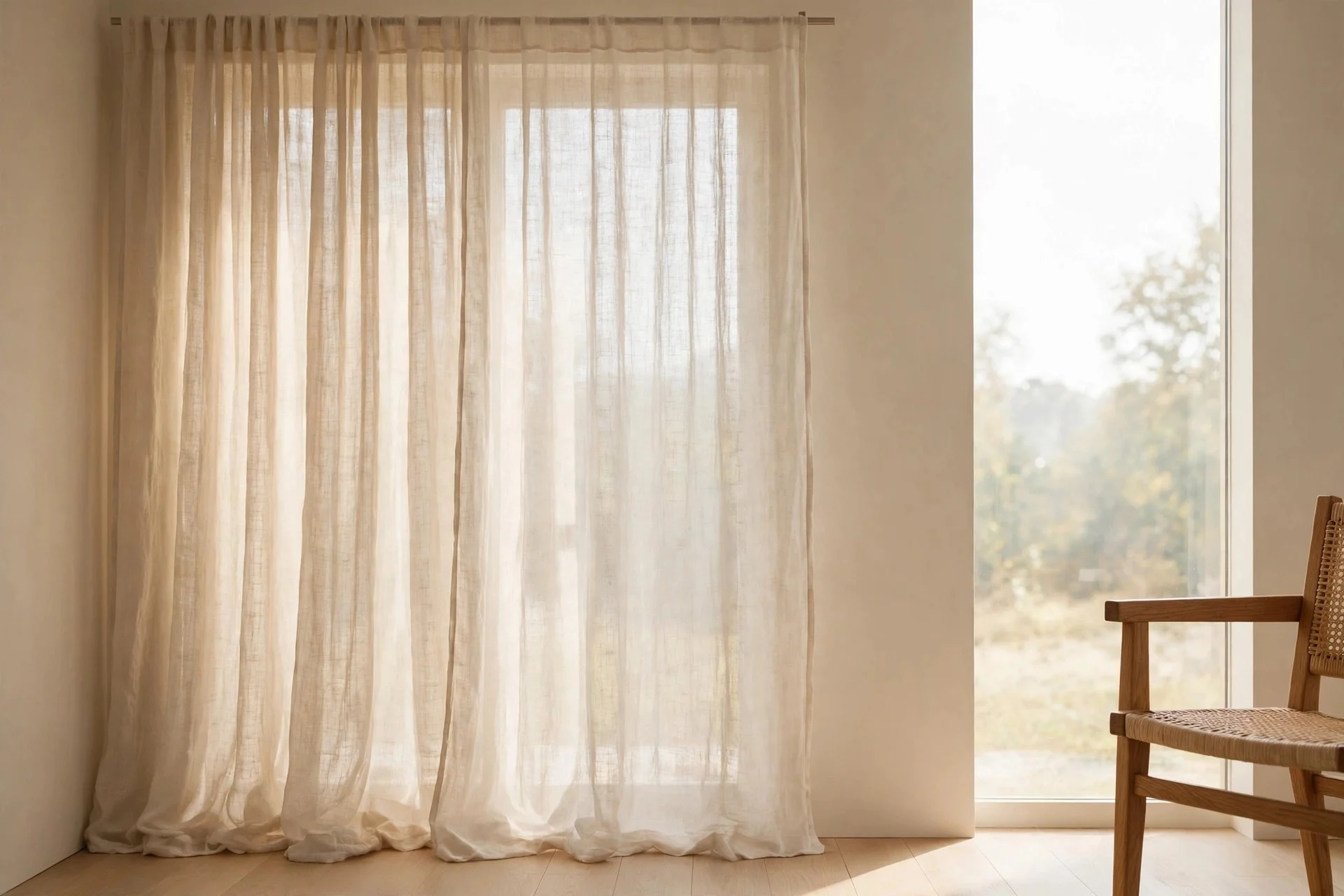
6. Floor-to-Ceiling Sheer Linen Curtains
Hang sheer or semi-sheer linen panels from as close to the ceiling as you can get them, and let them just kiss the floor. The linen weave filters harsh daylight into a soft wash that makes oak floors glow.
Why it works: full-height curtains draw the eye up, making the ceiling feel higher and the room calmer. Linen curtain panels cost $30–$70 each; a wide window needs four to six panels for a proper gather, so budget $120–$300 total plus a simple rod.
Tip: mount the rod 4–6 inches wider than the window frame on each side so the panels stack off the glass. Watch out: sheer linen offers zero privacy at night, so add a discreet roller blind behind if the room faces the street. These bay window living room ideas show how the same linen treatment works on angled windows.
7. A Natural Jute-and-Linen Area Rug
One large rug in a jute or linen-wool blend anchors the seating zone and adds the one texture oak floors can’t give you. Go bigger than you think — the front legs of the sofa and chair should all sit on it.
Why it works: a pale natural-fiber rug keeps the floor feeling warm underfoot while letting the oak edges show around it, which frames the seating zone. Decent 8×10 natural rugs run $150–$400. To get the size right before you buy, run your room measurements through this rug size calculator — an undersized rug is the most common (and most expensive) mistake in this zone.
Tip: lay painter’s tape on the floor in the rug’s dimensions first and live with it for a day. Watch out: jute is rough on bare feet and hard to clean, so a wool-linen blend is the friendlier choice if you sit on the floor.
The Reading Corner
Every living room earns its warmth from one small spot built for lingering. Carve a corner with two pieces and good light.
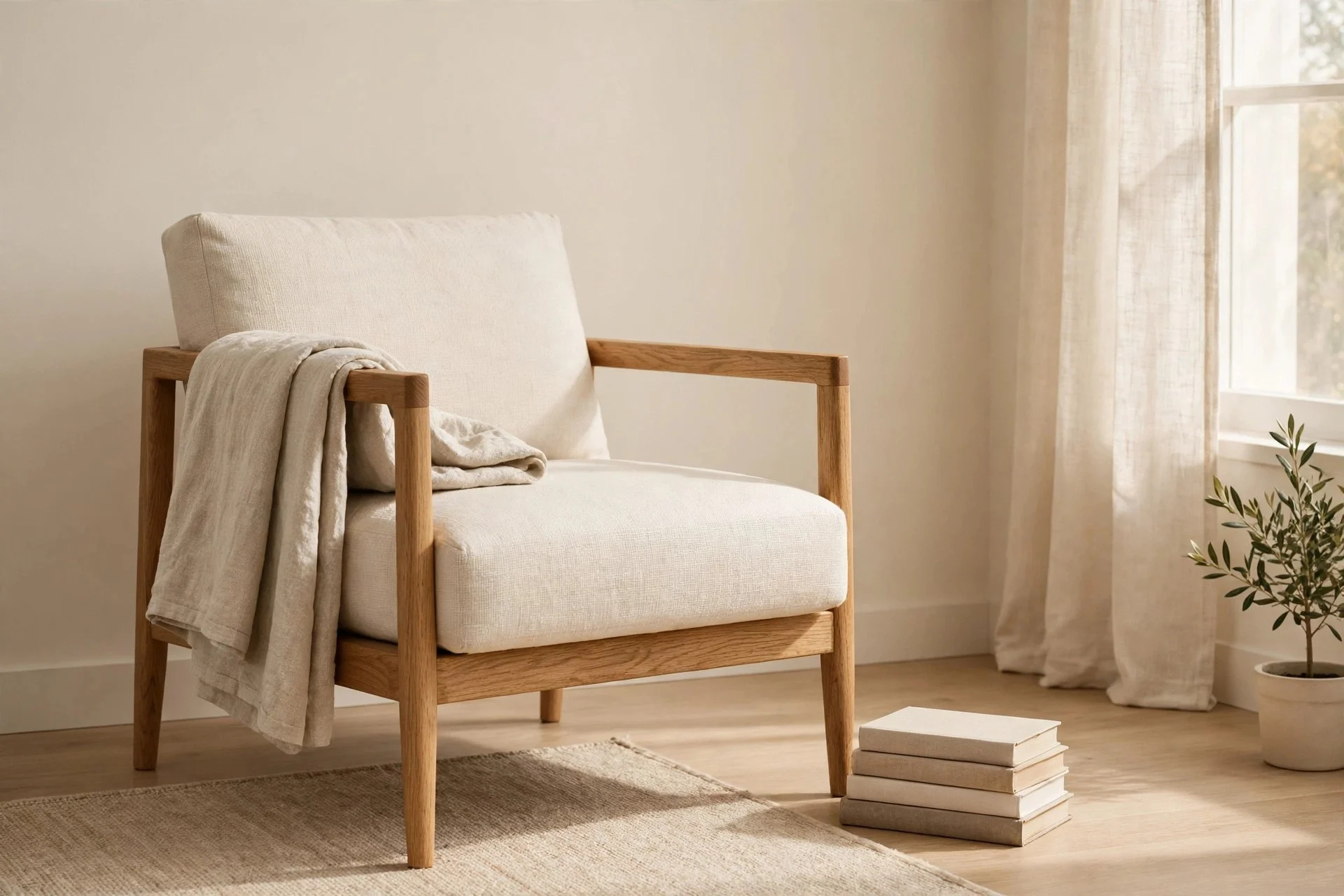
8. An Oak-Framed Reading Chair with a Linen Throw
A smaller armchair — ideally with visible oak legs or a wooden frame — plus a washed-linen throw folded over one arm. This is the chair that gets claimed within a week, so comfort counts more than looks here.
Why it works: the oak frame ties the corner back to the rest of the room, and the throw adds a lived-in layer that stops minimalism from feeling staged. A good reading chair costs $180–$500; the throw adds $25–$60.
Tip: test the seat depth in person — 20–22 inches suits most readers. For more small-space reading setups, these living room reading corner ideas cover tight corners and awkward layouts.
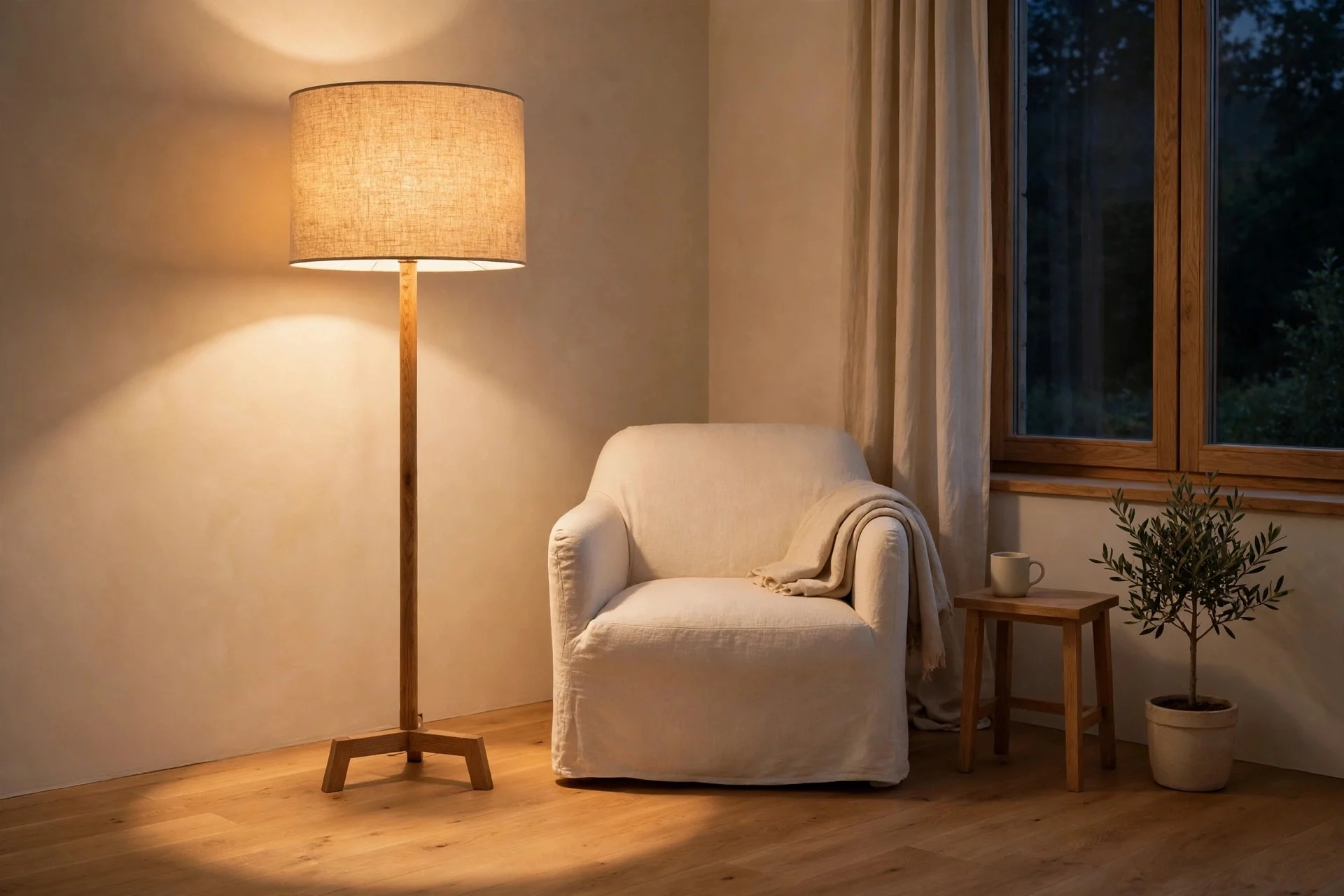
9. A Linen-Shaded Floor Lamp
Place a floor lamp with a linen or fabric drum shade right behind or beside the reading chair. Warm 2700K bulbs, always — cool daylight bulbs will undo every bit of warmth you’ve built.
Why it works: the fabric shade diffuses light softly upward and down, creating a pool of warm light that makes the corner feel like evening even at noon. Linen-shade floor lamps run $60–$180.
Tip: put the lamp on a smart plug or simple timer so the corner lights itself at dusk — one less thing to remember. Watch out: paper-thin shades let the bulb show through as a hot spot; hold the shade up to a light in the store to check.
The Media Wall
TVs and minimalism fight each other. This zone is about making the media wall disappear into the room instead of dominating it.
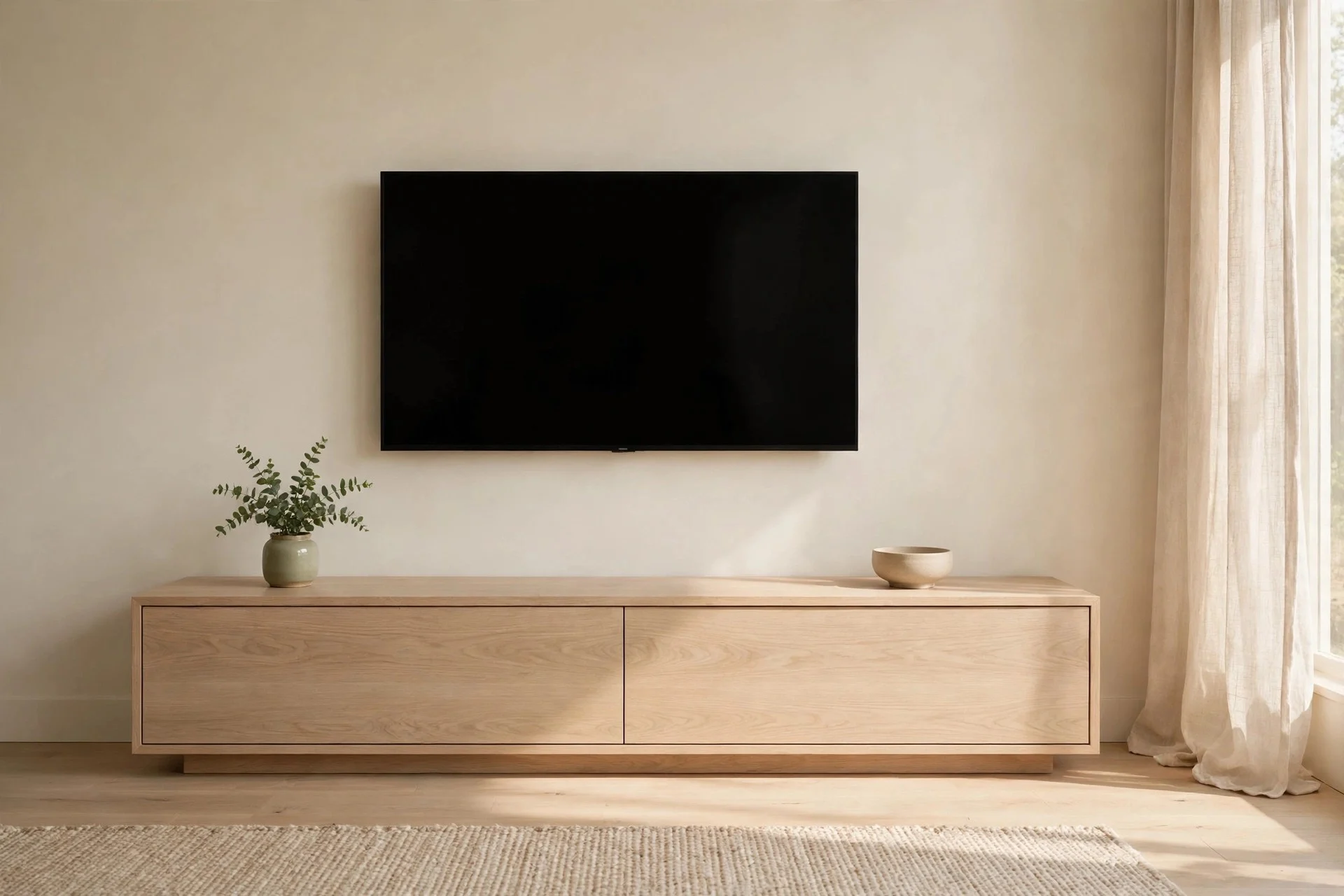
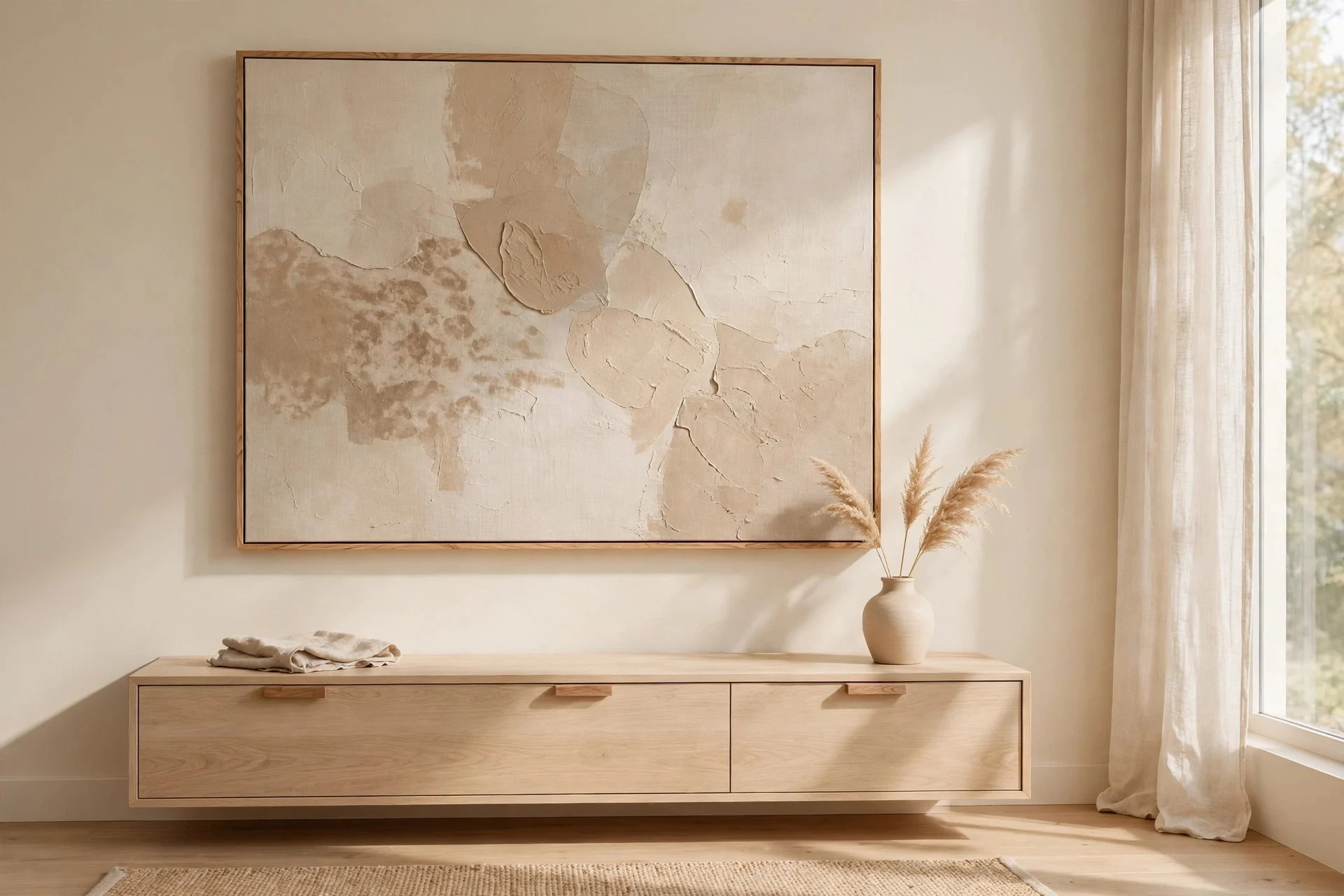
10. A Low Oak Media Console, Styled Bare
Choose a low, long console in pale oak — floating or on short legs — and keep the styling to almost nothing: the TV or a single framed print above, one low plant or object on the surface, and all the cables hidden.
Why it works: the long horizontal line of oak pulls the eye across the room, and the near-empty surface lets the wood grain be the decoration. Consoles run $150–$400; add $15–$30 for cable clips and a cord box, which do half the visual work.
Tip: sit the TV no more than a third of the console’s width wider than the screen — oversized consoles make the TV look small and the wall feel cluttered. If your TV hangs above the fireplace instead, these TV above fireplace decor ideas keep that setup warm too.
11. One Oversized Piece of Quiet Art
Instead of a gallery wall, hang one large piece — at least 30 inches wide — in muted tones: a linen-textured canvas, an abstract in sand and clay, or a simple framed textile. One big quiet piece calms a wall; six small ones busy it.
Why it works: a single large artwork gives the media wall a focal point that isn’t the screen, and warm neutrals keep the palette intact. Large-format prints in simple oak frames cost $60–$200; stretching your own canvas over a frame is the cheapest route.
Tip: hang the center at 57–60 inches from the floor — gallery standard, and it looks right over low furniture. Watch out: glossy glass on the frame will catch the TV’s reflection, so pick matte or no glass.
The Finishing Corners
Two small moves that tie the whole room together — think of them as the period at the end of the sentence.
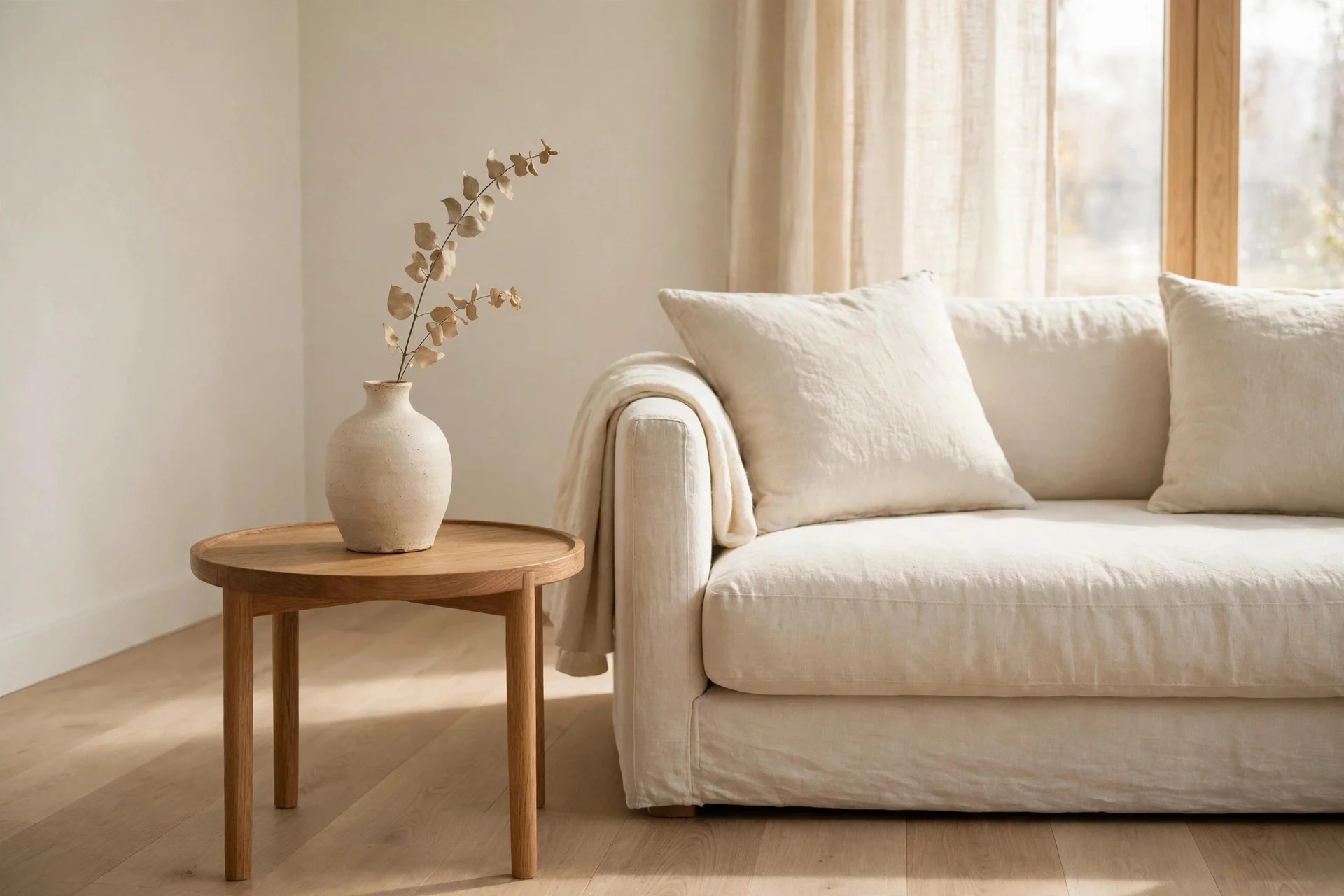
12. An Oak Side Table with a Handmade Ceramic Vase
A small round oak side table next to the sofa or chair, topped with one handmade-look ceramic vase in cream or sand. The slight irregularity of handmade ceramics is exactly what keeps minimalism human.
Why it works: it gives the seating zone a landing spot for a drink while adding the one handmade texture the room needs. Side tables run $40–$120; a good ceramic vase costs $20–$60 at craft markets or home stores.
Tip: put a single stem in the vase — dried pampas, eucalyptus, or one branch — and leave it. Watch out: tiny vases on big tables look lost, so match the vase height to about a third of the table’s height.
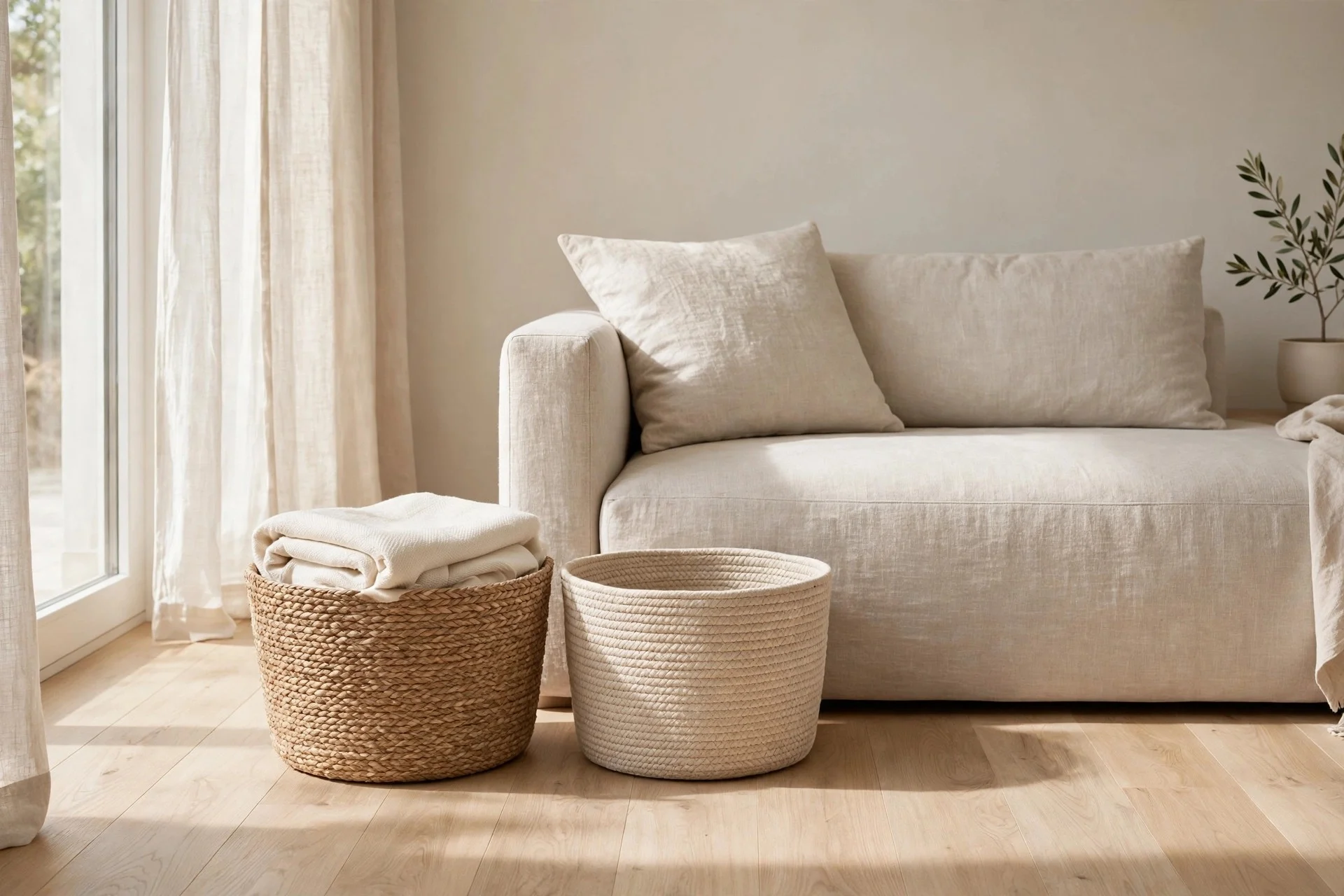
13. Woven Linen and Wool Storage Baskets
Two or three woven baskets in linen, wool, or seagrass tones corral the clutter that kills minimalism: throws, remotes, chargers, kids’ bits. Place one by the sofa, one in the reading corner, one near the media console.
Why it works: closed storage is what lets the room stay visually quiet day after day — minimalism fails without somewhere for real life to go. Baskets cost $15–$45 each.
Tip: assign each basket a job (throws, tech, toys) so tidying takes thirty seconds. Watch out: open-weave baskets collect dust inside — line them with a linen drawstring bag if that bothers you.
Warm Minimalism Questions, Answered
Is warm minimalism more expensive than regular minimalism?
Not really. The look depends on materials, not labels — washed linen, pale oak, and jute are mid-range fabrics and woods. A full room refresh with secondhand oak pieces and new linen textiles often lands between $800 and $2,000. The expensive part is replacing things twice, so buy the heavier linen and real wood once.
Can I do warm minimalism in a small living room?
Yes — it might even suit small rooms better. Low-profile furniture keeps sightlines open, pale oak reflects light, and the limited palette stops a small room from feeling busy. Stick to the seating zone and window side ideas first; skip the reading corner if space is tight and fold the lamp into the sofa zone instead.
How do I keep linen furniture clean with kids or pets?
Choose slipcovers you can remove and machine-wash, and keep a spare set if the budget allows — swapping covers beats scrubbing stains. A handheld fabric steamer ($30–$60) refreshes linen between washes, and darker oatmeal tones hide more than ivory. Honestly, washable linen handles family life better than most “stain-proof” synthetics.
Does oak furniture darken over time?
Yes, pale oak deepens to a slightly richer honey tone with sun exposure — that’s normal and most people find it prettier. If you want to slow it down, keep pieces out of direct afternoon sun or rotate them seasonally. Oiled finishes darken faster than lacquered ones, so ask about the finish when you buy.
What wall color works best with oak and linen?
Warm whites and soft creams — think shades with a yellow or peach undertone rather than blue-gray. A limewash finish adds subtle movement that pairs beautifully with linen’s texture; these limewash walls living room examples show the effect. Avoid stark white, which makes warm woods look orange by contrast.
Your Warm Minimalist Checklist
Start with the zone that bugs you most — most people begin at the seating zone, since the sofa and rug set the room’s temperature. Then work the walk-through in order: entry corner, window side, reading corner, media wall, and the finishing touches. Keep the palette tight (oak, linen, cream, beige), the surfaces mostly bare, and every piece washable or wipeable. In a weekend or two of afternoons, you’ll have a living room that stays calm because everything in it has a place — and a texture worth touching.