12 Ways to Warm Up a North-Facing Bedroom
A north-facing bedroom gets steady, cool light all day. It never gets that blast of direct sun that makes a south-facing room glow, so even a well-decorated space can feel flat, grey, and a little chilly. The fix is not one big renovation. It is a series of small, warm layers — light, colour, texture, and wood — that take the edge off that cool light. You do not need to repaint every wall or replace your furniture. Pick the ideas that fit your room and budget, start with lighting and bedding, and you will feel the difference the same evening.
Before you buy anything, notice which corner looks darkest on a cloudy morning. That tells you where a lamp, a mirror, or a warmer paint colour will do the most good. The ideas below start with the highest-impact, lowest-cost changes.
1. Switch Every Bulb to Warm White
Cool daylight plus cool-white bulbs is a double dose of blue-grey light, and it is the single biggest reason a north-facing bedroom feels cold. Swap your bulbs for warm white (2700K on the box) and the room instantly reads warmer, even before you change anything else.
Your eyes judge a room by its light, not just its paint. Warm bulbs push skin tones, wood, and bedding toward honey and amber instead of ash. On a dimmer, warm light in the evening feels closer to candlelight than to office light.
Cost: $10–$30 for a roomful of LED bulbs. Difficulty: Easy, 15 minutes. Tip: Check the Kelvin number on the box — 2700K is the sweet spot for bedrooms. Watch out: Do not mix warm and cool bulbs in one room; one cool bulb undoes the rest.
2. Layer Your Lighting Instead of Relying on One Ceiling Light
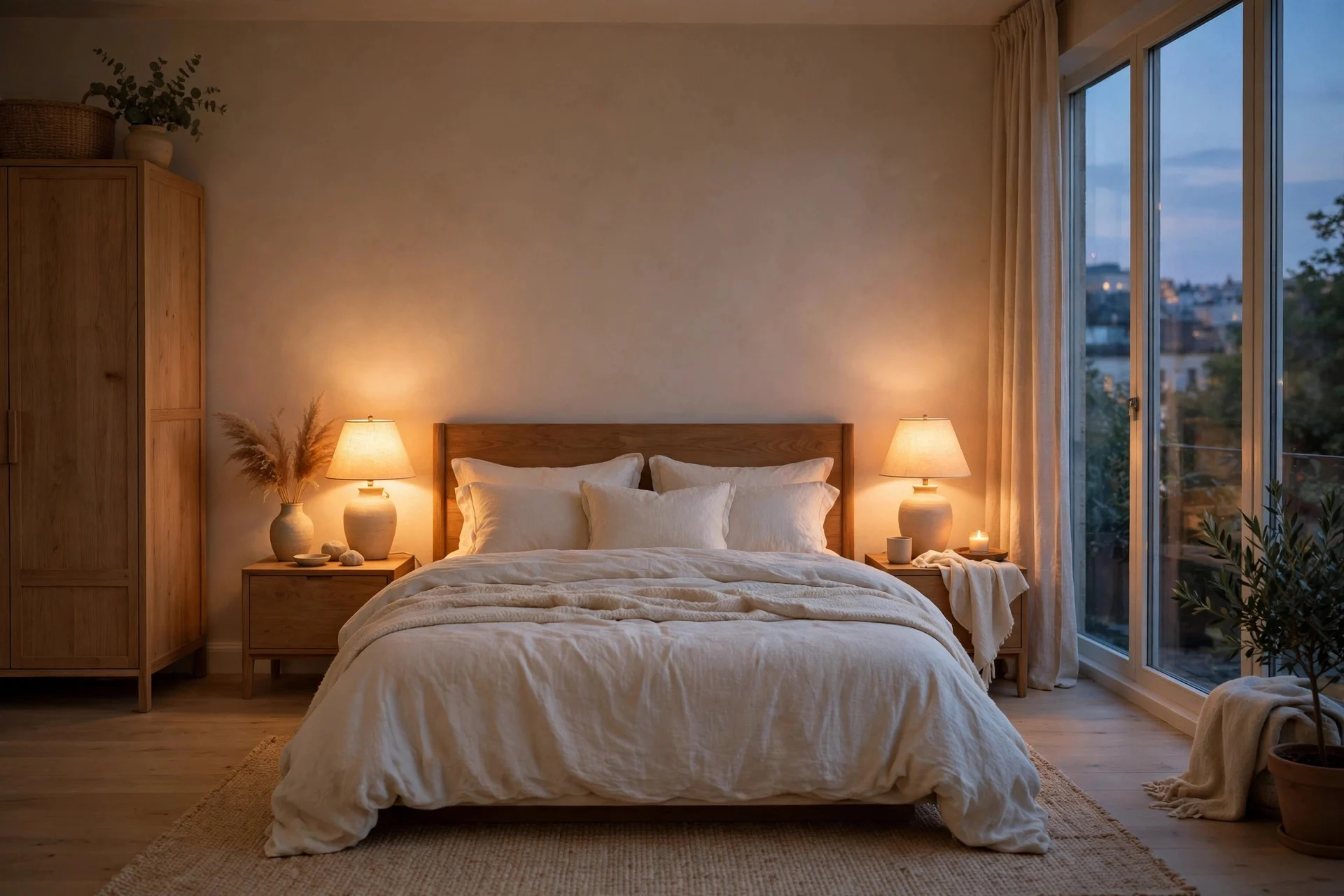
One overhead light flattens a room. It throws shadows downward and leaves corners dark, which is exactly what you do not want in a room that already lacks sun. Three smaller light sources at different heights — a bedside lamp, a floor lamp, and a small table lamp or wall light — spread warmth around the room and let you tune the mood.
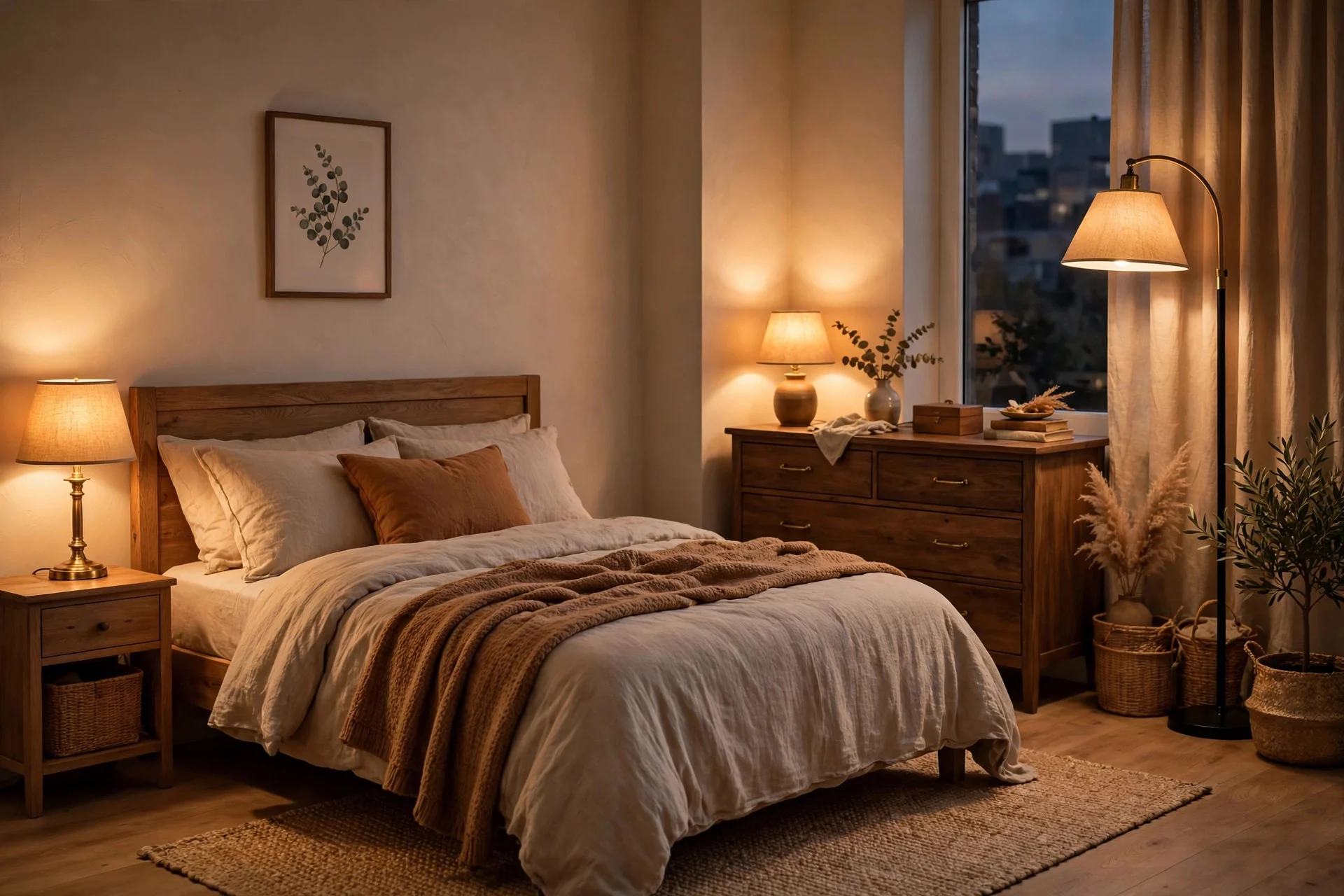
Place one lamp beside the bed for reading, one in the darkest corner (usually furthest from the window), and one low source, like a dresser lamp, to fill the middle of the room. Fabric shades soften the light further; bare bulbs can feel harsh even in warm white.
Cost: $40–$150 for two or three lamps if you shop sales or secondhand. Difficulty: Easy, under an hour. Tip: Put lamps on separate switches or smart plugs so evenings run on bedside lamps alone. Watch out: Skip bright, bare overhead lighting in the evening — it makes a warm room feel clinical again.
3. Paint the Walls a Warm White, Not a Stark One
Brilliant white paint looks crisp in a sunny room. In a north-facing room, it picks up the cool light and turns faintly blue-grey, which makes the whole space feel colder. A warm white — one with a yellow or pink undertone — bounces the available light back as something softer and kinder.
Test before you commit. Paint two large swatches on the wall opposite the window and look at them in morning light and lamplight over two days. Shades hinting at cream, linen, or ivory usually lean warm; shades described as “pure” or “bright” usually lean cool.
Cost: $40–$120 for paint and supplies for one room. Difficulty: Moderate, a weekend. Tip: If a full repaint is too much, paint just the bed wall — the eye reads it as the room’s anchor. Watch out: Even “warm grey” can read cold under north light, so test it before buying a full tin.

4. Put a Thick Rug Underfoot
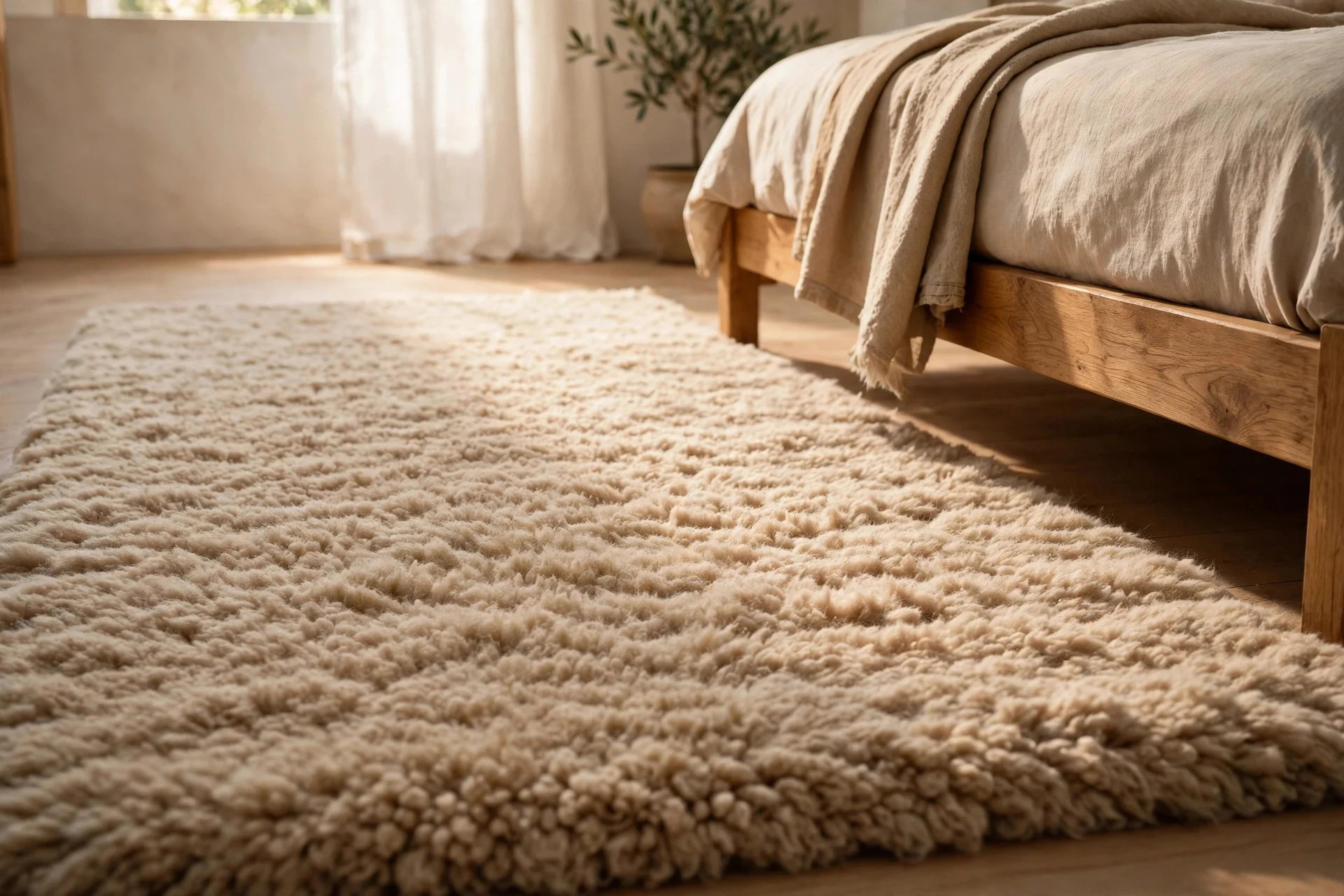
Cold floors make a cold room feel colder, especially first thing in the morning. A thick rug under and around the bed insulates your feet, softens sound, and adds warm colour and texture where your eye lands when you walk in.
Size matters more than pattern. The rug should extend at least 45–60 cm beyond each side of the bed so your feet land on rug, not bare floor, when you get up. Wool and high-pile cotton feel warmest; flat-weave rugs look smart but do less for that first-step warmth.
Cost: $60–$250 depending on size and material. Difficulty: Easy, 20 minutes to lay and straighten. Tip: A rug size calculator takes the guesswork out of matching the rug to your bed and room. Watch out: Measure door clearances first — a rug that jams a door bunches up and wears fast.
5. Layer Your Bedding Like You Mean It
A bare duvet in a pale colour can look thin and cold. Layering — a fitted sheet, a duvet, a lighter blanket folded across the foot, and a throw you can pull over yourself — builds visual warmth and real warmth, and lets you adjust through the night instead of waking up too hot or too cold.
Mix textures on purpose: smooth cotton sheets, a nubby or waffle blanket, and a chunky knit or fleece throw. The contrast is what makes a bed look inviting rather than flat. Warm colours help too — terracotta, mustard, rust, or deep olive against cream bedding reads warm without darkening the room.
Cost: $50–$150 for a throw and an extra blanket. Difficulty: Easy, 10 minutes. Tip: This guide to how to layer bedding walks through the order that looks best. Watch out: Too many decorative cushions end up on the floor nightly. Three or four is plenty.

6. Bring in Warm Wood Tones
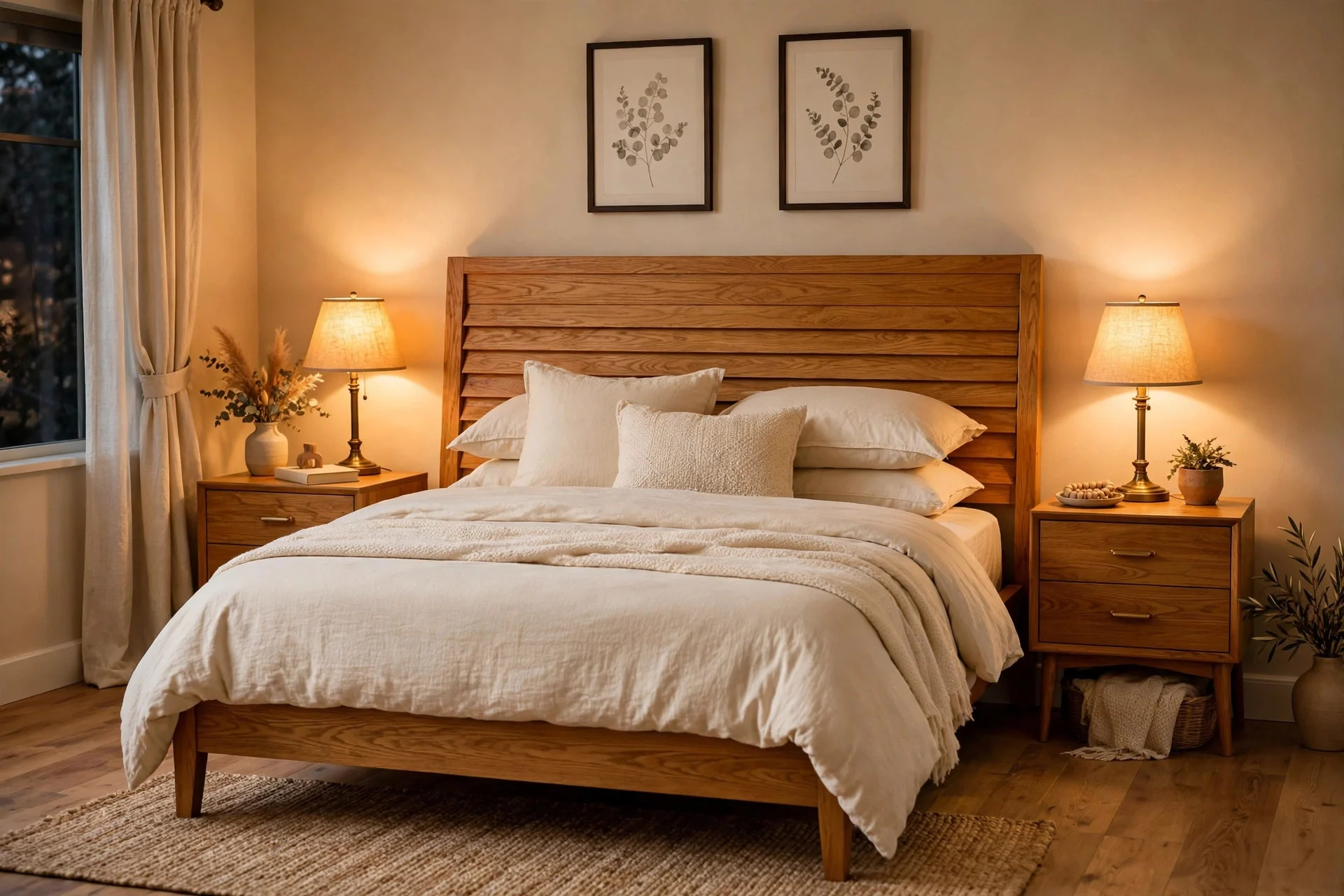
Pale, grey-washed wood and cool metals echo the cool light in a north-facing room. Warm wood — oak, walnut, pine with a honey finish — does the opposite, adding amber tones the room’s light cannot supply and grounding the space so it feels settled rather than stark.
You do not need new furniture. A wooden headboard, oak nightstands, a timber bench at the foot of the bed, or even a wooden tray and picture frames can shift the balance. If your existing furniture is dark and heavy, add a warm wood lamp base or mirror frame rather than replacing the whole piece.
Cost: $30–$300 depending on whether you add accessories or a furniture piece. Difficulty: Easy to moderate. Tip: Match undertone, not species — honey-toned oak and pine sit happily together. Watch out: Very dark walnut can swallow light in a small room, so pair it with pale bedding and a light rug.
7. Hang Heavy Curtains in a Warm Fabric
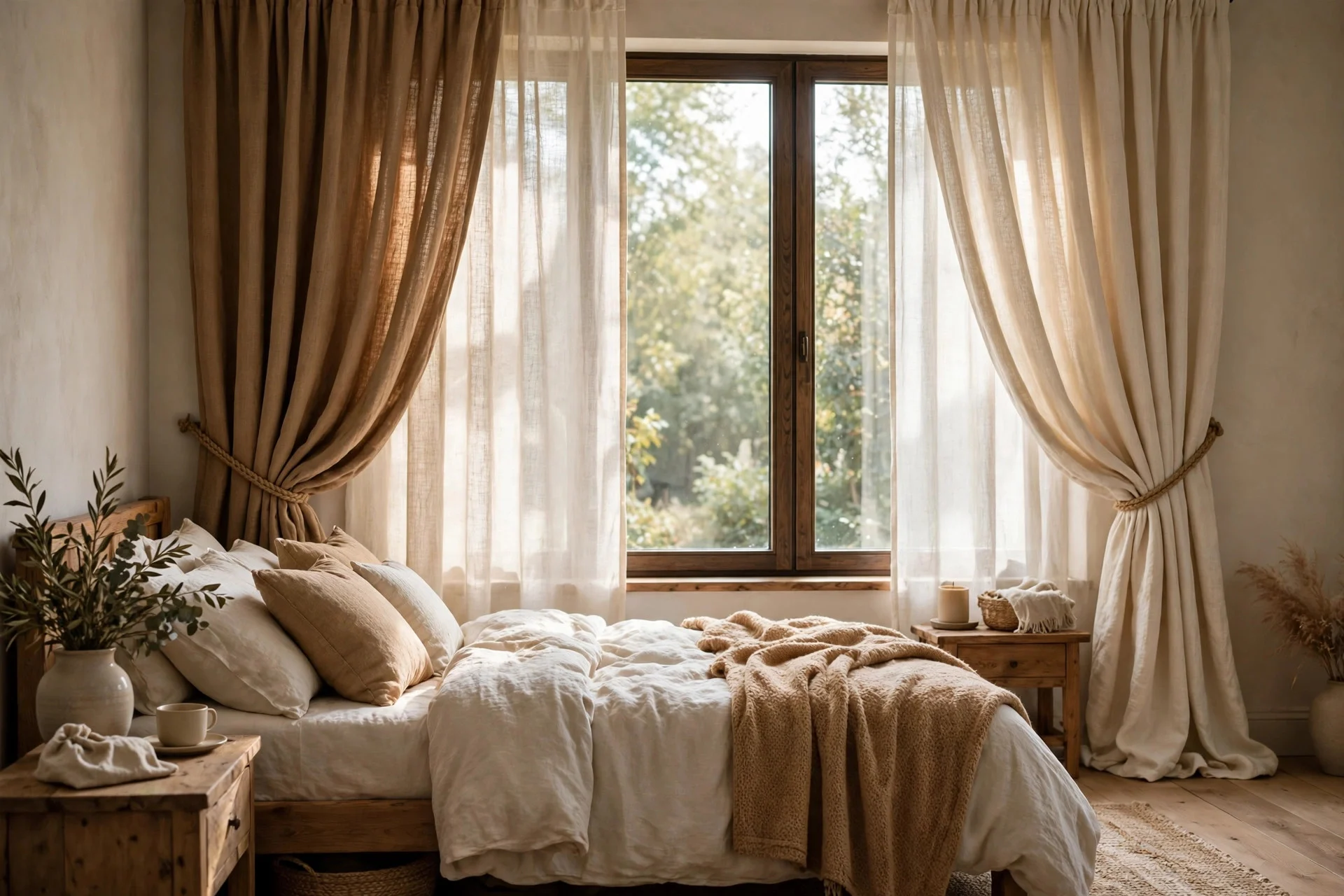
Thin white curtains filter an already weak light and can make the window look washed out. Heavier curtains in a warm fabric — linen, cotton, or velvet in cream, camel, rust, or dusty rose — frame the window, insulate on cold nights, and give the room a finished, sheltered feel.
Hang the rod high and wide — 10–15 cm above the frame and 15–20 cm beyond each side. This makes the window look bigger and lets curtains stack clear of the glass by day, so you lose none of your daylight.
Cost: $50–$200 for a pair, more for lined velvet. Difficulty: Easy to moderate, about an hour including the rod. Tip: Lining adds drape, insulation, and richer colour. Watch out: Choose curtains that insulate at night but open fully by day — daylight is already limited.
8. Add Terracotta, Mustard, and Rust Accents
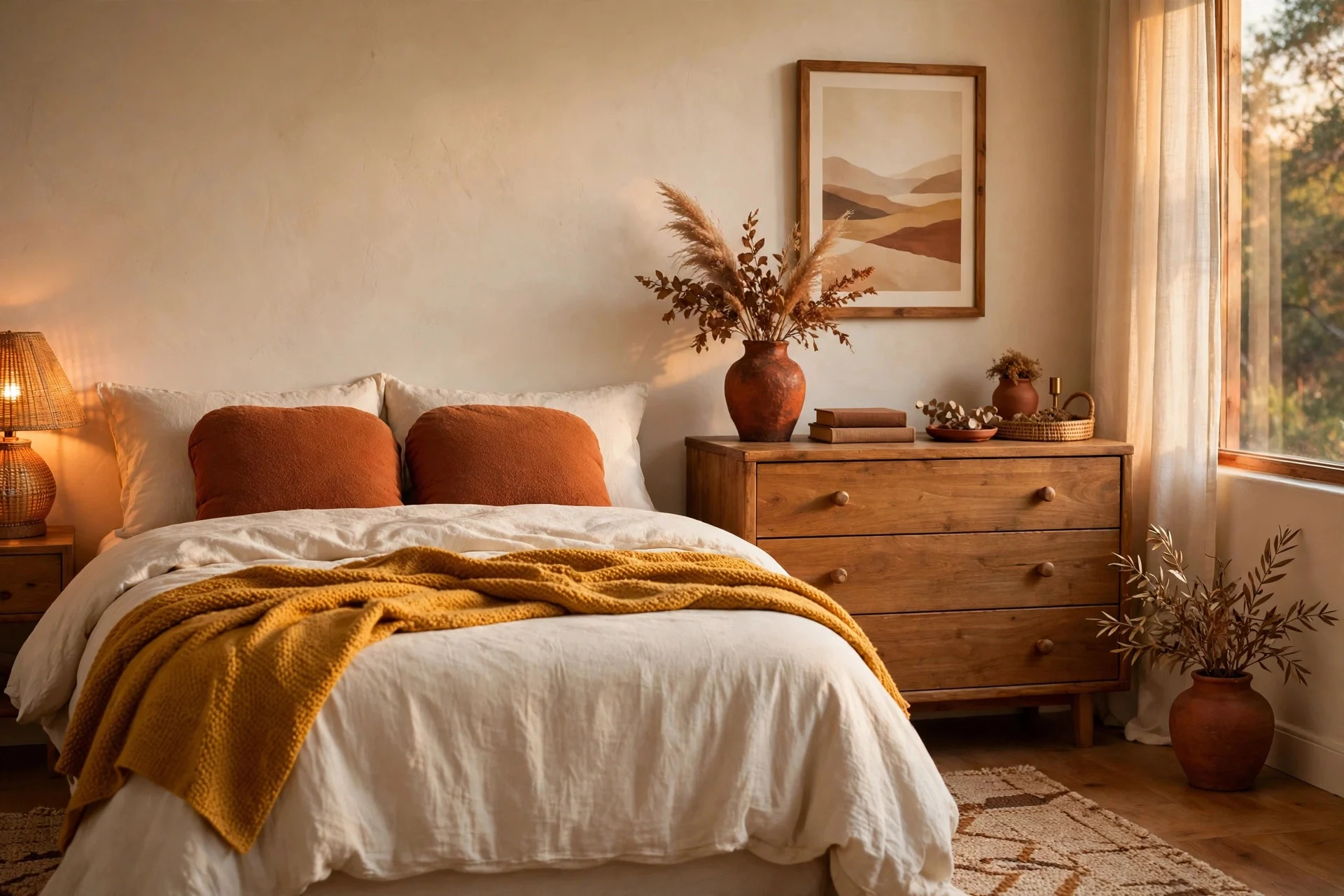
Warm accent colours are the fastest way to fight cool light without repainting. Cushions, a throw, a vase, or art in terracotta, mustard, burnt orange, or deep gold pull focus and warm up everything around them.
Start small and repeat the colour two or three times around the room: a terracotta cushion on the bed, a matching vase on the dresser, a rust-toned print on the wall. One lonely accent looks like an accident; a repeated one looks like a plan. Keep the base palette calm — cream, warm white, soft beige — so the accents stand out.
Cost: $20–$80 for cushions and a few accessories. Difficulty: Easy, an afternoon of shopping. Tip: These terracotta bedroom accents show how far to take one warm colour without tipping into orange overload. Watch out: Bright, saturated red can feel loud in a small room — lean toward earthy, muted versions of warm colours instead.
9. Use a Mirror to Borrow and Bounce Light
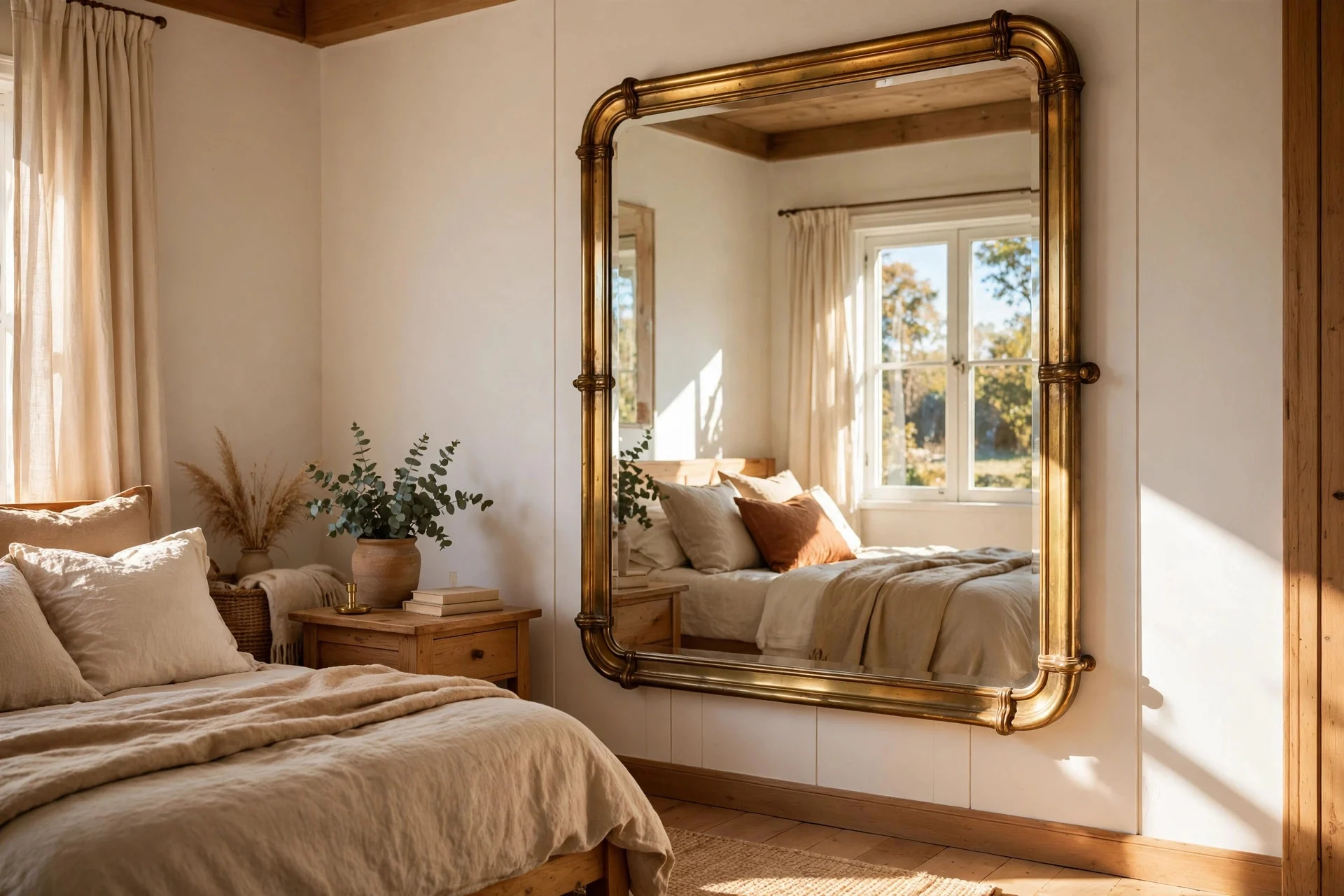
A north-facing room gets light, just not direct sun — and a mirror helps you make the most of it. A large mirror opposite or beside the window bounces daylight deeper into the room and doubles the sense of space. It also reflects your warm lamps in the evening, multiplying their effect.
Lean a full-length mirror against the wall near the window, or hang a round mirror above the dresser where it catches the window’s reflection. A warm wood or brass frame adds to the warming effect; plain silver will not add colour on its own.
Cost: $40–$150 for a decent-sized mirror. Difficulty: Easy, 30 minutes to hang safely. Tip: Check what it will reflect before hanging — a mirror facing a blank wall wastes the trick. Angle it until it catches the window. Watch out: Fix heavy mirrors to a stud or use proper wall anchors. A leaning mirror on a smooth floor can slide, so add small grip pads behind it.
10. Build a Warm Window Seat or Reading Corner
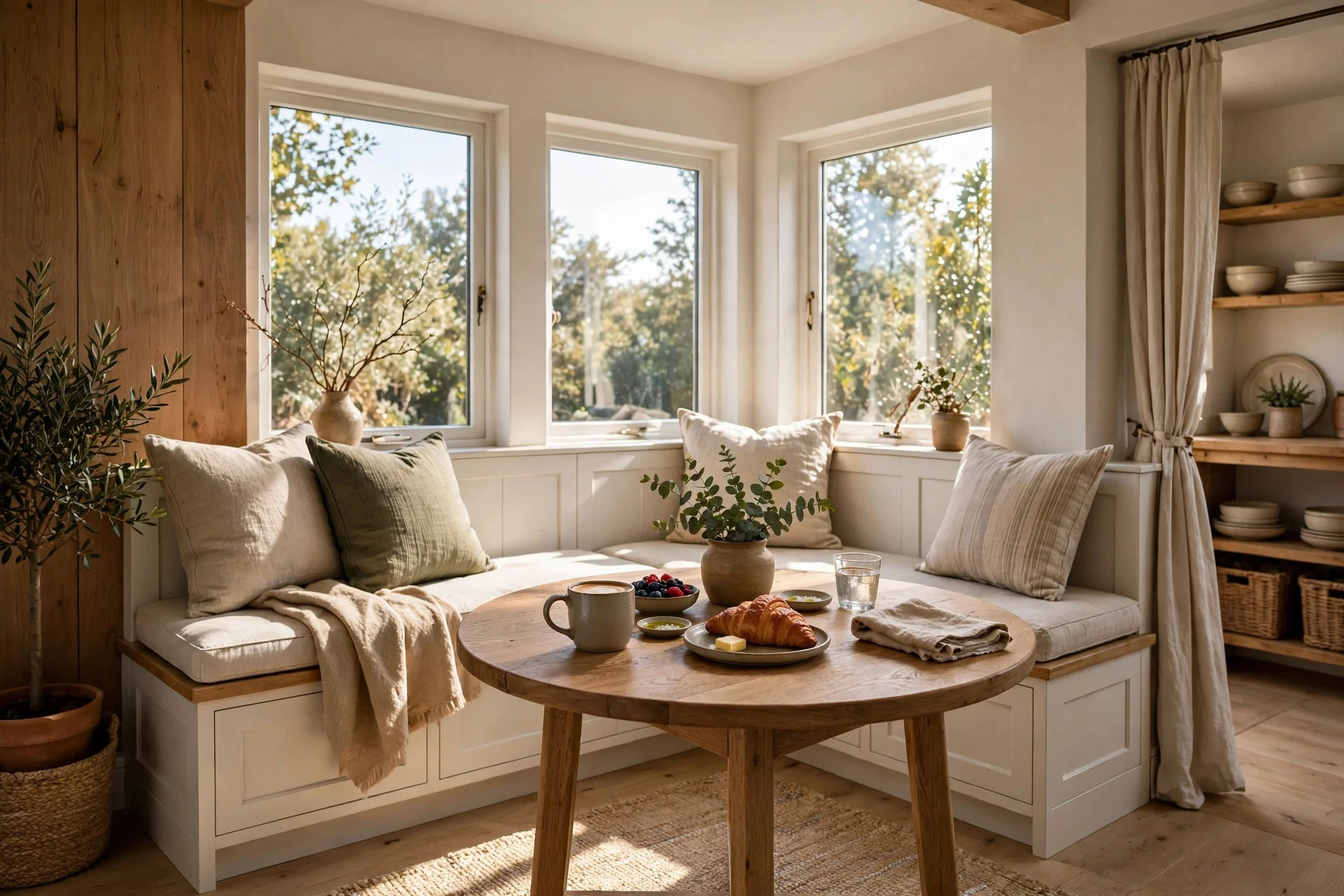
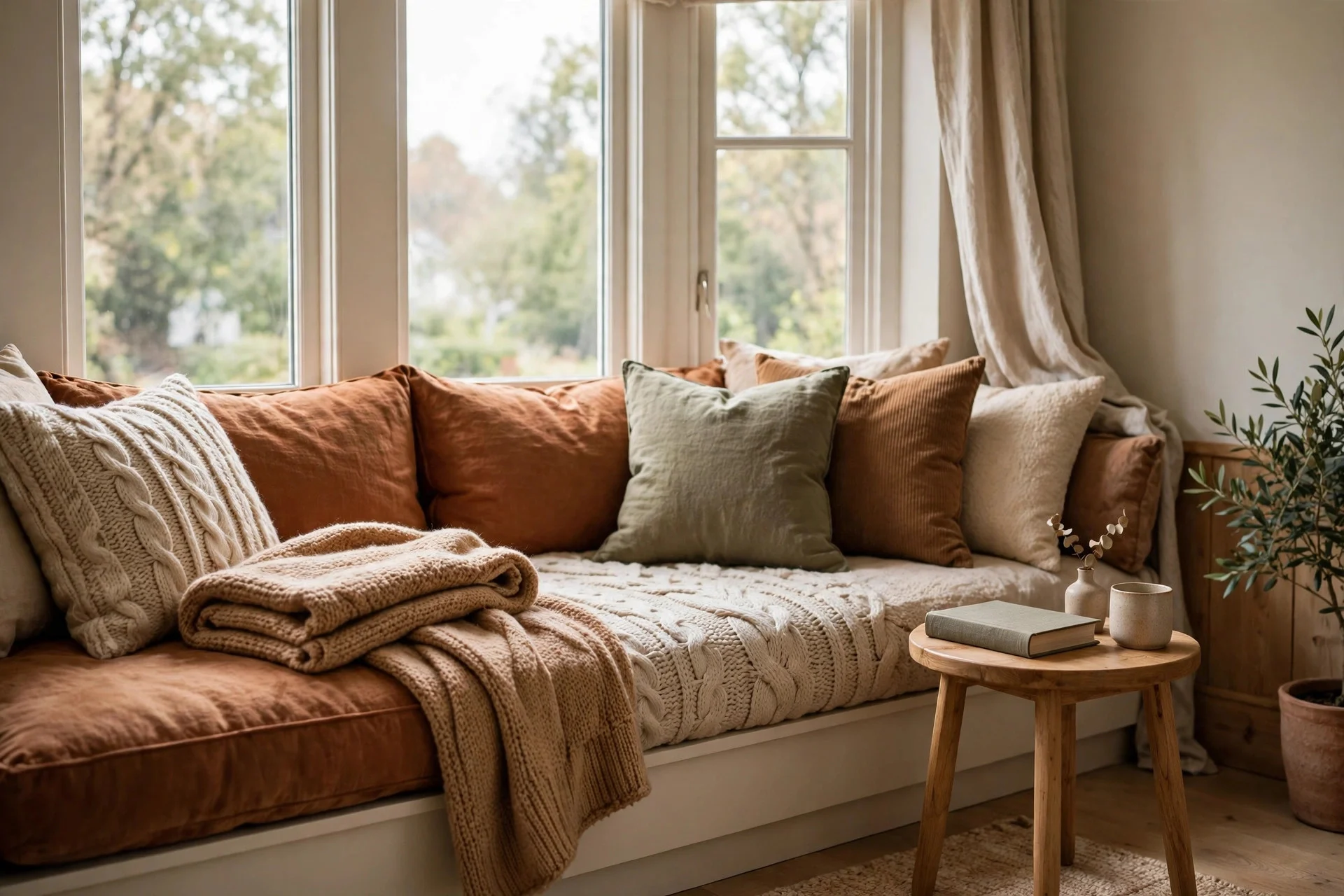
The window wall in a north-facing bedroom is often the coldest, most underused spot. Turning it into a seat — a bench with a thick cushion, warm throws, and a small lamp — reclaims that wall and gives you a reason to sit in the best daylight the room offers.
If a built-in bench is too much work, a low storage bench or an armchair pulled close to the window does the same job. Add a warm cushion, a throw for your legs, and a small side table for a book and a hot drink. Suddenly the coldest corner becomes the favourite spot in the room.
Cost: $80–$400 for a bench or chair plus cushions. Difficulty: Easy to moderate. Tip: These bedroom window seat ideas cover built-in and freestanding options for different room sizes. Watch out: Keep the seat clear of radiators or draughty window seals — comfort first, and fix any draught before you dress the corner up.
11. Warm Up the Walls with Art in Warm Tones
Bare, cool-white walls are a big part of why a north-facing room feels bare. Art in warm tones — autumn landscapes, abstract prints in ochre and rust, botanicals in deep green and gold — fills the walls with the warmth the light lacks, for far less than repainting.
Go big over the bed or the dresser rather than scattering tiny frames. One large print, or three matching prints in a row, reads as a deliberate feature. Wooden or brass frames keep the warm theme going; black frames add contrast rather than warmth, so use them sparingly here.
Cost: $30–$150 for prints and frames. Difficulty: Easy, under an hour. Tip: Secondhand stores are full of warm-toned landscapes — you do not need original art. Watch out: Glass glare can be an issue opposite a window; hang art on a side wall, or use non-reflective glass, if the glare bothers you.

12. Finish with Texture: Knits, Velvet, and Natural Fibres
When light is flat, texture does the work colour and shine do in a sunny room. A chunky knit throw, velvet cushion, woven basket, linen bedspread, and jute rug each catch the light differently, so the room gains depth and softness even on a grey day.
Mix at least three textures and repeat them in small ways: knit on the bed and the chair, wood on the furniture and frames, woven fibre in the basket and rug. Natural materials tend to read warm on their own, which is why a room of cotton, wool, linen, and timber rarely feels cold.
Cost: $40–$120 for a throw, cushions, and a basket. Difficulty: Easy, one shopping trip. Tip: Touch before you buy — a throw that looks soft online can feel scratchy in person. Watch out: Fluffy textures collect dust, so pick machine-washable options for the bed.

Frequently Asked Questions
Do north-facing bedrooms always feel cold?
Not always, but they do get cooler, steadier light than other rooms, with no direct sun to warm them up. That is why they often look grey or flat even when well insulated. Warm lighting, warm paint undertones, and layered textiles usually fix the feeling without building work.
What is the best wall colour for a north-facing bedroom?
A warm white with a yellow or pink undertone is safest, since it reflects the available light without turning blue-grey. Cream, warm ivory, and soft warm beige all work. If you want colour, muted warm shades like yellow-based sage or soft terracotta on one feature wall beat cool greys or icy blues.
Should I use warm or cool light bulbs in a north-facing room?
Warm white bulbs at around 2700K. Cool-white bulbs add more blue light to a room that already gets cool daylight, which makes everything feel harsher. Warm bulbs in lamps at different heights give you the glow the room’s natural light cannot provide.
Can I warm up a north-facing bedroom without painting?
Yes. Start with warm bulbs and layered lamps, then add a thick rug, warm bedding layers, and terracotta or mustard cushions. Those four changes shift most rooms noticeably, and none requires paint, tools, or a landlord’s permission.
Do mirrors really help a north-facing bedroom?
They help with brightness and space, because they bounce the daylight you do get further into the room. They will not add warmth on their own, though — pair a mirror with warm lamps and warm colours so the light it reflects is warm, not just more cool daylight.
Where to Start
If you do nothing else this weekend, change your bulbs to warm white and add one thick throw to the bed. Those two moves cost very little and change how the room feels the same night. Then work through the list: paint if the walls are fighting you, rug and curtains for insulation and softness, warm wood and accents for colour, and a mirror plus a reading corner to make the most of the light you have. A north-facing bedroom will never get south-facing sun, and it does not need to. With enough warm layers, it can be the most comfortable room in the house — calm, soft, and easy to fall asleep in.