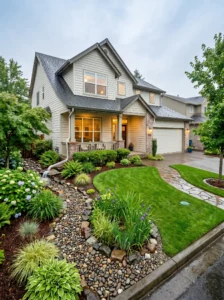
Most homeowners don’t think much about downspouts until they notice water pooling near the foundation, muddy landscaping, or a damp basement after a heavy rainstorm. The truth is that gutters get most of the attention, but downspouts do the real work of moving thousands of gallons of water away from your home every year.
When rainwater isn’t directed properly, it can slowly create expensive problems. Foundation cracks, soil erosion, flooded flower beds, stained siding, and basement moisture issues often start with poor drainage. Many homeowners invest heavily in landscaping or exterior improvements while overlooking the simple drainage solutions that could protect those investments for years.
The good news is that effective downspout drainage doesn’t have to be complicated or unattractive. Modern drainage solutions can blend into your landscape, improve curb appeal, and significantly reduce maintenance. Whether you have a small suburban lot, a sloped property, or a large yard, there’s a drainage option that fits your situation and budget.
In this guide, you’ll discover 11 practical downspout drainage ideas that help move water away from your home safely and efficiently. We’ll cover where each option works best, the advantages and disadvantages of different materials, installation considerations, and common mistakes to avoid. By the end, you’ll have a much clearer understanding of how to protect your home’s foundation, landscaping, and outdoor living spaces from water damage.
1. Extend Downspouts With Drainage Pipes
One of the simplest improvements is often the one that delivers the biggest results.
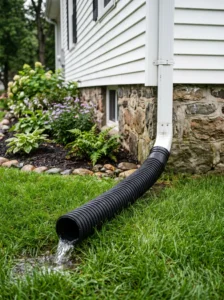
Downspout extensions work because they carry rainwater farther away from the foundation before it has a chance to soak into the soil around your home. Many homes discharge water only a foot or two from the walls, which allows moisture to accumulate exactly where you don’t want it.
This solution works particularly well for homes with flat lots, moderate rainfall, and visible water pooling near exterior walls. Flexible corrugated pipes are affordable and easy to install, while rigid PVC pipes offer a cleaner appearance and longer lifespan.
A good rule is to extend water at least 6 to 10 feet away from the foundation whenever possible. Avoid placing the outlet where water will flow toward neighboring properties or sidewalks. Consider burying the extension if you want a cleaner landscape appearance.
In daily use, homeowners often notice fewer muddy areas around the house and healthier lawn conditions. It’s a relatively inexpensive upgrade that can prevent costly foundation repairs later. Just remember to check periodically for clogs caused by leaves, dirt, or debris.
2. Install a French Drain System
When surface drainage isn’t enough, a French drain can solve persistent water issues.
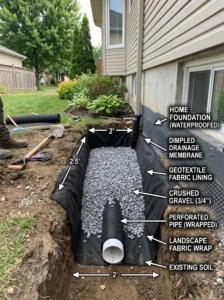
A French drain consists of a perforated pipe surrounded by gravel that collects and redirects groundwater. Instead of allowing water to sit around your foundation, the system channels it toward a safer discharge area.
This option is especially useful for properties with clay soil, poor natural drainage, or recurring basement moisture problems. It works well along foundation walls, low-lying landscape areas, and locations where runoff tends to collect after storms.
Proper installation matters. The trench needs a consistent slope, quality landscape fabric, and enough gravel to encourage water movement. Skipping these details often leads to clogging and reduced effectiveness over time.
Many homeowners appreciate how invisible the finished system becomes. Once covered, the drain blends into the yard while quietly managing water underground. The result is a drier landscape, fewer puddles, and greater peace of mind during heavy rainfall.
Although installation costs are higher than simple extensions, the long-term protection often makes it worthwhile for challenging drainage situations.
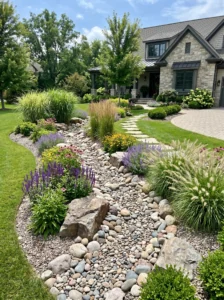
3. Create a Decorative Dry Creek Bed
Sometimes the best drainage solution is one that looks intentional and attractive.
A dry creek bed mimics a natural stream using stones, river rock, and strategic grading. During rainstorms, it channels runoff away from your home. During dry weather, it serves as a landscape feature that adds texture and visual interest.
This approach works particularly well on sloped properties where water naturally wants to flow downhill. It can also connect multiple downspouts into a single drainage path.
Use larger stones along the edges and smaller river rocks in the center to create a realistic appearance. Adding drought-tolerant plants around the perimeter helps soften the design and integrate it into the landscape.
One common mistake is making the channel too shallow. Heavy storms can overwhelm undersized creek beds and cause overflow. Planning for larger-than-average rain events is usually a smart decision.
Beyond functionality, homeowners often find that a dry creek bed becomes one of the most attractive elements in their yard. It transforms a drainage necessity into a design feature that enhances curb appeal.
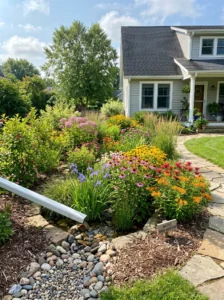
4. Build a Rain Garden
A rain garden allows your landscape to work with nature rather than against it.
Instead of sending water directly away, this system collects runoff in a shallow planted basin where it slowly infiltrates into the soil. Native plants help absorb moisture while filtering pollutants from stormwater.
Rain gardens work best in areas with sufficient yard space and soils that drain reasonably well. They should be positioned away from foundations but close enough to receive downspout runoff.
Choose plants that can tolerate both wet and dry conditions. Native grasses, flowering perennials, and moisture-loving shrubs are often excellent choices. Avoid creating a basin that remains constantly saturated, as standing water can become problematic.
Homeowners frequently enjoy the environmental benefits as much as the drainage improvements. Rain gardens attract birds, butterflies, and beneficial pollinators while reducing erosion and runoff.
The result is a landscape feature that feels natural, supports local ecosystems, and provides practical drainage management all at the same time.
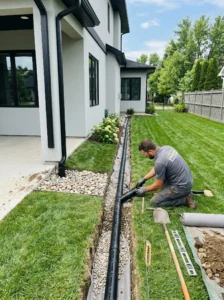
5. Connect Downspouts to Underground Drainage Pipes
Visible drainage solutions aren’t always desirable.
Underground drainage pipes move water out of sight while carrying it safely away from the home. This creates a cleaner landscape appearance and eliminates tripping hazards associated with above-ground extensions.
This option works particularly well in front yards, formal landscapes, and properties where aesthetics are a priority. Solid PVC pipe is often preferred because it provides smooth water flow and resists clogging better than corrugated alternatives.
Careful planning is essential. The system needs adequate slope to maintain water movement, and cleanout access points should be included for maintenance purposes.
Many homeowners appreciate the fact that mowing and landscaping become easier without visible pipes crossing the lawn. The yard feels cleaner and more organized while still providing effective drainage protection.
Though installation requires trenching and more labor upfront, the long-term convenience often outweighs the additional cost.
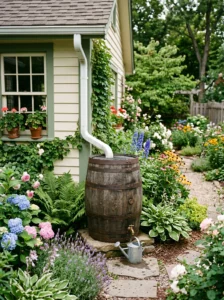
6. Use a Rain Barrel Collection System
Sometimes the smartest drainage solution is to reuse the water instead of simply moving it away.
Rain barrels collect runoff from downspouts and store it for future use in gardens, flower beds, and lawns. This reduces stormwater runoff while lowering outdoor water consumption.
Rain barrels work best in regions with moderate rainfall and active gardening needs. Position the barrel on a stable, elevated base to improve water pressure and accessibility.
Choose models with overflow outlets to handle excess water during heavy storms. Without proper overflow management, collected water can spill near the foundation and create the very problem you’re trying to solve.
Homeowners often enjoy having free water available during dry periods. It’s particularly useful for vegetable gardens, container plants, and landscape beds.
While rain barrels won’t solve every drainage challenge, they can significantly reduce runoff volume while making your property more sustainable.
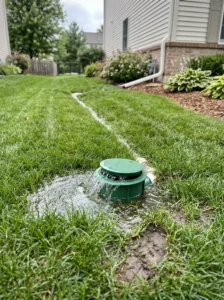
7. Install a Pop-Up Drain Emitter
A pop-up emitter offers a neat solution for underground drainage systems.
This device remains hidden beneath the lawn until water pressure forces it open during rainfall. Once the flow stops, it closes automatically and blends into the landscape.
Pop-up emitters are ideal for properties using buried drainage pipes. They prevent large open pipe outlets from becoming visual distractions while helping keep rodents and debris out of the system.
Placement is important. Install the emitter in an area where water can safely disperse without flowing back toward structures or neighboring properties.
Many homeowners appreciate how unobtrusive this solution is. Visitors rarely notice it, yet it performs an important function during storms.
For those seeking a clean, professional-looking drainage setup, a pop-up emitter is often worth the modest additional investment.

8. Direct Water Toward a Swale
Sometimes shaping the land itself is the most effective drainage strategy.
A swale is a shallow, gently sloped channel designed to guide water across a property. Unlike a ditch, it blends naturally into the landscape and can be covered with grass or decorative plantings.
Swales work particularly well on larger lots where there is enough space to redirect water safely away from structures. They are often combined with rain gardens or drainage outlets.
The key is maintaining a gentle slope that encourages movement without causing erosion. Sharp grades can create fast-moving runoff that damages landscaping.
Homeowners frequently appreciate the low-maintenance nature of swales. Once established, they require little attention beyond occasional mowing or plant care.
This approach uses natural grading rather than expensive infrastructure, making it a practical solution for many properties.
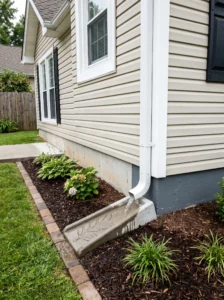
9. Add Splash Blocks Beneath Downspouts
Not every drainage improvement needs to be complicated.
Splash blocks sit directly beneath downspouts and help disperse water away from the foundation. They reduce soil erosion and prevent concentrated runoff from digging channels into the ground.
This solution works well for homes with moderate rainfall and relatively good drainage conditions. Concrete, plastic, and decorative stone options are widely available.
Position the block on a slight downward slope so water continues moving away from the home. A common mistake is placing splash blocks on level ground where water simply pools nearby.
Many homeowners choose decorative versions that complement their landscaping style. It’s a small detail, but it can make the drainage system feel more integrated with the home’s exterior.
While splash blocks are rarely enough for major drainage issues, they remain one of the most affordable and useful first-line defenses.
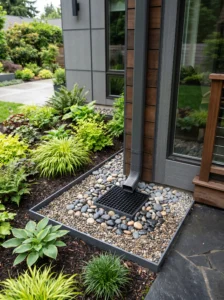
10. Build a Gravel Drainage Zone
A gravel drainage area can quietly handle runoff while improving landscape appearance.
This method involves creating a designated section filled with drainage gravel where downspout water can disperse gradually. The gravel slows water movement and promotes infiltration into the soil.
It works particularly well for side yards, utility areas, and locations where traditional landscaping struggles due to frequent moisture exposure.
Use washed gravel rather than mixed stone containing fine particles. Fines can compact over time and reduce drainage performance. Adding landscape fabric beneath the gravel helps prevent weed growth.
Homeowners often notice cleaner, less muddy conditions around problem areas. The gravel also creates a tidy appearance that looks intentional rather than neglected.
For moderate drainage needs, this is a relatively simple solution that balances functionality, affordability, and aesthetics.
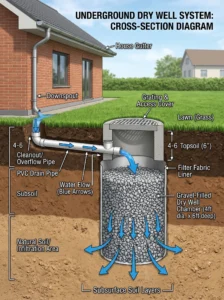
11. Create a Drainage Well or Dry Well
When surface space is limited, a dry well can provide valuable underground storage.
A dry well is essentially an underground chamber that temporarily collects runoff and allows it to slowly infiltrate into surrounding soil. It helps manage large volumes of water without requiring extensive surface drainage features.
This option is particularly useful for urban lots, smaller yards, and properties where water cannot easily be directed elsewhere.
Proper sizing is crucial. Undersized dry wells can overflow during major storms, reducing effectiveness. Soil drainage capacity should also be evaluated before installation.
Many homeowners appreciate that the system remains completely hidden once installed. The yard retains its usable space while gaining significant drainage capacity.
Although installation costs can be moderate to high, dry wells offer an elegant solution for properties with limited drainage options.
Comparison Table
| Type | Best Use | Material | Style/Vibe | Difficulty Level |
|---|---|---|---|---|
| Downspout Extension | Basic foundation protection | PVC or Corrugated Pipe | Functional | Easy |
| French Drain | Persistent water problems | Gravel & Perforated Pipe | Hidden Utility | Moderate |
| Dry Creek Bed | Sloped landscapes | River Rock & Stone | Natural & Decorative | Moderate |
| Rain Garden | Eco-friendly drainage | Plants & Soil | Lush & Natural | Moderate |
| Underground Pipe System | Clean appearance | PVC Pipe | Invisible & Professional | Moderate to High |
| Dry Well | Small lots with runoff issues | Drainage Chamber & Gravel | Hidden Solution | High |
How to Choose the Right Downspout Drainage Solution
Selecting the best drainage system depends on more than simply moving water away from your home. The right choice should match your property’s size, drainage challenges, budget, and long-term maintenance expectations.
Start by evaluating scale. Small homes with limited runoff may only need splash blocks or simple downspout extensions. Larger roofs generate significantly more water and often require underground drainage systems, French drains, or dry wells. The amount of water your roof collects should guide your decision.
Material selection also matters. PVC pipe offers excellent durability and smooth water flow, making it a strong long-term choice. Corrugated pipe is less expensive and easier to install but may be more prone to clogging. Decorative stone and gravel provide attractive drainage solutions but require occasional maintenance to remain effective.
Durability should always be considered alongside appearance. Underground systems typically last longer and require less visual maintenance, while above-ground options are easier to inspect and repair. In areas with freezing temperatures, proper installation depth becomes especially important.
Budget plays a major role as well. Splash blocks and extensions are affordable entry-level solutions. French drains, dry wells, and underground pipe networks involve higher upfront costs but may prevent expensive foundation repairs later.
One common mistake homeowners make is focusing only on where water leaves the downspout rather than where it ultimately ends up. Water should always move toward a safe discharge area without affecting foundations, patios, driveways, or neighboring properties.
Another frequent error is undersizing the drainage system. Heavy storms often expose weaknesses in systems designed only for average rainfall. Planning for larger rain events typically provides better long-term performance.
Ultimately, the best drainage solution is one that effectively manages water while fitting naturally into your property’s layout and maintenance routine.
Conclusion
Protecting your home from water damage starts with managing rainwater properly, and downspout drainage plays a much bigger role than many homeowners realize. A well-designed drainage system helps prevent foundation problems, landscape erosion, basement moisture, and countless maintenance headaches down the road.
Simple options like splash blocks and downspout extensions can solve minor issues quickly and affordably. More advanced solutions such as French drains, underground pipe systems, rain gardens, and dry wells provide greater protection for properties facing persistent drainage challenges.
The key is matching the solution to your specific situation. Consider your roof size, yard layout, soil conditions, rainfall patterns, and maintenance preferences before making a decision. In many cases, combining multiple drainage methods delivers the best results.
Remember that effective drainage isn’t just about preventing problems. It also helps maintain healthier landscaping, cleaner outdoor spaces, and greater confidence during heavy storms.
A little planning today can prevent significant repair costs tomorrow. Whether you’re tackling a small drainage upgrade or redesigning your entire runoff system, investing in proper water management is one of the smartest improvements you can make for your home.
FAQs
1. How far should a downspout drain away from the house?
Most experts recommend directing water at least 6 to 10 feet away from the foundation. More distance is often better, especially on flat lots or properties with poor drainage.
2. Are underground downspout drains worth it?
Yes, especially if appearance and long-term durability are important. They keep drainage hidden, reduce tripping hazards, and often provide better water management than visible extensions.
3. What is the cheapest way to improve downspout drainage?
Splash blocks and downspout extensions are usually the most affordable solutions. They are easy to install and can significantly reduce water accumulation near foundations.
4. Can downspouts cause foundation damage?
Absolutely. If water repeatedly collects near the foundation, it can contribute to soil movement, moisture problems, and eventually structural damage over time.
5. Do rain barrels help with drainage?
They can reduce runoff volume by capturing roof water for later use. However, they should include proper overflow systems to handle heavy rainfall.
6. What is better: a French drain or a dry well?
A French drain is better for moving water away continuously, while a dry well temporarily stores water and allows it to soak into the soil. The best option depends on site conditions.
7. How often should drainage systems be maintained?
Inspect gutters, downspouts, and drainage outlets at least twice a year. Additional checks after major storms can help identify clogs or damage early.
8. What is the most common drainage mistake homeowners make?
Allowing water to discharge too close to the foundation is one of the most common and costly mistakes. Even a well-functioning gutter system can create problems if runoff isn’t directed far enough away.