15 Bookshelf Styling Ideas for a Living Room That Reads Well
You know that moment when someone walks into your living room and their eyes go straight to the bookshelf — and what they see is a solid wall of crammed, tilted paperbacks, none of which look like they belong there? Most of us have that shelf. It started as storage and never graduated into decor. Here’s the good news: a bookshelf that actually reads well — visually and literally — is one of the fastest wins in a living room, and you don’t need to buy new furniture or own a thousand books. You just need to style it on purpose. These 15 ideas will take your shelf from storage unit to centerpiece.
1. Think Like a Curator, Not a Librarian
Before you touch a single book, pull everything off the shelves. Yes, all of it. Starting from zero is the only way to stop organizing around what you already own and start designing for what you want to see. Stand back, look at the empty shelves, and decide on a mood — calm and minimal, rich and collected, colorful and playful — then put things back with that mood in mind. Most people find this one reset takes about an hour, and it changes everything about the decisions that follow.
Cost: $0 | Difficulty: Easy (an afternoon, mostly the emptying part) | Tip: Take a phone photo of the empty shelf first — it helps you spot when you’re over-filling as you rebuild.
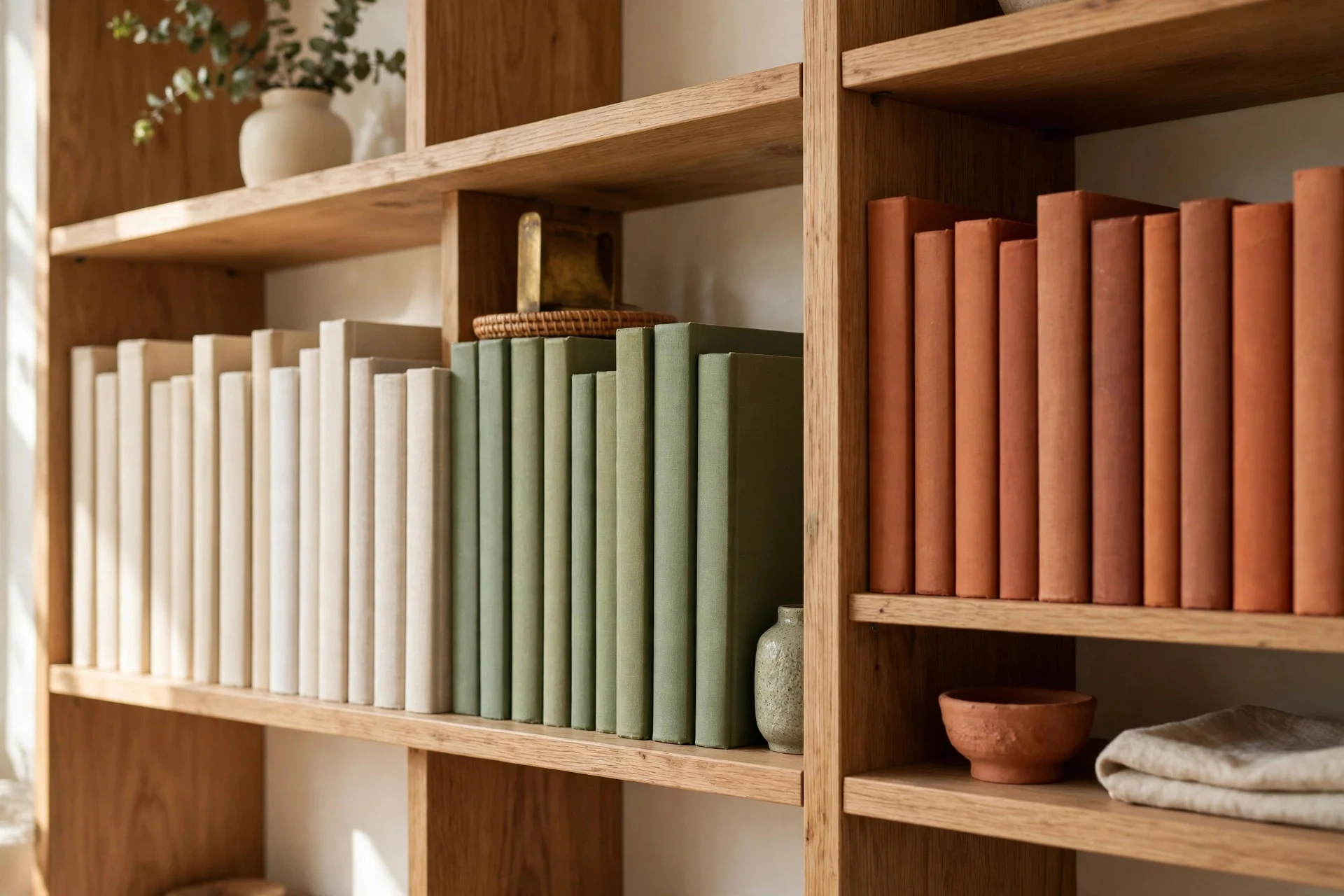
2. Stack Books Horizontally, Not Just Vertically
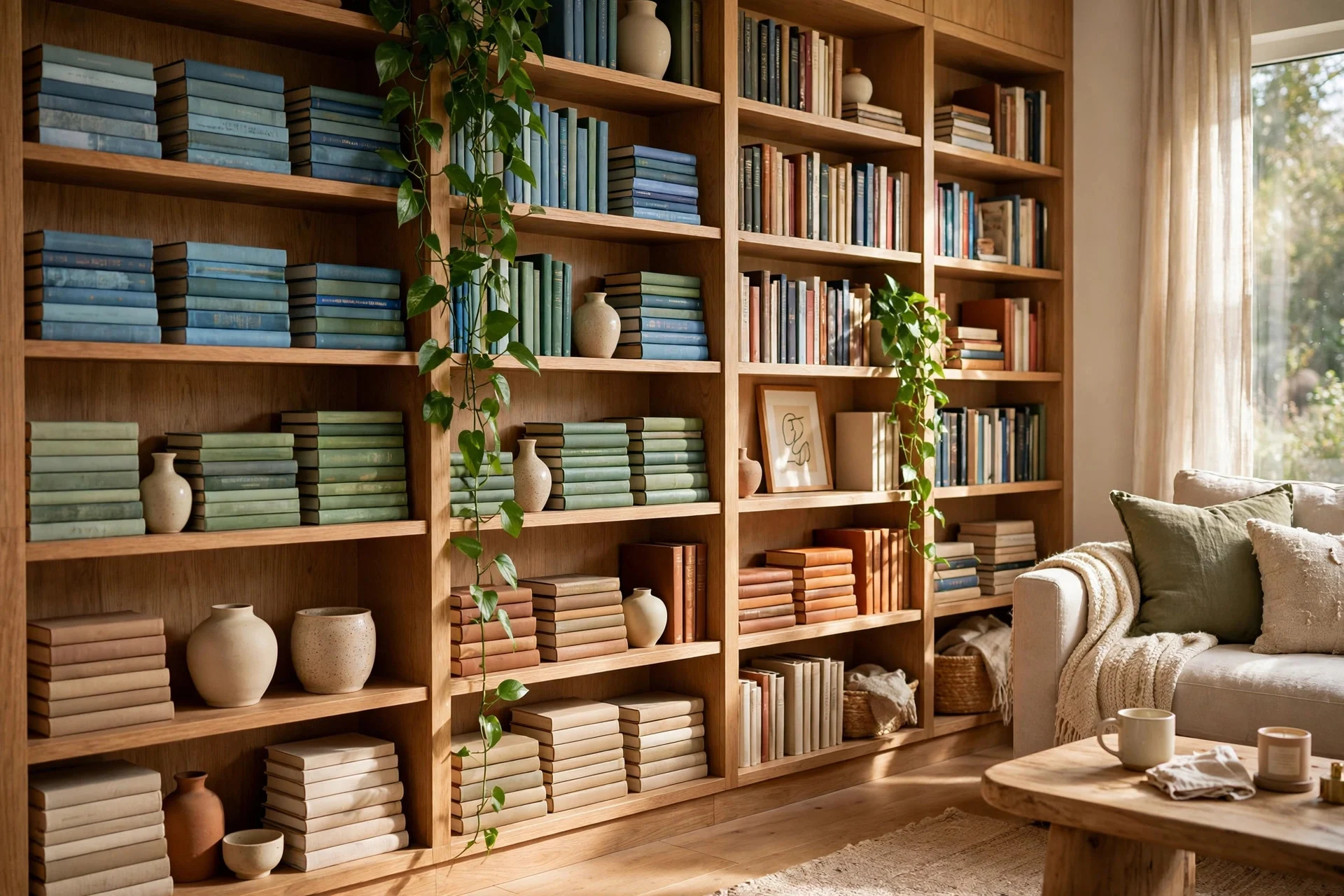
A whole shelf of upright spines reads as a filing cabinet. Break that rhythm by stacking books flat in a few places — piles of three to six, largest on the bottom. Horizontal stacks create little platforms where you can set a candle, a small plant, or a favorite object, and they instantly make the shelf look designed rather than packed. Keep some upright sections too; the mix of directions is what gives the eye something to follow.
Cost: $0 | Difficulty: Easy (10 minutes per shelf) | Tip: Stacks look best when the books are roughly the same size — pull your coffee-table books for this job.
Watch out: Don’t stack higher than about six books; taller piles lean, slide, and look precarious instead of tidy.
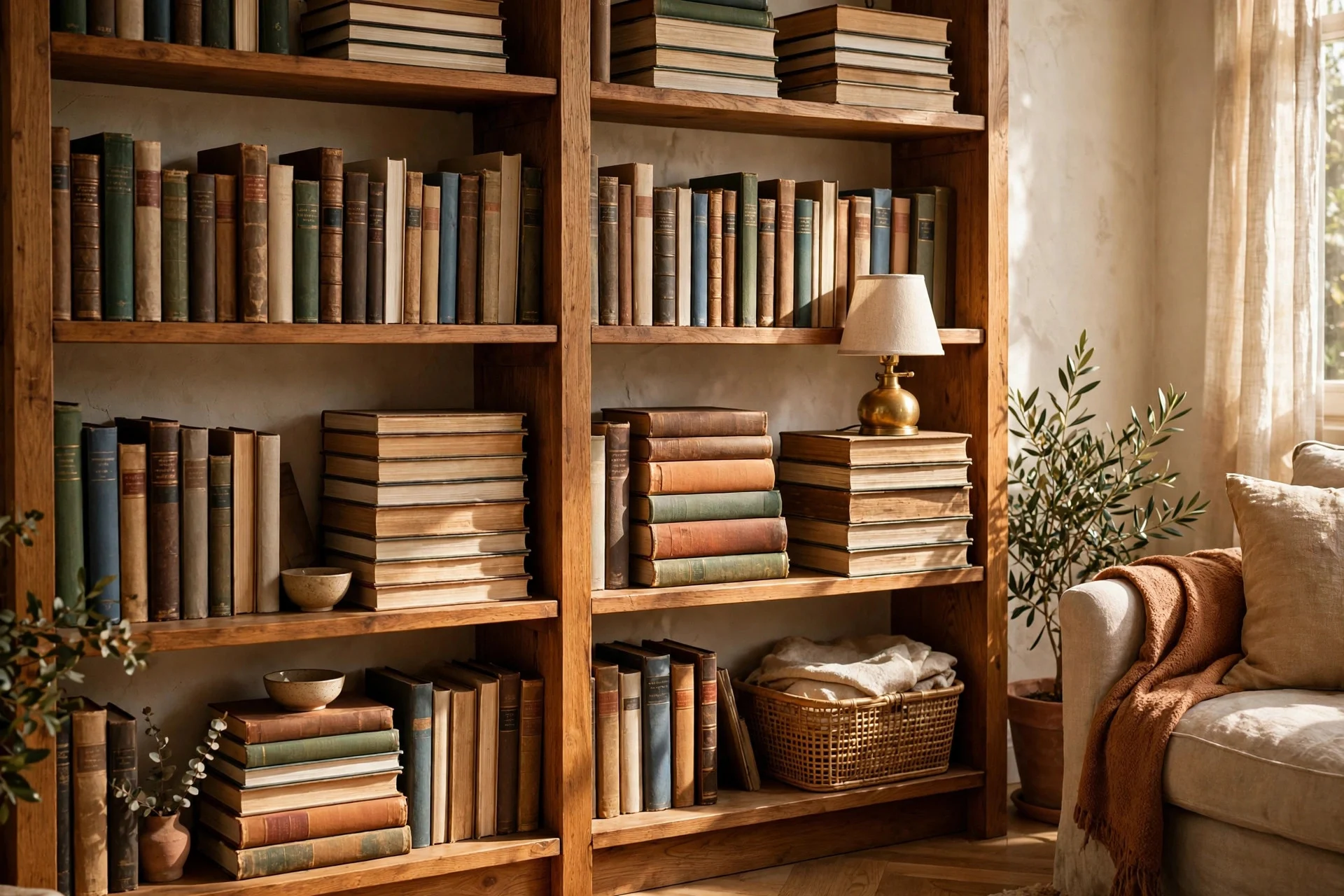
3. Give Every Shelf a Sculptural Object
A shelf that is 100% books feels heavy no matter how you arrange it. One sculptural object per shelf — a ceramic figure, a carved-wood piece, a chunky candleholder — breaks up the rows and gives each level its own personality. Designers often work to a rough 70/30 split: about seventy percent books, thirty percent objects. The objects don’t need to be expensive; thrift stores are full of interesting shapes for a few dollars each.
Cost: $10–$40 | Difficulty: Easy (shop + place) | Tip: Choose objects with different textures — matte ceramic, smooth stone, brushed metal — so they read as distinct against flat book spines.
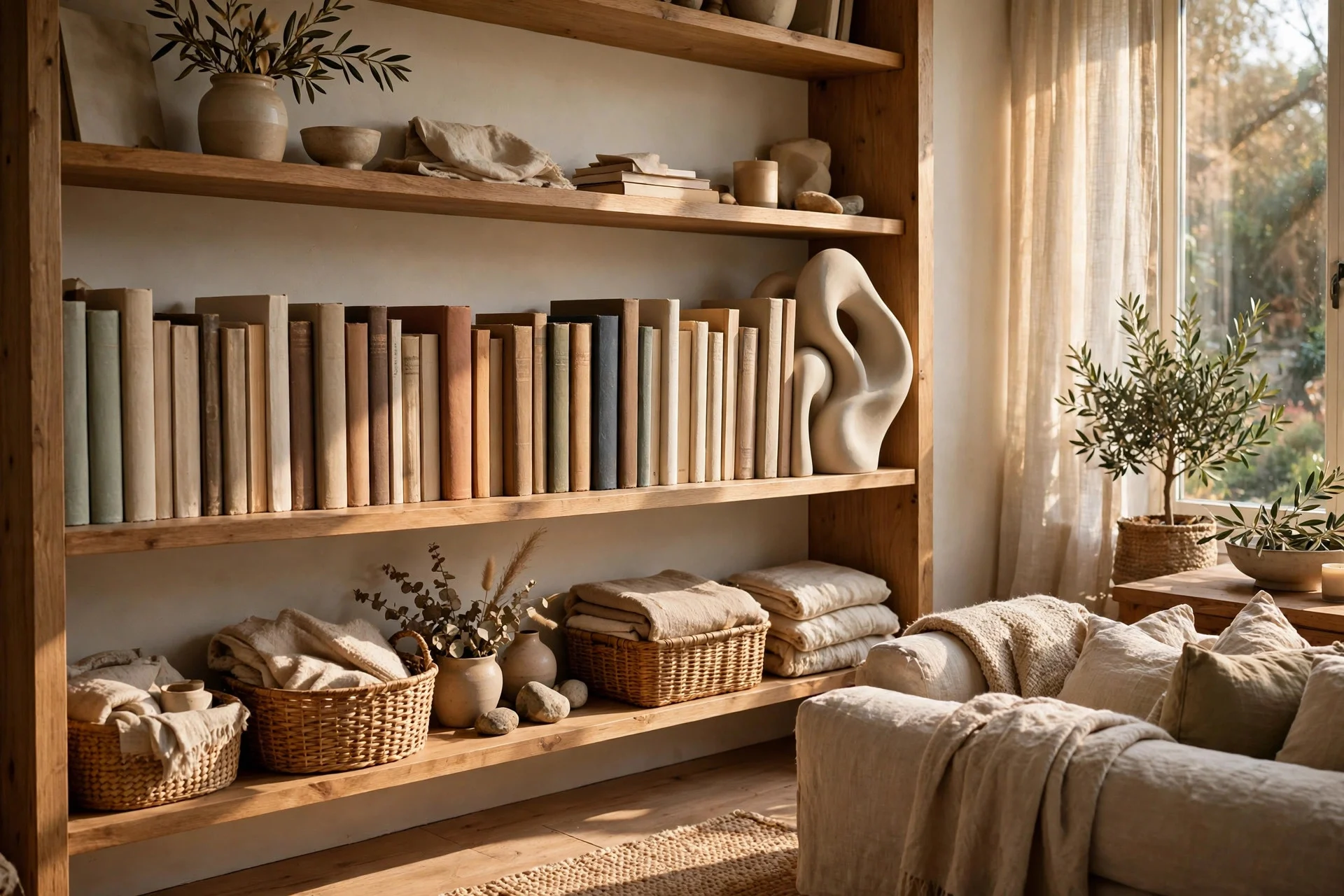
4. Lean in a Framed Art Print
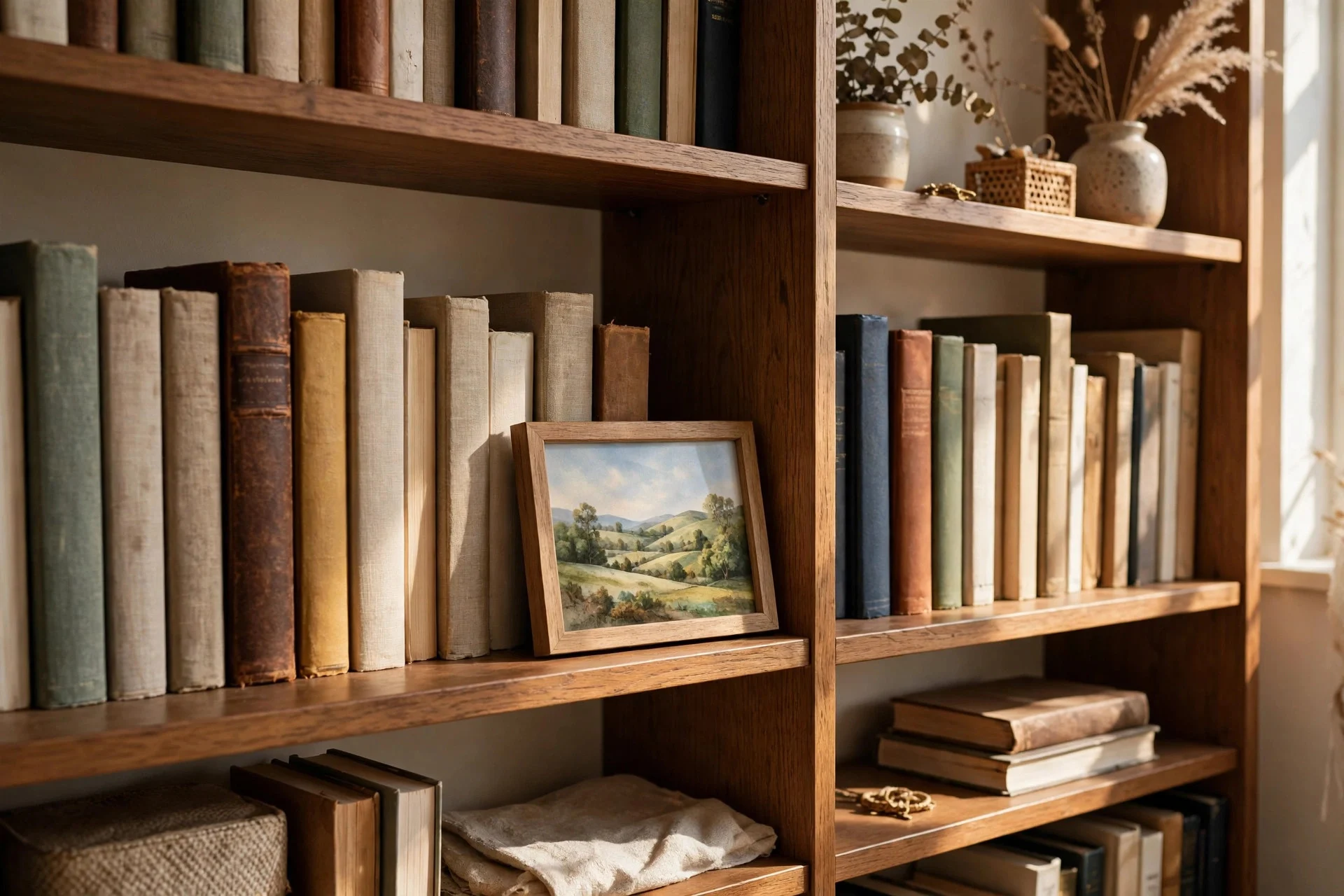
One of the fastest ways to make a bookcase look expensive is to lean a small framed print or art postcard against the back of a shelf, tucked between book groups. It adds depth — a second visual layer behind the spines — and ties your shelf into the room’s color palette. You don’t need gallery-quality art; a $12 print from an online shop in a simple frame does the job.
Cost: $12–$35 | Difficulty: Easy (5 minutes) | Tip: Match one color in the print to your sofa, rug, or curtains so the shelf feels connected to the rest of the room.
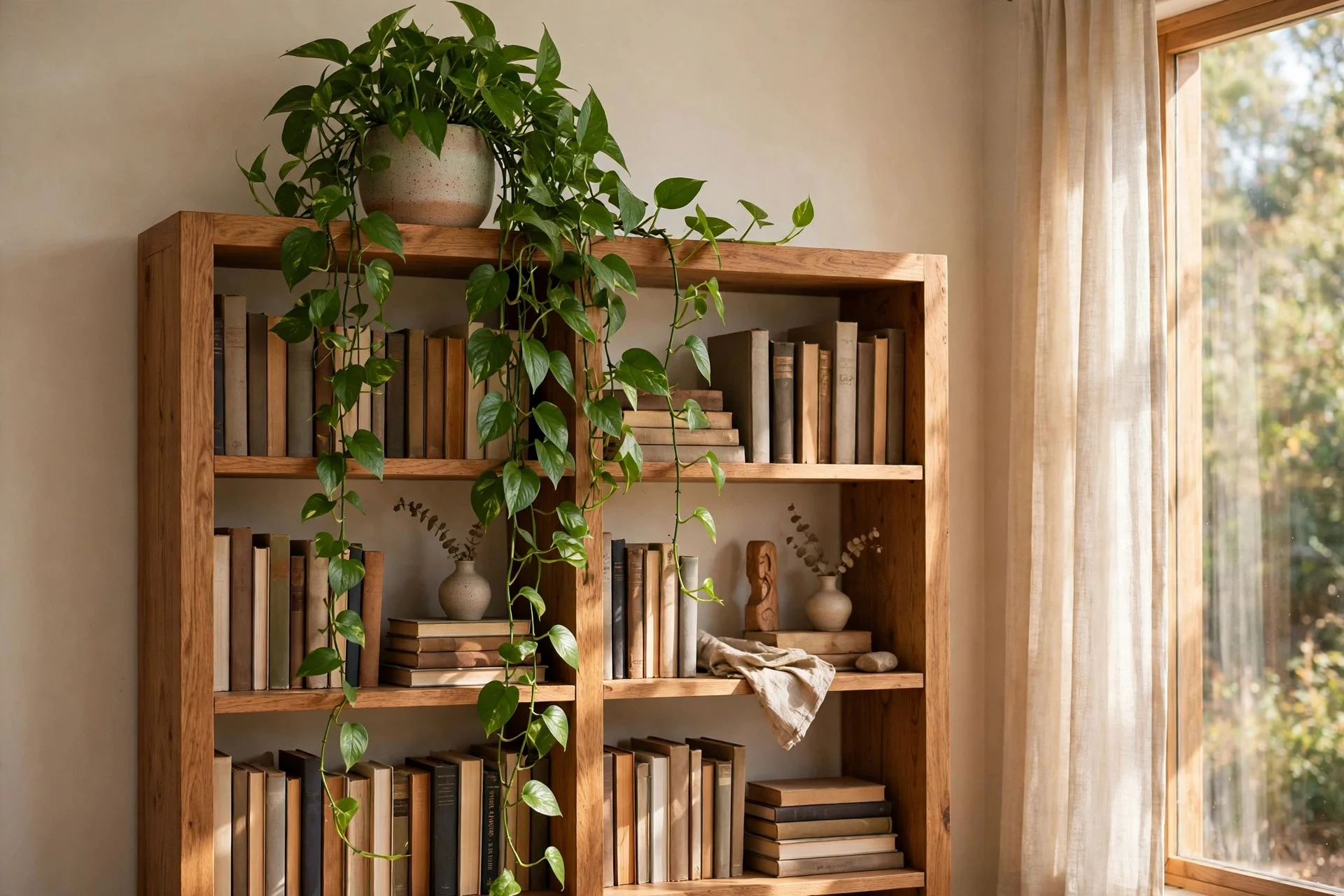
5. Trail a Plant From the Top
Greenery is the contrast every bookshelf is missing: soft and alive against all that rigid rectangular spines. A pothos, philodendron, or string-of-pearls in a pot on the top shelf, trailing down over the front, turns a stiff bookcase into something that feels organic and welcoming. Fake trailing plants have gotten convincing enough that nobody will know — but real pothos is nearly impossible to kill and costs less than the fake ones.
Cost: $8–$25 (pot + plant) | Difficulty: Easy (one pot, water weekly) | Tip: Pick a heavy ceramic pot so the trailing vine’s weight doesn’t tip it forward off the shelf.
6. Color-Block Your Spines
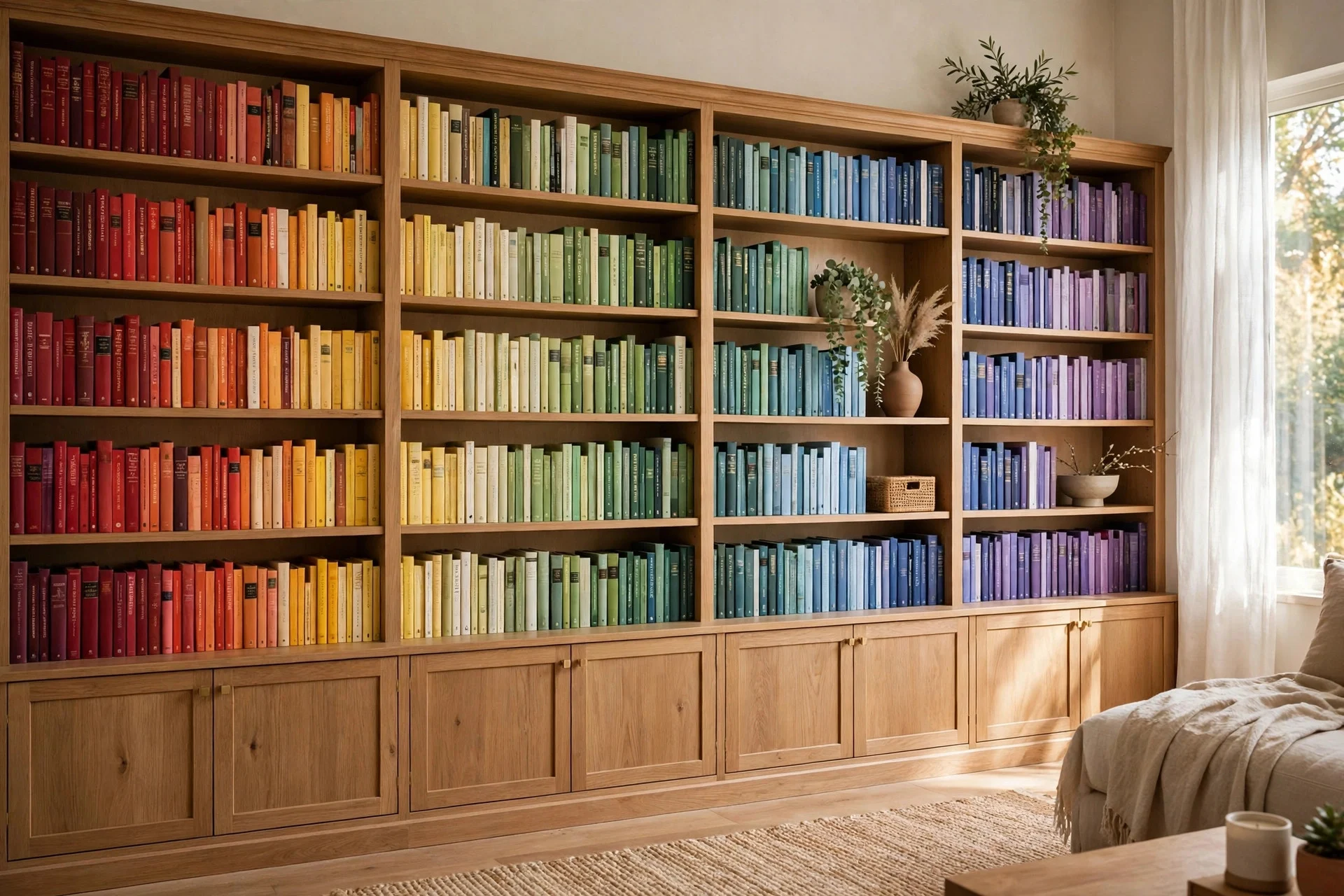
Love it or hate it, grouping books by spine color is the single most dramatic visual change you can make. Work in blocks — a run of cream spines, a run of deep greens, a run of reds — rather than trying to mix every book into a perfect gradient, which takes forever and rarely looks calm. If a rainbow arrangement feels too bold, try just two or three neighboring colors, like neutrals plus blue.
Cost: $0 | Difficulty: Easy but time-consuming (30–45 minutes of sorting) | Tip: Pull your least attractive spines out of rotation entirely — donations or a box in the closet. Your shelf only has to display the books you actually like looking at.
Watch out: If you actually grab books off the shelf to read, color-blocking can make a title hard to find again. Use it on your display shelf, not your working library.
7. Style the Top Like It Matters
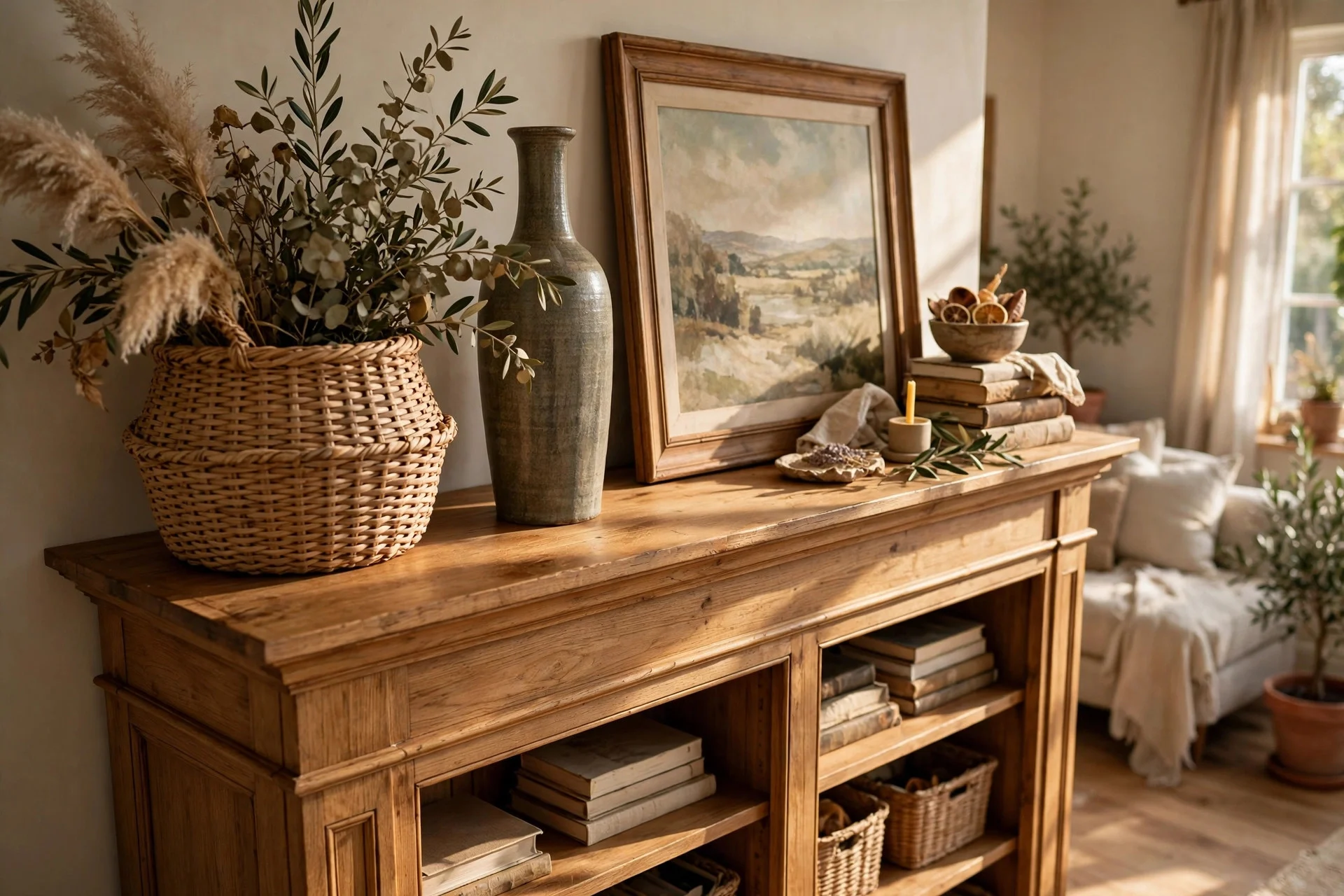
The top of a tall bookcase is a display surface most people leave bare or dump with clutter. Treat it like a mantel: one large statement piece (a big vase, a basket, a leaning piece of art) plus one or two smaller items grouped with it. Keep it lighter than the shelves below so the bookcase doesn’t look top-heavy — a woven basket up top balances nicely with books below.
Cost: $15–$50 | Difficulty: Easy (15 minutes) | Tip: Whatever sits on top should be tall enough to be seen from across the room — at least 12 inches — or it reads as dust-collector rather than decor.
8. Tuck in Small Framed Photos
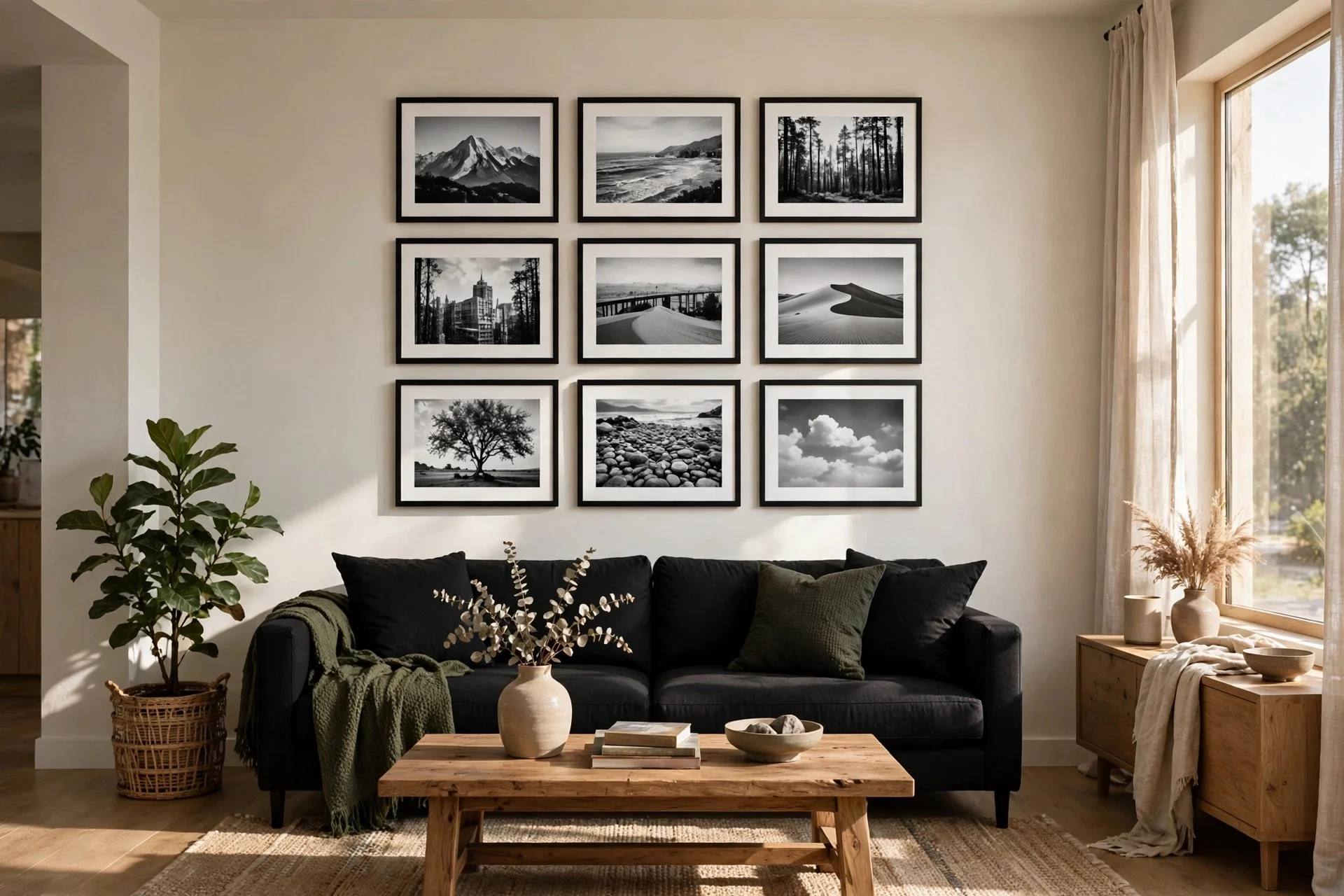
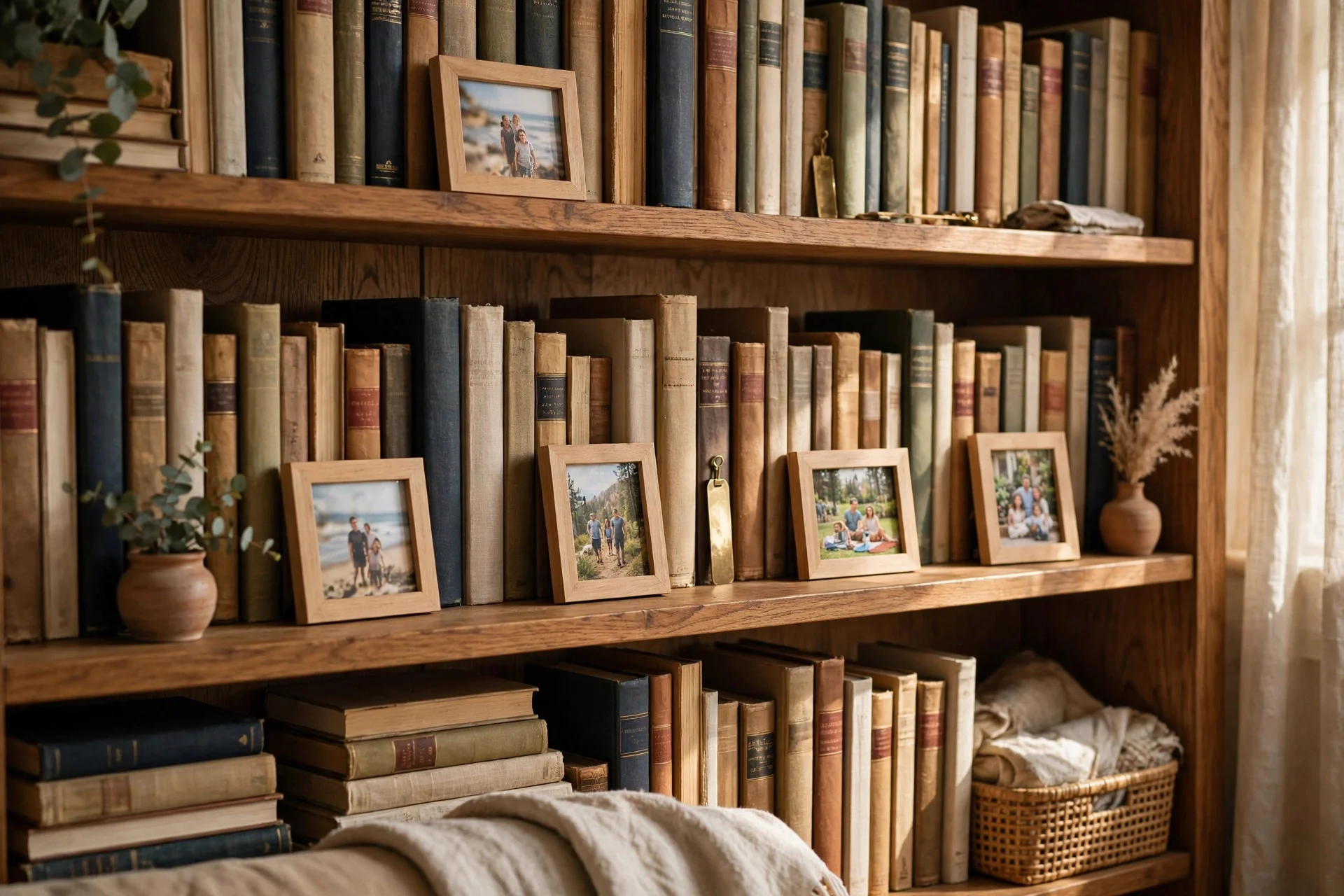
A few small family or travel photos, framed simply, scattered among the books turns the shelf into a personal history wall instead of a generic furniture piece. Keep frames consistent — all black, all wood, all white — so a dozen different photos read as one intentional collection. Lean them rather than hanging them; the casual lean fits the shelf’s relaxed geometry.
Cost: $20–$45 (frames, if you don’t own them) | Difficulty: Easy (an afternoon of printing) | Tip: Print photos in black and white for an instantly cohesive look, even when the subjects and eras are all over the place.
9. Group Objects in Odd Numbers
This one’s a classic design rule because it genuinely works: objects arranged in threes (or fives) look intentional, while pairs look like bookends and singles can look lonely. Vary the heights within the group — tall, medium, short — so the cluster has a little mountain range of its own. Three candles of different heights, three small vases, three framed mini-prints: instant composition.
Cost: $0–$30 (use what you own first) | Difficulty: Easy (pure rearranging) | Tip: Triangle arrangements — two at the back, one in front — look best on a flat shelf because they read as a unit from any angle.
10. Leave Breathing Room
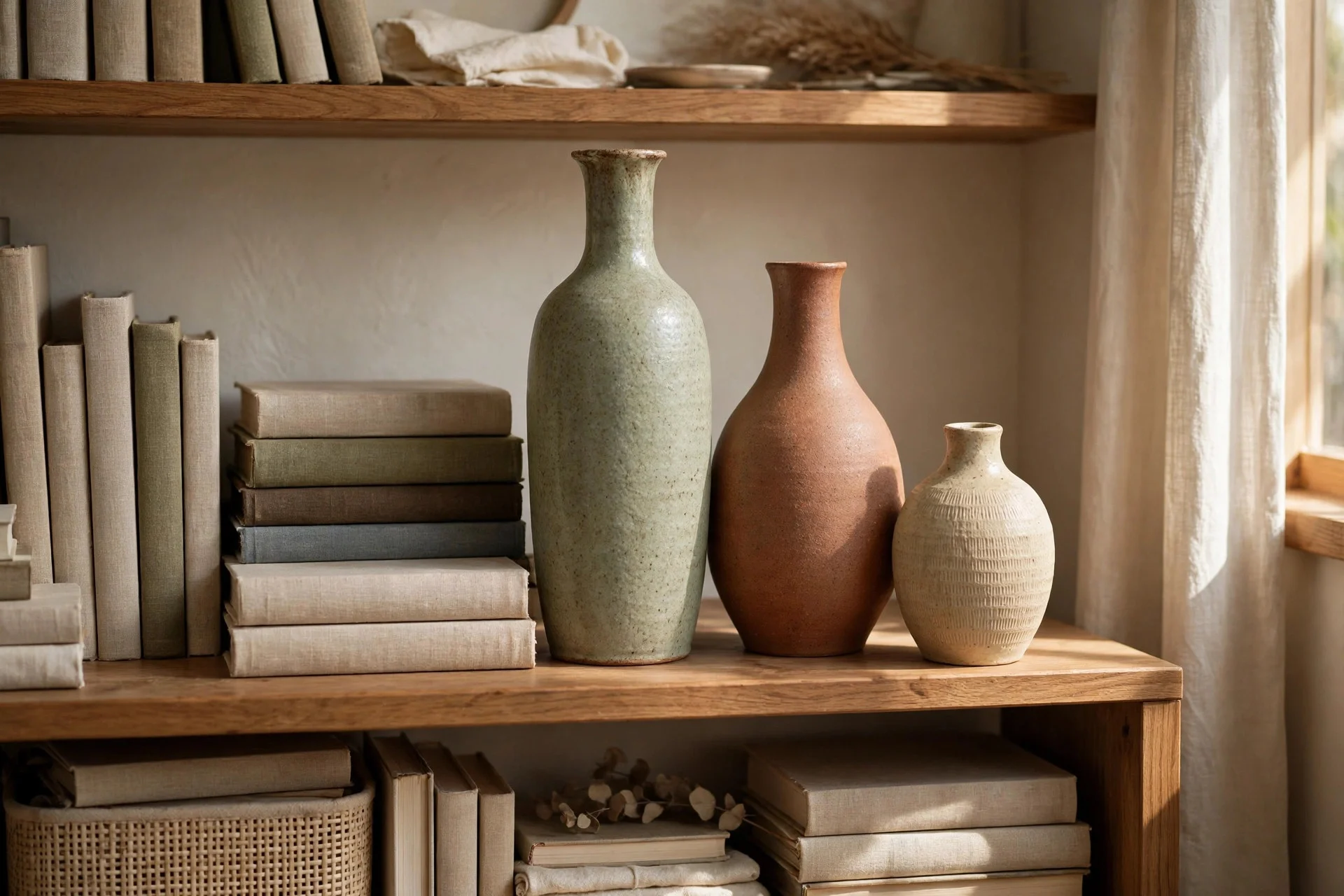
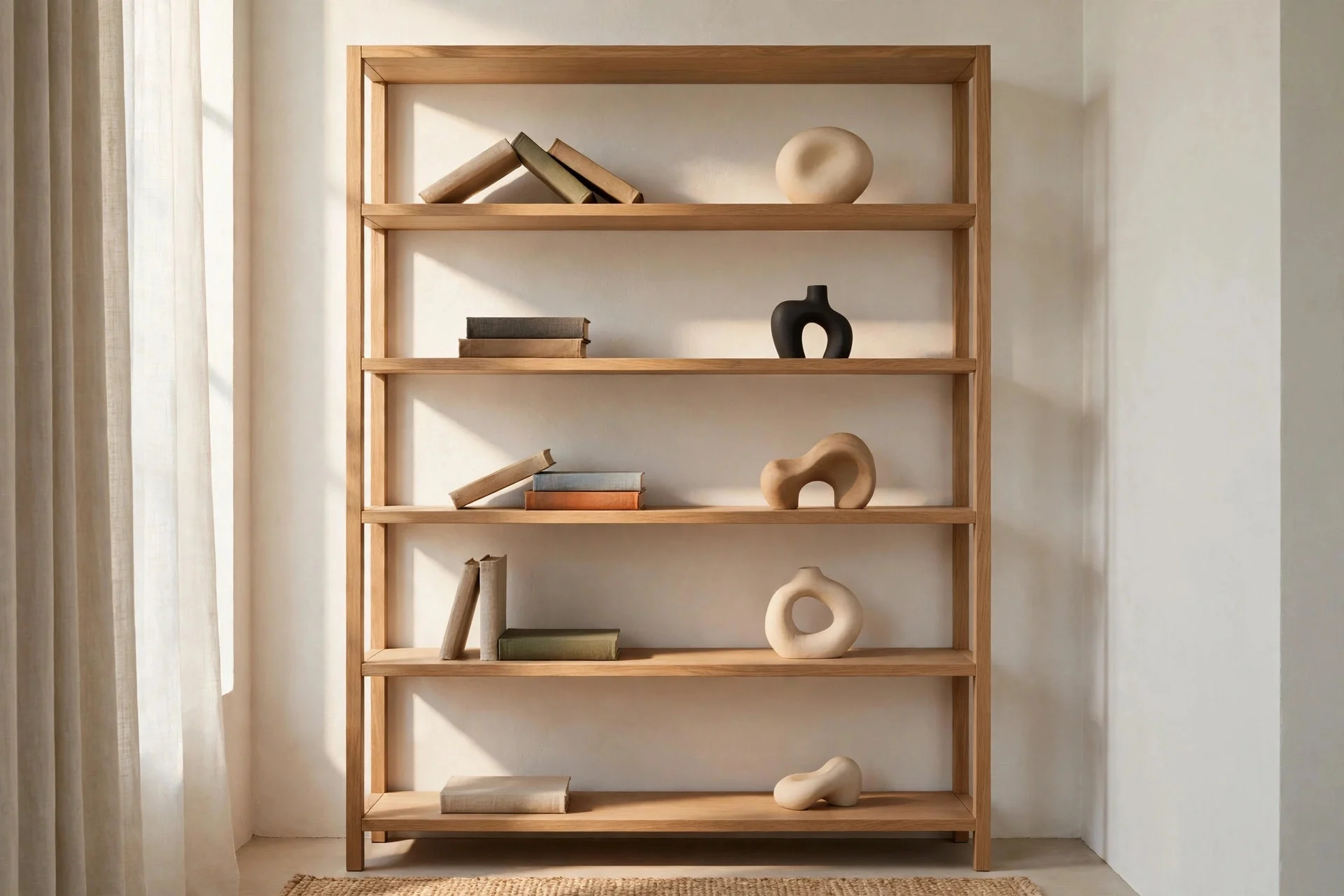
The most common bookshelf mistake isn’t bad taste — it’s over-filling. Every shelf crammed edge to edge with no gaps feels stressful to look at, like visual noise. Leave deliberate empty space: an entire shelf section with just one object, a gap between two book groups, a shelf that’s only half full. Negative space is what lets the eye rest, and it makes everything around it look better.
Cost: $0 (it’s subtraction, not addition) | Difficulty: Easy — but emotionally hard, because it feels like “wasting” space | Tip: Aim to leave roughly 15–20% of your shelf space empty. If a shelf feels done, try removing one more thing and compare.
11. Hide Clutter on the Lower Shelves
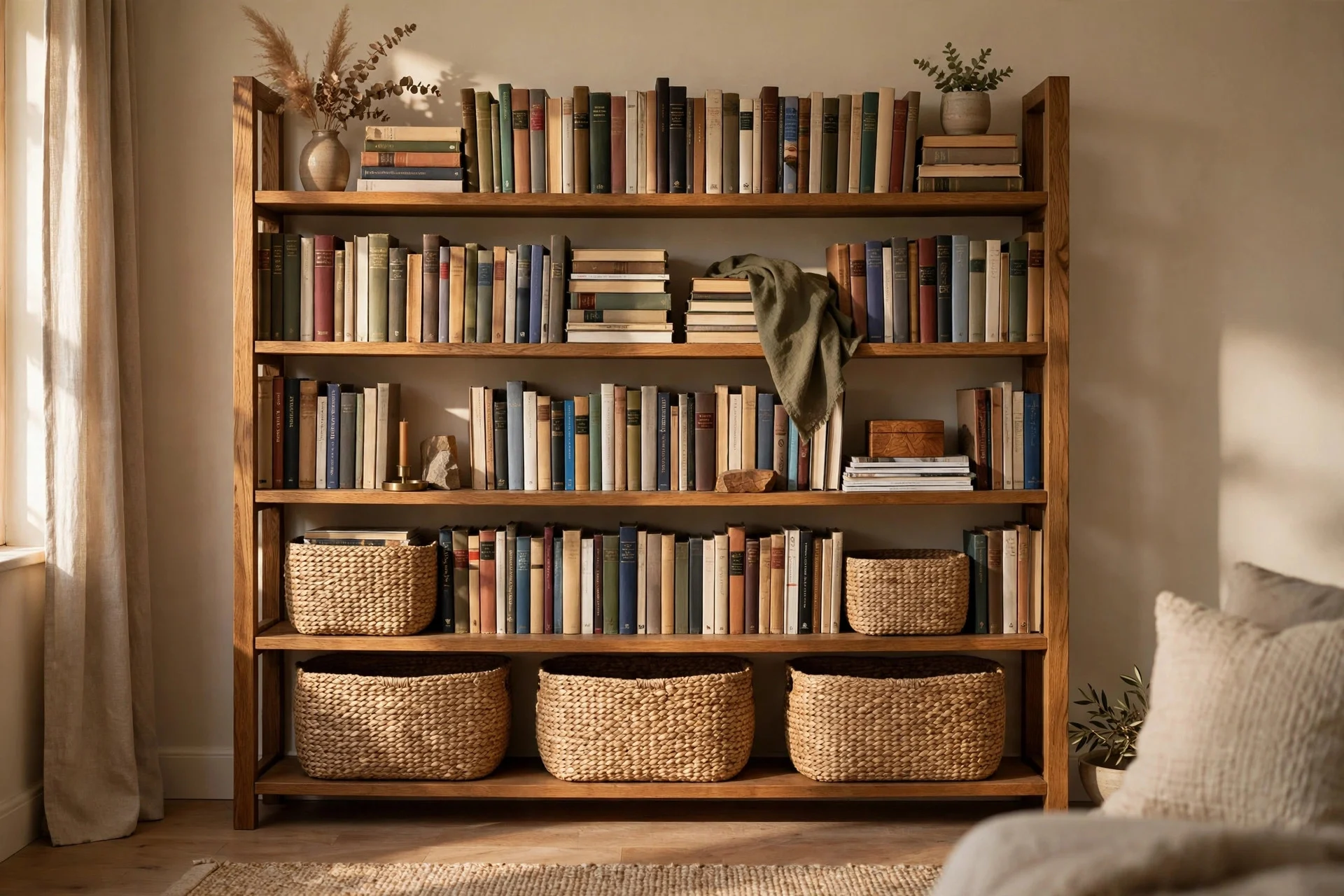
The bottom shelves of a living room bookcase are where remotes, chargers, kids’ odds and ends, and half-finished puzzles go to be seen by everyone. Fix it with baskets, lidded boxes, or fabric cubes that fit the shelf openings — the visual weight grounds the bookcase, and you get hidden storage without a junk drawer. Match the baskets to each other for a calm look, or to your other room textiles for cohesion.
Cost: $25–$60 for 2–3 baskets or boxes | Difficulty: Easy (measure, buy, slide in) | Tip: Measure shelf height before buying — baskets that are an inch too tall for the opening are a surprisingly common (and annoying) mistake. Pair this with a cozy setup like a living room reading corner and the whole book zone starts working together.
12. Light the Shelves
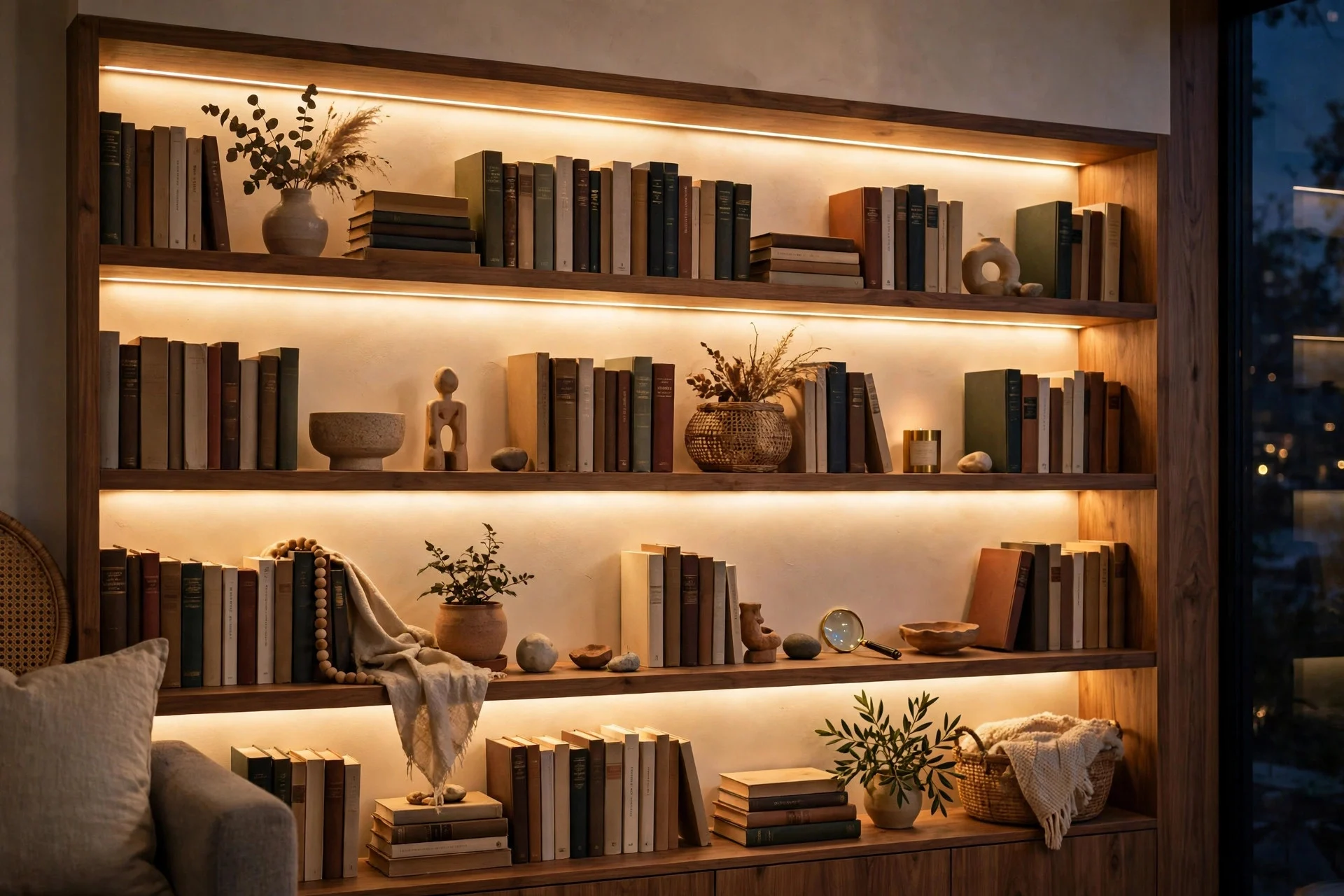
A bookshelf under decent lighting looks like a bookstore display; the same shelf in a dim corner looks like a black box. Battery-powered LED puck lights or peel-and-stick strip lights tucked under each shelf take twenty minutes to install and completely change how the shelf reads after dark — spines glow, objects get little spotlights, and the whole wall feels intentional. Warm white (around 2700K) is the color to buy; cool white makes a living room feel like a warehouse.
Cost: $15–$40 | Difficulty: Easy (peel, stick, done in ~20 minutes) | Tip: Put lights on a cheap remote or timer plug so they switch on automatically at dusk — shelves you never have to think about always look better than shelves you have to remember to light.
Watch out: Cheap stick-on strips fall off warm surfaces over time. Clean the shelf underside with rubbing alcohol first, and buy strips with 3M backing rather than no-name adhesive.
13. Display a Collection, Not Just Books
If you collect anything — ceramics, brass candlesticks, small travel souvenirs, vintage cameras — the bookshelf is its natural home. Dedicate one shelf (or one section) to the collection rather than scattering pieces across the room, because a group of similar objects always reads stronger than one piece alone. Let the books step back on that shelf and give the collection the spotlight.
Cost: $0 (you already own the collection) | Difficulty: Easy (one shelf’s worth of editing) | Tip: Collections look best at odd counts and varying heights, just like idea 9 — three to five pieces is the sweet spot for one shelf section.
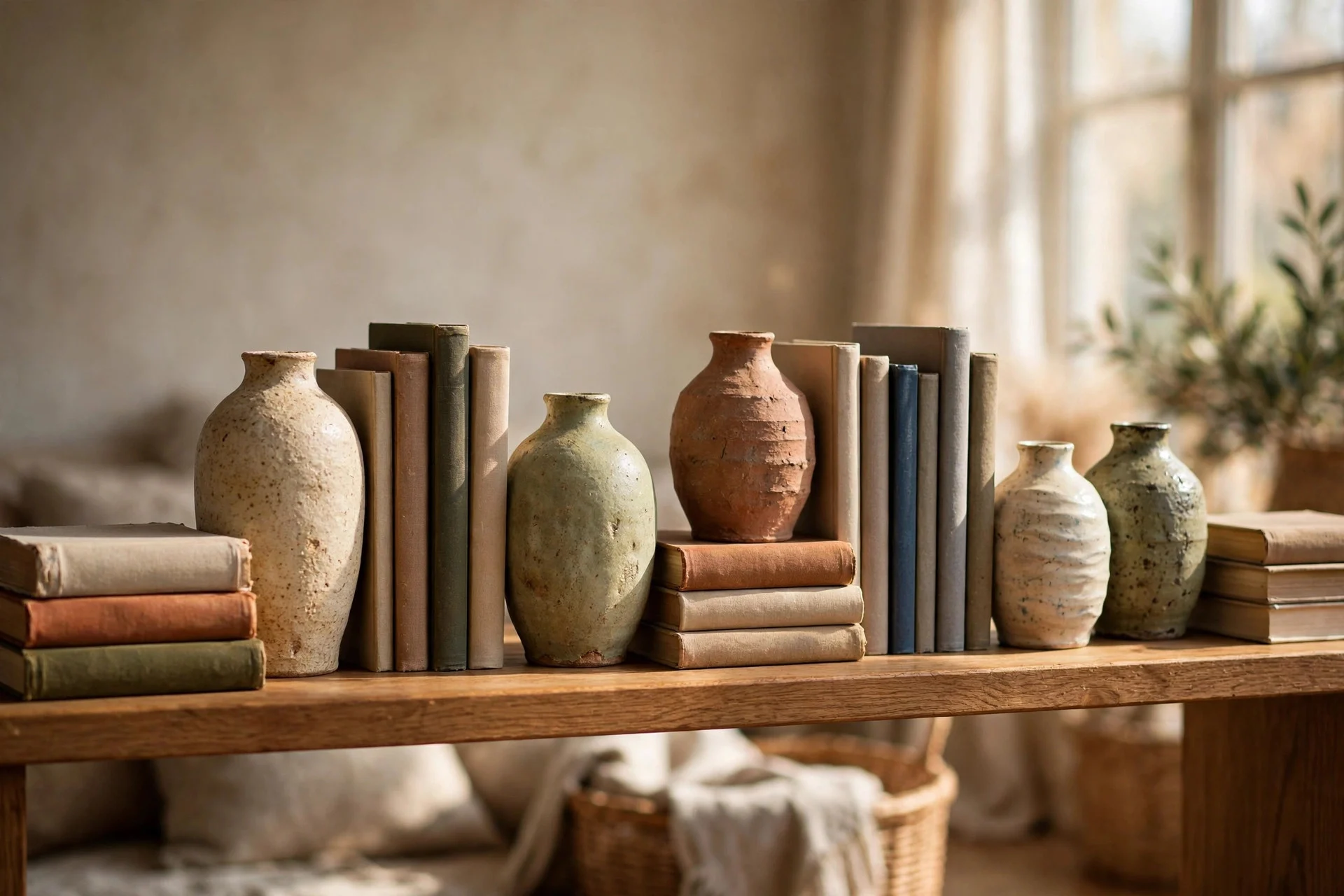
14. Do a Two-Minute Seasonal Swap
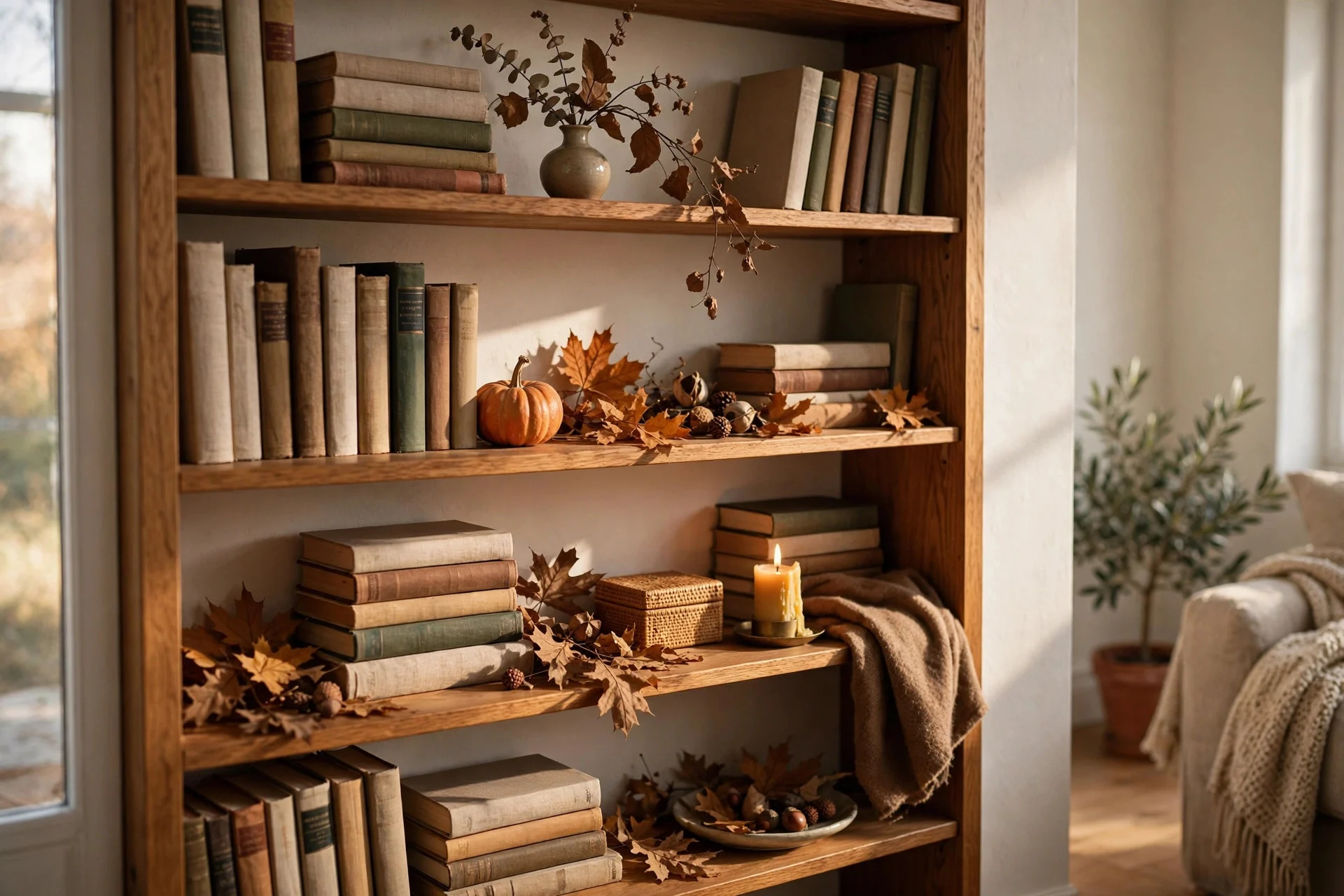
You don’t need to redecorate the whole shelf four times a year. Keep three or four small accents — a tiny pumpkin in fall, a sprig of eucalyptus in winter, a bud vase with fresh flowers in spring — that you swap into the same spots on the shelf. The shelf stays 95% the same, but those little seasonal signals make the whole living room feel current and cared for.
Cost: $5–$15 per season | Difficulty: Easy (2 minutes, four times a year) | Tip: Store the seasonal accents in one labeled box so the swap is genuinely two minutes — hunting through the attic for the fall stuff is what kills this habit.
15. Style a Small Bookcase With the One-Shelf Rule
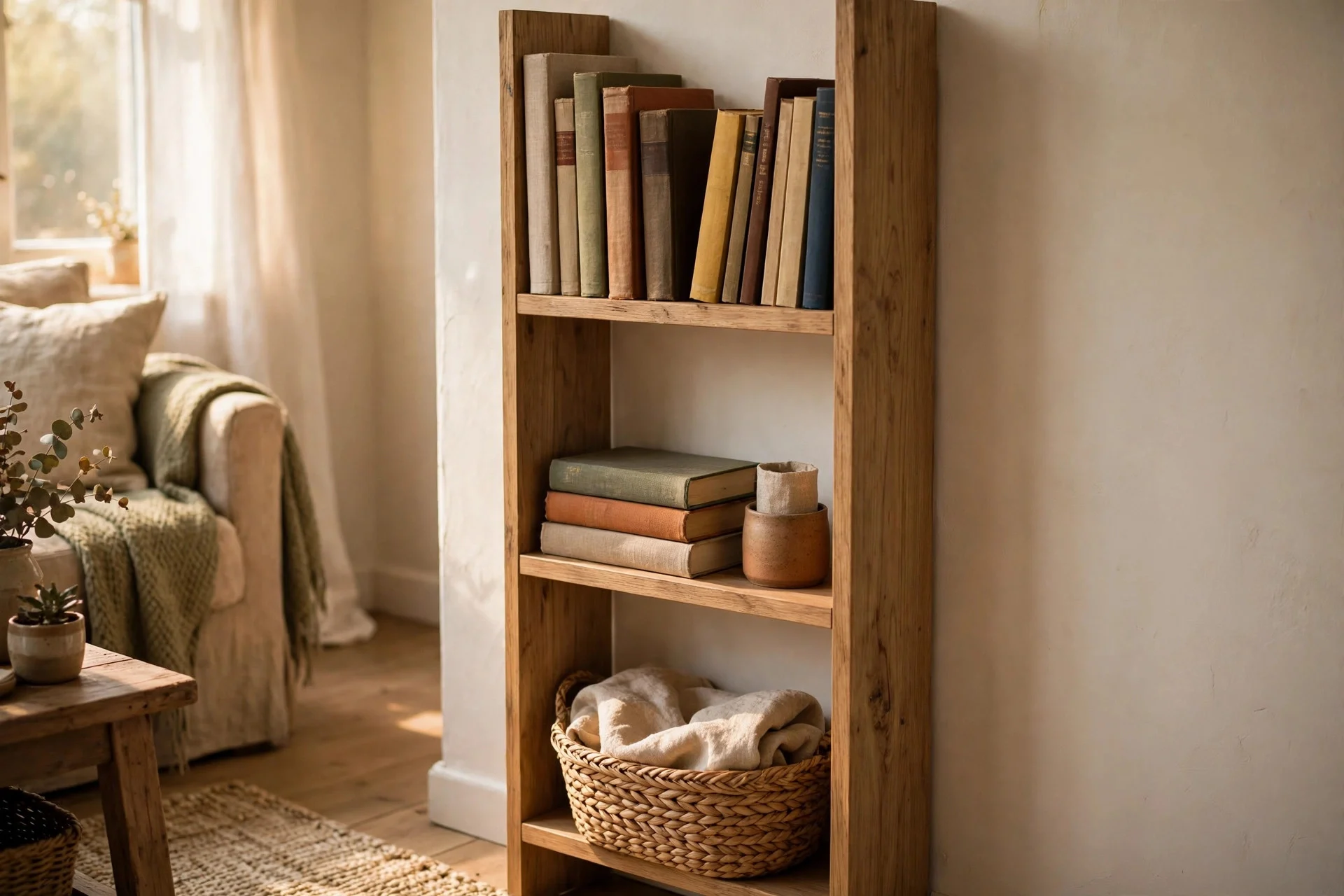
If you don’t have a wall of shelves — just one narrow bookcase in a small living room — don’t try to copy the big-shelf playbook. Treat each shelf as its own mini-display with one job: top shelf for books, middle shelf for one book stack plus one object, bottom shelf for a basket. The one-shelf rule (one purpose per shelf) keeps a small case from turning into visual soup, and it scales to any size piece.
Cost: $0–$20 | Difficulty: Easy (30 minutes of editing) | Tip: In a small room, match the shelf styling to your wall color palette — if you’re mixing patterns elsewhere, keep the shelf calmer so it doesn’t compete. Our guide to mixing patterns in living room decor can help you decide how much visual energy the shelf should carry.
Your Bookshelf, Styled — A Quick Checklist
Work through the shelf in this order and you’ll be done in an afternoon:
- Empty it completely and decide on one mood for the shelf (idea 1).
- Sort your books — upright sections, horizontal stacks, and color blocks where it suits you (ideas 2, 6).
- Add objects in odd-numbered groups with varied textures (ideas 3, 9, 13).
- Layer in art and photos, leaning them casually (ideas 4, 8).
- Leave gaps — about 15–20% of the shelf should stay empty (idea 10).
- Finish the functional bits: baskets on lower shelves, a plant trailing from the top, the top styled like a mantel (ideas 5, 7, 11).
- Light it with warm-white LEDs on a timer (idea 12).
- Schedule the seasonal swap — two minutes, four times a year (idea 14).
A bookshelf that reads well does double duty: it stores your books and anchors your living room’s personality. You don’t need more stuff — just a plan, an afternoon, and the confidence to leave some breathing room.
Quick Answers Before You Start
How many books should actually stay on the shelf?
Fewer than you think. Most shelves look best at about 70–80% full, with the rest of the space given to objects, art, and deliberate gaps. Box up the books you’d never display — duplicates, ugly paperbacks, old textbooks — and keep the ones you’d happily pick up and flip through.
Should I organize my books by color or by subject?
Decide based on how you use the shelf. If you grab books off it regularly, organize by subject or author so you can find things. If the shelf is mostly decorative with books you read elsewhere, color-blocking gives the strongest visual payoff. Many people do a hybrid: color-block the display shelves, subject-sort the shelves they actually browse.
What do I put on the bottom shelf of a bookcase?
Heavier, less-used things. Baskets or lidded boxes for hidden storage are the best choice in a living room, followed by oversized coffee-table books you rarely open. Avoid putting your prettiest objects down low — they’re hard to see and easy to kick.
How do I style shelves if I don’t own many books?
Lean into the 30% that’s objects. Art prints, plants, ceramics, framed photos, and baskets fill a shelf beautifully without a single spine — treat the empty shelf grid as display shelving instead of a library. A bookcase styled with objects alone can look just as intentional as a full library wall.
Can a bookshelf really be the focal point of a living room?
Yes — a well-styled, well-lit bookshelf wall draws the eye as strongly as a fireplace or gallery wall, especially when it spans a full wall or flanks a seating area. The keys are consistency (one mood across all shelves), lighting, and restraint: a focal-point shelf that is overfilled stops being a focal point and becomes clutter again.