Introduction
The mantel is the face of the living room. It’s the first thing your eye finds when you walk in, the backdrop of every holiday photo, and the surface that sets the tone for the whole space. And yet most mantels fall into one of two traps: completely bare out of indecision, or so crowded with small objects that nothing stands out.
What I’ve seen work, across farmhouse living rooms and modern lofts alike, is treating the mantel as a composition with a clear focal point and deliberate breathing room. The shelf is shallow and the fireplace below it is already a strong architectural feature, so the decor needs to complement that strength rather than compete with it. These twenty ideas cover every season and every style, from a single perfect object to a full layered arrangement — and each one respects the reality that a mantel has to live with daily life, not just look good in a photograph.
The Ideas
1. One Oversized Piece of Art
A single large painting, print, or photograph hung above or leaned on the mantel is the boldest and simplest move on this list. It works because scale does the talking: one confident piece at 30 inches or wider gives the whole fireplace wall presence, while the mantel shelf itself can stay nearly empty — maybe just a pair of candlesticks at one end. Negative space is doing half the work here, and that’s the point.
Choose art that relates to the room’s palette without matching it exactly; a landscape with warm tones in a neutral room, or an abstract with one bold color you echo in a throw pillow. Lean it rather than hang it if you like to rotate pieces, and make sure the bottom of the frame overlaps the mantel line slightly so the two read as one composition. Budget: $40–$200 (framing is the cost). Difficulty: Easy.
2. The Asymmetrical Garland
Forget the perfectly centered swag. Draping a garland — greenery, eucalyptus, dried botanicals — so it sweeps from one end of the mantel and trails down the side creates movement that a symmetrical arrangement never achieves. The asymmetry feels modern and relaxed, and it leaves the other end of the mantel open for a tall object that balances the composition.
Fresh garlands last a week or two; good faux garlands last years and have gotten remarkably convincing. If you go faux, bend and fluff the branches so they don’t read as a uniform tube, and mix two types of greenery for realism. Secure the garland with removable hooks or floral wire rather than nails if your mantel is a rental or a painted finish you want to protect. Budget: $25–$80. Difficulty: Easy.
3. Layered Mirrors
Two or three mirrors of different sizes and shapes, layered with the largest at the back, turn the mantel into a light-catching installation. The overlapping reflections add depth that a single mirror can’t, and the arrangement bounces daylight around the room in a way that genuinely brightens the space. Round, arched, and rectangular mirrors can all coexist if the frames share a finish or a mood.
Anchor the biggest mirror centrally or slightly off-center, then tuck smaller ones in front at angles so they catch different views. Keep the glass clean — layered mirrors multiply every smudge. This arrangement shines in rooms that need light and in small living rooms where the reflections create an illusion of space. Budget: $60–$180. Difficulty: Moderate (hanging the anchor).
4. Candlesticks in a Graduated Row
Five candlesticks stepping down in height across the mantel create a rhythm that’s formal without being stiff. Unlike a clustered trio, a graduated row uses the mantel’s full length and reads as an intentional installation from across the room. Brass is the classic choice; black, white ceramic, and natural wood all suit different styles.
Space them evenly and keep the tallest at one end, or center the tallest and step down symmetrically toward both ends for a more traditional feel. Real tapers give the best glow, but on a mantel above a working fireplace, LED tapers are the sane choice — heat rises, and you don’t want wax softening above a fire. Either way, the row looks good lit or unlit. Budget: $30–$100. Difficulty: Easy.
5. Books Plus One Object
A short stack of beautiful books at one end of the mantel, topped with a single small object — a brass magnifying glass, a ceramic bird, a stone sphere — is the stylist’s shorthand for “collected and intelligent.” The books give horizontal weight that balances taller vertical elements elsewhere on the mantel, and the object on top is the period at the end of the sentence.
Use books with covers worth showing, or turn them spine-in for a neutral linen look if the titles clash with your palette. Keep the stack to three or four; more becomes a tower that threatens the composition. This works best as one half of a two-sided arrangement, with a lamp or a tall vase anchoring the other end. Budget: $0–$40 (use books you own). Difficulty: Very easy.
6. A Seasonal Wreath Above the Mantel
Hanging a wreath on the wall or chimney breast above the mantel — rather than on the front door — concentrates your seasonal decorating exactly where the camera points. A full green wreath for winter, a dried-flower wreath for spring, eucalyptus for summer, wheat for fall: one wreath, swapped four times a year, keeps the living room feeling current with almost no effort.
Size matters more than most people expect. A wreath that’s too small floats lost above a wide mantel; aim for a diameter roughly half the mantel’s length. Hang it from a ribbon looped over a removable hook, or lean a large wreath directly on the mantel shelf against the wall. Store off-season wreaths in a flat box so they keep their shape. Budget: $25–$70 per wreath. Difficulty: Easy.
7. The Minimalist Single Object
One remarkable object, centered, with the rest of the mantel empty: a sculptural vase, a piece of driftwood, a vintage brass vessel. This is the most confident move on the list and the hardest to pull off, because there’s nowhere to hide — the object has to be genuinely interesting from every angle and at every distance.
It works best in modern or minimalist rooms where the architecture already carries weight, and on mantels with a beautiful material — marble, reclaimed wood, blackened steel — that deserves the spotlight. The object should be large enough to hold the space: at least 12 to 15 inches tall on a standard mantel. Resist the urge to add “just one small thing” beside it; the emptiness is the design. Budget: $40–$150. Difficulty: Easy — but demands taste.
8. Sconces Flanking the Fireplace
Wall sconces mounted on either side of the mantel add the one thing mantel decor usually lacks: real light at picture height. They frame the fireplace like jewelry, wash the wall with warm light in the evening, and free the mantel surface from having to carry lamps. Hardwired sconces are the polished answer; plug-in or battery sconces with cord covers are the renter-friendly one.
Choose sconces that match the room’s metal finishes and keep the shade or glow warm — 2700K or lower. Mount them so the light source sits roughly at the mantel’s height or slightly above, creating a balanced triangle with the fireplace below. Once they’re up, the mantel styling can be simpler, because the light itself becomes part of the composition. Budget: $60–$200 for a pair. Difficulty: Moderate (mounting).
9. Dried Botanicals in Tall Vessels
Pampas grass, dried palm spears, bunny tails, preserved eucalyptus — tall dried stems in a floor-scale or mantel-scale vase bring height, texture, and warmth with zero maintenance. On a mantel, one dramatic arrangement at one end balances lower objects across the rest of the shelf, and the neutral tones suit almost any palette.
The vase needs real weight and a wide base; dried arrangements are top-heavy and mantels get bumped. Keep dried botanicals away from the firebox opening — they’re flammable, and this is a genuine safety note, not a styling one. Replace stems when they start shedding excessively, usually once a year. A light shake outdoors every few months keeps dust from dulling them. Budget: $30–$90. Difficulty: Easy.
10. A Gallery Ledge Above the Mantel
Mounting a narrow picture ledge on the wall above the mantel gives you a rotating art display without a single new nail hole per change. Lean framed prints, small canvases, and even decorative plates along the ledge, overlapping them slightly for that collected-gallery feel. When you want a refresh, you just swap the frames.
Two ledges stacked — one long, one short — create even more depth. Keep the frames in a loose color family so the overlap reads as curated rather than chaotic. This is the ideal solution for people who buy art faster than they commit to hanging it, and for seasonal swaps that would otherwise require rehanging. Budget: $30–$80 for ledges. Difficulty: Moderate (mounting).
11. Firewood as Decor
If you have a wood-burning fireplace, the fuel itself can be the styling. A neat stack of split logs in a black metal holder or a woven basket beside the hearth, or a small curated pile on the mantel’s end, brings in organic texture and an honest, cabin-like warmth that no purchased object quite replicates.
Keep it tidy — bark shedding everywhere ruins the effect — and choose logs with interesting character: birch with its white bark, or oak with deep fissures. A small stack on the mantel itself should be minimal (three to five pieces, artfully arranged) to avoid looking like storage overflow. This only suits working or convincingly rustic fireplaces; beside a sleek gas insert, firewood reads as costume. Budget: $20–$60 for a holder. Difficulty: Easy.
12. Holiday Stockings, Done Right
Stockings are the mantel’s annual cameo, and the difference between charming and cluttered is all in the execution. Hang them from proper stocking holders weighted for the mantel’s depth — not from nails or tape — spaced evenly with room for each stocking to hang freely. Matching or coordinated stockings in the room’s palette look far better than a random assortment.
Limit the mantel to stockings plus one simple garland during the holidays; the urge to add every seasonal object you own is what makes December mantels feel chaotic. Personalize with embroidered names or tags for a custom feel. After the season, the holders store flat and the mantel returns to its year-round arrangement in minutes. Budget: $30–$100 for holders and stockings. Difficulty: Easy.
13. Lanterns With LED Candles
A pair of lanterns — black metal, weathered wood, or glass — with warm LED candles inside gives the mantel a cozy, fireside-adjacent glow even when the fireplace isn’t lit. Lanterns add structure and height, and the enclosed flame (real or LED) is safe on a shelf above a heat source where open tapers would be a bad idea.
Vary the lantern heights for a natural look, and use LED candles with a realistic flicker and a timer function so they light themselves every evening. Real candles in lanterns are fine too, but never leave them burning unattended and keep them clear of garlands and dried botanicals. Group odd numbers — three lanterns of graduated size is the sweet spot. Budget: $30–$90. Difficulty: Easy.
14. Bold Paint on the Wall Above
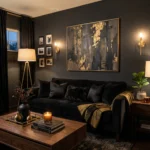
Sometimes the best mantel decor isn’t on the mantel at all — it’s the wall behind it. Painting the chimney breast or the wall above the mantel in a deep, saturated color (charcoal, forest green, navy, terracotta) makes even a simply styled mantel look dramatic, because the objects pop against the dark backdrop. White ceramics on a charcoal wall, brass on forest green — the contrast does the styling work for you.
This is the highest-impact, lowest-cost transformation on the list if you’re willing to paint. Sample the color in large swatches first; deep colors shift dramatically between daylight and lamplight. Keep the mantel objects simple and let the wall be the star — a bold wall with a crowded mantel is visual noise. Budget: $30–$60 (paint). Difficulty: Moderate.
15. Vintage and Antique Finds
A mantel is the perfect stage for the strange and storied: an antique clock that still ticks, brass candlesticks from a flea market, a carved wooden box, a vintage camera. These objects carry patina and history that new decor can’t fake, and the mantel’s prominence means they’ll actually be noticed and asked about.
The rule is one or two statement vintage pieces, not a shelf of curiosities. Give each piece space and pair it with something clean and modern — a vintage clock beside a simple white vase — so the arrangement feels curated rather than inherited-by-accident. Check that old clocks and objects are stable on a narrow shelf; museum putty under the base is cheap insurance against bumps. Budget: $15–$150 (thrift luck). Difficulty: Moderate — requires hunting.
16. Mixed Textures, Neutral Palette
An all-neutral mantel in mixed textures — linen, raw wood, stone, ceramic, dried grasses — proves that you don’t need color to create interest. The eye reads the differences in surface the way it would read color, and the result is calm, sophisticated, and remarkably forgiving of dust and fading. This is the style that photographs beautifully and lives even better.
The key is genuine variety: pair rough with smooth, matte with a single glossy accent, soft textile with hard stone. Five objects in the same beige ceramic would be boring; five beige objects in five different materials is a composition. This approach suits Scandinavian, Japandi, and modern farmhouse rooms especially well. Budget: $40–$120. Difficulty: Easy.
17. Personal Photos and Heirlooms
The mantel has been the family photo shelf for generations, and there’s no reason to abandon the tradition — just edit it. Three to five framed photos in matching or coordinated frames, mixed with one heirloom object (a grandmother’s vase, a father’s medal in a shadow box), make the mantel the room’s emotional center. Guests gravitate to it; it’s human nature.
Keep the frames consistent so the photos read as a collection, and update the photos every year or two — a mantel frozen in 2015 tells its own story, but not the one you want. Mix one or two non-photo items among the frames to keep it from feeling like a shrine. And keep heirloom objects out of direct sun if the mantel gets afternoon light; fading is irreversible. Budget: $20–$70. Difficulty: Easy.
18. A Statement Clock
A large, beautiful clock centered above or on the mantel is both decor and function — the traditional anchor of the fireplace wall, and still one of the best. An oversized round clock, a vintage mantel clock, or a modern minimalist design all work; what matters is that it’s big enough to hold the wall. A clock under 18 inches across will look timid above a standard fireplace.
If it ticks audibly, consider whether you want that sound in your main living space — many people love it, some find it maddening. Battery quartz movements are silent and reliable. Center the clock and flank the mantel below with low, symmetrical objects (matching vases, candle pairs) so the clock remains the undisputed focal point. Budget: $50–$150. Difficulty: Easy.
19. Trailing Plants on the Mantel
A pothos or philodendron in a pot at one end of the mantel, allowed to trail down the side of the fireplace, softens all that masonry and wood with living green. The vertical drape of the vines contrasts beautifully with the horizontal line of the shelf, and the plant draws the eye down to the firebox — exactly where you want attention in winter.
Mantels above working fireplaces get warm and dry, so choose a tough plant and water it a little more often than you would elsewhere. A small saucer or a pot with a sealed base protects the mantel finish. If the heat is too much for real plants, a high-quality faux trailing plant is an honest substitute at mantel height — nobody inspects it closely. Budget: $15–$45. Difficulty: Easy.
20. The Curated Seasonal Refresh
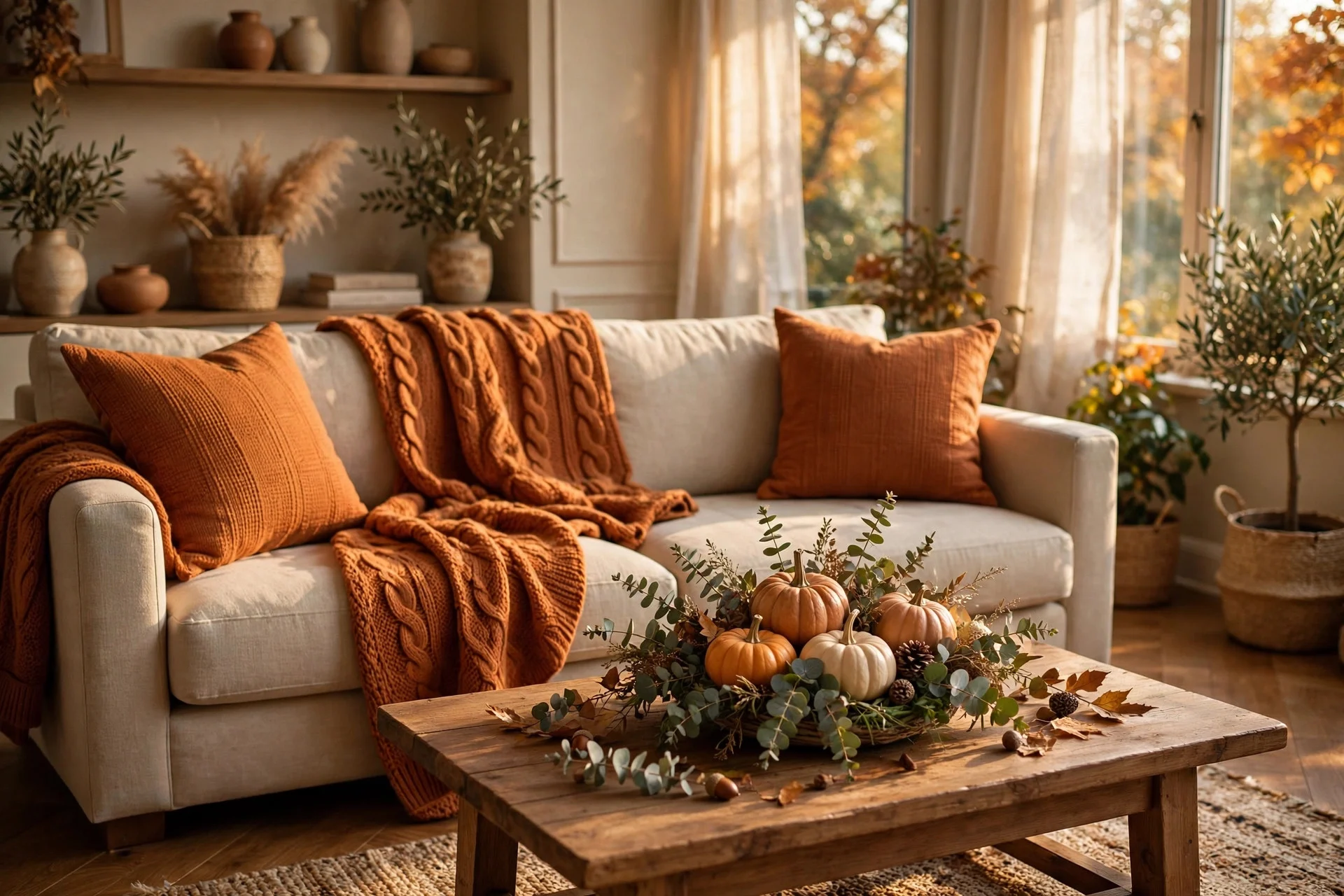
The final idea is a system, not a look: keep a core year-round mantel arrangement — your art or mirror, your candlesticks, your one sculptural object — and change only a small seasonal layer four times a year. Spring gets fresh stems, summer gets a bowl of shells or a light textile, fall gets dried botanicals and a pumpkin or two, winter gets evergreen and candlelight.
Because the backbone never changes, each refresh takes twenty minutes and a single storage box of seasonal pieces. The room feels alive and current without the exhausting full-redecorate cycle. Photograph your favorite version of each season so you can recreate it next year without reinventing it. This is how people with beautiful mantels actually maintain them — not by restyling from scratch, but by evolving. Budget: $10–$40 per season. Difficulty: Easy.
Quick Comparison
| # | Idea | Style Vibe | Budget | Difficulty |
|---|---|---|---|---|
| 1 | Oversized art | Bold, gallery | $40–$200 | Easy |
| 2 | Asymmetrical garland | Modern, relaxed | $25–$80 | Easy |
| 3 | Layered mirrors | Bright, airy | $60–$180 | Moderate |
| 4 | Graduated candlesticks | Classic, formal | $30–$100 | Easy |
| 5 | Books + one object | Collected, smart | $0–$40 | Very easy |
| 6 | Seasonal wreath | Festive, fresh | $25–$70 | Easy |
| 7 | Single statement object | Minimalist, confident | $40–$150 | Easy |
| 8 | Flanking sconces | Polished, warm | $60–$200 | Moderate |
| 9 | Dried botanicals | Organic, textural | $30–$90 | Easy |
| 10 | Gallery ledge | Flexible, curated | $30–$80 | Moderate |
| 11 | Firewood decor | Rustic, honest | $20–$60 | Easy |
| 12 | Holiday stockings | Traditional, cozy | $30–$100 | Easy |
| 13 | Lanterns + LED candles | Glowing, safe | $30–$90 | Easy |
| 14 | Bold painted wall | Dramatic, high-impact | $30–$60 | Moderate |
| 15 | Vintage finds | Storied, unique | $15–$150 | Moderate |
| 16 | Mixed neutrals | Calm, sophisticated | $40–$120 | Easy |
| 17 | Photos + heirlooms | Personal, warm | $20–$70 | Easy |
| 18 | Statement clock | Traditional, functional | $50–$150 | Easy |
| 19 | Trailing plants | Living, soft | $15–$45 | Easy |
| 20 | Seasonal refresh system | Evolving, sustainable | $10–$40/season | Easy |
How to Choose the Right Mantel Style for Your Room
Start with the fireplace itself, because the mantel decor should answer the architecture, not fight it. A grand stone fireplace with a thick timber mantel wants substantial, rustic-leaning objects — large-scale art, heavy candlesticks, firewood — while a sleek modern linear fireplace with a floating shelf wants restraint: one sculptural object, a single garland line, breathing room. Mismatching the decor’s visual weight to the fireplace’s visual weight is the most common reason a mantel feels “off” even when every individual object is nice.
Next, be honest about your tolerance for change. If you love redecorating, build around flexible systems — the gallery ledge, the seasonal refresh, leaned art you can swap. If you want to style it once and forget it, invest in permanent-feeling choices: sconces, a great mirror, a statement clock. There’s no wrong answer, but a high-maintenance look in a low-maintenance household always ends as clutter.
Finally, consider the room’s sightlines. The mantel is usually visible from the entryway and often from the kitchen, so its colors and mood should harmonize with what surrounds it. You don’t need everything to match — a bold painted chimney breast can be the room’s one dramatic moment — but the mantel shouldn’t feel like it belongs to a different house. Step into the doorway, look at the whole room, and ask whether the mantel feels like the natural conclusion of the space. If it does, you’re done.
Frequently Asked Questions
How many items should be on a mantel? Fewer than you think. For a standard 60-inch mantel, three to five groupings is the sweet spot — and a grouping can be a single object. The mantel is a stage, not a shelf; every item should be visible and distinct from across the room. When in doubt, remove one thing and live with it for a day.
What’s the rule for hanging art above a mantel? Hang or lean the bottom of the frame 4 to 8 inches above the mantel shelf so the art and the shelf read as one composition. The art should be roughly two-thirds the width of the mantel — wider feels grand, narrower feels lost. And never hang anything so high it disconnects from the fireplace below.
Can I decorate a mantel above a working fireplace? Yes, with heat awareness. Keep flammable items — dried botanicals, garlands, paper, fabric — at least 12 inches from the firebox opening and off to the sides, never draped across the front. Use LED candles instead of real ones above an active fire, and choose decor materials that won’t warp or melt: ceramic, metal, stone, and glass are safest.
How do I decorate a mantel with a TV above it? This is the modern dilemma. Keep mantel decor low and minimal so it doesn’t compete with the screen — low bowls, a short garland line, small objects at the ends. Mount the TV as close to the mantel as comfortable and consider framing it like art. Honestly, the best TV-above-mantel styling is restraint: the screen is already the focal point.
What should I put on a mantel in a small living room? Scale down but don’t strip bare. A medium mirror to bounce light, one low arrangement at one end, and breathing room everywhere else. Avoid tall objects that visually lower the ceiling, and keep the palette light. A small room’s mantel should add air, not mass.
How often should I change my mantel decor? The core arrangement can stay for years; the seasonal layer changes four times a year if you follow the refresh system. Beyond that, change it when you stop noticing it. A mantel you’ve gone blind to isn’t decorating anymore — even swapping the two ends’ positions can make you see it fresh.
What’s the biggest mantel decorating mistake? Symmetrical clutter: matching pairs of everything, lined up like bookends, with no focal point. Symmetry isn’t the enemy — a centered clock with flanking candles is classic — but symmetry without hierarchy looks like a store display. Every mantel needs one thing that’s clearly the star.
Are fake plants okay on a mantel? Above a working fireplace, honestly, yes — heat and dryness kill real plants fast up there, and a good faux trailing plant at mantel height fools everyone. Elsewhere on a cool mantel, real plants are better and easy to maintain. Match the choice to the conditions, not to a rule.
Conclusion
A great mantel isn’t about having the most objects or the most expensive ones — it’s about one clear focal point, breathing room, and a style that answers the fireplace below it. Pick the idea from this list that fits your room’s architecture and your tolerance for change, style it once with intention, and let the seasonal layer keep it feeling alive. The mantel is the face of your living room; give it an expression worth looking at.