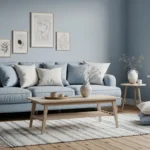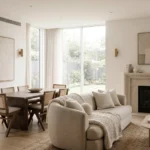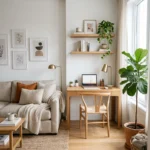
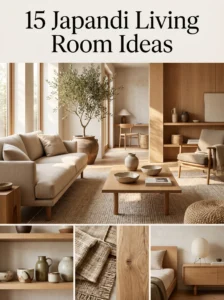
A lot of living rooms look “minimal” online until you actually try living in them. The beige couch is beautiful, the coffee table has one carefully placed ceramic bowl, and somehow there are zero charging cables, blankets, or random remote controls in sight. Real life usually tells a different story.
That’s exactly why Japandi design keeps getting more popular in 2026. It doesn’t just focus on making a room look clean — it focuses on making a room feel calm, functional, and easy to live in. The style blends Japanese simplicity with Scandinavian comfort, which means you get the warmth people often miss in ultra-modern interiors and the structure missing from cozy-but-cluttered spaces.
The biggest mistake people make with Japandi living rooms is assuming the style is just “white walls and wood furniture.” In reality, the best Japandi spaces are carefully balanced. Texture matters more than decoration. Furniture placement matters more than buying trendy pieces. And empty space is treated almost like part of the design itself.
In this guide, you’ll find 15 practical Japandi living room ideas that actually work in real homes — whether you live in a small apartment, a family house, or a modern condo. These ideas focus on materials, layout, lighting, color choices, and everyday functionality so your space feels intentional instead of unfinished.
1. Choose Low-Profile Furniture for a Grounded Look
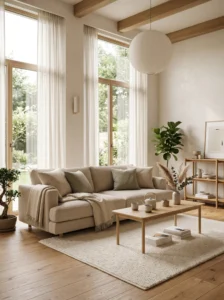
One of the easiest ways to make a living room instantly feel more Japandi is lowering the visual height of the furniture. High-backed sofas and bulky recliners tend to dominate a room, while low-profile pieces create a calmer and more open atmosphere.
This works because Japandi interiors prioritize visual breathing room. Furniture that sits closer to the floor naturally makes ceilings feel taller and spaces feel less crowded. It also creates a more relaxed, grounded feeling that fits the quiet simplicity of Japanese-inspired interiors.
This idea works especially well in smaller living rooms or apartments where oversized furniture can make everything feel compressed. A low sofa paired with slim wooden legs or a platform-style coffee table helps maintain openness without sacrificing comfort.
Stick to neutral fabrics like oatmeal, warm gray, sand, or muted olive. Linen blends and textured cotton fabrics work better than shiny synthetic materials. Avoid oversized sectional sofas with bulky armrests unless your room is very large.
In daily life, low-profile furniture subtly changes how a room feels. It encourages slower movement, more intentional lounging, and a calmer overall mood. Even movie nights somehow feel cozier when the room doesn’t feel visually heavy.
2. Layer Warm Wood Tones Instead of Matching Everything
A common mistake in minimalist spaces is trying to make every wood finish identical. Ironically, that often makes the room feel flat and overly staged.
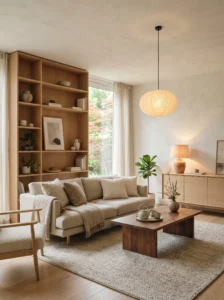
Japandi design works better when wood tones feel layered and natural. Mixing light oak, walnut, ash, or medium-toned woods creates depth without adding clutter. The room feels collected rather than showroom-perfect.
This approach works beautifully in both large and small spaces because wood adds warmth without visual noise. In open-plan living rooms, layered wood tones can also help define zones naturally.
A practical trick is sticking to two or three wood tones maximum. For example, pair a light oak coffee table with walnut shelving and warm beige flooring. Keep undertones consistent — either warm or cool — so the mix feels intentional.
Natural finishes matter too. Matte or lightly sealed wood surfaces fit Japandi interiors much better than glossy finishes. Avoid heavily distressed farmhouse-style woods, which can clash with the clean simplicity of the aesthetic.
The biggest benefit of layered wood is how livable the room feels. Spaces with natural variation tend to age better and hide small imperfections more gracefully. A few scratches or signs of wear often make Japandi interiors look even better over time.
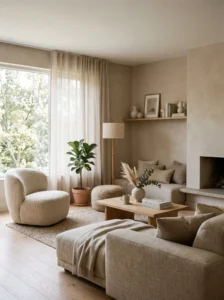
3. Use Soft Neutral Colors With Depth
Minimal doesn’t have to mean plain white everything. In fact, many all-white living rooms end up feeling cold and exhausting rather than peaceful.
Japandi interiors usually rely on soft neutrals with subtle depth. Think warm beige, mushroom, taupe, clay, muted sage, dusty charcoal, or creamy off-white. These tones create visual softness while still keeping the room uncluttered.
This color approach works especially well in spaces with limited natural light because warmer neutrals feel welcoming rather than sterile. If your living room already gets plenty of sunlight, deeper earthy shades can add balance and prevent the space from feeling washed out.
One practical tip is using tonal layering instead of strong contrast. Instead of black-and-white combinations, try layering warm gray with oatmeal and soft brown. The room will feel calmer and more cohesive.
Texture becomes extremely important with neutral palettes. A linen curtain, woven rug, boucle chair, or matte ceramic vase adds dimension without requiring bold color.
The real advantage of soft neutrals is long-term flexibility. You won’t feel pressured to redecorate every year because the palette stays timeless. Plus, everyday items like books, blankets, and plants naturally blend into the room instead of looking like visual clutter.
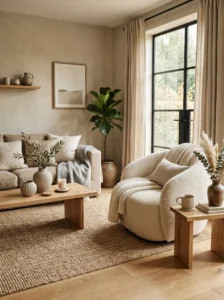
4. Add Texture Instead of Excess Decor
A living room without texture often feels unfinished, even when it’s technically well-designed. Japandi interiors solve this by focusing less on decoration and more on tactile materials.
This idea works because texture adds warmth and visual interest without creating clutter. Instead of filling shelves with random accessories, Japandi spaces rely on woven fabrics, raw wood, linen, ceramic, stone, and handmade elements to create character.
This approach is ideal for people who dislike overly decorated homes but still want their space to feel inviting. It works particularly well in modern apartments where architecture can sometimes feel cold or flat.
A simple way to apply this is mixing three or four natural textures throughout the room. For example, combine a linen sofa, woven rug, oak table, ceramic lamp, and soft wool throw.
Avoid shiny plastics, overly reflective finishes, or heavily ornate accessories. Japandi style looks best when materials feel slightly imperfect and natural.
Texture also changes how the room feels emotionally. Soft fabrics absorb sound, woven pieces add warmth, and matte finishes reduce visual harshness. The result is a living room that feels quieter and easier to relax in — something many modern interiors struggle to achieve.
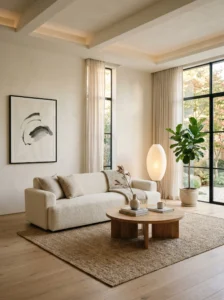
5. Keep Open Space Intentionally Empty
Many people feel uncomfortable leaving empty areas in a room. There’s a temptation to fill every corner with shelves, plants, side tables, or decorative objects.
Japandi design takes the opposite approach. Empty space is treated as part of the room, not as something missing. This creates visual calm and allows furniture and materials to stand out naturally.
This works especially well in smaller homes because overcrowding instantly makes compact rooms feel stressful. Even removing one unnecessary chair or oversized cabinet can dramatically improve flow.
A practical guideline is giving each major furniture piece enough breathing room. Avoid pushing too many items against every wall. Let certain surfaces stay partially clear instead of constantly styled.
Negative space also improves functionality. It’s easier to clean, easier to move around, and less mentally overwhelming after a long day. People often underestimate how much visual clutter affects stress levels.
In real life, intentionally empty space tends to make homes feel more luxurious. Not because the room is expensive, but because it feels thoughtful and unforced rather than crowded with impulse purchases.
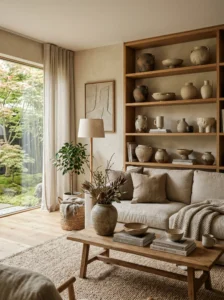
6. Incorporate Handmade Ceramics and Decor
Perfectly manufactured decor can sometimes make minimalist spaces feel cold. Handmade pieces bring back warmth and individuality.
Japandi interiors often include handcrafted ceramics, uneven pottery, textured bowls, or artisanal decor because imperfections add personality without disrupting simplicity. The Japanese concept of appreciating imperfection fits naturally here.
This idea works well on coffee tables, floating shelves, media consoles, or sideboards. A few carefully chosen handmade pieces often look better than dozens of trendy accessories.
Stick to earthy tones like sand, charcoal, cream, clay, or muted green. Matte finishes usually work better than glossy surfaces in Japandi interiors.
One mistake to avoid is overcrowding surfaces. Handmade decor has more impact when each piece has room to breathe. A single ceramic vase with a branch arrangement can feel far more sophisticated than an entire shelf of small decorative objects.
These details subtly improve daily living because the room feels more personal and grounded. Handmade pieces often age beautifully too, developing character rather than looking outdated after one season.
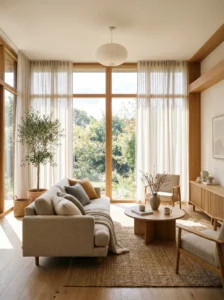
7. Prioritize Natural Light Over Heavy Window Treatments
Nothing fights against Japandi design faster than heavy blackout curtains covering beautiful natural light all day.
Japandi interiors depend heavily on soft, diffused light because it highlights textures, wood tones, and neutral palettes more naturally. Sunlight becomes part of the design itself.
This works in almost any living room, but it’s especially transformative in smaller spaces that feel dark or cramped. Even modest natural light can make neutral interiors feel significantly more open.
Choose lightweight linen curtains, woven blinds, or soft sheer panels instead of thick velvet drapes. If privacy matters, layering sheer curtains with simple roller shades works well.
Furniture placement matters too. Avoid blocking windows with oversized cabinets or tall shelving units. Keeping the area near windows visually open improves brightness throughout the room.
The practical advantage is obvious during everyday use. Rooms with natural light generally feel cleaner, calmer, and more energizing. Even morning coffee feels better when the space feels connected to daylight instead of artificially lit all day.
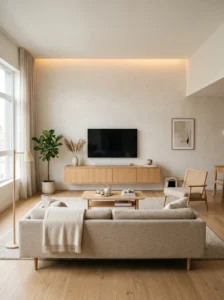
8. Use Floating Furniture for an Airier Layout
Heavy furniture sitting directly on the floor can make minimalist rooms feel surprisingly dense. Japandi interiors often solve this with furniture that appears lighter or slightly elevated.
Floating media units, open-leg sofas, wall-mounted shelves, and raised cabinets create visual airflow underneath furniture. That small detail makes rooms feel larger and cleaner.
This works particularly well in compact living rooms where floor visibility matters. The more visible flooring you can see, the larger the room tends to appear.
Choose slim wooden legs, wall-mounted storage, or furniture with open bases. Avoid excessively chunky designs unless balanced by substantial empty space around them.
Practical maintenance improves too. Cleaning underneath furniture becomes easier, and robotic vacuums actually stand a chance of functioning properly instead of getting trapped every ten minutes.
From a design perspective, floating furniture prevents minimalist spaces from feeling heavy or boxy. The room feels visually lighter even when the furniture itself remains comfortable and functional.
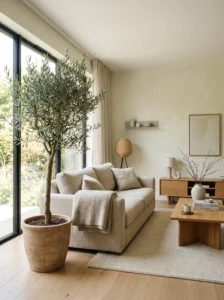
9. Bring in Greenery Sparingly but Intentionally
Plants are important in Japandi interiors, but there’s a difference between intentional greenery and turning your living room into a chaotic indoor jungle.
The goal is balance. A few well-placed plants create life and softness without overwhelming the room. This works because natural greenery contrasts beautifully with wood, linen, and neutral palettes.
This idea fits almost every living room size, though smaller spaces benefit from fewer, larger plants rather than dozens of tiny pots scattered everywhere.
Good Japandi-friendly choices include olive trees, rubber plants, bonsai, fiddle leaf figs, or simple branch arrangements in ceramic vases. Natural-looking shapes work better than overly dramatic tropical arrangements.
Placement matters. A single large plant near a window often has more impact than cluttered shelves full of mismatched planters.
The daily benefit is subtle but important. Greenery softens minimal interiors emotionally. The room feels calmer, fresher, and less rigid while still maintaining a clean overall aesthetic.
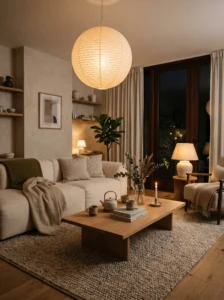
10. Choose Simple Lighting With Soft Warmth
Lighting can completely change whether a Japandi living room feels relaxing or strangely clinical.
The best Japandi lighting tends to be warm, diffused, and understated. Paper lantern pendants, linen lampshades, ceramic table lamps, and warm LED lighting create softness that complements neutral interiors beautifully.
This approach works especially well in living rooms used heavily during evenings. Overhead cool-white lighting can instantly destroy the calm atmosphere minimal spaces are supposed to create.
Layering matters here. Combine floor lamps, table lamps, and ambient lighting instead of relying solely on one bright ceiling fixture.
Materials should stay natural and matte whenever possible. Black metal can work sparingly, but overly industrial lighting often feels too harsh for Japandi interiors.
Good lighting improves daily comfort more than most people expect. Reading, relaxing, hosting friends, or simply winding down after work feels noticeably better when the room has warm layered lighting instead of harsh brightness from one ceiling bulb.
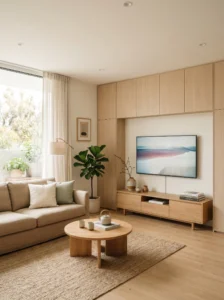
11. Hide Storage Wherever Possible
Minimal living rooms fail quickly when everyday clutter has nowhere to go.
Japandi interiors stay visually calm because storage is integrated thoughtfully into the design. Hidden storage allows real life to happen without the room constantly looking messy.
This idea is essential for family homes, apartments, and multifunctional living spaces. Storage benches, closed cabinets, media consoles with concealed compartments, and nesting tables all work well.
Prioritize closed storage over open shelving whenever possible. Open shelves tend to collect visual clutter unless carefully maintained. Japandi interiors generally favor cleaner lines and fewer visible objects.
Choose storage pieces that blend into the room rather than dominate it. Neutral wood finishes and handle-free cabinets maintain a cleaner visual flow.
The biggest daily advantage is mental ease. When remotes, chargers, blankets, toys, and miscellaneous items have dedicated spaces, maintaining a calm room becomes much easier without constant tidying.
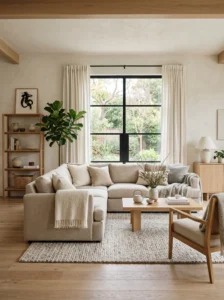
12. Mix Scandinavian Comfort With Japanese Restraint
Some minimalist spaces become so focused on aesthetics that they stop feeling comfortable. Japandi works because it balances warmth and restraint.
The Scandinavian side adds softness through cozy textiles, warm lighting, and comfortable seating. The Japanese influence keeps the room disciplined and uncluttered.
This combination works beautifully for people who want a stylish home without sacrificing practicality. It’s particularly effective in family living rooms where comfort matters just as much as appearance.
A practical balance might include a soft linen sofa, textured throw blankets, a simple wooden coffee table, and limited decor. The room should feel welcoming but never crowded.
Avoid extremes in either direction. Too much Scandinavian influence can become overly rustic or cluttered, while excessive Japanese minimalism can feel cold if not balanced carefully.
In everyday life, this balance creates spaces people actually want to spend time in. The room feels peaceful without becoming fragile or uncomfortable to use.
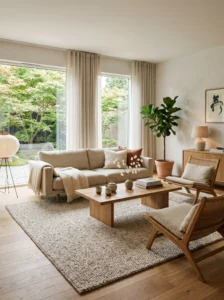
13. Use Large Rugs to Define the Space
Small rugs are one of the quickest ways to make a living room feel disconnected and awkward.
Japandi interiors generally favor larger area rugs that anchor furniture together and create visual calm. A properly sized rug instantly makes the room feel more intentional and cohesive.
This matters especially in open-plan homes or apartments where living areas blend into dining or kitchen spaces.
Choose rugs with subtle texture or understated patterns rather than bold graphics. Wool, jute blends, and low-pile natural rugs work especially well.
A good rule is ensuring at least the front legs of major furniture pieces sit on the rug. Tiny rugs floating in the middle of the room tend to shrink the space visually.
The comfort factor is underrated too. Large rugs soften acoustics, add warmth underfoot, and make seating areas feel more inviting for daily lounging or social gatherings.
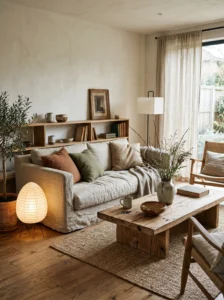
14. Embrace Imperfection Instead of Perfection
One reason Japandi interiors feel calming is because they don’t chase impossible perfection.
Slight imperfections in wood grain, handmade decor, textured fabrics, or asymmetrical styling create authenticity. Rooms feel lived-in rather than staged for social media.
This approach works especially well for busy households because it removes pressure to maintain unrealistic perfection constantly.
Instead of obsessing over matching decor sets, focus on pieces with natural character. A slightly uneven ceramic bowl or worn linen fabric often adds more warmth than flawless mass-produced accessories.
Avoid overcrowding the room with trendy decor trying to force personality into the space. Japandi interiors become stronger when the materials themselves provide visual interest.
In daily life, embracing imperfection makes the room easier to maintain emotionally. You stop worrying about every tiny scratch or wrinkle and start appreciating the comfort and functionality of the space instead.
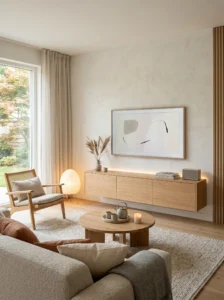
15. Keep Technology Visually Minimal
Modern living rooms revolve around technology, but tangled cables and oversized electronics can easily ruin a calm Japandi aesthetic.
The goal isn’t removing technology entirely — it’s integrating it more quietly into the room.
This works particularly well in smaller living rooms where visual clutter becomes noticeable quickly. Wall-mounted TVs, concealed cable management, wireless lighting systems, and minimal speaker setups help maintain clean lines.
Choose media consoles with hidden compartments and avoid stacking visible electronics everywhere. Black screens already create enough visual contrast in neutral rooms, so simplifying surrounding elements helps balance the space.
If possible, keep decorative styling around the television minimal. Overdecorating media walls often makes them feel busier rather than more attractive.
The everyday benefit is practical simplicity. Cleaner technology setups make the room feel calmer and easier to maintain while still functioning perfectly for streaming, gaming, or everyday entertainment.
Comparison Table
| Type | Best Use | Material | Style/Vibe | Difficulty Level |
|---|---|---|---|---|
| Low-Profile Furniture | Small to medium living rooms | Linen, oak, cotton | Calm and grounded | Easy |
| Layered Wood Tones | Open-plan spaces | Oak, walnut, ash | Warm minimalist | Medium |
| Floating Furniture | Compact apartments | Wood, matte metal | Airy and modern | Medium |
| Handmade Ceramics | Coffee tables and shelving | Clay, ceramic | Organic and artistic | Easy |
| Large Neutral Rugs | Open living spaces | Wool, jute | Cozy and cohesive | Easy |
| Hidden Storage Solutions | Family homes | Wood composite, oak | Clean and practical | Medium |
Buying Guide: How to Choose Japandi Living Room Pieces
One of the biggest challenges with Japandi interiors is getting the balance right. Many people either buy furniture that’s too minimal and uncomfortable or overload the room with trendy decor trying to make it feel warm again. The key is choosing pieces that combine simplicity with practicality.
Start with sizing and scale. Japandi living rooms work best when furniture fits the room properly instead of overwhelming it. Oversized sectionals can make smaller rooms feel cramped, while tiny furniture in large spaces often feels disconnected. Measure carefully before buying. A good rule is leaving enough walking space around major furniture pieces so the room feels breathable rather than tightly packed.
Material choice matters more in Japandi design than in many other styles. Since the aesthetic relies on fewer decorative elements, the materials themselves become the visual focus. Natural woods, linen, wool, cotton, bamboo, stone, and ceramic generally work best. Avoid overly glossy surfaces or cheap synthetic finishes because they stand out quickly in minimalist spaces.
Durability is equally important. Light-colored fabrics may look beautiful online, but homes with children, pets, or frequent guests need more forgiving materials. Performance linen blends, washable covers, and textured fabrics tend to hide wear better than delicate smooth materials.
Budgeting wisely also helps. You don’t need to replace everything at once. In fact, Japandi interiors usually look better when built gradually. Invest first in foundational pieces like a sofa, rug, lighting, or coffee table. Decorative accessories should come later.
One common mistake people make is buying too many small decor items. Japandi rooms rely more on proportion, spacing, and texture than quantity. A few high-quality pieces usually create a stronger result than shelves full of trendy accessories.
Finally, remember that Japandi is supposed to improve how your home feels, not just how it photographs. Comfort, functionality, and calmness matter just as much as aesthetics.
Conclusion
Japandi living rooms continue to grow in popularity because they solve a problem many homes struggle with: how to feel calm without feeling cold, and minimal without feeling empty.
The best Japandi spaces are not about removing personality or chasing perfection. They focus on thoughtful furniture choices, natural materials, warm lighting, balanced textures, and practical layouts that make everyday living easier. Small changes — like improving lighting, simplifying storage, or choosing lower-profile furniture — often have a bigger impact than expensive renovations.
What makes this style work so well in 2026 is its realism. People want homes that feel peaceful but still function for real life. A Japandi living room can handle movie nights, family gatherings, remote work, and everyday clutter without losing its sense of calm.
The key is resisting the urge to overdesign the space. Let materials breathe. Leave some areas intentionally empty. Choose quality over quantity. And remember that comfort is part of good design too.
Done well, a Japandi living room doesn’t just look minimal — it actually makes the home feel easier to live in every day.
FAQs
1. What colors work best in a Japandi living room?
Warm neutrals usually work best, including beige, taupe, soft gray, muted olive, clay, and off-white. These colors create calmness without making the room feel sterile. Avoid extremely bright whites or overly bold accent colors if you want a balanced Japandi look.
2. Is Japandi style good for small apartments?
Yes, it works especially well in small spaces because the style focuses on simplicity, smart storage, and visual openness. Low-profile furniture and minimal clutter can make compact rooms feel significantly larger and calmer.
3. What type of wood is best for Japandi interiors?
Oak, ash, walnut, and bamboo are popular choices because they provide natural warmth and subtle texture. Matte or lightly finished wood tends to look more authentic than glossy surfaces.
4. How do I stop a Japandi room from looking boring?
Texture is the secret. Layer linen, wool, ceramics, woven materials, and natural wood tones instead of relying on excessive decor. Good lighting and subtle tonal contrast also make a huge difference.
5. Can Japandi design work with kids or pets?
Absolutely. The key is choosing durable fabrics, washable materials, and hidden storage. Japandi design actually works well for busy homes because it encourages organization and reduces unnecessary clutter.
6. Are plants necessary in Japandi interiors?
Not mandatory, but they help soften minimalist spaces naturally. One or two well-placed plants usually work better than filling the room with greenery.
7. What lighting works best for Japandi living rooms?
Warm, soft lighting works best. Paper lanterns, linen lampshades, ceramic lamps, and warm LED bulbs create a relaxed atmosphere. Avoid harsh cool-toned overhead lighting whenever possible.
8. What’s the biggest mistake people make with Japandi style?
Trying too hard to make the room look perfect. Japandi interiors work best when they feel natural, comfortable, and slightly lived-in rather than overly staged or excessively minimal.