Fall is the season the living room finally gets to do what it was made for: slow evenings, warm drinks, blankets that actually get used. You don’t need a full redesign to get that cozy feeling — most of the time, a few well-chosen swaps do the heavy lifting.
Below are 15 ideas, organized from quick textile wins to bigger projects. Each one tells you what it’ll cost and how hard it is, so you can pick the mix that fits your budget and your weekend.
The 3 Rules of a Cozy Fall Room
Before you buy a single pillow, it helps to know what “cozy” actually looks like in practice. Three things matter more than everything else:
- Warmth over brightness. Cozy rooms glow; they don’t glare. Swap cool-white bulbs for warm ones and add low light sources (lamps, candles) at sitting height.
- Layers over pieces. One throw blanket is decoration. A throw plus textured pillows plus a layered rug is an atmosphere. Coziness is a stack.
- Texture over pattern. Knits, velvet, wool, raw wood, dried grasses — fall coziness comes from things you want to touch. Keep patterns simple and let textures carry the look.
Textiles & Layers (Ideas 1–5)
Start here. Textiles are the fastest, cheapest route to a fall living room — and everything in this section can be undone in ten minutes if you change your mind.
1. Chunky Knit Throw Blankets
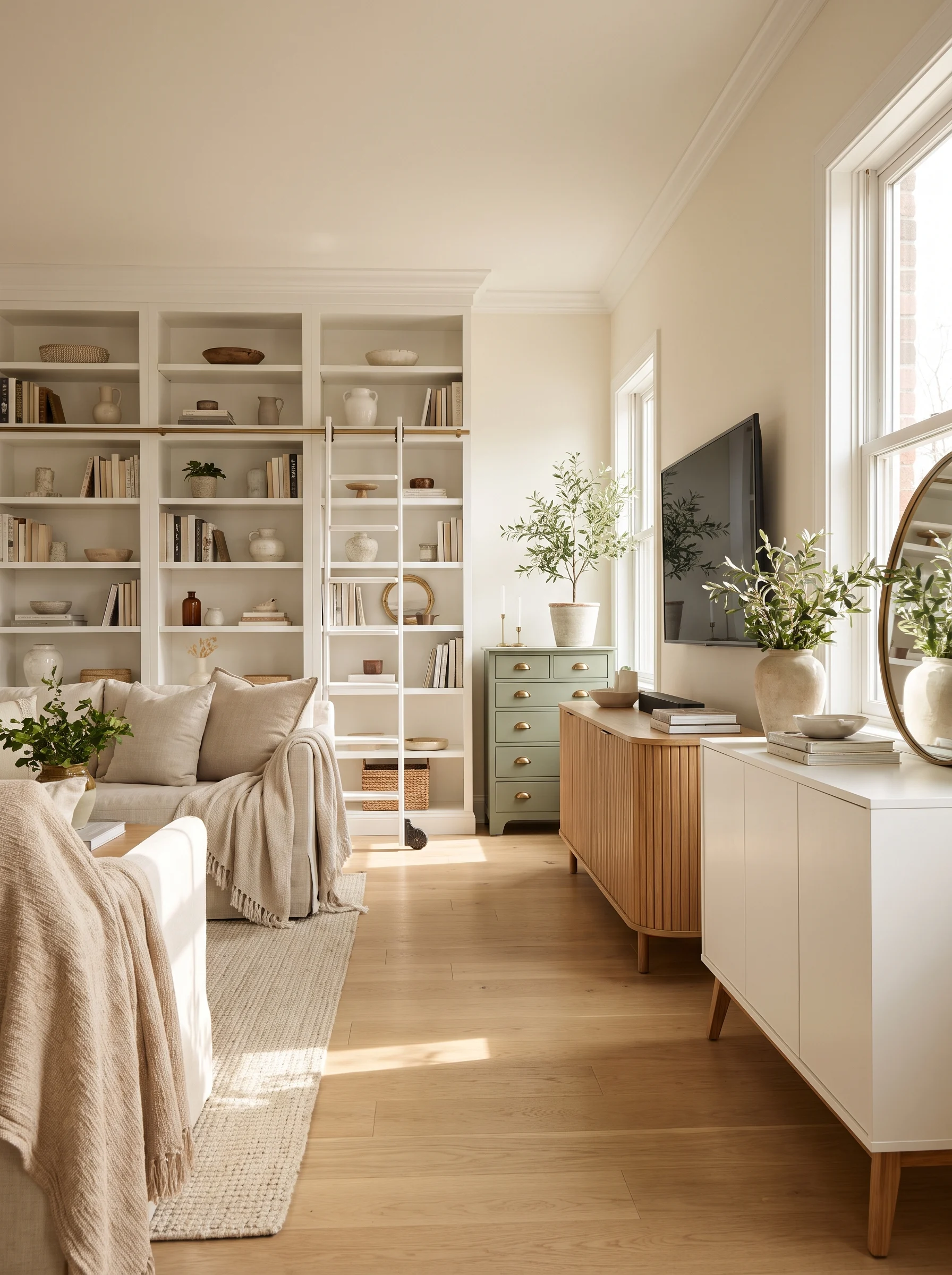
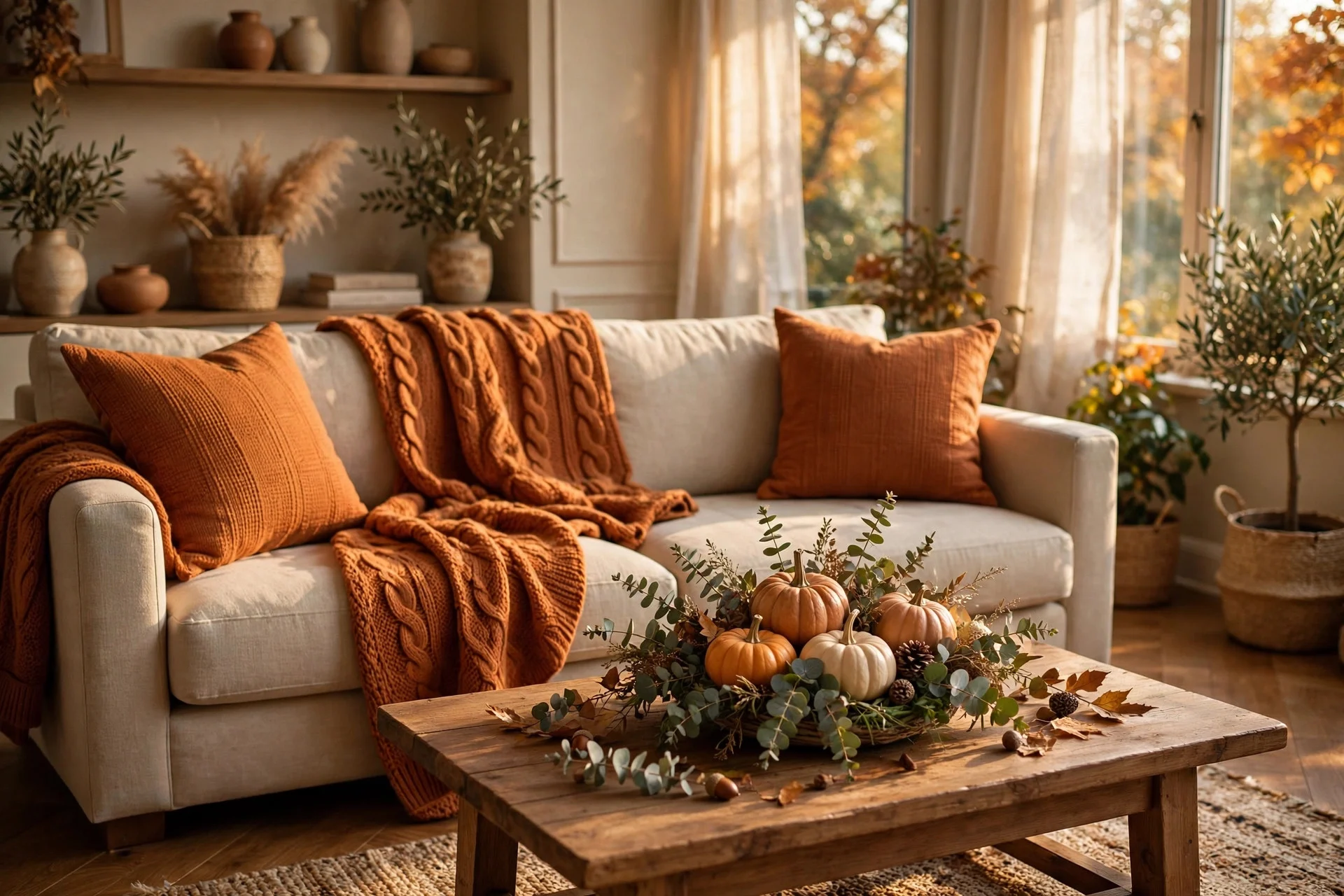
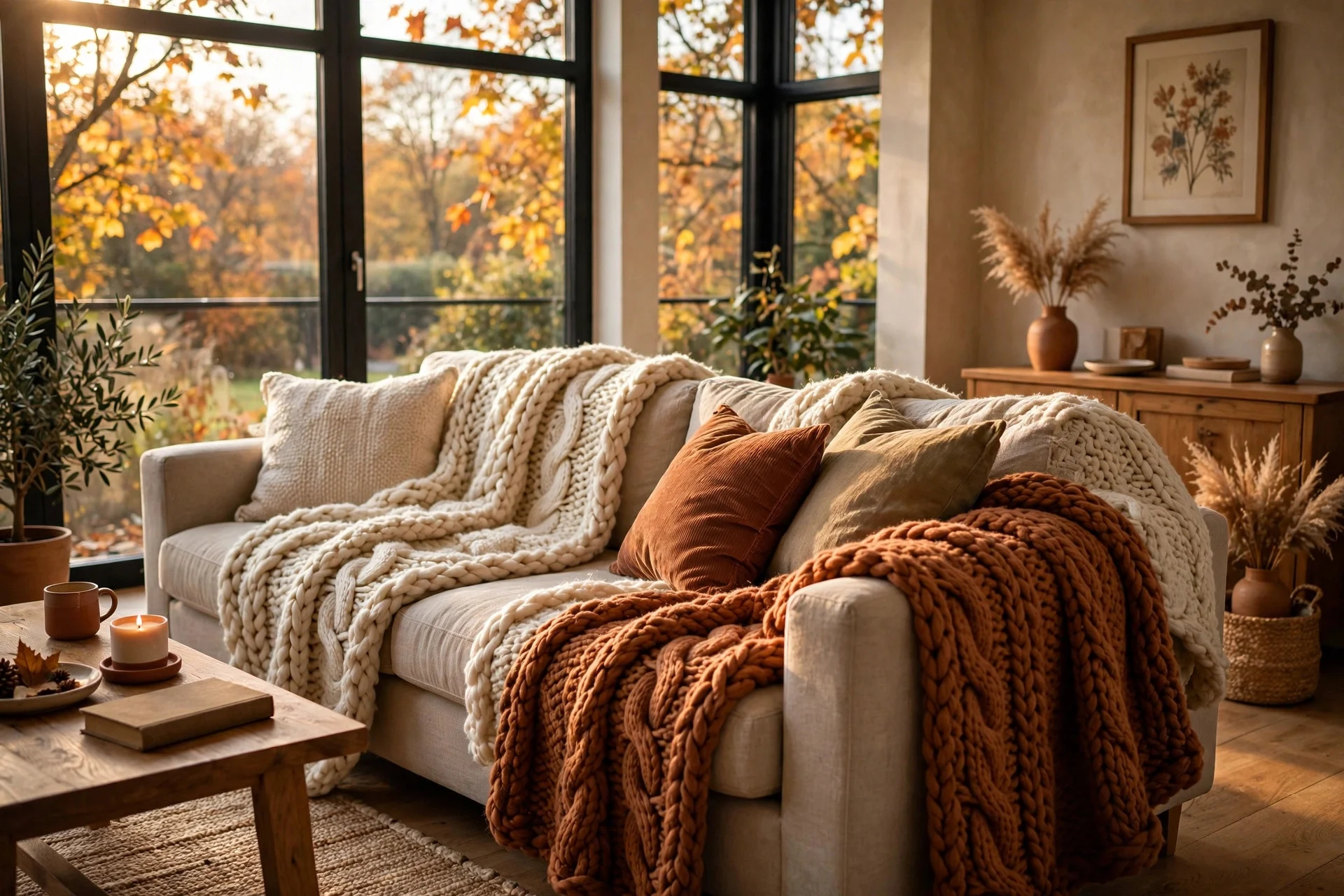
Nothing says fall quite like a heavy knit throw tossed over the arm of the sofa. The thick weave adds instant visual warmth, and — bonus — you actually end up using it on chilly evenings.
Why it works: Large-scale texture reads as “cozy” from across the room. A single chunky knit does more than three thin decorative throws ever will.
Cost: $25–$60 each. Difficulty: Zero — drape and done.
Tip: Go for cream, oatmeal, or rust. One or two throws is plenty; any more and the sofa starts looking like a linen closet.
2. Seasonal Pillow Swap
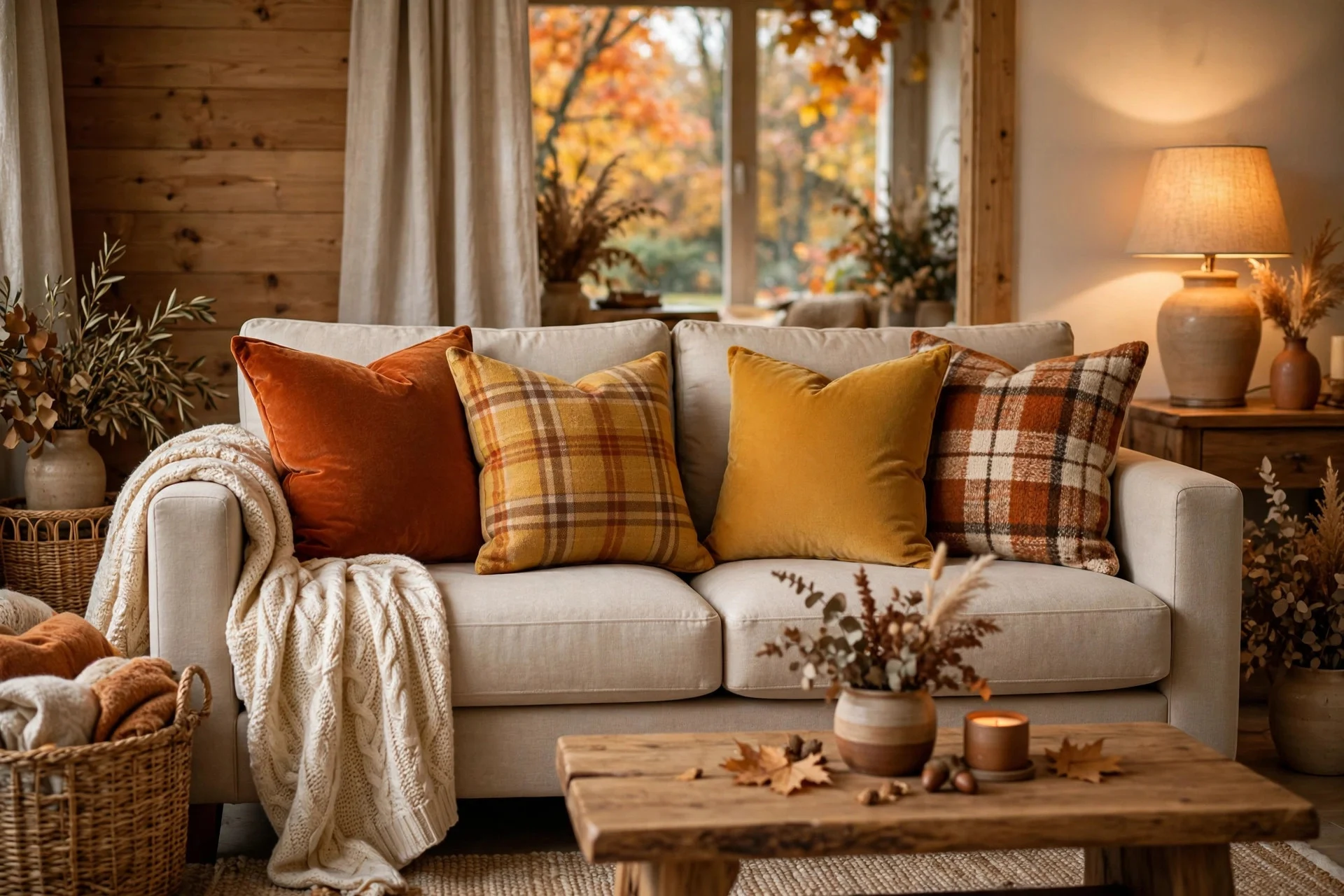
You don’t need new pillows — you need new covers. Swap your summer covers for ones in burnt orange, mustard, deep olive, or warm plaid. Same pillows, completely different room.
Why it works: Pillows are the fastest color change you can make in a room. Warm-toned covers pull the whole palette toward autumn without touching anything else.
Cost: $8–$20 per cover. Difficulty: Easy — five minutes per pillow.
Tip: Mix two solids with one pattern. All-pattern looks busy; all-solid looks flat. A 2:1 ratio hits the sweet spot.
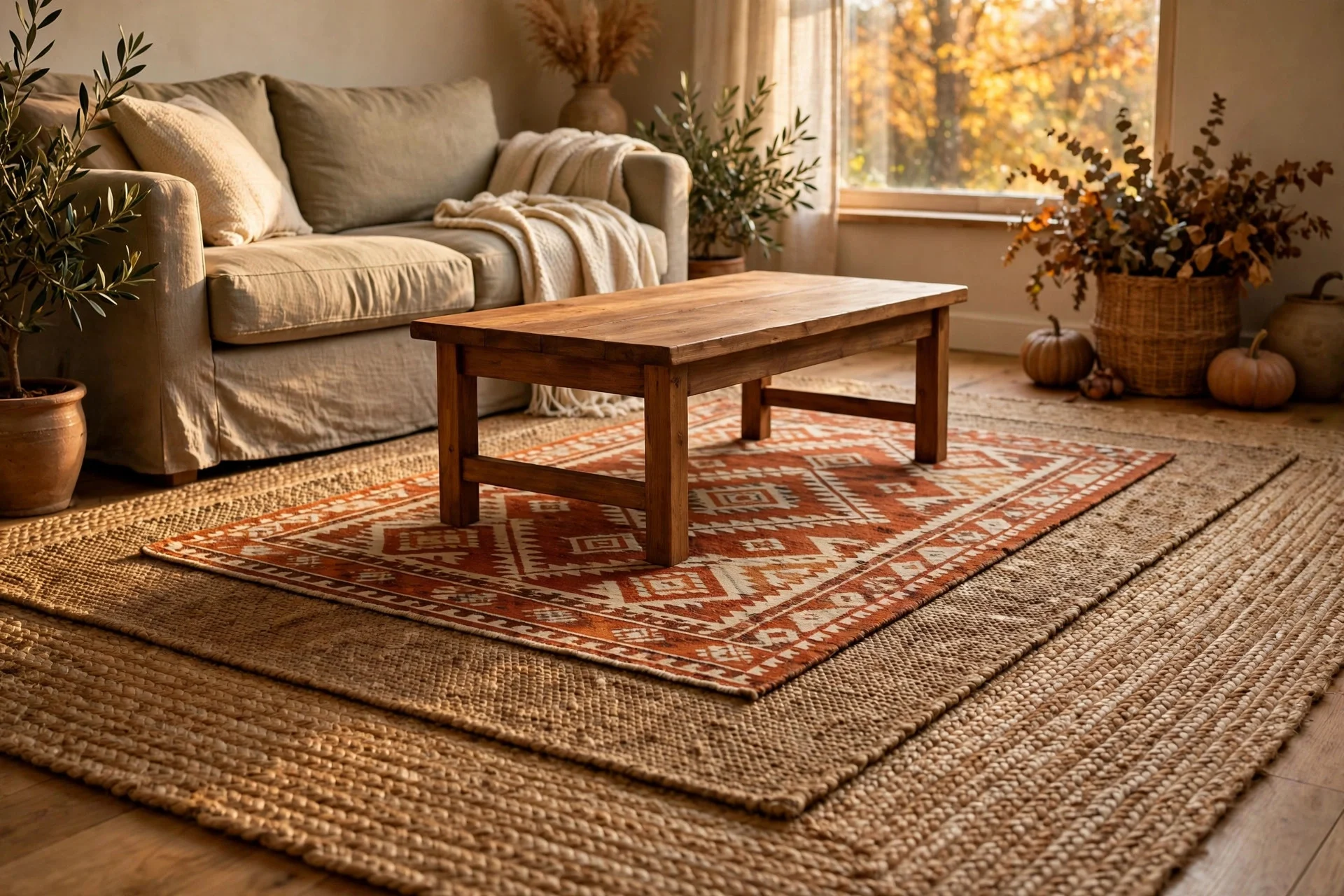
3. Layered Area Rugs
Layer a smaller patterned rug over a large natural-fiber rug (jute or sisal). The base rug anchors the room year-round; the top layer brings in fall color and pattern.
Why it works: Two rugs create the kind of depth designers charge for. The contrast between a flat natural weave and a plush patterned top rug feels rich and intentional.
Cost: $40–$120 for the patterned top rug (the jute base can stay year-round). Difficulty: Easy — just lay it down.
Tip: The top rug should sit at least 6–12 inches inside the base rug on all sides. If you’re unsure about sizing, our Rug Size Calculator walks you through it in under a minute.
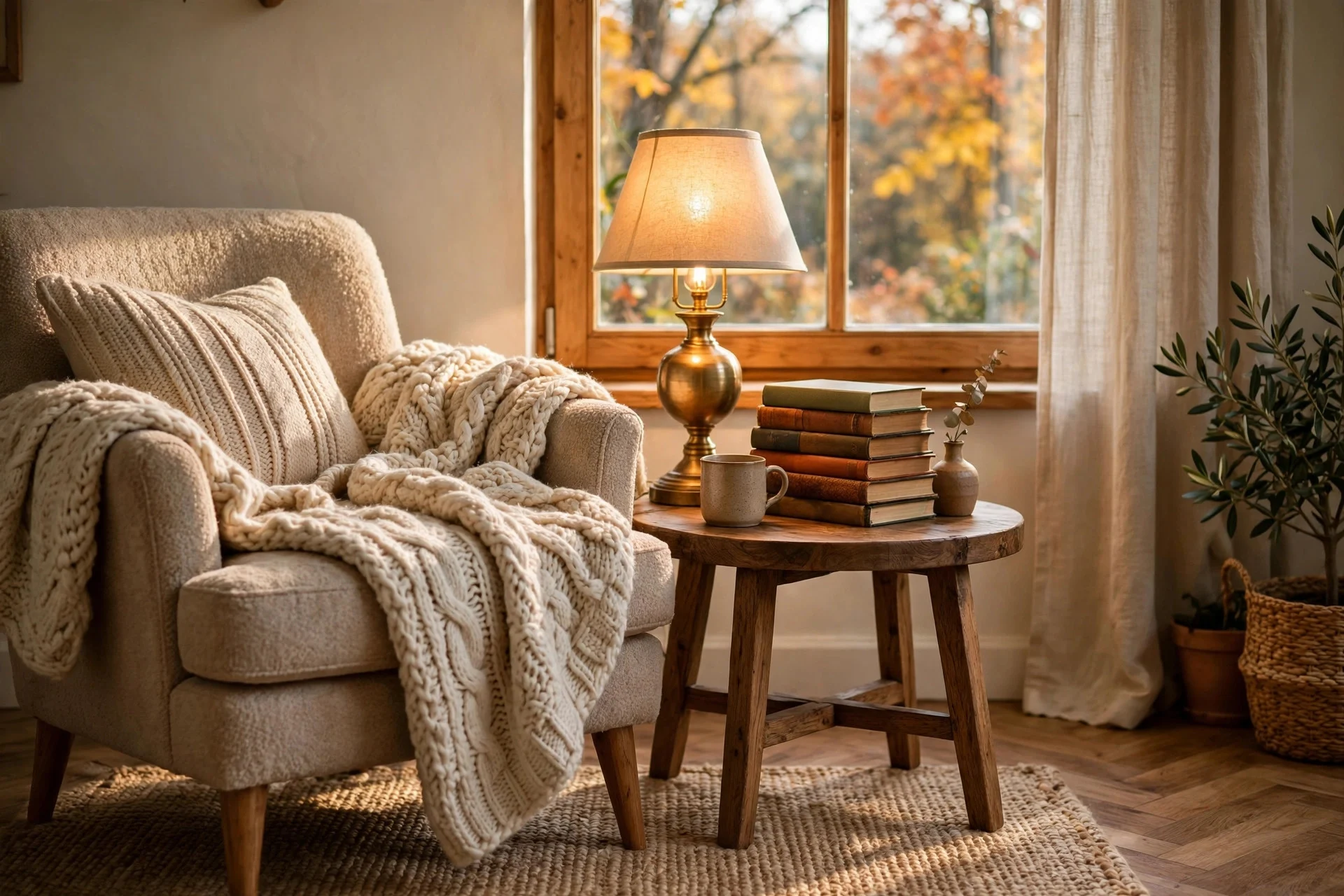
4. A Cozy Reading Corner
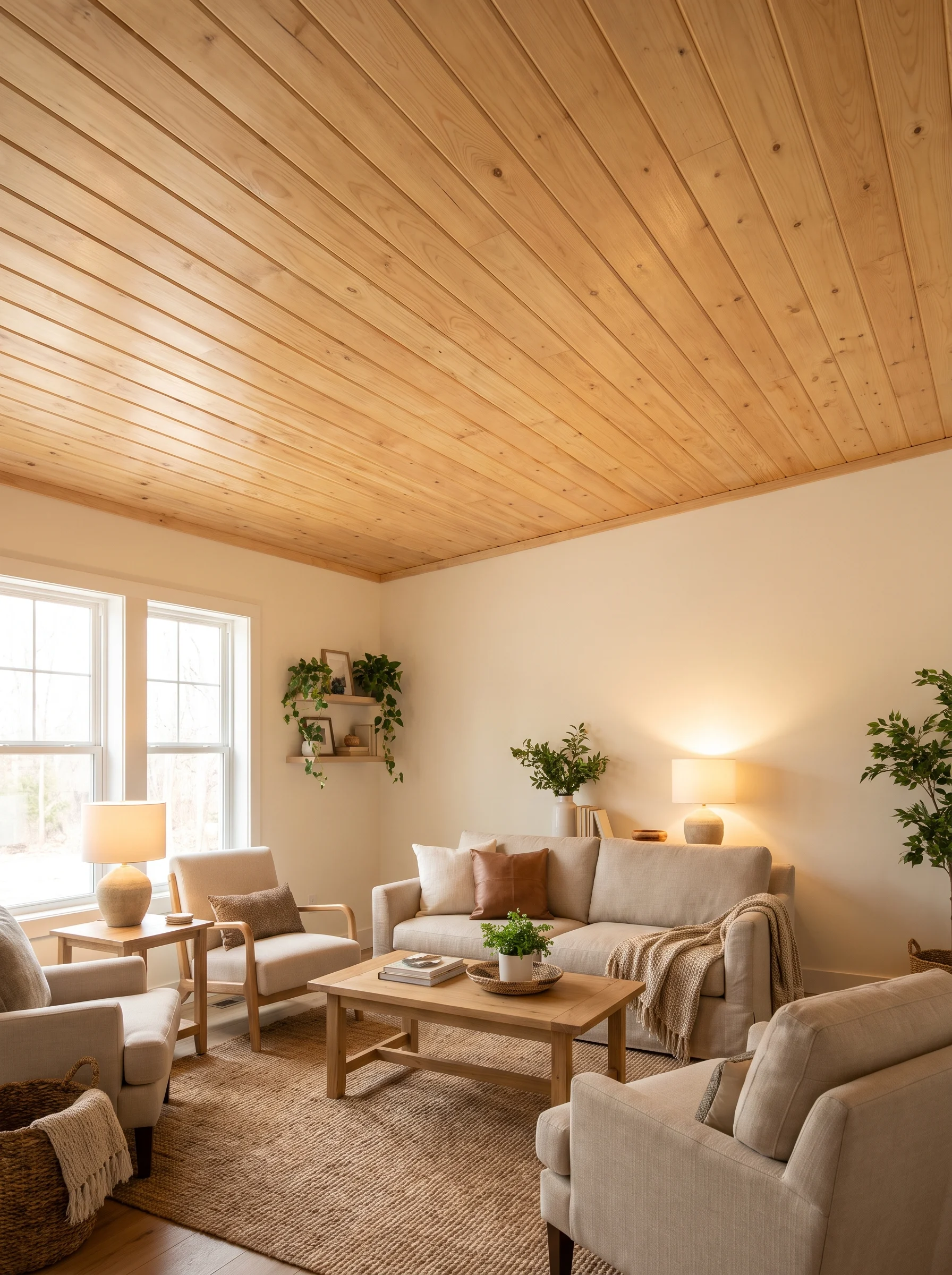
Every fall living room deserves one spot that practically begs you to sit down with a book. Pull an armchair near a window or a lamp, add a throw, a small side table, and a stack of books.
Why it works: Coziness isn’t just visual — it’s an invitation. A corner that’s clearly set up for lingering makes the whole room feel warmer and more livable.
Cost: $0 if you rearrange what you have; $50–$150 for a new chair or side table. Difficulty: Easy.
Tip: The lamp is non-negotiable. A reading corner without warm light is just a chair in a corner.
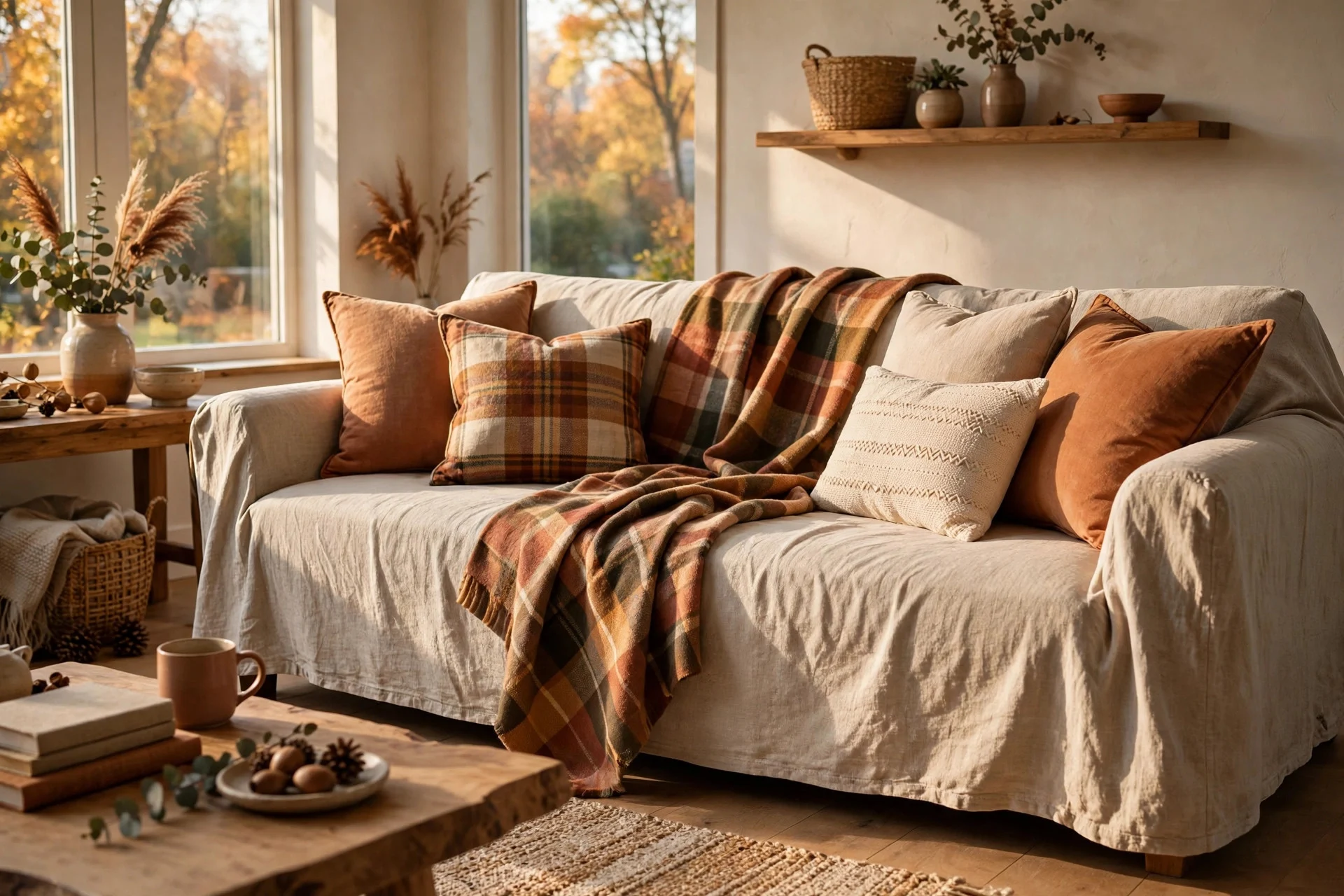
5. Slipcovers or Throws for Tired Furniture
If your sofa has seen better days (or it’s just the wrong color for fall), a slipcover is the fastest reset. A neutral linen slipcover in oatmeal, warm gray, or camel makes everything layered on top look better.
Why it works: Fall palettes need a calm base. A slipcover erases visual noise — busy patterns, worn fabric — so your throws and pillows can do the talking.
Cost: $40–$120 for a decent slipcover. Difficulty: Easy, though getting it wrinkle-free takes some tugging.
Tip: Machine-washable is the only kind worth buying. If you’re planning around a new sofa instead, the Sofa Size Calculator helps you get proportions right before you spend a dollar.
Warm Light (Ideas 6–8)
Lighting makes or breaks fall coziness. As days get shorter, your living room needs to glow — and the fix is usually cheaper than you’d think.
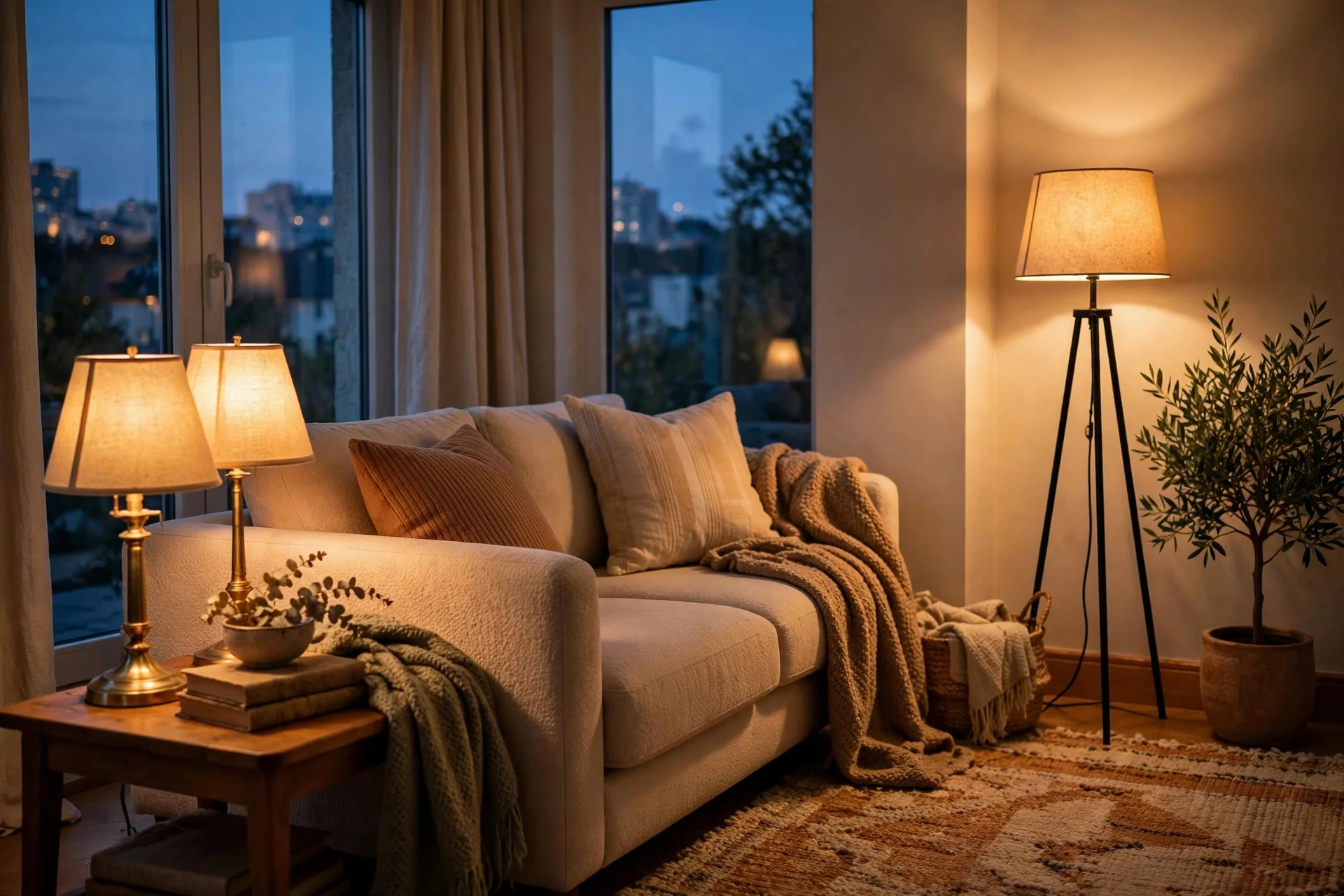
6. Warm-Bulb Lamp Refresh
Check your bulbs. Anything labeled “daylight” (5000K and up) makes a room feel like an office. Swap every living room bulb for a warm 2700K, and the same room suddenly feels like evening all day.
Why it works: Warm light flatters everything: wood tones deepen, skin tones look better, textiles look richer. It’s the single highest-impact change on this list.
Cost: $2–$4 per LED bulb. Difficulty: Easy — takes an afternoon at most.
Tip: Aim for three light sources at sitting height (table lamps, floor lamp) rather than one bright ceiling light. Our Lighting Calculator can tell you exactly how much light your room actually needs.
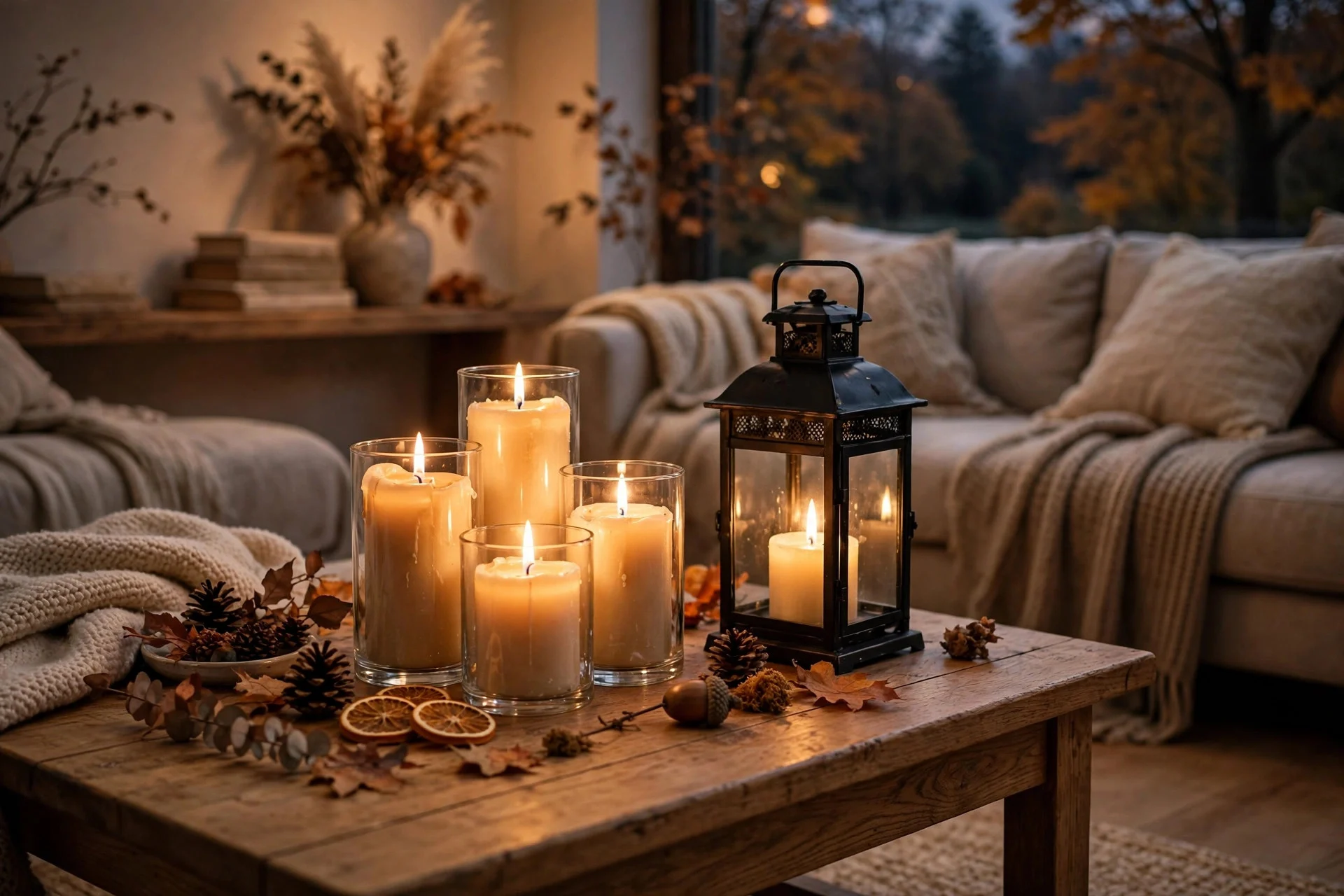
7. Candle Clusters & Lanterns
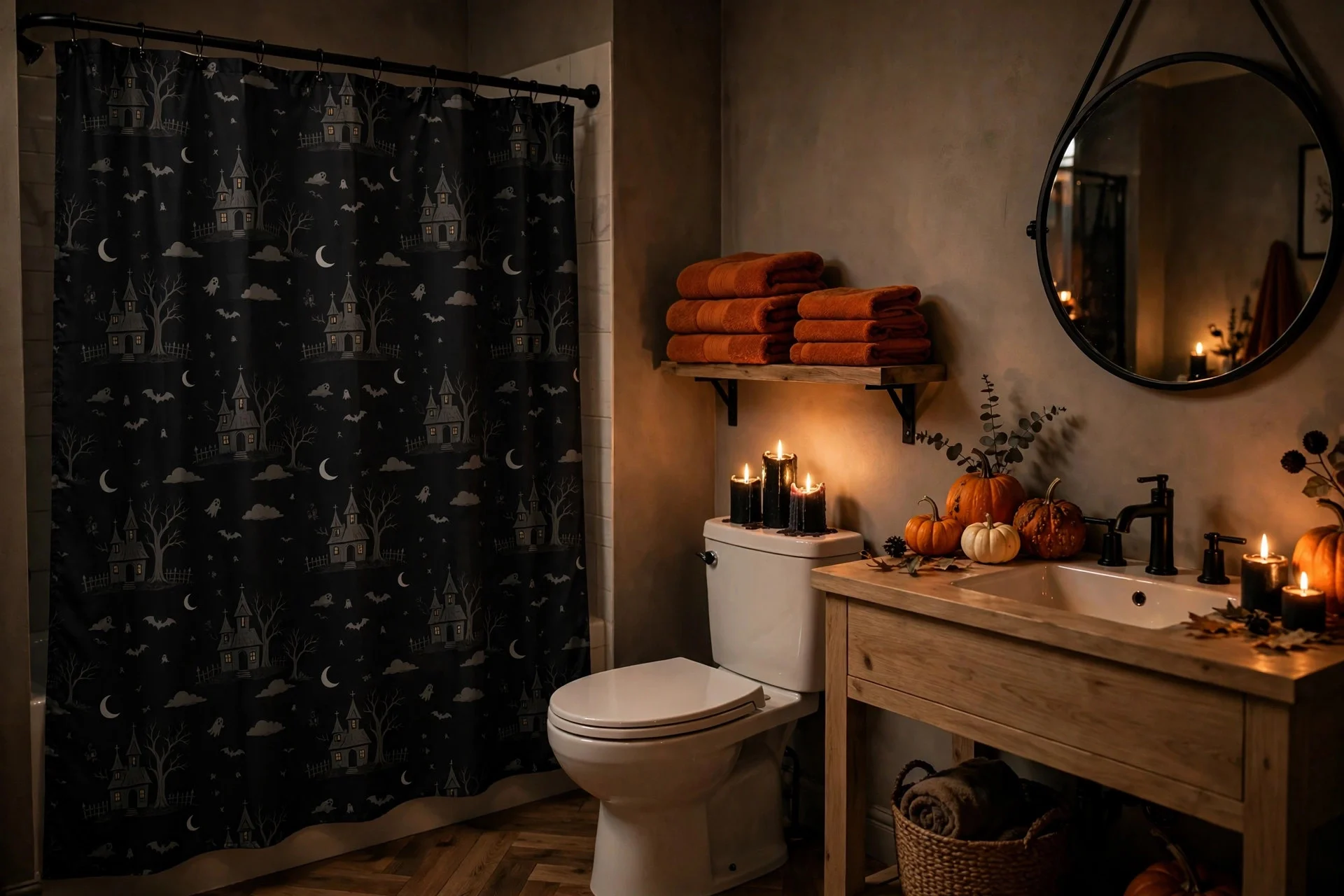
Group candles in odd numbers — three or five — on the coffee table, mantel, or a tray. Mix heights: tall pillars, short votives, one lantern. Light them every evening, not just when guests come over.
Why it works: Candlelight flickers, and that movement is what makes it feel alive. No lamp reproduces it. A lit candle cluster is the fastest way to make a room feel like fall evening.
Cost: $10–$30 for a cluster. Difficulty: Easy.
Tip: Stick to one scent per room (or go unscented). Three competing fall fragrances is how a cozy room turns into a candle shop.
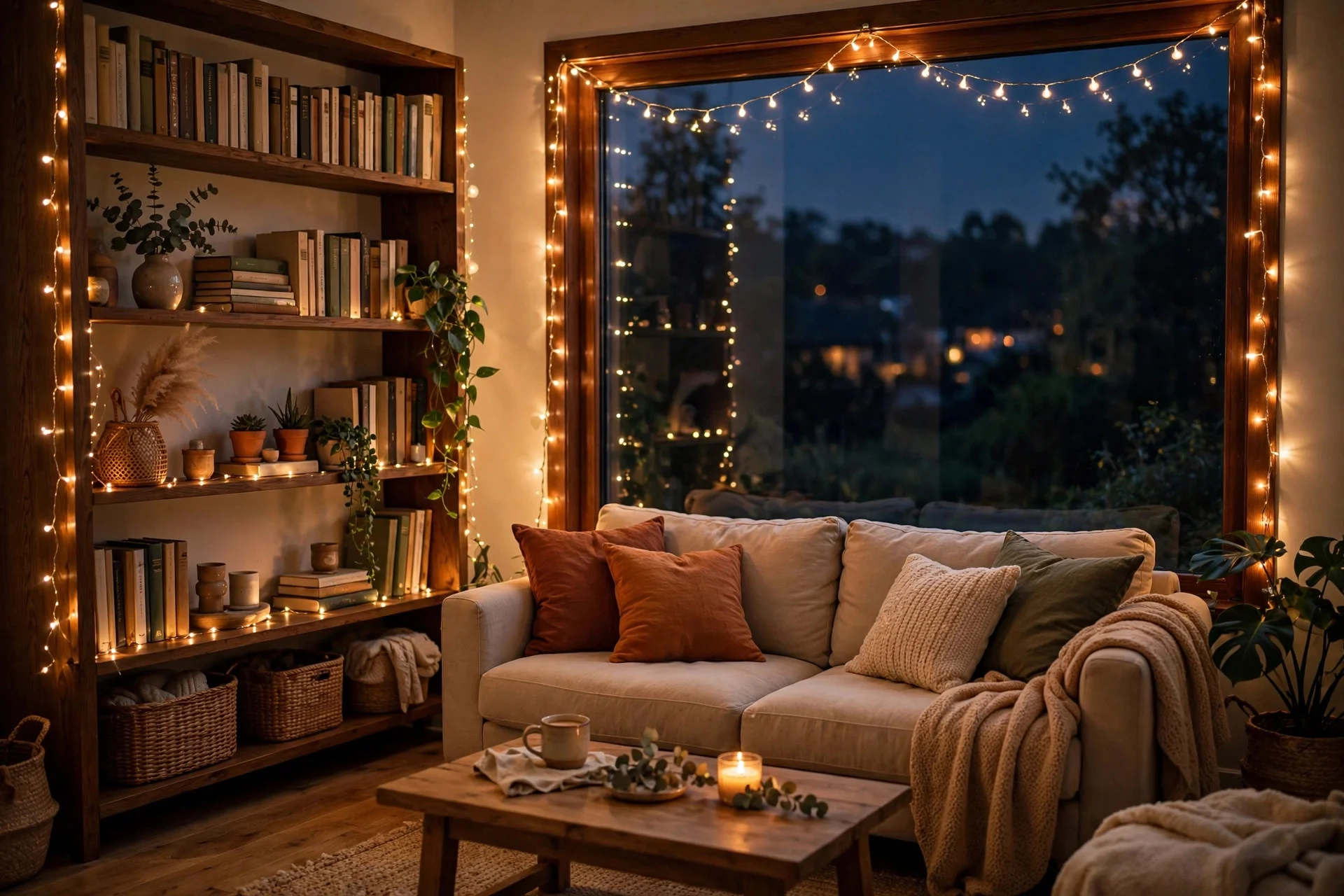
8. String Lights with Intention
Fairy lights aren’t just for Christmas trees. Drape a warm-white strand along a bookshelf, around a large mirror, or across a window frame — one deliberate placement, not lights everywhere.
Why it works: Tiny warm points of light at eye level create depth and sparkle after dark. One well-placed strand reads as “magical”; strands everywhere read as “dorm room.”
Cost: $8–$15. Difficulty: Easy.
Tip: Choose warm white (not multicolor, not cool white) and plug them into a timer so they switch on at dusk automatically.
Natural Touches (Ideas 9–12)
Fall decor works best when it borrows from the season itself. Natural materials cost little, look expensive, and never go out of style.
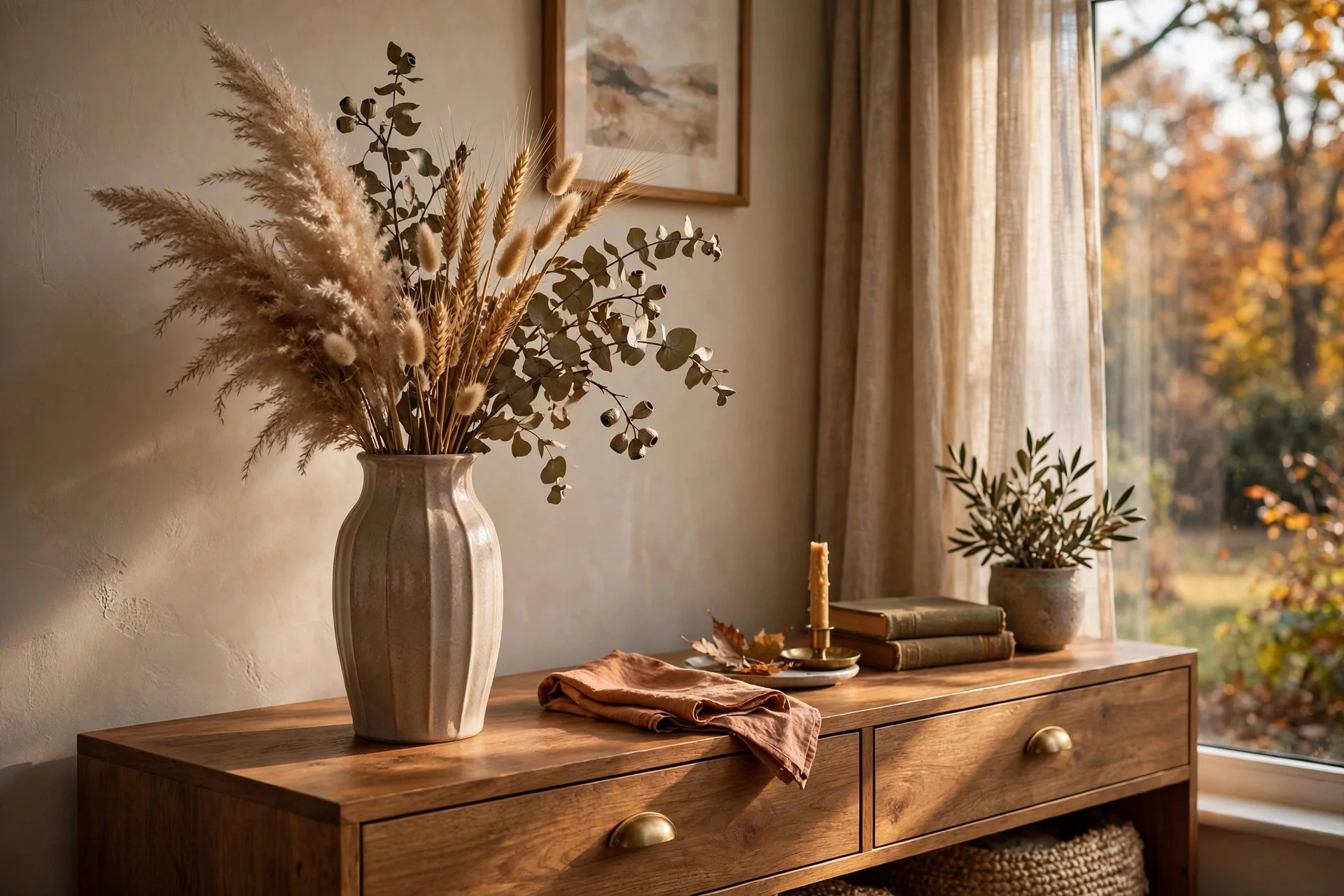
9. Dried Stem Arrangements
Fill a tall vase with dried pampas grass, wheat stems, or eucalyptus. Dried stems last for months (or years), cost a fraction of fresh flowers, and their muted tones are pure autumn.
Why it works: Height draws the eye up and fills empty vertical space — the thing most living rooms are missing. Dried textures also sit perfectly in a fall palette.
Cost: $10–$25 for stems; use a vase you already own. Difficulty: Easy.
Tip: Trim stems to staggered heights (tall in back, shorter in front) so the arrangement looks full from every angle. Shake them outside first — pampas sheds.
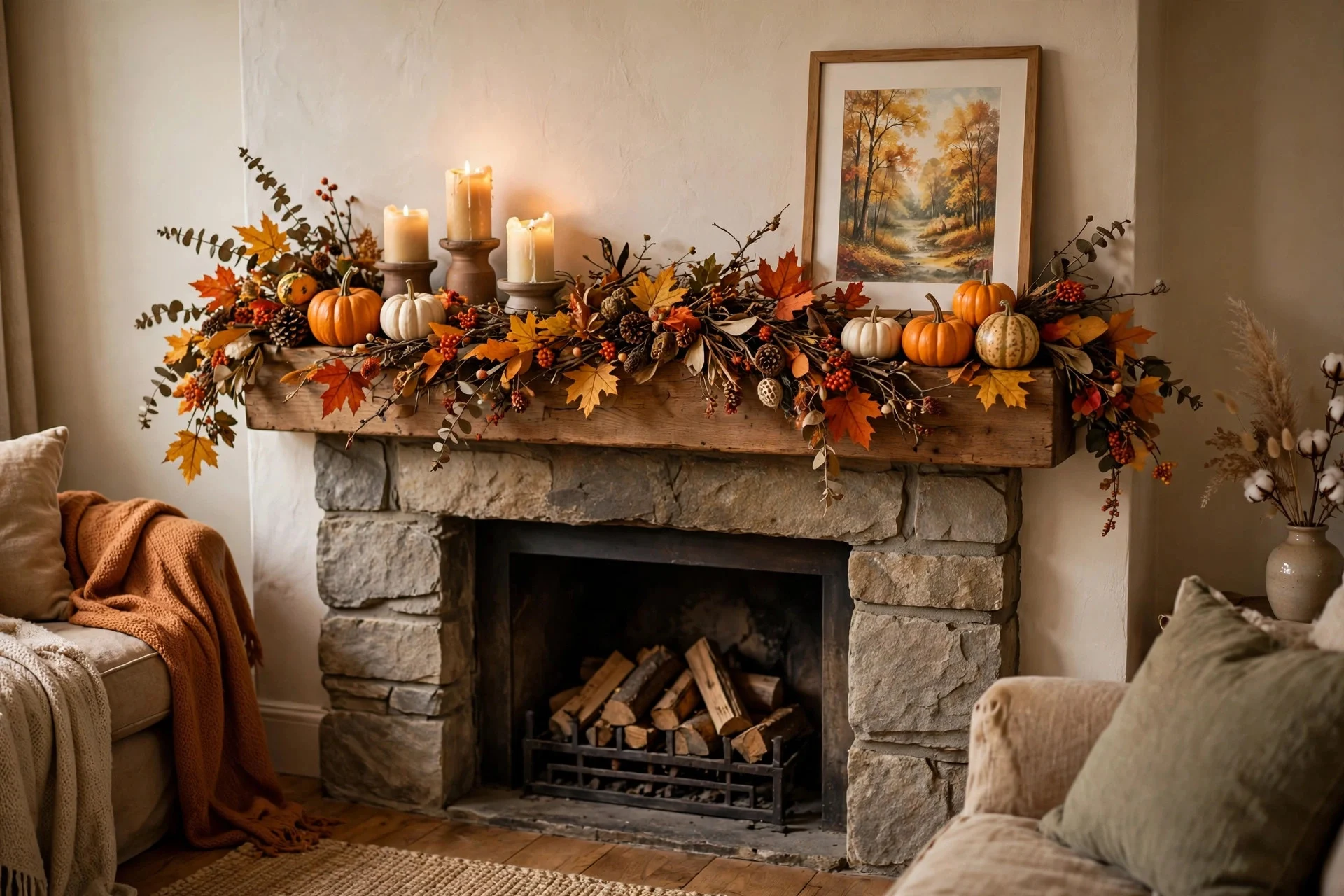
10. The Fall Mantel (or Shelf) Display
Style your mantel — or any long shelf — with a fall garland as the base, then layer in small pumpkins, candles, and one framed print or piece of art. Odd numbers, varied heights, one color story.
Why it works: A mantel is a natural focal point, so styling it well pays off across the whole room. The garland-plus-layers formula looks full without looking cluttered.
Cost: $20–$60 depending on what you already own. Difficulty: Easy to moderate (styling takes an eye, not a skill).
Tip: Step back and squint. If the display blurs into one warm shape, it’s right. If individual items jump out at you, edit one or two out.
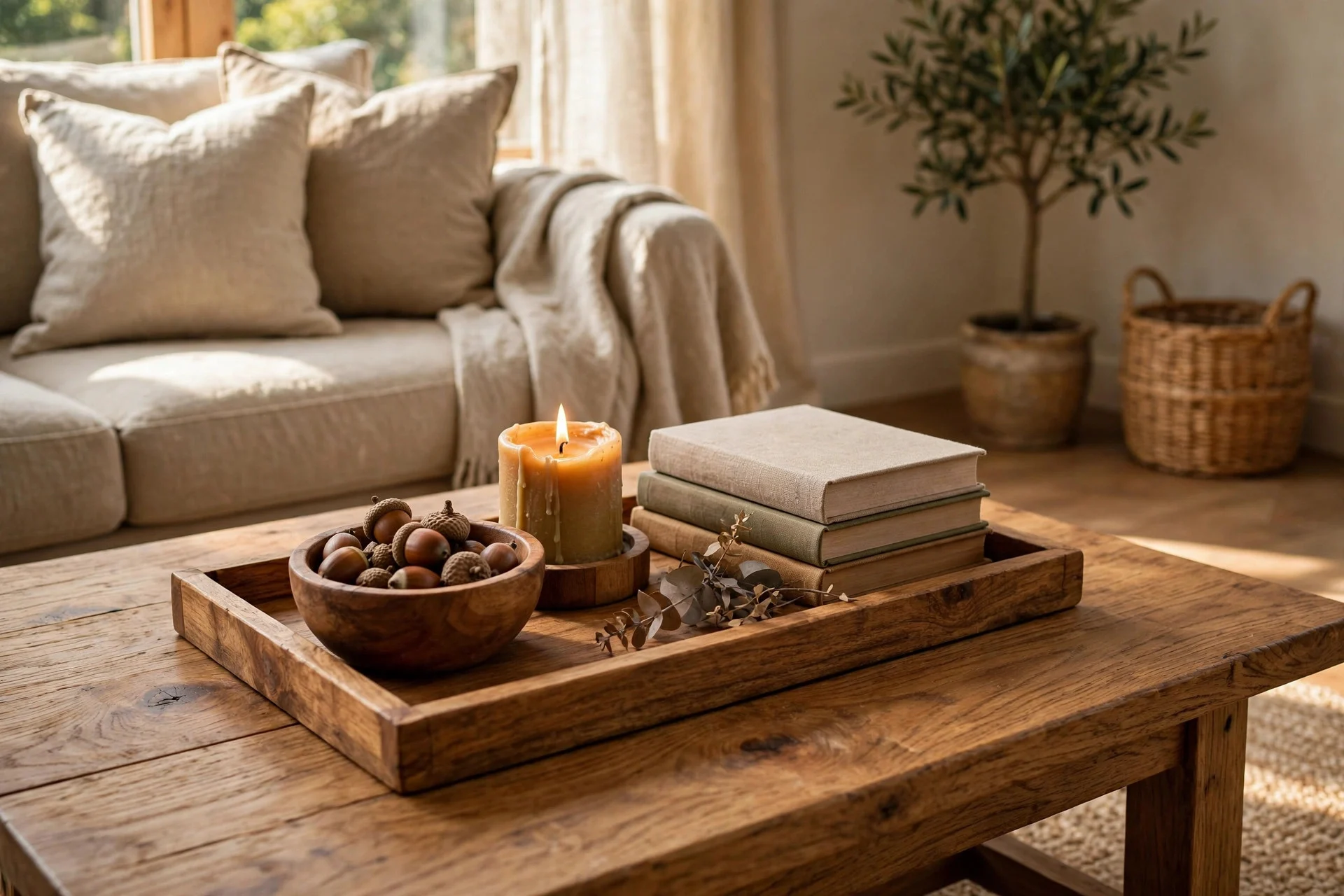
11. Wood Accents
Bring in warm wood where you can: a wooden tray on the coffee table, a wooden bowl filled with acorns or pinecones, a small side stool. Raw or oiled wood — not glossy varnish.
Why it works: Wood is the texture fall is built on. Even small pieces ground a room and warm up cooler furniture like glass, metal, or gray upholstery.
Cost: $10–$40. Difficulty: Easy.
Tip: Thrift stores are full of solid-wood trays and bowls for a few dollars. A quick rub with mineral oil makes them look brand new.
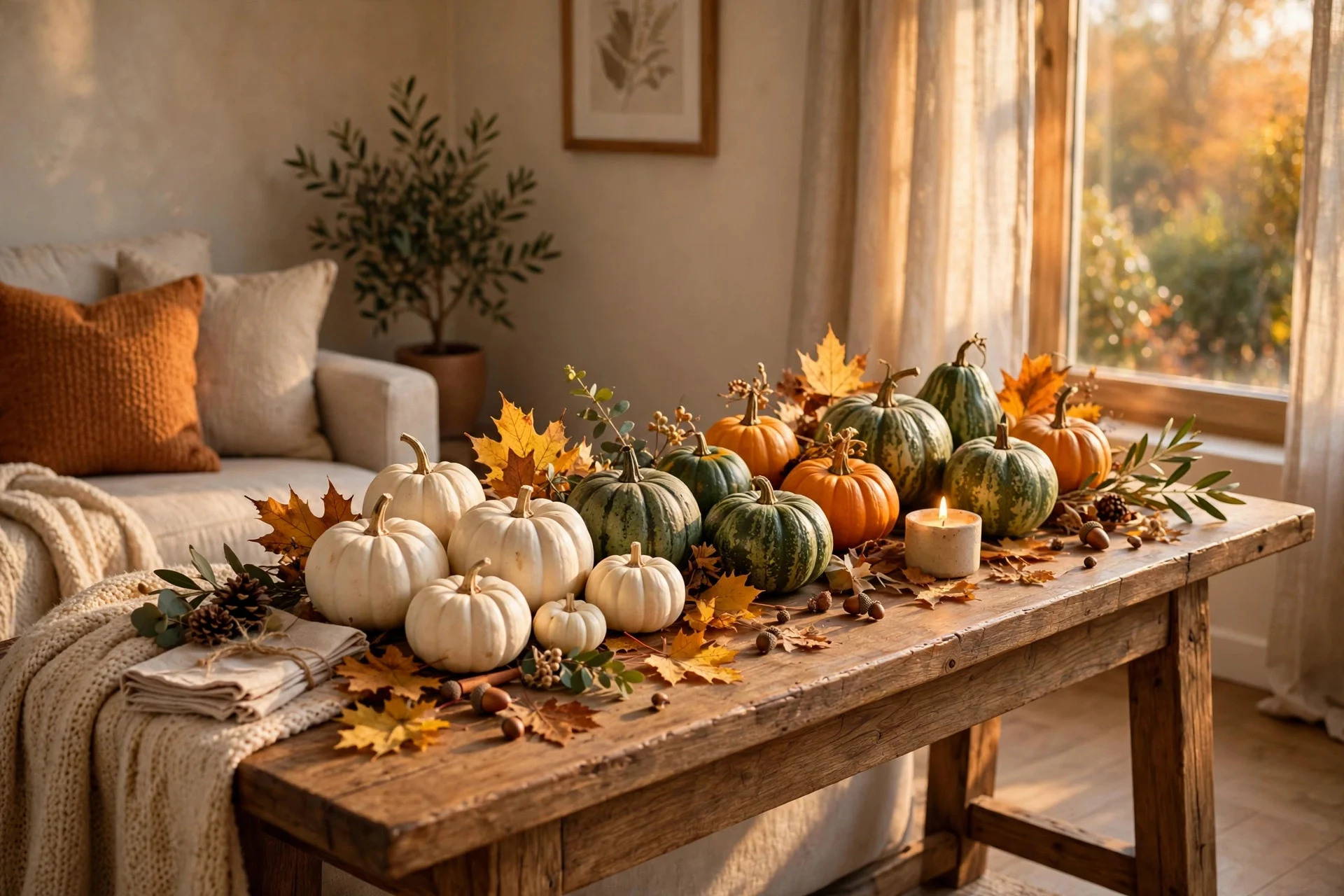
12. Mini Pumpkin & Gourds Styling
Scatter mini pumpkins and gourds in groups of three or five along a console table, bookshelf, or windowsill. Mix colors — white, orange, green — and tuck in a few fall leaves or a small candle.
Why it works: Mini pumpkins are the cheapest fall decor that exists, and grouping them is what makes them look styled instead of scattered.
Cost: $5–$15. Difficulty: Easy.
Tip: Buy real ones from a grocery store or pumpkin patch, not craft stores — they’re cheaper and the colors are better. They’ll last through November indoors.
Bigger Impact Projects (Ideas 13–15)
If you’ve got a weekend and a slightly bigger budget, these three change the room itself — not just what’s in it.
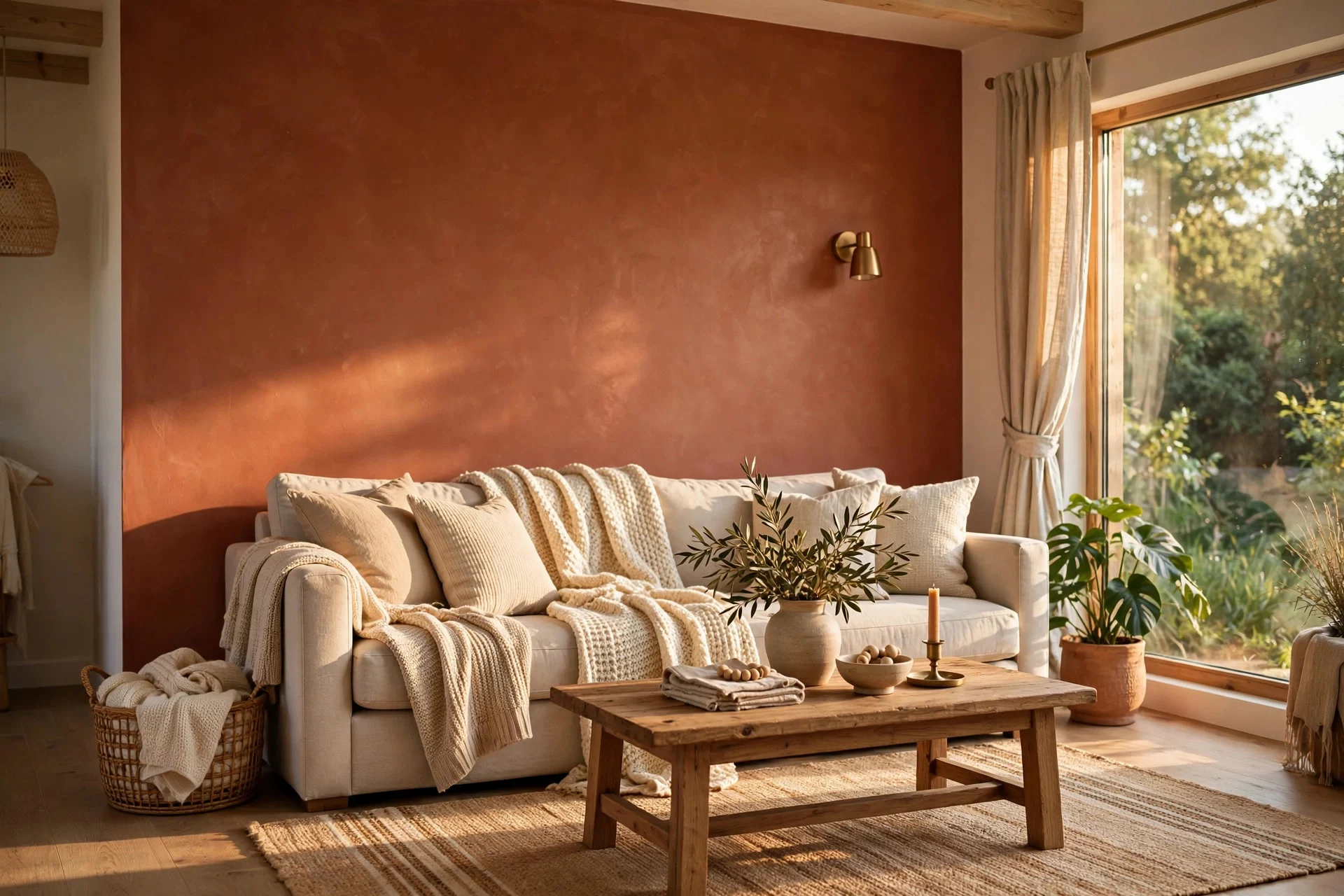
13. Accent Wall in a Warm Tone
Paint one wall in a warm fall tone — terracotta, warm clay, deep olive, or a rich caramel. One wall is enough; it becomes the backdrop that makes everything else in the room look intentional.
Why it works: A warm wall color wraps the room like a blanket. It also makes white trim, wood furniture, and neutral textiles look richer by contrast.
Cost: $30–$60 for a gallon of paint plus supplies. Difficulty: Moderate — a weekend project.
Tip: Test a large swatch (at least 2×2 feet) and live with it for two days before committing. Paint looks different in morning and evening light. The Paint Calculator tells you exactly how much to buy so you don’t overpay.
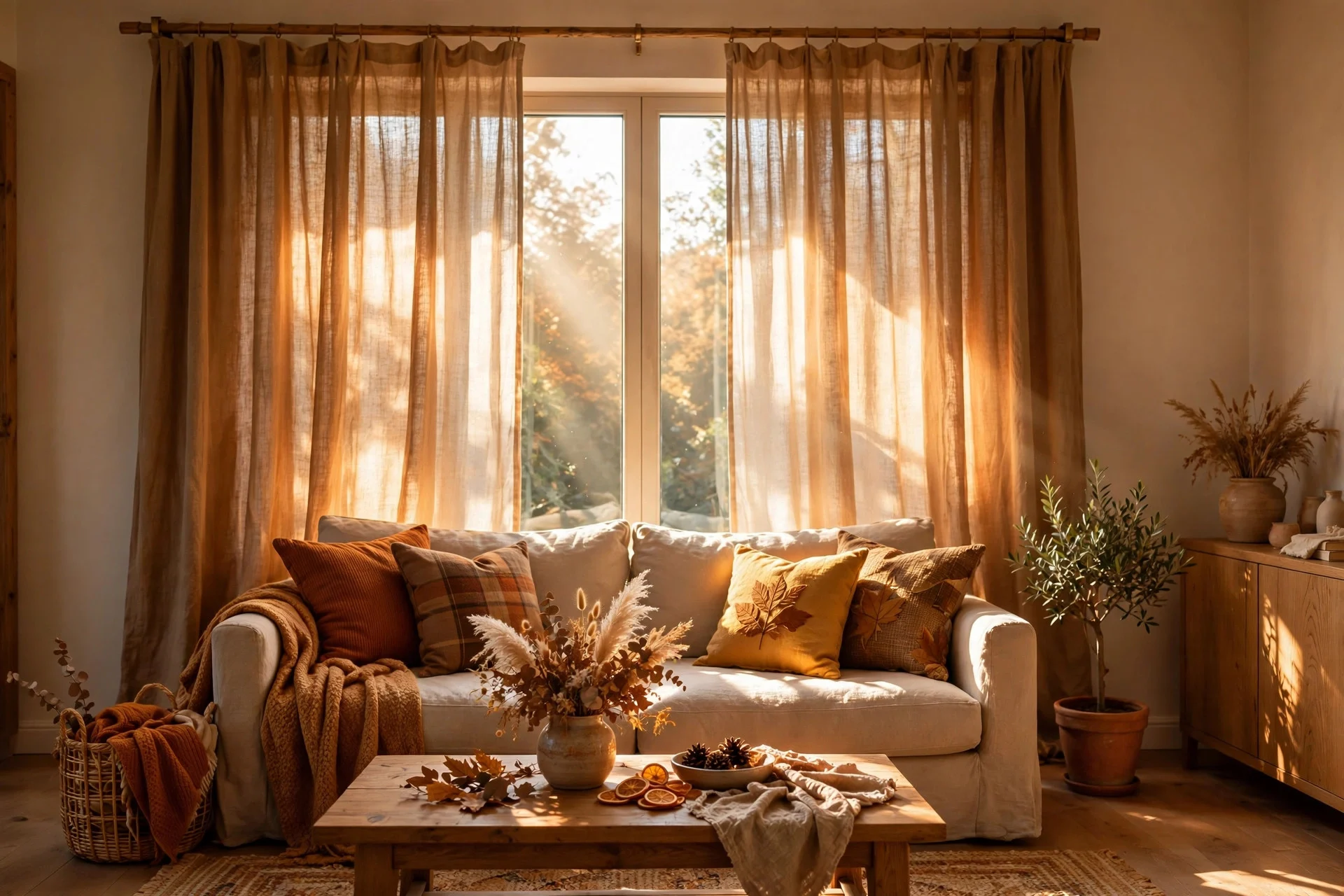
14. Curtain Upgrade for Warmth
Swap thin or cool-toned curtains for heavier drapes in a warm fabric — linen, velvet, or cotton in caramel, rust, or warm beige. Hang them high and wide so the window looks bigger.
Why it works: Curtains are the largest textile surface in most living rooms. Warmer, heavier fabric softens light, muffles sound, and makes the whole room feel insulated.
Cost: $40–$120 per window. Difficulty: Easy to moderate.
Tip: Mount the rod 4–6 inches above the window frame and extend it 3–4 inches past each side. Curtains that just cover the glass make windows look small. Measure first with our Curtain Fabric Calculator.
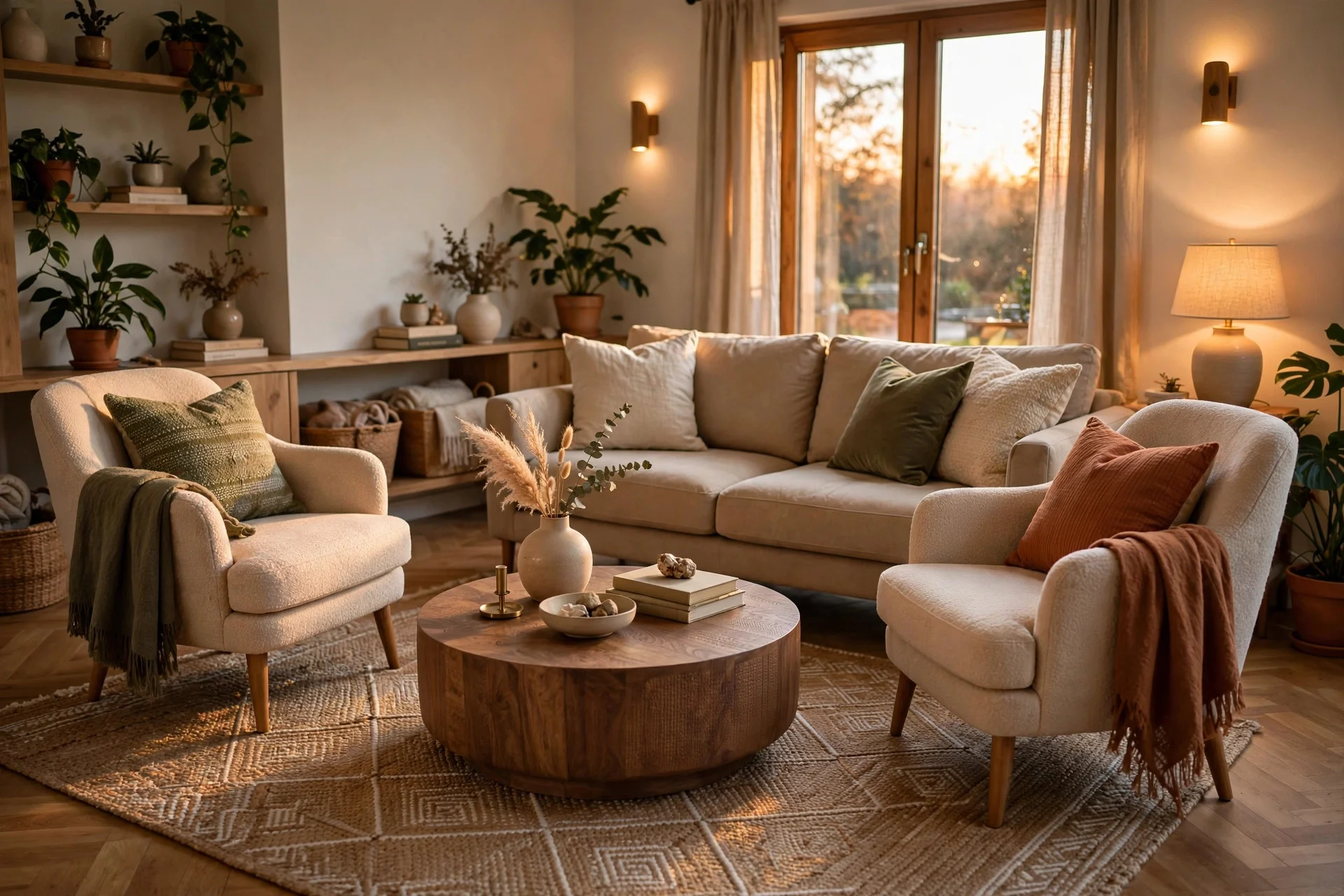
15. Rearrange for Conversation
Pull furniture off the walls and into a conversation grouping: sofa and chairs facing each other around a coffee table, all front legs on the rug. Fall is gathering season — set the room up for it.
Why it works: Furniture pushed against walls makes a room feel like a waiting area. A tight grouping feels intimate and warm, and it costs absolutely nothing.
Cost: $0. Difficulty: Easy (plus some heavy lifting).
Tip: Leave about 18 inches between the coffee table and seating — close enough to reach your mug, far enough to walk through. Live with the new layout for a few days before deciding it’s final.
The 1-Hour Fall Refresh (If You’re Short on Time)
Only have an hour? Do these five things in order and the room will feel like fall by dinner:
- Swap in warm-toned pillow covers and one knit throw (15 min).
- Change every bulb to 2700K warm white (10 min).
- Cluster candles on the coffee table and light them (5 min).
- Fill one vase with dried stems and set it where you’ll see it (10 min).
- Scatter mini pumpkins in groups of three on any flat surface (10 min).
That’s it. Ten minutes to spare — make yourself something warm to drink and sit in the room you just fixed.
What NOT to Do
- Don’t buy a “fall decor set.” Pre-packaged sets look identical in every house. Pick pieces individually and your room will look like yours.
- Don’t overdo orange. A few orange accents are fall; an all-orange room is a pumpkin patch. Balance with creams, browns, and greens.
- Don’t ignore the overhead light. If your only light source is a ceiling fixture, no amount of throw pillows will make the room cozy. Fix the light first.
- Don’t decorate surfaces you actually use. A coffee table buried in decor is a coffee table you resent. Leave room for real life.
Budget Breakdown
Here’s roughly what each tier looks like for the full room:
- Under $50: Ideas 1–2 (one throw, pillow covers) + 6 (bulbs) + 12 (mini pumpkins). Huge change, tiny spend.
- $50–$150: Add layered rugs (3), candle clusters (7), dried stems (9), and wood accents (11).
- $150–$400: Add a slipcover (5), new curtains (14), and a painted accent wall (13).
FAQs
How can I make my living room cozy for fall on a budget?
Start with the three cheapest high-impact moves: warm-toned pillow covers, a chunky knit throw, and 2700K warm-white bulbs. Together they run under $50 and change the feel of the room more than anything else on this list.
What colors work best for fall living room decor?
Warm neutrals as the base — cream, oatmeal, camel — with accents in burnt orange, rust, mustard, deep olive, and warm browns. Keep brights to a minimum; fall coziness comes from muted, earthy tones.
How do I layer rugs without it looking messy?
Use a large flat-weave base rug (jute or sisal) and a smaller patterned rug on top, centered under the coffee table. Keep at least 6–12 inches of the base visible on all sides, and make sure furniture front legs sit on the top rug.
How many lamps does a living room need?
Three is the sweet spot for most rooms: two table lamps and one floor lamp, all at sitting height with warm bulbs. That gives you layered light without relying on the ceiling fixture.
When should I switch my decor from summer to fall?
Mid to late September is the natural window — when evenings start getting cool. There’s no rule, though. If you’re reaching for a blanket on the couch, it’s time.
How do I store fall decor after the season?
Clean everything, wrap anything breakable, and store in labeled bins in a dry spot. Wash pillow covers and throws before storing so stains don’t set. Dried stems keep for years if you keep them dust-free — a tall bag or box works fine.
Final Word
A cozy fall living room isn’t about buying a season’s worth of decorations. It’s about warmth, layers, and light — the three things that make a room feel like somewhere you want to stay. Pick the ideas that fit your budget, start with the quick wins, and enjoy the room.
Related posts: