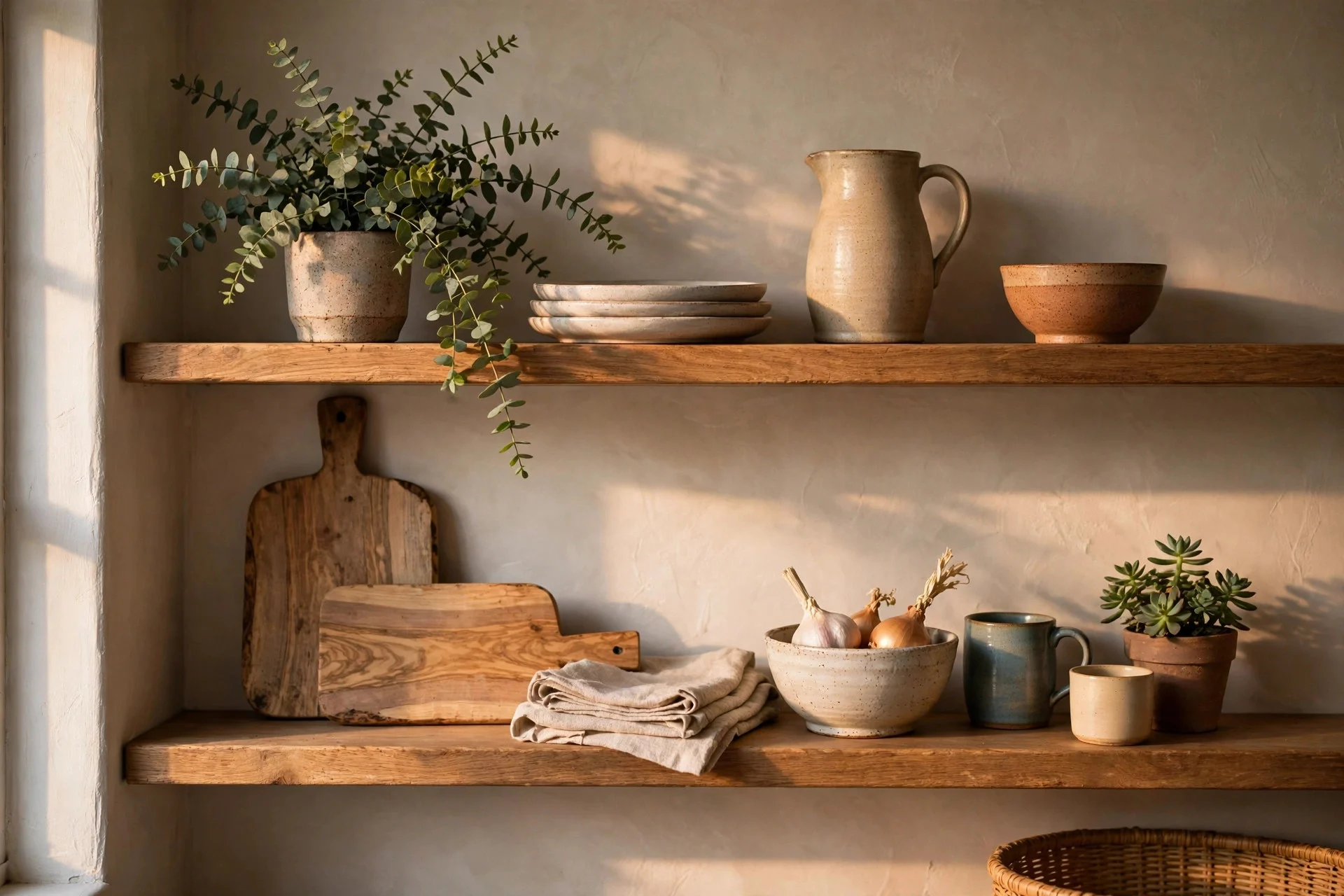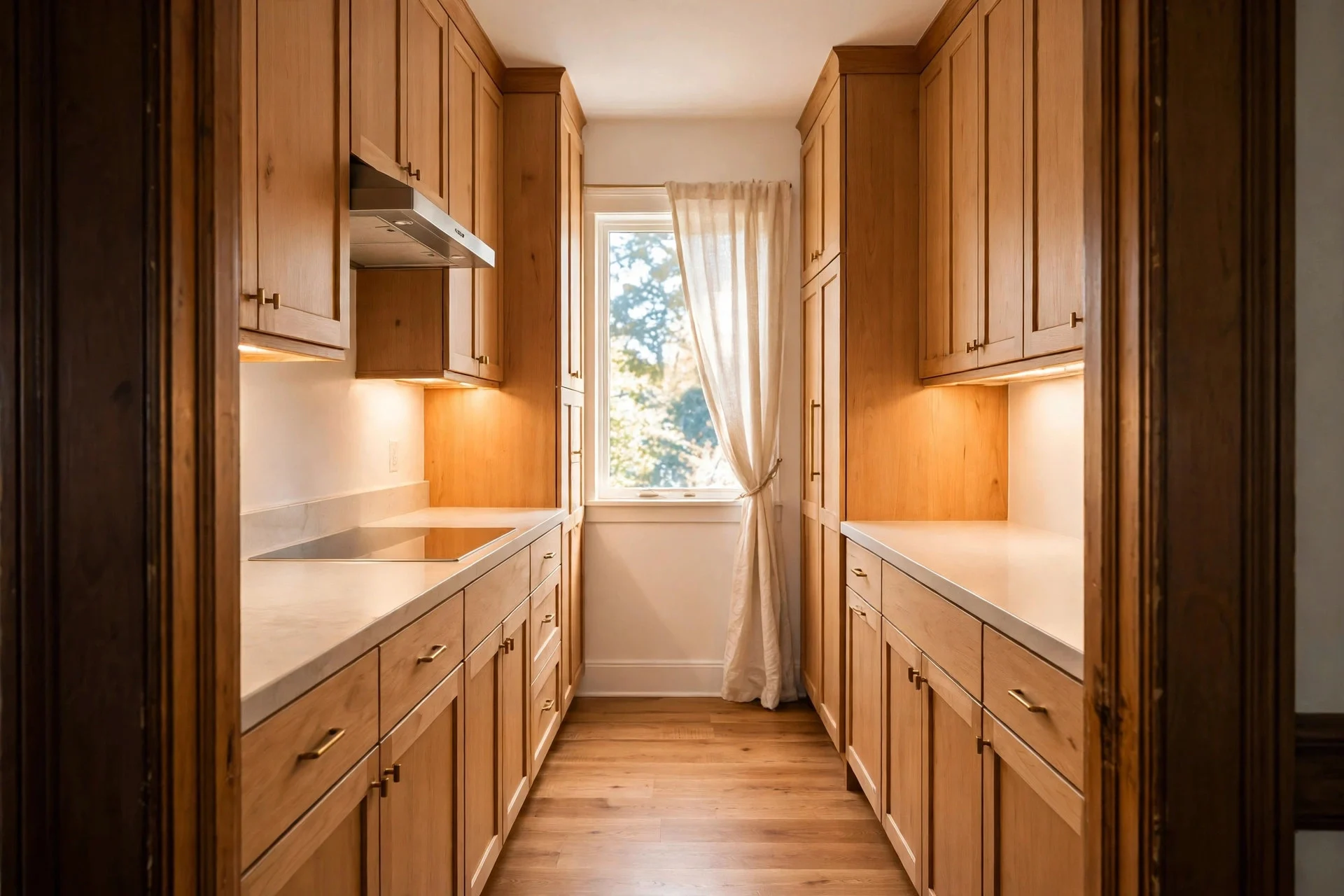
How do you light open kitchen shelves so they look good and actually help you see what you are reaching for? Sconces mounted just above the shelves are one of the simplest answers. They throw light down onto your dishes, free up counter space, and add a finished detail a bare wall cannot give you.
Below are 14 sconce ideas for shelves of every style, from renter-friendly plug-in picks to hardwired brass fixtures. Each one includes a realistic cost range, how hard it is to install, and one tip that saves you a headache.
1. Brass Swing-Arm Sconces Over Floating Shelves
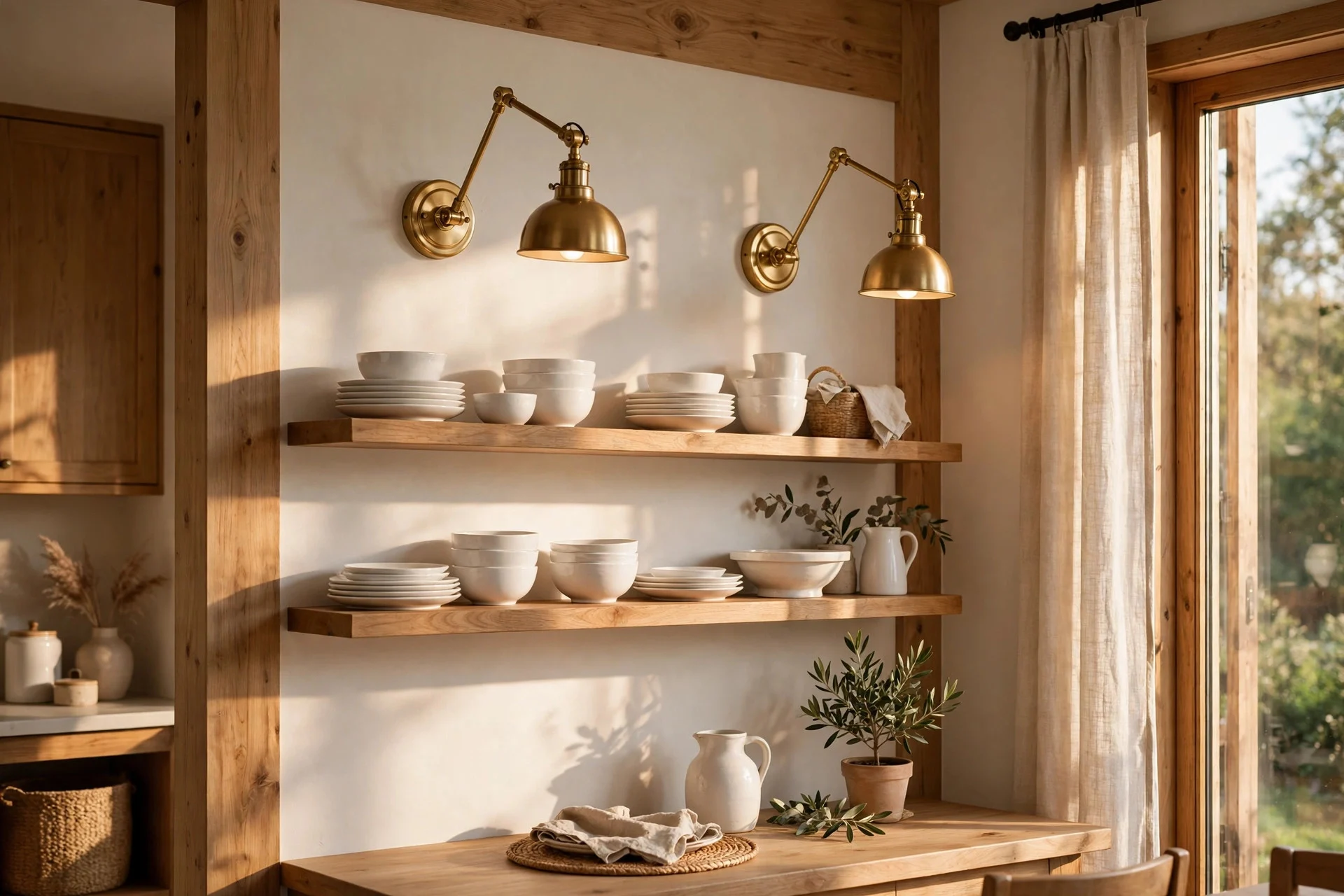
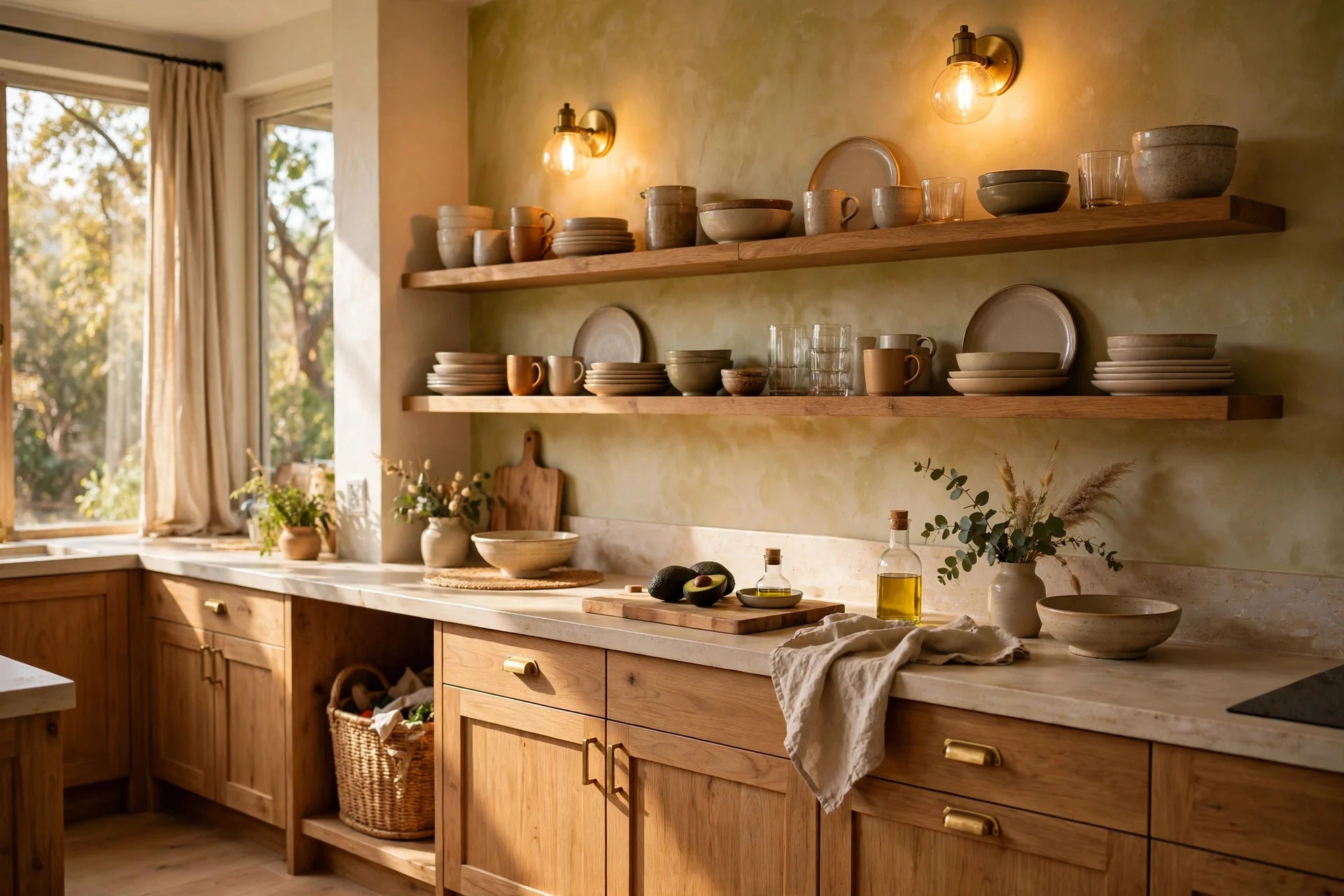
A swing-arm sconce gives you control a fixed light cannot. Pull the arm out to wash light across a whole shelf, then push it back flat for a cleaner look. Brass warms up white tile and pale cabinets, and pairs well with wood shelves and black hardware.
Mount each sconce 6 to 8 inches above the top shelf, centered on the shelf run. If your shelves span more than 5 feet, use two sconces spaced evenly so the middle does not go dark. Warm white bulbs, around 2700K, keep the glow soft.
Cost: $60–$180 per sconce, plus $100–$200 for hardwired installation if you hire an electrician.
Difficulty: Moderate; plug-in versions are easy, hardwired versions need an electrician.
Tip: Buy one sconce first and hold it against the wall at night before you commit to a full row.
Watch out: A long arm can bump tall vases or leaning cutting boards, so leave clearance above your tallest shelf items.
2. Plug-In Sconces for Renters and Quick Updates
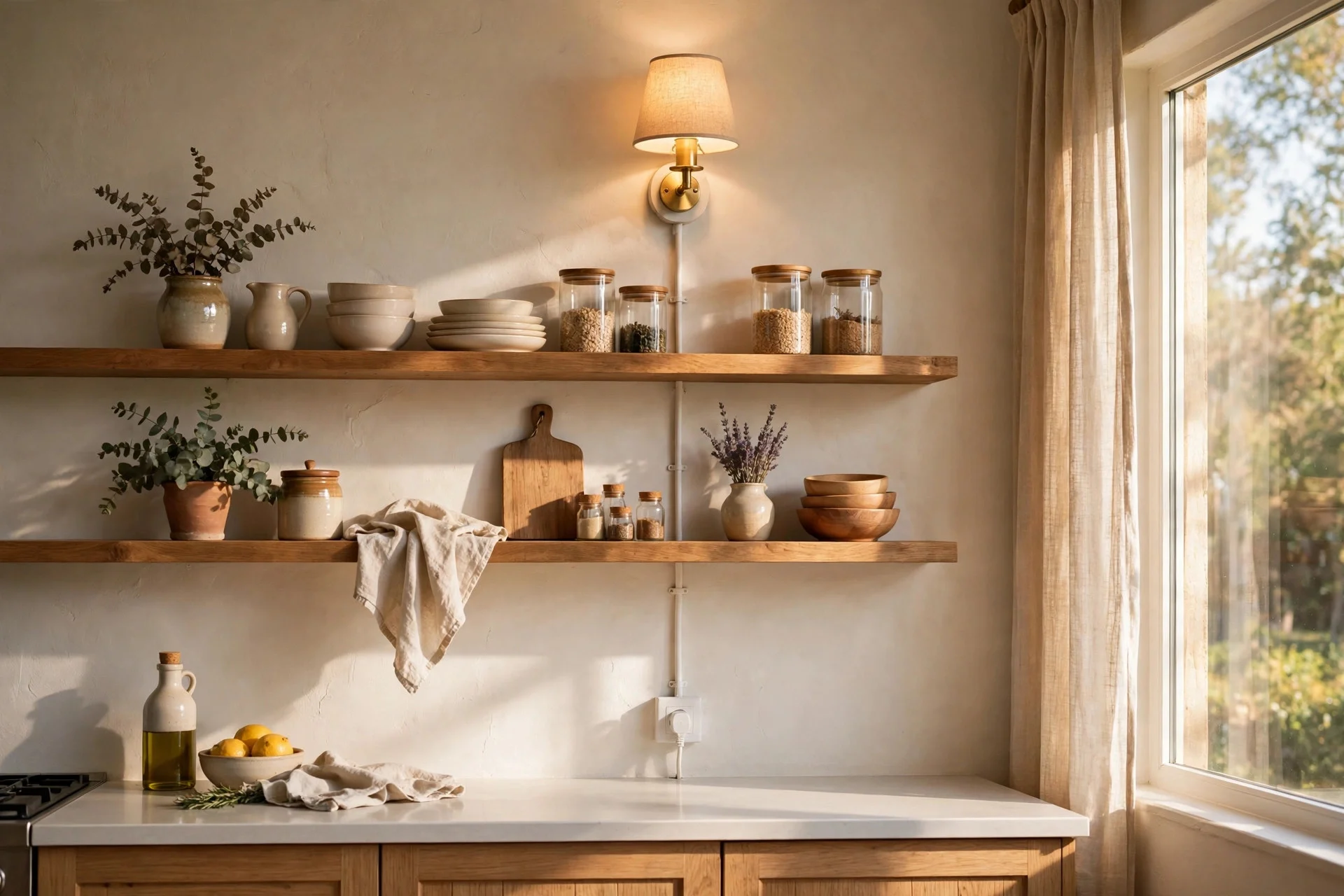
Plug-in sconces skip the wiring altogether. They mount with a couple of screws, plug into a nearby outlet, and come down just as easily when you move out. That makes them a smart pick for rentals, and for anyone who wants to test the look before paying for hardwiring.
The cord is the only downside, and it is easy to fix. Run it through a paintable cord cover that matches your wall, straight down to the outlet. Many plug-in sconces now come with an in-line switch or a remote, so you do not have to reach behind the shelf to turn them on.
Cost: $35–$90 per sconce, plus $10–$15 for a cord cover kit.
Difficulty: Easy; about 20 minutes per sconce with a drill and a level.
Tip: Plug the sconce in and switch it on before you screw the mount tight, so you know the bulb and switch work.
3. Battery-Operated Sconces Where No Outlet Exists
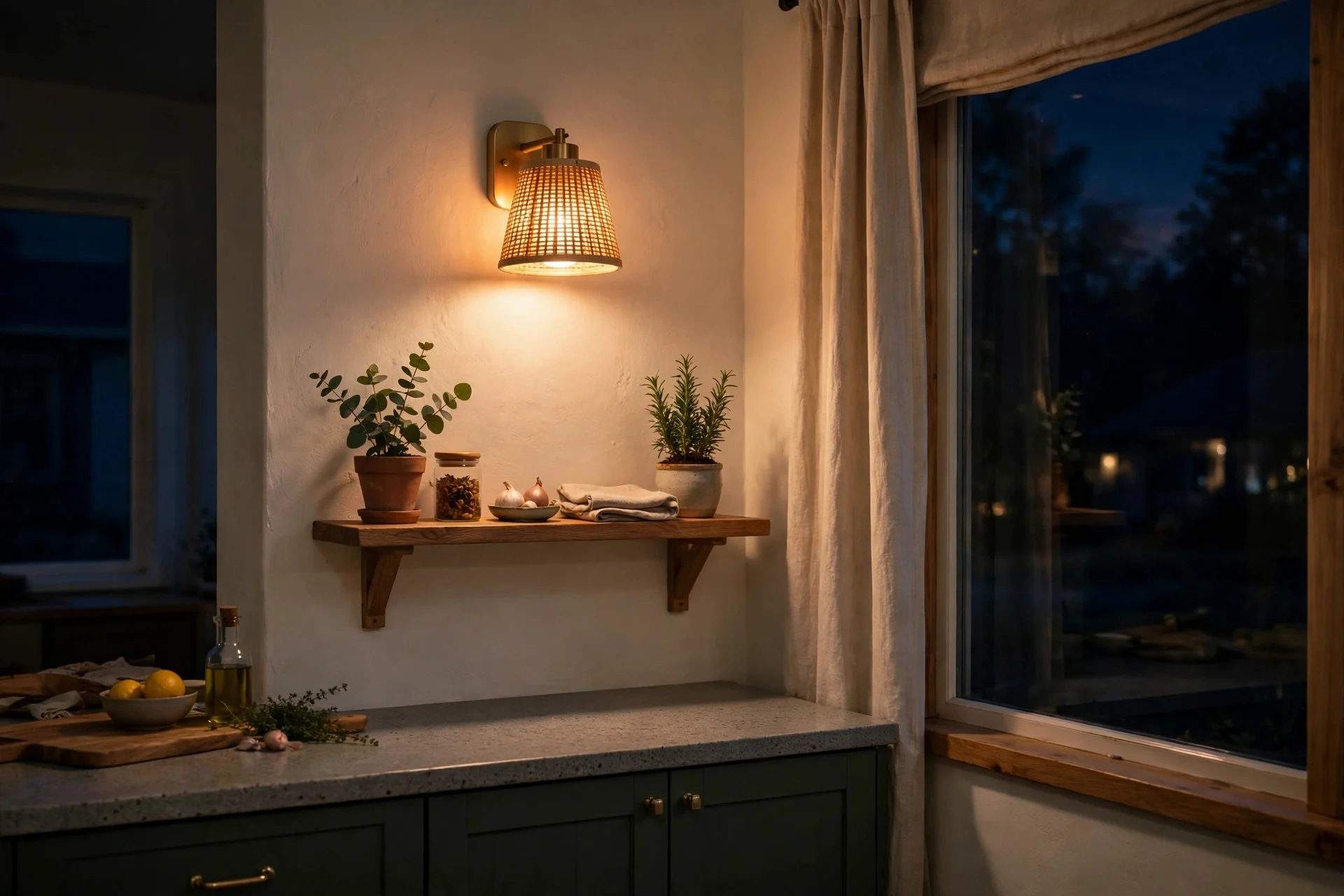
Some walls have no outlet nearby and no easy way to add one. Battery sconces solve that problem without any wiring at all. Most run on rechargeable batteries, switch on with a remote, and can be set on a timer so they glow each evening and switch off on their own.
Brightness is the trade-off. Battery sconces suit accent light and evening atmosphere better than task light for chopping or reading labels. Use them on a display shelf, and keep your main prep lighting separate. Check battery life before you buy, since cheap models can fade after a few weeks.
Cost: $25–$70 per sconce.
Difficulty: Easy; hang, insert batteries, and pair the remote in under 15 minutes.
Tip: Pick a model with a timer function so you are not climbing up to switch it off every night.
Watch out: Skip battery sconces over a sink or stove shelf, where steam and heat shorten battery life.
4. Black Metal Sconces for a Farmhouse Kitchen
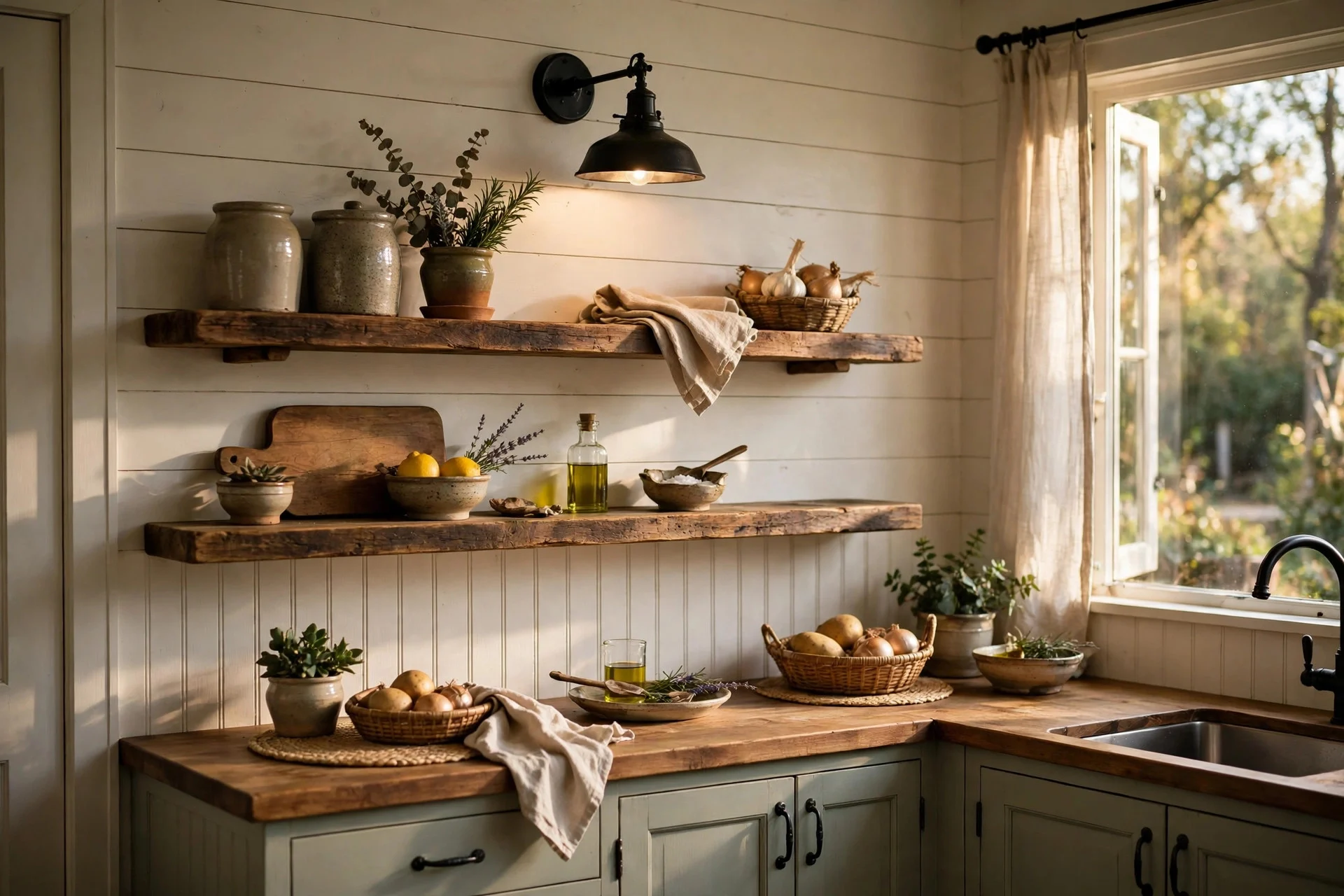
Matte black sconces ground a farmhouse kitchen without making it feel heavy. They work with shiplap, reclaimed wood shelves, and cream cabinets, and tie in neatly with black faucets and cabinet pulls. A simple dome or barn shade keeps the look unfussy.
Because black absorbs light, choose a shade open at the bottom so the glow still reaches the shelf below. A clear Edison-style bulb adds warm filament glow, but a frosted bulb spreads light more evenly over everyday dishes.
Cost: $40–$120 per sconce.
Difficulty: Easy for plug-in styles; moderate if hardwired.
Tip: Match the sconce finish to your existing black hardware rather than mixing black, oil-rubbed bronze, and charcoal in one wall.
5. Glass Globe Sconces for Soft, Even Light
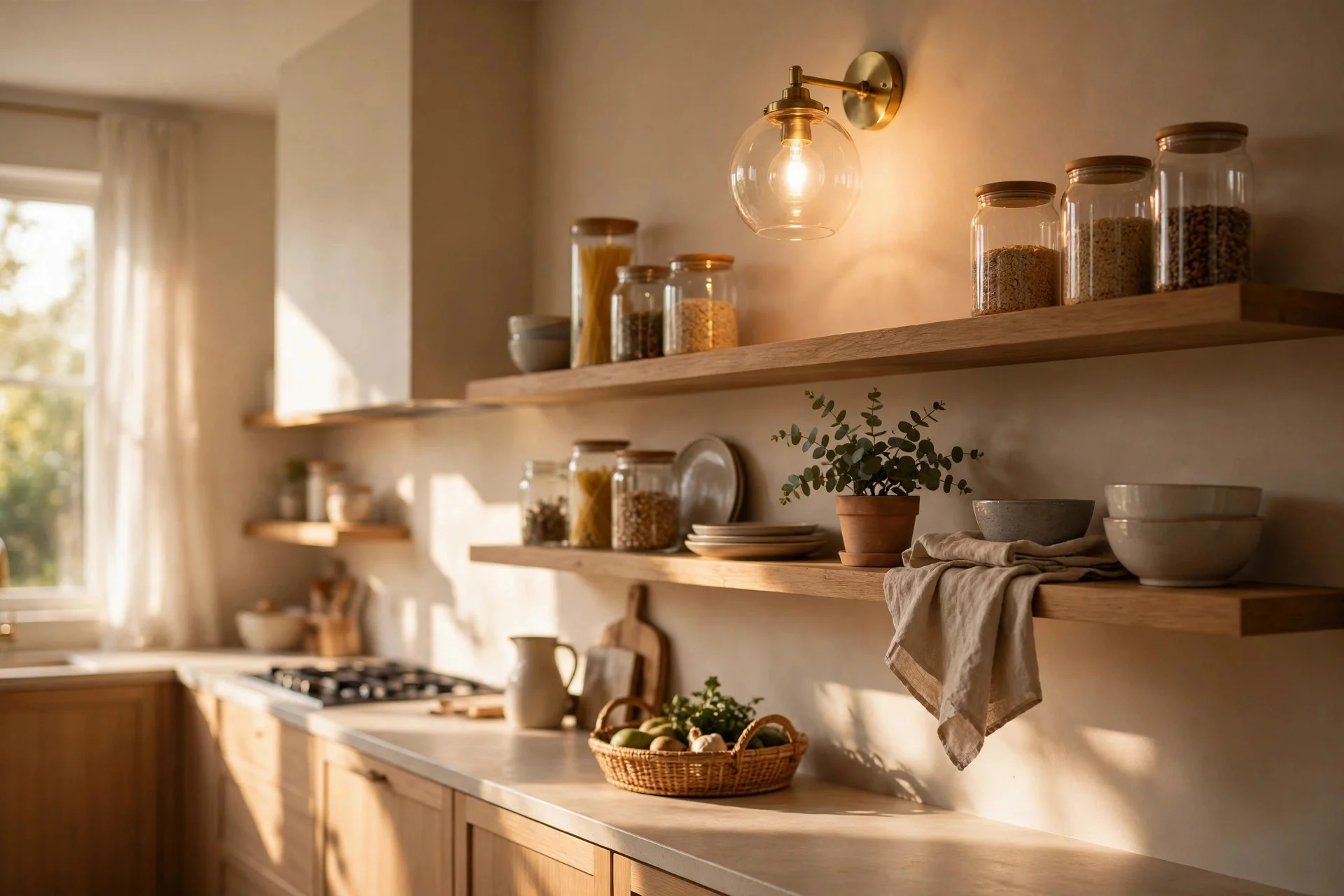
A glass globe spreads light in every direction, which makes it a good pick when your shelves hold a mix of items you want to see clearly. Clear glass feels airy; opal or frosted glass softens the glow and hides the bulb, which suits sconces at eye level.
Globes collect dust and cooking grease faster than open shades, so pick a size you can wipe easily without a step stool. Keep the globe away from direct steam, and choose LED bulbs so the glass stays cool.
Cost: $50–$140 per sconce.
Difficulty: Moderate; most are hardwired, though plug-in versions exist.
Tip: Frosted glass plus a 2700K LED gives you the softest glow with the least glare on glossy tile.
6. Cone and Dome Shades That Aim Light Down
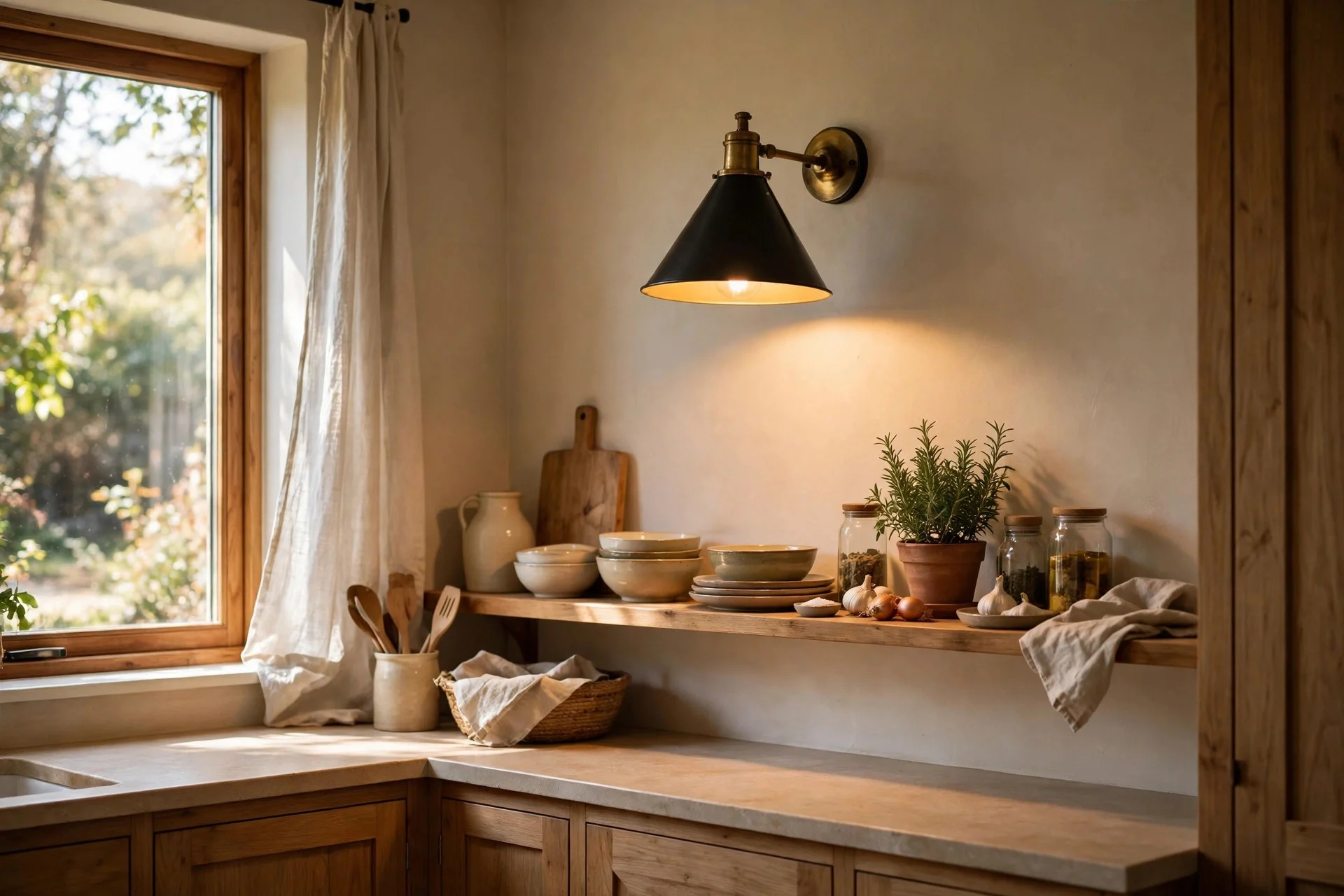
When your shelf doubles as a work zone — coffee gear, spices, everyday plates — you need light aimed down, not scattered around the room. A cone or dome shade focuses the beam on the shelf below, so you can read labels without switching on the big overhead light.
Mount the sconce around 8 to 10 inches above the shelf, so the light pool covers the full depth of the shelf instead of a narrow stripe at the back.
Cost: $45–$130 per sconce.
Difficulty: Easy to moderate, depending on wiring.
Tip: Test the light pool at night with the shelf fully loaded, since stacked bowls change where the light lands.
7. Picture-Light Sconces Over a Display Shelf
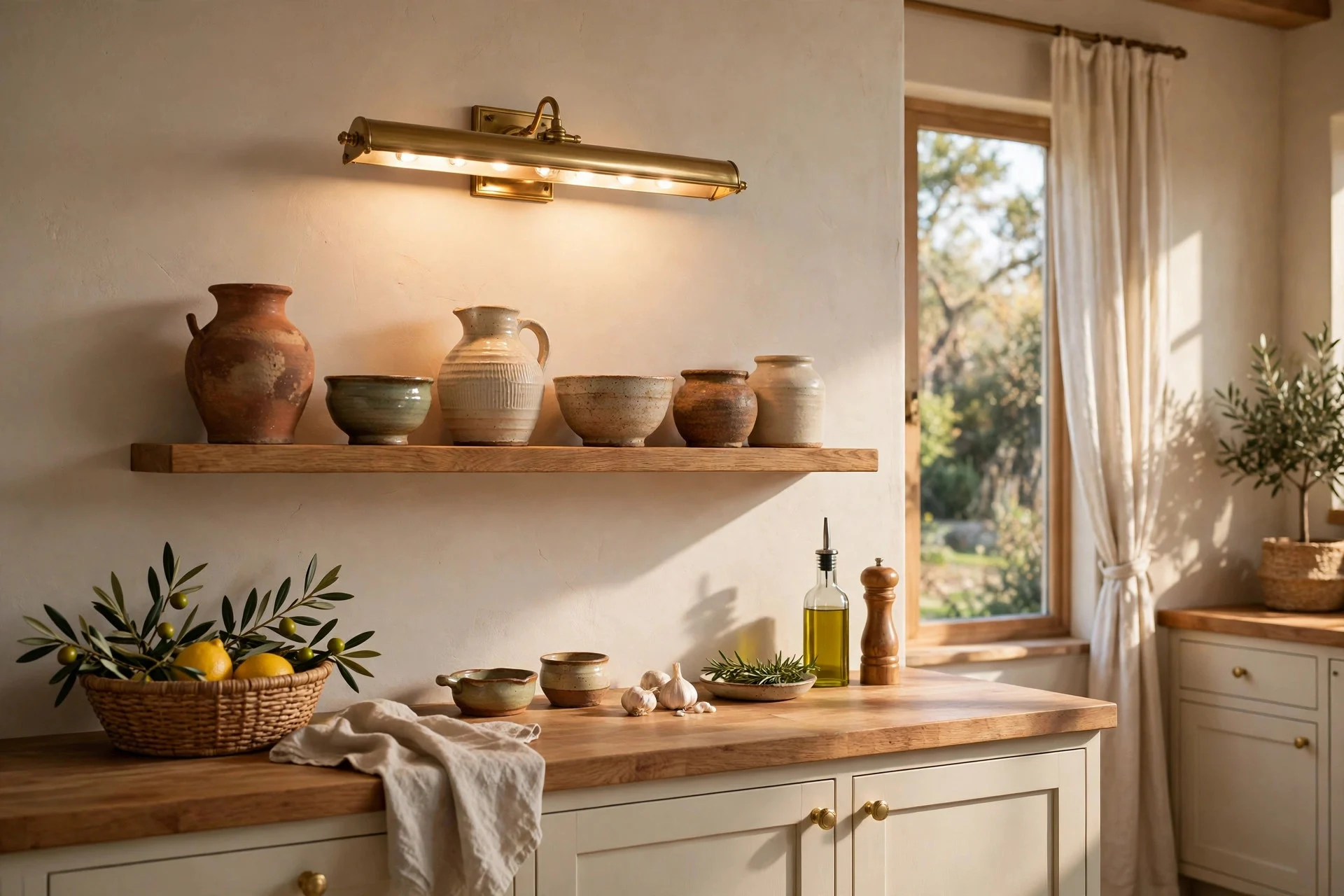
A picture light is a slim bar that mounts above a shelf and washes light down across whatever sits on it. It suits a single display shelf — pottery, framed prints, plants — where you want the shelf itself to be the feature.
Size matters here. The light should span about two-thirds to three-quarters of the shelf length; too short and the ends fall dark, too long and it overpowers the display. Battery and plug-in versions make this one of the easiest sconce styles to add to a finished wall. See also open kitchen shelving ideas for styling the shelf itself.
Cost: $40–$150 per light.
Difficulty: Easy; most models mount with two screws and need no wiring.
Tip: Angle the bar slightly toward the wall so the light grazes your pottery instead of glaring into your eyes.
8. Up-and-Down Sconces for a Wash of Wall Light
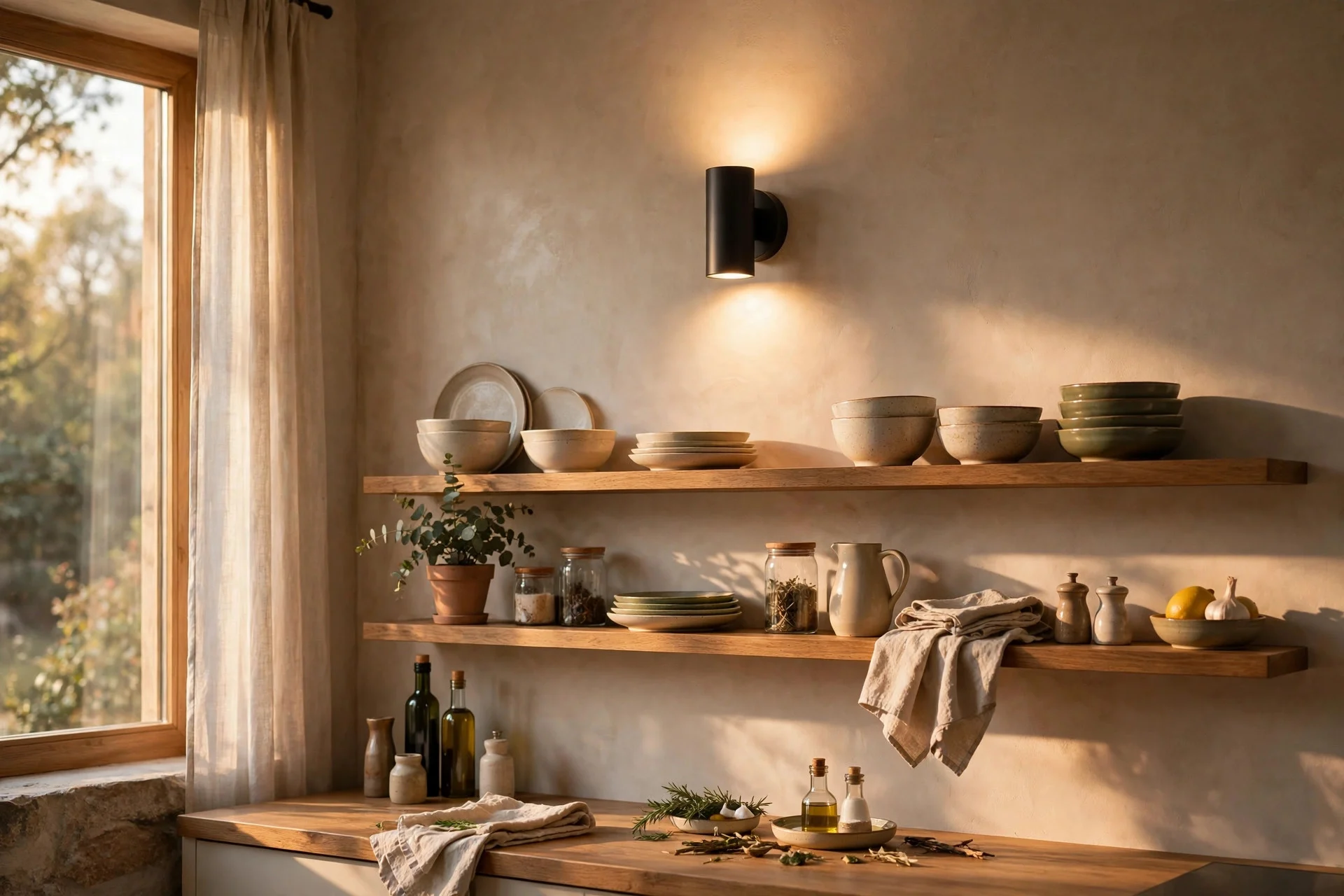
Up-and-down sconces send light both ways: up toward the ceiling and down onto the shelf. That double wash makes a small kitchen feel taller and brighter, and softens shadows a single downward light can leave.
These sconces look best with breathing room, so do not crowd them between two shelf brackets — leave at least a foot of clear wall on either side. They also show paint flaws more than other styles, so patch old anchor holes first.
Cost: $55–$160 per sconce.
Difficulty: Moderate; usually hardwired.
Tip: Use them on a dimmer so you can drop the glow low for evening meals and raise it for cooking prep.
9. Pairs of Mini Sconces Flanking a Short Shelf
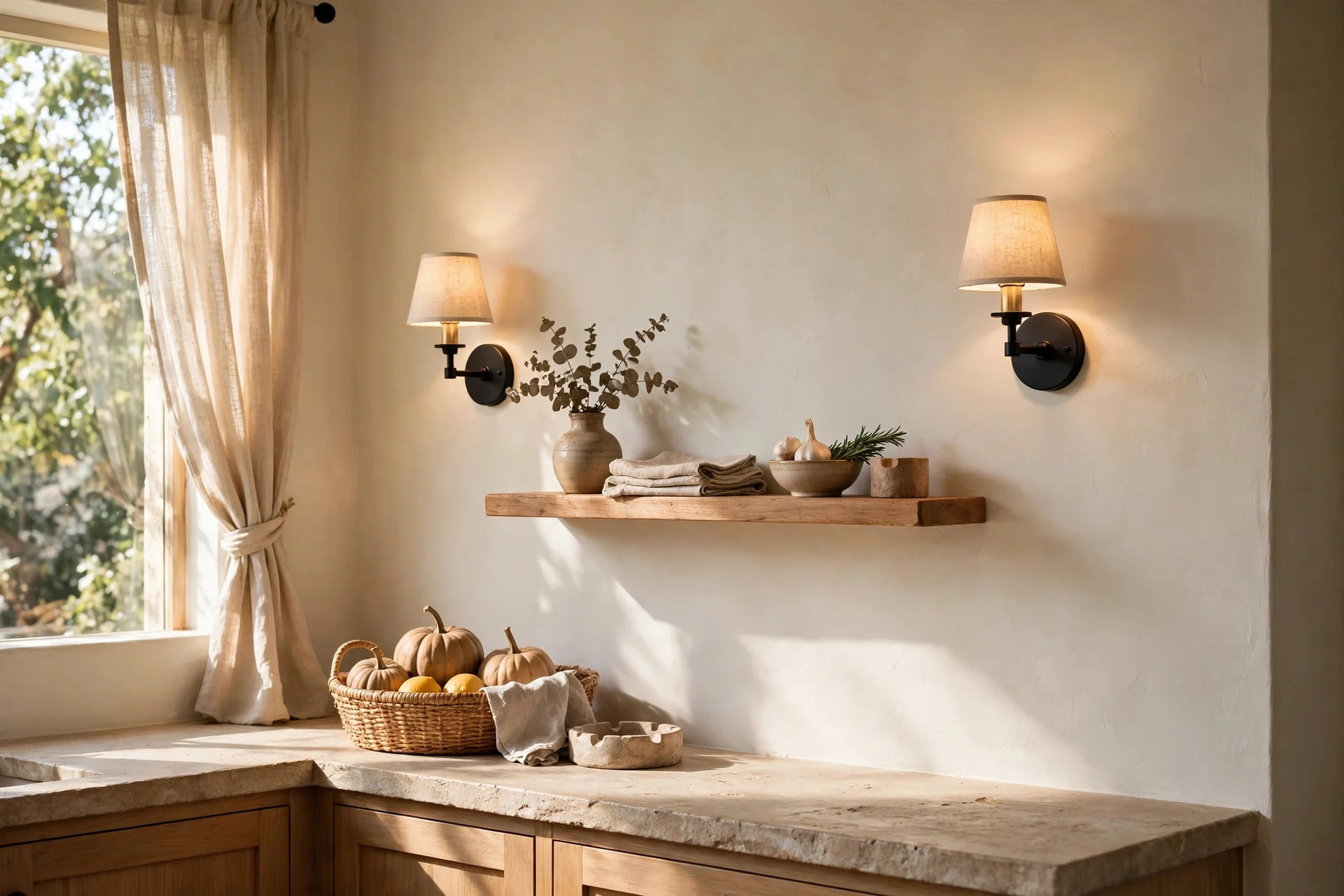
A short shelf — over a coffee station or a narrow stretch of wall — can look lost with one big fixture. Two small sconces, one on each side, frame it instead, and their combined light covers the shelf from both ends.
Keep the sconces small: shades around 4 to 6 inches wide suit a shelf under 3 feet long. Hang them level with the middle of the shelf or just above it, keeping the distance to each shelf edge equal.
Cost: $30–$90 per sconce.
Difficulty: Easy to moderate, depending on wiring.
Tip: Mark both mounting points with painter’s tape and step back to check the spacing before you drill.
10. Wood and Linen Shades for a Warm, Natural Glow
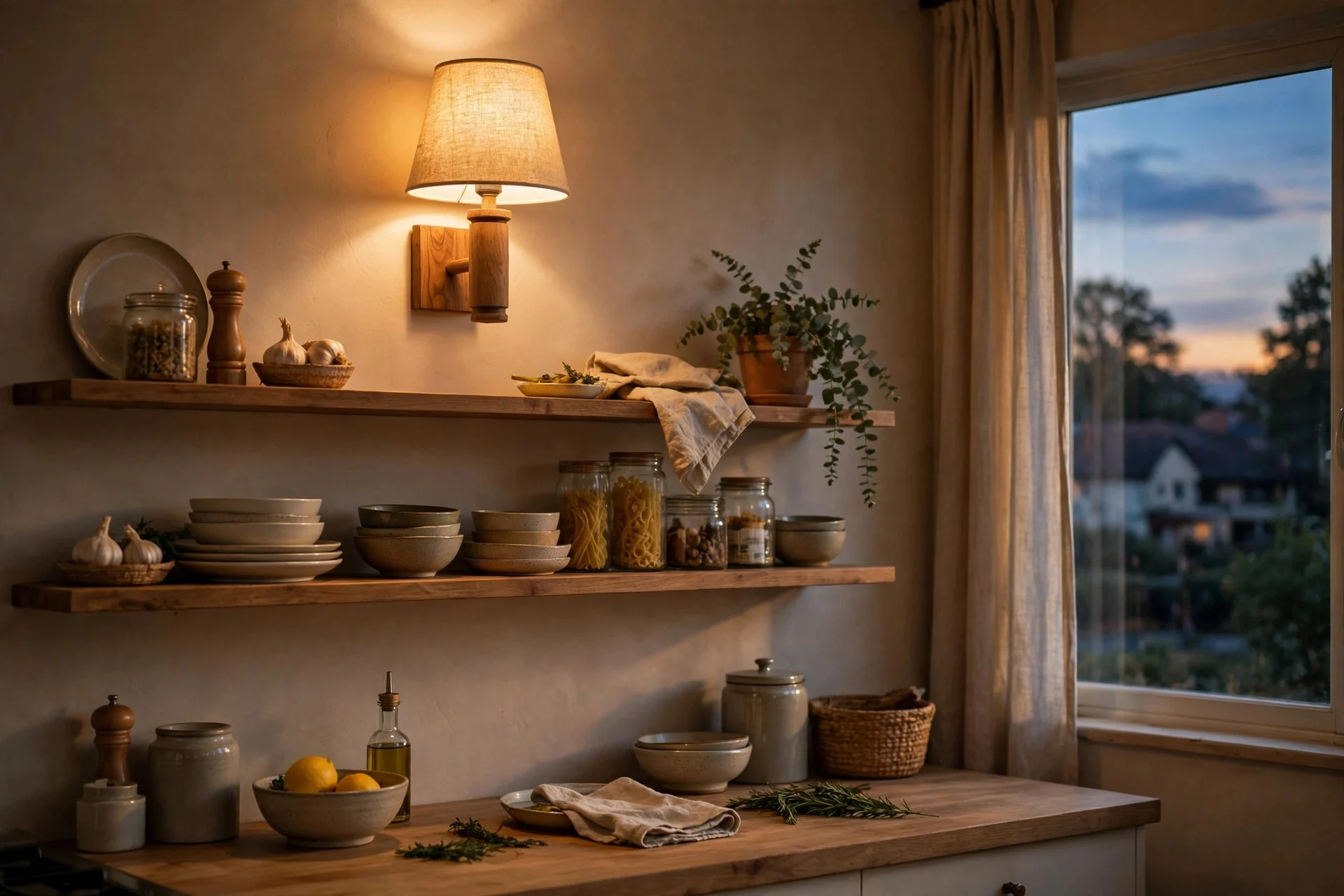
Wood bases and linen shades soften a kitchen that leans hard on stone, steel, and tile. The fabric diffuses the bulb into a warm, even glow, and the natural materials sit well with oak shelves, rattan, and cream or sage cabinets. This is a good pick for a breakfast nook shelf or a kitchen that opens onto a living space.
Fabric and kitchen grease do not mix well, so keep linen shades away from the stove wall and wipe them with a dry cloth every few weeks. Stick to LED bulbs so heat never builds up inside the fabric.
Cost: $50–$140 per sconce.
Difficulty: Easy for plug-in styles; moderate if hardwired.
Tip: A natural linen shade plus a warm bulb makes white dishes and wood tones look their best at night.
11. Industrial Cage Sconces for an Edgy, Practical Look
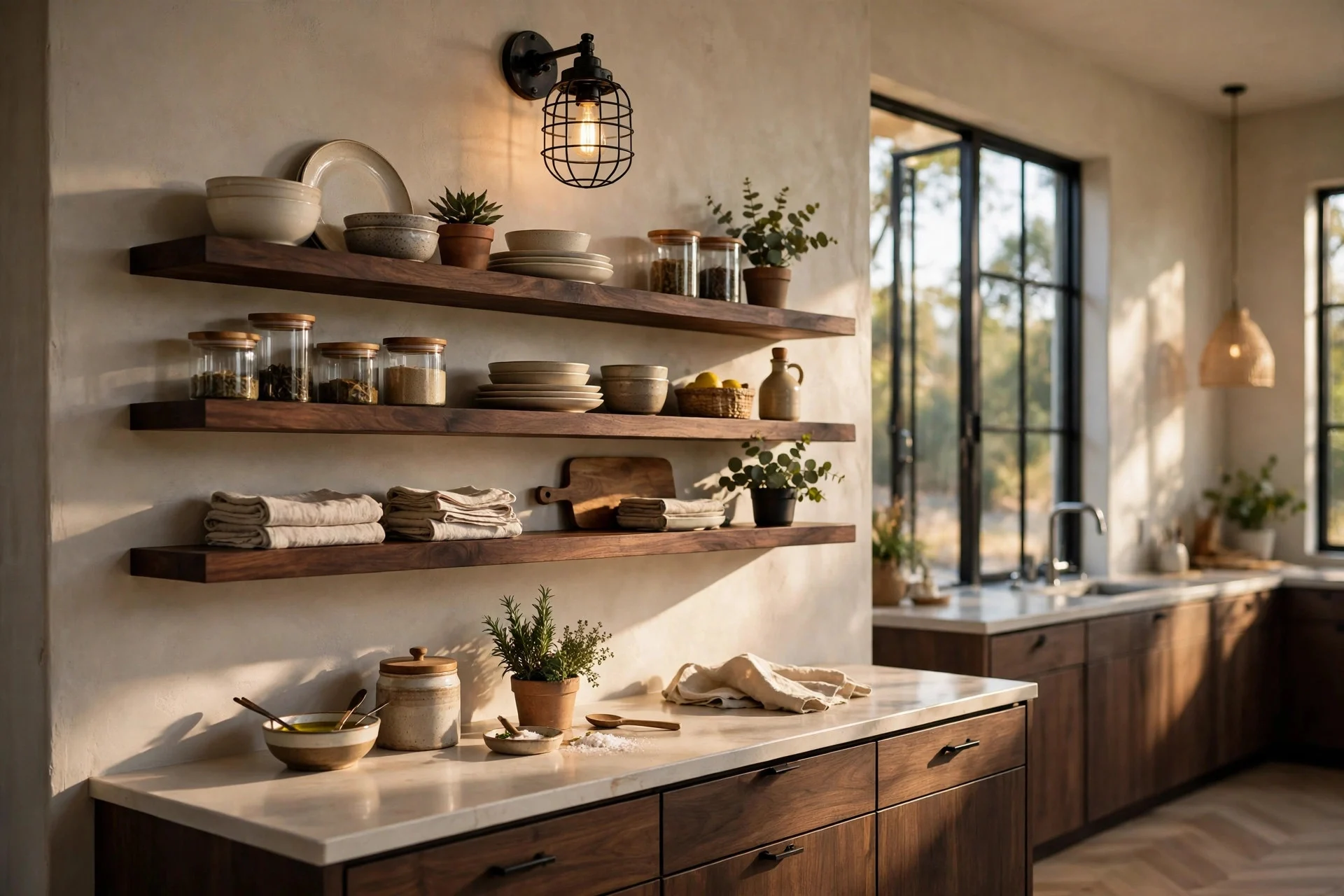
A cage sconce wraps the bulb in an open metal frame, which protects it and adds an industrial edge. It suits loft-style kitchens, dark wood shelves, brick walls, and kitchens with black or galvanized accents. The open cage also means the bulb’s full brightness reaches the shelf, with no shade blocking it.
The trade-off is glare. A bare bulb at eye level can be harsh, so use a lower-lumen or vintage-style filament bulb that glows rather than blazes. Over glassware, the cage shadows cast a soft pattern on the wall behind.
Cost: $35–$110 per sconce.
Difficulty: Easy to moderate, depending on wiring.
Tip: Pick a bulb with a warm color temperature and dim it if you can, since bare bulbs show their color more than shaded ones.
Watch out: Metal cages get warm with incandescent bulbs, so LED is the safer choice in a busy kitchen.
12. Matte White Ceramic Sconces That Disappear Into the Wall
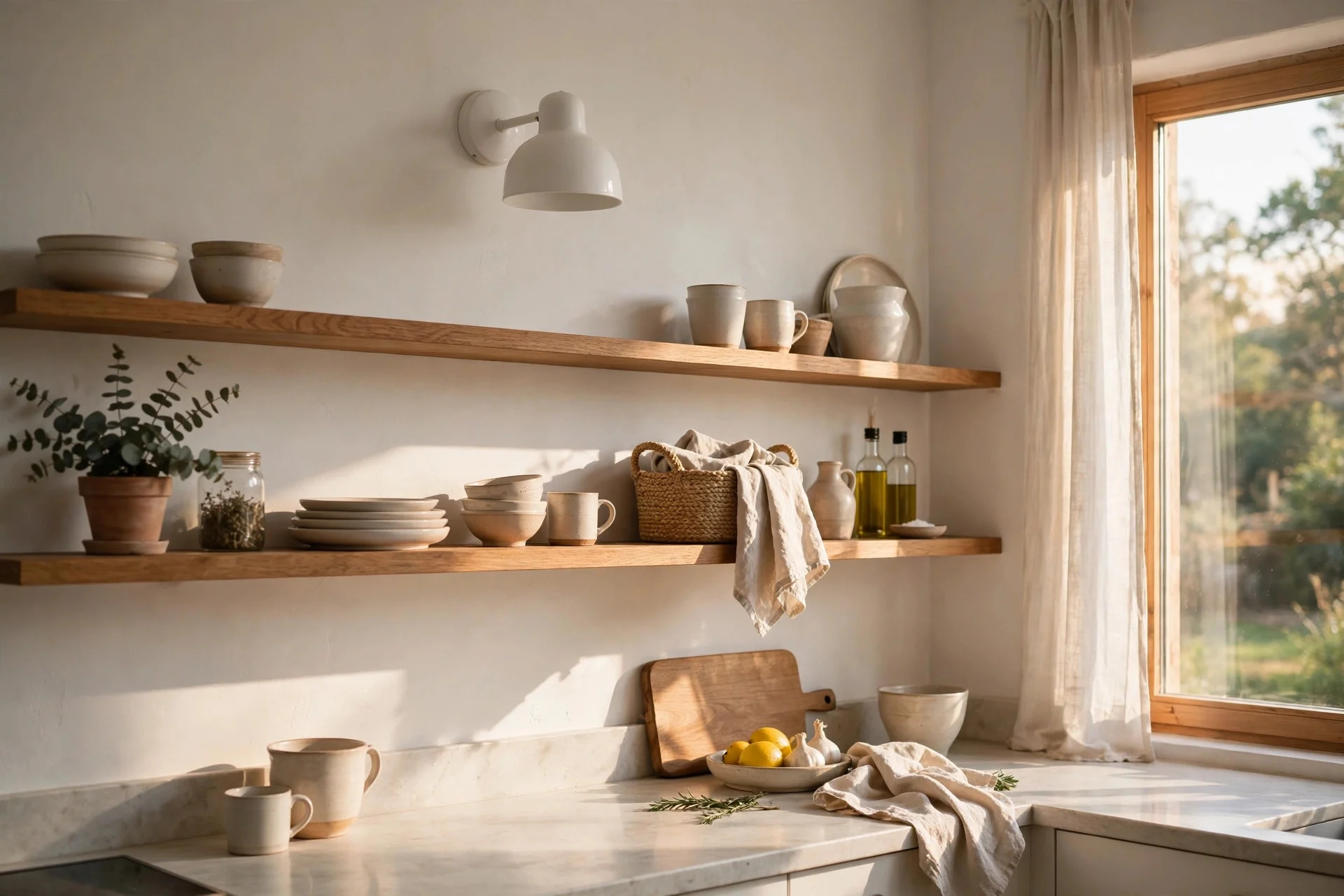
White ceramic sconces are the quiet option. They blend into a white or pale wall, so the light itself becomes the feature rather than the fixture — ideal for minimal kitchens and shelves of colorful dishes.
Ceramic is heavier than metal, so check that your wall anchors suit the weight, especially on plaster or tile. A simple half-dome or cone shape is easiest to live with; ornate shapes collect dust in their crevices.
Cost: $45–$130 per sconce.
Difficulty: Moderate; most are hardwired and need solid anchors.
Tip: If your wall is not pure white, hold the sconce against it in daylight first — a bright white fixture can look stark on a cream wall.
13. Dimmable Sconces on Their Own Switch
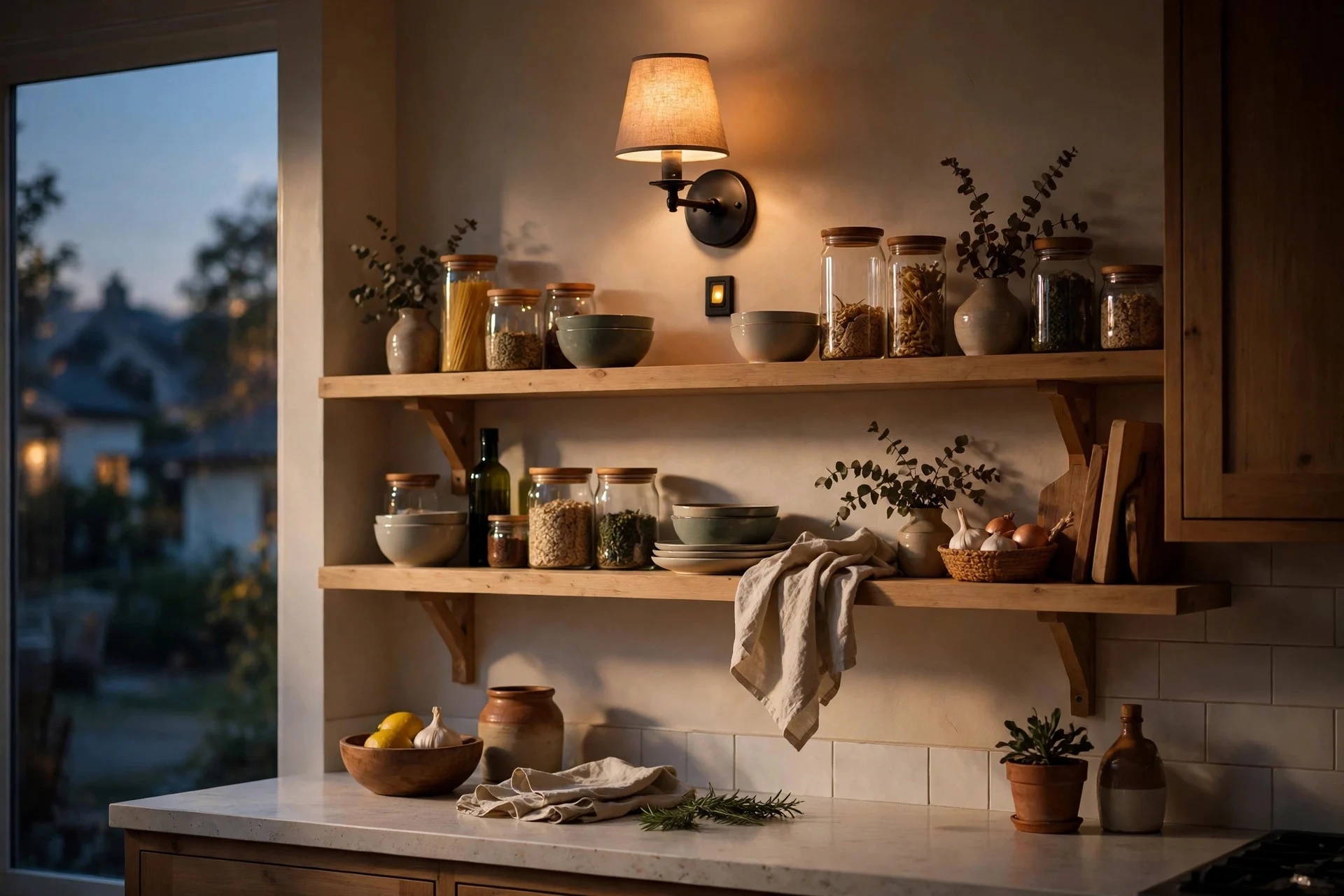
The fixture matters less than the control here. Sconces wired to their own dimmer let one shelf run bright for cooking and low for dinner, without touching the main ceiling lights. That flexibility is worth more than a fancier shade.
Check that your bulbs and dimmer are compatible before you buy in bulk — mismatched LEDs flicker or buzz at low settings. A simple rotary dimmer does the job for less money and never needs an app update. For more on layering kitchen light, see lighting calculator.
Cost: $20–$60 for a dimmer switch, plus the sconce cost; electrician fitting $80–$150.
Difficulty: Moderate; wiring a dimmer is a job for an electrician if you are not confident with wiring.
Tip: Label the dimmer clearly if it sits beside other switches, so guests do not dim the wrong lights.
14. Mixing Sconces With Under-Shelf LED Strips
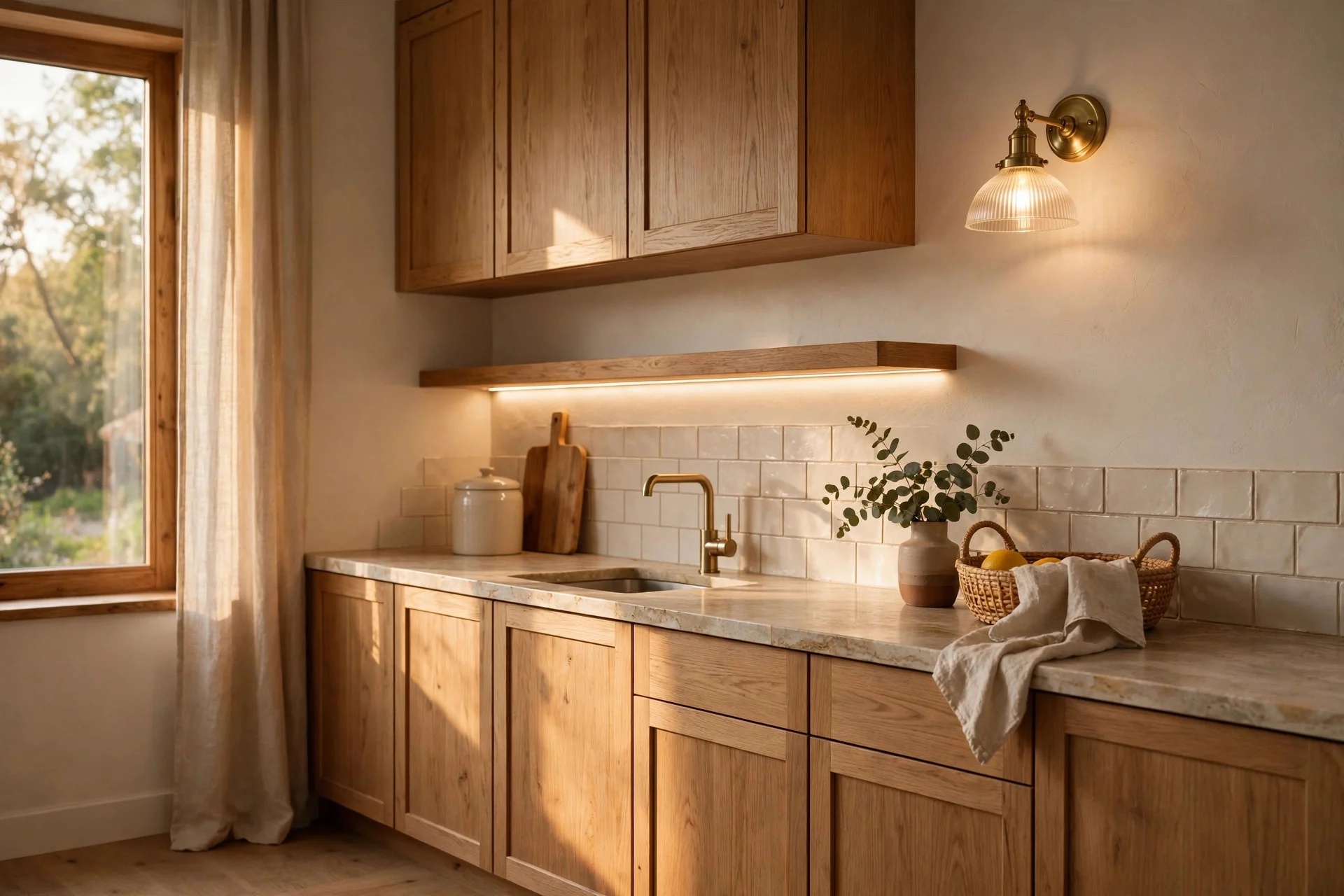
Sconces give you character; LED strips give you even task light. Used together, they cover each other’s weak spots. Mount the sconce above the top shelf for atmosphere, then run a slim LED strip under each lower shelf so the surface below stays bright and shadow-free.
Keep the color temperatures matched, or the mix will look off. If your sconces run at 2700K warm white, set the strips to the same. Hide the strip toward the front edge of the shelf underside so light falls forward onto the counter. A related read is under-cabinet lighting.
Cost: $15–$40 per LED strip kit, plus the sconce cost.
Difficulty: Easy for plug-in strips; moderate for hardwired sconces.
Tip: Buy strips with a diffuser channel so you see a smooth line of light instead of individual dots.
Watch out: Cheap adhesive strips peel off in kitchen heat and steam, so use mounting clips or aluminum channels for a lasting fit.
Frequently Asked Questions
How high should a sconce sit above a kitchen shelf?
Most sconces work best 6 to 10 inches above the shelf they light. Closer than that and the light pool turns narrow; higher and the glow spreads too thin. If your shelf holds tall items, measure from the tallest piece.
Do kitchen shelf sconces need to be hardwired?
No. Plug-in and battery sconces work well and suit rentals or walls without existing wiring. Hardwiring looks cleaner because there is no cord, and it lets you add a wall dimmer — worth doing while walls are open during a renovation.
What color temperature is best for kitchen sconces?
Warm white at 2700K suits most kitchens and makes food, wood, and dishes look inviting. With lots of daylight and cool gray finishes, 3000K still feels warm without turning yellow. Avoid bulbs above 4000K over shelves, since they can make a cozy kitchen feel like a workspace.
How many sconces do I need over my shelves?
Plan on one sconce per 3 to 5 feet of shelf run, or a pair flanking a short shelf under 3 feet. A single sconce over a long run leaves dark ends, while too many crowd the wall. Mock up the spacing with painter’s tape and check it at night before drilling.
A Quick Checklist Before You Buy
Run through this list once and you will avoid the most common sconce mistakes:
- Measure the full shelf run and mark sconce positions with tape first.
- Decide between hardwired, plug-in, or battery power before you shop.
- Match the sconce finish to your faucets and cabinet hardware.
- Use warm white bulbs (2700K–3000K) and check dimmer compatibility.
- Keep shades clear of steam, heat, and your tallest shelf items.
- Switch the sconces on at night with the shelves fully loaded before final fixing.
Done right, shelf sconces do two jobs at once: they light what you reach for every day, and they make an ordinary wall of shelves look finished. Start with one shelf, get the height and brightness right, then repeat it across the rest of the kitchen.