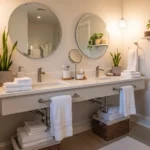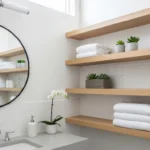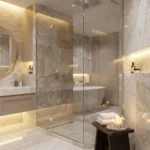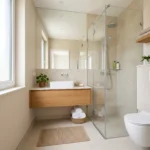
Bathrooms have quietly become one of the most important rooms in the home. While kitchens and living rooms often get most of the attention, the bathroom is where many people start and end their day. Yet countless homeowners are still dealing with outdated finishes, poor lighting, limited storage, and designs that feel more functional than enjoyable.
The challenge is that bathroom trends change quickly. What looked modern five years ago can suddenly make a space feel dated. At the same time, nobody wants to spend thousands of dollars on a renovation that will look old-fashioned in another year or two.
The good news is that today’s bathroom trends aren’t just about appearance. Many focus on comfort, functionality, durability, and creating a space that genuinely improves everyday life. Instead of flashy upgrades that exist only for social media photos, homeowners are choosing features that make their bathrooms easier to use while still looking stylish.
In this guide, you’ll discover 12 bathroom trends that are shaping modern homes this year. From spa-inspired features and statement stone surfaces to smarter storage solutions and warmer color palettes, these ideas combine practical benefits with lasting appeal. Whether you’re planning a complete remodel or simply looking for small updates that make a big impact, these trends offer plenty of inspiration for creating a bathroom that feels current, comfortable, and designed for real life.
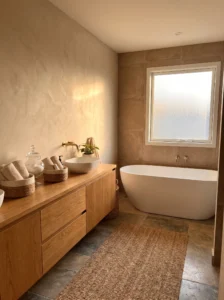
1. Warm Earth-Tone Color Palettes
For years, bright white bathrooms dominated design magazines, but many homeowners are now craving something warmer and more inviting.
Earth-inspired colors such as beige, clay, sand, taupe, and soft terracotta create a welcoming atmosphere that feels comfortable rather than clinical. These shades add depth without overwhelming the room and work exceptionally well with natural materials.
This trend is particularly effective in both large and small bathrooms. In compact spaces, warm neutrals prevent the room from feeling cold. In larger bathrooms, they create a more luxurious, spa-like environment.
When choosing colors, focus on layering similar tones rather than introducing too many contrasting shades. Pair warm beige walls with natural wood vanities or stone-look tiles. Avoid overly orange tones that can quickly look dated.
A practical advantage is that earth tones tend to hide water spots and minor dirt better than pure white surfaces. Many homeowners also find these colors more relaxing during early mornings and evenings, making daily routines feel less rushed and more comfortable.
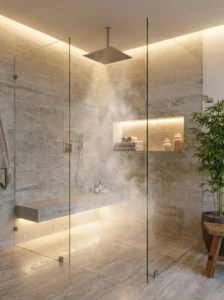
2. Spa-Inspired Shower Spaces
Many people dream of recreating the calm, relaxing feeling of a luxury spa at home.
Large walk-in showers are becoming a priority in modern bathroom design because they combine comfort, accessibility, and visual appeal. Instead of cramped shower stalls, homeowners are opting for open layouts with frameless glass enclosures.
This trend works especially well in primary bathrooms where relaxation is a key goal. Features such as rainfall showerheads, built-in benches, recessed niches, and multiple spray settings enhance the experience.
Choose moisture-resistant materials like porcelain tile, natural stone, or quartz surfaces. Consider slip-resistant flooring to improve safety without sacrificing style.
One common mistake is focusing solely on aesthetics while ignoring drainage. Proper floor slope and waterproofing are critical for long-term performance.
The result is a shower space that feels more like a retreat than a necessity. Even a quick morning shower can feel noticeably more enjoyable when the space is designed for comfort.
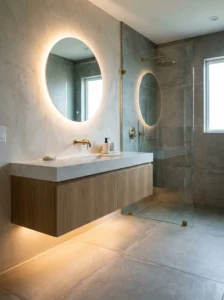
3. Floating Vanities
Floating vanities continue gaining popularity because they make bathrooms appear larger and more modern.
By mounting the vanity directly to the wall, visible floor space increases, creating a lighter and more open appearance. This design works particularly well in small bathrooms where every visual inch matters.
Floating vanities pair beautifully with contemporary, Scandinavian, and minimalist interiors. Natural wood finishes remain especially popular because they soften the modern look.
When selecting a floating vanity, pay attention to storage capacity. Some sleek designs sacrifice functionality for appearance. Look for deep drawers that maximize organization.
Lighting installed beneath the vanity can further enhance the floating effect while providing subtle nighttime illumination.
From a practical perspective, cleaning becomes easier since there are no cabinet bases collecting dust and debris. Homeowners often appreciate how much less cluttered the room feels after switching to a wall-mounted design.
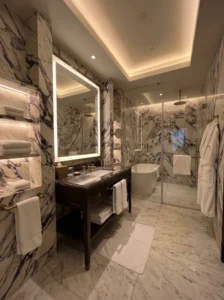
4. Statement Stone Surfaces
Bathrooms are moving beyond simple countertop materials and embracing stone as a major design feature.
Large-format stone slabs on walls, shower surrounds, and vanity backsplashes create a luxurious appearance while reducing grout lines. Marble, quartz, travertine, and porcelain stone-look panels are among the most popular choices.
This trend works particularly well in primary bathrooms where homeowners want a high-end look. However, smaller bathrooms can also benefit from a single statement wall.
Quartz remains a favorite because it offers durability and low maintenance compared to natural marble. Stone-look porcelain provides another practical option at a lower cost.
Avoid using too many competing patterns in one space. Let the stone serve as the focal point while keeping surrounding finishes relatively simple.
The seamless appearance creates visual calm and often makes the room feel larger and more sophisticated.
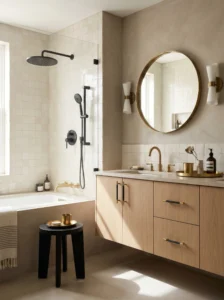
5. Mixed Metal Finishes
Matching every fixture is no longer considered necessary.
Today’s bathrooms often combine different metal finishes to create visual interest and depth. Black faucets paired with brass lighting or brushed nickel hardware mixed with warm bronze accents can produce a more curated appearance.
This trend works across various styles, from modern to transitional interiors. The key is intentional coordination rather than random mixing.
Limit yourself to two or three metal finishes to maintain balance. One finish should dominate, while others act as accents.
Common combinations include brushed brass with matte black, chrome with black, and nickel with bronze.
Mixed metals prevent bathrooms from feeling overly coordinated or predictable. The result often feels more customized and professionally designed.
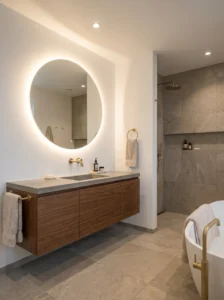
6. Backlit Mirrors
Good lighting can completely transform a bathroom experience.
Backlit mirrors provide soft, even illumination that reduces shadows while adding a modern architectural element. Unlike traditional vanity lights, they create a flattering glow around the face.
These mirrors are especially useful in bathrooms where natural light is limited. They help improve visibility for grooming tasks while contributing to the room’s overall ambiance.
Choose LED models with adjustable brightness and color temperature whenever possible. This flexibility allows users to customize lighting based on the time of day.
Avoid selecting mirrors that are too small for the vanity width. Proper scale significantly impacts the final look.
Many homeowners discover that a backlit mirror makes their bathroom feel instantly more upscale without requiring a major renovation.
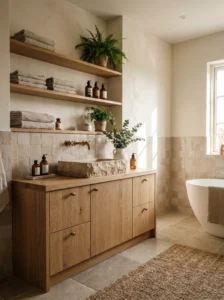
7. Natural Wood Elements
Natural materials continue to play a major role in bathroom design.
Wood introduces warmth, texture, and character that balance the hard surfaces commonly found in bathrooms. Vanities, shelving, wall panels, and decorative accents are popular ways to incorporate this trend.
Engineered wood products designed for moisture resistance offer greater durability in humid environments. White oak, walnut, and light ash finishes remain especially popular.
This trend works in modern, rustic, Scandinavian, and coastal bathrooms alike. Pair wood with stone, concrete, or matte tiles for a balanced look.
Avoid untreated wood in high-moisture areas unless proper sealing is applied.
The warmth of natural wood helps bathrooms feel less sterile and more connected to the rest of the home.
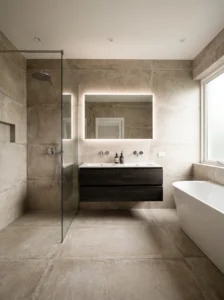
8. Large-Format Tiles
Fewer grout lines can make a dramatic difference in both appearance and maintenance.
Large-format tiles create a cleaner, more seamless look while making rooms feel larger. Popular sizes include 24×48 inches and even larger slab-style installations.
These tiles are ideal for shower walls, floors, and full-room applications. They work especially well in contemporary and minimalist designs.
Choose slip-resistant finishes for flooring and ensure proper installation by experienced professionals. Large tiles require careful leveling to avoid uneven surfaces.
One of the biggest benefits is easier cleaning. Less grout means fewer areas for dirt, mold, and mildew to accumulate.
The streamlined appearance contributes to a more modern and luxurious bathroom overall.
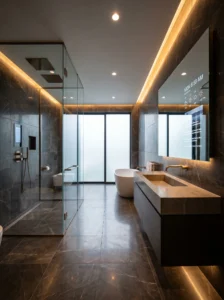
9. Smart Bathroom Technology
Technology is becoming increasingly integrated into everyday home design.
Smart mirrors, touchless faucets, heated floors, digital shower controls, and intelligent toilets are transforming how people interact with their bathrooms.
These features are particularly valuable in primary bathrooms and households focused on convenience and energy efficiency.
Prioritize technologies that solve actual problems rather than selecting gadgets simply because they’re trendy. Heated floors, for example, provide genuine comfort during colder months.
Consider future maintenance and compatibility when purchasing smart products. Choosing reputable brands often results in better long-term reliability.
Many homeowners find that even one or two smart upgrades significantly improve their daily routine.
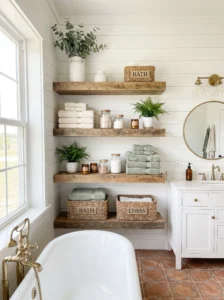
10. Open Shelving with Purpose
Open shelving remains popular, but today’s approach is far more intentional.
Rather than overcrowding shelves with decorative items, homeowners are using them for carefully organized essentials. Rolled towels, attractive containers, plants, and everyday products create a functional display.
This trend works best in medium to large bathrooms where visual clutter can be controlled effectively.
Choose moisture-resistant materials such as sealed wood, metal, or stone shelves. Install them near frequently used areas for convenience.
Avoid displaying too many products, which can quickly make the bathroom feel messy.
Well-designed open shelving adds personality while improving accessibility and organization.
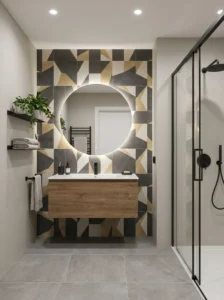
11. Bold Tile Accents
Not every bathroom trend is subtle.
Bold tile accents allow homeowners to introduce personality without overwhelming the entire room. Patterned shower walls, colorful backsplashes, and decorative floor tiles are increasingly popular.
This trend works particularly well in powder rooms, where experimentation feels less risky. However, a single accent wall can also enhance larger bathrooms.
Choose one focal area rather than multiple competing patterns. Geometric, handmade-look, and textured tiles remain popular choices.
Balance bold tile with neutral surrounding finishes to prevent visual overload.
A carefully selected accent tile can make a bathroom memorable while reflecting personal style.
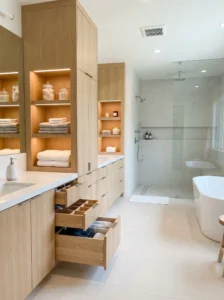
12. Better Storage Integration
Perhaps the most practical bathroom trend is smarter storage.
Beautiful bathrooms lose their appeal quickly when countertops become cluttered with daily essentials. Integrated storage solutions help maintain a clean and organized appearance.
Drawer organizers, pull-out cabinets, recessed medicine cabinets, built-in shower niches, and tall storage towers are all growing in popularity.
This trend works in bathrooms of every size. Small bathrooms benefit from maximizing vertical space, while larger bathrooms can incorporate customized storage zones.
Plan storage around actual habits rather than idealized expectations. Consider where items are used most frequently and store them nearby.
Thoughtful storage reduces daily frustration, improves organization, and helps maintain the overall design for years to come.