Small bathrooms have a way of feeling crowded faster than almost any other room in the house. One oversized cabinet, poor lighting choice, or even the wrong paint color can make the entire space feel tight and uncomfortable. And the frustrating part is that many people assume the only solution is a full renovation. In reality, most small bathrooms feel smaller because of visual clutter, poor layout choices, and heavy design elements—not because of the actual square footage.
The good news is that creating a larger-looking bathroom often has more to do with smart design decisions than expensive remodeling. A few thoughtful changes can completely shift how the room feels when you walk in. Better lighting, cleaner lines, reflective surfaces, and more intentional storage can make even a tiny bathroom feel calm, open, and functional.
The biggest mistake people make is trying to fit too much into a small space. Oversized vanities, dark colors everywhere, bulky decor, and closed-off storage all compete visually. The result is a room that feels busy before the day even starts.
In this guide, you’ll learn practical, realistic ways to make a small bathroom feel larger without needing to knock down walls. These ideas focus on improving flow, maximizing light, reducing visual weight, and making the space work better in everyday life. Whether you’re decorating a rental bathroom, updating an older home, or refreshing a tiny guest bath, these simple tricks can make a surprisingly big difference.
1. Use Light Colors on Walls and Floors
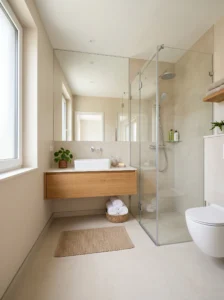
Light colors instantly make a small bathroom feel more open because they reflect natural and artificial light instead of absorbing it. Dark colors can look dramatic, but in a compact room they often create visual heaviness that closes the space in.
Soft whites, warm beige, pale gray, muted greige, and light taupe work especially well in bathrooms because they create a cleaner visual flow. The key is choosing shades with warm undertones so the room doesn’t feel sterile or cold. Matching the wall color closely with the floor color also helps reduce visual breaks, which makes the room appear larger.
This works best in bathrooms with limited windows or older layouts where natural light is weak. If your bathroom has little daylight, avoid stark cool white paint because it can look harsh under artificial lighting.
Large-format light-colored tiles are another smart choice because fewer grout lines create a smoother appearance. Busy tile patterns often make small bathrooms feel visually crowded.
In daily life, lighter colors also make the room feel calmer in the morning when you’re rushing to get ready. The bathroom simply feels cleaner, brighter, and easier to breathe in.
2. Install a Large Mirror Instead of a Small One
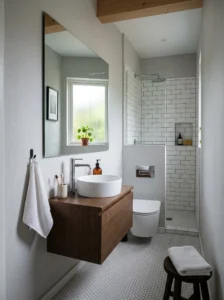
A large mirror is probably the fastest way to visually double the feeling of space in a bathroom. Mirrors reflect both light and depth, which tricks the eye into perceiving a room as larger than it actually is.
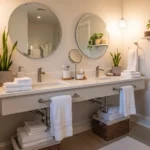
Many people choose mirrors that are too small for their vanity. A narrow mirror floating above a sink often makes the wall feel chopped up. Instead, extending the mirror wider—or even wall-to-wall—creates a much more open effect.
This works especially well in narrow bathrooms, powder rooms, or spaces with limited natural light. Positioning the mirror opposite a light source helps bounce brightness around the room more effectively.
Frameless mirrors are usually the best choice in smaller bathrooms because thick decorative frames can feel bulky. If you want some style, choose a slim metal frame in black, brass, or brushed nickel.
One practical benefit people often notice is how much brighter the bathroom feels at night. A large mirror spreads artificial lighting more evenly, reducing shadows around the sink area.
It’s also worth keeping the mirror clean. Smudges and water spots reduce reflectivity and make the room feel duller over time.
3. Choose Floating Vanities Instead of Bulky Cabinets
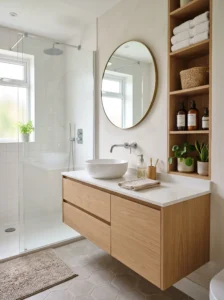
Traditional floor-to-ceiling vanities can feel visually heavy in a small bathroom. Floating vanities solve that problem by exposing more floor area, which immediately creates a lighter and more spacious appearance.
Even though the actual square footage stays the same, visible flooring underneath gives the eye more room to travel. That uninterrupted sightline makes the bathroom feel less cramped.
This idea works particularly well in modern bathrooms, apartment bathrooms, and narrow layouts. Floating vanities also make cleaning easier since you can sweep or mop underneath without awkward corners collecting dust.
Wood tones like oak, walnut, or light ash keep floating vanities warm and inviting. Extremely dark finishes sometimes feel too heavy in tiny spaces.
Storage still matters, though. Choose a vanity with drawers rather than open shelving if you need hidden storage for everyday items. Open shelves can quickly become cluttered and defeat the purpose of creating visual calm.
A floating vanity also subtly improves how the bathroom feels when moving around. Even a few extra inches of visible floor can make the room feel less boxed in.
4. Replace Shower Curtains With Clear Glass
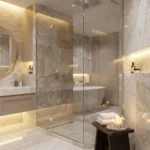
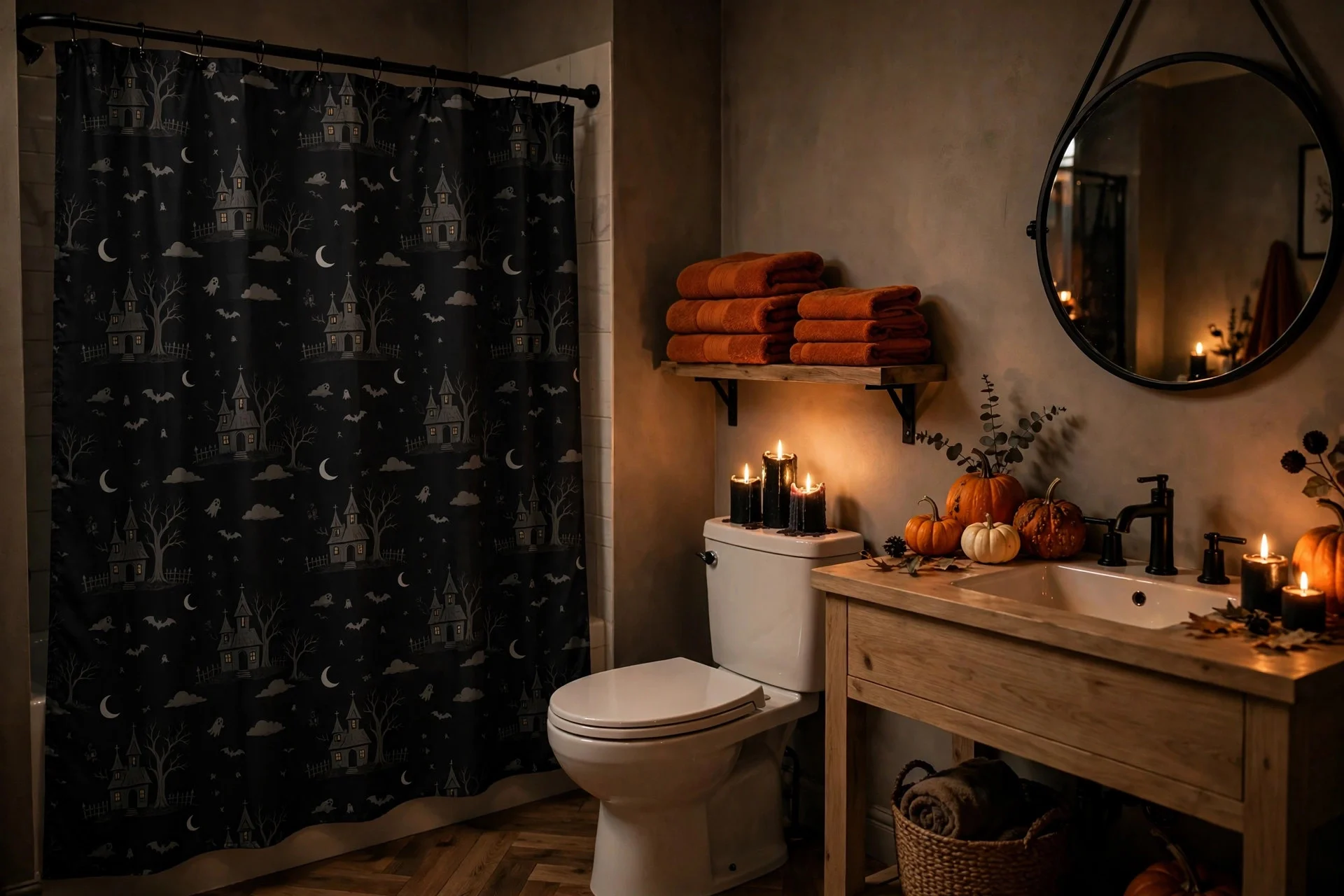
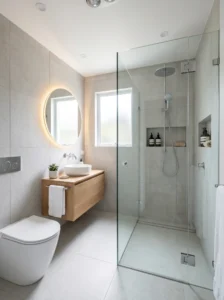
A shower curtain visually cuts the bathroom in half, especially if it’s dark or patterned. Clear glass shower panels create continuity, allowing the eye to travel across the entire room without interruption.
This is one of the most effective upgrades for making a bathroom feel bigger. Even compact showers look more open when enclosed with transparent glass instead of opaque curtains.
Frameless glass doors work best because thick metal framing can create visual clutter. If budget is limited, even a simple clear glass panel makes a noticeable difference.
This trick is especially useful in condo bathrooms, guest bathrooms, or long narrow layouts where visual openness matters more than extra decoration.
One common mistake is letting the shower area become overly busy with colorful bottles and accessories. Since everything is visible through clear glass, keeping the shower organized matters more.
The practical advantage is that the bathroom also feels brighter because light can move freely across the entire space. It creates a cleaner, more modern atmosphere without requiring major remodeling.
5. Keep the Color Palette Simple
Too many colors in a small bathroom create visual noise. A tighter palette makes the room feel more cohesive, which naturally creates a sense of spaciousness.
Sticking to two or three primary colors is usually enough. For example, soft white walls, warm wood accents, and matte black hardware create contrast without overwhelming the room.
This works best in bathrooms with limited square footage because simplicity reduces visual distractions. Strong color changes between walls, floors, cabinets, and decor can make the room feel fragmented.
Textures can add interest without adding clutter. Instead of introducing more colors, use woven baskets, stone finishes, brushed metals, or linen towels to create depth.
Another helpful tip is matching your towels and bath mats to the main palette. Bright random accessories often become visual clutter surprisingly fast.
A simple color palette also feels calmer during everyday use. The bathroom becomes a quieter, more relaxing space instead of a room that feels busy before the day even starts.
6. Use Vertical Storage Instead of Floor Storage
In small bathrooms, floor space is incredibly valuable. Vertical storage helps maximize functionality without making the room feel crowded.
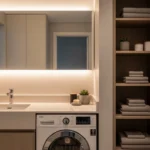
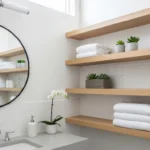
Tall narrow cabinets, floating shelves, over-the-toilet storage, and wall hooks all use upward space more efficiently than bulky floor cabinets.
This approach works especially well in rental bathrooms or older homes where built-in storage is limited. Floating shelves above the toilet are ideal for towels, baskets, or decorative storage containers.
The key is avoiding overcrowding the shelves. Too many visible items create clutter quickly. Use matching containers or baskets to keep everything visually tidy.
Wall-mounted hooks are another underrated trick. They take up almost no visual space compared to towel racks while still being highly functional.
One everyday benefit is that the room becomes easier to clean and maintain. Less furniture on the floor means less visual heaviness and fewer obstacles while moving around the bathroom.
7. Improve Lighting Layers
Bad lighting makes small bathrooms feel smaller than they actually are. A single harsh ceiling light creates shadows that flatten the room and highlight cramped corners.
Layered lighting creates depth instead. Combining overhead lighting with vanity lighting and soft accent lighting helps distribute brightness more evenly.
Wall sconces beside the mirror are especially effective because they reduce shadows on the face while visually widening the wall area.
Warm white bulbs usually work better than cool white in residential bathrooms. Cool lighting can make small spaces feel clinical and uncomfortable.
This matters most in windowless bathrooms or bathrooms with dark finishes. Even the right bulb temperature can dramatically change how spacious the room feels.
One practical detail many people overlook is brightness level. Dim bathrooms feel closed-in, while overly bright lighting feels harsh. Balanced, soft brightness is ideal.
Better lighting doesn’t just improve appearance—it changes how the space feels emotionally. The room becomes calmer, fresher, and more comfortable to use every day.
8. Use Large Tiles Instead of Tiny Ones
Many people assume small tiles belong in small bathrooms, but the opposite is often true. Large-format tiles create fewer grout lines, which makes the room feel less busy and more expansive.
Tiny mosaic tiles can visually overwhelm compact spaces because they introduce too many patterns and breaks. Large tiles create smoother surfaces that feel calmer.
This works particularly well on floors and shower walls. Light-colored porcelain or ceramic tiles in larger sizes help create visual continuity.
Matching grout color closely to the tile also helps reduce visual interruption. Contrasting grout lines often emphasize how small the room is.
Slip resistance still matters, especially for bathroom floors. Matte finishes usually provide a safer surface while still looking modern.
In everyday use, large tiles also tend to be easier to clean because there are fewer grout lines collecting dirt and moisture. The bathroom feels cleaner with less maintenance effort.
9. Declutter Countertops Completely
Nothing shrinks a small bathroom faster than crowded countertops. Toothbrush holders, skincare products, hair tools, makeup, and random bottles quickly create visual chaos.
A cleaner countertop instantly makes the bathroom feel more open and organized. Even removing a few unnecessary items can noticeably improve the atmosphere.
This is especially important in bathrooms with tiny vanities or pedestal sinks where every inch matters.
Use drawer organizers, under-sink storage, or mirrored medicine cabinets to keep daily essentials hidden but accessible. Keeping only one or two intentional items visible—like hand soap or a small tray—maintains a cleaner look.
Decor should stay minimal. A tiny plant or candle is enough. Too many decorative pieces compete for visual attention.
One surprising benefit is how much calmer morning routines feel. A clear counter reduces stress and makes the bathroom feel easier to use, even during busy mornings.
10. Add Wall-Mounted Faucets
Wall-mounted faucets may seem like a small detail, but they can create a cleaner and more streamlined look in compact bathrooms.
Because the faucet is installed on the wall instead of the countertop, it frees up valuable sink space and reduces visual clutter around the vanity area.
This works particularly well with floating vanities or narrow sinks where every inch counts. It also gives the bathroom a more custom, high-end appearance without overwhelming the room.
Matte black, brushed brass, and chrome finishes all work well depending on the overall style of the bathroom.
One important consideration is installation complexity. Wall-mounted plumbing usually requires more planning, so it’s easiest during a renovation or vanity replacement.
In everyday use, the countertop becomes easier to wipe down because there are fewer fixtures collecting water spots and toothpaste buildup.
11. Hang Curtains Higher Than the Window
If your bathroom has a window, hanging curtains higher than the frame creates the illusion of taller ceilings.
Mount the curtain rod closer to the ceiling instead of directly above the window. This draws the eye upward and visually stretches the room vertically.
Lightweight fabrics work best because heavy curtains can overpower a small bathroom. Linen blends, sheer panels, or simple cotton curtains maintain softness without blocking too much light.
This trick works especially well in older homes where bathroom ceilings feel low or cramped.
Avoid busy patterns or dark fabrics in compact spaces. Simple neutral curtains create a cleaner and more open appearance.
It’s a subtle change, but one people often notice immediately. The bathroom feels airier and less boxed in with very little effort or expense.
12. Use Open Leg Furniture Sparingly
Furniture pieces with visible legs feel lighter than solid block-style furniture because they allow more floor area to remain visible.
This applies to stools, storage benches, laundry baskets, or small side cabinets used in larger bathrooms.
The trick is moderation. Too much open shelving or furniture can start to look cluttered instead of spacious. Choose one or two pieces thoughtfully.
Light wood finishes or slim black metal frames usually work best in modern bathrooms. Bulky dark furniture often overwhelms the room.
This works especially well in bathrooms that need extra functionality without feeling overloaded.
One practical benefit is improved airflow and easier cleaning underneath furniture. The room feels physically lighter and visually less crowded at the same time.
13. Create Hidden Storage Wherever Possible
Hidden storage is one of the smartest ways to make a bathroom feel larger because it removes visual clutter without sacrificing functionality.
Medicine cabinets recessed into the wall, vanity drawers with organizers, and built-in shower niches all help keep essentials out of sight.
This matters most in family bathrooms where daily products can quickly take over every visible surface.
Storage should feel intentional, not improvised. Random baskets stuffed into corners often make small bathrooms feel even tighter.
One common mistake is overdecorating storage areas. If every shelf becomes a display shelf, the room starts feeling busy again.
A bathroom with hidden storage simply feels easier to use. There’s less visual stress, fewer distractions, and more breathing room overall.
14. Use One Large Piece of Art Instead of Many Small Ones
Small framed pieces scattered around a bathroom can make walls feel cluttered. One larger artwork creates a stronger focal point while keeping the room visually cleaner.
This works especially well above the toilet or on an empty wall opposite the mirror.
Choose artwork with soft colors or minimal designs to maintain an open atmosphere. Oversized bold prints can dominate a small room too aggressively.
Frameless prints or slim frames usually work better than chunky decorative frames.
One larger piece also simplifies decorating decisions. Instead of trying to fill every wall, you create one intentional visual moment that anchors the room.
The bathroom ends up feeling more curated and less crowded, which subtly contributes to the sense of space.
15. Keep Decor Minimal and Functional
The most spacious-looking small bathrooms usually aren’t filled with decor. They feel intentional because every item serves a purpose.
Minimal styling doesn’t mean the room has to feel cold or empty. It simply means avoiding unnecessary accessories that compete for attention.
Focus on practical beauty instead. A textured hand towel, elegant soap dispenser, woven basket, or small plant adds warmth without creating clutter.
This approach works in every bathroom style, from modern to farmhouse to traditional.
One common mistake is treating small bathrooms like display spaces for too many trends at once. Too many colors, textures, and accessories shrink the room visually.
A simpler bathroom also becomes easier to clean and maintain. Daily routines feel smoother when surfaces stay open and organized instead of crowded.