A kitchen can be one of the most used rooms in a home, yet it’s often one of the easiest spaces to overlook. Many people spend years cooking, cleaning, and gathering in the same kitchen without making any meaningful updates. Over time, even a functional kitchen can start feeling dull, cramped, or uninspiring.
The challenge is that refreshing a kitchen often sounds expensive. When people hear “kitchen makeover,” they immediately think about tearing out cabinets, replacing countertops, or spending thousands on renovations. In reality, some of the most effective kitchen improvements come from thoughtful design choices rather than major construction projects.
A well-designed kitchen isn’t just about appearance. It influences how easily you prepare meals, how organized your space feels, and even how much you enjoy spending time there. Small changes in color, lighting, storage, and layout can completely change the atmosphere without requiring a full remodel.
In this guide, you’ll discover 15 practical kitchen inspiration ideas that work for different budgets, styles, and room sizes. Whether you have a compact apartment kitchen or a large family cooking space, these ideas focus on improving both beauty and functionality. You’ll learn why each approach works, where it fits best, and how to implement it successfully while avoiding common mistakes.
Let’s explore some inspiring ways to give your kitchen a fresh new feel.
1. Introduce Warm Natural Wood Elements
Nothing makes a kitchen feel more welcoming than natural wood. While modern kitchens often focus on sleek surfaces, adding wood creates balance and warmth that many spaces lack.
Natural wood works because it softens hard materials like stone, metal, and tile. It introduces texture and visual interest without overwhelming the room. Even small additions can make a noticeable difference.
This idea works particularly well in modern, Scandinavian, farmhouse, and transitional kitchens. Smaller kitchens benefit because wood adds character without creating visual clutter.
Consider open wooden shelves, butcher block countertops, wooden bar stools, or decorative cutting boards displayed on countertops. Light oak creates an airy feeling, while walnut adds richness and depth.
One mistake people make is mixing too many wood tones. Choose one dominant wood finish and stick close to it throughout the room.
In daily life, wood elements help kitchens feel less like workspaces and more like gathering spaces. Even a few carefully chosen pieces can make morning coffee or family dinners feel more inviting.
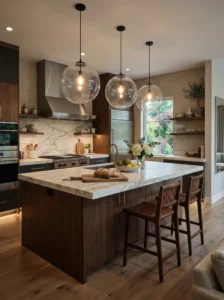
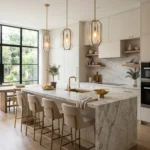
2. Upgrade to Statement Pendant Lighting
Lighting is one of the most underrated design tools in a kitchen. A beautiful pendant light can instantly transform the look of the entire room.
Statement lighting works because it draws the eye upward and creates a focal point. It adds personality while improving task lighting where it’s needed most.
Kitchen islands, breakfast bars, and dining nooks are ideal locations for pendant fixtures. Large kitchens can accommodate oversized designs, while smaller spaces often benefit from simpler, streamlined options.
Glass pendants create an airy appearance. Metal fixtures offer an industrial feel. Woven materials bring texture and warmth.
Pay attention to hanging height. Pendants that hang too low can block sight lines, while fixtures mounted too high lose their visual impact.
Beyond aesthetics, good lighting makes everyday cooking safer and more enjoyable. Chopping vegetables, reading recipes, and entertaining guests all become easier when the lighting is both functional and attractive.
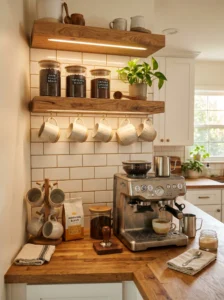
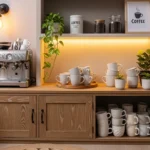
3. Create a Stylish Coffee Station
A dedicated coffee station can make a kitchen feel organized and intentional while simplifying your morning routine.
This idea works because it groups frequently used items into one convenient zone. Instead of searching through cabinets for mugs, filters, or coffee supplies, everything is within easy reach.
Coffee stations work especially well in kitchens with unused counter corners, empty wall space, or nearby pantry storage.
Include essentials such as a coffee maker, mugs, storage jars, and a tray to keep everything contained. Floating shelves above the station provide additional storage without consuming valuable counter space.
Avoid overcrowding the area. Too many accessories can quickly make the space feel cluttered rather than organized.
From a practical perspective, having a dedicated coffee area helps reduce kitchen traffic during busy mornings and creates a pleasant ritual that many homeowners genuinely enjoy.
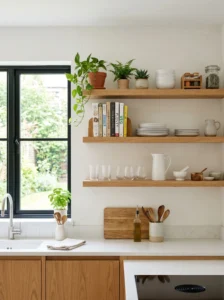
4. Add Open Shelving for Display and Storage
Open shelving remains popular because it combines storage with decoration in a way that traditional cabinets cannot.
The design works by creating visual openness. Removing upper cabinets from one section of the kitchen can make the room appear larger and brighter.
Open shelves work particularly well in smaller kitchens, kitchens with limited natural light, or spaces where homeowners want to showcase attractive dishware.
Use shelves to display matching plates, bowls, glassware, cookbooks, or small plants. Maintaining a consistent color palette helps keep the display looking intentional.
One common mistake is treating open shelves as general storage. Clutter becomes highly visible, so only attractive and frequently used items should remain on display.
When styled thoughtfully, open shelving creates a lived-in, welcoming atmosphere while making everyday kitchen essentials easier to access.
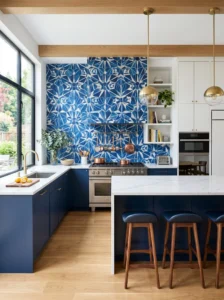
5. Incorporate a Bold Backsplash
A backsplash offers one of the highest design impacts for relatively little effort compared to a full kitchen renovation.
Bold backsplashes work because they introduce color, pattern, and personality into a room that often consists of neutral surfaces.
This approach works in kitchens of all sizes. Small kitchens can benefit from a striking focal point, while larger kitchens gain visual interest across expansive wall areas.
Consider geometric tiles, handcrafted ceramic designs, colorful mosaics, or dramatic stone slabs. Even classic subway tiles can feel fresh when installed in unique patterns.
Avoid selecting trends solely because they’re popular. Since backsplashes are difficult to replace, choose something you’ll enjoy for years.
Everyday cooking becomes more enjoyable when your kitchen includes a visually appealing element that reflects your personal style rather than feeling generic.
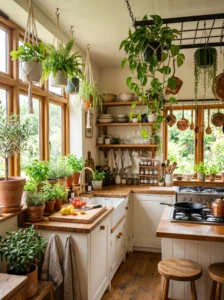
6. Bring Life In With Indoor Plants
Plants have an incredible ability to make kitchens feel fresh, vibrant, and welcoming.
They work because they introduce natural color and organic shapes that contrast beautifully with hard surfaces and straight lines.
Windowsills, open shelves, countertops, and hanging planters are excellent locations for greenery. Even tiny kitchens can accommodate a few herbs or compact plants.
Herbs like basil, rosemary, and mint provide both beauty and functionality. Pothos and snake plants require minimal maintenance and thrive in many indoor conditions.
Avoid placing plants where they interfere with food preparation or receive insufficient light.
In addition to improving aesthetics, plants often make kitchens feel healthier and more connected to nature, creating a more pleasant environment for daily cooking.
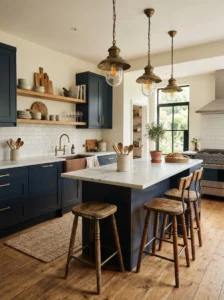
7. Mix Modern and Vintage Pieces
Some of the most memorable kitchens successfully combine old and new design elements.
This approach works because contrast creates character. A kitchen filled entirely with brand-new items can feel sterile, while vintage accents add personality and history.
Try pairing modern cabinets with antique stools, vintage lighting, or inherited serving pieces. The contrast creates visual depth and uniqueness.
This style works especially well in farmhouse, eclectic, and transitional kitchens.
The key is balance. Too many vintage pieces can make the room feel outdated, while too few may seem accidental.
The result is a kitchen that feels collected over time rather than purchased all at once from a showroom.
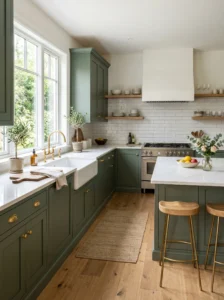
8. Paint Cabinets for a Dramatic Refresh
Cabinet painting offers one of the most cost-effective ways to completely change a kitchen’s appearance.
The reason it works is simple: cabinets occupy a significant portion of visual space. Changing their color dramatically alters the room’s overall look.
This idea is ideal for kitchens with structurally sound cabinets that simply look dated.
Popular choices include sage green, navy blue, warm white, charcoal gray, and muted beige tones. Lighter colors brighten small kitchens, while darker shades add sophistication.
Proper preparation is critical. Skipping sanding, cleaning, or priming often leads to disappointing results.
A fresh cabinet color can make an older kitchen feel surprisingly modern without the expense of a complete replacement.
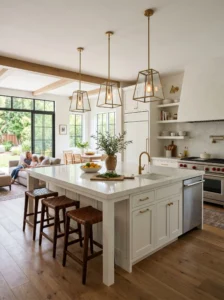
9. Install a Functional Kitchen Island
A kitchen island often becomes the centerpiece of both cooking and social activities.
It works because it adds valuable workspace, storage, and seating in a single feature.
Medium and large kitchens benefit most from islands, though compact versions can work in smaller spaces with careful planning.
Consider including drawers, open shelves, electrical outlets, or bar seating depending on your needs.
One common mistake is choosing an island that’s too large. Adequate walking space around all sides is essential for comfort and functionality.
In everyday use, an island often becomes the place where family members gather, children do homework, and guests naturally congregate during gatherings.
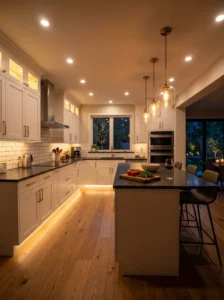
10. Use Layered Lighting Throughout the Room
Many kitchens rely on a single overhead fixture, which often creates shadows and uneven illumination.
Layered lighting solves this problem by combining multiple light sources for different purposes.
A well-designed lighting plan includes ambient lighting, task lighting, and accent lighting. Together, they create a balanced and comfortable environment.
Under-cabinet lighting improves food preparation visibility. Pendant lights add style and focused illumination. Recessed lights provide general brightness.
Avoid overly cool bulbs that can make the kitchen feel harsh and uninviting.
The result is a more flexible space that works equally well for cooking, entertaining, and everyday living.
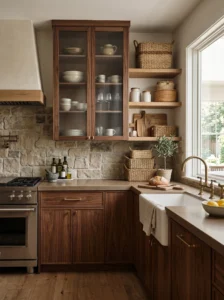
11. Introduce Textured Materials
Texture is often the missing ingredient in kitchens that feel flat or uninspiring.
Adding texture works because it creates visual depth and makes the room more interesting without relying solely on color.
Consider textured tiles, natural stone, woven baskets, ribbed glass, or wood grain finishes.
This idea works in both modern and traditional kitchens because texture complements nearly every design style.
Avoid introducing too many competing textures at once. A few carefully selected materials create a stronger impact.
Textured elements make kitchens feel more layered, sophisticated, and comfortable while maintaining practicality.
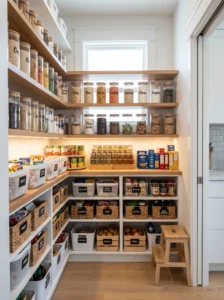
12. Create a Pantry Organization System
An organized pantry can significantly improve both the appearance and functionality of a kitchen.
The reason it works is simple: clutter creates stress. Organized storage makes everyday tasks easier and more efficient.
This approach is beneficial for kitchens of all sizes, from large walk-in pantries to small cabinet-based storage systems.
Use clear containers, labels, baskets, and shelf risers to maximize space and visibility.
Avoid purchasing organizational products before measuring available storage areas.
A well-organized pantry reduces food waste, simplifies grocery shopping, and helps maintain a cleaner kitchen overall.
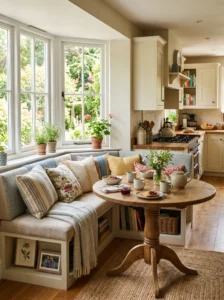
13. Add Comfortable Seating Areas
Kitchens increasingly serve as social hubs rather than purely functional cooking spaces.
Adding comfortable seating encourages people to linger, chat, and connect while meals are being prepared.
This idea works well with islands, breakfast nooks, banquettes, or small dining areas.
Choose durable fabrics and easy-to-clean materials that can handle daily use.
Avoid oversized furniture that restricts movement within the kitchen.
Comfortable seating transforms a kitchen from a workspace into a gathering place where people naturally want to spend time.
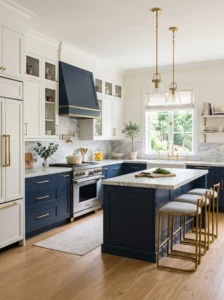
14. Embrace a Two-Tone Cabinet Design
Two-tone cabinets add visual interest without overwhelming the room.
The design works because contrasting colors create depth and help break up large expanses of cabinetry.
A popular approach uses darker lower cabinets paired with lighter upper cabinets. This grounds the room while maintaining an open feel.
This style works particularly well in medium and large kitchens but can also help small kitchens feel less boxy.
Keep countertop and backsplash choices relatively simple so the cabinetry remains the focal point.
When executed thoughtfully, two-tone cabinets create a custom, designer-inspired appearance.
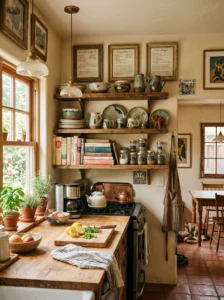
15. Personalize With Meaningful Decor
The most beautiful kitchens often include elements that reflect the people who use them.
Personal decor works because it creates emotional connection rather than simply following design trends.
Consider family recipes framed on the wall, travel souvenirs, handmade pottery, favorite cookbooks, or cherished serving pieces.
This idea works in every kitchen regardless of size or style.
Avoid filling every available surface with decorative items. A few meaningful pieces usually create greater impact.
These personal touches make the kitchen feel authentic, creating a space that’s not only attractive but genuinely enjoyable to live in.