9 Ideas for a Windowless Room That Needs More Light
Yes, a windowless room can feel bright — but one ceiling bulb on its own will not do it. You need warm layered light, pale surfaces that bounce it around, and one or two tricks that fake daylight. The nine ideas below each start with a scene you can picture, then break down what makes it work and how to copy it without spending a fortune.
1. Layered Warm Lighting That Replaces One Harsh Ceiling Light
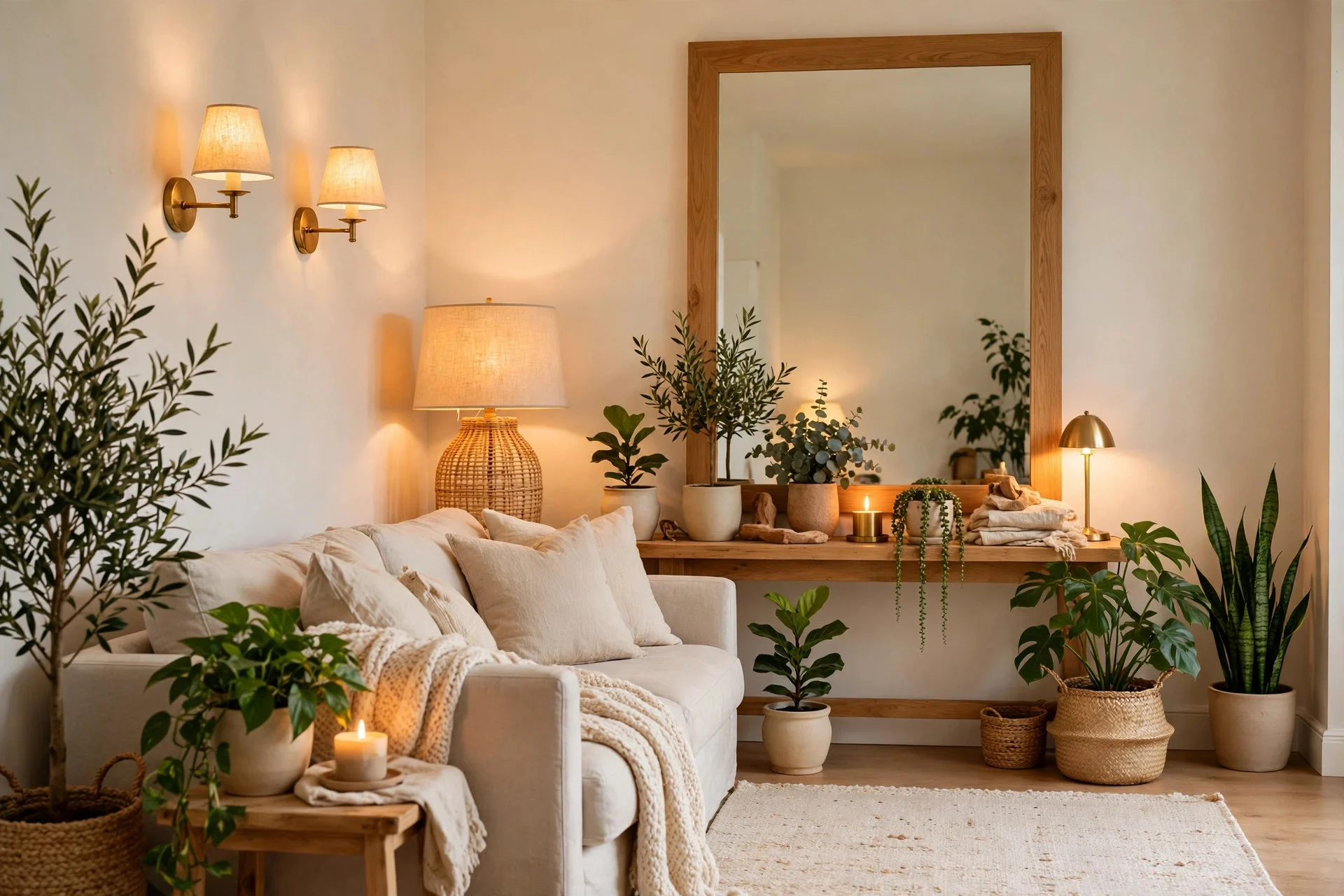
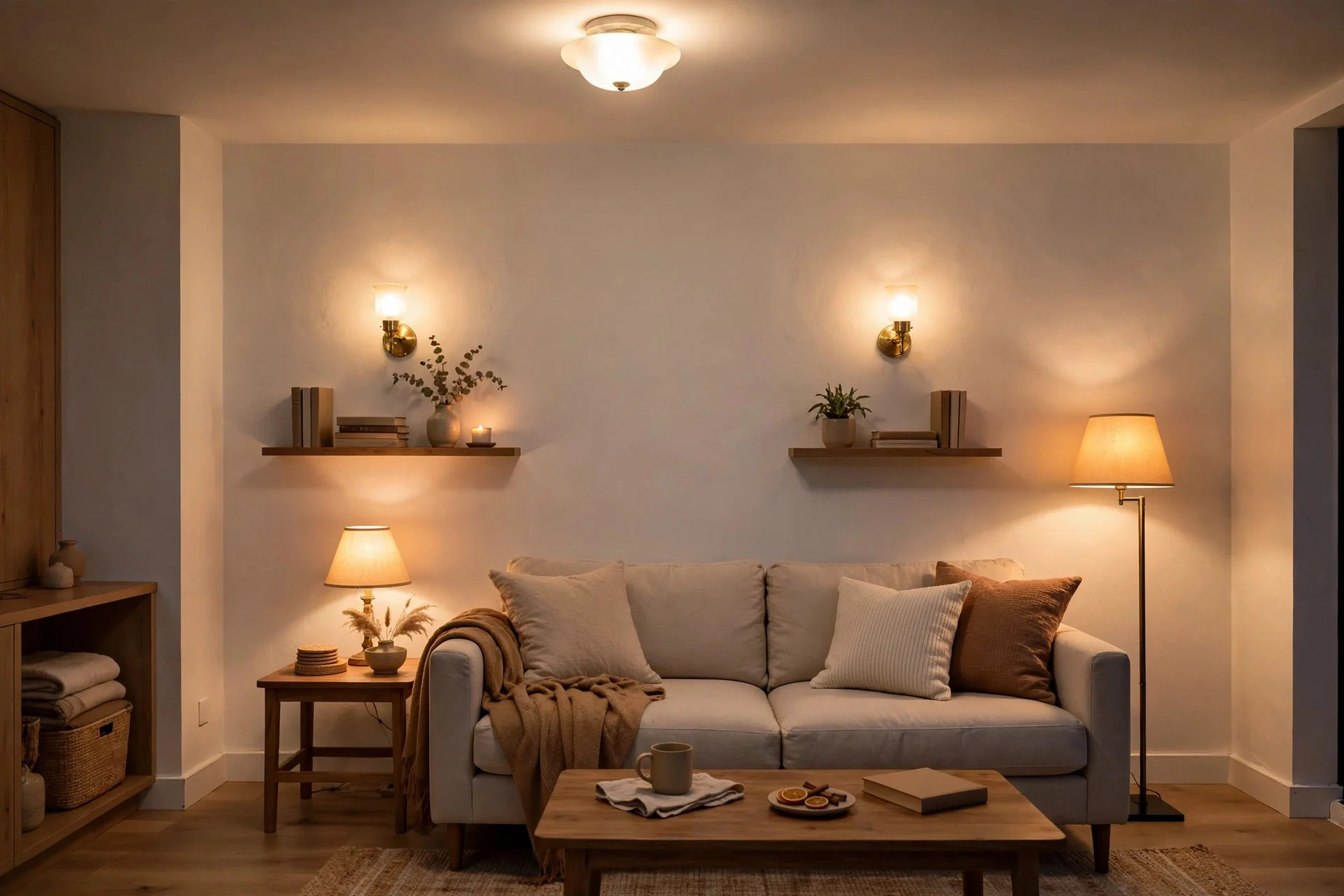
Picture a small living room in the evening, no window anywhere, yet it feels soft and welcoming. A ceiling light glows overhead, a floor lamp stands beside the sofa, a table lamp warms the corner by the bookshelf, and two small sconces wash the wall behind the television. Nothing is blinding, and nothing is dark either. Every corner has a job.
That is the whole trick. One bright ceiling light creates hard shadows and a flat feeling, while three or four smaller lights at different heights spread the glow around. Start with what you have: keep the ceiling light, swap in a warm white bulb (2700K–3000K), and add a plug-in dimmer if you can. Then add a floor lamp beside the main seat, a table lamp on a side table, and one more light on the opposite side of the room. Warm white keeps bedrooms and living rooms cozy; daylight bulbs (4000K–5000K) suit a home office better but can feel cold at night.
Cost: $60–$250 for lamps and bulbs from scratch, $15–$40 for bulbs and a dimmer alone. Difficulty: easy. Time: an hour or two. Tip: stand in the doorway after dark and look for black corners — each one wants a small light. Watch out: mixing warm and cool bulbs in one room looks patchy, so pick one color temperature for the main lights and stick with it.
2. A Big Mirror Placed to Double the Light You Have
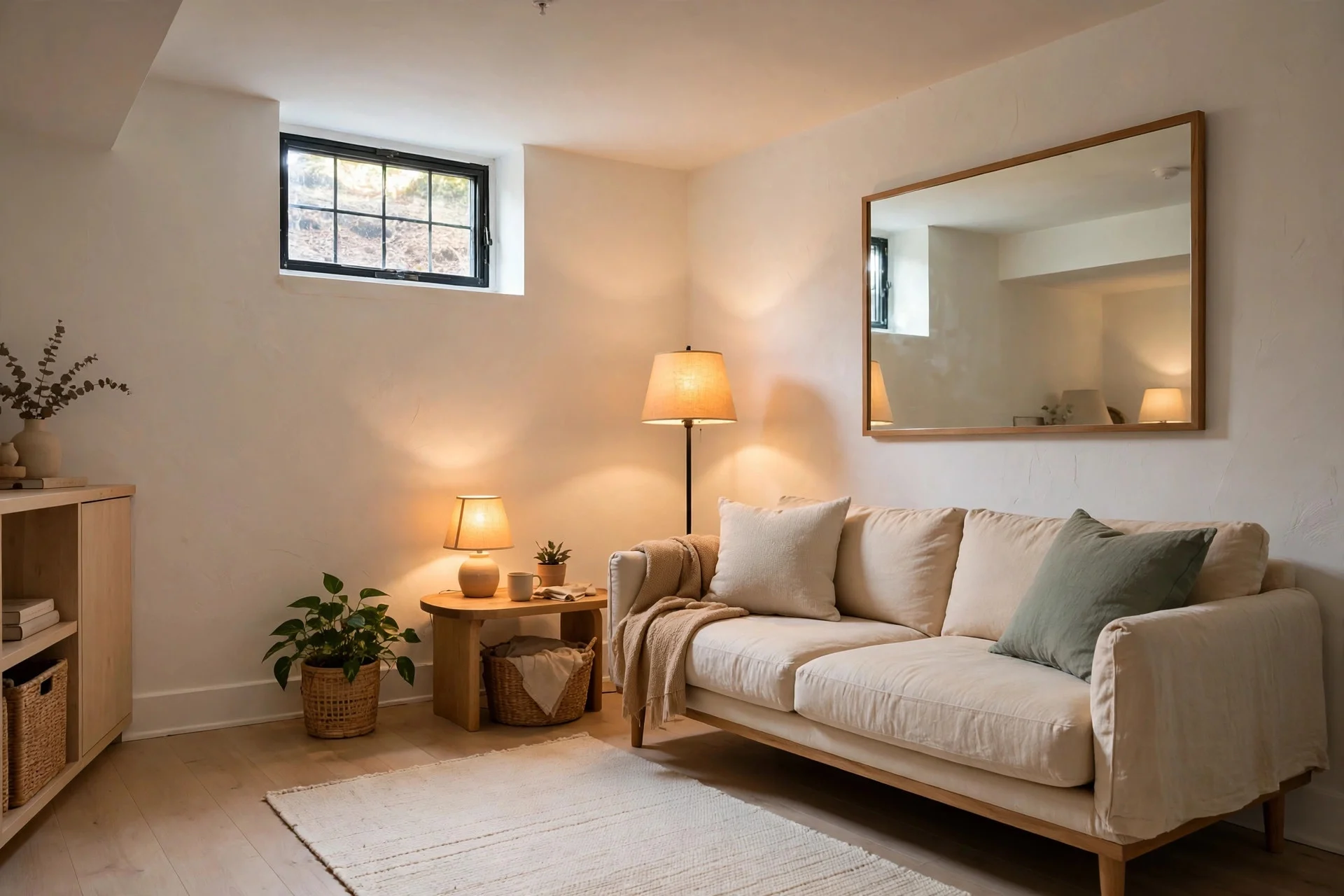
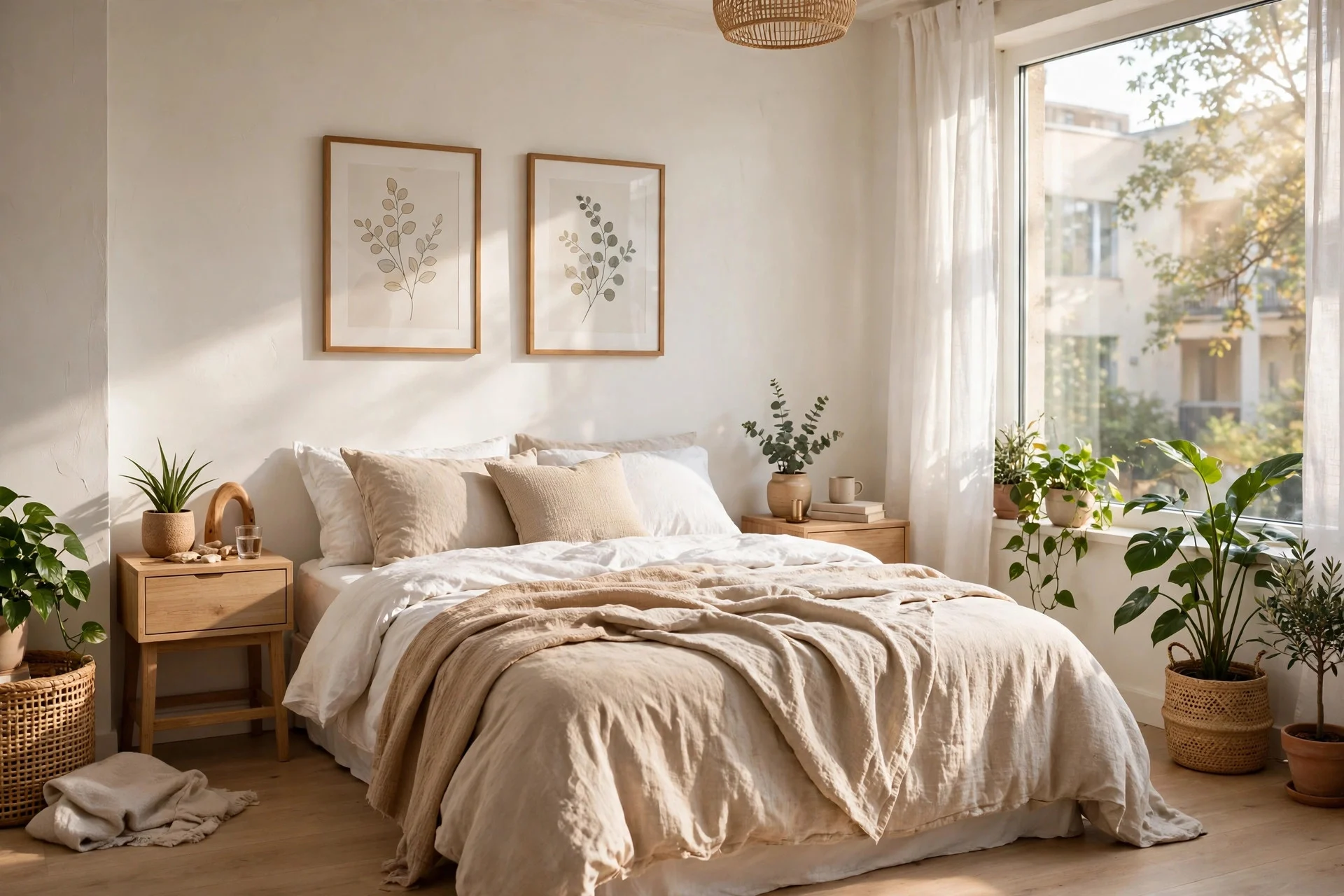
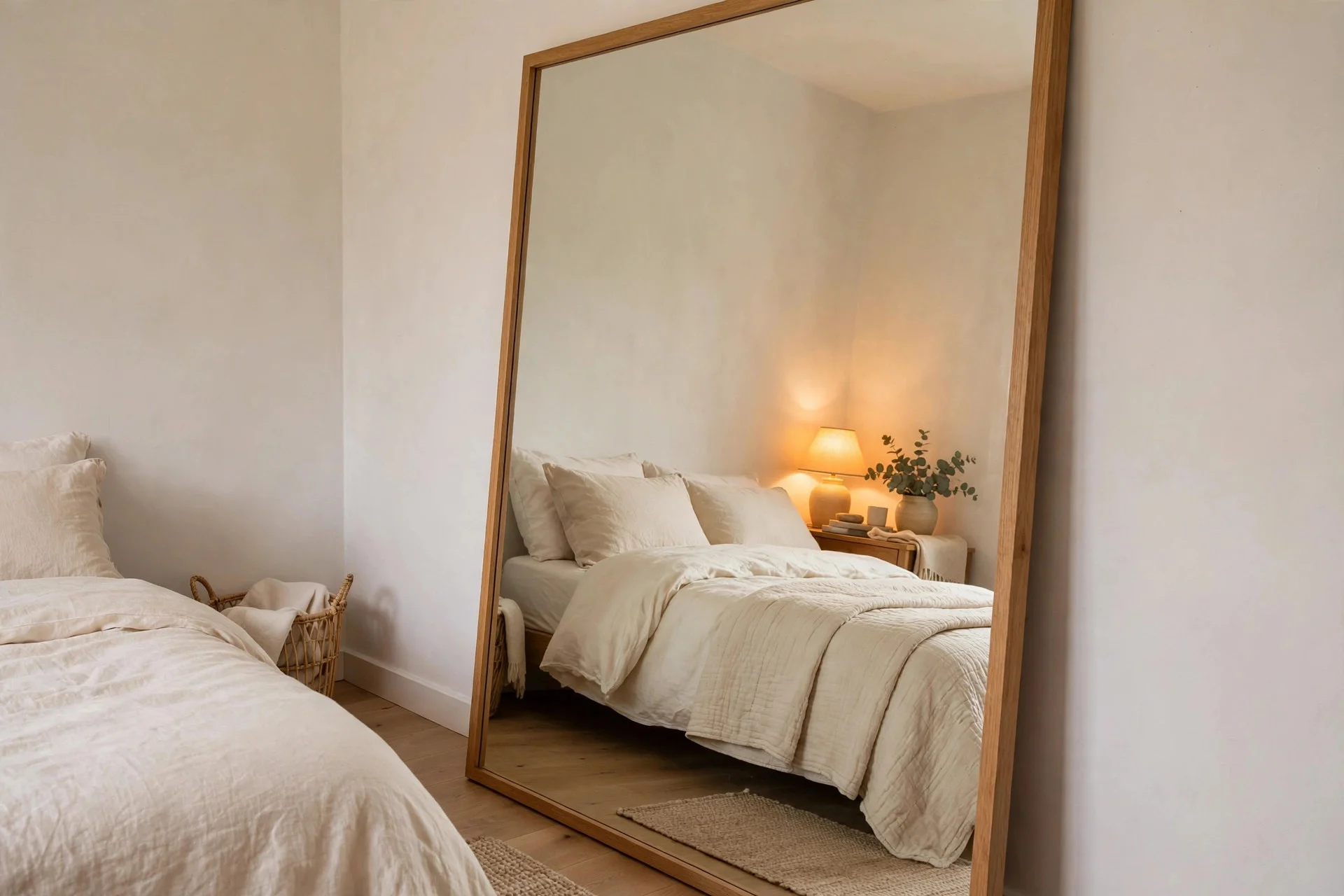
Picture a small bedroom with pale walls, a bed dressed in white bedding, and one very large mirror leaning against the wall. It catches the glow of the bedside lamp and throws it back across the room, so the space reads twice as bright and a good deal bigger than it is. The mirror is doing the work of a second lamp, and it costs nothing to run.
Mirrors reflect the light you already paid for. A mirror opposite a lamp, or beside a doorway that brings in light from the hall, bounces that light deeper into the room. A mirror facing a blank wall does far less, so placement matters more than size alone — though size helps. A tall leaning mirror or a wide mirror above a dresser beats a row of small decorative mirrors, which tend to chop the wall into busy pieces.
Cost: $50–$200 for a large leaning or wall mirror. Difficulty: easy, though hanging a heavy mirror is a two-person job. Time: 30–60 minutes. Tip: sit where you usually sit and check what the mirror reflects — if it shows clutter, move it a few feet until it shows a lamp, a plant, or a calm stretch of wall. Watch out: a mirror facing a television or a messy desk doubles the mess, so angle it away from both.
3. A Faux Window That Glows Like Daylight
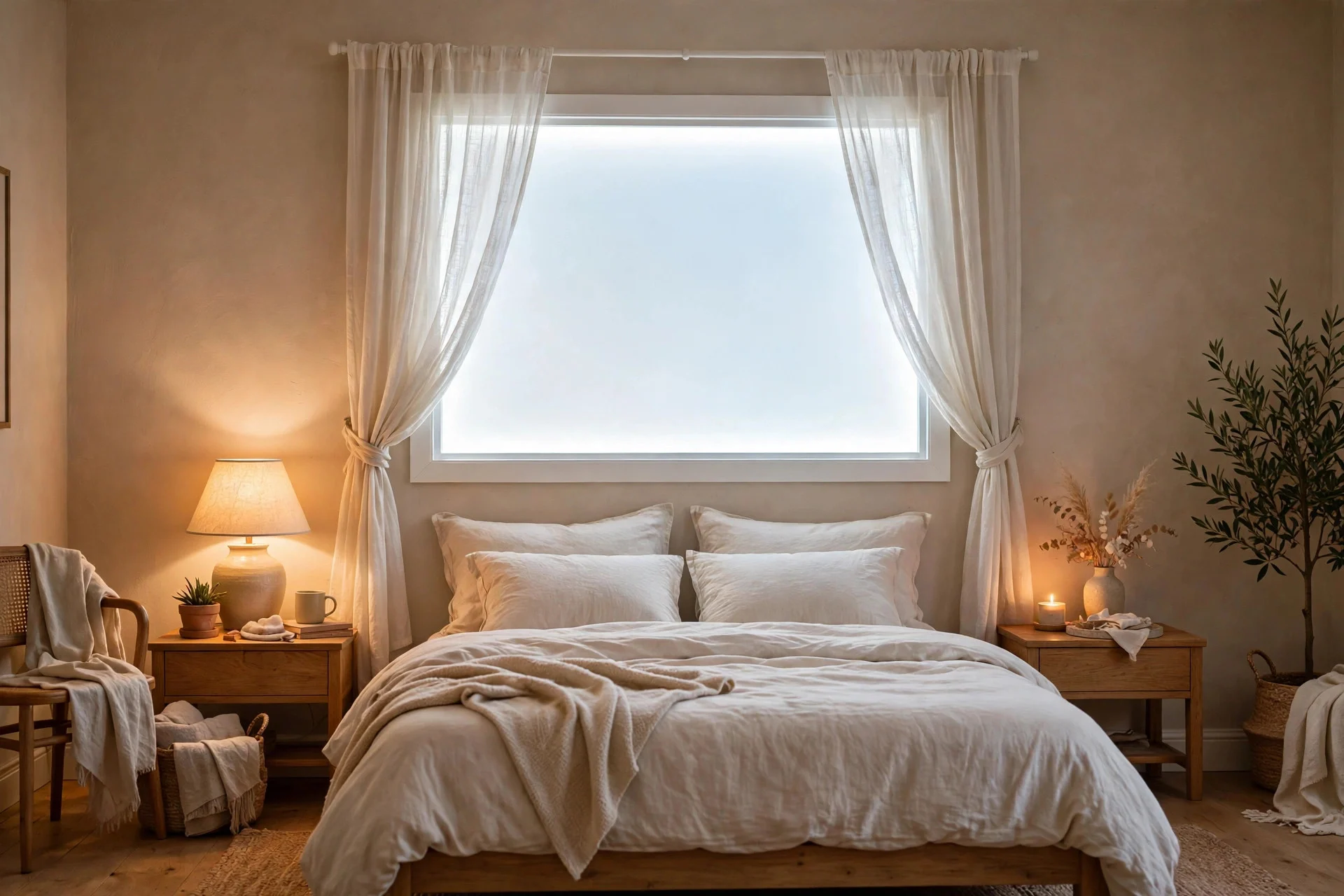
Picture a bedroom wall with what looks, at first glance, like a window: a white frame, sheer curtains pulled to each side, and soft light glowing through it. There is no glass and no view behind it — just a light panel and a bit of dressing — yet your brain reads “window” before anything else, and the room stops feeling sealed shut.
This works because a window shape gives the eye a bright focal point, the way a real window would. The frame and curtains sell the illusion; the light does the rest. Build the simple version with an LED light panel mounted on the wall, a basic picture-frame molding or ready-made window frame around it, and a pair of short sheer curtains hung from a small rod above. A backlit canvas print of a sky or garden scene gives a similar effect for less effort, though the light is softer.
Cost: $60–$250 for a panel, frame, and curtains; $30–$80 for a backlit print. Difficulty: moderate — you need a drill and a level for a neat frame. Time: 2–4 hours. Tip: hang the curtains slightly wider than the frame, the way you would dress a real window, so the proportions look right. Watch out: a panel that is too small reads like a light box rather than a window, so go as large as the wall allows.
4. Pale Walls, a White Ceiling, and a Satin Finish
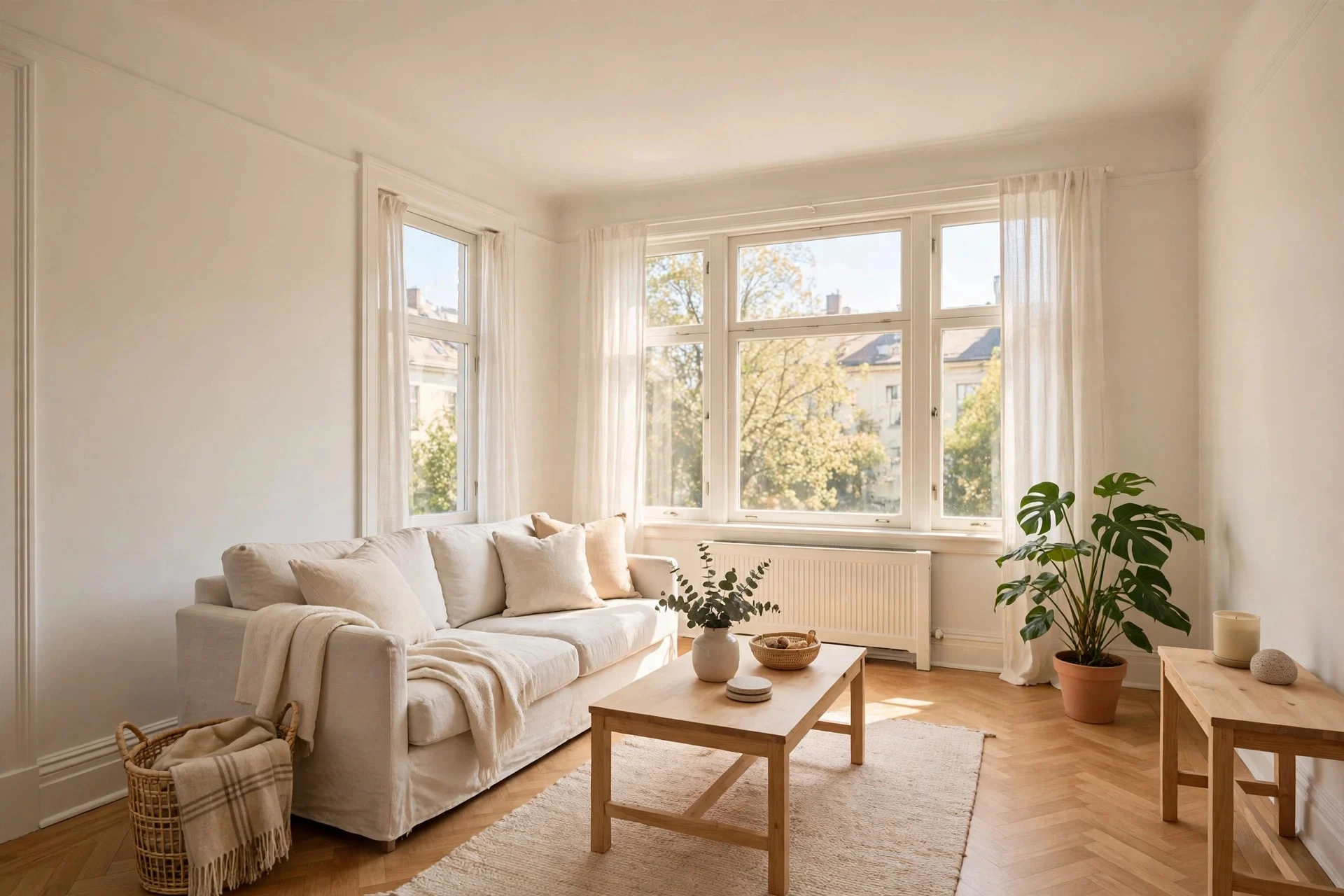
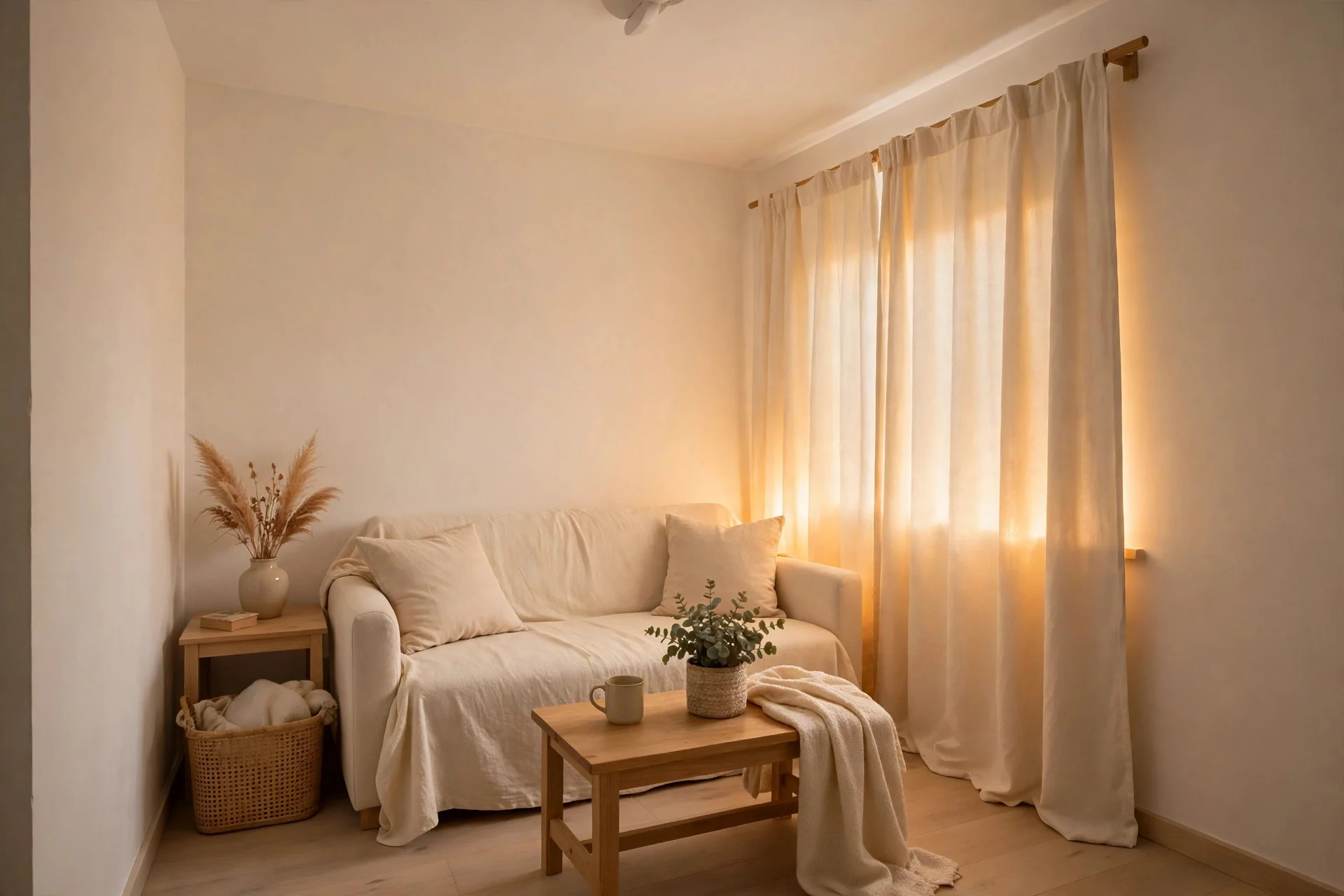
Picture a small room painted top to bottom in warm white: soft walls, a clean bright ceiling, a light wood floor, and a pale sofa on a cream rug. Nothing in the room shouts for attention, and that is the point. Every surface quietly hands light back to the next one, so the lamps you already own go further.
Paint is the cheapest brightness upgrade there is. Dark walls soak up light; pale walls bounce it. Warm whites and soft creams work better than stark, blue-white paint here, because with no daylight to balance it, pure white can turn cold and gray. Finish matters too: flat paint absorbs more light than eggshell or satin, so a satin finish reflects a little extra glow without looking shiny. A bright white ceiling is the single highest-impact coat — it sends light back down instead of swallowing it.
Cost: $60–$180 for paint and supplies for a small room, more if you hire a painter. Difficulty: moderate. Time: a weekend, including drying time. Tip: look for the light reflectance value (LRV) on the paint chip — 70 or above means the color bounces back plenty of light. Watch out: pale walls show scuffs faster, so keep a small pot of the same paint for touch-ups.
5. Borrowed Light Through Glass Doors and Openings
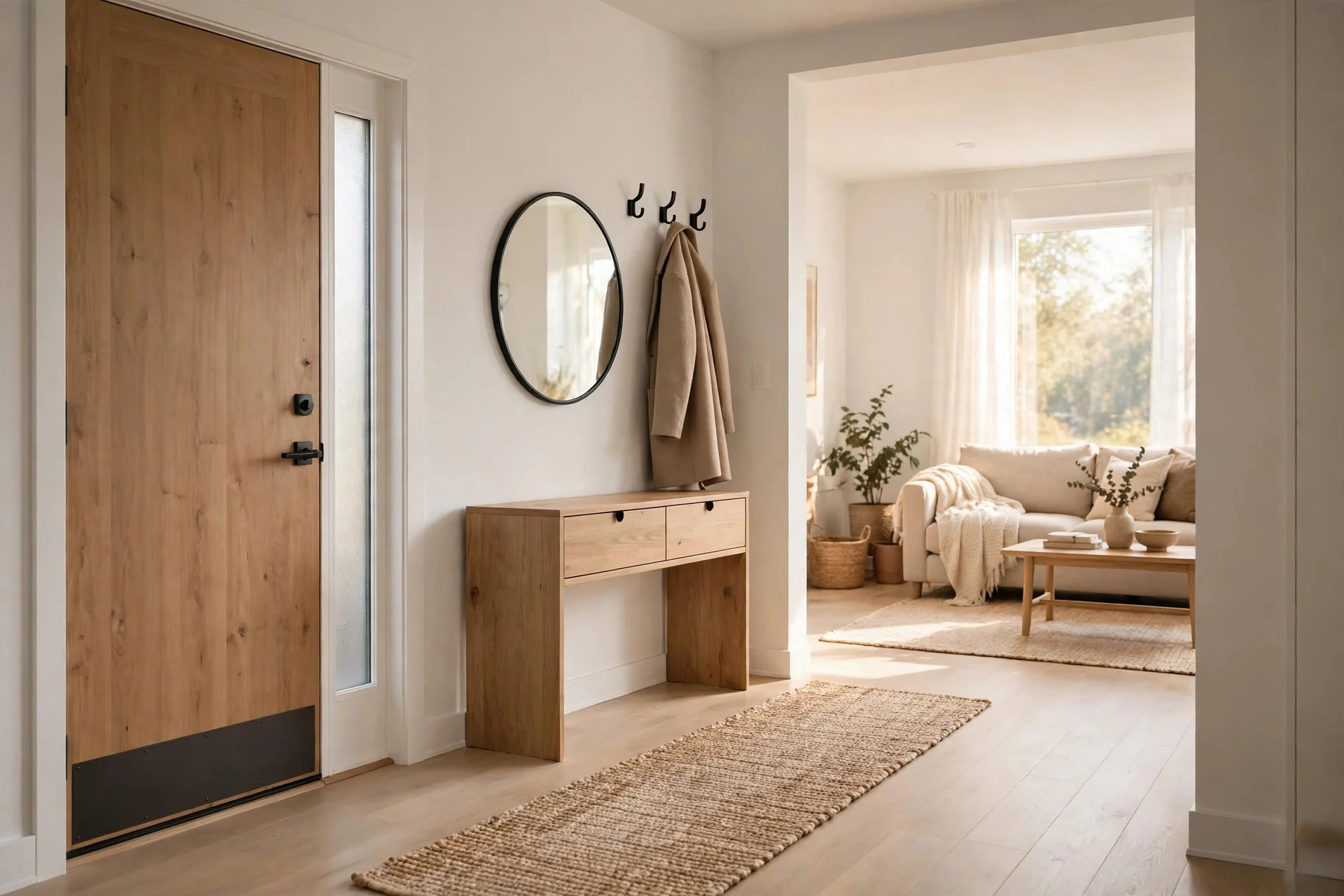
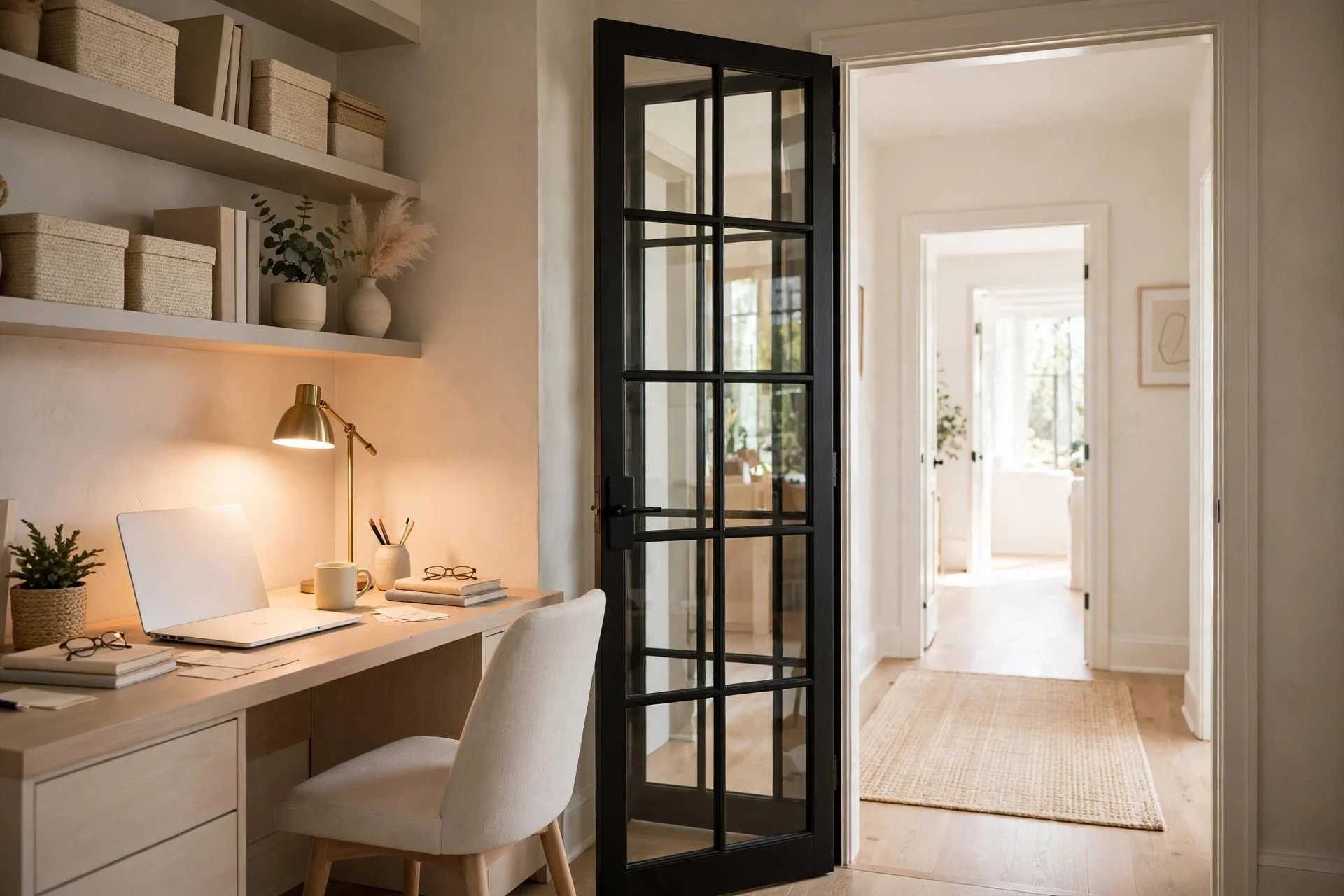
Picture a home office tucked into a windowless corner, but it does not feel cut off. A glass-paneled interior door stands between it and a bright hallway, and daylight from the next room spills across the desk. The office borrows its light from a room that has windows, and the glass means the borrowed light reaches the desk instead of stopping at a solid door.
Most homes have at least one bright room nearby, and a solid door blocks that light completely. Glass panels, a transom above the door, or simply leaving the door open during the day lets it through. In a rental, where you cannot swap a door, the same idea works with the door open and a light-colored hallway, or with a freestanding divider of frosted glass or sheer fabric that passes light while keeping some privacy.
Cost: $0 if you just keep the door open, $150–$500 for a glazed door fitted. Difficulty: easy to moderate. Time: an afternoon for fitting. Tip: a pale, well-lit hallway is half the trick — a dark hall has little light to lend. Watch out: glass doors cut down on sound privacy, so frosted glass suits bedrooms and offices better than clear.
6. Light Furniture and a Pale Rug That Keep the Floor Bright
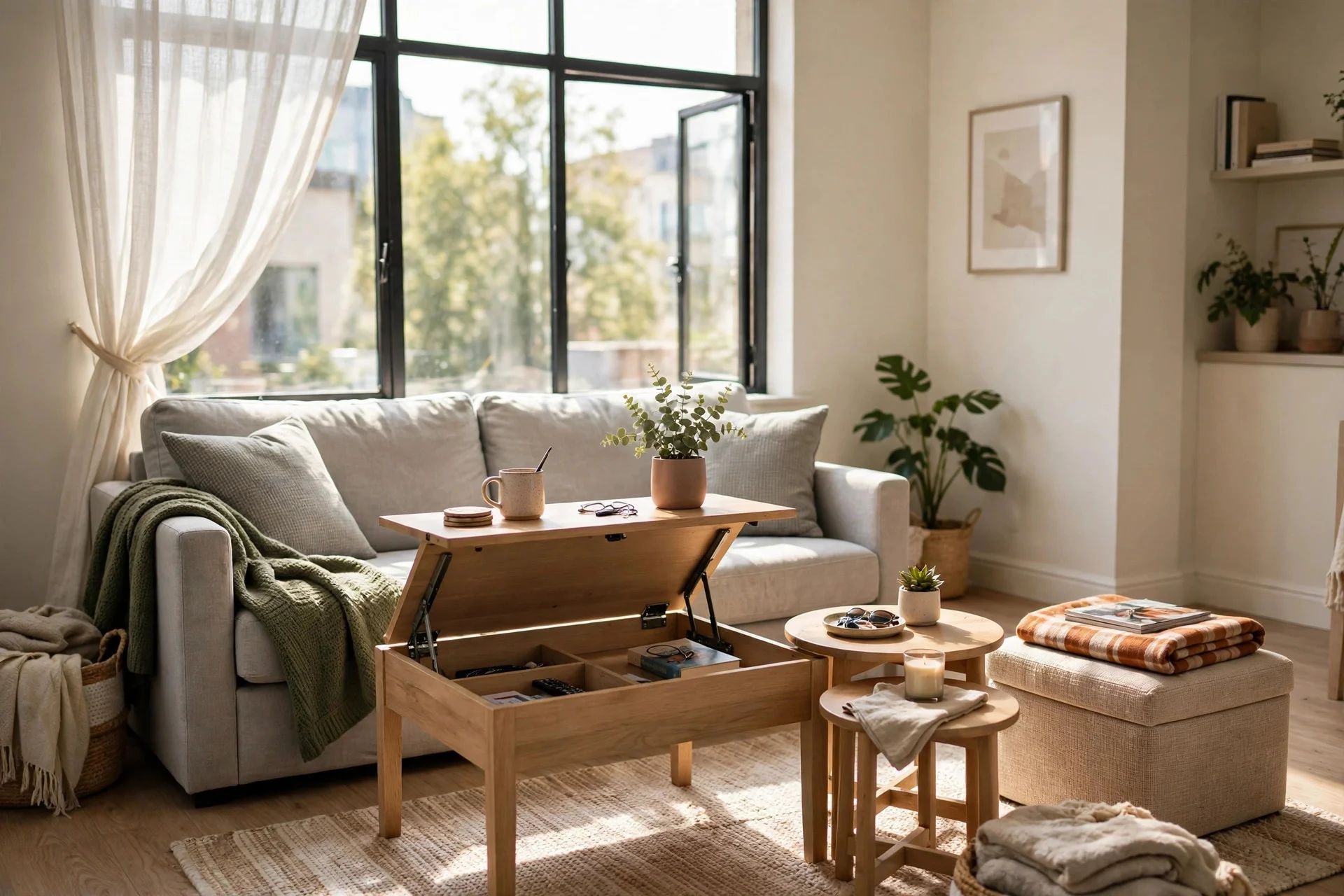
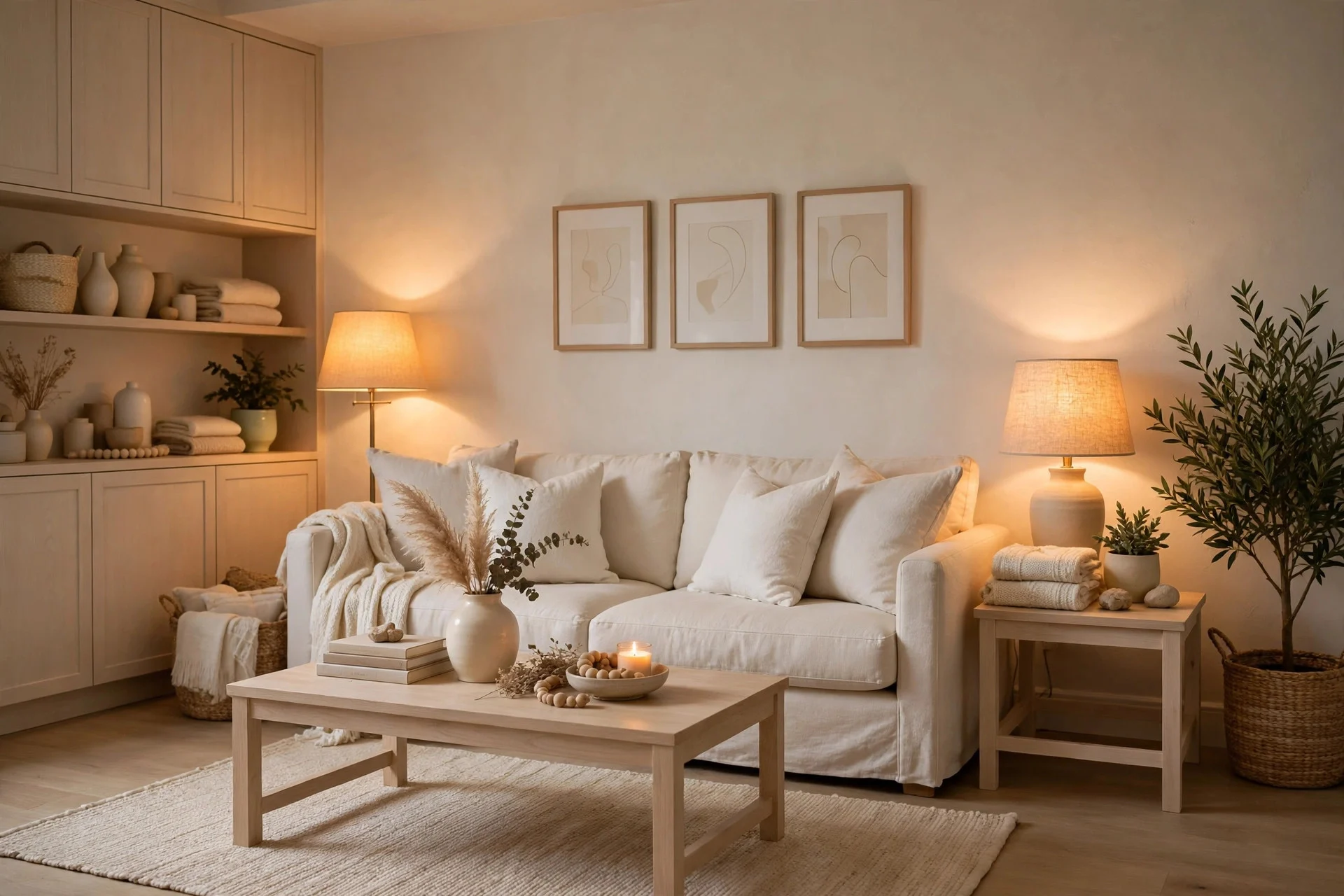
Picture a windowless living room furnished in cream, beige, and pale wood: a light sofa, a pale wood coffee table, a soft beige rug underfoot, and white cushions catching the lamplight. The floor does not disappear into shadow the way a dark rug and a charcoal sofa would make it do. The whole lower half of the room stays bright, and the room feels taller for it.
Dark furniture and dark floors drink light, and in a room with no window that loss shows fast, because no daylight comes in to replace it. Light upholstery, pale wood, and a light rug reflect the lamp glow back up instead. You do not need to replace everything at once: a pale rug and light cushion covers over a darker sofa get you most of the effect for a fraction of the cost, and a pale throw can lift a dark armchair the same way.
Cost: $80–$300 for a rug and covers, $600+ if you replace the sofa itself. Difficulty: easy. Time: an hour to lay the rug and dress the sofa. Tip: a low-pile rug in a pale tone is easier to keep clean than deep shag, and it still does the light work. Watch out: very pale fabric in a house with pets or small kids stains fast — pick washable covers where you can.
7. LED Strips That Wash the Walls and Ceiling
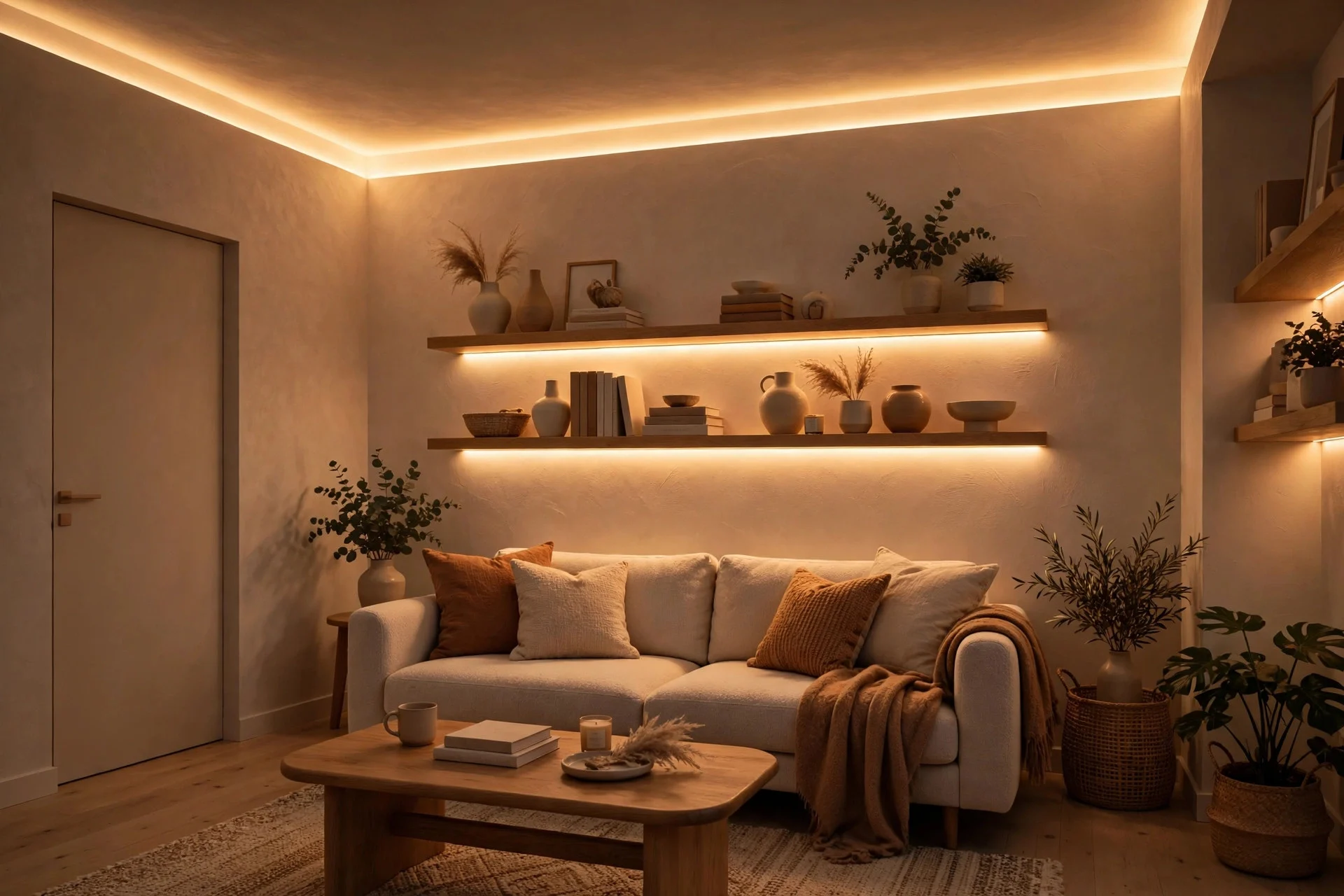
Picture the same living room after dark, but now the walls themselves seem to glow. A warm strip of light runs behind the ceiling edge, another hides under the floating shelves, and the corners that used to go black are softly lit. No single bulb is visible. The room feels lit from everywhere at once, the way a sunny room does.
Hidden LED strips work because they wash a surface with light instead of pointing a bulb at your eyes. Light bouncing off a wall or ceiling spreads evenly and kills the harsh shadows that make windowless rooms feel gloomy. Cove lighting — a strip tucked behind a ceiling edge or a shelf lip — is the classic version, and stick-on strips under shelves, behind a television, or along the top of a wardrobe give a similar lift with no building work at all.
Cost: $20–$80 for strips, a driver, and a dimmer remote. Difficulty: easy. Time: 1–2 hours. Tip: test the strip in place at night before you fix it permanently — a strip that is too cool or too bright is easy to swap while it is still loose. Watch out: cheap strips can hum or flicker on a dimmer, so check reviews and keep the receipt until you have tested them in the dark.
8. A Skylight-Style Panel for Rooms That Feel Like a Cave
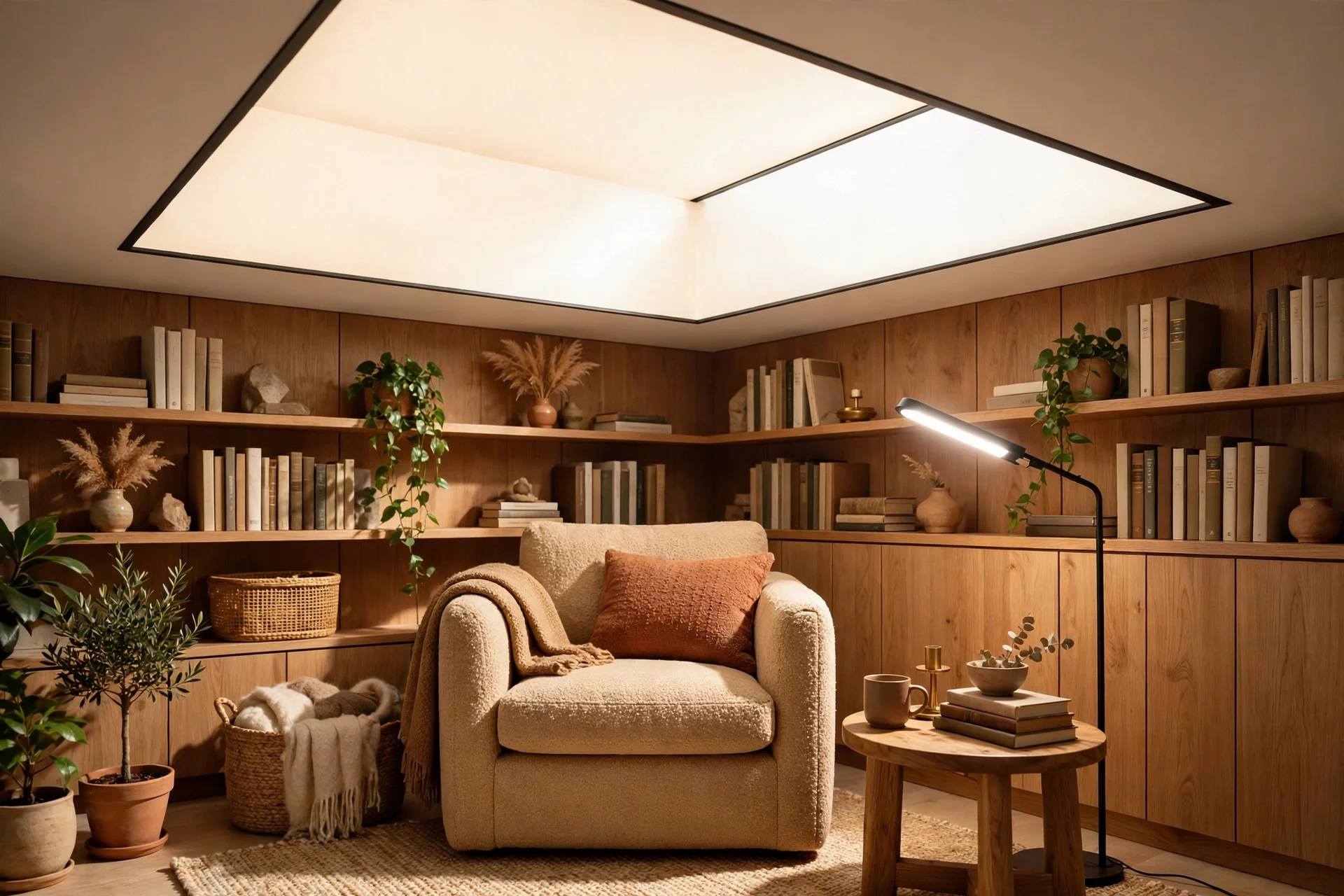
Picture a windowless reading corner with an armchair, a small side table, and, overhead, a flat panel glowing like a patch of sky. It is not a real skylight — no hole was cut in the ceiling — but the soft, even daylight it gives off makes the corner feel open, and reading there at night feels easy on the eyes.
Skylight-style panels are flat LED panels, sometimes printed with a sky image, that mount flush to the ceiling and spread daylight-balanced light evenly. They beat a single ceiling bulb because the light comes from a wide surface rather than a point, so shadows soften and the whole corner lifts. For a desk or reading chair, a daylight lamp (4000K–5000K) beside the seat gives a similar boost in a smaller patch — handy in winter or in rooms where you spend long hours indoors.
Cost: $50–$200 for a ceiling panel, $40–$120 for a good daylight lamp. Difficulty: easy to moderate. Time: 1–2 hours. Tip: if your room doubles as a bedroom, choose a dimmable panel so the “daylight” does not keep you awake. Watch out: daylight-balanced light late at night can mess with sleep, so switch it off an hour or two before bed. If you are working out how much light a room actually needs, the Room Lighting Calculator helps you size it by room size instead of guessing.
9. Glass, Metal, and Glossy Surfaces That Bounce Light Around
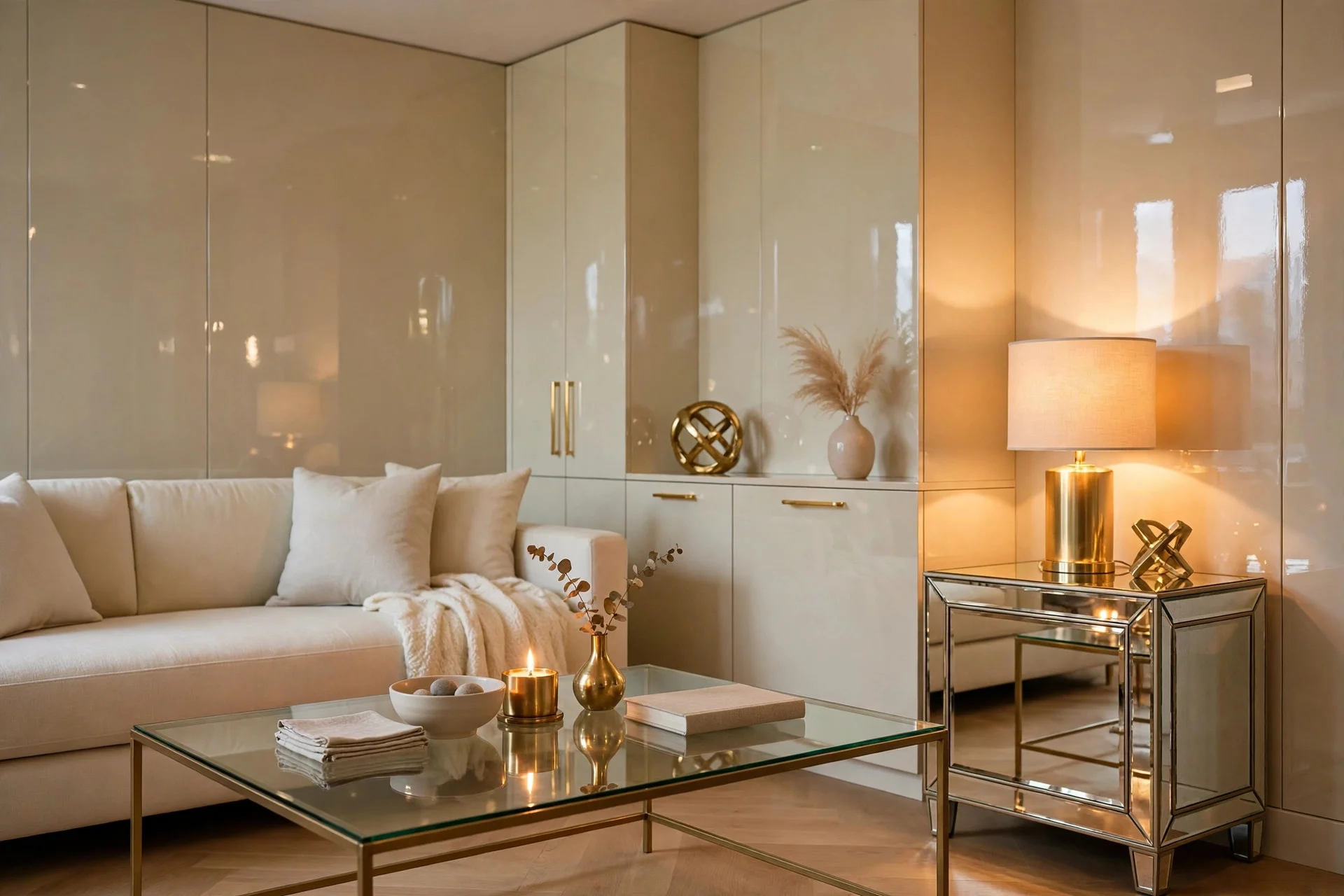
Picture a windowless room where the light seems to travel: a glass-top coffee table catches the lamp glow, a brass floor lamp gleams beside the sofa, a mirrored side table throws a bright patch onto the wall, and a glossy ceramic vase picks up the warmth. Nothing here is a light source, yet every piece is passing light along.
Reflective surfaces are the quiet partner of the mirror and LED ideas above. Glass lets light pass through instead of stopping at a solid tabletop, metal bounces it in warm glints, and glossy finishes scatter it softly. Together they keep light moving through the room rather than letting it die on the first dark surface it hits. That is why a glass coffee table suits a windowless room better than a heavy dark-wood one, and why a few metallic accents punch above their size.
Cost: $40–$250 for a glass table or a few metallic accents. Difficulty: easy. Time: under an hour. Tip: place one reflective piece directly beside each main lamp — that is where the bounce starts. Watch out: too much glass and chrome in one room can feel cold, so pair them with wood, fabric, and plants to keep the room warm. For more on layering lamps in a room with no overhead light at all, see How to Light a Living Room With No Ceiling Light, and for wider lamp and fixture ideas, 18 Living Room Lighting Ideas to Brighten Your Space covers the options room by room.
Frequently Asked Questions
Can a windowless room ever feel genuinely bright?
Yes, though it will feel bright in a different way than a room with a window. Layered warm light, pale walls and ceiling, a large mirror, and one daylight-style feature like a faux window or a skylight panel together get most rooms to a point where they feel open and comfortable, even at night.
What color temperature should I use in a windowless room?
Warm white (2700K–3000K) suits living rooms and bedrooms, because it feels cozy after dark. Daylight bulbs (4000K–5000K) suit a home office, a reading corner, or a faux window, where you want alert, daylight-like light. Pick one temperature for the main lights so the room does not look patchy.
Do mirrors really help if there is no window at all?
They help by reflecting the light you already have, not by creating new light. A large mirror facing a lamp or a doorway spreads that light further into the room and makes the space read bigger. A mirror facing a blank wall, on the other hand, adds very little.
Is a faux window or a skylight panel better?
It depends on the room. A faux window suits a bedroom, where the window shape itself makes the room feel less sealed. A skylight-style ceiling panel suits a desk, a reading corner, or a workspace, where even, shadow-free light matters more than the shape. In a large room, you can use both without them clashing.
What plants survive in a windowless room?
Very few plants thrive with zero light, so keep expectations realistic. Snake plants, ZZ plants, and pothos tolerate low light for a while, but even they need some light — a grow bulb in a regular lamp, or a few hours near a bright doorway each week, keeps them alive. If the room is truly dark all day, good-quality faux plants give the green look with none of the upkeep.
A Quick Checklist Before You Start
Walk the room after dark and note every black corner. Fix the ceiling and walls first if they are dark, then add lamps at three heights, then place one large mirror facing the brightest light. After that, pick one daylight trick — a faux window, a skylight panel, or borrowed light from the next room — and finish with pale textiles and a few reflective pieces.