12 Loft Apartment Ideas With an Industrial Edge
A loft apartment gives you tall ceilings, open floor space, and raw materials to work with — and industrial style is the easiest way to make those features look intentional instead of unfinished. The look rests on a simple mix: brick or concrete, black metal, warm wood, and leather that gets better with wear. You do not need a converted warehouse or a big budget to pull it off. The 12 ideas below each start with a scene you can picture, then break down the pieces that make it work, what each piece costs, and how to copy it for less.
Keep one rule through the whole apartment: two or three industrial materials, repeated. Pick your anchors, then let softer pieces — linen, wool, plants, warm light — keep it livable.
1. Let One Brick Wall Do the Talking
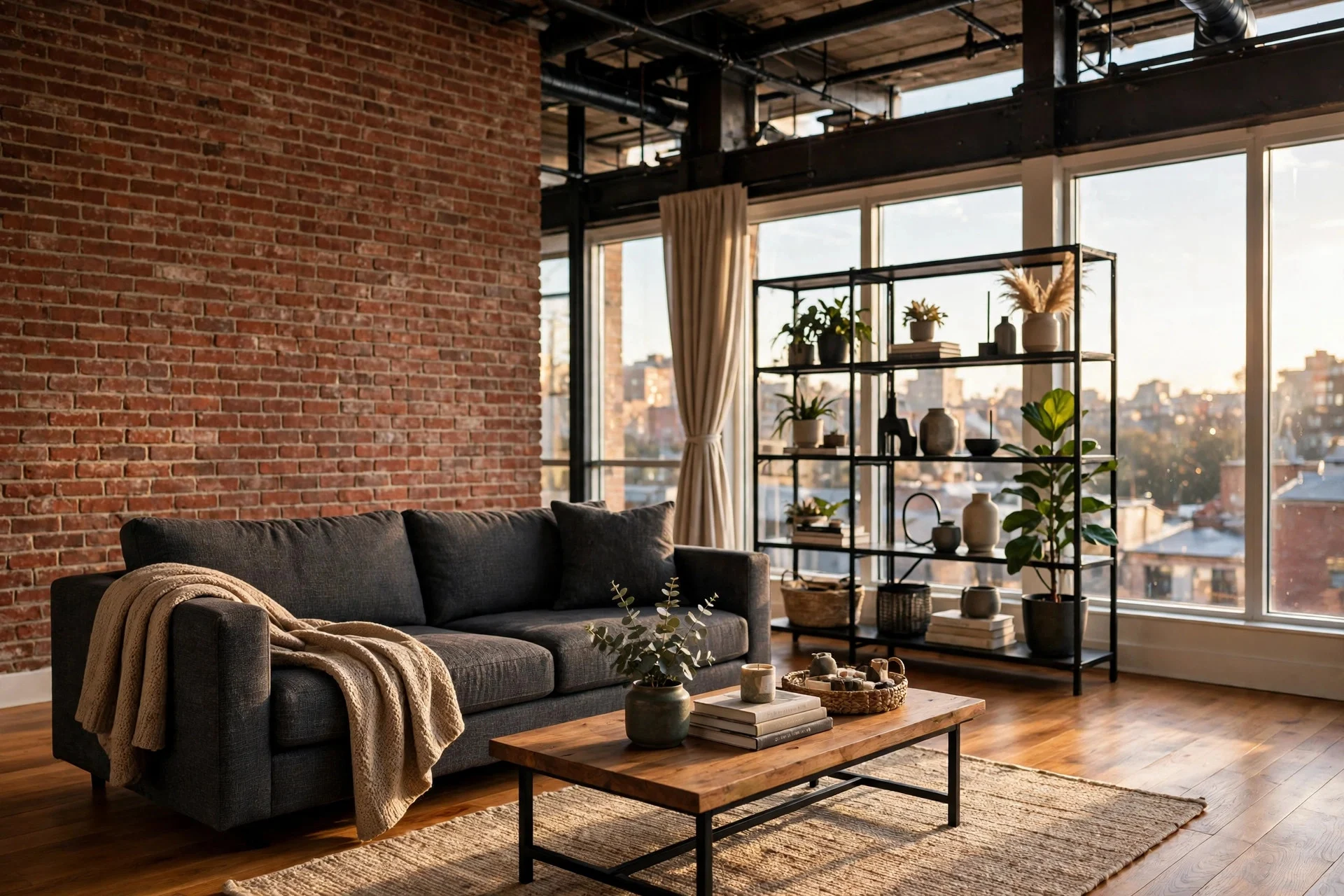
Picture a living room where one wall is bare, warm-toned brick, and everything else stays quiet: a charcoal sofa, a low wood coffee table, a black floor lamp, and a rug that covers most of the floor.
The elements that make it work are the brick itself, a dark sofa that contrasts with the warm tones, black metal accents, and one large piece of art or a leaning mirror to break up the brick. Copy it cheaply with brick-look panels ($5 to $12 per square foot) instead of real brick ($15 to $30 installed).
Cost: $300 to $1,200 for the wall and lamp, sofa extra. Difficulty: easy to medium; one weekend. Tip: paint the brick wall’s trim and skirting the same color as the next wall so the brick reads as one clean panel. Watch out: real brick is dusty and rough, so seal it with a matte brick sealer before you push furniture against it.
2. Divide Space With a Steel-and-Glass Partition
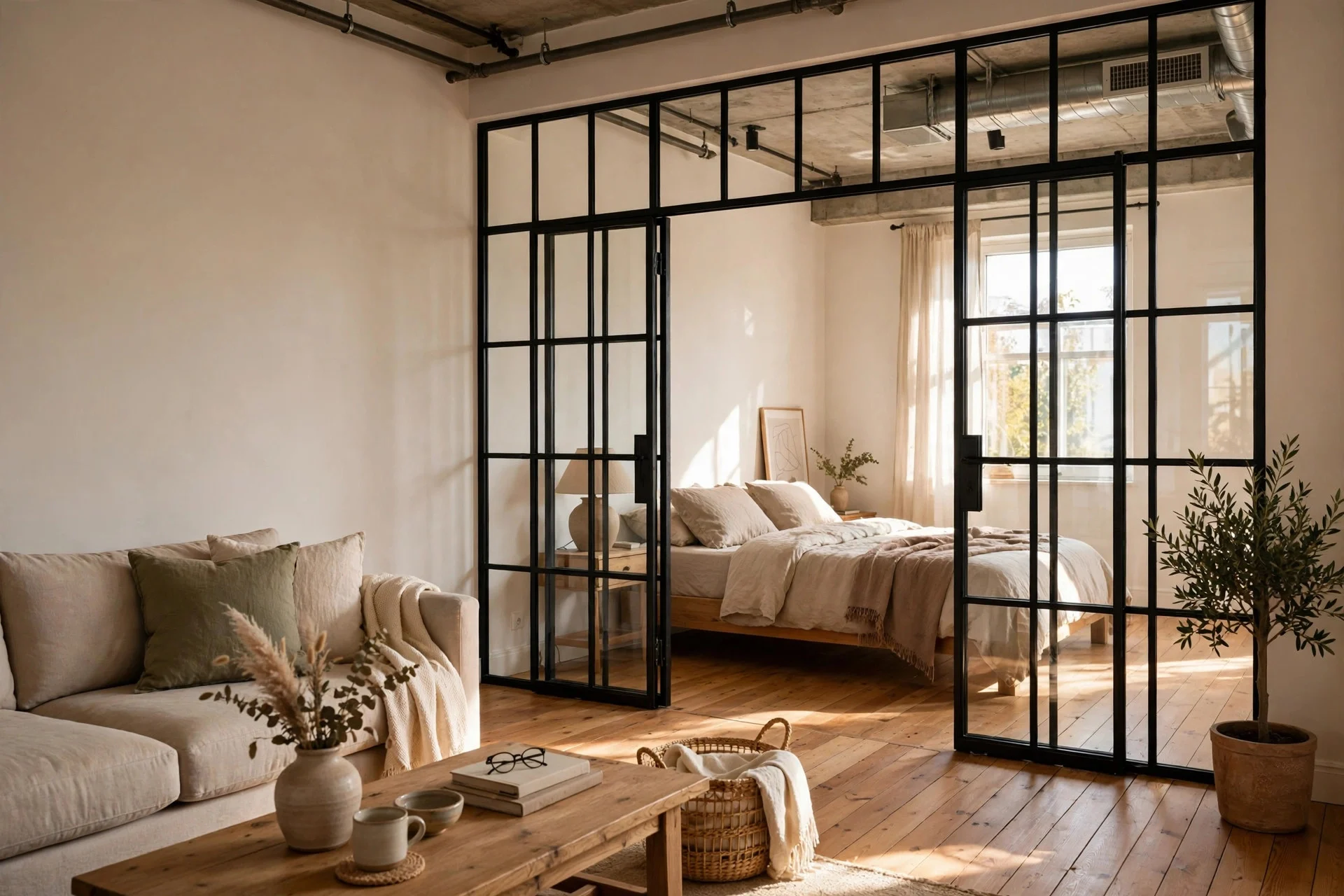
Picture a sleeping area tucked behind a black-framed glass wall with a grid of panes. You can see through it, light passes straight through, and yet the bedroom feels like its own room.
The elements are a grid-pattern frame, clear glass, a sliding or fixed panel, and simple bedding that does not fight the frame. Copy it cheaply with a freestanding black metal divider ($150 to $400) instead of a custom build.
Cost: $150 to $5,000 depending on the route. Difficulty: easy for a divider, hard for a fixed install. Tip: measure your ceiling height twice before ordering anything tall — loft ceilings vary by inches from one end of a room to the other. Watch out: glass shows fingerprints and dust, so keep a microfiber cloth nearby and skip it if you hate wiping surfaces.
3. Warm Up the Kitchen With Reclaimed Wood and Black Cabinets
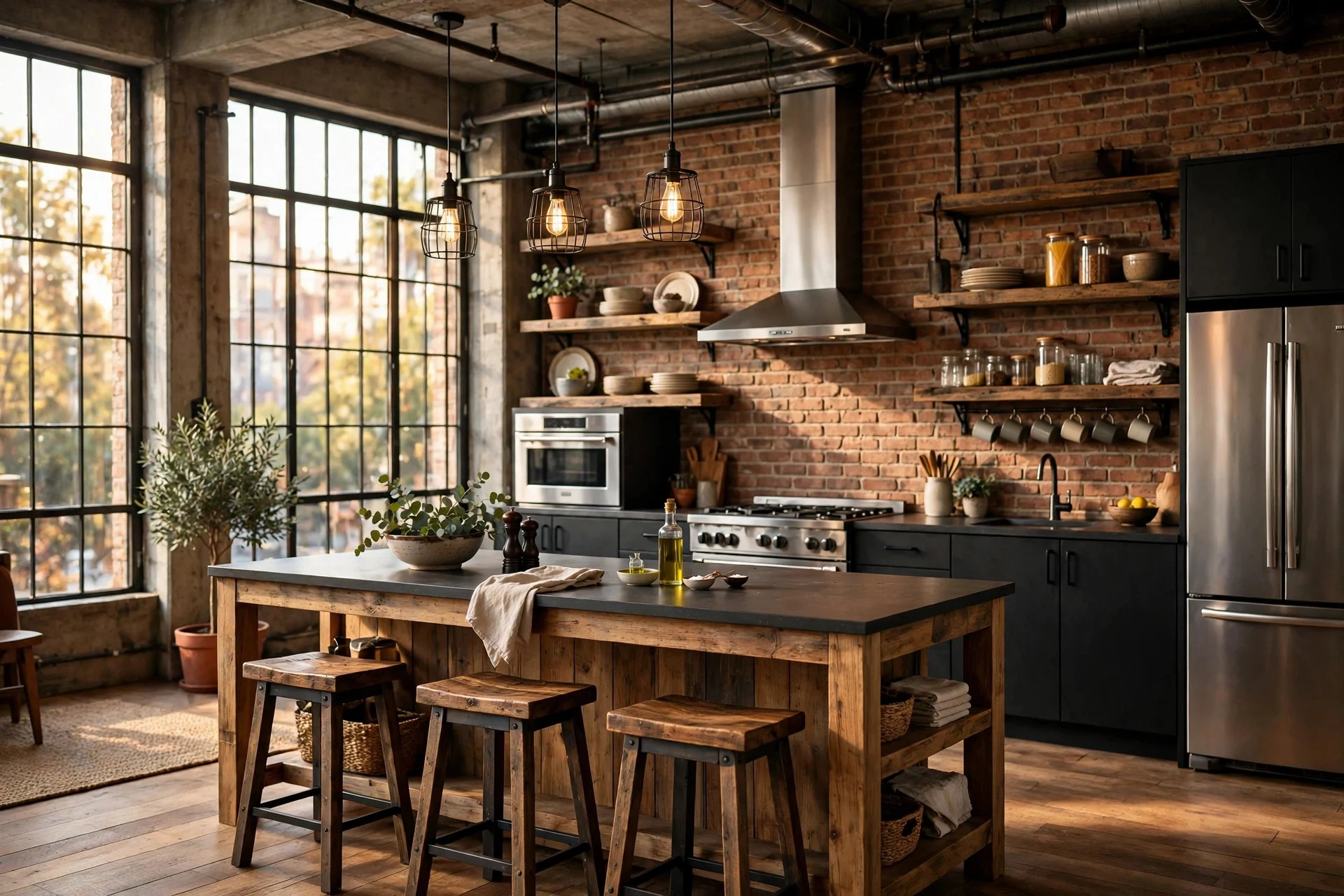
Picture a kitchen where matte black lower cabinets sit under open reclaimed-wood shelves, a brick backsplash runs behind the stove, and three wooden stools line a small island.
The elements are matte black cabinet fronts, open wood shelves, a brick or brick-look backsplash, and warm metal or wood stools. Copy it cheaply by repainting cabinets matte black and fitting scaffold-board shelves on black brackets.
Cost: $250 to $900 for the refresh, $3,000-plus for a full refit. Difficulty: medium; painting takes patience, shelving takes a drill and a level. Tip: put daily dishes on the lowest shelf and pretty, rarely used pieces up high, so the shelves stay useful and not just decorative. Watch out: open shelves collect grease near a stove, so keep them on the far wall and wipe them weekly.
4. Build a Mezzanine Sleeping Loft

Picture a bed on a raised platform above the living area, reached by a steep metal staircase, with a black iron railing along the edge.
The elements are a sturdy platform, a safe railing at least 36 inches high, a compact staircase or ship’s ladder, and low-profile bedding so you can sit up without hitting the ceiling. Copy it cheaply with a freestanding loft bed frame ($400 to $1,200) instead of a built platform.
Cost: $400 to $10,000. Difficulty: easy for a loft bed, hard for a built platform. Tip: leave at least 30 inches between the mattress top and the ceiling, or sitting up in bed gets old fast. Watch out: check your lease and your building’s rules before building anything fixed, and never skip the railing — a loft edge without one is a fall risk.
5. Keep the Concrete Floor — and Soften It
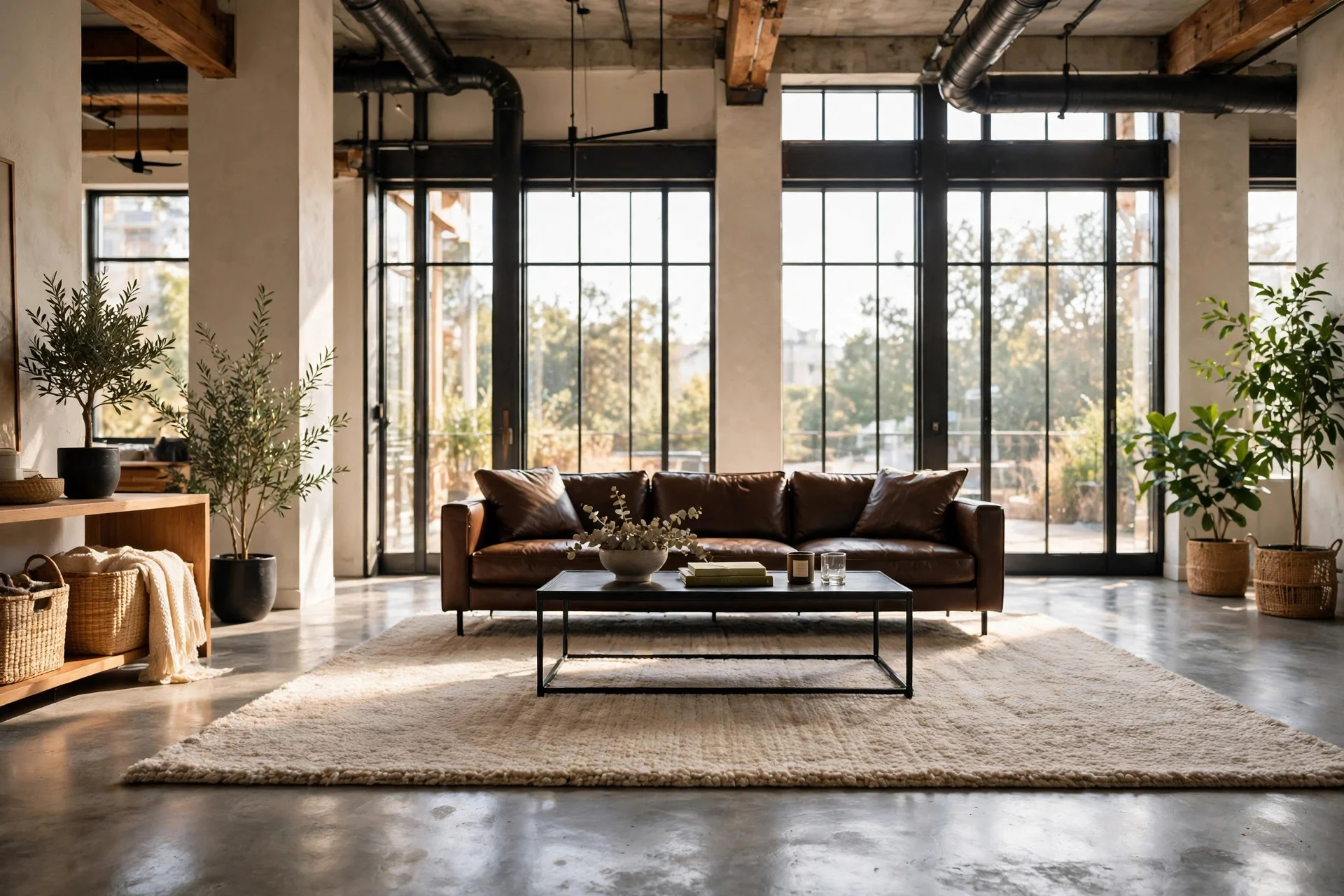
Picture a living room with a smooth gray concrete floor, a large wool rug under a low leather sofa, and a black metal coffee table.
The elements are the concrete itself, a rug big enough to anchor the seating (at least 8 by 10 feet for a sofa setup), leather or canvas seating, and warm lighting. If you have worn wood floors instead, refinishing them — sanding back to bare wood and sealing with a matte finish — often beats replacing them, and it keeps the loft’s original character. Run your room size through a flooring calculator before you order materials, so you buy the right amount of sealant, stain, or replacement boards, plus 10 percent extra for cuts and mistakes.
Cost: $150 to $600 for a rug and sealant; $3 to $8 per square foot for professional polishing. Difficulty: easy for the rug route, medium to hard for refinishing. Tip: choose a flat-weave or low-pile rug — thick shag fights the industrial look and traps dust on concrete. Watch out: concrete is hard and cold in winter, so add felt pads under furniture legs and a pair of thick socks to your routine.
6. Layer Edison Bulbs With Track Lighting
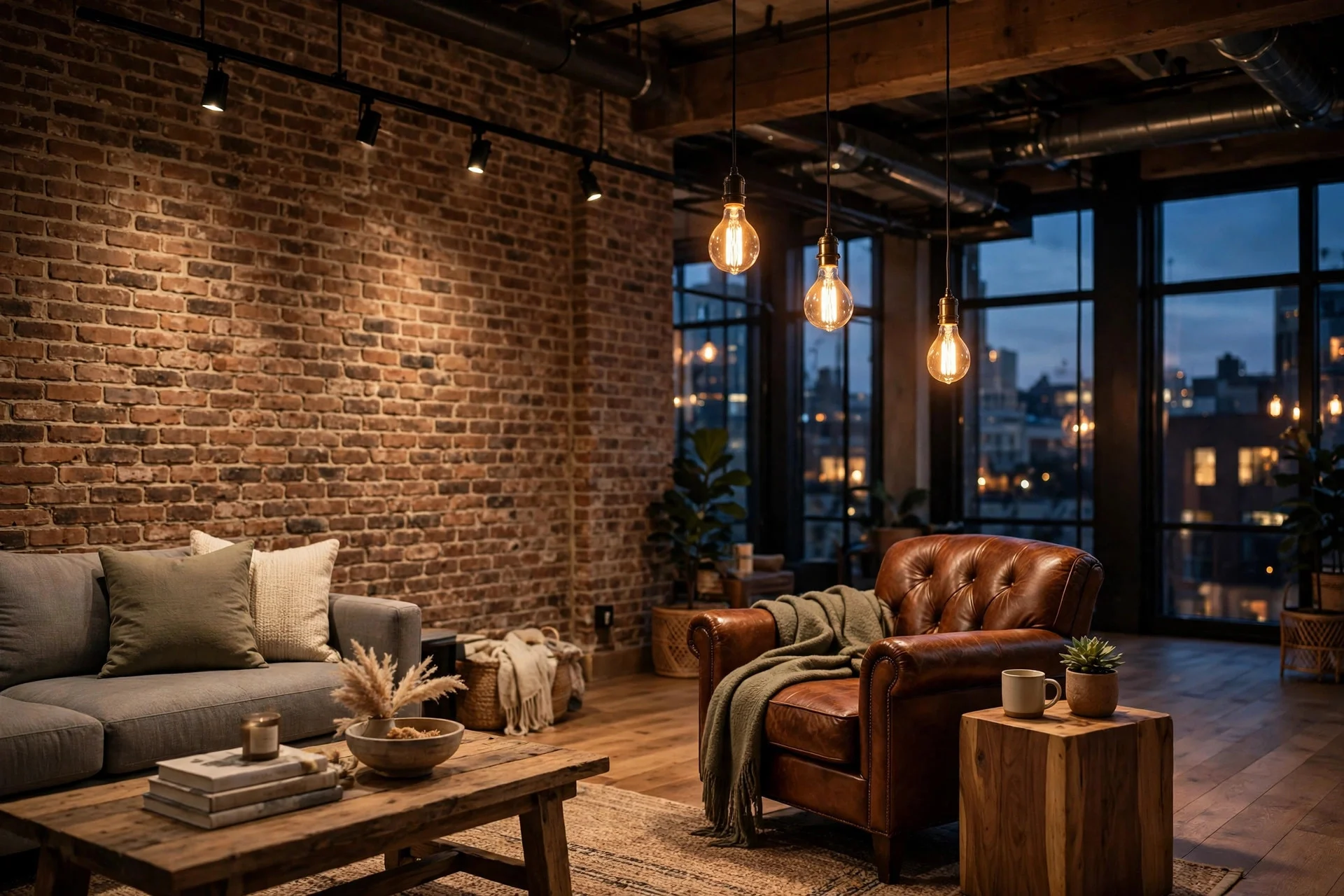
Picture the same loft at dusk: three Edison-bulb pendants glow over the coffee table, a black track light washes the brick wall, and a small table lamp fills the dark corner.
The elements are warm-toned bulbs (2200K to 2700K), black cord pendants, one adjustable track, and a dimmer. To copy it cheaply, fit pendant cords at $15 to $30 each, LED filament bulbs at $4 to $8 each, and a two- or three-head track kit at $60 to $150. If your loft has no ceiling light at all, you can still build this scheme from floor and table lamps alone — see these ideas for a living room with no ceiling light for plug-in layouts that work.
Cost: $120 to $350. Difficulty: easy; an electrician is worth it for any hardwired track. Tip: keep all your bulbs the same warm tone — one cool white bulb in the mix ruins the whole effect. Watch out: real filament bulbs run hot and use more power, so LED filaments give you the look at a fraction of the running cost.
7. Anchor the Room With a Leather Sofa and Metal Finds
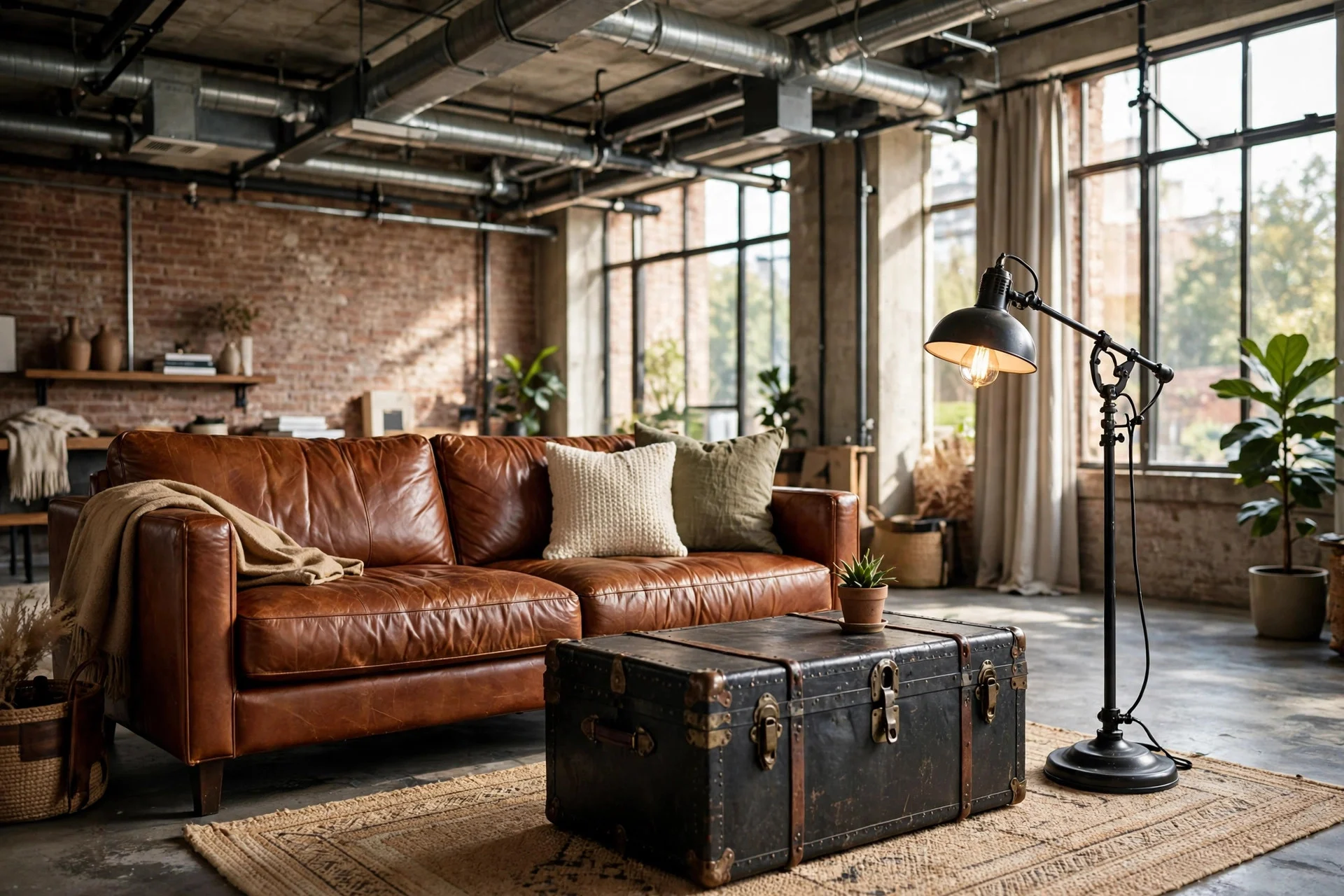
Picture a cognac leather sofa facing a battered metal trunk used as a coffee table, with a factory-style floor lamp behind one arm.
The elements are a leather sofa in cognac, tan, or black, one vintage metal piece, a factory-style lamp, and a simple throw in wool or cotton. A metal trunk or old factory cart costs $80 to $250 at flea markets and online marketplaces, and a reproduction factory lamp runs $50 to $120.
Cost: $450 to $1,200 secondhand; $1,500-plus new. Difficulty: easy — this is shopping, not building. Tip: condition secondhand leather with a $15 leather balm before it goes in your living room; it deepens the color and hides small scuffs. Watch out: very dark leather plus dark walls can swallow a small room, so keep at least one wall light or add a pale rug.
8. Swap Upper Cabinets for Pipe Shelving
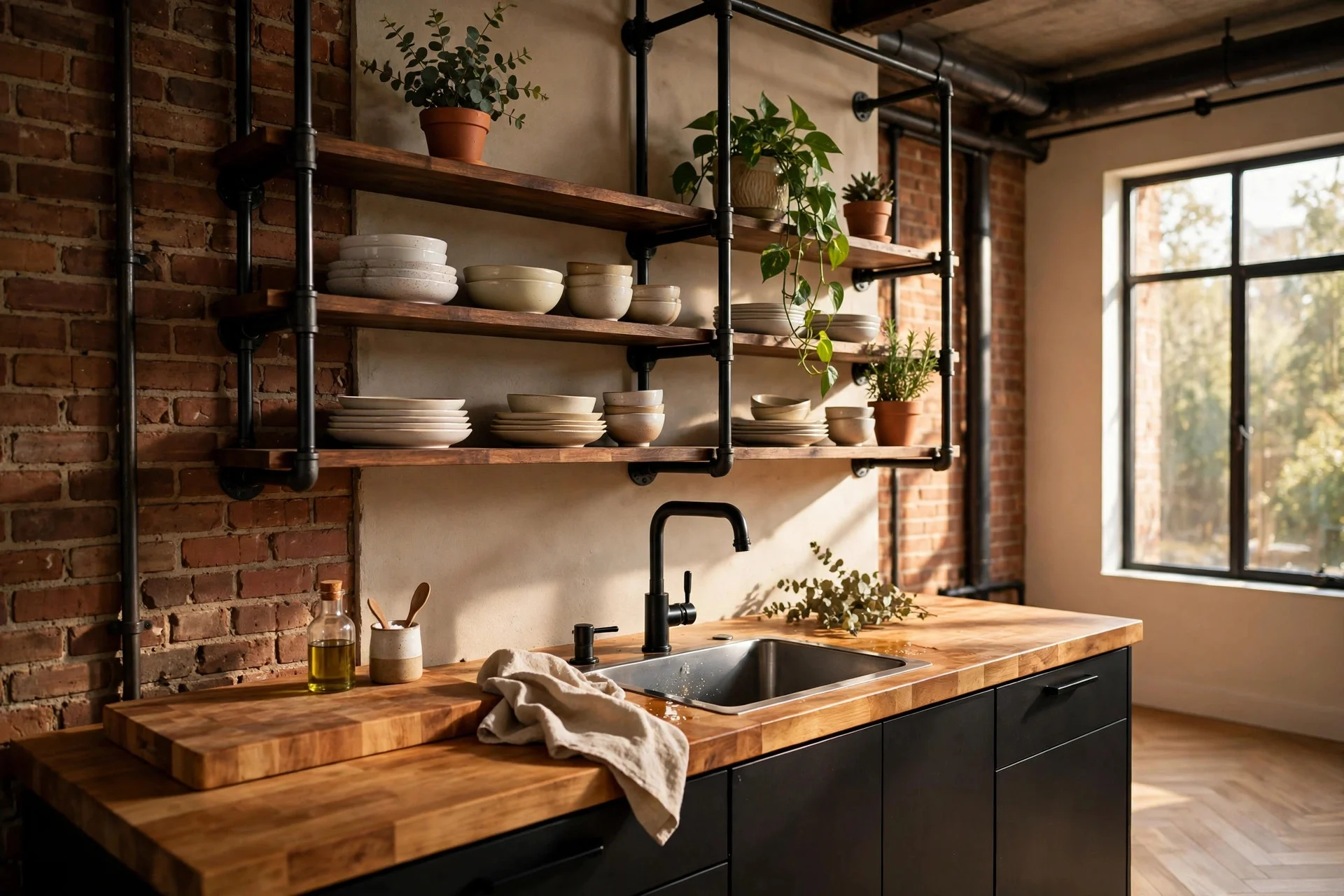
Picture a kitchen wall where black iron pipes hold thick wood boards, stacked with white plates, glass jars, and a few trailing plants.
The elements are black iron pipe brackets, solid wood boards at least 1.5 inches thick, everyday dishes you actually like looking at, and jars for dry goods.
Cost: $120 to $300. Difficulty: medium; one afternoon with a drill and level. Tip: stack plates vertically in a small rack on the shelf so you can grab one without lifting the whole pile. Watch out: if you own mismatched plastic containers, they will be on display — decant dry goods into matching glass jars for a calmer look.
9. Make the Bedroom Raw and Restful at Once
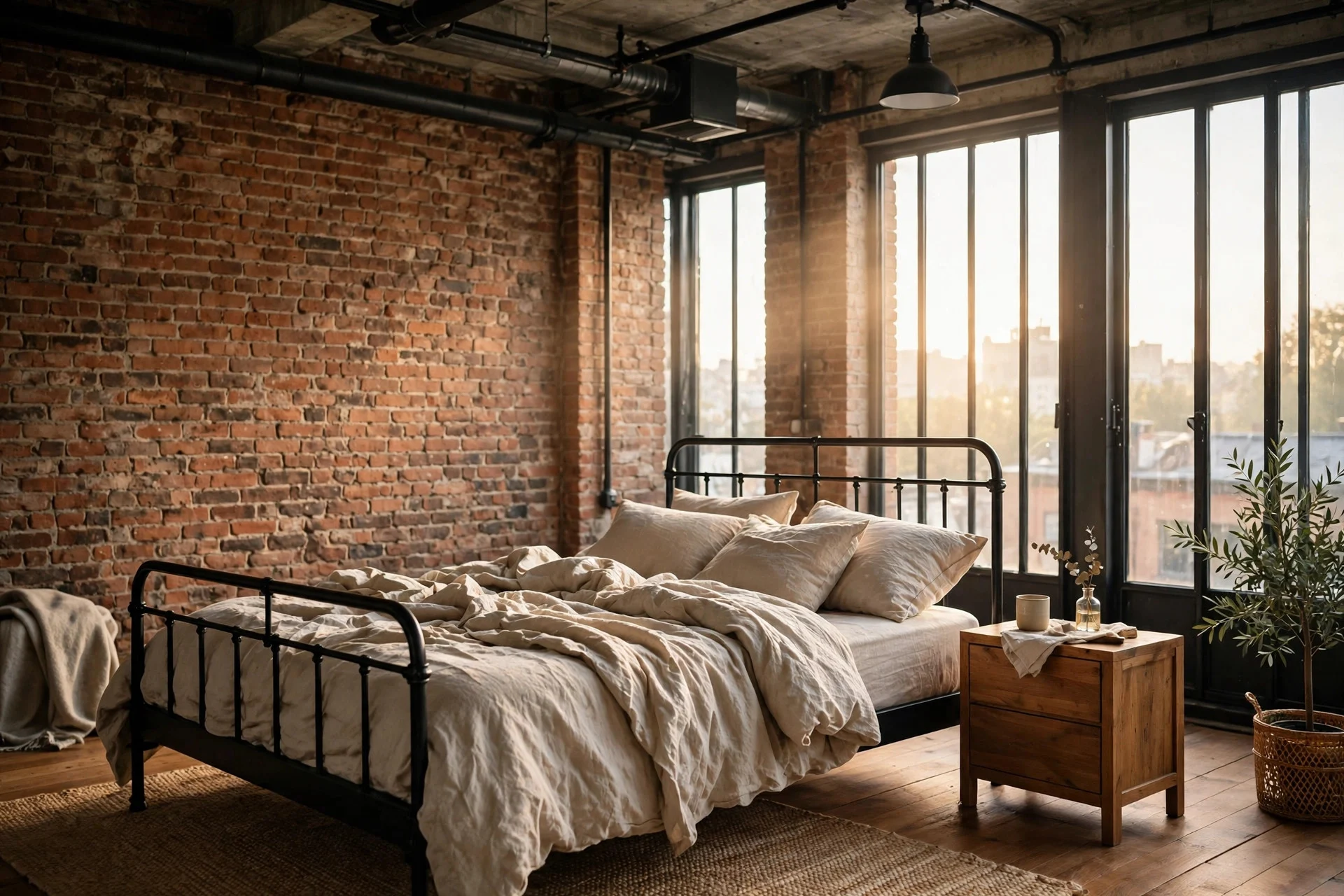
Picture a bedroom with a brick wall behind a black metal bed frame, rumpled white linen bedding, a wood nightstand, and morning light through tall windows.
The elements are a metal bed frame, plain linen or cotton bedding, one wood nightstand, and a single warm light source. A simple black metal frame costs $150 to $400, linen-look bedding sets run $60 to $150, and a secondhand wood nightstand costs $40 to $120.
Cost: $250 to $700. Difficulty: easy; an afternoon to assemble and dress the bed. Tip: layer two pillows per side and fold the top sheet back over the duvet — it looks made without feeling stiff. Watch out: metal frames can squeak, so tighten every bolt after the first week and add felt pads where the frame meets the floor.
10. Carve Out a Workshop-Style Office Nook

Picture a desk pushed against a brick wall: a black steel frame, a thick wood top, a metal task lamp, and a pegboard above holding notebooks, scissors, and a small plant.
The elements are a steel-and-wood desk, a pegboard or a couple of wall rails, a good task lamp, and a chair you can sit in for hours. A steel-frame desk costs $150 to $400, a pegboard with hooks runs $30 to $80, and a solid task lamp costs $40 to $90.
Cost: $250 to $800. Difficulty: easy to medium; pegboard needs wall anchors. Tip: hang the pegboard at eye level when seated, and keep only the tools you use weekly on it — the rest goes in a drawer. Watch out: a desk facing a blank wall can feel dull, so angle it toward the room or a window when the layout allows.
11. Give the Bathroom Exposed Pipes and Warm Wood
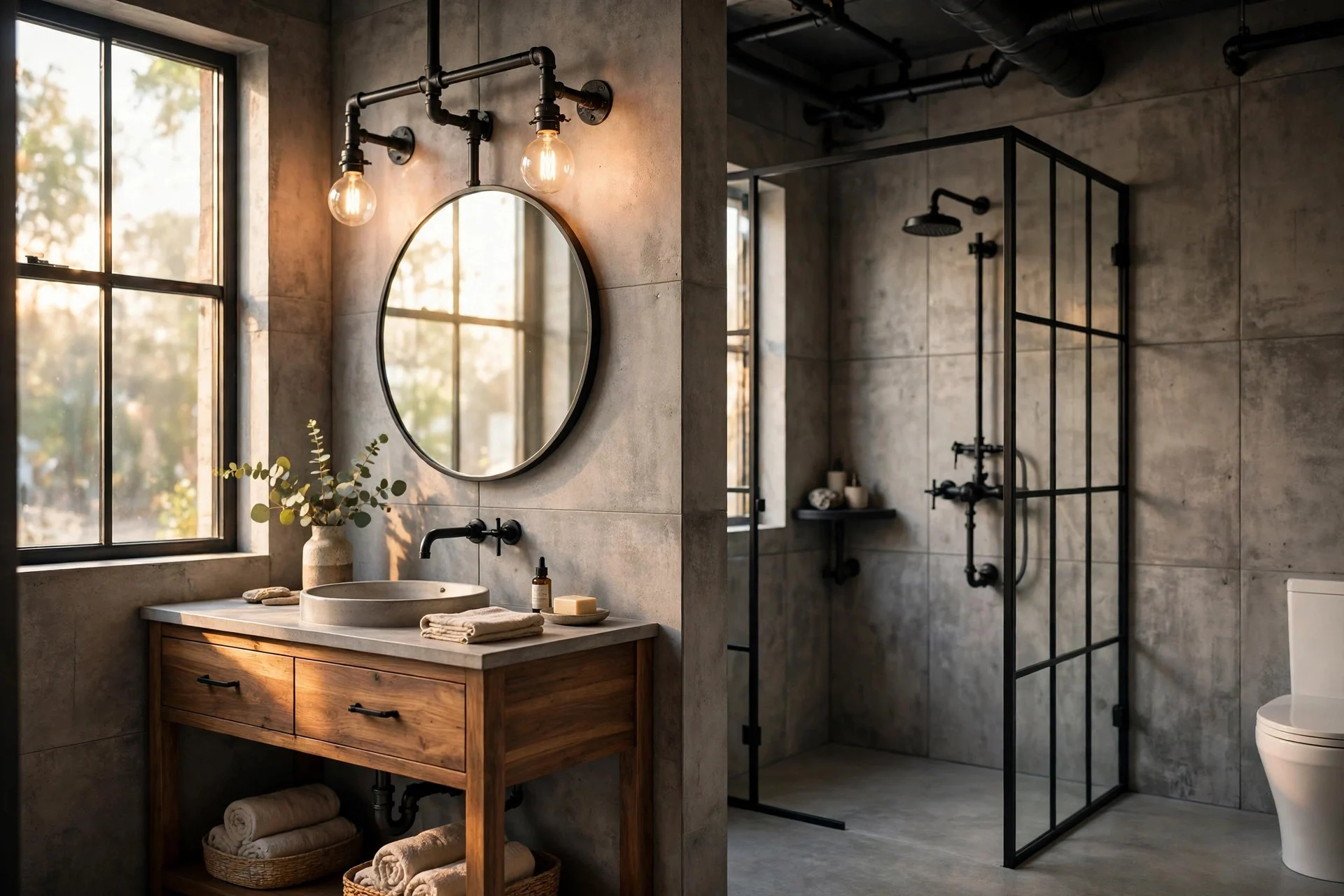
Picture a bathroom where black pipework runs visibly beside a wood vanity, concrete-look tiles cover the walls, and a round mirror softens all the straight lines.
The elements are a wood vanity, black fixtures, concrete-look or large-format tiles, and a round or arched mirror. A wood vanity costs $300 to $900, black faucet and shower sets run $120 to $350, and a round mirror costs $40 to $120.
Cost: $100 to $1,500 depending on the route. Difficulty: easy for swaps, hard for plumbing changes. Tip: match the black finish across faucet, mirror frame, and towel bar — mixed blacks (matte, gloss, oil-rubbed) clash more than you expect. Watch out: exposed pipes in a bathroom collect dust and splashes, so choose a finish you can wipe down and keep them off the direct shower spray.
12. Set a Long Wood Table for Everyday Gatherings

Picture a long reclaimed-wood table under three black pendant lights, ringed by black metal chairs, with a brick wall behind it.
The elements are a long wood table (at least 72 inches for six people), simple metal chairs, three pendants hung 30 to 36 inches above the table, and a low centerpiece that does not block faces. A reclaimed-wood table costs $600 to $1,500 new, $200 to $600 secondhand, and metal chairs run $40 to $90 each. Pair it with dark wood floors in the rest of the space — see this living room with dark wood floors for how deep floors and black metal work together —
Cost: $450 to $1,500. Difficulty: easy; hanging pendants is the only skilled step. Tip: buy two extra chairs and stack them in a corner — a loft table that seats eight on demand gets used far more than one that seats four. Watch out: reclaimed wood needs sealing before it meets red wine and coffee rings; a matte polyurethane coat does the job without hiding the grain.
How to Mix Industrial With Warmth (So It Feels Like Home)
Industrial style goes wrong in one predictable way: too much hard surface and no softness. Fix it with three habits. First, add one soft texture per zone — a wool throw on the sofa, a linen duvet in the bedroom, a cotton runner on the dining table. Second, add plants, even tough ones like snake plants and pothos, which soften steel and brick without needing much care. Third, keep your lighting warm and layered, as in idea 6, instead of relying on one bright overhead light. A walnut sideboard or tapered-leg chair also sits well next to black metal, as in this mid-century living room with walnut.
Frequently Asked Questions
Can I get an industrial look in a rental without damaging walls?
Yes. Peel-and-stick brick panels, freestanding metal shelving, plug-in pendant lights, and furniture swaps give you most of the look with no drilling.
How do I keep an industrial loft from feeling cold?
Layer warm materials over the hard ones: wood, leather, wool, linen, and warm-toned bulbs.
Is black metal too dark for a small loft?
Not if you use it as an accent. Black frames, lamps, and hardware against light walls and wood floors add definition without shrinking the room.
What is the cheapest industrial change with the biggest impact?
Lighting. Swapping cool bulbs for warm filaments, adding two or three black cord pendants, and putting them on a dimmer changes the whole room for $120 to $350,
Do I need real brick, concrete, or reclaimed wood?
No. Brick-look panels, concrete-look tiles, and new wood with a matte finish copy the look well at a fraction of the cost and weight.
Your Loft Checklist
Start with the room you use most, and work through this list in order: pick your two anchor materials (brick, concrete, wood, or steel); fix the lighting to warm and dimmable; add one large rug to the seating area; bring in one leather or wood statement piece; then add plants and soft textiles last.