11 Living Rooms With a Striped Accent Wall
Wondering if a striped accent wall still works in a living room? Yes — it’s one of the cheapest high-impact updates you can make: a gallon of paint, a weekend, and a wall with real personality. The trick is picking the right stripe width and colors, then styling the room so the wall looks intentional.
Below are 11 looks to copy. Each one starts with the scene, then breaks down what makes it work and how to get each element for less. Find the one that fits your room and budget, and start with the wall.
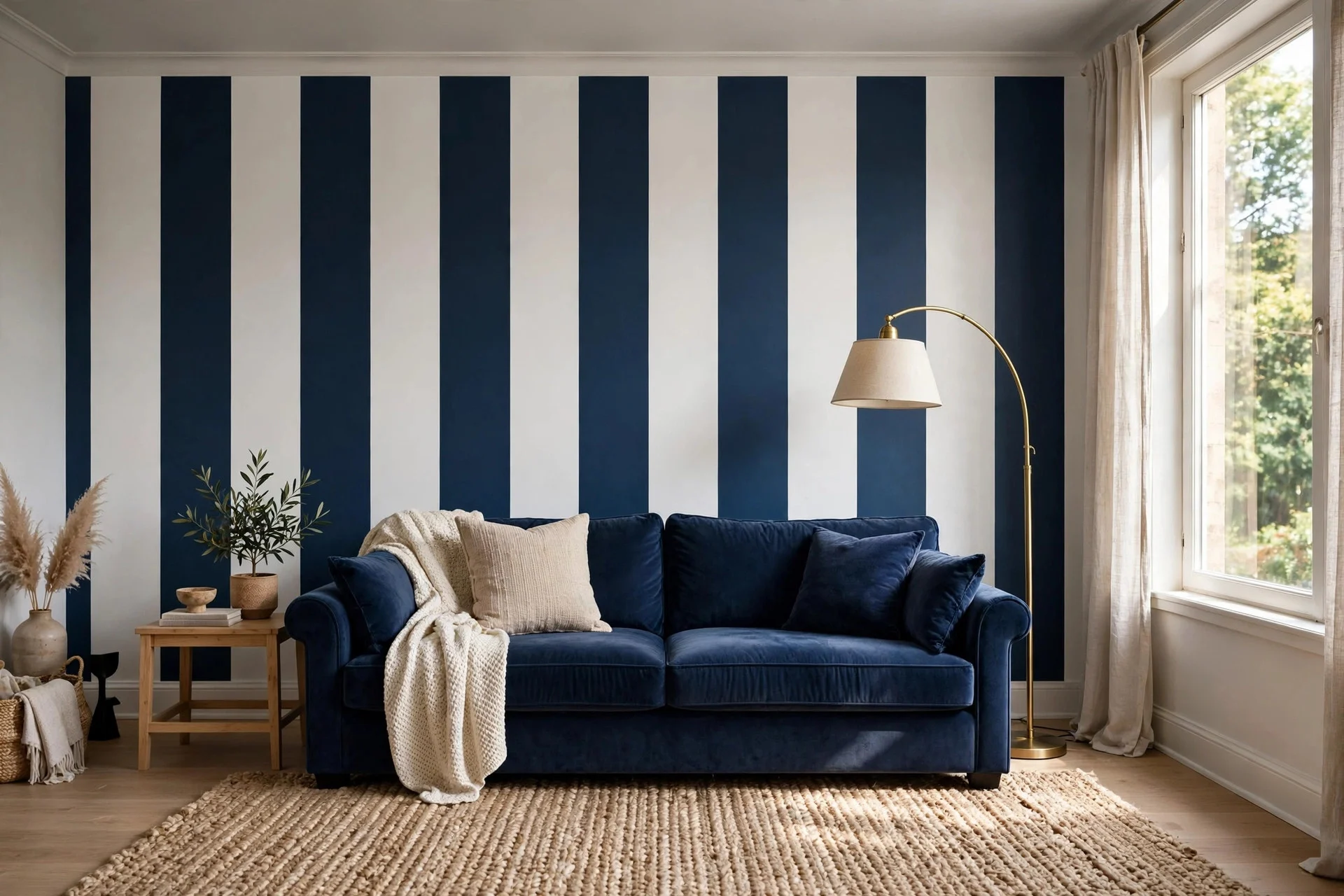
1. Wide Navy-and-White Vertical Stripes With a Matching Velvet Sofa
One big wall wears wide vertical stripes in deep navy and crisp white, each about the width of a hardcover book, behind a navy velvet sofa, a brass floor lamp, and a chunky jute rug. Bold but classic.
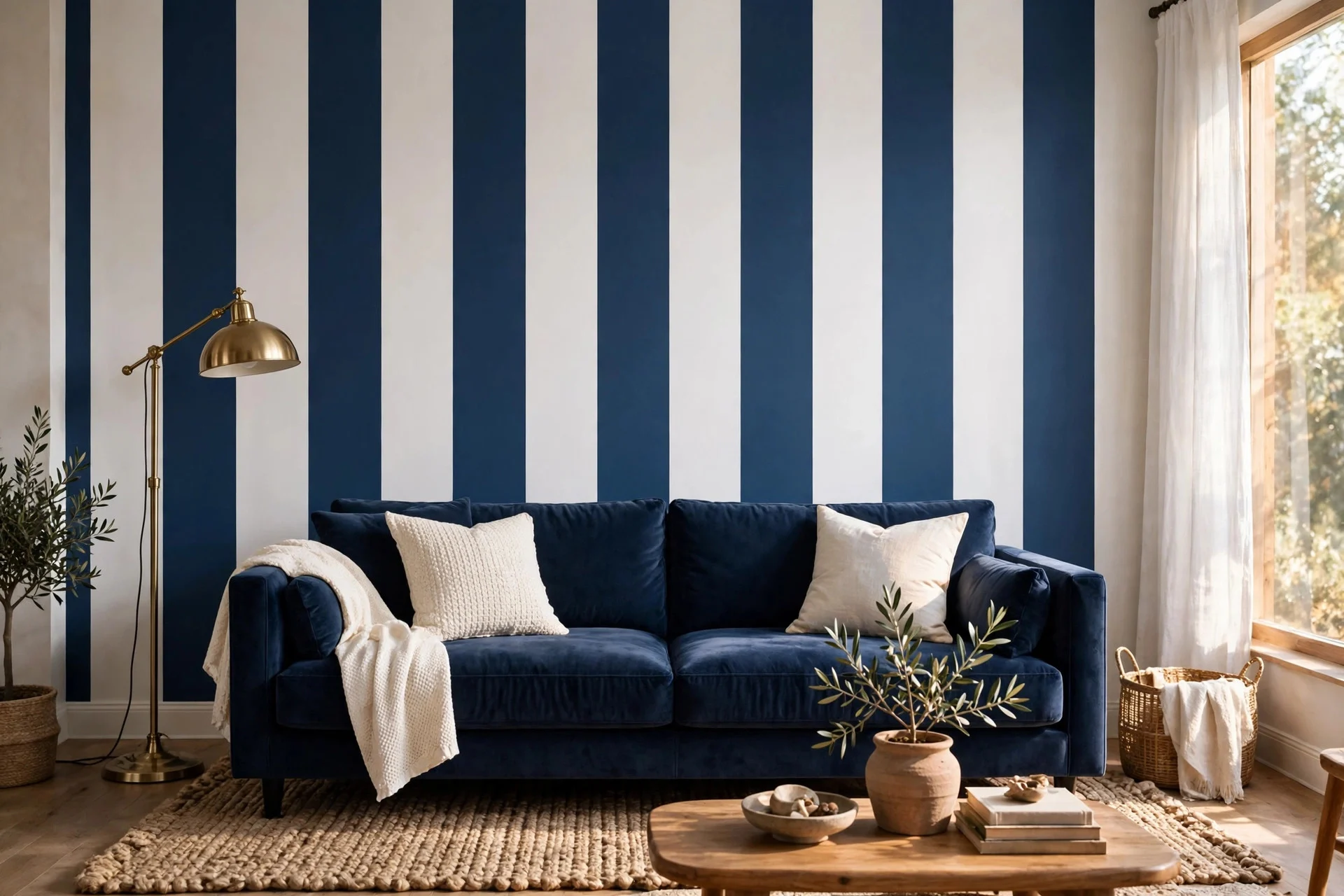
It works because the sofa melts into the darker stripe, so the wall feels upholstered. The brass lamp adds warmth against all that blue, and the jute rug keeps the palette from going too formal.
Copy the look for less:
- The stripes: Two coats of deep navy over white — about $50–$80 in paint for one wall, plus $10–$15 for painter’s tape. Mark stripes 10–12 inches wide. Run the numbers first with our paint calculator so you don’t overbuy.
- The color-melting sofa: A navy slipcover over your current sofa ($60–$120) gives the same melt-in effect in an afternoon — no new sofa needed.
- The warm metal: Brass floor lamps sell for $80–$150 new, but thrift stores usually have one for $20–$40, and a $8–$12 can of gold spray paint refreshes anything tired.
Watch out: Navy eats light. If the room faces north, keep the other three walls bright white so it doesn’t cave in. Bonus: vertical stripes fake taller ceilings — these low-ceiling living room decorating ideas pair well with this look.
2. Horizontal Sage-and-Cream Stripes Behind a Low Modern Sofa
This one breaks the rules on purpose. The wall runs horizontal stripes in muted sage green and warm cream, about 8 inches tall, behind a low gray sofa, with a rounded oak coffee table in front and linen curtains on the single window.
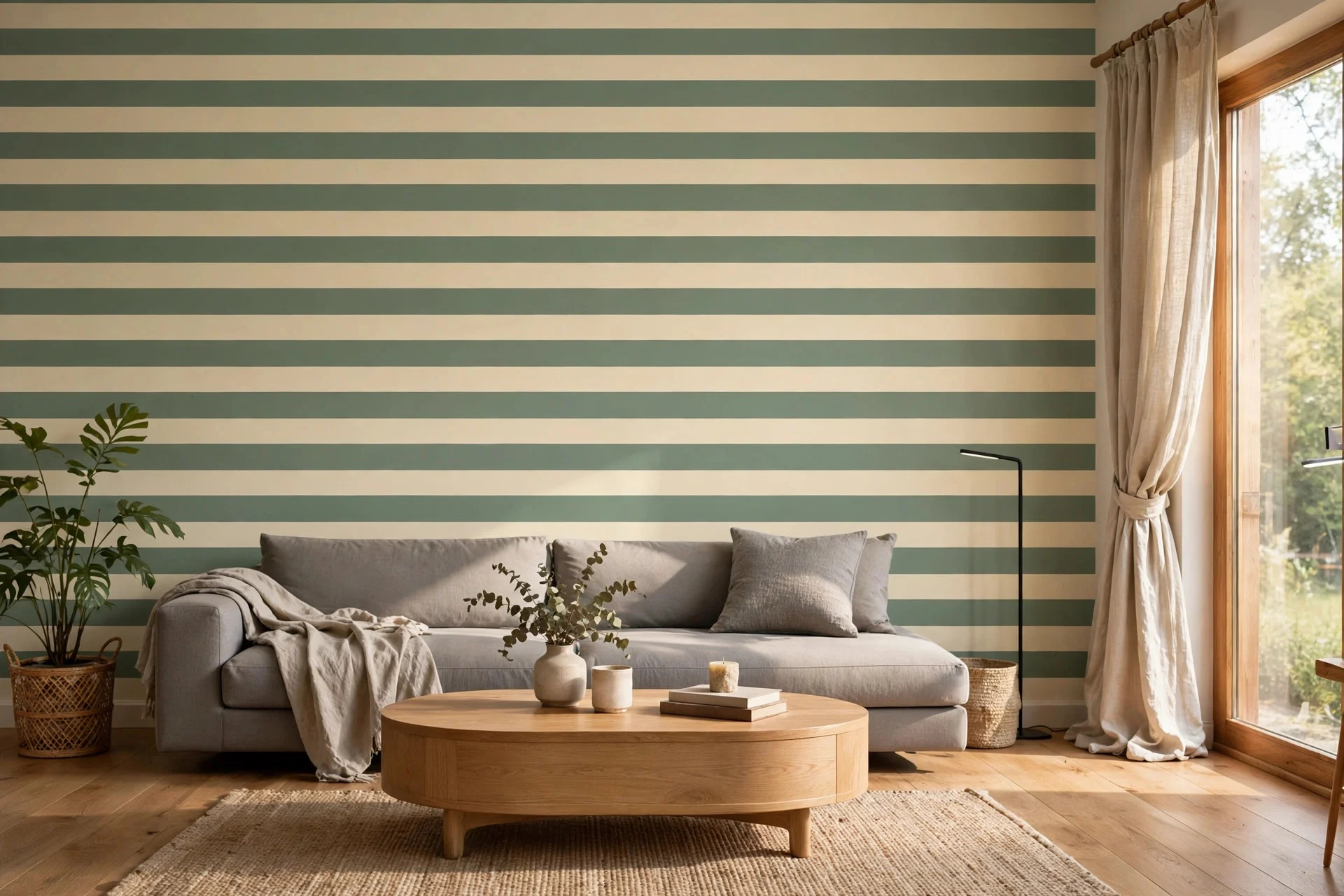
Horizontal stripes pull the eye sideways, so the wall looks wider and the room feels bigger. The sage keeps things earthy instead of nautical — the usual trap with horizontal stripes. The low sofa sits below the stripe changes, so the wall stays the star.
Copy the look for less:
- The horizontal stripes: Same $50–$80 paint budget as vertical. The only extra cost is patience: horizontal lines need a laser level or taut chalk line ($15–$25) to stay straight.
- The muted green: Sample two or three sage swatches and live with them for two days — greens shift a lot between morning and evening light.
- The styling: Push your sofa a foot off the wall so stripes stay visible above it, and add sage or cream pillows ($15–$30 each).
Watch out: Horizontal stripes on a wall with a sloped or uneven ceiling will expose every crooked line. Run a level along the top first — if it’s off by more than half an inch, vertical stripes are the safer play.
3. Charcoal Pinstripes on Warm White With a Leather Armchair
Some rooms whisper. A warm-white wall carries hairline-thin charcoal stripes, spaced about 4 inches apart. A tan leather armchair and walnut side table anchor one corner, with a slim black arc lamp curving overhead.
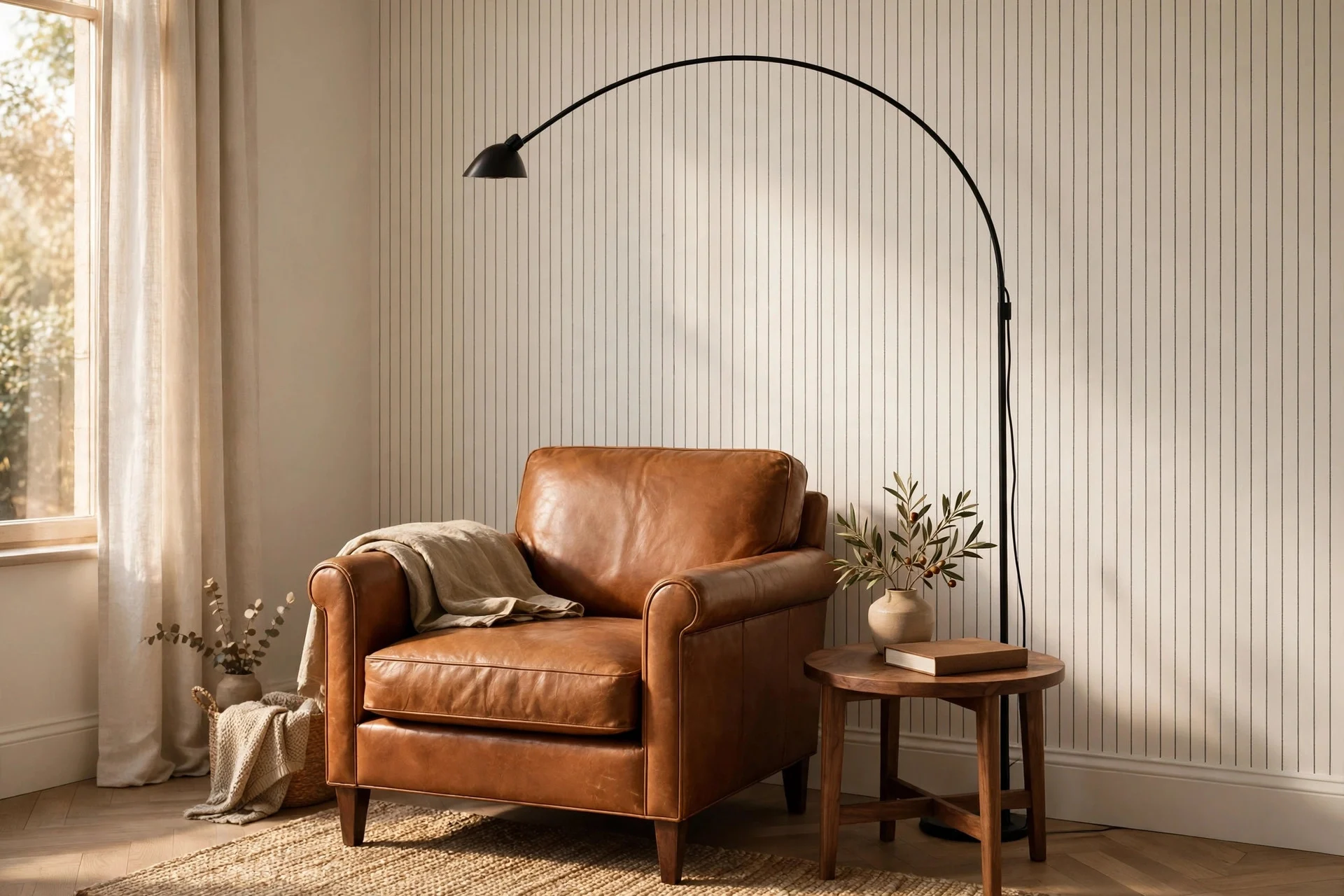
Pinstripes are texture from a distance and pattern up close — it’s what keeps a neutral room from feeling flat. The tan leather is the counterweight: warm and worn-in against all that crisp line work.
Copy the look for less:
- The pinstripes: 1-inch painter’s tape ($8–$12) and a charcoal sample quart ($12–$18) — one quart covers a whole wall of pinstripes because the painted area is tiny.
- The leather chair: Leather-look chairs in cognac tan run $150–$300 and read just as well from across the room.
- The arc lamp: Slim black arc lamps go for $90–$180 — the single best piece for making a striped wall feel styled rather than just painted.
Watch out: Pinstripes show wobbles mercilessly. Tape each line, step back six feet, and sight down it before you paint. One careful afternoon of taping beats a wall of “good enough.”
4. Bold Black-and-White Wide Stripes With a Boucle Sofa
The graphic one. Equal black and white stripes — fat and confident, about 14 inches each — cover the wall behind a white boucle sofa. A low black sideboard holds art books, and a big round mirror leans against the stripes.
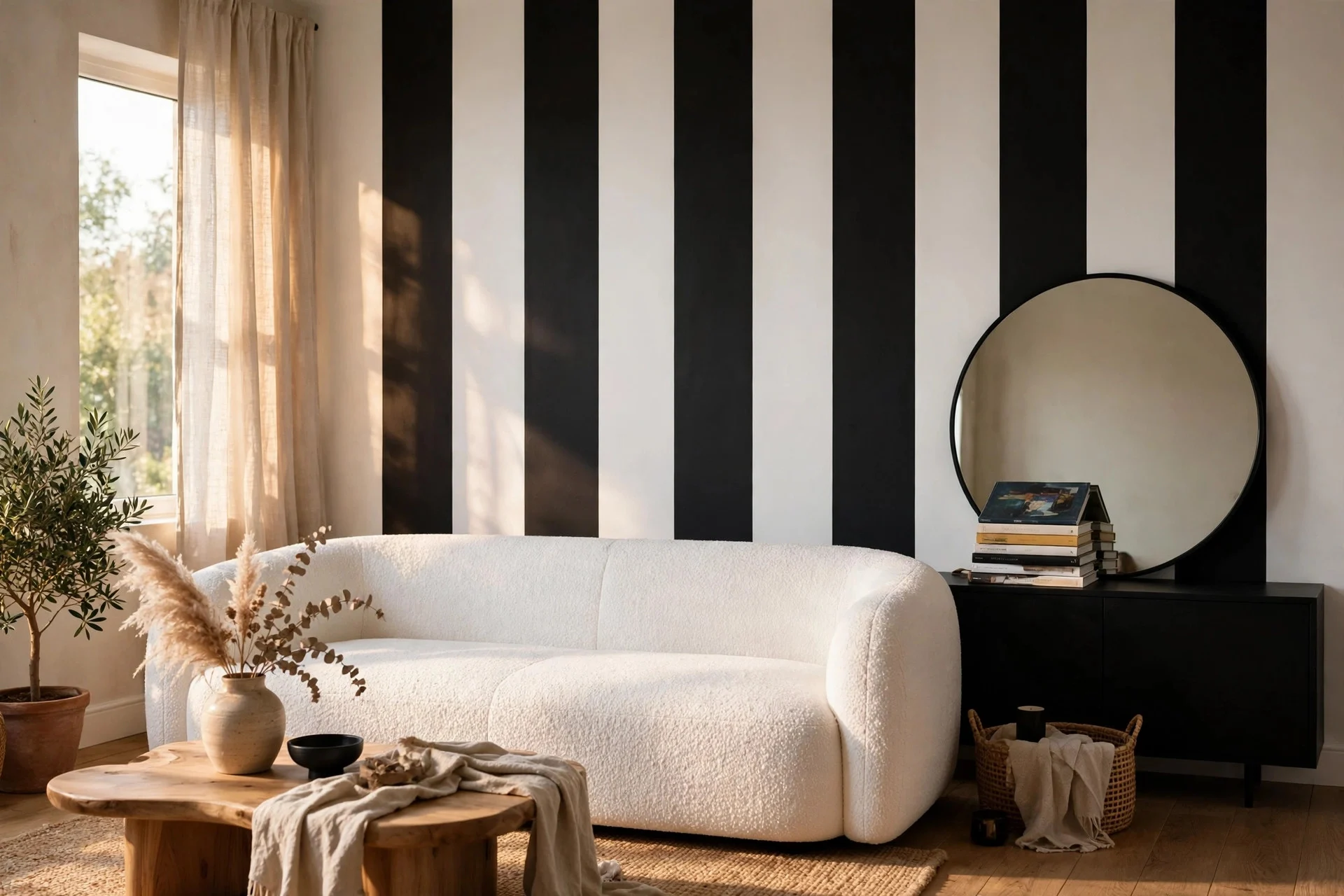
High-contrast stripes are basically architecture — they give a plain box instant structure. The boucle sofa matters because its nubby texture softens the graphic punch; without something soft in front, it can feel like a hotel lobby.
Copy the look for less:
- The graphic stripes: $60–$100 in paint. Use a true black, and seal tape edges with a thin coat of the base white first to stop bleeding.
- The boucle sofa: A white or cream slipcover ($60–$130) plus nubby throw pillows ($20–$35 each) gets you the look without the $600–$1,200 boucle price tag.
- The leaning mirror: A 30-inch round mirror costs $50–$110 — lean it rather than hanging it, which keeps the strict stripes from feeling rigid.
Watch out: Black-and-white is unforgiving with clutter. Keep the zone minimal — every stray object competes with the stripes. Two or three styled pieces, max.
5. Terracotta-and-Beige Vertical Stripes With Rattan and Plants
Warmth, bottled. The wall wears vertical stripes in sunbaked terracotta and sandy beige, each about a foot wide, with a rattan armchair, a kilim-style throw, and a potted olive tree in the corner.
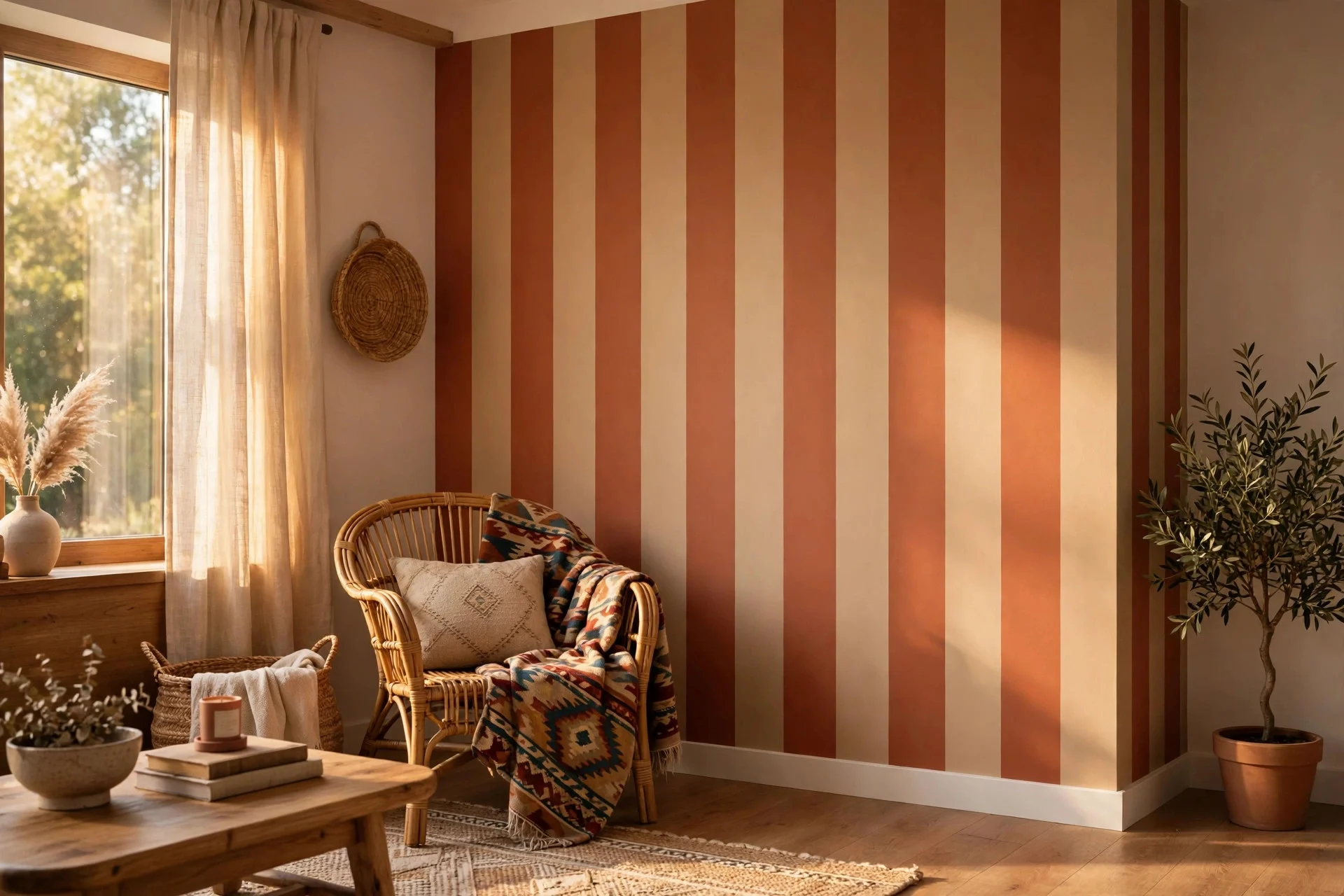
Warm stripes make the room glow even on gray days. The beige keeps the terracotta from overwhelming, and the rattan, clay, and linen all sit in the same warm family so nothing clashes.
Copy the look for less:
- The warm stripes: $50–$85 in paint. Keep stripes 10–14 inches wide — wider reads calmer. Paint a 2-foot test stripe and live with it for 48 hours before committing.
- The rattan chair: New ones run $180–$350; secondhand goes for $50–$120 and usually just needs a wipe-down. Check the caning for breaks before buying.
- The olive tree: A 4-foot faux olive tree costs $60–$120 and needs nothing from you. A real one is $40–$80 but wants bright light and steady watering.
Watch out: Terracotta next to orange-toned wood floors can go muddy. If your floors run orange, pick a terracotta with more pink in it, or keep the beige stripes wider than the terracotta ones.
6. Sky-Blue-and-White Horizontal Stripes, Coastal but Not Cheesy
The beach-house stripe done right. Soft sky-blue and white horizontal stripes, about 6 inches each, run behind a white slipcovered sofa. A weathered-wood coffee table sits on a seagrass rug, with plain white linen curtains. No anchors, no ropes.
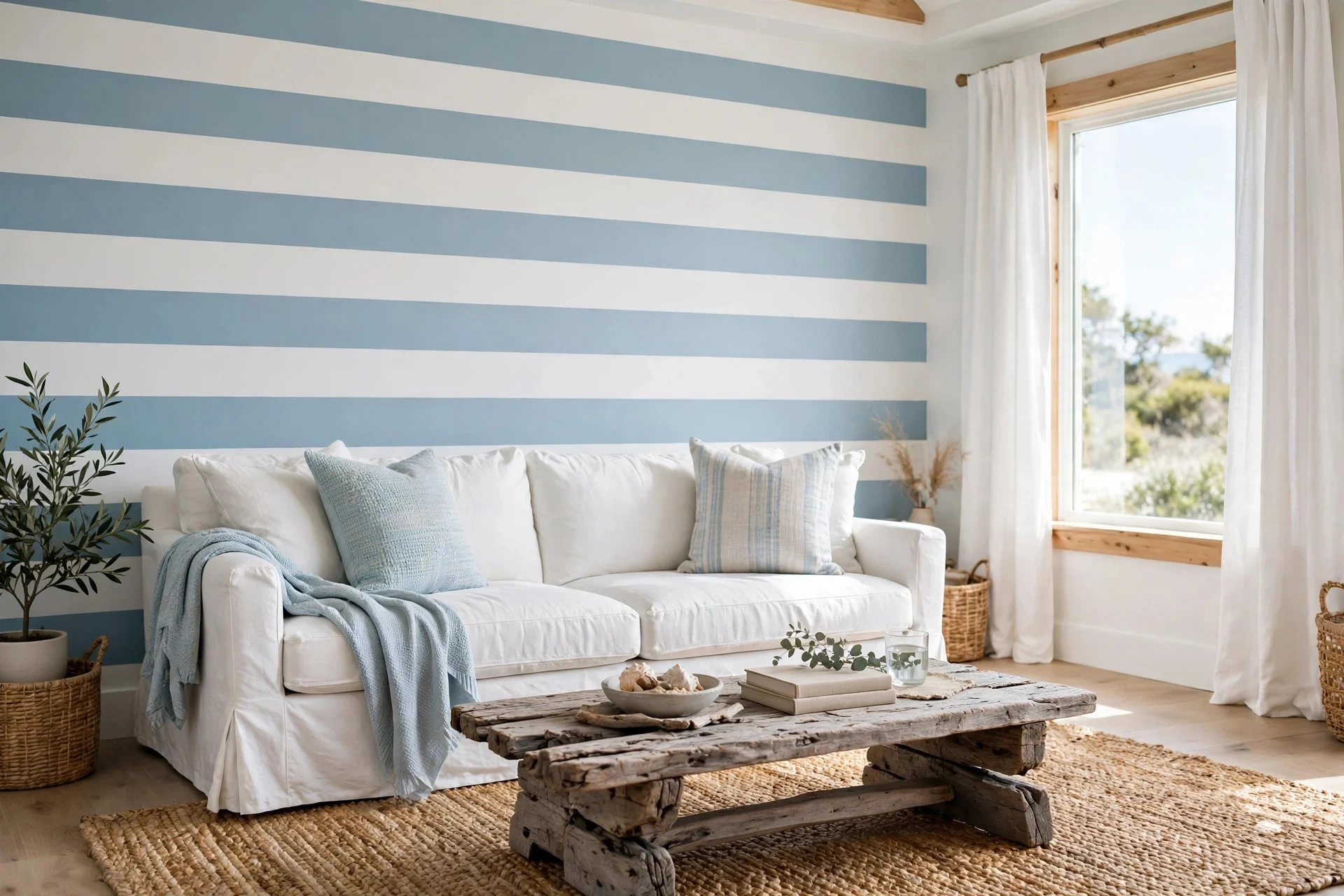
This works because it commits to pale and airy everywhere else — the stripes are the only real color, which is why they read fresh instead of theme-park. The washable white slipcovers bounce light back at the wall.
Copy the look for less:
- The coastal stripes: $50–$80 in paint. Pick a sky blue with a little gray in it — pure baby blue can look nursery-ish in a grown-up living room.
- The slipcovered sofa: White slipcovers run $60–$140 by sofa size, and they’re machine-washable, which is the whole point.
- The seagrass rug: A 6×9 seagrass rug runs $90–$160 and anchors all that blue-and-white.
Watch out: Renters, this one’s easy: peel-and-stick wallpaper comes in blue-and-white stripes for $30–$60 per roll and pulls off cleanly. For more no-damage tricks in the same spirit, see these renter-friendly living room ideas.
7. Green-and-Cream Striped Wallpaper as a Reading-Corner Backdrop
Sometimes paint isn’t the move. A green-and-cream striped wallpaper — a classic ticking stripe with a faint botanical weave in the green bands — backs a small reading setup: a comfortable armchair, a brass reading lamp, and a leaning bookshelf with a trailing pothos.
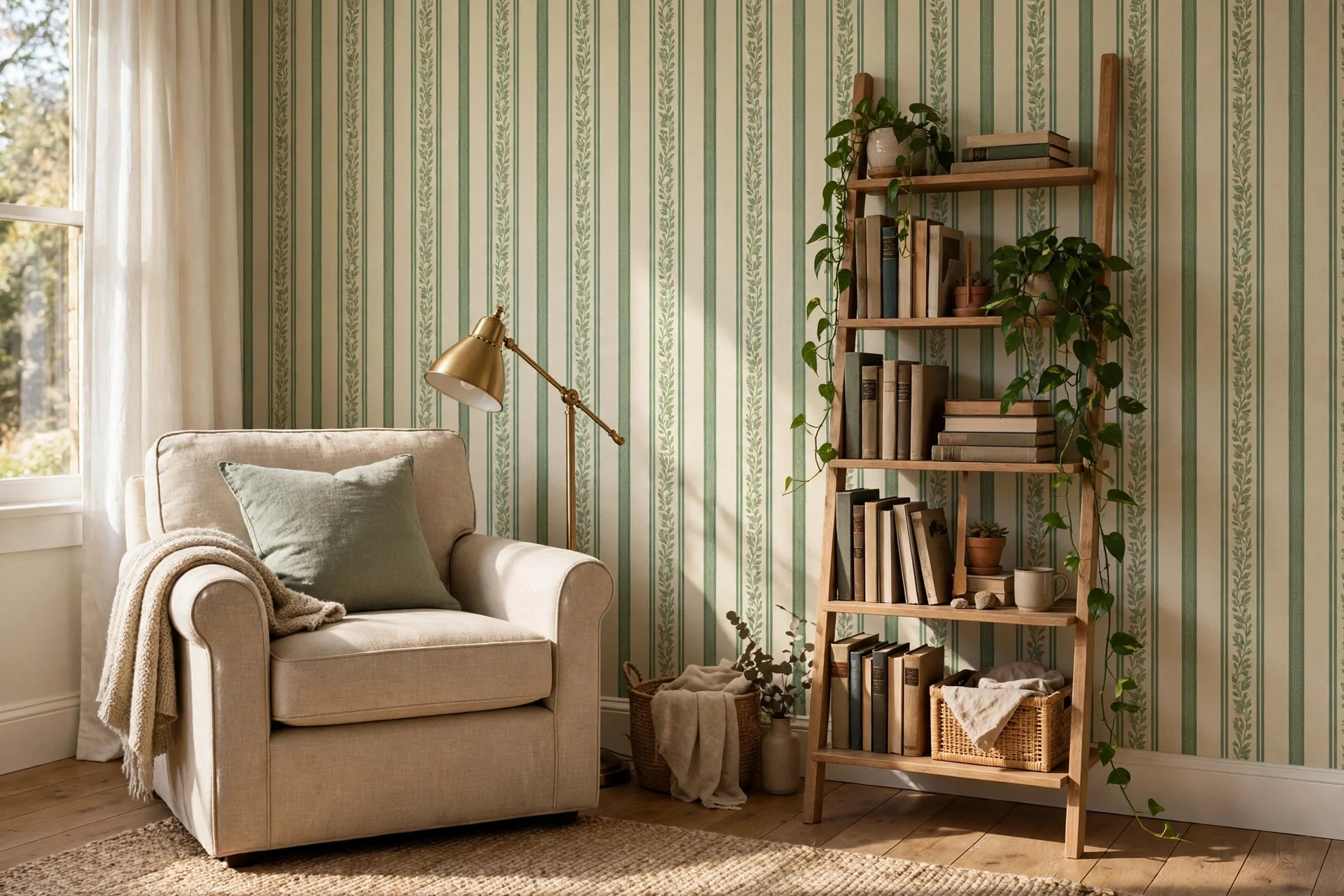
Wallpaper stripes beat painted ones for fine detail — you can’t easily paint a woven texture into a stripe. Stripes give the small zone instant definition.
Copy the look for less:
- The striped wallpaper: $25–$60 per roll, and one wall usually needs 3–4 rolls. Peel-and-stick versions ($30–$70 per roll) skip the paste and the panic.
- The leaning shelf: Leaning ladder shelves run $60–$130 — their horizontal lines play off the vertical stripes.
- The trailing plant: A pothos in a hanging pot costs $15–$30, and the draping leaves soften every straight line in the scene.
Watch out: Patterned stripes next to other patterns need a referee — keep everything else in the corner solid. Before you commit, this guide to mixing patterns in living room decor will save you from a clash.
8. Blush-Pink-and-White Vertical Stripes With Velvet and Gold
Soft but not sweet. Blush-pink and white vertical stripes — the pink muted, almost dusty — rise behind a blush velvet armchair, a small gold side table, and a monstera in a cream pot. The rest stays quiet: cream sofa, white curtains.
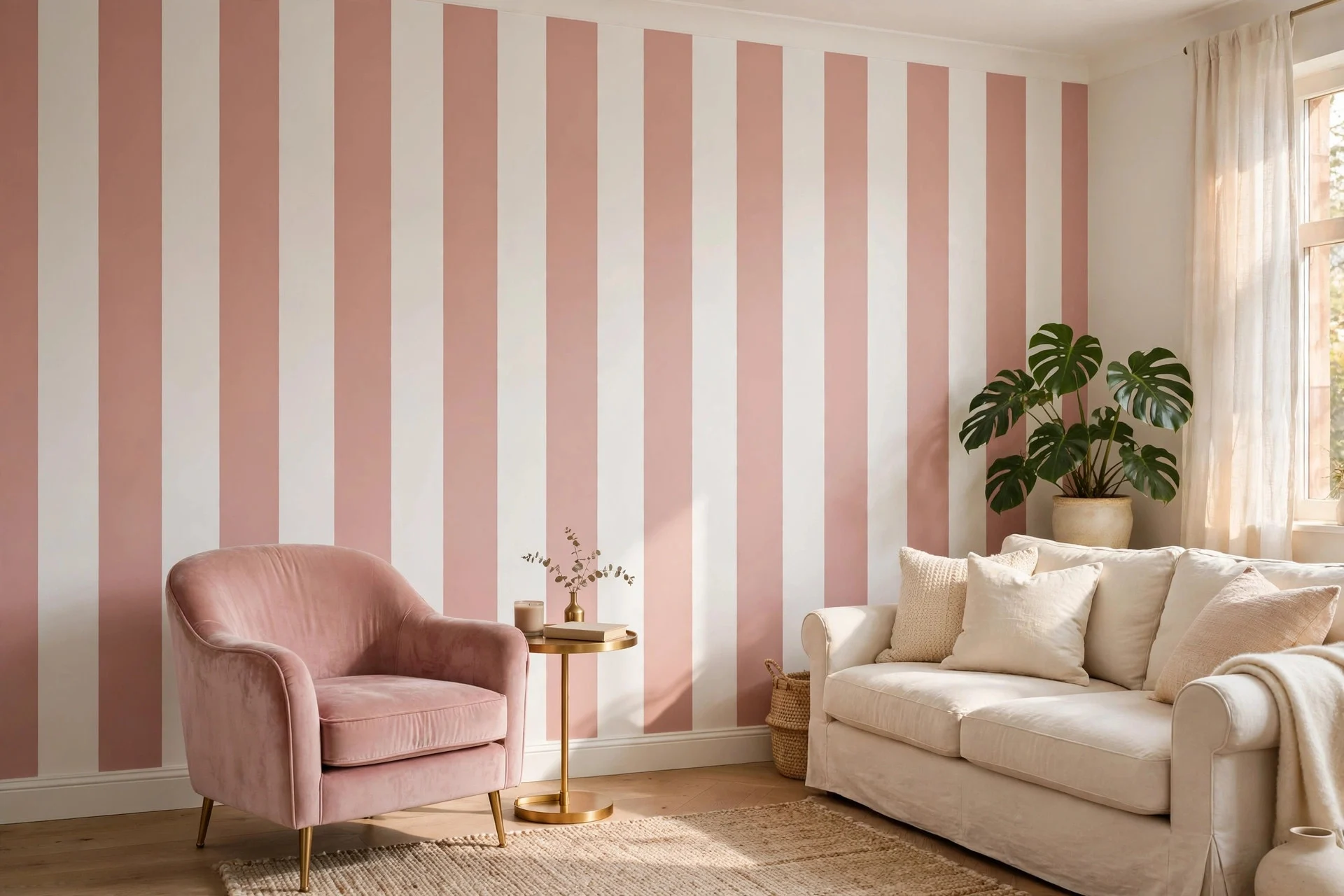
Dusty blush reads as warm neutral in a living room, not “pink room.” The gold side table is the key accent: warm metal against blush is a combination that almost always looks intentional.
Copy the look for less:
- The blush stripes: $50–$80 in paint. Ask the paint desk to cut the pink formula at 75% — full-strength blush paints darker than the card suggests.
- The velvet chair: Blush velvet armchairs run $180–$350. A blush throw over a chair you own ($25–$45) plus blush pillows gets you most of the effect.
- The gold table: Small gold side tables cost $40–$90 — or spray-paint any small table gold for under $15, one of the best cheap upgrades in decorating.
Watch out: Blush plus cool gray tends to look muddy. If your sofa or rug is gray, warm it up with cream throws first — this look wants warm neutrals around it.
9. Mustard-and-Gray Wide Stripes, Mid-Century Style
Retro without the costume. Wide vertical stripes in warm mustard and soft warm gray — a generous 16 inches each — back a walnut credenza, a cognac leather lounge chair, and a starburst-style clock, with a cream shag rug grounding it all.

Mustard is a power color; the wide gray stripes keep it from taking over and give the eye somewhere to rest. The walnut wood does real work too: brown wood tones sit beautifully next to mustard because they’re in the same warm family.
Copy the look for less:
- The mustard stripes: $55–$85 in paint. Mustard needs two full coats, so buy the extra quart — running out mid-wall is how stripes go wrong.
- The walnut credenza: Walnut-look media consoles cost $150–$300 new — nobody will interrogate the veneer the way they would a $300–$800 vintage piece.
- The lounge chair: Leather-look lounge chairs in cognac run $200–$450; thrift stores often have 70s-era ones for $40–$100.
Watch out: Mustard fades in strong direct sun — south-facing walls can wash out within a couple of years. Pick a deeper ochre for sunny walls, or plan on a refresh coat down the line.
10. Chocolate-and-Cream Thin Stripes, Classic Library Feel
The grown-up one. Thin chocolate-brown stripes, about 3 inches, run over a cream wall behind a brown leather Chesterfield, a glowing brass table lamp, and a packed tall bookcase.
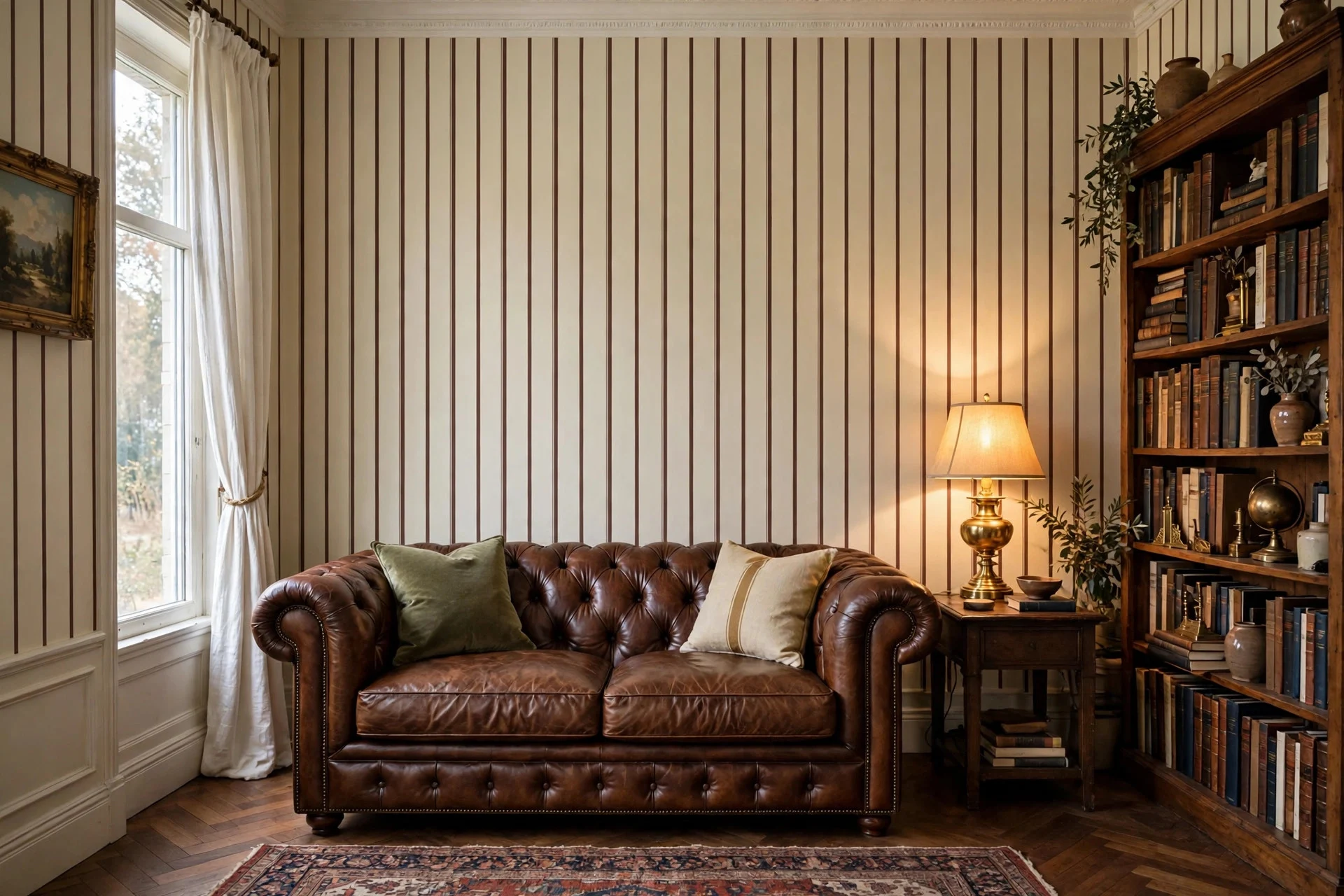
Dark thin stripes read as tailored — suit fabric, not circus tent. Pattern without playfulness, which suits traditional rooms. The leather Chesterfield and the packed bookcase complete the library mood the wall starts.
Copy the look for less:
- The tailored stripes: $50–$80 in paint plus $10–$15 in tape. Thin stripes mean lots of taping — budget a full afternoon just for taping, paint the next day.
- The leather sofa: Leather-look Chesterfield-style sofas run $400–$700 and nail the silhouette, which is what the eye reads first.
- The bookcase styling: Fill it with actual books — thrift stores sell hardcovers for $1–$3 each. A full bookcase is the cheapest impressive thing you can own.
Watch out: Chocolate stripes need good lighting or they read as black, which changes the whole mood. If the wall gets little natural light, aim a floor lamp or picture light at it.
11. Camel-and-Warm-White Wide Stripes, Modern Farmhouse
Last one, and it’s the calmest. Wide vertical stripes in soft camel and warm white — 12 inches each — rise behind a natural linen sofa, a black metal floor lamp, and a reclaimed-wood shelf with a few ceramics. No fuss, just settled.
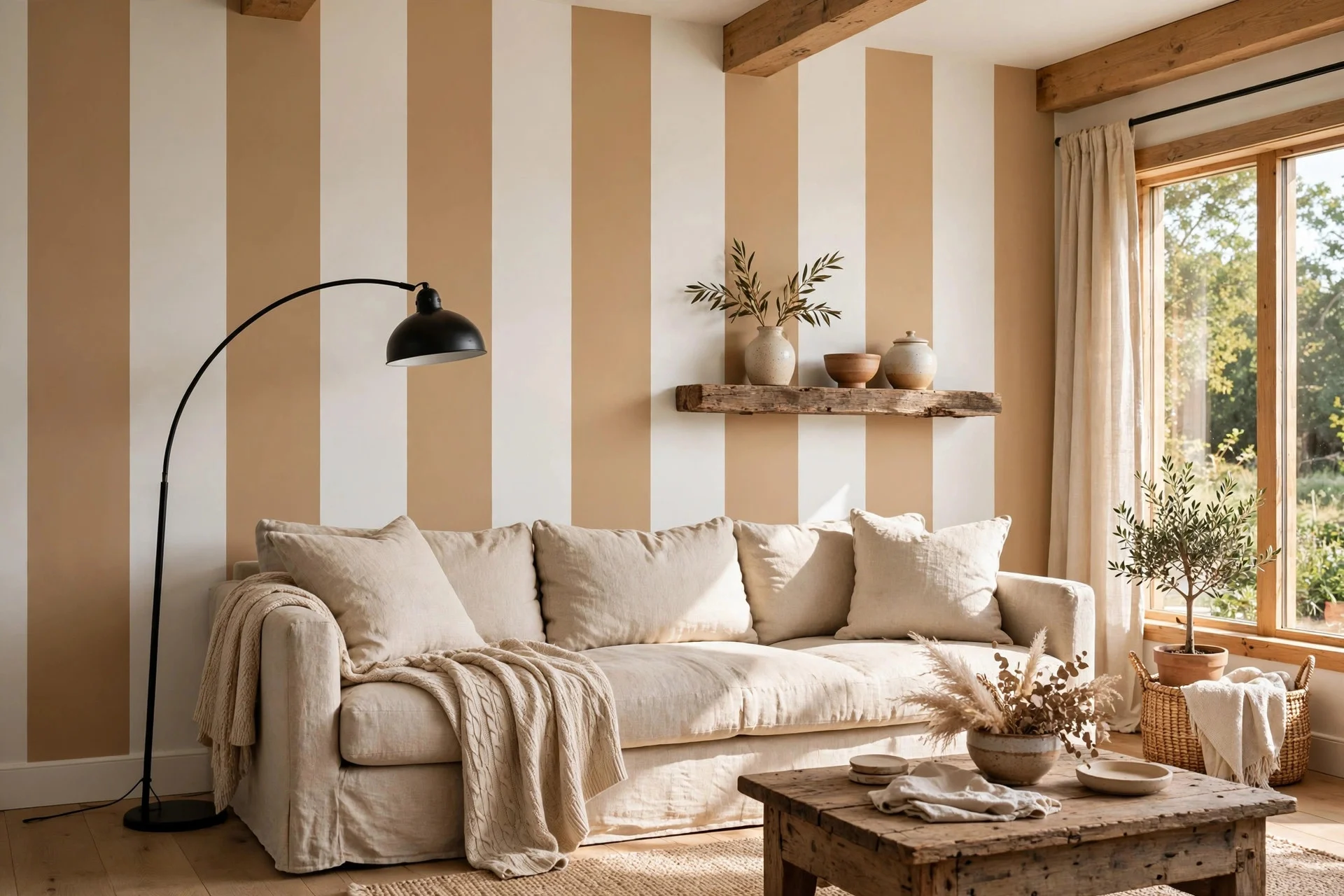
Camel is the introvert of neutrals — warm enough to feel cozy, quiet enough to disappear. The black lamp is the only dark note: one strong contrast keeps an all-neutral room from looking washed out.
Copy the look for less:
- The camel stripes: $50–$80 in paint. Camel sits between beige and tan — go one shade warmer than you think, because neutrals always dry cooler than expected.
- The linen sofa: A natural linen slipcover ($70–$140) over your current sofa gives the same relaxed texture as a $500–$900 linen sofa.
- The black lamp: Black metal floor lamps cost $70–$150 — one black piece is enough, or the room tips industrial.
Watch out: All-neutral rooms live or die on texture. If the sofa, rug, and curtains are all smooth, the stripes will look flat — keep at least two textured textiles (linen, wool, jute).
Striped Wall Questions, Answered Honestly
Should the stripes be vertical or horizontal?
Vertical stripes make ceilings look taller — great for low ceilings and cozy rooms. Horizontal stripes make walls look wider, which helps small or boxy rooms feel bigger. If your room is both small and low, go vertical.
How wide should the stripes be?
8–14 inches is the sweet spot for most living rooms: intentional but calm. Thin stripes (1–4 inches) read as texture and suit traditional or minimal rooms. Go wider than 16 inches only in a large room — in a small one, giant stripes eat the wall.
Can I do this as a renter?
Yes. Peel-and-stick wallpaper comes in convincing stripe patterns ($30–$70 per roll) and removes without damage when the lease ends. Test a corner first, though — the adhesive can lift some low-quality paints underneath.
Do striped walls make a room look smaller?
They can, if the contrast is high and the stripes are narrow — busy walls advance toward you. The fix: keep contrast soft or use wide stripes, and keep the base coat light.
Paint or wallpaper for stripes?
Paint is cheaper ($50–$100 per wall), but crisp lines demand careful taping — budget a full day. Wallpaper costs more ($75–$240 per wall) but gives perfect lines and textures paint can’t, like woven or metallic stripes. Renters: peel-and-stick is the obvious answer.
Your Weekend Striped-Wall Checklist
Pick your style from the 11 above, then run this before buying anything: measure the wall and calculate paint so you buy once; sample colors big — a 2-foot test stripe, lived with for two days; tape on a day you can focus, paint the next; keep furniture in front of the wall low enough that the stripes stay visible; and keep the room’s palette in the same temperature family as your stripes. One wall, one weekend, and the room has a whole new backbone.