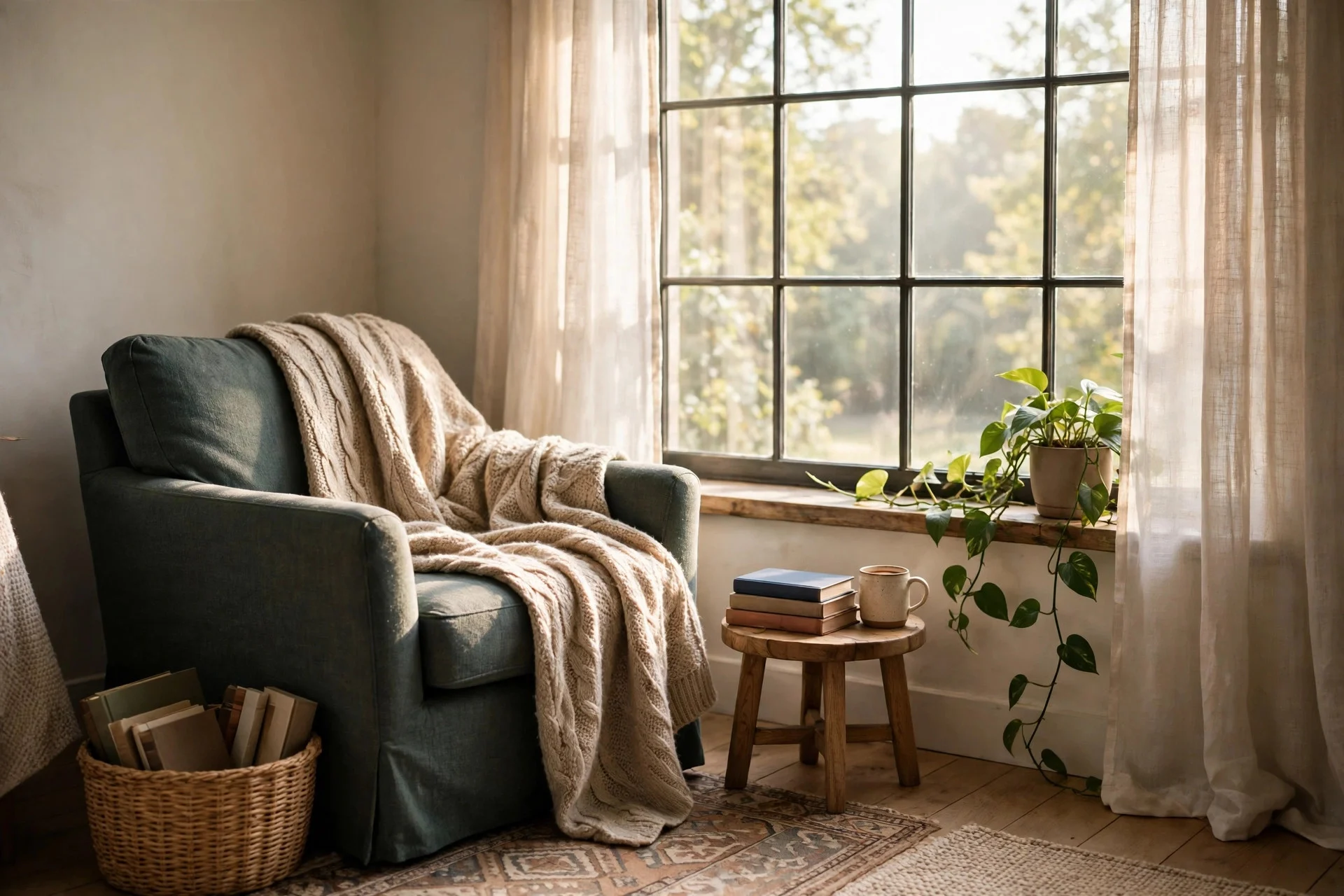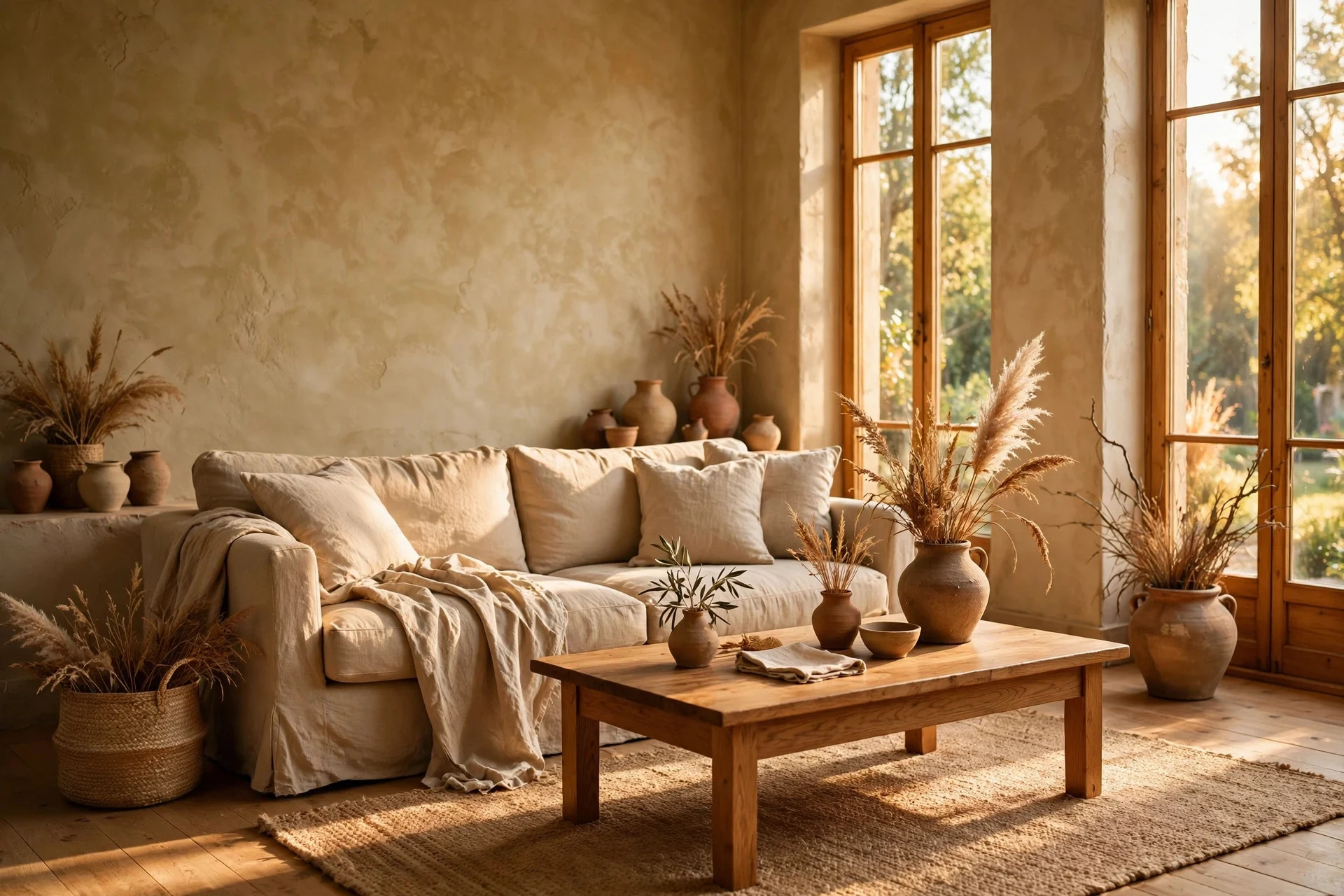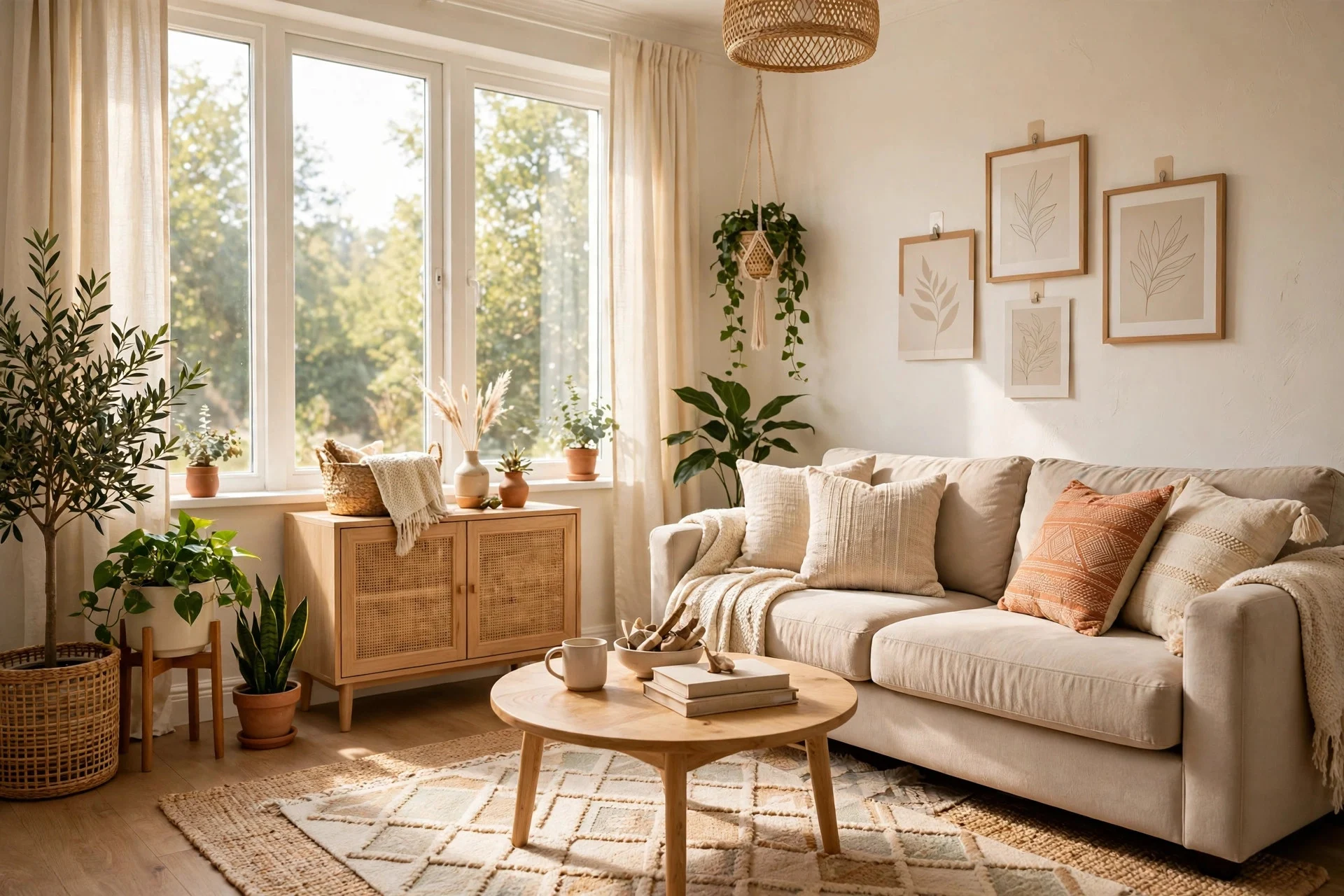
How to Mix Patterns in a Living Room Without It Looking Messy
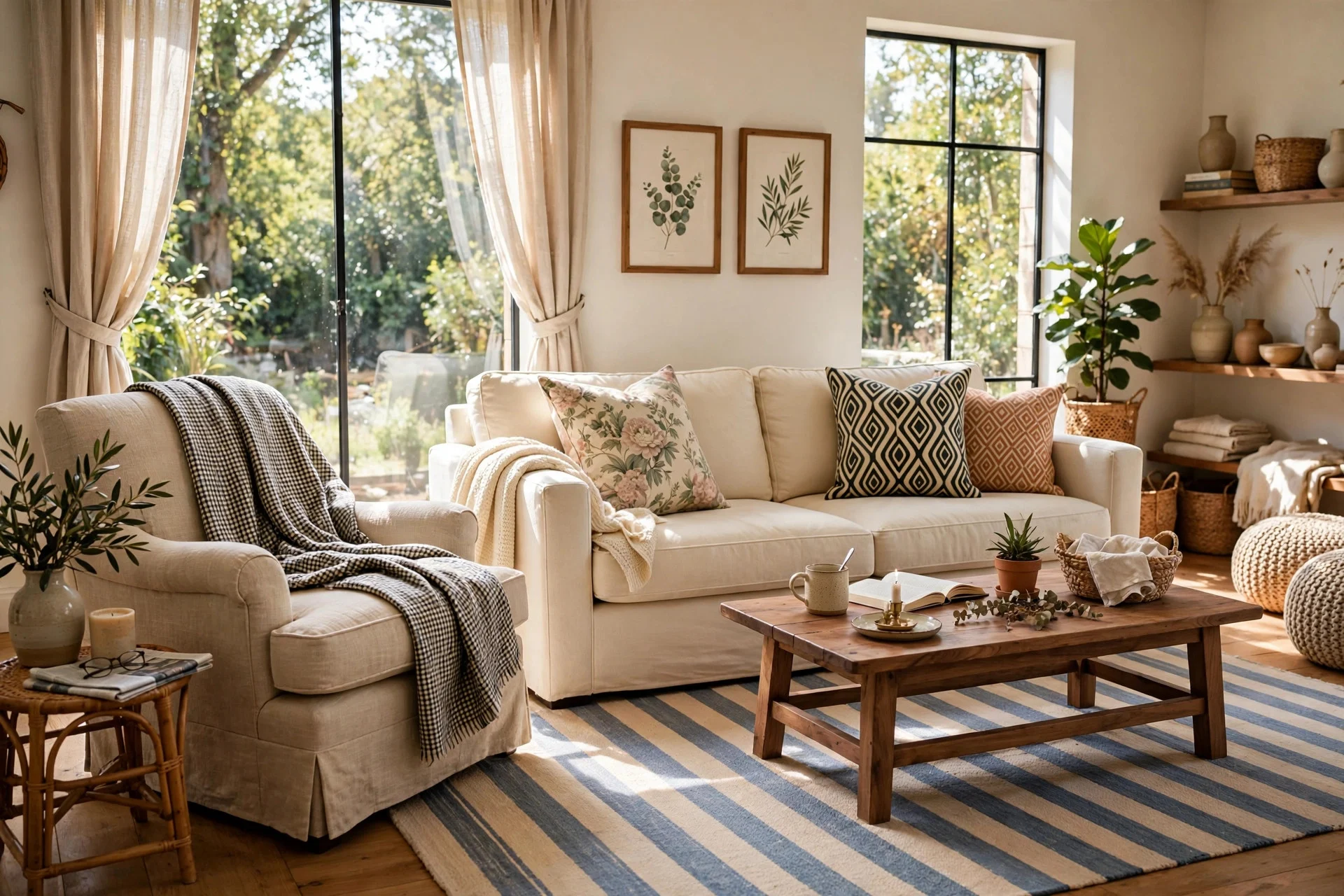
You’ve seen the rooms. Striped rug, floral cushions, a checked throw — all mixed together on Pinterest and somehow looking expensive instead of chaotic. Then you try it at home and the same pieces just look like a fabric shop exploded. Mixing patterns in living room decor isn’t a talent you’re born with. It’s a handful of small, learnable decisions, and this guide walks you through twelve of them. Each idea below is framed as a fix, so find the problem your room has and start there.
Fix #1: Pick One Anchor Pattern and Let It Lead
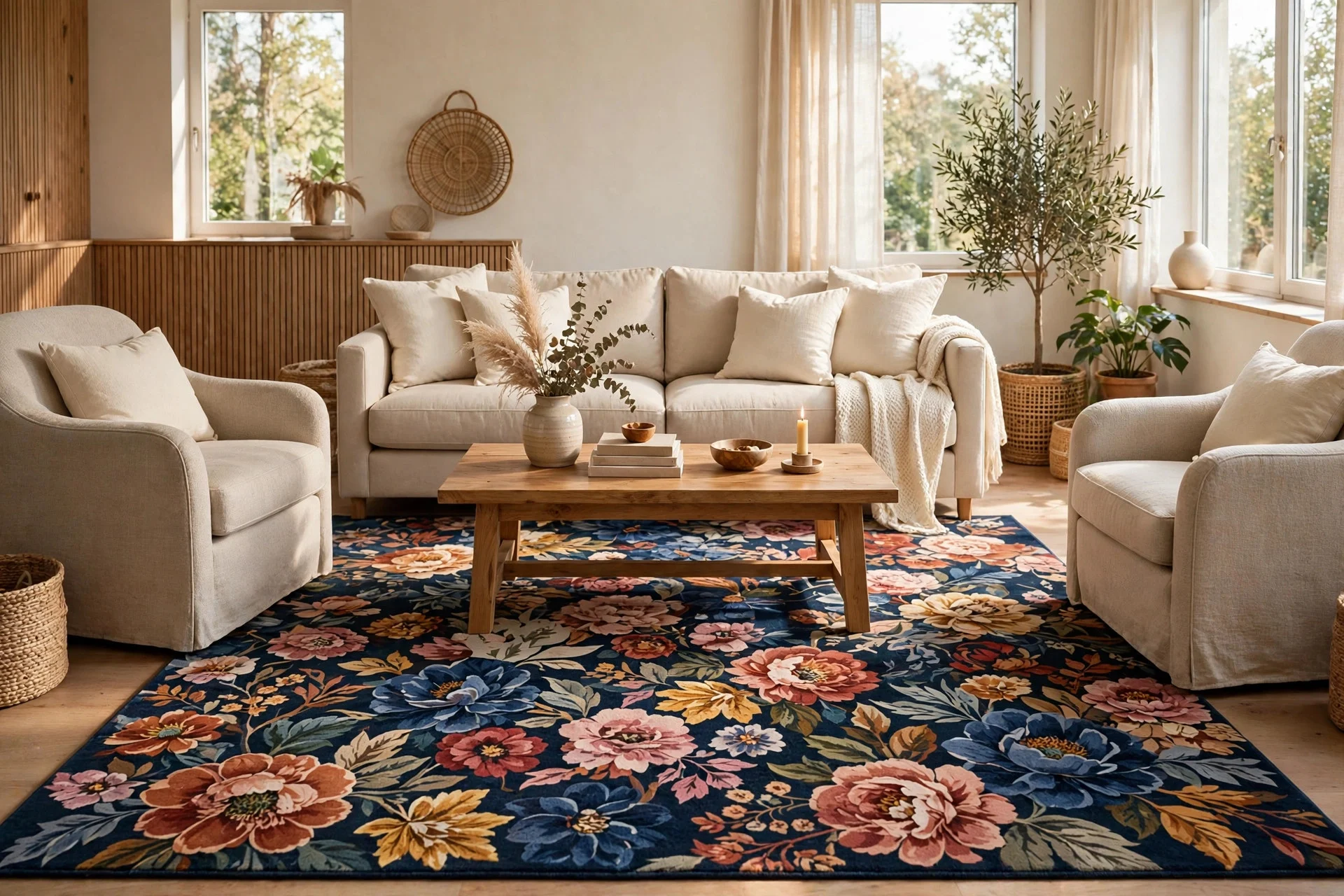
When every pattern in a room shouts at the same volume, nothing looks intentional. Choose one pattern to be the star — usually the rug, the curtains, or the sofa fabric, since those are the biggest surfaces — and let everything else play a supporting role. One dominant pattern gives your eye a place to land, and the smaller prints read as details instead of competing statements.
Cost: $0 if you just rearrange what you own; a new patterned rug runs $120–$400. Difficulty: easy, about 30 minutes of moving things around. Tip: stand in the doorway and squint. Whichever pattern still reads clearly is your anchor — decorate around it. Watch out: if the anchor is a busy floral, don’t pick a second busy floral. Your supports should be visibly quieter.
Fix #2: Pair Big Patterns with Small Ones
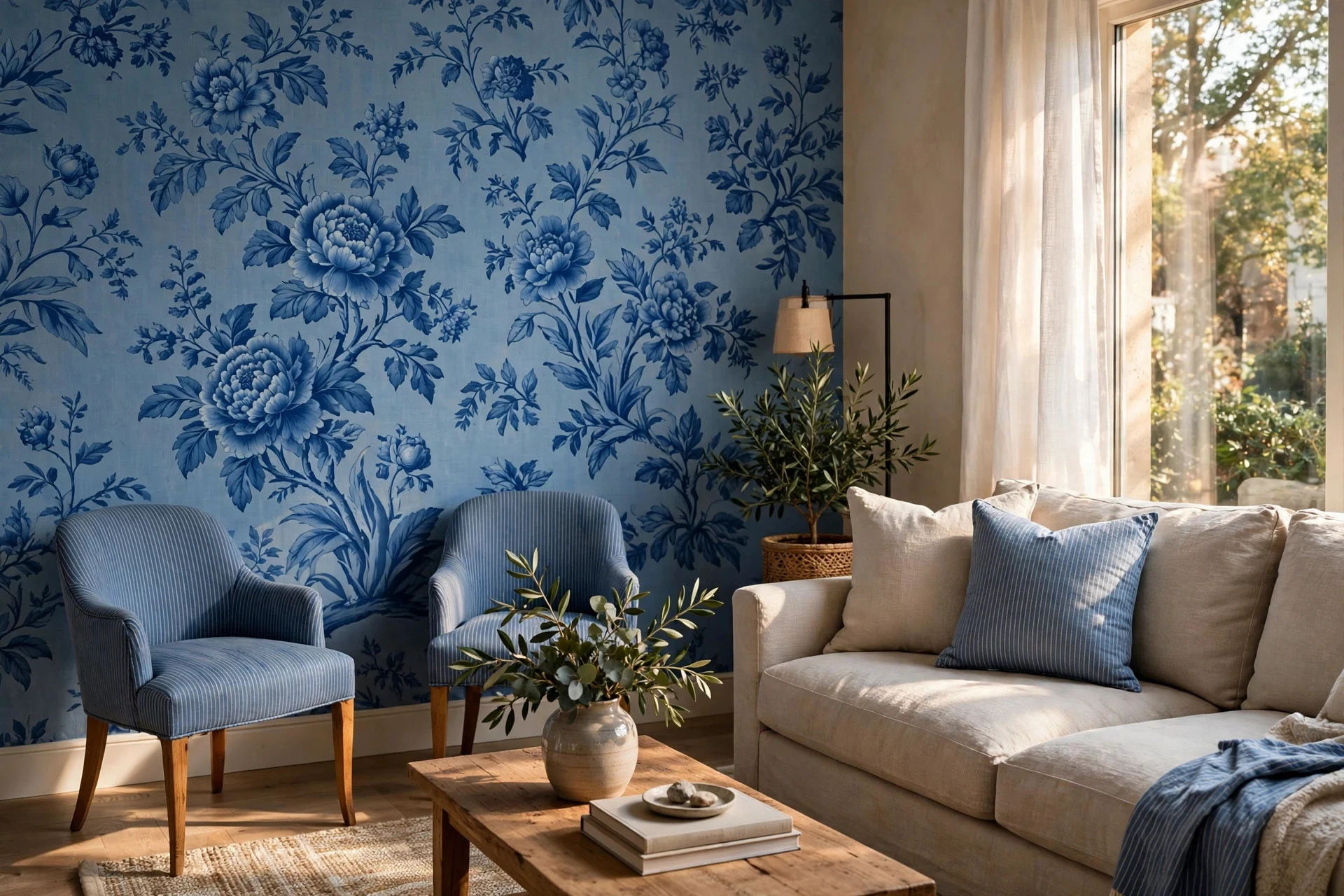
Two patterns at the same scale sit side by side and fight. Big checks next to big florals next to big stripes is the fastest route to visual noise. If the rug has large motifs, keep the cushion prints tight and subtle; if the curtains are bold and graphic, the sofa pattern should be small. Scale contrast makes pattern mixing look layered instead of cluttered.
Cost: $40–$150 for a pair of small-scale patterned cushion covers. Difficulty: easy — swap covers, keep everything else. Tip: aim for roughly three times the difference in scale. If one pattern’s repeat is about six inches, the other should be around two inches or less. Watch out: two medium-scale patterns are the danger zone — similar enough to clash, different enough to look accidental.
Fix #3: The Three-Pattern Rule for Mixing Patterns in Living Room Decor
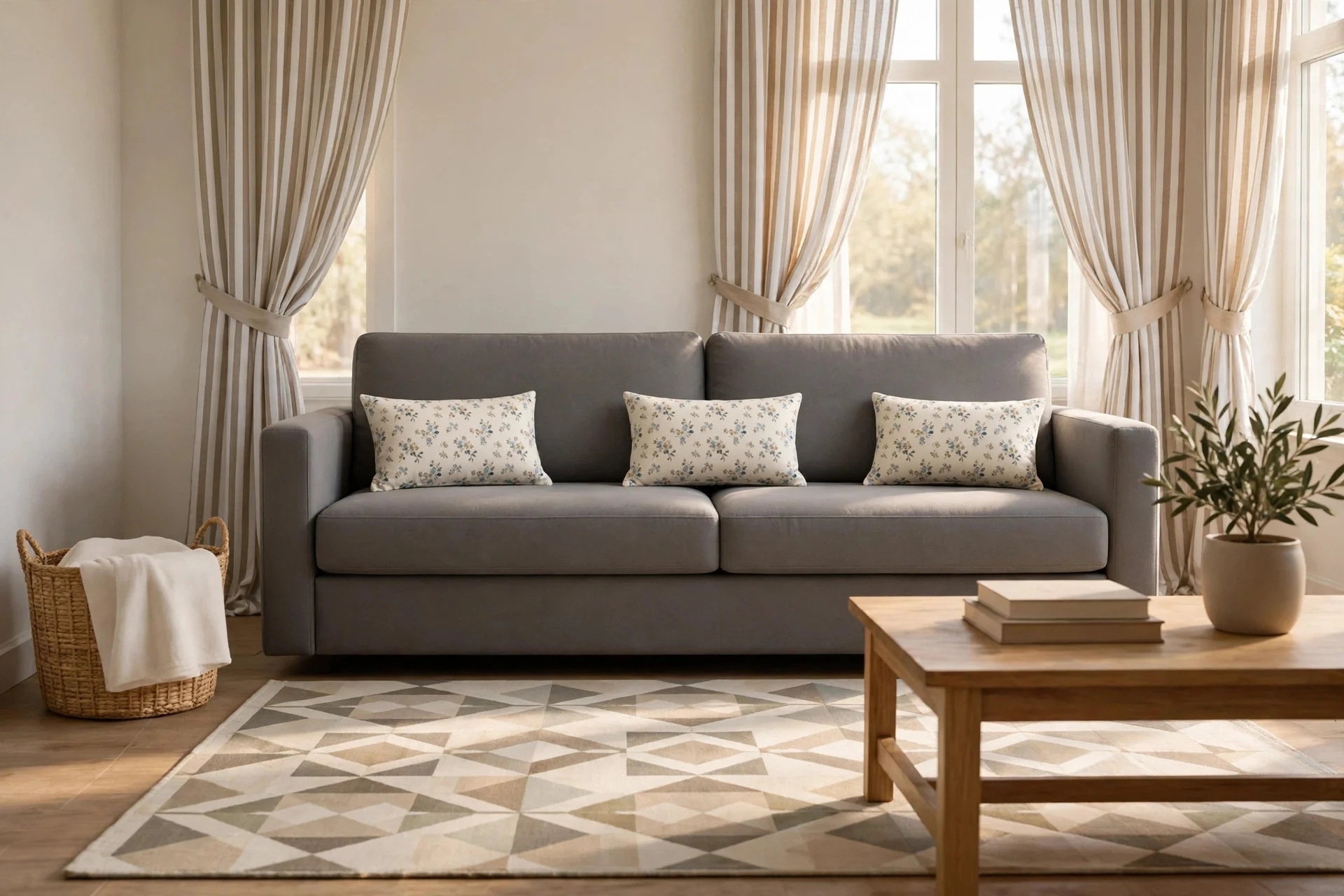
Most messy rooms have five, six, seven prints — each bought because it looked good alone in the shop. Three patterns is the sweet spot: one large, one medium, one small. Odd numbers read as intentional; even pairs read as a matching set. Three says you mixed it on purpose. If you own more than three, don’t throw anything away — audition them and keep the winners.
Cost: $0–$80. Most people get to three just by removing things. Difficulty: easy, one afternoon. Tip: photograph the room, then mentally cover pieces and look again. A photo shows clutter your eyes have gone blind to. Watch out: stripes count. Don’t tell yourself “it’s just stripes” — plain geometrics count toward your three.
Fix #4: Repeat Each Pattern More Than Once
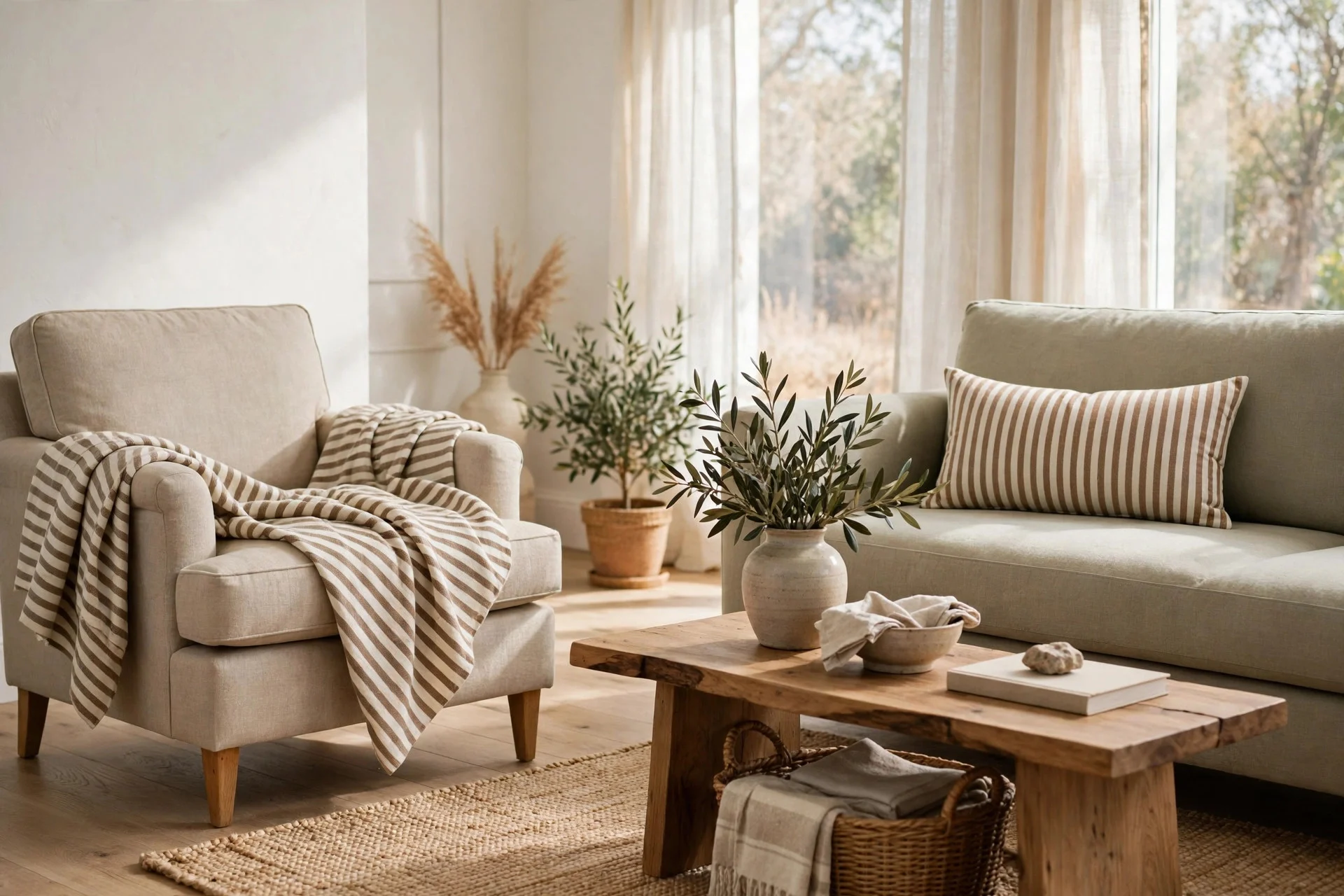
A pattern that appears exactly once looks like a mistake. That lone checked cushion on an otherwise plain sofa reads as “I bought one and never finished.” Every pattern should appear at least twice — the stripe on two cushions, or the rug’s diamond motif echoed in a small lumbar pillow across the room. Two sightings tell the brain a pattern is deliberate, which is the whole difference between messy and designed.
Cost: $20–$60 for a second cushion cover or a small matching throw. Difficulty: easy, same-day. Tip: place the two sightings at different heights or distances — one on the sofa, one across the room — not two cushions side by side. Watch out: don’t repeat the anchor pattern a third time unless the room is large. Two is deliberate; three can tip into theme park.
Fix #5: Separate Patterns with Solid Fabric
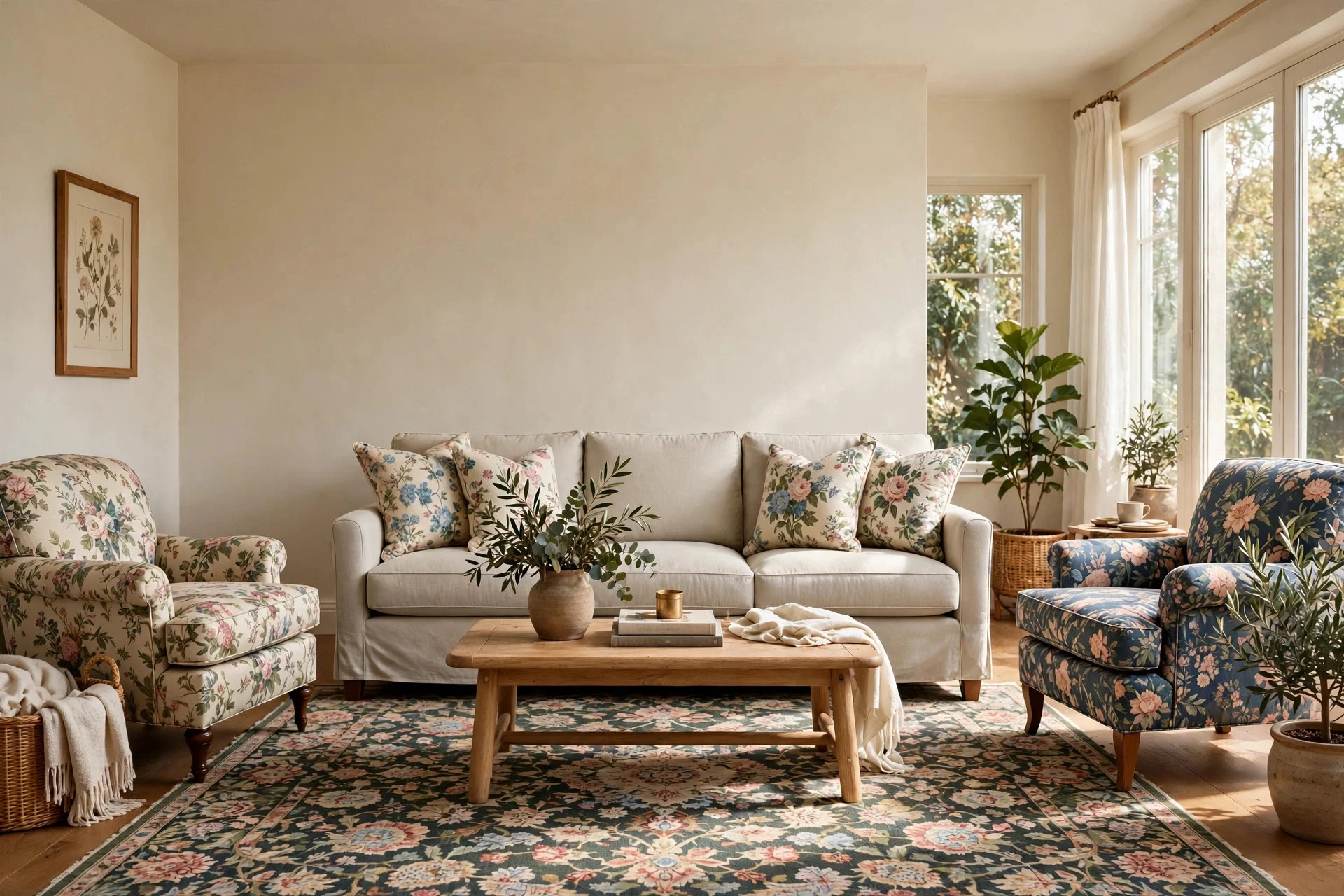
Patterned pieces touching each other — floral cushion against a floral chair against a patterned rug — blur into one blob. Put solid fabric between every print: a plain sofa between patterned cushions and a patterned rug, solid curtains framing a patterned armchair. Solids are the quiet white space of a room, and every styled mixed-pattern room has more of them than you’d guess.
Cost: $50–$200 for a solid throw or two; more if you reupholster. Difficulty: easy. Tip: make your biggest pieces the solids — sofa, main armchairs — and keep patterns on the changeable stuff (cushions, throws, rug) so you can refresh cheaply later. Watch out: cream and warm white are the easiest solids, but a solid in a deep tone pulled from your palette can be even better — see Fix #8.
Fix #6: Keep Every Pattern in One Color Family
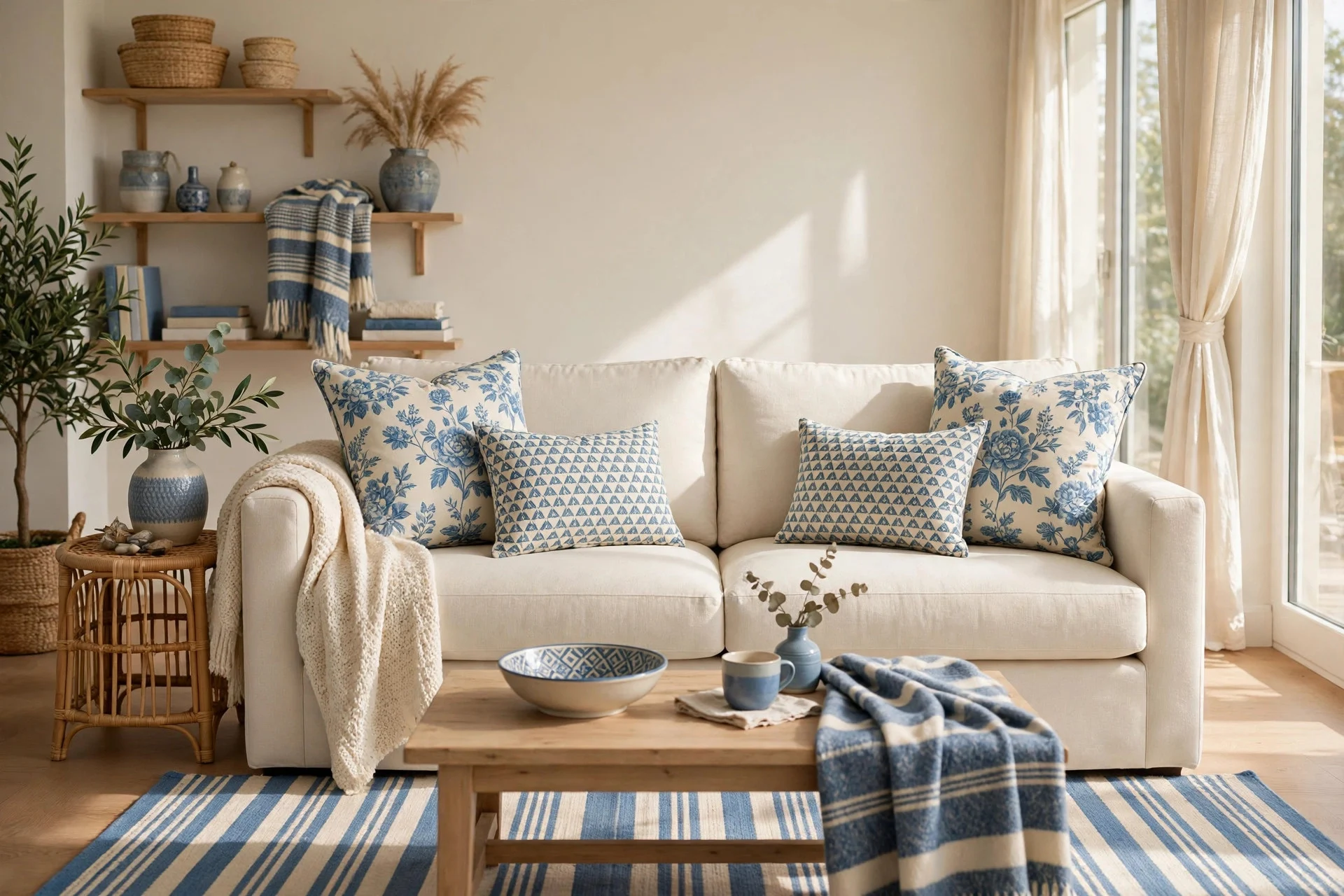
A red floral, a green geometric, and a blue stripe share nothing, so the room feels random no matter how you arrange it. Choose one color family — blues and creams, greens and warm neutrals, terracotta and ochre — and let every pattern live inside it. The motifs can be completely different types (that contrast is the fun part) as long as the colors agree. Color is the glue; when every pattern shares two or three colors, the brain reads them as one coordinated group.
Cost: $0 if you shop your own home first; $60–$250 for new covers or a throw if needed. Difficulty: medium — it takes an honest audit. Tip: lay every patterned item on the bed side by side. Anything that doesn’t share at least two colors with the group moves to another room. Watch out: undertones matter. A cool blue and a warm blue aren’t the same family — check everything in daylight before committing. Renters can build the whole scheme with no-damage swaps; see these renter-friendly living room ideas for more.
Mistakes to avoid
- Mixing clashing undertones. A warm ivory stripe and a cool white geometric look off together even though both are “white.” Check everything in daylight before you buy.
- Two hero patterns at equal size. A bold floral rug and an equally bold geometric curtain will always fight. One of them has to step down.
- Forgetting the rug when you count. The 8×10 pattern under your feet is usually the biggest print in the room — it always counts toward your three.
- Stacking every print at sofa height. Move one pattern up (curtains) or down (rug) so the weight spreads instead of crowding one zone.
Fix #7: Mix Pattern Types, Not Just Colors
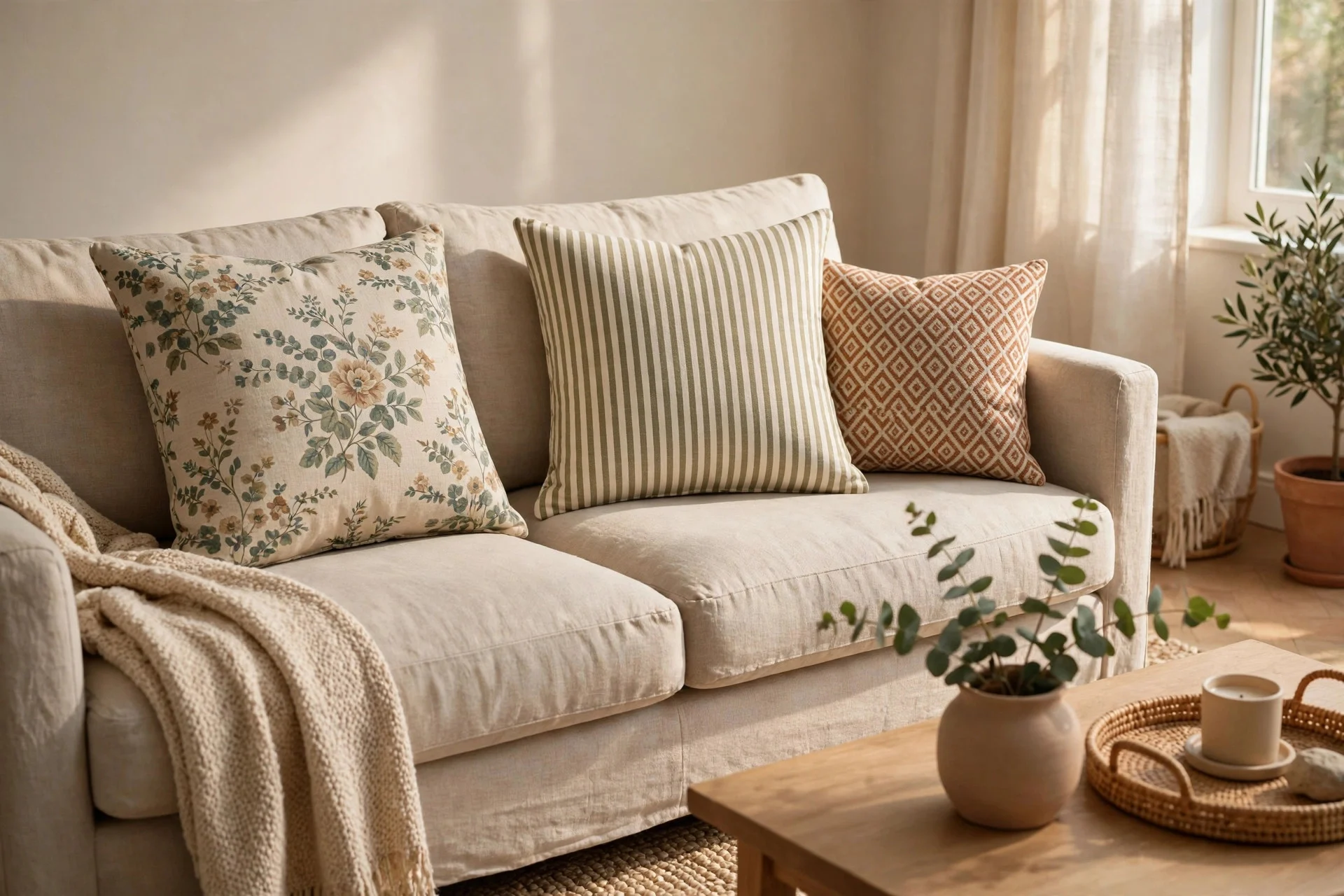
Three different florals in the same palette look like a matching set that didn’t quite match — dull and slightly off. Mix pattern families instead: one organic (floral, botanical), one geometric (stripes, checks, diamonds), one abstract or textural. Floral plus stripe plus solid is the classic beginner trio that almost never fails, because different pattern types register as different ideas and don’t blur together.
Cost: $40–$120 for cushion covers in contrasting pattern types. Difficulty: easy. Tip: when shopping, force yourself to pick one pattern from each family before you pick a second from any family. It’s a built-in variety guardrail. Watch out: paisley and floral are both organic — they count as the same family and will blur together like two florals.
Fix #8: Ground Busy Patterns with One Deep Solid
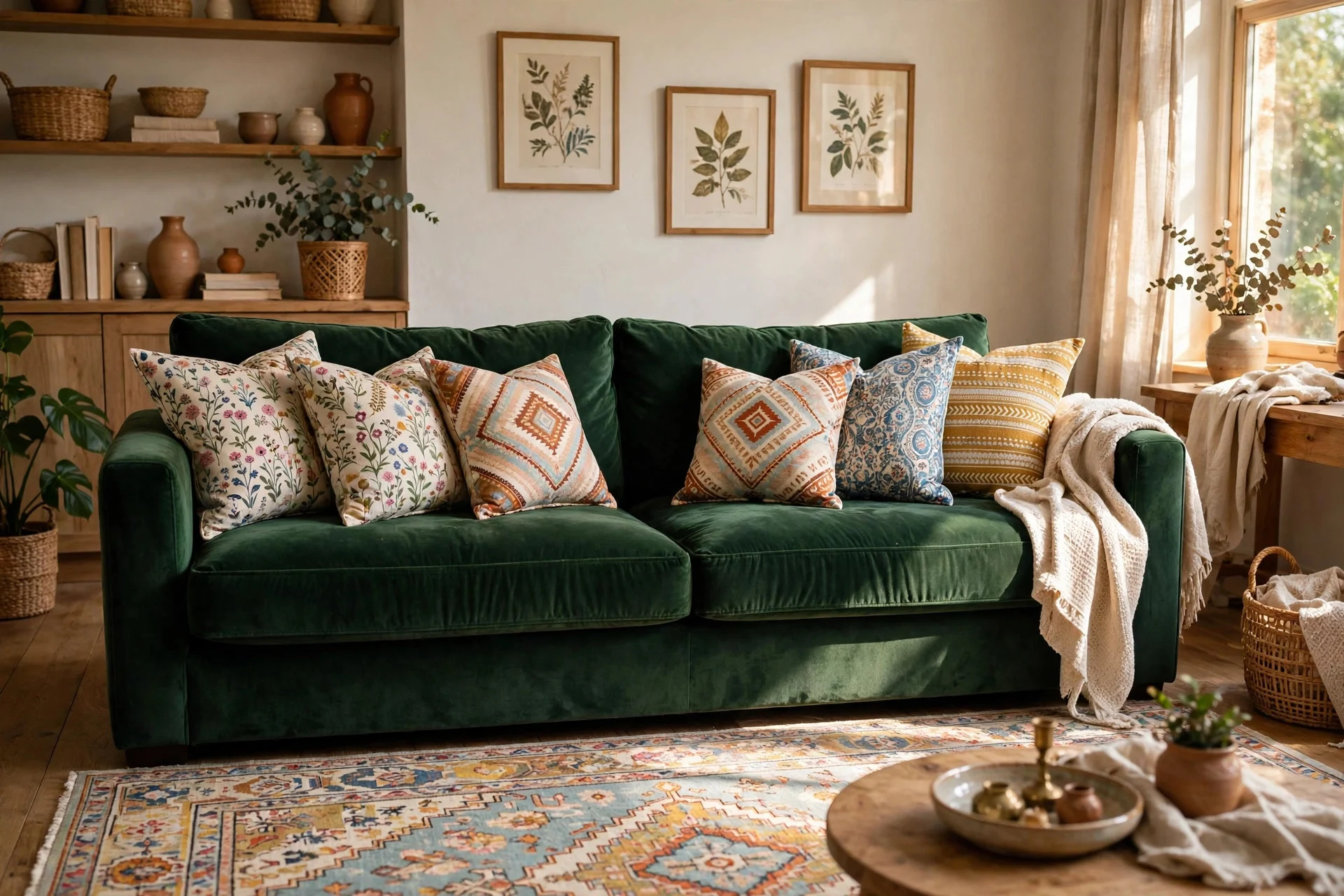
An all-light room full of patterns floats — everything feels airy, nothing feels anchored, and the prints look restless. Add one solid piece in a deep color pulled from your palette: a dark green, navy, or charcoal sofa, armchair, or even a big ottoman. Dark solids act like a frame around a busy painting; they absorb visual noise and make everything around them look calmer by comparison. See this green velvet sofa living room guide for a full breakdown of how the deep-green version works.
Cost: $150–$600 for a secondhand armchair or ottoman; a deep-toned throw is $40–$90 if furniture isn’t in the budget. Difficulty: medium — finding the right piece takes hunting. Tip: pull the dark color from inside your patterns. Find the darkest tone in your anchor print and match it, and the whole room ties together. Watch out: in a small or dark room, one deep piece is plenty. Two can swallow the light.
Fix #9: Spread the Loudest Pattern — Don’t Cluster It
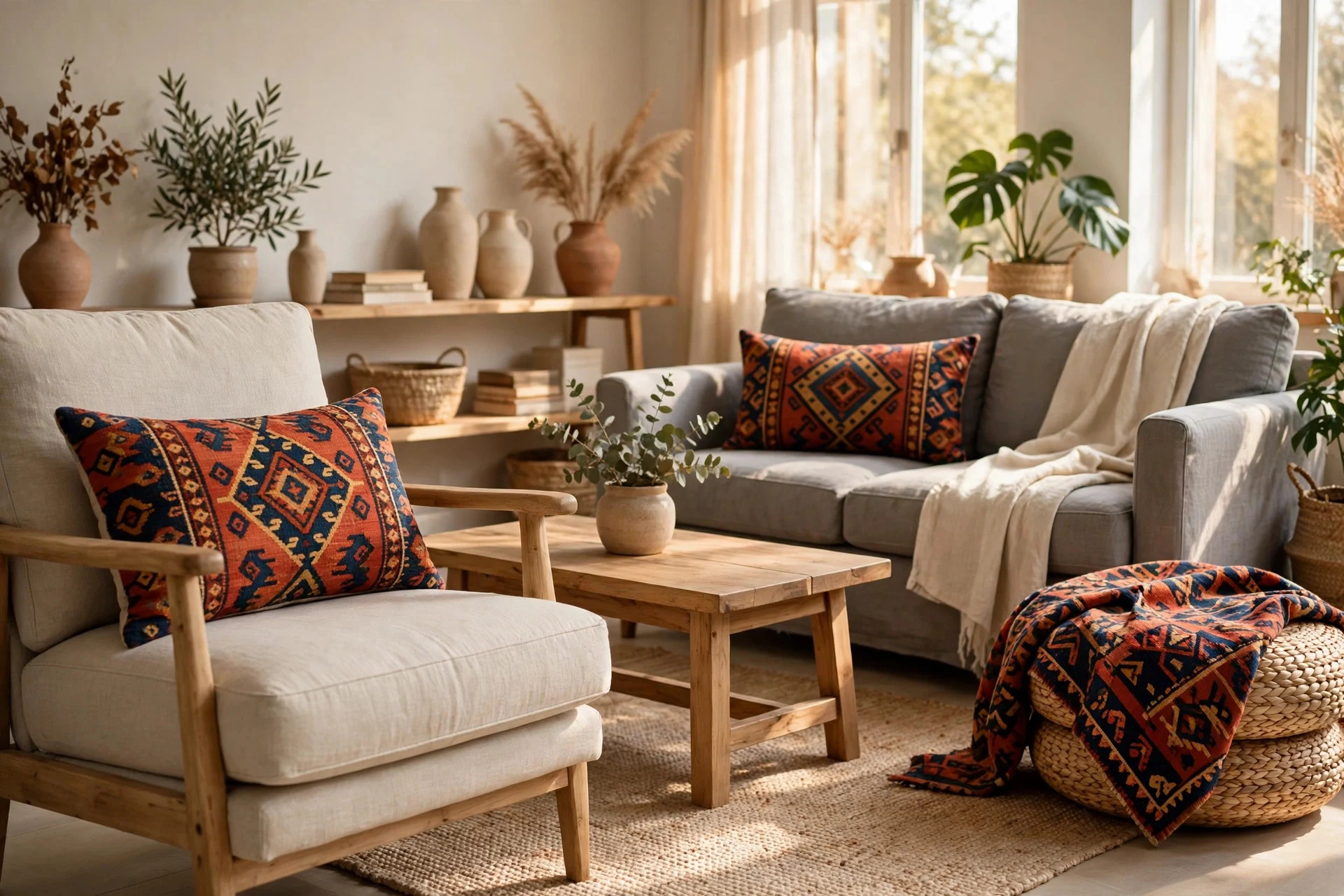
All the patterned cushions on one sofa, the patterned throw on the same chair, the patterned pouf right next to it — one corner screams while the rest of the room whispers. Move one patterned cushion to the far armchair, shift the throw to the opposite end, and let the prints visit every zone. A scattered pattern feels like a theme running through the room; a clustered one feels like a pile. Same pieces, same money, completely different impression.
Cost: $0. Difficulty: easy, 20 minutes. Tip: use the triangle test — your three main pattern sightings should form a rough triangle across the room. If all three sit on the sofa, redraw the triangle. Watch out: don’t exile patterns to dead zones like the chair behind the door. Each placement should be visible from your main seat.
Fix #10: Make the Rug and Curtains Get Along
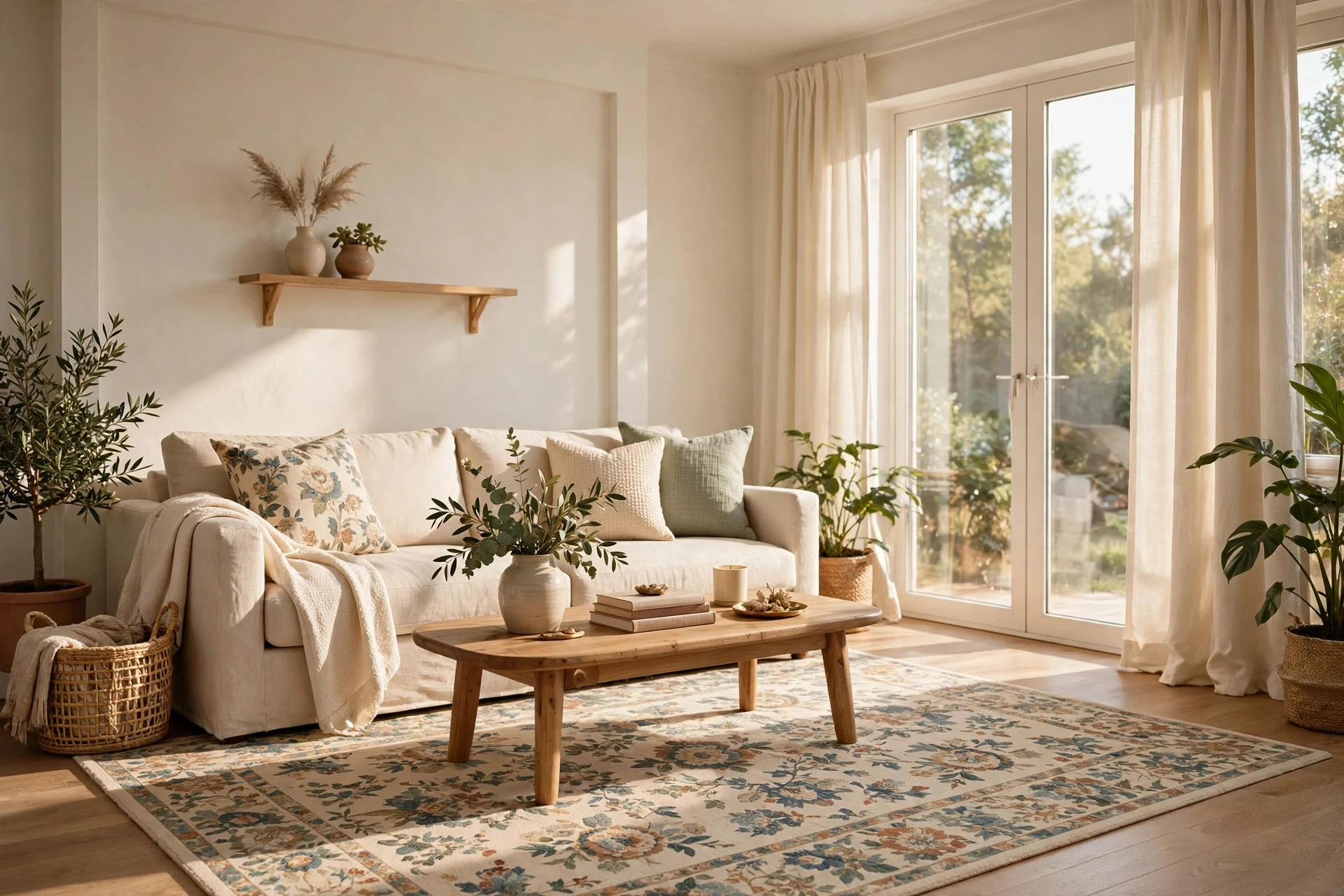
The rug and the curtains are the two largest patterned surfaces in most living rooms, and people usually buy them years apart without thinking about each other. These two must coordinate: the easiest version is one patterned, one solid. If both are patterned, they need shared colors (Fix #6) plus different scales and types (Fixes #2 and #7). Rug and curtains frame the room — when they fight, everything feels unstable; when they agree, the whole middle gets the benefit of the doubt.
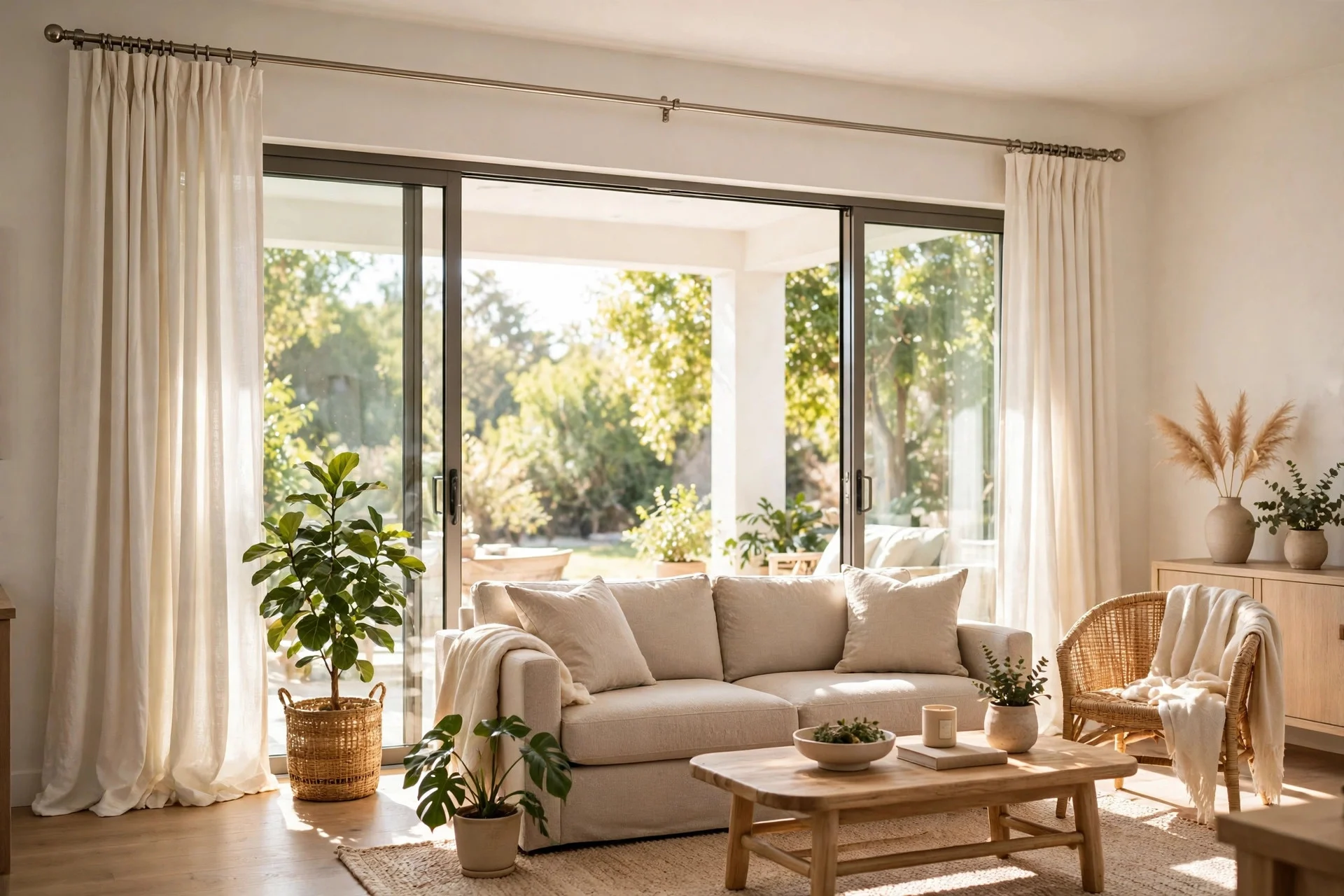
Cost: $0 if one is already solid; new curtains run $60–$200, a rug $120–$400. Difficulty: easy to medium. Tip: hold a curtain panel next to the rug in daylight before buying — screens lie about color. If your room has big glass doors, picking the right curtain weight matters even more; this guide to curtains for sliding glass doors covers that. Watch out: patterned curtains plus a patterned rug plus a patterned sofa is three large-scale prints — almost always too much. Make at least one of them solid.
Fix #11: Let Texture Count as a Pattern
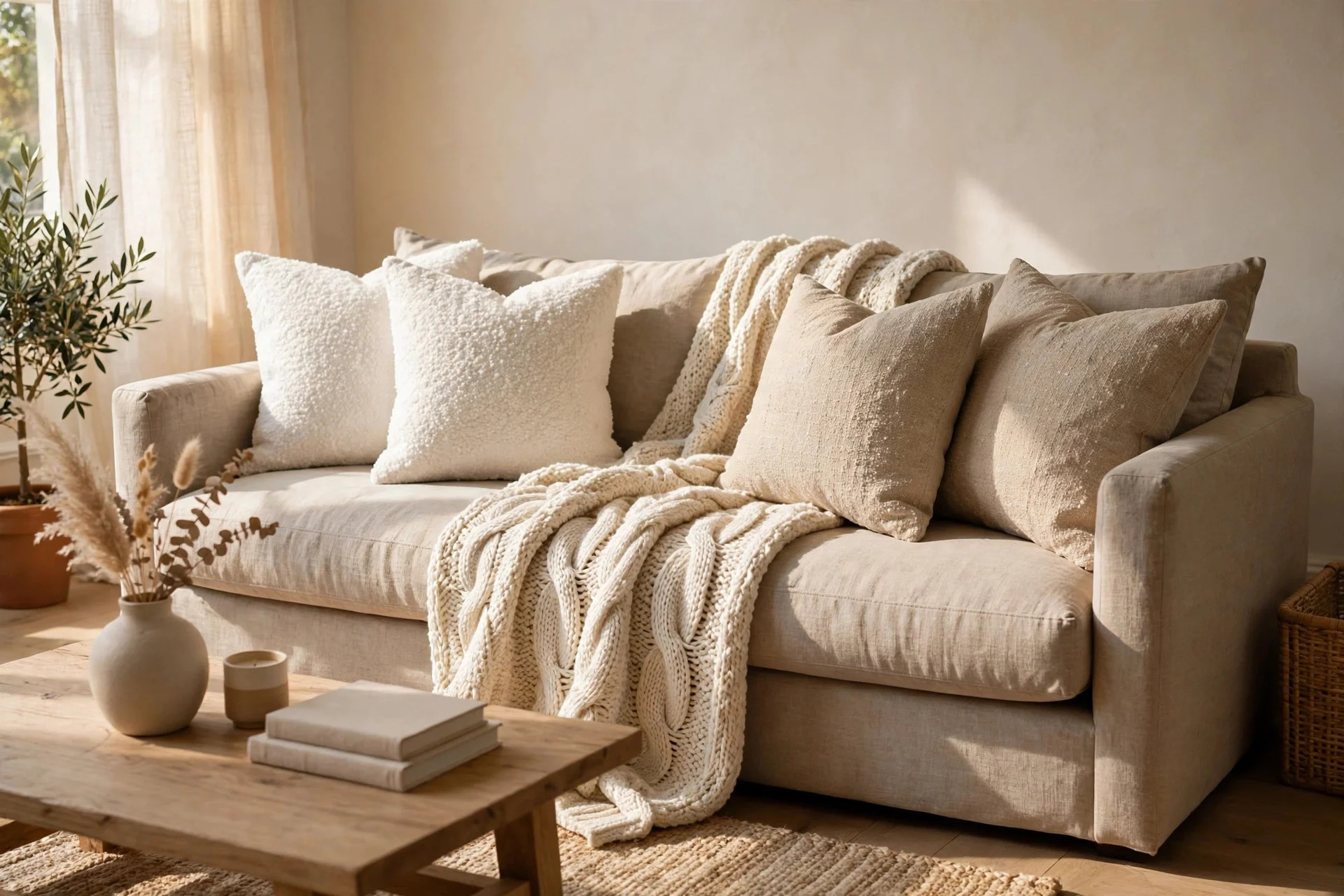
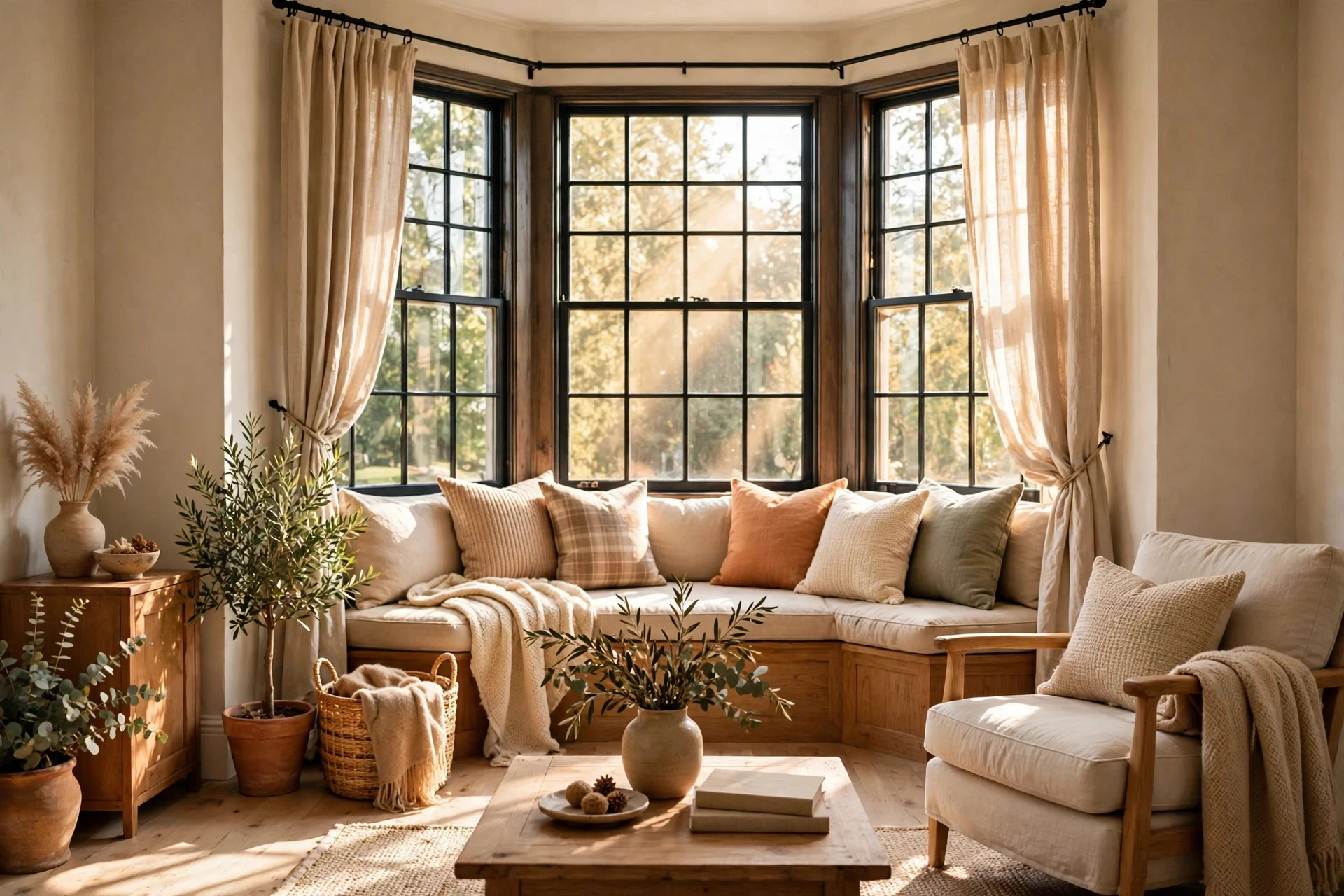
People think “solid” means flat and boring, so they add another print when the room just needs interest. Textured solids — boucle, chunky knit, nubby linen, velvet — give you the visual richness of a pattern with no motif at all. A boucle cushion next to a floral one adds contrast without adding competition. Texture catches light differently across its surface, which reads as visual activity and fills the “interesting” slot while keeping your pattern count low.
Cost: $25–$70 per textured cushion cover; a chunky knit throw $50–$120. Difficulty: easy, same-day swap. Tip: pair one rough texture (boucle, jute) with one smooth one (velvet, silk) — opposites pop, two similar textures blur. Watch out: texture still has a color. A cream boucle cushion is a solid you can count on; a multicolor tweed is a pattern in disguise.
Fix #12: Do the 48-Hour Fabric Test
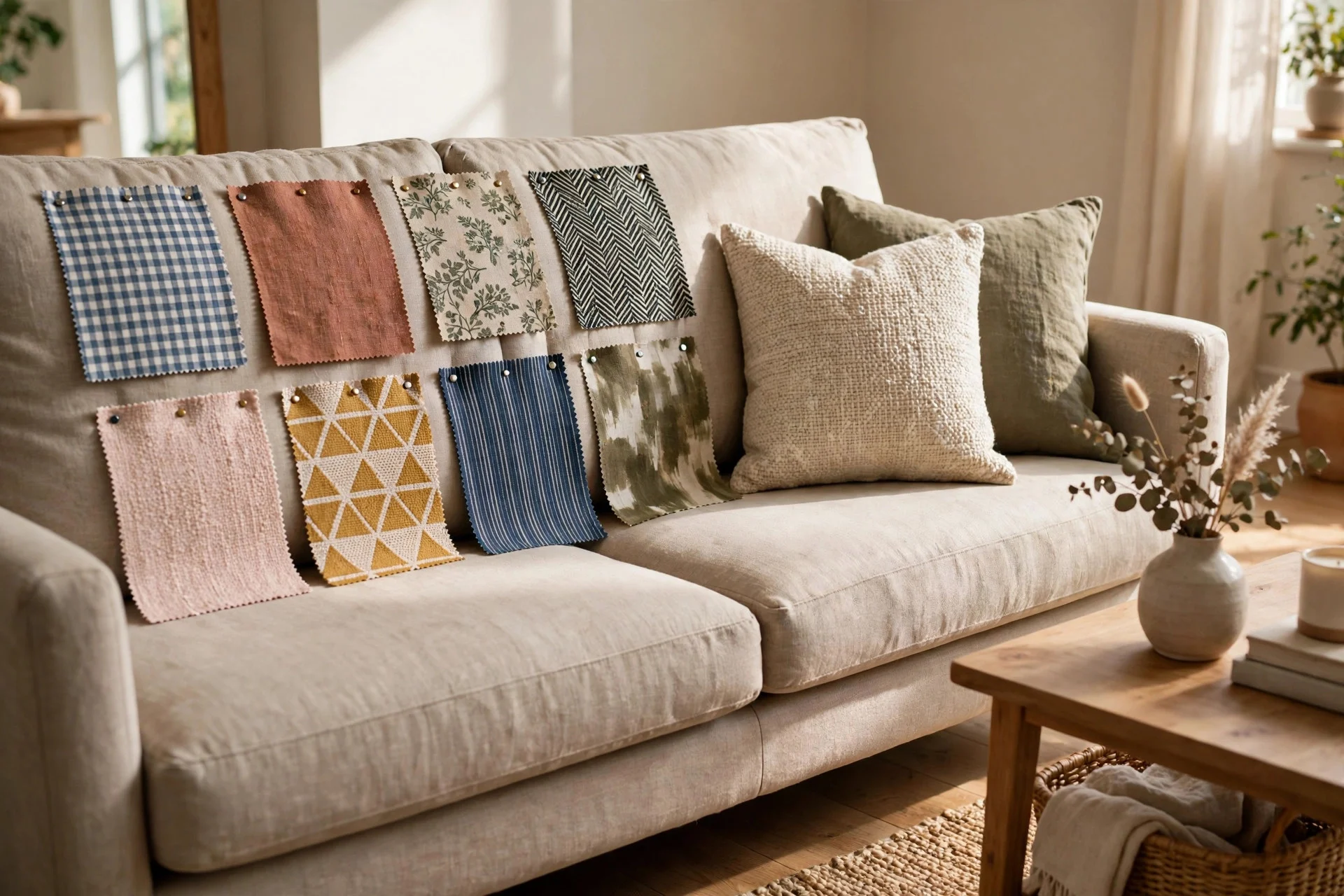
A print that looks charming for ten minutes in a shop can feel loud at 7 a.m. every day. Before you commit, order swatches or buy with a generous return policy, and live with the patterns in the room for two days — morning, afternoon, and evening light. Pin swatches exactly where the real piece will live, because a swatch on the kitchen table tells you nothing about how it’ll look on the sofa. Two days of real life is the cheapest insurance against expensive regret.
Cost: $0–$15 for swatches (many shops send them free). Difficulty: easy, just requires patience. Tip: most people find one of their choices doesn’t survive the test — and that’s the point. Finding the weak link before you spend is the win. Watch out: don’t test in a single lighting condition. Evening lamplight hides clashes that morning sun will expose, and vice versa.
Frequently asked questions
How many patterns can you mix in a living room?
Three is the comfortable number — one large, one medium, one small. A very large or open-plan room can carry four if the colors stay tightly linked. Beyond that, even coordinated prints start to feel crowded.
What is the 60-30-10 rule for mixing patterns in living room decor?
It’s a simple proportion guide: roughly 60% of the room’s pattern budget goes to the anchor pattern (usually the rug), 30% to a secondary pattern (curtains or upholstery), and 10% to an accent (one or two cushions). It just means the patterns should step down clearly in visual weight.
Can you mix floral and geometric patterns?
Yes — this is one of the safest combinations. An organic floral and a structured geometric like stripes or checks read as different pattern types, so they complement instead of competing. Keep them in the same color family and at different scales.
Should curtains match the rug pattern?
They shouldn’t match exactly, but they should coordinate. One patterned and one solid is the simplest approach. If both are patterned, they need shared colors, different scales, and different pattern types — and everything else in the room should stay calmer to compensate.
How do you mix patterns in a small living room?
Use two patterns, keep the scales small to medium, and lean on solids and texture for the rest. Small rooms amplify every print, so the anchor should be quieter than what you’d pick for a big room — a small-scale stripe or subtle geometric beats a giant floral here.
Your pattern-mixing checklist
One anchor pattern leading. No more than three prints, at different scales. Every pattern appearing at least twice. Solids separating the busy pieces. One color family, mixed pattern types. Rug and curtains on speaking terms. The loudest pattern spread across the room. One deep solid to hold it all down.
Get most of those right and your room won’t look messy — it’ll look like you meant it. Which, after these twelve fixes, you will have.