14 Living Room Ideas With a Green Velvet Sofa as the Star
Here’s the myth: a green velvet sofa is a gamble. Too bold, too hard to match, one wrong cushion away from a hotel lobby in 1998.
The truth is simpler. Green is the easiest “bold” color you can put in a living room. It sits next to wood, brass, cream, leather, and houseplants without a fight, because green is already everywhere in a home — in the wood tones, the plants on the sill, the view out the window. You’re not introducing a stranger. You’re turning up the volume on something that was already there.
What makes or breaks it: the colors around it, the light in the room, and a little restraint with patterns. Below are 14 ways to style it — different budgets, rooms, and moods. If you’re still weighing the color itself, browse these green couch living room ideas first, then pick the setup that looks like your life.
1. Emerald Velvet Against Warm White Walls
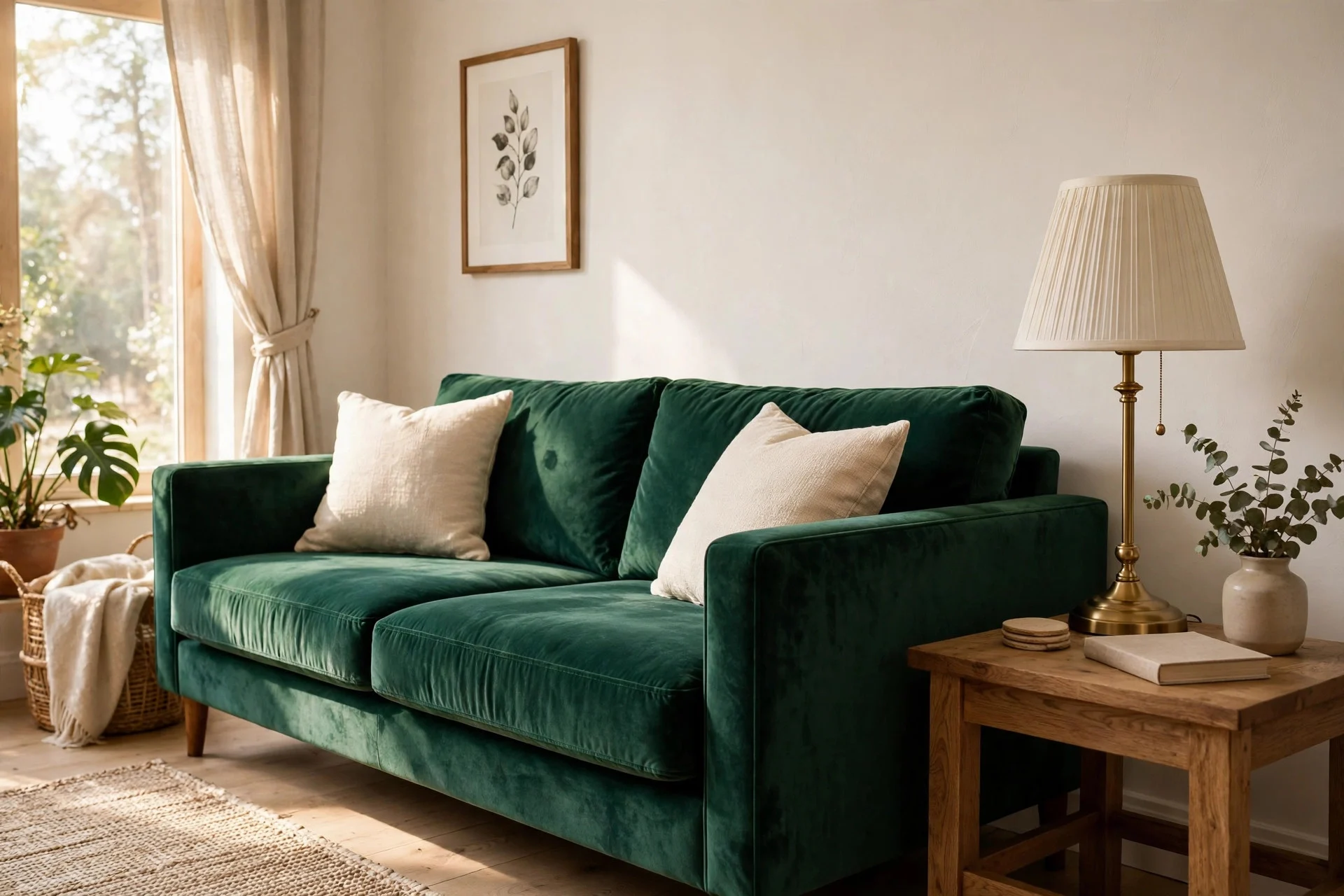
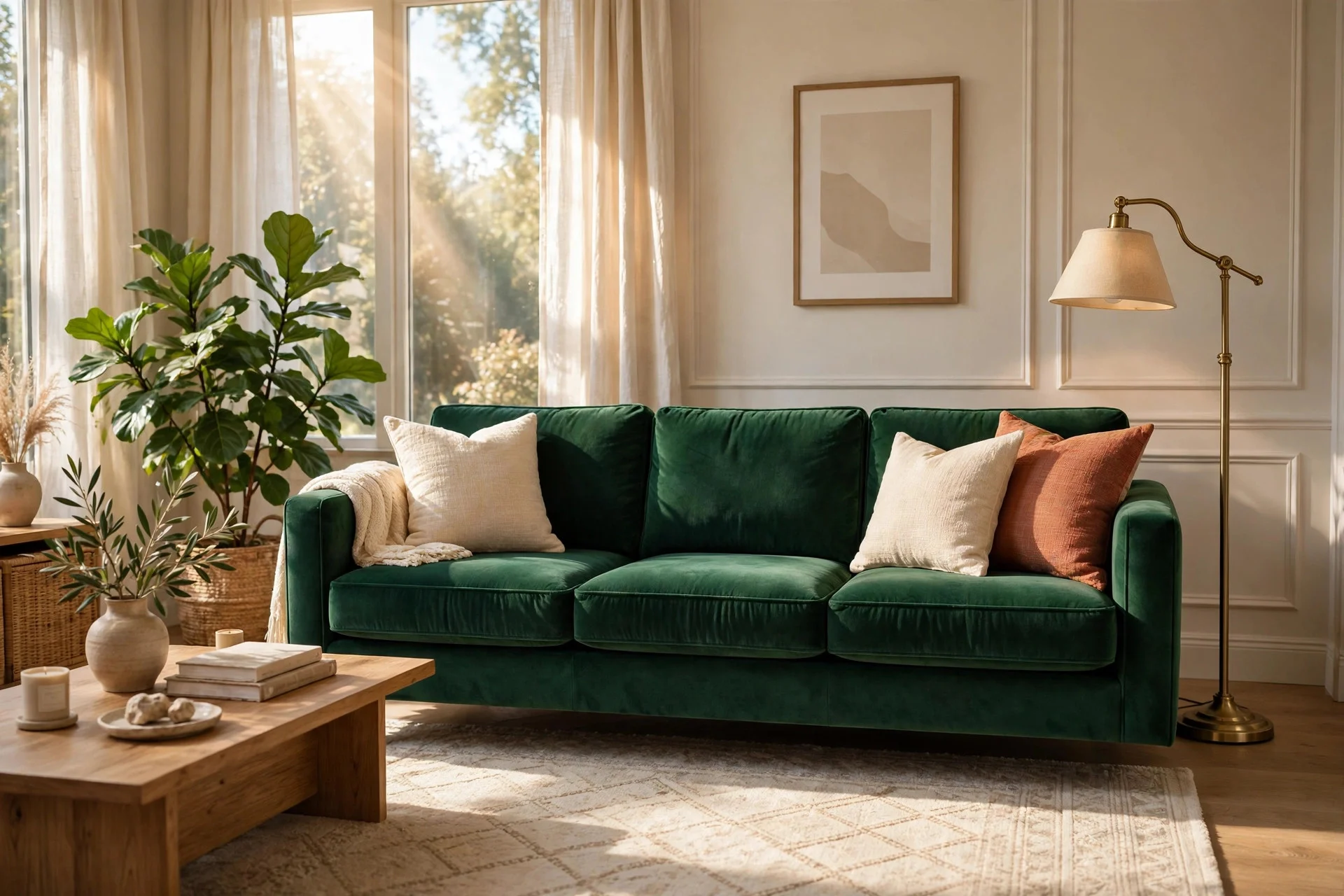
This is the combination designers reach for when they want the sofa to do all the talking. Emerald velvet has depth — it drinks light and throws it back softly — and a warm white wall gives it a quiet backdrop instead of competition. White keeps the room bright while the sofa supplies all the color the eye needs.
Brass or gold accents — a table lamp, a mirror frame, the curtain rod — pick up the warm undertones in both the velvet and the paint. What it costs: $60–$150 for a brass lamp and two or three cushion covers. Difficulty: easy, one weekend. The tip that matters: choose a warm white (creamy, not blue-white) — cool whites can make emerald look flat and grey.
Watch out: if your “white” walls lean grey, the sofa will read grey too. Warm the walls up or repaint the one behind the sofa.
2. Sage Velvet With Natural Oak and Linen
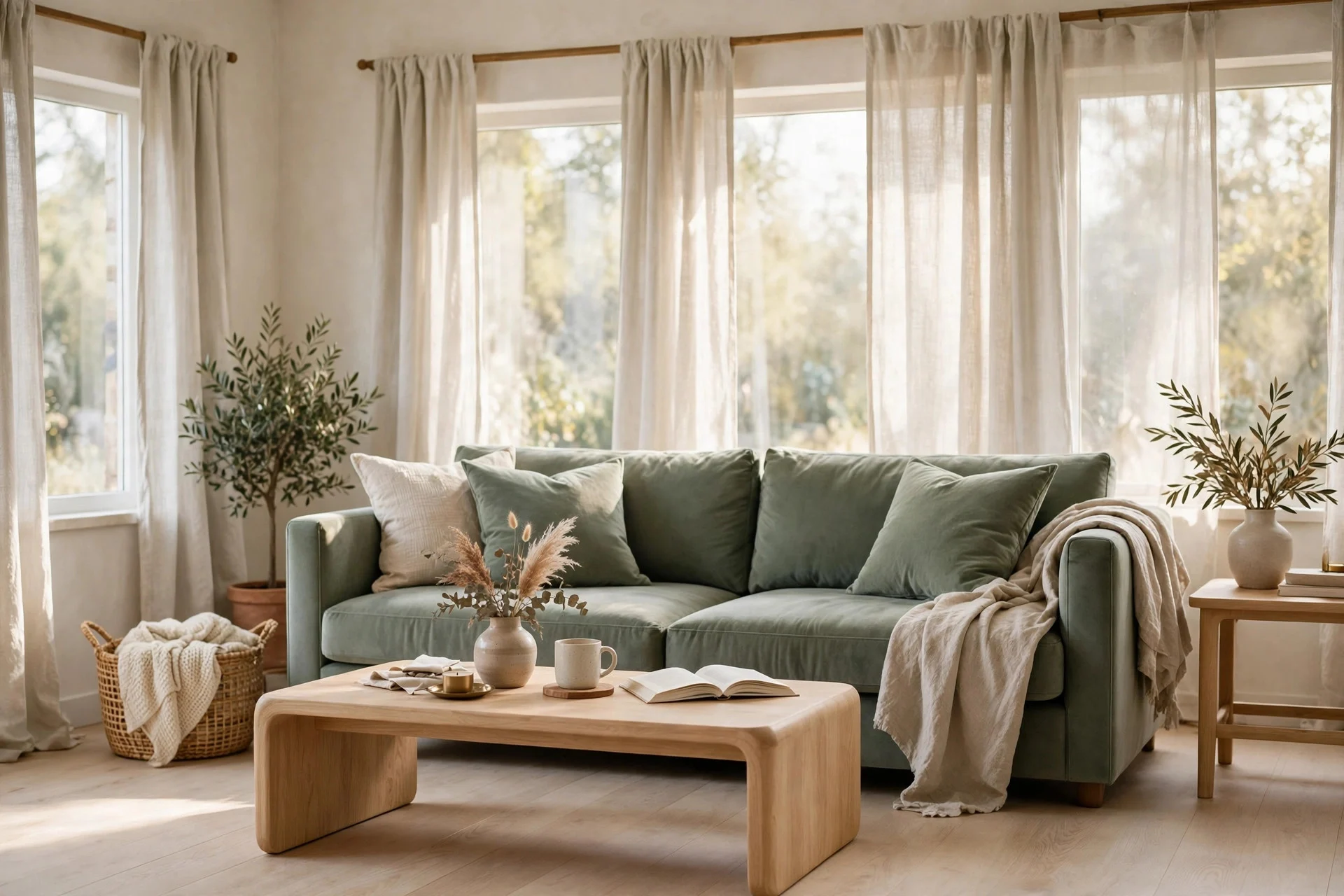
Not ready for full emerald? Sage or olive velvet is the quieter sibling — calm, soft, and easy to live with if your taste runs minimal. Pair it with a pale oak coffee table, undyed linen curtains, and a light wood floor, and the whole room exhales. Nothing competes, so the room feels put-together even when it’s simple.
What it costs: $80–$200 for a secondhand oak table plus linen curtain panels. Difficulty: easy. Tip: keep your wood tones consistent. If the coffee table is pale oak, keep the side tables pale oak too — mixed wood finishes fight a quiet palette.
Watch out: sage can look washed out in a north-facing room with grey daylight. A warm-toned floor lamp fixes it in about ten minutes.
3. Blush Pink Cushions on Deep Green
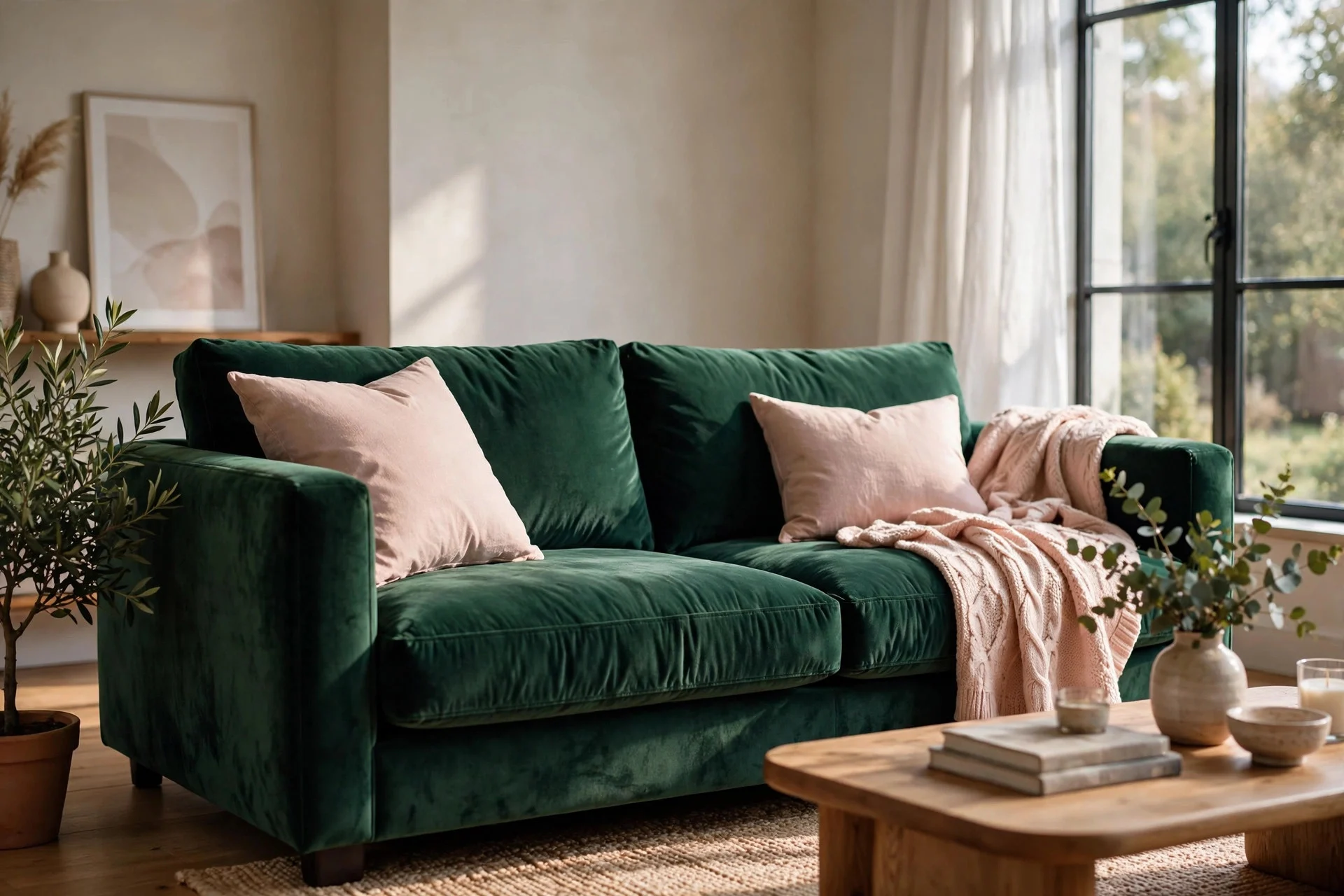
Pink is green’s gentle complement, and on deep green velvet it reads sophisticated rather than sweet — think dried rose, not bubblegum. Two or three blush cushions and one soft throw are all it takes. Mix the textures — one velvet, one linen, one knit — so the pink doesn’t look flat, and let the green underneath keep it grounded.
A $40–$100 change you can make in an afternoon, and fully reversible. Tip: pull the exact blush shade from something already in the room — a rug, a piece of art — so it looks intentional instead of random. Watch out: past three or four pink pieces, the room starts reading nursery. Count your accents before you buy.
4. Mustard and Ochre: The Jewel-Box Layer
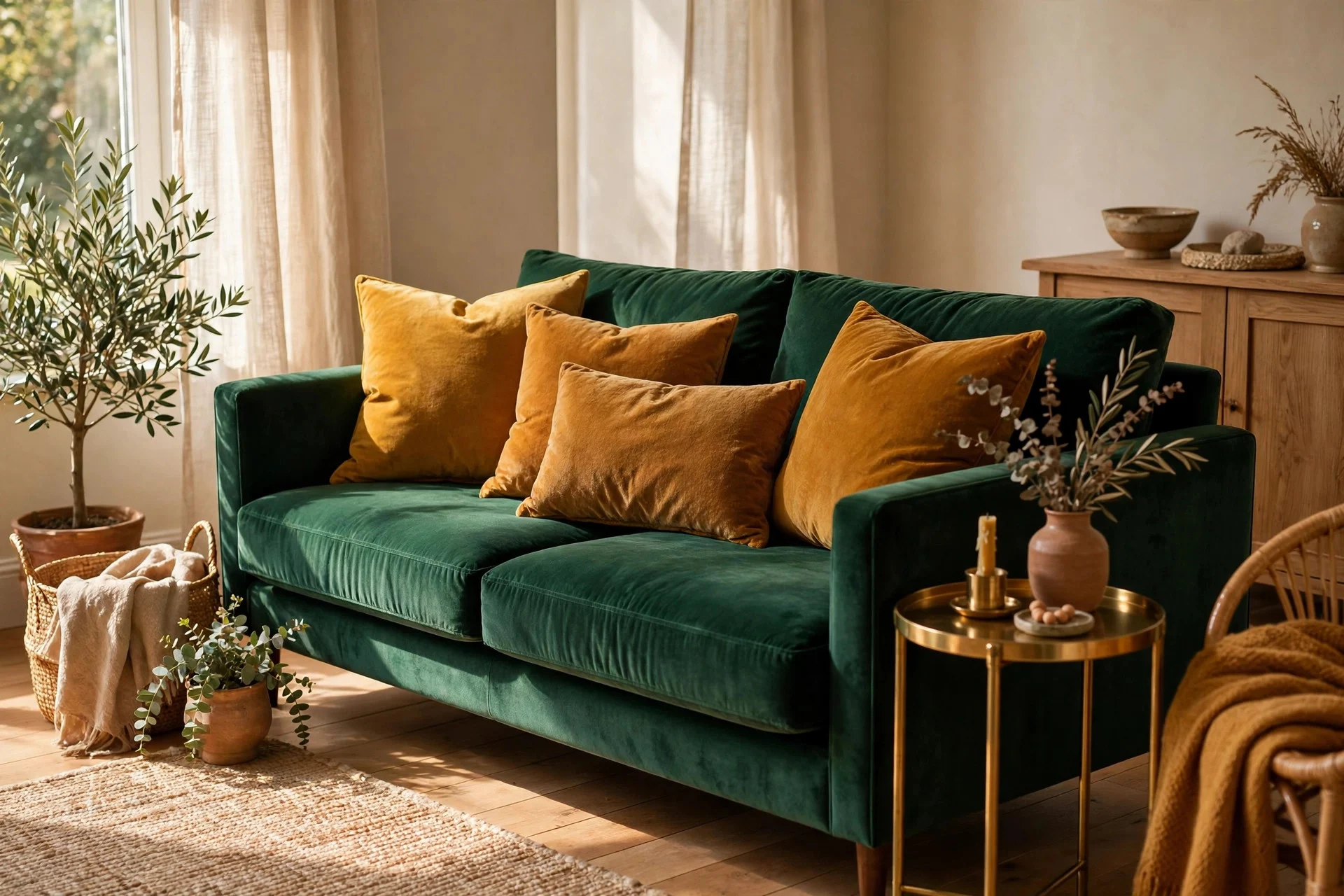
Emerald plus mustard is the pairing that looks expensive for the least money. The yellow warms up the green, the green deepens the yellow, and velvet on velvet makes the whole sofa look richer than it is.
Go for two cushion sizes and odd numbers — three or five total. Put the darkest cushions at the sofa’s ends to frame it, and let one patterned ochre cushion (a small geometric or stripe) break up the solids. Budget $50–$120 for good cushion covers; an afternoon’s work.
Tip: spend the money on a weighty weave. Cheap, thin mustard fabric looks flat next to real velvet and gives the whole thing away. Watch out: mustard fades fast in direct sun, so keep this sofa out of the harshest afternoon light or rotate the cushions monthly.
5. Let the Sofa Be the Only Color
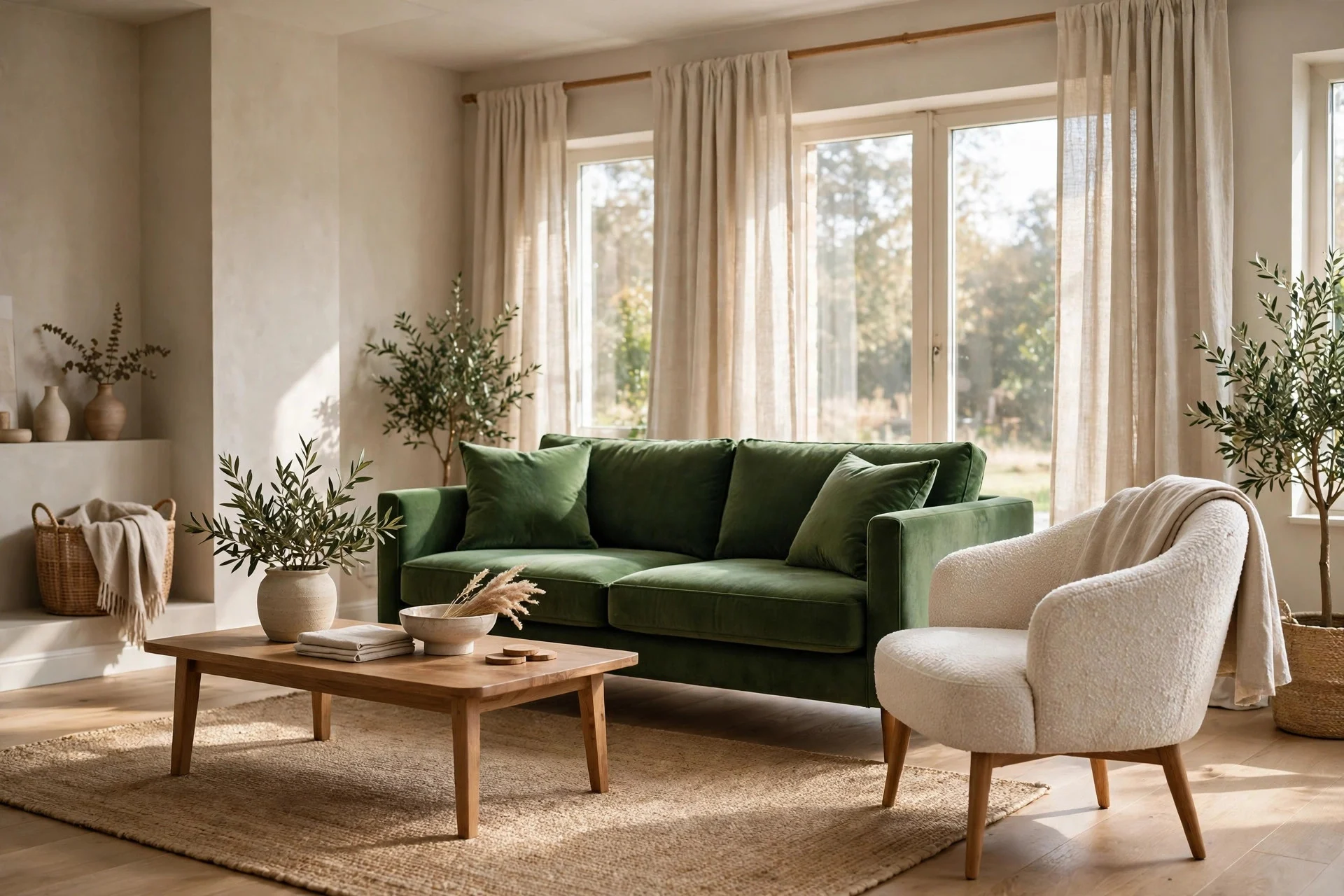
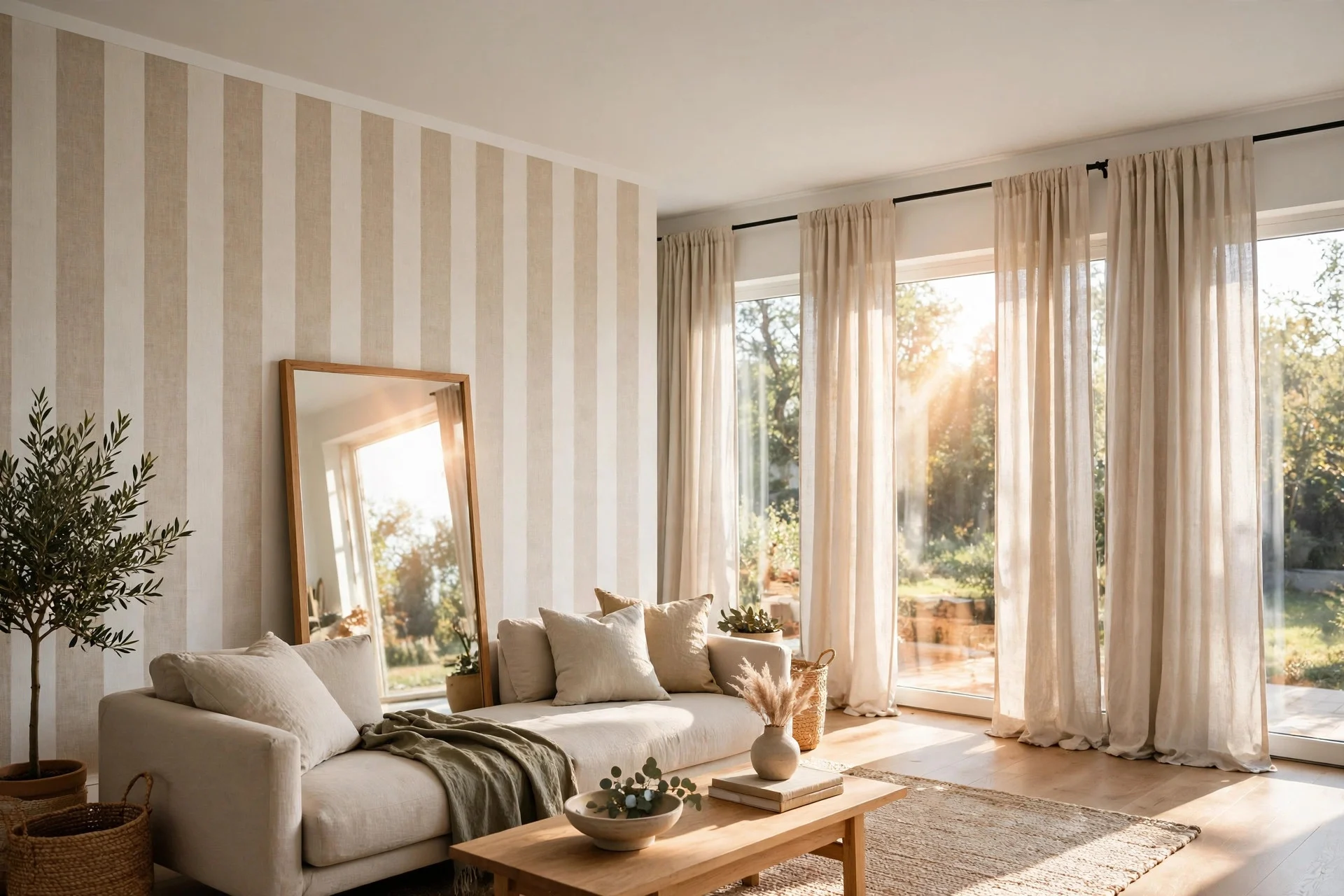
Sometimes the bravest move is restraint. Keep everything else beige, greige, cream, or natural — walls, rug, curtains, the armchair — and let the green velvet sofa be the single saturated thing in the room. It becomes a focal point by default, and the room feels calm around it.
This is also the cheapest idea on the list: $0–$80, mostly rearranging what you own plus maybe one throw. The skill here is texture. When color is limited, surfaces do the talking — a boucle armchair, a jute rug, linen curtains, a nubby wool throw. “Neutral” should read layered, never boring.
Tip: vacuum the velvet weekly with an upholstery attachment. With only one color in the room, every bit of dust on it shows.
6. Surround It With Real Plants
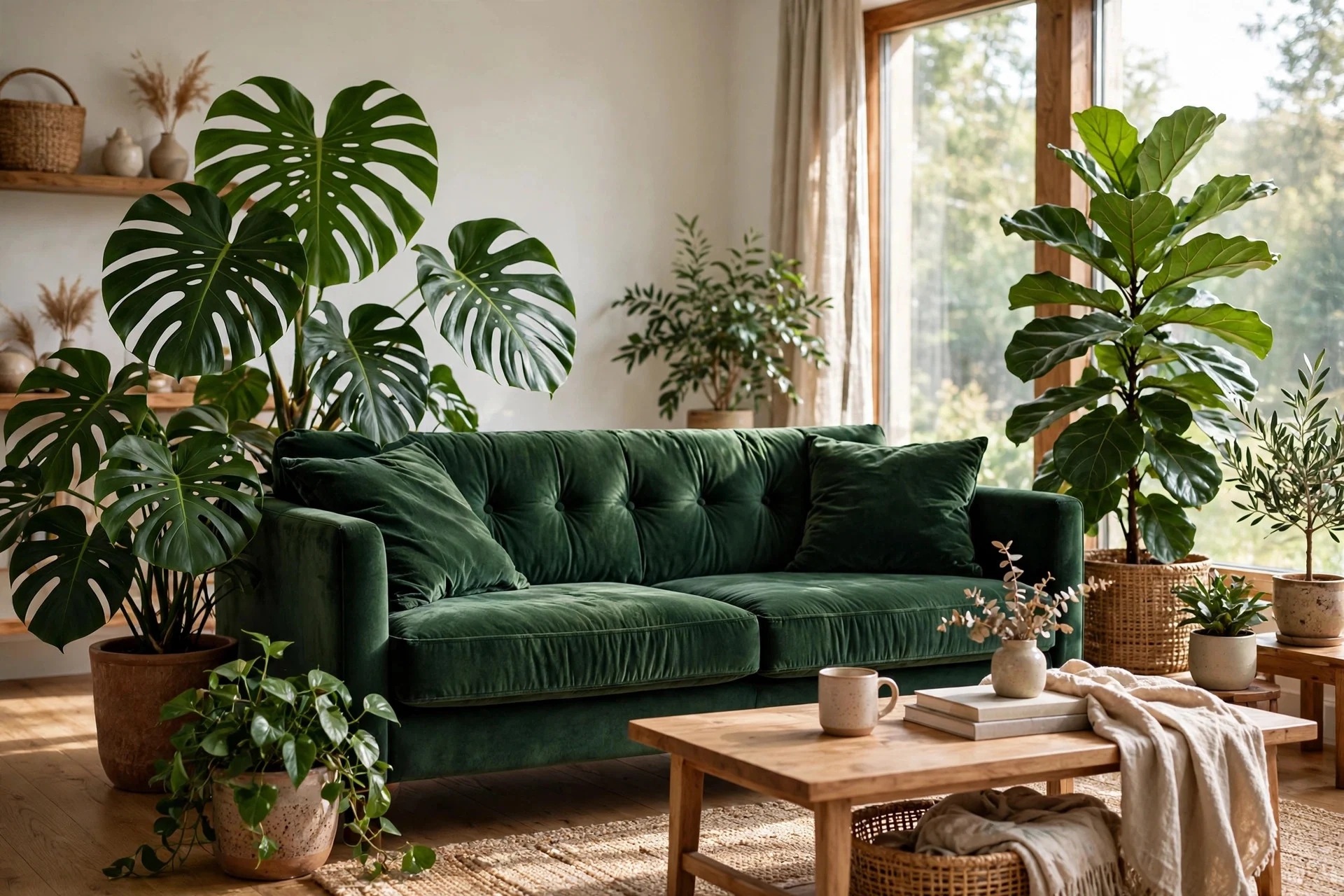
Green on green shouldn’t work, but it does — because leaf greens and velvet greens are different enough to layer. A monstera’s bright green, a fiddle-leaf fig’s deep green, and an emerald sofa read as a family, not a clash. Put one tall plant at each end of the sofa and let a trailing pothos spill off a shelf or side table.
The plants soften the sofa’s formality and make the whole room feel alive. Budget $60–$180 for three or four decent-sized plants and pots. Tip: vary leaf size and height — one big dramatic leaf, one feathery fern, one trailing vine. That contrast is what makes it look designed.
Watch out: don’t block the window. The plants and the sofa both want that light; keep tall plants to the sides of the window, not in front of it.
7. Go Dark: Charcoal or Navy Walls
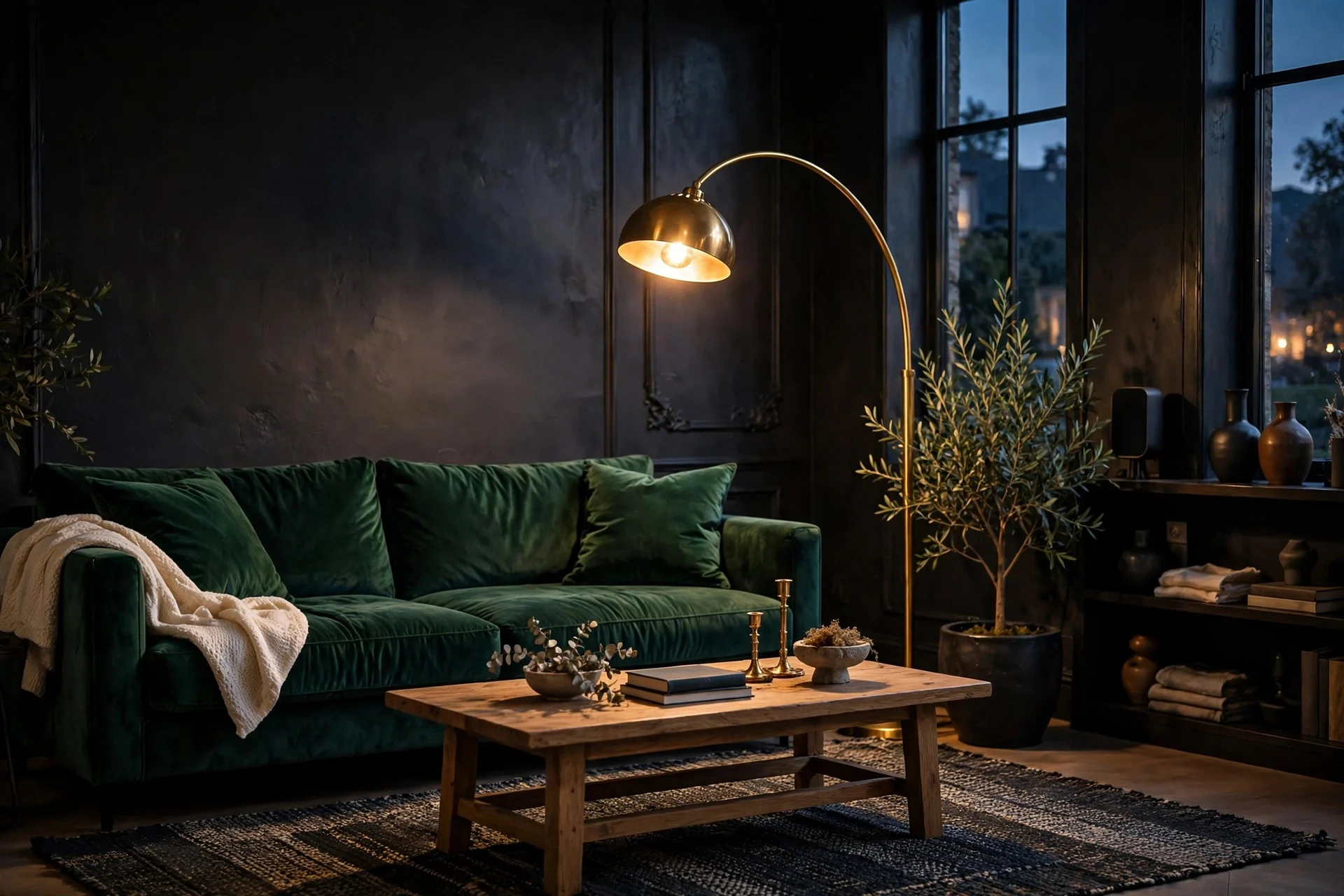
For the moody evening room: paint the walls charcoal or deep navy and watch emerald velvet glow like it’s lit from inside. Dark walls absorb light, and velvet — which reflects it softly — becomes the brightest thing in the room.
This is a commitment, so test first. Paint a big swatch and look at it at night under your actual lamps, because wall color shifts hard after dark. If you’re choosing between shades, this guide to living room paint colors walks through undertones, and a paint calculator will tell you how many gallons a dark color (which often needs an extra coat) actually requires.
What it costs: $100–$250 for paint plus a brass floor lamp, which is close to mandatory here — dark rooms need warm pools of light. Difficulty: medium, a full weekend of painting. Watch out: in a small room this can feel cave-like. Keep the ceiling and trim bright white to hold the room open.
8. Mid-Century: Walnut, Tapered Legs, Clean Lines
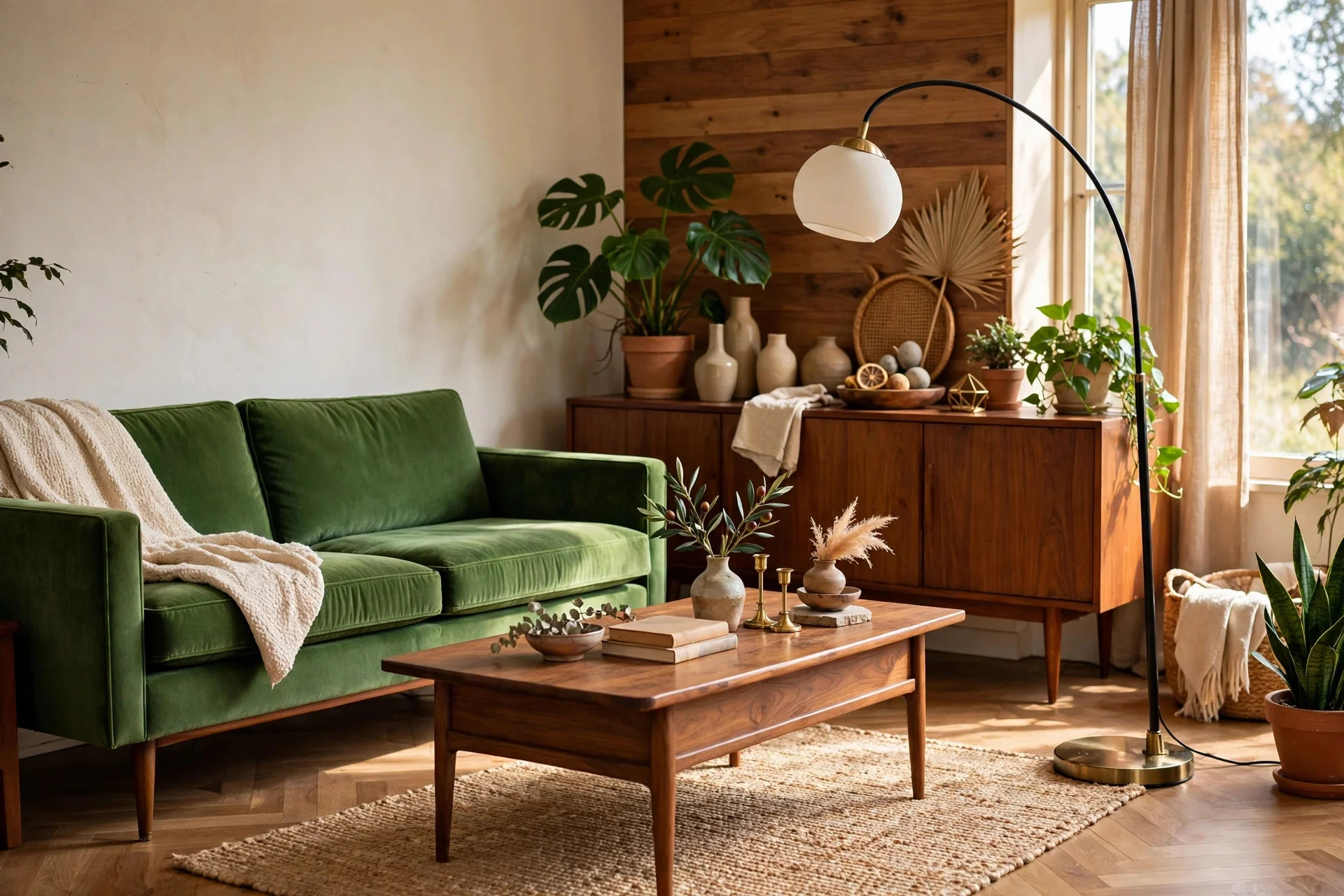
Green velvet was practically built for mid-century shapes. Slim arms, tapered wooden legs, a low walnut coffee table, maybe an arc lamp curving overhead — the clean lines let the velvet’s richness do the talking without any fuss around it.
Keep the coffee table lower than the seat cushions so the sofa stays the visual anchor. One solid piece — a walnut credenza or chunky sideboard — grounds all those skinny legs so the room doesn’t feel spindly. Expect $150–$400 if you’re buying the table and lamp secondhand, which is where the good mid-century pieces live anyway.
Tip: hunt vintage for the wood pieces and buy the sofa new. Vintage velvet is a gamble on stains; vintage walnut just keeps getting better. Watch out: too many competing wood tones will fight the sofa. Pick one wood and commit.
9. Anchor It With a Vintage-Style Rug
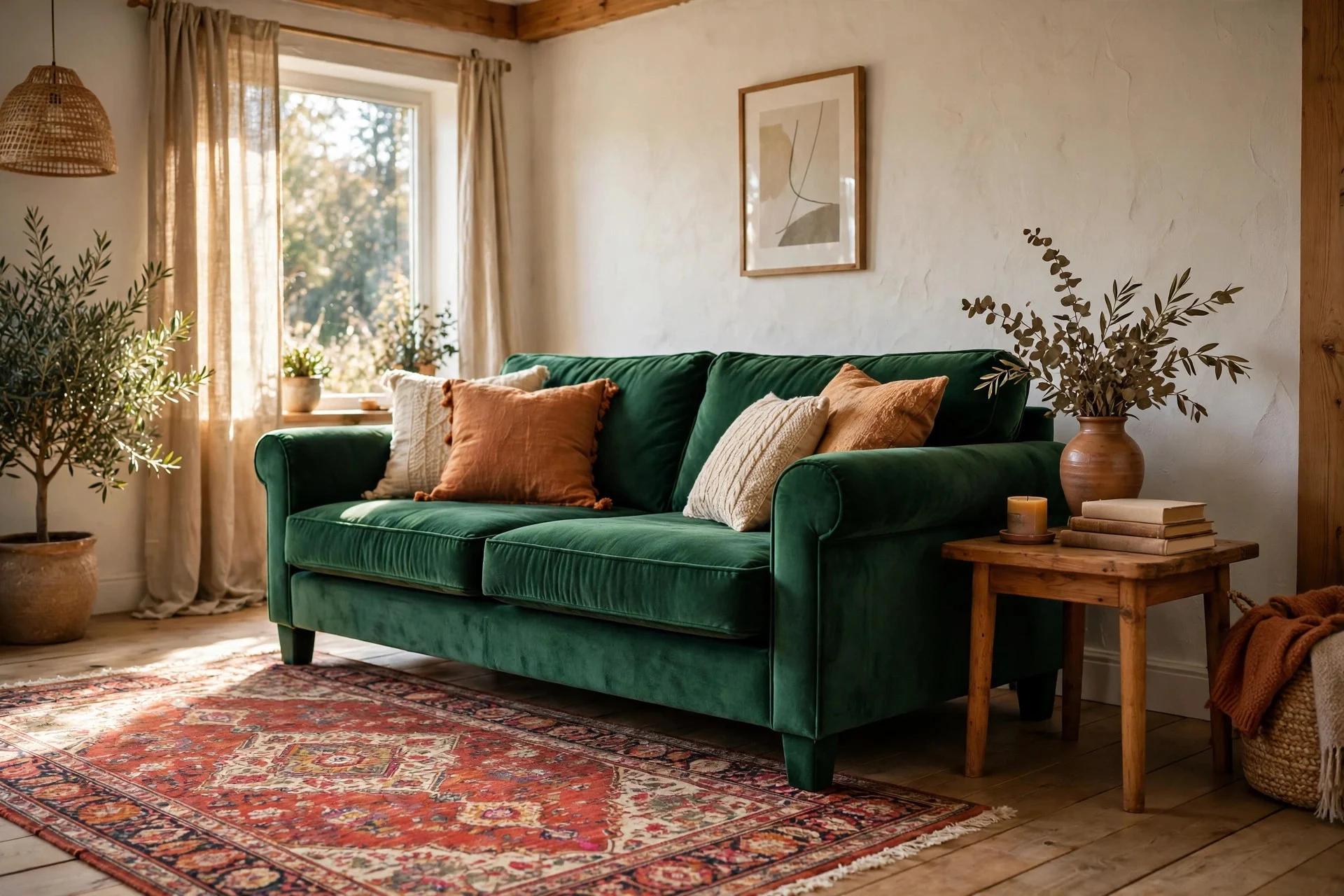
A solid velvet sofa is begging for a patterned rug underneath it. A vintage-style Persian with warm reds, creams, and a little navy gives the green something to play against, and the pattern hides real-life mess far better than a solid rug ever will.
Size matters more than pattern here. The rug should be big enough that the sofa’s front legs sit on it — a floating rug visually shrinks the whole room. A good flatweave or vintage-style 8×10 runs $120–$350, and it’s the single purchase that changes the room most after the sofa itself.
Tip: pull one minor color from the rug for a cushion — a little rust, a little cream — and the whole arrangement clicks. Watch out: busy rug plus patterned cushions equals chaos. With a Persian underfoot, keep the cushions solid.
10. Light, Airy, Almost Coastal
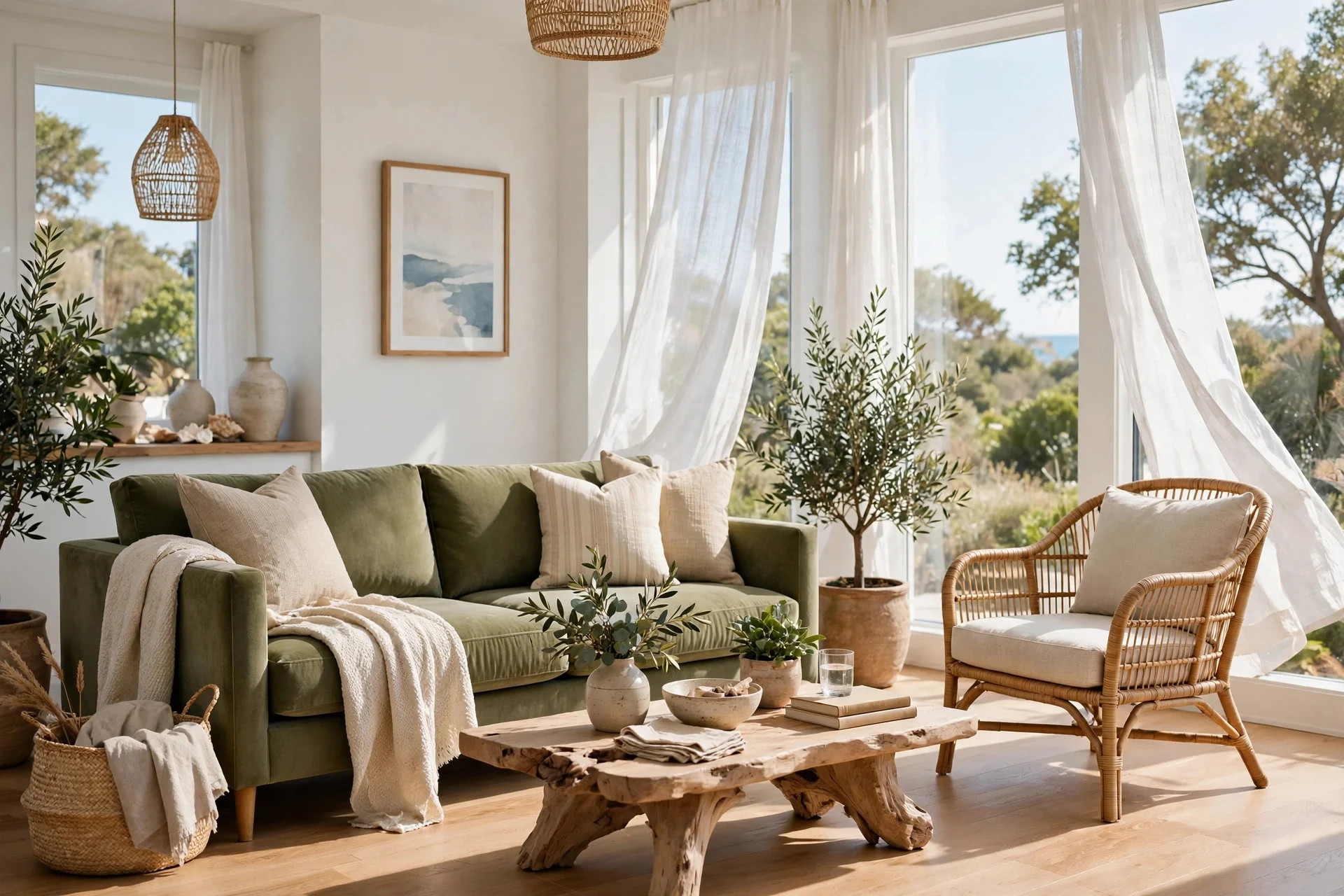
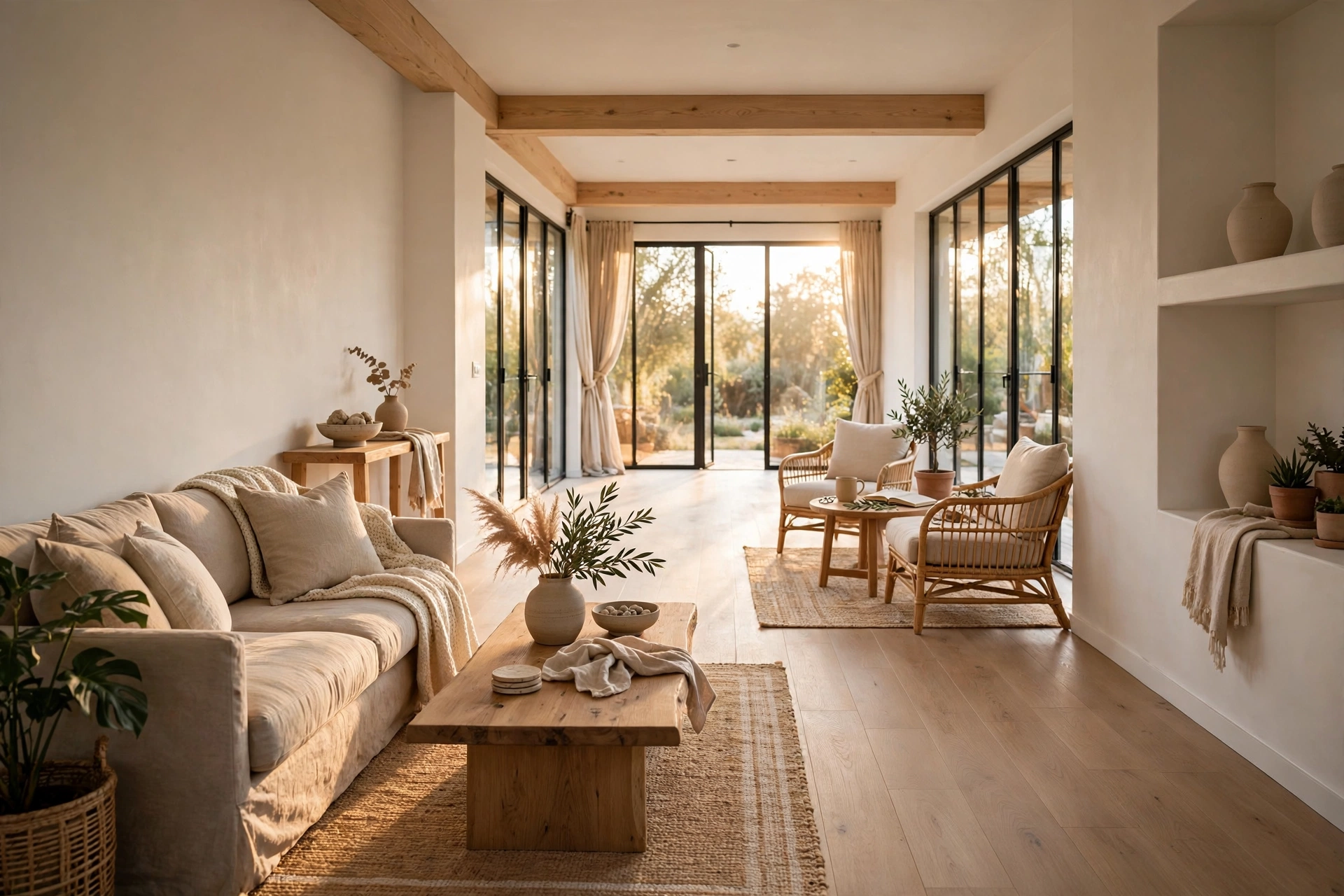
Green velvet doesn’t have to be moody. In a soft olive or sage, with white walls, a rattan chair, and light oak floors, it reads breezy — the coastal look without a single seashell in sight.
The formula: one natural texture per zone. Rattan chair here, jute rug there, linen curtains on the windows. That keeps it feeling collected rather than themed. Budget $100–$250 for the rattan piece and rug; the sofa does the rest.
Tip: warm white walls again, not stark white — stark white next to soft green can feel clinical. Watch out: all-pale rooms show every crumb and paw print. A washable rug cover earns its keep in this setup.
11. Build a Gallery Wall Above It
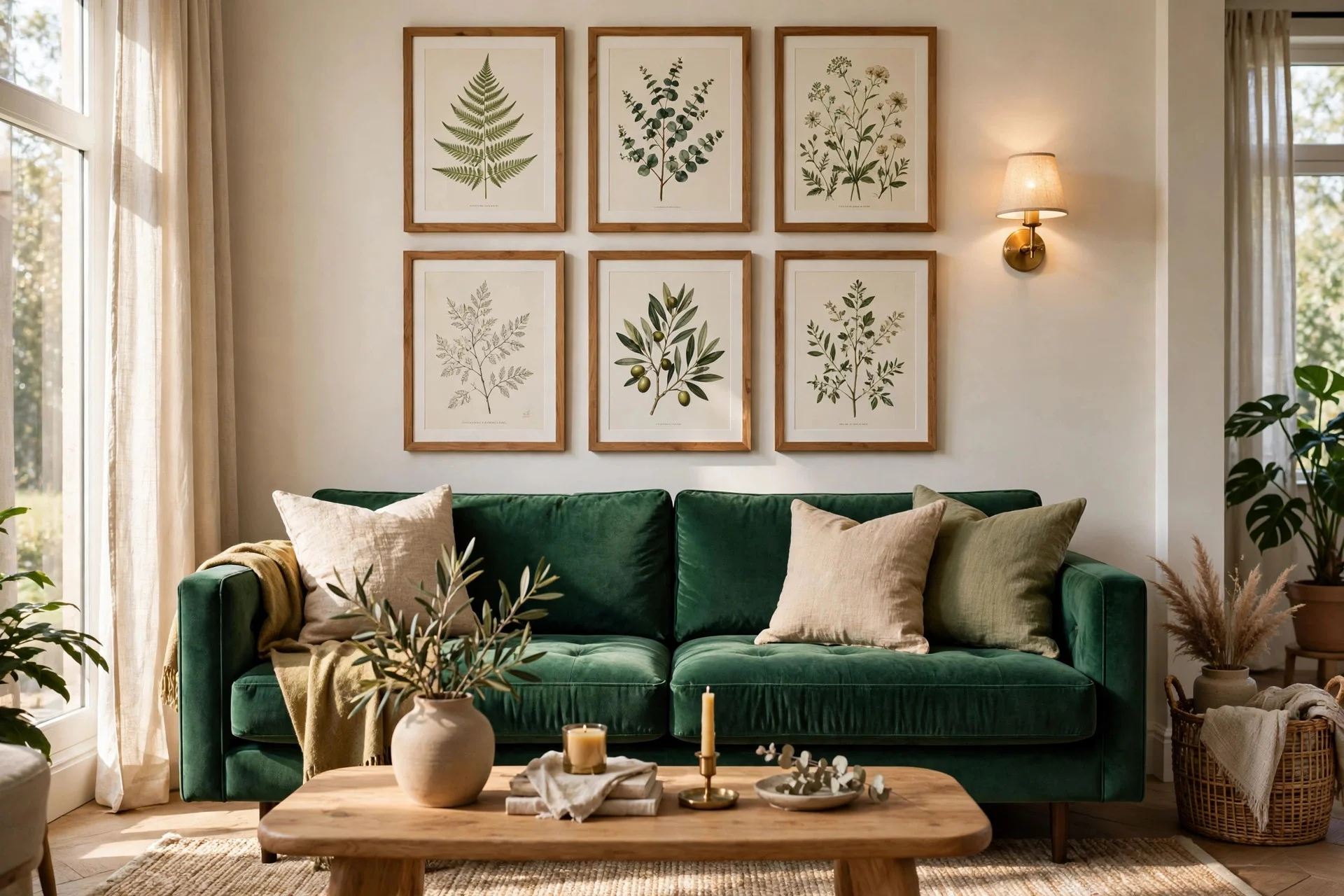
A big sofa leaves a big empty wall above it, and a gallery wall is the fix that costs the least and impresses the most. Botanical prints, landscapes, abstract pieces with green echoes — anything that rhymes with the sofa without matching it exactly.
Hang the center of the arrangement at about 57 inches, and leave 6–8 inches between the sofa’s top and the lowest frame so the two read as one composition. Frames and prints run $50–$150 total; it’s an afternoon project.
Tip: lay the arrangement on the floor first and photograph it. What looks balanced on the floor usually works on the wall, and it’s much easier to reshuffle down there. Watch out: tiny frames get lost above a three-seater. Go bigger than feels safe.
12. Pair It With a Cognac Leather Chair
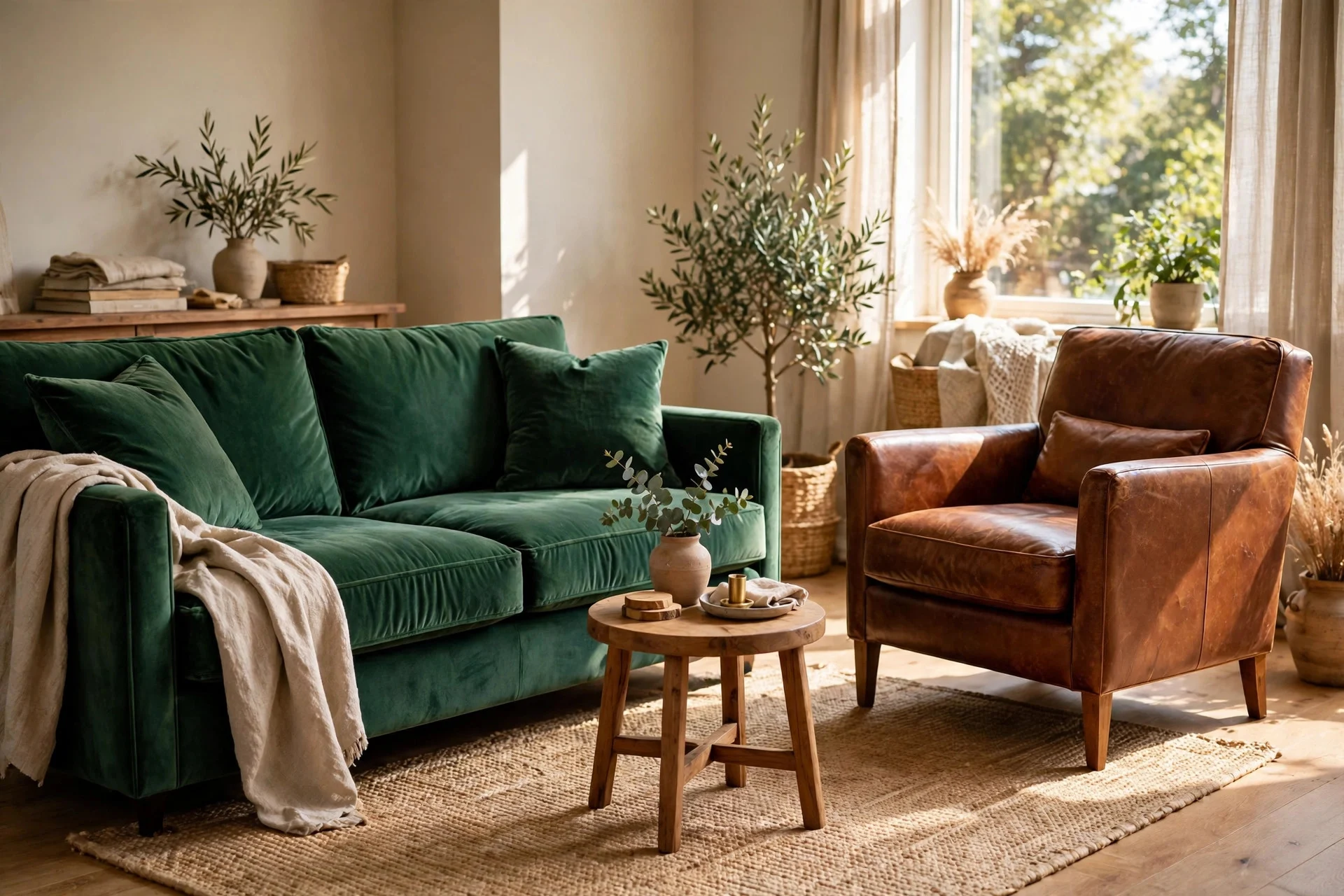
Velvet plus leather is the texture contrast that makes both materials look better. A cognac or caramel leather armchair next to an emerald sofa gives you soft against structured, matte against sheen — the kind of pairing that looks like it took a designer, but really just took one good chair.
One chair, not a set — a matching leather pair would start a fight with the sofa. Echo the cognac in small doses elsewhere (a wooden tray, a leather planter, a picture frame) so the chair looks like it belongs. Budget $200–$600 for a decent leather or leather-look chair.
Tip: angle the chair slightly toward the sofa, not squared to the wall. Conversational angles make mixed seating look intentional. Watch out: black or dark brown leather fights green instead of flattering it. Stick to warm cognac and caramel tones.
13. The Small-Room Green Loveseat
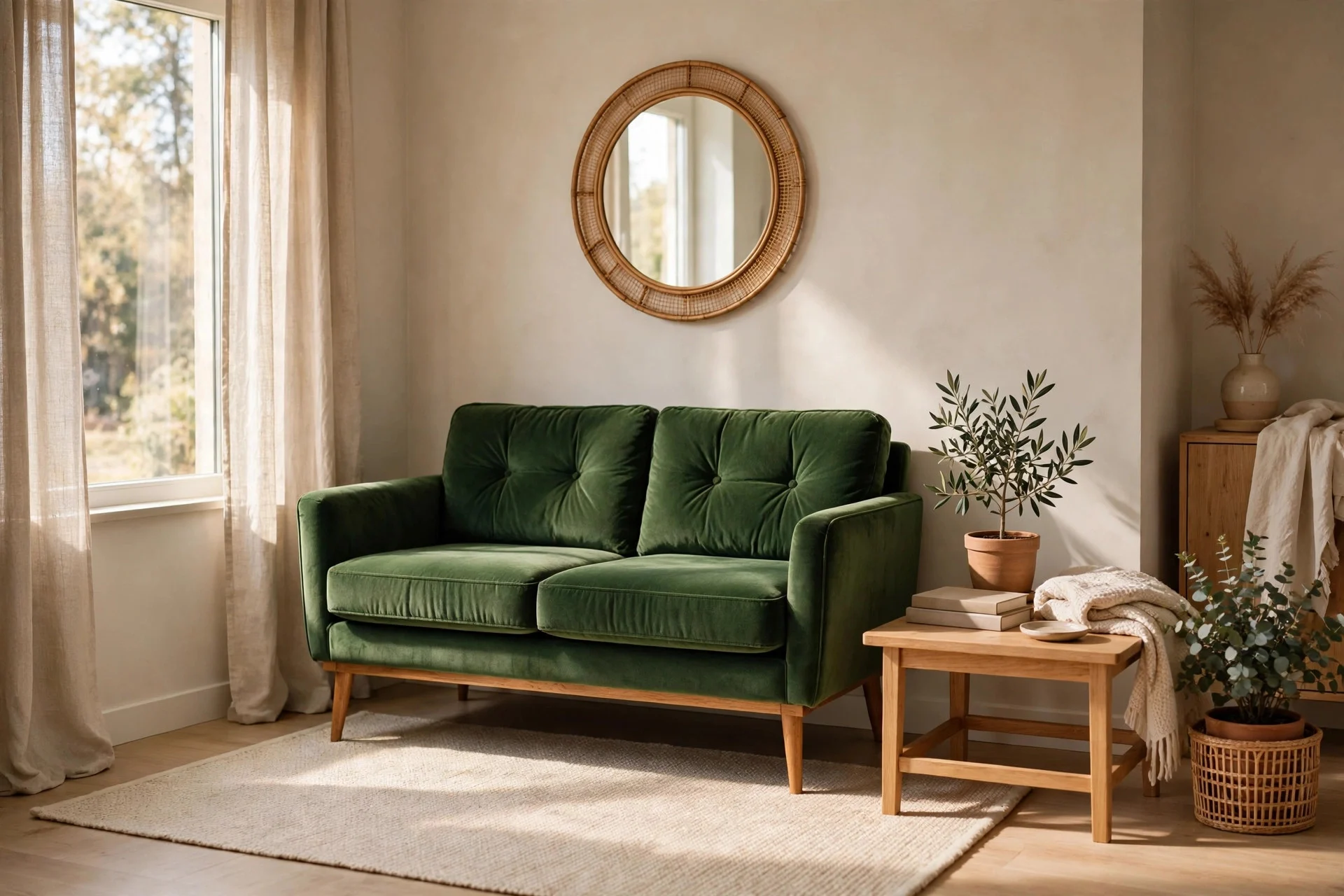
Small living room? You still get the green velvet — you just scale it. A loveseat or apartment-size sofa gives you the color and the texture without eating the walkway, and in a compact room a bold piece actually helps: one confident choice beats five timid ones.
Make it work with three moves: legs you can see under (visible floor reads as visual space), a light-colored rug to bounce light around, and a mirror opposite the window to double the daylight. If you’re unsure what size actually fits, measure twice and check a sofa size guide before you buy — a three-seater in a ten-foot room is the mistake you can’t return your way out of.
What it costs: $0–$100 if you own the loveseat — a mirror and rearranging do the rest. Watch out: skip the oversized coffee table here. A small round table or nesting side tables keep the floor plan breathing.
14. Refresh It Every Season for Under $100
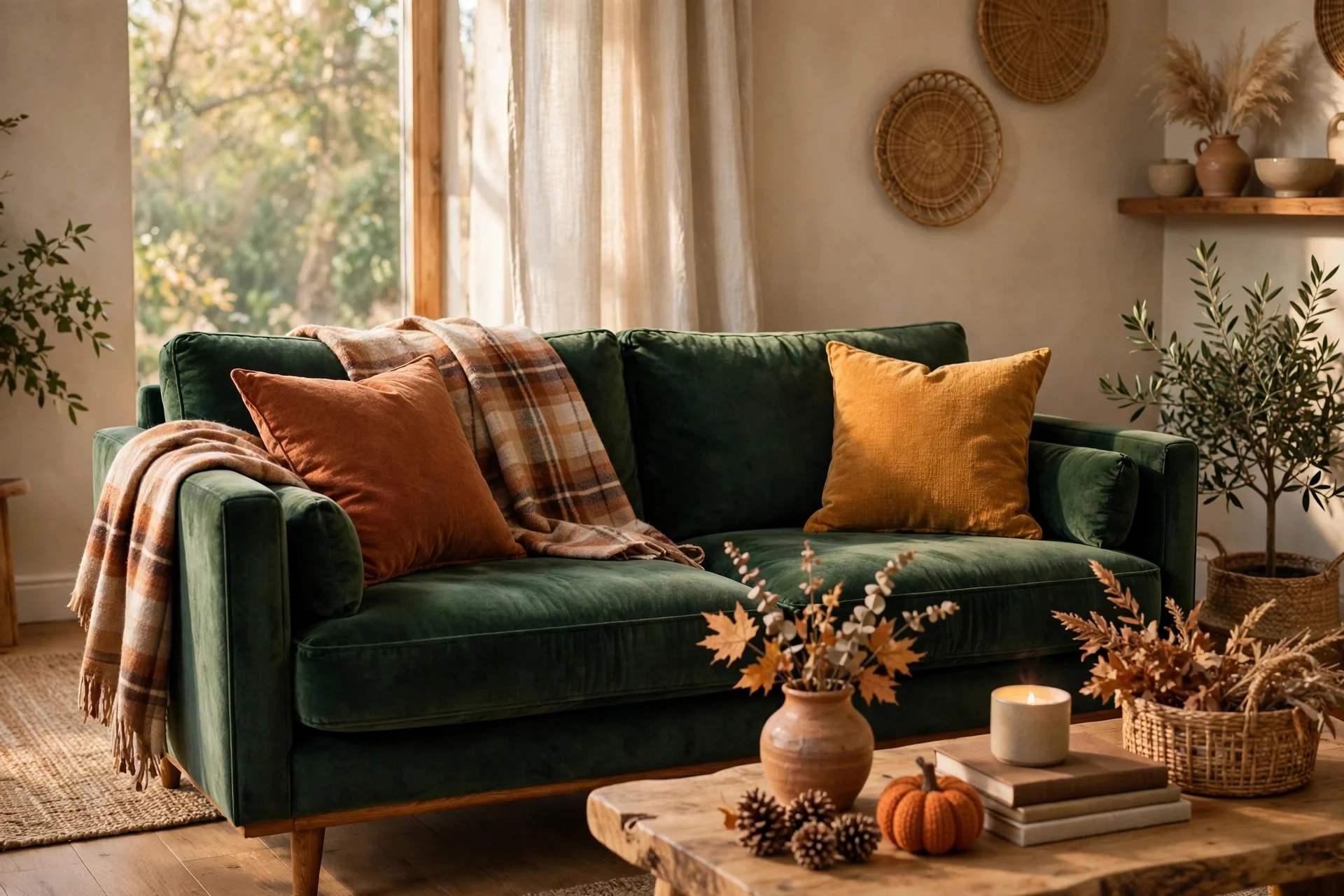
Here’s the long game: the sofa never changes, but everything soft on it rotates. Light linen cushions and a breezy throw for summer; plaid wool, deep rust, and ochre for fall and winter. Four cushion covers and a throw per season, and the room feels new twice a year.
Each seasonal swap runs $40–$100 if you shop sales and reuse basics (cream and tan cushions work year-round as the base layer). Vacuum-bag the off-season textiles so they stay fresh and don’t eat closet space.
Tip: buy the “base” cushions once in good quality, and let the cheap seasonal ones carry the trendy colors. Watch out: velvet fades unevenly in direct sun — rotate the cushions monthly and keep a throw over the most exposed arm.
Green Velvet Sofa FAQs
What colors go with a green velvet sofa?
Warm whites, brass and gold, cognac leather, blush pink, mustard and ochre, charcoal, and deep navy all work well, and natural wood tones are almost always safe. The one combination to be careful with is cool grey walls plus green velvet — the grey can drain the green and make the whole room feel flat. Warm up the walls or add warm metals and the problem disappears.
Does a green velvet sofa work in a small living room?
Yes — choose a loveseat or apartment-size sofa rather than a full three-seater, and pick one with visible legs so light passes underneath. A light rug and a mirror opposite the window keep the room feeling open. In a small space, one bold piece usually looks better than several cautious ones.
Is velvet hard to keep clean with kids or pets?
Modern performance velvets are tougher than their reputation — most handle weekly vacuuming with an upholstery attachment and quick blotting of spills without drama. For pets, a washable throw over their favorite spot saves the cushions, and a lint roller handles the hair. If you’re buying new and this worries you, ask specifically for a performance or kid-and-pet-rated velvet.
What color rug goes with a green velvet sofa?
Three safe bets: a natural jute or sisal rug for a calm neutral base, a vintage-style Persian with warm reds and creams for pattern and richness, or a simple ivory rug to keep things bright. Whatever you choose, size it so the sofa’s front legs rest on it — that one detail makes the whole arrangement look settled.
Will a green velvet sofa go out of style?
Deep green has been cycling through interiors for decades — it’s a classic jewel tone, closer to navy than to any passing fad. The honest version: any bold piece can feel dated if the whole room is built around a trend. Keep the surrounding pieces neutral and timeless, and if tastes change in ten years, you’re swapping cushions and art — not the sofa.
Start With One Change
You don’t need to redo the room. Pick the idea above that looks most like your life, and make one change this week — new cushion covers, a brass lamp, a rug that’s actually big enough. Live with it for a few days. A green velvet sofa rewards small, confident moves more than big expensive ones, and once you see how easily it carries a room, you’ll wonder what you were worried about.