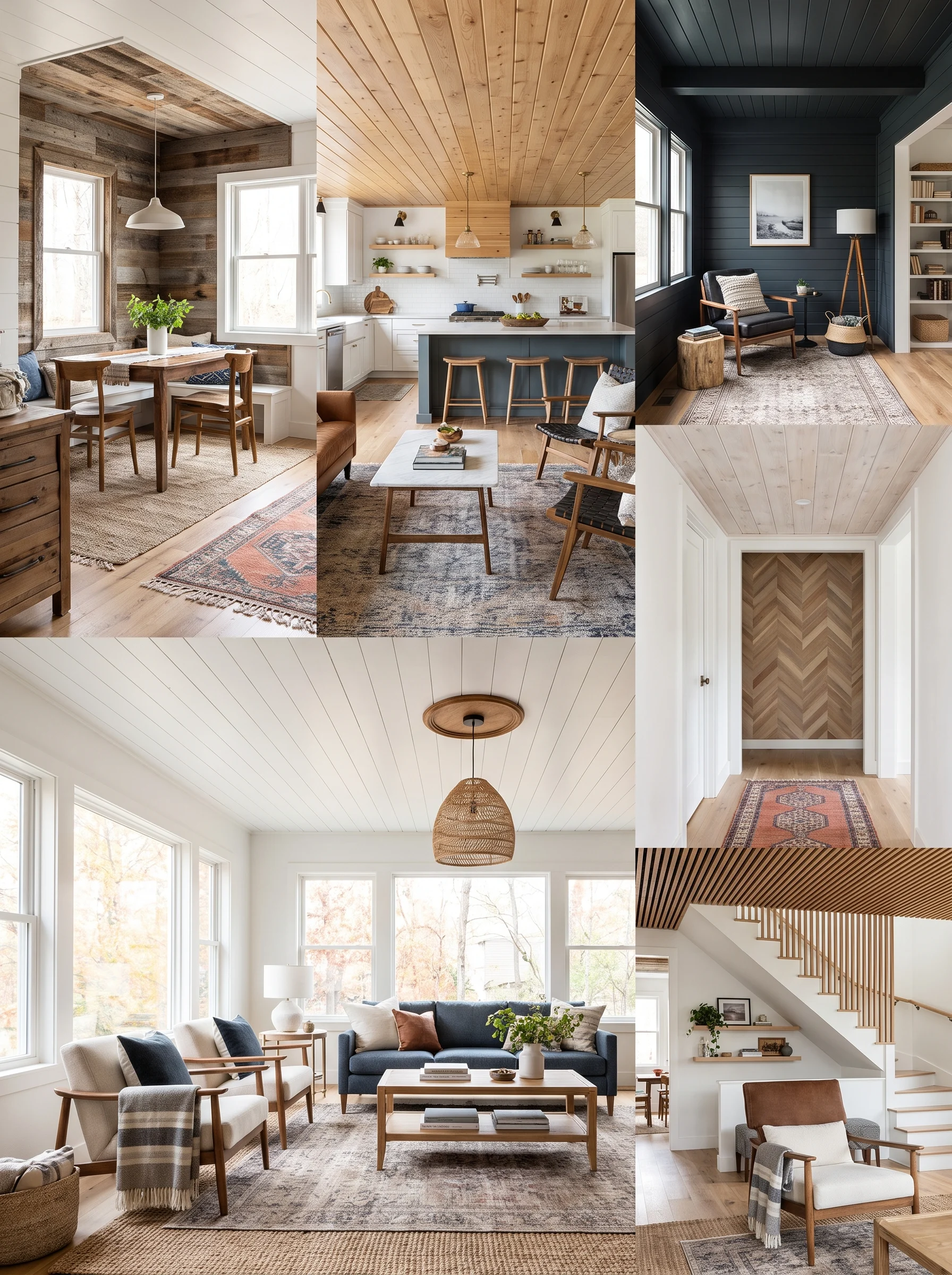
Kitchens have stopped being rooms where we only cook. Mine is where the mail lands, where homework happens, where friends stand with a glass of wine while dinner finishes. That shift is exactly what this year’s kitchen trends reflect — fewer fussy statements, more honest choices about how the space gets used daily. The trends that last aren’t the ones that photograph well for a month; they’re the ones that still feel right three years later. Below are 21 ideas worth considering, from cabinetry colors to storage tricks. Some are weekend projects, others are full renovations — I’ve noted budget and difficulty for each so you can tell them apart at a glance.
1. Warm Wood Cabinetry
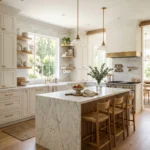
The all-white kitchen is quietly giving way to timber tones — white oak, walnut, warm stained maple. Flat white cabinets can look sterile under cool lighting, while wood grain catches light and shadow in a way that feels alive. I’ve seen small kitchens feel calmer with just a wood island against neutral perimeter cabinets. Tip: start with the island or one pantry wall in oak rather than the whole kitchen — you get the warmth without the commitment. Budget: $$–$$$; difficulty: moderate to hard.
2. Full-Height Stone Backsplashes
Designers are running the same slab from countertop to ceiling instead of stopping at a tile line. The result is seamless and sculptural, and — honestly — eliminating grout lines is reason enough for anyone who’s scrubbed grease off tile. Book-matched slabs behind the range create a dramatic focal point. Tip: ask your fabricator to photograph slabs before cutting so you can choose the veining. Budget: $$$–$$$$; difficulty: hard, pro-only work.
3. Hidden, Panel-Ready Appliances
Refrigerators and dishwashers disguised behind cabinet panels are moving mainstream. The appeal is visual calm: fewer stainless interruptions, more furniture-like cabinetry. This suits open-plan homes best, where the kitchen is always visible from the living area. Tip: plan before ordering cabinets — panel-ready appliances need exact dimensions and hinge clearance, and retrofitting later is painful. Budget: $$–$$$; difficulty: moderate if planned from the start.
4. Unlacquered Brass Hardware
Unlacquered brass develops a soft patina instead of just looking worn — fingerprints and slight darkening read as character, not neglect. It pairs beautifully with deep greens and warm whites alike. Tip: buy one pull and live with it a week before committing; some people adore the patina, others realize they preferred shine, and that’s cheaper to learn with one sample. Budget: $–$$; difficulty: easy — a screwdriver and an afternoon.
5. Double Islands
In large kitchens, a second island is replacing the island-plus-table setup: one island for prep and mess, one for seating and serving. Cooking chaos and guests stop colliding. Tip: you need a genuinely big room — at least 13–14 feet wide — with 42–48 inches of clearance around each island, or walkways choke. Budget: $$$$; difficulty: hard; hire a designer to get circulation right.
6. The Working Pantry
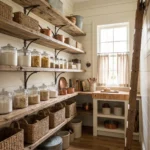
Beyond the walk-in pantry comes the “working pantry”: a back kitchen with a second sink, small appliances, and closed storage. The main kitchen stays pristine while real cooking happens behind a door. Tip: even a deep closet converts well — add shelving, a counter, and a power outlet. You don’t need new construction. Budget: $–$$$; difficulty: easy to moderate.
7. Deep Green Cabinetry
Sage, forest, and olive greens have settled in as the go-to for anyone bored of gray and white. Green reads as neutral but alive, pairing with brass, oak, marble, and black without a fight. Tip: test your green in daylight and evening lamplight — some olives turn muddy under warm bulbs. Paint a large board, not a tiny swatch. Budget: $$ to repaint, $$$$ for new cabinets; difficulty: moderate.
8. Statement Range Hoods
Plastered curves, fluted wood covers, aged copper — the range hood is being treated as sculpture, anchoring the whole kitchen visually. Tip: if custom is out of budget, limewash or micro-cement over a basic plaster hood surround delivers most of the look for a fraction of the cost. Budget: $$–$$$$; difficulty: moderate to hard.
9. Fluted and Reeded Details
Thin vertical grooves on island panels or bar fronts add texture without color or pattern, catching light beautifully. It’s a carpenter’s trick gone mainstream. Tip: fluted MDF panels or adhesive fluted film over flat doors fake this convincingly for far less than custom millwork. Budget: $–$$ for retrofits, $$$ custom; difficulty: easy to moderate.
10. Mixed Countertop Materials
Butcher block on the island where you chop, quartzite on the perimeter, soapstone at a baking station — each material earns its place by how it’s used. Tip: keep the palette tight (all warm or all cool) so the mix reads intentional rather than leftover. Budget: $$–$$$; difficulty: moderate — needs good templating and fabricator coordination.
11. Curated Open Shelving
The trend is one or two well-edited shelves of everyday dishes and a plant — not displaying everything you own. It breaks up long cabinet runs and keeps daily plates within reach. Tip: keep shelves away from the cooktop; grease film is real. Stick to items you use weekly so nothing gathers dust. Budget: $; difficulty: easy — just anchor into studs.
12. Dedicated Coffee Stations
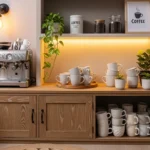
A corner with an espresso machine, mugs, and maybe a small fridge drawer keeps the morning routine — and its clutter — out of the main work zone. Dead corners at the end of cabinet runs are ideal. Tip: include a water line if you can; refilling a machine’s tank gets old fast. Budget: $–$$ plus the machine; difficulty: easy to moderate.
13. Layered Lighting
Three layers is the new standard: bright under-cabinet task lighting, ambient pendants or ceiling lights, and warm accent lighting inside glass cabinets. Dimmers let the kitchen shift from work mode to evening mode. If I could push one upgrade, it’d be this. Tip: 2700K–3000K LED strips under wall cabinets, installed toward the front edge so they wash the counter, not the wall. Budget: $–$$; difficulty: easy to moderate.
14. Appliance Garages
A cabinet with a lift-up or tambour door at counter height hides the toaster, kettle, and stand mixer while keeping them plugged in and reachable. Tip: measure your tallest appliance (usually the stand mixer) before ordering, and add an interior outlet. Budget: $–$$; difficulty: moderate.
15. Breakfast Banquettes
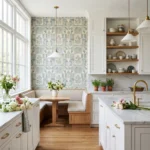
A built-in bench tucked into a bay window or corner seats more people per foot than chairs, and the base hides storage. Families with kids use banquettes far more than formal dining rooms. Tip: upholster in wipeable performance fabric — crumbs and spills are inevitable. Budget: $$–$$$ custom; difficulty: moderate to hard for built-in.
16. Large-Format Tile Flooring
24-inch and larger tiles mean fewer grout lines and more visual flow — small kitchens feel bigger when the eye isn’t interrupted by a grid. Porcelain convincingly mimics marble or concrete. Tip: check the slip rating (R10 or higher) — polished large tiles can be treacherous when wet. Budget: $$–$$$ installed; difficulty: hard — they demand a perfectly flat subfloor.
17. Mixed Metals
Brass faucets with black pulls, a copper pendant over a steel range — the mix works when one metal dominates and the second appears at least twice, so it looks deliberate. Tip: repeat your secondary metal in two spots minimum; a single stray finish looks like a mistake. Budget: $–$$; difficulty: easy.
18. Smarter Storage
Pull-out pantries, corner drawers that use the dead space, toe-kick drawers, dividers sized for your actual pots — storage design has gotten forensic. I’ve seen more kitchen satisfaction come from a good drawer stack than from any paint color. Tip: measure your pots and tallest bottles first, then choose inserts to fit them. Budget: $–$$ aftermarket, $$$ built-in; difficulty: easy to moderate.
19. Matte Black Accents
Used sparingly — a faucet, pendants, window frames — matte black adds crisp definition. It grounds light kitchens and punches up dark ones. Tip: choose powder-coated or quality matte finishes; cheap black paint chips within a year. Budget: $–$$; difficulty: easy.
20. The Reimagined Butler’s Pantry
A separate room for dirty work is back, minus the formality: second dishwasher, open shelving for good dishes, a staging area for dinner parties out of sight. It thrives in homes that entertain. Tip: a hallway or laundry room adjacent to the kitchen is your candidate space — plumbing access matters more than square footage. Budget: $$–$$$$; difficulty: moderate to hard.
21. Living Finishes
Marble that etches, brass that darkens, soapstone that deepens with use — there’s a growing embrace of materials that record your life instead of resisting it. Tip: this is a mindset choice. If stains will keep you up at night, choose honed quartzite or sealed stone instead of true marble. Budget: $$–$$$; difficulty: moderate.
Kitchen Trends at a Glance
| Trend | Budget | Difficulty |
|---|---|---|
| Warm wood cabinetry | $$–$$$ | Moderate–Hard |
| Full-height stone backsplash | $$$–$$$$ | Hard |
| Panel-ready appliances | $$–$$$ | Moderate |
| Unlacquered brass hardware | $–$$ | Easy |
| Double islands | $$$$ | Hard |
| Working pantry | $–$$$ | Easy–Moderate |
| Deep green cabinetry | $$–$$$$ | Moderate |
| Statement range hoods | $$$–$$$$ | Moderate–Hard |
| Fluted and reeded details | $–$$$ | Easy–Moderate |
| Mixed countertop materials | $$–$$$ | Moderate |
| Curated open shelving | $ | Easy |
| Coffee stations | $–$$ | Easy–Moderate |
| Layered lighting | $–$$ | Easy–Moderate |
| Appliance garages | $–$$ | Moderate |
| Breakfast banquettes | $$–$$$ | Moderate–Hard |
| Large-format tile flooring | $$–$$$ | Hard |
| Mixed metals | $–$$ | Easy |
| Smarter storage | $–$$$ | Easy–Moderate |
| Matte black accents | $–$$ | Easy |
| Reimagined butler’s pantry | $$–$$$$ | Moderate–Hard |
| Living finishes | $$–$$$ | Moderate |
How to Choose the Right Trends for Your Kitchen
Start with how you actually use the room, not a mood board. A household that orders in most nights needs different things than one that cooks daily — the first benefits from visual trends like lighting and surfaces, the second from storage, pantry, and work-zone ideas. Next, be honest about your timeline: if you’re selling within three years, lean toward broadly appealing choices like warm wood, layered lighting, and brass hardware, and skip the double island. Budget-wise, the best impact-per-dollar moves are hardware, lighting, and paint — do those first and live with them a month before committing to stone or cabinetry. And limit yourself to two or three statement trends per kitchen. A fluted island, a stone backsplash, and green cabinets in one room will fight each other — pick your lead actor and let everything else support it.
Frequently Asked Questions
Which kitchen trends add the most resale value? Quality lighting, warm neutral cabinetry, stone surfaces, and good storage. Bold personal choices help you enjoy the house more than they help you sell it.
What should I avoid in a small kitchen? Double islands, full-height dark stone, and heavy fluting can shrink the room visually. Try large-format light flooring, wood on the island only, one open shelf, and layered lighting instead.
How much does a trendy kitchen renovation cost? A cosmetic refresh (paint, hardware, lighting, backsplash) runs $5,000–$15,000. A mid-range full renovation is typically $30,000–$75,000; high-end projects climb past $100,000. Costs vary enormously by region.
Are white kitchens out of style? Not out — just no longer the default. Warm whites (not stark blue-whites) still look clean and sell well; fewer people choose white simply because it felt like the only safe option.
What’s the easiest trend to try this weekend? Swapping cabinet hardware to brass or matte black takes an afternoon. Adding plug-in LED strips under wall cabinets is a close second — cheap, renter-friendly, and dramatic after dark.
Do open shelves work in real kitchens? One or two shelves of daily-use dishes near the dishwasher work beautifully. Filling every wall with styled shelving is a maintenance hobby, not a design choice — grease and dust are real.
How do I mix metals without it looking wrong? Pick a dominant metal (about 70%) and a secondary one (30%), and repeat the secondary at least twice. Keep finishes in the same warmth family.
Final Thoughts
Trends are a menu, not a mandate. The kitchens people love longest aren’t the ones that nailed every trend in a given year — they’re the ones where two or three well-chosen ideas fit how the household cooks and gathers. Pick the trends that solve a real problem, skip the rest without guilt, and spend the savings on the best lighting you can afford.