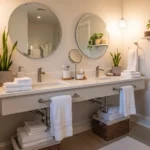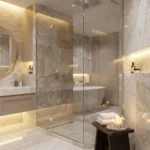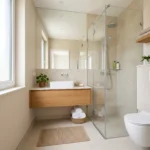
Bathrooms are one of those spaces people often ignore until they suddenly feel impossible to look at. Maybe the tiles feel outdated, the storage is awkward, or the entire room just looks dull no matter how clean it is. The frustrating part is that bathroom renovations are expensive fast. Even small upgrades can spiral into plumbing costs, contractor fees, and “while we’re at it” purchases that destroy a budget.
But here’s something most people realize too late: a bathroom does not need a full remodel to feel fresh, stylish, and comfortable. In fact, some of the best bathroom upgrades are surprisingly inexpensive because they focus on visual impact instead of structural changes. Small details like lighting, textiles, paint, organization, and hardware can completely shift how the room feels without touching the plumbing or layout.
Budget decorating works best when you stop thinking like a renovator and start thinking like a stylist. The goal is not to fake luxury or copy a showroom bathroom perfectly. The goal is to make the space feel cleaner, brighter, calmer, and more intentional using affordable changes that actually improve daily use.
In this guide, you’ll learn practical and realistic ways to decorate a bathroom on a tight budget. These are not complicated DIY projects that require advanced skills or expensive tools. Instead, they are smart ideas that create noticeable results while staying affordable, renter-friendly in many cases, and easy to maintain.
1. Start With Fresh Paint Before Buying Anything Else
A bathroom can feel ten years newer with nothing more than fresh paint. It sounds basic, but paint changes how light reflects in the room, how clean the surfaces look, and how large the space feels. When people try to decorate without repainting old walls first, even expensive accessories can still look tired against faded or yellowed paint.
Light neutral shades usually work best in small bathrooms because they bounce light around the room. Soft white, warm beige, pale gray, or muted sage green are reliable choices that do not feel trendy in a bad way. Dark colors can work too, but only if the bathroom gets enough natural or layered lighting.
This works especially well in apartments, guest bathrooms, and older homes where the fixtures may stay outdated for a while. Paint helps tie everything together visually without needing major changes.
Use moisture-resistant bathroom paint whenever possible. Bathrooms collect humidity fast, and cheap flat paint can peel or stain over time. Avoid overly bright whites because they can make older tiles look yellow.
The biggest benefit is psychological. A freshly painted bathroom immediately feels cleaner and more cared for. Even if the sink and floor remain the same, the room starts feeling intentional instead of neglected.
2. Replace Old Hardware for an Instant Upgrade
One of the fastest ways to modernize a bathroom cheaply is replacing hardware. Old cabinet handles, towel hooks, toilet paper holders, and faucet accents often make the room look older than it really is.
The reason this works is simple: hardware acts like jewelry for the room. Small metal details catch attention more than people realize. Swapping mismatched chrome pieces for matte black, brushed nickel, or warm brass instantly creates a more coordinated look.
This idea works best in bathrooms with decent cabinets and fixtures that do not actually need replacing yet. Instead of spending hundreds on a vanity, changing the handles might deliver enough improvement to delay a renovation entirely.
Keep finishes consistent. Mixing too many metals usually makes budget bathrooms look chaotic instead of curated. If you choose matte black cabinet handles, try to repeat black in the mirror frame or light fixture too.
Installation is usually beginner-friendly. Most hardware swaps only require a screwdriver and about an hour of work.
In daily life, updated hardware simply makes the bathroom feel newer every time you use it. Even opening drawers feels smoother and cleaner when the details look intentional.
3. Use Better Lighting Instead of More Decorations
A badly lit bathroom will always feel less inviting, no matter how nicely decorated it is. Good lighting makes small bathrooms feel larger, cleaner, and more expensive without adding clutter.
Many budget bathrooms rely on one harsh overhead bulb that creates shadows and makes the room feel cold. Replacing outdated light fixtures or even just changing the bulbs can completely improve the atmosphere.
Warm white bulbs usually create the best balance. They soften the room while still being bright enough for makeup, shaving, or skincare. Avoid overly blue-toned lighting because it makes bathrooms feel clinical.
This works especially well in windowless bathrooms where lighting becomes the main design feature. Layered lighting around mirrors is ideal because it reduces harsh facial shadows and makes the room feel professionally designed.
If replacing fixtures is not possible, consider stick-on LED lighting around mirrors or under shelves. Even small lighting upgrades add depth and comfort.
One common mistake is choosing decorative lighting that is too dim. Bathrooms still need functional brightness first.
A better-lit bathroom feels calmer during busy mornings and more relaxing at night. That daily comfort matters more than decorative trends people barely notice after a week.
4. Add a Large Mirror to Make the Space Feel Bigger
Mirrors are one of the oldest interior design tricks because they genuinely work. A larger mirror reflects light, expands visual space, and makes cramped bathrooms feel more open almost instantly.
Small builder-grade mirrors often make bathrooms feel unfinished. Replacing them with a larger framed mirror adds style without requiring structural changes.
This idea works particularly well in tiny bathrooms, powder rooms, or narrow apartment spaces where natural light is limited.
Black frames create a modern look, wood frames feel warmer and softer, and gold frames can add elegance without overwhelming the room. Choose a style that matches the bathroom hardware for a more cohesive design.
Avoid mirrors that are too decorative if the bathroom is already visually busy. Simpler shapes usually look more expensive in smaller spaces.
If replacing the mirror is not possible, even framing an existing mirror with peel-and-stick trim can improve the look dramatically.
In real life, larger mirrors also make everyday routines easier. Better visibility during grooming, skincare, or makeup is practical, not just decorative.
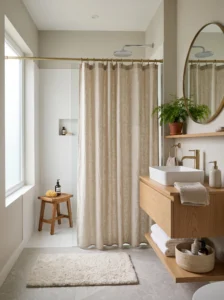
5. Upgrade Your Shower Curtain Like It’s a Wall
People underestimate how much visual space a shower curtain takes up. In many bathrooms, it is basically an entire wall. A cheap or outdated curtain can drag down the entire room.
A better shower curtain instantly changes the mood without requiring renovation. Linen-look fabrics, waffle textures, subtle stripes, or soft neutral colors usually look far more expensive than plastic printed designs.
This works best in bathrooms where the bathtub or tile cannot easily be upgraded. The curtain becomes the focal point instead.
Hang the curtain slightly higher than the standard rod position if possible. This creates the illusion of taller ceilings and makes the bathroom feel more spacious.
Use a fabric curtain with a liner instead of a thin plastic-only curtain. It hangs better and gives the room a softer hotel-style feel.
Avoid curtains with overly busy patterns unless the bathroom itself is very plain.
A nicer shower curtain changes the experience of the room more than people expect because it affects the entire visual atmosphere every single day.
6. Bring in Storage That Looks Decorative
Bathroom storage often becomes messy because people focus only on function. But affordable storage can also improve the overall design.
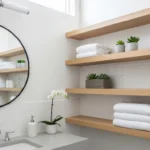
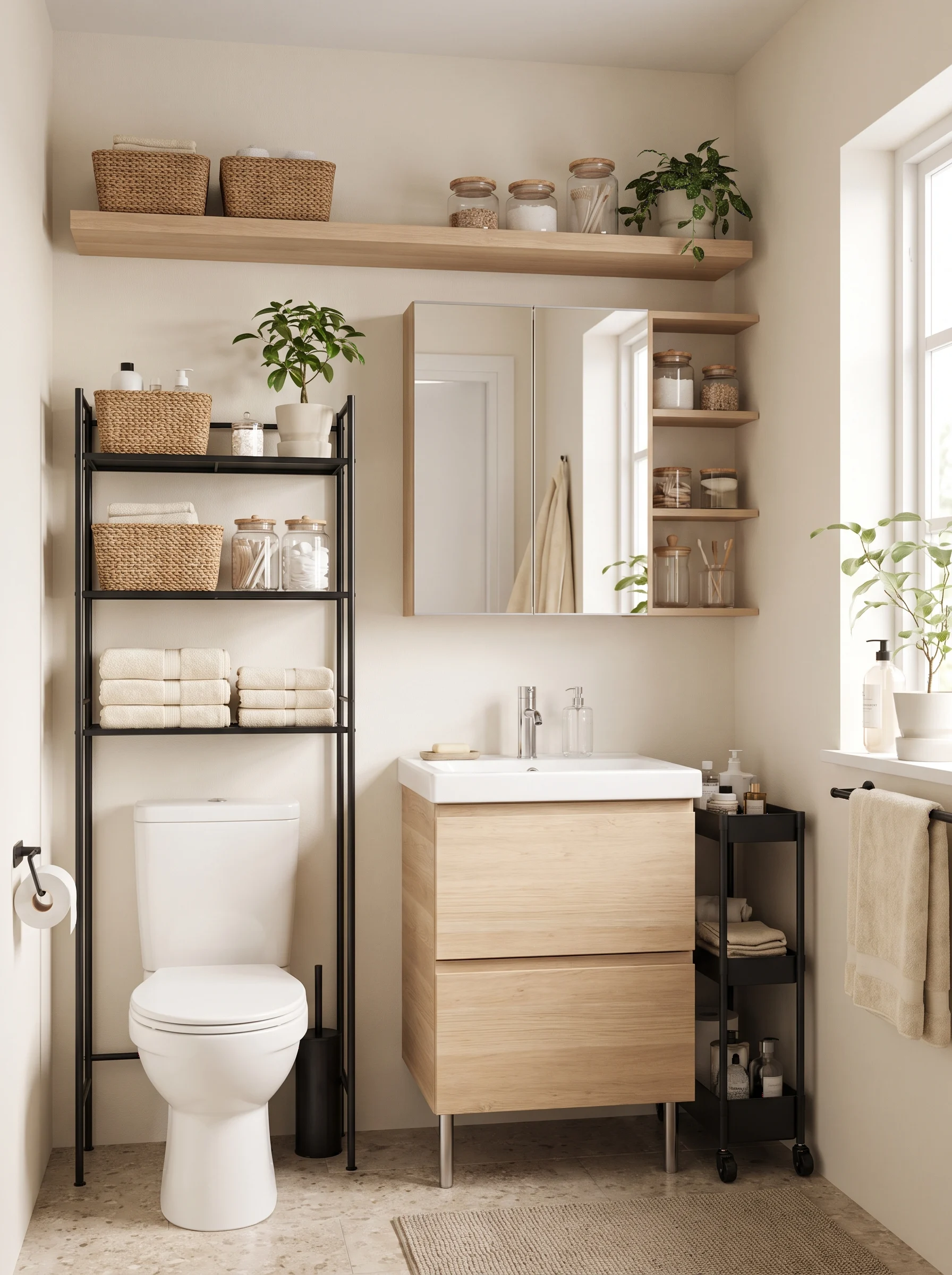
Open shelves, baskets, trays, and glass jars help organize daily essentials while making the room feel styled instead of cluttered.
This idea works especially well in small bathrooms with limited cabinet space. Vertical storage can free up counters without requiring renovations.
Wood shelves warm up bathrooms filled with tile and porcelain. Woven baskets soften hard surfaces and hide visual clutter effectively.
Keep frequently used items accessible while hiding less attractive products. Cotton swabs, soaps, and bath salts look cleaner in matching containers than in colorful packaging.
The biggest mistake is overcrowding shelves with decorative objects that collect dust. Bathrooms need breathing room visually.
Good storage improves daily routines because the room feels easier to maintain. A bathroom that stays organized naturally feels more expensive and relaxing.
7. Use Peel-and-Stick Wallpaper Carefully
Peel-and-stick wallpaper has improved dramatically in recent years. When used strategically, it can make a bathroom feel custom-designed on a very small budget.
The key word is strategically. Covering every wall in a tiny bathroom with a loud print can feel overwhelming fast. Instead, use wallpaper on one accent wall or behind the vanity.
This works best in powder rooms or guest bathrooms where you can be slightly bolder with style choices.
Subtle botanical prints, textured neutrals, or simple geometric patterns usually age better than trendy graphics.
Make sure the surface is smooth and dry before applying wallpaper. Humidity-resistant options are worth the extra cost in bathrooms.
Avoid placing peel-and-stick wallpaper directly inside shower areas unless specifically designed for wet environments.
A thoughtfully chosen wallpaper adds personality without requiring expensive tile work. It makes the bathroom feel customized rather than temporary.
8. Swap Out Old Textiles for Softer Layers
Sometimes a bathroom feels cheap simply because the towels and bath mats look worn out. Textiles add softness, warmth, and color faster than almost any other budget upgrade.
Fresh towels in coordinated colors immediately create a cleaner, more hotel-like feel. White towels always look timeless, but earthy neutrals and muted greens also work beautifully.
This idea works in every bathroom size because textiles are functional and decorative at the same time.
Choose bath mats with some texture rather than extremely thin options that slide around. Cotton and memory foam styles usually feel more comfortable daily.
Do not overload the room with too many colors. Bathrooms feel calmer when textiles follow a simple palette.
One overlooked detail is matching hand towels. Coordinated linens quietly make the bathroom look more intentional.
Soft textiles genuinely improve daily comfort. Stepping onto a plush bath mat or reaching for a fresh towel changes how the room feels emotionally, not just visually.
9. Decorate the Countertops With Restraint
A cluttered countertop makes even expensive bathrooms feel chaotic. Budget bathrooms especially benefit from simplifying what stays visible.
The best bathroom counters usually contain only a few practical but attractive items. A soap dispenser, small tray, candle, plant, or toothbrush holder is often enough.
This works best in small bathrooms where visual clutter builds up quickly.
Use trays to group items together. Even inexpensive products look cleaner when organized intentionally.
Neutral containers usually look more expensive than brightly colored plastic packaging. Refillable dispensers can elevate the entire sink area cheaply.
Avoid decorating every corner. Empty space matters just as much as accessories.
In everyday life, cleaner counters are easier to wipe down and maintain. That practical benefit often matters more than the decorative improvement itself.
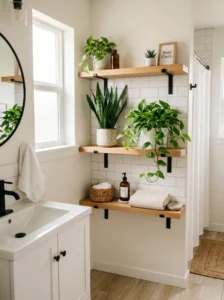
10. Add Plants That Actually Survive Bathrooms
Bathrooms can feel cold because they contain so many hard surfaces. Plants soften the room instantly and add natural texture without major expense.
The trick is choosing plants that tolerate humidity and lower light conditions. Snake plants, pothos, ZZ plants, and ferns usually perform well in bathrooms.
This works especially well in apartments or bathrooms with limited decorative opportunities.
Small plants on shelves or counters are enough. Overcrowding a tiny bathroom with greenery can make it feel messy instead of relaxing.
Use simple pots in neutral tones for a cleaner look.
If the bathroom lacks natural light entirely, realistic faux plants are honestly better than struggling real ones.
Plants subtly improve the atmosphere because they break up all the ceramic, glass, and metal surfaces. Even one small plant can make a bathroom feel calmer and more alive.
11. Frame Cheap Art Prints for Personality
Bathrooms often feel unfinished because the walls are empty. Affordable framed art adds personality without requiring renovation.
Black-and-white photography, minimalist sketches, abstract prints, or vintage-style botanical art usually work well in bathrooms.
This idea is especially useful in rental spaces where major upgrades are restricted.
Choose moisture-resistant frames if possible. Bathrooms are humid environments, and cheap paper can warp over time.
Do not hang art too high. Eye-level placement feels more balanced and intentional.
Avoid overly tiny artwork unless grouping several pieces together gallery-style.
Art makes bathrooms feel less purely functional. It creates the feeling that someone actually designed the room instead of simply assembling necessities.
12. Update the Faucet if Your Budget Allows One Bigger Change
If there is room for one slightly larger upgrade, changing the faucet often delivers major impact for relatively little money.
Faucets sit directly at eye level near the vanity, so outdated styles become very noticeable. A cleaner, modern faucet instantly refreshes the sink area.
This works best when the vanity itself is still usable but looks dated.
Matte black and brushed nickel remain versatile choices that fit many bathroom styles.
Make sure the faucet fits the sink configuration correctly before purchasing. Measuring first prevents expensive mistakes.
Avoid choosing trendy shapes that sacrifice water flow or comfort.
A better faucet improves daily use constantly. Turning on a sturdy, smooth faucet genuinely makes the bathroom feel newer every day.
13. Use Contact Paper to Refresh Surfaces
Contact paper can surprisingly improve countertops, shelves, or vanity surfaces when replacements are not financially realistic.
Modern marble-look, stone-look, or wood-look options appear far better than older versions people remember.
This works especially well in rentals because many contact papers remove cleanly later.
Preparation matters. Surfaces must be clean and smooth before application.
Avoid overly glossy finishes that can look artificial under bathroom lighting.
Contact paper is best for temporary visual improvement rather than permanent durability.
Still, it can dramatically improve older laminate surfaces for a fraction of replacement costs. That visual refresh often buys time before a future renovation.
14. Create a Consistent Color Palette
A bathroom starts looking more expensive when the colors feel intentional instead of random.
Many budget bathrooms feel chaotic because every accessory was purchased separately over time without a plan. Matching tones instantly creates visual calm.
This works in any bathroom size or style.
Choose two main colors and one accent tone. For example: white, beige, and matte black. Or soft gray, wood tones, and sage green.
Repeat those colors across towels, storage, artwork, and accessories.
Avoid introducing too many bright colors unless the goal is a playful style.
A coordinated palette helps the room feel cleaner and more balanced. Even inexpensive products look better when they visually connect with each other.
15. Focus on Cleanliness as Part of the Design
The uncomfortable truth is that no decorating trick can fully overcome a bathroom that feels dirty or neglected.
Clean grout, polished mirrors, fresh caulk, and organized surfaces often improve a bathroom more than buying new decor.
This works especially well before guests visit or before spending money unnecessarily.
Replace stained shower liners, scrub tile buildup, and remove expired products hiding under the sink.
One common mistake is adding decorations before fixing obvious maintenance problems.
A clean bathroom naturally feels brighter, newer, and more relaxing. Sometimes the biggest design improvement is simply making the room easier to maintain consistently.
Comparison Table
| Type | Best Use | Material | Style/Vibe | Difficulty Level |
|---|---|---|---|---|
| Large Mirror | Small bathrooms | Glass + wood/metal frame | Modern and spacious | Easy |
| Peel-and-Stick Wallpaper | Accent walls | Vinyl | Bold or stylish | Medium |
| Open Shelving | Storage and decor | Wood or metal | Warm and organized | Medium |
| New Shower Curtain | Quick visual refresh | Fabric/linen blend | Soft hotel-style | Easy |
| Updated Hardware | Modernizing old vanities | Metal | Clean and polished | Easy |
| Contact Paper | Refreshing surfaces | Vinyl adhesive | Budget makeover | Medium |
Buying Guide: How to Choose Budget Bathroom Decor Wisely
Decorating a bathroom on a budget works best when you focus on smart choices instead of buying everything at once. Many people waste money by purchasing random accessories that look nice individually but do not improve the room overall. A better approach is choosing upgrades that balance function, durability, and visual impact.
Start by thinking about scale and sizing. Small bathrooms become cramped quickly when oversized shelves, bulky cabinets, or giant decor pieces are added. Measure carefully before buying anything. Floating shelves usually work better than deep cabinets in tight spaces because they keep the room visually open. Likewise, shower curtains should reach close to the floor for a taller, more polished appearance.
Material choices matter more in bathrooms than in many other rooms because moisture is constant. Cheap metal can rust, low-quality wood can swell, and thin fabrics wear out quickly. Moisture-resistant paint, rust-resistant hardware, washable textiles, and vinyl wallpaper tend to last longer in humid environments.
Maintenance is another important factor people ignore. Open shelving looks great online, but if you dislike cleaning dust or organizing products regularly, closed storage may fit your lifestyle better. Decorative items should make the bathroom easier to enjoy, not harder to maintain.
Budget planning also matters. Instead of spending small amounts on ten weak upgrades, choose two or three changes with noticeable impact. Paint, lighting, mirrors, and textiles usually give the best visual return for the money.
Finally, avoid trying to copy luxury bathrooms exactly. Expensive bathrooms often have larger layouts, custom storage, and natural lighting that cannot realistically be recreated cheaply. Focus instead on creating a clean, cohesive, comfortable space that fits your actual daily routine.
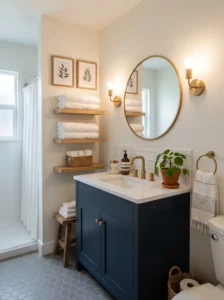
Conclusion
Decorating a bathroom on a tight budget is really about learning where small changes create the biggest difference. You do not need marble counters, custom cabinets, or a full renovation to make the room feel cleaner, brighter, and more inviting. In many cases, thoughtful styling works better than expensive remodeling because it focuses on how the bathroom actually feels to use every day.
Simple upgrades like fresh paint, improved lighting, better textiles, coordinated colors, and organized storage can completely shift the atmosphere of the room. The key is avoiding clutter and choosing improvements that work together instead of competing for attention.
Budget decorating also becomes easier when you stop chasing perfection. A bathroom does not need to look like a luxury hotel to feel comfortable and stylish. It just needs to feel intentional, functional, and well-maintained.
Start with one or two high-impact updates first. Once the room begins feeling fresher and more organized, it becomes much easier to decide what else actually needs changing. Often, the biggest transformation comes from making smarter choices rather than spending more money.
FAQs
1. What is the cheapest way to make a bathroom look better?
Fresh paint, a new shower curtain, and updated towels usually create the biggest improvement for the lowest cost. These changes affect large visual areas, so the bathroom immediately feels cleaner and more modern without renovation work.
2. Can I decorate a rental bathroom without damaging it?
Yes. Peel-and-stick wallpaper, removable shelves, decorative storage, shower curtains, and temporary lighting upgrades work well in rentals. Always check whether adhesive products are safe for your wall surfaces first.
3. What colors make a small bathroom feel larger?
Light neutrals like white, soft gray, beige, and pale sage green usually help reflect light and visually expand the room. Consistent colors also reduce visual clutter, making small bathrooms feel calmer.
4. Are peel-and-stick tiles worth it for bathrooms?
They can work well for temporary cosmetic improvements, especially in rentals or older bathrooms. However, quality matters. Cheaper options may peel in humid conditions if surfaces are not prepared properly.
5. How do I make my bathroom look expensive on a budget?
Focus on coordination instead of quantity. Matching hardware finishes, layered lighting, clean countertops, soft textiles, and organized storage often create a more expensive appearance than buying lots of decorations.
6. What should I avoid in a small bathroom?
Avoid oversized decor, too many colors, cluttered countertops, and bulky storage units. These make small bathrooms feel tighter and less functional.
7. How often should bathroom textiles be replaced?
Towels and bath mats should usually be refreshed every couple of years depending on quality and use. Worn textiles quickly make the bathroom feel older and less clean overall.
8. Is updating hardware really worth the money?
Yes. Cabinet handles, towel bars, and faucets are highly visible details. Even inexpensive replacements can modernize the bathroom surprisingly fast without major renovation costs.