Most kitchens don’t actually lack space — they lack smart storage. That’s the frustrating part. You open a cabinet and things fall out. Your counters stay cluttered no matter how often you clean them. And somehow, the kitchen drawer becomes a graveyard for takeout menus, random lids, batteries, and scissors that disappeared three months ago.
A full kitchen renovation sounds appealing until you look at the price tag, the mess, and the reality of living without a functioning kitchen for weeks. The good news is that you don’t need to tear out cabinets or hire contractors to make your kitchen work better. In many cases, the biggest improvements come from small storage upgrades that use space more efficiently.
The key is learning how to use overlooked areas: vertical walls, cabinet doors, awkward corners, empty gaps beside appliances, and even the space above your fridge. A well-organized kitchen doesn’t just look cleaner — it changes how the room feels to use every day. Cooking becomes easier, counters stay clearer, and you stop buying duplicate items because you can finally see what you already own.
In this guide, you’ll learn practical, realistic ways to add storage to your kitchen without renovation. These ideas work for small apartments, rental kitchens, older homes, and even kitchens that already have decent cabinet space but still feel crowded. Every idea is affordable, functional, and designed for real daily life — not just Pinterest photos.
1. Use Vertical Wall Shelving
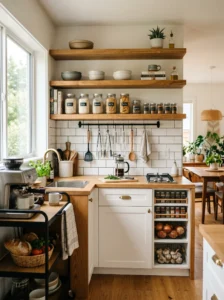
One of the biggest storage mistakes people make is ignoring empty wall space. Kitchens naturally run out of horizontal room first, but vertical space often stays completely unused. Open shelving instantly adds storage without changing the structure of the kitchen.
This works especially well in small kitchens where cabinets stop several inches below the ceiling or where blank walls sit above countertops. Floating wood shelves create warmth, while metal shelves give a more modern or industrial feel. The important thing is keeping the shelves practical instead of overcrowded.
Use them for everyday dishes, glass jars, spices, cookbooks, or attractive pantry items. Heavier items should stay on lower shelves for easier access. Avoid placing shelves too close to the stove where grease buildup becomes annoying to clean.
A simple styling trick is mixing practical items with a few decorative pieces so the shelves don’t feel cluttered. For example, stack white plates beside a small plant or wooden cutting board.
In daily life, wall shelving reduces the need to constantly open cabinets while cooking. It also makes smaller kitchens feel more open because bulky upper cabinets visually disappear.
2. Add a Rolling Kitchen Cart
A rolling cart is basically extra counter space and extra storage combined. That’s why it works so well in kitchens without enough cabinets or prep areas.
Unlike built-in islands, a rolling cart can move wherever you need it. In tight kitchens, flexibility matters more than permanent furniture. You can use it beside the stove while cooking, move it against a wall afterward, or even roll it into another room during gatherings.
Metal utility carts are practical for renters because they’re lightweight and affordable. Wooden carts feel more furniture-like and blend better into traditional kitchens. Look for carts with shelves, hooks, or drawers for maximum usefulness.
The best place for a cart is usually an underused corner or an empty wall section. Just make sure there’s enough walking space around it. Oversized carts can make small kitchens feel cramped very quickly.
Use the bottom shelves for heavier appliances like air fryers or mixers. The top surface works well for meal prep or coffee stations. Hooks on the sides can hold towels or utensils.
What surprises most people is how much calmer the kitchen feels once appliances leave the countertops. Suddenly, there’s room to actually cook without constantly shifting things around.
3. Install Cabinet Door Organizers
Cabinet doors are hidden storage opportunities that most people never use. Once you start using them properly, it feels wasteful not to.
The inside of cabinet doors works perfectly for lightweight items like cutting boards, foil boxes, measuring spoons, cleaning supplies, or spice racks. Thin wire organizers are ideal because they don’t interfere with cabinet closing.
This idea works particularly well in smaller kitchens where drawer space disappears quickly. Under-sink cabinets benefit the most because cleaning products tend to become messy and difficult to reach.
The main mistake people make is overloading the doors with heavy items. Too much weight eventually strains hinges and makes cabinets feel unstable. Stick to slim, lighter storage solutions.
Adhesive organizers work well for renters who can’t drill holes. Permanent mounted racks are sturdier for long-term homes.
A small upgrade like this changes daily routines more than expected. Instead of digging through crowded drawers, you instantly know where small kitchen essentials are located. It’s one of those storage improvements that quietly saves time every single day.
4. Use Clear Pantry Containers
A cluttered pantry wastes more space than people realize. Half-empty bags, awkward boxes, and mismatched packaging create visual chaos and make shelves inefficient.
Clear storage containers solve two problems at once: they maximize shelf space and help you see exactly what you have. Square or rectangular containers work best because they stack neatly without wasted gaps.
This works especially well for dry goods like rice, flour, cereal, pasta, snacks, and baking ingredients. Uniform containers immediately make pantries feel more organized even if the shelves themselves are basic.
Glass containers look beautiful but can become heavy in large quantities. BPA-free plastic versions are lighter and often more practical for families with children.
Labeling matters more than aesthetics here. Even simple handwritten labels prevent confusion and help everyone in the house maintain the system.
One underrated benefit is reducing food waste. When ingredients stay visible, they’re more likely to get used before expiring. People often discover they already own three bags of pasta simply because pantry storage was disorganized before.
5. Add Over-the-Fridge Storage
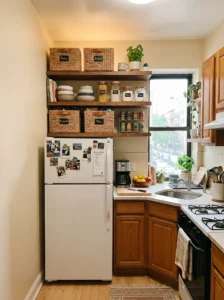
The area above the refrigerator often becomes random dead space or a collection point for things nobody uses. But when organized intentionally, it can store a surprising amount.
Large baskets or bins work best here because they keep items contained and visually tidy. This space is ideal for less frequently used items like serving platters, seasonal baking tools, extra paper towels, or bulk pantry goods.
Avoid storing everyday essentials overhead since reaching them constantly becomes annoying. Also, be mindful of heat from the refrigerator. Some foods and delicate items won’t do well there.
Matching baskets instantly make this area look cleaner and more deliberate. Woven baskets create warmth, while black metal or white containers feel more modern.
In smaller kitchens, this trick frees up valuable lower cabinet space for items you actually use daily. It also prevents awkward stacking inside crowded cabinets where things become difficult to access.
The key is treating the area like real storage instead of a dumping zone. Once organized properly, it feels like an extension of the kitchen rather than forgotten space.
6. Use Magnetic Storage on Appliances
Refrigerators and metal surfaces can do more than hold family photos and grocery lists. Magnetic storage accessories add surprisingly functional organization without taking up counter or cabinet space.
Magnetic spice racks are especially useful in compact kitchens. They keep seasonings visible and accessible while freeing cabinet shelves. Magnetic paper towel holders, utensil containers, and knife strips also work extremely well.
This idea works best in apartments or rentals because installation requires no drilling or permanent changes. It’s also ideal for kitchens with very limited wall space.
The biggest mistake is overcrowding the refrigerator with too many accessories. Keep it practical and visually balanced. Too many magnetic organizers can quickly start looking messy.
Black matte finishes blend nicely into modern kitchens, while white storage blends into lighter appliances for a cleaner appearance.
Functionally, magnetic storage improves workflow during cooking. Frequently used items stay within arm’s reach instead of hidden in drawers. It’s a small convenience that makes busy kitchens feel easier to use.
7. Add Under-Shelf Baskets
Cabinet shelves usually waste vertical space because items only occupy the bottom half. Under-shelf baskets solve that problem instantly.
These slide onto existing shelves and create an extra storage layer underneath. They’re perfect for storing mugs, wraps, napkins, plates, or snack bags without requiring installation.
This works especially well in rental kitchens because it’s completely removable. Smaller kitchens benefit the most since every inch of cabinet space matters.
Wire baskets feel lightweight visually and prevent cabinets from feeling bulky. White or black finishes tend to look cleaner than shiny chrome.
Placement matters here. Avoid overfilling baskets because crowded shelves quickly become frustrating. Leave enough room to slide items in and out comfortably.
One practical advantage is better visibility. Instead of stacking items dangerously high, everything becomes easier to access. Daily kitchen routines feel smoother simply because you stop moving five things to grab one.
8. Create a Pegboard Storage Wall
Pegboards aren’t just for garages anymore. In kitchens, they create flexible storage that adapts over time.
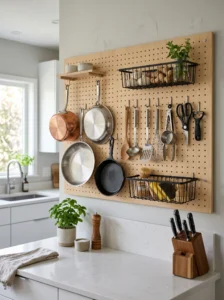
A pegboard wall can hold pots, utensils, pans, scissors, measuring cups, and even small baskets. Because hooks can move easily, the setup stays customizable as your needs change.
This idea works beautifully in small kitchens with limited drawer space. It also fits well in modern, farmhouse, or industrial-style kitchens depending on the color and accessories used.
Painted pegboards help them blend into the room instead of looking overly utilitarian. Soft neutrals, black, or muted green tones work especially well.
The key is keeping the arrangement intentional. Too many hanging items can look chaotic quickly. Leave some breathing room between objects.
From a practical standpoint, pegboards reduce drawer clutter and make cooking tools easier to grab while preparing meals. It creates a kitchen that feels active and functional rather than overcrowded.
9. Use Stackable Shelf Risers
Kitchen cabinets often waste height because plates or bowls are stacked in single layers. Shelf risers create a second level instantly.
These simple organizers work well for dishes, canned goods, mugs, spices, or pantry items. Metal risers feel sturdy, while bamboo versions add warmth and softness visually.
They’re especially useful in deep cabinets where items normally disappear into the back. By creating levels, everything becomes easier to see and reach.
One common mistake is buying oversized risers without measuring cabinet height first. Always leave enough room for taller items above and below.
Shelf risers improve organization without making cabinets feel heavily structured or complicated. Sometimes the simplest storage upgrades are the ones that genuinely last because they’re easy to maintain.
10. Add Hooks Under Cabinets
The underside of upper cabinets is usually ignored completely, which makes it valuable storage territory in smaller kitchens.
Small adhesive or screw-in hooks can hold mugs, utensils, measuring cups, or even lightweight pans. Mug storage works particularly well because it frees up significant cabinet space surprisingly fast.
This works best near coffee stations, prep areas, or corners where hanging items won’t interfere with movement.
Matte black hooks create a cleaner, more intentional appearance than bright metallic finishes. Spacing also matters — overcrowded hooks look messy quickly.
A practical benefit is improving accessibility during busy mornings or cooking sessions. Frequently used items become easier to grab, and cabinets stay less crowded overall.
It’s a tiny upgrade that quietly makes kitchens function more efficiently every day.
11. Turn Awkward Corners Into Storage Zones
Kitchen corners often become wasted dead space simply because they’re awkward to use. But with the right setup, corners can become highly functional storage areas.
Corner shelving, slim carts, or triangular cabinets help maximize these overlooked spots. Even a simple corner bench with hidden storage underneath can add useful space.
This works especially well in apartment kitchens or older homes where layouts weren’t designed with modern storage needs in mind.
The important thing is scale. Oversized furniture makes corners feel cramped instead of useful. Slim, vertical pieces usually work best.
Decoratively, corners feel softer when storage includes texture — woven baskets, wood shelves, or warm lighting help prevent the area from feeling purely functional.
Once organized intentionally, corners stop collecting clutter and start contributing to the overall kitchen flow.
12. Use Drawer Dividers Everywhere
Messy drawers waste more time than people realize. Drawer dividers instantly create structure and prevent kitchen tools from becoming tangled chaos.
They work well for utensils, spices, food containers, wraps, and even junk drawers. Adjustable dividers are usually more practical because kitchen needs change over time.
Bamboo dividers feel warm and high-end, while acrylic versions create a cleaner modern look.
This solution works in every kitchen regardless of size because even large kitchens suffer from drawer clutter eventually.
The biggest mistake is creating overly complicated systems that nobody maintains. Keep sections simple and intuitive.
In real life, organized drawers reduce frustration during cooking. You stop hunting for scissors or measuring spoons while multitasking at the stove. That everyday convenience matters more than perfect aesthetics.
13. Add Slim Storage Beside Appliances
The tiny gaps beside refrigerators or cabinets are often ignored completely, yet they’re perfect for slim pull-out storage units.
These narrow rolling organizers can hold spices, oils, canned goods, baking trays, or cleaning supplies. Even a 6-inch gap can become valuable storage.
This works particularly well in rental kitchens where permanent cabinetry changes aren’t possible.
Choose durable wheels and sturdy materials because these organizers get moved frequently. White or wood finishes usually blend best into existing kitchens.
Functionally, slim storage keeps smaller items organized without occupying valuable cabinet shelves. It also makes awkward gaps feel intentional instead of unfinished.
People are often shocked by how much storage these narrow spaces can actually hold.
14. Use Decorative Baskets for Open Storage
Not every storage solution needs to hide behind doors. Decorative baskets make open storage look intentional instead of cluttered.
Large woven baskets work well for produce, linens, snacks, or pantry overflow. Smaller baskets can organize coffee supplies, tea bags, or cooking oils.
This approach works especially well in farmhouse, cozy modern, or Scandinavian-style kitchens where texture adds warmth.
Consistency matters more than perfection. Matching or coordinated baskets create visual calm even when storing everyday items.
Avoid using too many tiny baskets because they can make kitchens feel busy quickly. Larger containers usually look cleaner.
The biggest benefit is balancing function and appearance. Kitchens naturally contain many practical objects, and baskets help them feel softer and more organized instead of purely utilitarian.
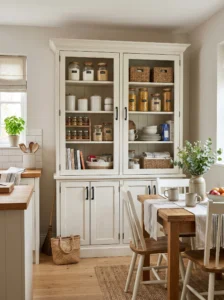
15. Add a Freestanding Pantry Cabinet
Sometimes the simplest solution is just adding another storage piece entirely. A freestanding pantry cabinet provides major storage without renovation.
Tall cabinets work beautifully in dining areas, breakfast nooks, or empty kitchen walls. They can store dry goods, small appliances, dishes, or bulk supplies.
This idea is especially useful in homes with very limited built-in cabinetry. Renters also benefit because the cabinet moves with them later.
Choose a style that complements existing finishes instead of trying to match perfectly. Slight contrast often feels more natural.
Inside, use baskets or bins to prevent shelves from becoming cluttered over time.
Daily life improves dramatically when pantry overflow finally has a dedicated place. Counters stay cleaner, cabinets feel less crammed, and the entire kitchen becomes easier to maintain.
Comparison Table
| Type | Best Use | Material | Style/Vibe | Difficulty Level |
|---|---|---|---|---|
| Floating Shelves | Everyday dishes and décor | Wood or metal | Modern/Farmhouse | Medium |
| Rolling Kitchen Cart | Extra prep and storage space | Wood/steel | Functional/Casual | Easy |
| Pegboard Wall | Hanging utensils and pans | Painted wood/metal | Industrial/Modern | Medium |
| Under-Shelf Baskets | Maximizing cabinet shelves | Wire metal | Minimal/Clean | Easy |
| Slim Pull-Out Storage | Using narrow gaps | Wood/plastic | Practical/Modern | Easy |
| Freestanding Pantry Cabinet | Bulk pantry storage | Wood/MDF | Traditional/Modern | Medium |
How to Choose the Right Kitchen Storage Solutions
The best kitchen storage solutions are the ones that fit your actual daily habits — not just the ones that look good online. Before buying organizers or shelves, start by identifying what’s causing the clutter. Some kitchens lack pantry space, while others simply suffer from poor organization.
Sizing matters more than most people expect. Oversized storage pieces can make small kitchens feel cramped very quickly. Always measure wall space, cabinet depth, and walking clearance before purchasing anything. Rolling carts and pantry cabinets should improve movement, not block it.
Material choice also affects maintenance. Wood adds warmth and softness, but it may need occasional cleaning or sealing in humid kitchens. Metal storage tends to be more durable and easier to wipe clean, especially near stoves or sinks. Plastic organizers are affordable and lightweight, though cheaper versions can discolor over time.
Durability becomes important for frequently used storage. Thin wire shelves or flimsy adhesive hooks may look fine initially but often fail after a few months of daily use. It’s usually smarter to buy fewer high-quality organizers instead of filling the kitchen with cheap pieces that break quickly.
Budget-wise, focus on high-impact upgrades first. Drawer dividers, shelf risers, and door organizers are inexpensive but dramatically improve functionality. Larger investments like freestanding pantry cabinets should come later if needed.
One of the biggest mistakes people make is buying too many organizers before decluttering. Storage works best when it supports the items you genuinely use. Otherwise, you’re simply organizing unnecessary clutter instead of solving the actual problem.
The goal isn’t a perfectly styled showroom kitchen. It’s creating a space that feels easier, calmer, and more functional every day.
Conclusion
Adding storage to a kitchen without renovation is less about finding magical space and more about using existing space smarter. Walls, corners, cabinet doors, narrow gaps, and vertical areas all have potential once you start looking at them differently.
The best part is that most of these ideas are flexible. You can start small with shelf risers or drawer dividers, then gradually add larger storage pieces if needed. There’s no pressure to completely transform the kitchen overnight.
What matters most is improving how the kitchen functions for your daily routine. A kitchen that feels organized usually becomes easier to cook in, easier to clean, and honestly just less stressful to use. Even small changes can make the room feel noticeably calmer.
Instead of focusing on what your kitchen lacks, focus on what’s currently underused. Most kitchens already have more storage potential than people realize.
A smarter layout, better visibility, and intentional organization often make a bigger difference than expensive renovations ever could.
FAQs
1. What is the cheapest way to add kitchen storage?
Drawer dividers, shelf risers, adhesive hooks, and under-shelf baskets are usually the most affordable options. They improve organization quickly without requiring tools or major purchases.
2. How can I add storage to a rental kitchen?
Use removable solutions like rolling carts, magnetic organizers, tension shelves, and adhesive hooks. These avoid permanent damage while still increasing functionality.
3. Are open shelves practical in kitchens?
Yes, if used carefully. Open shelves work best for everyday items you use regularly. Overcrowding them can make kitchens look messy, so balance is important.
4. How do I organize a tiny kitchen with no pantry?
Use vertical storage, freestanding cabinets, clear containers, and over-the-fridge storage. Even small unused spaces can hold a surprising amount when organized intentionally.
5. What storage mistakes make kitchens feel cluttered?
Too many small organizers, overcrowded shelves, oversized furniture, and storing unused items are common problems. Simpler systems are usually easier to maintain long term.
6. Is a rolling kitchen cart worth it?
For many small kitchens, yes. A cart adds prep space, storage, and flexibility without permanent installation. It’s especially useful for renters.
7. What’s the best material for kitchen organizers?
Metal and durable plastic are easiest to clean, while wood adds warmth and style. The best choice depends on your kitchen’s look and maintenance preferences.
8. How do I make kitchen storage look less messy?
Use matching containers, baskets, and consistent colors. Keeping frequently used items accessible while hiding visual clutter creates a cleaner overall appearance.