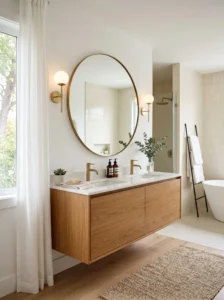
Bathroom mirrors are one of those things people often buy in a hurry — right after picking tiles, paint, or a vanity. Then a few weeks later, something feels off. The mirror is either too small, too bulky, too dark, or simply doesn’t match the mood of the bathroom at all. It happens more often than people admit.
A bathroom mirror does much more than reflect your face while brushing your teeth. It affects how bright the room feels, how spacious it looks, and even how organized the entire bathroom appears. In smaller bathrooms especially, the wrong mirror can make the room feel cramped and awkward, while the right one can completely change the atmosphere without touching the plumbing or layout.
The tricky part is that there’s no single “best” bathroom mirror. What works beautifully in a modern guest bathroom might look completely wrong in a warm farmhouse-style master bath. Shape, frame material, lighting, placement, and scale all matter more than most homeowners expect.
This guide breaks everything down in a practical, realistic way. You’ll learn how to choose the right mirror size, shape, material, and style for different bathroom layouts and everyday needs. Whether you’re remodeling a bathroom or simply replacing an outdated mirror, these ideas will help you make a decision that actually improves the space instead of becoming another expensive decorating regret.
1. Start With the Size of Your Vanity First
One of the most common bathroom mirror mistakes is choosing a mirror before measuring the vanity properly. People often buy mirrors based on style alone, then realize the proportions feel awkward once everything is installed.
A good rule is that your mirror should usually be slightly narrower than the vanity. This creates visual balance and prevents the bathroom from looking top-heavy. For example, a 36-inch vanity generally works well with a mirror around 30 to 32 inches wide.
This matters most in small and medium bathrooms where proportions are immediately noticeable. In compact spaces, oversized mirrors can overwhelm the wall, while tiny mirrors make the room feel unfinished.
Practical placement matters too. Leave a few inches of space between the mirror and vanity lights if you’re installing separate lighting. Also avoid mounting the mirror too high. Most people should comfortably see themselves without standing on tiptoes or bending awkwardly.
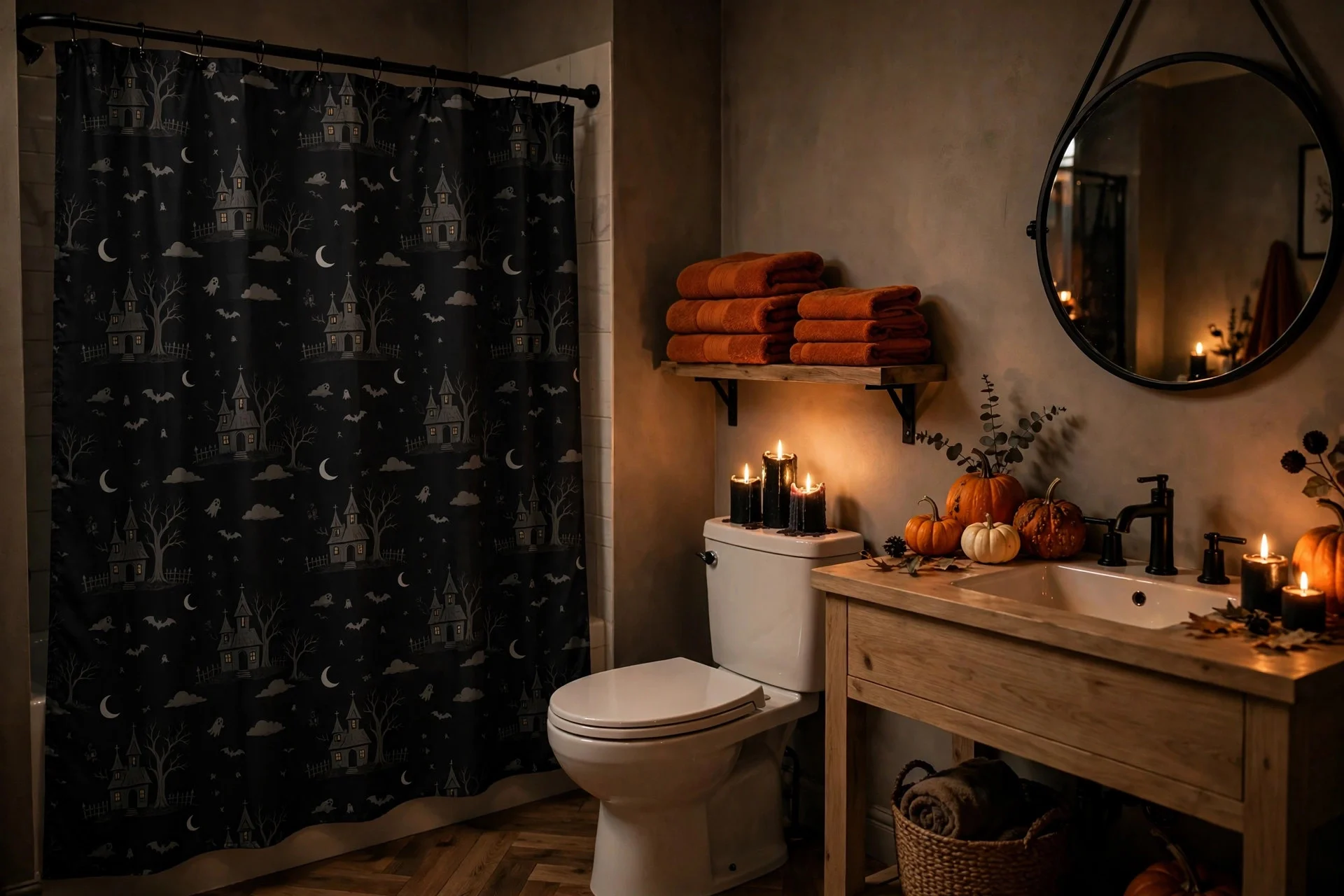
In everyday use, the right size simply makes the bathroom feel calmer and more intentional. You stop noticing the mirror because everything visually works together — which is usually the sign of good design.
2. Round Mirrors Soften Hard Bathroom Lines
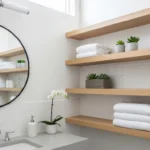
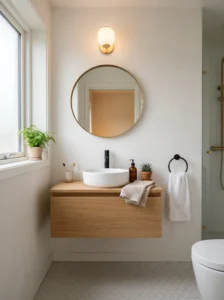
Bathrooms naturally contain many sharp edges — square vanities, tiled walls, rectangular showers, and straight countertops. A round mirror helps break up all those hard lines and makes the room feel softer and more relaxed.
This works especially well in modern bathrooms that risk feeling too cold or rigid. A circular mirror adds contrast without requiring dramatic decorating changes.
Round mirrors are ideal for powder rooms, guest bathrooms, and smaller spaces where you want a slightly lighter visual feel. They also pair beautifully with floating vanities because the shapes feel balanced rather than bulky.
When choosing one, pay attention to scale. A tiny round mirror above a wide vanity often looks disconnected. Larger round mirrors usually work better because they create presence without looking heavy.
Frame choice matters too. Thin black metal frames feel modern, wood frames add warmth, and frameless styles create a clean spa-like effect.
In daily life, round mirrors subtly make bathrooms feel more welcoming. The softer shape reduces that overly functional “hotel sink area” feeling many bathrooms accidentally end up with.
3. Rectangular Mirrors Create a Clean Classic Look
If you want something timeless and flexible, rectangular mirrors are still the safest choice. They work with almost every bathroom style, from traditional to contemporary.
The reason they work so well is simple: they visually align with most bathroom architecture. Vanities, cabinets, and tile patterns are usually rectangular already, so the mirror naturally feels connected to the space.
Rectangular mirrors are especially useful in shared bathrooms because they maximize viewing space. In double-sink layouts, long horizontal mirrors can make the room appear wider and brighter.
A vertical rectangle works best in narrow bathrooms because it draws the eye upward and creates the illusion of height. Horizontal mirrors help open up wider walls.
Avoid frames that are too bulky unless the bathroom is large enough to support them visually. Heavy frames in tiny bathrooms can make the space feel crowded quickly.
In practical terms, rectangular mirrors are easy to decorate around. They pair naturally with sconces, overhead lighting, and storage cabinets, making them one of the most user-friendly mirror options overall.
4. Backlit Mirrors Improve Everyday Lighting
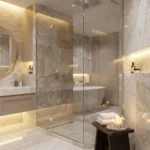
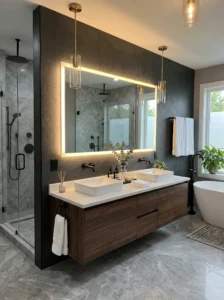
A beautiful mirror becomes frustrating very quickly if the lighting around it is poor. That’s why backlit mirrors have become increasingly popular in modern bathrooms.
The built-in lighting creates softer, more even illumination across the face. This reduces harsh shadows that overhead lights often create. Tasks like shaving, skincare, or makeup become much easier.
Backlit mirrors work especially well in bathrooms with limited natural light. Apartments, interior bathrooms, and windowless powder rooms benefit the most from this feature.
When shopping, pay attention to brightness levels and color temperature. Warm white lighting feels cozy, while cooler white lighting feels cleaner and brighter. Adjustable lighting is often worth the extra cost.
Installation does require planning because some models need hardwired electrical connections. If you’re renovating anyway, it’s easier to include this upgrade during the remodel.
In everyday use, the bathroom instantly feels more upscale and functional. Many people say good mirror lighting becomes one of those upgrades they appreciate every single morning.
5. Frameless Mirrors Make Small Bathrooms Feel Bigger
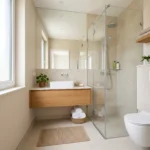
Small bathrooms can feel visually crowded very quickly. Frameless mirrors help solve that problem because they create less visual interruption on the wall.
Without a heavy border, the mirror blends more naturally into the room and reflects more light cleanly. This creates an open, airy feeling that framed mirrors sometimes struggle to achieve.
Frameless mirrors are ideal for minimalist, modern, and contemporary bathrooms. They also work well in rental apartments because they rarely clash with existing finishes.
One practical advantage is easier cleaning. Ornate frames collect dust and moisture over time, especially in humid bathrooms. Frameless edges are simpler to wipe down regularly.
However, edge quality matters. Cheap frameless mirrors sometimes look unfinished or flimsy. Polished edges create a cleaner and more durable appearance.
Daily use feels smoother too. The bathroom looks brighter, cleaner, and less cluttered without requiring additional decorating changes. Sometimes removing visual weight is more effective than adding more décor.
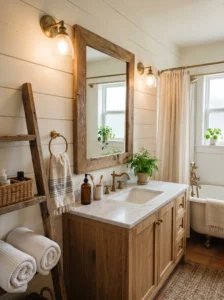
6. Wood-Framed Mirrors Add Warmth Instantly
Many bathrooms accidentally feel cold because of all the tile, glass, and metal surfaces. A wood-framed mirror helps balance that by introducing warmth and texture.
This works particularly well in farmhouse, rustic, Scandinavian, and organic modern bathrooms. Even a simple oak or walnut frame can completely soften the overall atmosphere.
Lighter woods help maintain an airy feeling, while darker woods create more contrast and depth. The finish matters too. Matte finishes often feel more natural and relaxed than glossy stained wood.
Bathrooms with white tiles especially benefit from wood accents because they prevent the space from looking too sterile.
Moisture resistance is important here. Solid wood frames should be sealed properly to prevent warping over time. Engineered wood or moisture-resistant finishes are often safer in humid bathrooms.
In real life, wood-framed mirrors simply make bathrooms feel more comfortable. The space feels less clinical and more connected to the rest of the home, which people often appreciate subconsciously.
7. Double Mirrors Work Better Than One Large Mirror Sometimes
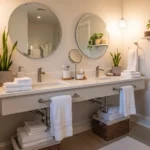
In shared bathrooms, one giant mirror is not always the best solution. Two separate mirrors can create a cleaner, more balanced appearance — especially above double vanities.
This approach gives each sink its own visual zone, making the bathroom feel more organized and intentional. It also reduces that oversized “wall of glass” look some large mirrors create.
Double mirrors work best in medium-to-large bathrooms where there’s enough wall space between sinks. Matching shapes usually create the most cohesive result, although slight variations can work in eclectic spaces.
Spacing matters carefully here. Leave enough room between mirrors so the layout feels intentional rather than cramped.
Lighting placement becomes easier too. Each mirror can have its own sconce or pendant lighting, improving functionality for both users.
In daily routines, separate mirrors often feel surprisingly practical. Two people can use the bathroom simultaneously without constantly blocking each other’s reflection space.
8. Arched Mirrors Create a Softer Elegant Style
Arched mirrors have become popular because they combine the structure of rectangular mirrors with the softness of curved designs.
The curved top naturally draws the eye upward, making ceilings appear taller. This is especially useful in bathrooms with lower ceilings or limited natural light.
Arched mirrors work beautifully in transitional, Mediterranean, modern classic, and even minimalist bathrooms. They feel elegant without appearing overly formal.
Thin metal frames usually keep the look modern, while thicker wood frames create a more traditional feel.
Placement is important. Arched mirrors need enough vertical wall space to breathe visually. Tiny cramped walls can make them feel squeezed in.
In everyday use, arched mirrors subtly elevate the bathroom without requiring dramatic renovations. They create a custom-designed feeling that standard builder-grade mirrors rarely achieve.
9. Black Frames Add Contrast and Definition
Bathrooms filled with white finishes sometimes lack visual contrast. Black-framed mirrors help anchor the space and create definition immediately.
This works especially well in modern, industrial, and contemporary bathrooms where clean lines matter.
Thin black frames feel sleek and understated, while thicker frames create a bolder focal point. Matte black finishes generally age better visually than glossy black finishes.
Black mirrors pair especially well with black faucets, shower hardware, or cabinet handles because they tie the room together naturally.
However, balance matters. Too many black elements in a small bathroom can make the room feel heavy. The mirror should complement the design, not dominate it.
In real life, black frames often make bathrooms look more polished and intentionally designed. Even simple bathrooms feel more structured with this type of contrast.
10. Medicine Cabinet Mirrors Save Space Quietly
Not every bathroom has enough storage. Medicine cabinet mirrors solve two problems at once by combining reflection and hidden organization.
This is especially useful in apartments, small family bathrooms, or older homes with limited cabinetry.
Modern medicine cabinets look far better than older bulky versions. Recessed models sit nearly flush with the wall, creating a cleaner appearance.
Inside storage works best for everyday essentials like toothbrushes, skincare products, medications, or shaving supplies.
When choosing one, look for adjustable shelving and moisture-resistant interiors. Soft-close doors are also worth considering because bathroom cabinets get heavy daily use.
The biggest benefit is reducing countertop clutter. Bathrooms instantly feel cleaner when fewer items are constantly visible.
For everyday routines, that extra hidden storage often matters more than people expect. A tidy vanity makes the entire bathroom feel calmer and easier to maintain.
11. Oversized Mirrors Reflect More Natural Light
Natural light completely changes how a bathroom feels. Oversized mirrors help maximize whatever daylight the room already receives.
Placed opposite or adjacent to a window, a large mirror reflects sunlight deeper into the space. This makes bathrooms appear brighter, larger, and more open.
This strategy works especially well in narrow bathrooms or rooms with only one small window.
However, oversized mirrors should still feel proportional to the vanity and wall size. Going too large can overwhelm smaller bathrooms visually.
Thin frames or frameless styles usually work best here because they maintain the light reflective effect.
Daily use becomes noticeably more pleasant. Morning routines feel brighter and less boxed in, especially during darker winter months when bathrooms often feel dim.
12. Vintage Mirrors Add Character to Plain Bathrooms
Some bathrooms feel technically “nice” but still lack personality. Vintage-style mirrors help solve that problem by adding age, texture, and character.
Antique brass frames, distressed wood, or ornate detailing can make even simple bathrooms feel more layered and interesting.
This works particularly well in older homes, eclectic interiors, or bathrooms with neutral tile palettes that need warmth.
The key is moderation. One vintage mirror usually creates enough personality without making the room feel outdated.
Check mirror condition carefully if buying true vintage pieces. Bathroom humidity can worsen existing damage over time.
In real life, vintage mirrors often become the detail guests notice first because they create visual uniqueness that newer builder-grade bathrooms typically lack.
13. Pivot Mirrors Improve Flexibility
A fixed mirror works fine for many bathrooms, but pivot mirrors offer added flexibility that becomes surprisingly useful over time.
The adjustable angle allows users of different heights to tilt the mirror slightly for better visibility. This is especially practical in family bathrooms shared by adults and children.
Pivot mirrors also feel more custom and thoughtfully designed compared to basic wall-mounted mirrors.
They work particularly well in traditional, industrial, and transitional bathrooms. Metal hardware finishes should coordinate with faucets and cabinet pulls for consistency.
Installation quality matters because loose hardware can become annoying quickly. Secure mounting is essential.
In daily routines, adjustable mirrors simply feel more functional. Small usability improvements like this often have a bigger impact than purely decorative upgrades.
14. Don’t Ignore Moisture Resistance and Maintenance
A bathroom mirror may look beautiful on installation day, but humidity quickly reveals poor-quality materials.
Bathrooms experience constant steam, temperature changes, and moisture exposure. Cheap frames may peel, rust, or warp surprisingly fast.
Metal frames should have rust-resistant coatings. Wood should be sealed properly. Mirror backing quality matters too because low-quality backing can develop black spots around the edges over time.
This matters most in poorly ventilated bathrooms where steam lingers longer after showers.
Cleaning also matters. Intricate decorative frames often collect dust and toothpaste splatter more easily than smoother designs.
In everyday life, low-maintenance mirrors save frustration. A durable mirror continues looking good years later without constant touch-ups or repairs — which is honestly what most homeowners want more than trendy designs.
Comparison Table
| Type | Best Use | Material | Style/Vibe | Difficulty Level |
|---|---|---|---|---|
| Frameless Mirror | Small modern bathrooms | Glass | Clean and minimal | Easy |
| Wood-Framed Mirror | Warm farmhouse spaces | Oak, walnut, teak | Cozy and natural | Medium |
| Backlit Mirror | Low-light bathrooms | Glass + LED | Modern luxury | Medium |
| Round Mirror | Powder rooms | Metal or wood | Soft and stylish | Easy |
| Medicine Cabinet Mirror | Small bathrooms needing storage | Aluminum + glass | Functional modern | Medium |
| Pivot Mirror | Shared family bathrooms | Metal frame | Practical classic | Medium |
Buying Guide: How to Choose the Right Bathroom Mirror
Choosing a bathroom mirror becomes much easier when you focus on practicality first and style second. Most mirror regrets happen because people buy something visually trendy without considering how it fits their actual bathroom layout.
Start with sizing. Your mirror should generally be a few inches narrower than the vanity. A mirror that is too small looks disconnected, while one that stretches too wide can overwhelm the wall. In double vanities, decide early whether you want one large mirror or two separate mirrors. Both can work well, but the room proportions usually make the decision clearer.
Material choice matters more in bathrooms than in most other rooms because moisture exposure is constant. Metal frames should be rust-resistant, wood should be sealed properly, and cheaper materials should be avoided in poorly ventilated bathrooms. Frameless mirrors are often easiest to maintain because there are fewer surfaces collecting moisture and dust.
Think honestly about maintenance too. Decorative mirrors may look beautiful online, but detailed frames collect grime surprisingly quickly in real bathrooms. Simpler designs are often easier to clean and maintain long term.
Budget is another important factor. Expensive doesn’t always mean better. A well-sized, durable mid-range mirror usually performs better than an oversized designer mirror that doesn’t suit the room. If your budget is limited, prioritize size, reflection quality, and durability before decorative extras.
One major mistake people make is ignoring lighting. Even the nicest mirror feels disappointing with poor illumination. Consider how natural and artificial light interact with the mirror throughout the day.
Finally, don’t chase trends too aggressively. Bathroom mirrors are not replaced as often as décor accessories. Choosing something timeless usually saves money and decorating frustration later.
Conclusion
Choosing the right bathroom mirror is really about balance. The best mirror isn’t necessarily the most expensive or the trendiest one online. It’s the one that fits your bathroom’s size, lighting, storage needs, and overall style without making the space feel forced.
A well-chosen mirror can make a small bathroom feel larger, improve lighting dramatically, reduce clutter, and even make everyday routines more comfortable. On the other hand, the wrong mirror can throw off proportions and make the bathroom feel awkward no matter how nice the rest of the design looks.
The good news is that you don’t need a full renovation to improve your bathroom. Sometimes replacing an outdated mirror creates a bigger visual impact than changing paint, fixtures, or accessories.
Focus on practical details first — sizing, durability, lighting, and maintenance — then choose a shape and style that naturally fits the room. Whether you prefer sleek frameless mirrors, warm wood frames, or elegant arched designs, the goal is creating a bathroom that feels comfortable and functional every day.
Bathrooms are highly used spaces. The mirror you choose should not only look good in photos but also make daily life easier and more pleasant in a realistic way.
FAQs
1. What size bathroom mirror should I choose?
A bathroom mirror should usually be slightly narrower than the vanity. Most designers recommend leaving a few inches of space on each side for balanced proportions. Oversized mirrors work well in larger bathrooms but can overwhelm small spaces.
2. Are frameless mirrors still in style?
Yes, frameless mirrors remain popular because they create a clean and modern look. They also help small bathrooms feel larger and brighter since there’s less visual bulk around the edges.
3. Which mirror shape is best for small bathrooms?
Round and frameless mirrors often work best in small bathrooms because they soften the space and reflect light more openly. Vertical rectangular mirrors can also make ceilings appear taller.
4. Do backlit mirrors provide enough light?
In many bathrooms, yes. High-quality backlit mirrors provide even facial lighting that works well for grooming tasks. However, larger bathrooms may still benefit from additional wall sconces or ceiling lighting.
5. Are wood-framed bathroom mirrors durable?
They can be very durable if properly sealed and maintained. Moisture-resistant finishes are important because bathrooms experience constant humidity. Solid untreated wood may warp over time.
6. Should I use one mirror or two for a double vanity?
It depends on the bathroom size and style. One large mirror creates a cleaner continuous look, while two separate mirrors add balance and better personal space for shared bathrooms.
7. How high should a bathroom mirror be mounted?
Most mirrors should sit several inches above the sink faucet while remaining comfortable for average eye level. Avoid mounting mirrors too high, especially in family bathrooms with different user heights.
8. What is the easiest bathroom mirror style to maintain?
Frameless mirrors are generally the easiest to clean because they don’t have detailed edges or textured frames that collect dust and moisture. Simple metal frames are also relatively low maintenance.