14 Small Apartment Bedroom Layouts That Fit a Queen Bed
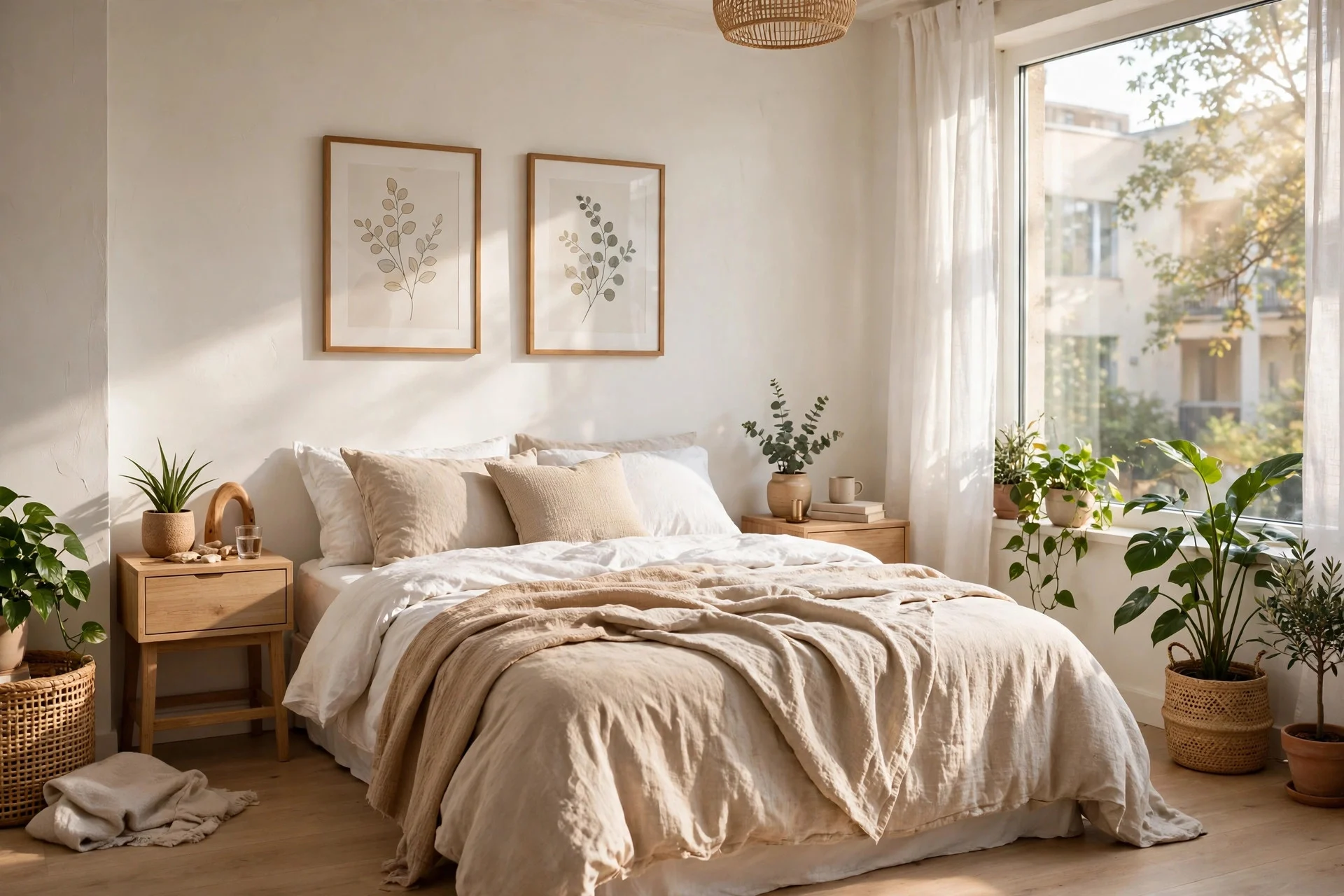
Yes, a queen bed fits in a small apartment bedroom — even one as compact as 10 by 10 feet. A standard queen measures 60 by 80 inches, about 33 square feet before you count walking space. The trick is not shrinking the bed. It is placing it smartly, cutting bulky furniture, and letting every other piece earn its floor space. The 14 layouts below each fix a different way a queen bed tends to crowd a small room.
Before you move anything, sketch your room on paper and mark the door swing, closet doors, radiators, and outlets. A layout that looks great in a photo can fail because a drawer cannot open or a door clips the bed frame. Ten minutes with a tape measure saves an afternoon of dragging furniture around.
1. Put the Bed on the Longest Wall
This is the fix for a bedroom that feels chopped up no matter where the bed goes. Placing the headboard against the longest uninterrupted wall gives the bed a natural home and leaves the rest of the room as one usable block. It also centers the bed visually, which makes the whole room read calmer.
Cost: $0 if you are only moving furniture you own. Difficulty: easy, about an hour with a second person to help shift the bed. Tip: leave at least 24 inches on each side of the bed — the minimum for getting in and out without shuffling sideways. Watch out: if the longest wall holds the only window, you will block light and airflow, so try the next layout instead.
2. Push the Bed Into a Corner
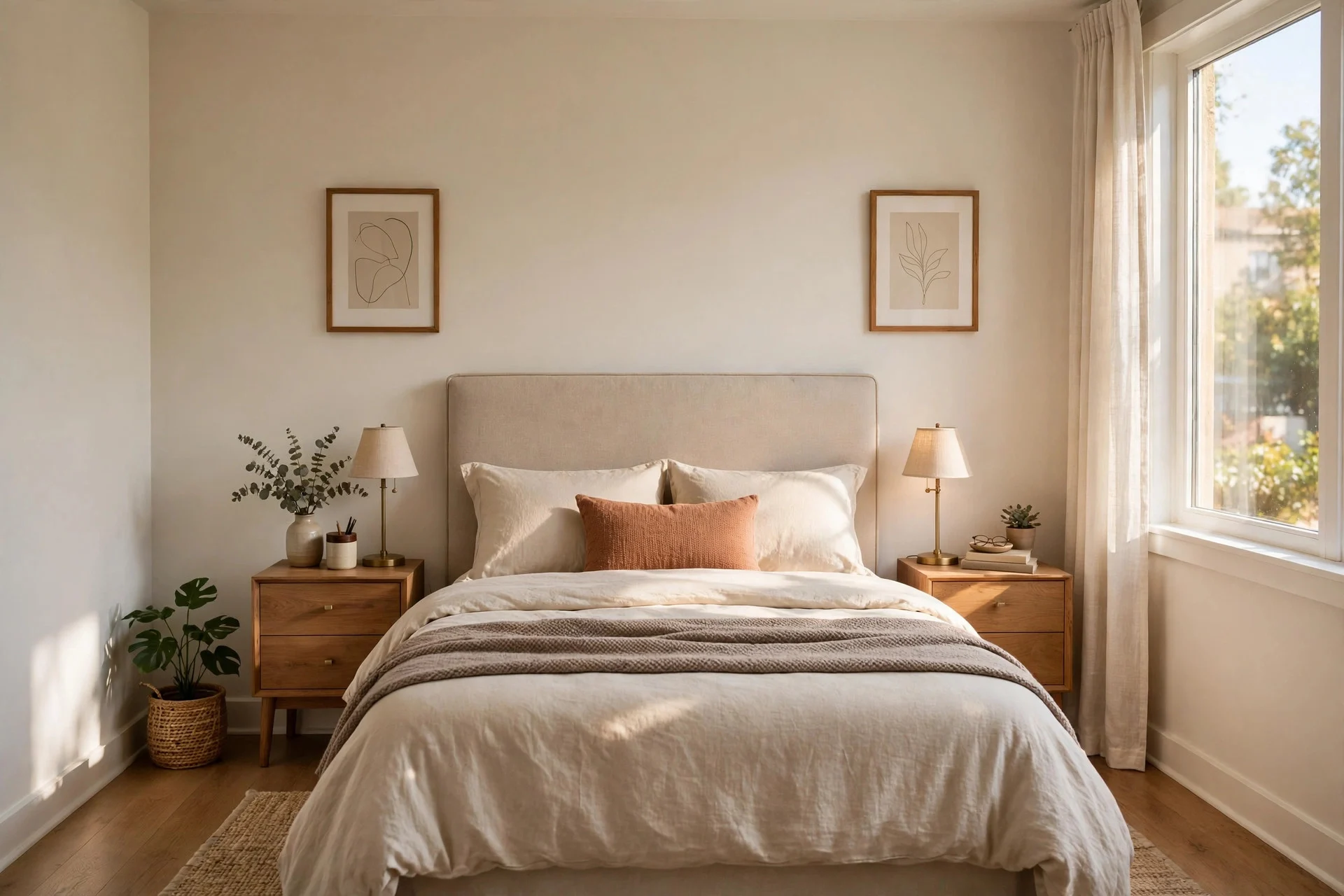
This layout fixes the classic small-room problem: a centered bed eats walkway space on both sides and leaves neither side truly useful. Sliding the bed into a corner frees one full side of the room, giving a clear path from door to closet and space for a dresser or desk. It works best in rooms under 110 square feet, where every inch of open floor counts.
Cost: $0. Difficulty: easy, under an hour. Tip: put a small wall shelf above the corner side of the bed so the person sleeping against the wall still has a spot for a phone, book, and glass of water. Watch out: making the bed takes more effort with one side against the wall, so use a fitted sheet you can tuck from the open side and a duvet you can shake out from the foot.
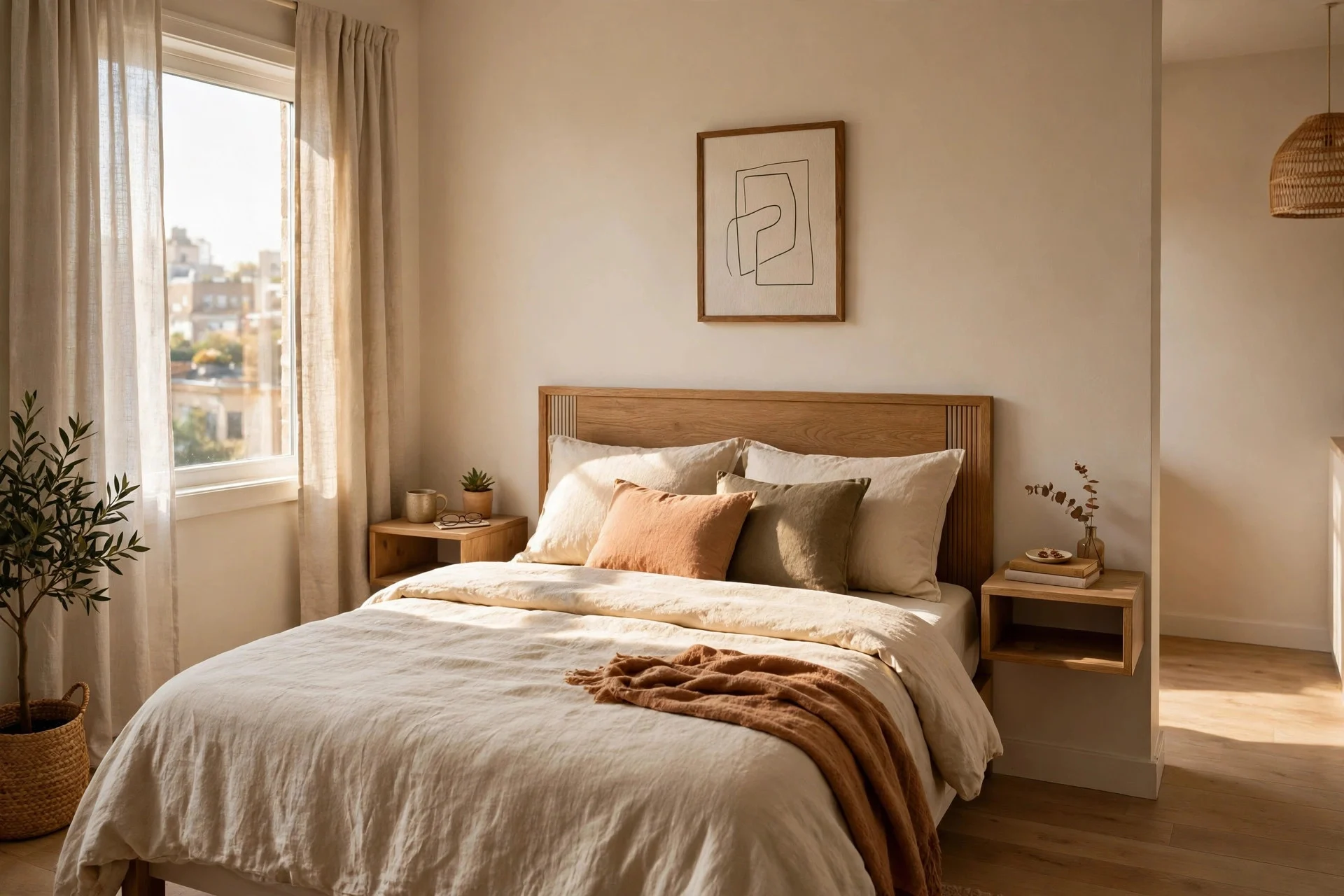
3. Swap Nightstands for Floating Shelves
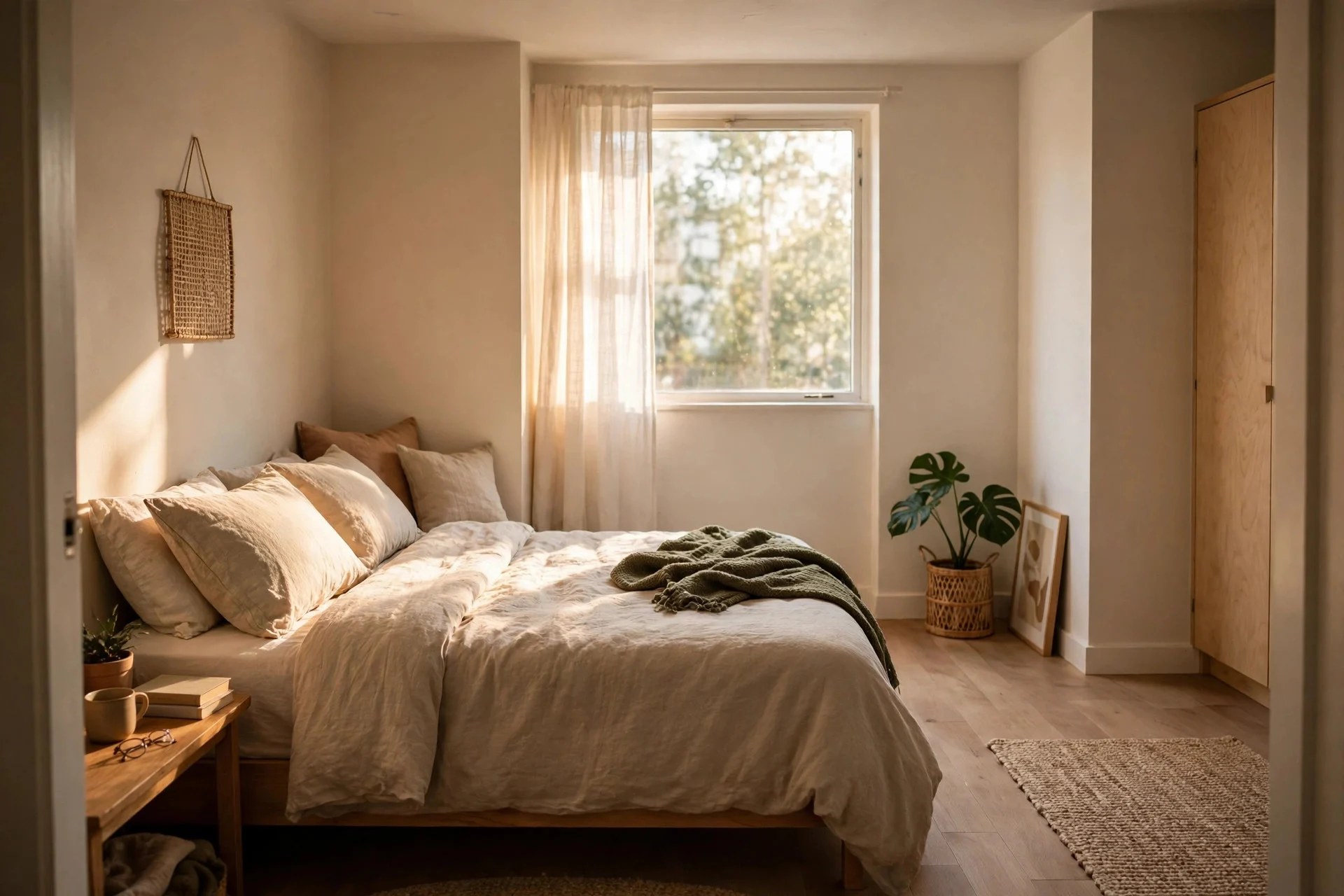
Bulky nightstands are one of the biggest space thieves in a small bedroom. A pair of standard tables can swallow 4 square feet of floor and still leave you short on storage. Wall-mounted floating shelves at bedside height hold the same phone, lamp, and book while leaving the floor underneath completely open.
Cost: $20–$60 for two shelves and brackets. Difficulty: easy to moderate, about an hour including drilling and levelling. Tip: mount the shelf at mattress height plus 2 inches so you can reach things without sitting up fully. Watch out: check for studs or use proper wall anchors — a shelf loaded with books will pull out of plain drywall fixings.
4. Choose a Storage Bed
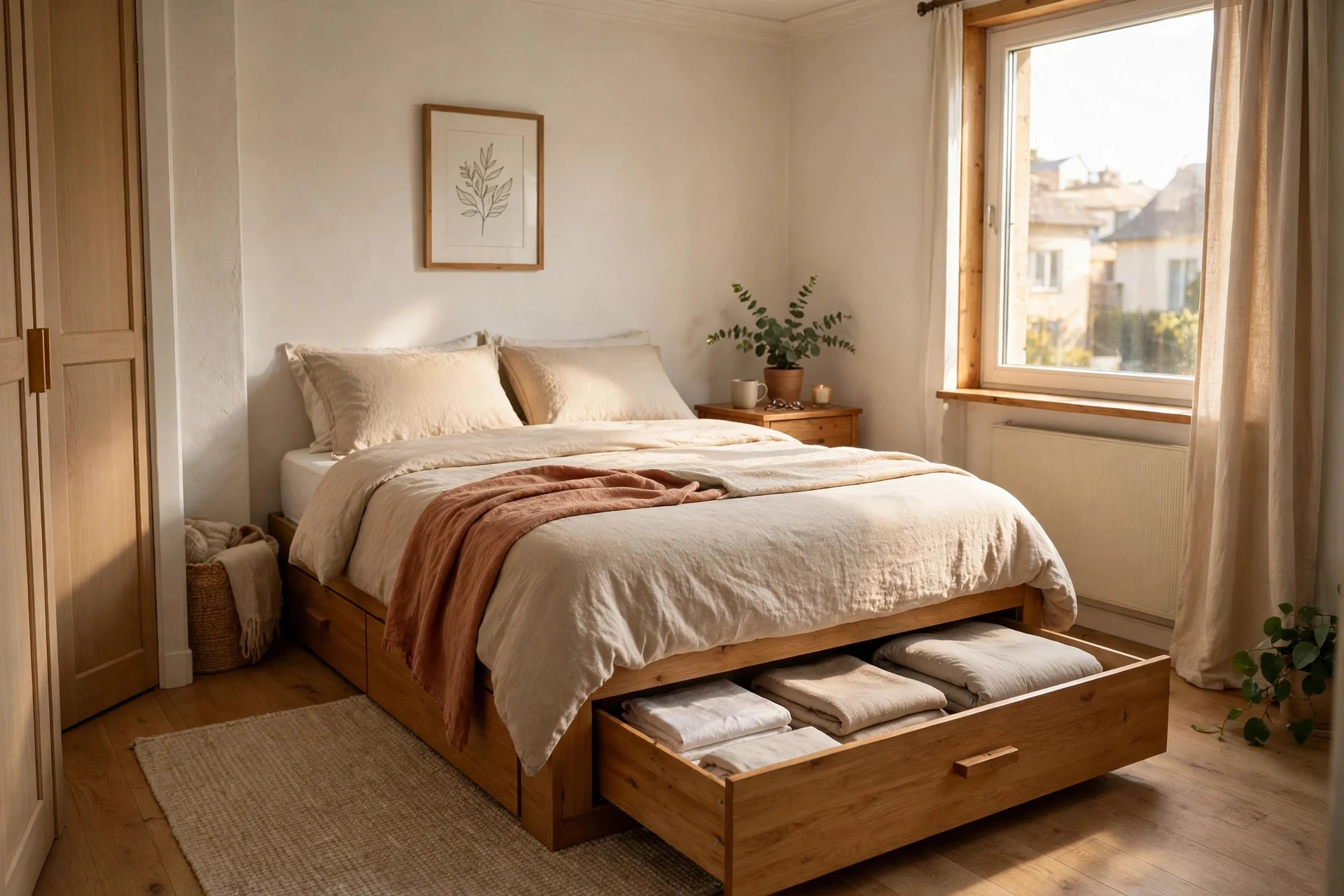
When the bed takes up a third of the room, it should work harder than just holding a mattress. A storage bed with drawers, or a lift-up base with a hidden compartment, swallows the bulky items that usually end up in a dresser — spare bedding, off-season clothes, suitcases. That can free an entire piece of furniture from the room, which is often the difference between cramped and comfortable.
Cost: $250–$800 for a decent drawer or ottoman-lift frame. Difficulty: moderate, about 1–2 hours to assemble. Tip: drawers beat a lift-up base if you open them daily, since lifting a mattress every morning gets old fast. Watch out: measure your doorways and stairwells before ordering — storage frames ship in large, heavy boxes. If you want more storage thinking, these storage bed ideas show how different drawer layouts handle real clutter.
5. Place the Bed Under the Window
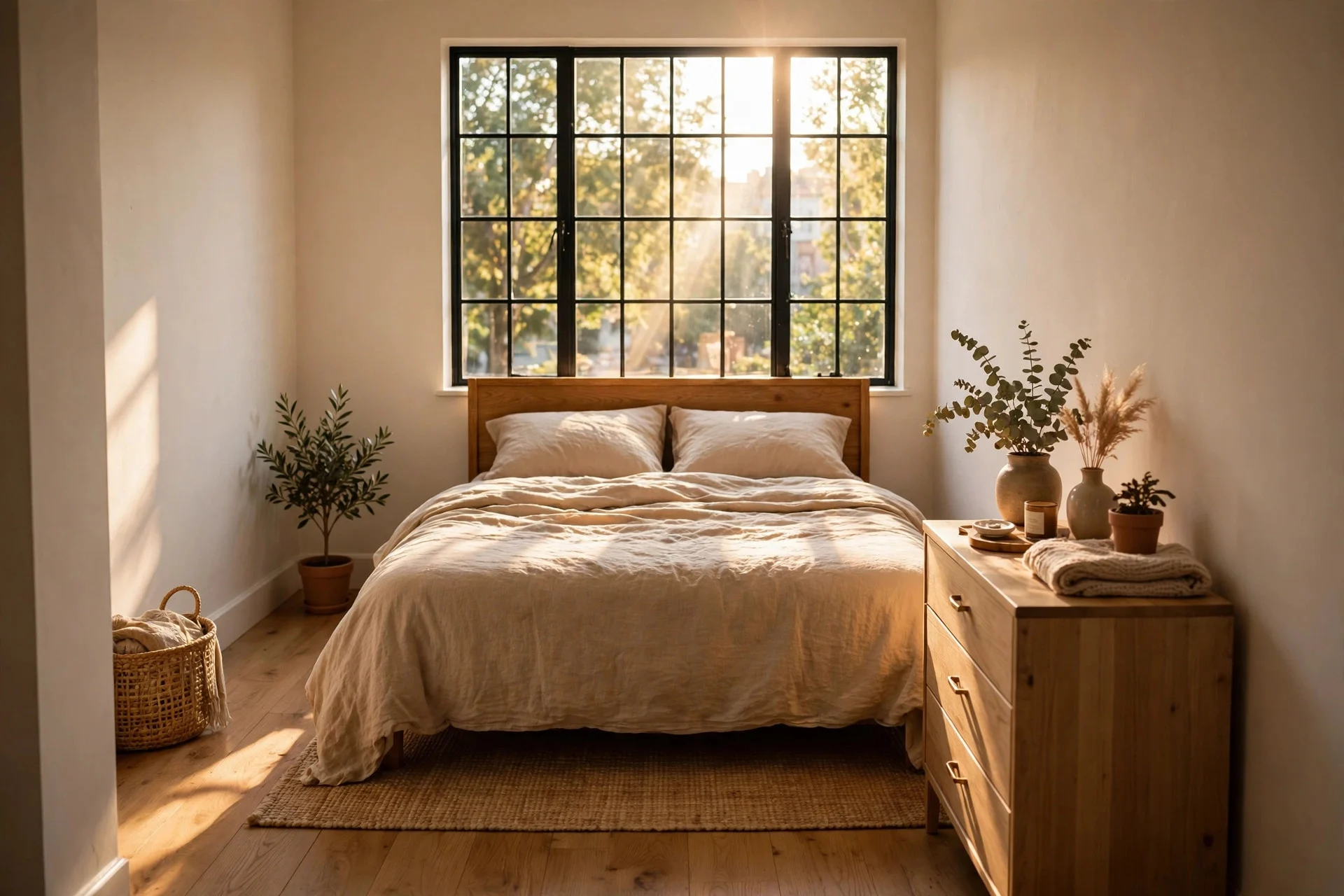
This layout fixes a room where the only solid wall is taken by the closet or the door, leaving you unsure where the bed belongs at all. Putting the headboard under the window frees the solid walls for wardrobes and a dresser.
Cost: $0–$80 if you add a low headboard or a blackout blind. Difficulty: easy, under an hour. Tip: keep the headboard lower than the windowsill so you do not block light or make the window look squashed. Watch out: drafts and cold glass in winter can make this spot uncomfortable — a thick curtain hung above the window frame helps, and keep the bed a few inches off the wall so bedding does not touch cold glass.
6. Use a Slim Headboard Shelf
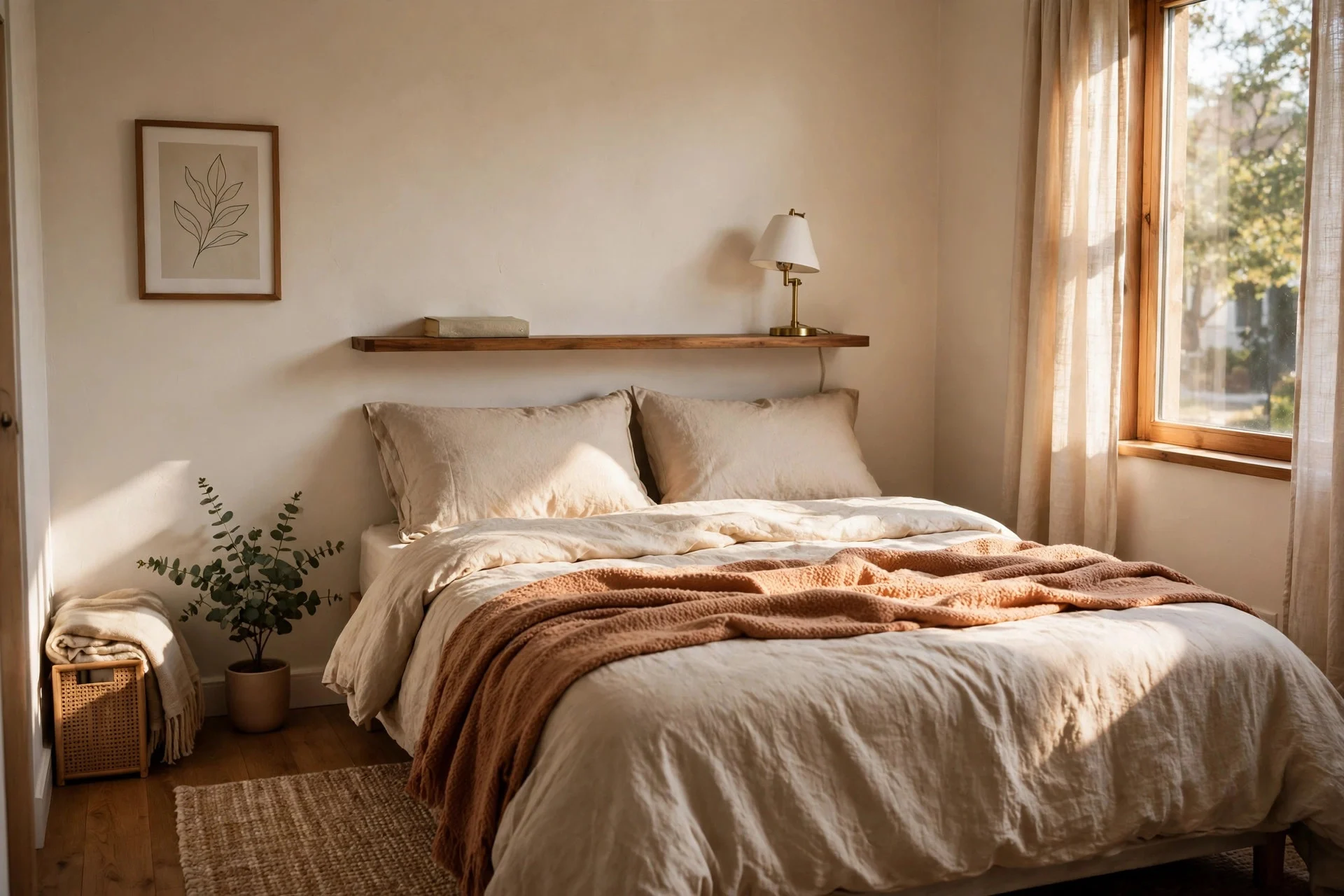
If even floating shelves feel like too much, a slim shelf above the headboard does the same job in a narrower footprint. A 6- to 8-inch-deep ledge runs the width of the bed and holds a lamp, phone charger, and books — the items that usually justify a nightstand. Because it sits above the bed rather than beside it, it costs zero floor space.
Cost: $25–$70 for a shelf board and brackets. Difficulty: easy, about 45 minutes. Tip: add a small lip or rail along the front edge so nothing slides off when you bump the bed. Watch out: keep the shelf high enough that you will not hit your head sitting up in bed — about 12 inches above the pillow line is a safe gap.
7. Build a Wardrobe Wall Opposite the Bed
A scattered dresser here and a freestanding rail there make a small room feel like a storage unit. Grouping clothes storage into one full wardrobe wall opposite the bed fixes that mess and gives more hanging space than a dresser. Two or three tall, light-colored wardrobes lined up read as one built-in unit.
Cost: $300–$900 for freestanding wardrobes, more for fitted units. Difficulty: moderate, half a day including assembly. Tip: pick wardrobes the same height and color so the wall reads as one piece, and add matching handles for a finished look. Watch out: leave at least 30 inches between the foot of the bed and the wardrobe doors so drawers and doors open fully.

Mistakes to Avoid With a Queen Bed in a Small Room
Buying the frame before measuring the door swing. A bed that fits on paper can still block the door or the closet. Map the swing arcs on your sketch first.
Choosing a tall, bulky headboard. A heavy upholstered headboard eats visual space. A low or slim headboard keeps the walls feeling taller.
Adding a full furniture set. Matching bedroom sets are sized for large rooms. Pick pieces one at a time and skip anything that duplicates storage you already have.
Forgetting the laundry path. If you cannot carry a laundry basket from bed to door without climbing over furniture, the layout is wrong.
Going dark on every surface. Dark bedding, dark furniture, and dark walls together shrink a room fast. Keep at least the walls and bedding light, then add color in smaller doses.
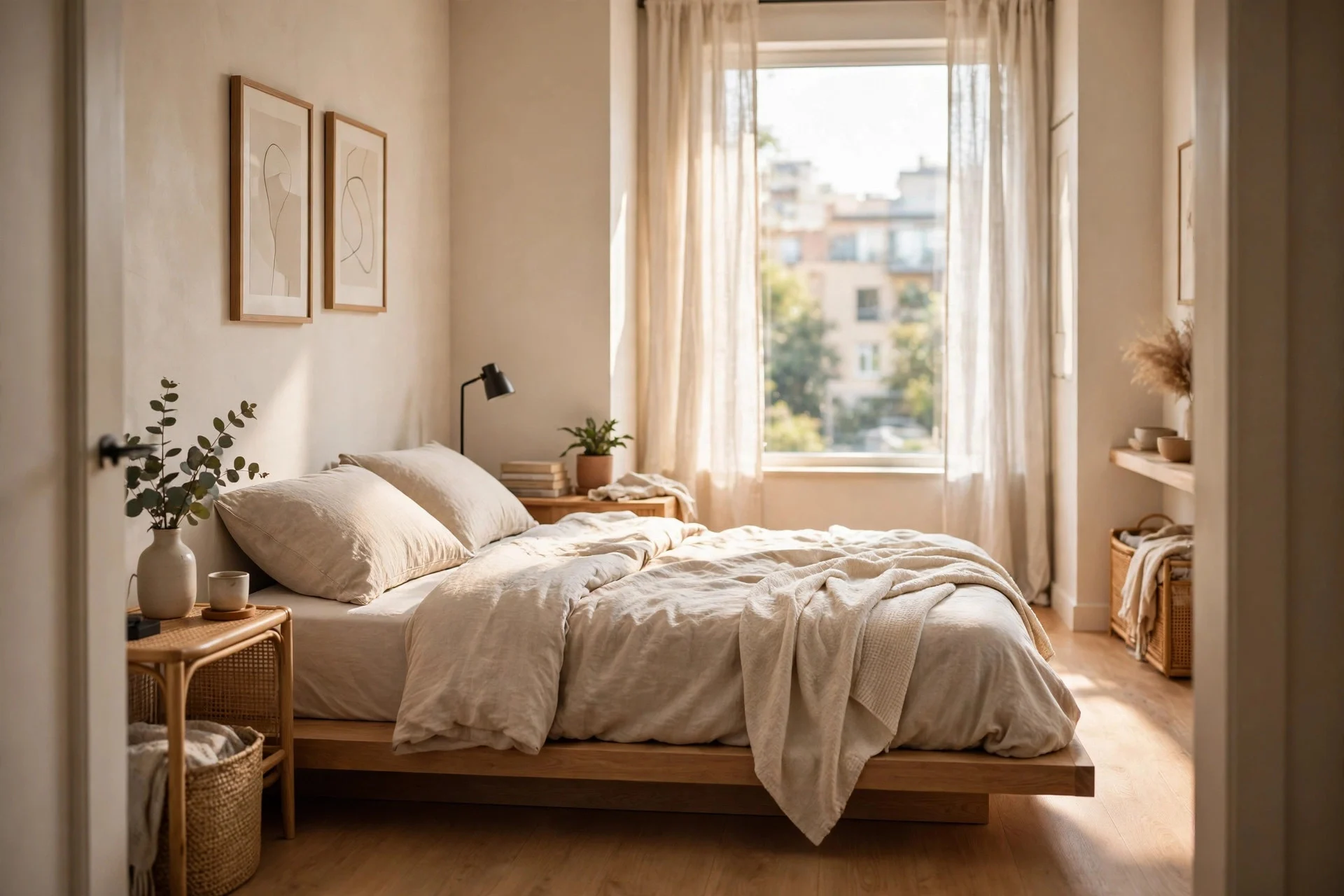
8. Drop the Footboard and Go Low
A tall footboard cuts the room in half visually — your eye stops at the end of the bed instead of travelling to the far wall. A low platform frame with no footboard lets sightlines run the full length of the room, which is why designers often recommend it for tight bedrooms.
Cost: $150–$500 for a solid platform frame. Difficulty: easy, about an hour to assemble. Tip: pair the low frame with a shorter nightstand or shelf so nothing towers over the bed. Watch out: low frames leave less room underneath for bins, so pair this layout with the storage-bed or tall-dresser ideas if you need that space.
9. Hang a Big Mirror Where It Counts
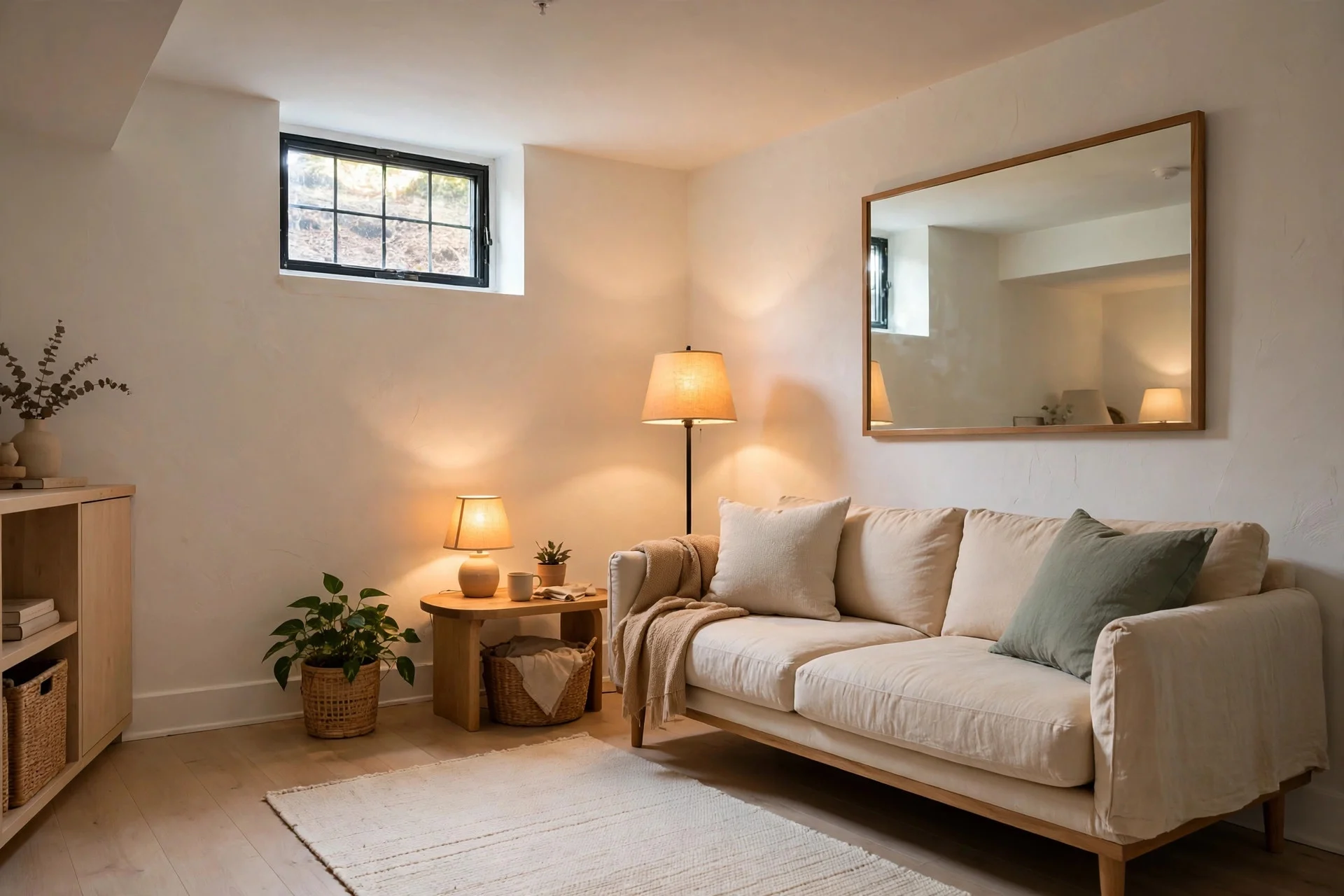
This layout fixes a bedroom that feels like a box: one large mirror reflecting the window or the longest wall doubles the sense of space without moving a single piece of furniture. The reflection adds depth and bounces daylight into dim corners. A mirror behind the door or opposite the window gives the biggest payoff.
Cost: $40–$150 for a large leaning or wall mirror. Difficulty: easy, 20–30 minutes to hang safely. Tip: angle a leaning mirror slightly so it reflects the window, not the clutter on the dresser. Watch out: never hang a heavy mirror with adhesive strips alone — use a proper wall hook or French cleat, and keep it out of direct sun, since reflected glare can be harsh in the morning.

10. Size the Rug to the Lower Two-Thirds
A rug under the whole bed and both nightstands needs to be huge — and in a small room it usually ends up jammed against walls or bunched under furniture. Placing a rug under just the lower two-thirds of the bed, starting below the pillows, gives soft footing where you step out of bed while keeping the rug a buyable size like 5 by 8 feet.
Cost: $60–$200 for a decent 5 by 8 rug. Difficulty: easy, 15 minutes to position. Tip: slide the rug so it extends about 18 inches past the foot of the bed and 12 inches on each side — that is where bare feet land. Watch out: add a non-slip pad underneath, since a rug that slides on hard floors becomes a trip hazard right where you step out of bed half asleep.

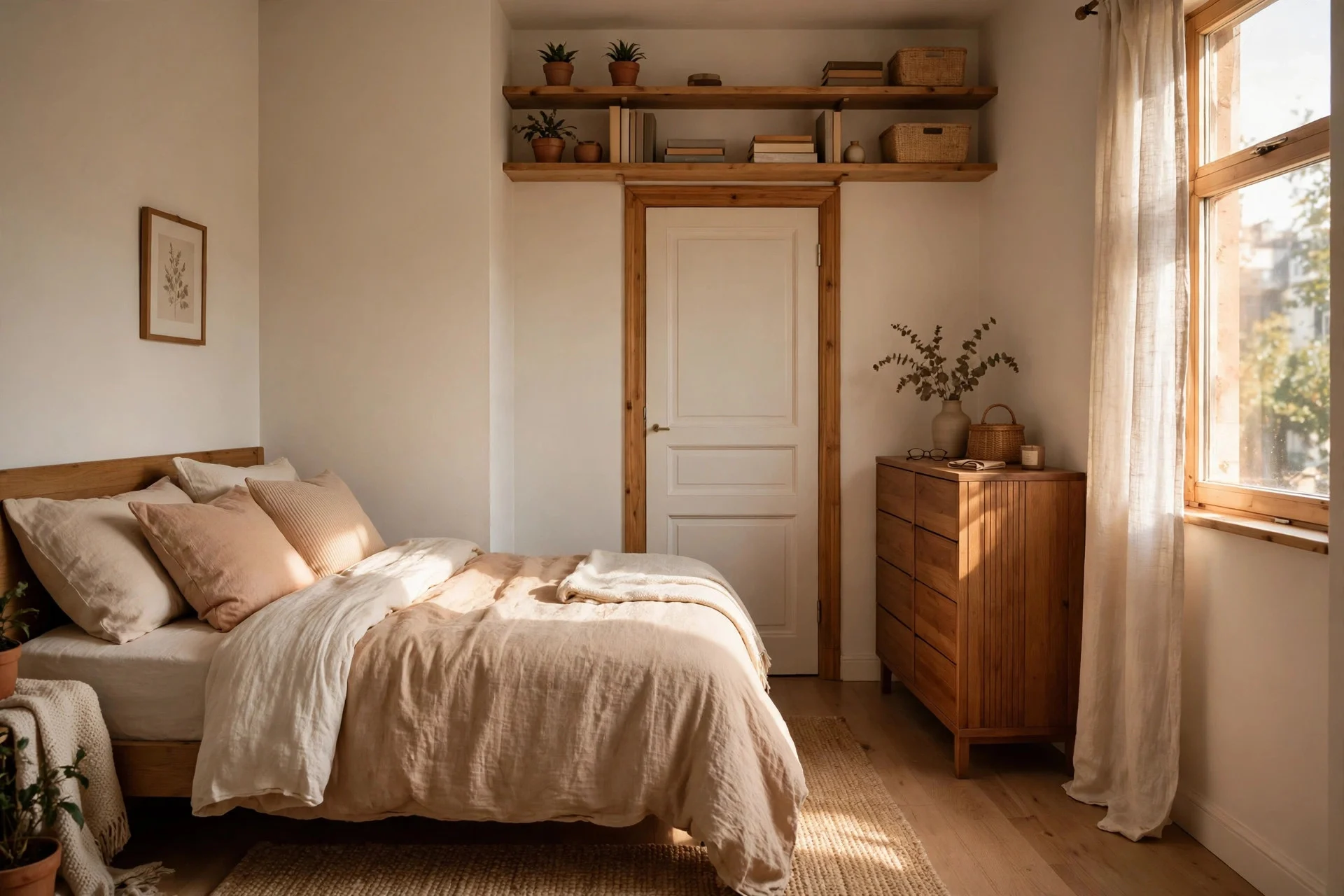
11. Go Tall and Narrow With Storage
Floor space is limited, but wall height usually is not. A tall, narrow dresser takes the same footprint as a nightstand yet holds five or six drawers, and shelves above a door turn dead space into storage for books and boxes. This fixes the “nowhere to put anything” feeling without adding a wide piece of furniture.
Cost: $80–$300 for a tall dresser, $20–$50 for over-door shelves. Difficulty: easy to moderate, 1–2 hours. Tip: anchor any dresser taller than 30 inches to the wall — it stops wobble on uneven apartment floors and it is a safety basic. Watch out: keep daily items in the middle drawers and rarely used things up high.
12. Add a Fold-Down Desk Beside the Bed
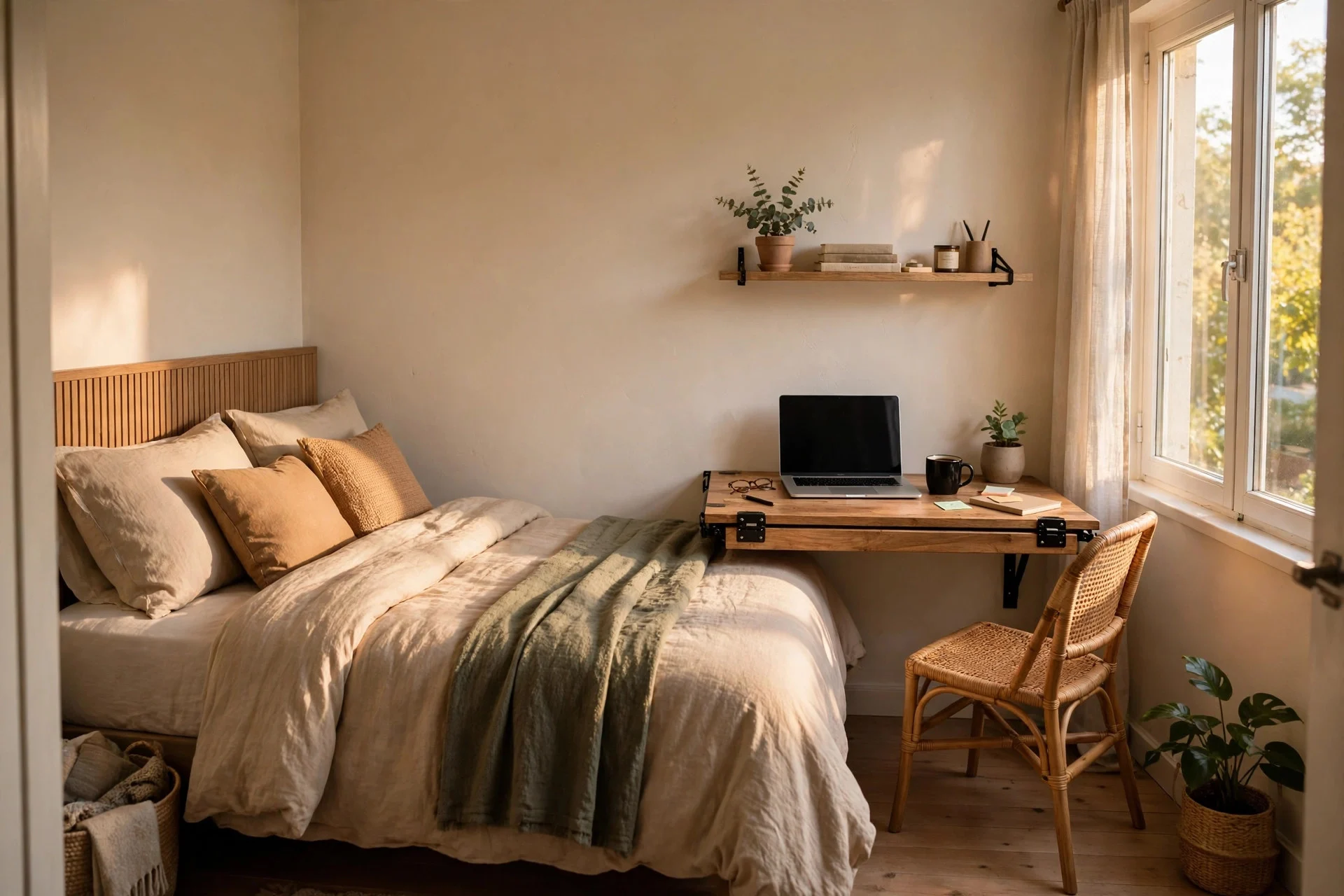
Many small apartments need the bedroom to double as a workspace, but a full desk plus a queen bed rarely fits. A wall-mounted fold-down desk beside the bed solves it: fold it up for laptop work, flat against the wall when done, and the floor stays free. It gives you a real work surface without permanently giving up 8 square feet.
Cost: $60–$180 for a fold-down wall desk. Difficulty: moderate, 1–2 hours including finding studs. Tip: mount it near an outlet and add a small cable clip so charging cables do not dangle across the bed. Watch out: check the weight rating and mount into studs — a desk that holds a laptop, monitor, and leaning elbows needs solid support, not drywall anchors alone.
13. Keep Walls Light and Pick One Accent
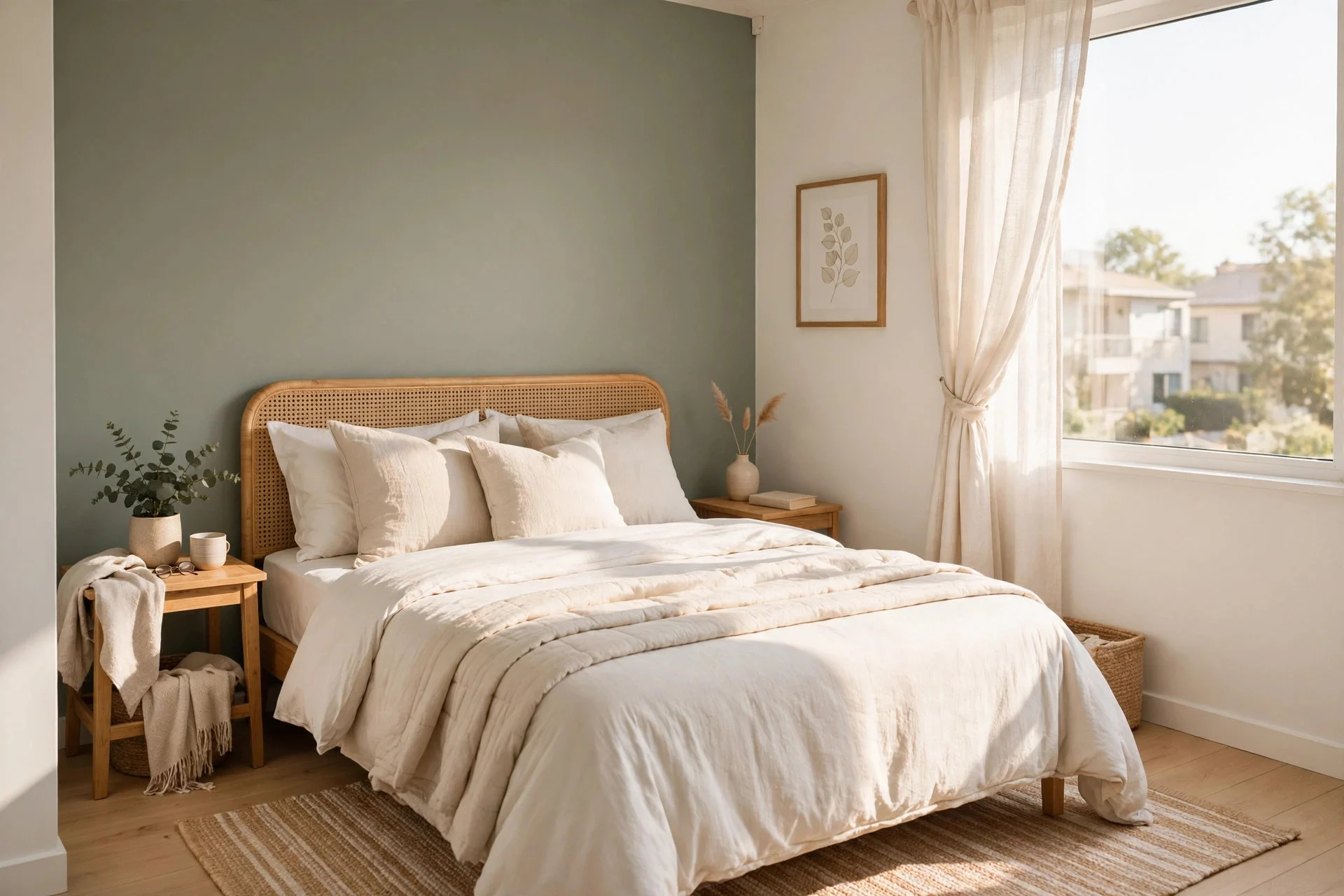
Color is not decoration here — it is a layout tool. Pale warm-white or soft grey walls reflect light and push the walls visually outward, while a single accent wall behind the headboard gives the bed a focal point without chopping the room into color blocks.
Cost: $40–$120 for paint and supplies for one accent wall. Difficulty: easy to moderate, half a day including drying time. Tip: pick a muted tone — sage, dusty blue, or warm clay — so the accent calms the room instead of dominating it. Watch out: paint a test patch and check it in morning and evening light before committing — small rooms change a lot with the sun.
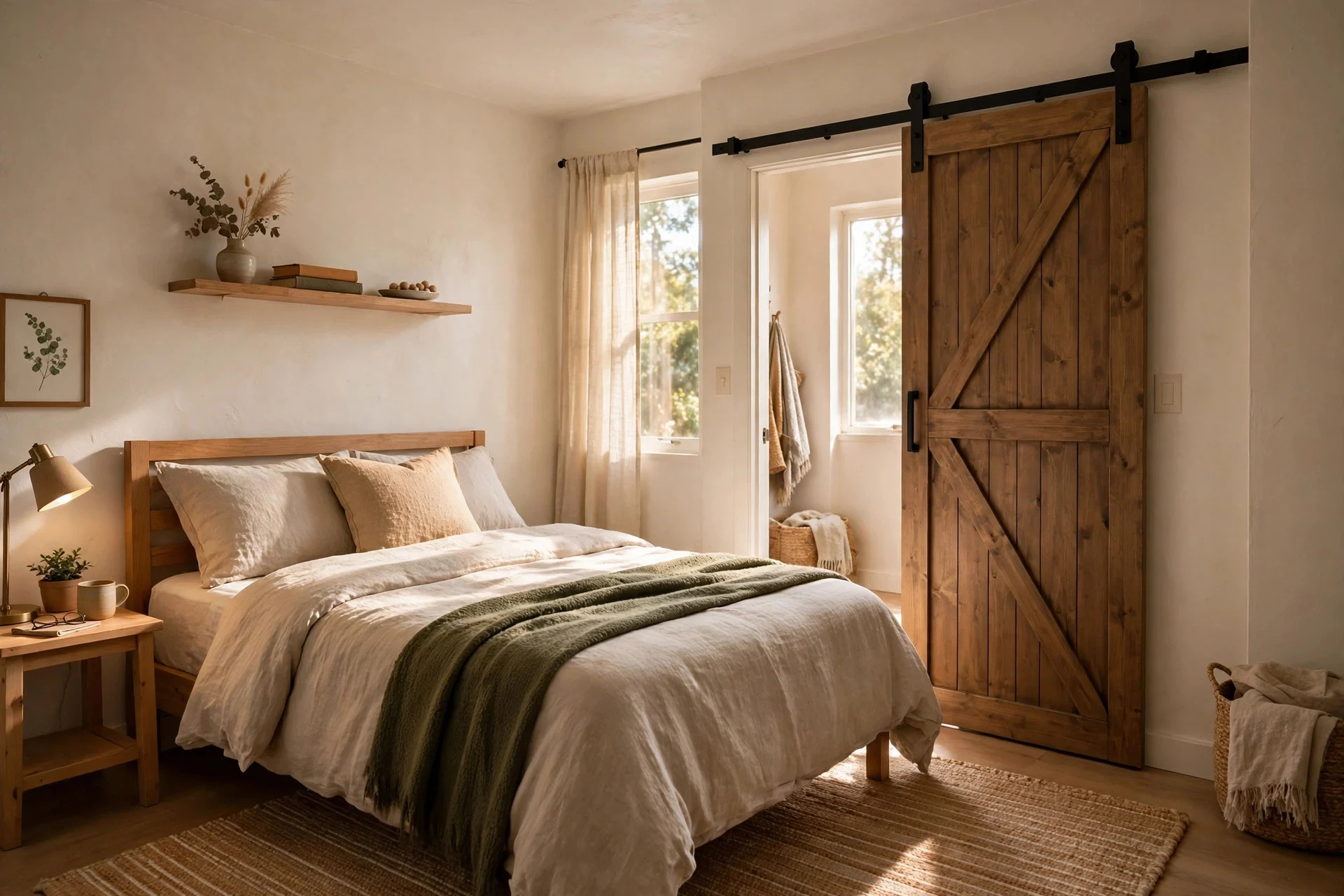
14. Replace the Swing Door With a Slider
A standard interior door needs about 9 square feet of clear floor to swing open — space you cannot use for the bed, a dresser, or a walkway. Swapping it for a sliding door on a rail, or a curtain on a ceiling track in a rental, hands that floor back to the room. It is one of the few fixes that actually adds usable square footage without knocking down a wall.
Cost: $80–$250 for a sliding rail kit and door, $20–$40 for a curtain track. Difficulty: moderate, 2–3 hours; renters should check with the landlord first. Tip: a curtain works best in rentals since it needs only a ceiling or wall track and leaves no big holes. Watch out: sliding doors do not block sound as well as solid swing doors, so keep this for bedroom-to-bedroom or closet doors rather than a bathroom door if noise matters. If your whole apartment is tight, not just the bedroom, these micro-apartment decor ideas and one-room apartment layout zoning tips help the rest of the space work as hard as the bedroom does.
Frequently Asked Questions
What is the smallest bedroom a queen bed fits in?
A queen bed physically fits in a 9 by 9 foot room, but 10 by 10 feet is the smallest size that still leaves comfortable walking space. Below that, push the bed into a corner and skip nightstands entirely. Always measure door swing and closet clearance first — those eat usable floor faster than the bed itself.
Should a queen bed go against the wall in a small room?
Yes, in most small bedrooms. A bed against the longest wall or tucked into a corner frees the most open floor, which matters more than access from both sides. The trade-off is that making the bed and getting in on the wall side take a bit more effort, so keep the wall side for the person who minds that less.
How much walking space do you need around a queen bed?
Aim for 24 inches on each side and at least 30 inches at the foot of the bed where drawers or wardrobe doors open. You can get by with 18 inches on one side in a very tight room. If measurements fall short, switch to floating shelves and a low frame to claw back a few inches.
Can you fit a queen bed and a desk in a small bedroom?
Yes, with a compact setup. A fold-down wall desk or narrow 36-inch desk beside the bed works where a standard desk will not, and a tall narrow dresser can replace a wide one to free wall space. Keep the desk chair lightweight so it tucks under the desk or against the wall when you are not working.
Does a rug make a small bedroom with a queen bed feel smaller?
Not if it is sized right. A rug that is too small chops the floor into pieces, while one under the whole bed can overwhelm a tight room. The sweet spot is a rug under the lower two-thirds of the bed, extending about 18 inches past the foot — big enough to ground the bed, small enough to leave visible floor.
Your Small-Bedroom Queen Bed Checklist
Measure the room, door swing, and closet clearance before buying anything. Pick the bed position first — longest wall or corner — then fit everything else around it. Choose a low frame, skip the bulky furniture set, and let the bed itself store things if you can. Keep walls light, add one accent, and use mirrors and tall narrow storage to do the heavy lifting.