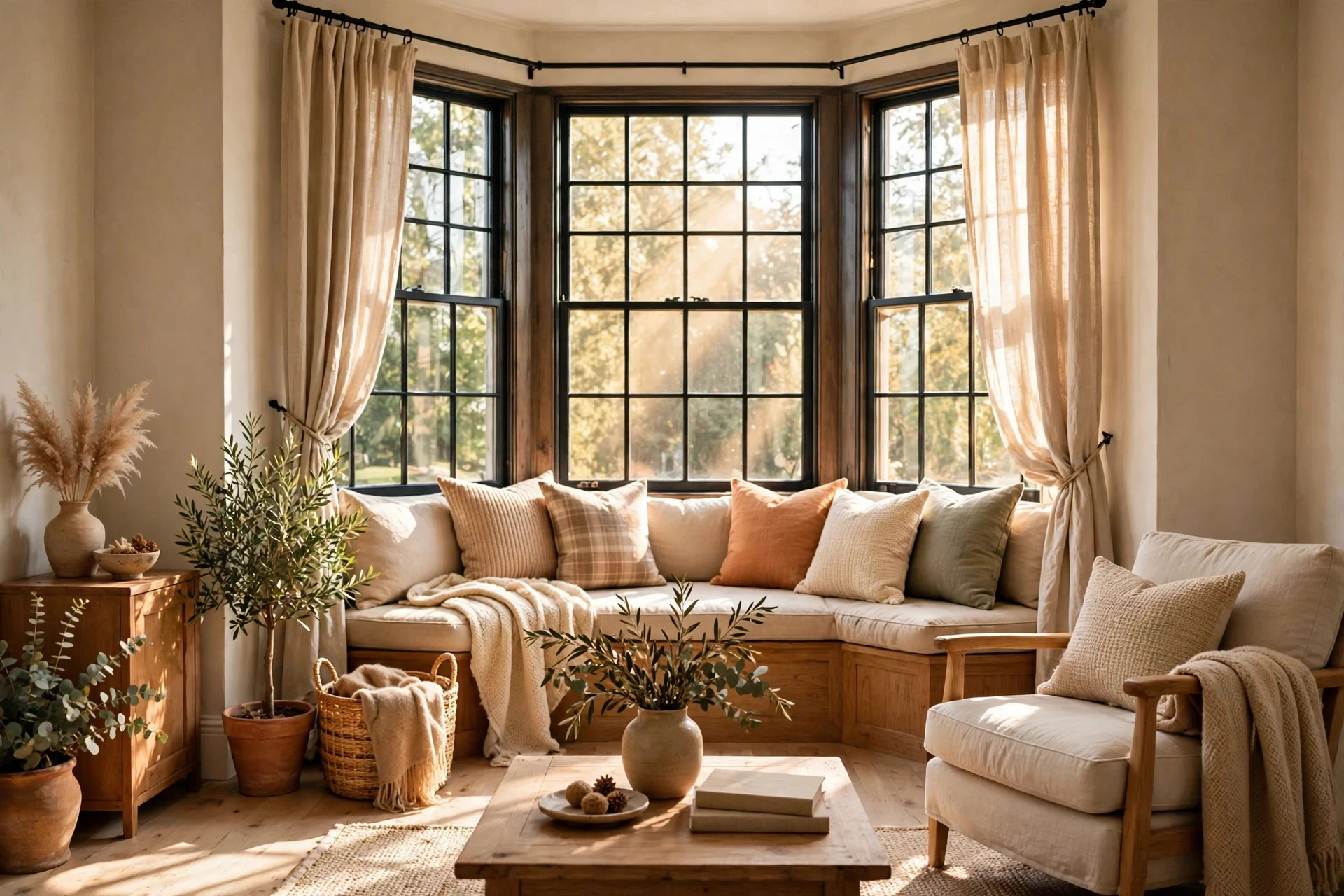
12 Living Room Ideas With Arched Doorways and Soft Curves
If you’re dreaming of an arched doorway living room but aren’t sure where to start, you’re not alone. Arches have a way of making a room feel calmer and more considered, even when everything else is simple. The good news: you don’t need to knock down walls to get the look — a painted arch, a curved sofa, or one arched mirror can change the whole feel of a room.
Below are 12 ideas built around arches and soft curves, from real construction projects down to renter-friendly weekend tricks. Each includes a realistic cost range, a difficulty rating, and one hands-on tip. Arches look best when the rest of the room stays simple.
1. Open Up a Cased Opening Into an Arch
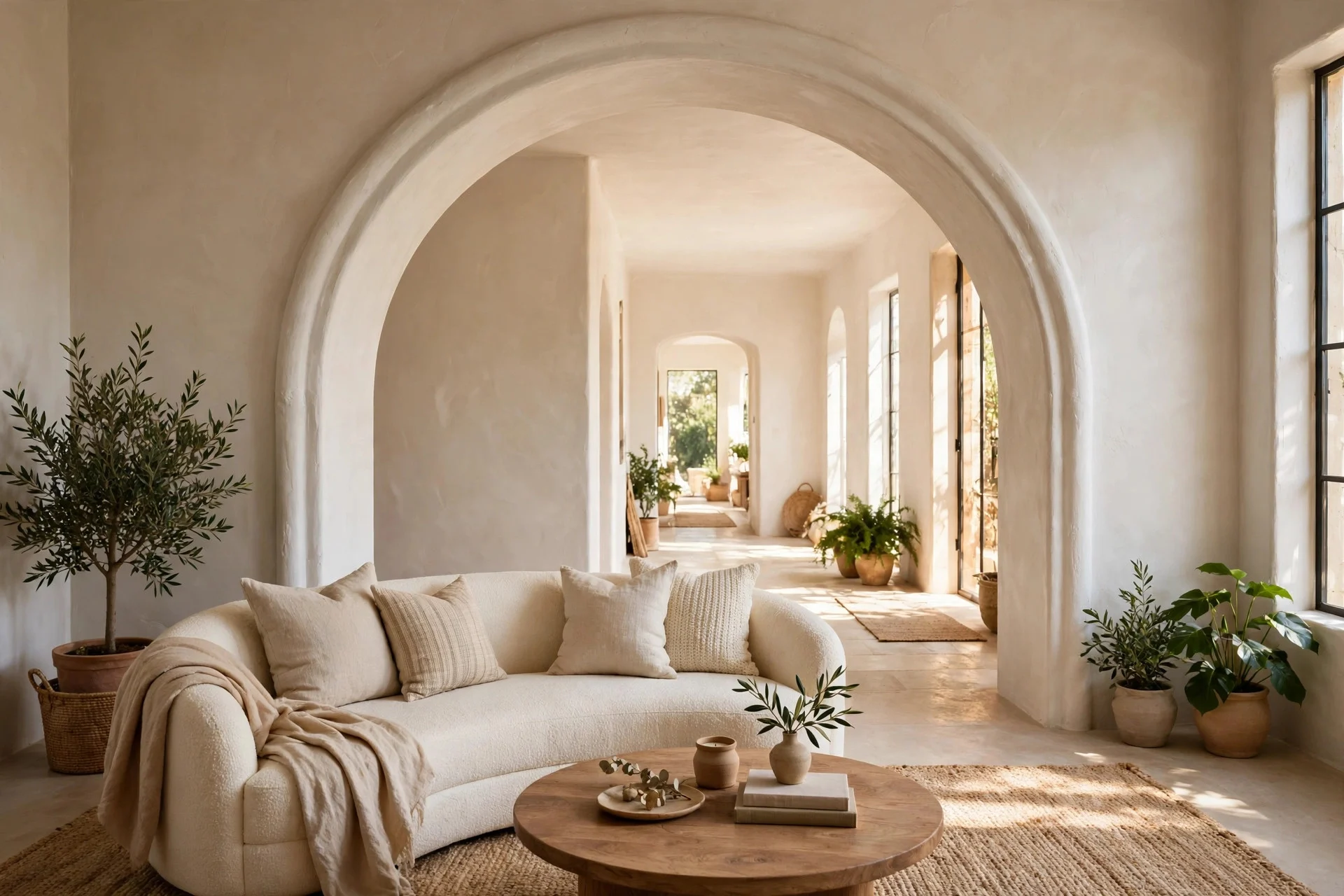
The full-commitment move: take a standard rectangular doorway and reframe it as a true arch. This is the idea that defines the arched doorway living room look, because the curve becomes part of the architecture instead of decoration. Between a living room and a dining room or hallway, a rounded opening softens the transition and pulls the two spaces together.
The catch is structure: a load-bearing wall needs a proper header and an engineer’s say-so, and any wall needs careful drywall work for a clean, symmetrical curve. A lopsided arch is worse than no arch.
Cost: $800–$2,500 when a contractor does the framing and drywall; more if electrical or plumbing has to move.
Difficulty: Hard — hire a pro unless you’re experienced with framing.
Tip: Ask your contractor to use a flexible arch kit or pre-formed arch bead rather than freehand-cutting drywall; the curve comes out cleaner and the corner bead makes the mud work far easier.
Watch out: Check what’s inside the wall first. Older homes love to hide pipes and junction boxes exactly where your arch wants to be.
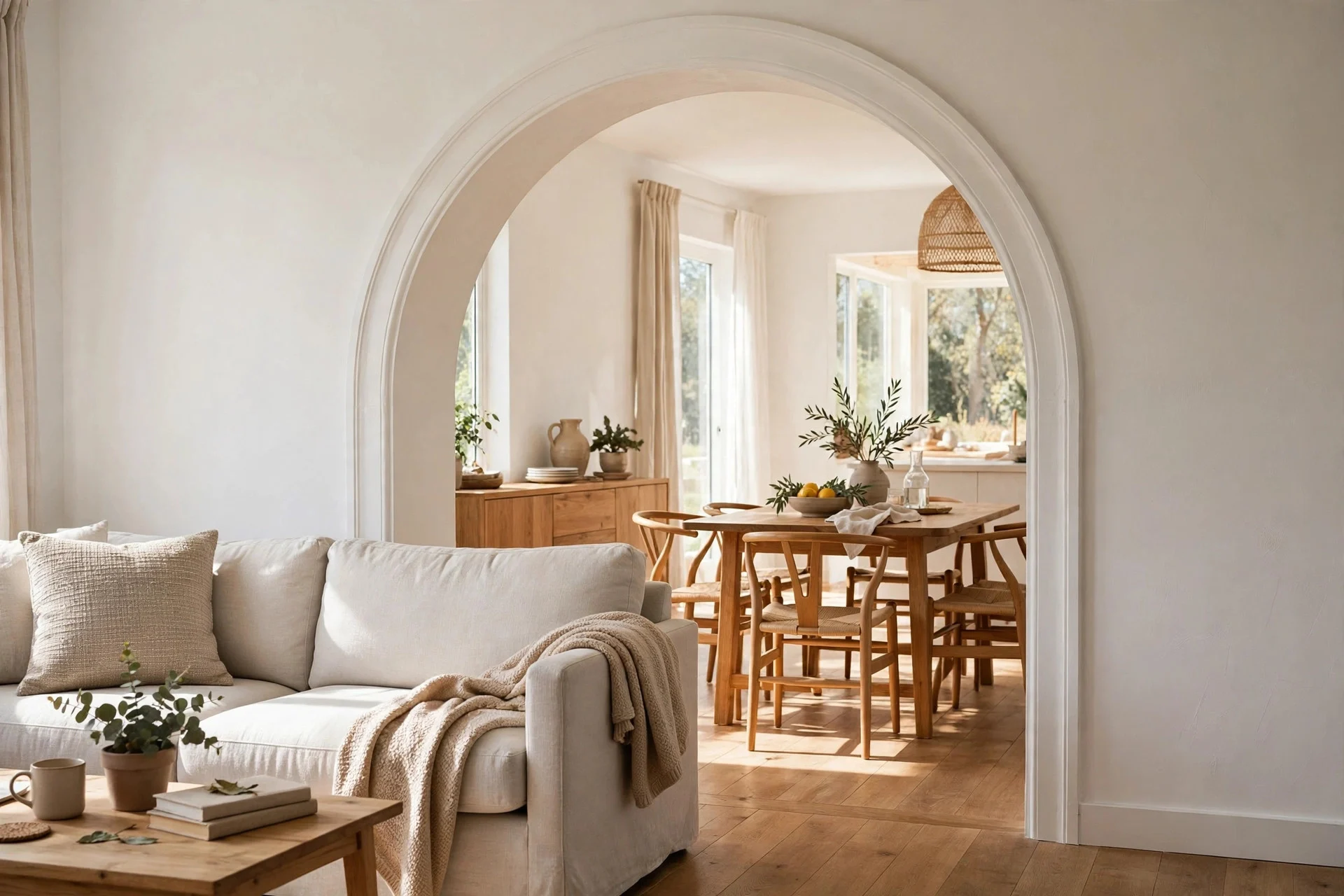
2. Paint a Faux Arch Behind the Sofa
Want the arch feeling with zero construction? Paint one. A large, flat arch on the wall behind your sofa reads as an architectural feature from across the room, and it costs almost nothing. Designers often use it in boxy new builds where every wall meets at a sharp right angle.
Swing a clean semicircle with a pencil tied to a string, or paint a modern “rainbow” arch with concentric bands of color. Keep the rest of the wall neutral and let the arch be the moment.
Cost: $30–$80 for a quart of good paint, painter’s tape, and a small roller.
Difficulty: Easy — a Saturday afternoon project.
Tip: On textured walls, a steady hand with a loaded brush gives a crisper edge than painter’s tape, which paint loves to bleed under.
Watch out: Dark colors on a faux arch can feel heavy in a small room — test with a sample board before committing to the full wall.
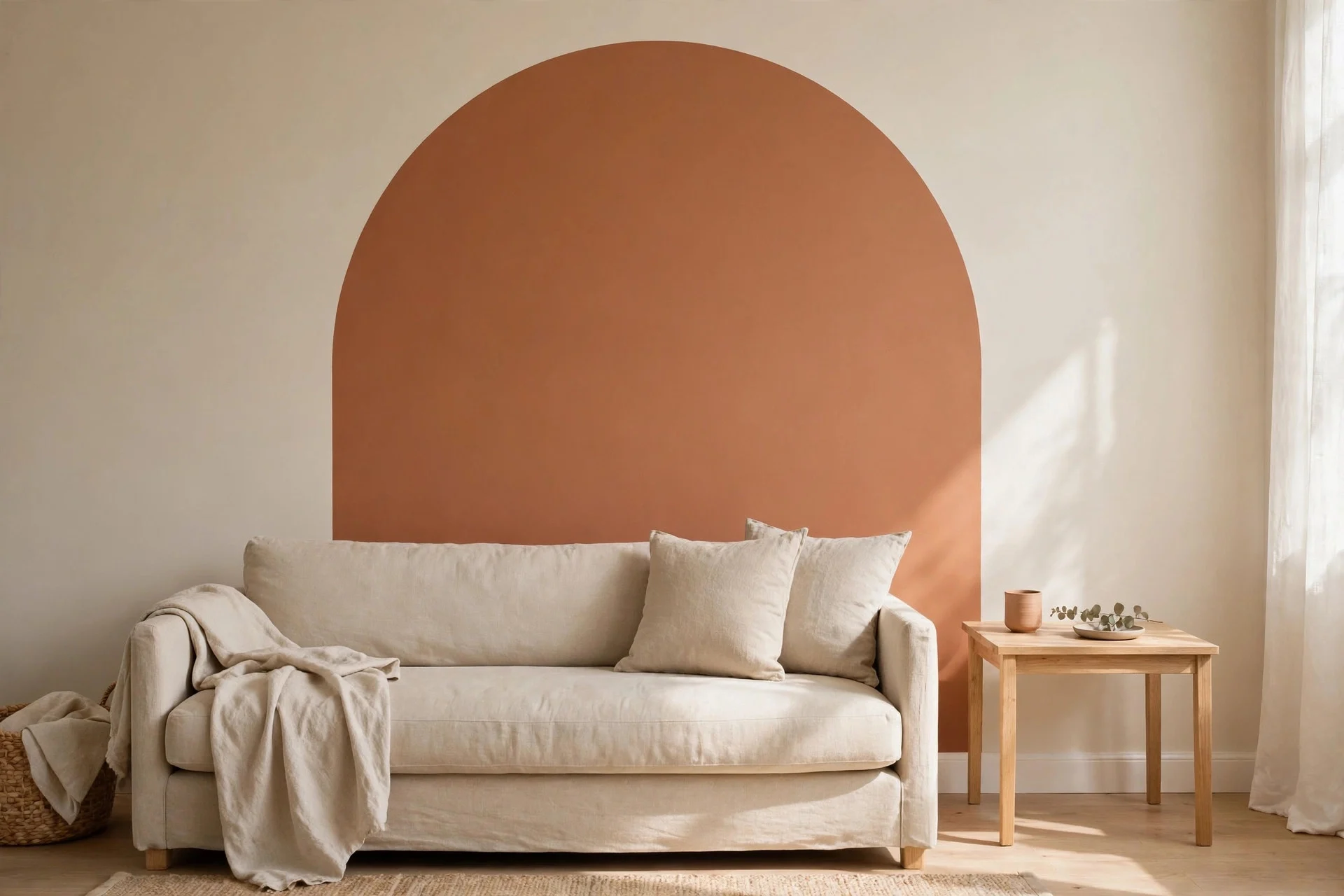
3. Choose a Curved Sofa as the Anchor
A curved sofa is the furniture version of an arch. Where a straight sofa reinforces a room’s boxy lines, a gently curved one breaks them up and pulls people into conversation. If your living room already has an arched doorway, a curved sofa echoes that shape and ties the space together.
Modern curved sofas are often subtle — just a gentle bow in the silhouette. In a neutral bouclé they read as calm; in velvet they become the room’s centerpiece.
Cost: $1,200–$4,000 for a quality curved sofa.
Difficulty: Easy to buy, tricky to place — it needs more floor space than a straight sofa.
Tip: Float a curved sofa off the wall rather than pushing it back; the curve looks intentional when you can see air behind it. If you love deep green upholstery, our green velvet sofa living room guide shows how to style it without the room feeling dark.
Watch out: Curved sofas fight with boxy end tables and square rugs. Pair them with round side tables and you’ll thank yourself.
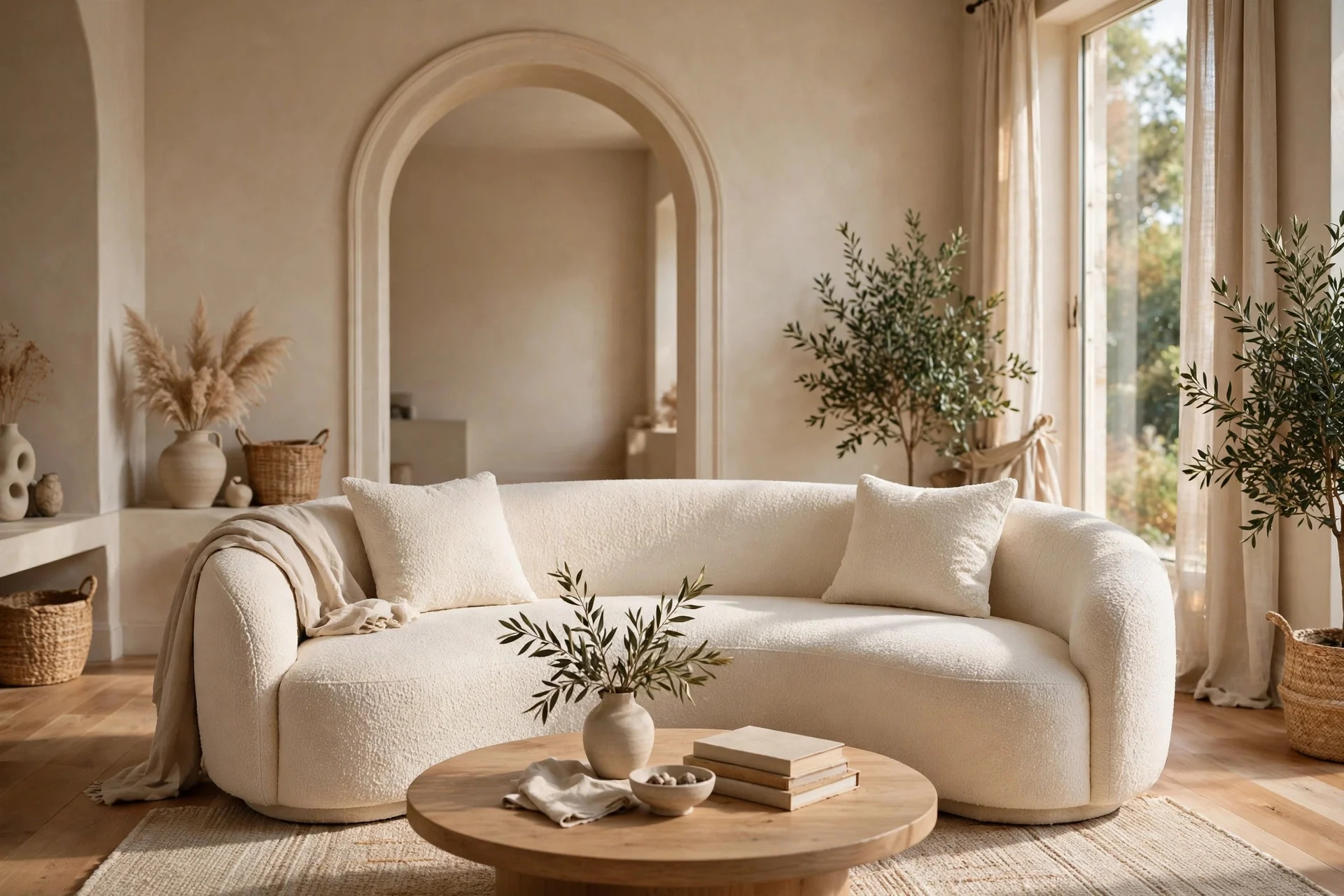
4. Hang an Arched Mirror Over the Console
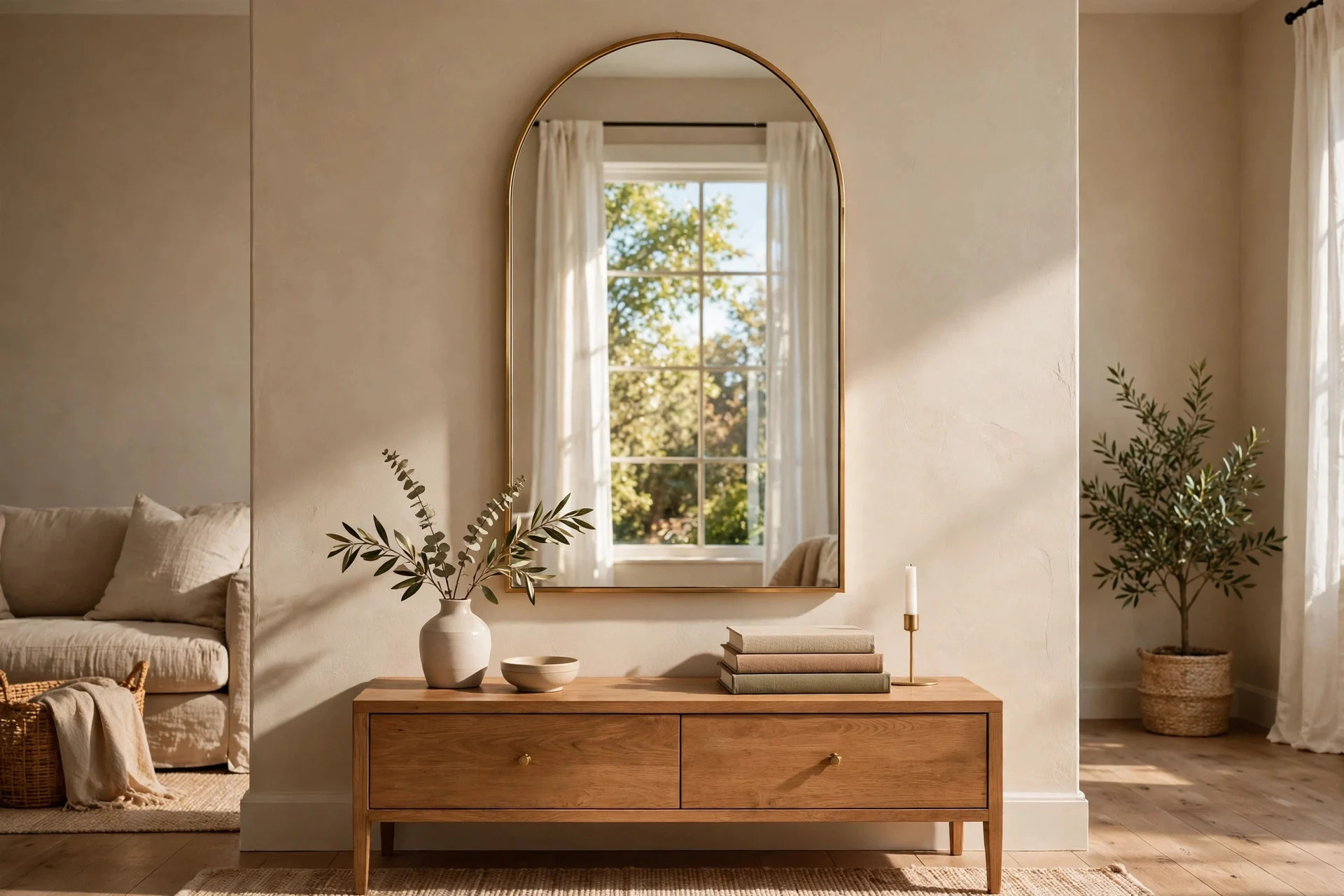
Arched mirrors are the fastest way to get the arch look on a wall without touching a paintbrush. Hung over a console table or fireplace, an arch-top mirror pulls the eye upward and adds the curved silhouette the room is missing. The reflection also bounces light deeper into the room, which matters if your living room faces away from the sun.
A mirror that’s too small looks like an afterthought, so go as tall as the wall allows. A simple thin brass or black frame keeps it from looking fussy.
Cost: $80–$400 depending on size and frame.
Difficulty: Easy — but use proper wall anchors, because large mirrors are heavy.
Tip: Hang it so the bottom edge sits 6–8 inches above the console. That gap keeps the vignette feeling connected without crowding the surface below.
Watch out: Check what the mirror reflects before you drill. A beautiful arched mirror reflecting a cluttered corner is a wasted opportunity — angle it toward a window or the prettiest part of the room.
5. Pair a Barrel Chair With a Round Ottoman
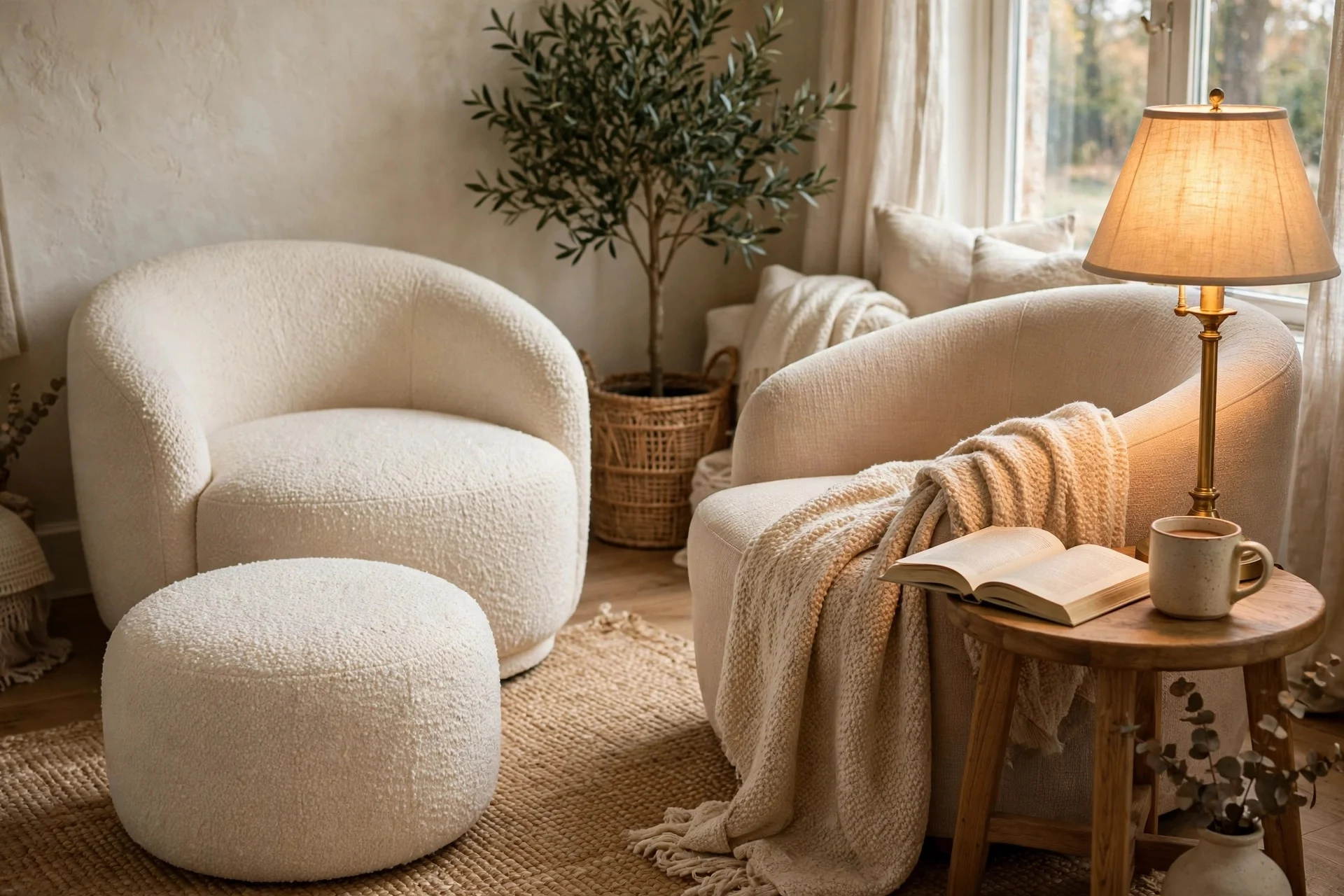
Barrel chairs are basically arches you can sit in — their rounded backs bring a soft curve to any corner. One barrel chair plus a round ottoman creates a reading spot that looks deliberately styled, and the pair takes up barely more floor space than a single armchair. The ottoman doubles as footrest, extra seating, or a side table with a tray.
This combo works hardest in rooms that already have an arched doorway: the chair’s curve repeats the doorway’s curve at furniture scale.
Cost: $250–$700 for the chair; $80–$200 for the ottoman.
Difficulty: Easy — it’s a furniture swap.
Tip: Pick fabrics with some texture, like a nubby weave, so the curved shape catches the light. Flat fabrics can make barrel chairs look blobby.
Watch out: Barrel chairs turn inward visually, so leave a clear 30 inches in front for legroom and traffic.
6. Build Arched Niches Into a Blank Wall
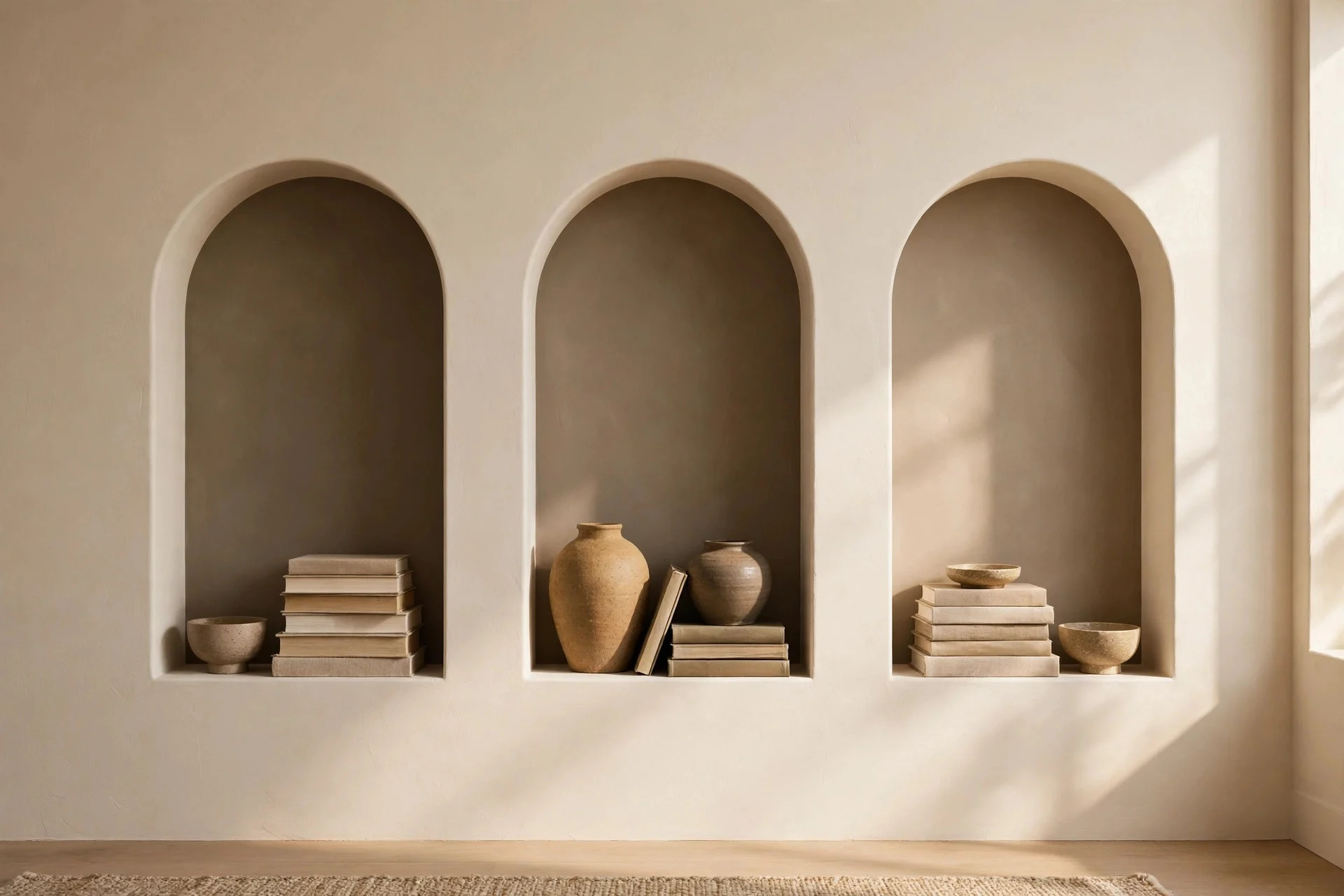
Arched niches turn a long, empty living room wall into architecture: shallow recessed alcoves with arched tops that hold books, ceramics, or art beautifully, with a shadow line flat shelves can’t match.
Build them with a simple framed bump-out, or fake the effect with applied trim molding on a flat wall — the trim version reads almost as well from normal viewing distance for a fraction of the cost.
Cost: $150–$500 per niche for the trim-molding version DIY; $1,000+ each for true recessed niches built by a carpenter.
Difficulty: Medium for the trim version; Hard for recessed.
Tip: Paint the inside of the niche one shade darker than the wall. The contrast makes the arch shape pop and gives displayed objects a gallery backdrop.
Watch out: Keep the styling minimal — three objects max per niche. Arched niches with clutter look like a thrift store shelf.
7. Lay Down a Round Rug
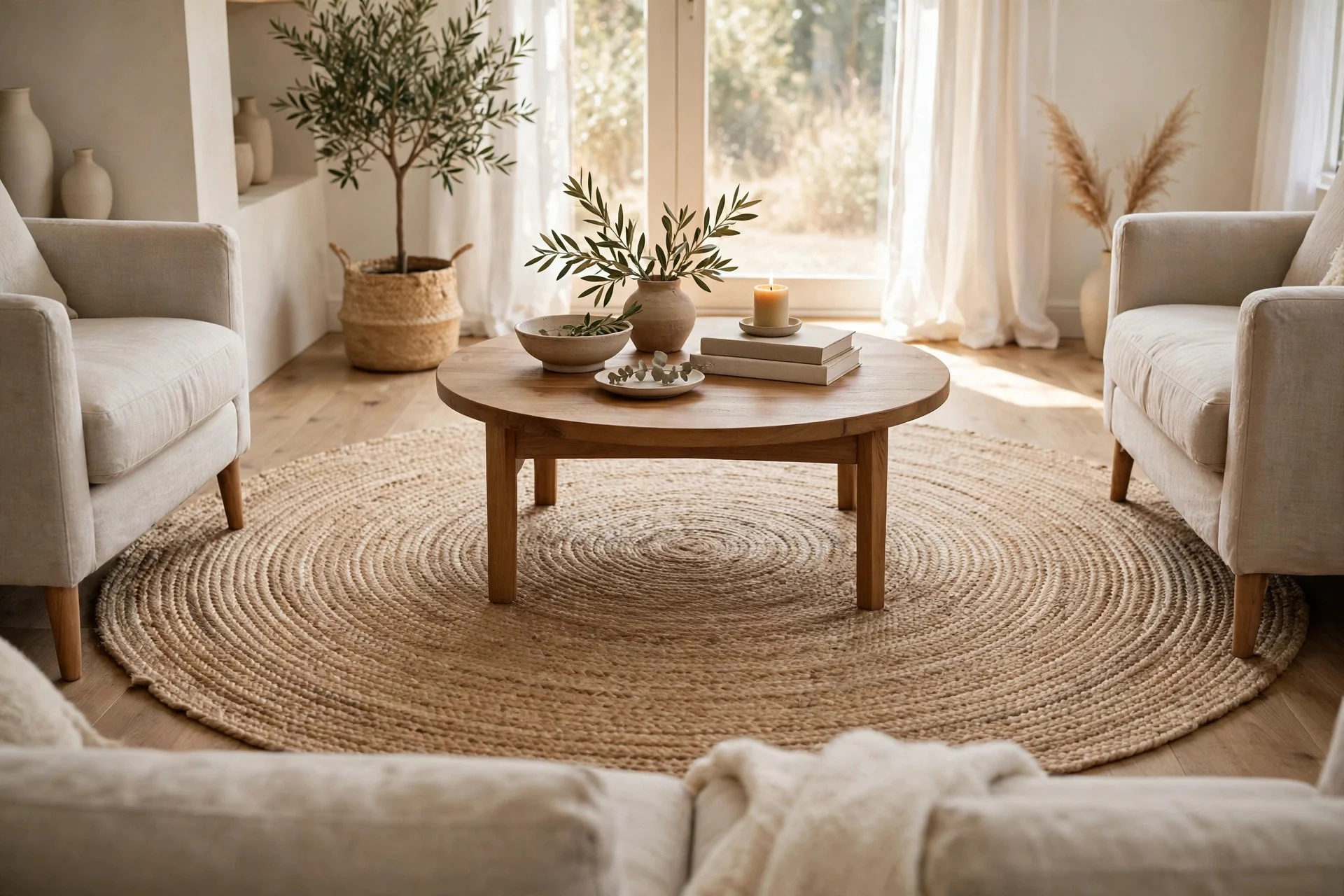
A round rug is the lowest-effort curve you can put in a living room, and it’s surprisingly effective. Rooms are rectangles and so is the rug, usually. A round rug under the coffee table breaks that monotony in one move and softens the hard lines of everything on it.
It’s also a great tester: live with a round rug for a month before committing to bigger curved projects.
Cost: $150–$600 for a quality 8-foot round rug.
Difficulty: Easy — unroll and adjust.
Tip: The front legs of the sofa and chairs should all sit on the rug. A round rug that’s too small and floating under just the coffee table looks like a coaster.
Watch out: In very long, narrow rooms one big round rug can emphasize the tunnel feeling — run two smaller round rugs instead.
8. Add an Arc Floor Lamp
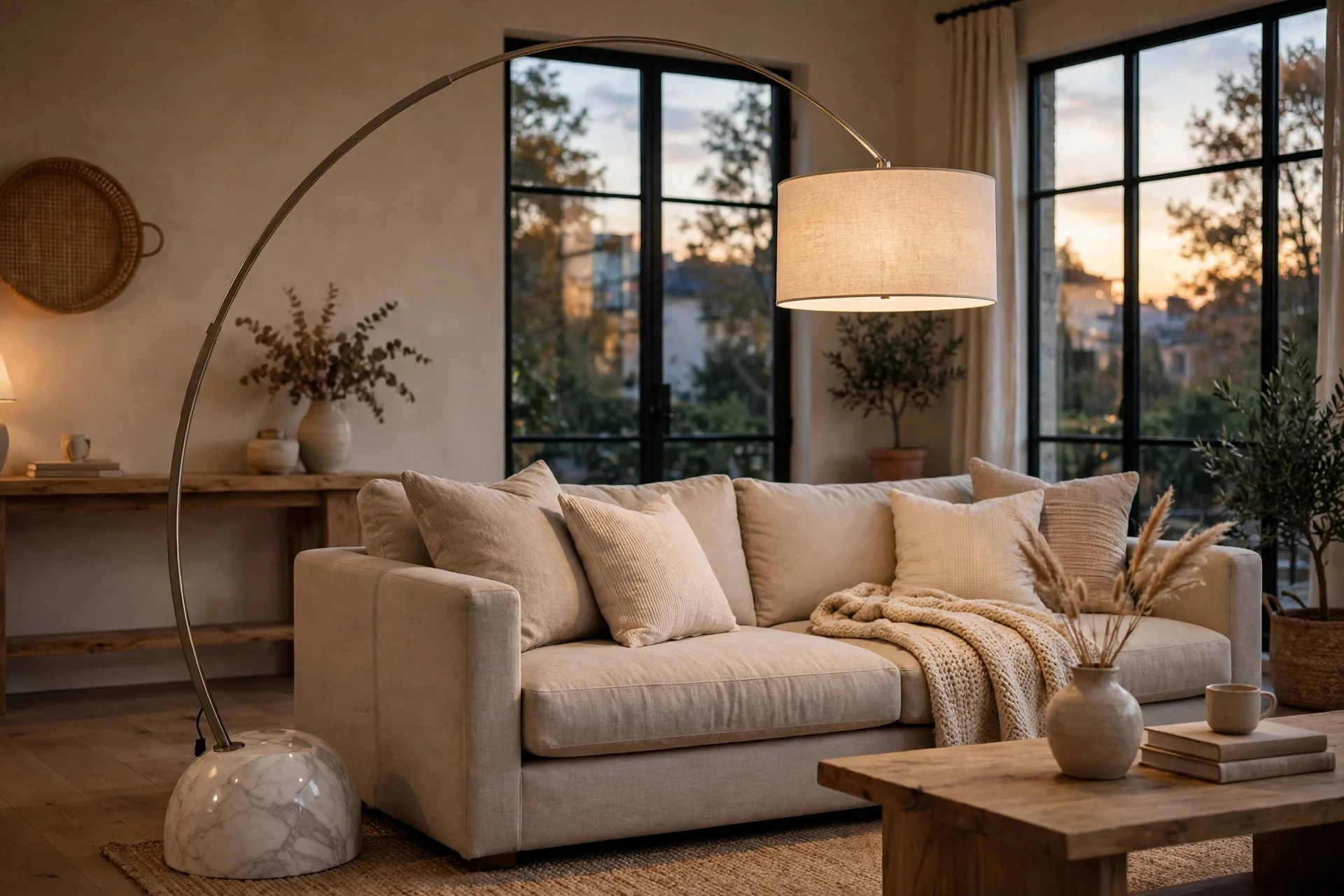
An arc lamp is a curve with a job. The sweeping arm reaches over a sofa or reading chair and brings light exactly where you need it, no side table required. It adds vertical drama too — the arc’s high point draws the eye up, which makes ceilings feel taller and echoes the shape of an arched doorway across the room.
A marble base suits mid-century and modern rooms; slimmer matte-black versions work in minimal spaces. Either way, the heavy base is non-negotiable for safety.
Cost: $120–$500.
Difficulty: Easy — it plugs in.
Tip: Position the arc so the shade hangs about 5 feet off the floor over the seating — high enough to walk under, low enough that the light actually lands on the book in your lap.
Watch out: If you have toddlers or a dog with a wagging tail, anchor it against a wall or choose a shorter arc.
9. Dress Arched Windows the Right Way
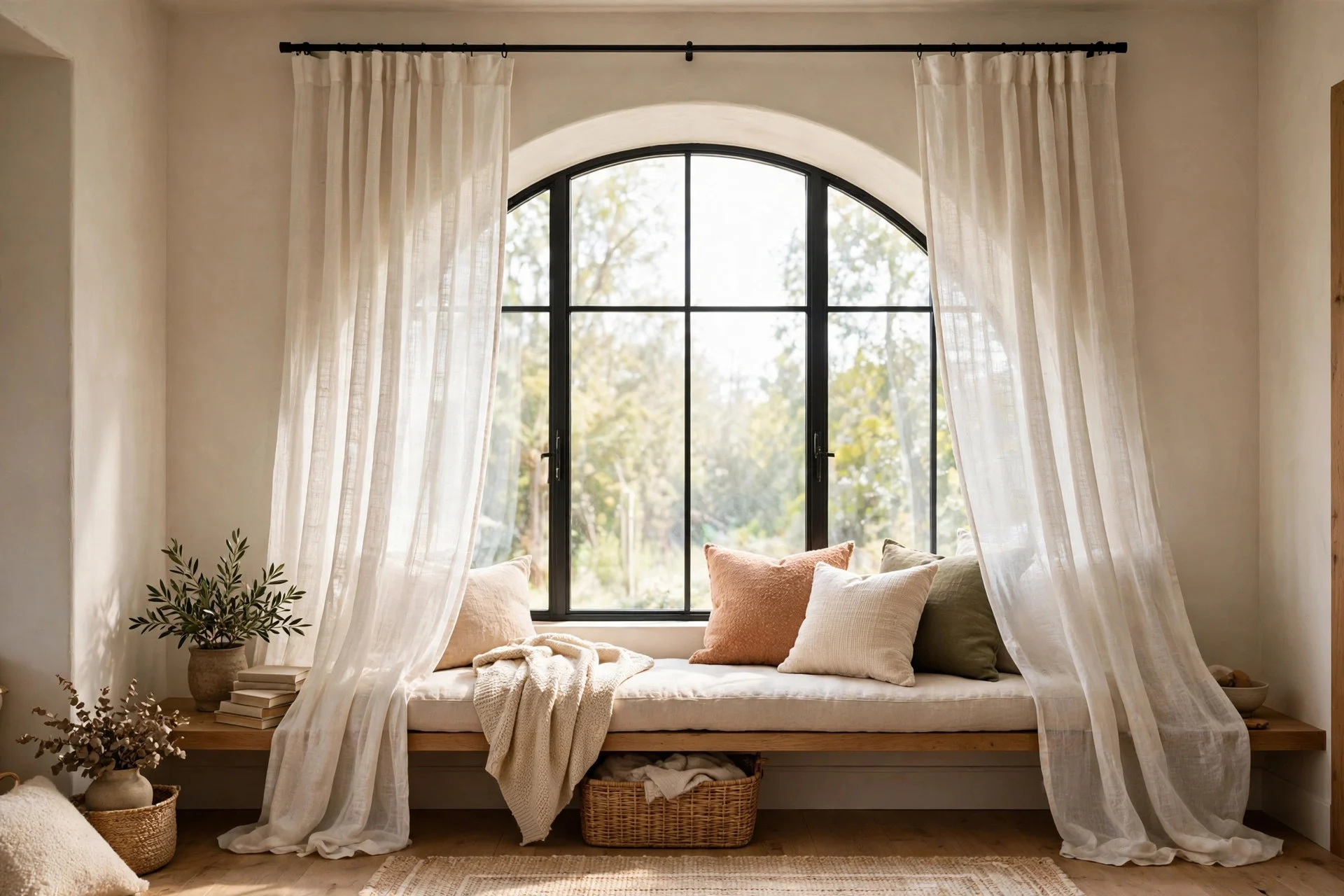
Arched windows are gorgeous — until it’s time for curtains. Resist the instinct to cover the arch; instead, hang the curtain rod straight across above the arch’s spring line (where the curve begins) and leave the arched top exposed. You keep privacy and light control, and the arch stays visible.
Mount the rod high and wide so the fabric stacks to the sides, framing the whole window. Sheer linen panels filter light without hiding the curve.
Cost: $60–$250 for a rod and panels; $400+ for custom.
Difficulty: Medium — mounting above an arch means drilling into solid wall, so use a stud finder.
Tip: Extend the rod 8–12 inches past the window on each side. When the curtains are open, they clear the glass completely and the full arch shows.
Watch out: Don’t try to follow the curve with the curtain itself — custom curved tracks exist but they’re expensive and fiddly. A straight rod mounted high is the cleaner, cheaper solution.
10. Go Round With the Coffee and Side Tables
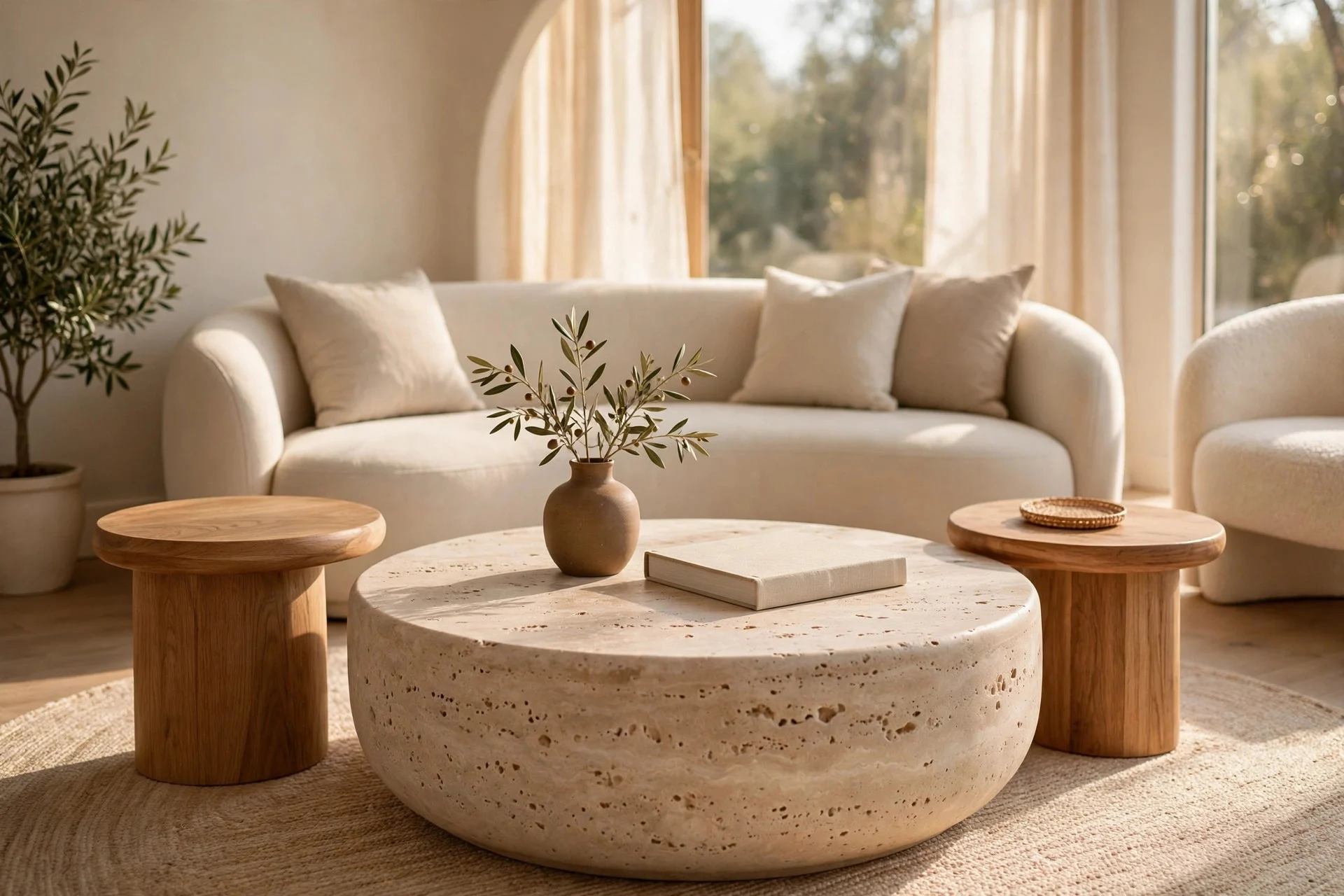
Once you have an arch in the room, repeat it in the small stuff. Round coffee tables and curved side tables pick up the doorway’s shape at the scale your hands touch, and that repetition makes curves feel intentional instead of random.
A round coffee table has a practical edge too — conversation seating flows better when everyone sits roughly equidistant. Nesting round side tables pull out when guests come and tuck back when they leave.
Cost: $100–$500 for a round coffee table; $60–$200 per side table.
Difficulty: Easy.
Tip: Mix materials to keep it interesting — a round travertine top with wooden legs, for example. The curve provides the cohesion, so the materials can vary.
Watch out: Round tables show dust and fingerprints more obviously on dark finishes. If that’s a pet peeve, choose a light stone or matte wood.
11. Carve Out a Curved Reading Nook
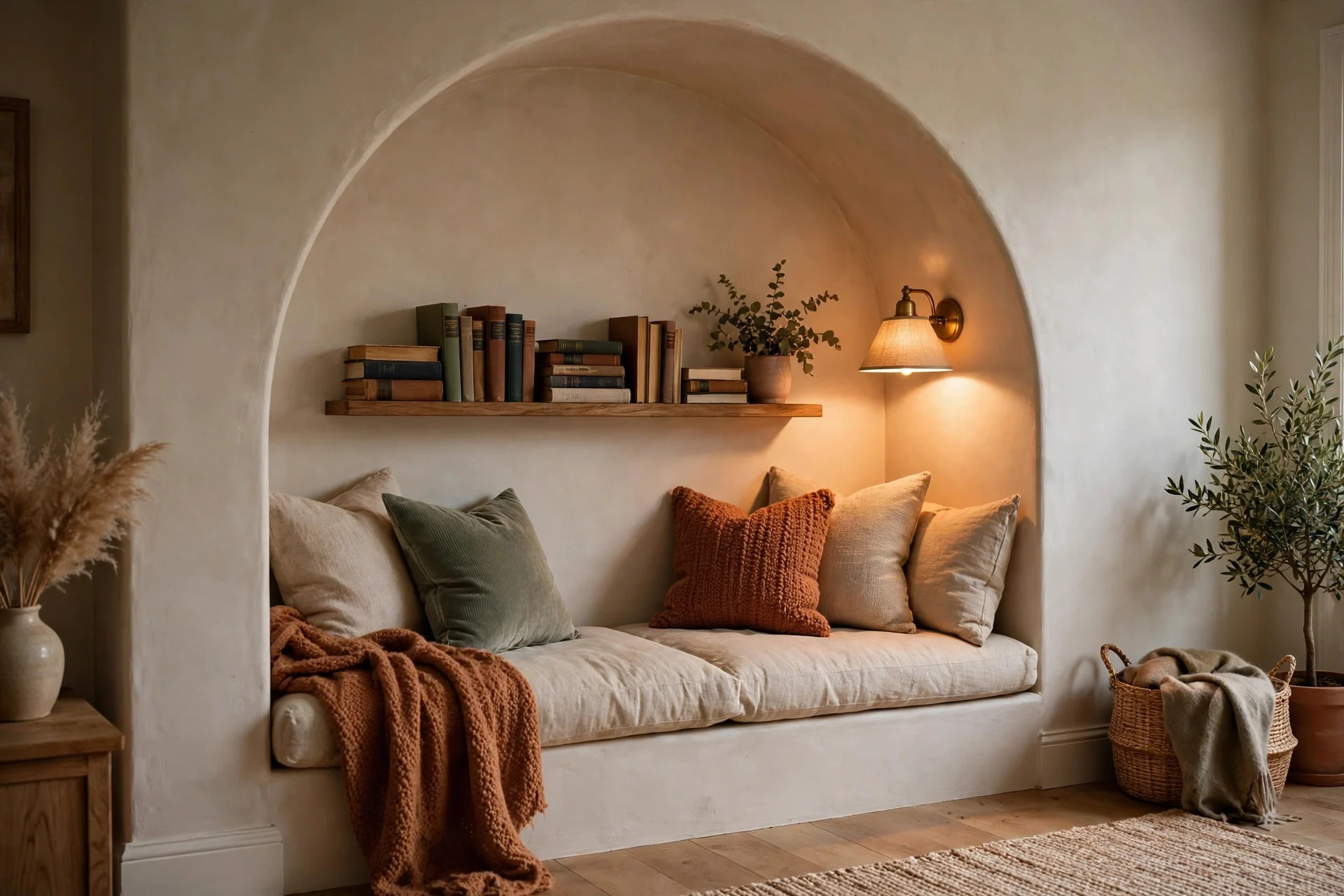
An arched alcove — even a shallow one — makes the best reading nook in the house. The curve wraps around you slightly, which feels sheltered in a way a flat corner never does. You can build a real arched alcove with framing and drywall, or fake one with a curved canopy curtain hung from a ceiling-mounted track: the fabric falls in a soft arch and creates the same cocoon feeling for a tenth of the cost.
Inside, keep it simple: a comfortable chair or bench with cushions, a wall-mounted reading light, and one small shelf for your books.
Cost: $80–$300 for the curtain-track version; $1,500–$4,000 for a built alcove with a bench.
Difficulty: Easy for the curtain version; Hard for the built version.
Tip: For the curtain version, use a bendable ceiling track — they’re sold for bay windows and curve easily by hand. Hang the panels long enough to pool slightly on the floor. Renters, take note: this is one of the friendliest ways to get an arch without touching the walls — see our renter-friendly living room ideas for more no-damage tricks.
Watch out: A nook needs its own light. Relying on the room’s general lighting leaves the alcove gloomy — a small plug-in wall sconce solves it.
12. Paint the Inside of Your Existing Arch
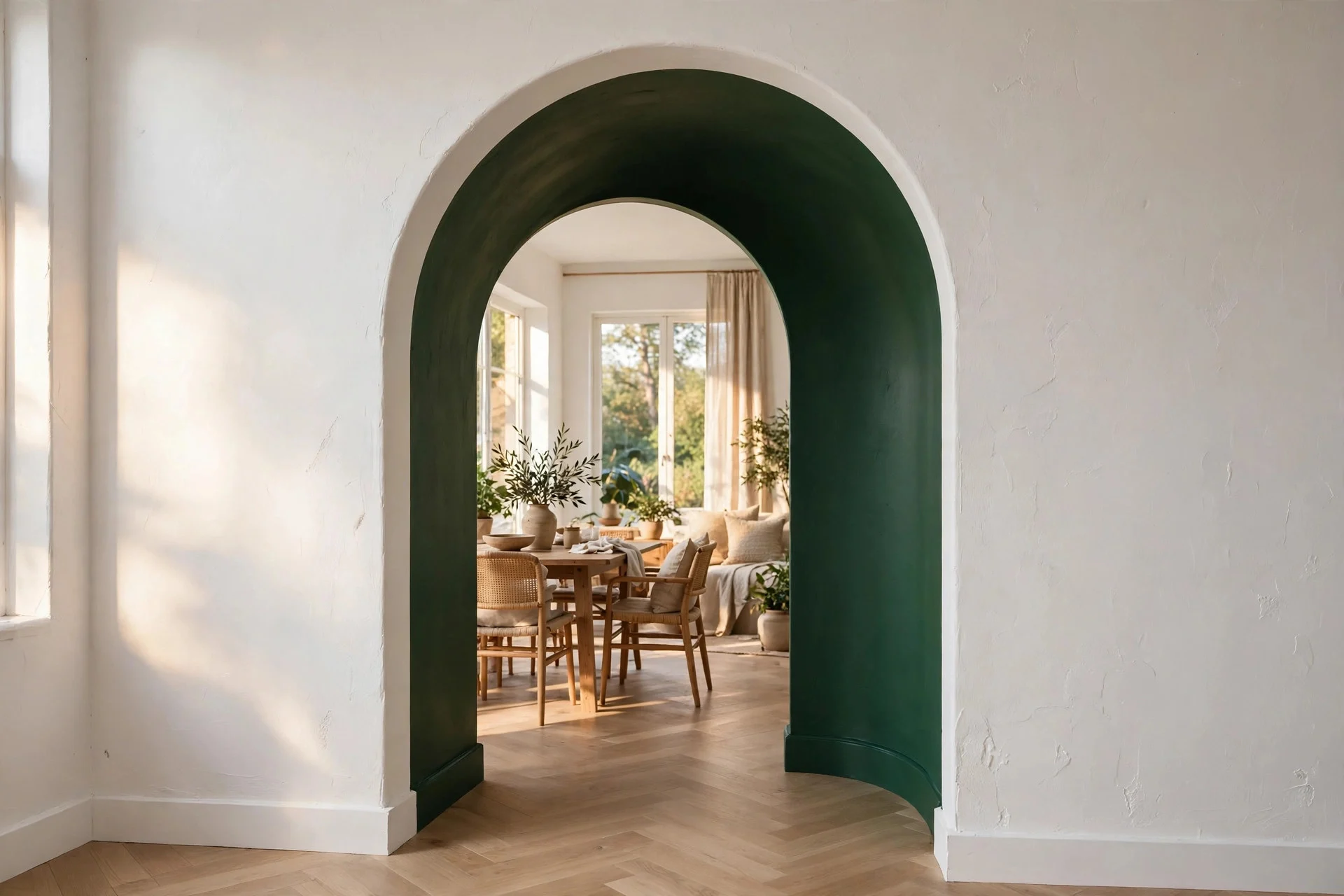
If you already have an arched doorway living room — lucky you — the cheapest upgrade is paint. Painting the inside reveal of the arch (the curved tunnel part) in a contrasting color turns a plain white arch into a deliberate design feature. A deep green, warm terracotta, or inky blue inside a white arch frames the view into the next room like a picture frame.
Limewash paint suits the old-world feeling of an arch, and its cloudy texture forgives imperfect roller work on curves. Our limewash walls living room guide walks through the technique.
Cost: $20–$60 for a quart of paint or limewash.
Difficulty: Easy — a couple of hours with a small roller and an angled brush.
Tip: Carry the accent color a few inches onto the flat wall around the opening, like a painted border. It makes the color look intentional rather than like you ran out of white paint halfway.
Watch out: Bold colors inside the arch can visually “shrink” the opening. If your arch is narrow, stick to mid-tones rather than near-black shades.
Frequently Asked Questions
How much does it cost to add an arched doorway to a living room?
For a non-load-bearing wall, expect $800–$2,500 for a contractor to frame, drywall, and finish a standard arch opening. Load-bearing walls need a structural header and possibly an engineer’s review, so they cost more. Budget 15% extra for surprises inside the wall.
Can renters fake an arched doorway?
Yes — convincingly. A painted arch, a peel-and-stick arch decal, or a freestanding arched room divider all give the silhouette with zero damage. A large arched mirror or a curtain hung from a bent ceiling track creates the curve in three dimensions without touching the walls.
What furniture suits a room with arched doorways?
Curved and rounded pieces echo the architecture: curved sofas, barrel chairs, round coffee tables, and arc lamps all repeat the arch’s line at furniture scale. Avoid ultra-boxy, sharp-cornered pieces right next to the arch — the contrast can make both look accidental. A round rug under the seating area ties it all together.
Do arched doorways make a small living room feel bigger or smaller?
Bigger, in most cases. An arch opens the sightline into the next room without a door slab or sharp frame breaking it up, so the eye travels further. The effect is strongest when both rooms share a similar wall color. Just don’t paint the arch’s interior too dark in a small room — that can visually narrow the opening.
Are arches going out of style?
Arches have been in and out of fashion for centuries — a classical architectural form, not a passing trend. Even when the current wave passes, a well-built arch reads as timeless. Painted faux arches might feel era-specific later, and those are a $40 fix.
Start With One Curve
You don’t need all twelve ideas. Most rooms only need one or two curves to change their character — a painted arch behind the sofa, a curved chair in the corner, a round rug under the table. Start with the cheapest version of the look you want and live with it for a few weeks before adding more.
Quick checklist before you begin: measure your doorway or wall, pick your curve (real, painted, or furniture), set a budget from the ranges above, and choose one anchor piece to build around. Then enjoy the softest-looking room on the block.