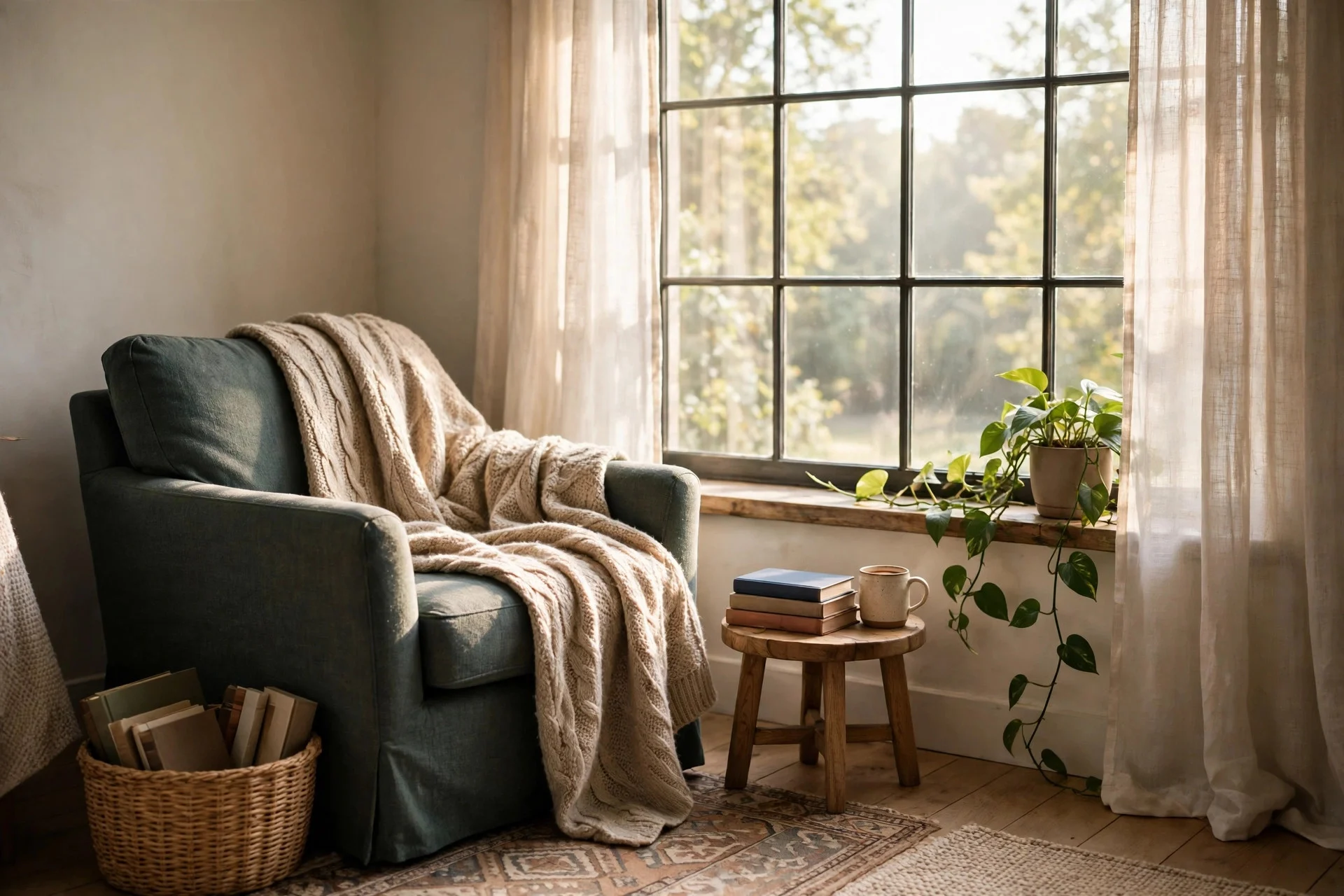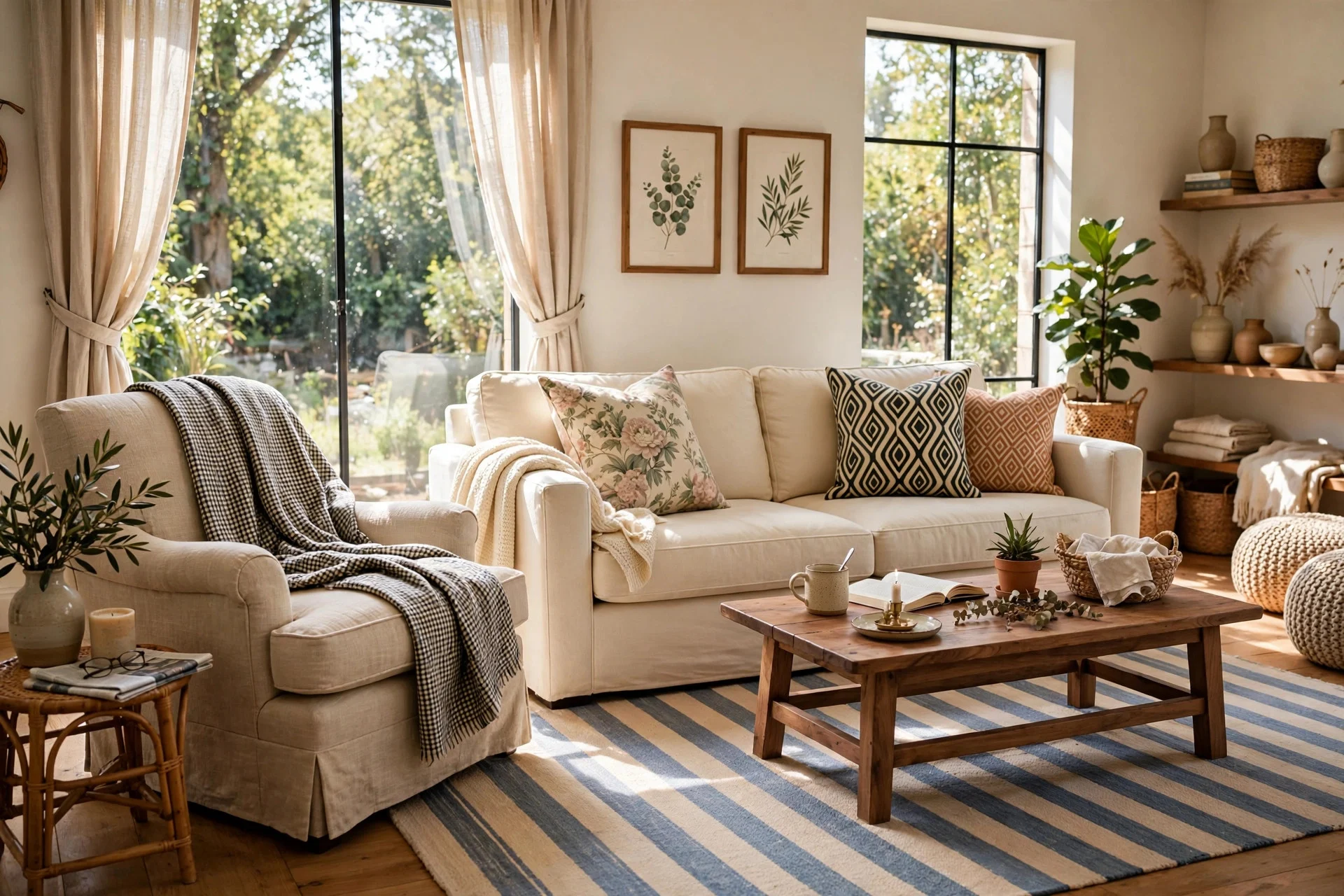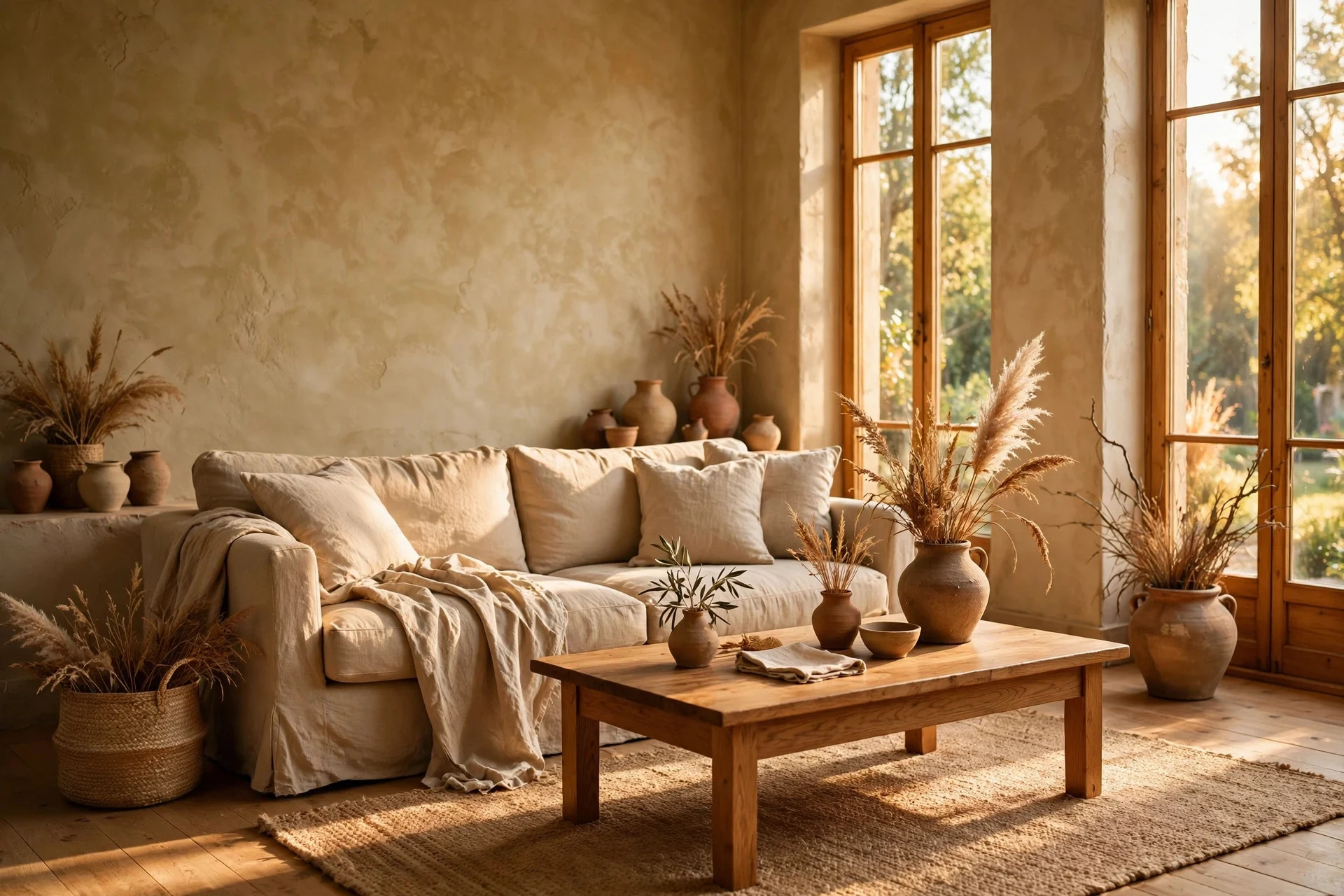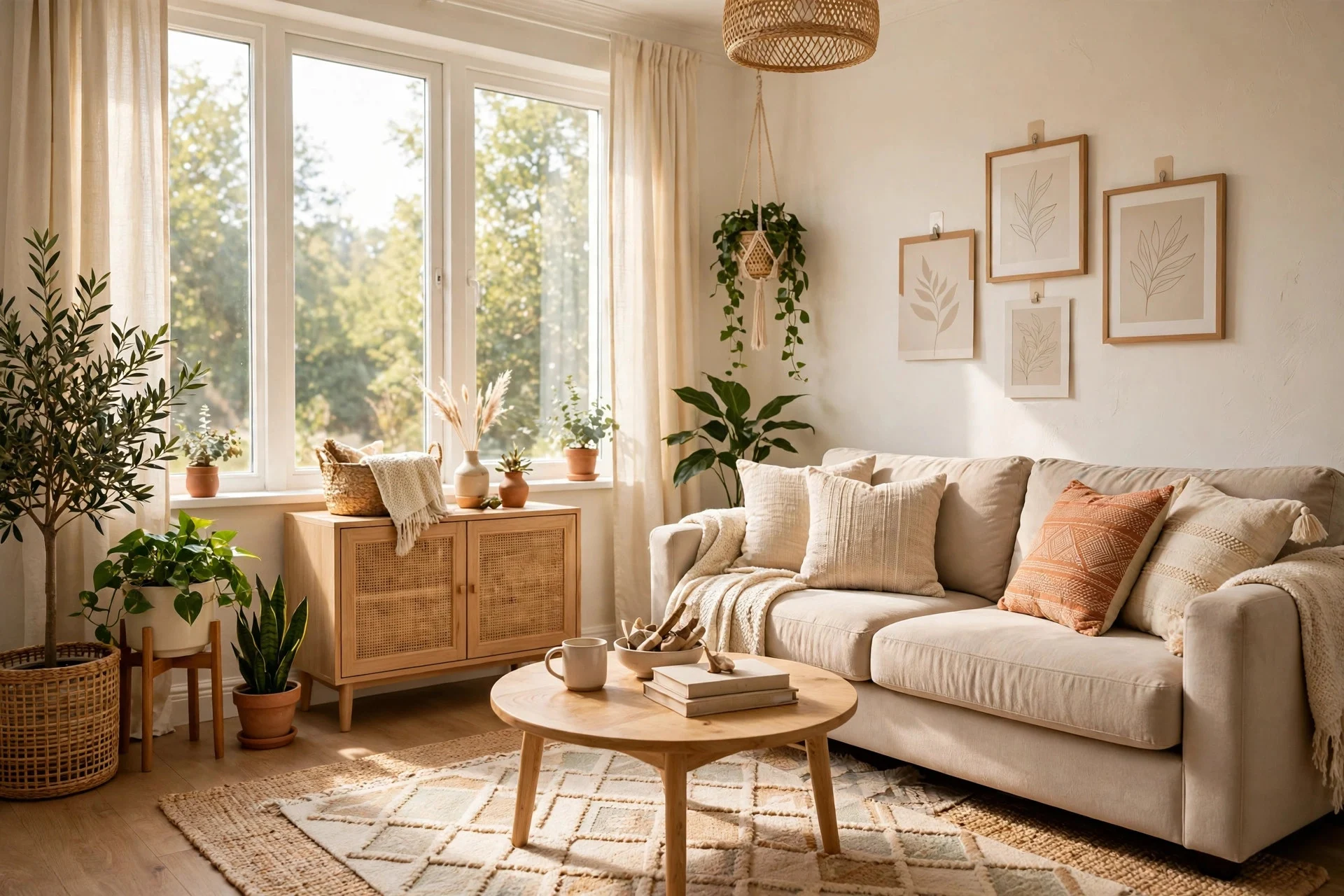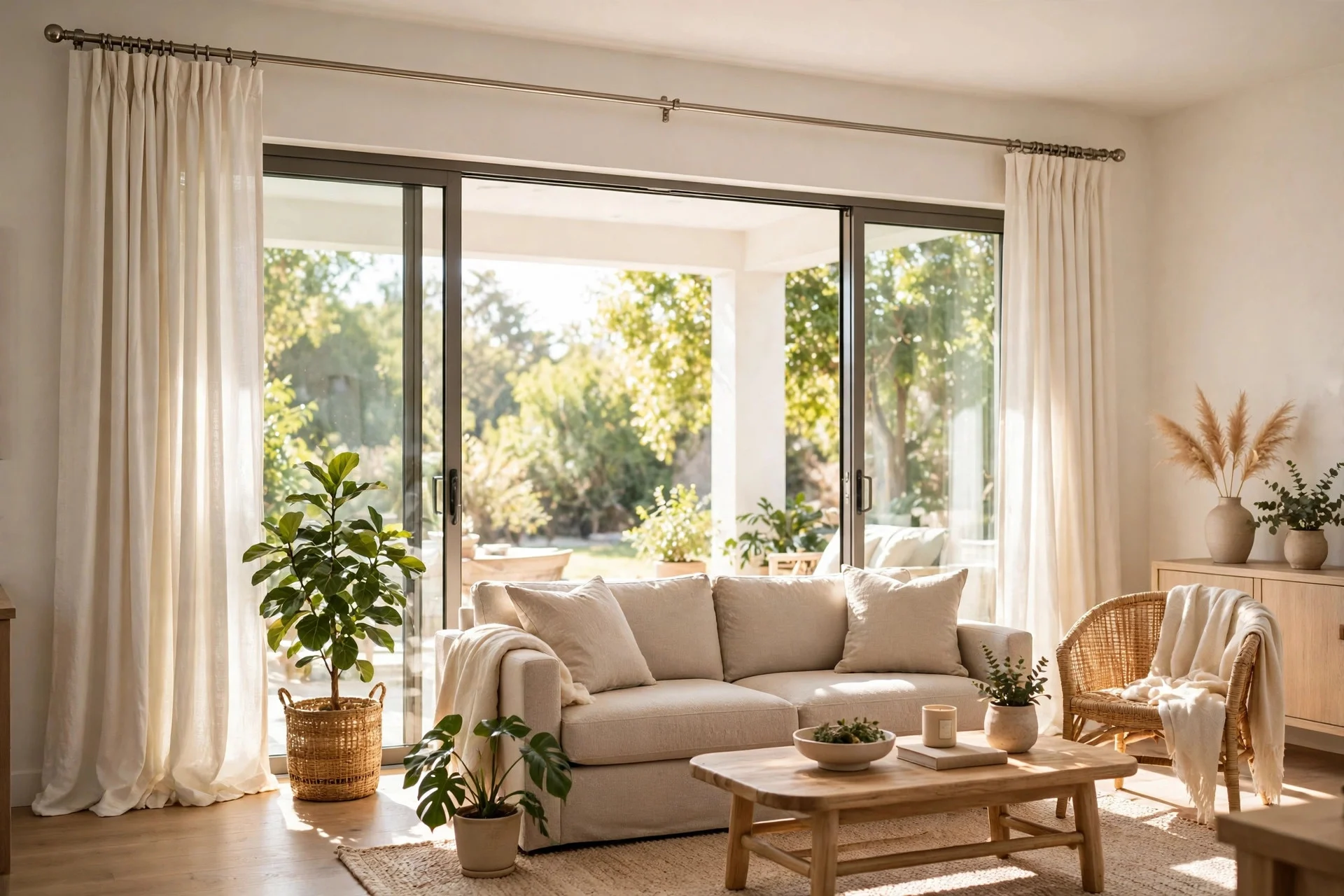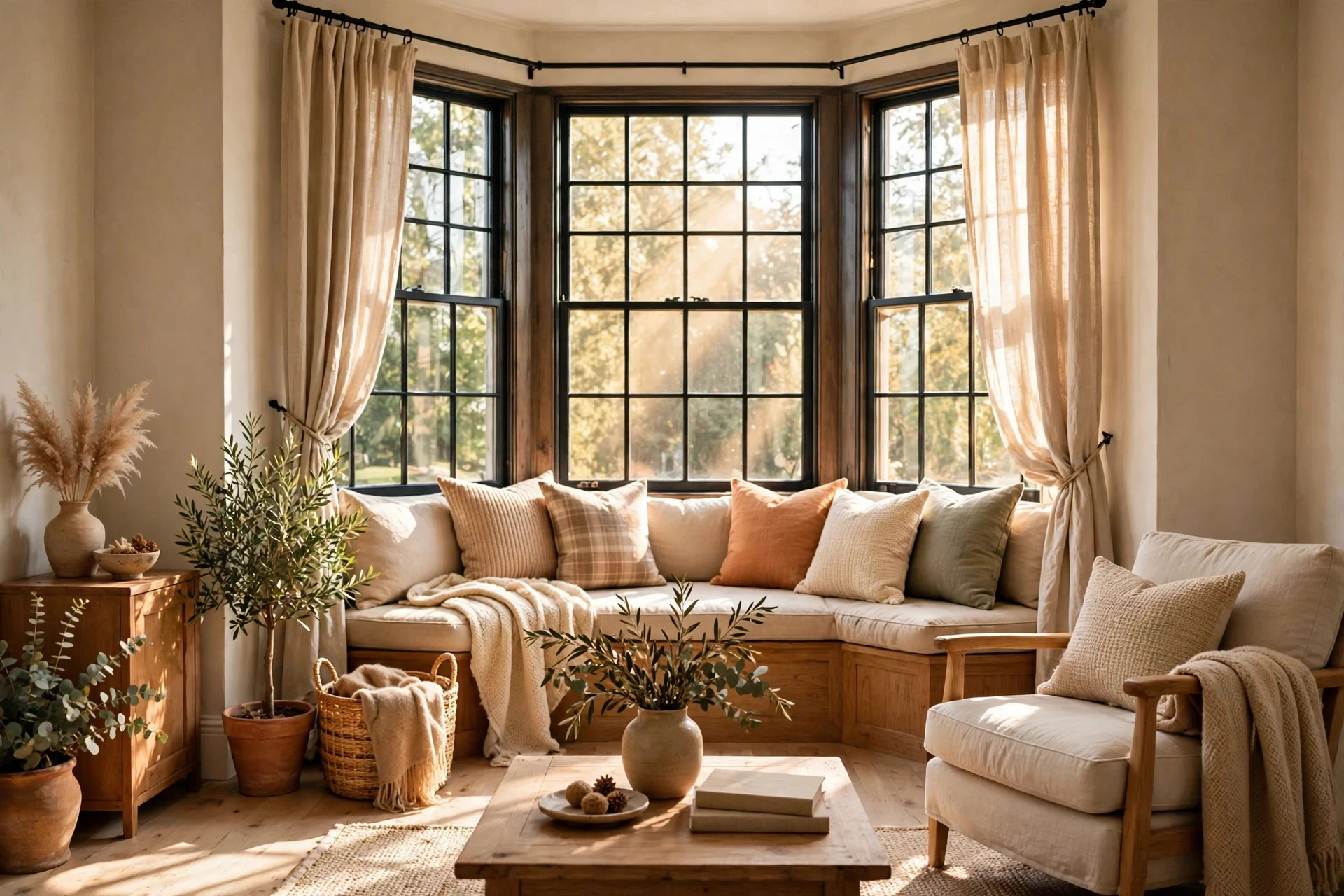
14 Sage and Cream Living Rooms That Feel Calm All Day
A sage green and cream living room works because the two tones share the job: sage quiets the walls, cream bounces light back so nothing feels heavy. The shades that sit best with cream are muted, gray-green sages — not yellow ones — and the cream should lean warm, never stark white. Each idea below breaks down what makes the look work so you can copy it piece by piece.
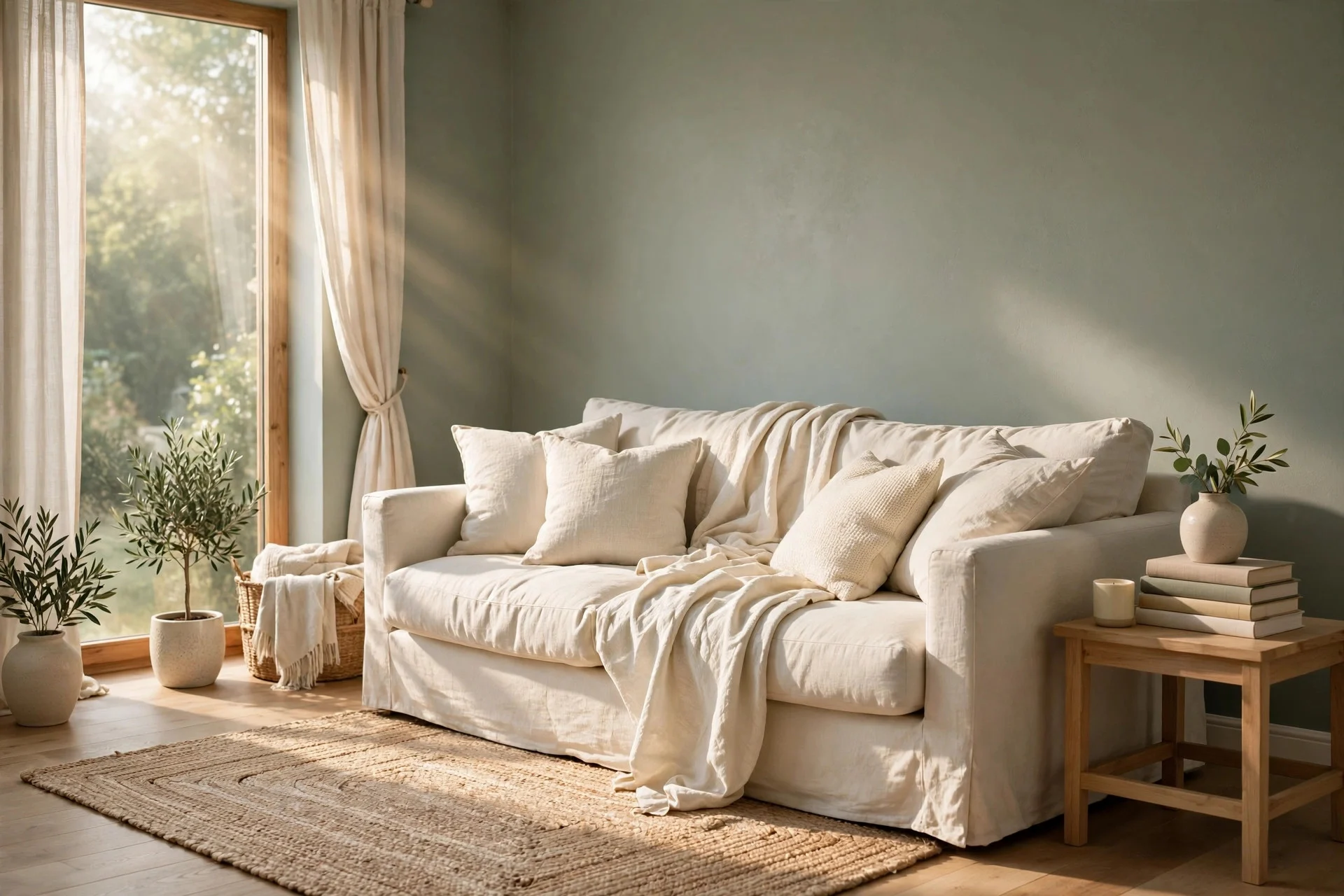
1. Soft sage walls with a cream linen sofa
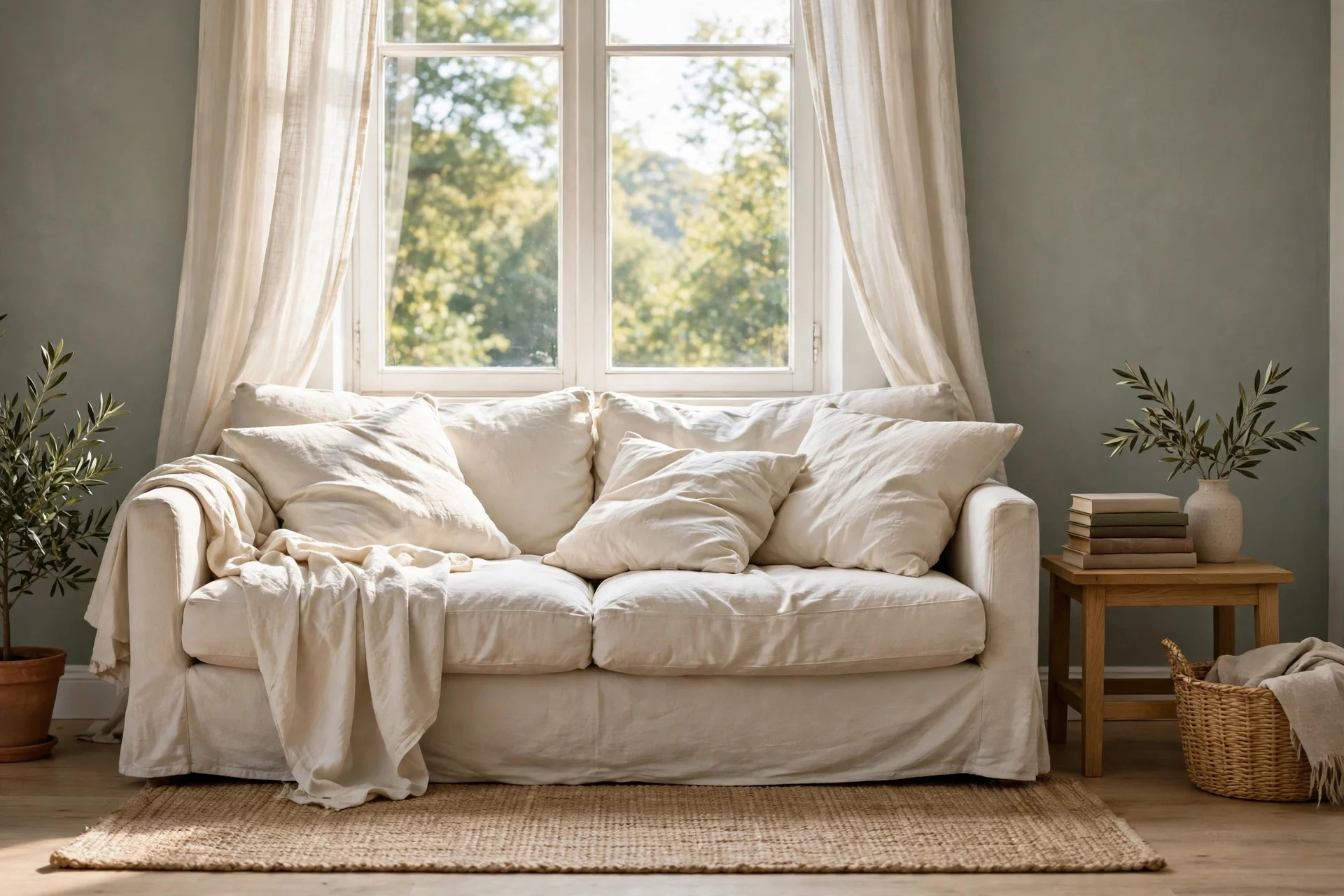
Picture this: gray-leaning sage walls, a big cream linen sofa under the window with rumpled cushions, a jute rug underfoot, an oak side table with books. It feels like the room exhaled.
What makes it work: muted gray-green sage (yellow sages turn muddy in afternoon light); a large sofa in cream, never white; a natural-fiber rug for texture; light or medium wood tones.
Copy it cheaply: one gallon of paint covers most feature walls. A cream washed-linen slipcover (around $120) remakes the couch you own; a 5×7 jute rug runs about $80.
Cost: $200–$450. Difficulty: easy, one weekend. Tip: paint first, live with it two days, then order the rug — sage shifts between morning and evening light. Watch out: yellow-looking chips go mustard on big walls.
2. Cream walls with sage velvet armchairs
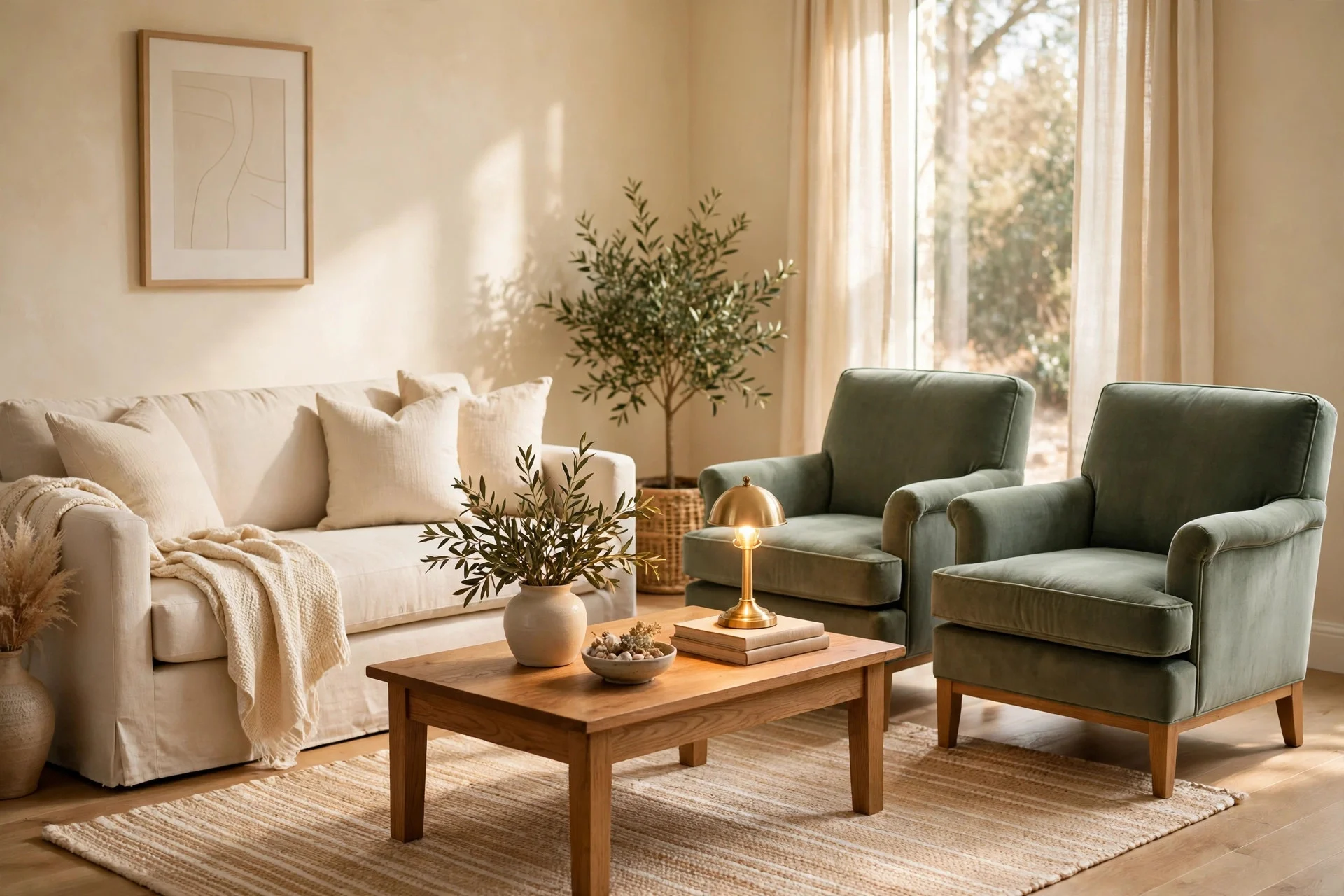
Picture this: cream walls, your existing neutral sofa, and two sage velvet armchairs facing the coffee table like a matched pair, a small brass lamp glowing between them. The green lands where your eyes rest, so the room feels designed without being loud.
What makes it work: cream as the base; sage concentrated in two matching pieces so it reads intentional; velvet, which deepens the green; brass accents to keep it from feeling cold.
Copy it cheaply: matching velvet chairs land on clearance because people buy singles — check secondhand listings. A $20 cream throw over each chair ties the colors together.
Cost: $150–$400 for the pair. Difficulty: easy. Tip: inspect velvet in daylight — faded patches show on sage more than on dark greens. Watch out: two chairs in different greens clash; recover both in one fabric.
3. Sage accent wall behind floating shelves
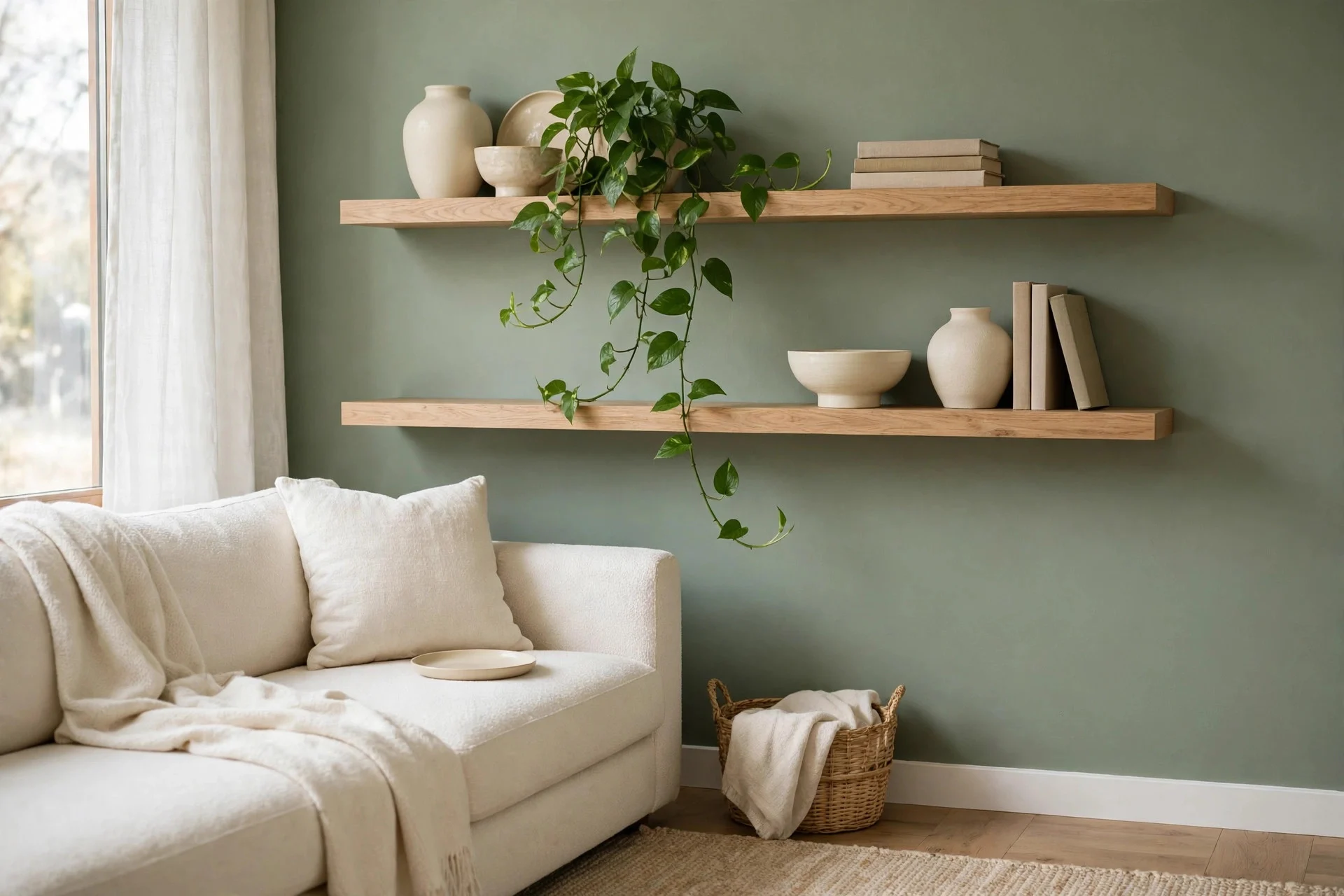
Picture this: one wall painted sage, two oak floating shelves holding cream ceramics, a trailing pothos, books turned spine-in. The rest stays cream. You get the color hit without committing the whole room.
What makes it work: one sage accent wall (a single gallon); open shelves breaking the color into pieces; cream ceramics popping against green; one trailing plant echoing the wall.
Copy it cheaply: two shelves ($25–40 each), a gallon of sage paint, thrifted cream vases spray-painted to match. For a similar soft, cloudy wall texture that flatters sage, see this limewash walls living room guide.
Cost: $100–$250. Difficulty: easy, one day. Tip: hang shelves slightly off-center — asymmetry looks collected. Watch out: avoid walls people walk past; shelves in traffic lanes collect bumps.
4. Sage slipcovered sofa with cream throws
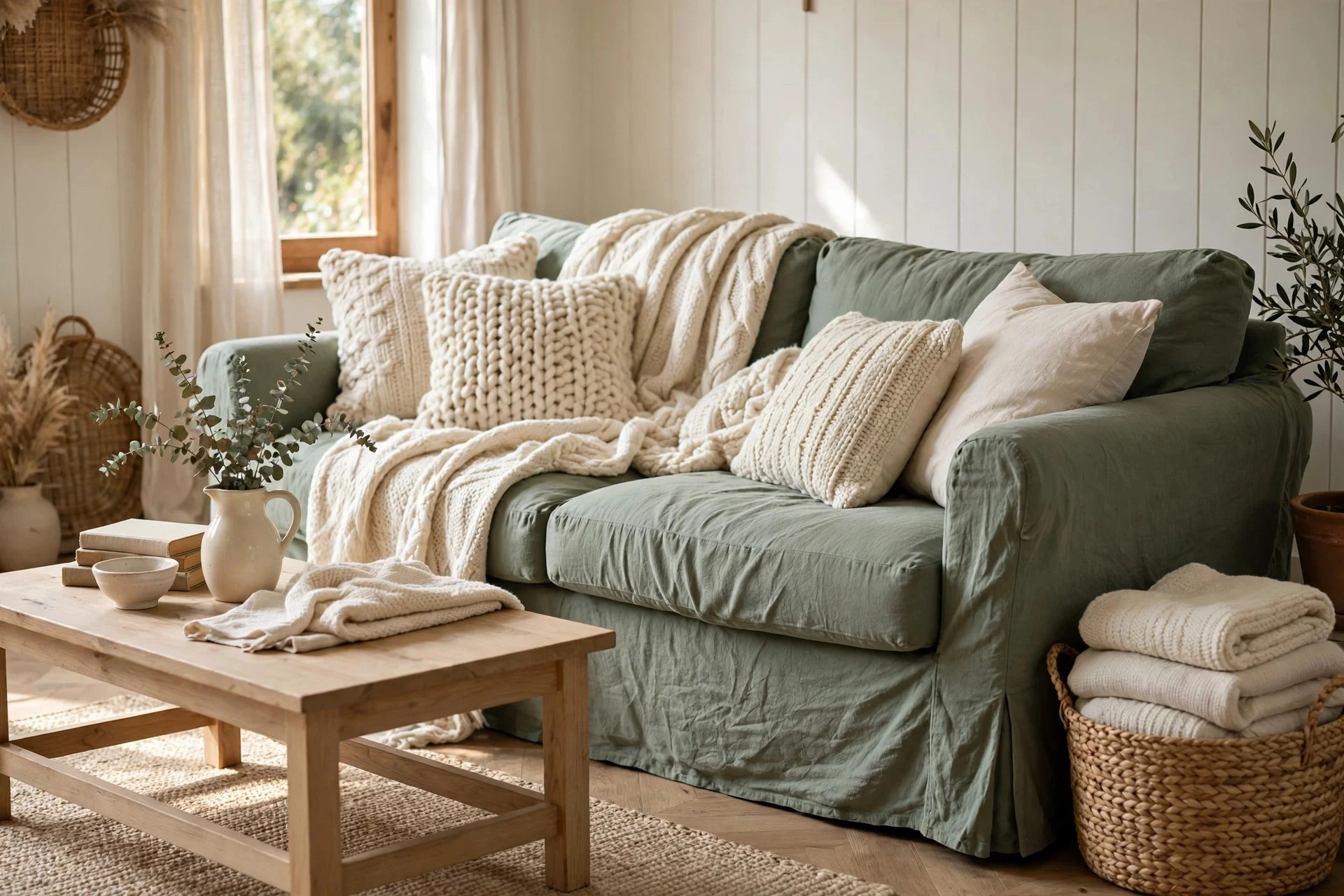
Picture this: a sage slipcovered sofa, softly wrinkled, piled with cream knit throws and chunky cushions, a basket of folded blankets beside it. Cozy but light.
What makes it work: a washable sage slipcover — the wrinkle is the look; cream textiles layered over it so the colors mix; a natural basket and wood table for warmth; cushions varied by texture, not color.
Copy it cheaply: ready-made sage slipcovers run $80–150 (custom $300+); discount-store throws finish the layering under $60. The same styling formula works on deeper greens too.
Cost: $140–$300. Difficulty: easy, under an hour. Tip: wash the slipcover once before judging fit — slight shrinkage improves the wrinkle. Watch out: they slide on slick sofas; tuck non-slip pads underneath.
5. Cream curtains over sage-painted window trim
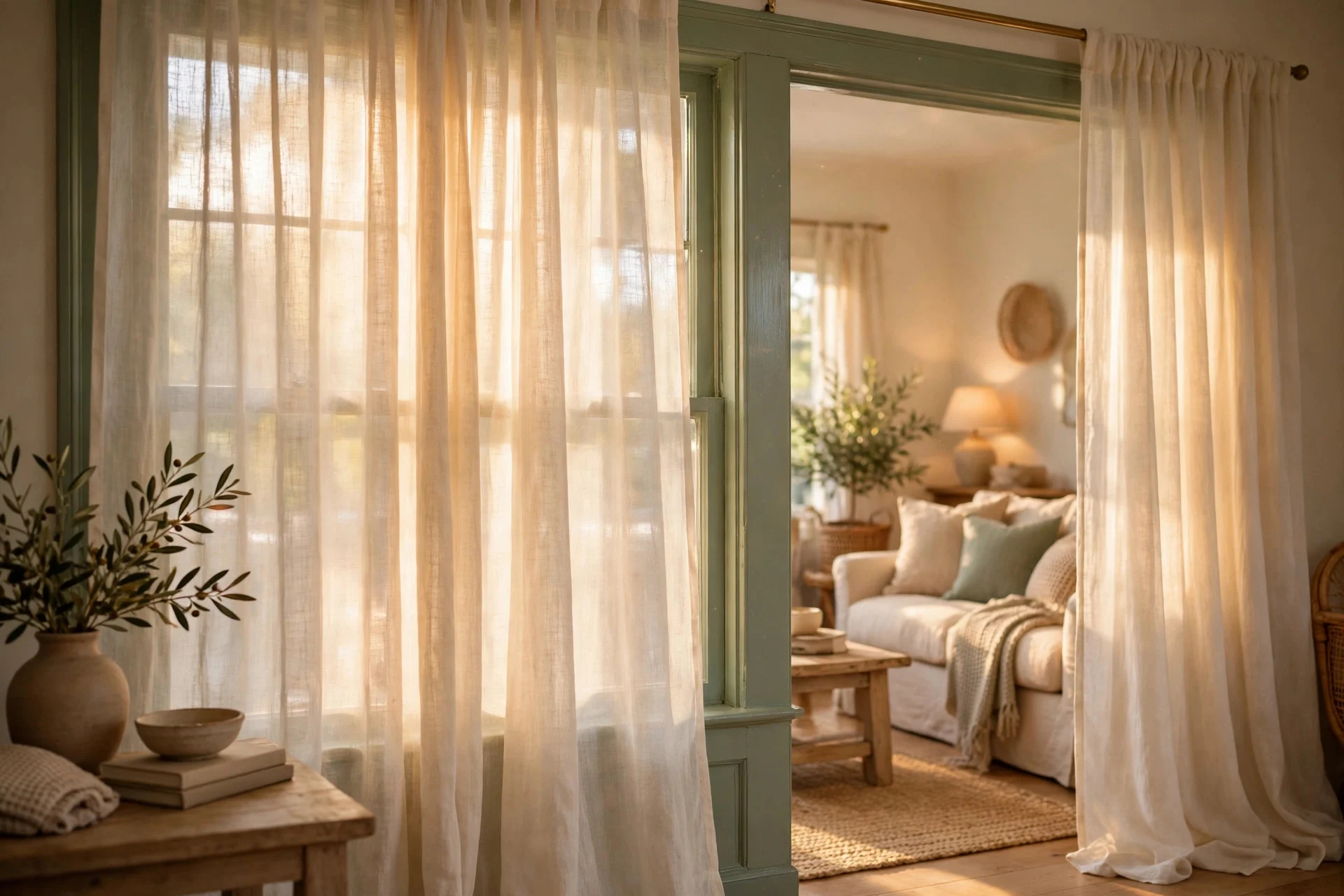
Picture this: floor-length cream linen curtains on a brass rod, the window trim behind them painted sage — a detail you notice slowly. Sunlight through the linen turns everything honey-colored.
What makes it work: sage on the trim only (a quart of paint); sheer-ish cream linen that glows backlit; a warm metal rod bridging green and cream; plain walls so the window is the feature.
Copy it cheaply: a quart of sage paint and basic brushes. Hang rods 4–6 inches above the frame and wider, so curtains frame the color block.
Cost: $60–$150. Difficulty: easy-medium. Tip: tape plus a thin caulk bead along the tape edge gives a crisp sage line. Watch out: dark sage trim on white walls looks sharp; on cream it looks softer — decide before buying.
6. Open-plan living room echoing sage kitchen cabinets
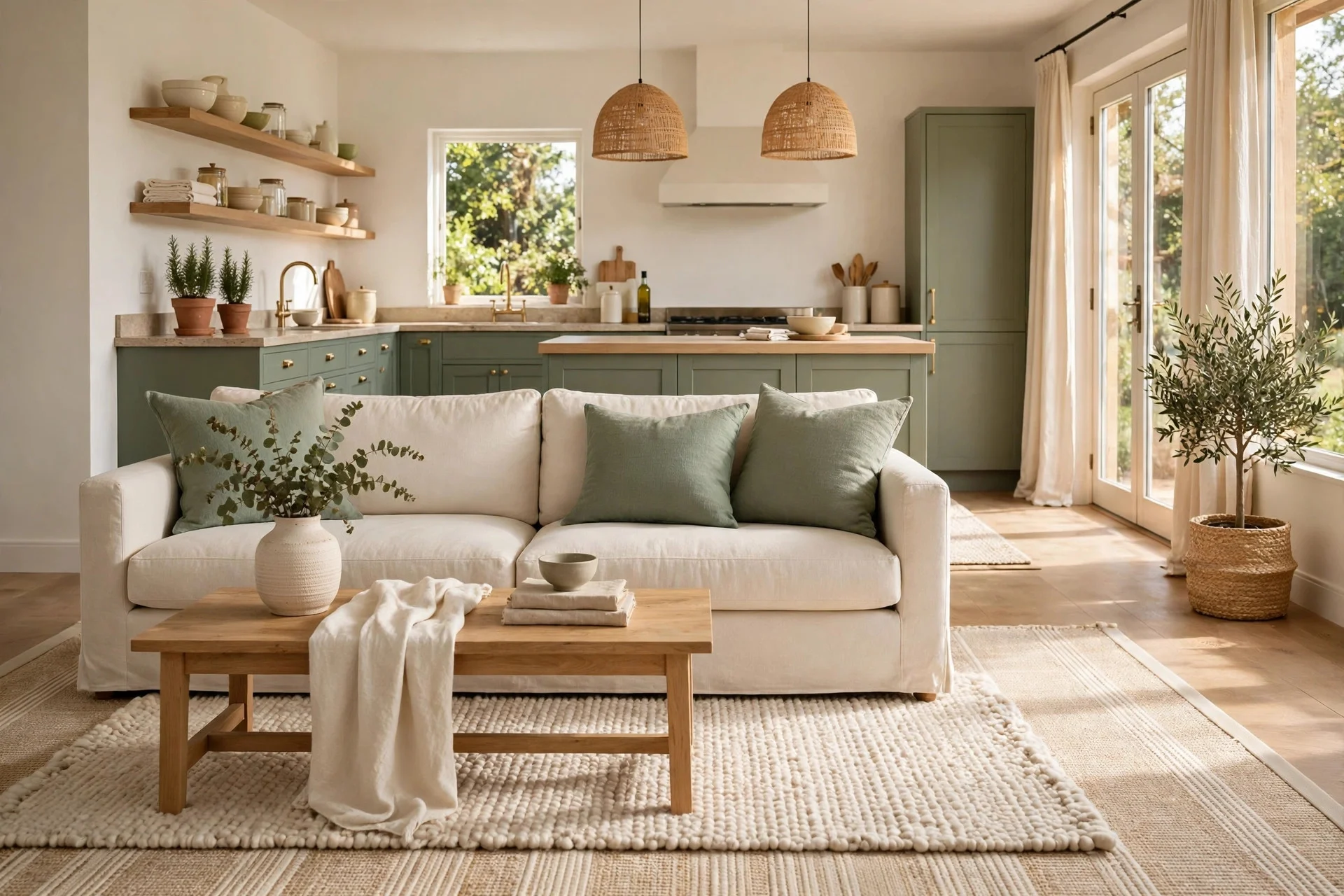
Picture this: an open living room where the kitchen beyond has sage lower cabinets, and the seating area answers with a cream sofa, two layered cream rugs, sage cushions. The spaces talk through the doorway like one calm idea.
What makes it work: sage repeated in both rooms so the open plan connects; layered cream rugs (large flat-weave, smaller textured on top); sage cushions pulling the kitchen color in; big cream areas keeping it light.
Copy it cheaply: no need to paint cabinets — sage vinyl wrap on fronts costs about $60 in materials. Rug layering works with any two you own, as long as the top one is textured.
Cost: $150–$350. Difficulty: medium, a weekend. Tip: keep the top rug under the coffee table only, not spanning the whole seating group. Watch out: two rugs of the same texture looks like a mistake; contrast makes it intentional.
7. Bay window nook in sage with cream cushions
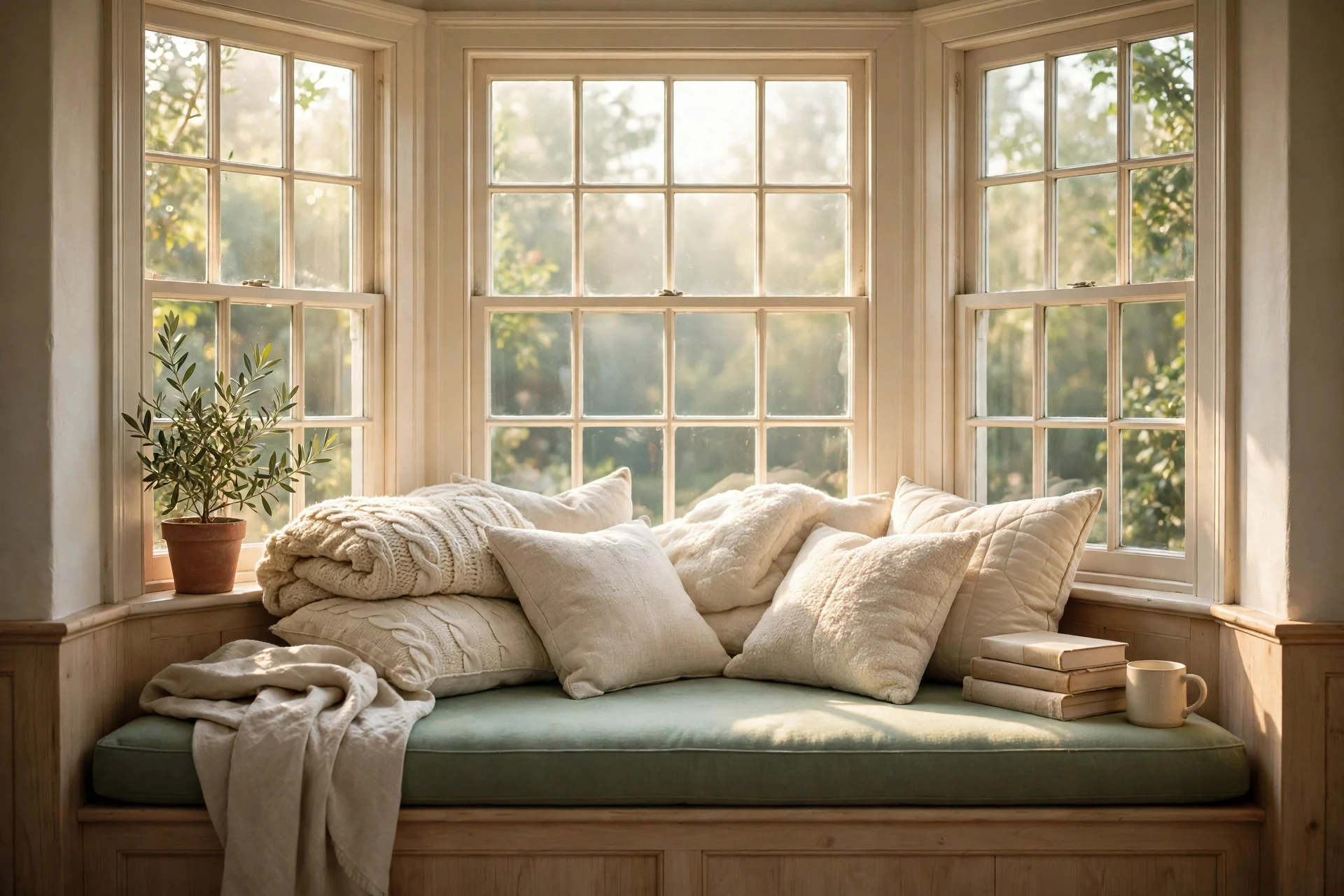
Picture this: a bay window with a sage upholstered seat, cream cushions in three fabrics, a stack of books and a mug at one end. Morning light pours in and the green glows — this becomes everyone’s favorite seat.
What makes it work: a sage seat cushion turning architecture into furniture; cream cushions for contrast visible across the room; the window bare or with one linen shade; a small tray making it functional.
Copy it cheaply: a custom cushion runs $150–250, but a firm foam pad in a sage zip-up cover works for under $80.
Cost: $80–$250. Difficulty: easy. Tip: measure three times — bays are rarely square. Watch out: sage fabric fades in sunny windows; use UV-resistant covers or rotate yearly.
8. Sage fireplace surround with cream mantel styling
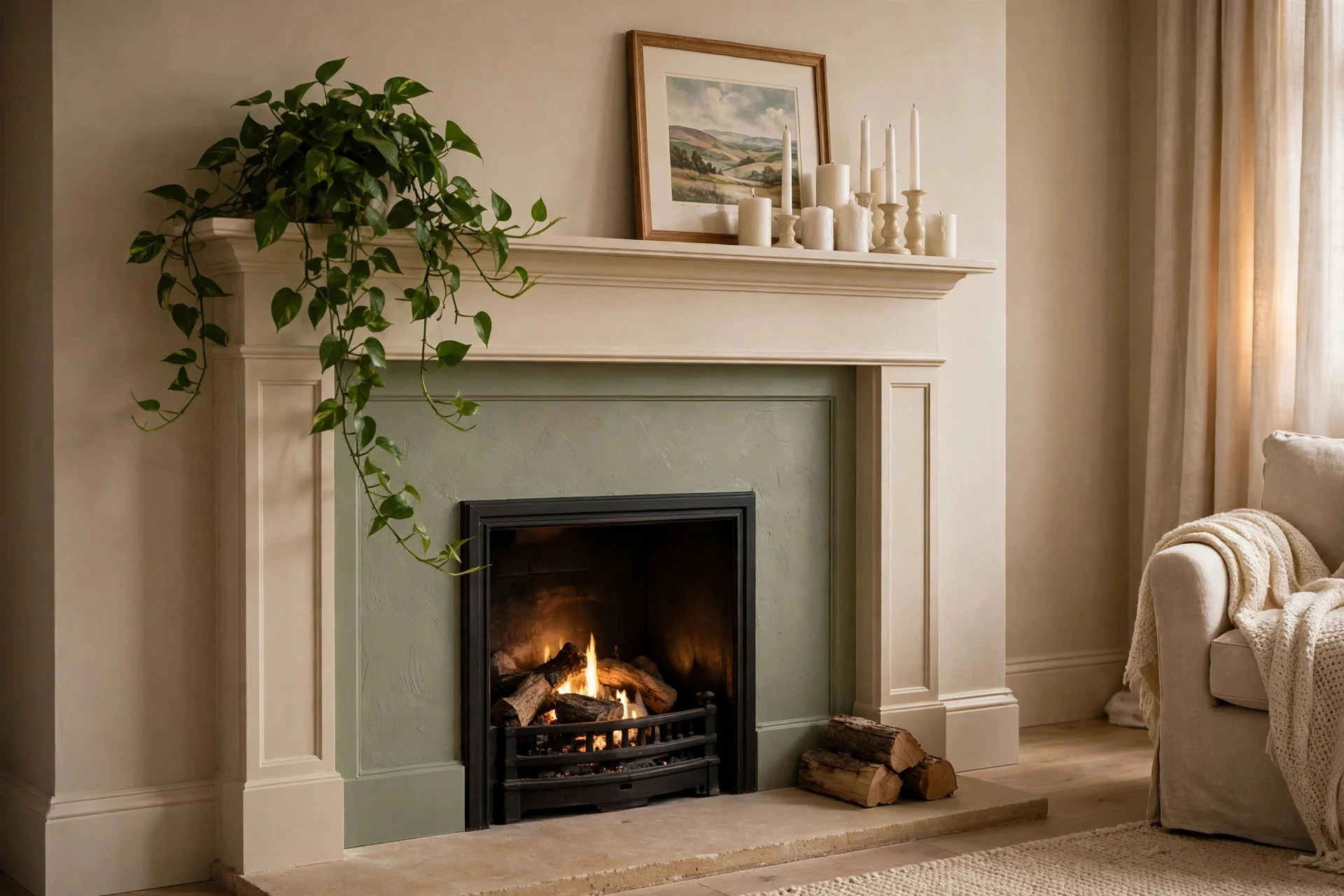
Picture this: a fireplace surround painted sage, a cream mantel styled with white candles of different heights, a small landscape print, a trailing plant at one end. Even unlit, it becomes the room’s calm center.
What makes it work: sage on the surround, reading as architecture; cream and white mantel styling popping against green; candles warming the mantel line; small landscape art so the green stays the star.
Copy it cheaply: a quart to a half-gallon of paint. On brick, sage limewash beats flat paint for softness.
Cost: $40–$120. Difficulty: easy-medium. Tip: use heat-resistant paint if the surround gets warm — standard paint discolors above a working firebox. Watch out: a sage mantel flattens everything; keep it cream or wood.
9. Gallery wall on sage with cream frames
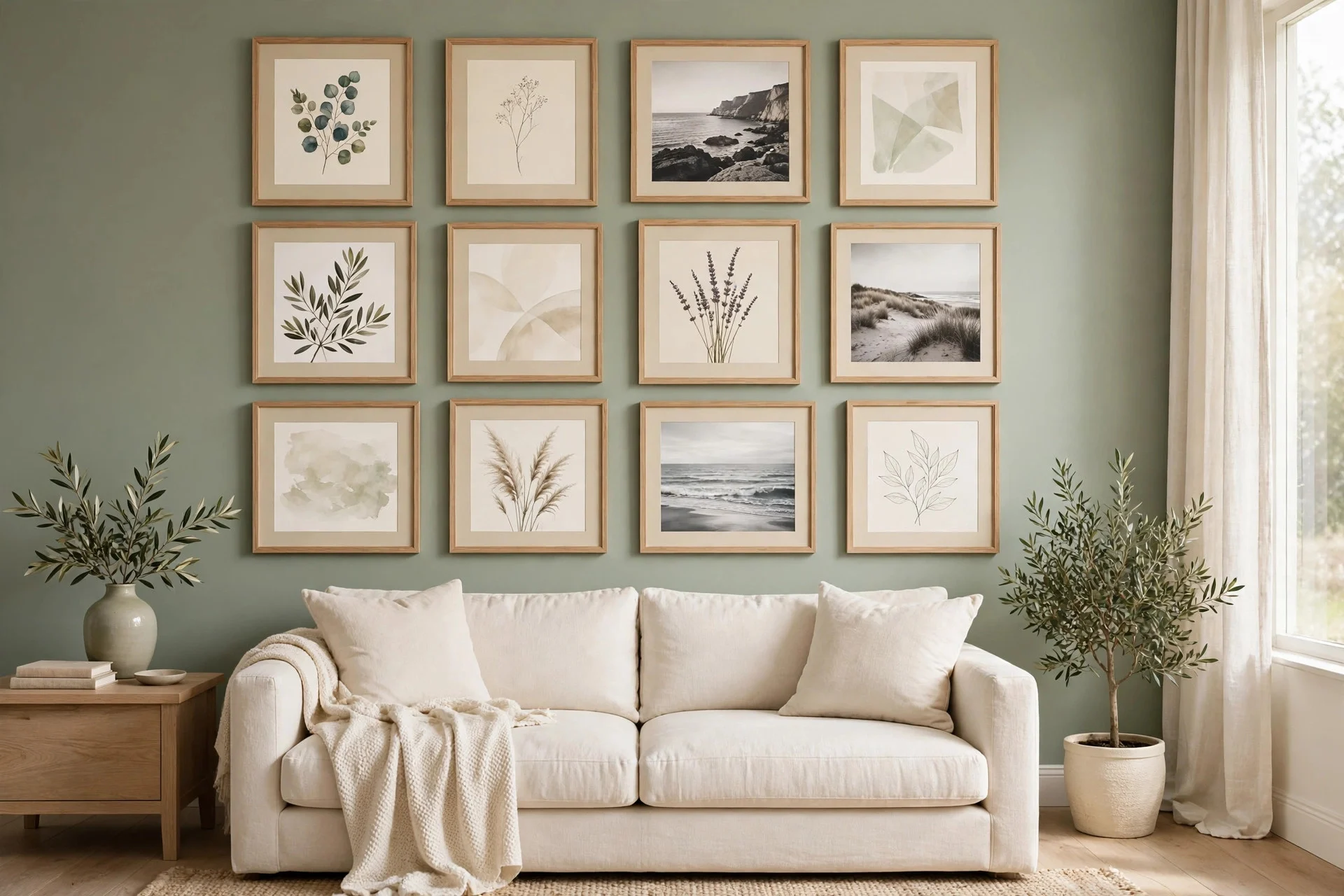
Picture this: a sage wall of art and photos, all in cream and light-wood frames. The green makes every image look richer, like a museum wall. A cream sofa below; nothing competes.
What makes it work: sage as a gallery backdrop — colored walls make art pop more than white; frames in one family (cream, off-white, light oak); mixed sizes with 2–3 inch spacing; simple furniture below.
Copy it cheaply: thrifted mismatched frames spray-painted the same cream look intentional. Print art locally or hang photos you already love.
Cost: $60–$200. Difficulty: easy, one afternoon. Tip: lay the arrangement on the floor and photograph it first. Watch out: let fresh sage paint cure two weeks before nails or tape, or you’ll pull paint off.
10. Low-ceiling living room in warm sage and cream
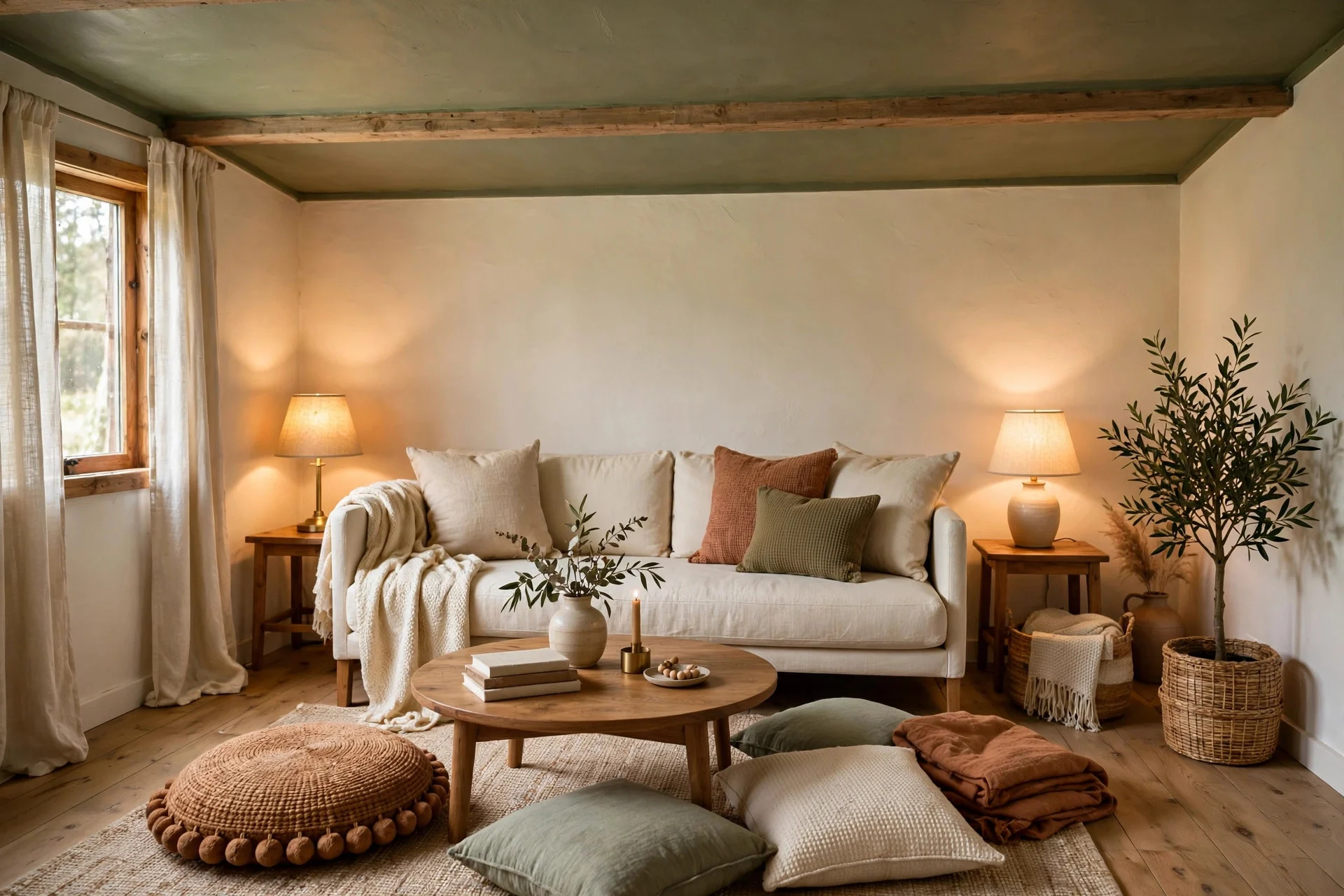
Picture this: a low ceiling in warm sage, cream walls, low-profile furniture — slim-armed sofa, round coffee table, floor cushions instead of a bulky chair. Snug on purpose, like a cabin, not a cramped box.
What makes it work: warm sage (low ceilings want warmth, not cool gray); walls lighter than the ceiling so the eye reads height; low, leggy furniture showing floor; lighting at lamp level, not a low pendant.
Copy it cheaply: paint does the work. Swap one bulky chair for two floor cushions ($25 each) and the room feels taller.
Cost: $150–$350. Difficulty: easy. Tip: pick the sage one shade lighter than instinct — ceilings read darker in less light. Watch out: dark sage on a low ceiling feels cave-like in dim rooms.
11. Renter-friendly sage and cream, all peel-and-stick
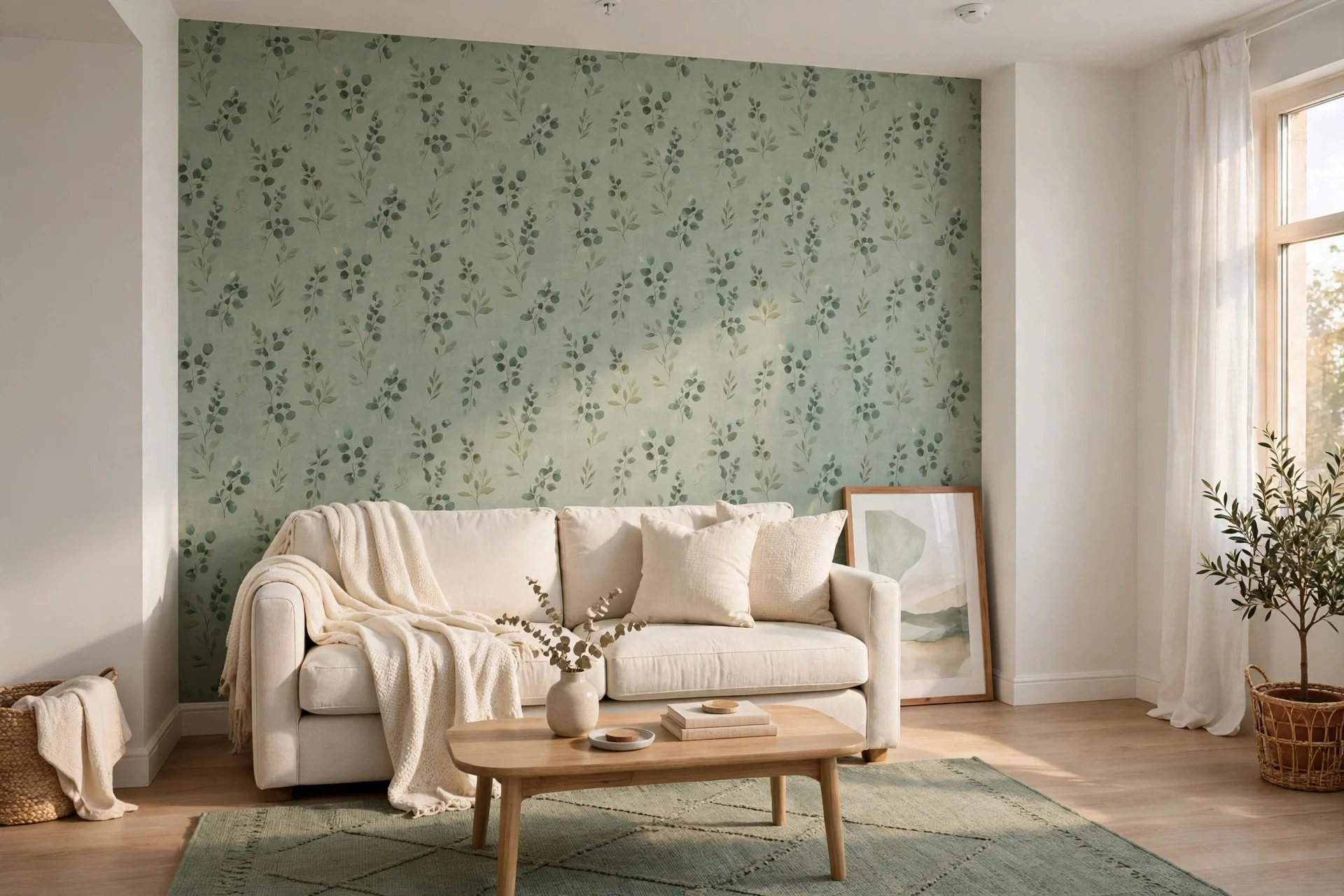
Picture this: a rental that looks anything but temporary — sage peel-and-stick wallpaper on one wall, cream furniture, a sage rug, art leaned instead of nailed. The landlord gets it back untouched; right now it looks owned.
What makes it work: sage peel-and-stick wallpaper as the commitment-free anchor; big cream pieces that move with you; a sage rug echoing the wallpaper; leaning art and adhesive hooks.
Copy it cheaply: 2–3 rolls ($40–60 each) cover one accent wall. A cream throw over your sofa plus sage cushion covers ($12 each) finishes the palette. You’ll find more no-damage tricks in these renter-friendly living room ideas.
Cost: $150–$300. Difficulty: easy, fully reversible. Tip: wash the wall and let it dry fully first — dust is the top reason peel-and-stick fails early. Watch out: textured walls defeat the adhesive; test one strip behind furniture.
12. Sage checkerboard floor with cream walls
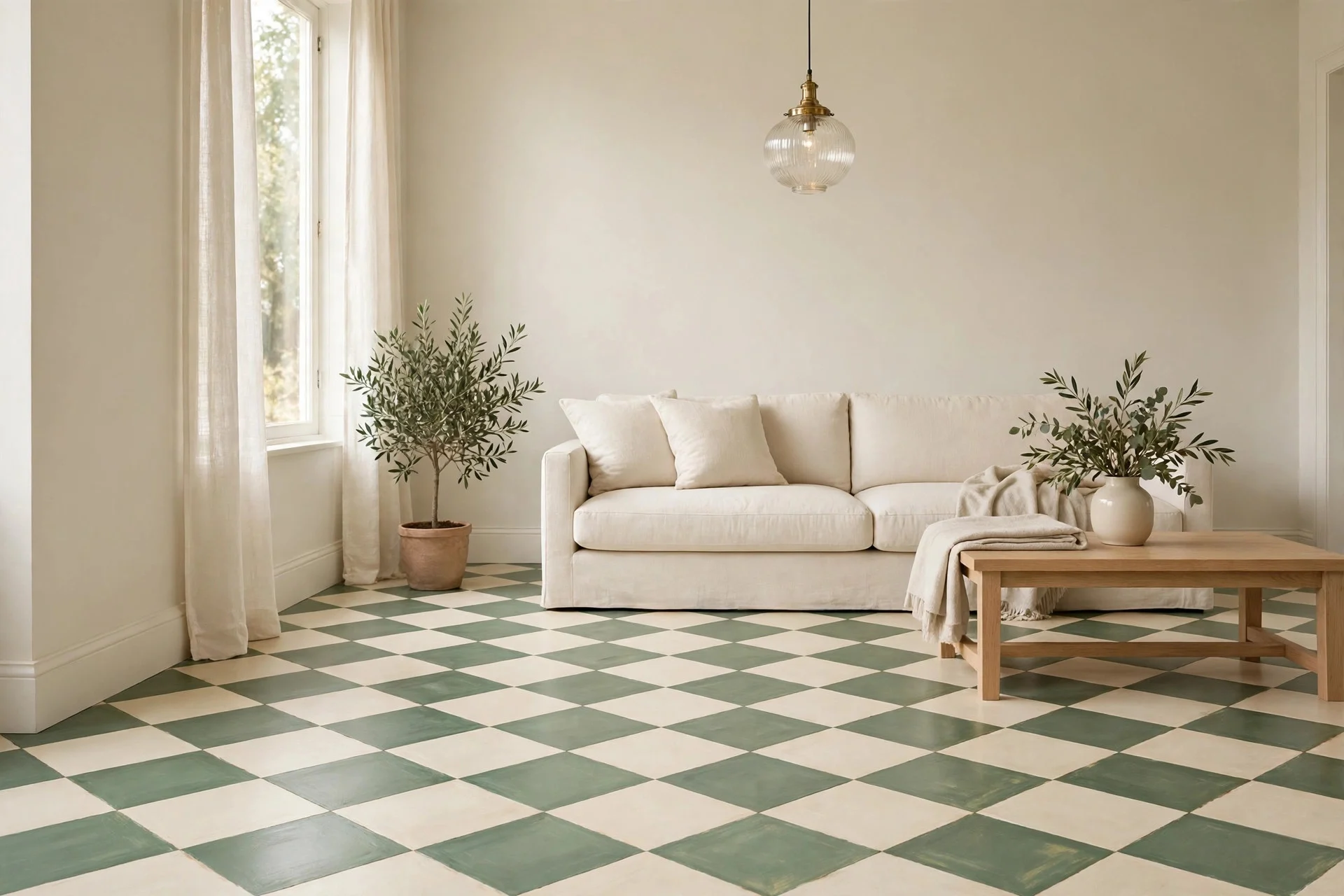
Picture this: a sage-and-cream checkerboard floor — painted, not tiled — with plain cream walls, a simple sofa, one great pendant light. The floor is the art, and it never dates.
What makes it work: the checkerboard kept in the room’s own palette so it reads classic; plain walls so the floor gets the attention; simple, slightly smaller furniture; one statement light echoing the graphic feel.
Copy it cheaply: floor paint, painter’s tape, a weekend. Sand and prime, two coats of each color, a clear matte topcoat.
Cost: $120–$250. Difficulty: medium — taping is fiddly, not hard. Tip: paint the whole floor cream first, then tape and paint sage squares — crisper lines, less dark paint. Watch out: skip on floors that get wet or take outdoor shoes daily.
13. TV wall in sage with a cream floating console
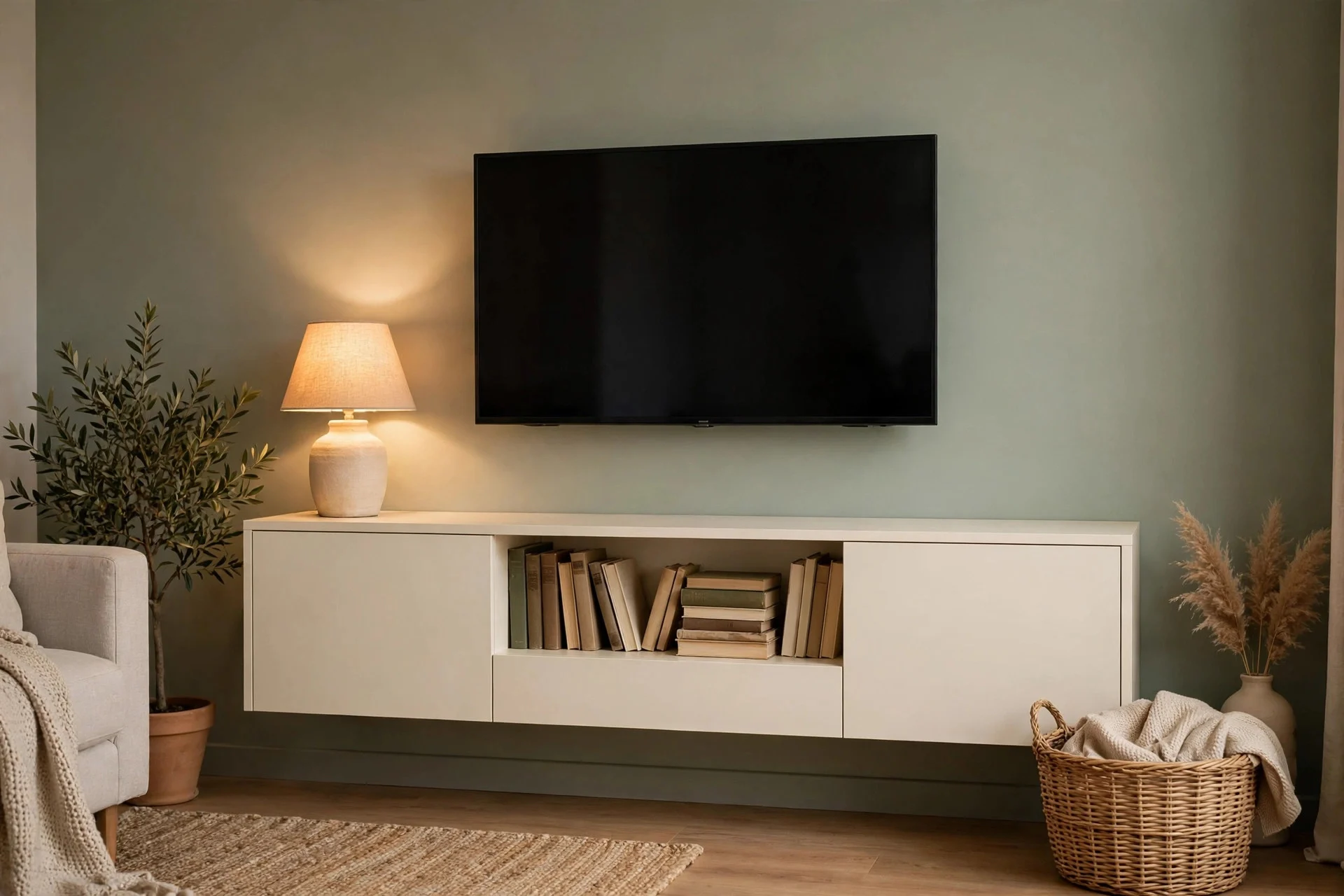
Picture this: the TV on a sage wall, a cream floating console below with two closed cabinets and one open shelf of books, a basket for remotes. The black screen doesn’t dominate; the cream keeps the wall from caving in.
What makes it work: sage behind the TV softens the black screen; a floating cream console gives storage without bulk; cables hidden in-wall or in a sage-painted cord cover; styling low and wide.
Copy it cheaply: one gallon for the TV wall; a floating console runs $80–150, or a cream-painted shelf with storage boxes for under $50.
Cost: $130–$300. Difficulty: easy-medium (mounting needs two people). Tip: paint the cord cover the exact wall color — white covers on sage scream. Watch out: check studs before buying the mount; newer builds sometimes have metal studs.
14. Narrow living room in sage and cream with a long runner
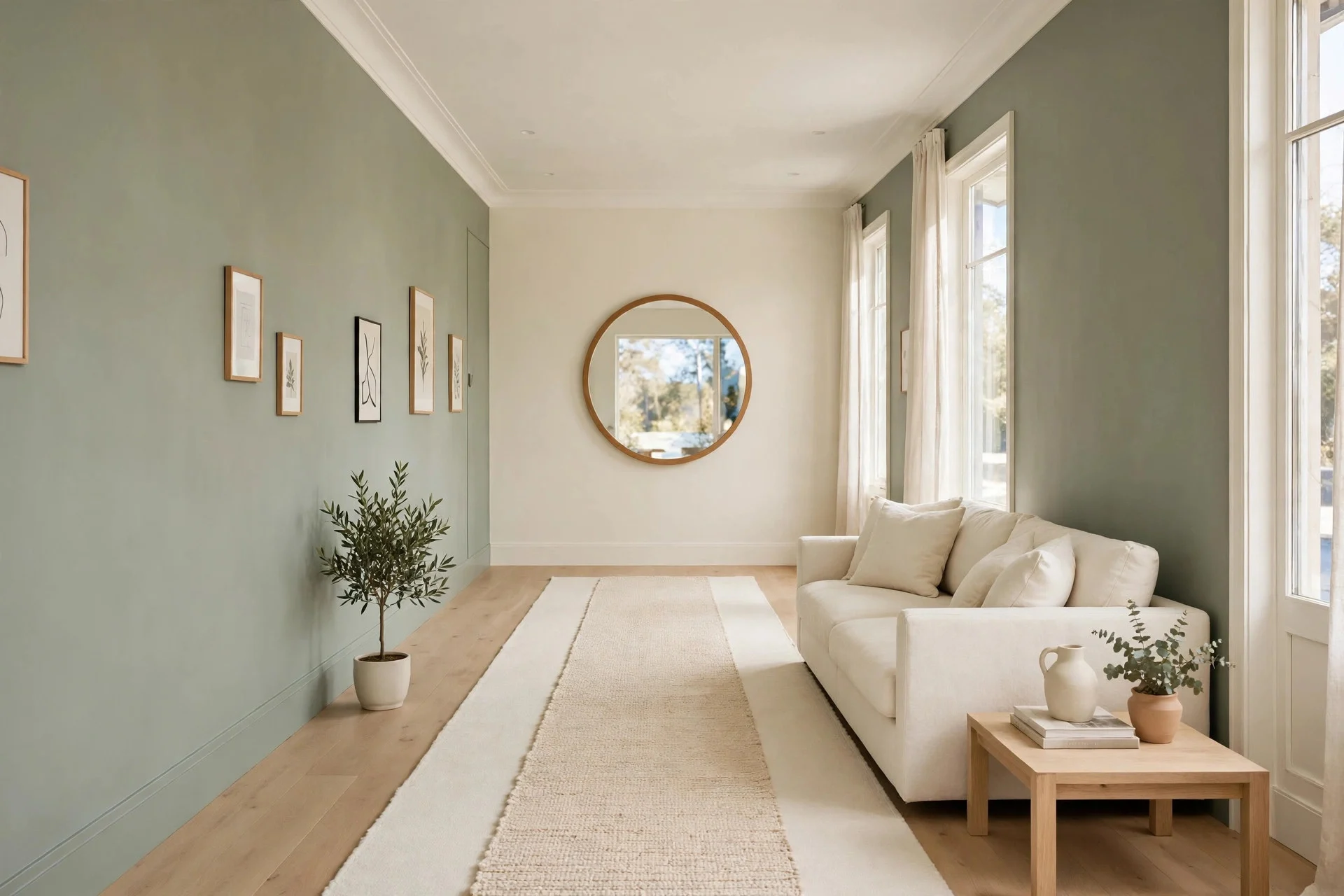
Picture this: a narrow room with sage on the long walls, cream on the short ends, a cream sofa along one side, a long cream runner leading the eye down, a round mirror on the end wall doubling the light. The tunnel feeling is gone — it reads as a gallery.
What makes it work: sage on long walls, cream on short ends — color placement that visually shortens the room; one long runner respecting the room’s shape; a round mirror bouncing light; furniture hugging one side.
Copy it cheaply: two gallons of sage for the long walls, one cream for the ends. A runner ($60–120) beats any furniture swap here. See these long, narrow living room layouts for arrangements that actually fit tight rooms.
Cost: $180–$400. Difficulty: easy. Tip: mirror on the short end opposite the window throws daylight the full length. Watch out: all four walls sage closes a narrow room in; the cream ends make the trick work.
FAQ: Sage Green and Cream Living Rooms
Which sage paint shades work best with cream?
Look for sages with gray or green undertones rather than yellow — they sit calmly next to cream. Soft, muted sages like a pale eucalyptus tone are safe picks. Test a large swatch first; sage shifts a lot between morning and evening light.
Does sage green work in a dark living room?
Yes, but choose a warm, lighter sage and keep cream elements large — cream sofa, rug, curtains. Sage reads darker and greener than the chip in low light, so go one shade lighter than instinct.
What wood tones pair with sage and cream?
Light oak, pine, and pale ash keep the palette airy; medium walnut works for more contrast. Very dark woods can fight the calm feeling unless used sparingly, like a single side table.
Can I use sage and cream in a small living room?
Absolutely — one of the kindest palettes for small rooms. Keep sage to one or two walls (or just furniture) and let cream cover the larger surfaces. Ideas 10 and 14 are built for exactly this.
What accent colors go with sage green and cream?
Brass and warm gold, natural jute and rattan, soft terracotta or clay. If you want a third color, muted clay or warm beige works. Skip cool grays, which can make sage look muddy.
A calm starting point
Start with two moves: paint your biggest wall sage, add one cream textile you touch daily — a throw, a rug, a cushion. Live with it a week. Most people find the room already feels calmer, and the next step becomes obvious. Checklist before you start: test the sage in your actual light, keep the cream warm, repeat the sage at least twice, and hide the cables.