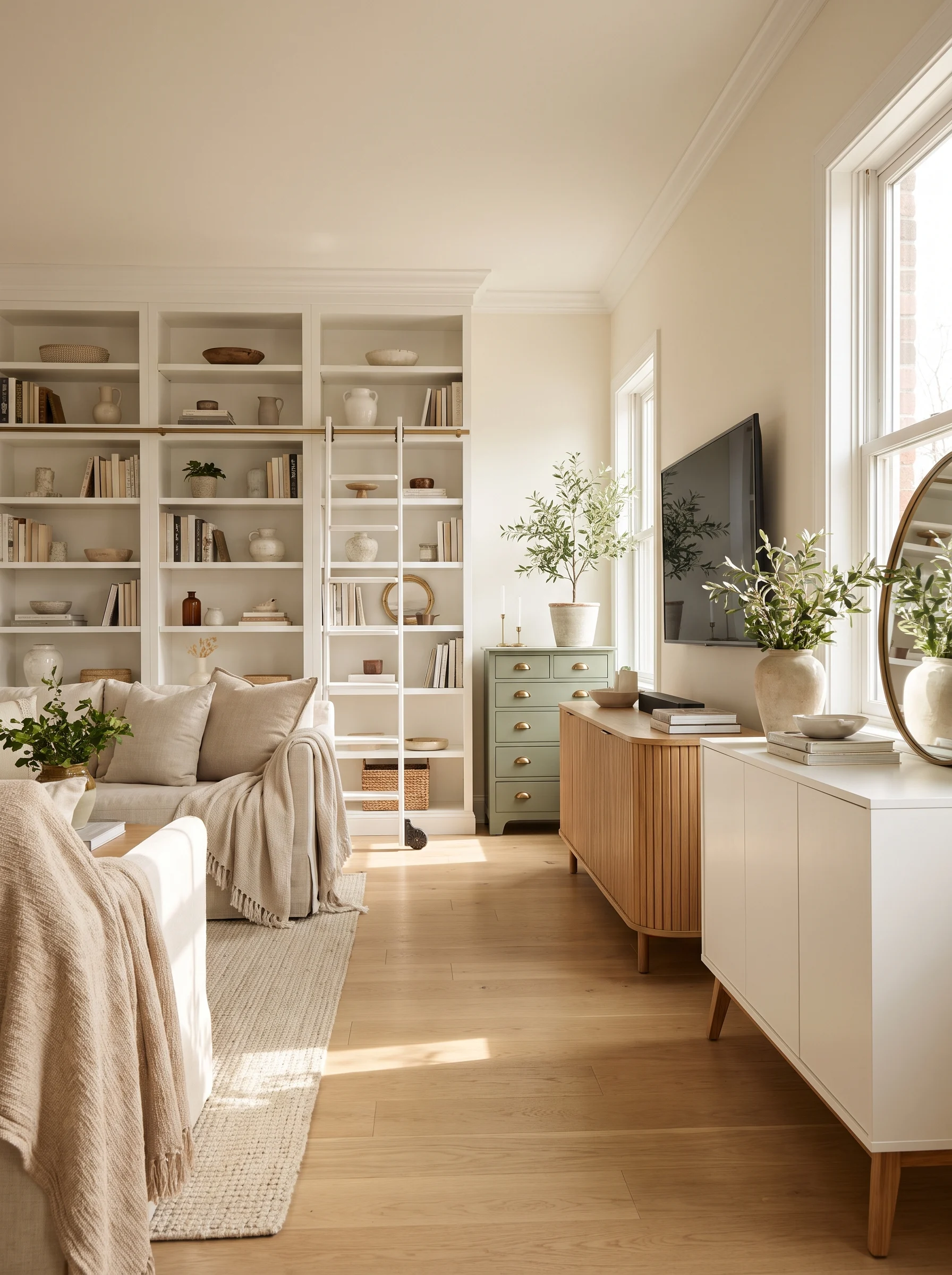
Living Room Layouts for a Long, Narrow Room That Finally Flow
Picture this: you walk into your living room and it feels less like a room and more like a hallway someone parked a sofa in. The walls stretch out on either side, the far end feels a mile away, and every piece of furniture ends up shoved against the walls in a sad little line. Long, narrow living rooms are one of the trickiest layouts out there — and some of the most satisfying to fix. A long narrow living room layout doesn’t need a renovation or a big budget. It needs a plan that works with the shape instead of fighting it.
Below are 12 layout fixes that break up the tunnel effect, give the room real zones, and make it feel wider and warmer. Most of them cost little or nothing — they just ask you to move things around on purpose.
1. Stop Lining the Walls — Split the Room Into Two Zones
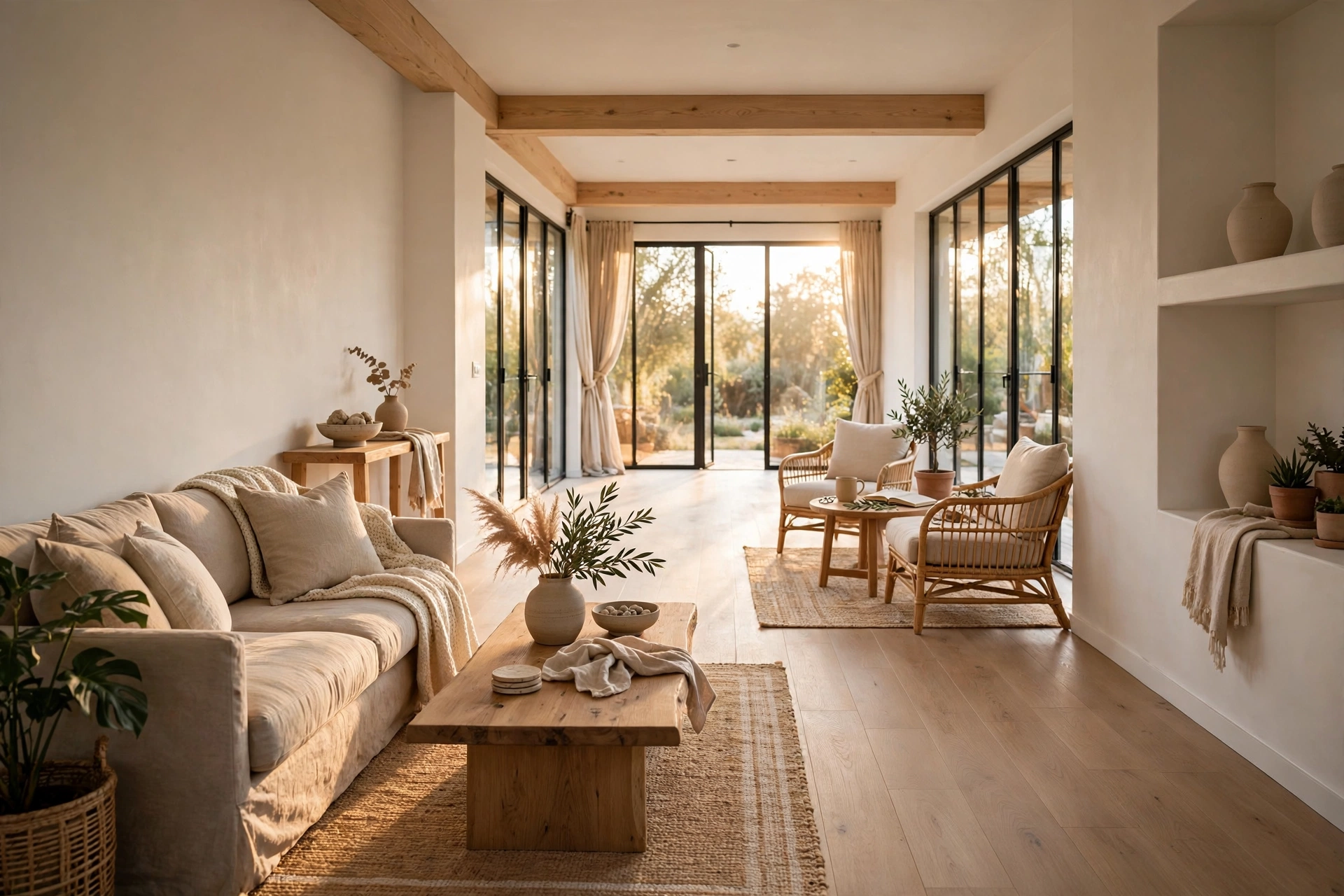
The biggest mistake in a narrow room is treating it as one long runway. The fix: cut the room in half and give each half its own job. One end becomes your main seating area — sofa, coffee table, TV if you have one. The other end gets a second, smaller purpose: a reading corner, a desk nook, a play spot for the kids, or a pair of chairs around a side table.
This works because the eye reads two complete “scenes” instead of one endless corridor. Each zone gets its own rug or its own lighting, and suddenly the room has rhythm instead of a single straight line.
Cost: $0 if you rearrange what you own. Difficulty: easy — give yourself an hour or two and a friend to help slide things. Tip: lay painter’s tape on the floor to mark each zone before you move a single heavy piece. Watch out: keep a clear 30-inch walkway between the zones so the room still moves well.
2. What Happens When You Float the Sofa?
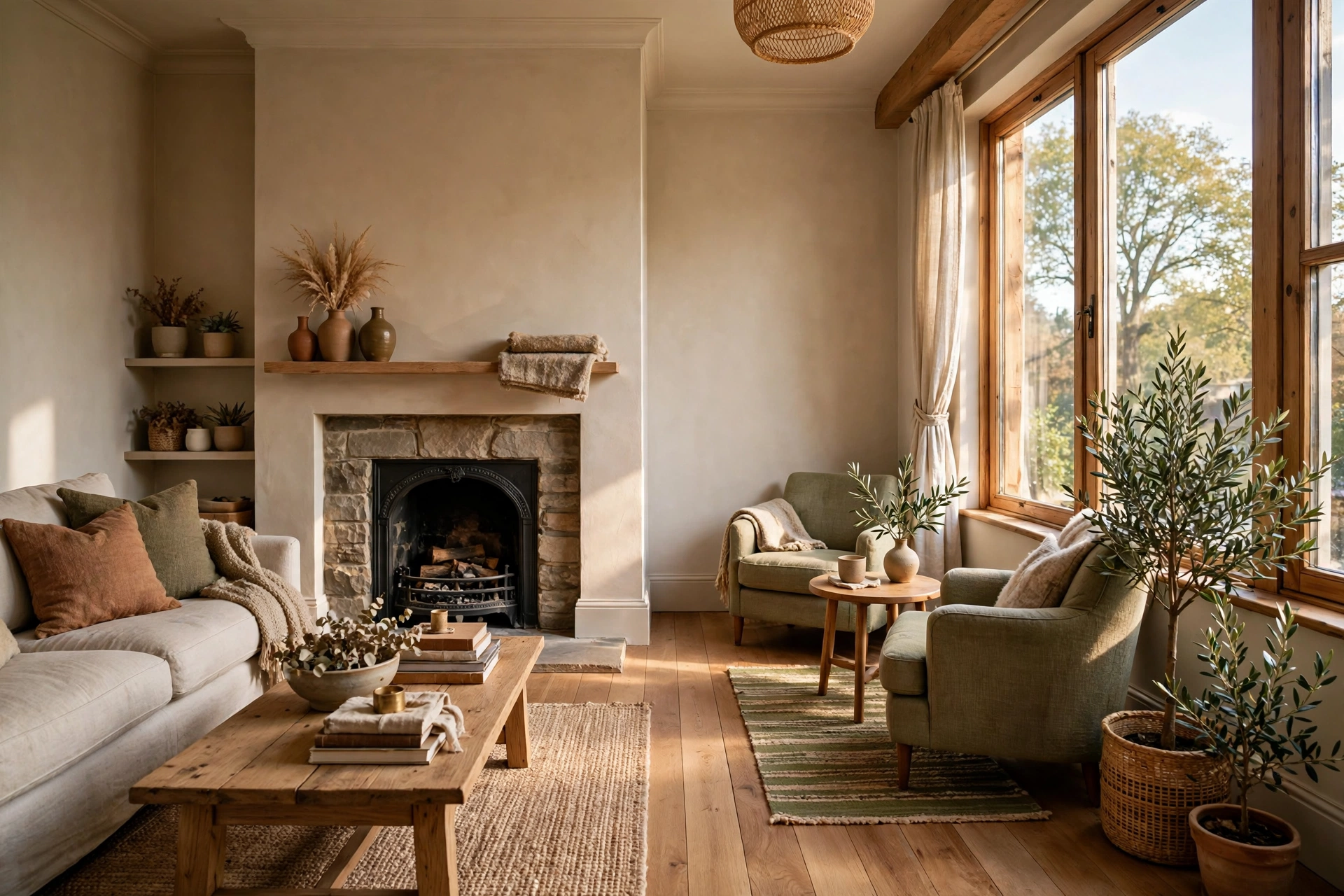
Magic, honestly. Pull your sofa off the long wall and let it float a few feet into the room, with its back toward one end. The back of the sofa becomes a soft divider, and the space behind it turns into a natural walkway — which is exactly what narrow rooms need instead of a cramped path squeezed between the couch and the opposite wall.
Spatially, a floated sofa breaks the “everything faces the middle” pattern that makes tunnel rooms feel so rigid. It gives the room an anchor in the middle, so the long walls recede instead of pressing in.
Cost: $0–$40 (a flat cord cover if a lamp cord now crosses the floor). Difficulty: easy. Tip: park a slim console table behind the sofa back — it hides the back of the couch and holds a lamp. Watch out: check your outlets first; floating a sofa away from all power sources gets annoying fast. If you’re new to moving big pieces around, this step-by-step approach to arranging furniture in a small living room walks through the whole process.
3. The Fix: Break the Tunnel With a Round Rug
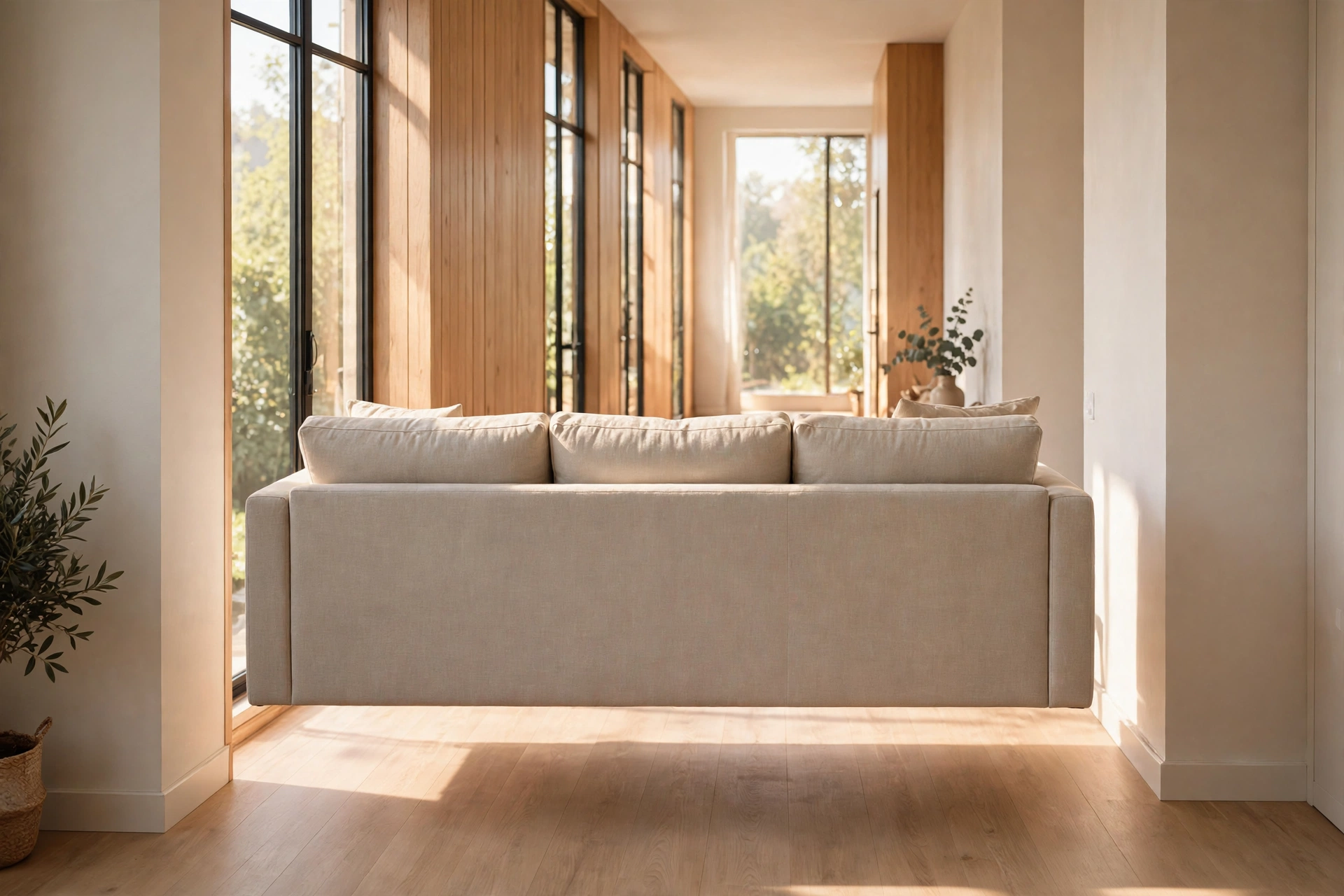
Here’s the simplest visual trick on this list. Rectangular rugs follow the room’s lines and make the tunnel worse. A round rug doesn’t follow anything — it stops the eye dead. Place one under your main seating group and the room instantly reads wider and softer.
Why it works: curves interrupt straight lines. A round shape at one end of the room creates a focal point that says “stop here, this is a place” instead of “keep walking.”
Cost: $80–$300 for a 6–8 foot round rug. Difficulty: easy — unroll and straighten. Tip: make sure at least the front legs of your sofa and chairs sit on the rug, or it will look like a coaster. Not sure what size fits? Run your measurements through this rug size calculator — narrow rooms have their own math. Watch out: skip tiny 3-foot rounds in the middle of a big group; they shrink the space instead of softening it.
4. Why a Bookshelf Across the Room Works
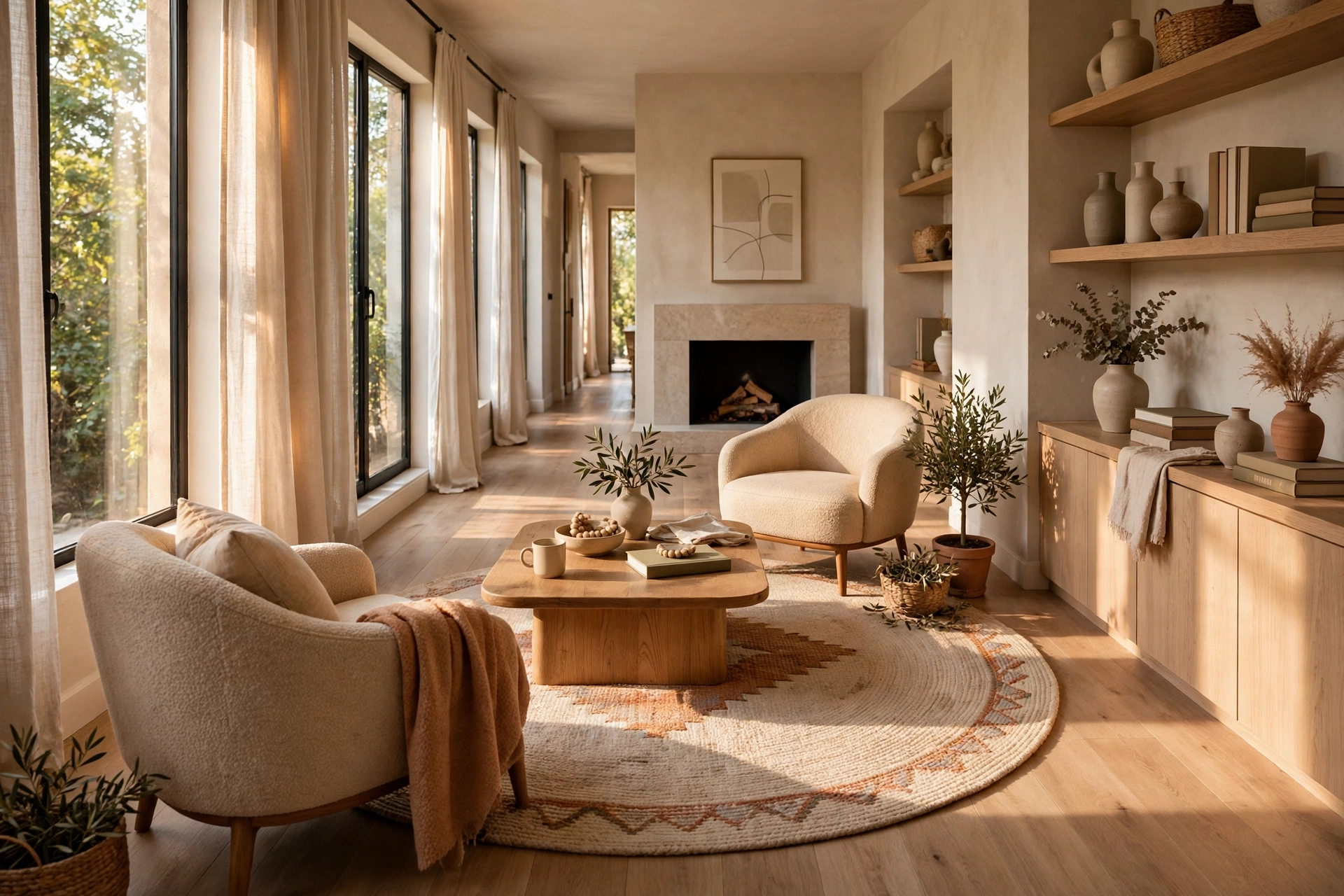
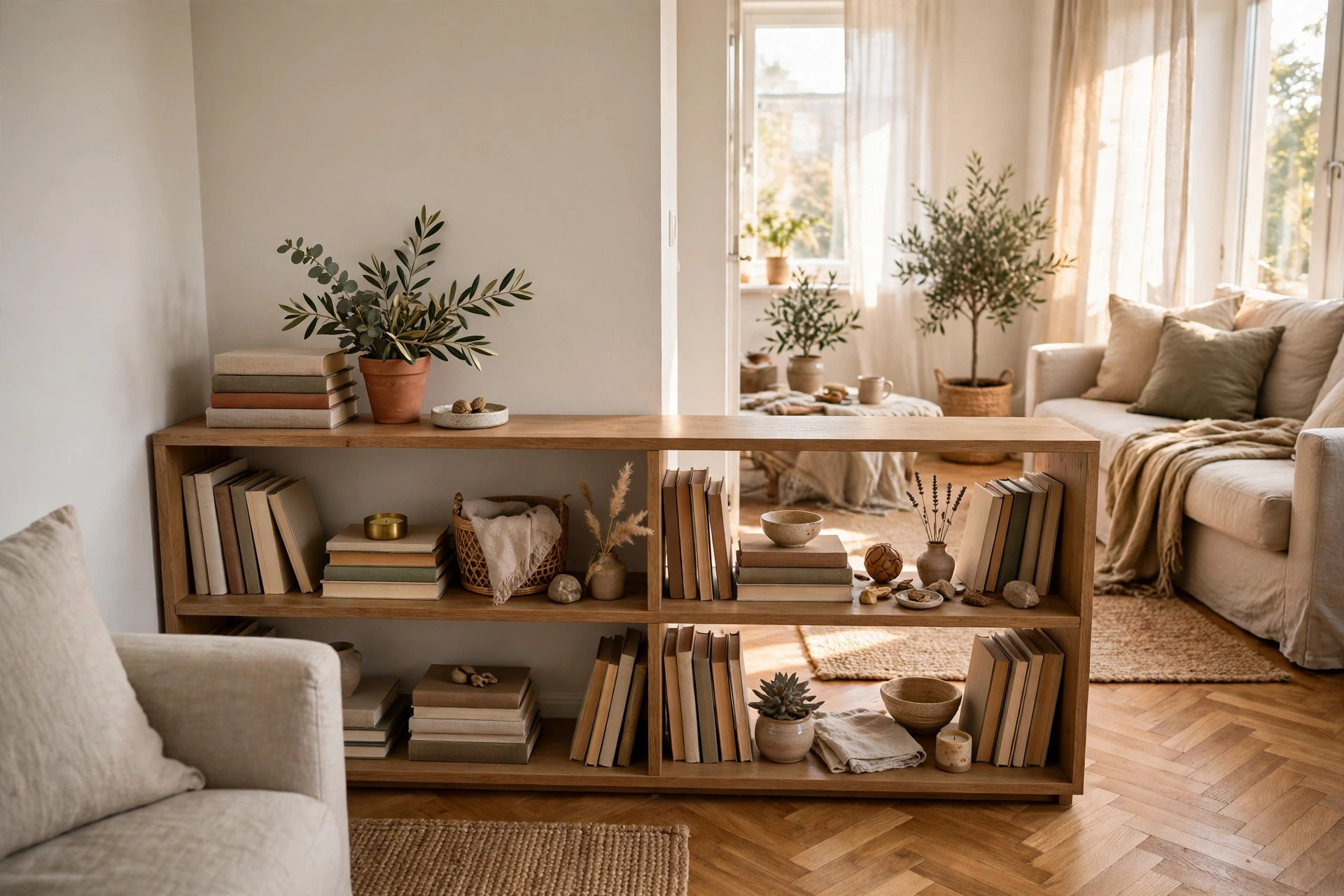
Place an open-backed bookshelf perpendicular to the long wall — sticking out into the room like a partial wall — and you’ve built a divider that doesn’t block light. It splits the space into zones while keeping the room feeling connected.
Cost: $60–$250 for a sturdy open bookcase. Difficulty: easy; two people for anything tall. Tip: leave the top shelf mostly clear or low so sight lines stay open over it. Watch out: anchor any bookcase taller than about three feet to the wall — a freestanding tall shelf in a walkway is a tip-over risk, especially with kids or pets around.
5. The Fix: Angle One Chair and Watch the Lines Break
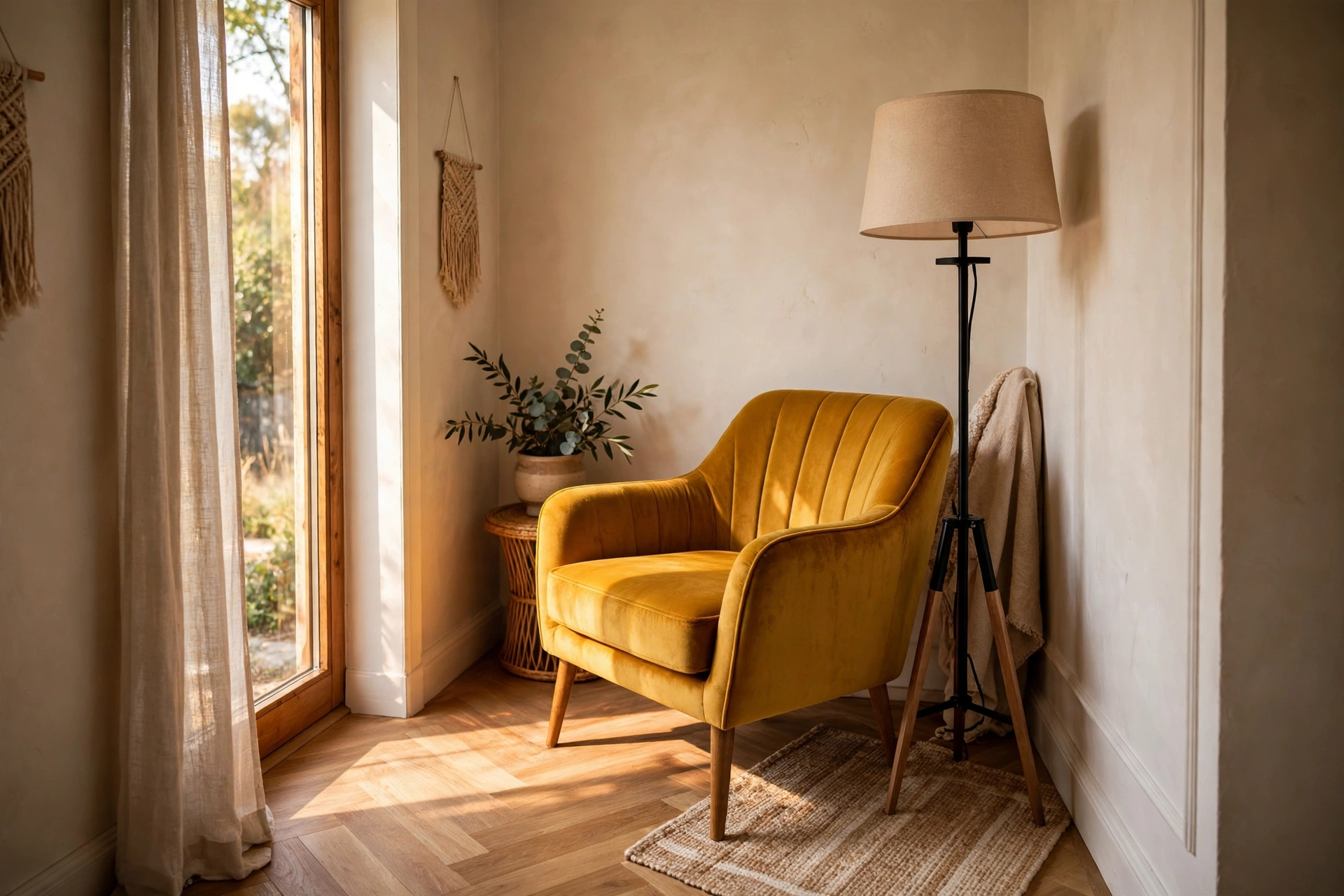
You don’t have to angle everything. Take one accent chair — just one — and turn it 30 to 45 degrees instead of squaring it with the walls. That single diagonal cuts across the room’s straight lines and gives the eye something unexpected to land on.
Cost: $0 with a chair you own; $120–$400 for a new accent chair. Difficulty: easy. Tip: angle the chair toward the coffee table, not away from it — it should still feel part of the conversation. Watch out: don’t let the chair’s back corner block the main walkway; nudge it until traffic flows around it.
6. Turn the Far Window Into Your Favorite Seat
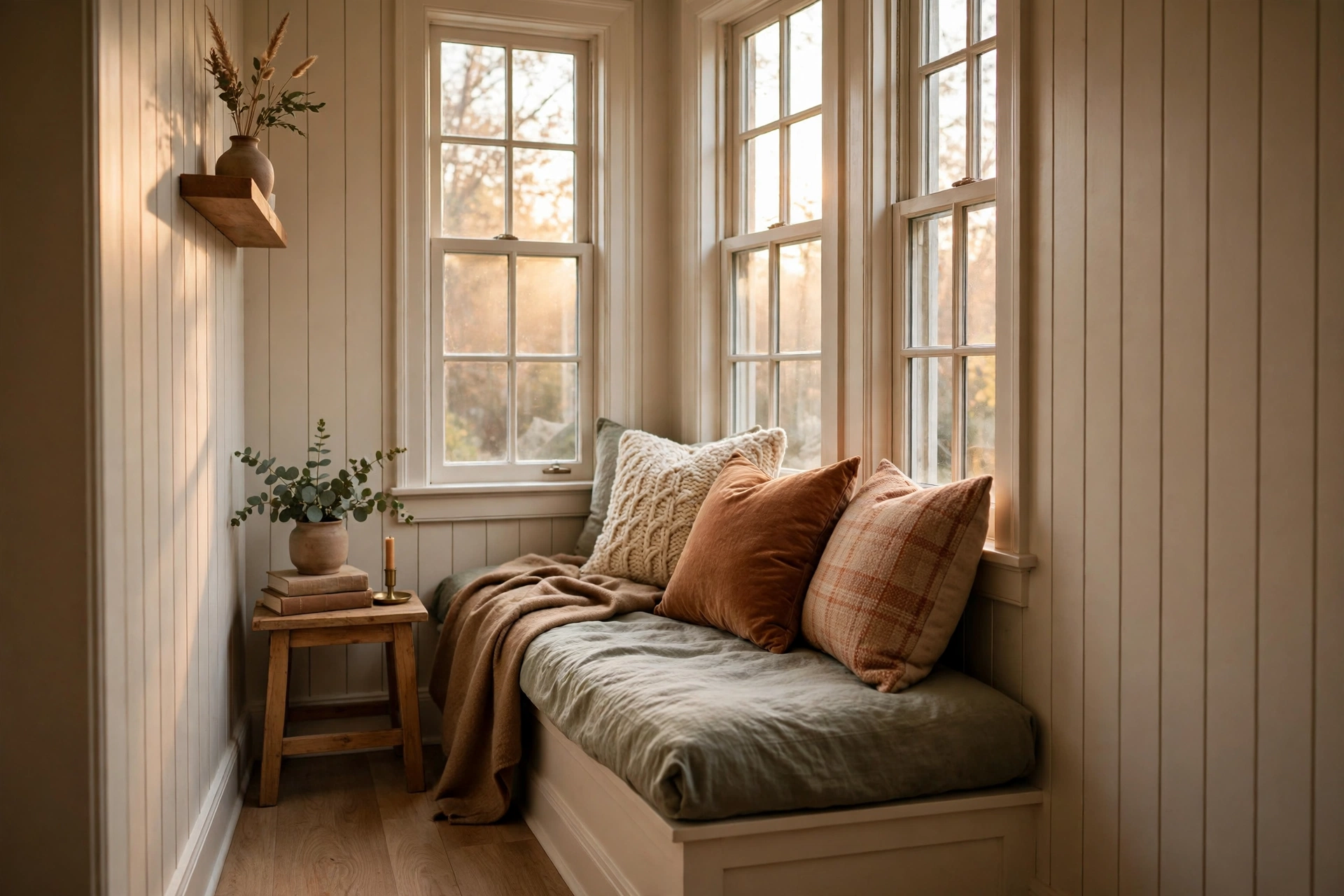
Every long narrow room has a dead end — the far wall, usually with a window, that becomes a dumping ground for a plant and a lamp nobody sits near. Claim it. Put a bench, a wide chair, or a low daybed under that window with a cushion and a throw, and you’ve made a reading nook out of wasted space.
This fixes the room’s worst problem: the far end that does nothing. A window seat gives that end a purpose, and the room suddenly feels like it has a destination instead of a dead end.
Cost: $30–$150 for a bench cushion, throw, and a basket or two. Difficulty: easy. Tip: a standard bench cushion with a couple of throw pillows looks custom without a carpenter. Watch out: if that window is drafty in winter, check the seals before you commit to sitting there — or layer a thick cushion that insulates.
Mistakes to Avoid in a Long Narrow Living Room
- Pushing everything against the walls. It feels logical, but it turns the middle of the room into a runway and the furniture into a lineup.
- Using one rectangular rug for the whole room. It traces the tunnel shape and makes the room look even longer and skinnier.
- Lighting with a single overhead fixture. One ceiling light down the middle makes the room feel like a corridor — layer it instead.
- Ignoring the far end. A dead far end is the whole reason the room feels endless. Give it a job: seating, storage, a nook.
- Buying bulky, tall furniture. Oversized pieces eat the width you don’t have and block the sight lines you need.
- Blocking the walkway. Every arrangement needs one clear path end to end — squeeze it and the room feels cramped no matter how nice it looks.
7. Give the Long Wall Something to Say
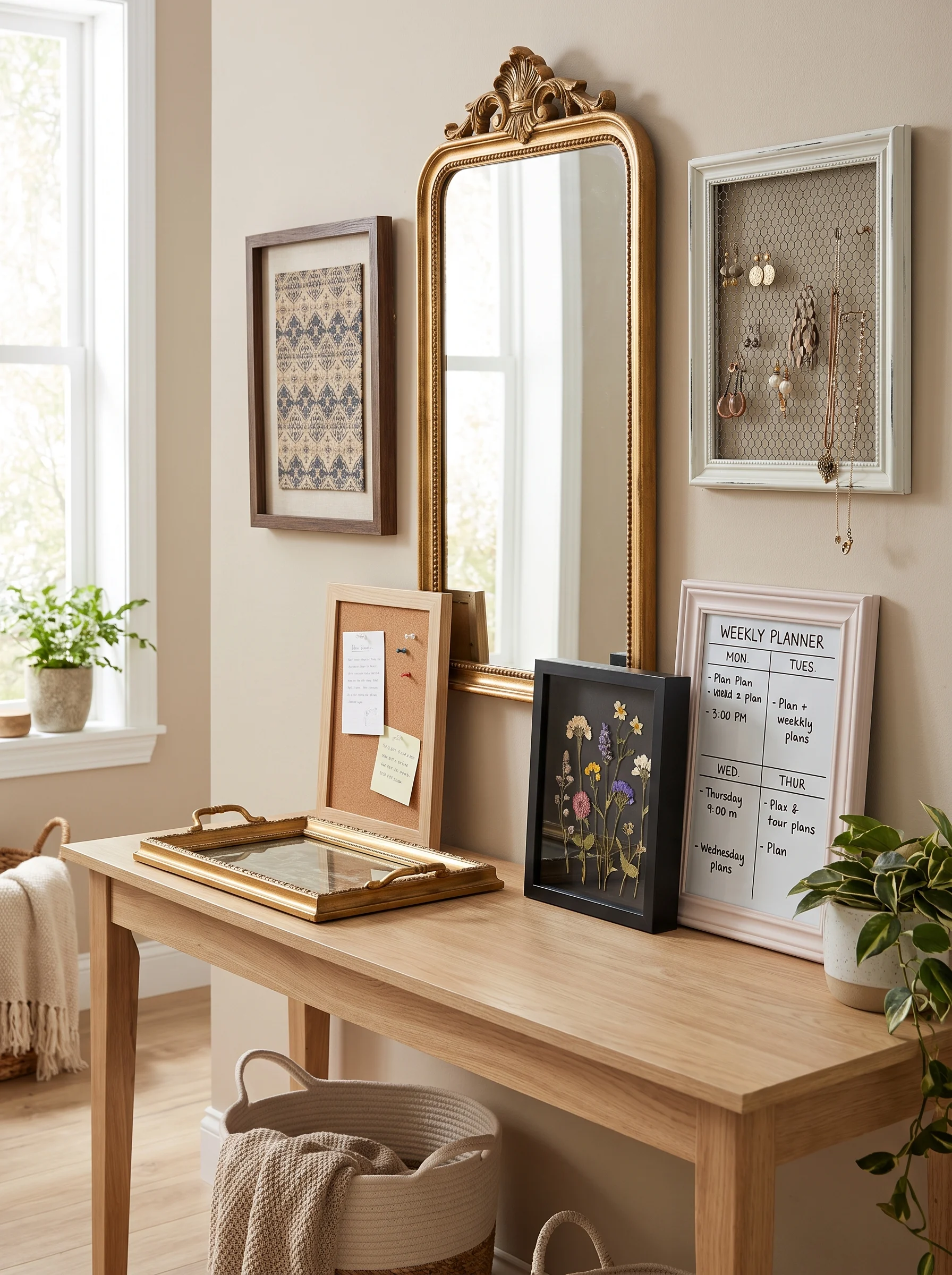
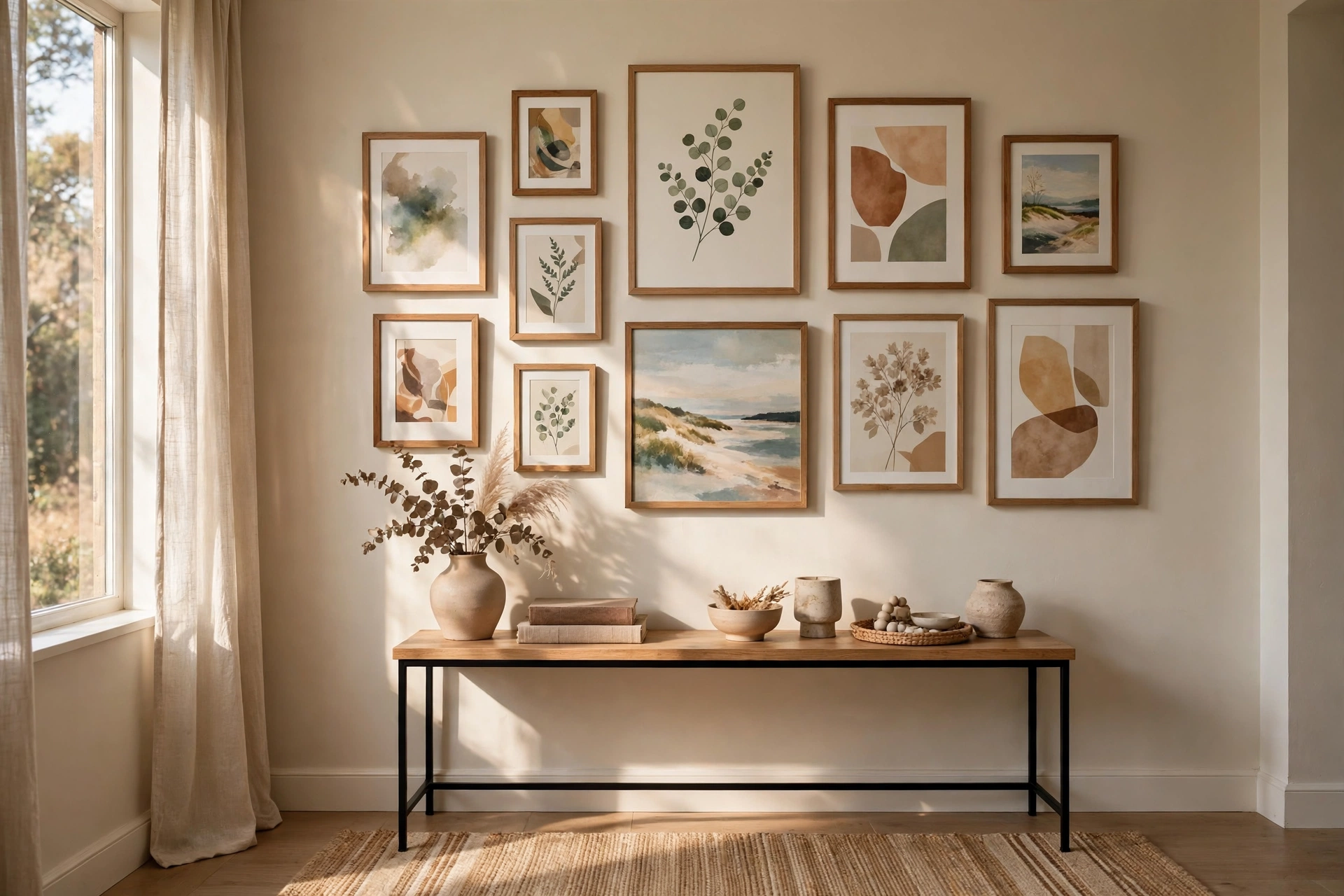
A bare long wall is a blank arrow pointing down the room. Fill it with intent: a gallery wall of framed prints, one large piece of art, or a row of floating shelves. That visual weight slows the eye down — instead of sliding straight down the wall, people actually stop and look.
This works because decoration breaks distance. A well-dressed long wall feels shorter than a bare one, which is exactly the illusion you want.
Cost: $20–$100 for frames and prints if you thrift or print your own. Difficulty: moderate — hanging takes an afternoon. Tip: tape paper templates on the wall first and live with the arrangement for a day before you hammer anything. Watch out: hang the center of the arrangement at eye level (about 57 inches). Gallery walls that creep too high make the wall feel taller and narrower.
8. The Fix: Keep Furniture Low and Let the Room Breathe
Tall, chunky furniture in a narrow room acts like a series of roadblocks. Swap the visual bulk for low-profile pieces — a sofa with a lower back, armless or slim-armed chairs, a low coffee table — and the sight lines open up from one end of the room to the other. You see over everything, and seeing over everything reads as space.
This doesn’t always mean buying new furniture. Sometimes it means removing the top-heavy bookcase, ditching the oversized recliner, or swapping a tall lamp for a low one. Edit first, shop later.
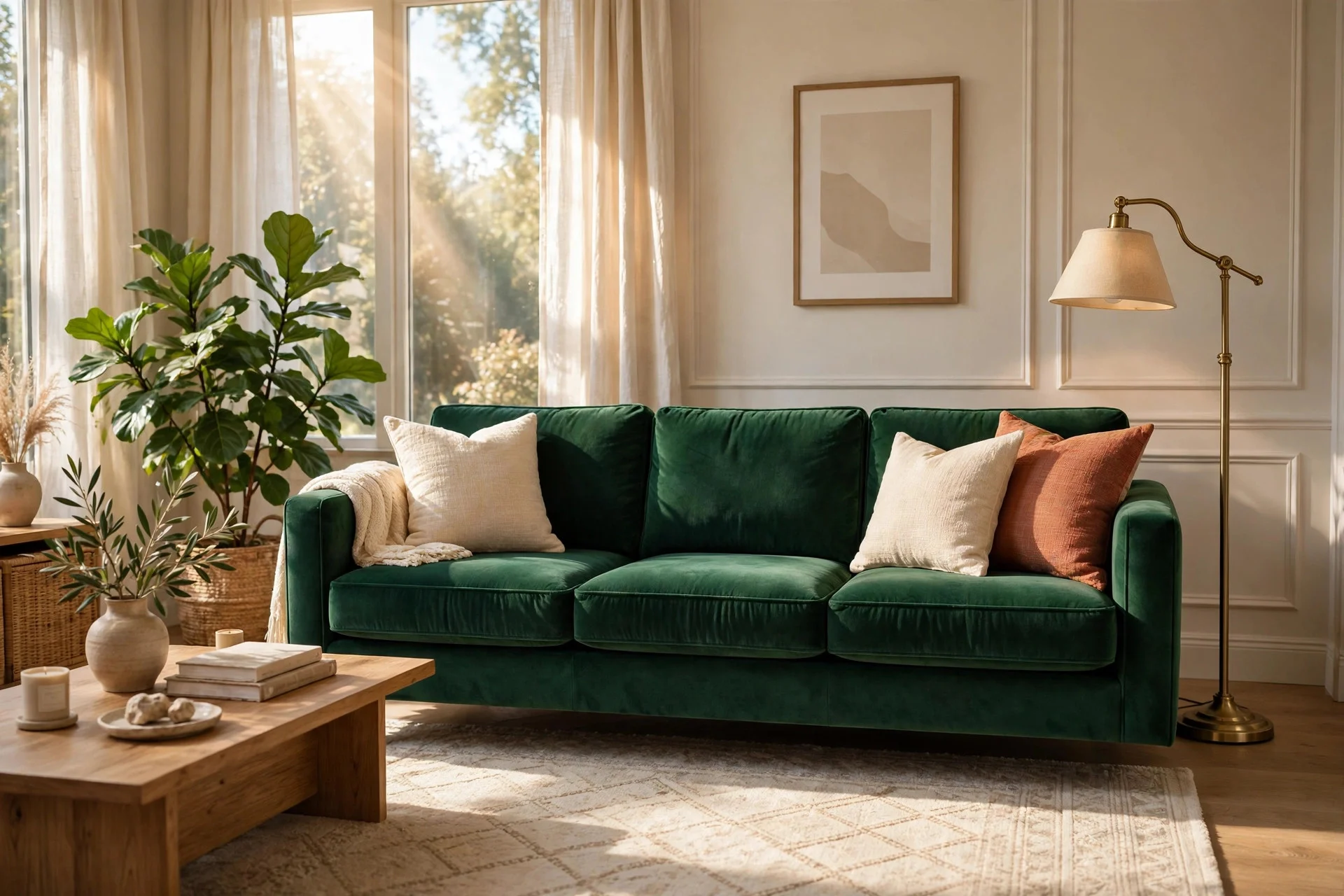
Cost: $0 if you declutter and rearrange; $200–$600+ if you replace a piece. Difficulty: easy to moderate. Tip: aim for seating with backs around 30–34 inches high — low enough to see over, high enough to sit comfortably. Watch out: very low seating isn’t great for everyone; keep one higher chair in the mix for older family members. And if your sofa happens to be a brown couch, low-profile pieces around it keep the look grounded without feeling heavy.
9. Light It Like a Gallery, Not a Hallway
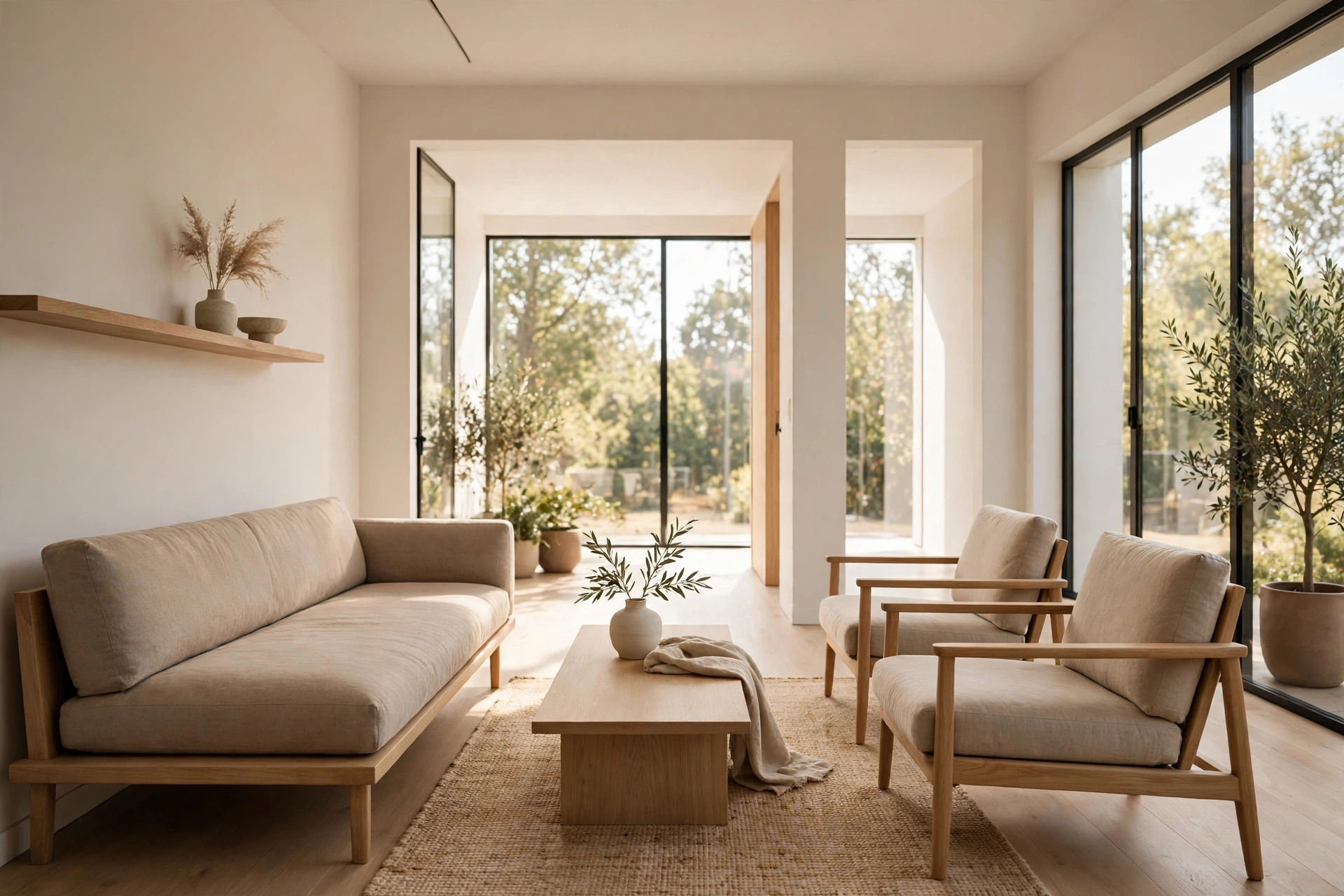
One ceiling light in the middle of a long room creates a bright middle and two dim ends — the hallway effect in its purest form. The fix is layers: a floor lamp in one zone, wall sconces or a table lamp in the other, and the ceiling light dimmed or barely used. Each zone gets its own pool of light, and the room reads as two comfortable spaces instead of one long tube.
Cost: $60–$250 for a floor lamp plus a couple of smaller lamps or sconces. Difficulty: easy. Tip: stick to warm bulbs (around 2700K) — cool white makes narrow rooms feel clinical. Watch out: don’t point every light straight down the room’s length; aim for pools of light at different heights and depths.
10. Pull the Eye to the End Wall With Tall Storage
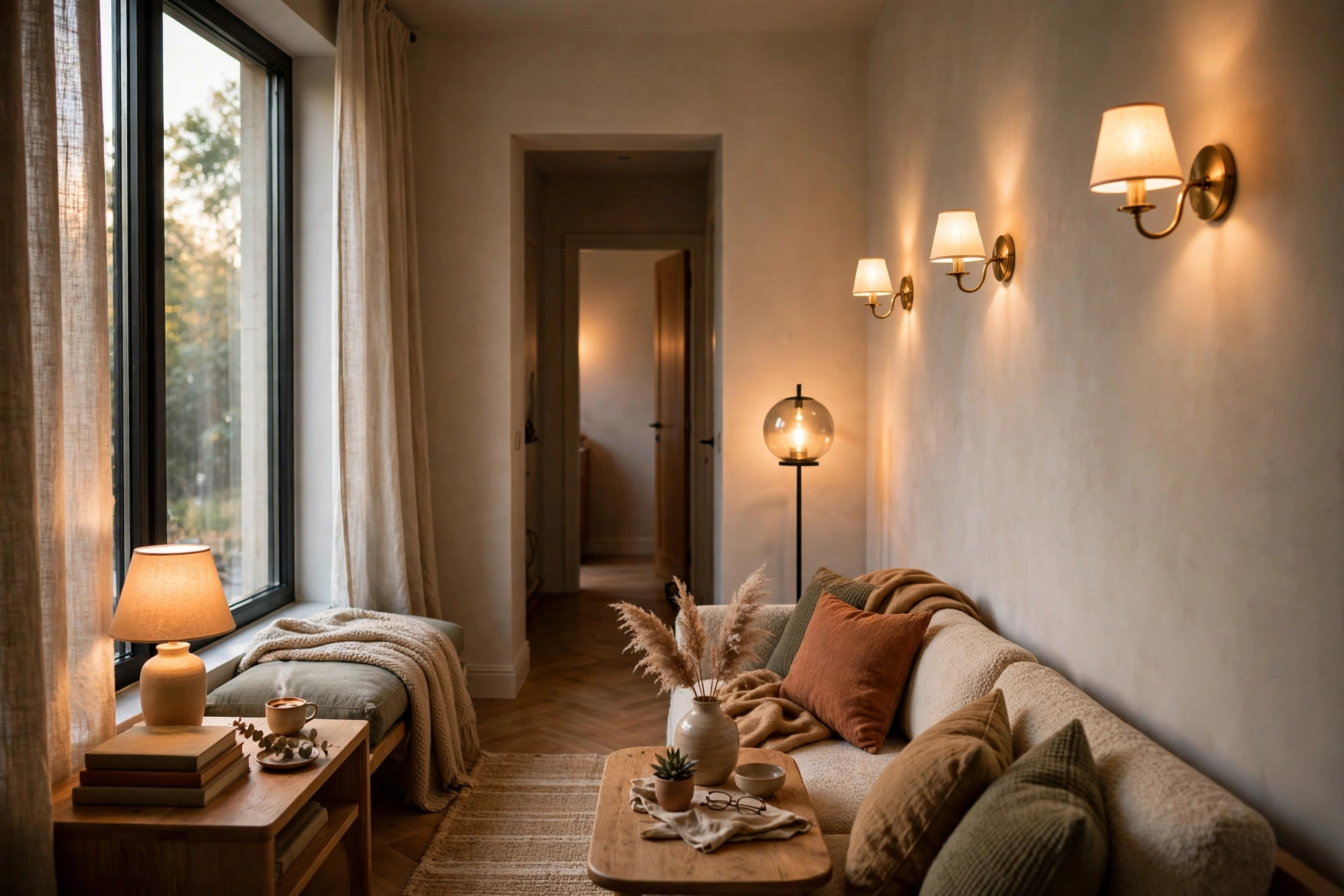
Here’s a deliberate exception to the “keep it low” rule: at the very far end of the room, go tall. A tall bookcase or vertical shelving unit on the end wall gives the eye a destination. Instead of the room fading out into nothing, it ends on something interesting.
The trick is contrast — tall and full at the end, low and open everywhere else. The tall piece reads as the room’s “period” at the end of a sentence, making the whole layout feel intentional rather than accidental.
Cost: $80–$300 for a tall bookcase or shelving unit. Difficulty: easy to moderate. Tip: paint it the same color as the wall (or buy it in a matching tone) so it adds height without visual heaviness. Watch out: anchor it to the wall — tall and narrow furniture in a traffic-heavy room is exactly what anti-tip straps are for.
11. The Fix: Build an L Where the Room Wants One
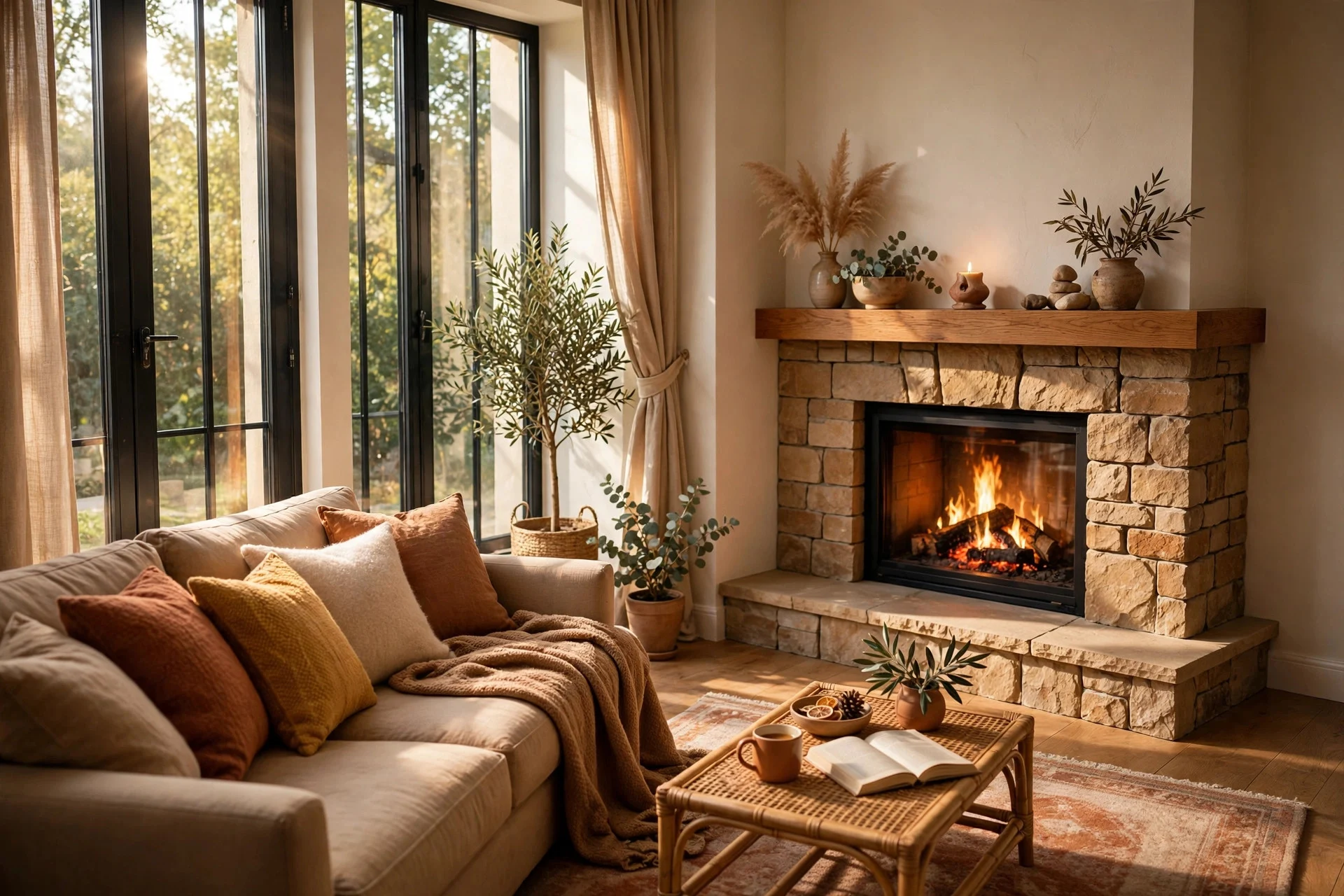
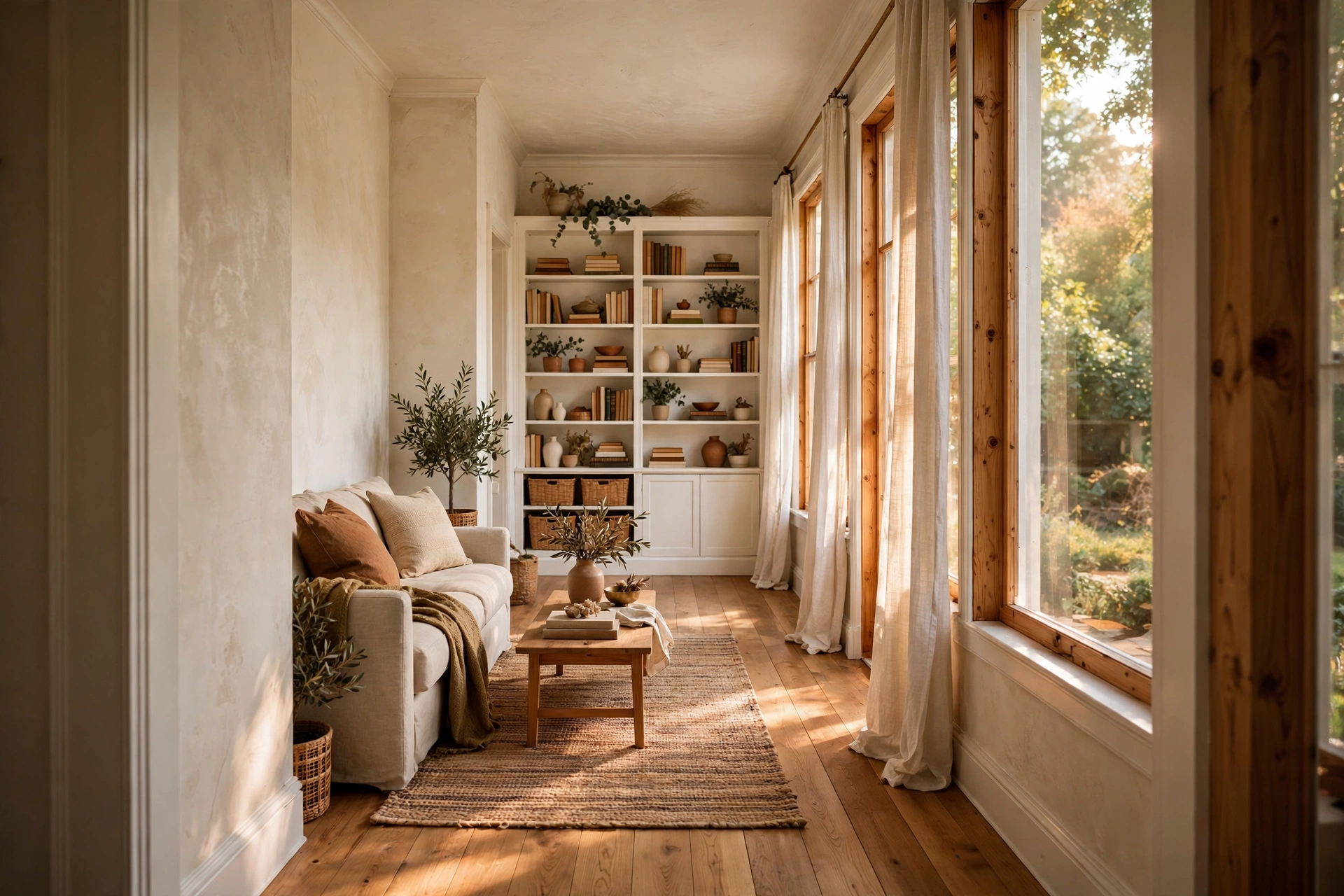
If your room has even a slightly wider end — or if you can make one end wider by floating furniture — arrange your seating in an L there. Sofa along the long wall, loveseat or two chairs perpendicular at the end, coffee table in the crook. It’s the classic corner conversation setup, and it eats up the room’s awkward length by turning one end into a square-ish hangout.
This is one of the fastest fixes for rooms that feel like bowling alleys: the L breaks the long axis completely. The rest of the room then becomes a second, quieter zone — a desk, plants, a bar cart, whatever fits your life.
Cost: $0–$500 depending on whether you need the extra chairs. Difficulty: easy. Tip: anchor the L with a rug that sits under all three sides — the rug is what makes it read as one arrangement instead of three random pieces. Once the seating is set, styling your coffee table with a tray and a small plant finishes the crook of the L nicely. Watch out: don’t force the L into the skinny middle of the room; it belongs at the wider end.
12. Hang Curtains High and Wide — Then Watch It Widen
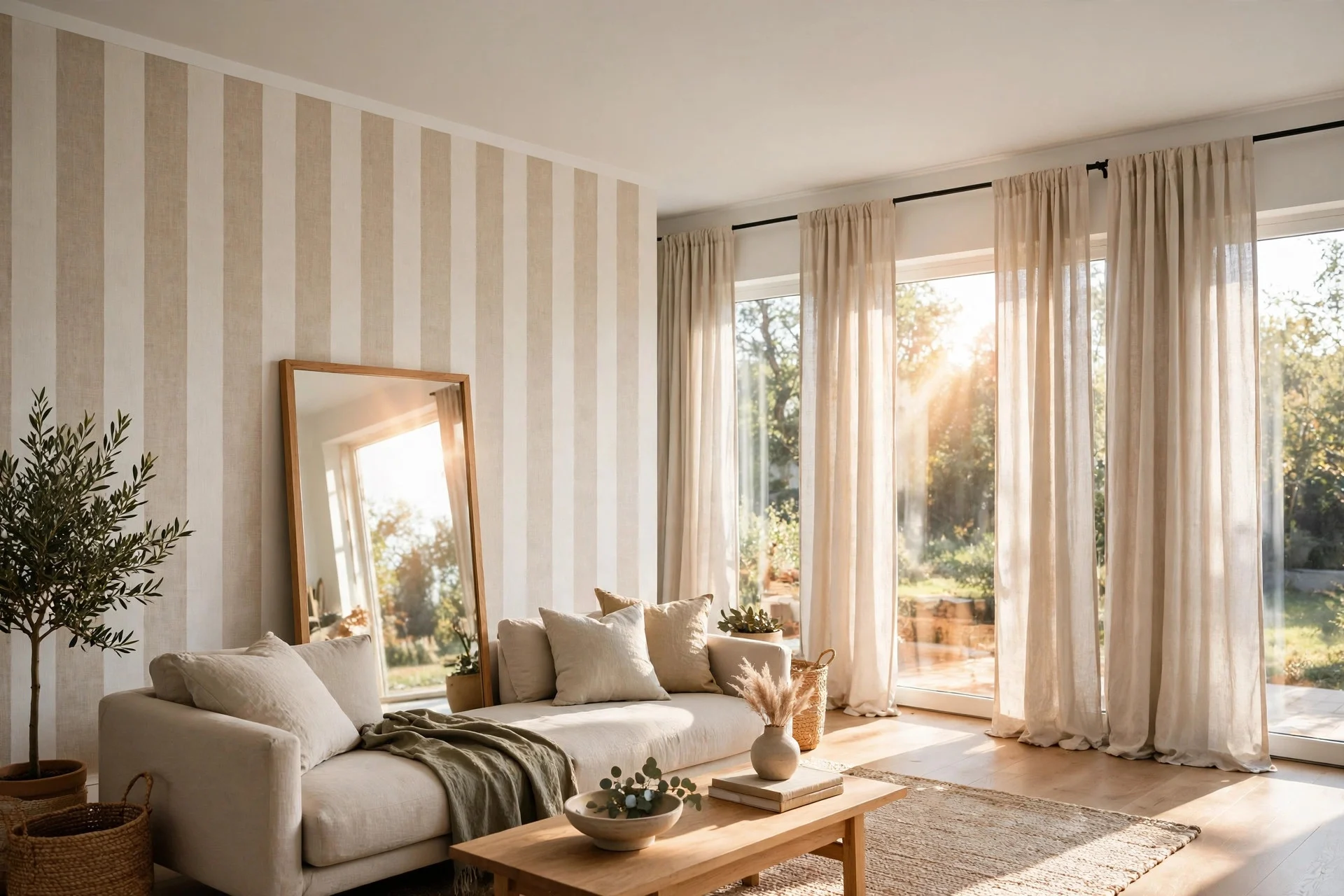
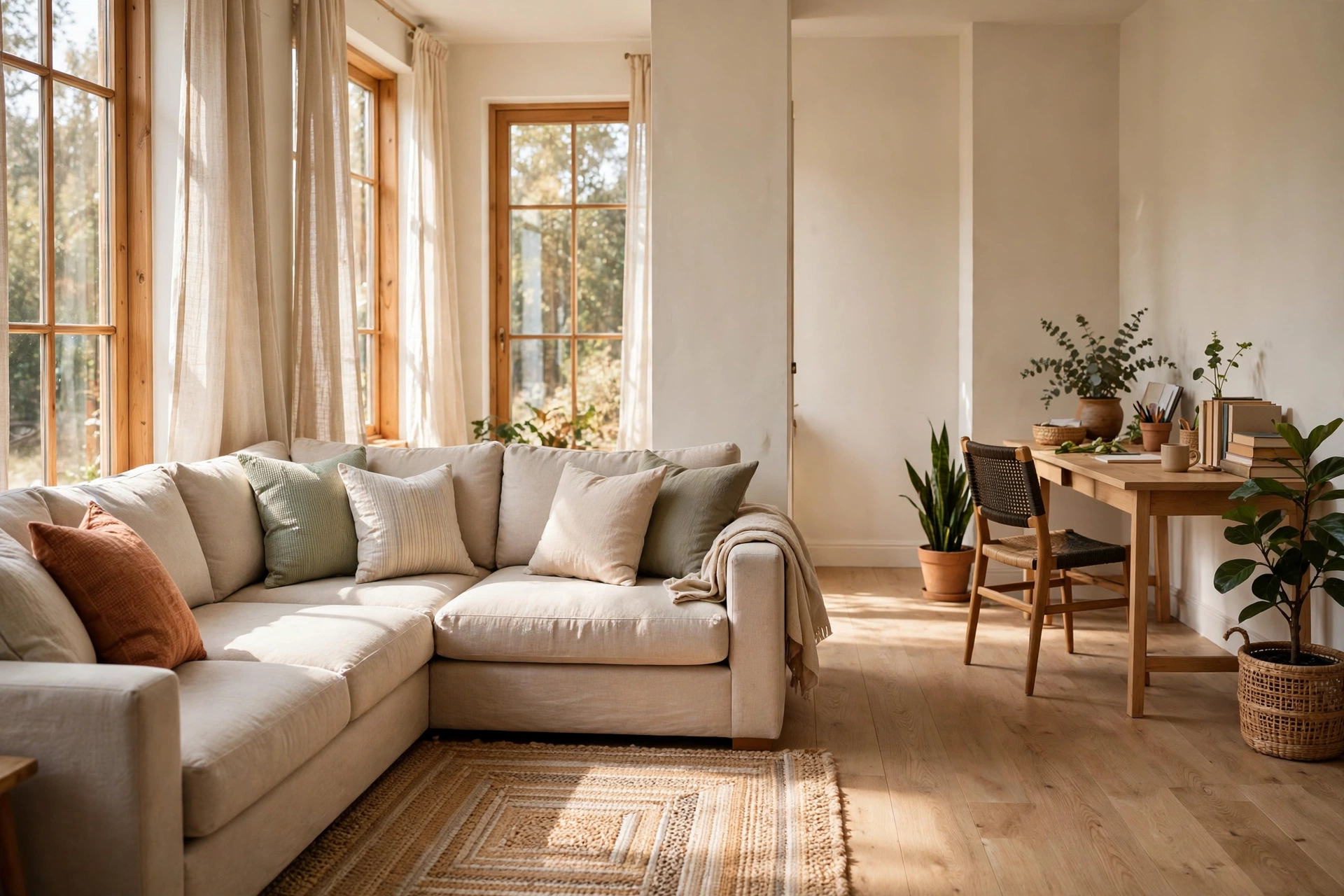
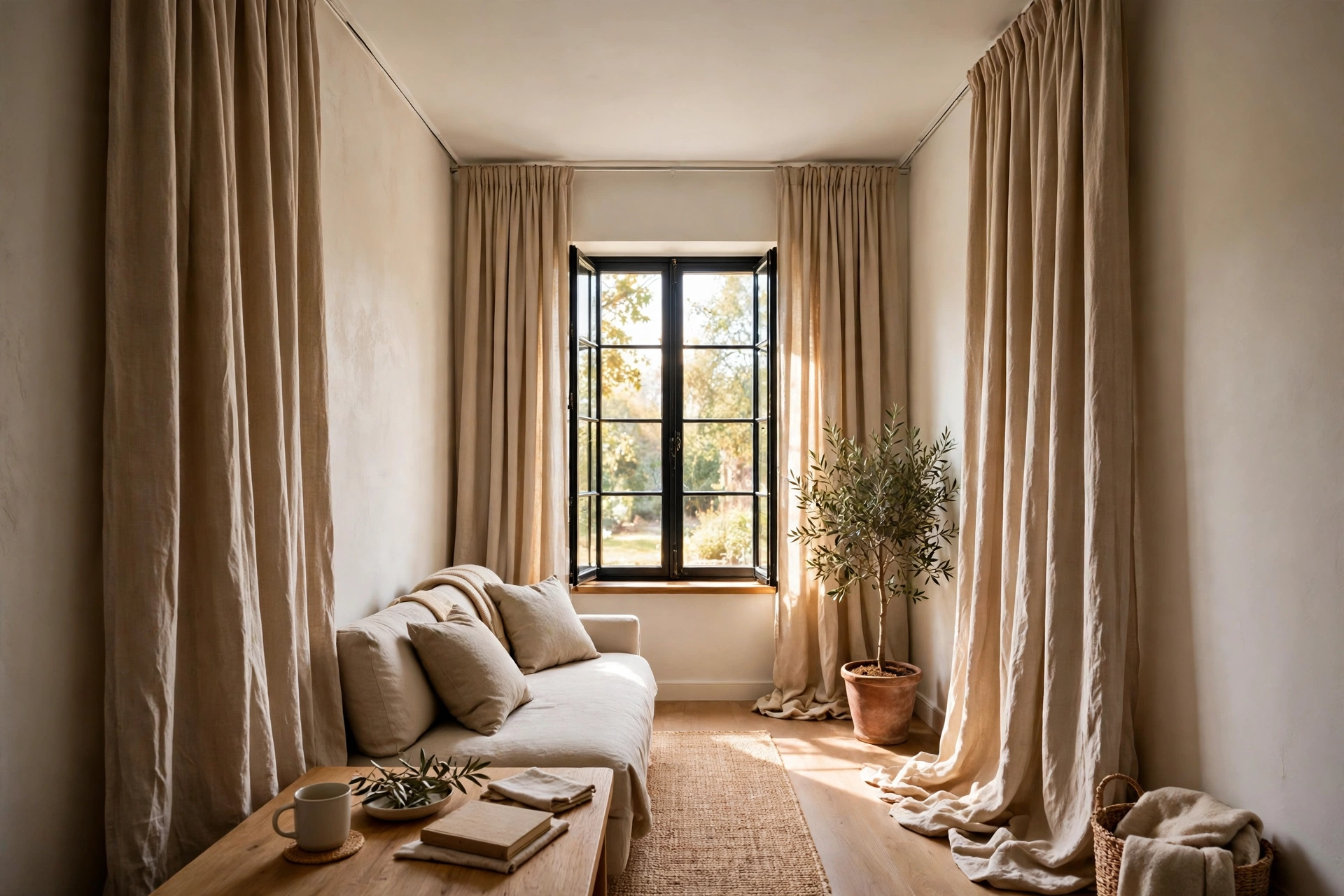
Curtains hung exactly on the window frame make windows look small and walls look bare. Mount the rod 8–12 inches above the frame and extend it 4–6 inches past each side, then hang panels that reach the floor. The window looks bigger, the wall looks wider, and in a narrow room, that horizontal stretch is gold.
Full-length panels also draw the eye up and out instead of letting it slide down the room’s length. It’s a small change with an outsized effect — designers reach for this one constantly because it works in nearly every room, and especially in narrow ones.
Cost: $60–$200 for a rod plus two floor-length panels. Difficulty: easy — one afternoon with a drill. Tip: the panels should just kiss the floor; let them puddle only if you don’t have kids or pets dragging through them. Watch out: measure twice before you drill — rentals may need tension or no-drill hardware instead.
Frequently Asked Questions
What’s the best furniture arrangement for a long narrow living room?
Split the room into two zones, float the sofa off the wall to create a natural walkway, and anchor each zone with its own rug and lighting. That combination fixes most narrow-room problems in a single afternoon.
Should the sofa go against the long wall in a narrow room?
Usually not. A sofa flat against the long wall emphasizes the tunnel shape and squeezes the walkway. Floating it into the room — or placing it perpendicular at one end — breaks the line and gives the layout far more breathing room.
What size rug works in a long narrow living room?
Skip full-room rectangles. Use one area rug per zone — often an 8×10 for the main seating area, or a large round rug to break the straight lines. The rug should sit under at least the front legs of every seat in its zone.
How do you make a long narrow living room feel wider?
Hang curtains high and wide, keep furniture low so sight lines stay open, add a round rug or an angled chair to interrupt the straight lines, and light in layers rather than with one overhead fixture. Each trick widens the room visually without moving a wall.
Where should the TV go in a narrow living room?
Put it on one of the short end walls if you can — that fixes the viewing-distance problem and lets seating face the end instead of lining the tunnel. If it has to go on the long wall, keep the seating close and low so it feels like a snug media zone rather than a theater aisle.
Start With the Zone Split Tonight
If you do nothing else, try fix number one: walk through your room with some painter’s tape and mark out two zones. Move the seating into them, leave a clear walkway, and stand in the doorway. That alone usually changes the whole feel of the room. Then pick one or two more fixes — a round rug, a floated sofa, curtains hung high — and you’ll have a long narrow living room that finally flows instead of just stretching out. No renovation required.