9 Small Living Room Ideas With a Daybed Instead of a Sofa
If your living room feels tight and guests keep ending up on an air mattress, here’s a thought worth sitting with: one of the smartest daybed in living room ideas is simply swapping the sofa for a daybed. A daybed seats three for movie night, gives you a proper spot to nap with a book on a lazy Sunday, and turns into a real guest bed at night — all while taking up less floor space than a sectional. No extra pull-out mechanism to fight with, no clunky sleeper sofa to move.
Daybeds got a bad reputation somewhere along the way — people picture a flimsy twin bed pushed against a dorm wall. That’s not what these are. The ideas below range from thrift-store finds under $50 to upholstered showpieces over $200, grouped by what they’ll actually cost you. Pick your tier, pick an idea, and your small living room gains seating, sleeping, and lounging without gaining square footage.
Daybed in living room ideas under $50
Yes, you can pull this off for the price of a pizza night. These three ideas start with what you already own or what someone else is giving away.
1. The thrift-store daybed frame
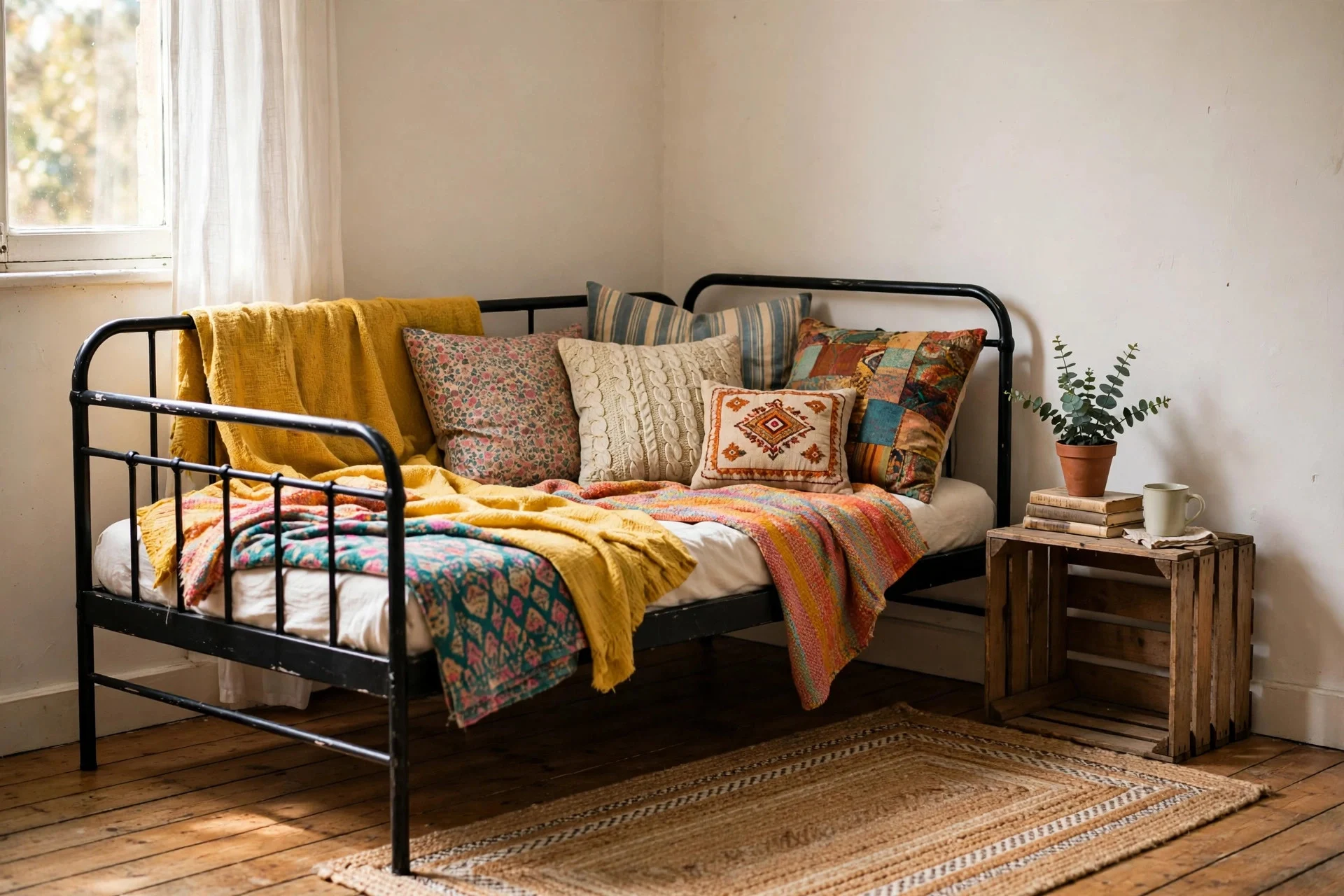
Daybed frames turn up in thrift stores constantly — they’re bulky, sellers underprice them, and most buyers walk past because they don’t know what to do with one. Check thrift stores, Facebook Marketplace, and estate sales for twin daybed frames in the $25–$40 range. A metal frame with a chipped finish or a wooden one that’s seen better days is perfect; the bones are what matter.
Why it works: a daybed frame is one of the cheapest foundations for dual-purpose seating you can buy. The sides and back frame instantly read as “seating” rather than “bed” once you add pillows, and the twin footprint (about 38″ × 75″) fits walls where a 90-inch sofa never would.
Cost: $25–$50 for the frame, plus $8–$12 for a can of spray paint or a quart of furniture paint if the finish needs love. Difficulty: easy — a Saturday afternoon of sanding, painting, and air-drying.
Hands-on tip: sand only the rough spots and any flaking paint, then wipe the frame down with a damp cloth before painting. You don’t need a furniture-store finish; a satin black or matte white coat makes a 1990s brass daybed look like it came from a catalog.
Watch out: test the welds and joints before you pay. Rock the frame side to side in the store — if it wobbles and can’t be tightened with new bolts, leave it.
2. The pallet daybed build
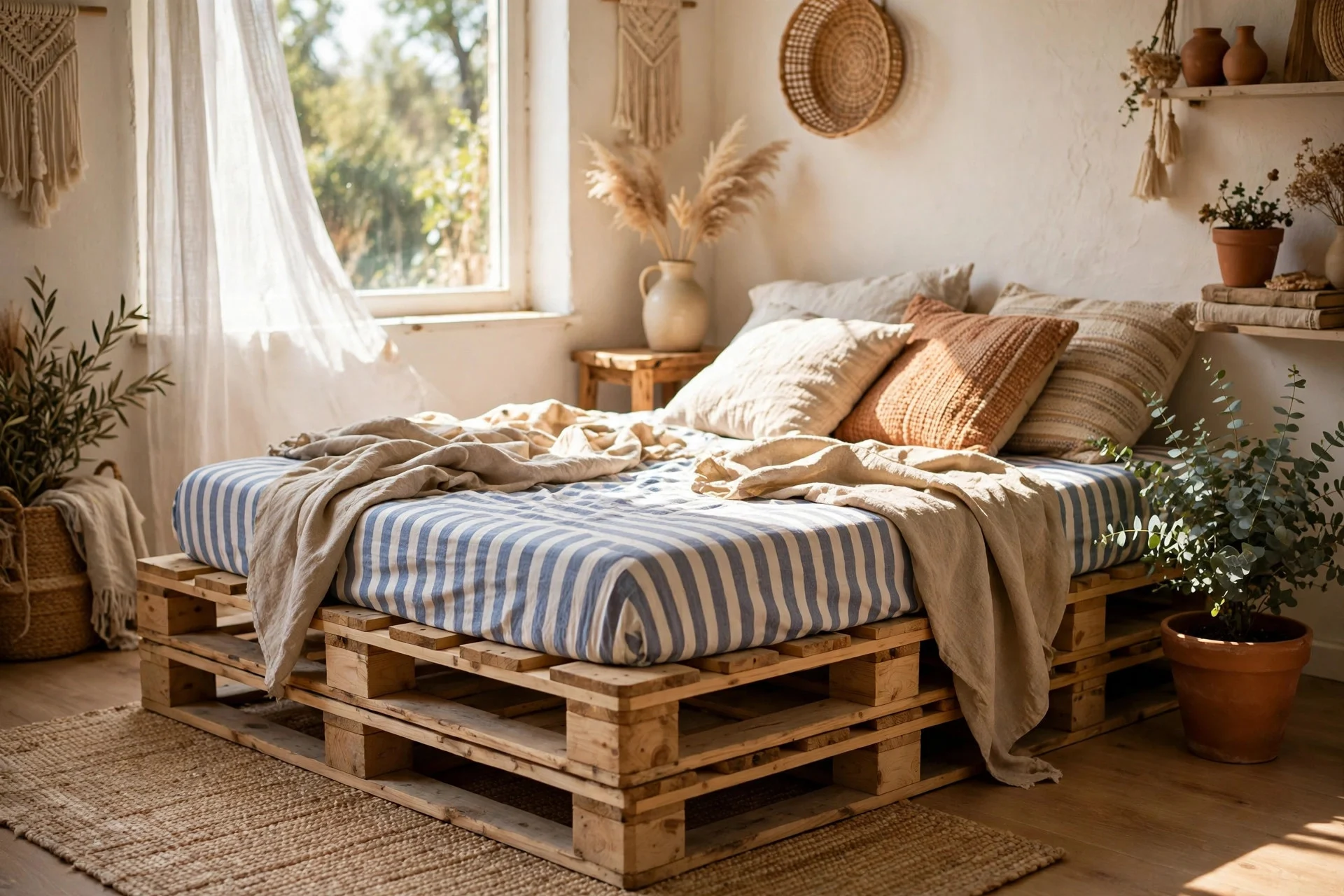
If you can lift a pallet and work a drill, you can build a daybed. Stack two standard pallets per side (sanded smooth and sealed) to make a platform about the size of a twin mattress, top them with a foam mattress topper or two firm seat cushions, and you’ve got a low, lounge-y daybed base that reads boho rather than budget.
Why it works: pallets are often free from local shops or under $10 at garden centers, and the low profile makes a small room feel taller — your eye reads the extra wall space as extra square footage. The slatted gaps underneath double as hidden storage for blankets and board games.
Cost: $0–$10 for pallets, $20–$35 for a 3-inch foam topper or secondhand foam mattress cut to twin size. Difficulty: moderate — two to three hours of sanding (wear a mask), stacking, and securing with brackets.
Hands-on tip: cover the foam in a washable twin-sheet set or a fitted mattress protector before adding throw pillows. Pallet foam collects dust fast in a living room, and a cover you can strip and wash keeps it fresh.
Watch out: not all pallets are safe indoors. Choose heat-treated pallets (marked HT, not MB — the MB stamp means chemically treated wood you don’t want in your home).
3. The slipcover-and-style refresh
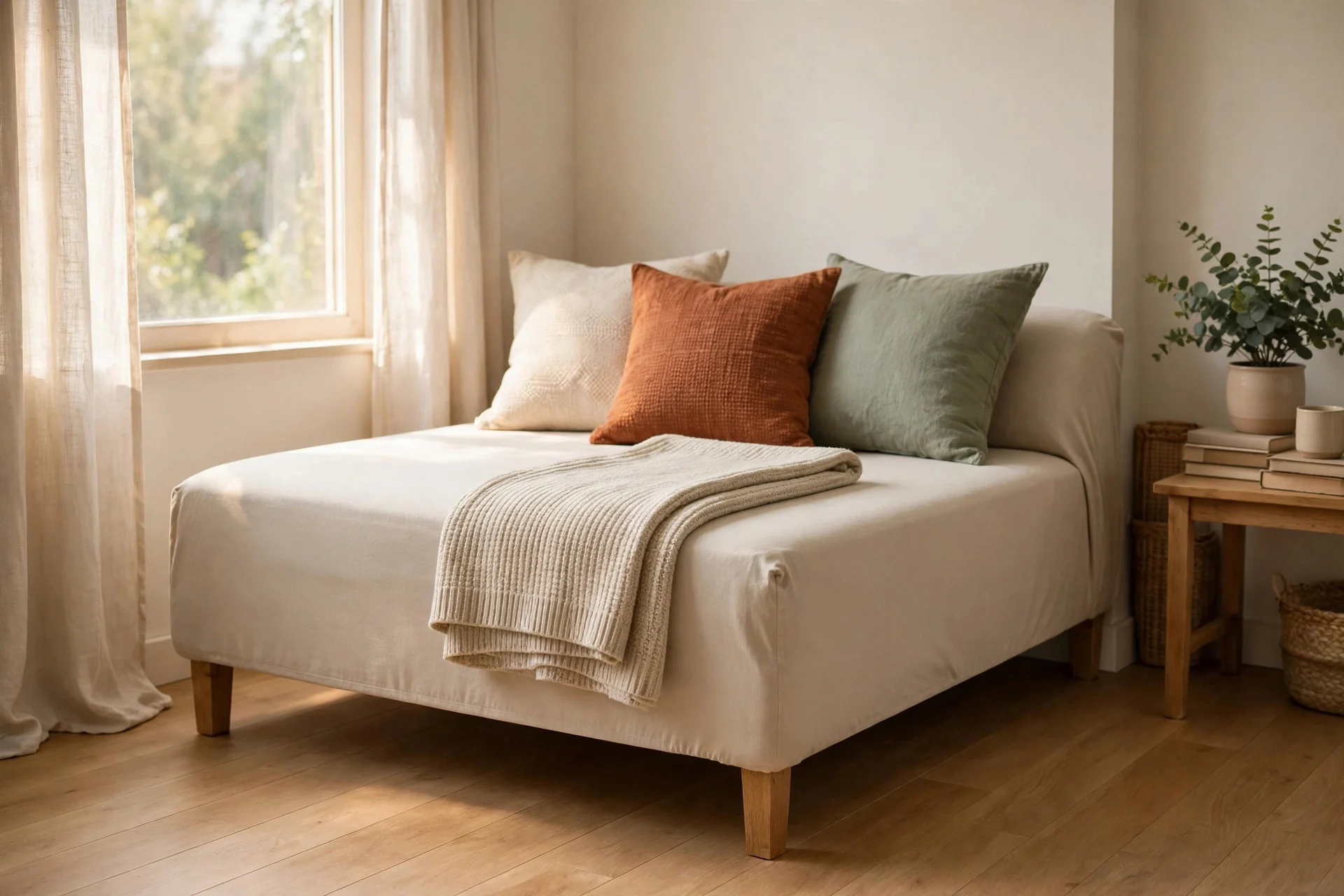
Already own a daybed — or a twin bed you never use? Don’t buy anything big. A stretch slipcover ($25–$45) designed for twin daybeds hides dated fabric, and a deliberate layer of throw pillows and a textured throw finishes the sofa illusion. This is also the renter-friendliest move on the list: zero tools, zero damage.
Why it works: most daybeds look like beds because they’re dressed like beds. Change the dressing — lumbar pillows and back cushions in sofa-like arrangements, a throw folded across the front edge like a sofa arm — and the same furniture suddenly belongs in a living room.
Cost: $25–$45 for a slipcover, $0–$15 for throw pillows borrowed from other rooms or thrifted. Difficulty: easy — one afternoon of styling, no tools.
Hands-on tip: arrange pillows back-to-front in three layers: two large sleeping pillows upright against the back, two mid-size cushions in front of those, then one small lumbar or accent pillow centered. This layering is what reads “sofa” to the eye.
Watch out: cheap stretch covers slip off with daily sitting. Look for covers with elastic all the way around plus tucking straps, and re-tuck weekly.
Daybed in living room ideas: $50–$200
This is the sweet spot for most people — real new frames, real mattresses, still far less than a sofa. Every idea here is something you can order or pick up this week.
4. The flat-pack metal daybed
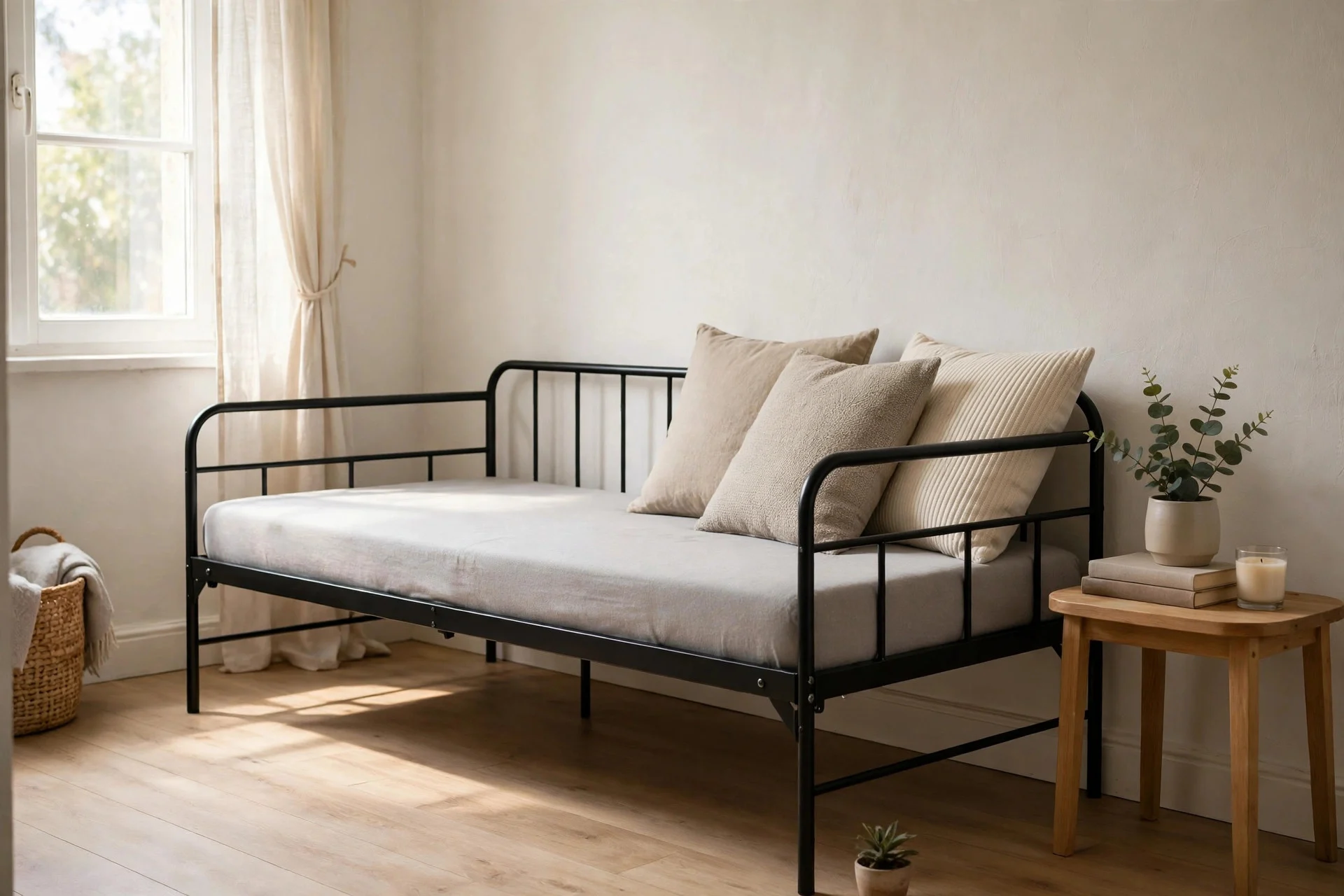
A basic twin metal daybed frame from a big-box store runs $100–$180, and pairing it with the mattress you already own (or a $60–$120 budget foam mattress) gets you into daybed life for less than most armchairs. Stick with simple black, white, or bronze finishes — they recede visually, which is exactly what a small room needs.
Why it works: metal frames assemble in under an hour with the included Allen key, weigh almost nothing, and the open slatted sides keep the room airy. Designers often recommend them as the first daybed to try because the investment is low and the result is genuinely comfortable for both sitting and sleeping.
Cost: $100–$180 frame; $0–$120 if you also need a mattress. Difficulty: easy — assembly in 45–60 minutes.
Hands-on tip: place felt pads under the feet before you position it. Metal frames on hard floors slide and scratch, and once a 6-foot rug goes under, you won’t want to lift the whole thing again.
Watch out: check the weight limit on the product page — budget frames often rate at 200 lbs per side. Fine for sitting, but two adults sleeping on it every night is a different story.
5. The pop-up trundle daybed
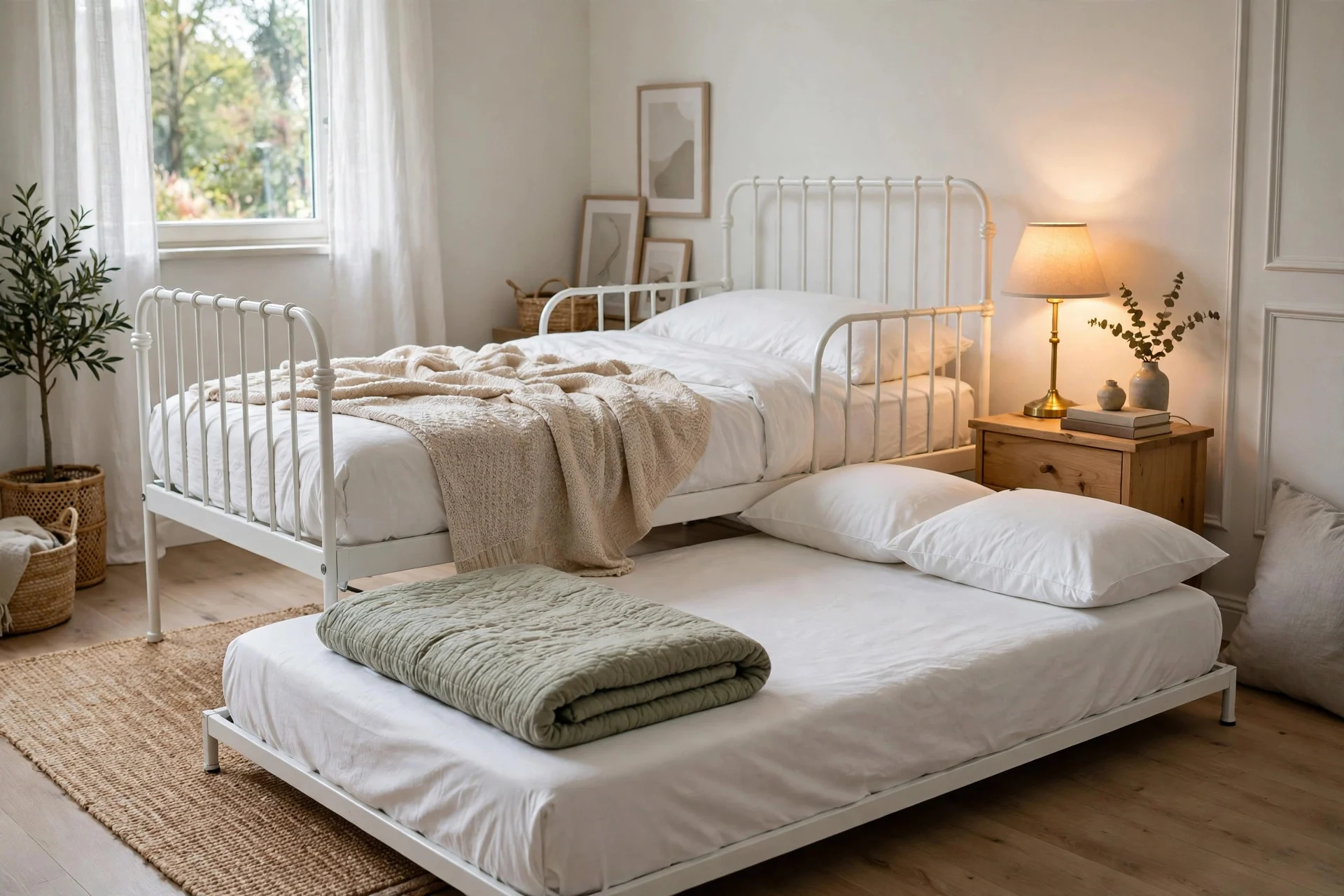
For the same footprint as idea #4, a daybed with a pop-up trundle ($150–$200 for the frame) sleeps two. The trundle stores flat underneath during the day, then rises on legs to sit level with the main mattress at night. Host couples, kids’ friends, or the occasional parent without anyone touching the living room floor.
Why it works: this is the closest a daybed gets to replacing a guest room. The trundle mattress (6–8 inches thick works best) stores dust-free under the frame, and daytime the daybed seats three like any other — nobody knows the second bed is there.
Cost: $150–$200 frame with trundle; add $50–$80 for a trundle mattress if you want one ready immediately. Difficulty: easy — assembly similar to a standard frame, plus slotting in the trundle.
Hands-on tip: keep the trundle dressed year-round with sheets, a blanket, and a pillow in a zippered storage bag underneath. When guests arrive you just pull it out and pop it up — no last-minute sheet hunting.
Watch out: measure your doorways and the space in front of the daybed. A popped-up trundle needs about 38 inches of clear pull-out room, which can block a walkway in a very narrow room.
6. The window reading-nook daybed
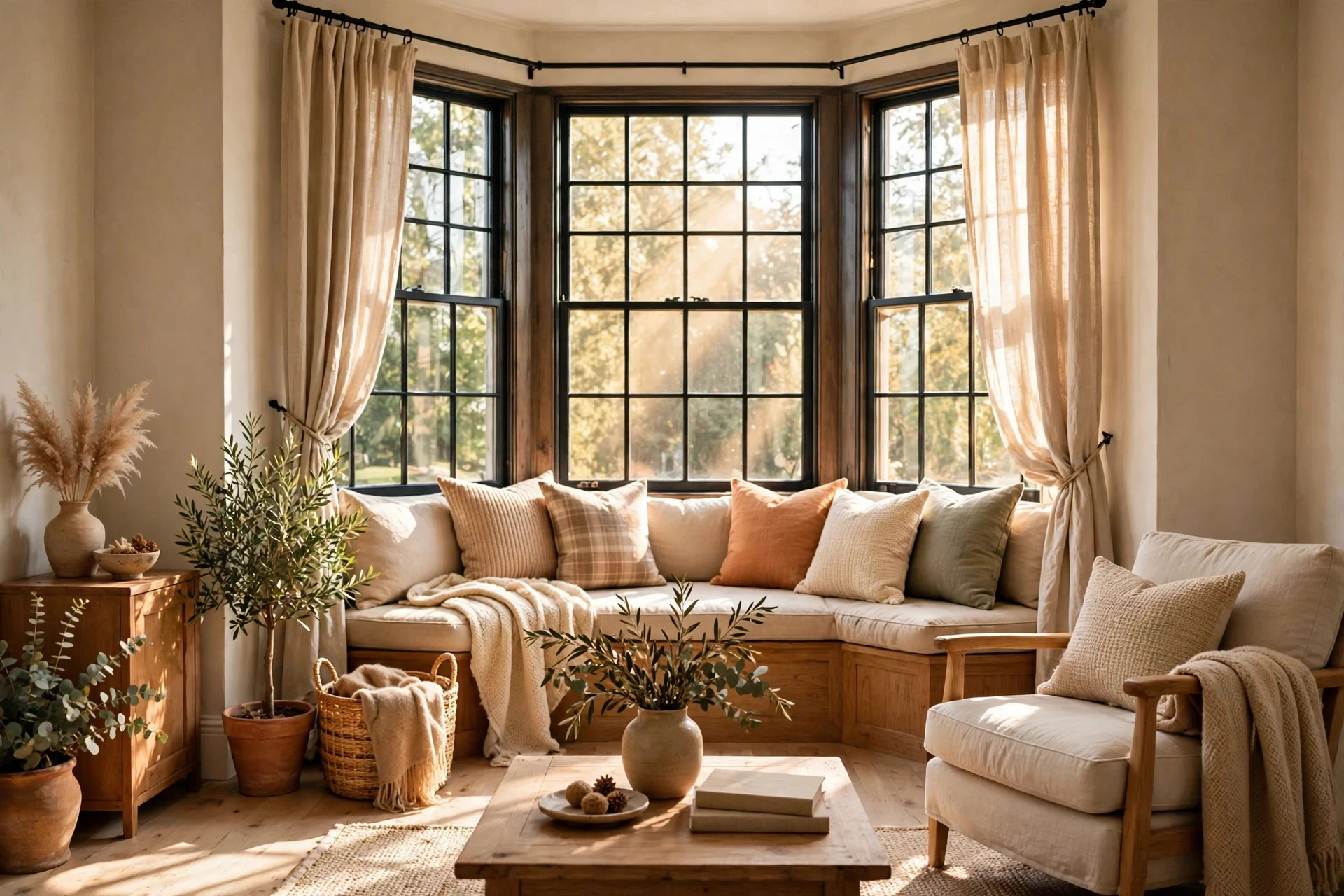
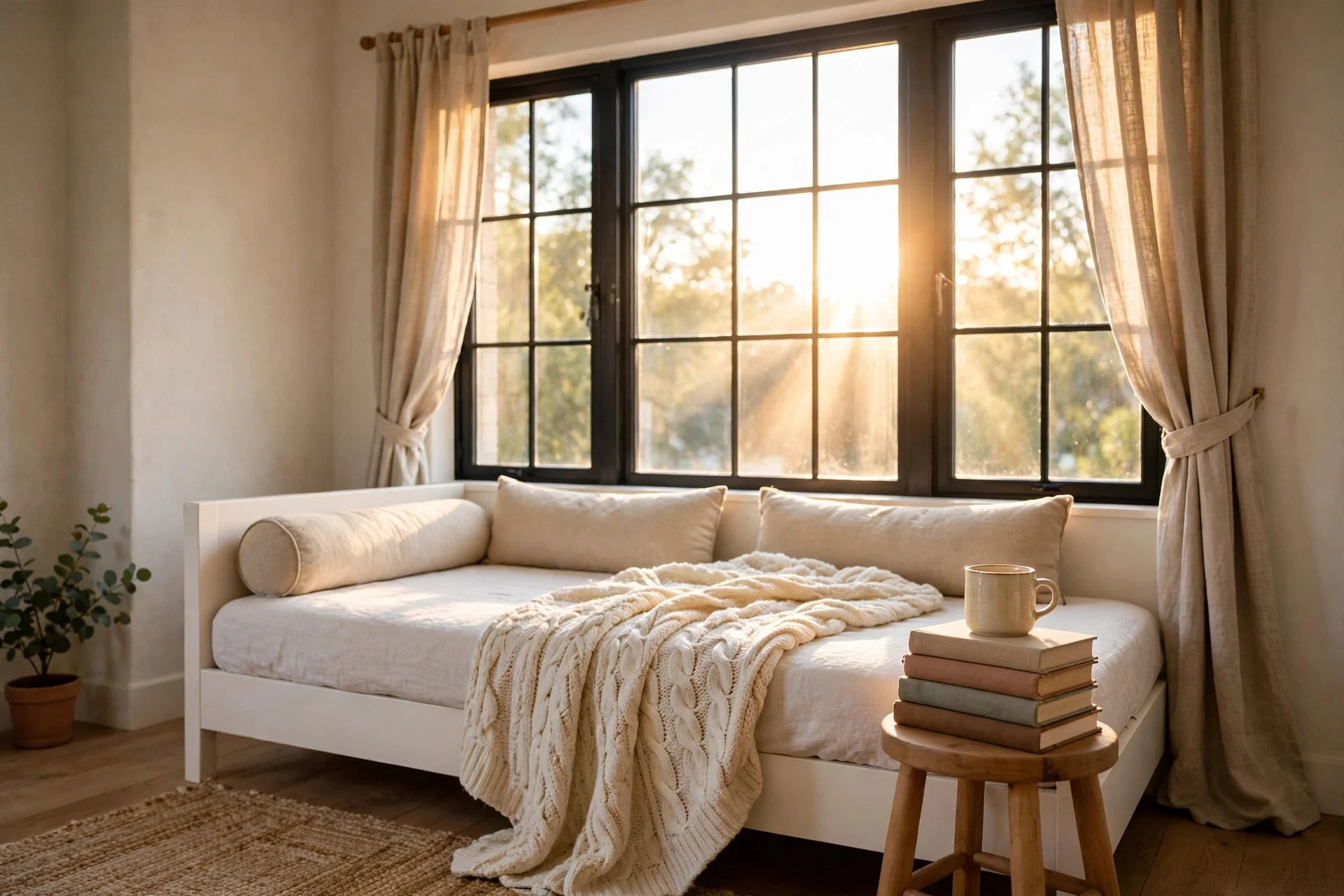
Push an affordable daybed ($120–$170 for a simple wooden or metal frame) against the wall under your biggest window, stack it with back pillows and a warm reading lamp beside it, and you’ve built the reading nook and the sofa and the guest bed in one piece of furniture. If you’re short on floor space elsewhere, this kind of layout thinking helps — it’s the same logic behind most long, narrow living room layouts, where one piece of furniture does two jobs.
Why it works: natural light is the best stylist a daybed has. Pillows look richer, throws look softer, and the spot becomes the default seat in the house — which means it earns its floor space every single day, not just when guests come.
Cost: $120–$170 frame, $20–$40 for bolster or back pillows if you don’t have spares. Difficulty: easy — positioning and styling only.
Hands-on tip: hang curtains on a rod mounted 4–6 inches wider than the window on each side. It frames the daybed like a little stage and makes the window — and the nook — look bigger.
Watch out: direct sun fades fabric fast. Rotate the throw and pillows monthly, or keep a light curtain closed during the harshest afternoon hours.
Daybed in living room ideas: $200 and up
Ready to spend a bit more? This tier buys you upholstery, solid wood, storage, and the kind of piece that anchors a room instead of just filling it.
7. The upholstered daybed with a tufted back
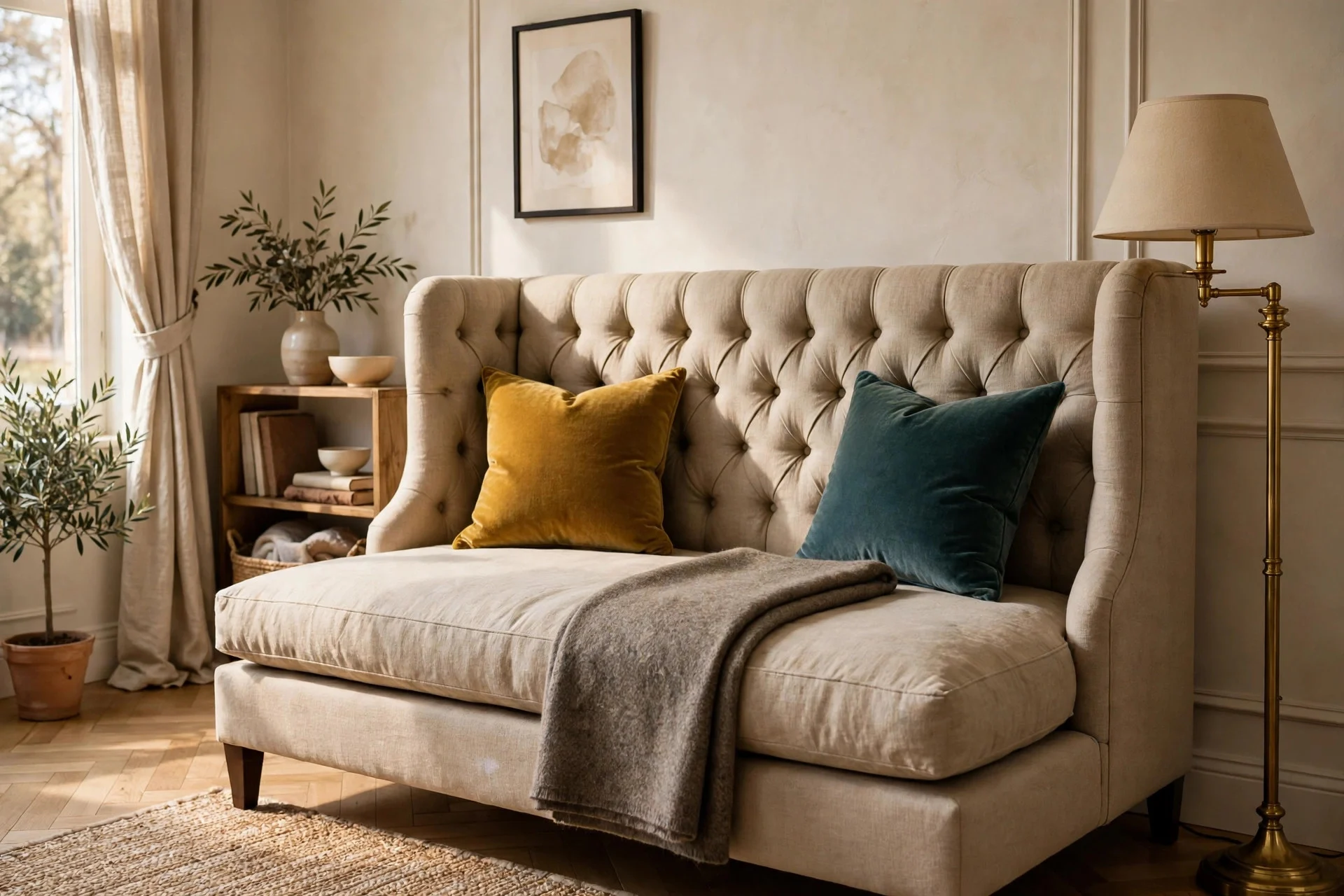
A new upholstered daybed ($250–$450 in linen or velvet-look fabrics) is the closest thing to a sofa-daybed hybrid. The padded back and arms mean you can lean back comfortably for hours — no pile of pillows doing structural work — and button tufting or channel stitching gives it a finished, intentional look from every angle.
Why it works: most people find this style the easiest daybed to live with daily, because it genuinely seats like a sofa. The upholstery hides a multitude of sins (pet hair, remote controls, a slightly lumpy budget mattress), and it photographs beautifully if you ever list the room or the home.
Cost: $250–$450 new; watch for open-box or floor-model deals $50–$100 lower. Difficulty: easy — assembly is usually attaching legs and back rails.
Hands-on tip: choose a performance or tightly woven fabric if you have pets or kids. Velvet-look microfibers wipe clean with a damp cloth; loose-weave linen does not forgive red wine.
Watch out: measure the back height against your windowsills. A tall tufted back blocking a low window looks wrong and cuts your light — look for back heights under 36 inches if the daybed sits below a window.
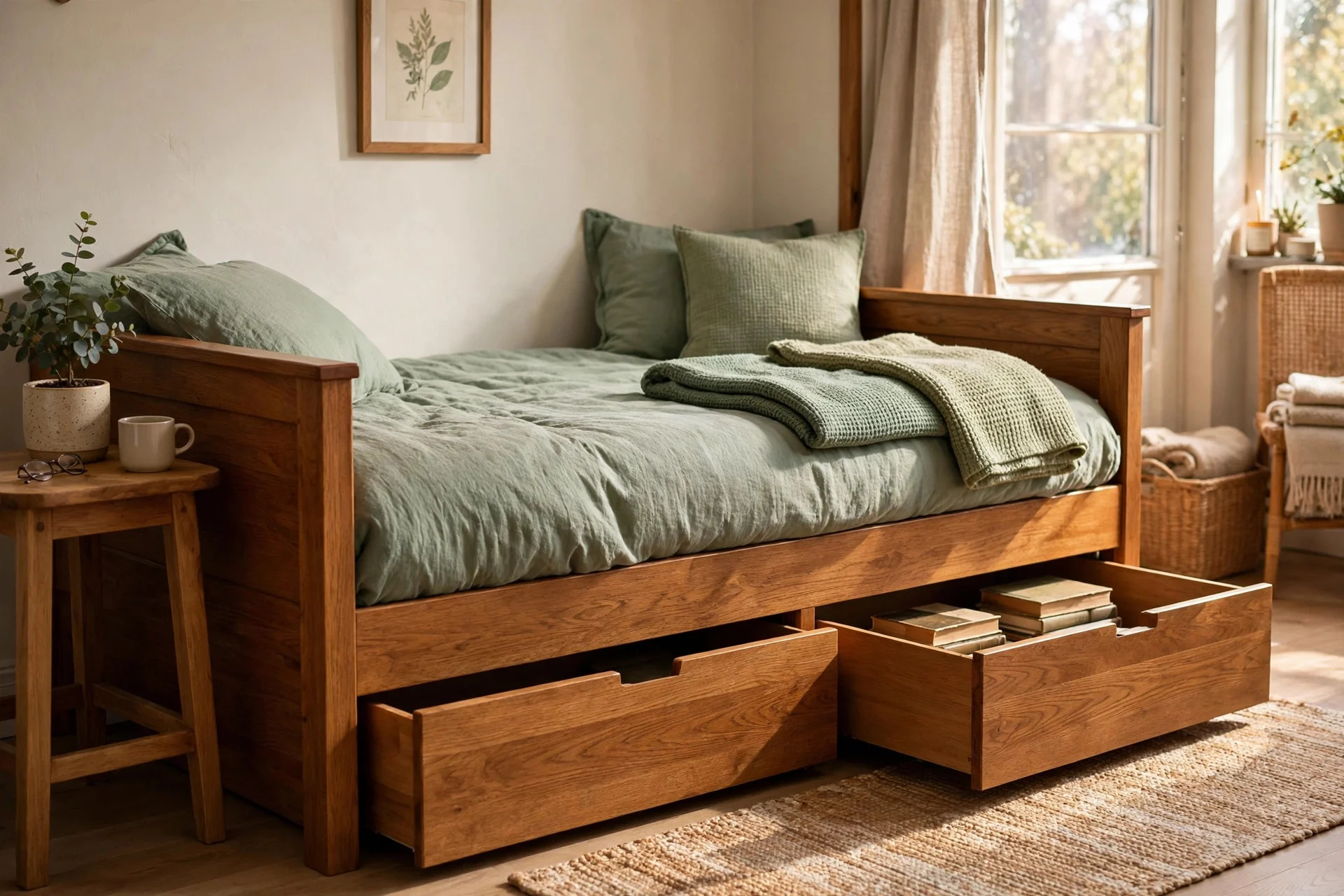
8. The solid-wood daybed with storage drawers
A solid wood daybed with two or three under-bed drawers ($300–$550) solves the two biggest small-living-room problems at once: where people sit and where the stuff goes. The drawers swallow spare bedding, seasonal throws, board games, or the kids’ toys that otherwise colonize your coffee table.
Why it works: designers often call storage furniture the highest-ROI purchase for small rooms, because every drawer is a closet you didn’t have to build. A wood frame also outlasts metal by years — this is the daybed you buy once and keep through two apartments.
Cost: $300–$550 new; solid pine models sit at the lower end, rubberwood or acacia higher. Difficulty: moderate — drawer tracks add 1–2 hours to assembly; a second pair of hands helps.
Hands-on tip: leave a 2-inch gap between the drawer fronts and any rug edge. Drawers on a rug drag, catch, and eventually warp the tracks — bare floor under the drawers keeps them gliding.
Watch out: deep drawers in a small room can collide with coffee tables and ottomans. Map your drawer swing with painter’s tape on the floor before you commit to placement.
9. The styled designer vignette
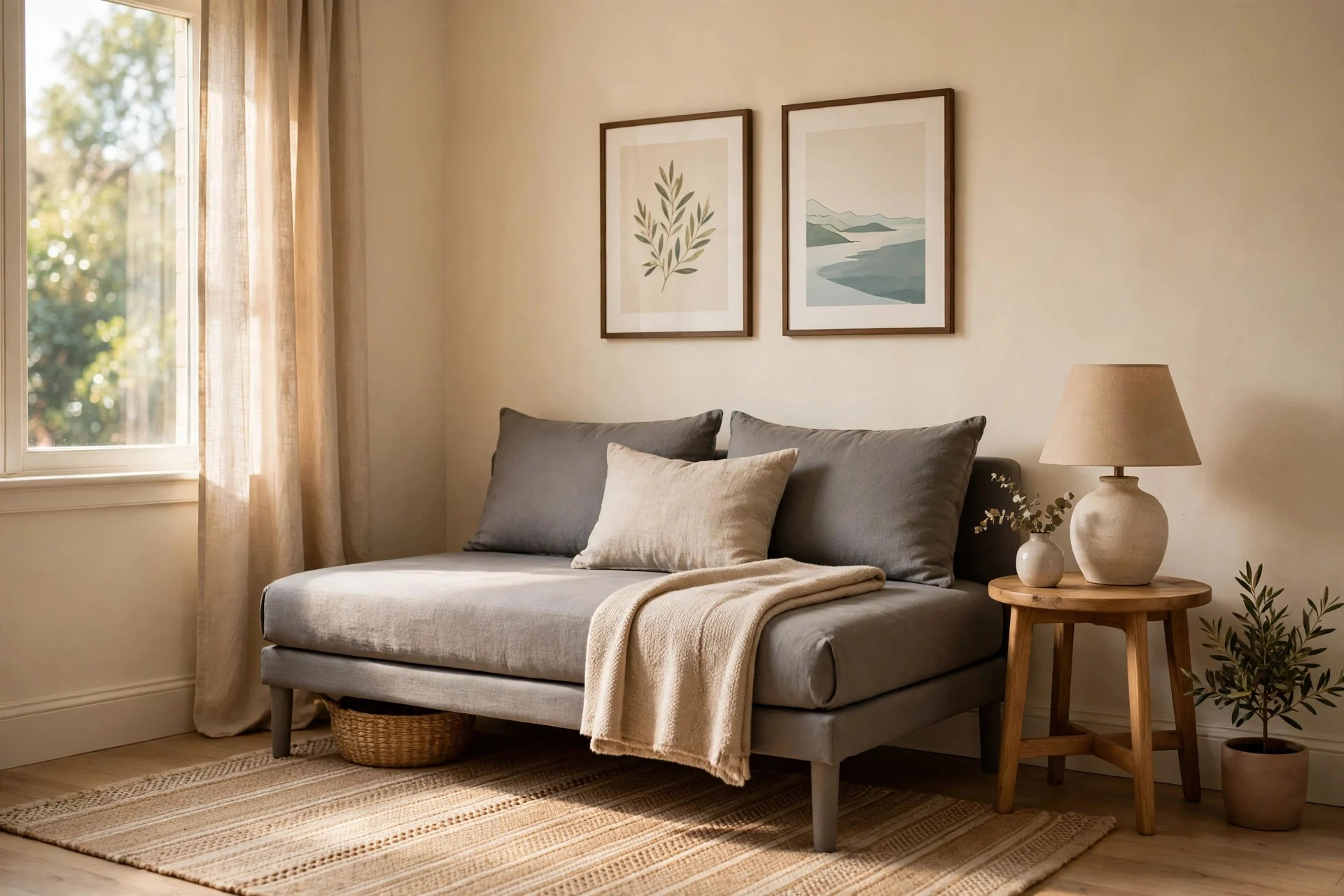
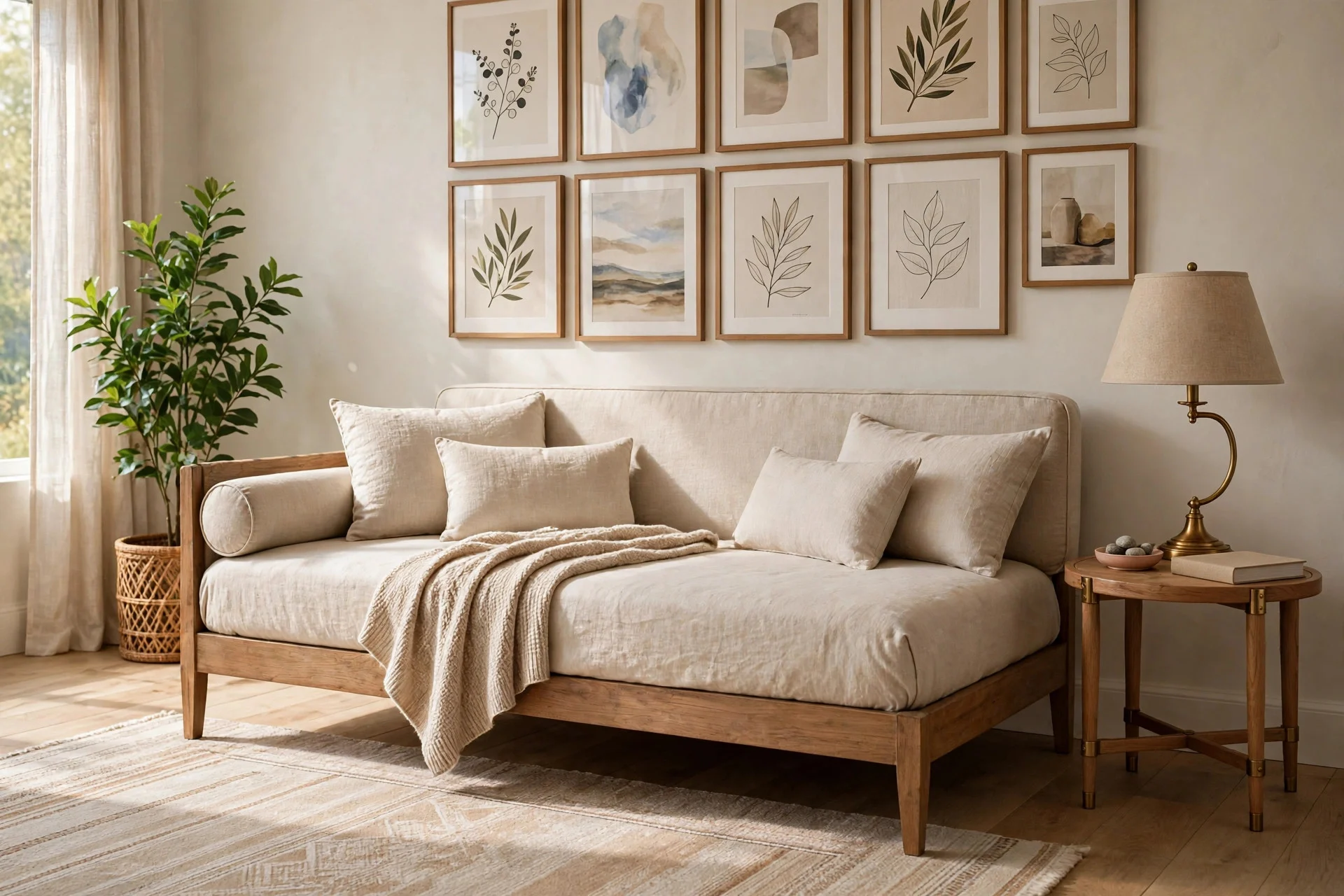
At this tier the daybed ($400–$600+ for a well-made frame) becomes the anchor of a fully styled corner: a flat-weave rug underneath to define the zone, a small side table and lamp at one end, and a tight gallery wall or one large art print above. The daybed stops being “the bed in the living room” and becomes the reason the room works.
Why it works: a daybed against a styled wall reads as intentional design rather than a space compromise. The rug alone does half the work — it visually claims the daybed’s footprint as a seating area, which is exactly what separates a deliberate look from a mattress against a wall.
Cost: $400–$600+ frame, $60–$120 for a 5’×7′ flat-weave rug, $20–$50 for thrifted or printable art in simple frames. Difficulty: moderate — one weekend for the frame plus an afternoon of hanging and styling.
Hands-on tip: hang the art so its center sits about 8–10 inches above the daybed’s back rail. Too high and the daybed looks disconnected; too low and pillows knock the frames.
Watch out: this much styling collects dust in the nooks. A monthly 10-minute wipe-down of frames, lamp, and table keeps the vignette looking sharp instead of staged-then-forgotten.
If you love this finished look but rent, most of it travels with you — art, rug, lamp, and throws all move to the next place, which is why ideas like this pair well with renter-friendly living room planning. And if your daybed is going under a window, the curtain and light tricks in these bay window living room ideas carry straight over.
Daybed in the living room: FAQ
How thick should a daybed mattress be?
For a daybed that doubles as daily seating, 6–8 inches is the sweet spot — thick enough to sleep on comfortably, thin enough that the seat height stays around 18–20 inches (normal sofa height) and pillows still lean against the back rail properly. A 10–12 inch mattress feels great for sleeping but sits too high for comfortable lounging and makes the daybed look like a bed.
Can adults actually sleep on a daybed regularly?
Yes, on a sturdy frame with a decent mattress. A twin daybed is 38 inches wide — the same as a twin bed — so most adults sleep fine solo; it’s snug for two. If nightly adult sleeping is the plan, spend the extra on a solid-wood frame (idea #8 territory) and a real 8-inch mattress rather than a 5-inch budget foam pad.
Daybed vs. futon — which is better for a living room?
A daybed wins on looks and sleep quality; a futon wins on converting between sofa and flat bed. Futons tend to sag in the middle over time and the bi-fold mechanism wears out, while a daybed’s fixed platform stays supportive for years. If you mostly need seating with occasional guest sleep, choose the daybed. If someone sleeps on it nightly, a quality futon — or just a real bed — is more practical.
Will a daybed make my living room look like a bedroom?
Only if you dress it like one. Sleeping pillows laid flat, a fitted sheet showing, and a bedspread are what signal “bedroom.” Upright back pillows, a throw folded over the front edge, and sofa-style cushion arrangements signal “seating.” The frame barely matters — the styling does almost all the work.
Your daybed shortlist
Start with your budget tier, then work the checklist: measure the wall (twin daybeds need about 80 inches of wall), check what’s under the spot (rug or bare floor for drawers and trundles), and decide the mattress thickness before you buy the frame — seat height depends on it. Style it like a sofa on day one — back pillows upright, throw across the front — and your small living room just gained a guest room without losing its living room.