The first time I redid the front bed at my own place, I made every rookie mistake at once — plants too close to the foundation, mulch piled against the siding, and a neat little row of identical flowers that looked, frankly, like a hotel parking lot. Two seasons later, after moving things around and learning what actually thrives near a house wall, the whole street-side view changed. Strangers slowed down. A neighbor knocked to ask what I’d planted.
That is the real power of a front flower bed. It is the first thing people see, the thing that frames your front door, and the single highest-return project you can do for curb appeal on a modest budget. But a good bed is not just pretty flowers in a rectangle. It is about shape, layers, plant choices that survive your specific sun and soil, and an edge that holds everything together. These sixteen ideas cover every style from formal to wild cottage, and each one includes the practical details I wish someone had told me before I started digging.
1. The Curved Cottage Border
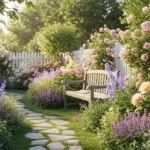
Straight lines are easy to mow around, but curves are what make a front yard feel designed rather than defaulted. A gently curving bed that sweeps from the front door toward the property line softens the hard geometry of a house and gives you room to layer plants by height — tall at the back near the house, spilling over the front edge.
What I have seen work best here is a classic cottage mix: coneflowers, black-eyed Susans, salvia, and catmint in the middle band, with alyssum or creeping thyme softening the front edge. The looseness of the planting hides mistakes beautifully, which makes this a forgiving first project for beginners. One practical tip: lay a garden hose on the ground to sketch your curve before you cut any sod — walk across the street and look back at the house to check the shape reads well from a distance.
Budget/difficulty: Low. Mostly the cost of plants and a bag of mulch; one weekend of digging for a typical 15-foot border.
2. Symmetrical Boxwood and Roses by the Entry
Nothing frames a front door like symmetry. Two matching beds, one on each side of the walkway, planted with compact boxwood spheres or low hedges and a repeat of roses, reads as intentional and welcoming from the curb. This is the look of well-kept historic neighborhoods, and it works on surprisingly modest houses because the structure carries the style.
The reason it works is repetition: the same plant, the same spacing, mirrored. The eye relaxes, and the doorway becomes the focal point. Choose disease-resistant roses — Knock Out types or the newer landscape roses — because nothing ruins this look faster than black-spotted, leggy canes. A practical tip from hard experience: boxwood wants good drainage and hates wet feet, so never plant it in a low spot where rain pools, and give it a full two feet of clearance from the foundation.
Budget/difficulty: Medium. Boxwood is pricier than perennials, and roses need feeding and pruning. Expect a higher upfront spend but a long-lived structure.
3. Layered Perennial Bed With Three Tiers
The beds that look professionally designed almost always follow one rule: back, middle, front. Tall structural plants against the house, mid-height bloomers in the middle, and low ground-level plants at the edge. Once you see this pattern, you notice it everywhere, and once you plant it, your bed stops looking like a random collection of flowers.
Why it works is simple optics — layered heights read as depth, and depth reads as luxury. A good trio for a sunny spot: ornamental grass or Joe Pye weed at the back, daylilies and echinacea in the middle, creeping phlox or ajuga at the front. The practical tip that saves the most grief is checking mature plant sizes on the tags, not the size in the nursery pot. That cute little grass will be four feet wide in three years, and you will be moving it. Trust the tag.
Budget/difficulty: Medium. Perennials cost more than annuals, but they come back every year, so this pays for itself by year two or three.
4. Drought-Tolerant Gravel and Rock Bed
If you live somewhere with water restrictions, scorching summers, or just zero interest in a watering schedule, this is your bed. A gravel or river-rock mulch with agaves, sedums, ornamental grasses, and lavender looks sculptural and modern, and it asks almost nothing of you once established.
The trick is that the gravel itself is part of the design — choose one stone color and stick with it, and lay landscape fabric underneath so weeds don’t turn it into a chore. I have seen these beds look genuinely stunning next to stucco and brick homes, where the stone tones echo the house. Practical tip: in hot climates, keep dark gravel away from plant crowns because dark stone gets brutally hot; light-colored gravel reflects heat and is kinder to roots.
Budget/difficulty: Low to medium. Gravel and fabric are cheap in bulk; the plants are the main cost. Difficulty is easy — arguably the lowest-maintenance option here.
5. Raised Stone Beds Along the Porch
Raised beds are not just for vegetable gardens. A low raised bed of stacked stone or block along the front of a porch lifts your flowers to eye level, solves drainage problems in soggy spots, and adds permanent architecture to the front of a house. It turns the porch into a planted stage.
This works especially well on homes where the foundation sits low and the house meets the yard awkwardly — the raised bed creates a clean transition. Fill with a mix of trailing plants over the front edge (sweet potato vine, calibrachoa) and upright bloomers behind. The practical note: a raised bed dries out faster than ground soil, so plan on watering more often in summer, and make sure the back of the bed has a waterproof membrane if it touches the house wall, because damp soil against siding is a rot invitation.
Budget/difficulty: Medium to high. The stone or block is the big cost, plus soil to fill. But it is a permanent improvement that adds perceived value.
6. Shade Bed Under a Front Yard Tree
That struggling patch of bare dirt under the big tree by the street? Stop fighting it with grass and turn it into a shade bed. Hostas, ferns, astilbe, and coral bells thrive where lawn dies, and a ring of shade-loving plants around a tree trunk looks like it was always meant to be there.
The reason grass fails under trees is competition — roots and canopy shade starve it. Shade perennials, on the other hand, evolved for exactly this. The critical practical tip: do not pile soil or mulch in a volcano against the trunk. Tree roots need oxygen, and a thick mound of soil will slowly kill the tree. Keep new planting soil shallow, mulch no more than two to three inches deep, and keep it several inches away from the bark.
Budget/difficulty: Low. A few bags of mulch, some shade perennials, and a Saturday afternoon. One of the cheapest transformations on this list.
7. Pollinator Garden by the Sidewalk
A bed of native coneflowers, bee balm, milkweed, and black-eyed Susans does double duty: it looks alive and colorful all summer, and it feeds bees, butterflies, and hummingbirds. There is something genuinely joyful about watching your front bed hum with life while the neighbors’ lawns sit silent.
Native plants also happen to be tough — they evolved for your region’s weather, so once established they shrug off heat and drought that would kill fussier imports. The practical tip is to group each species in drifts of five to seven plants rather than scattering singles; pollinators find grouped flowers far more easily, and honestly it looks better too. Check that your milkweed choice is native to your area rather than tropical, which can disrupt monarch migration timing.
Budget/difficulty: Low. Native plants are inexpensive and need little care after the first season. A great kid-friendly project too.
8. Mixed Walkway Border With Year-Round Interest
The strip along your front walkway gets seen up close every single day, so it deserves more than a summer-only show. The goal here is a border that has something going in every season: spring bulbs, summer perennials, fall grasses and asters, and evergreen structure — boxwood, yew, or dwarf conifers — for winter.
This is the bed that separates a nice summer yard from a genuinely well-designed one. Plant bulbs in generous groups of fifteen or more in fall for a spring display that actually reads from the street — six daffodils looks like an accident; sixty looks like a plan. Practical tip: leave the evergreen shrubs’ placement loose enough that you can get a wheelbarrow or snow shovel down the walk without hacking at them.
Budget/difficulty: Medium. Bulbs in bulk are cheap, but the evergreen backbone plants add cost. Planning effort is higher; digging effort is normal.
9. Foundation Planting With Flowering Shrubs
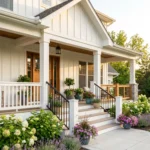
The classic American front bed — shrubs along the foundation with flowers in front — endures because it solves a real problem: hiding an unattractive foundation while softening where the house meets the ground. The update is to use flowering shrubs like hydrangeas, azaleas, or spirea instead of the gloomy evergreen blobs of decades past.
Hydrangeas are the workhorse here: huge blooms, long season, and they tolerate the shade many foundations cast. The practical tip that matters most is mature size — that one-gallon hydrangea wants to be five feet wide, so plant it five feet from the house, not two. Foundation beds planted too close become a pruning war within three years, and nobody wins that war.
Budget/difficulty: Medium. Flowering shrubs cost more than perennials, but a well-planted foundation bed lasts decades and genuinely adds home value.
10. Modern Ornamental Grass Bed
For contemporary homes — or anyone who wants a front bed that looks sharp with almost no fuss — a bed of ornamental grasses is hard to beat. Clumps of miscanthus, fountain grass, and blue fescue in a mulch of dark bark or gravel look architectural and move beautifully in the wind. Add one or two boulders and it reads as intentional landscape design, not neglect.
Grasses earn their place because they are nearly indestructible once established and give you four seasons of interest, including winter seed heads that catch frost. The practical tip: grasses are divided in early spring, and one established clump can become three free plants — the cheapest way to fill a large bed. Just avoid planting aggressive spreaders like ribbon grass near a lawn, where they will invade.
Budget/difficulty: Low. A handful of grasses and a boulder or two can fill a surprising amount of space for very little money.
11. Tiered Bed for a Sloped Front Yard
If your front yard slopes down to the street, do not fight the hill — terrace it. Two or three low retaining walls of stone or block create level planting tiers that stop erosion, make maintenance dramatically easier, and turn an awkward slope into a feature that looks expensive.
Each tier can have its own character: trailing plants cascading over the wall edges, upright bloomers behind them. The walls themselves are the star — dry-stacked natural stone looks best but costs more; concrete block with a stone veneer is the budget compromise. Practical tip: anything over two feet tall, or any wall holding back significant soil, deserves proper drainage gravel behind it and possibly a professional’s eye. A failed retaining wall is not a DIY fix.
Budget/difficulty: High. Materials and labor for terracing are the priciest project on this list. But on a slope, it is the only approach that truly works.
12. Corner Accent Bed With a Small Tree
The corner of your lot where the sidewalk meets the street is prime real estate that most people leave as plain lawn. A corner bed anchored by one small ornamental tree — a Japanese maple, redbud, or flowering dogwood — with shrubs and perennials underneath creates a landmark that frames the whole property.
One tree changes the scale of an entire yard; it gives the eye somewhere to land. Underplant with shade-tolerant perennials once the canopy fills in, or sun lovers while it is young. The practical tip: check the mature height and width, then check for overhead power lines. A redbud planted under wires becomes the power company’s problem, and eventually yours. Fifteen feet of clearance from lines is the rule I follow.
Budget/difficulty: Medium. The tree is the main expense — buy the largest you can afford, because a bigger tree makes the bed look finished on day one.
13. Monochromatic White Garden
A bed planted entirely in white flowers and silver foliage — white roses, Shasta daisies, white hydrangeas, dusty miller, lamb’s ear — looks elegant in a way mixed colors never quite manage, and it glows in the evening light by the front door. It is the most sophisticated look on this list and surprisingly simple to execute, because the color decision is already made.
The secret to a white garden that doesn’t look washed out is texture contrast: the fuzzy silver of lamb’s ear against glossy green, feathery astilbe plumes against bold hosta leaves. At dusk, white flowers practically light up, which makes this ideal near an entry you use in the evening. Practical tip: white flowers show dirt and browning more than colored ones, so deadhead regularly and site the bed where sprinklers won’t spot the blooms.
Budget/difficulty: Medium. The plants are ordinary-priced; the discipline of sticking to one palette is the hard part.
14. Seasonal Rotation Bed With Bulbs and Annuals
Some gardeners want maximum color, always. This bed is designed for turnover: spring bulbs give way to summer annuals, which give way to fall mums and ornamental kale. It is the most colorful option here and the one that lets you redecorate your front yard four times a year.
The way to make it work without going broke or insane is to treat it like a system: plant the bulbs once in fall (they come back yearly), then swap only the annual layer seasonally. A flat of petunias or zinnias costs little and fills fast. Practical tip: keep a simple sketch of where the bulbs are so you don’t spear them when digging in the annuals — and buy annuals in flats, not single pots, because the per-plant cost drops dramatically.
Budget/difficulty: Low to medium. Bulbs are a one-time cost; annuals are a recurring seasonal spend. The labor is the real price — this bed wants attention.
15. Edible-Ornamental Herb Border
Who says a front bed can’t feed you? A border of rosemary, thyme, sage, chives, and basil tucked among marigolds and nasturtiums (both edible flowers) looks lush and intentional, smells incredible when you brush past it, and supplies the kitchen all summer. Front-yard foodscaping has quietly gone mainstream, and it reads as charming, not eccentric.
Many herbs are genuinely beautiful plants — purple basil, variegated sage, and flowering chives hold their own against any ornamental. The practical tip: keep this bed near the kitchen door if you can, because the whole point is grabbing a handful of thyme on the way in, and you won’t do it if it’s a trek. Also check local ordinances — a few places still have rules about front-yard vegetable gardens, though herb borders rarely raise eyebrows.
Budget/difficulty: Low. Herb starts are cheap, many are perennial, and the grocery savings are real.
16. Formal Low-Hedge Parterre Bed
For a touch of old-world formality, edge a simple bed with a low clipped hedge — dwarf boxwood, germander, or even lavender — in a geometric pattern: a square, a diamond, or a simple knot. Fill the interior with roses or seasonal color. It is the smallest possible parterre, and it makes even a modest house look considered.
The hedge is doing all the design work here, so keep it ruthlessly tidy: two to three shearings a season keep the lines crisp. I have seen this done beautifully in a bed no bigger than six feet square flanking a front step. Practical tip: lavender makes a wonderful fragrant low hedge in sunny spots and needs far less shearing than boxwood — but it hates wet winter soil, so only choose it where drainage is excellent.
Budget/difficulty: Medium. The hedge plants add up since you need many small ones, and it demands regular trimming. The payoff is year-round structure.
Comparing the 16 Ideas
| Idea | Style | Budget | Difficulty |
|---|---|---|---|
| 1. Curved Cottage Border | Cottage / informal | $ | Easy |
| 2. Symmetrical Boxwood & Roses | Formal / classic | $$ | Moderate |
| 3. Layered Perennial Bed | Traditional | $$ | Moderate |
| 4. Drought-Tolerant Gravel Bed | Modern / xeric | $–$$ | Easy |
| 5. Raised Stone Beds | Structured | $$$ | Hard |
| 6. Shade Bed Under a Tree | Woodland | $ | Easy |
| 7. Pollinator Garden | Naturalistic | $ | Easy |
| 8. Mixed Walkway Border | Traditional | $$ | Moderate |
| 9. Foundation Planting | Classic | $$ | Moderate |
| 10. Ornamental Grass Bed | Modern | $ | Easy |
| 11. Tiered Slope Bed | Structured | $$$ | Hard |
| 12. Corner Accent Bed | Landscape | $$ | Moderate |
| 13. White Monochrome Garden | Elegant | $$ | Moderate |
| 14. Seasonal Rotation Bed | Colorful | $–$$ | Moderate |
| 15. Edible Herb Border | Cottage / practical | $ | Easy |
| 16. Formal Parterre Bed | Formal | $$ | Moderate |
How to Plan a Front Flower Bed That Actually Works
Start with the unglamorous stuff: sun and soil. Spend one day noting how many hours of direct sun your bed gets — morning sun with afternoon shade is a different planting world than blazing all-day sun — and dig a hole to see what you’re working with. Clay, sand, or decent loam changes your plant list entirely. Most failed beds trace back to planting sun-lovers in shade or drowning plants in clay, not to bad taste.
Next, measure and sketch. A bed that is too narrow is the most common mistake I see; anything under three feet deep can’t hold the layered planting that looks good, and four to six feet is better. Sketch the shape on paper, then lay it out with a hose as I mentioned, and live with the outline for a day before cutting sod.
Then think in terms of structure first, flowers second. Evergreen shrubs, ornamental grasses, or a small tree give the bed bones that hold it together in February when nothing is blooming. Flowers are the jewelry — lovely, but they need the outfit. Finally, edge the bed properly. A clean edge — steel, stone, or a simple spade-cut trench — is the single cheapest upgrade in landscaping. It keeps grass out, mulch in, and makes the whole thing look finished even when the plants are young. Mulch two to three inches deep, keep it off stems and siding, and water new plantings deeply for their first season. Do those things and almost any of the sixteen ideas above will thrive.
Frequently Asked Questions
How deep should a flower bed in front of a house be? Aim for at least three feet from the house wall, and four to six feet is ideal. Shallow beds force you into a single row of plants, which always looks thin. Deeper beds let you layer heights, and they keep plant roots a healthy distance from the foundation.
How far from the house should I plant? Leave at least one to two feet between the house wall and the back of your planting area, and position shrubs at half their mature width plus a foot from the wall. This keeps air circulating, protects siding from moisture, and gives you room to get behind the plants for house maintenance.
What are the best low-maintenance flowers for a front bed? Perennials like coneflower, black-eyed Susan, daylily, salvia, and catmint are the reliable workhorses — they come back yearly and need little beyond a spring cleanup. For shrubs, hydrangea and spirea give big impact with minimal care. Avoid high-maintenance roses and annuals if you want to set it and forget it.
What mulch is best for front flower beds? Shredded bark mulch is the all-around winner: it stays put, breaks down to feed the soil, and looks natural. Avoid dyed mulches in harsh colors — they fade unevenly and can look cheap within a season. In modern or drought-tolerant designs, gravel or river rock is a better fit.
When is the best time to plant a new front bed? Fall is actually the best time in most climates — the soil is warm, rain is more reliable, and plants establish roots over winter to surge in spring. Spring works too, but you’ll water more that first summer. Avoid planting perennials in the heat of midsummer if you can.
How do I stop grass from invading my flower bed? A proper edge is ninety percent of the battle — steel edging or a six-inch-deep spade trench stops most runners. Lay the edge before you plant, mulch two to three inches deep, and pull invaders while they’re small. Landscape fabric under mulch helps, though determined Bermuda grass will defeat almost anything.
Should flower beds be level with the lawn? Slightly below or level is fine, but the bed surface should never sit higher than the lawn right at the edge, or mulch will wash onto the grass every time it rains. If anything, keep the bed an inch lower and let the edging hold the mulch in.
Conclusion
A front flower bed is never just decoration — it is the handshake your house offers the street. Start with the shape and the sun, give your plants the room their tags promise they’ll need, and edge it like you mean it. Whether you choose a wild cottage sweep or a clipped formal hedge, the beds that turn heads are the ones that look like someone thought about them. Pick one idea from this list, sketch it this weekend, and dig. Your curb appeal — and probably your neighbor’s curiosity — will thank you.