For years, the rule was that bathrooms had to be white — bright, sterile, “clean-looking.” I followed that rule in my first renovation and ended up with a bathroom that felt like a dentist’s office. Then I stayed in a hotel with a near-black bathroom: charcoal walls, brass fixtures, one perfect beam of light over the mirror. It felt like stepping into a cocktail bar. I have been a convert ever since.
Dark bathrooms work because they do the opposite of what you’d expect. Instead of feeling small and cave-like, a well-executed dark bathroom feels cocooning, dramatic, and expensive — the finishes glow, the fixtures read as jewelry, and the whole room takes on a spa-like intimacy that white tile can never quite deliver. The trick is balance: dark needs light, texture, and contrast to keep it luxurious rather than gloomy. These fifteen ideas show how to get that balance right, from a single black accent wall to full midnight drama.
1. Matte Black Walls
The boldest move and, done right, the most striking: walls in a deep matte black or near-black. Matte is the key word — flat paint absorbs light and gives the walls a soft, velvety depth that satin or gloss can’t match. It turns the bathroom into a jewel box where everything else in the room pops.
Black walls work because they recede; paradoxically, dark walls can make a small bathroom feel larger by blurring the corners and edges. The practical considerations are real, though: use a paint formulated for bathrooms (moisture-resistant, mold-inhibiting), and invest in good ventilation, because dark paint shows every water spot and steam mark. A practical tip I always give: paint one wall first and live with it for a few days before committing to the whole room — black looks very different at 7 a.m. than it does under showroom lighting.
Budget/difficulty: $ — paint is the cheapest transformation in renovation. Difficulty is easy if the walls are in good shape.
2. Charcoal Walls With Brass Fixtures
If full black feels like too much, charcoal is the sophisticated middle ground — deep, warm, and far more forgiving than true black. Pair it with brushed brass or gold fixtures, and you get the combination that has defined luxury bathrooms for the past decade: dark and moody against warm metallic glow.
The reason this pairing works so well is contrast of temperature — cool dark walls make warm brass look richer, and the brass gives the eye bright focal points so the room never feels flat. This is also a renter-friendlier path: brass fixtures (faucet, mirror frame, towel hooks) can transform even a basic bathroom without touching the walls. Practical tip: match your metal finishes deliberately. Brass faucet with chrome towel bar looks like a mistake; pick one warm metal and carry it through every visible fixture.
Budget/difficulty: $$ — fixtures cost more than paint, but a faucet and hardware swap is a weekend project.
3. Dark Marble: Nero Marquina and Friends
Nothing says luxury quite like dark marble with white veining — Nero Marquina, with its dramatic white veins on black, is the classic, and there are now excellent porcelain lookalikes at a fraction of the price. Used on a shower wall or a vanity backsplash, it becomes the artwork of the room.
Natural stone earns its reputation: the veining is unrepeatable, and it catches light in a way flat materials don’t. But marble is porous and needs sealing, and it etches with acidic cleaners — in a bathroom full of toothpaste and skincare acids, that matters. The porcelain alternatives have gotten remarkably convincing and shrug off maintenance entirely. Practical tip: if you use real marble, seal it at installation and reseal yearly, and switch to pH-neutral cleaners. If maintenance sounds tedious, go porcelain and spend the savings on better fixtures.
Budget/difficulty: $$$–$$$$ for real marble; $$ for porcelain lookalikes. Tiling difficulty is moderate to hard — large-format dark tile shows every lippage flaw.
4. Black Shiplap or Paneled Walls
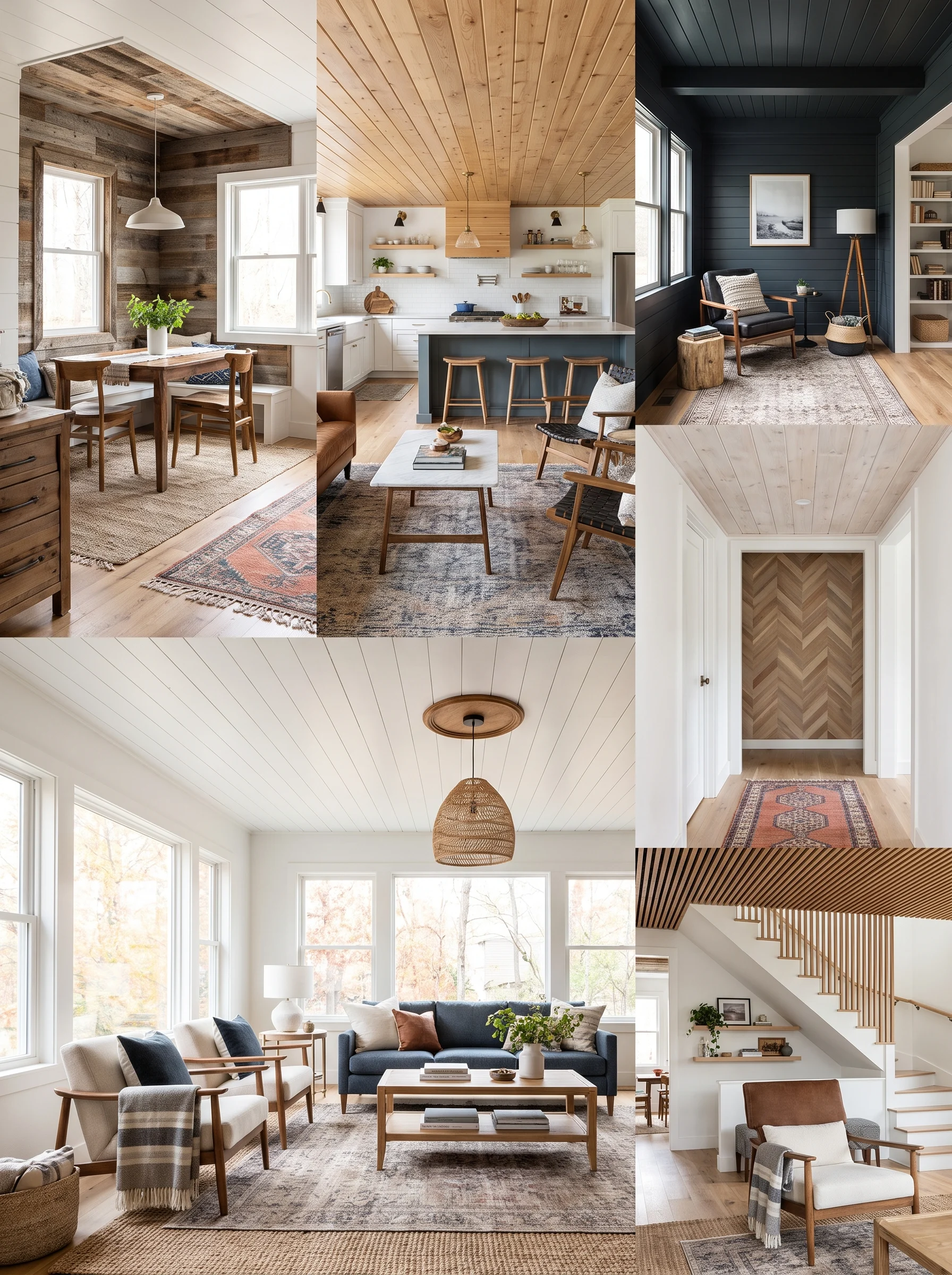
Shiplap painted black gives you the farmhouse texture everyone loves, but with a moody, modern edge. The shadow lines between boards add dimension that flat black paint lacks, so the walls have interest even with minimal decor. It reads as both rustic and refined — a hard combination to pull off any other way.
Paneling works in bathrooms because it adds architectural character to what is often the most featureless room in the house. Use PVC or primed engineered boards rather than raw wood in wet zones, and keep it off the inside of the shower unless you enjoy maintenance. Practical tip: run the boards vertically to make low ceilings feel taller, horizontally to make a narrow room feel wider — the direction genuinely changes the room’s proportions.
Budget/difficulty: $$ — materials are affordable; the labor is in careful, level installation.
5. Deep Emerald Green
Green is the dark color for people who find black too stark. A deep emerald or forest green on the walls or vanity feels rich and organic — like a private club or an old library — and it pairs beautifully with both brass and matte black fixtures. It is dramatic without being severe.
What I’ve seen work especially well is green in a powder room or a bathroom with good natural light; the color shifts through the day, looking almost black in the evening and jewel-like by day. It also flatters skin tones in the mirror far better than gray or blue, which is worth considering in a room where you get ready. Practical tip: test green in large swatches, because undertones swing wildly — some emeralds go teal, some go olive, and the wrong undertone against your tile can look muddy.
Budget/difficulty: $–$$ — often just paint, or a painted vanity for bigger impact.
6. Navy Blue Bathroom
Navy is the dark color that plays well with everyone. It is classic enough for traditional homes, deep enough for drama, and it harmonizes with white fixtures and chrome — which means you can go dark without replacing everything. A navy vanity against white walls, or navy walls with white wainscoting, is a timeless combination.
Navy’s secret is versatility: it works with warm metals (brass, copper) and cool ones (chrome, nickel), with marble and with wood. If you’re nervous about committing to a dark bathroom, navy is the training wheels — dark enough to feel luxurious, familiar enough to feel safe. Practical tip: in small bathrooms without windows, keep the ceiling and trim bright white; the contrast keeps navy from closing in the space, and white trim against navy is one of the crispest looks in design.
Budget/difficulty: $–$$ — paint-level commitment with high-end results.
7. Dark Tiled Shower With Glass
Take the shower dark — floor-to-ceiling charcoal or black tile — and enclose it in frameless glass, and you get a shower that feels like a luxury hotel suite. The glass keeps it from feeling enclosed, while the dark tile turns the shower into the room’s focal point instead of an afterthought.
Large-format dark tiles with minimal grout lines look the most expensive; busy small mosaics in dark colors can read as dated. The glass enclosure matters enormously here — a shower curtain against dark tile looks cheap and hides the effect you’re paying for. Practical tip: dark tile shows soap scum and hard-water spots mercilessly, so install a squeegee in the shower and use it. Thirty seconds after each shower keeps dark tile looking new for years; neglect turns it cloudy in months.
Budget/difficulty: $$$ — tile plus frameless glass is a real investment, but it’s the highest-impact shower upgrade.
8. Black Vanity With Light Counters
You don’t have to go dark everywhere. A black or espresso vanity topped with white marble or quartz gives you the moody-luxe look anchored in one piece of furniture, while light counters and walls keep the room bright. It is the most livable version of the dark bathroom trend.
This approach works because the vanity is usually the largest single object in the room — changing it changes everything. The light countertop is doing important work too: it bounces light around and gives you a bright surface for tasks like makeup or shaving. Practical tip: if you’re painting an existing vanity black, use a cabinet-grade enamel and sand between coats; bathroom humidity punishes lazy paint jobs, and black shows every drip and brush mark.
Budget/difficulty: $$ — a new vanity or a quality paint job; counters extra if replaced.
9. Moody, Layered Lighting
Dark bathrooms live or die by lighting — this is the idea that makes or breaks all the others. A single overhead light in a dark bathroom creates a cave; layered lighting — sconces flanking the mirror, a dimmable overhead, maybe LED strips under a floating vanity — creates atmosphere. Warm light (2700K) is essential; cool light on dark walls looks institutional.
Sconces at face height on either side of the mirror are the single best lighting upgrade in any bathroom, dark or not — they eliminate the unflattering shadows that overhead lights cast. Dimmers are non-negotiable in a dark bathroom: bright for cleaning and getting ready, low for a bath. Practical tip: put the mirror sconces on a separate switch from the overhead light so you can run just the flattering light in the evening. It’s a small wiring detail with an outsized effect.
Budget/difficulty: $$ — fixtures plus an electrician for new wiring; dimmer switches alone are cheap and transformative.
10. Black Fixtures Against White
Flip the formula: keep the bathroom light and airy, but swap every fixture to matte black — faucet, showerhead, towel bars, mirror frame, even the toilet flush plate. The black hardware reads as crisp graphic punctuation against white tile, like ink on paper. It’s bold, modern, and surprisingly timeless.
This is the lowest-risk dark bathroom move because the architecture stays light; you’re changing jewelry, not walls. Matte black fixtures have stayed popular long enough to prove they’re not a fad, and they hide water spots better than chrome. Practical tip: buy fixtures from established brands even if they cost more — cheap matte black finishes chip and show the metal beneath, and a chipped black faucet looks worse than any chrome ever could.
Budget/difficulty: $$ — fixture costs add up across a whole bathroom, but installation is straightforward.
11. Industrial Concrete Dark Bathroom
Polished concrete or concrete-look tile in charcoal tones, black steel-framed shower glass, exposed bulb lighting — the industrial dark bathroom is raw, masculine, and effortlessly cool. It suits lofts, modern renovations, and anyone who finds polished marble a bit precious.
Concrete works because its natural variation keeps dark surfaces from feeling flat — every slab has movement and texture. Sealed properly, it’s also nearly indestructible and waterproof. The risk is coldness, both visual and literal; balance it with warm wood (a teak bench, oak vanity) and warm lighting. Practical tip: real poured concrete in a bathroom needs professional waterproofing and sealing — this is not a DIY skim-coat project. Concrete-look porcelain tile gives you ninety percent of the look with none of the risk.
Budget/difficulty: $$$ — real concrete is specialist work; concrete-look tile is the sane middle ground.
12. Dark Wood Vanity With Warm Tones
A vanity in dark walnut or stained oak brings warmth that painted black can’t — the wood grain keeps the darkness organic and inviting. Paired with warm metals, soft textiles, and warm-toned lighting, this is the dark bathroom for people who want cozy rather than dramatic.
Wood’s advantage is that it bridges styles: it works in traditional, mid-century, and modern bathrooms alike, and it ages gracefully where painted finishes chip. In a bathroom, though, wood needs protection — a quality conversion varnish or marine-grade finish on the vanity, and wipe up standing water rather than letting it sit. Practical tip: floating the vanity (wall-mounted) makes a dark wood piece feel lighter and makes the floor easier to clean — a meaningful upgrade in a small bathroom.
Budget/difficulty: $$–$$$ — real wood vanities cost more than painted MDF, but they last decades.
13. Statement Black Bathtub
A freestanding tub in matte black or dark stone is a sculpture that happens to hold water. It anchors the entire room — everything else becomes supporting cast — and it photographs like nothing else in bathroom design. If you have the floor space, this is the single most dramatic move on the list.
The tub works as a focal point precisely because we expect white; the surprise of black makes the whole room feel designed and intentional. Freestanding tubs do demand space — you need room to walk around and clean behind them — and they need a floor drain plan for splashing. Practical tip: matte black acrylic is lighter, cheaper, and warmer to the touch than stone or cast iron; stone composite looks incredible but may need floor reinforcement. Check your floor’s load capacity before falling in love with a 400-pound tub.
Budget/difficulty: $$$–$$$$ — the tub plus plumbing rework for freestanding placement.
14. Moody Botanical Wallpaper
Dark wallpaper — oversized botanicals, chinoiserie, moody florals on a near-black ground — brings pattern and art to the bathroom in a way tile never will. Used on one wall or in a powder room, it’s the fastest route to a bathroom with genuine personality. Powder rooms are ideal because there’s less moisture to worry about.
Wallpaper works here because bathrooms are small; a bold pattern that would overwhelm a living room feels just right in an eight-by-ten space. Modern wallpapers include scrubbable, moisture-resistant options made for bathrooms — don’t hang standard paper in a steamy family bath. Practical tip: in a full bathroom with a shower, restrict wallpaper to walls well away from direct water, ensure strong ventilation, and consider having it professionally hung; dark paper shows every seam misalignment.
Budget/difficulty: $$ — quality wallpaper isn’t cheap, but you’re covering small walls.
15. Black and Gold: Full Luxury Combo
The grand finale: black marble or tile, gold or brass fixtures, a crystal or alabaster light fixture, maybe a black vanity with gold hardware. This is the hotel-penthouse bathroom, the one that makes guests say something out loud. Done with restraint — two or three gold moments, not twenty — it’s the peak of the luxurious dark bathroom.
Restraint is the entire game here. Gold is powerful; a little reads as luxury, a lot reads as a casino. Pick your moments — faucet, mirror frame, light fixture — and let black and texture do the rest. Mixed metals are fine if done deliberately (brass faucet with black shower frame works), but keep it to two. Practical tip: unlacquered brass develops a living patina that many people love, but if you want it to stay bright gold forever, choose lacquered brass or a PVD gold finish and clean only with soft cloths — abrasives destroy the finish.
Budget/difficulty: $$$$ — this is the full-renovation tier, but it’s also the look people remember.
Comparing the 15 Ideas
| Idea | Style | Budget | Difficulty |
|---|---|---|---|
| 1. Matte Black Walls | Dramatic | $ | Easy |
| 2. Charcoal + Brass | Classic luxe | $$ | Easy |
| 3. Dark Marble | High luxury | $$$–$$$$ | Hard |
| 4. Black Shiplap | Modern rustic | $$ | Moderate |
| 5. Deep Emerald Green | Rich / traditional | $–$$ | Easy |
| 6. Navy Blue | Timeless | $–$$ | Easy |
| 7. Dark Tiled Shower | Hotel luxe | $$$ | Hard |
| 8. Black Vanity, Light Counters | Balanced | $$ | Moderate |
| 9. Layered Lighting | Atmospheric | $$ | Moderate |
| 10. Black Fixtures on White | Modern graphic | $$ | Easy |
| 11. Industrial Concrete | Industrial | $$$ | Hard |
| 12. Dark Wood Vanity | Warm / organic | $$–$$$ | Moderate |
| 13. Black Statement Tub | Sculptural | $$$–$$$$ | Hard |
| 14. Moody Wallpaper | Artistic | $$ | Moderate |
| 15. Black + Gold Combo | Penthouse luxe | $$$$ | Hard |
Common Mistakes to Avoid in a Dark Bathroom
The number one mistake is going dark without upgrading the light. Dark surfaces absorb light rather than reflecting it, so a bathroom that was adequately lit in white will feel dim in charcoal. Before you commit to dark walls or tile, plan your lighting: brighter bulbs than you think you need, on dimmers, in multiple locations. The second mistake is ignoring undertones — a “black” with blue undertones next to warm brass fixtures will clash quietly and expensively. Get large samples and look at them in your actual bathroom light, morning and evening.
Third: forgetting that dark shows everything. Water spots, dust, soap scum, and toothpaste flecks are all more visible on dark surfaces. This doesn’t mean dark bathrooms are impractical — it means choosing finishes wisely (honed over polished for counters, squeegee discipline in the shower) and being honest about your cleaning habits. Fourth is the all-dark-everything trap: floors, walls, ceiling, and vanity all in near-black with no contrast reads as a basement, not a boutique hotel. Give the eye somewhere to rest — a light countertop, a white ceiling, a large mirror, or warm wood. Finally, don’t skip ventilation. Moisture damage is the enemy of every bathroom, but dark paint and wallpaper show its effects first. A quiet, effective exhaust fan on a timer switch is the unglamorous hero of every successful dark bathroom.
Frequently Asked Questions
Will a dark bathroom make my small bathroom look smaller? Not necessarily. Dark colors blur corners and edges, which can actually make walls feel like they recede. The key is contrast and light: keep the ceiling light, use a large mirror, and make sure lighting is generous. A small dark powder room often feels jewel-like rather than cramped.
What’s the best dark color for a bathroom? Charcoal gray is the safest all-rounder — deep enough for drama, neutral enough for any fixture finish. Navy suits traditional homes, emerald green feels rich and organic, and true black delivers maximum drama. Sample all of them in your actual light before deciding; undertones change everything.
Are dark bathrooms just a trend? Dark, moody interiors have cycled in and out for centuries — think Victorian libraries and 1920s clubs. The current wave has lasted the better part of a decade, which suggests staying power rather than fad. And unlike a trendy tile shape, wall color is cheap to change if tastes shift.
How do I keep a dark bathroom from feeling gloomy? Layer warm lighting (sconces plus dimmable overheads), include at least one light or reflective element (mirror, light countertop, white ceiling), and add texture — tile variation, wood grain, or fabric. Gloom comes from flat darkness; texture and light create depth.
What finish of black paint should I use in a bathroom? A matte or eggshell finish formulated for bathrooms — look for mold and mildew resistance on the label. Matte gives the velvety look but marks more easily; eggshell is slightly more washable. Avoid flat ceiling paint on walls, and never use standard interior paint in a steamy bathroom.
Do black fixtures show water spots? Matte black actually hides water spots better than chrome, which is one of its practical advantages. What it doesn’t hide is chipping — buy quality fixtures, because cheap black finishes wear through to the metal underneath. Clean with soft cloths and non-abrasive cleaners.
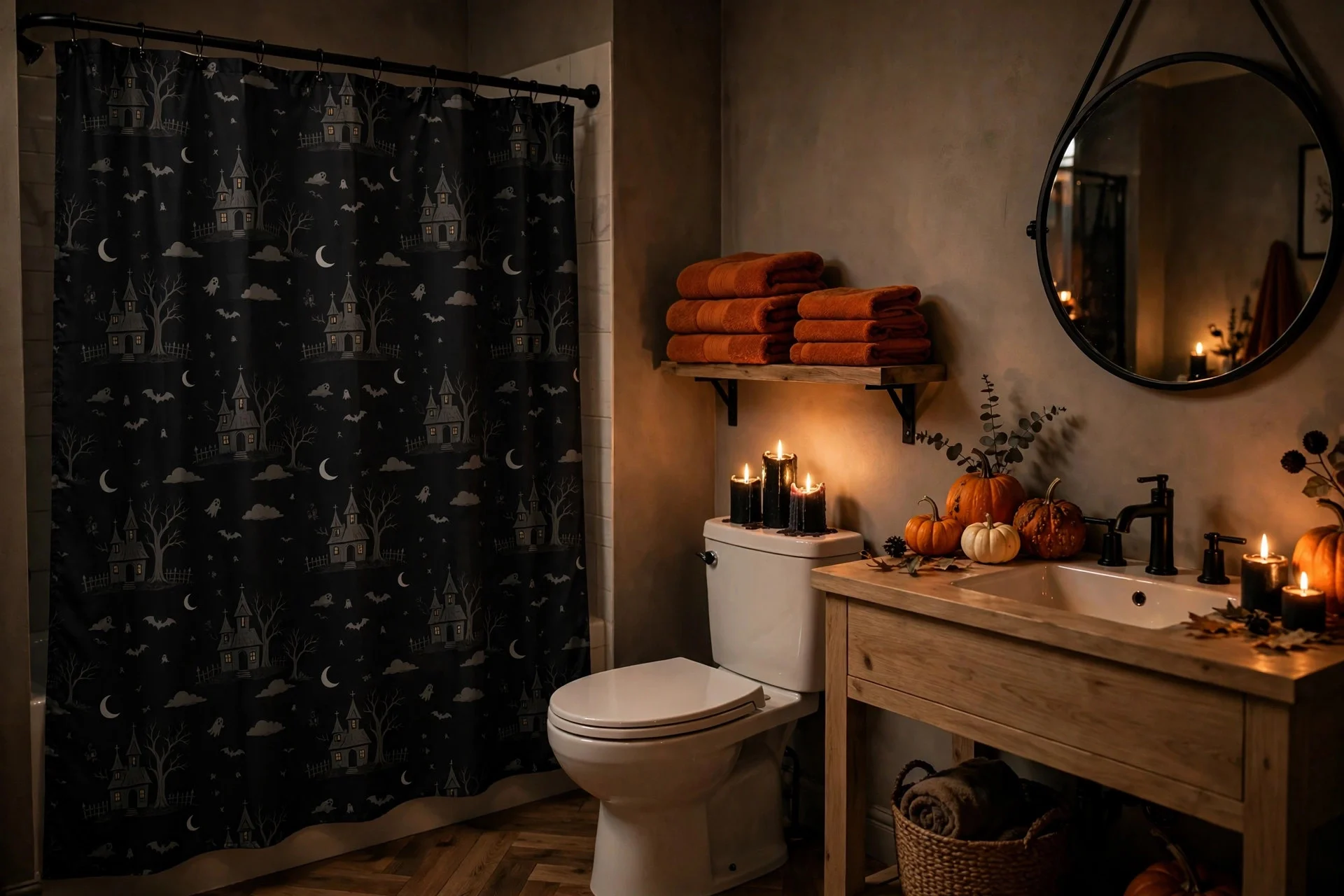
Can I do a dark bathroom in a rental? Yes, with reversible moves: matte black fixtures (keep the originals to reinstall), a dark shower curtain, black-framed mirror, dark towels and accessories, and peel-and-stick wallpaper or tile decals. You’d be surprised how moody a white rental bathroom can feel with black hardware and candlelight-level lighting.
Conclusion
A dark bathroom is a confidence move, and confidence is what makes it work. Start with the lighting, choose your dark with attention to undertones, and always give the eye one bright place to land. Whether you go all-in on matte black walls or just swap your fixtures to black against white tile, the result is the same: a bathroom that feels intentional, intimate, and quietly luxurious. White bathrooms are fine. Dark ones are memorable.