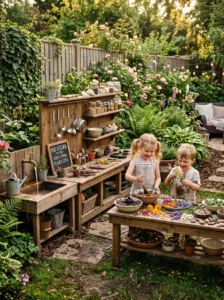
Most parents eventually reach the same realization: kids are far more interested in the cardboard box, pile of dirt, or random sticks in the backyard than the expensive toy you carefully picked out. Outdoor play has a different kind of magic to it, especially when children are allowed to make a mess, experiment, and pretend without constant rules hovering over them. That’s exactly why mud kitchens have become such a favorite in family backyards.
The problem is that many mud kitchens either look overly complicated online or feel impractical in real life. Some parents assume they need a huge yard, expensive wooden setups, or Pinterest-perfect styling to make one work. Others build something quickly only to discover it becomes messy, unsafe, or ignored after a week. A good mud kitchen should actually fit your space, your child’s age, and the way kids naturally play.
The best mud kitchens are not about perfection. They’re about creating a space where kids can mix mud pies, pour water, collect leaves, and spend hours outside without needing screens or structured entertainment. Even a simple setup can become the most-used “room” in your backyard if it’s designed thoughtfully.
In this guide, you’ll find 15 creative mud kitchen ideas that balance fun with practicality. Some are simple weekend DIY projects, while others feel more polished and permanent. You’ll also learn how to choose materials, avoid common mistakes, and create an outdoor play space that actually holds up over time. Whether you have a tiny patio or a large backyard, there’s an idea here that can realistically work for your family.
1. The Classic Wooden Pallet Mud Kitchen
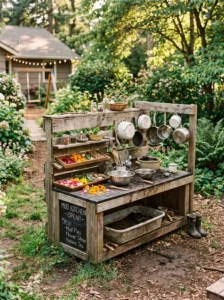
There’s a reason pallet mud kitchens remain popular: they’re inexpensive, durable, and surprisingly charming when done well. Instead of buying an expensive play kitchen, many parents repurpose old wooden pallets into a rustic outdoor station that feels natural in the backyard.
This idea works because the rough, imperfect look actually suits messy outdoor play. Kids don’t care if every board matches perfectly. They care about having shelves for “ingredients,” hooks for pots, and a counter where they can stir muddy soup with complete seriousness. Pallets also provide enough structure without requiring advanced woodworking skills.
This style works especially well in medium or large yards where you can dedicate a corner to messy play. Place it near a garden hose or water source if possible. Adding a gravel or mulch base underneath helps control mud overflow and prevents slippery patches after rain.
Use weather-resistant wood stain instead of regular paint if you want it to last longer outdoors. Stainless steel bowls or thrifted kitchen utensils hold up better than plastic toy accessories, which often crack in sunlight. One mistake people make is building the counter too high. Younger kids play more comfortably when the workspace sits lower than a standard table.
A simple pallet kitchen often becomes the kind of backyard feature kids use daily because it feels open-ended rather than overly structured.
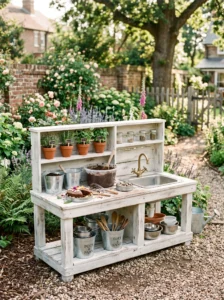
2. Farmhouse-Style Mud Kitchen With Sink
A farmhouse-style mud kitchen feels a little more polished without losing the playful outdoor charm. Think whitewashed wood, metal buckets, open shelving, and a simple basin sink built into the countertop.
This setup works well because kids naturally love water play. Adding even a basic sink instantly makes the kitchen feel more realistic and keeps children engaged longer. They’ll wash leaves, fill pots, rinse muddy spoons, and basically create chaos in the most entertaining way possible.
This style fits beautifully in cottage gardens, landscaped backyards, or outdoor spaces where parents want the play area to blend with the overall design. It works particularly well near raised garden beds since kids often enjoy “harvesting” herbs, flowers, or dirt for their pretend meals.
Use galvanized metal or stainless steel for the sink area because plastic basins fade and become brittle outdoors. Cedar or pressure-treated wood helps the frame survive rain and sun exposure. Avoid glossy indoor paint finishes since they peel quickly outside.
One practical addition that makes a huge difference is installing a small shelf underneath for boots or buckets. Otherwise, everything ends up scattered across the yard. Parents often notice that kids become calmer and more focused during water-and-mud play because it encourages sensory exploration without screens or overstimulation.
The farmhouse look also photographs beautifully, which admittedly doesn’t hurt if you enjoy capturing backyard memories.
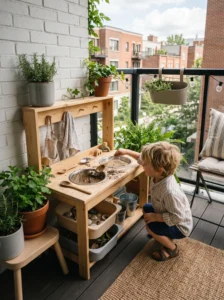
3. Compact Balcony or Patio Mud Kitchen
Not every family has a giant backyard, and honestly, kids don’t need one to enjoy a mud kitchen. A compact version designed for balconies, patios, or tiny outdoor corners can work surprisingly well.
This idea succeeds because children mainly need sensory play opportunities, not massive square footage. A narrow wooden bench with a few containers, a water jug, and some scoops can provide hours of entertainment. Smaller spaces also make cleanup easier, which parents appreciate after the novelty wears off.
This setup works best for apartments with outdoor terraces, small patios, or urban homes with limited yard space. Position it against a wall or railing to save floor space while still giving children room to move comfortably.
Choose lightweight but sturdy materials. Foldable shelves, stackable bins, and removable containers make storage easier in compact areas. Instead of creating permanent mud pits, use large trays or tubs to contain dirt and water. That prevents the entire balcony from looking like a construction zone.
One mistake people make is overcrowding small mud kitchens with too many accessories. Kids actually play more creatively when there are fewer items available. A couple of bowls, spoons, and containers usually outperform a giant pile of plastic toys.
Even in small outdoor spaces, a mud kitchen can become the place where kids spend the longest uninterrupted stretches of imaginative play.
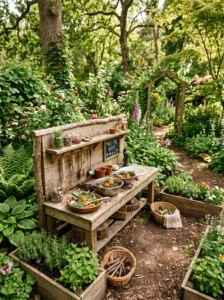
4. Nature-Inspired Mud Kitchen With Garden Elements
Some of the best mud kitchens feel connected to nature rather than separate from it. A garden-inspired setup encourages children to use flowers, herbs, sticks, leaves, and stones as part of their play.
This idea works because it combines imaginative play with natural curiosity. Kids love collecting ingredients from the garden and turning them into “recipes.” It quietly encourages outdoor exploration without feeling educational or forced.
This style is ideal for backyards with flower beds, vegetable gardens, or natural landscaping. Place the kitchen near plants that are safe for children to touch and smell, like rosemary, mint, lavender, or sunflowers.
Use unfinished or lightly stained wood so the kitchen blends naturally into the outdoor environment. Small planter boxes attached to the sides create easy access to herbs or flowers. Avoid toxic plants nearby, especially if younger children still put random things in their mouths.
One smart feature is adding a chalkboard menu or recipe board. Kids enjoy writing “mud pie specials” or naming their creations. It sounds simple, but it adds another layer of imaginative play.
Parents often notice that this style encourages slower, calmer outdoor play. Instead of running around nonstop, children tend to spend longer periods focused on mixing, collecting, and pretending. That quiet engagement is part of what makes mud kitchens so valuable.
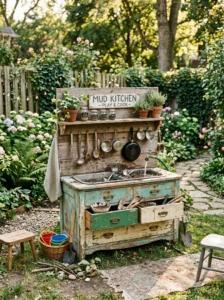
5. Vintage-Inspired Mud Kitchen Using Old Furniture
Repurposing old furniture into a mud kitchen is one of the easiest ways to create something unique without spending much money. An old dresser, console table, or cabinet can become a surprisingly functional outdoor play station.
This works because vintage furniture already has built-in storage, shelves, and character. Kids don’t care if the paint is chipped or mismatched. In fact, the slightly worn look often makes the kitchen feel more creative and inviting.
This setup works well in covered patios, shaded yards, or outdoor play corners where the furniture gets some protection from direct weather exposure. A small roof or pergola above it can dramatically extend its lifespan.
Sand rough edges carefully and seal the wood with outdoor-grade finish. Replace fragile hardware if necessary, and avoid furniture made from particleboard since moisture destroys it quickly. Old metal sinks or bowls fit beautifully into dresser tops for a built-in washing station.
A common mistake is making the setup too decorative and not functional enough. Kids need accessible shelves, easy-to-reach tools, and enough counter space to actually play. Sometimes the prettiest setups online are awkward for real children to use.
The charm of a vintage mud kitchen is that it feels personal rather than mass-produced, and that often makes the space more inviting for everyday play.
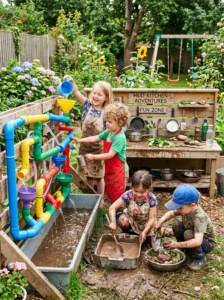
6. Mud Kitchen With Water Wall Feature
Adding a water wall transforms a regular mud kitchen into something kids genuinely obsess over. Water walls use funnels, pipes, tubes, and containers to create flowing water play alongside the kitchen area.
This idea works because moving water naturally keeps children engaged longer. They experiment constantly—pouring, redirecting, splashing, and figuring out how water travels. It combines sensory play with simple problem-solving in a very natural way.
This setup works best in larger outdoor spaces where splashing and wet ground are less of a concern. Place it near grass, gravel, or drainage-friendly surfaces instead of patios that become slippery.
PVC pipes, recycled bottles, gutters, and funnels all work well for DIY water walls. Secure everything firmly because kids pull on parts more than adults expect. Avoid overly complicated designs at first. Simple systems usually hold attention longer.
One practical tip is to create a refill station using a bucket or small water container nearby. Otherwise, kids constantly run indoors dripping muddy water through the house.
Parents often notice this becomes the centerpiece of outdoor play during warmer months. Children who normally lose interest quickly tend to stay focused longer because water play changes constantly and never feels repetitive.
It’s messy, yes—but usually the kind of productive, happy mess parents remember fondly later.
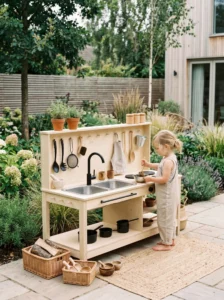
7. Minimalist Scandinavian-Style Mud Kitchen
Not every mud kitchen needs bright colors and cartoon-like features. A Scandinavian-inspired design focuses on clean lines, neutral tones, and simple functionality while still being completely kid-friendly.
This approach works because overly stimulating play spaces can sometimes feel chaotic. Neutral outdoor setups create a calmer atmosphere while still encouraging creativity. Kids bring the imagination themselves; the kitchen doesn’t need flashing colors to do all the work.
This style fits beautifully in modern homes, minimalist gardens, or small curated outdoor spaces where parents want the play area to blend naturally with the home aesthetic.
Use light wood tones, matte black hardware, and simple open shelving. Stick to natural textures instead of excessive decorations. One or two sensory elements—like a water bowl or herb planter—usually feel more intentional than cluttering every inch with toys.
A mistake many people make with minimalist designs is sacrificing usability for appearance. Kids still need accessible storage, enough countertop room, and durable materials. Beautiful but fragile setups rarely survive active outdoor play.
One unexpected benefit of this style is that parents are more likely to leave it set up permanently instead of packing it away. When outdoor play areas visually fit the backyard, they become part of daily life instead of temporary entertainment.
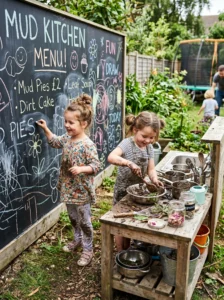
8. Mud Kitchen With Chalkboard Wall
A chalkboard wall instantly adds creativity and interaction to a mud kitchen without requiring much extra space or money.
This works because kids naturally combine pretend cooking with storytelling and drawing. One minute they’re making “leaf soup,” and the next they’re writing a restaurant menu or drawing ingredients across the board.
This setup works especially well for preschoolers and early elementary-age kids who enjoy imaginative roleplay. It fits nicely along fences, garage walls, or narrow backyard areas where vertical space matters more than floor space.
Outdoor chalkboard paint works well on plywood panels or fence sections. Keep a small weatherproof container nearby for chalk storage. Position the board slightly lower than you think is necessary because kids tend to draw more comfortably at chest height.
Avoid placing the chalkboard where direct rain constantly hits it. Even weather-resistant finishes last longer with partial protection.
One surprisingly practical benefit is that the chalkboard gives children another activity when they temporarily lose interest in mud play. Instead of wandering back indoors after ten minutes, they transition naturally into drawing or writing games.
It’s also one of the easiest ways to make a basic mud kitchen feel more customized and interactive without spending a lot.
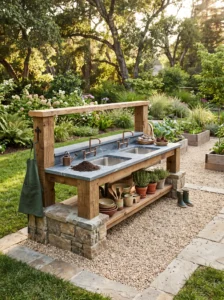
9. Rustic Stone and Wood Mud Kitchen
A stone-and-wood mud kitchen feels sturdy, timeless, and deeply connected to the outdoors. It has more permanence than lightweight DIY versions and works beautifully in natural backyard landscapes.
This idea works because the heavy materials create a realistic “outdoor cooking station” feeling that children genuinely enjoy. Stone surfaces also handle mud, water, and rough use exceptionally well.
This style fits best in larger gardens or homes where the mud kitchen will remain a permanent backyard feature. Positioning it near a playhouse, garden path, or firepit area creates a cohesive outdoor play zone.
Use smooth stone edges for safety and combine them with weather-resistant hardwoods like cedar or teak. Avoid porous stone materials that stain heavily after repeated mud exposure. Gravel flooring underneath helps drainage significantly.
One practical insight many parents appreciate is how little maintenance these kitchens require once built properly. Unlike painted wooden setups, stone surfaces rarely need touch-ups or repainting.
Children often treat these kitchens differently too. The realistic materials make the play space feel “grown-up,” which encourages more focused pretend cooking and collaborative games.
While this style costs more upfront, it tends to last for years and can even grow with younger siblings over time.
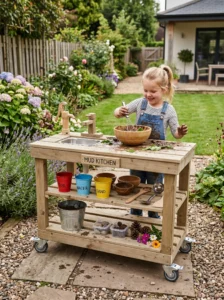
10. Portable Mud Kitchen on Wheels
A portable mud kitchen solves one of the biggest outdoor parenting frustrations: constantly rearranging spaces based on weather, storage needs, or yard activities.
This setup works because flexibility matters more than people realize. Some days you want the mud kitchen near the garden hose, and other days you need it tucked away before guests arrive or rain hits.
This idea works especially well for shared outdoor spaces, smaller yards, or families who prefer seasonal setups instead of permanent installations.
Use locking caster wheels so the kitchen stays stable during play. Lightweight wood frames combined with sturdy shelves usually work best. Avoid making it top-heavy since children lean and pull on outdoor furniture constantly.
Storage bins underneath help keep tools organized while moving the setup around easily. One smart addition is foldable side shelves that expand play space without making storage difficult.
Parents often discover that portable kitchens get used more frequently because they can adapt the setup to changing seasons or activities. Moving it into partial shade during summer, for example, instantly makes outdoor play more comfortable.
It’s one of those practical design decisions that doesn’t sound exciting initially but becomes incredibly useful in everyday family life.
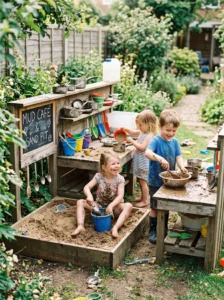
11. Mud Kitchen With Sand Play Combo
Combining sand and mud play creates a sensory-rich setup that keeps kids entertained far longer than a basic kitchen alone.
This works because children naturally move between textures during play. They mix sand into mud recipes, create pretend baked goods, and experiment with different consistencies without even realizing they’re learning through sensory exploration.
This style works best in larger outdoor areas where separate zones can help contain the mess slightly. Placing the sand area beside the kitchen rather than directly underneath keeps the workspace more manageable.
Use covered sandboxes whenever possible to keep debris and animals out overnight. A simple wooden divider between sand and mud sections helps maintain organization. Avoid placing the setup too close to the house unless you enjoy discovering sand indoors for the next six months.
One practical feature that helps tremendously is adding a rinse bucket or foot-washing station nearby. It reduces how much dirt kids track inside after playtime ends.
Parents often notice that combo setups encourage more cooperative play between siblings because there are multiple activity zones instead of everyone crowding one small counter.
The mess level definitely increases, but so does the creativity and length of outdoor play sessions.
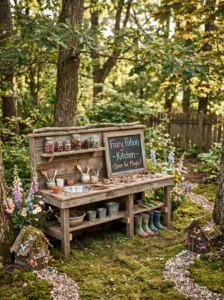
12. Fairy Garden Mud Kitchen
A fairy garden mud kitchen adds a whimsical layer that younger children especially adore. Tiny decorations, miniature houses, pebbled paths, and natural textures turn the kitchen into part play space, part magical world.
This idea works because imaginative storytelling becomes part of the experience. Kids aren’t just making mud pies anymore—they’re cooking for fairies, woodland creatures, or imaginary guests.
This setup works beautifully in shaded gardens, tucked-away backyard corners, or areas surrounded by flowers and greenery. Smaller spaces often feel cozier and more magical for this style.
Use weatherproof miniature accessories sparingly so the space doesn’t become cluttered. Natural materials like tree stumps, bark, moss, and stones usually look better outdoors than brightly colored plastic decorations.
One mistake people make is over-designing every detail. Kids enjoy adding their own “discoveries” like sticks, flowers, or pebbles more than perfectly curated decorations.
Parents often find this style encourages quieter, independent play. Children become deeply absorbed in storytelling and pretend scenarios instead of constantly seeking entertainment from adults.
It’s a softer, more imaginative take on the classic mud kitchen that works especially well for preschool-age children.
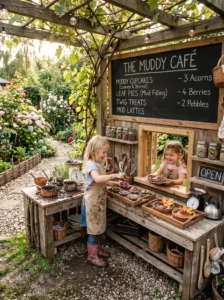
13. Outdoor Café-Style Mud Kitchen
Turning a mud kitchen into a pretend café or bakery creates endless roleplay opportunities for kids who love serving, organizing, and pretending to run a business.
This works because structured pretend play helps children practice communication and social skills naturally. They take orders, create menus, and invent dramatic customer interactions that are honestly pretty entertaining to overhear.
This setup works particularly well for families with multiple children or frequent playdates. Position it near seating areas or patios where adults can casually interact with the “restaurant.”
A small serving window, chalkboard menu, and outdoor table instantly make the setup feel interactive. Use baskets or trays for pretend pastries made from mud, leaves, or sand creations.
Avoid adding too many delicate decorative items. Café-style kitchens still need to survive active outdoor use, spilled water, and rough handling.
One fun insight is that children often stay engaged longer when adults occasionally participate as “customers.” Ordering ridiculous mud smoothies somehow never gets old for them.
This style combines imaginative play with social interaction in a way that feels lively and naturally engaging.
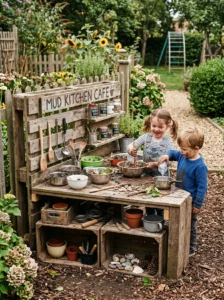
14. Recycled DIY Mud Kitchen
A recycled DIY mud kitchen proves you don’t need a huge budget to create an amazing outdoor play space. Old crates, leftover wood, metal bowls, and secondhand materials often work just as well as expensive custom builds.
This idea works because kids rarely care how much something costs. In fact, open-ended homemade setups often inspire more creativity than polished store-bought versions.
This style fits almost anywhere because it can be customized based on available materials and space. Small yards, rental homes, and temporary outdoor setups all benefit from the flexibility of recycled builds.
Use sturdy reclaimed materials and always check for splinters, rust, or unstable parts before letting children play. Outdoor sealant helps extend the life of repurposed wood dramatically.
A common mistake is trying to make the kitchen look too perfect. Part of the charm comes from mixing materials creatively instead of matching everything exactly.
Parents often discover that building the kitchen together becomes part of the fun. Kids love helping paint, organize utensils, or choose where items should go.
This approach keeps outdoor play accessible without turning it into an expensive backyard project.
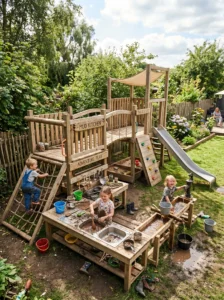
15. Multi-Level Adventure Mud Kitchen
For families who want something truly engaging, a multi-level mud kitchen combines climbing, cooking, water play, and imaginative zones into one larger outdoor setup.
This works because kids naturally move between activities instead of staying in one spot. Different levels create movement, variety, and opportunities for collaborative play between siblings of different ages.
This style works best in spacious backyards with room for a more permanent installation. It pairs especially well with playhouses, climbing frames, or natural play gardens.
Use sturdy construction materials and prioritize safety with railings, rounded edges, and non-slip surfaces. Separate wet areas slightly from climbing sections to reduce slipping risks.
One practical tip is to create distinct zones rather than cramming everything together. Kids play more comfortably when there’s enough room to move naturally between activities.
Parents often find these setups become the main outdoor destination for years rather than a temporary phase. Older kids may eventually outgrow simpler mud kitchens, but larger adventure-style setups tend to hold interest longer.
It’s definitely the most ambitious option on this list, but also one of the most memorable.
Comparison Table
| Type | Best Use | Material | Style/Vibe | Difficulty Level |
|---|---|---|---|---|
| Wooden Pallet Kitchen | Budget-friendly backyard play | Reclaimed wood | Rustic and casual | Easy |
| Farmhouse Sink Kitchen | Water and sensory play | Cedar + metal sink | Cottage/farmhouse | Medium |
| Compact Patio Kitchen | Small outdoor spaces | Lightweight wood/plastic bins | Minimal and practical | Easy |
| Water Wall Kitchen | Active sensory play | PVC pipes + wood | Interactive and playful | Medium |
| Scandinavian Kitchen | Modern outdoor spaces | Light wood + matte hardware | Clean and minimalist | Medium |
| Multi-Level Adventure Kitchen | Large family backyards | Hardwood + stone | Outdoor adventure style | Hard |
How to Choose the Right Mud Kitchen
Choosing a mud kitchen sounds simple until you realize there are dozens of styles, sizes, and material options available. The best choice usually depends less on appearance and more on how your family actually uses outdoor space.
Start with size and scale. One of the biggest mistakes people make is building a mud kitchen that overwhelms the yard or feels awkward for their child’s height. Toddlers need lower counters and simpler layouts, while older kids enjoy larger setups with multiple activity zones. Measure your available space carefully before building anything permanent.
Material choice matters more outdoors than many parents expect. Untreated indoor furniture often falls apart quickly after repeated exposure to rain and sunlight. Cedar, pressure-treated wood, stainless steel, and galvanized metal generally last the longest. Plastic accessories may seem convenient initially, but many fade or crack within a season.
Think realistically about maintenance too. A beautiful painted kitchen can become frustrating if it requires constant touch-ups. Natural wood finishes or weather-resistant stains usually age better outdoors. Gravel or mulch underneath the kitchen also helps reduce muddy puddles and cleanup issues.
Budget is another area where people often overcomplicate things. Kids genuinely do not need luxury custom-built kitchens to enjoy outdoor play. Some of the best setups use recycled furniture, thrifted bowls, and simple DIY shelves. Spending more only makes sense if you want a long-term backyard feature that blends with landscaping.
Finally, avoid over-designing the space. Parents sometimes fill mud kitchens with too many accessories, signs, and decorations. Children typically play more creatively when the setup feels flexible and open-ended. A few quality tools, water access, and enough room to make a mess are usually more valuable than elaborate styling.
The goal is not perfection. The goal is creating a space kids actually want to use repeatedly.
Conclusion
Mud kitchens have a way of turning ordinary outdoor spaces into places where kids naturally slow down, explore, and create their own entertainment. That’s part of what makes them so valuable. They encourage messy, imaginative play without needing screens, batteries, or constant adult direction.
The good news is that there isn’t one “correct” way to build a mud kitchen. Some families prefer a simple pallet setup tucked into the corner of the yard, while others invest in larger adventure-style stations with water features and garden elements. What matters most is choosing something that realistically fits your space, budget, and child’s age.
Durability and practicality usually matter more than fancy styling. Easy-to-clean materials, proper drainage, and accessible storage will make the kitchen more enjoyable long term. And honestly, kids usually care far more about mud, water, and imagination than perfect design details.
Outdoor play spaces also don’t need to be massive to work well. Even compact patios or balconies can support creative sensory play with the right setup. The key is creating an environment that feels inviting, flexible, and safe enough for children to experiment freely.
At the end of the day, the best mud kitchen is the one that gets used regularly. A slightly messy backyard filled with imaginative play is usually a sign that you got it right.
FAQs
1. What age is best for a mud kitchen?
Most children enjoy mud kitchens between ages 2 and 8, though older kids often still use them creatively. Toddlers enjoy sensory play, while preschoolers and younger elementary kids become more interested in pretend cooking and storytelling.
2. What is the best wood for an outdoor mud kitchen?
Cedar and pressure-treated wood are popular because they handle outdoor weather well. Cedar naturally resists moisture and insects, while treated wood lasts longer in rainy climates. Always sand rough edges carefully for safety.
3. How do I keep a mud kitchen clean?
You realistically won’t keep it perfectly clean, and that’s part of the point. However, using gravel underneath, adding storage bins, and rinsing tools regularly helps prevent excessive mess buildup and slippery areas.
4. Do mud kitchens attract bugs?
They can if food is left outside. Avoid using real food scraps and empty standing water regularly. Natural materials like leaves, flowers, and dirt are usually fine without causing major pest problems.
5. Can I make a mud kitchen in a small space?
Absolutely. Compact mud kitchens work well on patios, balconies, or tiny backyard corners. Use trays, stackable bins, and vertical storage to maximize space without making the area feel crowded.
6. What accessories do kids actually use most?
Simple tools usually get the most use: bowls, spoons, watering cans, buckets, funnels, and measuring cups. Kids often prefer open-ended tools over elaborate toy kitchen accessories.
7. Is a mud kitchen expensive to build?
Not necessarily. DIY versions using pallets, recycled furniture, or secondhand materials can cost very little. Larger custom-built kitchens with stone, sinks, and water systems naturally cost more.
8. Should a mud kitchen be in sun or shade?
Partial shade usually works best. Full sun can make metal tools hot and outdoor play uncomfortable during summer. A shaded or partly shaded area keeps the space usable for longer periods throughout the day