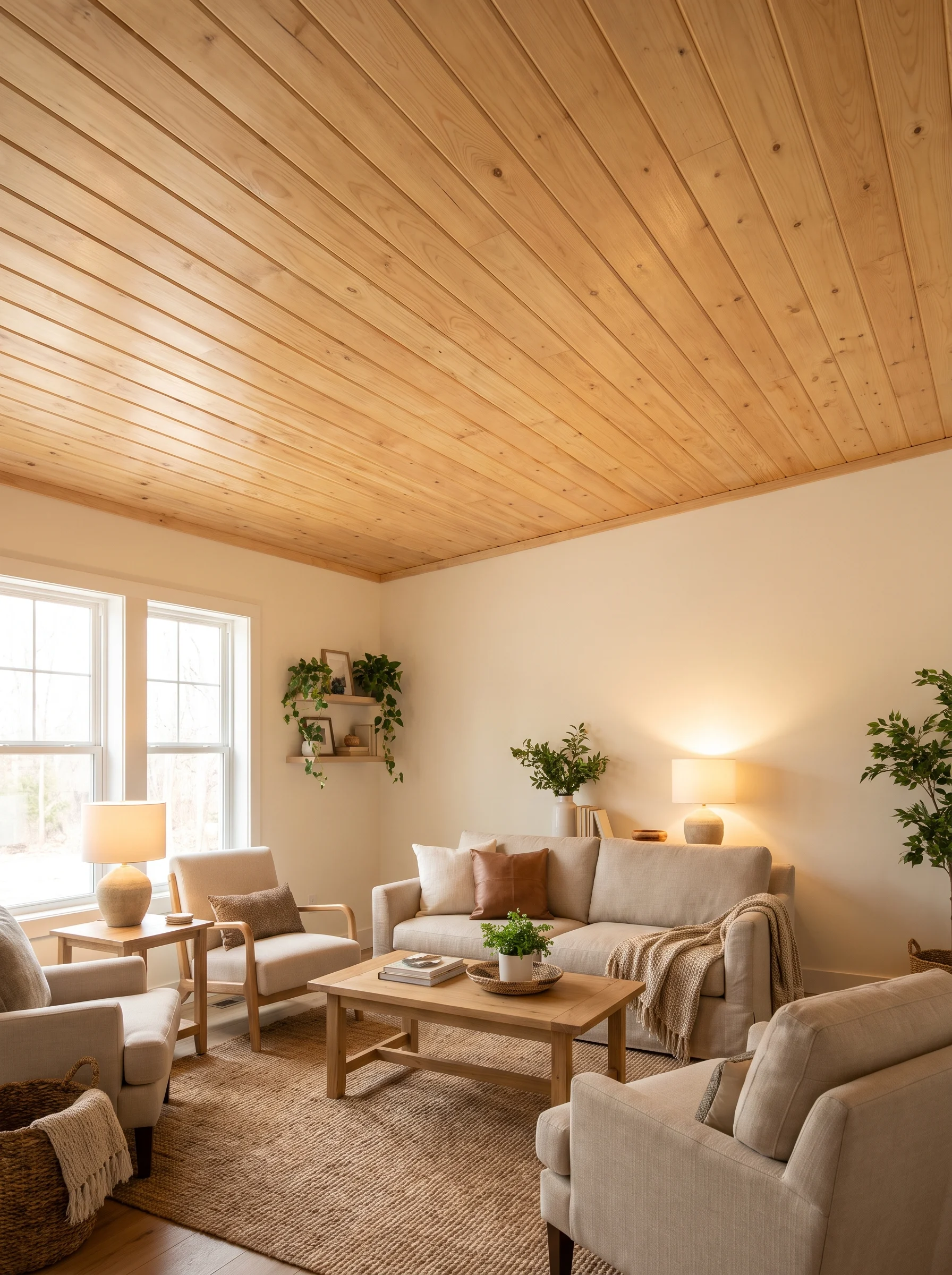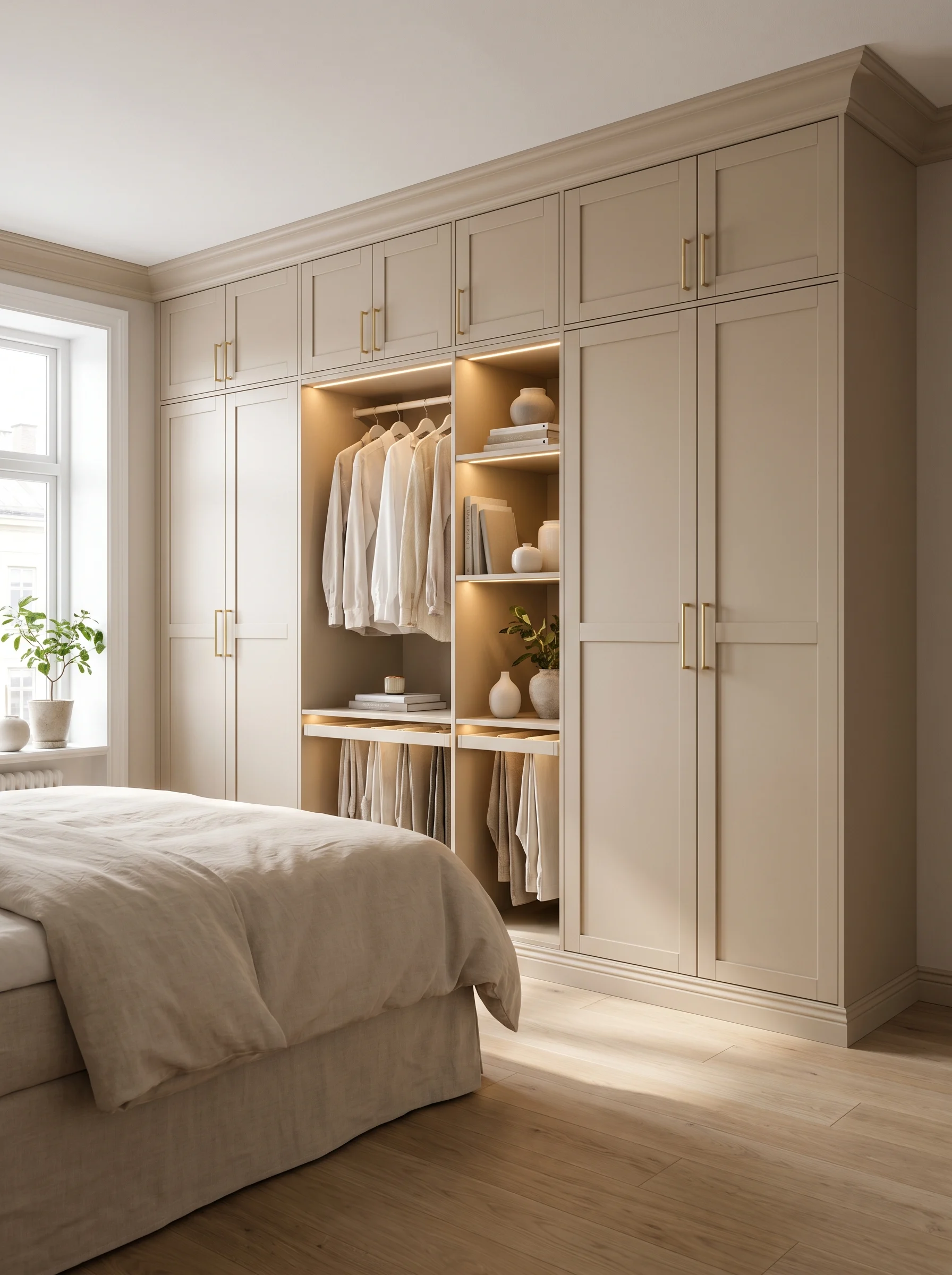
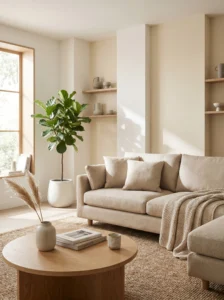
Ever feel like your living room looks a little too cluttered… even when you haven’t added anything new? That’s exactly where Japandi style steps in. It’s that perfect mix of Japanese simplicity and Scandinavian comfort—clean, calm, but still warm and livable.
In 2026, Japandi living rooms are all about intentional design. Nothing feels random, and every piece has a purpose. If you’re trying to create a space that feels peaceful but still stylish enough for Pinterest, these ideas will help you get there without overthinking it.
1. Neutral Color Palette with Warm Undertones
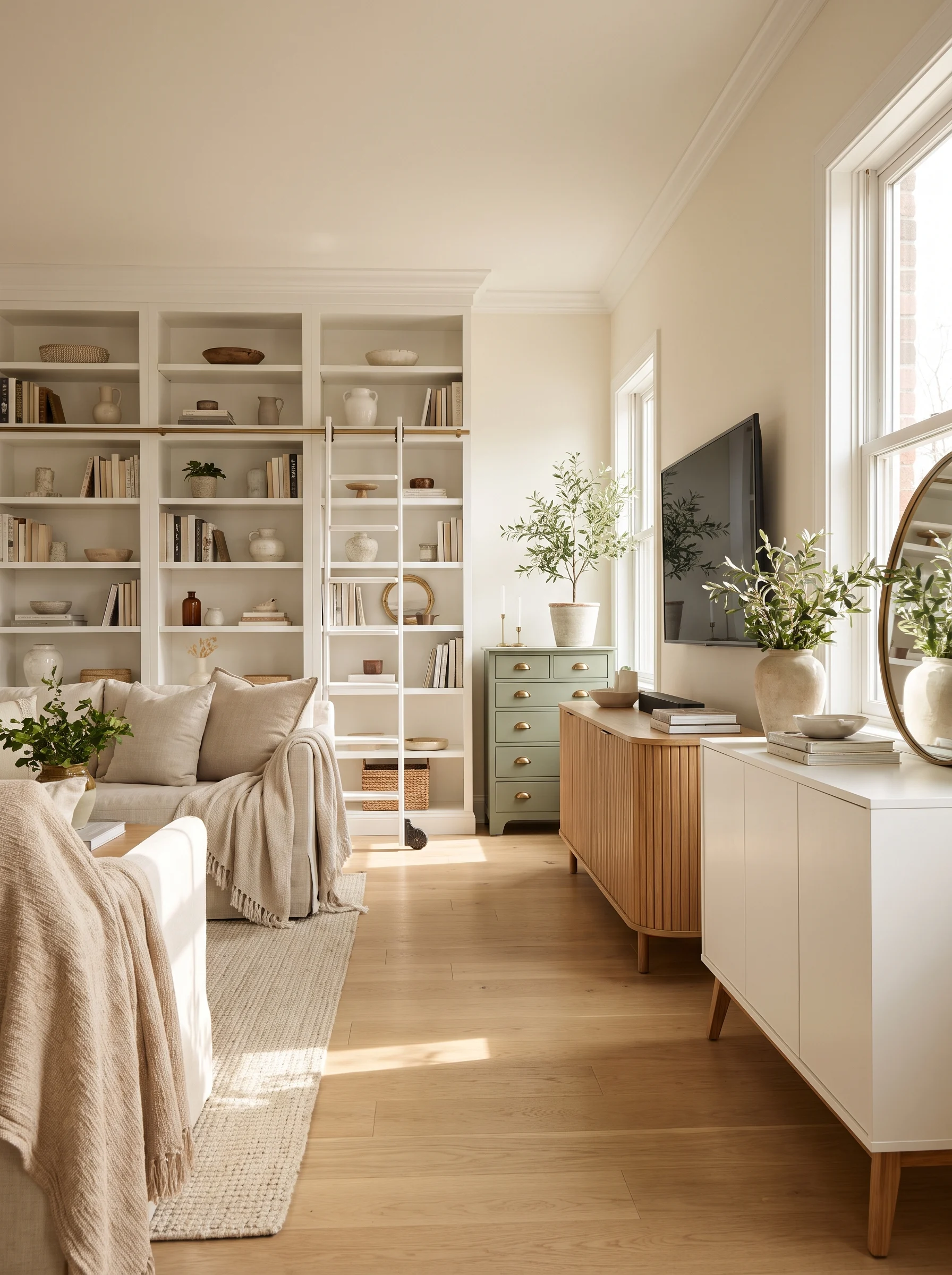
Japandi style starts with color—or honestly, the lack of it. Think soft beiges, warm whites, muted taupes, and gentle greys. These tones instantly make a space feel calm and uncluttered without looking boring. The key is choosing shades with warmth so the room doesn’t feel cold or sterile. You might notice how everything blends rather than contrasts sharply, which creates that signature peaceful vibe.
Tip: Try layering slightly different shades of beige to add depth without breaking the minimal look
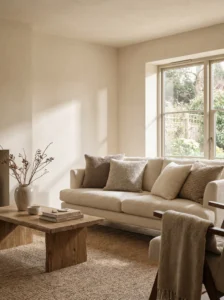
2. Low Profile Furniture for a Grounded Feel
One thing that instantly gives Japandi vibes is low furniture. Sofas, coffee tables, and even shelving sit closer to the ground, making the room feel more connected and relaxed. It also creates the illusion of higher ceilings, which is a bonus if your space is small. The whole setup feels more intentional and less bulky.
Suggestion: If replacing furniture isn’t possible, even a low coffee table can shift the look dramatically.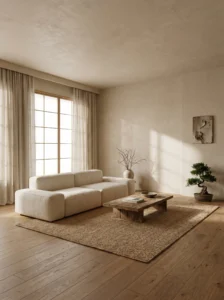
3. Natural Wood Elements Everywhere
Wood is basically the heart of Japandi interiors. Light oak, walnut, or ash finishes bring warmth and texture without overwhelming the space. You don’t need to go overboard—just a few well-placed wooden pieces can completely change the feel. It keeps the room grounded and organic.
Quick thought: Mixing two wood tones can actually look more natural than sticking to just one.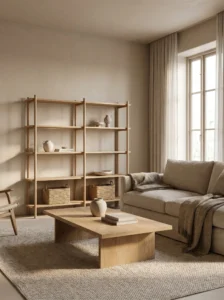
4. Decluttered Open Space Layout
Here’s the thing—Japandi isn’t just about what you add, it’s about what you remove. Open space is part of the design. Leaving areas empty helps your room breathe and feel more intentional. It might feel strange at first, but that “less is more” approach really works here.
Tip: Try removing one or two items from each area and see how much lighter the room feels.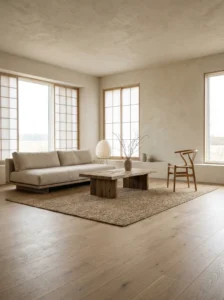
5. Soft Linen and Cotton Textiles
To balance the minimal structure, Japandi uses soft, natural fabrics like linen and cotton. Think relaxed curtains, slightly wrinkled cushions, and cozy throws. These elements make the room feel lived-in rather than staged.
Suggestion: Go for neutral fabrics with subtle texture instead of bold patterns.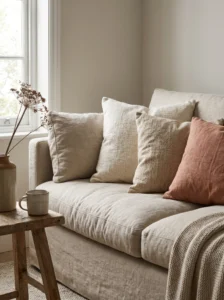
6. Statement Minimal Lighting
Lighting in Japandi spaces is simple but impactful. Paper lanterns, soft-glow floor lamps, or sculptural pendant lights create a warm ambiance without stealing attention. The goal is diffused, calming light—not harsh brightness.
You might notice softer lighting makes everything feel instantly more cozy and intentional.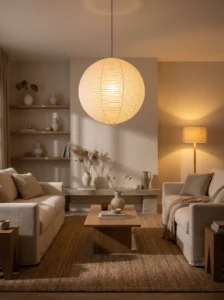
7. Functional Decor Only
Every item in a Japandi living room should have a purpose—either functional or deeply meaningful. Random décor just for the sake of filling space doesn’t really belong here. This keeps things clean and visually balanced.
Quick tip: If you wouldn’t miss it when it’s gone, it probably doesn’t need to stay.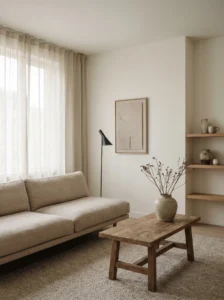
8. Indoor Plants with Simple Styling
Plants bring life into the space, but they’re styled very intentionally. Instead of filling every corner, choose one or two plants and let them stand out. A simple ceramic pot works best.
Suggestion: A single tall plant in a corner can feel more impactful than several small ones.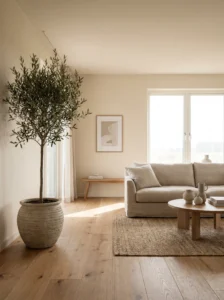
9. Minimal Wall Art with Meaning
Wall décor stays subtle in Japandi interiors. Think one large artwork or a small curated set rather than a gallery wall. Abstract prints, nature-inspired pieces, or simple line art work beautifully here.
Tip: Leave some wall space empty—it actually enhances the art you do display.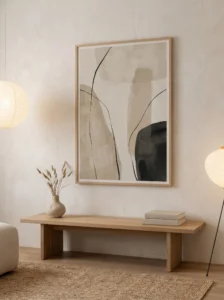
10. Textured Rugs in Neutral Tones
A soft, textured rug helps anchor the room without disrupting the calm aesthetic. Flat-weave or lightly patterned rugs in neutral shades are perfect. They add warmth while keeping things visually light.
Suggestion: Choose something slightly imperfect or handmade-looking for a more authentic feel.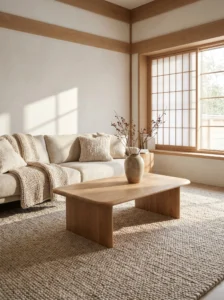
11. Hidden Storage Solutions
Clutter is the enemy of Japandi design, so smart storage is essential. Furniture with hidden compartments or sleek cabinets helps keep everything out of sight. The cleaner the surfaces, the better the overall look.
Quick thought: Baskets made of natural fibers can double as storage and décor.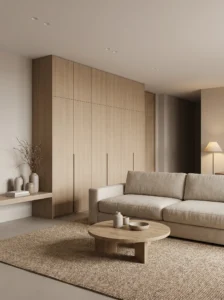
12. Subtle Contrast with Dark Accents
While the palette is mostly light, small dark accents create balance. A black vase, dark wood frame, or charcoal cushion adds just enough contrast to keep things interesting.
Tip: Keep dark elements minimal so they enhance rather than dominate.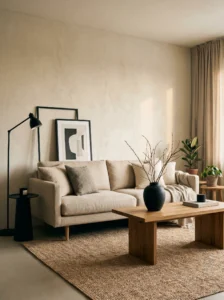
13. Cozy Corner Seating Nooks
Japandi spaces often include a small, quiet corner for relaxing. A low chair, soft cushion, and a simple side table can create a peaceful reading or tea spot. It feels personal and intentional.
You could try setting up a small corner like this—it doesn’t need much space.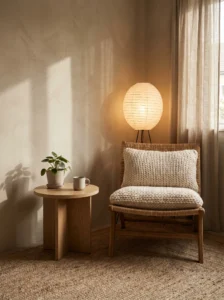
14. Organic Shapes Over Sharp Lines
Instead of rigid, sharp furniture, Japandi leans toward soft curves and organic shapes. Rounded tables, curved sofas, or sculptural décor pieces make the space feel more natural and calming.
Suggestion: Even one curved piece can soften the entire room visually.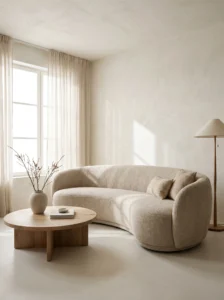
15. Calm, Balanced Styling Throughout
At the end of the day, Japandi is all about balance. Nothing feels too heavy, too busy, or too empty. Every piece works together to create a calm, cohesive environment. It’s not about perfection—it’s about intention.
Quick question: Does your space feel peaceful when you walk in? If not, a few small changes can make a big difference.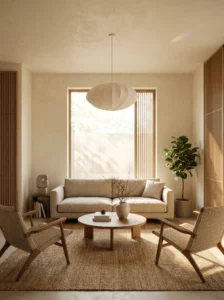
Japandi living rooms aren’t just about aesthetics—they’re about how a space makes you feel. Calm, simple, and quietly beautiful. And honestly, that’s something most homes could use a little more of.