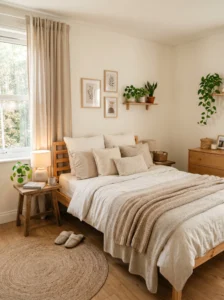
A relaxing bedroom doesn’t have to look like a luxury hotel suite from Pinterest or cost half your salary. The truth is, most bedrooms feel stressful not because they’re “bad,” but because they’re overloaded, poorly arranged, or missing small comfort details that actually matter in daily life.
A lot of people spend money on random decor hoping the room will magically feel calm. But then the bedroom still feels cluttered, cold, or mentally exhausting. The problem usually isn’t the budget — it’s the approach. A peaceful bedroom is more about atmosphere, comfort, lighting, texture, and simplicity than expensive furniture.
The good news is that creating a calming bedroom is very doable even on a tight budget. In fact, some of the best bedroom upgrades are inexpensive or even free. Rearranging furniture, improving lighting, adding soft fabrics, or simply removing visual clutter can completely change how a room feels.
In this guide, you’ll learn practical and affordable ways to make your bedroom feel more restful without overspending. These ideas are realistic for small rooms, rental spaces, shared homes, and normal budgets. You’ll also get placement tips, common mistakes to avoid, and smart ways to make the room feel cozy without making it look crowded.
By the end, you’ll know exactly how to turn an ordinary bedroom into a space that actually helps you relax at the end of the day — without buying unnecessary expensive decor.
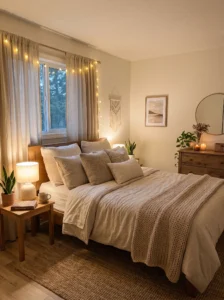
1. Start by Removing Visual Clutter
One of the biggest reasons bedrooms feel stressful is simple visual overload. Even a beautiful room can feel mentally exhausting if every surface is covered with random items.
Decluttering works because your brain naturally relaxes in cleaner spaces. When there’s less visual noise, the room instantly feels calmer and easier to exist in. This matters even more in small bedrooms where clutter becomes noticeable very quickly.
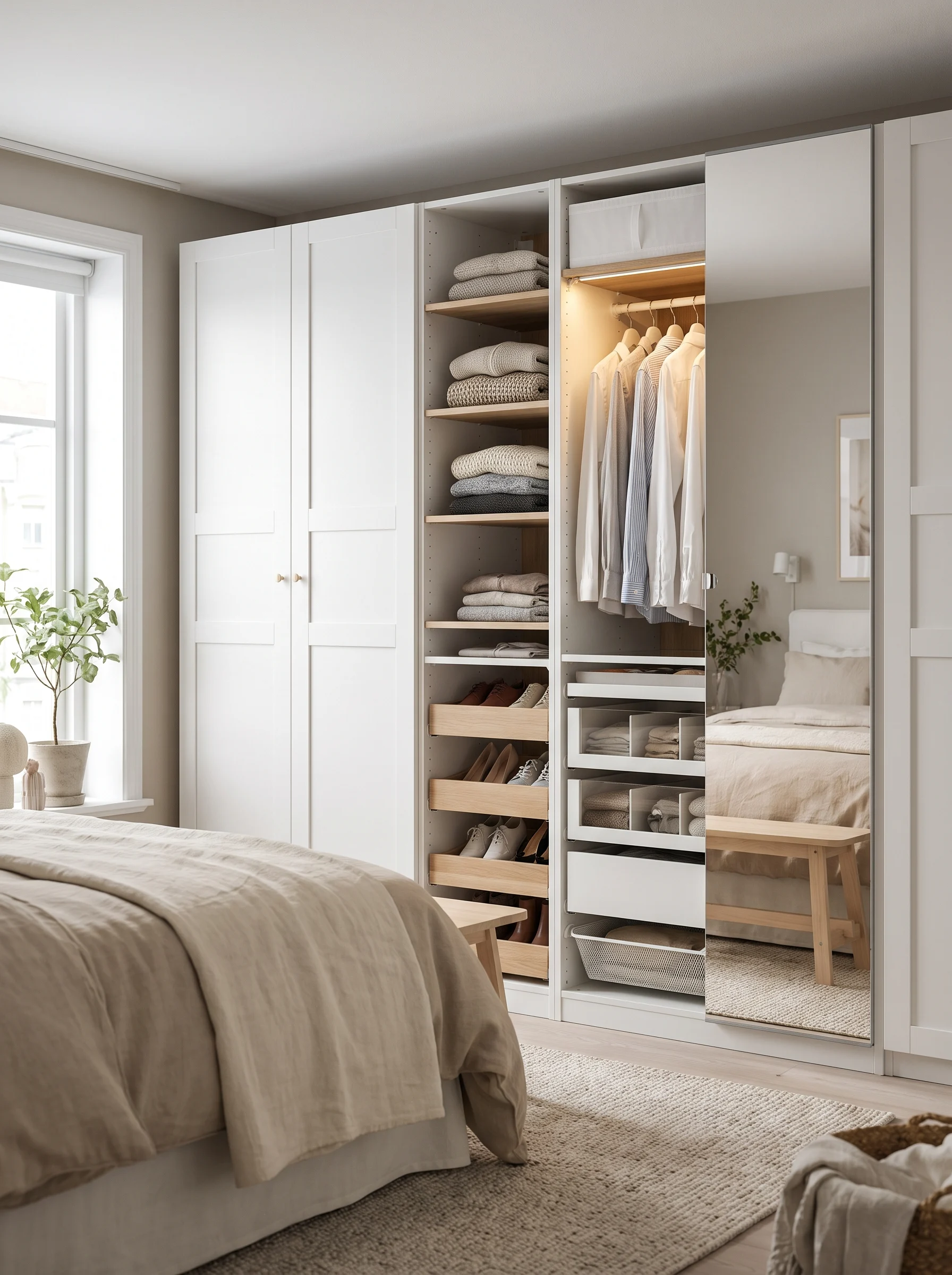
Start with visible areas first: bedside tables, dresser tops, chairs filled with clothes, and crowded shelves. You don’t need to become a minimalist overnight. Just remove things you don’t use daily. Keep only practical or meaningful items visible.
Use baskets, storage boxes, or under-bed containers to hide smaller items affordably. Fabric bins are especially useful because they soften the room visually compared to plastic containers.
A common mistake is replacing clutter with too much decoration. A relaxing room doesn’t need ten candles, five frames, and decorative trays everywhere. Empty space is part of good design too.
In daily life, this change feels surprisingly powerful. A cleaner room often makes mornings feel less chaotic and evenings feel less draining. It also makes cleaning faster, which honestly reduces stress more than people expect.
2. Use Warm Lighting Instead of Harsh White Bulbs
Lighting changes the mood of a bedroom faster than almost anything else. Bright white lighting might work in kitchens or offices, but it often makes bedrooms feel cold and overly clinical.
Warm lighting creates softness and comfort because it mimics evening sunlight. It helps the room feel cozy and naturally relaxing, especially at night when your body is already trying to wind down.
You don’t need expensive fixtures for this upgrade. Simply switching to warm LED bulbs can make a massive difference. Look for bulbs labeled “warm white” or around 2700K color temperature.
Table lamps are also better than relying only on one harsh ceiling light. Place one near the bed and another near a dresser or corner if possible. Soft layered lighting makes a room feel more intentional and peaceful.
Fairy lights can work too, but avoid turning the room into a festival setup. Keep them subtle around a mirror, shelf, or headboard.
Many people accidentally buy very dim lighting thinking “relaxing” means dark. The goal is soft and warm, not gloomy.
In everyday use, warm lighting makes nighttime routines feel calmer. Reading, getting ready for bed, or even folding laundry somehow feels less irritating under softer light.
3. Choose Calm, Neutral Bedding
Your bed is the largest thing in the room, so bedding affects the entire atmosphere more than most people realize.
Busy patterns and loud colors can make a bedroom feel visually active instead of restful. Calm bedding works because it creates a softer visual foundation for the whole room.
You don’t need luxury sheets to achieve this look. Affordable cotton or microfiber bedding in beige, white, soft gray, olive, or muted blue can instantly make the space feel cleaner and more peaceful.
Layering helps too. Even a simple inexpensive throw blanket at the foot of the bed adds comfort and texture. Mixing textures makes a room feel cozy without needing lots of decor.
For smaller bedrooms, lighter bedding colors help the room feel more open and airy. Dark bedding can look stylish but sometimes makes tight rooms feel heavier.
Avoid overcrowding the bed with decorative pillows. Two sleeping pillows and one or two accent cushions are enough for most rooms.
A comfortable-looking bed changes the emotional feel of the space immediately. At the end of a long day, walking into a room with soft, inviting bedding genuinely makes the room feel more restful and welcoming.
4. Rearrange Furniture for Better Flow
Sometimes a bedroom feels uncomfortable simply because the layout doesn’t work. Rearranging furniture costs nothing but can completely improve how the room functions.
Good room flow matters because cramped pathways and awkward furniture placement subconsciously create tension. You should be able to move around the room easily without squeezing between furniture.
Start by positioning the bed in the strongest visual spot, usually against the main wall. Then remove unnecessary furniture if the room feels crowded.
In small bedrooms, pushing every piece against the wall isn’t always the best solution. Sometimes leaving slight breathing room actually makes the room feel more balanced.
Keep frequently used items accessible. Nightstands should be practical, not just decorative. If you constantly trip over a chair or storage bin, the layout needs adjusting.
Avoid blocking windows with bulky furniture because natural light helps the room feel calmer and more open.
Many people hold onto furniture that’s too large for the room simply because they already own it. But oversized furniture can make even clean rooms feel stressful.
A better layout improves daily life immediately. The room feels easier to clean, easier to move through, and less mentally crowded overall.
5. Add Soft Curtains Instead of Heavy Window Coverings
Window treatments quietly affect the mood of a bedroom more than people expect. Heavy dark curtains can sometimes make a room feel boxed in, while soft fabric curtains create a lighter and calmer atmosphere.
Light-filtering curtains work especially well in bedrooms because they soften natural light instead of completely blocking it. This creates a peaceful glow during the daytime.
Affordable sheer curtains paired with simple blackout panels are a great budget-friendly combination. You get softness during the day and privacy at night.
Neutral curtain colors usually work best in relaxing bedrooms. White, cream, beige, soft gray, or muted earth tones blend easily into most spaces.
Hang curtains slightly higher than the window frame if possible. This simple trick makes ceilings appear taller and the room feel larger.
One common mistake is choosing curtains that are too short. Curtains that barely touch the window area often make rooms feel unfinished. Longer curtains create a softer, more polished appearance.
In real daily use, soft curtains make mornings feel gentler because sunlight enters the room more naturally instead of aggressively blasting through uncovered windows.
6. Use One Signature Scent in the Room
A relaxing bedroom isn’t only visual. Smell plays a huge role in how a space feels emotionally.
Using one consistent calming scent helps create a stronger sense of comfort and routine. Lavender, vanilla, sandalwood, and linen scents are popular because they feel soft without becoming overwhelming.
You don’t need expensive diffusers. Candles, room sprays, wax melts, or essential oil drops on fabric can work affordably.
The important thing is consistency. Using too many competing scents usually makes the room feel messy instead of calming.
Bedrooms with poor airflow especially benefit from fresh scents. Even simply opening windows regularly helps the room feel lighter and cleaner.
Avoid overly sweet artificial fragrances because they can become irritating over time, especially in smaller spaces.
Scent has a surprisingly strong emotional effect. After a while, your brain starts associating that smell with rest and comfort, which genuinely helps the room feel more peaceful at the end of the day.
7. Bring in Small Natural Elements
Nature naturally relaxes people. That’s why even small organic details can make a bedroom feel calmer and more balanced.
Plants are the obvious choice, but you don’t need to turn your room into a jungle. One or two small plants are enough for most bedrooms.
Snake plants, pothos, and peace lilies are affordable and relatively easy to maintain. If real plants are difficult, dried flowers or even wooden decor pieces can create a similar natural warmth.
Natural materials work because they soften the room visually. Wood, cotton, linen, wicker, and ceramic textures feel less harsh than shiny plastic or metal-heavy decor.
Place plants near windows, dressers, or empty corners that feel visually cold.
A common mistake is overcrowding shelves with too many tiny decorative items. One larger plant often looks calmer and cleaner than many small decorations.
In everyday life, natural elements make bedrooms feel fresher and more lived-in in a good way. Even a tiny plant can make a space feel less sterile and more comforting.
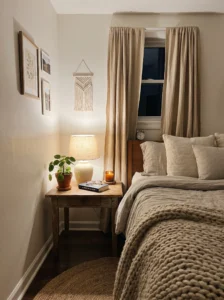
8. Create a Small Reading or Relaxing Corner
A bedroom feels more relaxing when it includes a purpose beyond sleeping and scrolling on your phone.
Even a tiny relaxing corner can change how the room feels emotionally. This works especially well for people who spend lots of time in their bedrooms.
You don’t need much space. A small chair, floor cushion, or even a soft blanket near the window can work.
Add one lamp, a pillow, and maybe a small side table if space allows. The goal is comfort, not perfection.
This idea works especially well in larger bedrooms that feel empty or awkward. But even small rooms can create a “corner feeling” using rugs or lighting.
Avoid over-decorating the space. Too many accessories make it feel staged instead of usable.
In daily life, having a dedicated relaxing spot encourages quieter habits like reading, journaling, stretching, or simply sitting peacefully for a few minutes instead of staying mentally overstimulated all evening.
9. Use Rugs to Add Warmth
Bare floors can make bedrooms feel cold and unfinished, especially if the room already has minimal furniture.
Rugs work because they visually soften the space while also adding physical comfort underfoot. Even inexpensive rugs can dramatically improve the atmosphere of a room.
For small bedrooms, place a rug partially under the bed so it extends outward on the visible sides. This creates a more grounded and balanced look.
Neutral textured rugs usually work best for calming spaces. High-contrast patterns sometimes make rooms feel busier than intended.
Soft low-pile rugs are easier to clean and maintain than extremely fluffy options that trap dust quickly.
A common mistake is buying rugs that are too small. Tiny rugs often make rooms feel disconnected instead of cozy.
In real life, stepping onto a soft rug in the morning genuinely changes how the room feels physically. Small comfort details like this matter more than expensive decor trends.
10. Keep Technology Less Visible
Bedrooms often stop feeling restful because they slowly turn into workspaces, entertainment centers, and charging stations all at once.
Visible cords, blinking lights, and screens create constant mental stimulation. Reducing visible tech helps the room feel quieter and more peaceful.
You don’t need to remove everything. Just organize it better. Use cable organizers, baskets, or simple storage boxes to hide chargers and wires.
If possible, avoid placing a television directly opposite the bed unless you genuinely use it regularly.
Keeping phones slightly farther from the bed can also improve the room’s atmosphere surprisingly well.
A practical tip is using warm bedside lamps instead of relying on phone screens before sleeping.
Many people don’t realize how visually stressful exposed electronics can become until they tidy them properly.
A calmer bedroom often encourages better nighttime habits naturally without forcing dramatic lifestyle changes.
11. Decorate With Fewer but Meaningful Pieces
A relaxing bedroom doesn’t need endless decoration. In fact, too many random decor items usually create the opposite effect.
Meaningful decor works better because it creates emotional comfort instead of visual clutter. One framed photo, favorite artwork, or handmade item often adds more warmth than several trendy accessories.
Choose pieces that genuinely make you feel calm or happy. Bedrooms should feel personal, not like furniture showrooms.
Wall art works especially well above the bed, dresser, or reading corner. Stick with softer colors or peaceful imagery instead of overly busy designs.
Avoid filling every wall just because it feels empty. Blank space helps rooms breathe visually.
Budget-friendly decor often looks better when styled intentionally. Thrifted frames, printed photographs, or simple DIY artwork can feel very cozy when placed thoughtfully.
In daily life, meaningful items make the room feel emotionally comforting rather than purely decorative. That emotional connection matters more than perfectly matching aesthetics.
12. Add Texture Instead of More Color
People often think relaxing rooms need lots of decoration, but texture usually matters more than color variety.
Texture adds depth and coziness without overwhelming the space visually. Soft blankets, woven baskets, linen curtains, cotton bedding, and knitted pillows all help create warmth naturally.
This works especially well in neutral bedrooms that might otherwise feel flat or boring.
Mixing textures prevents the room from looking too “cheap” even when working with affordable furniture and decor.
For smaller rooms, stick to a relatively simple color palette while layering different materials. This keeps the room calm while still feeling visually interesting.
A common mistake is adding too many bold colors trying to create personality. Too much contrast often reduces the peaceful feeling.
In everyday use, textured spaces simply feel more comfortable physically and emotionally. The room becomes somewhere you actually want to spend time instead of just sleep in.
13. Make the Bed Every Morning
This sounds overly simple, but it genuinely changes how a bedroom feels.
An unmade bed instantly makes the entire room feel messier, even if everything else is relatively clean. Since the bed is the focal point of the room, keeping it tidy creates immediate visual calm.
You don’t need hotel-style perfection. Pulling up the blanket, fluffing pillows, and straightening sheets takes only a couple of minutes.
This habit matters especially in small bedrooms where the bed dominates most of the space visually.
Use lightweight bedding if making the bed feels annoying daily. Heavy complicated layers usually discourage consistency.
Many people underestimate how much a made bed improves the overall atmosphere of the room throughout the day.
Coming home to a tidy bed after work or school genuinely makes the room feel more peaceful and cared for, even when nothing else changed.
14. Use Soft Wall Colors if You Can Paint
Wall color strongly affects how a room feels emotionally. Bright or overly intense colors can feel stimulating, while softer shades help the room feel calmer.
If painting is possible, choose muted tones like warm white, soft beige, pale sage, dusty blue, or light gray.
These shades reflect light gently and make rooms feel cleaner and more spacious.
Small bedrooms especially benefit from lighter wall colors because dark walls can sometimes make tight spaces feel even smaller.
You don’t need expensive designer paint either. Even budget paint can dramatically improve a room when the color choice is thoughtful.
Avoid choosing trendy colors purely because they look good online. Bedrooms should feel comfortable in real life, not only photogenic.
In daily use, softer wall colors create a subtle sense of calm that you notice most during quiet moments like mornings, evenings, or rainy days indoors.
15. Focus on Comfort Over Perfection
A lot of people accidentally create bedrooms that look nice but don’t actually feel relaxing to live in.
Real comfort matters more than perfectly styled decor. A relaxing room should support your daily routines, sleep habits, and personal comfort — not just social media aesthetics.
This means prioritizing usable blankets, comfortable pillows, accessible storage, and practical layouts over trendy but uncomfortable setups.
If you love books, make space for them. If you enjoy soft lighting, lean into that. Your room should reflect how you actually live.
Trying too hard to make everything perfectly matching often makes rooms feel stiff and unnatural.
Budget decorating becomes easier when you stop chasing perfection. You can slowly improve the room over time instead of buying everything at once.
The most relaxing bedrooms usually feel slightly personal and lived-in rather than overly staged.
Comparison Table
| Type | Best Use | Material | Style/Vibe | Difficulty Level |
|---|---|---|---|---|
| Warm Lighting | Cozy nighttime atmosphere | LED bulbs, lamps | Soft & calming | Easy |
| Neutral Bedding | Creating visual calm | Cotton, microfiber | Clean & peaceful | Easy |
| Soft Curtains | Light control & softness | Linen, sheer fabric | Airy & cozy | Medium |
| Area Rug | Adding warmth | Low-pile fabric | Comfortable & grounded | Medium |
| Indoor Plants | Natural relaxing feel | Live greenery, ceramic pots | Fresh & organic | Easy |
| Storage Baskets | Reducing clutter | Wicker, fabric | Simple & tidy | Easy |
Buying Guide: How to Choose Budget-Friendly Bedroom Decor
Creating a relaxing bedroom on a budget becomes much easier when you focus on smart choices instead of impulse shopping. Most people waste money buying trendy decor that either doesn’t fit the room or stops feeling useful after a few weeks.
Start by thinking about sizing and scale. Oversized furniture can make small bedrooms feel crowded very quickly. On the other hand, extremely tiny rugs or decor pieces often make rooms feel unfinished. Try to choose items that fit the room proportionally. For example, a medium rug partially under the bed usually looks more balanced than a tiny rug floating awkwardly in the center.
Material choice matters more than many people expect. Soft natural-looking textures like cotton, linen, wood, wicker, and ceramic usually create a calmer atmosphere than shiny plastic or overly reflective surfaces. You don’t always need expensive materials either. Even affordable cotton bedding often feels more relaxing than cheap polyester with loud patterns.
Durability is important when buying budget items. Sometimes extremely cheap products wear out quickly and end up costing more long term. Focus on basics you’ll use daily: bedding, curtains, lighting, and storage. These upgrades usually improve comfort the most.
Maintenance also matters. White rugs may look beautiful online, but they can become frustrating in busy homes. Choose items that realistically match your lifestyle and cleaning habits.
One common mistake people make is buying too many small decorative accessories instead of improving foundational things like lighting or bedding. Another mistake is trying to copy luxury bedrooms exactly without considering room size or personal comfort.
A relaxing bedroom works best when it feels practical, comfortable, and visually calm — not overcrowded with unnecessary purchases.
Conclusion
Creating a relaxing bedroom doesn’t require expensive furniture, designer decor, or a complete renovation. In most cases, small thoughtful changes make the biggest difference. Better lighting, softer textures, less clutter, calm colors, and practical comfort can completely change how a room feels without draining your budget.
The most important thing is focusing on atmosphere rather than perfection. A peaceful bedroom should support your daily life, help you unwind, and feel comfortable to spend time in. That usually comes from simplicity and intentional choices, not from buying more stuff.
Even small upgrades like making the bed regularly, adding warm lighting, or clearing clutter can improve the room immediately. And because many of these ideas are affordable, you can improve the space gradually over time instead of feeling pressured to transform everything at once.
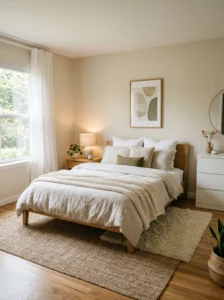
At the end of the day, a relaxing bedroom isn’t about impressing people online. It’s about creating a space that genuinely helps you feel calmer, more comfortable, and more at ease in your everyday life.
FAQs
1. What is the cheapest way to make a bedroom feel relaxing?
Decluttering and changing the lighting are usually the cheapest and most effective upgrades. Removing visual mess and switching to warm lighting can dramatically improve the atmosphere without spending much money.
2. Which bedroom colors feel the most calming?
Soft neutral colors like beige, warm white, pale gray, muted green, and dusty blue tend to feel the most relaxing because they create less visual stimulation.
3. Do small bedrooms work better with light colors?
Yes. Light colors reflect more light and make smaller rooms feel more open and airy. Dark colors can sometimes make compact spaces feel heavier or tighter.
4. How can I decorate my bedroom without making it look cluttered?
Focus on fewer meaningful decor pieces instead of many small accessories. Use texture, lighting, and soft fabrics to add personality without overcrowding surfaces.
5. Are plants good for bedrooms?
Yes. Small indoor plants can make bedrooms feel fresher and calmer. Low-maintenance plants like snake plants or pothos are especially good for beginners.
6. What type of lighting is best for relaxation?
Warm white lighting around 2700K is ideal for bedrooms because it creates a softer and more comfortable atmosphere compared to bright cool white lighting.
7. How often should bedroom decor be updated?
You don’t need constant updates. Simple seasonal changes like switching pillow covers, blankets, or small accessories are usually enough to keep the room feeling fresh.
8. What is the biggest mistake people make when decorating bedrooms?
The biggest mistake is adding too much stuff. Overdecorating often makes bedrooms feel stressful instead of relaxing. Comfort and simplicity usually work better than excess decoration.