How to Style a Living Room With Low Ceilings So It Feels Taller
Does your living room ceiling feel like it’s pressing down on you? Good news: you don’t need to raise the roof to fix it. Low ceilings — anything under eight feet — can still feel open and easy to breathe in once you style the room to pull the eye upward instead of letting it stall at the ceiling line.
The twelve ideas below are grouped into three budget tiers, from under $50 to $200 and up, and every one works on the same principle: give your eyes vertical lines to follow, keep the upper half of the room visually clear, and let light do the heavy lifting. Start with whichever tier fits your budget — most people find that even two or three of these changes make the room feel noticeably taller.
Under $50: Paint, Fabric, and Light Tricks
The cheapest fixes are some of the most effective. Paint and curtain placement change how tall a wall reads for very little money, and if you’re decorating a living room on a $500 budget, these are the highest-impact dollars you’ll spend.
1. Paint Vertical Stripes on One Accent Wall
Grab painter’s tape and two close shades of paint — or a roll of peel-and-stick striped wallpaper — and run floor-to-ceiling stripes down a single wall. The stripes work like arrows for your eyes: instead of stopping at the ceiling line, your gaze travels the full height of the wall, which makes that wall read taller than it actually measures.
- Cost: $15–$40 (a quart of paint plus tape, or one roll of peel-and-stick)
- Time: 3–4 hours, including drying time between coats
- Difficulty: Easy
Hands-on tip: keep the stripes 6–10 inches wide in low-contrast tones, like warm white against soft greige. High-contrast stripes can feel busy and chop up a small room instead of lifting it.
Watch out: stripe one wall, not all four — stripes everywhere can feel like a funhouse. The wall behind the sofa or the fireplace wall is usually the best candidate.

2. Hang Curtains at Ceiling Height
Move your curtain rod up until it sits 4–6 inches below the ceiling (a ceiling-mounted track works too), extend it 6–10 inches past each side of the window, and hang panels long enough to just kiss the floor. That single unbroken column of fabric reads as one tall vertical line, and the window underneath looks far bigger than it is.
- Cost: $25–$50 (rod, brackets, and ready-made panels)
- Time: about 1 hour with a drill
- Difficulty: Easy
Hands-on tip: buy panels in 84- or 96-inch lengths even if your window is on the short side. Fabric that puddles an inch or two looks intentional; panels floating three inches above the floor look like a measuring mistake.
Watch out: don’t skimp on width. Panels that barely cover the glass look stingy and pull the eye sideways instead of up.

3. Paint the Ceiling Bright White
A fresh coat of flat white paint — or a shade one or two steps lighter than your walls — is the fastest way to lift a low ceiling. Bright ceilings bounce light around the room instead of soaking it up, and that reflected light visually pushes the ceiling away from you. Dingy, yellowed ceilings do the exact opposite.
Measure the room before you shop: a paint calculator tells you exactly how much to buy (one gallon covers about 350 square feet, usually enough for a living room ceiling). And if the walls could use a refresh too, start with a guide to choosing the right paint color for your living room so the ceiling and walls work as a team.
- Cost: $20–$45 (one gallon plus a roller)
- Time: half a day
- Difficulty: Easy, but physical
Hands-on tip: use flat or matte finish only. Anything with sheen shows every roller mark and drywall flaw, which drags attention straight to the ceiling — the opposite of what you want.
Watch out: skip the trendy advice to paint the ceiling the same saturated color as the walls. In a low room, mid-tone ceilings close in fast. Save bold color for the walls.
4. Swap Heavy Fixtures for a Slim Flush Mount
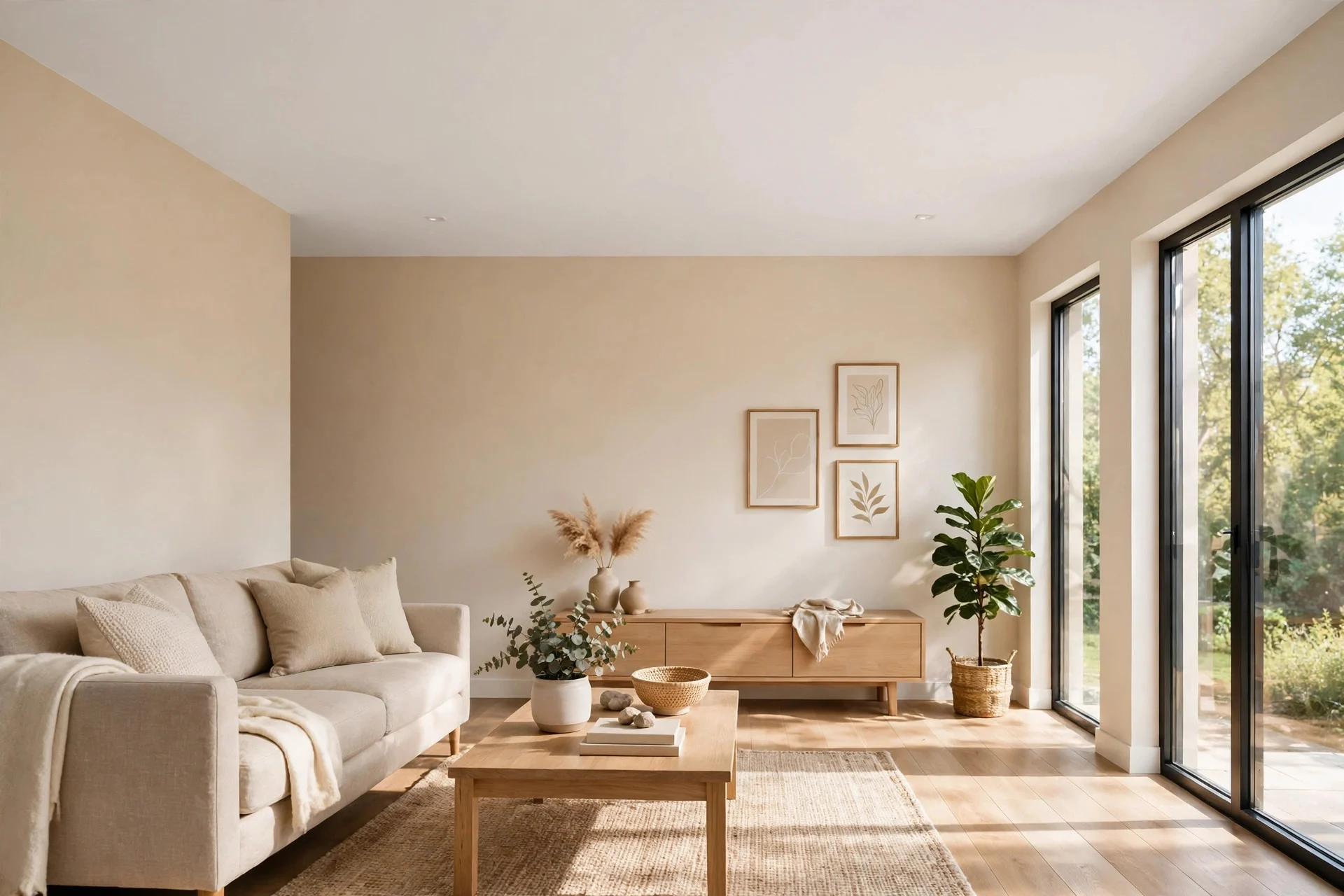
Anything dangling from a low ceiling — a pendant, a chandelier, a fan with a light kit — chops the room’s vertical space into “above the fixture” and “below the fixture.” Replace it with a flush-mount or semi-flush fixture that hugs the ceiling (two to four inches of drop at most), and the sightline across the room stays clean and unbroken.
- Cost: $30–$50
- Time: 30–60 minutes
- Difficulty: Moderate (basic electrical)
Hands-on tip: pick a fixture with a translucent shade or upward-facing diffuser so light washes across the ceiling. A lit ceiling reads as a higher ceiling.
Watch out: turn off the breaker before touching any wiring, and call an electrician if the existing wiring looks confusing. Also think twice about ceiling fans in rooms under seven and a half feet — low blades plus low ceilings mean visual clutter and clearance headaches.
$50–$200: Furniture-Scale Changes
This tier is about giving the eye tall objects to climb. A bookcase, a column of art, an arc of lamplight — each one creates a vertical path that makes the ceiling feel like the natural end of a journey rather than a lid on a box.
5. Add a Tall Bookcase That Nearly Reaches the Ceiling
A tall, narrow bookcase — 72 inches or higher — gives your eyes a ladder to climb. Style the shelves with books and a few objects, and the gaze travels from the floor all the way up, which stretches the room’s perceived height in a way no short, wide bookcase ever could.
- Cost: $80–$180
- Time: about 1 hour to assemble and style
- Difficulty: Easy
Hands-on tip: leave two to four inches of breathing room at the top, or tuck a low basket up there so the bookcase reads as built-in. Either way, anchor it to the wall with anti-tip hardware — tall furniture must be secured.
Watch out: a short, wide bookcase does the reverse: it underlines the horizontal and makes the ceiling feel closer. When in doubt, go tall and narrow.

6. Stack Art in a Vertical Gallery Wall
Instead of one wide piece above the sofa, hang three to five frames in a single vertical column — or a tight vertical cluster — running from just above the furniture toward the ceiling. Each frame becomes a stepping stone that carries the gaze upward in stages.
- Cost: $60–$150 (thrifted frames cut this in half)
- Time: 1–2 hours with a level and paper templates
- Difficulty: Easy
Hands-on tip: center the lowest frame at about 57 inches — average eye level — and keep a consistent two to three inches between frames. Even spacing matters more than matching frames.
Watch out: the classic mistake is a wide horizontal canvas floating above the sofa with a foot of empty wall above it. That empty band is a neon sign pointing at your low ceiling.

7. Bring In an Arched Floor Lamp
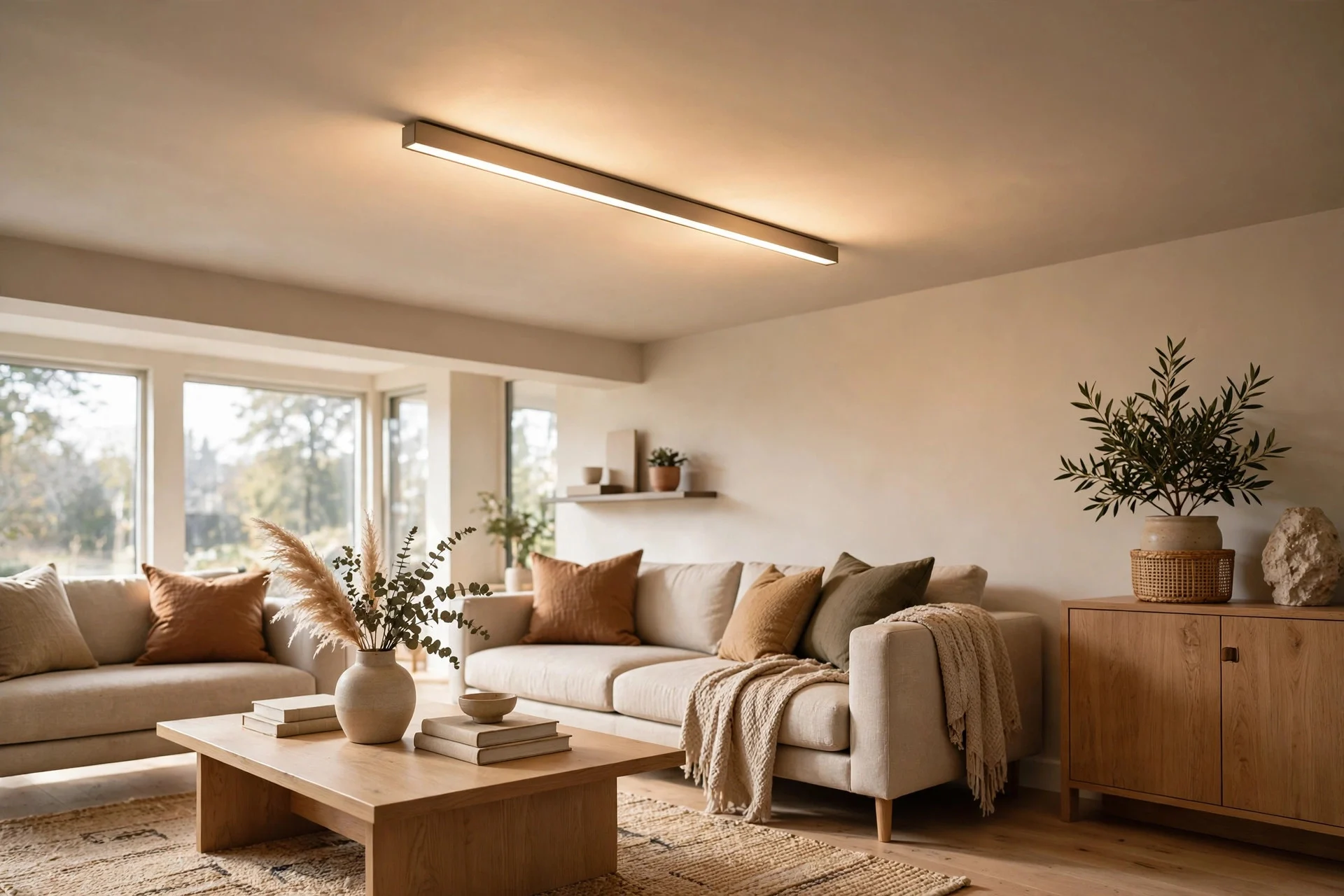
An arc floor lamp sweeps up from its base and curves over your reading chair or the end of the sofa. Your eye naturally follows that tall curve up and across the room, borrowing height from the arc itself — and you get excellent reading light without touching the ceiling at all.
- Cost: $70–$180
- Time: about 20 minutes to assemble
- Difficulty: Easy
Hands-on tip: position the arc so the shade hangs over seating, not the walkway, and screw in a warm 2700K bulb for evening glow.
Watch out: measure first. Most arcs need at least seven feet of clearance; in a very low room, choose a slim torchiere that washes light upward instead. Same eye-lifting effect, smaller footprint.
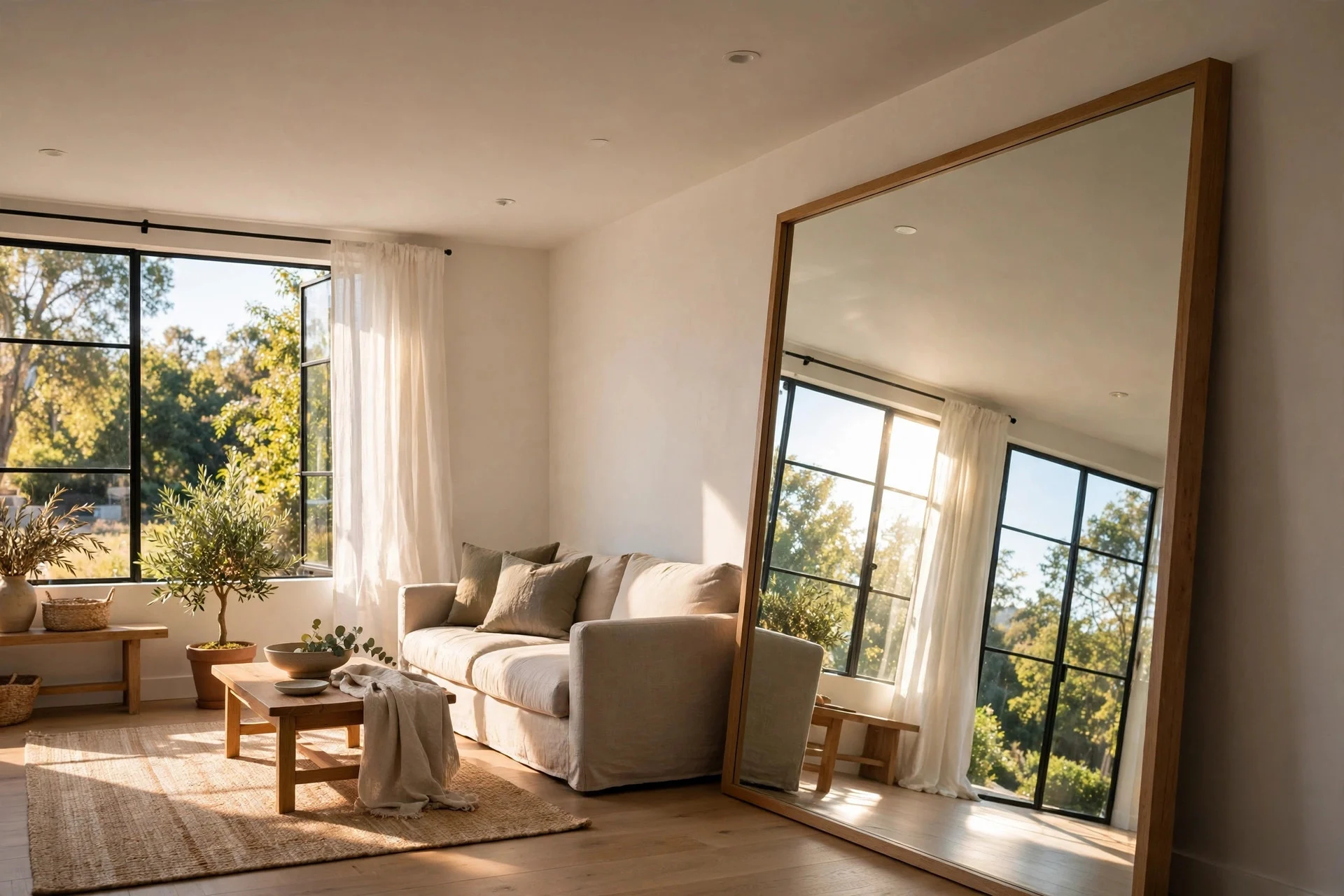
8. Lean an Oversized Mirror Against the Wall
A large mirror — at least three by four feet — leaned against the wall does two jobs at once: it doubles the daylight in the room and adds virtual depth where there was only flat wall. Brighter plus deeper reads as bigger, every time.
- Cost: $100–$200
- Time: 15 minutes (get help lifting)
- Difficulty: Easy
Hands-on tip: angle it to catch a window, not the TV or a cluttered corner. A mirror reflecting daylight is pure magic; one reflecting mess just spotlights the mess.
Watch out: placement changes the effect. On a long wall, a mirror widens the room; on the short wall, it deepens it. Decide which dimension needs help before you lean.
$200 and Up: Changes to the Room’s Bones
These cost more because they change the room itself — its lighting, its largest furniture, its sightlines. They’re the closest you can get to raising the ceiling without hiring a contractor to actually raise it.
9. Install Recessed Lighting
Four to six recessed can lights, installed by an electrician, spread even light across the whole ceiling with zero fixtures hanging into the room. Without pendants or tracks breaking up the overhead plane, the ceiling stops being a visual boundary and starts to disappear — especially on a dimmer in the evening.
- Cost: $200–$600 (roughly $100–$150 per light installed; small rooms need fewer)
- Time: half a day, hired out
- Difficulty: Moderate (hire an electrician)
Hands-on tip: ask for four-inch cans in a warm color temperature and put them on a dimmer switch. Dimmed, warm downlights make any living room feel expensive.
Watch out: get a written quote first and ask about access above the ceiling. Fishing wire through a finished ceiling with no attic or crawl space access gets pricey fast.

10. Choose a Low-Profile Sofa
A sofa with a low back — 28 to 32 inches — and slim arms leaves more wall visible above it, and visible wall is what your brain converts into perceived height. Swap a tall-backed sofa for a lower one and the whole room exhales.
- Cost: $400–$1,200 new; $200–$400 for a custom slipcover over your existing frame
- Time: shopping plus delivery, or one fitting appointment for a slipcover
- Difficulty: Easy
Hands-on tip: commit to low-profile across the room — a low coffee table, a low media console. One tall bookcase is a vertical accent; tall everything is just a tall room again.
Watch out: low-profile shouldn’t mean uncomfortable. Sit-test before you buy: a seat depth of 22–24 inches suits most adults for everyday lounging.

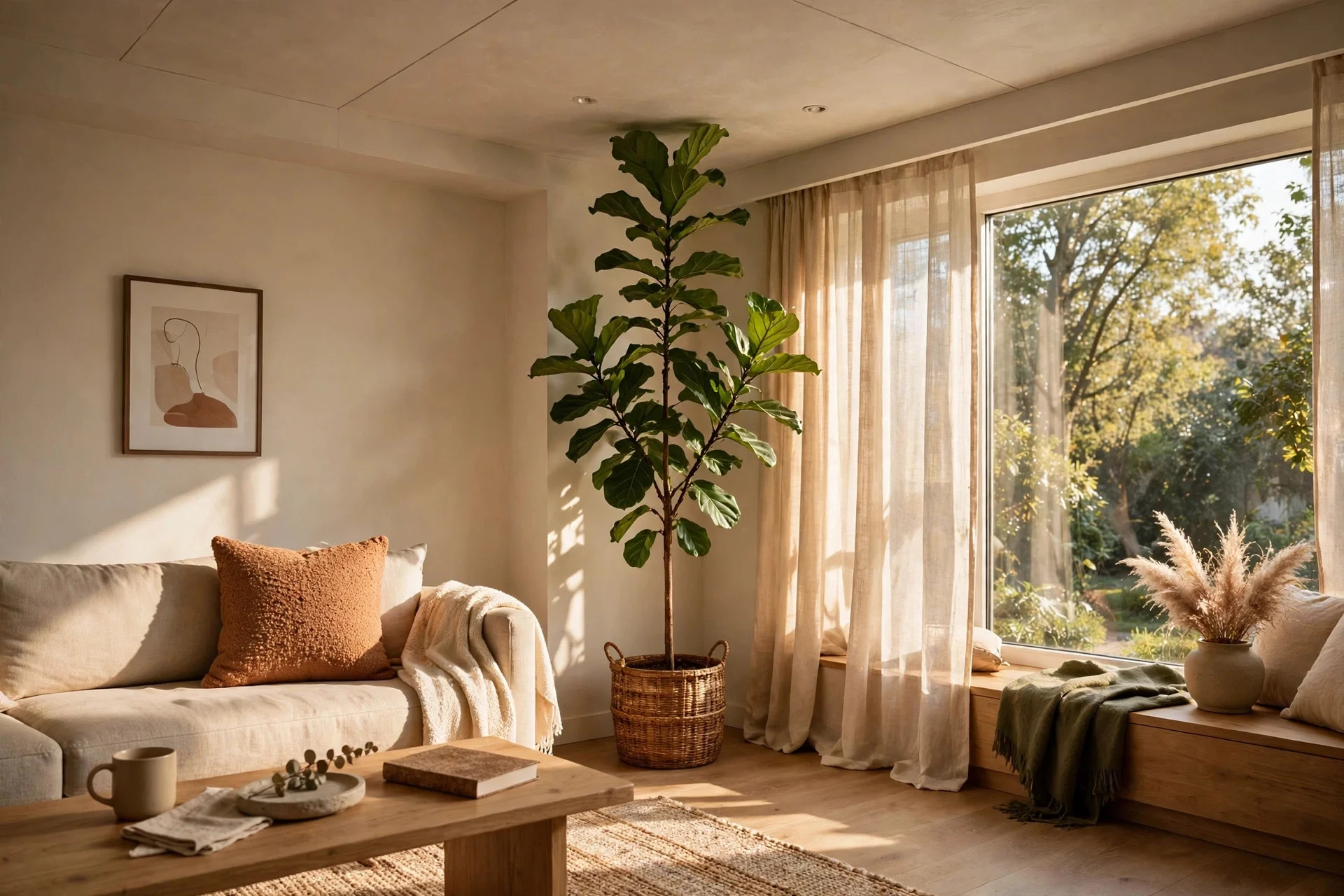
11. Add a Tall Statement Plant
A mature floor plant — a fiddle-leaf fig, an olive tree, or a bird of paradise in a tall planter — puts a living vertical accent in a corner that would otherwise sit empty. Greenery softens the room’s hard lines, and a plant reaching toward the ceiling makes the height feel intentional rather than limiting.
- Cost: $150–$300 for a five- to six-foot plant plus planter
- Time: 20 minutes to pot and place
- Difficulty: Easy
Hands-on tip: put it in the darkest-feeling corner. The plant draws the eye exactly where the room needs life, and its height fills dead vertical space.
Watch out: buy for the light you have, not the light you wish you had. A fiddle-leaf fig wants bright indirect sun; a five-foot dracaena tolerates dimmer corners. A dying $200 plant is just an expensive brown stick.
12. Switch to a Glass Coffee Table
Trade a chunky wood coffee table for a glass-top table on slim legs. Because you can see straight through it, the floor reads as one continuous surface — and continuous surfaces make rooms feel bigger. It’s the same reason glass shower doors make small bathrooms feel larger.
- Cost: $200–$400
- Time: unbox and place
- Difficulty: Easy
Hands-on tip: style the lower shelf minimally — one stack of books, one tray. Under glass, clutter is visible from every angle.
Watch out: with kids or pets in the house, choose tempered glass with rounded corners. Acrylic is lighter and won’t shatter, but it scratches more easily.

Frequently Asked Questions
What’s the best ceiling color for a low ceiling?
Flat bright white, or a white that’s one to two shades lighter than your walls. Light ceilings reflect light and visually recede; dark or dingy ceilings absorb light and press downward. Flat finish hides flaws — sheen highlights them.
Should curtains touch the floor in a low-ceiling living room?
Yes. Mount the rod four to six inches below the ceiling and let the panels just kiss the floor or puddle an inch. Panels that stop several inches short chop the vertical line you’re trying to create.
Do ceiling fans make low ceilings feel lower?
Visually, yes — blades and downrods break up the overhead plane and draw attention to exactly how little clearance there is. In rooms under seven and a half feet, a slim flush-mount light plus a floor fan usually looks and feels better.
What’s the cheapest way to make a low ceiling feel taller?
Paint and curtains. A gallon of white ceiling paint plus a high-mounted curtain rod and long panels runs under $50 total and delivers most of the effect — vertical lines, a brighter overhead, longer sightlines — in a single weekend.
Start With One Wall
You don’t need all twelve ideas, and you definitely don’t need them all this weekend. Pick the one that fits your budget and your energy — paint a stripe wall, raise a curtain rod, lean a mirror — and live with it for a week. Most people find that a single strong vertical move changes how the whole room feels, and the rest becomes a fun slow project instead of a chore. Once the bones feel taller, dress the room for the season: warm throws and autumn stems from these cozy fall living room ideas layer beautifully over every trick above.