Living with no closet space can make even a clean bedroom feel messy. Clothes pile onto chairs, shoes somehow multiply near the door, and random storage bins start taking over every corner of the room. Most people assume the solution is simply “buy more storage,” but that usually creates a different problem: a cramped bedroom that feels more stressful than functional.
The truth is, organizing a bedroom without a closet is less about stuffing things into containers and more about using the room intentionally. Small bedrooms, studio apartments, shared spaces, and older homes often lack proper built-in storage, but that does not mean the room has to feel chaotic. In fact, some of the most organized bedrooms work better because people are forced to be thoughtful about what stays visible and what gets hidden away.
A well-organized bedroom without a closet needs a balance of smart furniture, vertical storage, daily habits, and realistic design choices. You need solutions that actually work for real life — not just perfectly styled rooms you see online where nobody seems to own winter jackets or laundry baskets.
In this guide, you’ll learn practical and realistic ways to organize a bedroom with no closet space. From using open wardrobes and under-bed storage to creating hidden storage zones and reducing visual clutter, these ideas are designed to help your room feel cleaner, calmer, and easier to live in every day.
1. Use an Open Clothing Rack Instead of Hiding Everything
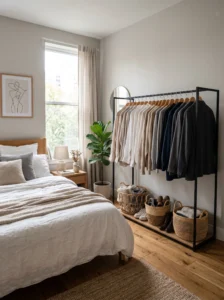
One of the biggest mistakes people make in a no-closet bedroom is trying too hard to hide clothing. Sometimes the smartest solution is accepting that clothes will be visible and making them look intentional instead of messy.
An open clothing rack works because it keeps frequently used items accessible while also acting like part of the room’s decor. When organized properly, it feels more like a boutique setup than temporary storage. This works especially well in small apartments, modern bedrooms, or rooms with limited wall space.
Choose a sturdy metal or wooden rack instead of flimsy plastic versions that wobble after a few months. Neutral colors like black, white, or natural wood blend more easily into the room. Keep only your most-used clothing on display and avoid overcrowding the rack. Too many items instantly make the room feel chaotic.
Place the rack against an empty wall or near a corner where it won’t block movement. Matching hangers make a surprisingly big difference visually. Adding a small basket underneath for shoes or folded items also helps the area feel complete.
In daily life, an open rack can actually make mornings easier. You see everything at once, which reduces digging through piles or drawers. It also forces better clothing habits because messy organization becomes immediately noticeable.
2. Maximize Under-Bed Storage the Right Way
The space under the bed is often wasted because people throw random items there and forget about them. Done properly, under-bed storage can replace half the function of a traditional closet.
This works especially well in small bedrooms where floor space is limited. Large rolling bins, flat storage containers, or vacuum-sealed bags allow you to store seasonal clothing, extra bedding, shoes, or rarely used items without making the room look crowded.
The key is accessibility. If it becomes annoying to reach items, the system stops working. Use containers with wheels or handles so things slide out easily. Clear bins are useful if you forget what you stored, but fabric storage boxes usually look cleaner in calmer bedroom designs.
Avoid stuffing everything under the bed without categories. Separate items by type: winter clothes, shoes, linens, or accessories. Labels help more than most people realize, especially months later when searching for something specific.
Platform beds with built-in drawers are even better because they create hidden storage without extra containers. They work particularly well in studio apartments or bedrooms where dressers take up too much room.
In everyday use, under-bed storage reduces visual clutter instantly. The room feels calmer because fewer things are left sitting out in the open.
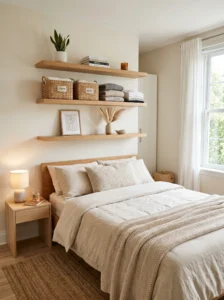
3. Install Floating Shelves Above Empty Walls
When there’s no closet, vertical space becomes extremely important. Most bedrooms have unused wall areas that could handle a surprising amount of storage.
Floating shelves work because they keep storage off the floor while still making items accessible. They are ideal for smaller bedrooms where every square foot matters. Shelves can hold folded clothes, baskets, books, handbags, or decorative storage boxes.
The mistake people make is installing shelves too low or overcrowding them. Leave enough breathing room between shelves so the setup feels intentional instead of cramped. Light wood or white shelves tend to make a room feel more open compared to heavy dark colors.
Use baskets or matching bins on shelves to hide smaller items like socks, chargers, or accessories. Open shelving looks best when there is some balance between functional storage and visual simplicity.
Above the bed, near the desk, or beside the clothing rack are usually the best placements. Corner shelves can also help awkward bedroom layouts feel more usable.
In real life, floating shelves reduce the need for bulky furniture. They create storage without making the room physically harder to move around in, which matters a lot in tight bedrooms.
4. Choose a Bed Frame With Built-In Drawers
Sometimes the best storage furniture is the furniture you already need anyway. A storage bed combines sleeping space and organization in one piece, which is why it works so well in no-closet bedrooms.
Beds with built-in drawers are especially useful in small apartments, guest rooms, and minimalist bedrooms. They eliminate the need for extra dressers or bulky plastic bins scattered around the room.
Wooden storage beds tend to feel sturdier and more timeless, while upholstered versions create a softer look. The important thing is drawer functionality. Cheap storage beds often have shallow drawers that barely hold anything.
Use the drawers for folded clothing, extra blankets, seasonal items, or even shoes. Try not to turn them into junk drawers where random items disappear forever.
Placement matters too. Make sure there is enough room to fully open the drawers. In very tight spaces, side-opening drawers usually work better than footboard storage compartments.
What makes this setup practical is convenience. Everything stays hidden, yet easy to access. It also reduces the need for visible storage furniture, helping the bedroom feel less crowded overall.
5. Use Decorative Baskets for Flexible Storage
Not every storage solution needs to look ultra-modern or perfectly built-in. Decorative baskets are one of the easiest ways to keep a bedroom organized without making it feel overly functional.
Baskets work because they are flexible. You can move them around, change their purpose, and fit them into awkward spaces that traditional furniture cannot use. They are perfect for storing blankets, laundry, accessories, or even shoes.
Woven baskets add warmth to bedrooms that feel cold or overly minimal. Fabric baskets create a softer look and work well in calm, neutral spaces. Avoid bright plastic bins unless the room already has a playful style.
Place baskets under benches, beside the bed, on floating shelves, or near a clothing rack. Using matching baskets instantly makes the room feel more organized visually, even if the contents are not perfectly folded inside.
One underrated benefit is speed. Sometimes you just need somewhere to quickly place items before guests arrive or before going to bed. Baskets help prevent clutter from spreading everywhere.
In everyday life, they create a room that feels easier to maintain instead of requiring constant perfection.
6. Turn One Wall Into a Mini Wardrobe Zone
A bedroom without a closet often benefits from creating one dedicated “wardrobe wall.” Instead of scattering clothing storage everywhere, concentrate it into one organized area.
This idea works because it visually contains clutter. A clothing rack, small dresser, mirror, hooks, and shelves grouped together feel intentional instead of random.
This setup works particularly well in studio apartments or narrow bedrooms where creating zones improves functionality. You can use curtains to partially hide the wardrobe wall if you prefer a softer appearance.
Stick to cohesive colors and materials. Mixed furniture styles can quickly make the area feel messy. Neutral tones, wood textures, and black metal frames usually work well together.
Wall hooks for bags, hats, or jackets keep daily essentials accessible without covering chairs or beds with clothing. A full-length mirror also makes the zone feel more complete and practical.
In real life, having a single wardrobe area simplifies routines. Getting dressed, storing laundry, and organizing accessories all happen in one predictable place instead of across the entire room.
7. Use Over-the-Door Organizers for Hidden Storage
Doors are one of the most ignored storage areas in bedrooms. Over-the-door organizers create storage without using any floor space, which makes them extremely valuable in smaller rooms.
These organizers work well for shoes, accessories, skincare products, scarves, or folded clothing. Fabric versions tend to look softer and less temporary compared to clear plastic options.
Bedroom doors, bathroom doors, and even cabinet doors can all become useful storage zones. The key is avoiding overload. If the organizer becomes too bulky, it starts looking messy and may even damage the door hinges over time.
Neutral-colored organizers blend better into the room. Clear pockets are useful for visibility, but visually busy if heavily filled.
What makes this solution practical is convenience. Everyday items become easier to grab without taking over surfaces like desks or nightstands.
For people living in rentals or shared apartments, this is also a smart temporary solution because it requires almost no installation.
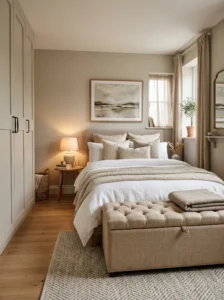
8. Add a Storage Bench at the End of the Bed
The area at the foot of the bed often stays empty, but it can become valuable hidden storage with the right furniture piece.
Storage benches work especially well in medium-sized bedrooms where there’s enough walking space around the bed. They provide hidden storage for blankets, pillows, off-season clothing, or bags while also functioning as seating.
Choose a bench proportional to the bed size. Oversized benches can make small rooms feel cramped. Upholstered benches soften the room visually, while wooden benches feel cleaner and more structured.
Avoid turning the bench into a dumping spot for random clothing. Once the top surface becomes cluttered, the entire room starts feeling less organized.
One of the best things about storage benches is how naturally they fit into daily life. They make getting dressed easier, provide temporary seating, and keep extra bedding close without needing another cabinet.
9. Use Wall Hooks Instead of Floor Stands
Floor-standing coat racks often look useful at first but easily become clutter magnets. Wall hooks usually work better because they save floor space and create cleaner organization.
Hooks are perfect for jackets, bags, hats, robes, or frequently used items. They work especially well near the bedroom entrance or beside a wardrobe zone.
Wooden hooks create a warmer, softer look while matte black hooks feel more modern. Spacing matters more than people realize. Hooks placed too close together make items overlap and feel messy.
Keep only everyday essentials on hooks. If every bag and jacket you own hangs there, the room instantly feels crowded.
This setup works well in tiny bedrooms because it keeps items off chairs, which somehow always become accidental storage zones.
In daily use, hooks simplify routines. You stop throwing clothes onto the bed or desk because there is an easy place to hang them immediately.
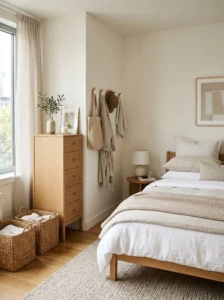
10. Organize Clothing by Season
A no-closet bedroom becomes much easier to manage when not every piece of clothing is accessible all year long.
Seasonal organization works because it reduces volume. Heavy winter jackets, thick blankets, or summer clothes take up unnecessary space during off-seasons.
Vacuum-sealed bags are useful for bulky items, especially in humid environments. Fabric bins are better for delicate clothing that wrinkles easily. Under-bed storage or high shelves work best for off-season items.
One common mistake is storing everything together “just in case.” Realistically, most people wear the same smaller rotation of clothing regularly.
Switching seasonal storage every few months also forces better decluttering habits. You notice what you actually wore and what stayed untouched.
The room benefits visually too. Less clothing means less visible chaos, which makes small bedrooms feel significantly calmer.
11. Use Slim Dressers Instead of Wide Furniture
Large dressers can dominate a small room very quickly. Slim vertical dressers usually work better because they create storage without consuming too much floor space.
Tall narrow dressers take advantage of vertical height while leaving more room for walking and movement. This is especially helpful in apartments or shared bedrooms.
Choose drawers that glide smoothly and fully open. Cheap dressers often become frustrating because drawers stick or collapse under weight.
Drawer organizers inside the dresser help maximize storage. Without dividers, clothing turns into messy stacks surprisingly fast.
Stick to lighter colors if the room already feels tight. White, oak, or soft neutral finishes usually make bedrooms feel more open.
In real life, slim dressers make daily routines easier because everything has a dedicated place without overwhelming the room layout.
12. Create Hidden Storage With Curtains
Not everyone wants visible clothing racks or open shelving. Curtains are an easy way to hide storage while still keeping things accessible.
This works especially well in studio apartments or bedrooms where visible storage feels overwhelming. Ceiling-mounted curtains can hide clothing racks, shelves, or stacked bins surprisingly well.
Linen or cotton curtains usually look softer and more natural than shiny synthetic materials. Neutral colors help the storage area blend into the room instead of standing out.
The trick is keeping the hidden area reasonably organized. Curtains can hide clutter visually, but completely chaotic storage still becomes stressful to use daily.
This idea also adds softness to bedrooms that feel too boxy or furniture-heavy. Curtains create texture and make the space feel calmer overall.
13. Use Nightstands With Real Storage
Many decorative nightstands look great online but barely hold anything useful. In a no-closet bedroom, every furniture piece should earn its place.
Nightstands with drawers or shelves help reduce clutter around the bed. They work well for storing chargers, books, medications, headphones, or smaller clothing items.
Avoid tiny nightstands if the room lacks storage elsewhere. Slightly larger nightstands often provide far more functionality without visually overwhelming the space.
Closed drawers generally make rooms look calmer compared to fully open shelving. If you prefer open shelves, baskets help keep things visually organized.
One practical benefit is reducing surface clutter. A clean bedside area instantly makes the whole room feel tidier, even when other storage areas are imperfect.
14. Declutter More Often Than You Think You Need To
No storage system works well if the room holds too many unnecessary things. Bedrooms without closets simply have less room for “maybe someday” items.
Decluttering works because it reduces pressure on every other organization method. Fewer clothes mean fewer bins, fewer racks, and less visual stress overall.
This does not mean becoming ultra-minimalist. It simply means being realistic about what gets used regularly. Clothing that has not been worn in years probably does not deserve prime bedroom space.
A simple rule helps: if something creates more storage frustration than practical value, reconsider keeping it.
Monthly mini-declutters work better than rare massive cleanouts. Small habits are easier to maintain.
In everyday life, decluttering creates a bedroom that feels lighter and easier to manage. Cleaning becomes faster, getting dressed feels simpler, and the room starts functioning better instead of constantly fighting against limited space.
Comparison Table
| Type | Best Use | Material | Style/Vibe | Difficulty Level |
|---|---|---|---|---|
| Open Clothing Rack | Everyday clothing storage | Metal/Wood | Modern & Minimal | Easy |
| Floating Shelves | Vertical organization | Wood/MDF | Clean & Airy | Medium |
| Storage Bed | Hidden clothing storage | Wood/Upholstered | Practical & Modern | Medium |
| Decorative Baskets | Flexible storage | Wicker/Fabric | Cozy & Relaxed | Easy |
| Storage Bench | Extra bedding & seating | Upholstered/Wood | Elegant & Functional | Medium |
| Slim Dresser | Folded clothing storage | Wood/MDF | Compact & Organized | Easy |
Buying Guide: How to Choose Storage for a Bedroom With No Closet
Organizing a bedroom without a closet starts with choosing storage that actually fits your room and your daily habits. A lot of people buy storage furniture first and think about placement later, which usually leads to overcrowded spaces and awkward layouts.
Start by measuring the room carefully. Width matters, but walking space matters even more. Leave enough clearance around the bed and major furniture pieces so the room still feels comfortable to move through. In smaller bedrooms, vertical storage almost always works better than wide furniture.
Material choices affect both durability and the visual feel of the room. Solid wood furniture lasts longer and feels sturdier, but it can become expensive quickly. MDF or engineered wood options are more budget-friendly and often work well for shelves or dressers. Metal clothing racks tend to handle heavy clothing better than cheap plastic versions.
Think realistically about maintenance too. Open storage looks nice in photos, but it collects dust faster. Fabric bins and baskets may require occasional cleaning, especially in humid climates. Upholstered benches look cozy but can stain more easily than wooden surfaces.
Budget matters, but buying the cheapest storage often creates frustration later. Weak drawers, unstable racks, and flimsy shelving usually need replacing quickly. It is often smarter to buy fewer high-quality storage pieces instead of filling the room with temporary solutions.
One common mistake is choosing oversized furniture because it offers “more storage.” In reality, bulky pieces can make a small bedroom feel stressful and cramped. Another mistake is relying entirely on visible storage without balancing hidden organization.
The best setup usually combines both: some visible storage for convenience and some hidden storage for visual calm.
Conclusion
A bedroom without a closet can absolutely work well when the space is organized intentionally. The goal is not to squeeze storage into every possible corner. It is creating a room that feels functional, comfortable, and manageable in everyday life.
Simple changes like using vertical shelving, under-bed storage, slim dressers, and open wardrobe systems can completely change how a small bedroom functions. Multifunctional furniture also makes a major difference because it reduces clutter without adding unnecessary bulk.
At the same time, organization is not only about furniture. Decluttering regularly, rotating seasonal clothing, and keeping storage realistic for your lifestyle matter just as much. A system that looks perfect but feels annoying to maintain rarely lasts long.
The best no-closet bedrooms usually balance practicality with simplicity. They do not try to hide every item or imitate giant walk-in closets. Instead, they use smart storage choices that make daily routines easier and the room calmer to live in.
With the right approach, even a small bedroom with zero closet space can feel organized, functional, and surprisingly relaxing.
FAQs
1. How do you organize clothes in a bedroom without a closet?
Use a mix of open clothing racks, slim dressers, under-bed storage, and wall shelves. Keeping frequently used clothes accessible while storing seasonal items separately helps reduce clutter and keeps the room manageable.
2. Are open clothing racks practical for everyday use?
Yes, especially in small bedrooms or apartments. They make clothing easy to access and encourage better organization habits. The key is avoiding overcrowding and using matching hangers for a cleaner appearance.
3. What is the best storage solution for very small bedrooms?
Multifunctional furniture usually works best. Storage beds, wall shelves, and over-the-door organizers save floor space while still providing useful storage capacity.
4. How can I make a no-closet bedroom look less cluttered?
Use hidden storage whenever possible, keep colors consistent, and avoid oversized furniture. Baskets, storage benches, and curtains can help hide items without making the room feel crowded.
5. Is under-bed storage bad for airflow or cleanliness?
Not if it is organized properly. Use sealed containers or fabric bins and clean underneath the bed regularly. Avoid stuffing loose items directly under the frame where dust builds up quickly.
6. How often should I declutter a bedroom with limited storage?
Small monthly declutters work better than occasional major cleanouts. Removing unused clothing regularly prevents storage systems from becoming overloaded.
7. What colors make a small bedroom feel more organized?
Light neutrals, soft earth tones, and natural wood finishes usually make bedrooms feel calmer and more open. Dark colors can work too, but too many heavy tones may make tight spaces feel smaller.
8. Are storage beds worth buying for small rooms?
For many people, yes. They combine sleeping space with hidden storage and reduce the need for additional furniture. They are especially useful in apartments and bedrooms with no built-in closet space.